Buzungolo
Marasmius buzungolo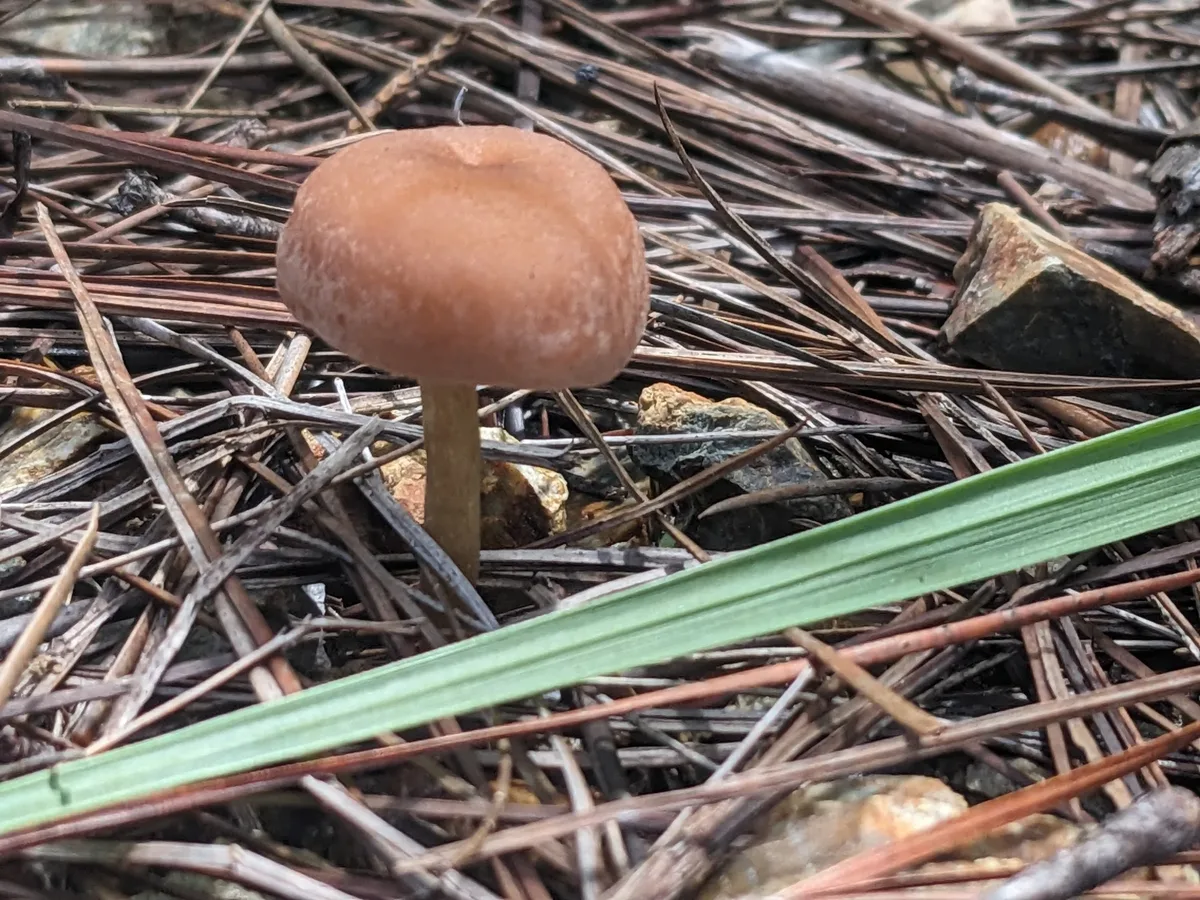 Atlas of Living Australia (CC0)
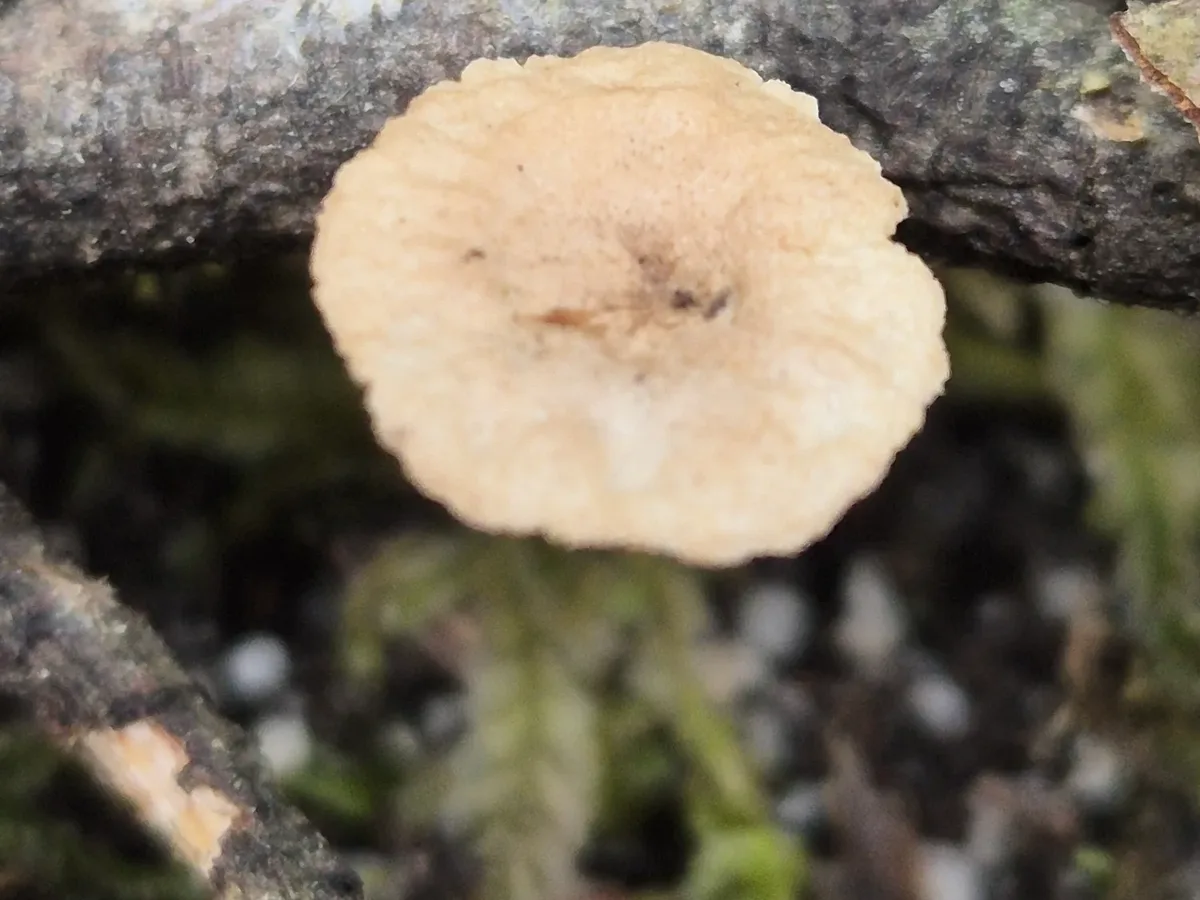 Atlas of Living Australia (CC0)
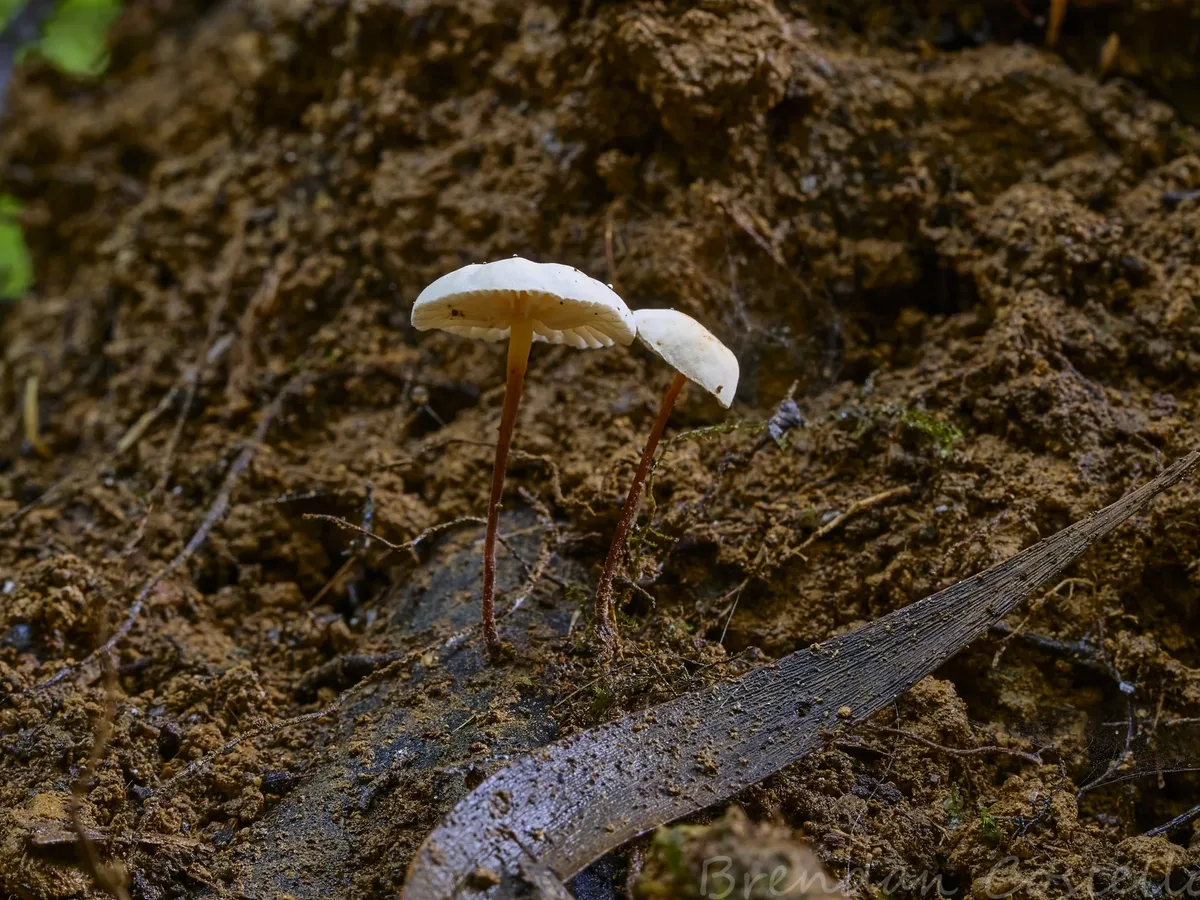 Atlas of Living Australia (CC0)
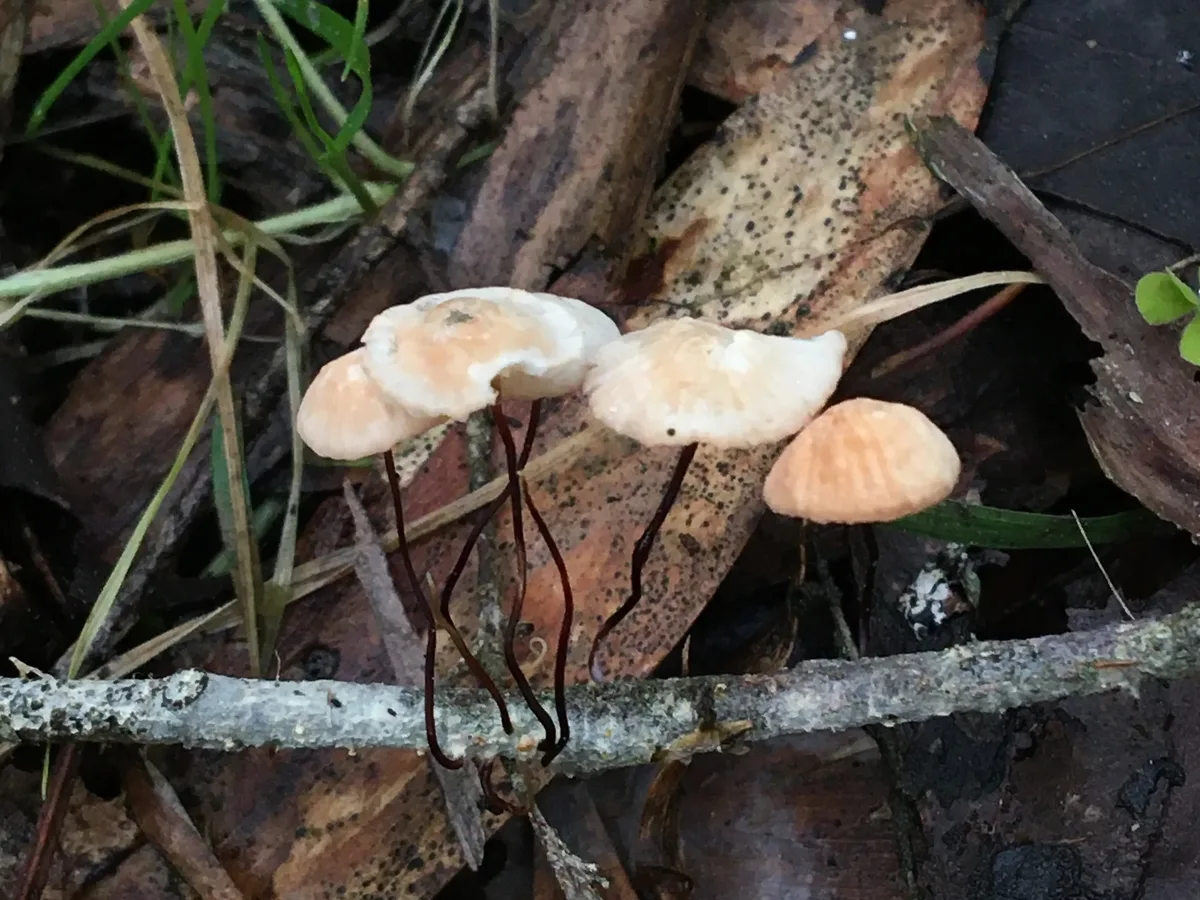 Atlas of Living Australia (CC0)
 Atlas of Living Australia (CC0)Atlas of Living Australia (CC0)Atlas of Living Australia (CC0)
Good to eat, once you have identified it with certainty and cooked it through.
Never eat a mushroom you are not 100% sure of - check the look-alikes below, and always cook wild mushrooms.
How to recognise it
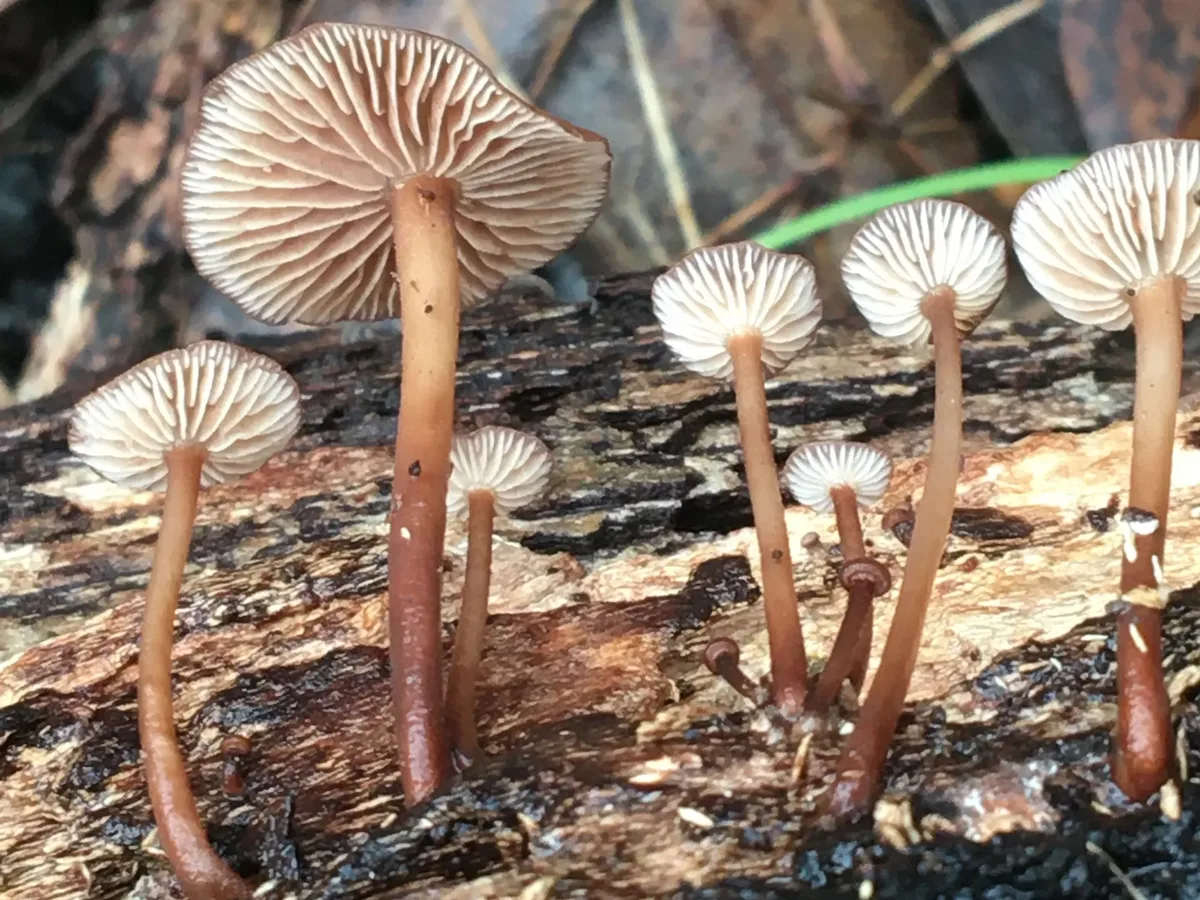
Marasmius buzungolo is a small but distinctive wood-associated mushroom whose defining feature - shared with all true Marasmius species - is the remarkable toughness of its flesh.
Unlike most gilled mushrooms that wilt, rot, or dissolve after a day or two, the fruiting body dehydrates in dry conditions and then revives almost completely when re-wetted (marcescence), looking fresh long after it first appeared.
In the hand it feels more like tough, flexible leather than a typical mushroom; the wiry stem bends and springs back rather than snapping.
Cap
The warm reddish-brown to chestnut cap, 1.5-5 cm across, starts convex with a broad central bump and remains somewhat umbonate even when expanded.
Colour is a reliable field clue: a rich amber-to-chestnut-brown on fresh specimens, fading to tan in dry conditions and darkening again when moist.
Gills
Pale cream and moderately spaced - not crowded.
Stem
Similarly coloured but often darker toward the base, where it anchors to the wood or leaf litter.
Spore print white.
Where & when it grows
Habitat
This species is fundamentally a wood-rotter of African tropical woodland, with a particularly strong affinity for the miombo biome - the vast Brachystegia-dominated woodland that sweeps across central and eastern Africa from Angola and the DRC through Zambia, Tanzania, Malawi, Zimbabwe, and Mozambique.
In this landscape it colonises fallen branches, rotting logs, and compacted leaf litter over buried wood, breaking down dead plant matter and returning nutrients to the soil.
Unlike the mycorrhizal species that require living trees and die with them, M. buzungolo is a free-living saprobe that follows wood wherever it falls, making it a reliable find wherever there is suitable dead substrate and rain.
It also occurs at the margins of Guinea-Congolian forest and in highland woodland further north.
When
Fruiting is entirely rain-driven. The mushroom can appear within a few days of the first significant rains of the season, especially on wood that has been colonised by mycelium during the dry period.
The main flush tracks the main rainy season - typically November to April across central and eastern Africa - with the heaviest fruiting in the core wet months of December through February.
In areas with a bimodal rainfall pattern (two wet seasons), a secondary flush during the shorter wet season is possible.
During the dry season the mycelium persists in the wood unseen. Any old dried-out fruitbodies may rehydrate and resume normal appearance after rain, so check specimens for freshness and firmness.
How it grows
Grows in clusters and tufts, with multiple stems arising from the same piece of dead wood or compacted litter - a habit that makes it conspicuous and rewarding to collect.
The clustered growth habit is useful: a single productive log can yield tens to hundreds of fruiting bodies in a flush.
The mycelium colonises the wood using white-rot enzymes to break down cellulose and lignin. Once rain triggers primordium formation, individual fruiting bodies develop rapidly - visible pins can expand to full size in two to four days under warm, humid conditions.
The marcescent character means a given mycelium may produce apparent 'multiple flushes' as old dried caps rehydrate. But a genuine new flush brings entirely fresh, firmly attached specimens.
Fruiting conditions
Fruiting is rain-triggered and responds rapidly to moisture reaching the wood substrate. Once cumulative 14-day rainfall exceeds ~25 mm and air and soil temperatures remain in the warm tropical range (18-30 °C), visible primordia typically appear within 3-10 days. The marcescent fruiting bodies can rehydrate and appear fresh after subsequent rain events, but new flushes of genuinely fresh fruiting bodies track new rainfall events. Dry-season dormancy ends abruptly with the first significant rains of the new season.
Look-alikes
Within the Marasmius genus, several closely related or co-occurring species in African woodland share the small reddish-brown cap and wiry stem. Most are either edible or simply not collected; none of the realistic lookalikes in the East/Central African miombo context are lethally dangerous.
- Marasmius inoderma and related African Marasmius species can look very similar but are typically found on leaf litter rather than directly on wood, are smaller (cap under 2 cm), and have fewer or more crowded gills.
- Small Gymnopus (collybia-like) species occupy similar wood-rot niches and can resemble M. buzungolo but typically have softer, more easily broken flesh, more crowded gills, and lack the true marcescent toughness of Marasmius.
- Crinipellis species are also small, tough, and wood-associated but have a distinctly hairy or bristly cap surface, differentiating them immediately.
- Galerina marginata and related small deadly brown agarics (containing lethal amatoxins) occasionally appear on or near woody debris in the same habitat zones; they differ clearly by having crowded rusty-brown gills, a ring on the stem, a brown spore print, and fragile (not wiry or tough) stems.
Spore print colour - white in M. buzungolo, rusty-brown in Galerina - is the critical safety check whenever any doubt exists.
Galerina marginata contains lethal amatoxins and can appear on decaying wood in the same habitats. Key differences: Galerina has crowded, rusty-brown gills; a membranous ring on the stem; a rusty-brown spore print; and soft, fragile flesh that snaps rather than bending or twisting. Marasmius buzungolo has widely-spaced pale cream gills, no ring, a white spore print, and notably tough, wiry stems that flex without breaking. Take a spore print whenever any doubt exists.
Several other Marasmius species co-occur in African woodland and look very similar: smaller cap (typically under 2 cm), grow on leaf litter rather than directly on woody substrate, and often have more crowded or differently spaced gills. None are known to be seriously toxic, but positive species-level identification within Marasmius can be difficult without microscopy. Collecting clusters directly from wood (not loose leaf litter) and confirming the typical cap size and gill spacing of M. buzungolo is the practical field approach.
Also small, tough, and wood-associated; related to Marasmius. Distinguished by the characteristically hairy or bristly cap surface covered with stiff, hair-like elements - unlike the smooth to finely fibrillose cap of M. buzungolo. Touch is the immediate field differentiator. Crinipellis species are generally not considered edible.
Gymnopus species occupy similar wood-rot niches in tropical woodland and produce small brownish caps that could superficially resemble M. buzungolo. Gymnopus flesh is significantly softer - it bruises and crushes easily rather than bending like wire. Gills are usually more crowded. Gymnopus species are not considered seriously dangerous but are not traditionally eaten as a substitute for M. buzungolo.
In the kitchen
Picking & cleaning
Collect the caps and upper stems while fresh and firm. In the field, the easiest method is to snap the cluster at the base with fingers or a knife, then trim off the base and any substrate material.
The wiry stems are edible but are tougher than the caps and often contribute more to texture than flavour; many cooks prefer the caps alone.
Discard any specimens that:
- smell unpleasant;
- appear to have gone slimy (which suggests post-fresh decomposition on older material);
- are desiccated beyond the natural dry state (very dark, shrunken, and brittle rather than the pliable leather texture of a genuinely dried Marasmius).
Collect from woodland that has not been sprayed with pesticides.
Transport in an open basket; they keep well without refrigeration for several hours in cool conditions, and surplus can be sun-dried whole for excellent long-term storage.
Cooking
M. buzungolo is appreciated locally for its firm, meaty texture and mild, pleasant earthy-savoury flavour that intensifies with heat.
The caps and upper stems are added directly to stews and relishes alongside other vegetables, or cooked with groundnuts (peanuts), tomatoes, and onions as a relish served with maize porridge (ugali/nshima).
The tough stem contributes texture to long-cooked dishes and releases flavour into soups. Because the flesh is dense and holds its structure even through prolonged cooking, it works well in dishes that simmer for 30 minutes or more.
Surplus harvest is traditionally sun-dried on mats or strung on cord. The dried mushrooms keep well for months, rehydrate fully in warm water within 30 minutes, and retain their flavour - some cooks prefer the slightly more concentrated taste of the rehydrated dried product over fresh.
The dried mushrooms are also traded at regional markets, making them an important seasonal food commodity.
Good to know
Marasmius buzungolo is a well-established traditional food mushroom in East and Central Africa, with a long documented history of safe consumption in Tanzania, Zambia, Malawi, the DRC, and surrounding countries.
No toxins have been identified in this species, and no serious adverse effects from eating correctly identified specimens have been documented in the ethnomycological or medical literature.
The marcescent nature of the mushroom means old, dried-out specimens are also safe once rehydrated, consistent with its traditional use: it is commonly dried for storage and rehydrated later for cooking.
Standard precautions apply:
- Confirm the white spore print, wiry-tough stem, and woodrot habitat.
- Reject any specimen with a ring on the stem or rusty-brown gills (Galerina).
Cook before eating; do not consume raw.
A reference guide - never an edibility guarantee. When in doubt, leave it out.