Zeyheri parasol
Macrolepiota zeyherisyn. Lepiota zeyheri (Berk.) Sacc., Leucocoprinus zeyheri (Berk.) Kühner & Romagn., Macrolepiota dolichaula var. zeyheri
 Klaus Wehrlin (CC0)
 Klaus Wehrlin (CC0)
 Erwin Sieben (CC0)
 Prince Molokomme (CC0)
 Leslie W. Powrie CT ZA (CC0)
 Leslie W. Powrie CT ZA (CC0)
 © Thilo Muller (CC BY)
 Klaus Wehrlin (CC0)Klaus Wehrlin (CC0)Klaus Wehrlin (CC0)
Edible only with the right preparation - or safe for some people but not others. Learn the caveats first.
Never eat a mushroom you are not 100% sure of - check the look-alikes below, and always cook wild mushrooms.
How to recognise it
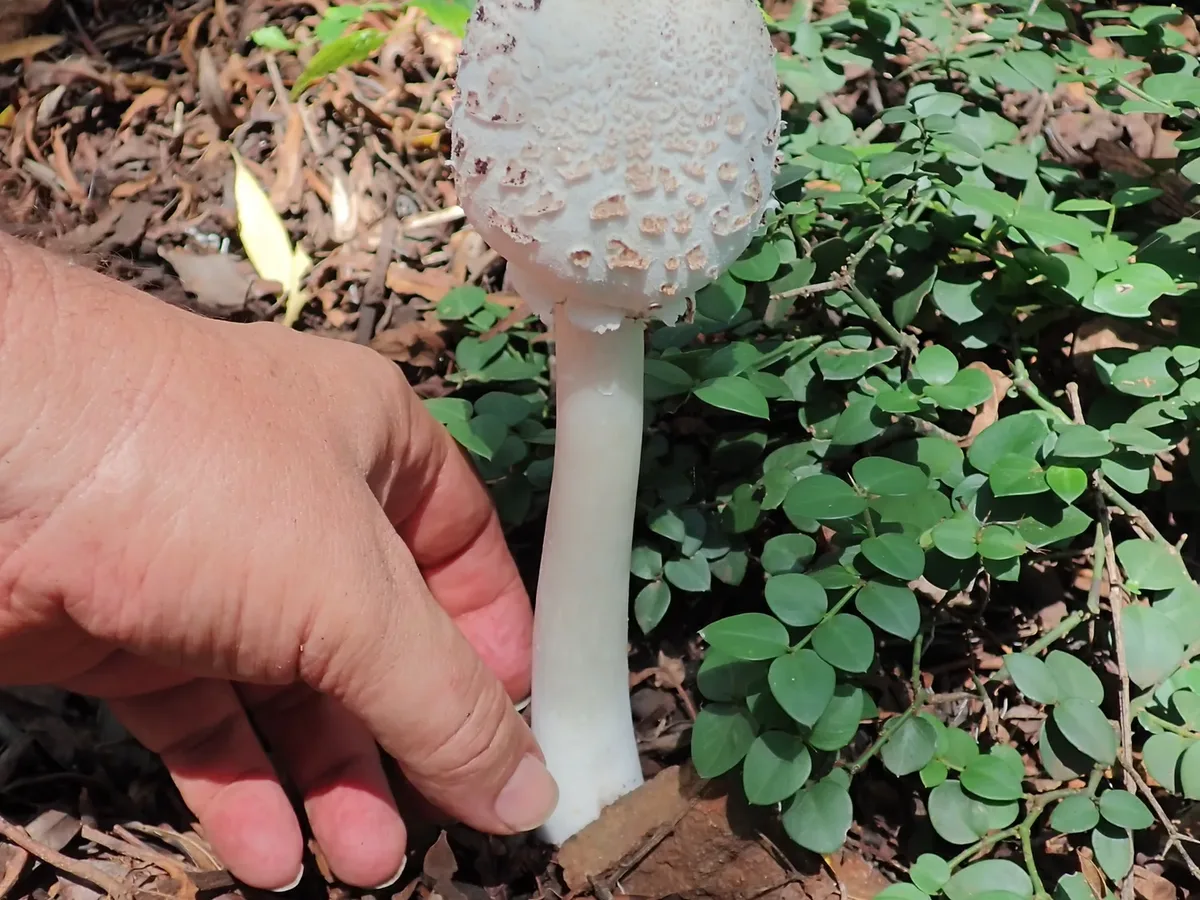
Macrolepiota zeyheri is a large, handsome parasol-type mushroom with the classic proportions of its genus - a broad cap on a tall slender stem with a moveable double ring.
Cap
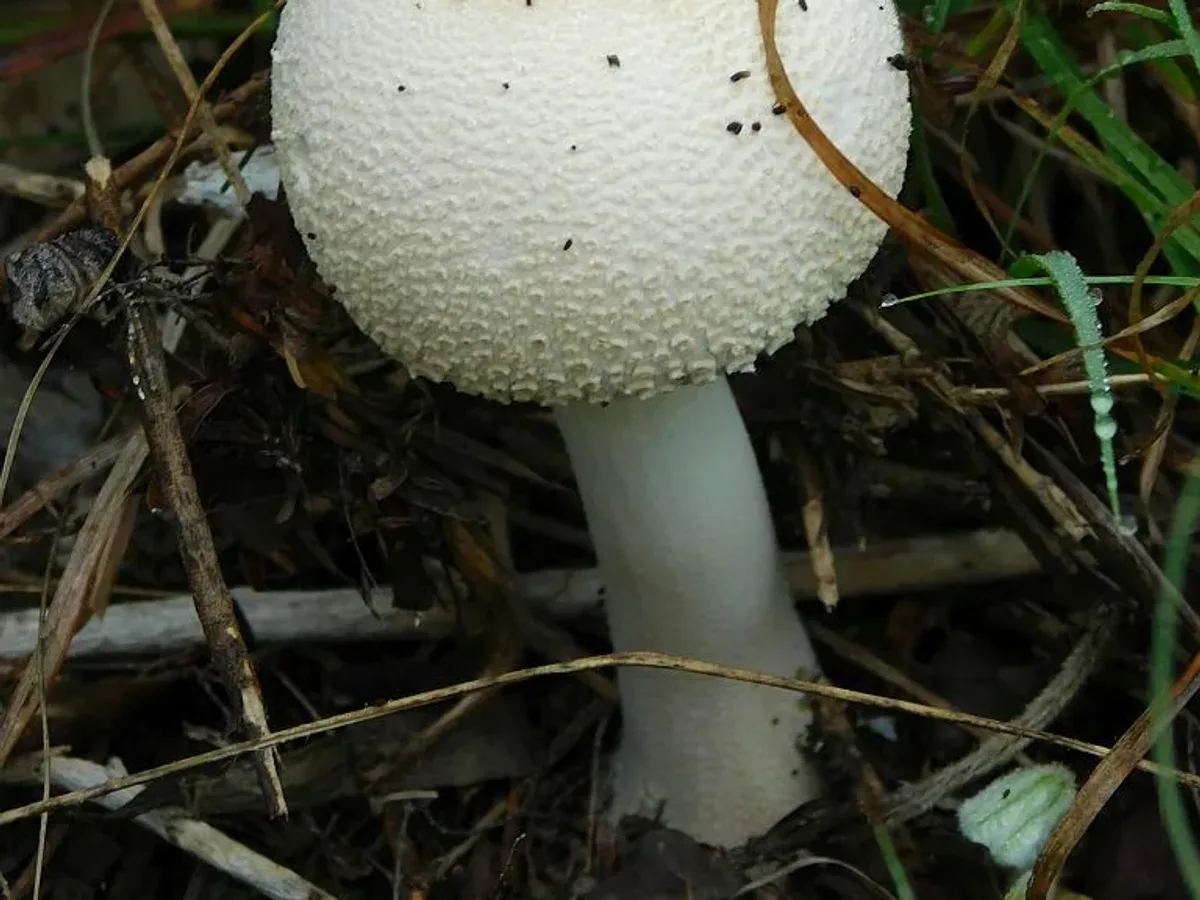
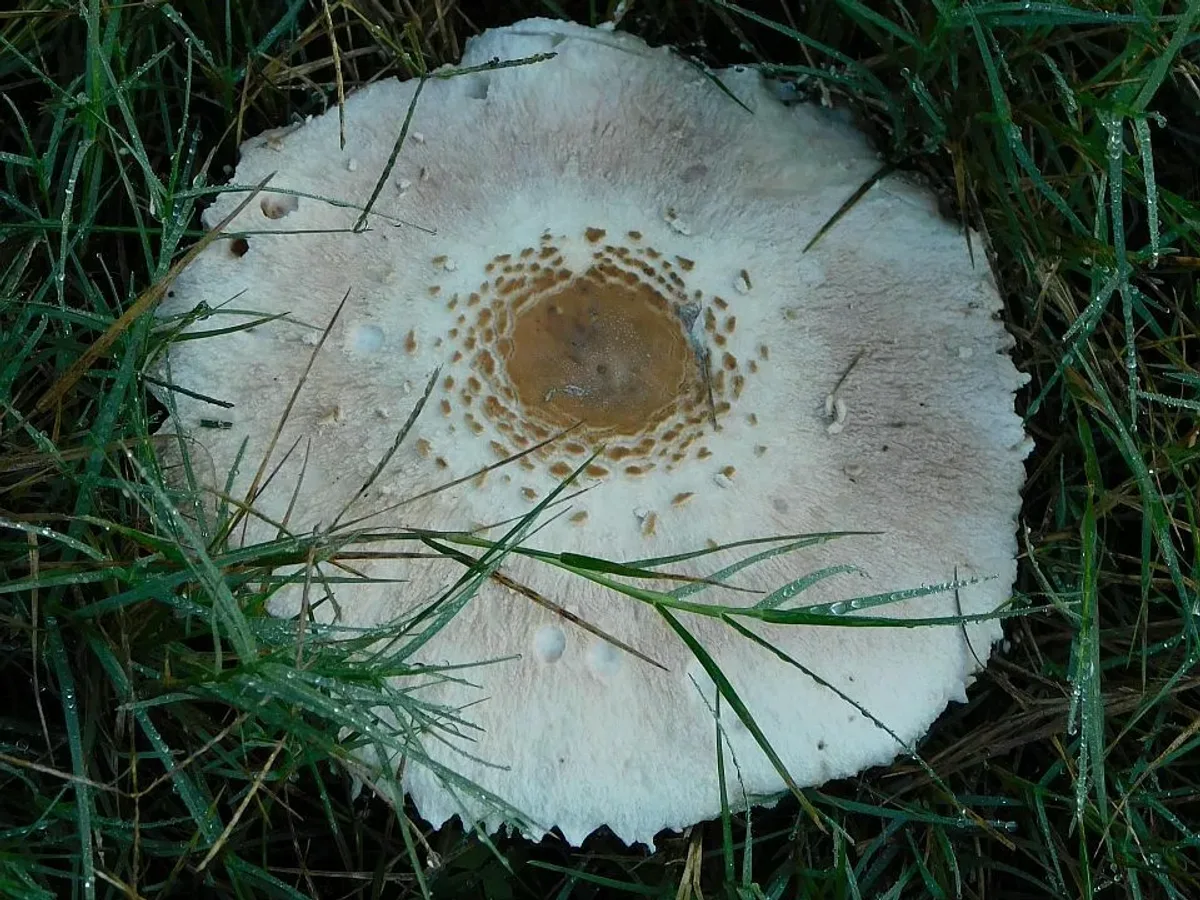
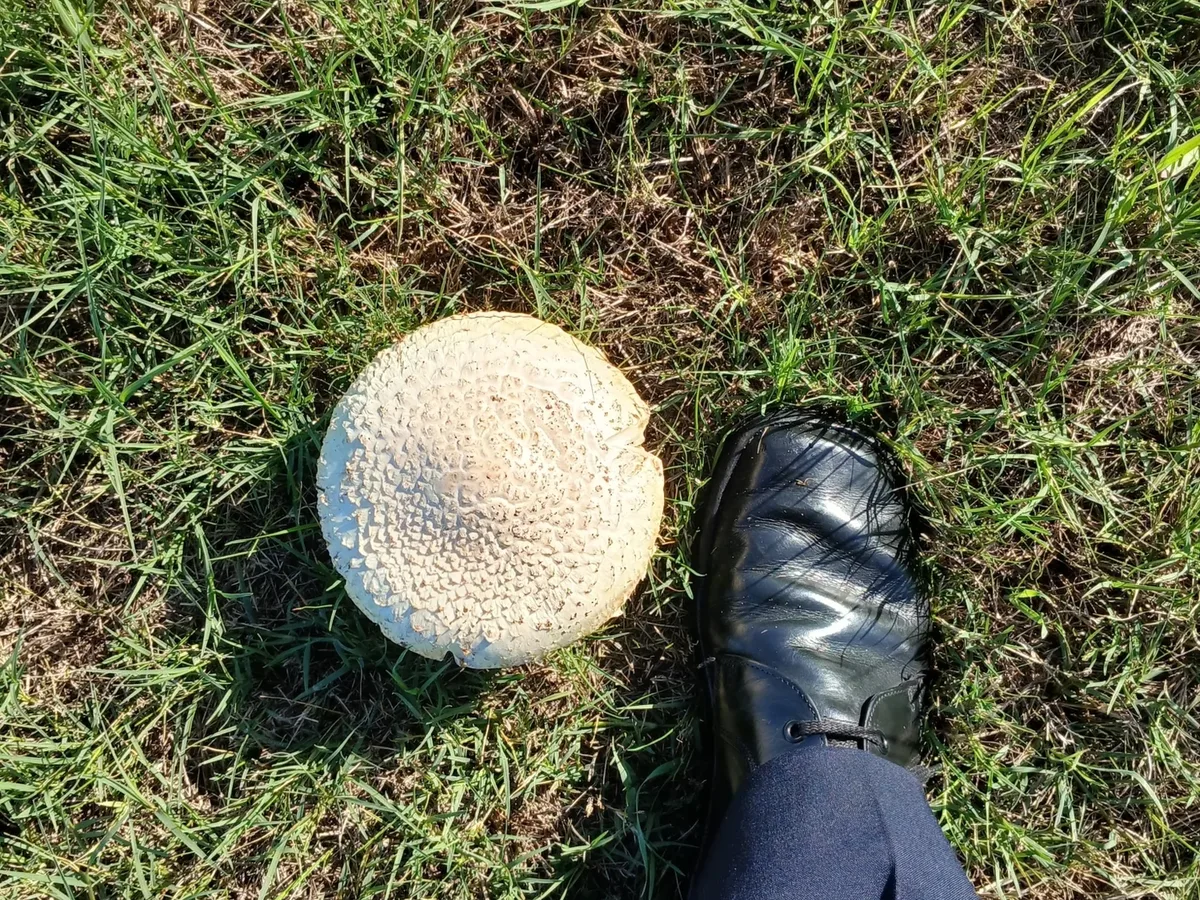
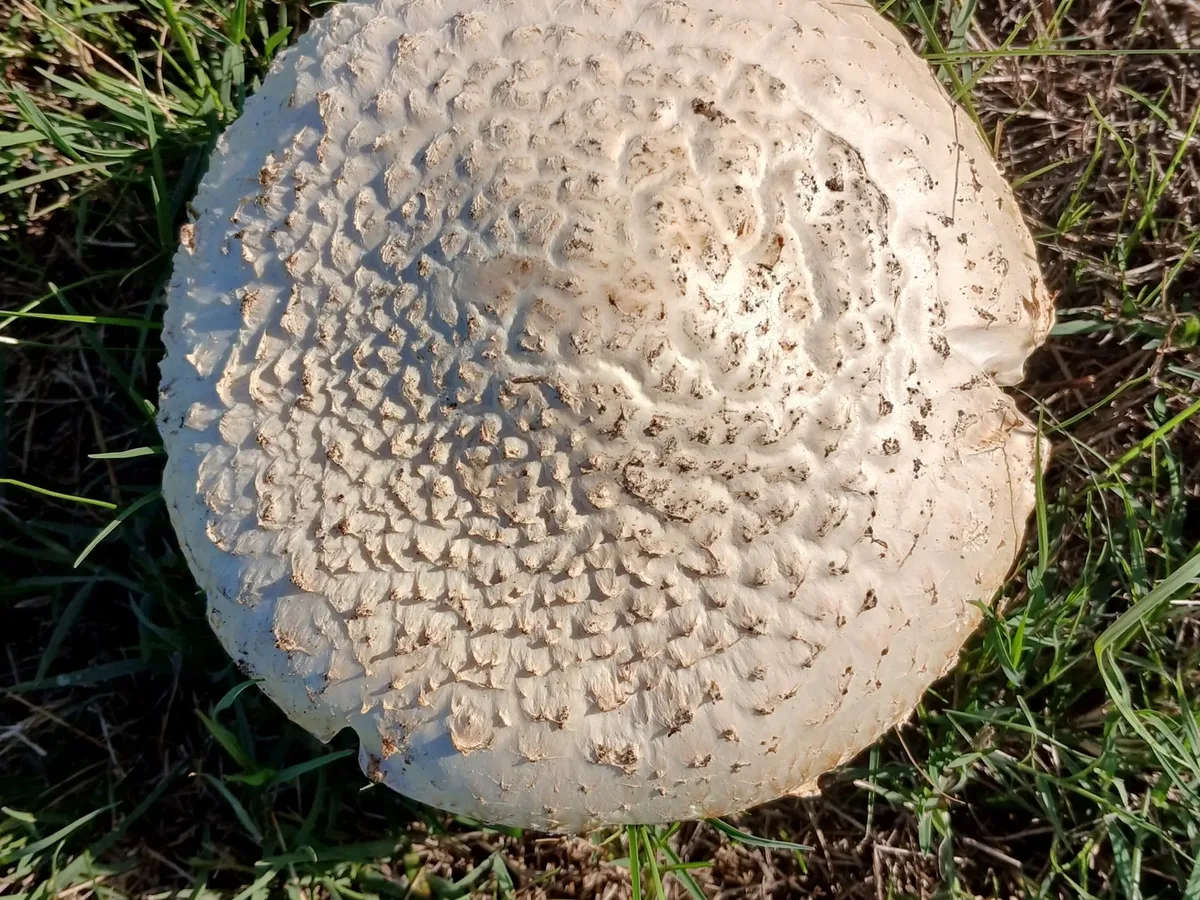
The cap begins as a pale buff-brown egg, roughly 4-6 cm across in the button stage, before expanding to a broad disc 8-18 cm in diameter while retaining a prominent, dark chestnut-brown central umbo.
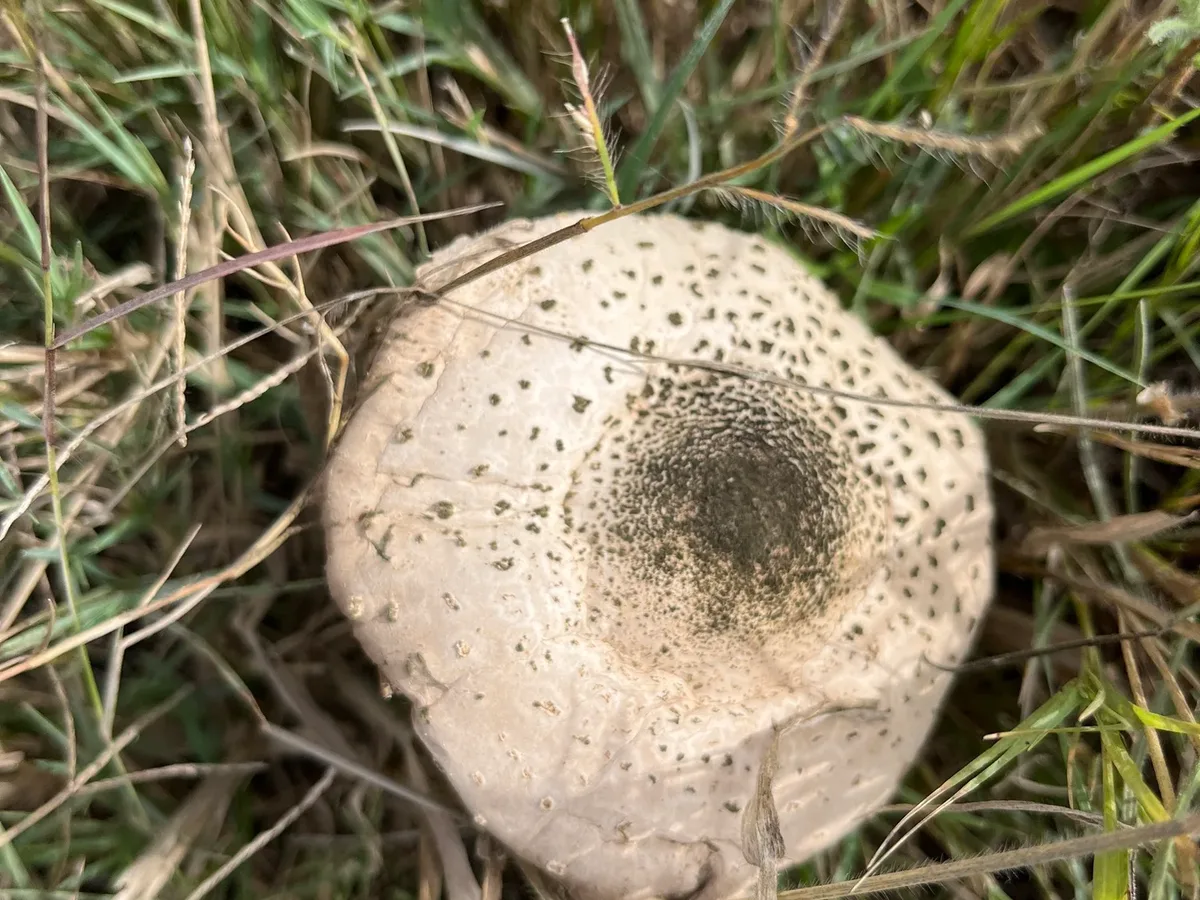
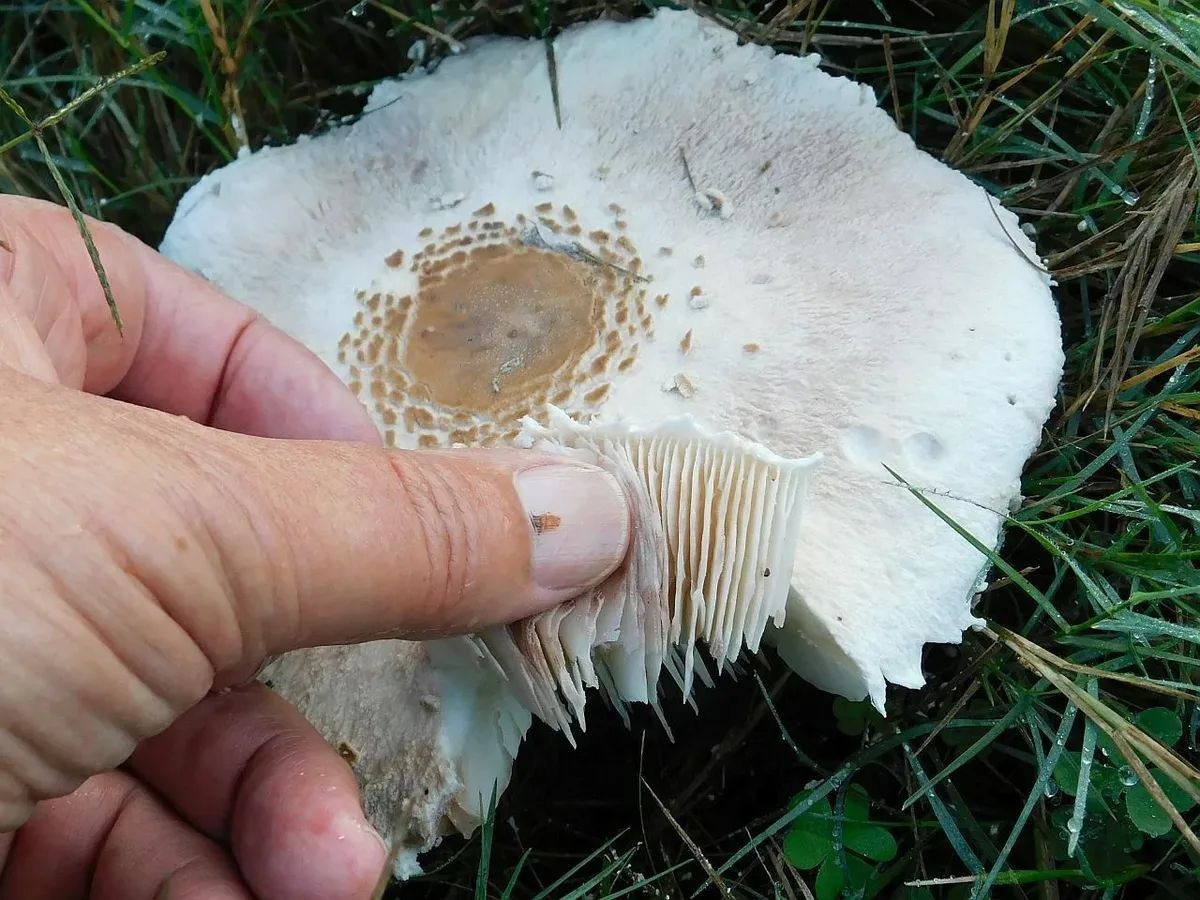
As the cap expands, the continuous brown veil breaks up into flat to slightly raised scales of pale cinnamon to tawny-brown over a cream-white background, arranged concentrically with the darkest region at the centre and the scales becoming sparser and paler toward the margin.
Gills / Pores
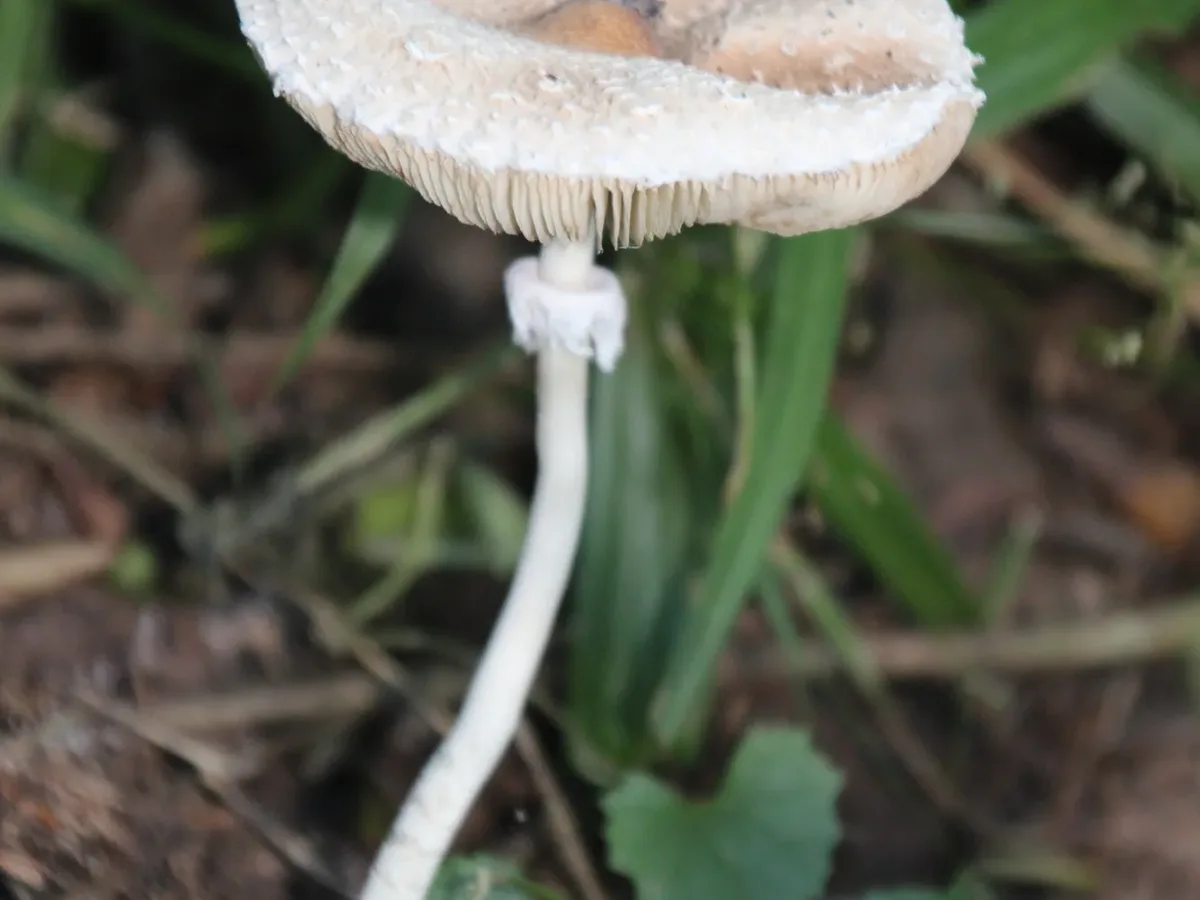
The gills are free (not attached to the stem), crowded, and persistently white to cream - they do not turn green or any other colour at maturity.
Stem
The stem is tall (10-22 cm), narrowly cylindrical with a gentle swelling at the base, hollow, white to pale buff, and marked with a pale snakeskin-like pattern of brownish fibrous banding below the ring zone.
The ring is a critical identification feature: it is double-layered (white above, pale brown below) and, importantly, can be slid up and down the stem freely between two fingers - this character categorically excludes the small deadly Lepiota species, in which the ring is thin, fragile, and firmly attached or absent.
Flesh
Flesh is moderately thick, white throughout, and stays white when the cap or stem is broken or cut - any pinkening, reddening, or colour change is a disqualifying feature.
Spore print white; this must be confirmed before consumption as the green-spored Chlorophyllum molybdites also occurs in the region.
Where & when it grows
Habitat
Occurs across sub-Saharan Africa in savanna, bushveld, Miombo woodland, and semi-arid grassland, growing as a saprotroph on buried organic matter and plant debris.
Frequently found:
- along roadsides cutting through indigenous bush;
- at the margins of maize fields bordering woodland;
- in garden lawns near indigenous trees;
- in grassy clearings within thicker woodland.
Does not form mycorrhiza and is therefore not linked to specific tree species.
The combination of adequate warmth and the first substantial rains of the summer monsoon typically triggers fruiting. Often grows singly or in small scattered groups.
When
This is a creature of the monsoon.
In southern Africa - South Africa, Zimbabwe, Zambia, Mozambique - it appears with the first substantial summer rains, broadly November through April, peaking December through February when the heat and moisture are at their most sustained.
In East Africa (Kenya, Tanzania) the pattern shifts: two annual rainy seasons, the long rains of March-May and the short rains of October-December, each capable of triggering a flush.
Outside those wet windows it is simply absent - the dry cool months hold no fruiting bodies, and the mycelium waits underground until conditions return.
How it grows
Saprotrophic, living in the soil by decomposing buried humus, dead root material, thatch, and grass debris - invisible for most of the year as a network of mycelium beneath the surface.
Fruiting bodies emerge singly or in small scattered groups, occasionally forming loose arcs, usually with a few metres between individuals.
What makes this species striking in the field is the speed of its appearance: within 48-72 hours of a good rain event under warm conditions, fully formed caps can push up from bare ground that seemed lifeless a day before, and a button can expand to its full 15 cm disc in two to three days.
That speed is its downside too - in the African heat, fruiting bodies deteriorate quickly and draw insect attention fast. A specimen that looks pristine in the morning may be past its best by evening.
Fruiting conditions
A tropical/subtropical warm-season species that requires both high soil temperatures (18-30 °C) and adequate rainfall. The summer monsoon rains of southern Africa (November-April) are the primary trigger. In the hot, moist conditions of the African summer, fruiting bodies can emerge very rapidly - within 3-7 days of a good rain event - and deteriorate quickly. Two rainy seasons in East Africa create two fruiting windows per year.
Look-alikes
Several species create confusion risks in the African context, and one group is genuinely deadly:
- 1Lepiota species (dapperlings, deadly dapperlings) - the most dangerous confusion. Several Lepiota species occur in sub-Saharan Africa, including African representatives of the deadly amatoxin-containing dapperlings (closely related to or conspecific with the European L. brunneoincarnata group, and potentially including undescribed African taxa). These are MUCH SMALLER than Macrolepiota zeyheri (cap typically 2-5 cm, never approaching 8 cm), lack the clearly double and moveable ring (their ring is thin, fragile, and either fixed or absent), and have a proportionally thicker stem relative to cap. The hard rule: any parasol-type mushroom with a cap under 7 cm must not be collected, regardless of other features.
- 2Chlorophyllum molybdites (false parasol, green-spored parasol) - present and common across tropical and subtropical Africa, and the most common cause of serious mushroom poisoning on the continent. It is similar in size and overall appearance to Macrolepiota zeyheri - cap 8-20 cm, pale brown scales on white background, similar habitat. The decisive differences: at maturity, the gills of C. molybdites turn from white to pale grey-green or dull olive-green, and the spore print is olive-green to grey-green (never white). A white spore print is required before eating any African parasol. Do not rely on gill colour alone as young C. molybdites has white gills.
- 3Macrolepiota dolichaula - a closely related African and Asian species with a very similar appearance. It is considered edible by local foragers in many regions, but the two species are morphologically close and may be confused or lumped in the literature; treat them as interchangeable for practical purposes. Some authorities consider M. zeyheri a synonym or variety.
- 4Amanita species in button stage - a small, still-unexpanded Amanita fruitbody enclosed in its universal veil can superficially resemble a parasol egg. Always dig up the base carefully to check: Amanita species have a sack-like volva at the base; Macrolepiota has no volva. Several African Amanita species are deadly.
Young unexpanded Amanita fruitbodies enclosed in the universal veil can superficially resemble parasol eggs. Always dig up the base carefully: Amanita has a sack-like volva at the base, which Macrolepiota entirely lacks. African Amanita species include deadly forms. Any mushroom with a bulging sack at the base must be immediately discarded, regardless of other characters.
African Lepiota species related to the European deadly dapperling complex are MUCH SMALLER (cap 2-5 cm, rarely exceeding 6 cm), have a thin, fragile, non-moveable ring or no ring at all, and a proportionally thicker stem. They contain lethal amatoxins (alpha-amanitin). The hard exclusion rule: any parasol-type mushroom with a cap under 7 cm must not be collected, regardless of other features. The size difference alone is sufficient to separate them from M. zeyheri if specimens are large and fully developed.
Very similar in size, cap colouration, and habitat; common and widely distributed across sub-Saharan Africa. At maturity, gills of C. molybdites turn pale grey-green to olive; spore print is distinctly olive-green to grey-green. A white spore print is required before eating any African parasol - this is the single most important safety test in this region. C. molybdites causes severe gastrointestinal poisoning and is the most commonly poisonous mushroom species in tropical Africa and globally.
A closely related large parasol common across Africa and Asia. Morphologically very similar to M. zeyheri and considered a possible synonym or variety by some authorities. Cap typically paler (buff-white to pale ochre), with finer, less contrasting scales; stem snakeskin pattern may be more pronounced; often slightly larger. Both are edible when correctly identified and neither presents a meaningful hazard relative to the other - treat them as interchangeable for practical purposes. The key point is that both are large Macrolepiota with a double moveable ring and a white spore print.
The European parasol mushroom, occasionally recorded in South Africa in disturbed or plantation habitats. Edible; very similar overall but typically larger (cap 12-30 cm), with more vivid snakeskin banding on the stem, a thicker and more conspicuous double ring, and a preference for open grassland and field edges rather than bushveld. Practically interchangeable in the kitchen once confirmed.
In the kitchen
Picking & cleaning
Collect only large, well-developed specimens with caps clearly exceeding 7-8 cm in diameter and with all Macrolepiota characters confirmed:
- the double-layered, freely-sliding ring must be present;
- flesh must remain white when cut;
- spore print must be white (take a print overnight).
The large cap size is the single most important safety filter - all dangerous lookalikes in the Lepiota group are substantially smaller (cap rarely exceeds 5-6 cm).
Do not collect button-stage mushrooms before the cap has fully separated from the stem and the ring formed.
- Cut the stem at the base with a knife rather than pulling, to avoid disrupting the habitat.
- Place caps upward in an open basket.
- Photograph the underside (free white gills), the stem pattern, and the ring before collecting.
Do not collect any parasol-type mushroom without confirming white flesh, a white spore print, and a moveable double ring.
Cooking
The cap is the edible portion; the stem is fibrous and tough and should be discarded or reserved for stock.
Clean the cap by brushing off debris; the ring can be removed from the stem and discarded.
Pan-fry over high heat in oil or fat until golden and firm - 3-4 minutes per side for a whole cap. Flavour is mild, pleasant, and faintly nutty. The cap can also be grilled, breaded and shallow-fried, or sliced and added to stews.
Must be cooked thoroughly before eating; raw consumption is inadvisable and may cause gastrointestinal irritation in sensitive individuals.
Due to the short shelf-life in warm conditions, use promptly after collection.
Good to know
Macrolepiota zeyheri is regarded as edible by experienced local foragers and mycologists across southern Africa, but the identification must be confirmed against every character before consumption.
The key safety rules are:
- 1Cap must be at least 7-8 cm in diameter (all deadly small Lepiota are smaller).
- 2The ring must be clearly double-layered and freely slide up and down the stem - a thin, fragile, or fixed ring excludes Macrolepiota.
- 3Flesh must remain white when cut - any colour change is disqualifying.
- 4Spore print taken overnight must be white - any olive, green, or grey tint indicates Chlorophyllum molybdites.
- 5Dig up the base to confirm there is no volva or sack-like structure (which would indicate a potentially deadly Amanita).
Given the presence of deadly Chlorophyllum molybdites in the same habitat and region, obtaining a spore print is not optional - it is essential. Some individuals may experience mild gastrointestinal sensitivity; cook thoroughly.
This species is classified as caution rather than freely edible because:
- the deadly Chlorophyllum molybdites regularly grows alongside it in the same habitats;
- local Lepiota species create small-cap confusion risk;
- mycological literature on African Macrolepiota taxonomy is less settled than for European counterparts.
A reference guide - never an edibility guarantee. When in doubt, leave it out.