Slender parasol
Macrolepiota mastoideasyn. Lepiota mastoidea (Fr.) P.Kumm., Lepiota gracilenta (Krombh.) Quél., Macrolepiota gracilenta (Krombh.) Wasser
 ks1v (CC0)
 © Denis Zabin (CC BY)
 © Denis Zabin (CC BY)
 © Denis Zabin (CC BY)
 © Denis Zabin (CC BY)
 © Denis Zabin (CC BY)
 © Denis Zabin (CC BY)
 © Denis Zabin (CC BY)
 ks1v (CC0)
 ks1v (CC0)ks1v (CC0)© Denis Zabin (CC BY)
Edible only with the right preparation - or safe for some people but not others. Learn the caveats first.
Never eat a mushroom you are not 100% sure of - check the look-alikes below, and always cook wild mushrooms.
How to recognise it
The slender parasol is one of those mushrooms that rewards a second look. It shares the classic parasol shape of its close relative Macrolepiota procera but carries itself more lightly - a taller, thinner stem relative to its cap, and a neat pointed nipple (umbo) crowning the centre that rarely disappears even as the cap opens wide.
That nipple is the single most reliable field character and gives the species one of its common names.
Cap
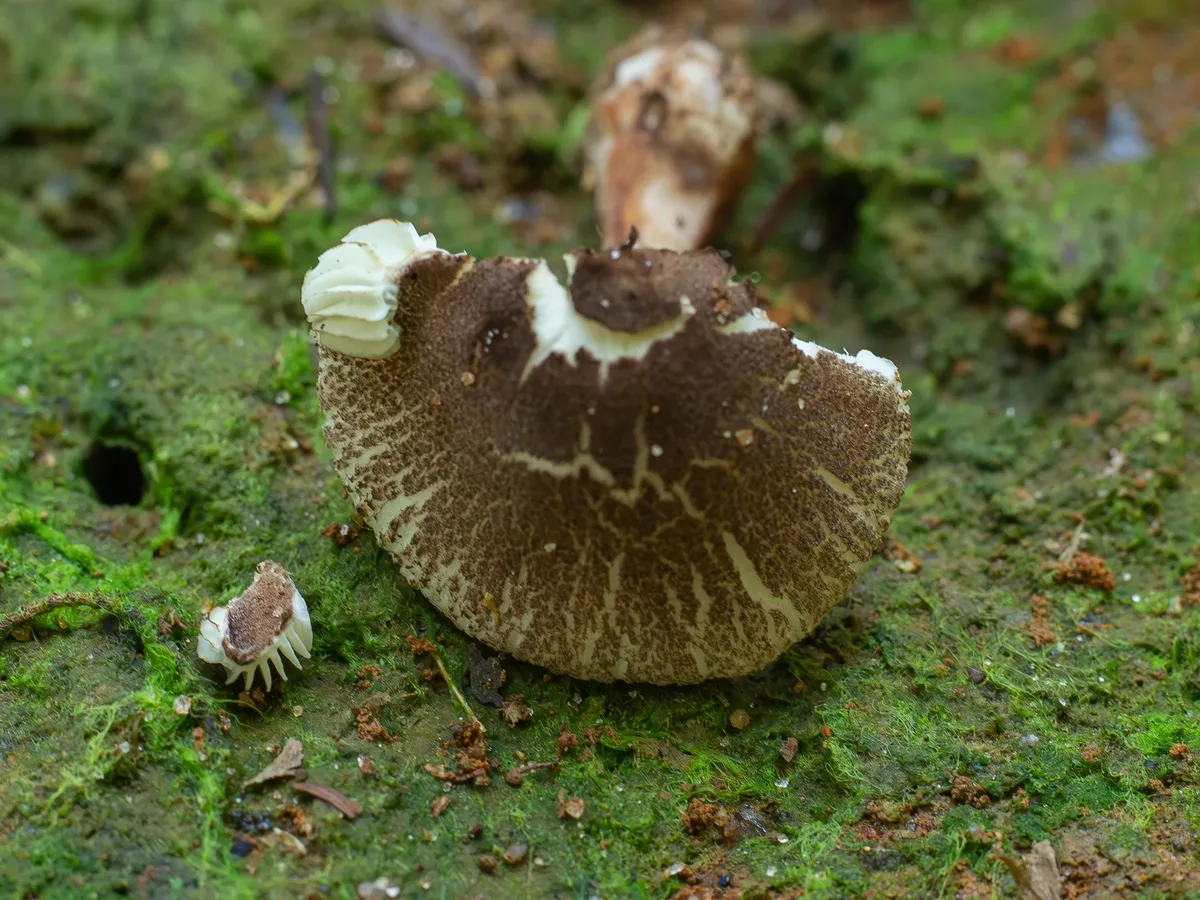
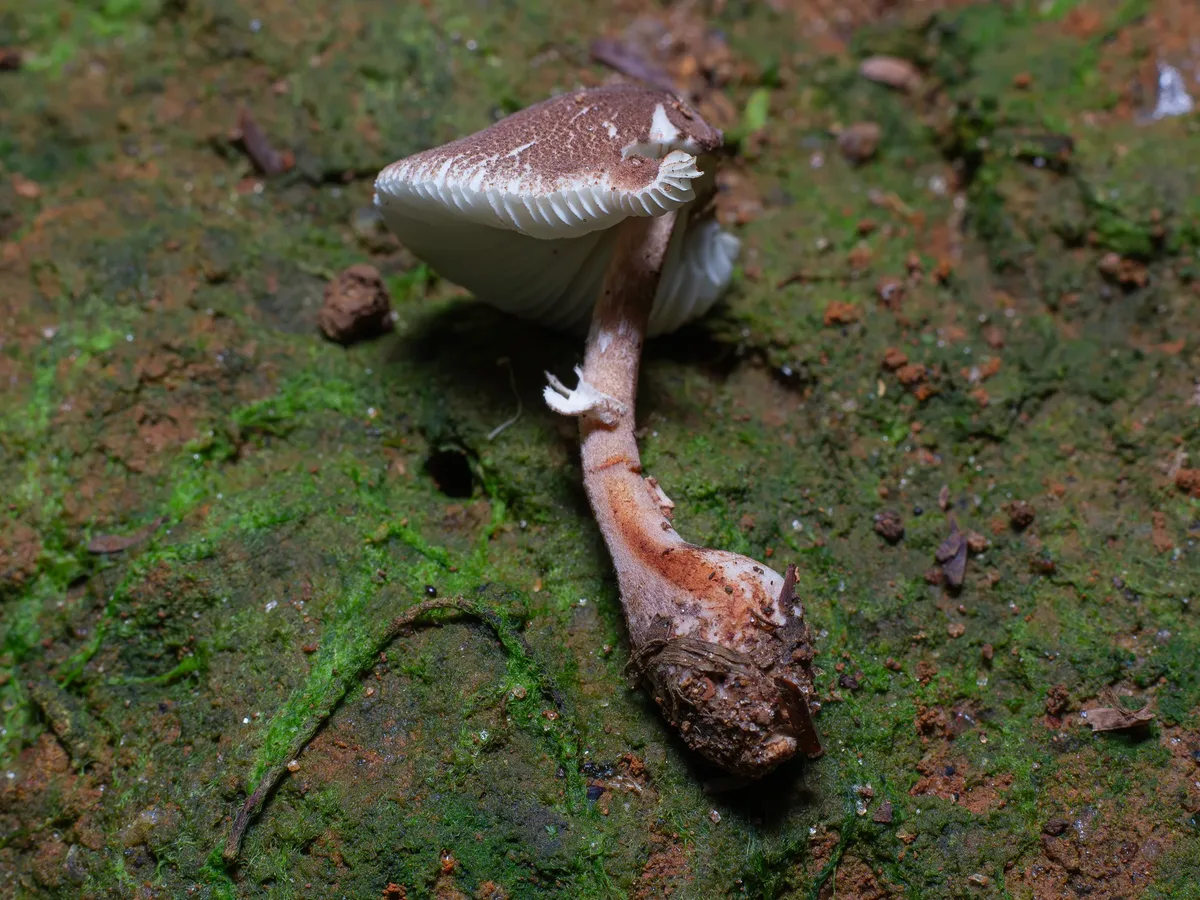
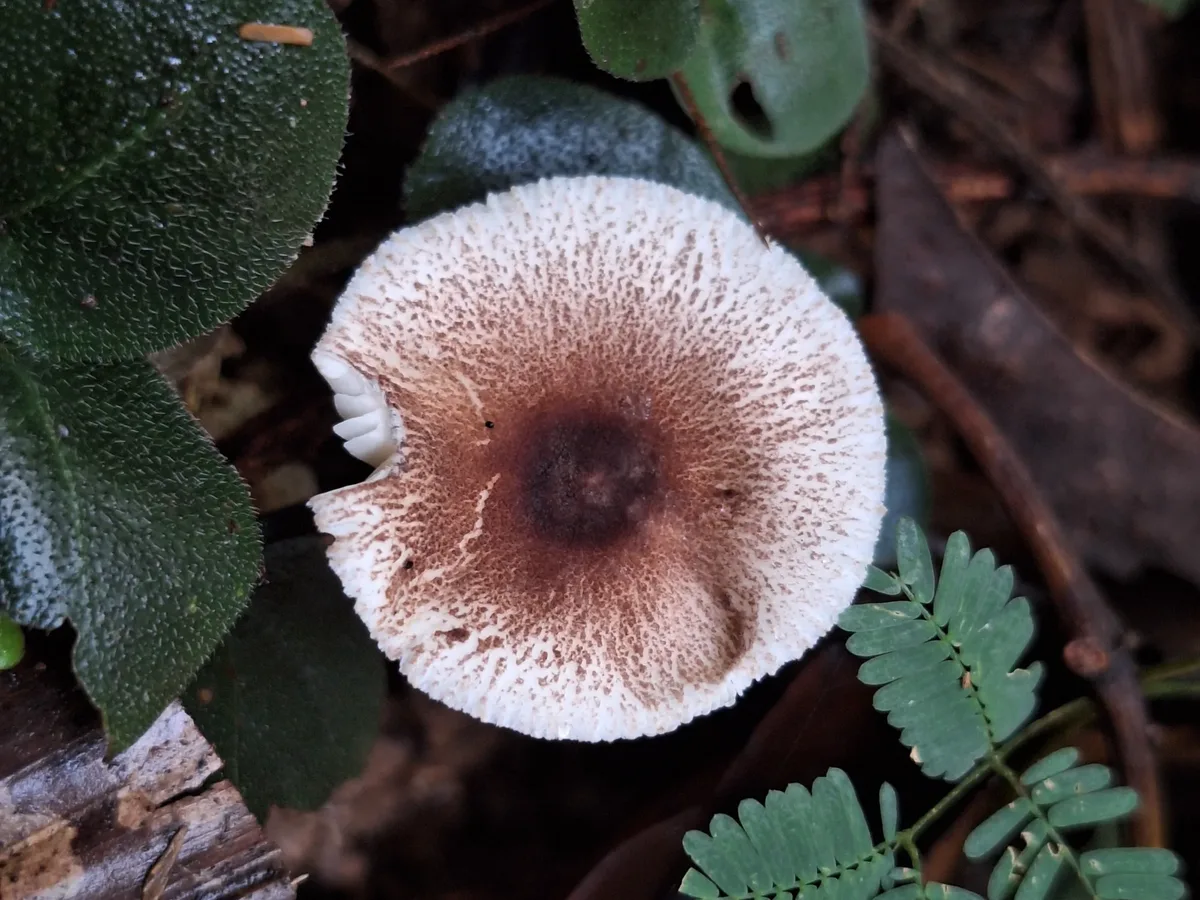
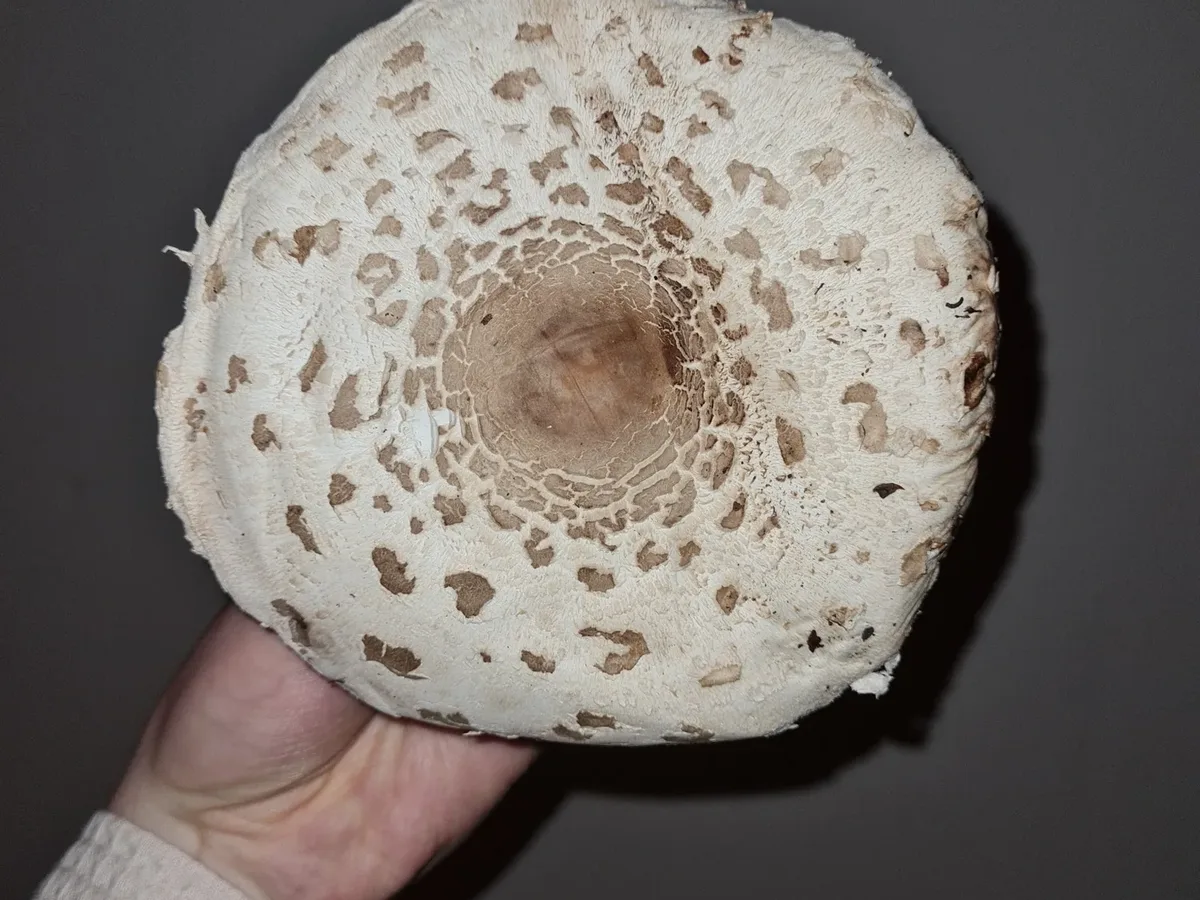
As the cap expands to 6-14 cm, its pale cream-buff surface breaks up into flat, fibrous, brown scales arranged around a rich dark-brown central disc that stays intact. Scales thin out and pale toward the margin, which may carry white fibrous veil remnants in younger caps.
Gills
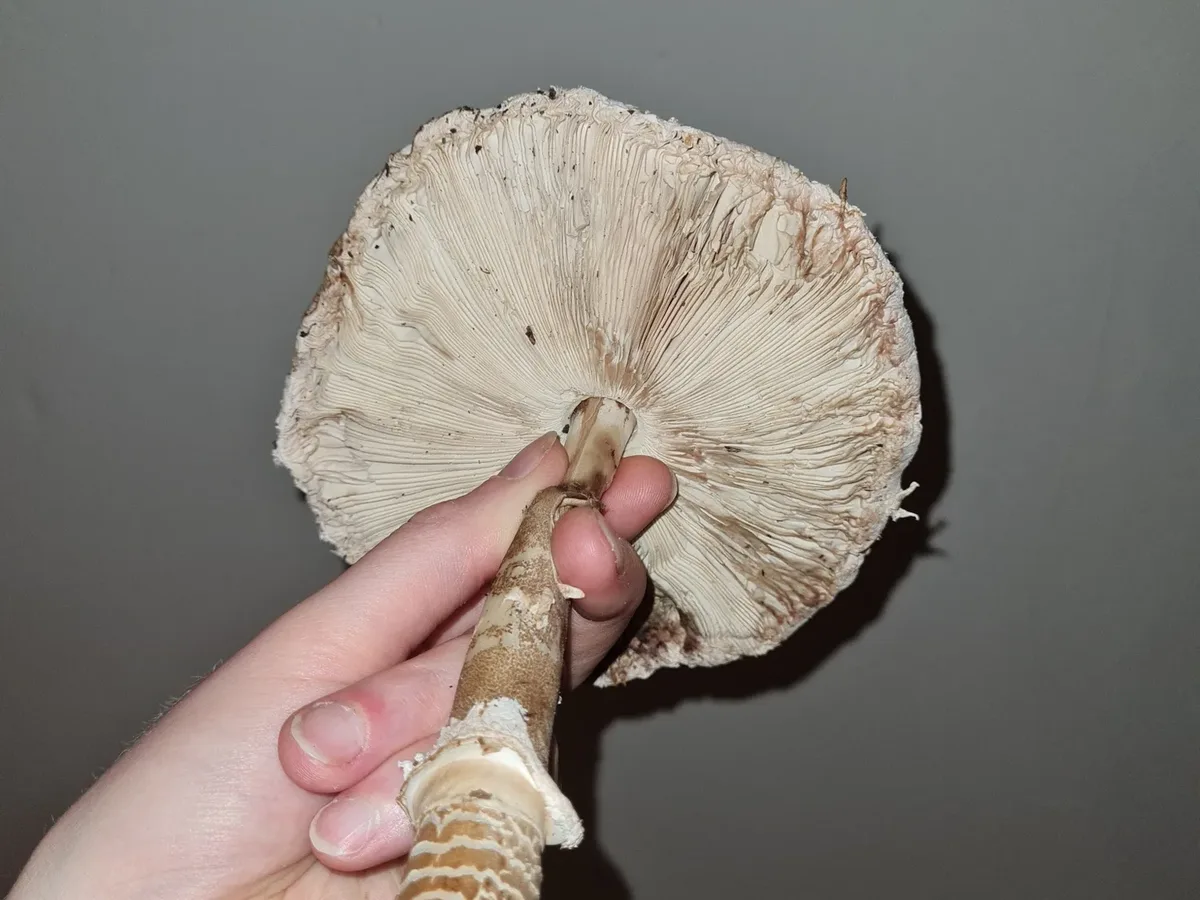
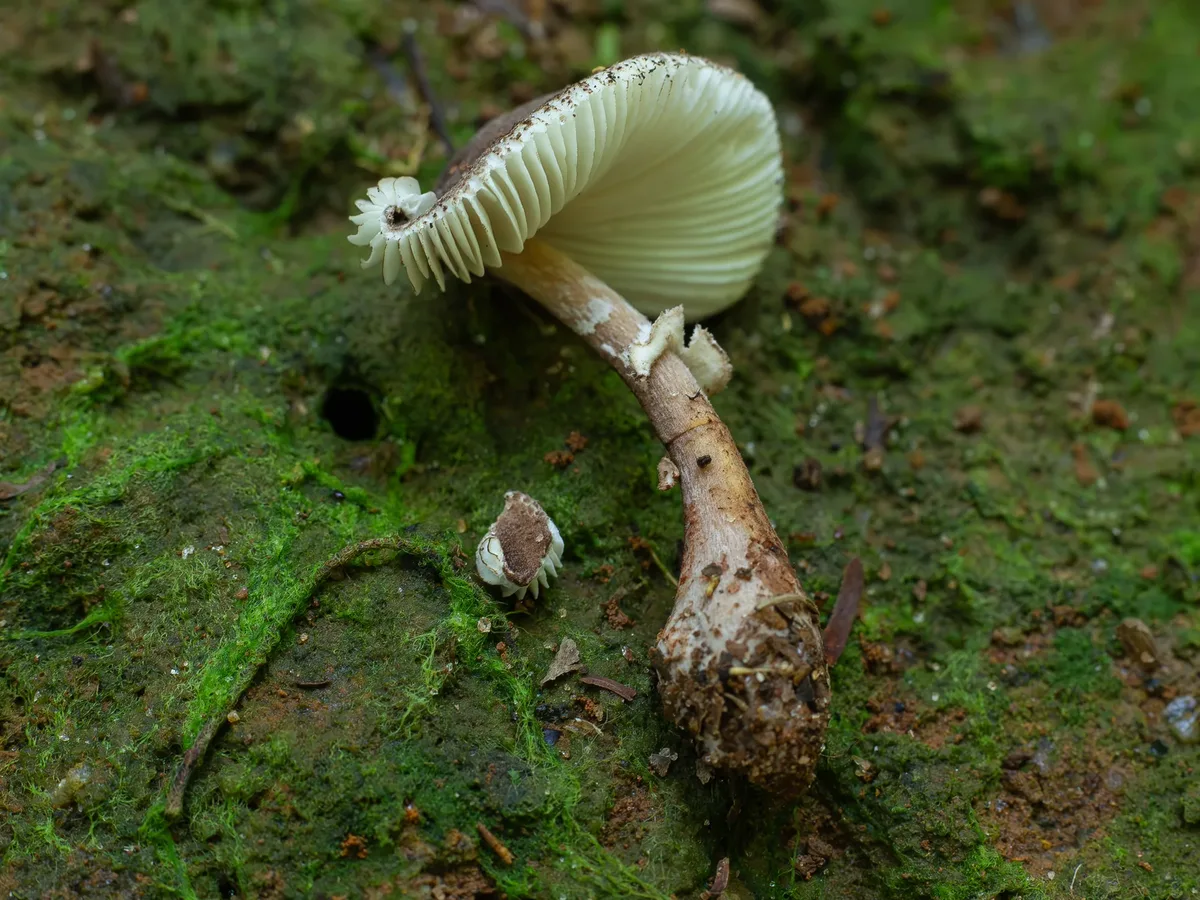
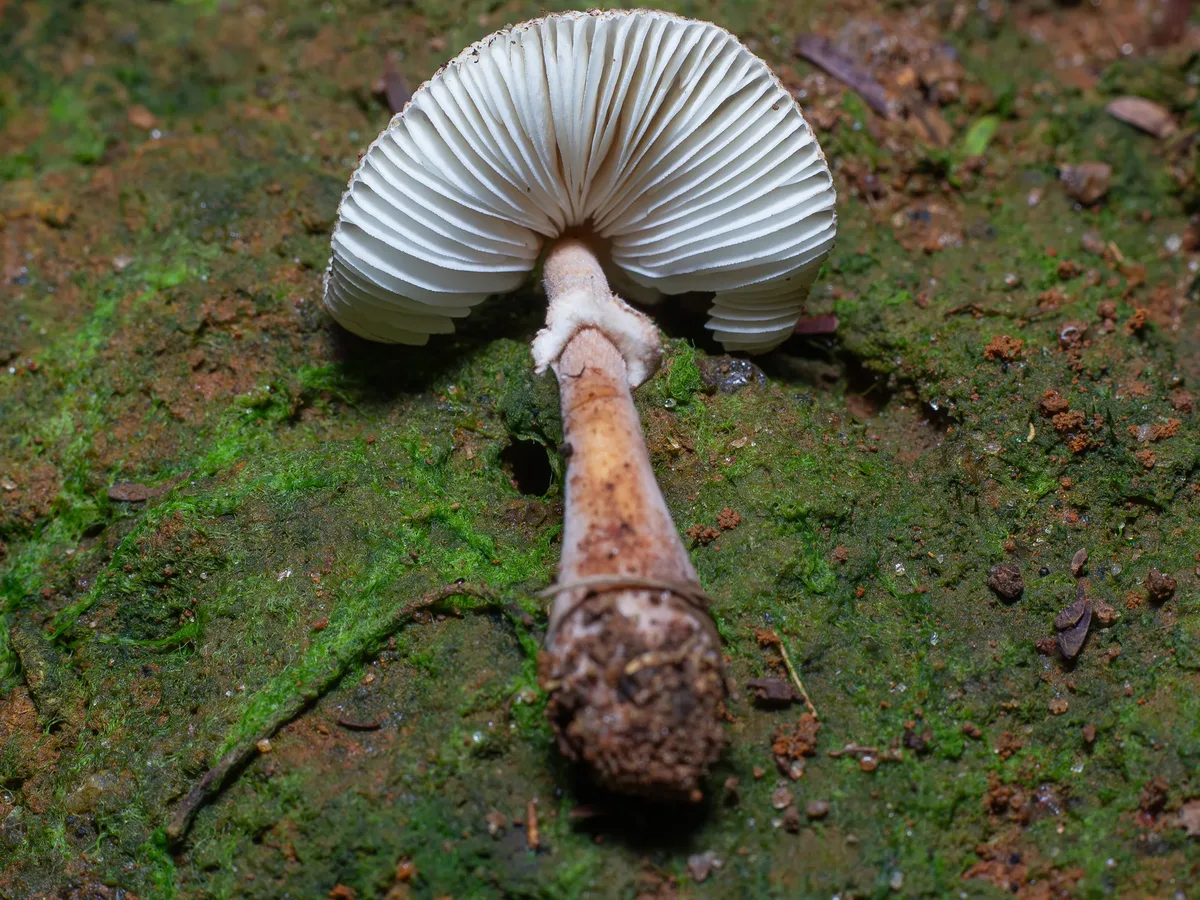
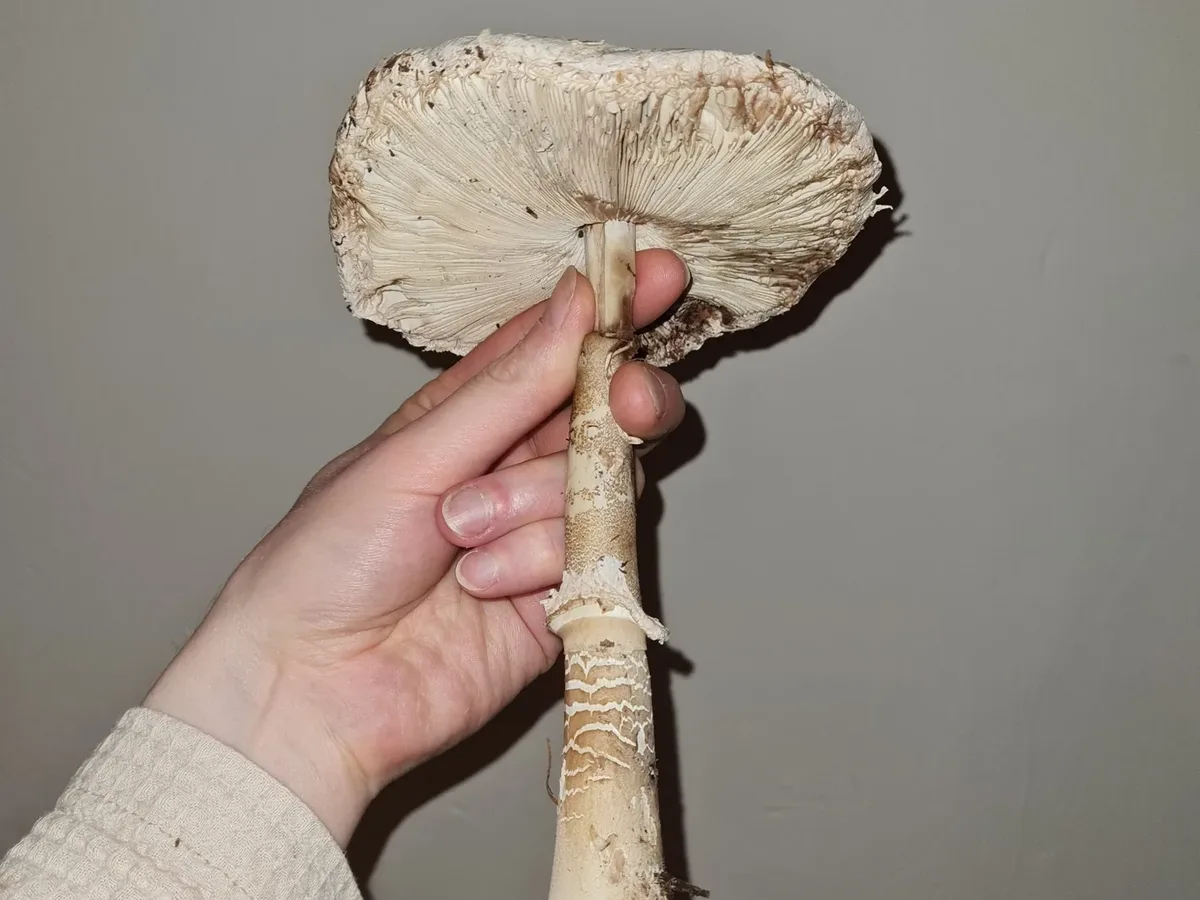
The gills are free (not touching the stem), crowded, and white to cream. They never turn green, which matters when ruling out lookalikes.
Stem
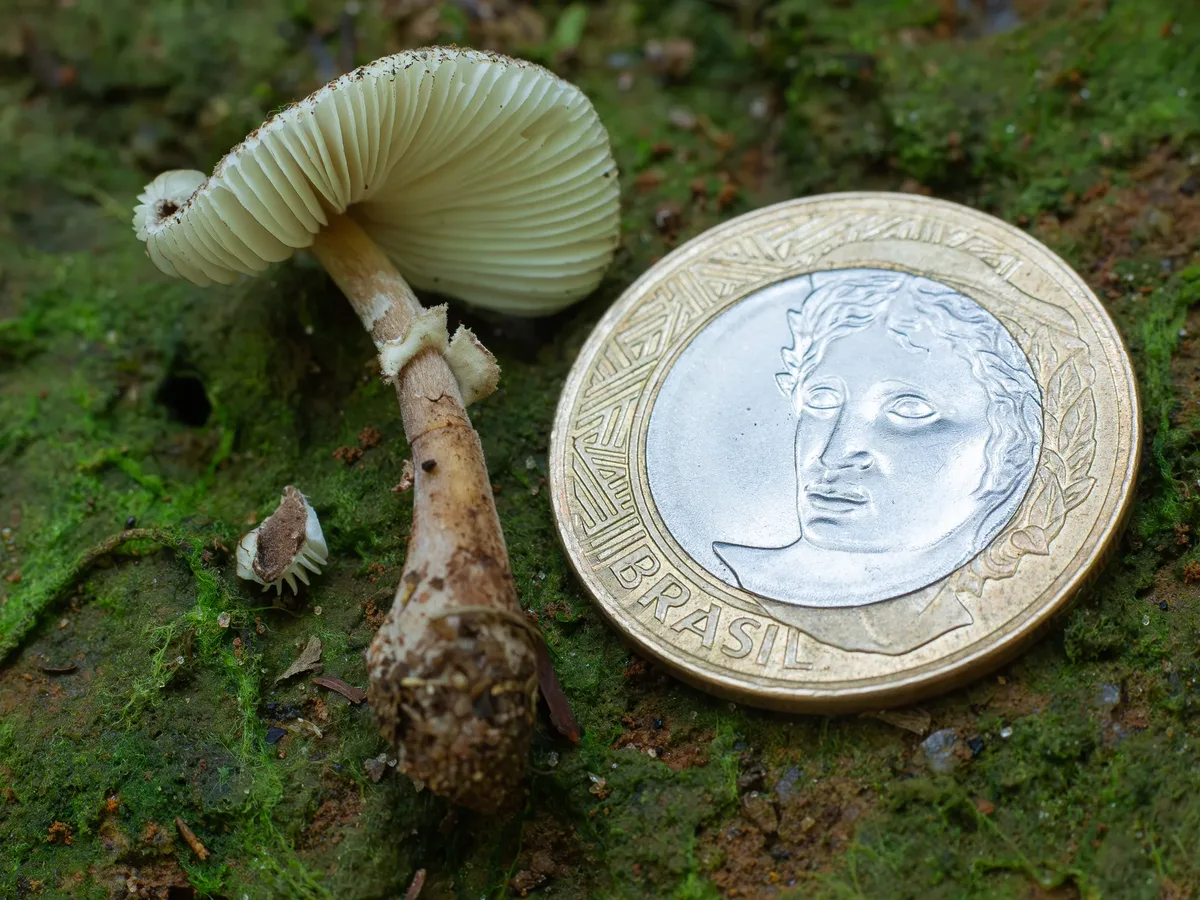
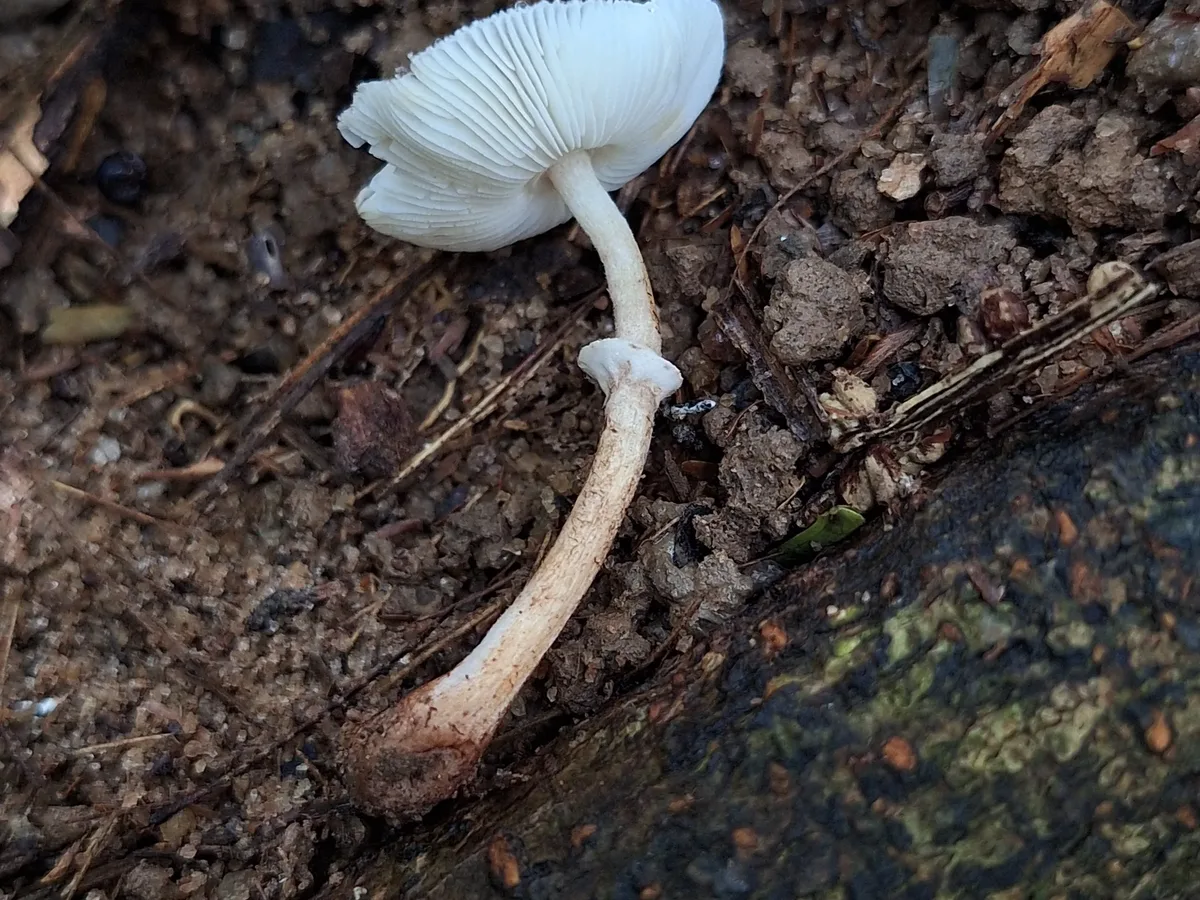
The stem reaches 9-20 cm, notably slim and hollow, white to pale buff, with snakeskin-like brownish fibres below the double-layered ring. The ring itself is moveable when you slide it along the stem - a useful identity check - though less thick and prominent than the ring of M. procera.
Flesh
The flesh is thin, consistently white throughout, and critically does not redden or change colour when cut or bruised. Take a moment to check this every time.
Smell & taste
The smell is mild and pleasant, faintly nutty. Spore print white.
Where & when it grows
Habitat
Look for the slender parasol at the edge of things - where woodland opens into a grassy clearing, where a hedgerow meets a meadow, or where a park's scattered trees give way to lawn.
It favours partial shade and well-drained, organic-rich soils, and this is one way to tell it apart from the classic parasol (M. procera), which tends to prefer fully open fields and pastures. M. mastoidea is at home slightly inside the treeline, in dappled light.
It lives as a saprotroph, quietly decomposing buried organic matter, dead roots, and leaf litter, and typically appears singly or in small scattered groups rather than in conspicuous rings.
When
Fruiting runs from midsummer (July) through late autumn (November), with the peak in late August through mid-October across temperate Europe.
Warm summers can bring early flushes in July; late autumn rains in Mediterranean regions sometimes extend the season into December. In northern Scandinavia, records are more scattered and mostly confined to August and September.
A broadly distributed species across central and western Europe.
How it grows
The slender parasol is saprotrophic, drawing its energy from buried humus, dead roots, and leaf litter. It fruits singly or in scattered groups, occasionally in loose arcs.
Like many saprotrophic mushrooms, it moves quickly once conditions are right. After warm, moist spells following a dry spell in late summer, a fruiting body can push from button stage to fully open cap within 48-72 hours.
One day there is nothing; the next, a pale parasol stands at the woodland edge as if it had always been there.
Fruiting conditions
Requires warm moist conditions; fruiting triggered by late summer and autumn rainfall after a warm period. Soil temperatures above 10°C needed; best fruiting at 14-20°C. Flush typically appears 7-14 days after significant rainfall in suitable habitat.
Look-alikes
Several critically important lookalikes must be ruled out before consuming M. mastoidea:
- 1Lepiota brunneoincarnata (Deadly dapperling) and related deadly Lepiota spp. (L. helveola, L. josserandii, L. subincarnata) - these are DEADLY, containing amatoxins identical to the death cap. They are MUCH SMALLER (cap usually 2-4 cm, rarely reaching 6 cm), lack the fully double moveable ring of Macrolepiota, often have a reddish-brown or flesh-pink cap with concentric scales, and lack the prominent nipple umbo. Never collect parasol-type mushrooms with caps under 6 cm.
- 2Macrolepiota procera (Parasol mushroom) - the primary edible look-alike that M. mastoidea is most readily confused with. M. procera has a more robust stem with more pronounced snakeskin patterning, a thicker and more prominent double ring, grows in open pasture and field edges, and typically attains larger cap diameter (10-30 cm). The key differences are subtle: M. mastoidea is more slender, prefers woodland edges rather than open fields, and the umbo is more consistently pronounced. Both are edible when correctly identified.
- 3Chlorophyllum rhacodes (Shaggy parasol) - also frequently confused; distinguished by its white flesh that turns orange-red or saffron immediately on cutting (M. mastoidea flesh stays white), a much more ragged, shaggy cap surface, a bulbous hollowed stem base, and preference for compost-rich garden soil and greenhouse settings. C. rhacodes causes GI upset in a significant minority of consumers.
- 4Chlorophyllum molybdites (Green-spored parasol, False parasol) - not native to Europe but present in subtropical zones and increasingly recorded. Produces green spores (spore print olive-green to grey-green), gills turn grey-green with age, and causes severe gastrointestinal poisoning. A white spore print conclusively excludes this species.
- 5Amanita species in button stage - young unexpanded Amanitas enclosed in a universal veil can superficially resemble parasol eggs. Always dig carefully to check for a volva (sack or cup at base) which excludes Macrolepiota entirely.
Cap 2-5 cm, pale brown to ochraceous-buff with concentric brown fibrous scales and a fragile, non-moveable ring. Contains amatoxins (alpha-amanitin); has caused fatal poisonings. Exclude by size - never collect parasol-type mushrooms with caps under 6 cm.
Much smaller cap (usually 2-4 cm, rarely reaching 6 cm); reddish-brown to flesh-pink scales; ring thin and fragile, not clearly double or moveable; contains lethal amatoxins. Never collect any parasol-type mushroom with a cap under 6 cm.
Very small (cap 2-5 cm), cap pinkish-brown to brick-red with a uniform velvety texture, ring fragile and non-moveable, strongly contrasting reddish-ochre scales. Contains amatoxins. Exclude by size alone.
Unexpanded Amanita buttons enclosed in a universal veil can resemble parasol eggs superficially; always dig up the base to check - Amanita has a sack-like volva at the base and the cap is typically greenish-yellow. The double moveable ring and flat fibrous brown scales of M. mastoidea are never present on Amanita.
Cap 2-5 cm, pinkish-brown fibrous scales on cream background, thin immoveable ring or ring absent. Contains alpha-amanitin. Exclude by size - only collect Macrolepiota with caps clearly over 6 cm.
Spore print and mature gills turn distinctly olive-green to grey-green - M. mastoidea always has a white spore print. A spore print overnight will distinguish these conclusively. C. molybdites causes severe GI poisoning and is the most common mushroom poisoning species in North America.
Edible; very similar but typically larger (10-30 cm cap), more robust stem with more vivid snakeskin banding, thicker ring, and prefers fully open grassland and field edges rather than woodland margins. Stem base more markedly bulbous. Practically interchangeable in the kitchen once correctly identified.
Flesh turns saffron-orange to red immediately on cutting - M. mastoidea flesh stays white. Cap surface is more coarsely and raggedly shaggy rather than flat-scaled. Causes GI illness in sensitive individuals even when cooked. Found especially on compost and disturbed nitrogen-rich soil.
In the kitchen
Picking & cleaning
Collect only mature, fully open specimens where the nipple-umbo is still clearly visible - this helps confirm identity.
When you cut through the cap or stem, the flesh must be white and stay white; any change in colour is a reason to leave the specimen behind. Confirm the ring is present and slides freely along the stem.
Snap cleanly through the base or use a knife, and place the cap face-up in a basket to protect the ring and the delicate scales.
Only collect caps that are clearly 6 cm or larger with all features confirmed. Never collect parasol-type mushrooms still in button stage or under this size threshold, as all the deadly Lepiota lookalikes remain small.
Reject any specimen with yellowing flesh or a ring that is fixed in place.
Cooking
The cap is the edible part; the stem is tough and fibrous and best discarded or used only for stock.
Treat as a quality edible: clean the cap with a dry brush, remove the ring, and pan-fry the cap whole or in large segments over high heat in butter or olive oil until golden on both sides - 3-4 minutes per side. The thin flesh cooks quickly and benefits from high heat to develop flavour and avoid sogginess.
Excellent breaded in egg and breadcrumbs and fried like a schnitzel, a classic central European preparation. Can also be grilled briefly.
Flavour is mild, pleasant, and slightly nutty; the texture is firm yet delicate when cooked correctly. Not suitable for drying due to thin flesh.
Must be cooked before eating; raw consumption is inadvisable.
Good to know
M. mastoidea is considered edible by experienced mycologists, but carries significant identification risk due to superficial resemblance to deadly small Lepiota species and potential confusion with Chlorophyllum species.
A conservative approach is strongly recommended. ONLY collect specimens with:
- caps confidently exceeding 6-7 cm
- a clearly double, moveable ring on the stem
- white flesh that does not change colour on cutting
- the characteristic pointed central umbo
A white spore print must be obtained if any doubt exists.
Never collect parasol-type mushrooms that are still in button stage or smaller than 6 cm cap diameter - this size threshold is the single most important safety rule, because all deadly lookalikes in the Lepiota genus remain small.
The cap scales of M. mastoidea should be flat and plate-like rather than concentric raised rings.
Some individuals experience mild gastrointestinal upset even from correctly identified specimens, possibly related to partial cooking or individual sensitivity - cook thoroughly.
A reference guide - never an edibility guarantee. When in doubt, leave it out.