Giant Tricholoma
Macrocybe giganteasyn. Tricholoma giganteum, Agaricus giganteus (Massee), Gyrophila gigantea, Tricholoma colossus (non Singer)
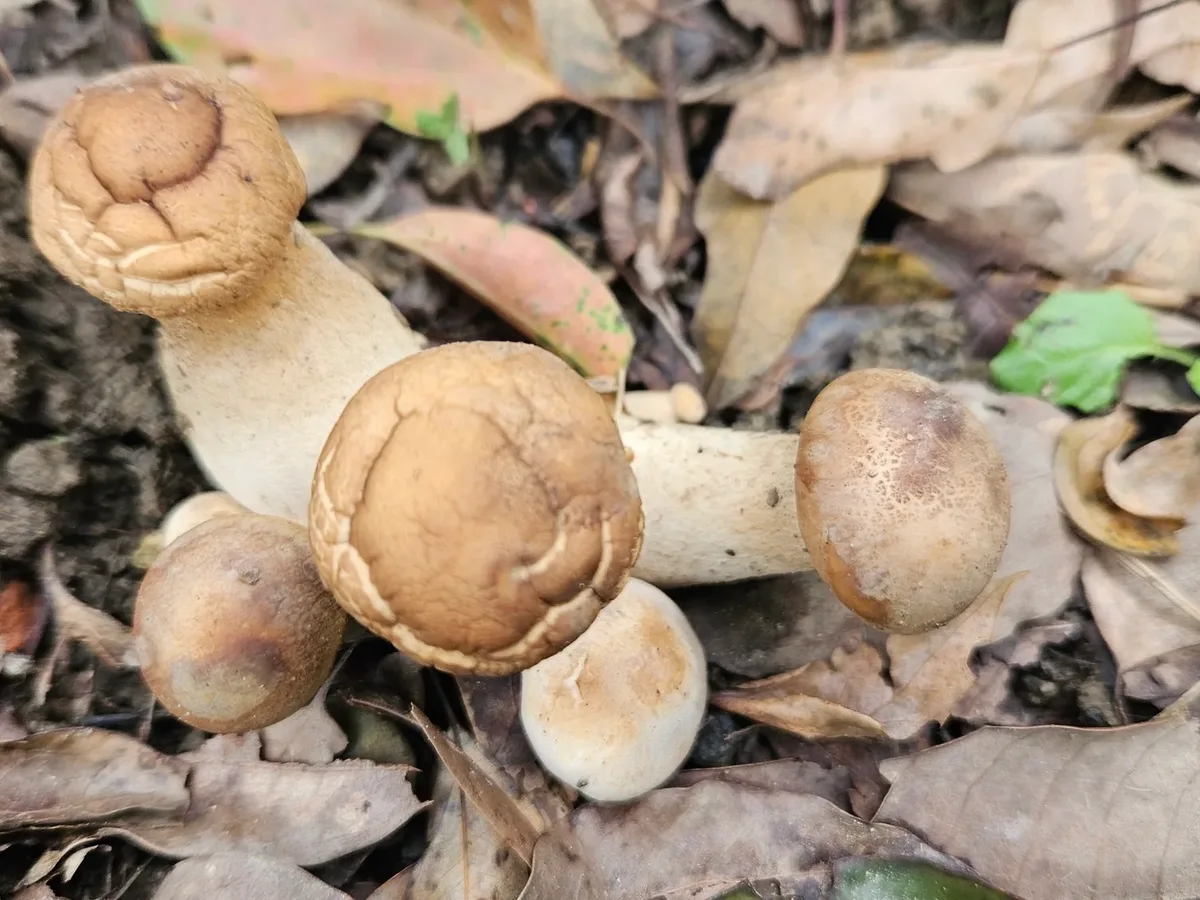 © 胡正恆(Jackson Hu) (CC BY)
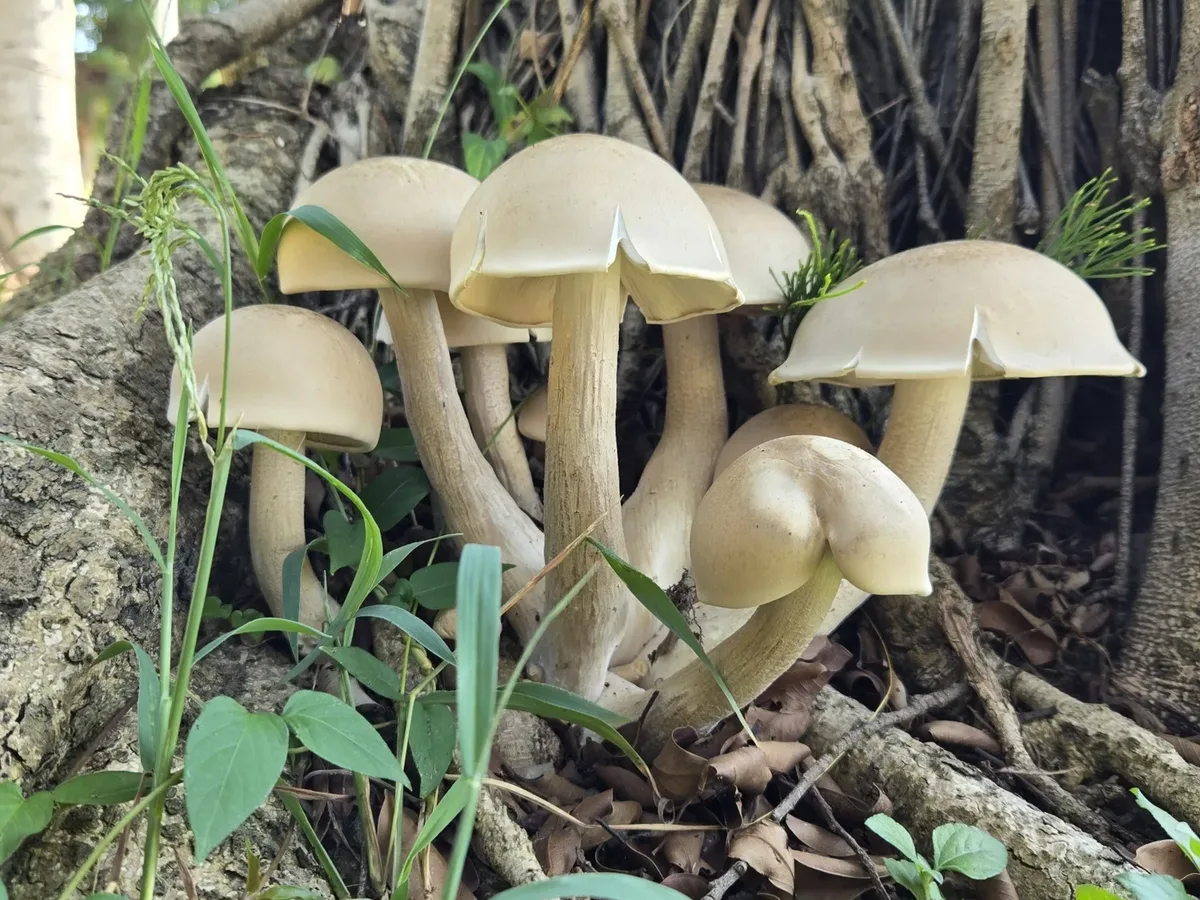 © jimmy (CC BY)
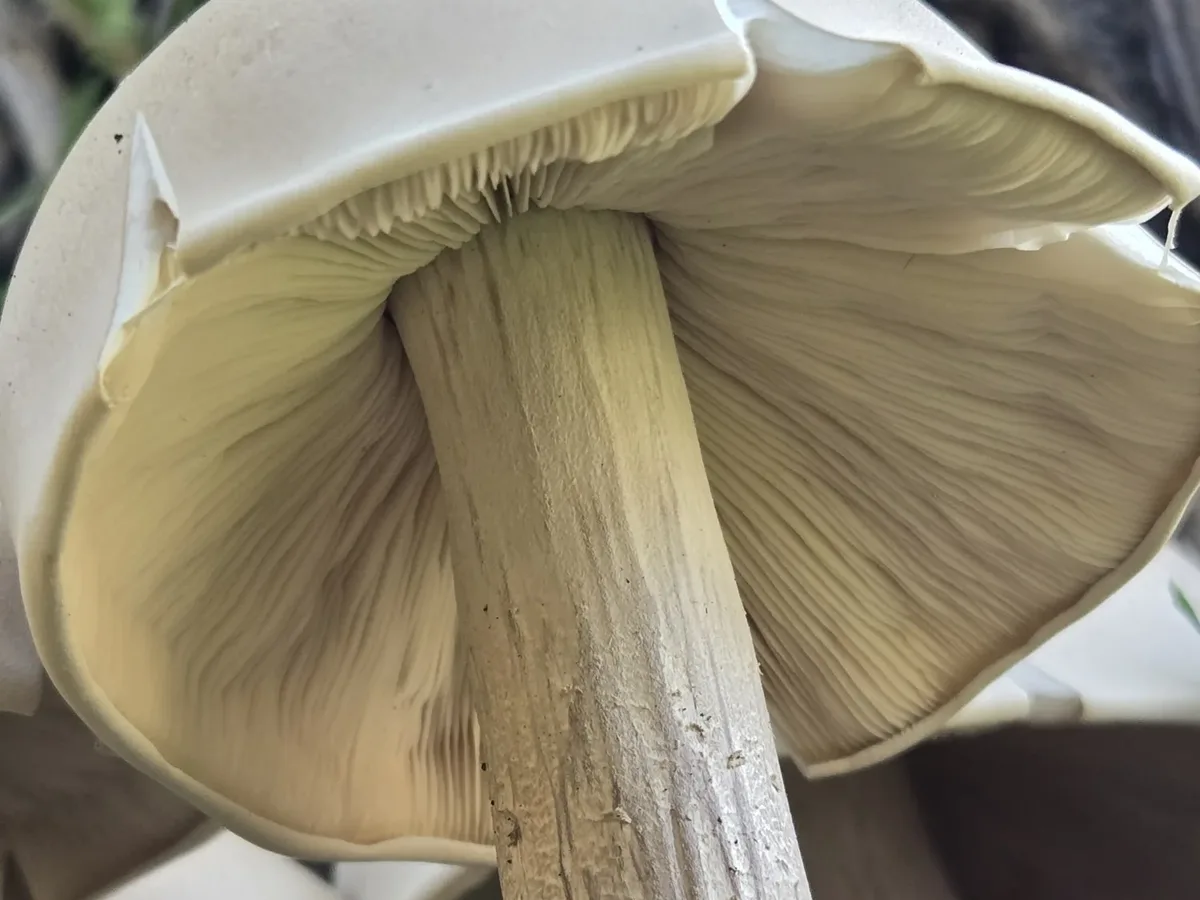 © jimmy (CC BY)
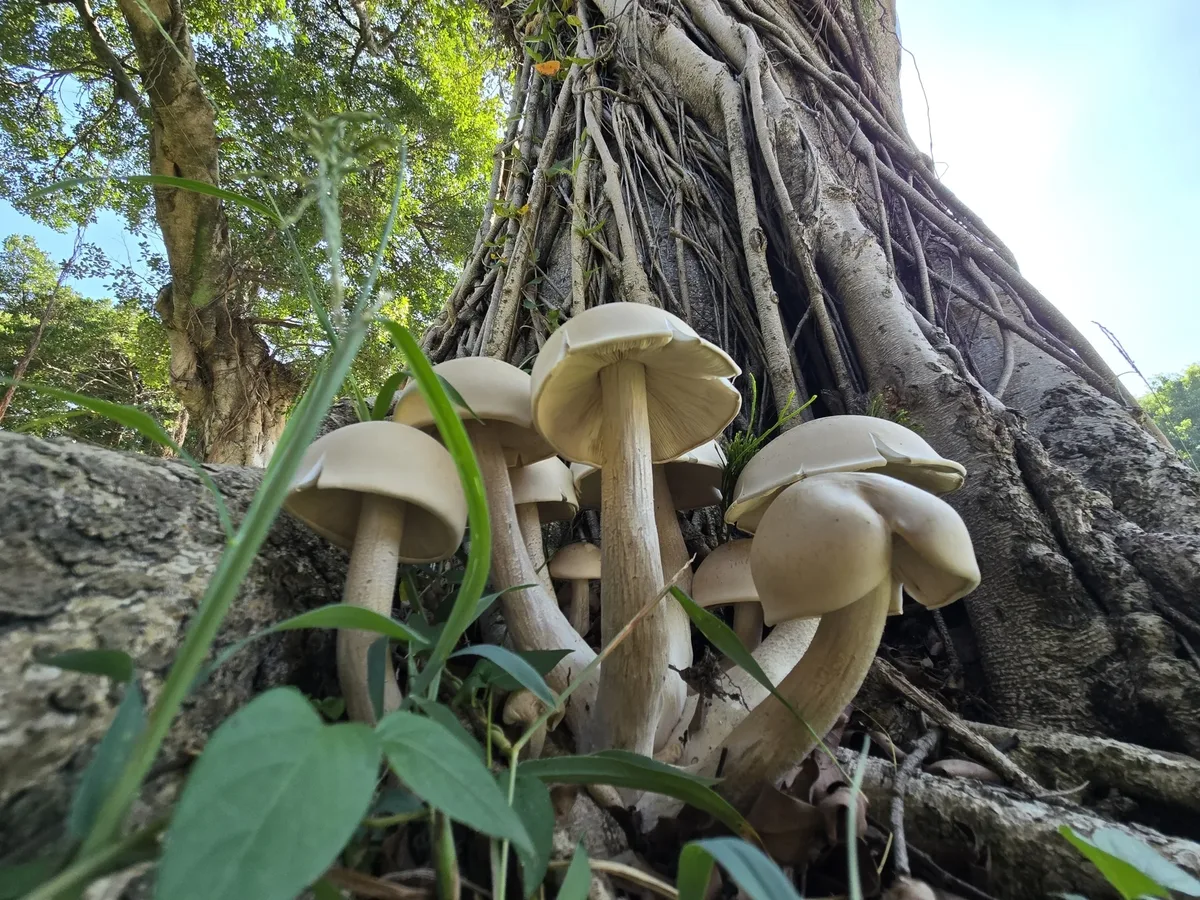 © jimmy (CC BY)
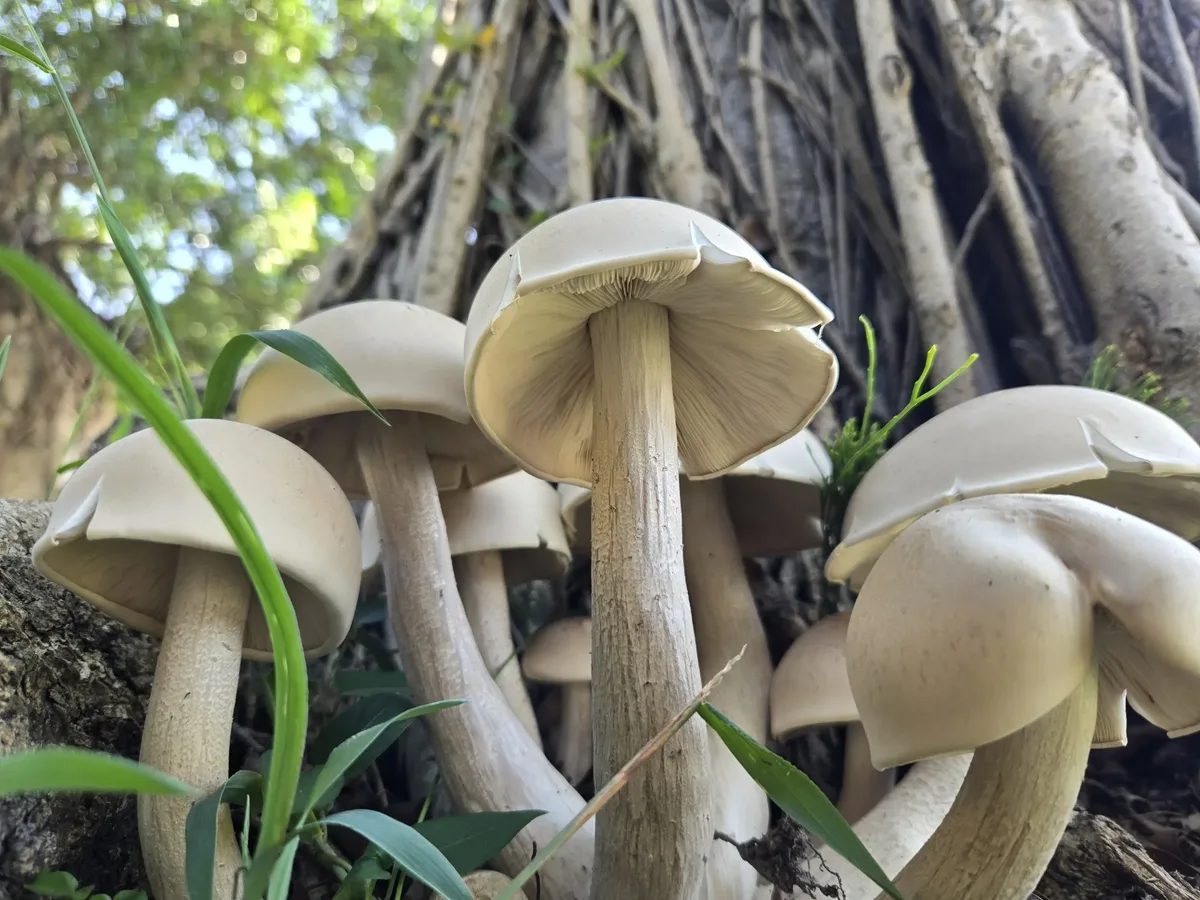 © jimmy (CC BY)
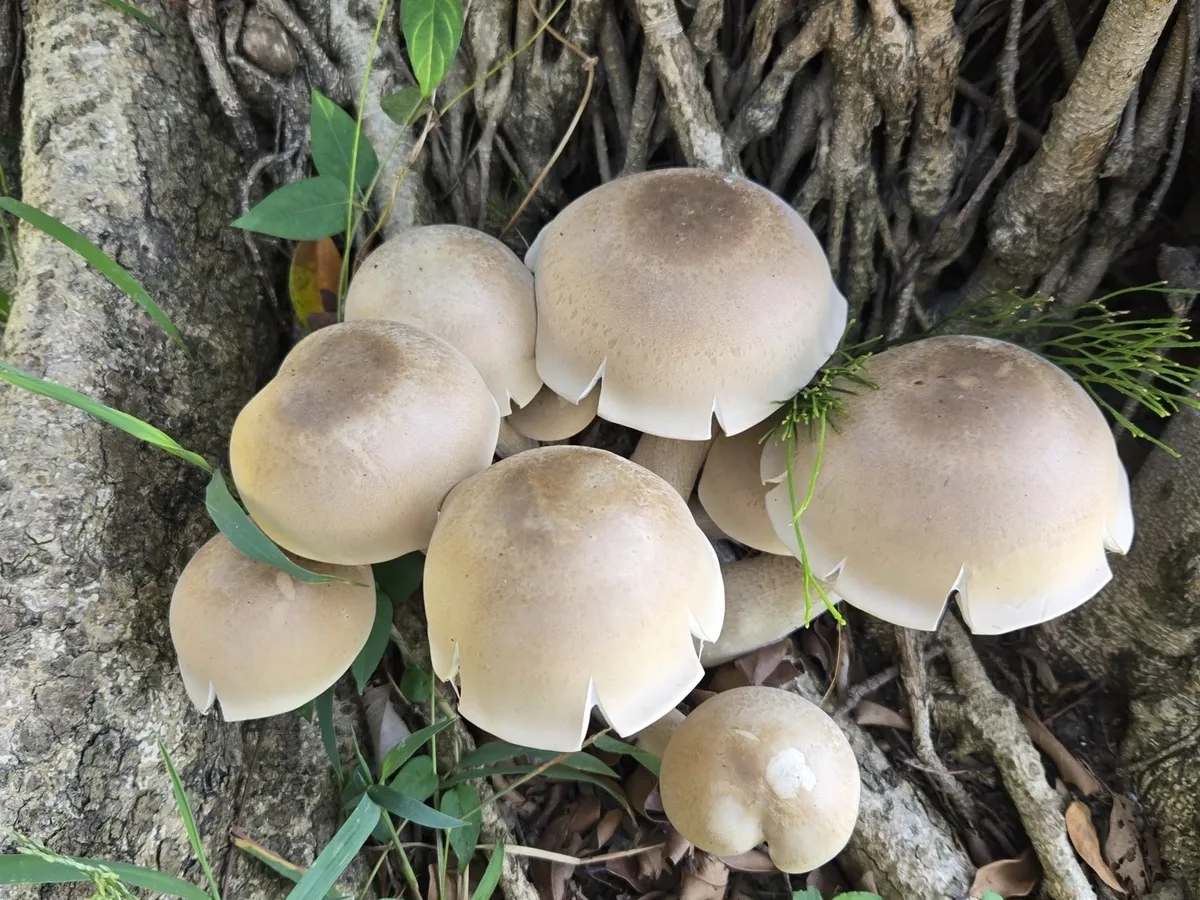 © jimmy (CC BY)
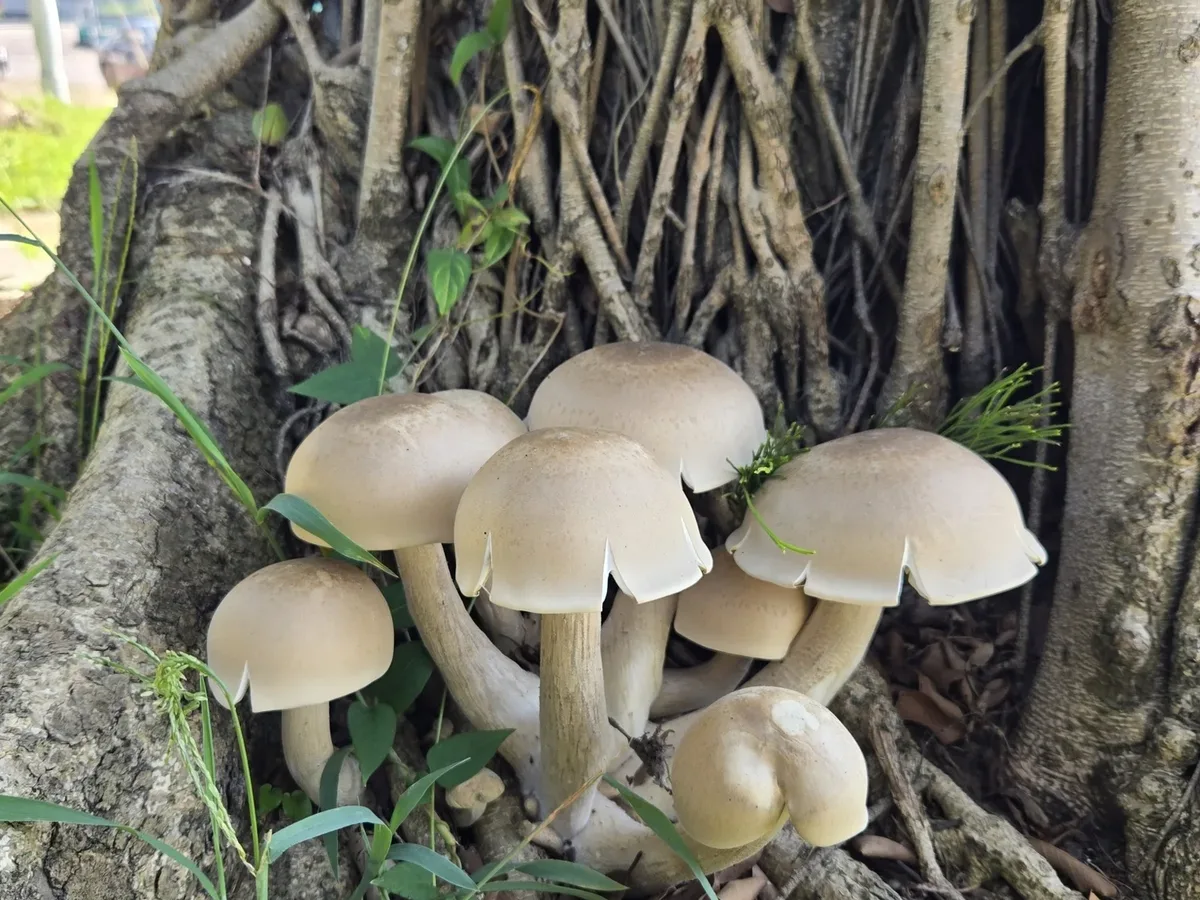 © jimmy (CC BY)
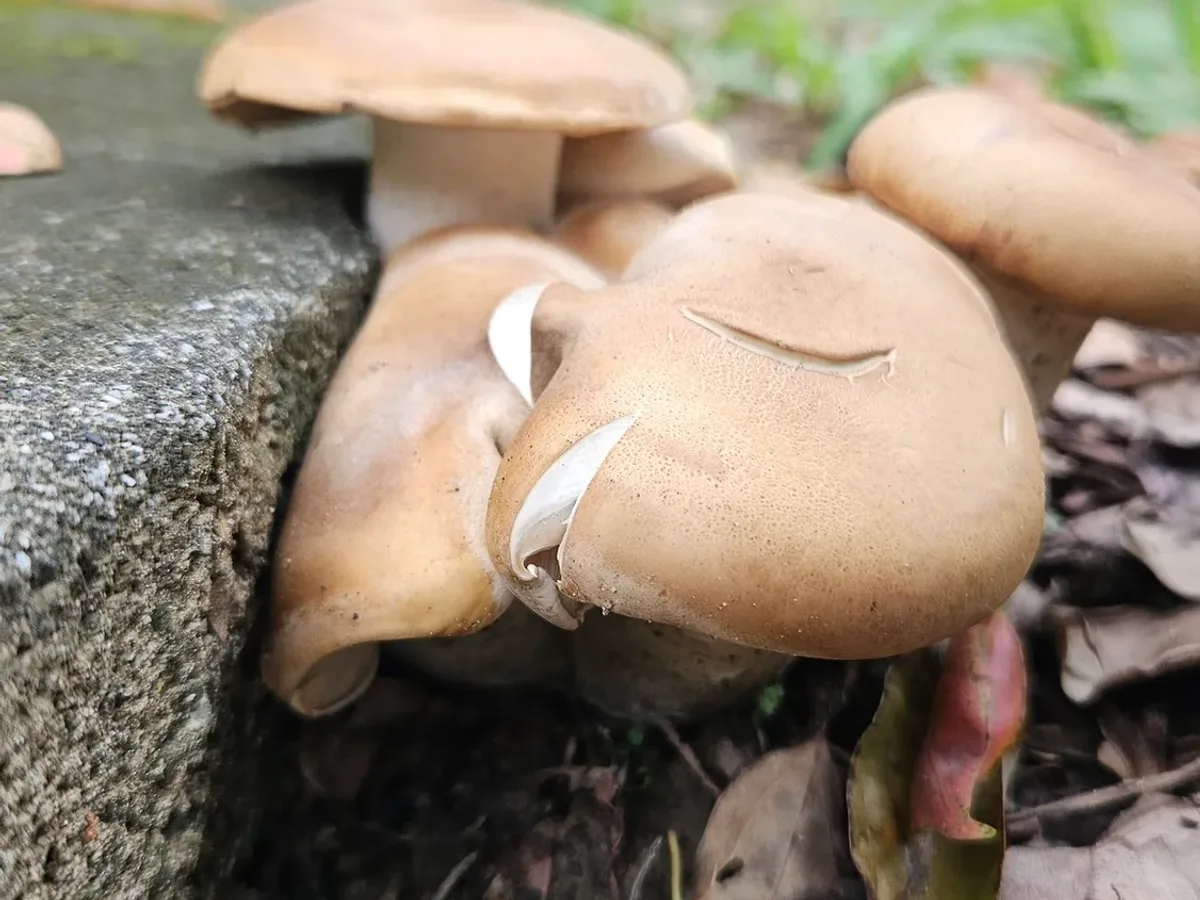 © 胡正恆(Jackson Hu) (CC BY)
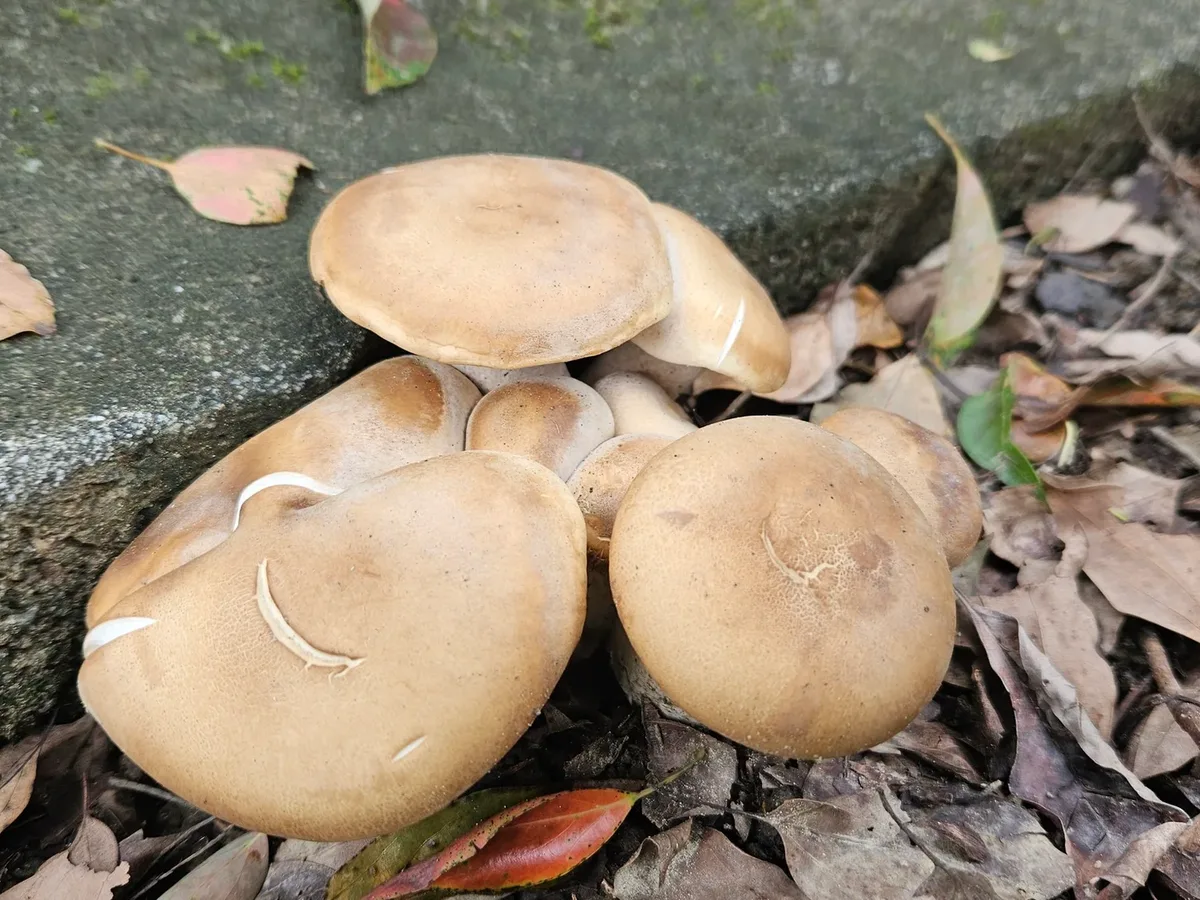 © 胡正恆(Jackson Hu) (CC BY)
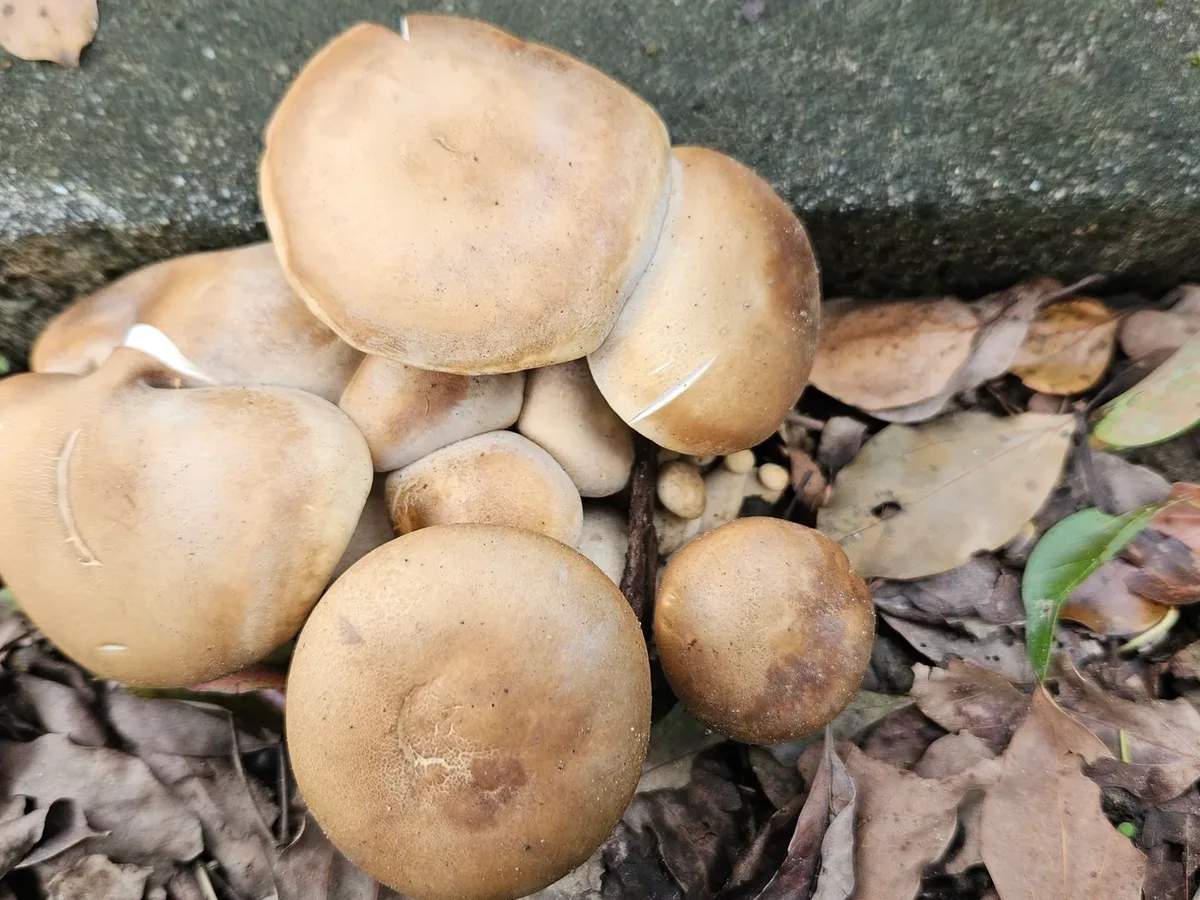 © 胡正恆(Jackson Hu) (CC BY)© 胡正恆(Jackson Hu) (CC BY)© jimmy (CC BY)
Good to eat, once you have identified it with certainty and cooked it through.
Never eat a mushroom you are not 100% sure of - check the look-alikes below, and always cook wild mushrooms.
How to recognise it
Macrocybe gigantea earns the word 'giant' honestly. At its most spectacular it rivals a dinner platter - the cap expanding to 60 cm or more across and the clustered fruit bodies together sometimes exceeding ten kilograms of fresh weight - making this one of the largest gilled mushrooms known anywhere on Earth.
Cap
The cap begins as a tight, rounded dome in fresh ivory-white, smooth and firm, and slowly flattens and broadens under the tropical sun, often developing faint buff or cream tones at the centre of old specimens and occasionally fracturing into irregular fibrous patches at the margin.
Gills
Turn the cap over and the gills are uniformly white to cream, crowded, narrow, and show a characteristic sinuate notch where they meet the stem - they do not blush pink, turn greenish, or darken with age, which is an important safety distinction from several troublesome look-alikes.
Stem
The stem is stout, solid, and white, finely fibrous on the surface, and the base is anchored visibly to a mat of white mycelial tissue from which white cords (rhizomorphs) radiate outward into the soil - a field mark so consistent that once you have seen it, it is almost unmistakable.
There is no sac-like cup (volva) around the base, and no persistent skirt-like ring around the stem.
Flesh
The flesh is thick, brilliant white, firm, and does not change colour when sliced.
Smell & taste
Smell is mild and pleasant, slightly of fresh flour; taste is mild.
Where & when it grows
Habitat
Unlike most large, impressive mushrooms, Macrocybe gigantea is a creature of open, human-altered landscapes rather than undisturbed forest. It is a saprotroph - a decomposer - feeding on humus and buried organic debris in warmed, enriched soils.
Look for it in:
- grassland and meadows
- along roadsides and railway embankments
- at the edges of coconut and banana plantations
- around bamboo groves
- on village commons
- along the margins of paddy fields
- in gardens
It seems to thrive wherever soil has been disturbed, compacted, and given a nutrient boost from plant debris or agricultural waste.
It is a common monsoon-season sight across lowland South and Southeast Asia: the bright white clusters appear almost overnight after heavy rain, sometimes in the same spots year after year, occasionally forming arcs or rings several metres in diameter as the underground mycelial network expands outward.
When
The fruiting season tracks the monsoon.
In South Asia (India, Sri Lanka, Bangladesh) the main flush appears with the onset of the southwest monsoon in June and continues through September and October as soils remain warm and wet.
In Southeast Asia the timing follows regional wet seasons; in tropical zones where rain is distributed year-round, fruiting can occur in any month when a sustained wet spell follows a warm dry period.
The cluster emerges rapidly after heavy rainfall - sometimes appearing overnight once conditions are right - and a productive patch can yield repeated flushes over several weeks within the same season if the mycelial mat remains undisturbed.
How it grows
Macrocybe gigantea is saprotrophic, breaking down organic matter in the soil rather than partnering with tree roots. Its underground mycelium grows as a network of conspicuous white cords (rhizomorphs) that can be seen radiating outward from the base of any cluster.
The absence of a tree-host requirement means it is unconfined to forest and colonises open ground freely, which explains its abundance in agricultural and village landscapes across tropical Asia.
Fruit bodies grow in dense caespitose clusters - often ten to thirty caps arising from a single basal mycelial mat - and individual caps can expand dramatically within 24-48 hours of appearing above soil in warm monsoon conditions.
Because the mycelium persists between seasons, productive spots tend to fruit reliably year after year and are prized as household resources in rural South and Southeast Asia.
Fruiting conditions
Warm-season tropical saprotroph: flushes very rapidly (sometimes overnight) after heavy monsoon or tropical rainfall when soil temperatures are high (22-35 °C). Much faster flush response than cool-season temperate species. Established mycelial mats at productive spots reflush within days of each significant rain event.
Look-alikes
Three categories of confusion matter.
- 1First and most dangerous, the deadly Amanita species of tropical Asia - including Amanita exitialis (responsible for mass fatalities in southern China), Amanita phalloides (the death cap, with a range extending into Asian temperate and subtropical forest), and Amanita subjunquillea (a lethal species in East Asia) - are all white or pale-capped and all have a volva at the base. A fully expanded Macrocybe gigantea cluster is quite different in scale and growth form, but younger, isolated specimens and, especially, Amanita 'eggs' at the button stage can resemble unfamiliar specimens to an inexperienced eye. The single most important check is the base: dig it up and confirm that there is NO membranous sac (volva) around the stem base. A deadly Amanita always has one. M. gigantea also has conspicuous white mycelial cords (rhizomorphs) spreading from the base mat - Amanita species do not.
- 2Second, the Green-spored Parasol (Chlorophyllum molybdites) shares the same tropical and subtropical open grassland and is one of the most common causes of mushroom poisoning worldwide. It is large and initially white, with a somewhat scaly cap and a persistent skirt-like ring. The gills start white but turn a distinctive dull green or olive-green as the spores ripen, and the spore print is green to olive-green - entirely unlike the pure white of M. gigantea. Always take a spore print in tropical regions where C. molybdites is present.
- 3Third, some large Leucoagaricus and Leucocoprinus species share open tropical habitats; they generally have a more obviously scaly or felty cap surface, a more prominent persistent ring, and often a free (rather than adnexed-sinuate) gill attachment, and their spores may not be purely white.
When in doubt, spore print, base inspection, and gill colour at maturity are the three decisive checks.
Lethal amatoxin-containing species of East Asia. Pale yellow to whitish cap, white gills, volva at base; found near oaks and chestnuts in mountain forest. Forest habitat and the presence of a volva at the base distinguish it from M. gigantea, which grows in open non-forested ground and never has a volva.
Deadly; causes most fatal mushroom poisonings globally. The cap is typically greenish-yellow to pale olive-brown with radial fibrils (not pure white), and the volva is always present at the base. In rare pale or white-capped forms, the gills remain white and the volva is decisive. M. gigantea has no volva, grows in conspicuous caespitose clusters with mycelial cords, and in open grassland rather than near trees (A. phalloides is a mycorrhizal forest species). Still, always dig the base of any pale-capped mushroom in this region.
A deadly amatoxin-containing species responsible for mass fatalities in southern China and Southeast Asia. Cap white to pale, gills white, and a white volva at the base. Crucially, at the button stage a young Amanita exitialis egg could in theory be confused with a young isolated M. gigantea. At maturity the decisive distinction is the VOLVA: dig the base and if any membranous sac-like cup is present, discard immediately. M. gigantea also grows in dense multi-stemmed clusters from a visible mycelial mat with radiating cords - A. exitialis grows singly or loosely, from a buried volva, never in a tight caespitose cluster with rhizomorphs.
Various large white Leucoagaricus species grow in similar open tropical habitats. They generally have a more distinctly scaly or granular-felty cap surface, free (not sinuate) gills, a prominent persistent ring, and the gills often have a slight yellowish or cream tinge. Edibility varies among Leucoagaricus species and some are mildly toxic; do not eat any specimen that lacks the confirmed base features of M. gigantea (caespitose cluster, mycelial mat, rhizomorphs, absent volva, sinuate white gills, white spore print).
The most common cause of mushroom poisoning in tropical and subtropical regions worldwide. Large, initially white, growing in open tropical grassland - the habitat overlap with M. gigantea is close. Cap becomes coarsely scaly, there is a prominent skirt-like persistent ring on the stem, but the decisive identification is the gills and spore print: gills turn dull GREEN to olive-green as the mushroom matures, and the spore print is distinctly green to olive-green. M. gigantea has persistently white gills and a pure white spore print at all stages. Always take a spore print from any large white mushroom in tropical open ground: green = toxic Chlorophyllum, white = consistent with M. gigantea.
Non-toxic and widely cultivated across Asia. Also has a volva (sac at the base), no ring, and grows in open or agricultural settings - so habitat overlap exists. At maturity the cap is grey to dark smoky brown-grey (never white or ivory), gills turn pink as spores ripen, and the spore print is pink to pinkish-brown. M. gigantea has a white to ivory cap, persistently white gills, and a white spore print throughout. Important in the agricultural landscape context: harvesters familiar with straw mushrooms should not assume any white caespitose cluster is a Volvariella.
In the kitchen
Picking & cleaning
Choose young to middle-aged caps where the flesh is still firm and the gills pure white. Very old, fully flattened specimens with soft, wet flesh are still edible but of lower culinary quality and more likely to harbour invertebrates in the thick tissue.
Cut or twist the stem at the base, retaining enough of the base to verify the mycelial mat and rhizomorphs and confirm the complete absence of any sac-like volva.
This last check is essential and non-negotiable: dig carefully around the base of each stem and satisfy yourself that there is no cup-like membrane enclosing it, because this is the decisive distinction from the deadly Amanita species that share the same warm-season tropical landscape.
Equally important, take a small white-paper spore print from any cap you are uncertain about; a pure white print is consistent with M. gigantea, while a green or greenish-olive print indicates the toxic Chlorophyllum molybdites, which grows in similar open, warm-climate grassland.
Never rely on size alone - a large white cluster is reassuring but not diagnostic.
Collect only from uncontaminated ground away from roadsides, agricultural chemical run-off, and industrial areas, as this saprotrophic species grows in the same enriched soils that can accumulate heavy metals.
Cooking
Macrocybe gigantea is a versatile culinary mushroom prized for its firm, thick flesh that holds shape and texture through a wide range of cooking methods.
In India and Sri Lanka it is commonly:
- sautéed with spices (chilli, turmeric, coriander) as a vegetable dish
- added to curries
- grilled over open coals
- stuffed and baked - the very large caps are ideal as natural vessels
In southern China and Southeast Asia it appears in stir-fries and soups.
The flavour is mild, clean, and pleasant - not as intensely flavoured as some temperate mushrooms but with a satisfying meatiness that makes it popular as a meat substitute in vegetarian cooking.
The flesh is denser than many cultivated mushrooms and benefits from sustained heat; it should always be cooked thoroughly, not eaten raw. Excess moisture is released during cooking, so a hot pan is preferred to avoid steaming the flesh.
It dries and rehydrates reasonably well, though the dried product is less prized than fresh. The sheer size of the caps means portions can be cut into strips, cubes, or slices for a range of textures.
Good to know
Macrocybe gigantea is a well-established edible mushroom with a long history of consumption across South and Southeast Asia, sold openly in markets from India to Sri Lanka to Thailand and China.
There are no credible reports of toxicity attributable to correctly identified M. gigantea, and no known toxins have been characterised in the species.
That said, several precautions are necessary given the deadly species sharing its habitat:
- 1Always excavate the stem base and confirm the absence of a volva: this is the single most important safety check, ruling out deadly Amanita species.
- 2Always take a spore print from any white cap in tropical open-ground habitat: a white print is consistent with M. gigantea; a green print means Chlorophyllum molybdites and the batch must be discarded entirely.
- 3Confirm that the gills remain white throughout - they should not turn green, grey, or darken.
- 4The conspicuous white mycelial mat and radiating cords at the base are almost diagnostic; if these are absent, be more cautious.
- 5Avoid collecting from roadsides, near industrial run-off, and heavily sprayed agricultural land, as the saprotrophic growth habit in enriched soil can concentrate contaminants.
- 6As with any wild edible, cook thoroughly and try a moderate amount on the first occasion to rule out individual sensitivity.
A reference guide - never an edibility guarantee. When in doubt, leave it out.