Smoky Domecap
Lyophyllum fumosumsyn. Agaricus fumosus Pers., Tricholoma fumosum (Pers.) Gillet, Clitocybe fumosa (Pers.) Kummer
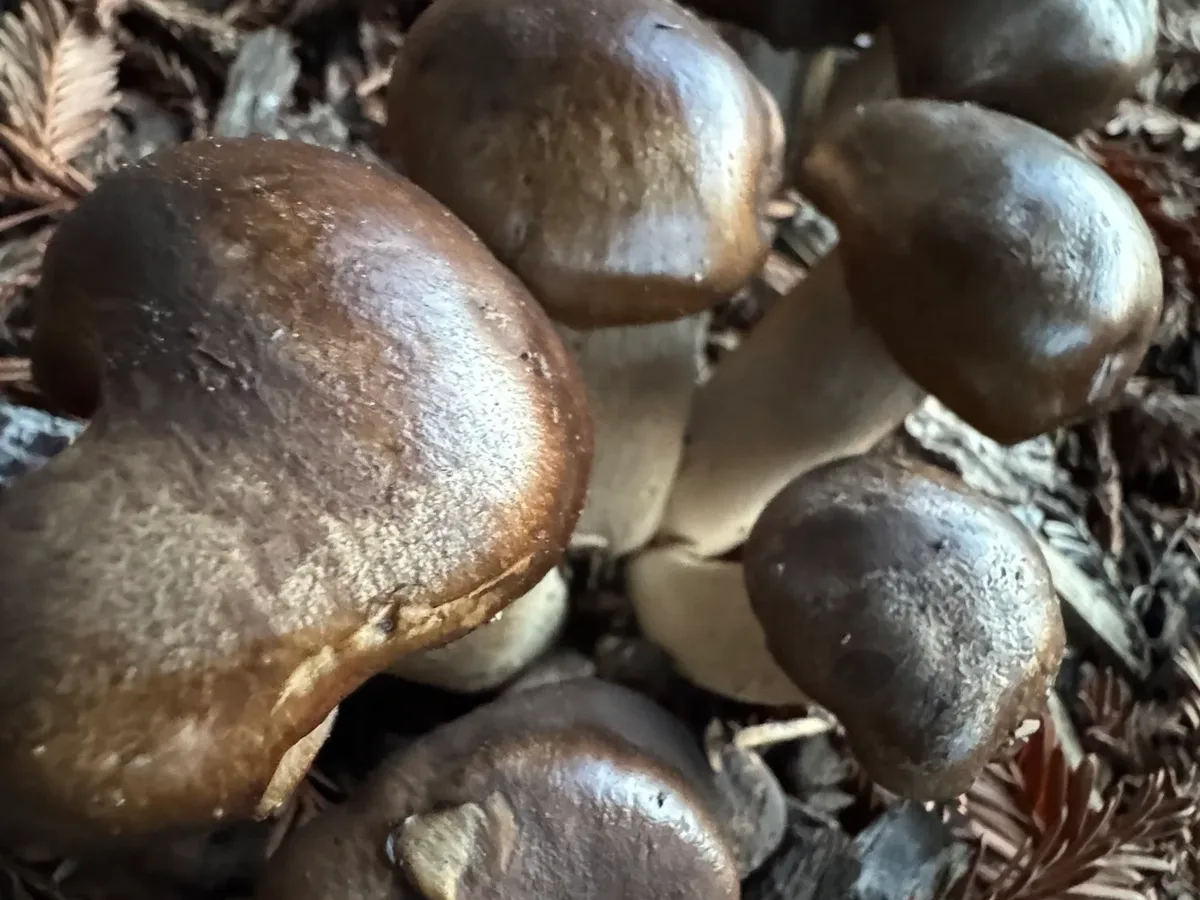 © Elle Sanchez (CC BY)
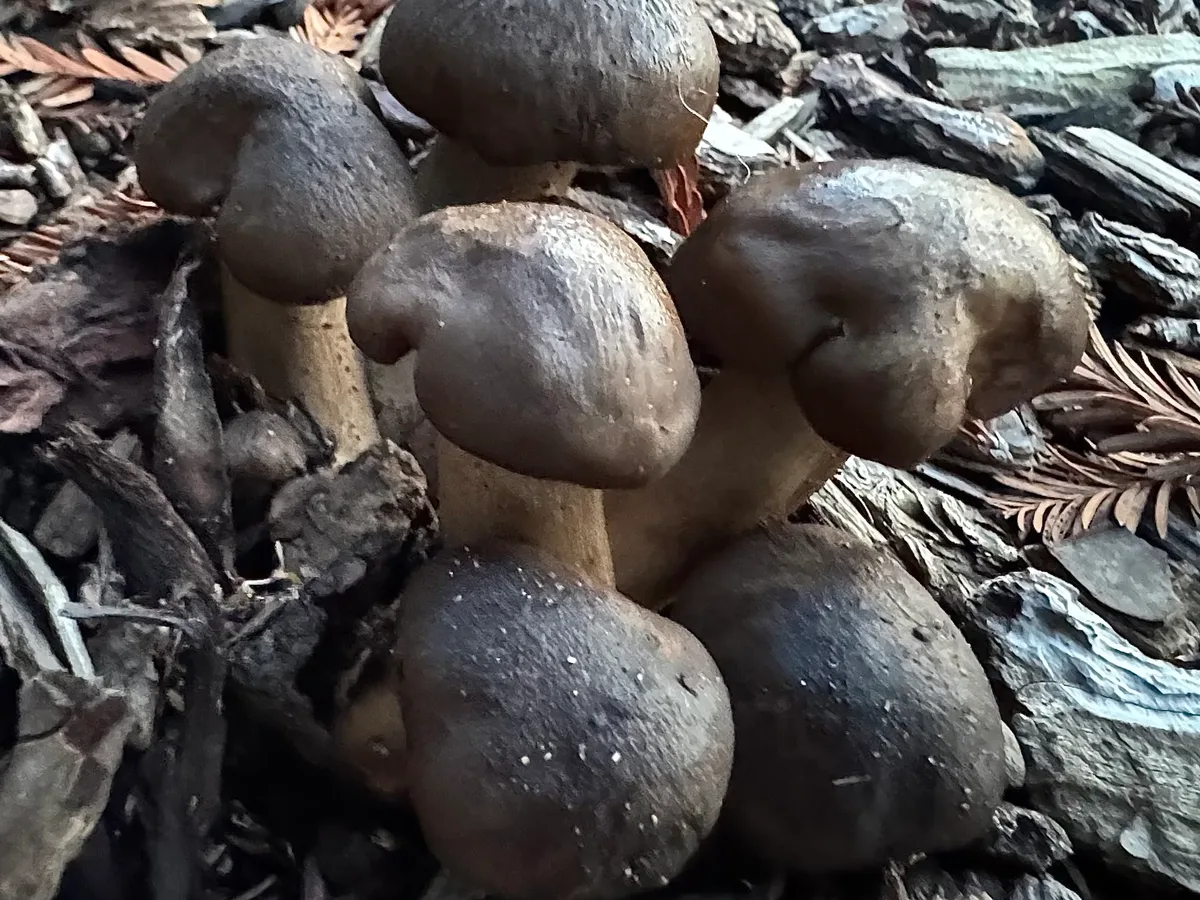 © Elle Sanchez (CC BY)
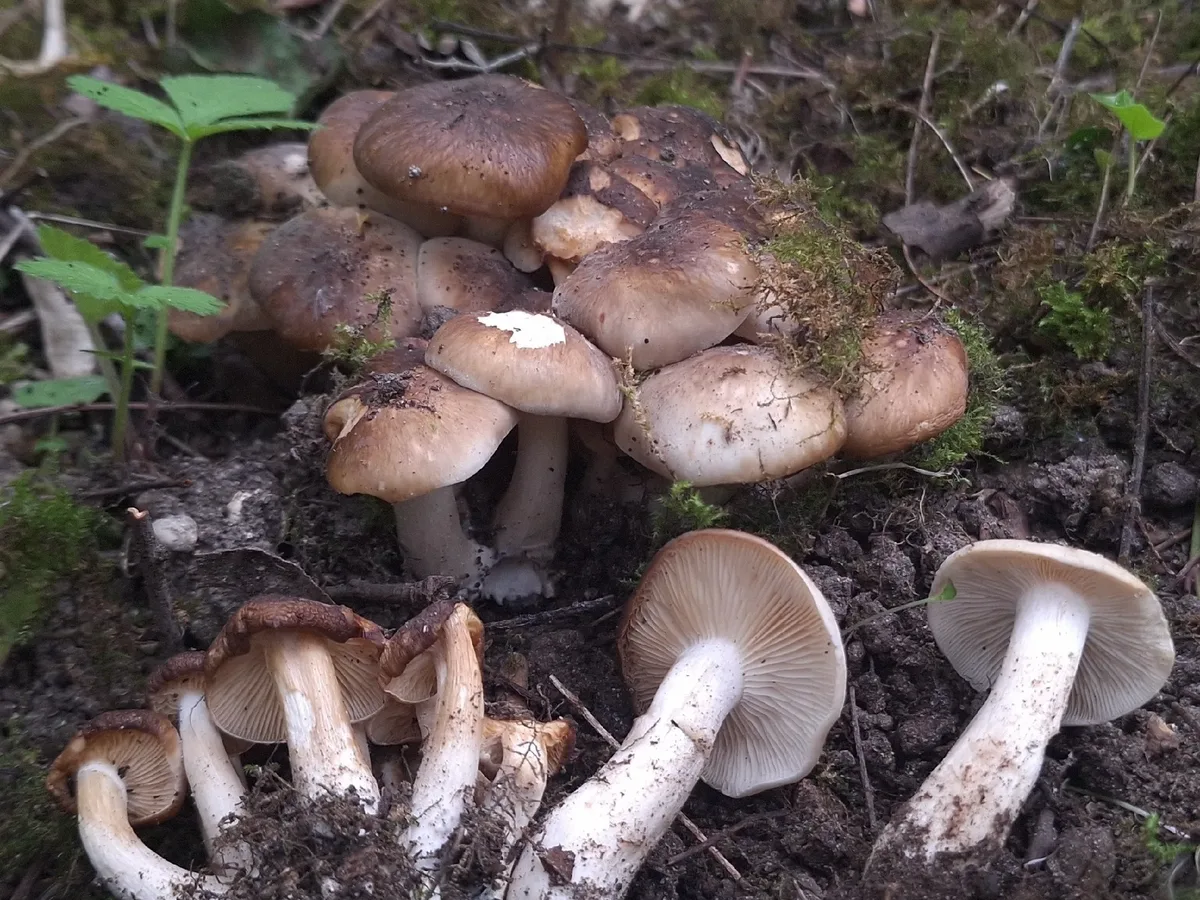 © yellowplant (CC BY)
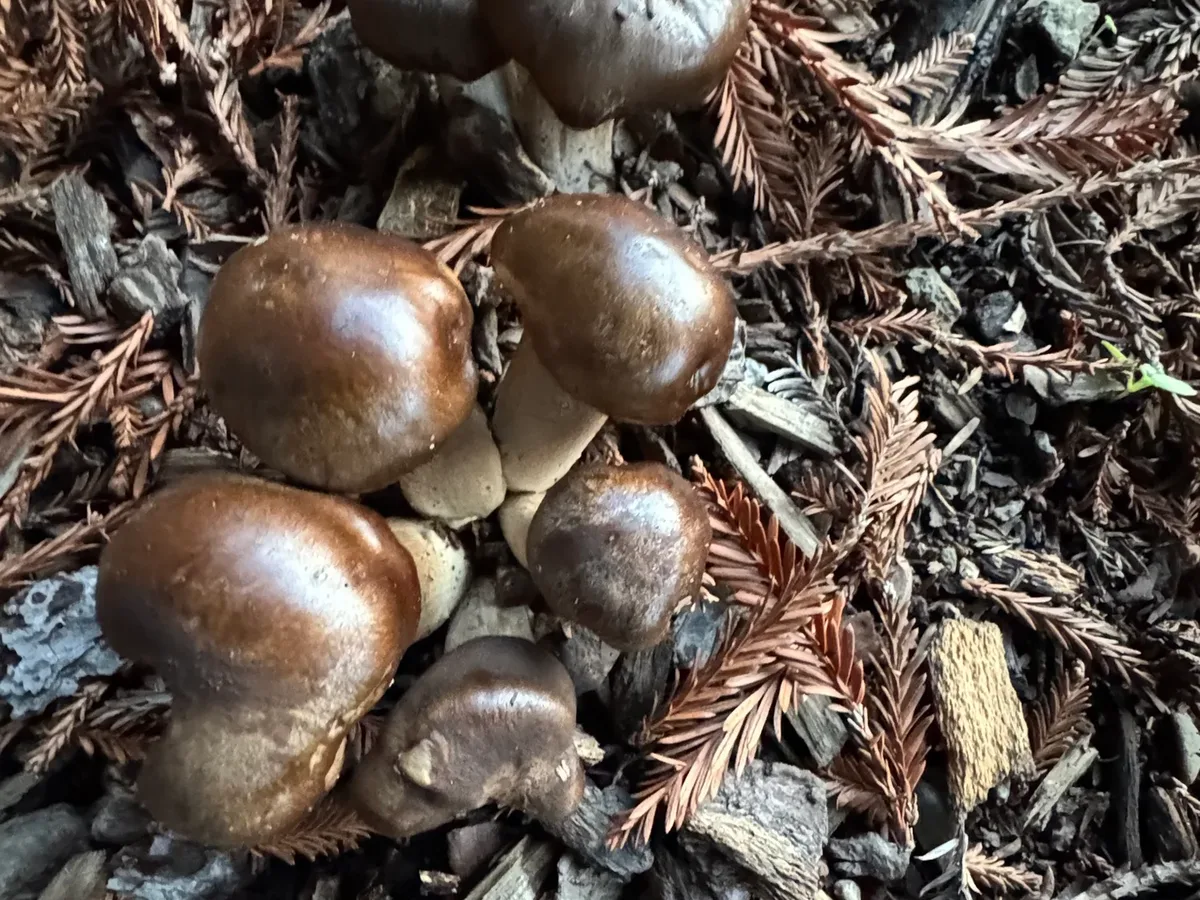 © Elle Sanchez (CC BY)
 © Elle Sanchez (CC BY)
 © Elle Sanchez (CC BY)
 © Elle Sanchez (CC BY)
 © Elle Sanchez (CC BY)© Elle Sanchez (CC BY)© Elle Sanchez (CC BY)
Good to eat, once you have identified it with certainty and cooked it through.
How to recognise it
Cap
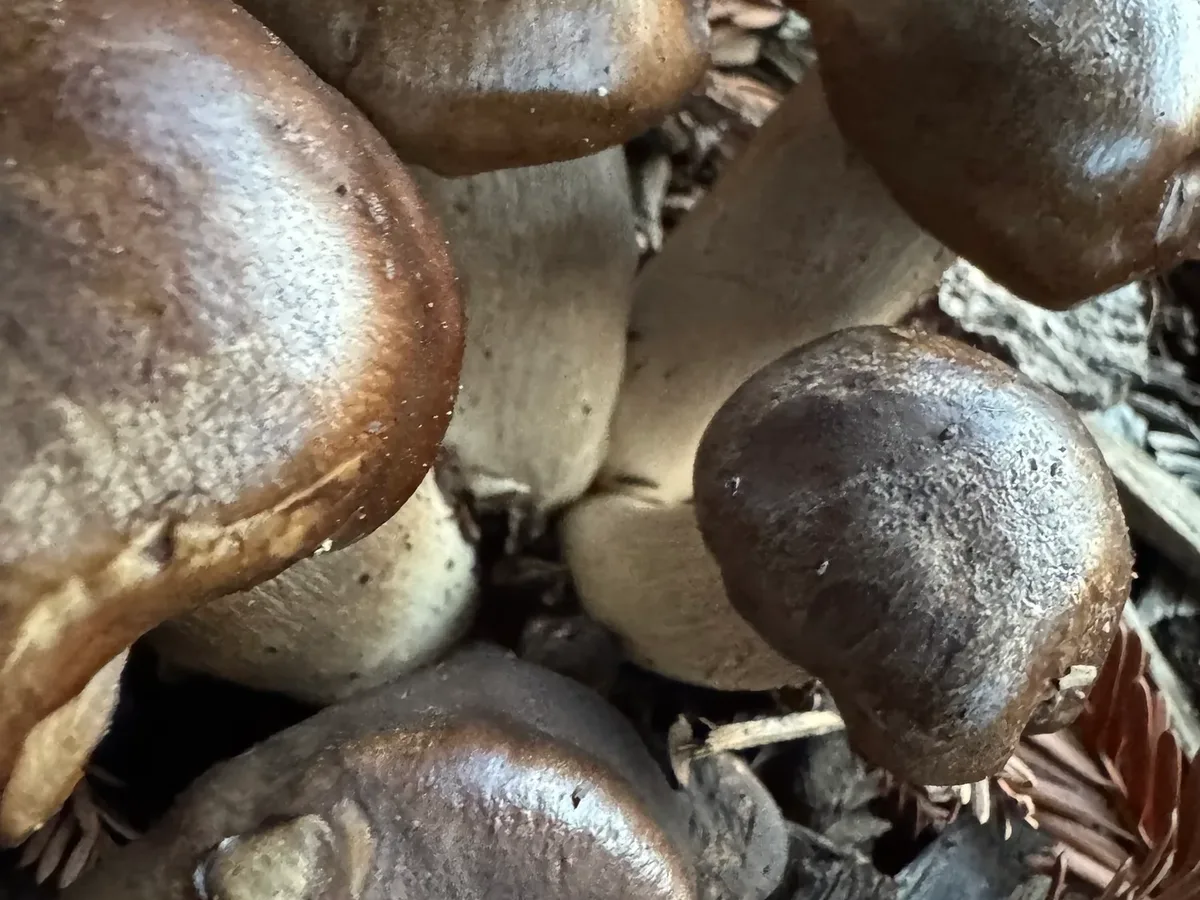
The Smoky Domecap's most reliable field mark is right there in the name: its cap holds a persistently smoky-grey to lead-grey tone that few other clustered agarics share.
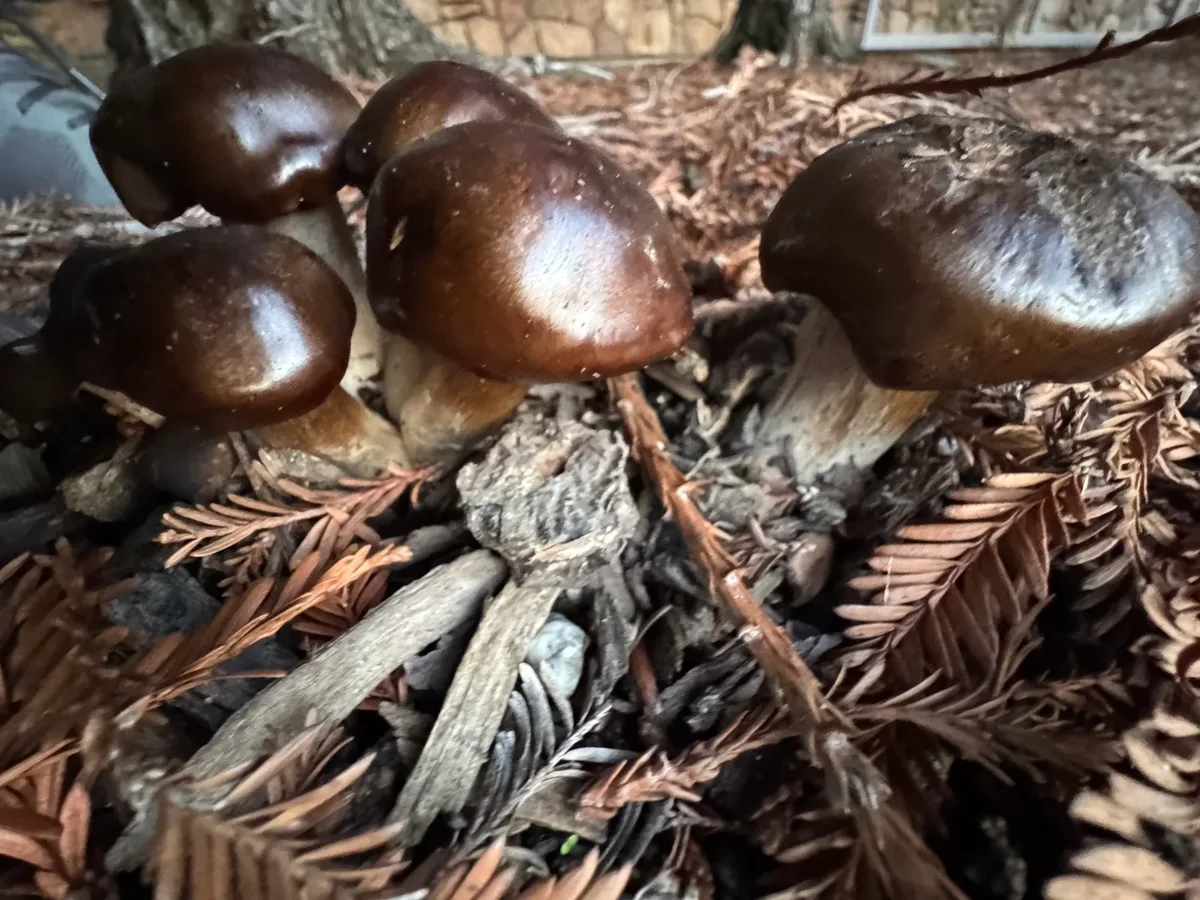
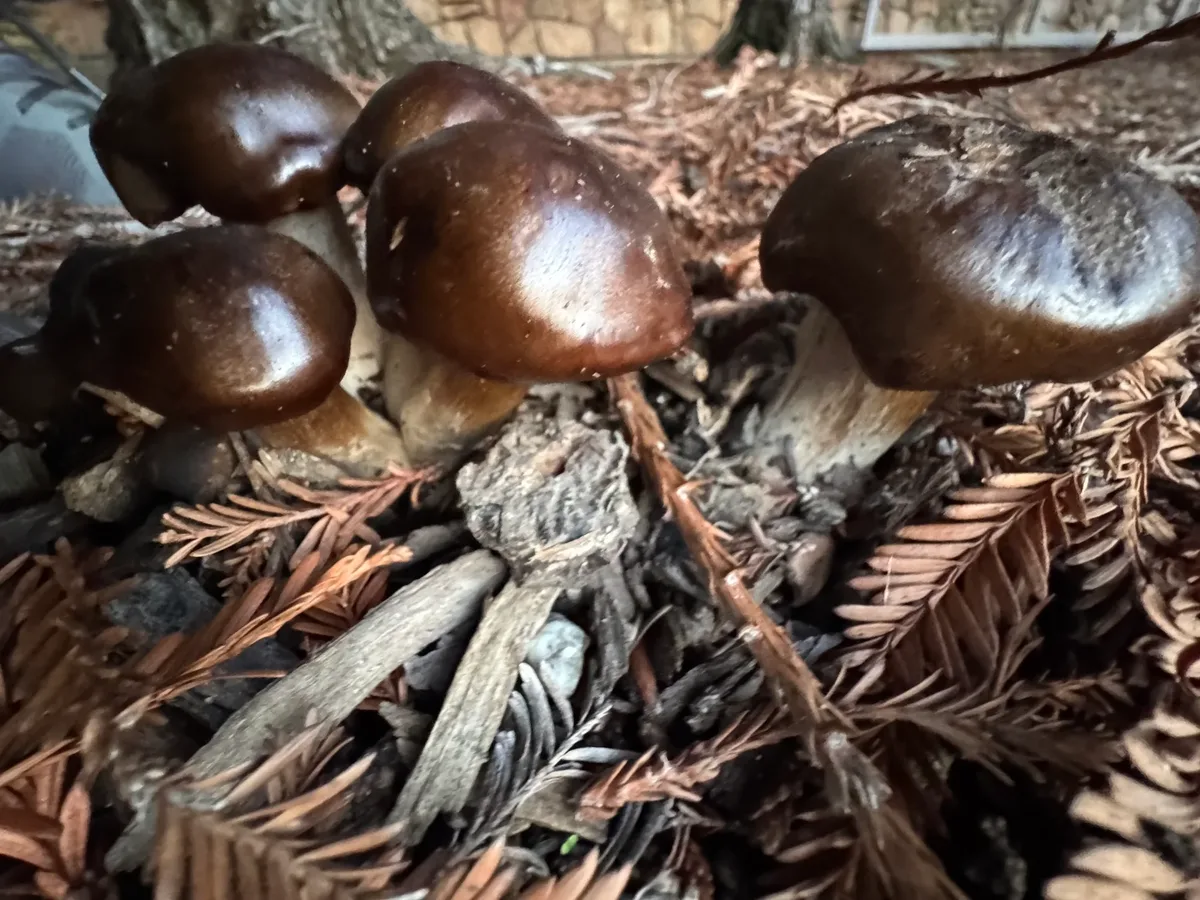
Caps are 4-10 cm wide, domed and inrolled when young, then flattening and growing wavy as they crowd together.
The surface is smooth and slightly greasy in wet weather, and it is strongly hygrophanous - deeply dark when rain-soaked, then drying to a paler buff-grey or tan as moisture leaves from the centre outward.
That consistent cool-grey tone is what separates it from the more brown, fawn or yellowish-brown caps of the closely related Lyophyllum decastes.
Gills
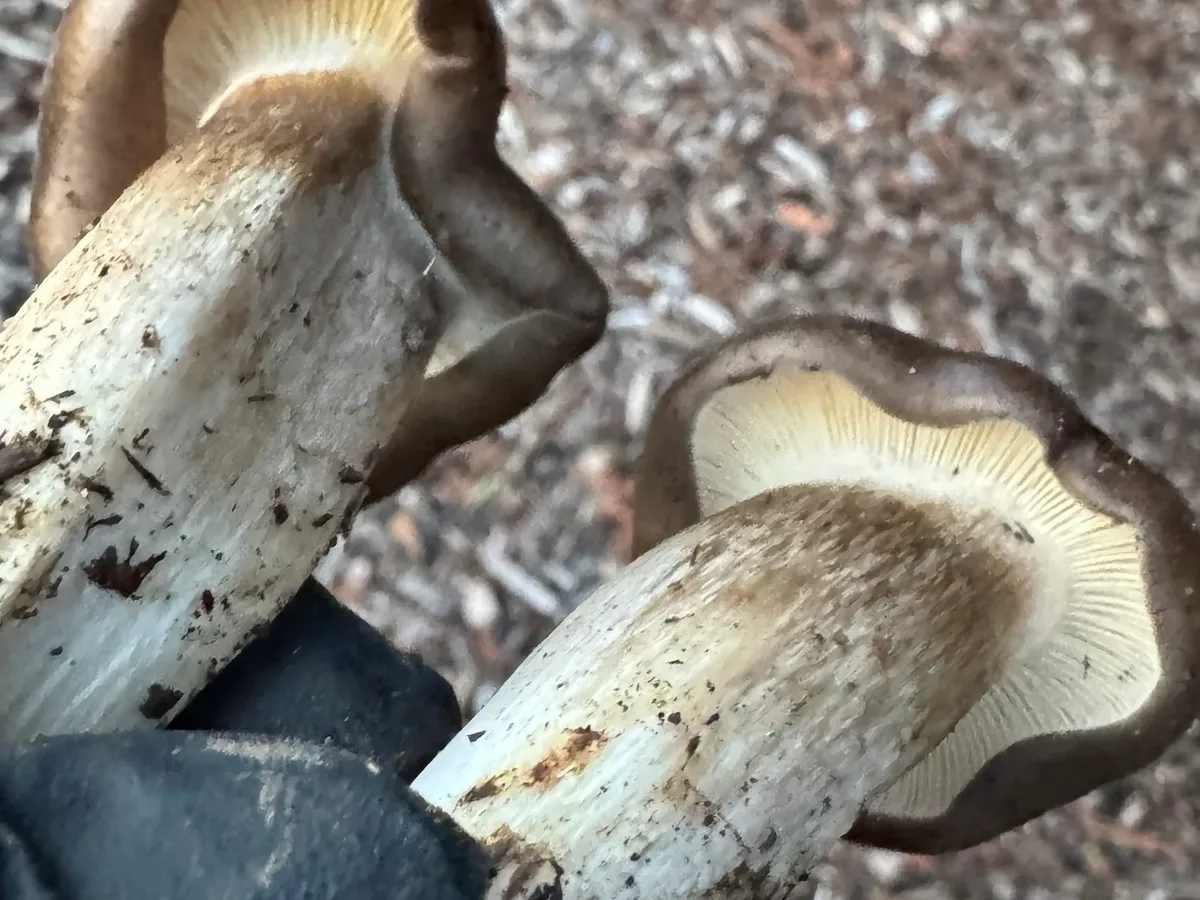
The gills are white to greyish-white, crowded, and attached with an adnate to sinuate junction; they never develop a pink flush at maturity.
Stem
Stems are whitish to pale grey, firm and fibrous, with all the bases in a cluster fused into a single tough common trunk from which every cap in the group arises - a distinctive bouquet structure. No ring, no volva of any kind.
Flesh
The flesh is white, thick, and firm throughout, and does not discolour when cut or exposed to air.
Smell & taste
Smell is mild and mealy; taste mild.
Spore print white - take a print at home before eating; it is not optional.
Where & when it grows
Habitat
This is primarily a species of disturbed, organically enriched soils rather than undisturbed forest floor. Prime habitats are:
- Roadsides
- Forestry track edges
- Park verges
- Hedge bottoms
- Garden beds
- Woodchip mulch
- Lawn margins
- Any recently turned or compacted ground where decomposing plant material is buried
It also fruits in mixed and deciduous woodland on humus-rich substrates.
As a saprotroph it needs no living tree host and repeatedly colonises the same enriched patch, often producing clusters in the same spot for several years. In central and western Europe it is most reliably found in the lowlands and lower montane zones.
When
The main fruiting period runs from late summer to late autumn, roughly August to November, with the peak flush in September and October.
Like other saprotrophic Lyophyllum species it is more responsive to rainfall than to precise temperature cues. A sustained wet spell of 20-30 mm or more over one to two weeks triggers cluster formation, and the first autumn frosts are not a prerequisite.
Established colonies regularly produce multiple flushes in a productive season and return reliably in subsequent years.
How it grows
Strongly caespitose - stems arise fused from a shared underground mycelial mass, pushing up as a compact bouquet of overlapping caps from one tough common base. This is not just a quirk of habit; the whole cluster is a single organism expressing itself above ground.
New caps can appear beside older ones over successive flushes, and established colonies often return to the exact same patch in subsequent seasons, the underground mycelium quietly persisting between fruiting events.
The tight clustering on disturbed ground, combined with the smoky cap colour and white spore print, is the gestalt you are looking for in the field.
Fruiting conditions
Saprotroph of disturbed, organically enriched soil; fruiting is rainfall-triggered, with clusters appearing roughly one to two weeks after sustained late-summer or autumn precipitation. Does not require frost. Established colonies return to the same patch in successive seasons.
Look-alikes
The most dangerous confusion is with Entoloma sinuatum (Livid Pinkgill), a severely poisonous mushroom causing violent gastrointestinal poisoning. It grows similarly large, pale and gregarious on rich ground in woodland and parks.
The decisive test is the spore print: Entoloma sinuatum produces a salmon-PINK print and its gills develop pink tones at maturity, whereas Lyophyllum fumosum always gives a WHITE print and the gills stay white to greyish-white.
Entoloma sinuatum also tends to have a stronger rancid-mealy smell and does not form true clusters fused from a single underground base. Other Entoloma species share this pink spore print and must all be rejected.
Other possible confusions:
- The related Lyophyllum decastes differs in its more brown to yellowish-brown cap (less uniformly smoky-grey) and somewhat larger stature; it is also edible, so the difference is not a safety issue within the genus, but correct species-level identification matters when publishing or teaching.
- Faded specimens of Lepista nebularis (Clouded Funnel) or pale Clitocybe species can cause confusion: these have strongly decurrent gills, a typically more funnel-shaped profile, are loosely gregarious rather than fused at the base, and give pale cream to whitish prints that should still be confirmed. Some toxic Clitocybe contain muscarine.
- Honey fungus (Armillaria) clusters on or beside wood and has a fibrous stem ring and brown-scaled cap; L. fumosum lacks a ring and grows from open soil.
The most closely related confusable - also clusters on disturbed ground with a white spore print and edible. L. decastes caps are more brown, fawn or yellowish-brown rather than the consistently smoky-grey to lead-grey of L. fumosum; the two are sometimes considered conspecific by some authorities. The distinction is not a safety concern within the genus, but confirming the correct species matters for record-keeping and educational purposes.
Also produces dense clusters but grows on or very near living or dead wood, has a fibrous or membranous stem ring, honey-brown to tan scaly caps, and often brown-fibrous dark scales on the cap. L. fumosum has no ring, grows from open soil rather than from wood, and has a smoky-grey (not honey-brown) hygrophanous cap.
Severely poisonous; causes violent gastrointestinal poisoning and can require hospitalisation, though it does not contain amatoxins, orellanine, or any established lethal toxin class and the mycological consensus does not classify it as reliably lethal. Grows large and gregariously on rich ground in similar habitats. Critical difference: its spore print is salmon-PINK and gills develop a pink flush at maturity, whereas L. fumosum has a WHITE spore print and white gills throughout. Entoloma sinuatum does not form true clusters fused from a single base; the smell is often more strongly rancid-mealy. A pink spore print means do NOT eat - discard the entire collection.
Several Entoloma species cause severe gastrointestinal poisoning via unidentified irritants and can require hospitalisation; the genus does not contain amatoxins, orellanine, gyromitrin, or any established lethal toxin class, and the mycological consensus classifies it as severely GI-toxic rather than reliably deadly. All produce pink spore prints and have angular, multi-lobed spores. Any gregarious, pale mushroom on disturbed or grassy ground yielding a pink-toned print must be rejected as a potential Entoloma.
Several grey or brown Clitocybe and Lepista species (including the Clouded Funnel, Lepista nebularis) can superficially resemble L. fumosum, especially in damp conditions. They tend to be more funnel-shaped with strongly decurrent gills, are loosely gregarious or solitary rather than tightly fused from a common base, and the muscarine-containing white/grey species produce white spore prints but have a strongly funnel-shaped fruiting body and more decurrent gills. L. fumosum has adnate to sinuate gills and a firmly fused base.
In the kitchen
Picking & cleaning
- Cut clusters at the base with a knife, leaving a small portion to mark the spot for next season.
- Take a whole cluster intact, including stems, so that the fused base, the absence of a ring or volva, and the gills can all be inspected at home.
- Select young to medium-aged specimens with firm, undamaged caps and white gills; older fruitbodies become tough and may be fly-blown.
- These grow on gritty, mulched or compacted ground, so brush off debris carefully.
- Always take a spore print on white paper at home - the print must be white, not pink.
Cooking
The Smoky Domecap has firm, meaty flesh with a mild, pleasant flavour that benefits from proper cooking.
- 1Trim the tough fused stem bases and wipe or lightly rinse caps clean of grit.
- 2Slice or tear into pieces and sauté in butter or olive oil over medium-high heat until the moisture evaporates and the edges begin to brown - do not crowd the pan.
It is good in risottos, pasta sauces, omelettes, soups and meat-based stews, and holds its texture well. Pairing with garlic, herbs such as thyme or parsley, and cream complements its mild earthy character.
Always cook it well; never eat it raw.
Good to know
Lyophyllum fumosum is considered edible and wholesome when cooked, but it is NOT a beginner species.
The risk from the lookalike Entoloma sinuatum - which causes severe and occasionally prolonged poisoning - demands that a white spore print be obtained before any collection is eaten. Treat the spore print as a mandatory step: any pink or salmon-toned print means discard the entire collection.
- Cook thoroughly; raw consumption is not recommended for any Lyophyllum.
- A small test portion is advisable on a first eating, as individuals vary in tolerance to this genus.
- Do not eat any collection you cannot identify with certainty - when in doubt, consult an experienced mycologist.
A reference guide - never an edibility guarantee. When in doubt, leave it out.