White domecap
Lyophyllum connatumsyn. Agaricus connatus Schumach., Clitocybe connata (Schumach.) Gillet, Tricholoma connatum (Schumach.) P. Kumm., Gyrophila connata (Schumach.) Quél.
 © Jan Ole Olsen (CC BY)
 © Jan Ole Olsen (CC BY)
 © Cecilie Ness (CC BY)
 © Cecilie Ness (CC BY)
 © Hulda Holte (CC BY)
 empressmoth (CC0)
 empressmoth (CC0)
 empressmoth (CC0)© Jan Ole Olsen (CC BY)© Jan Ole Olsen (CC BY)
Edible only with the right preparation - or safe for some people but not others. Learn the caveats first.
Never eat a mushroom you are not 100% sure of - check the look-alikes below, and always cook wild mushrooms.
How to recognise it
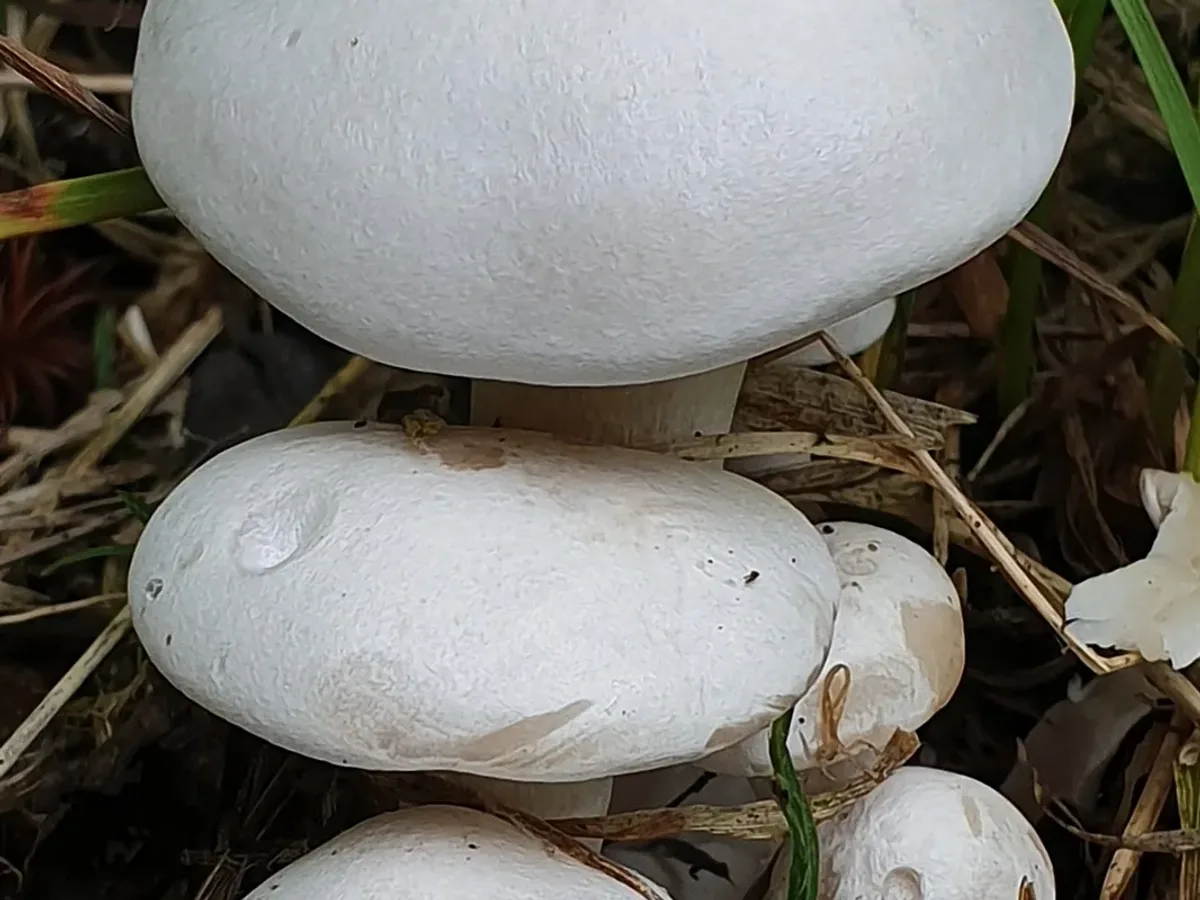
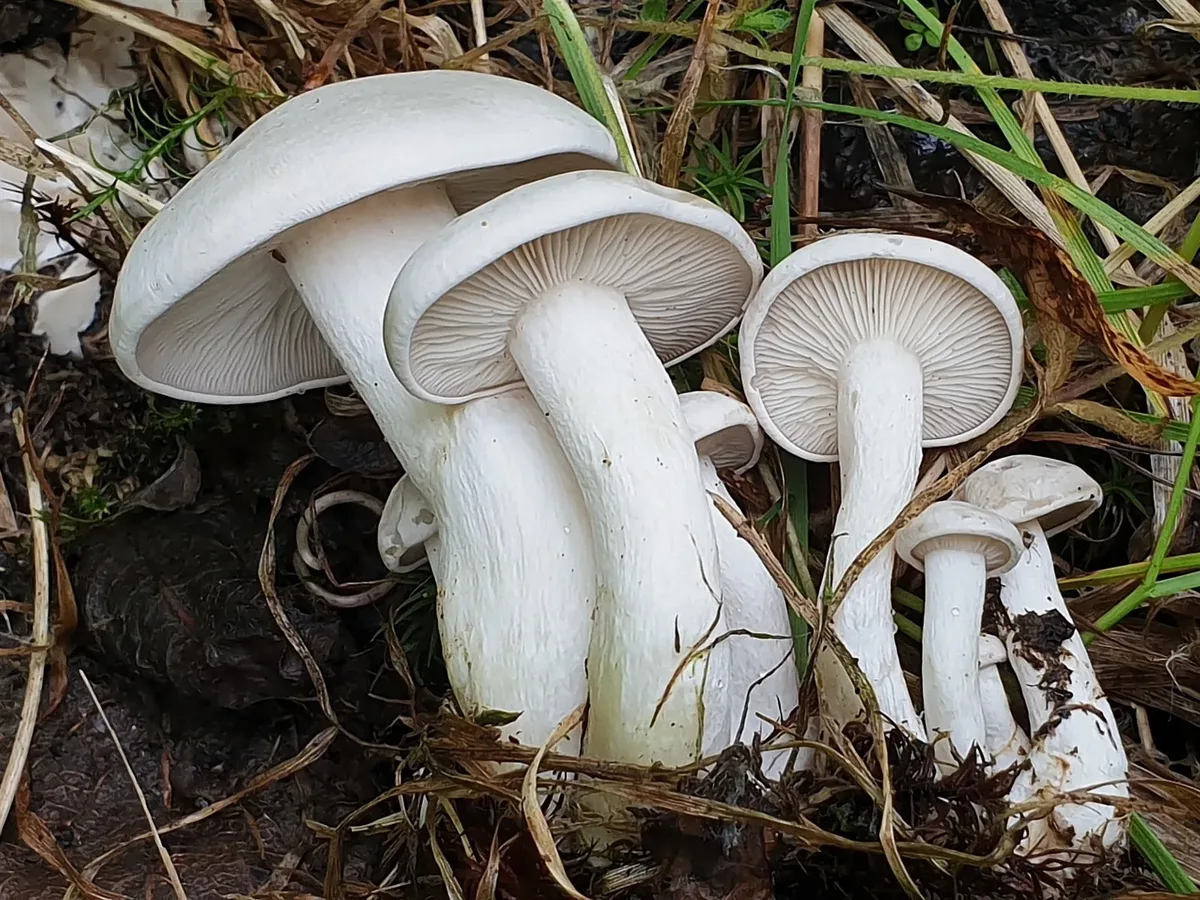
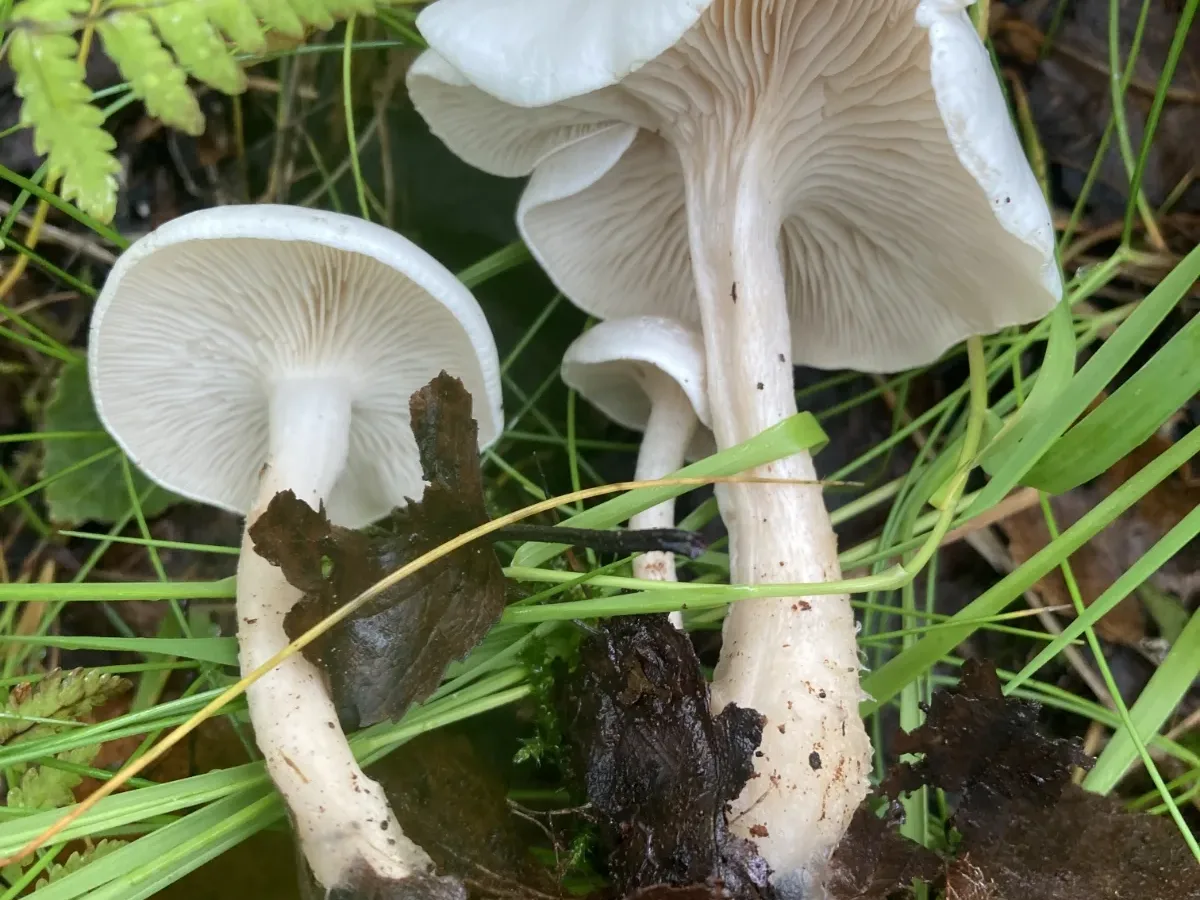
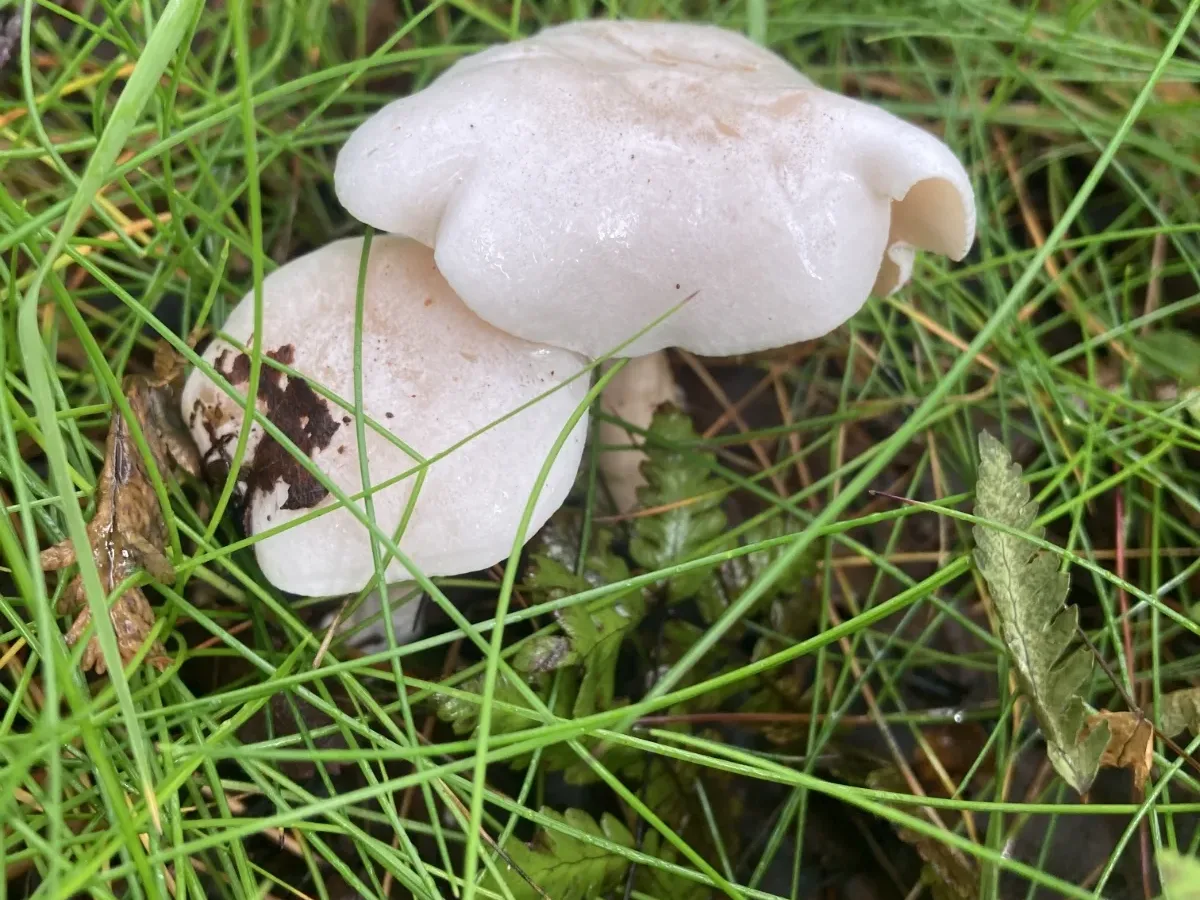
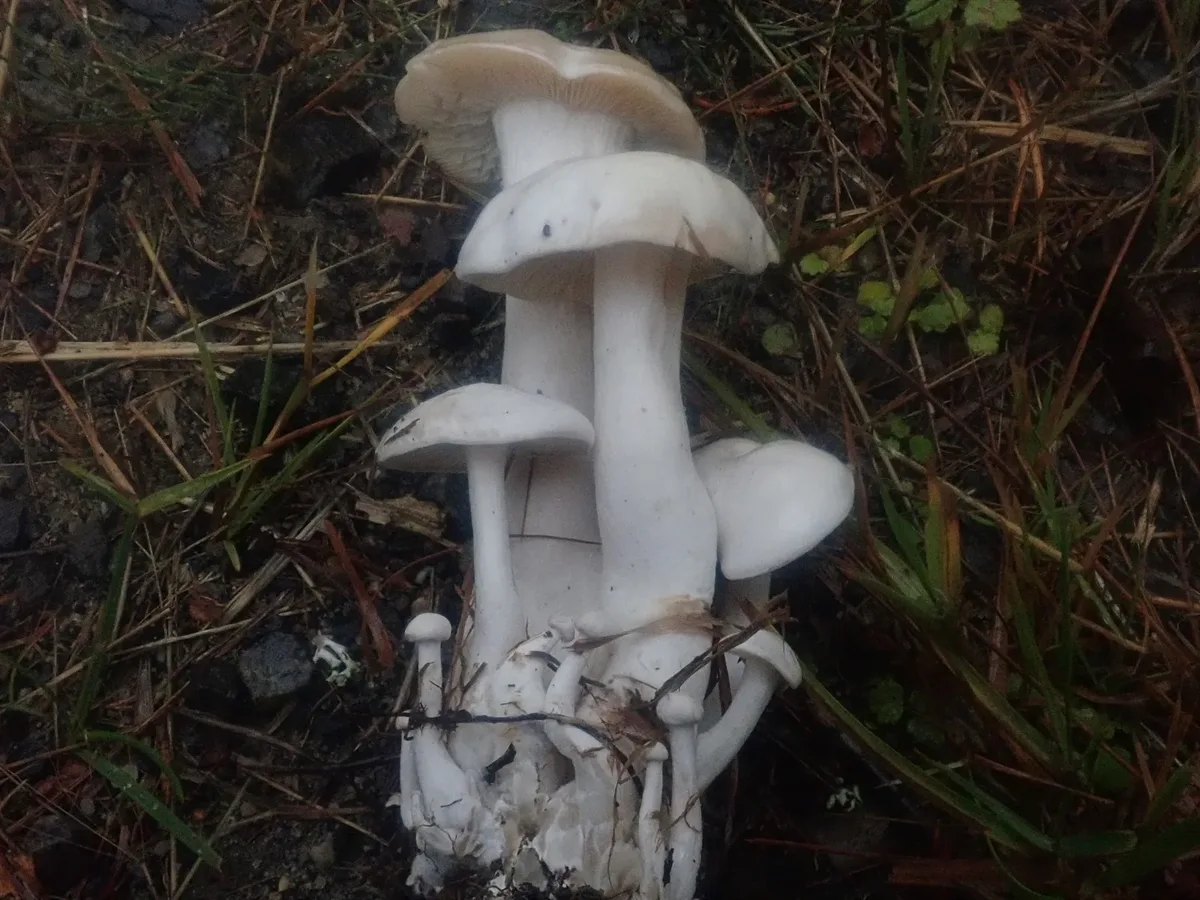
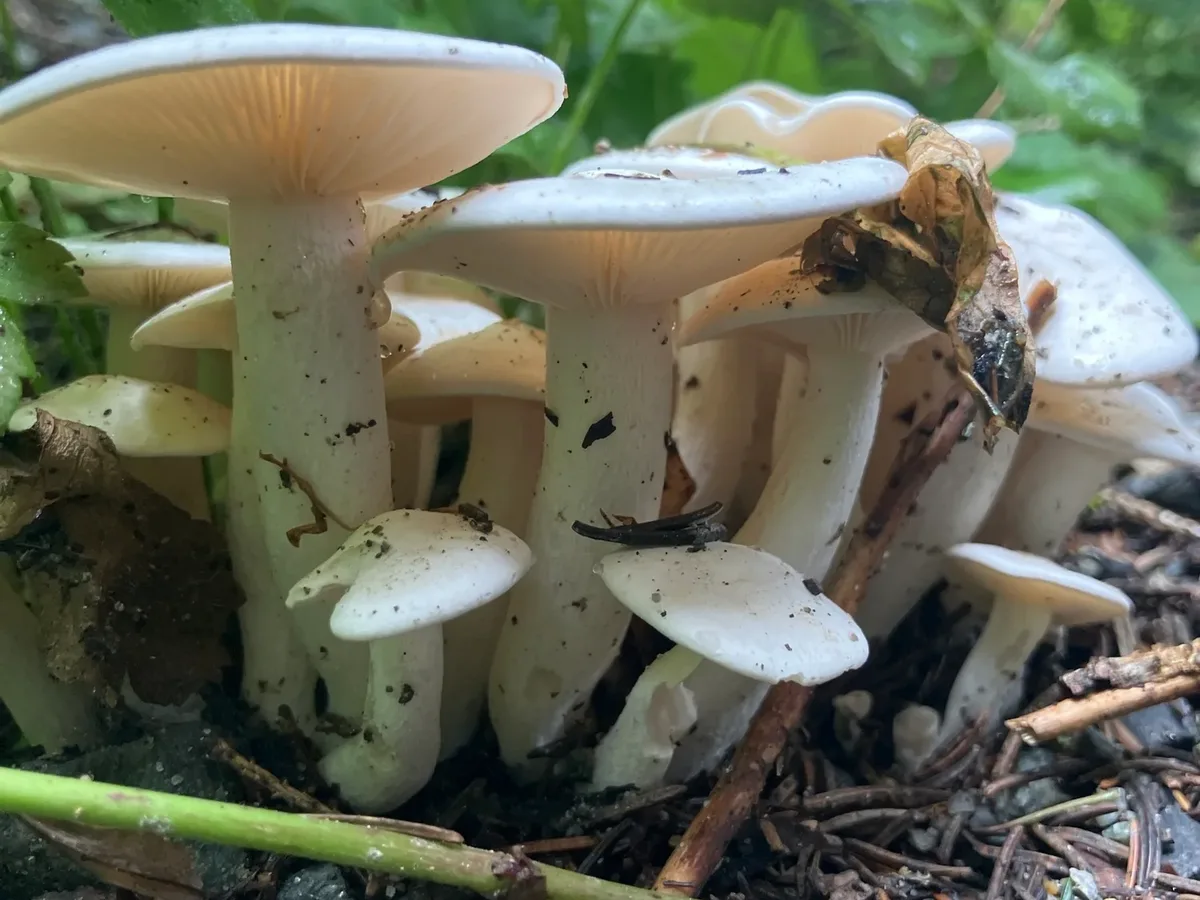
Lyophyllum connatum is immediately striking because of its uniformly white colouration: every visible surface - cap, gills, stem and flesh - is white to ivory.
Fruitbodies grow in dense, tightly crowded clusters whose stems are fused at the base into a common woody stump, somewhat like a bouquet.
Cap
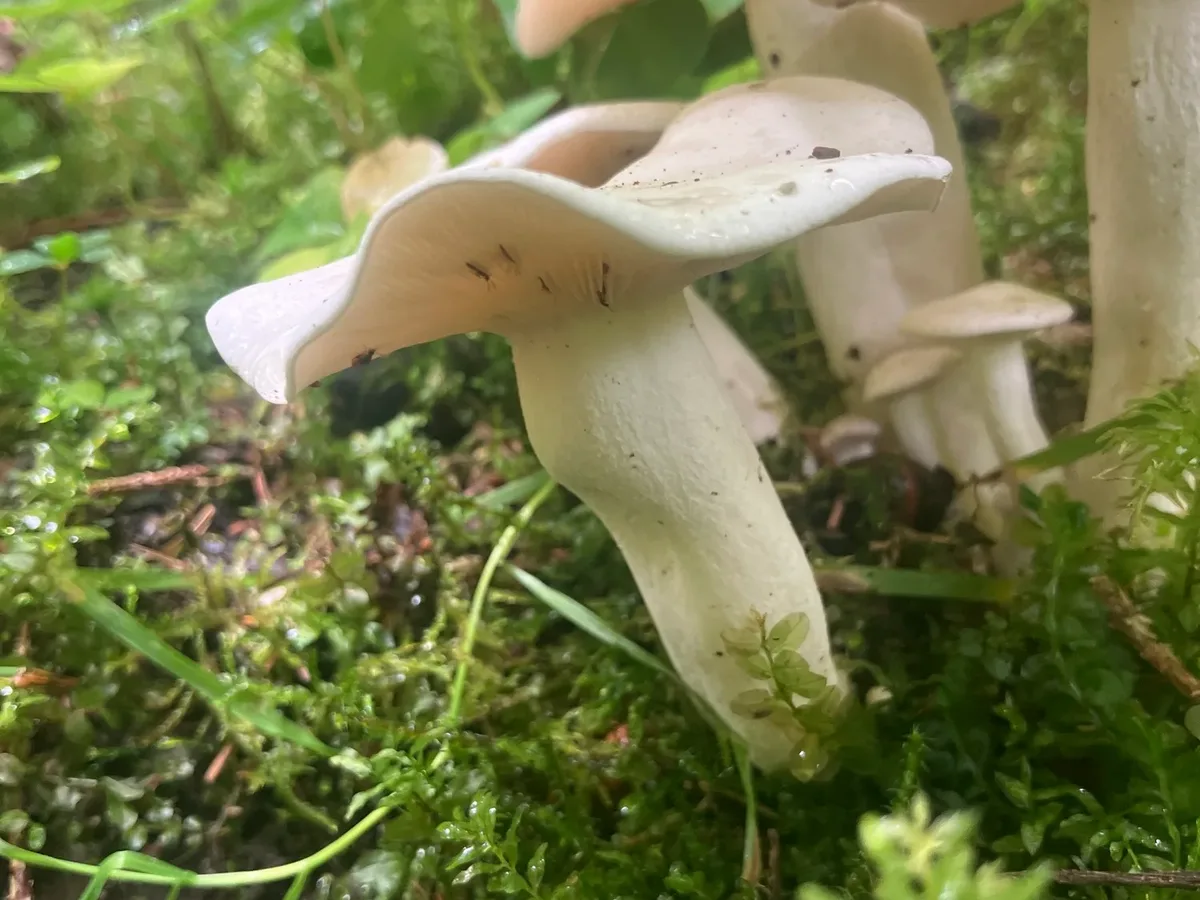
Individual caps are 4-12 cm wide, starting as a convex dome and gradually flattening. The surface is smooth and dry, occasionally slightly greasy in wet weather, and does not change appreciably in colour on drying (non-hygrophanous).
Gills
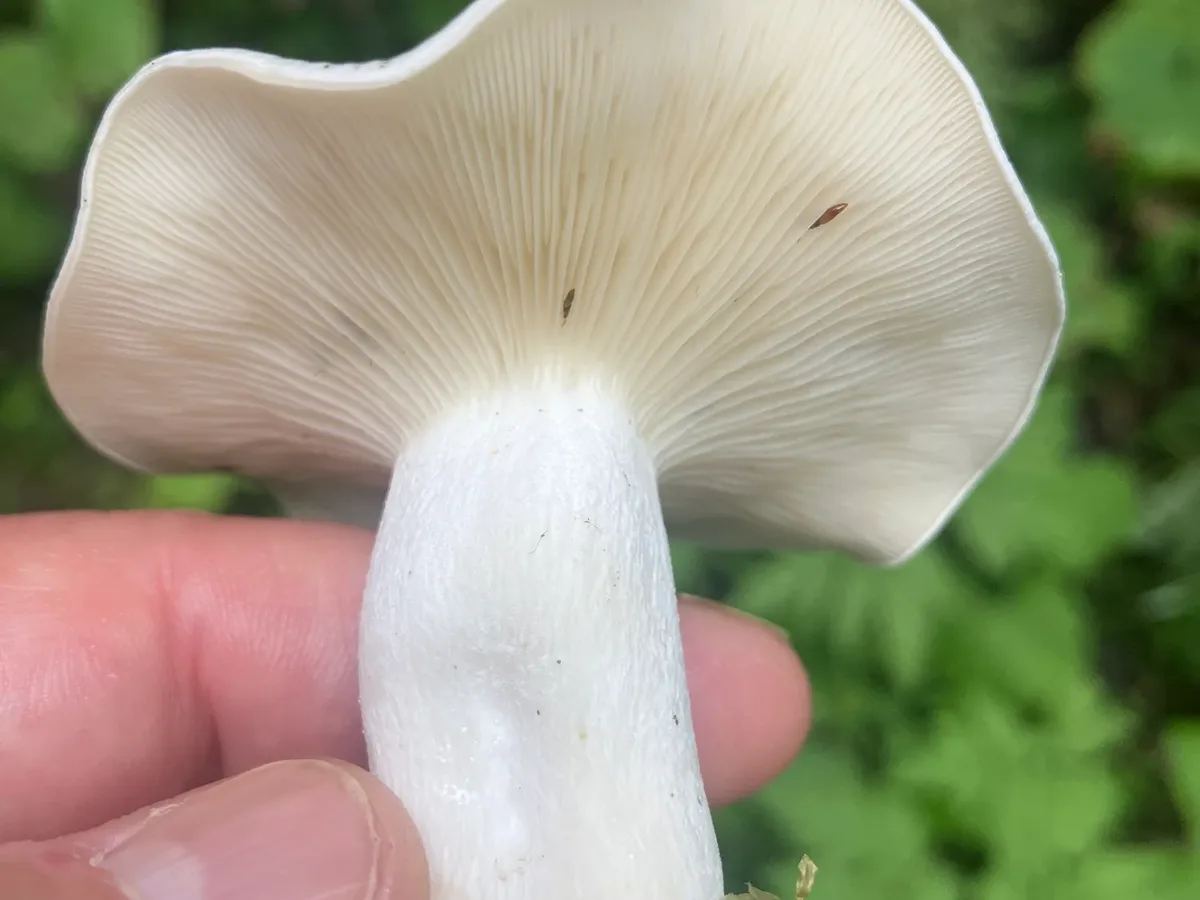
The gills are very crowded and remain white to cream throughout maturity - a critical point, as they do not turn pink.
Stem
The stem is firm and white, lacking both a ring and a volva.
The spore print is pure white.
Microscopic confirmation (carminophilous basidia that stain blue-black with iron acetocarmine) is the definitive genus character, but for field use the combination of pure white, dense cluster, fused stem base, sinuate white gills, and white spore print is characteristic.
Why it's dangerous
The danger from this species is two-fold.
- 1First, intrinsic: the mushroom itself contains biologically active mutagenic compounds and has caused gastrointestinal illness.
- 2Second, and more immediately dangerous: its all-white appearance and clustering habit on grassy and disturbed ground place it in a confusion zone with Clitocybe dealbata (muscarine toxin, rapid-onset SLUDGE syndrome) and with deadly white Amanita species (amatoxins, delayed-onset liver/kidney failure).
A forager who mistakes C. dealbata for L. connatum faces a serious poisoning within half an hour; a forager who mistakes a young Amanita virosa for L. connatum could die within days.
Extreme caution is warranted with any all-white clustered mushroom.
Toxin
Fruitbodies of Lyophyllum connatum have been shown to contain lyophyllin and related compounds that produce mutagenic responses in the Ames test (a bacterial assay for DNA-damaging substances).
The exact mechanisms of acute toxicity in humans are not fully characterised, but gastrointestinal irritation has been reported.
The mutagenicity data are the primary reason this species has moved from the 'edible' to 'caution' column in contemporary European mycology.
Symptoms
Reported symptoms include nausea, vomiting, abdominal cramps and diarrhoea consistent with gastrointestinal irritation, typically onset within 1-3 hours of ingestion.
The mutagenic compounds raise concerns about long-term effects from repeated exposure.
Any poisoning symptoms after consuming white clustered mushrooms should prompt urgent medical attention, since the potentially co-consumed muscarinic Clitocybe lookalikes require a different treatment pathway (atropine) from gastrointestinal irritants.
Staying safe
Lyophyllum connatum presents a significant safety concern that overrides its historical use as an edible in some European and Asian traditions.
Laboratory studies have demonstrated that extracts of this fungus contain mutagenic and genotoxic compounds, including lyophyllin - a substance that tests positive in bacterial (Ames) mutagenicity assays.
While acute lethal poisonings attributable solely to L. connatum are not well-documented, the mutagenic potential means that repeated consumption carries uncertain long-term risk, and some European mycological authorities now actively advise against eating it. Additionally, gastrointestinal upsets following consumption have been recorded in the medical literature.
The combination of genuine toxicological concern and extremely dangerous lookalikes (Clitocybe dealbata containing muscarine; deadly Amanita species) means this species carries serious risk: the white colouration is shared by some of the most dangerous fungi in existence.
The verdict of responsible mycology: do not eat this species.
Where & when it grows
Habitat
This is a decomposer of buried organic matter rather than a mycorrhizal partner, so it is not specifically tied to any host tree.
It grows on organically enriched soil in a variety of settings:
- woodland margins and clearings
- parkland
- roadsides
- lawns
- hedge bottoms
- mulched garden beds
- the edges of tracks
In East and Southeast Asia it also appears in mixed broadleaf forest (oak, chestnut, beech) particularly in disturbed clearings and on path edges.
It favours soils with buried woody debris and can be persistent at productive sites, returning year after year.
When
The main fruiting period is late summer through autumn, roughly August to November across the Northern Hemisphere temperate zone, with the heaviest flushes in September and October.
In East and Southeast Asia the season aligns with the post-monsoon cooling period and the onset of the dry-cool season, broadly September to November.
Fruiting is triggered by prolonged rainfall onto enriched substrate and is therefore weather-responsive rather than strictly tied to calendar dates.
How it grows
Strongly caespitose: stems are fused at the base into a shared, often tough common stump from which all the caps in a cluster radiate.
Clusters range from just a few caps to dense masses of twenty or more, sometimes covering an area half a metre wide.
This tight fused clustering on soil is the most immediate gestalt feature. Established colonies reflush in the same enriched patch across multiple seasons.
Fruiting conditions
Saprotroph on organic-enriched soil; fruiting is rain-triggered, appearing roughly 1-2 weeks after sustained rainfall once soils cool in late summer and autumn. Established colonies reflush the same enriched patches across multiple seasons.
Look-alikes
Several dangerous species can be confused with Lyophyllum connatum, and this is the most important section of this entry. The most critical confusions are:
- 1Clitocybe dealbata (Fool's Funnel / Sweating Mushroom), which contains muscarine and causes the SLUDGE syndrome (salivation, lacrimation, urination, defecation, gastrointestinal distress, emesis) within 15-30 minutes of ingestion. It grows in similar grassy and disturbed habitats, is similarly white, and can grow gregariously. The key differences are that it tends to be more funnel-shaped with strongly decurrent (running down the stem) gills, does not form true tight clusters from a single fused base, usually has a farinaceous smell, and is typically smaller and with a more clearly funnel-shaped cap.
- 2Clitocybe phyllophila and Clitocybe rivulosa: other white, crowded-gilled, muscarine-containing species on similar substrates.
- 3Young, unexpanded white Amanita species, including deadly Amanita virosa (Destroying Angel) and Amanita bisporigera: these have a ring and a volva (basal cup) and grow individually, not in fused clusters - check for ring and volva at the base very carefully, digging around the base when necessary.
- 4Lyophyllum fumosum and other pale-capped cluster species: edible relatives within the same genus, distinguishable mainly by cap colour (fumosum is greyer).
- 5The edible Lyophyllum decastes, which tends to be browner/greyer and is a better edible but still requires the same spore-print check.
Contains alpha-amanitin (amatoxin); causes delayed-onset (6-24 h) liver and kidney failure with a high fatality rate. Young button-stage fruitbodies before the veil breaks can appear as all-white domed caps in grass or woodland edges. The critical difference: Amanita virosa grows from a distinct basal volva (a white sac-like cup around the base) and develops a ring (partial veil remnant) on the stem - always dig around the base to check. L. connatum lacks both ring and volva and always grows in fused clusters, never as single individuals.
Contains muscarine; causes rapid-onset (15-30 min) SLUDGE syndrome (salivation, lacrimation, urination, diarrhoea, gastrointestinal cramps, emesis) requiring emergency atropine treatment. Like L. connatum it is white and grows gregariously on grassy and disturbed ground, but C. dealbata has gills that are strongly decurrent (running conspicuously down the stem), the cap is more clearly funnel-shaped rather than domed, it is usually smaller (2-6 cm cap), grows in loose rings or troops rather than tight fused clusters from a single base, and has a strongly mealy/farinaceous smell. Check carefully: L. connatum has adnate-sinuate gills and a single fused stem base; C. dealbata has decurrent gills and individual unfused stems.
Another muscarine-containing white funnel cap growing in grass, lawn and disturbed ground, considered by some authorities to be the same species or a variety of C. dealbata. Similar separation: funnel-shaped cap with decurrent gills, loosely gregarious but not fused into a single stem base, mealy smell. Any white funnel-shaped mushroom on grass must be treated as potentially C. rivulosa or C. dealbata.
Several white Amanita (including Amanita bisporigera, Amanita ocreata) are deadly amatoxin-containing fungi. All have a ring and a volva; they grow singly, not in fused clusters. Any white mushroom growing singly with a ring or a basal cup must never be confused with a Lyophyllum cluster.
A related clustering species considered edible (though still requiring careful lookalike checks). L. decastes typically has brown to grey-brown caps rather than pure white, and grows in similarly fused clusters. L. connatum is consistently white across the entire fruitbody. Both share carminophilous basidia and white spore prints. While L. decastes is the edible look-alike, confusing the two is not dangerous; the danger runs in the other direction - both species can be confused with the truly dangerous white Clitocybe and Amanita species.
Another closely related clustering Lyophyllum with grey-brown to smoky-buff caps, distinguishable from L. connatum mainly by its non-white cap colouration. Also edible but carries the same genus-level lookalike risks.
A reference guide - never an edibility guarantee. When in doubt, leave it out.