Spiny puffball
Lycoperdon echinatumsyn. Bovista echinata, Utraria echinata, Lycoperdon hoylei, Calvatiella echinata
 © Andrea (CC BY)
 © yellowplant (CC BY)
 © yellowplant (CC BY)
 © yellowplant (CC BY)
 © yellowplant (CC BY)
 Bartosz Czołczyński (CC0)
 Bartosz Czołczyński (CC0)
 © Andreas C. Lange (CC BY-SA)
 © Andreas C. Lange (CC BY-SA)© Andrea (CC BY)© yellowplant (CC BY)
Good to eat, once you have identified it with certainty and cooked it through.
Never eat a mushroom you are not 100% sure of - check the look-alikes below, and always cook wild mushrooms.
How to recognise it
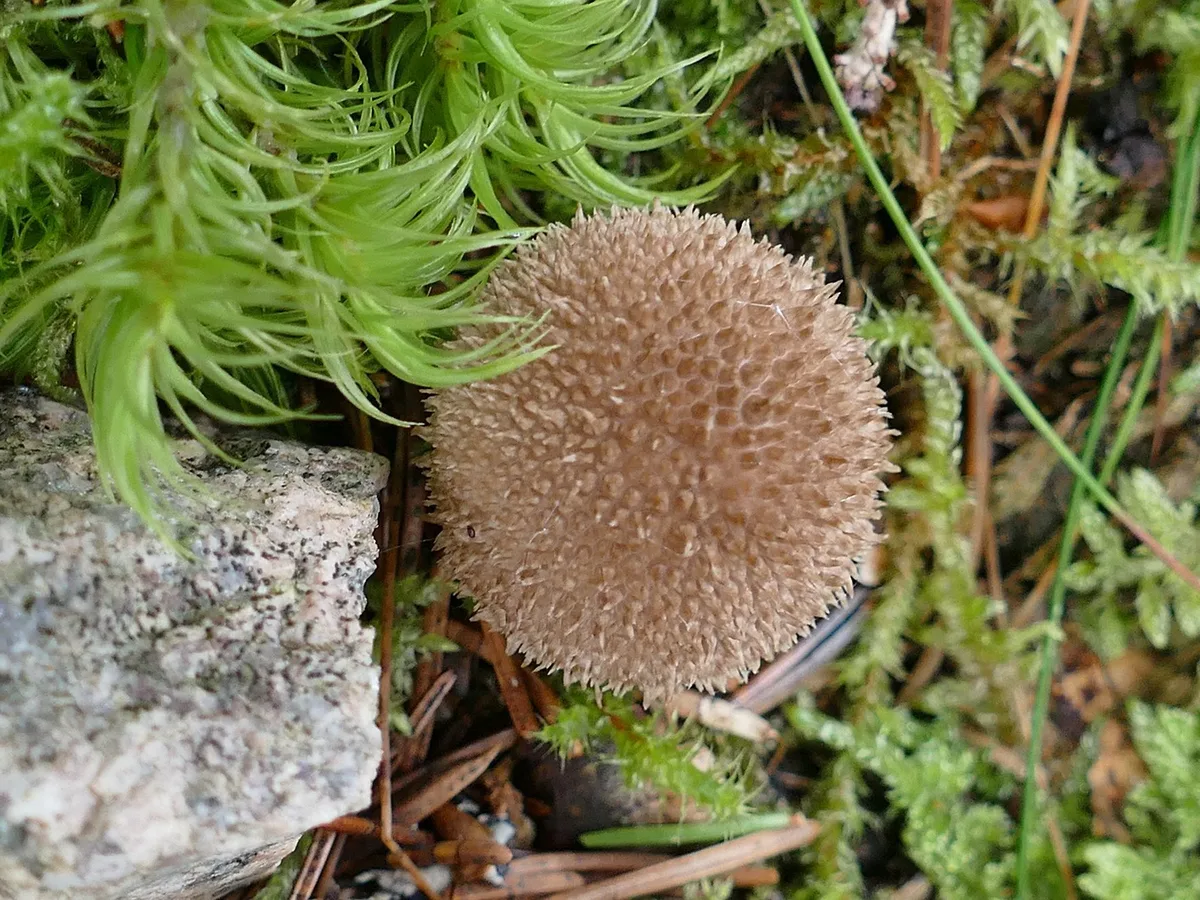
Lycoperdon echinatum is one of the most visually distinctive puffballs of European woodland. The fruitbody is subglobose to clearly pear-shaped, typically 2-6 cm wide and 3-8 cm tall including the sterile pseudostipe, which can be nearly as long as the fertile head.
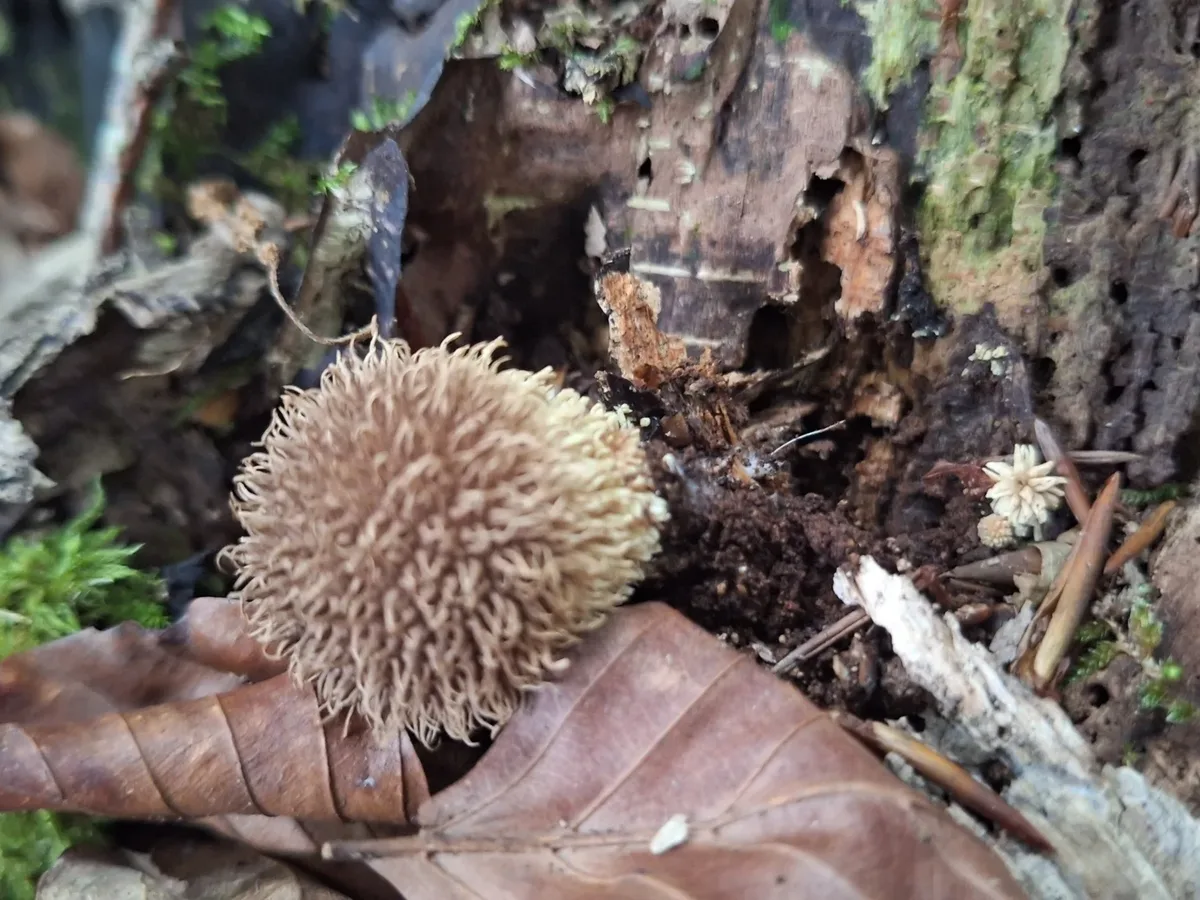
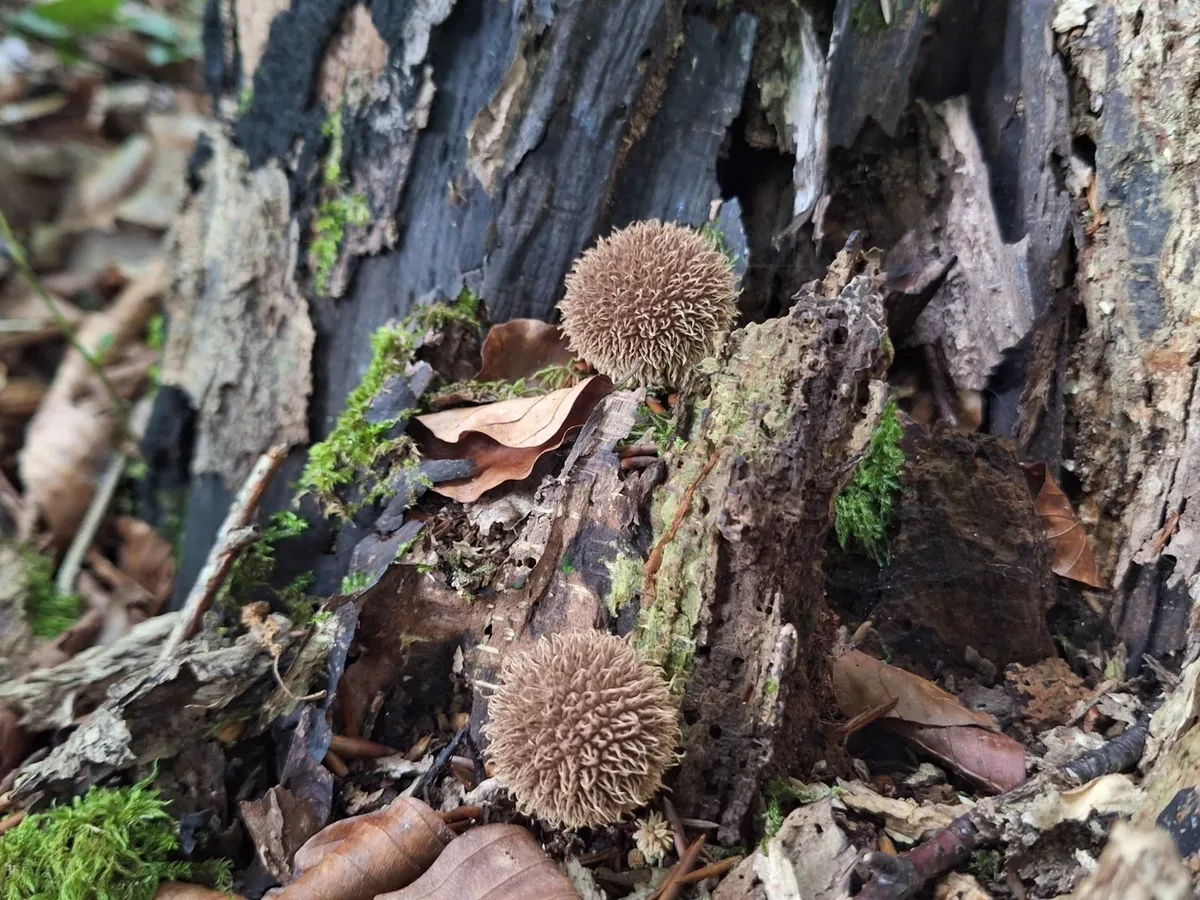
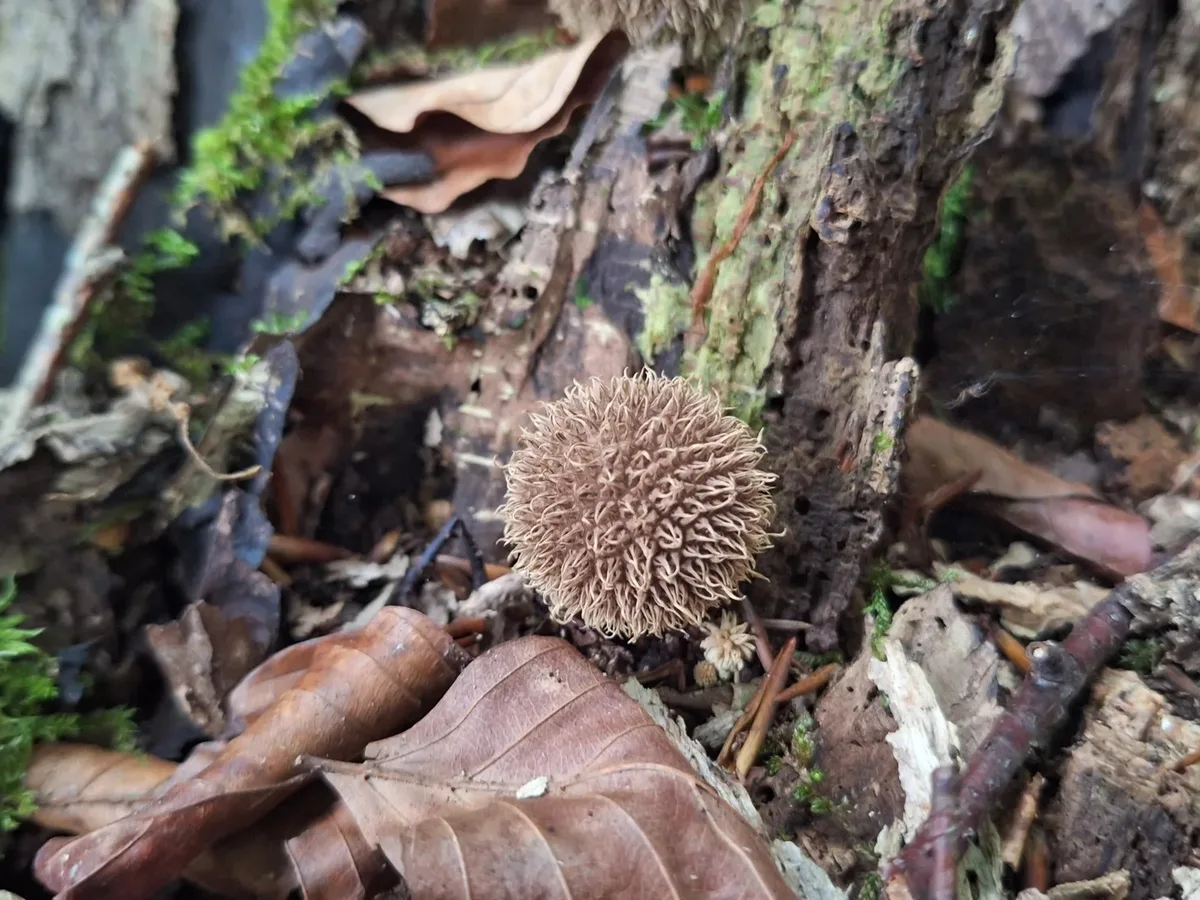
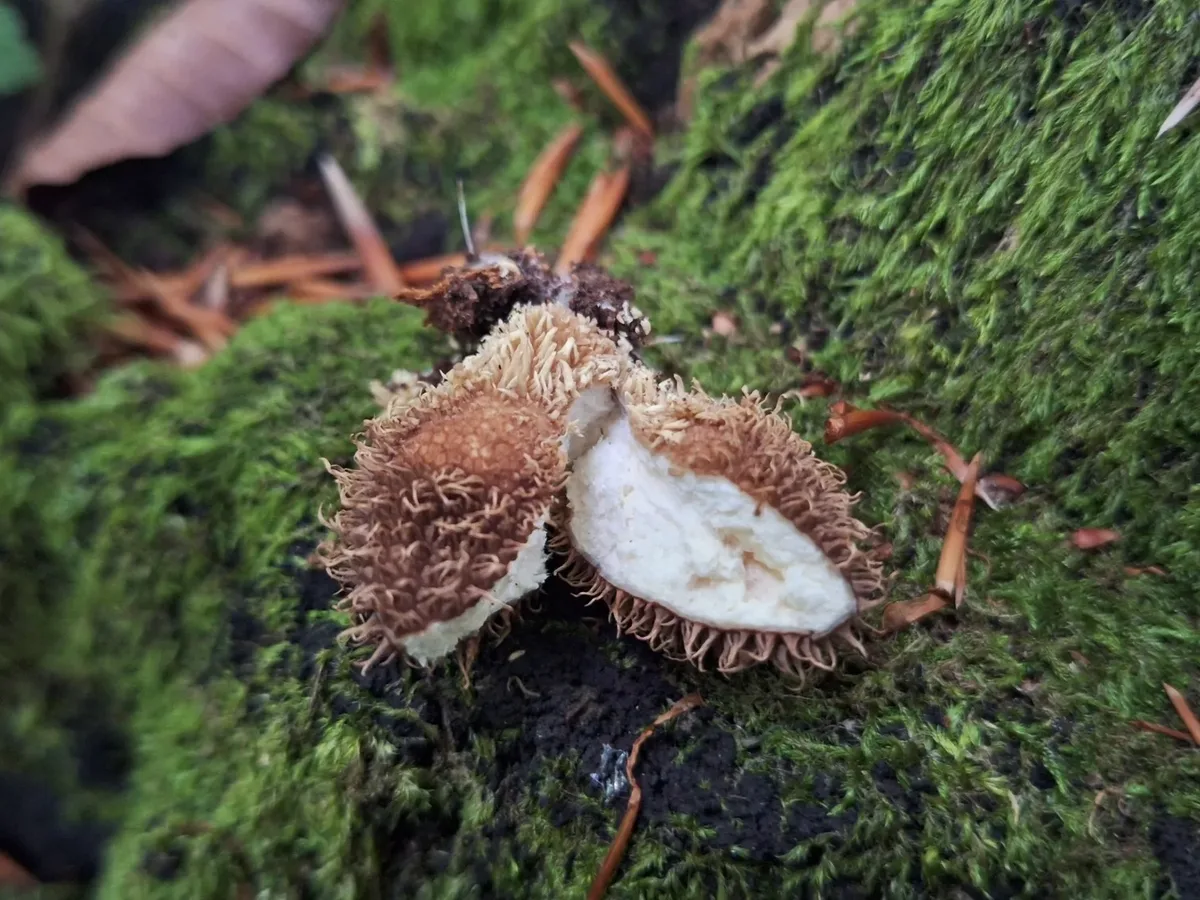
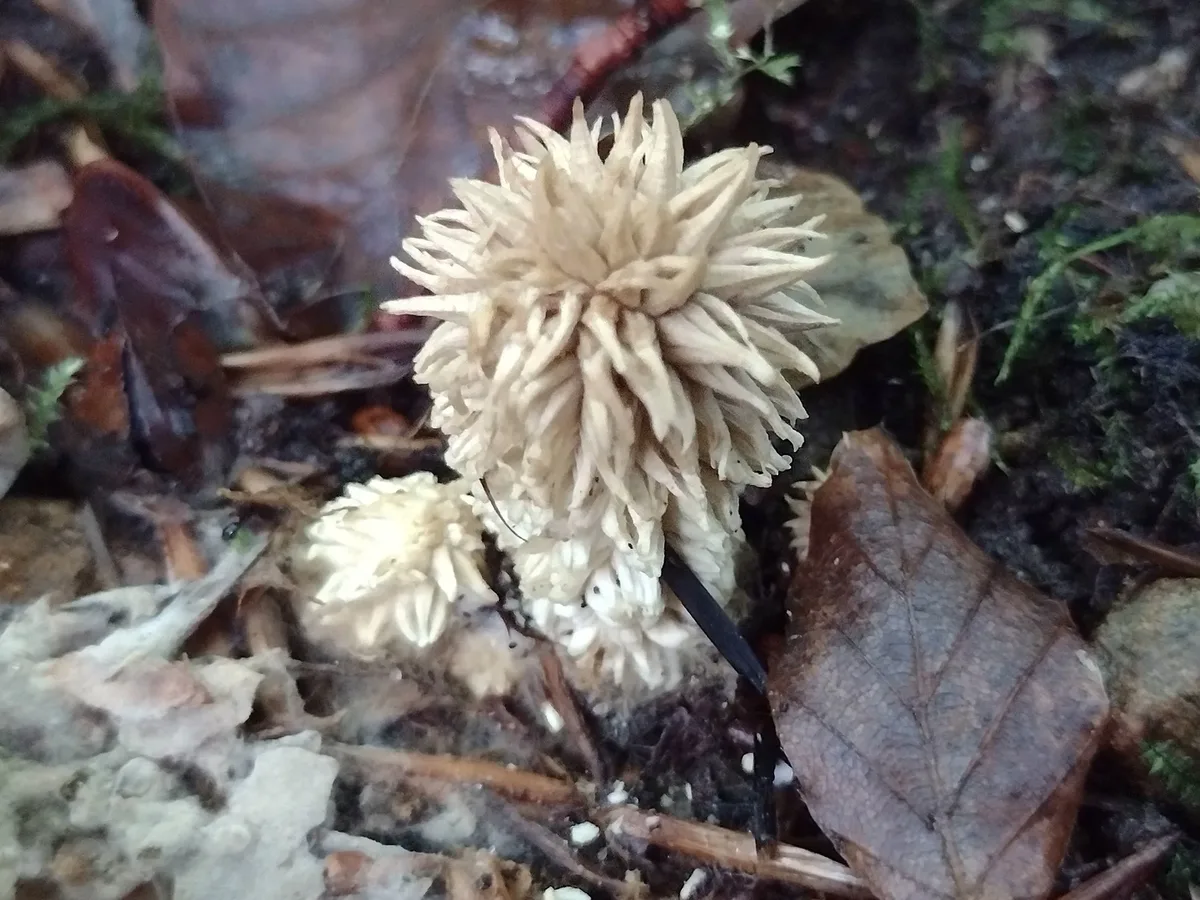
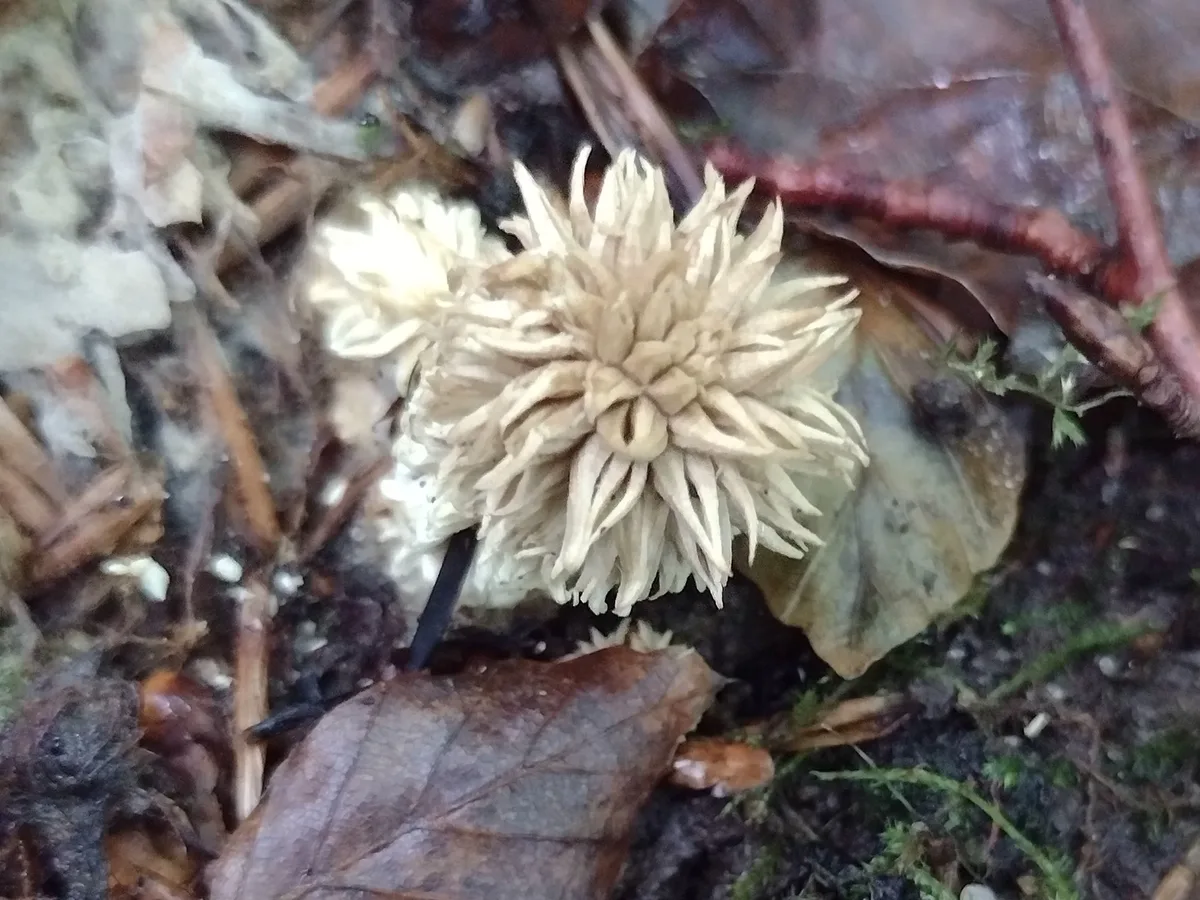
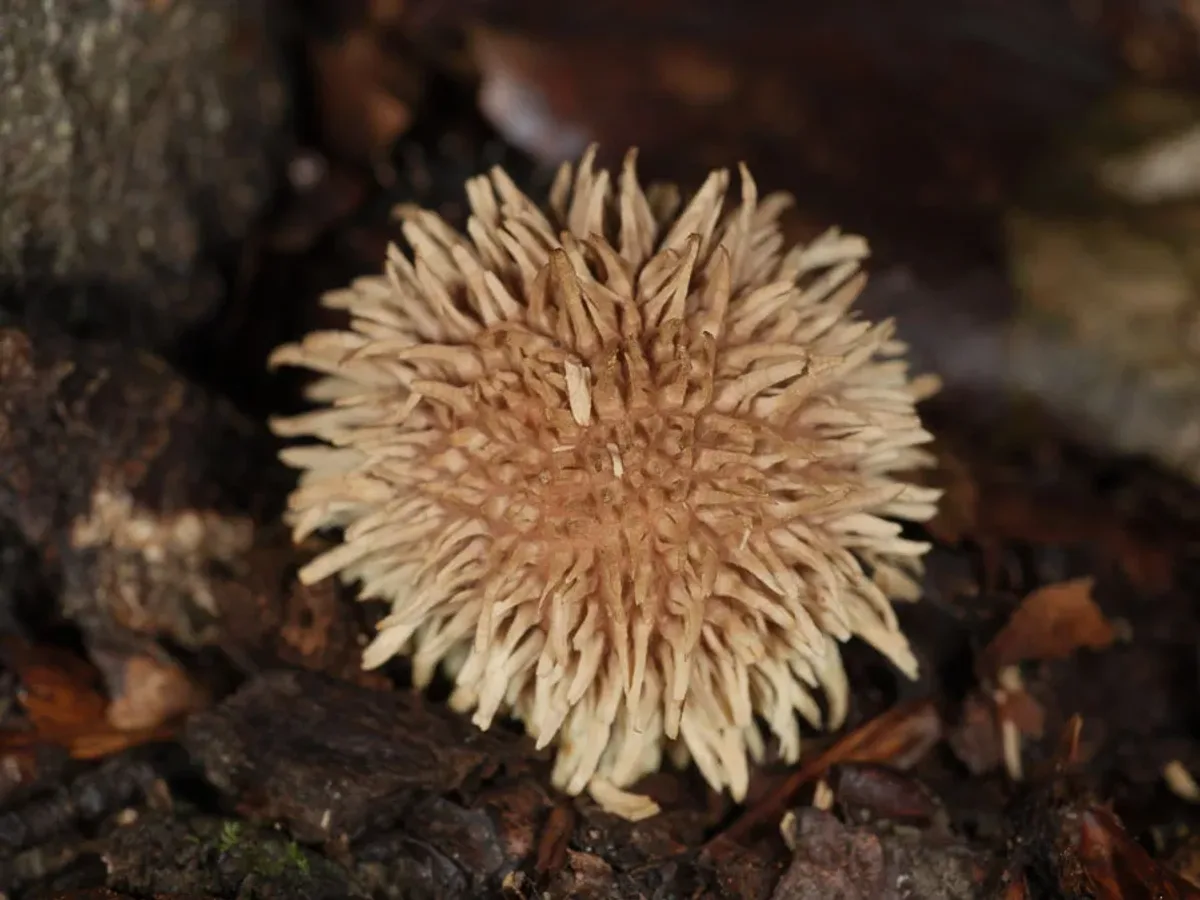
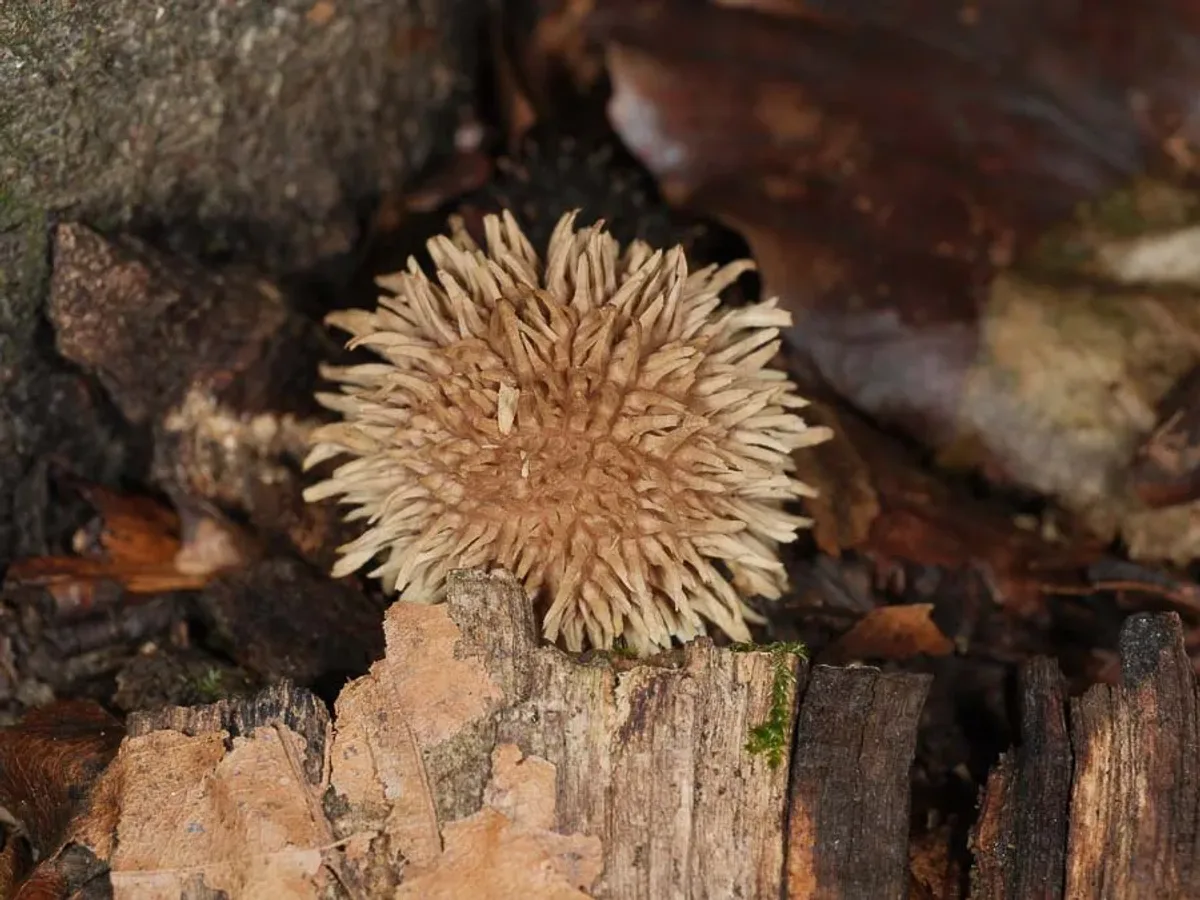
The most striking feature is the exoperidium: the entire outer surface of fresh specimens is clothed in dense, long, white to pale brown spines up to 3-6 mm in length, often aggregated into tufts of 3-5. When young, the whole mushroom appears greyish-white and bristling, reminiscent of a tiny hedgehog.
As the fruitbody matures and desiccates, these spines darken to brown and eventually fall away together, leaving a beautiful reticulate (net-like) pattern of interlocking ridges on the papery inner wall - a diagnostic scar pattern unique to this species among common European puffballs.
The inner wall (endoperidium) is thin, papery, and eventually dark brown to sepia. At maturity a small apical pore develops through which the spore mass is expelled when the fruitbody is compressed or struck by raindrops.
The internal gleba is the critical edibility cue: it must be uniformly pure white and firm throughout (like soft cheese or marshmallow) before consumption. Any yellowing, greening, or development of internal structure (as seen in immature Amanita 'eggs') renders it inedible or potentially dangerous.
Spore print colour - purple-brown - can be observed as a puff of dark powder from old fruitbodies.
Microscopy: spores 3.5-5 µm, globose, verrucose, with a notably long pedicel (stalk) up to 10 µm, a reliable laboratory character.
Where & when it grows
Habitat
Look for this species in the quieter corners of mature deciduous woodland - the kind of moist, shaded floor under old beech (Fagus sylvatica) and oak (Quercus spp.) where leaf litter has had years to build up into a deep, soft humus.
It is an organism of undisturbed places: the spiny puffball rarely turns up in open grassland or disturbed ground, which itself can help narrow an identification.
It often emerges from partially buried, decayed wood fragments or root debris hidden beneath the leaf layer - the buried wood feeds the mycelium that no one sees until the fruitbody appears.
Mixed forests with hornbeam, hazel, or birch also support it. Occurs singly or in loose clusters of a few fruitbodies.
When
Fruits from July through November in central-west Europe, with the main flush occurring August to October. Early specimens can appear in midsummer following warm rains.
In Nordic regions the season is compressed: typically August-September.
The spiny specimens are most easily spotted at peak maturity in September when full-sized but still pale; by October most have darkened and are releasing spores.
How it grows
A saprotroph - it makes its living breaking down buried woody debris, root litter, and the deep humus of old woodland floors, never forming the tree-root partnerships of mycorrhizal fungi.
For most of the year the whole organism is invisible: a web of mycelium threading through decayed wood beneath the soil.
Then, given the right combination of summer warmth and September moisture, fruitbodies push up over the course of one to three weeks, slowly swelling and hardening before the outer spines begin to darken and shed.
Grows singly or in small scattered groups; aggregations of more than five or six fruitbodies are uncommon.
Fruiting conditions
Requires moderate rainfall and cooling soil temperatures of late summer and autumn. Warm moist August conditions followed by cooler September nights are ideal. Fruitbodies develop slowly over 1-3 weeks and persist for an extended period as they darken and produce spores.
Handle with care
Toxin
Lycoperdon echinatum contains no known systemic toxins when young and white. The safety risk is entirely one of misidentification:
- The 'egg' stages of deadly Amanita species (containing lethal amatoxins - alpha-amanitin and related cyclopeptides) can superficially resemble an uncut young puffball.
- Scleroderma earthballs, another lookalike, contain sclerodermin and related compounds causing gastrointestinal toxicity.
A separate, minor hazard is inhalation of mature spores, which can trigger lycoperdonosis (hypersensitivity pneumonitis) in susceptible individuals.
Symptoms
No symptoms arise from correctly identified, properly prepared young white-fleshed puffballs.
If an Amanita 'egg' is mistakenly consumed, expect amatoxin poisoning:
- 1A deceptive latency of 6-24 hours, followed by violent vomiting, diarrhoea, and abdominal cramps.
- 2An apparent partial recovery of 1-2 days.
- 3Then rapid liver and kidney failure - often fatal without emergency liver transplant.
If a Scleroderma earthball is consumed, expect rapid-onset (30 minutes to 2 hours) nausea, vomiting, and diarrhoea.
Inhalation of large quantities of ripe puffball spores (lycoperdonosis) can cause fever, cough, and breathlessness hours to days later.
Look-alikes
The most dangerous confusion is with immature Amanita species ('eggs'), particularly Amanita phalloides, Amanita virosa, and Amanita pantherina, which emerge as white egg-like structures partially enclosed in a universal veil.
These Amanita eggs are smooth and lack the distinctive long clustered spines of L. echinatum. On bisection, an Amanita egg reveals differentiated internal structure - a discernible cap, gills, and stem outline - whereas a true puffball egg shows uniformly white homogeneous flesh throughout with no differentiation. Always bisect before eating.
Other lookalikes:
- Lycoperdon perlatum (common puffball, gem-studded puffball) is very similar in form but has shorter spines (1-2 mm) arranged more individually rather than in clusters; the scar left after spine fall is dotted rather than truly reticulate (net-like). It also tends to be whiter and found in a wider range of habitats including grassland.
- Lycoperdon umbrinum has shorter, brown spines and is smaller, less clearly pear-shaped.
- Calvatia gigantea (giant puffball) is much larger with no spines.
- Bovista plumbea lacks spines entirely and has a blue-grey inner wall.
- Scleroderma citrinum (common earthball) is a toxic lookalike: harder, with a thick, corky, yellowish or buff warty skin (not true spines), and the interior is purple-black or mottled even when young - never uniformly white. Scleroderma species should never be eaten; bisection reveals the dark gleba immediately.
Why it matters
The spiny puffball is safe to eat when correctly identified and harvested at the pure-white stage.
The deadly risk is misidentification: a young Amanita phalloides, A. virosa, or related destroying angel, still enclosed in its universal veil, can superficially resemble a small puffball from the outside. Eating even a portion of a single death cap can be fatal.
The mandatory bisection test - uniformly white and unstructured inside - is the single most important safety rule in puffball foraging and must never be skipped.
Immature Amanita phalloides emerges as a smooth white egg enclosed in a universal veil with no spines. Bisecting the egg reveals a differentiated internal structure (cap, gills, stem outline) inside; a true puffball shows uniformly white homogeneous flesh with no internal organisation.
Similar smooth white egg; A. virosa lacks the long clustered spines that cover L. echinatum, so an unspined white fruitbody warrants immediate suspicion. Bisection is definitive: A. virosa shows a differentiated internal anatomy (cap, gills, stem outline) enclosed in white tissue, whereas L. echinatum shows uniformly white homogeneous flesh with no internal organisation.
The principal deadly white Amanita of eastern North America. Its veiled button is smooth and white with no spines; a vertical cut immediately reveals an embryonic cap, gills, and stem within the white tissue. Contains lethal amatoxins in the same concentration as A. phalloides.
Early egg stage is white and smooth; no long clustered spines. Bisection reveals differentiated cap and stem tissues inside rather than uniform white flesh. Contains ibotenic acid and muscimol; fatalities documented.
Smaller, with shorter brown granular spines rather than the long white/pale clustered spines. Less clearly pear-shaped. Also edible when young and white inside.
Toxic and not a true puffball. Has a thick, corky, buff-yellow to ochre rind with coarse flat scales or warts - not true long spines. Interior is purple-black even when apparently 'young', never uniformly white. Smells pungently earthy. Never eat.
Has shorter individual spines (1-2 mm) rather than the long clustered spines (up to 6 mm) of L. echinatum; the scar left when spines fall creates a dotted rather than reticulate pattern. Found in a wider range of habitats including open ground. Both edible when white inside.
Similar toxic earthball with finely scaly rind; interior dark purple. Distinguished from L. echinatum by thick corky outer skin, dark interior, and absence of long clustered spines.
In the kitchen
Picking & cleaning
Only collect fruitbodies that are uniformly pure white throughout when cut in half vertically - this is a non-negotiable safety rule. Discard any specimen showing the slightest yellow, grey, green, or differentiated internal structure.
- The white flesh should be homogeneous, firm, and odourless or faintly pleasant.
- Use a sharp knife to halve each specimen in the field before placing in your basket.
- The long spines make handling a little awkward but they cause no harm.
- Remove the thin outer skin before cooking as it toughens.
- The sterile base is edible but less palatable.
Do not collect dark or powdery specimens.
Cooking
The white gleba has a mild, pleasant, slightly nutty flavour and a firm, marshmallow-like texture that is versatile in the kitchen.
Peel away the thin outer skin and spiny layer before cooking. Slice into rounds or chunks and sauté in butter or olive oil over medium-high heat - the flesh absorbs fat and browns pleasantly.
Excellent with garlic, thyme, and parsley. Can be breaded and fried, added to omelettes, pasta, risotto, or soups. The texture becomes somewhat silky when cooked.
Does not dry well. Best consumed very fresh; quality deteriorates quickly once yellowing begins. Avoid boiling, which makes the flesh waterlogged.
Good to know
Lycoperdon echinatum is considered edible when young and the flesh is uniformly white throughout.
However, the key safety rule - bisecting every specimen before eating - cannot be overemphasised, as it is the only reliable way to distinguish this species from immature deadly Amanita 'eggs' in the field.
Some individuals report mild gastrointestinal discomfort, particularly when eating large quantities or consuming specimens that have begun to yellow.
Spores inhaled in quantity from mature specimens can cause lycoperdonosis, a rare respiratory hypersensitivity pneumonitis - do not intentionally puff old specimens.
There are no reports of serious systemic toxicity in correctly identified, pure-white young specimens. This species carries a deadly-lookalike warning because immature Amanita phalloides and related deadly species can superficially resemble an uncut young puffball.
A reference guide - never an edibility guarantee. When in doubt, leave it out.