White dapperling
Leucoagaricus leucothitessyn. Lepiota naucina, Agaricus naucinus, Agaricus leucothites, Leucoagaricus naucinus, Leucoagaricus pudicus
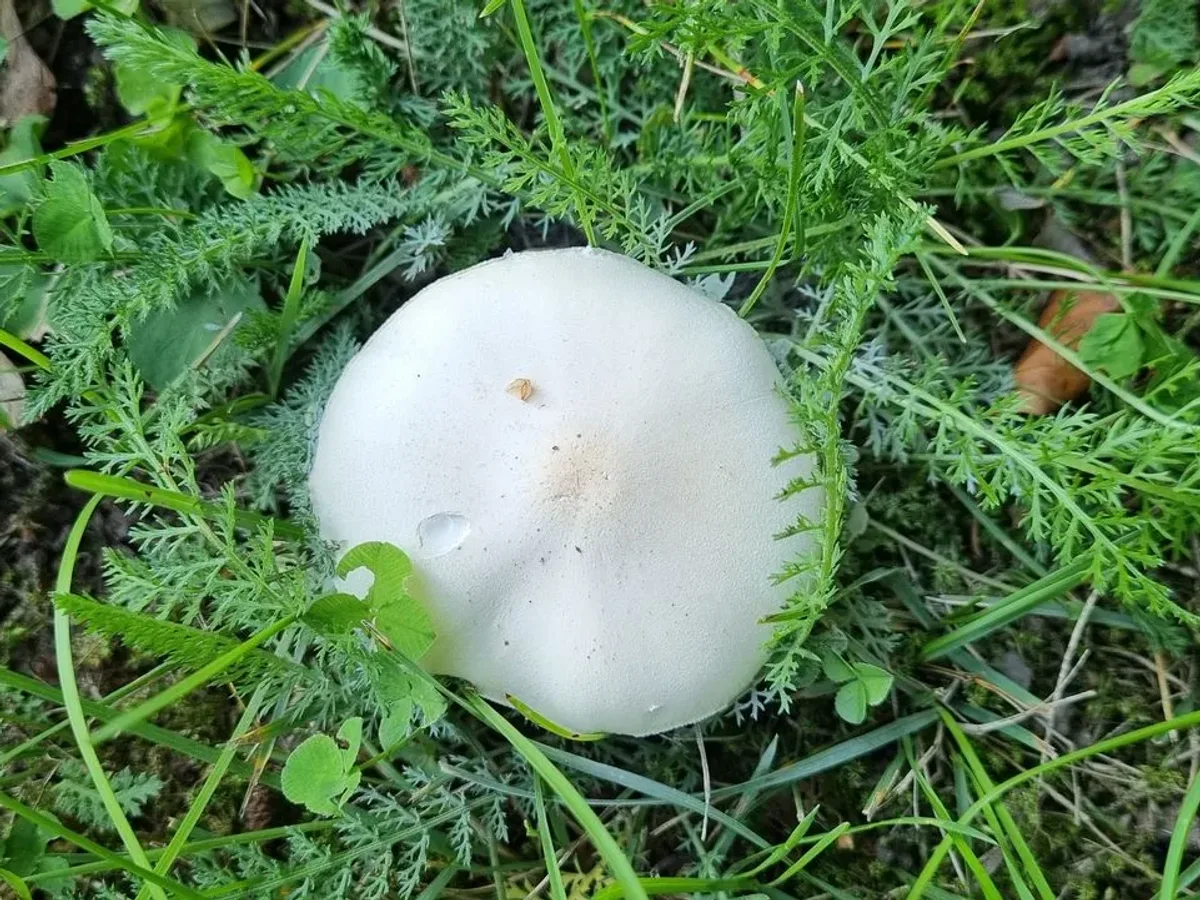 © Kadri Põldmaa (CC BY-SA)
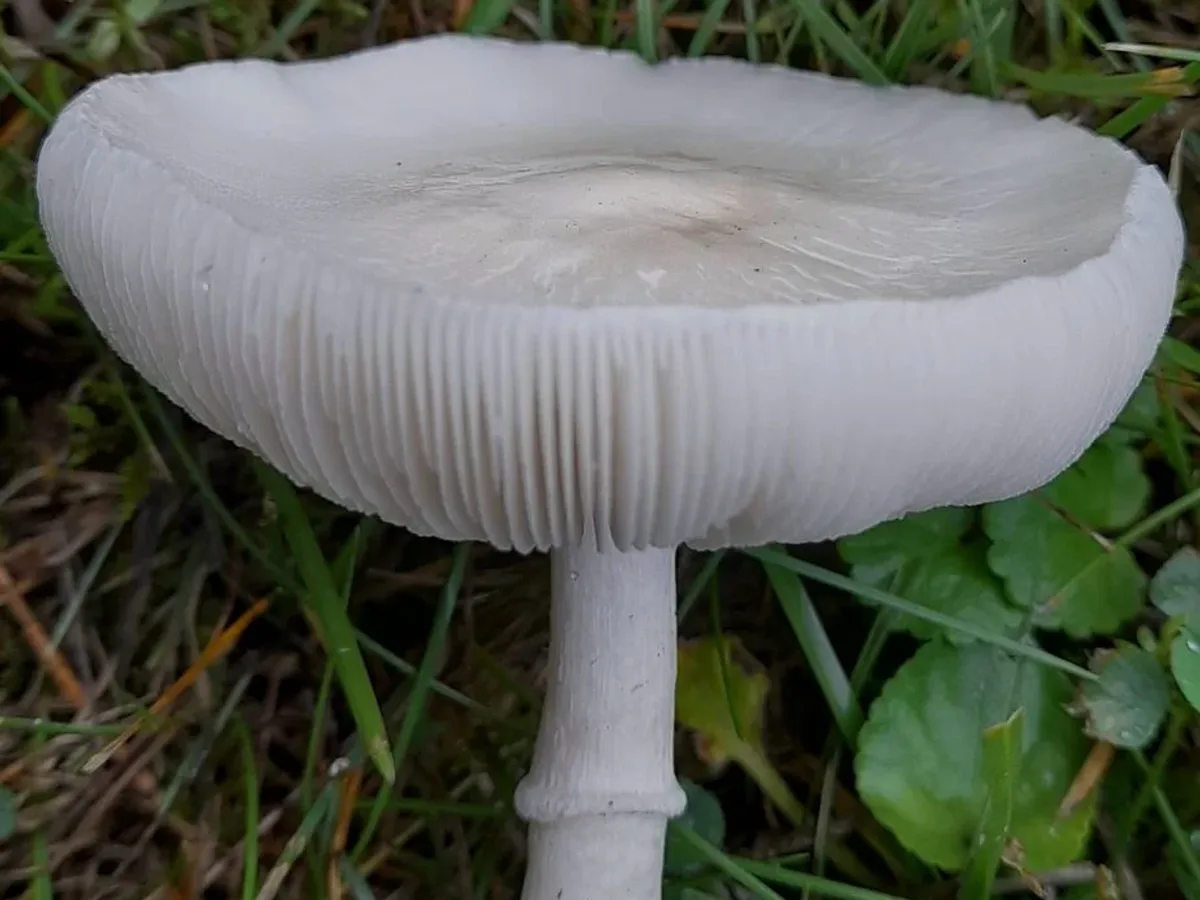 © Peeter Tarlap (CC BY-SA)
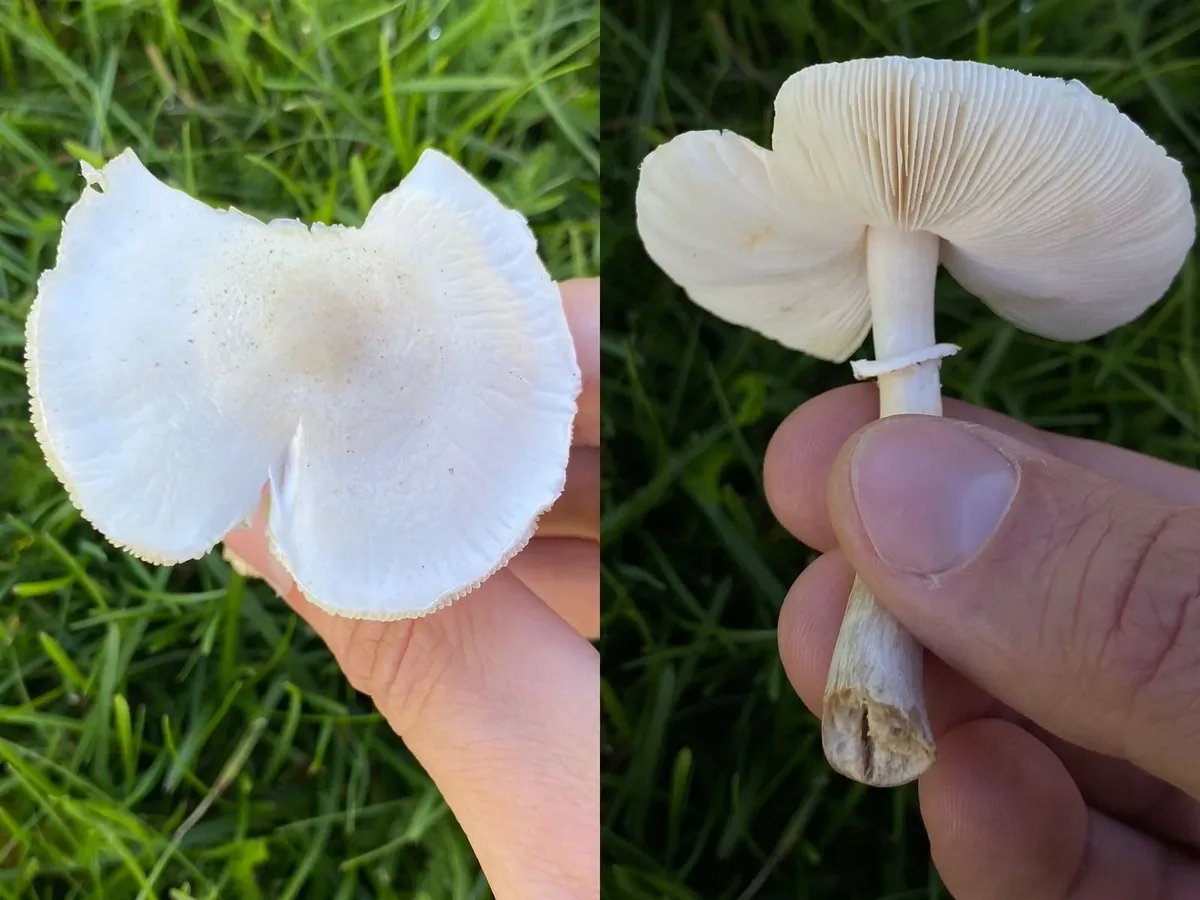 © Allar Antson (CC BY-SA)
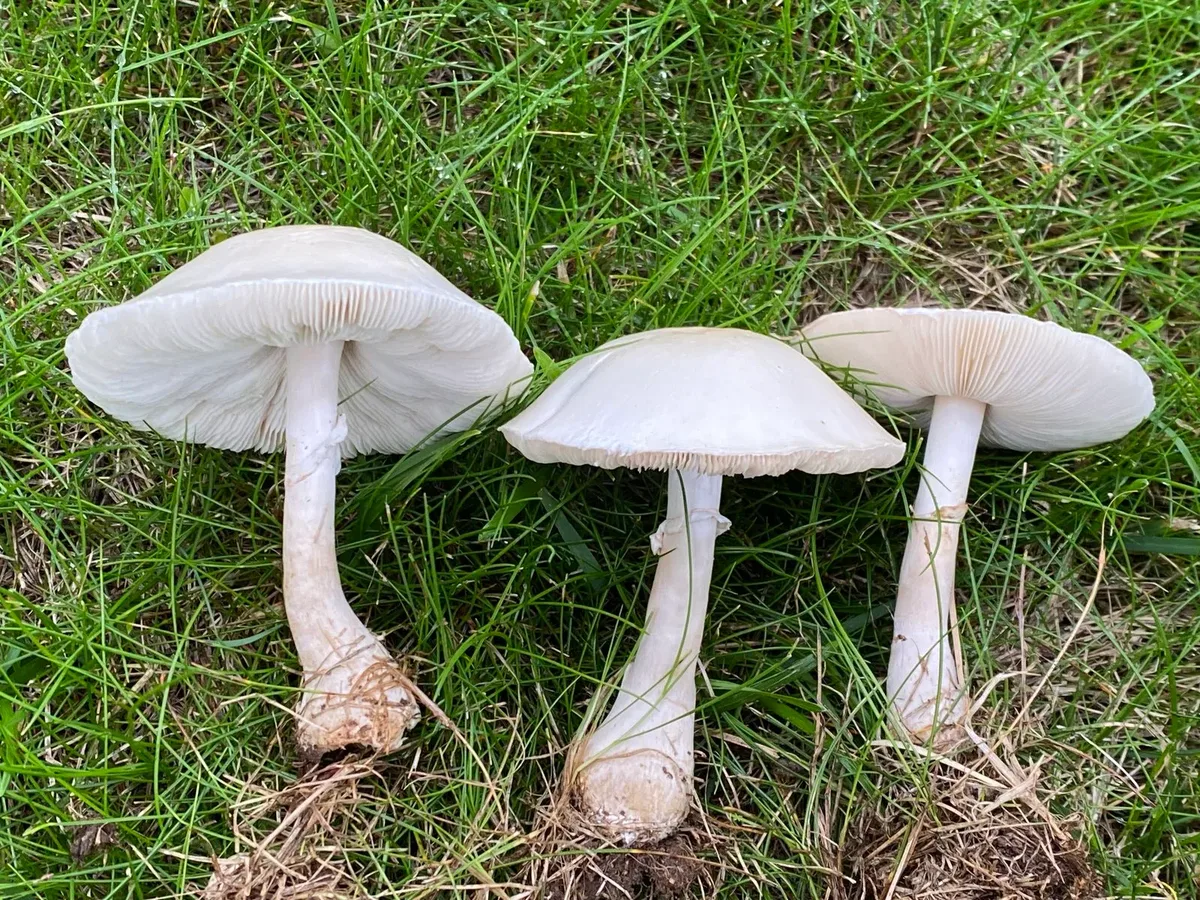 © Külli Kalamees (CC BY-SA)
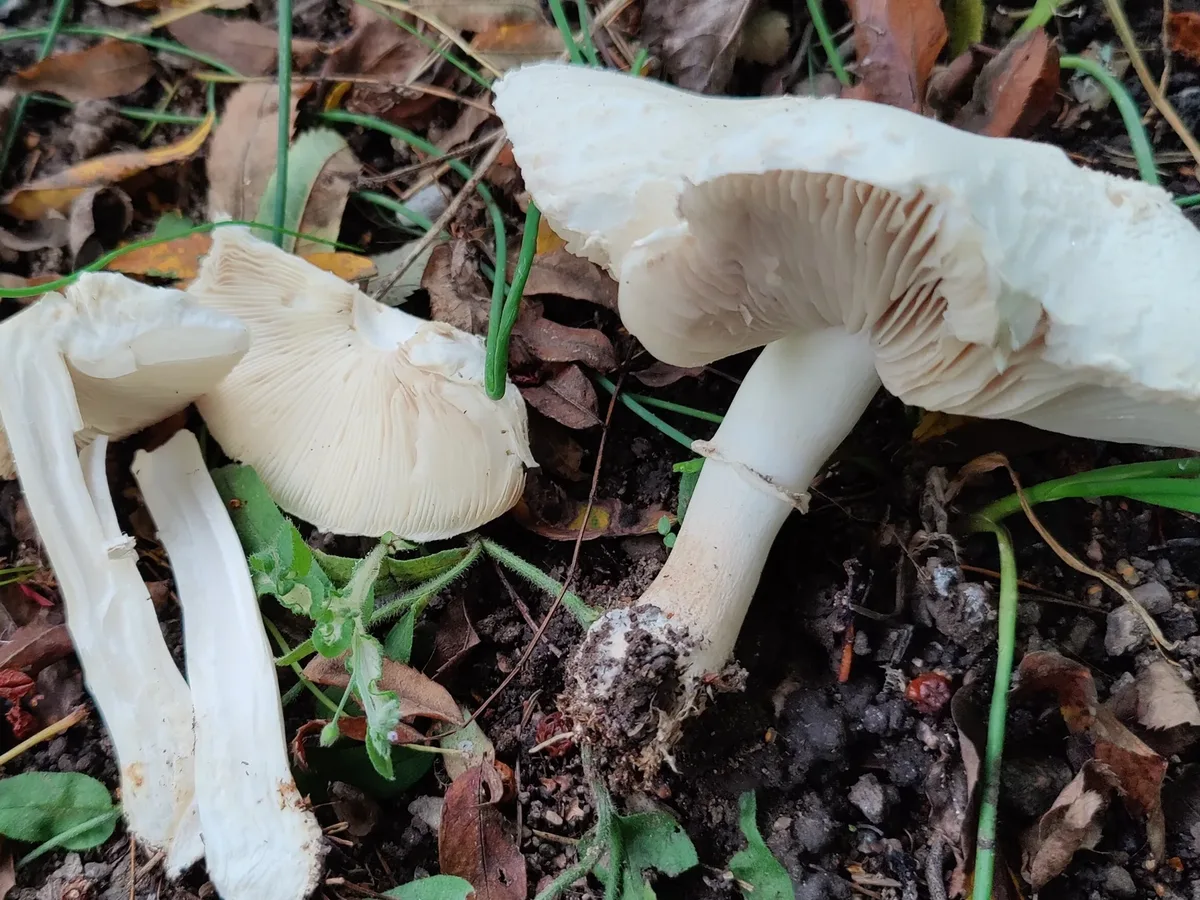 © Unknown (CC BY-SA)
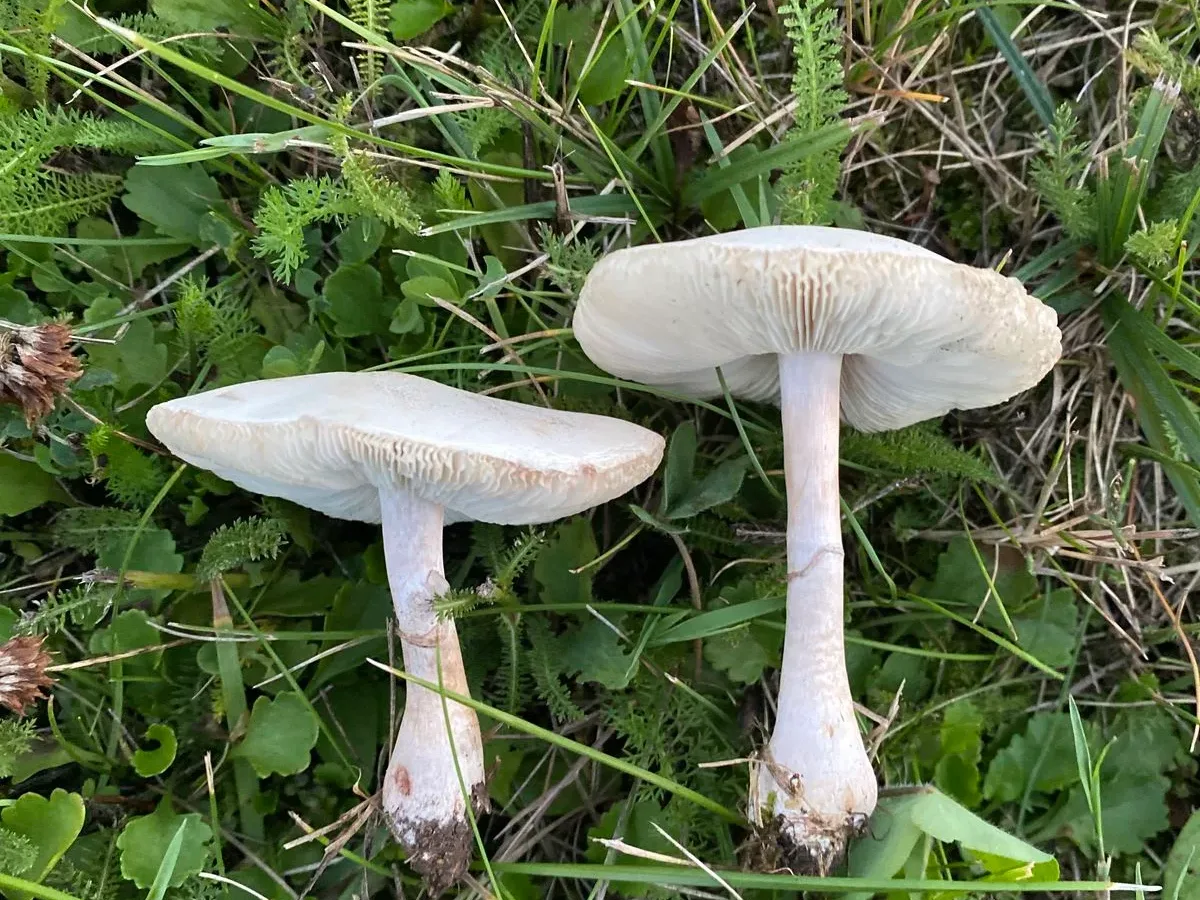 © Külli Kalamees (CC BY-SA)
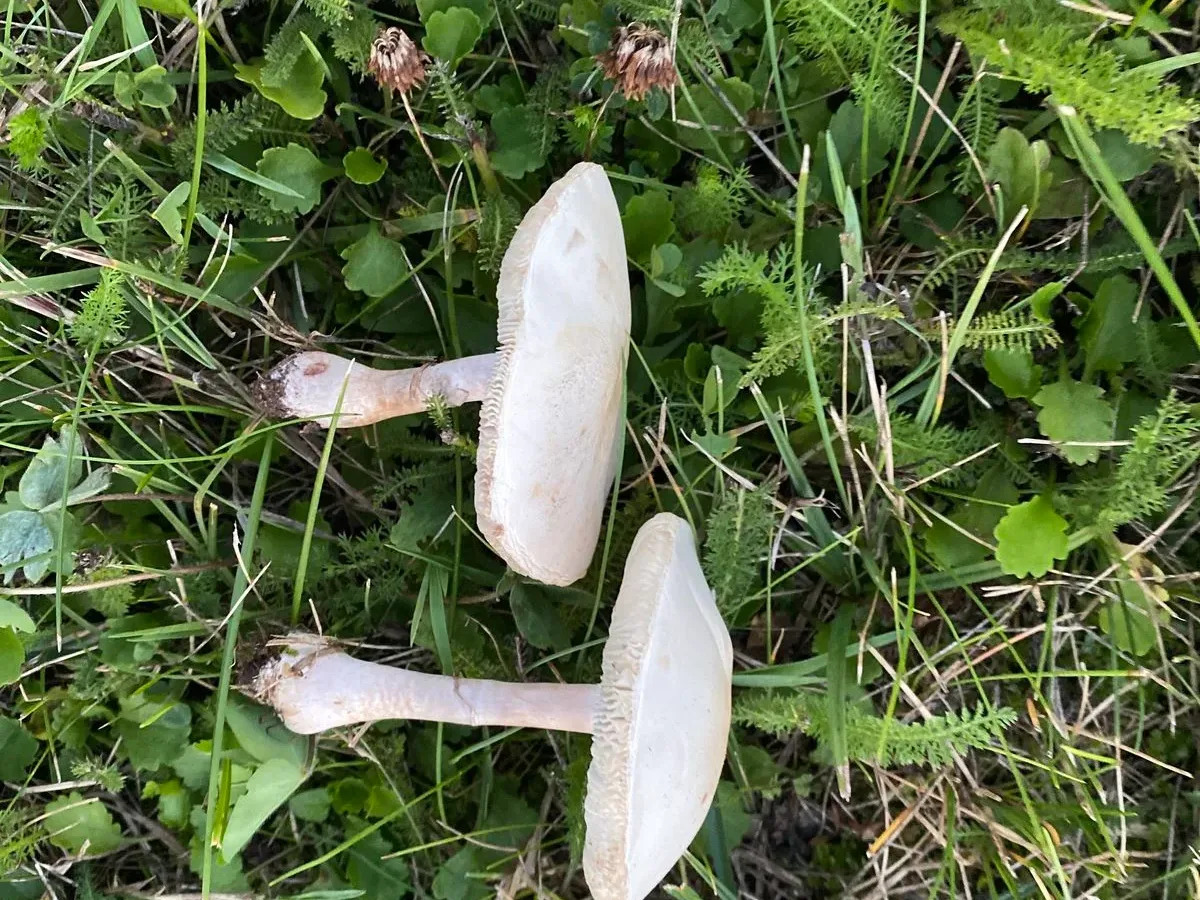 © Külli Kalamees (CC BY-SA)
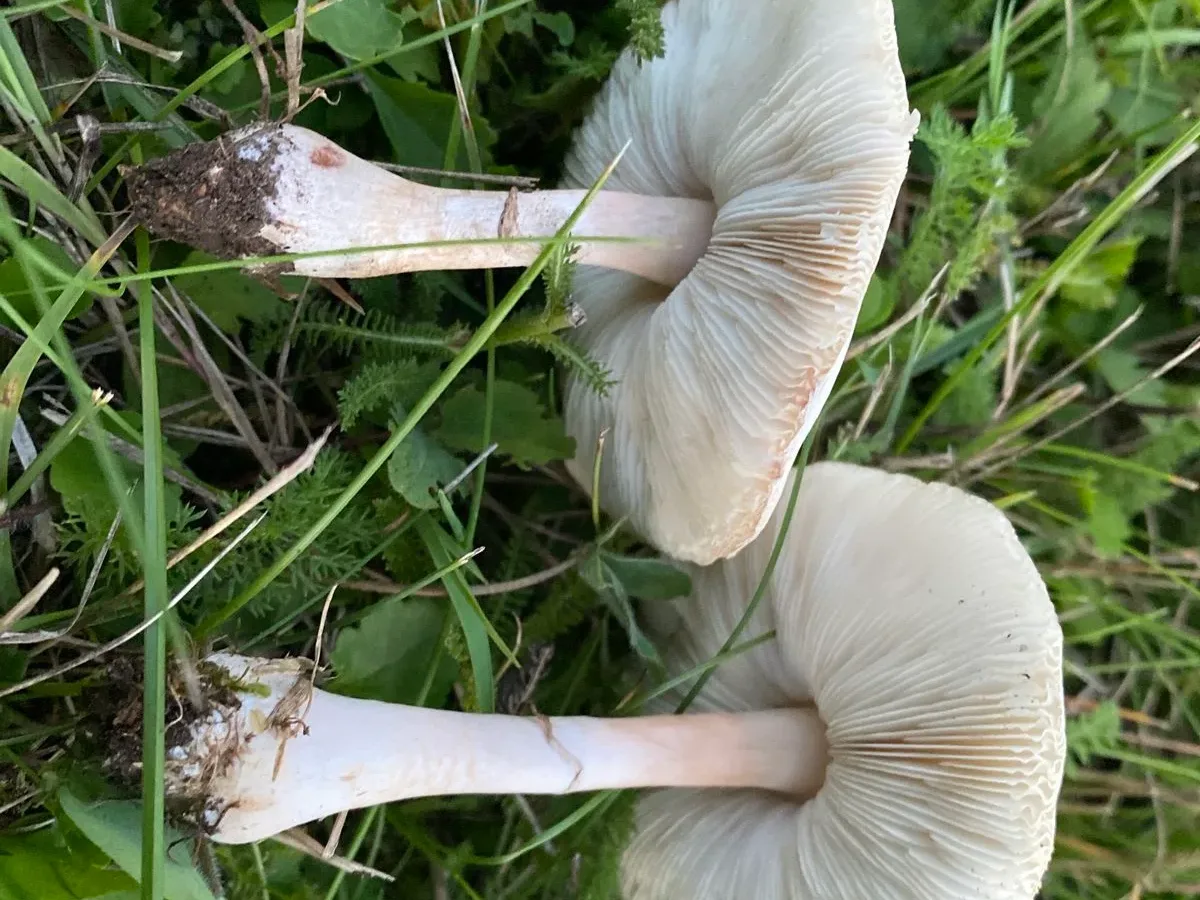 © Külli Kalamees (CC BY-SA)
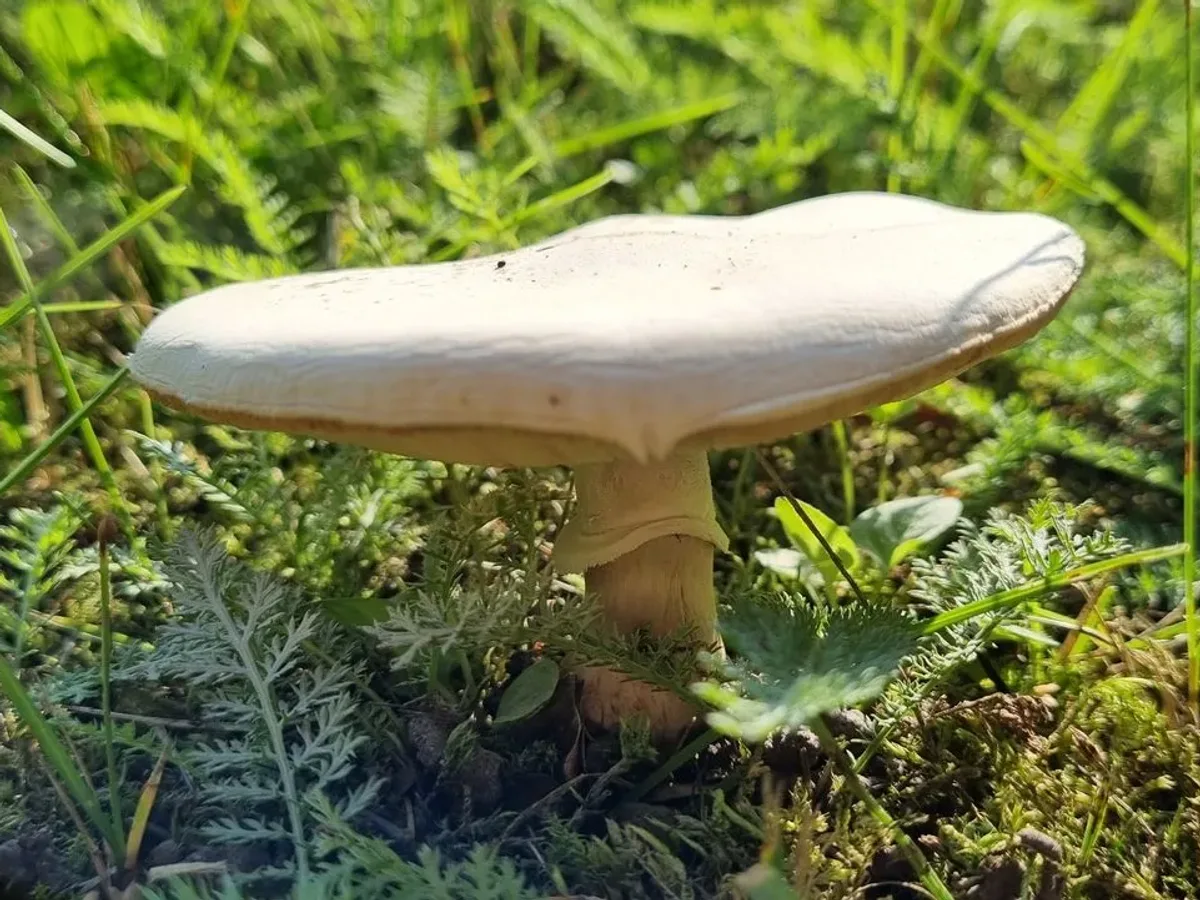 © Kadri Põldmaa (CC BY-SA)© Kadri Põldmaa (CC BY-SA)© Peeter Tarlap (CC BY-SA)
Edible only with the right preparation - or safe for some people but not others. Learn the caveats first.
Never eat a mushroom you are not 100% sure of - check the look-alikes below, and always cook wild mushrooms.
How to recognise it
Leucoagaricus leucothites is a medium-sized, entirely white to off-white mushroom that can easily deceive foragers at first glance.
Cap
The cap begins as a tight egg or ovoid, measuring 4-10 cm, and opens to broadly convex or almost flat, sometimes bearing a low, rounded umbo at the centre.
The surface is dry, smooth, and finely silky - never viscid, granular, or scaly in the way that Lepiota or Macrolepiota caps often are. Colour is white to pale cream throughout, aging to greyish-ivory.
Gills
The gills are free from the stem, crowded, initially white and becoming distinctly pinkish-cream to flesh-pink as the spores mature - a subtle but important observational clue separating this species from many deadly look-alikes.
Stem
The stem is white, cylindrical, 5-10 cm tall, smooth, and has a thin, membranous, often fugacious ring that is moveable when fresh.
Crucially, the base lacks any volva or sack-like structure, distinguishing it from the deadly Amanita bisporigera and Amanita virosa complexes at a glance.
Flesh
The flesh is firm, white throughout, and does not change colour on exposure to air.
Spore print is white. Under the microscope, spores (7-9 × 5-6 µm) are ellipsoid with a germ pore and are dextrinoid and metachromatic - features that confirm identification in ambiguous cases.
Why it's dangerous
Extreme danger from misidentification. The destroying angel group (Amanita virosa and allies) and the death cap (Amanita phalloides) share habitat and superficial appearance, and are responsible for the majority of fatal mushroom poisonings in Europe and North America.
Amatoxin poisoning has a mortality rate of 10-30% even with modern intensive care.
In the absence of laboratory mycology skills or direct comparison with authenticated herbarium material, no entirely white, ring-bearing lawn or woodland-edge mushroom should be considered safe to eat.
Toxin
No confirmed specific toxin has been isolated from Leucoagaricus leucothites itself, though gastrointestinal irritants are suspected and documented GI illness cases exist.
The primary danger is indirect: confusion with the amatoxin-containing destroying-angel complex (Amanita virosa, A. bisporigera, A. ocreata) and death cap (Amanita phalloides). In these, amatoxins (especially α-amanitin) cause cytotoxic liver and kidney failure.
Poisoning by Chlorophyllum molybdites (a possible confusion species in warm climates) is caused by an as-yet incompletely characterised protein toxin that causes severe gastrointestinal symptoms. Earlier hypotheses involving 'molybdic acid' are not supported by current evidence.
Symptoms
If Leucoagaricus leucothites itself is the cause (rare confirmed cases): nausea, vomiting, and diarrhoea within a few hours of ingestion.
If confused with destroying angel or death cap:
- 1After a latency period of 6-24 hours, a violent gastrointestinal phase (nausea, vomiting, severe abdominal cramping, profuse diarrhoea, sometimes bloody) lasting 24 hours.
- 2Followed by a deceptive recovery phase of 1-3 days.
- 3Then a rapid and potentially fatal hepato-renal failure phase.
Any gastrointestinal illness within 24 hours of eating a white gilled mushroom must be treated as potentially amatoxin poisoning until proven otherwise. Seek emergency medical treatment immediately:
- report the mushroom eaten
- preserve a specimen for identification
Staying safe
CAUTION: Leucoagaricus leucothites should be treated with great respect.
Although it is described in some older literature as edible and was historically consumed in parts of Europe and North America, it has caused gastrointestinal upsets in a proportion of people who have eaten it. Some cases of more serious illness are on record - possibly partly due to confusion with toxic species in the field.
The species is not recommended for foraging by all major modern European mycological authorities.
The critical issue is that it is virtually indistinguishable in the field from the white-capped destroying angel group (Amanita virosa and relatives) and white or button-stage death cap (Amanita phalloides), which are among the most lethal fungi known. A single cap of a destroying angel or death cap can deliver a fatal dose of amatoxins.
The only reliable field separators require careful, systematic examination and considerable field experience:
- excavating the stem base for a volva
- noting gills that pink in age
- confirming a ring on a non-bulbous stem
Spore print must be white, not brown (ruling out Agaricus) and not greenish (ruling out Chlorophyllum molybdites).
Positive identification requires confirmation by multiple independent characters, and when any doubt exists the mushroom must be discarded.
Novices and all non-expert foragers should never eat any entirely white, ring-bearing mushroom from lawns or grassy areas.
Where & when it grows
Habitat
This is a grassland and ruderal species, conspicuously absent from deep forest but very common in human-modified environments. It colonises lawns, garden borders, parks, golf courses, roadsides, compost-enriched flowerbeds, and the margins of paths and grassy woodland edges.
It thrives particularly on nitrogen-rich, well-aerated soils where organic matter is decomposing. Saprotrophic in habit, it quietly breaks down buried organic debris - living out its life entirely unseen as mycelium until conditions are right.
The species is cosmopolitan and distributed across temperate Europe, North Africa, the Americas, parts of Asia and Australasia.
In Europe it is one of the commonest white mushrooms of lawns and parkland, which matters because it shares that space with deadly white Amanita species that can look almost identical to a casual eye.
When
In temperate northern Europe, fruiting bodies appear from June or July through to November, peaking strongly in August-October after warm, humid weather.
In Mediterranean climates a spring flush (April-May) is not unusual, followed by a more substantial autumn flush. In warmer subtropical zones, fruiting can occur almost year-round with sufficient moisture.
Warm soil (15-22 °C) and a good soaking are the triggers - lawn specimens will often push up within days of garden watering, which is part of what makes this species such a regular surprise on suburban grass.
How it grows
Fruiting bodies emerge singly, scattered or in small irregular groups; occasionally in partial fairy rings or arcs, tracing the invisible outward march of the mycelium through the soil below.
Development is rapid - caps can push from tight button to full size in just 2-4 days under warm, moist conditions.
The ring is clear on buttons and young caps but often falls away or degrades quickly in mature or rain-washed specimens. This increases identification difficulty, and is one reason experienced foragers always try to collect young, intact examples.
Fruiting conditions
Fruiting is triggered by warm, moist conditions - typically 5-12 days after significant rainfall or irrigation events when soil is warm (12-22 °C). Lawn specimens frequently appear after garden watering. Dry spells suppress fruiting sharply; successive warm wet periods can produce multiple flushes in a single season.
Look-alikes
The most dangerous confusion is with the destroying angel group (Amanita virosa, Amanita bisporigera, Amanita ocreata and their allies), which are deadly toxic. These Amanita species also produce white caps, white gills, a white ring, and a white spore print.
The critical difference is the presence of a volva (a sack or cup of tissue) at the base of the stem - always obscured unless the base is fully excavated - and a free, swollen (often club-shaped or bulbous) stem base. Leucoagaricus leucothites has neither a volva nor a basal bulb.
The death cap (Amanita phalloides) also occurs in buttons as a pure white or pale form at grassy woodland edges, and shares white gills and white spore print with L. leucothites; it also has a volva and bulbous base.
In addition, the gills of L. leucothites turn faintly pinkish at maturity, whereas destroying angels and the death cap retain snow-white gills.
Other lookalikes:
- The grisettes (Amanita vaginata, Amanita fulva in white-capped variants) lack a ring but have a volva, and are not identical in practice.
- Agaricus xanthodermus (yellow-staining mushroom, toxic) is similar, but the flesh stains bright chrome-yellow instantly when cut, especially at the stem base; the cap discolours yellow on bruising; and it has a strongly chemical (phenolic) smell and a dark brown to chocolate spore print.
- Agaricus campestris and other edible Agaricus species have pink then chocolate-brown gills at all stages and brown spore prints. Leucoagaricus leucothites itself has white gills turning only faintly pinkish-cream and always a white print.
- Chlorophyllum molybdites (green-spored parasol, a serious gastrointestinal toxin in warm climates) has gills that turn dull greenish at maturity and a distinctive greenish spore print - examine spore prints carefully.
- Several Lepiota species - particularly in the Lepiota brunneoincarnata and Lepiota cristata groups - are small to medium, ring-bearing, white-stemmed and can cause severe poisoning; they typically have distinct scales or brownish zones on the cap, but worn specimens can appear quite plain.
Smaller (cap 2-6 cm), with a brownish-pink to pinkish-brown colour on the cap and a tendency to show concentric scale patterns. Causes amatoxin poisoning. Distinguished by smaller size, cap colouration, and scalier cap surface, though worn specimens can be plain. Spore print white. Any small to medium ring-bearing white mushroom should be treated with extreme caution.
Young buttons and white-capped forms of the death cap can appear all-white and ring-bearing at woodland edges and grassy clearings - the habitat this species shares with L. leucothites. Always excavate the base: the death cap has a prominent, bag-like white volva and a bulbous stem base, neither of which is present in L. leucothites. The gills of the death cap remain persistently white and do not pink. Mature caps typically develop a greenish-yellow wash, but all-white specimens occur. Responsible for the majority of fatal mushroom poisonings worldwide.
Amanita virosa has a persistent, cup-like volva (sack) at the base of the stem - always dig out the base completely to check. The stem base is bulbous and enclosed in this volva. Gills remain snow-white at all stages and do not pink. Spore print white. Cap surface often slightly viscid when moist. The entire fruiting body has a faint sickly sweet smell. L. leucothites has no volva, no basal bulb, and gills that turn faintly pinkish at maturity.
As with A. virosa: volva present, bulbous stem base, persistently white gills, white spore print, faintly silky cap. The absence of a volva in L. leucothites is the key separation but requires careful excavation of the base.
Deadly western North American Amanita with volva and bulbous base; gills white and persistent. Same excavation-and-examine protocol applies.
Gills distinctly pink (bright pink to red in young buttons) turning chocolate-brown at maturity. Spore print dark brown. Slight pleasant mushroomy smell. No confusion with L. leucothites once gills and spore print are checked.
In mature specimens, gills develop a dull green tint and spore print is distinctly greenish. One of the most common causes of severe gastrointestinal poisoning in North America. Cap often develops brownish scales or a central boss. Make a spore print - it must be white, never greenish.
Smaller, with a reddish-brown central disc, concentric reddish-brown scales on the cap, and a distinctive unpleasant chemical or rubber smell. Toxic (gastrointestinal). Easily separated by smell and scale pattern.
Lacks a ring (key difference from L. leucothites). Has a volva at the base. Cap tawny-brown; white or pallid-capped variants of grisettes also lack a ring. Always check for ring presence vs absence and for volva.
Cap and stem flesh stains bright chrome-yellow instantly on cutting, especially at the stem base. Strong, unpleasant phenolic/chemical smell. Gills pink then chocolate-brown (never staying white). Spore print dark chocolate-brown. L. leucothites flesh does not yellow and spore print is white.
A reference guide - never an edibility guarantee. When in doubt, leave it out.