Browning Leucoagaricus
Leucoagaricus brunnescenssyn. Lepiota brunnescens Pk., Leucoagaricus brunnescens (Pk.) Locq.
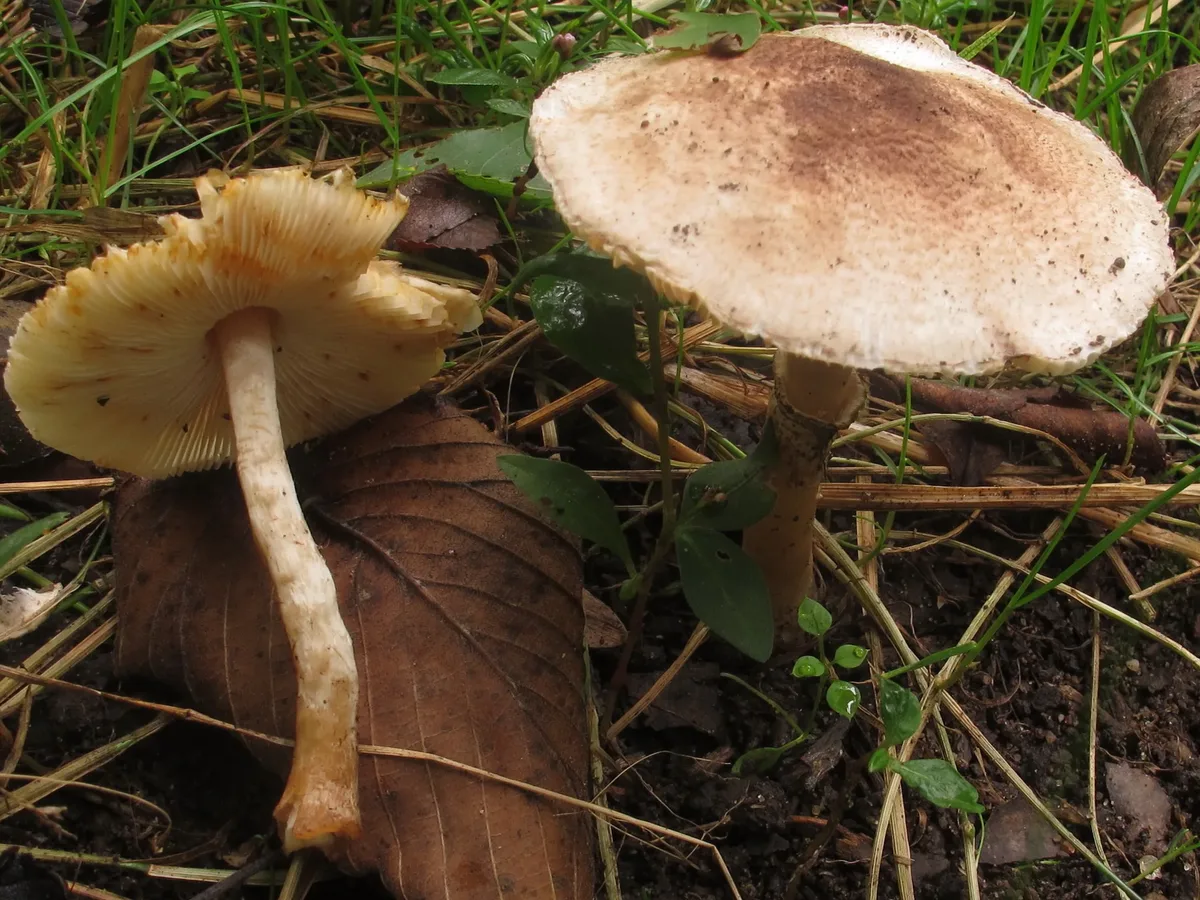 © mycowalt (CC BY-SA)
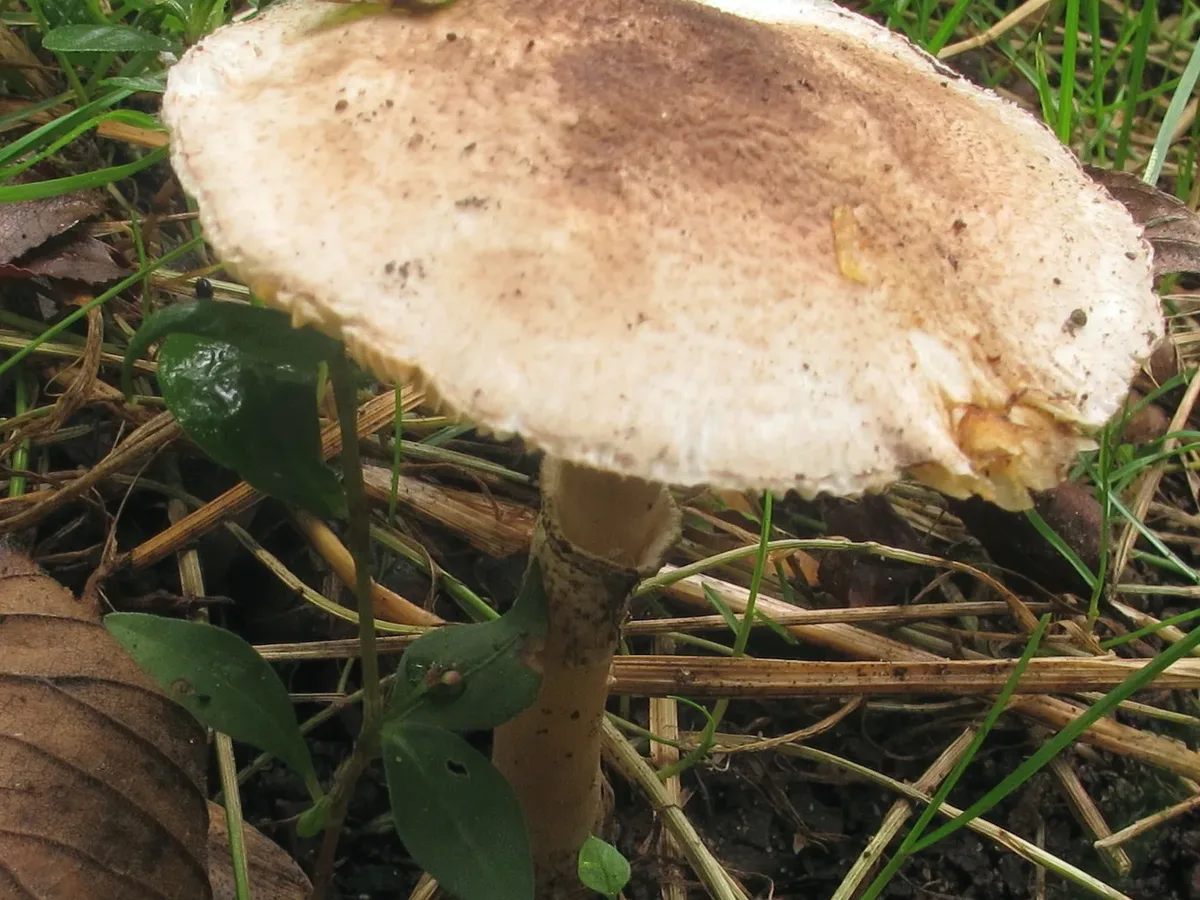 © mycowalt (CC BY-SA)
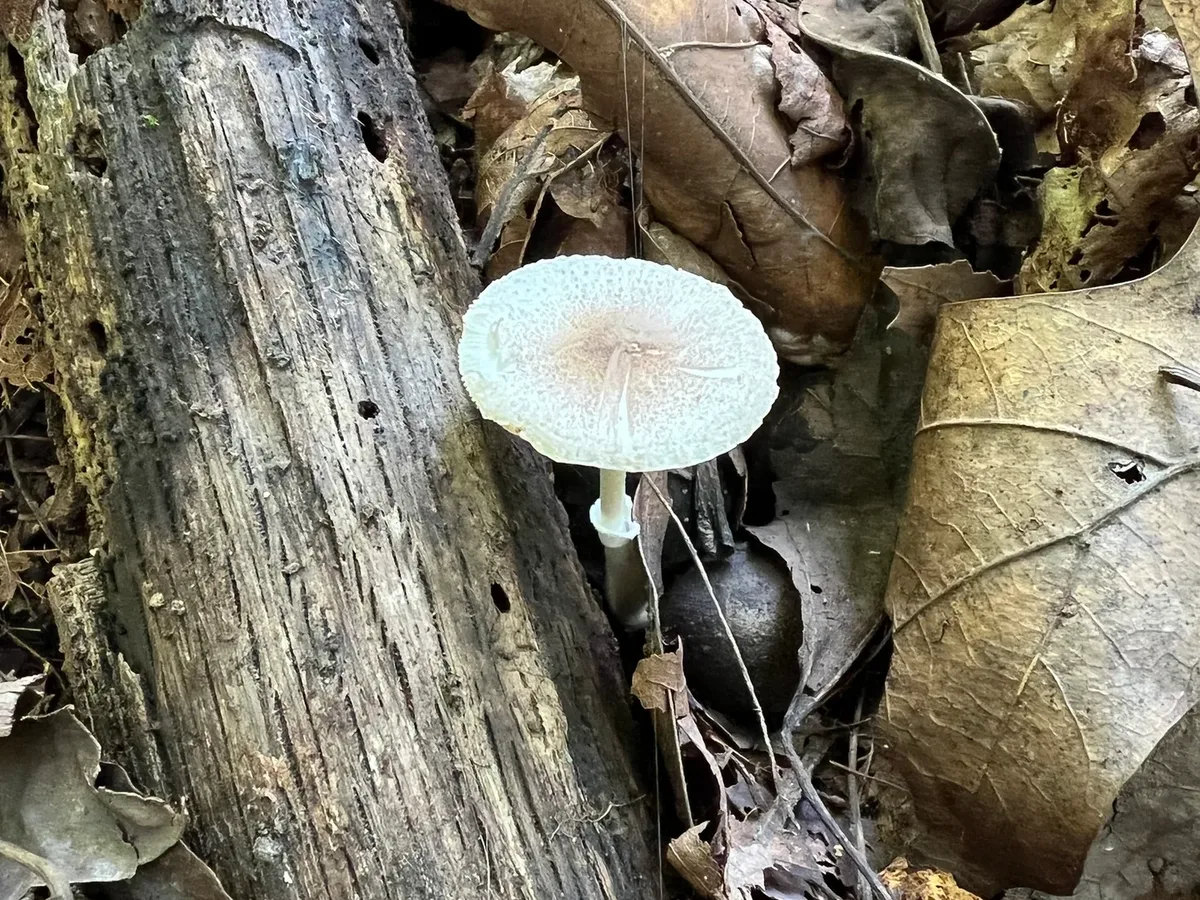 © Brian C. Hunt (CC BY)
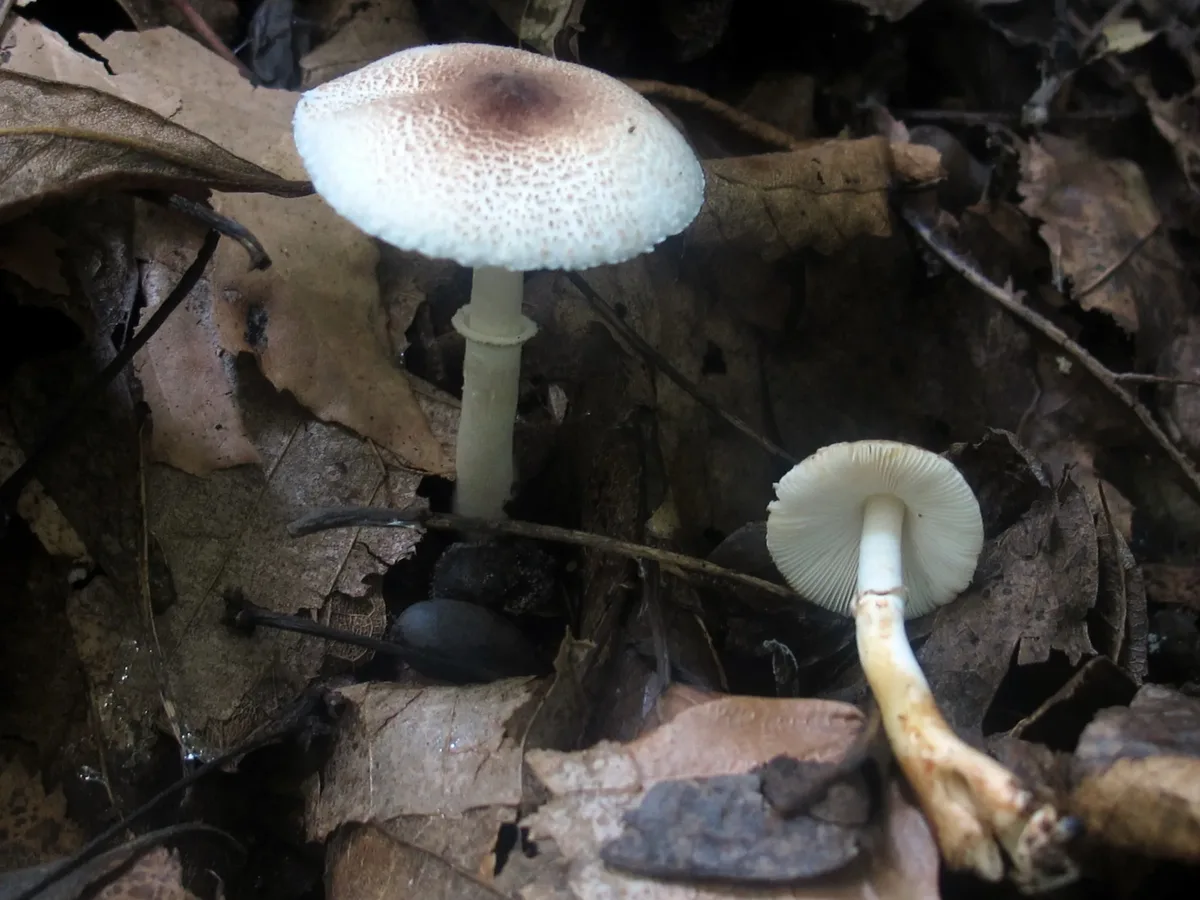 © mycowalt (CC BY-SA)
 © mycowalt (CC BY-SA)
 © mycowalt (CC BY-SA)© mycowalt (CC BY-SA)© mycowalt (CC BY-SA)
Edible only with the right preparation - or safe for some people but not others. Learn the caveats first.
Never eat a mushroom you are not 100% sure of - check the look-alikes below, and always cook wild mushrooms.
How to recognise it
Leucoagaricus brunnescens is a medium-sized parasol-type mushroom.
Cap
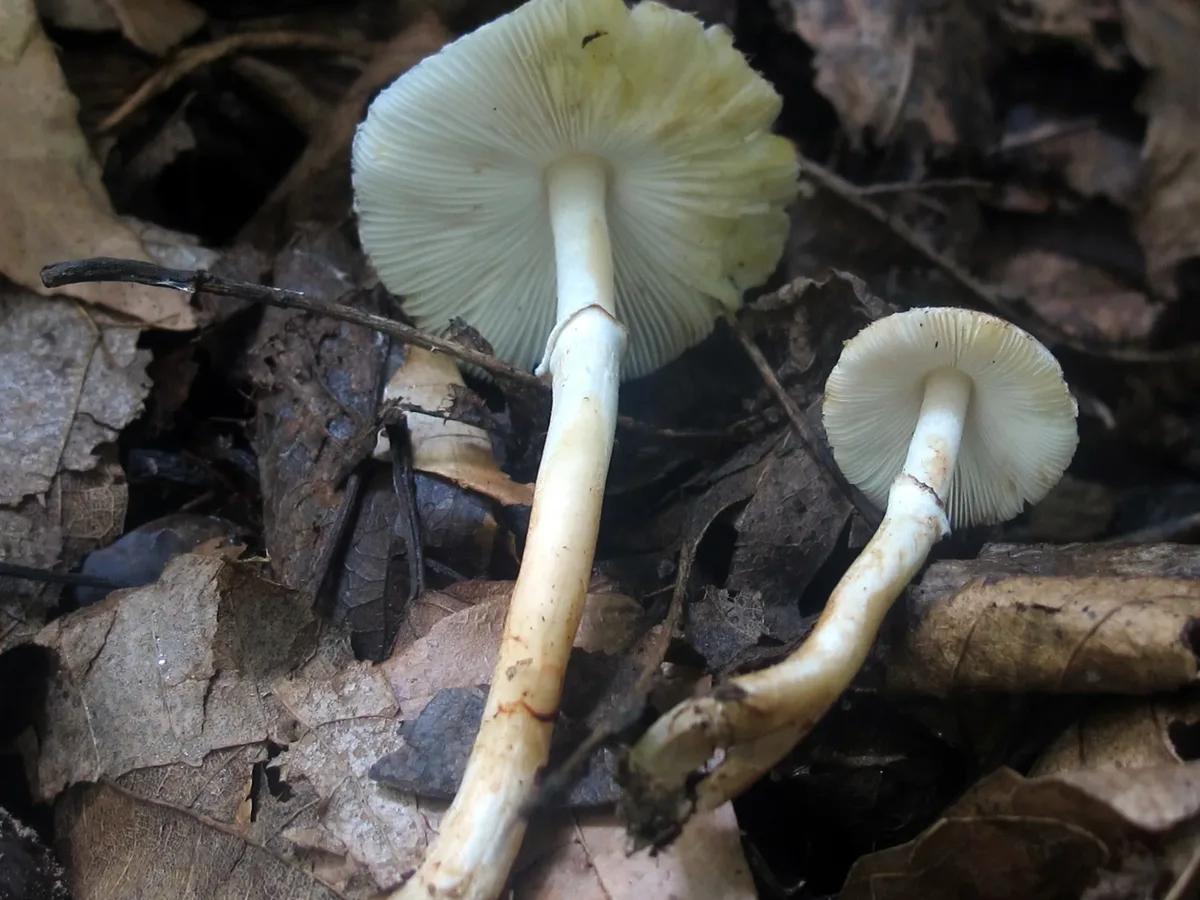
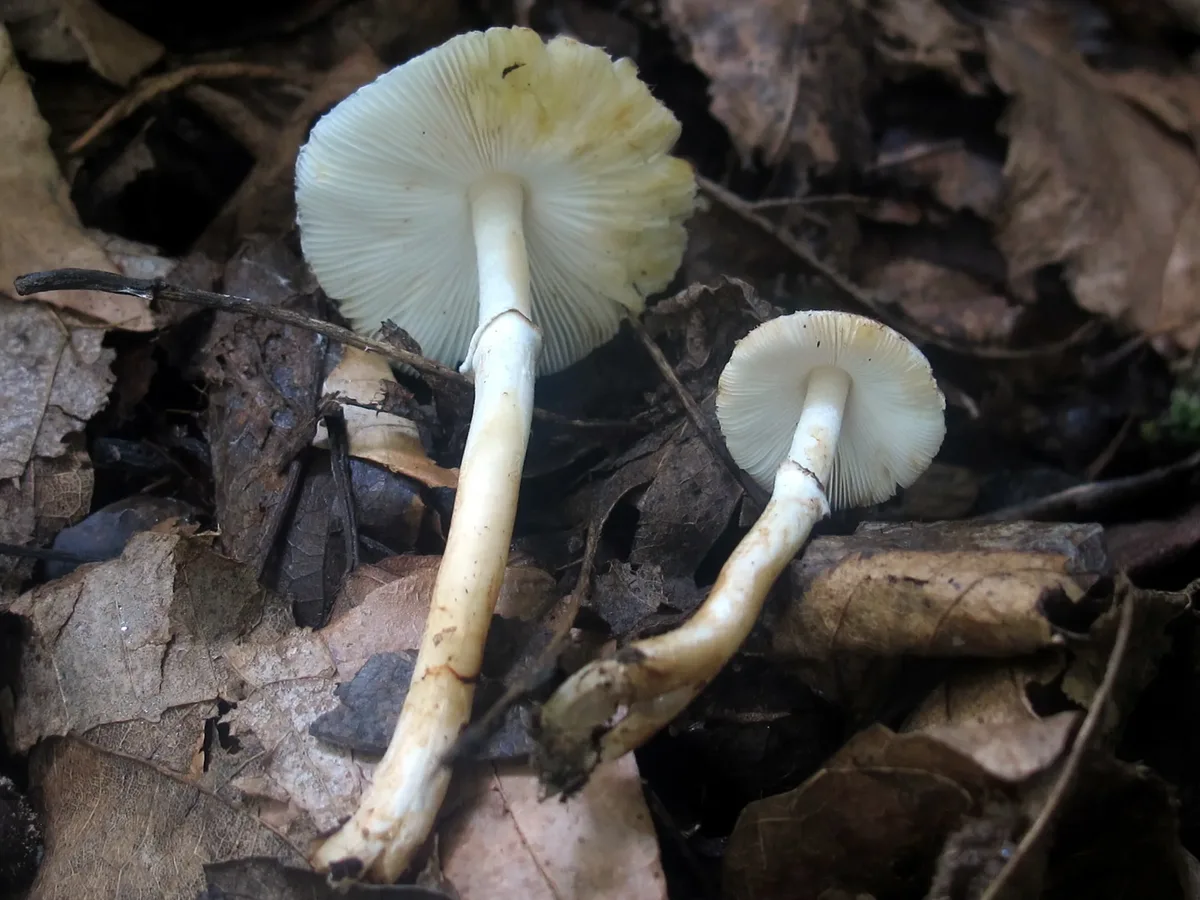
The cap starts as a rounded dome and opens to 4-10 cm across, becoming broadly convex to nearly flat in maturity, sometimes with a low central bump (umbo).
The surface is pale buff to greyish-brown with a darker central disc, decorated with fine fibrous scales or scale-patches that arise from fracturing of the original cuticle as the cap expands.
Flesh
The defining field character is the browning reaction: when you handle, scratch, or cut any part of a fresh specimen, the flesh and surface gradually turn brownish, orange-brown, or pale vinaceous-brown over the course of several minutes.
This is neither the instant vivid scarlet of Chlorophyllum brunneum nor no reaction at all - it is a moderate, definite, progressive browning that reveals the underlying phenolic chemistry of the flesh.
Gills
The gills are free, crowded, and white, taking on faint brownish spots with age.
Stem
The stem is white, with a persistent membranous ring in the upper portion, and discolours brownish when handled. The base has no volva - no bag or cup of tissue surrounds the stem base - which is the single most critical safety character separating it from deadly white Amanita species.
Spore print is white.
The overall build and habit place it firmly in the Leucoagaricus genus: ring-bearing, white-gilled, white-spored, free gills, no volva.
Why it's dangerous
The primary danger is not L. brunnescens itself but misidentification. Deadly white Amanita species (destroying-angel complex) are present in East and Southeast Asian forests and share the ring-bearing, white-gilled, white-spored appearance.
A single cap of a destroying angel can deliver a lethal dose of amatoxins.
The absence of a volva at the stem base is the critical separator and must be physically confirmed by excavation at the time of collection. Collect nothing that cannot be verified to have a volva-free base.
Secondary risk is intrinsic GI toxicity from L. brunnescens itself, which is not well characterised.
Toxin
No specific toxin has been isolated and characterised from Leucoagaricus brunnescens in peer-reviewed literature.
The browning reaction is caused by phenolic oxidation - enzymes oxidising phenolic compounds in the flesh to quinones - similar to the mechanism seen in various other agarics. Whether these or other uncharacterised compounds contribute to GI irritancy is not established.
By analogy with other Leucoagaricus species that cause GI illness (L. leucothites, L. americanus), and given the limited toxicological study, the species is classified as a GI irritant of uncertain mechanism.
Symptoms
If gastrointestinal illness occurs after ingestion: nausea, vomiting, abdominal cramping, and diarrhoea, typically onset 30 minutes to 3 hours post-ingestion.
Such symptoms are generally self-limiting within 24 hours and consistent with GI irritant-type mushroom poisoning.
IMPORTANT: if onset is delayed beyond 6 hours, or if symptoms are severe or involve any sign of liver involvement (jaundice, dark urine, extreme fatigue, upper abdominal pain) - seek emergency medical care immediately.
Delayed onset after consumption of a ring-bearing mushroom in Asian forest habitats must raise immediate suspicion of Amanita amatoxin poisoning (death cap or destroying angel); this requires hospitalisation and monitoring.
Always retain a photograph or specimen of the mushroom eaten.
Staying safe
Leucoagaricus brunnescens occupies an uncertain position in the foraging literature for East and Southeast Asia. It has been consumed in parts of China and Japan, sometimes after cooking, but formal toxicological characterisation is limited.
The genus Leucoagaricus spans a wide range of toxicity: some species (L. leucothites) cause GI illness in a proportion of consumers, others are apparently benign, and the specific compound profile for L. brunnescens has not been rigorously published in the peer-reviewed literature.
The browning reaction itself - caused by phenolic oxidation - raises the possibility of irritant compounds, and parallels with better-studied GI-irritant Leucoagaricus species support a cautious classification.
The primary safety hazard, however, is misidentification: tropical and subtropical Asia harbours Amanita species with white to pale caps, white rings, and white spore prints that are lethally toxic (destroying-angel complexes).
The only reliable field separator is the presence or absence of a volva at the stem base - and this requires deliberate, thorough excavation at the time of collection.
Without confirmed expertise, all white, ring-bearing mushrooms from East and Southeast Asian forests should be treated as potentially lethal until proven otherwise.
Raw consumption must be avoided; thorough cooking is a minimum requirement if the species is to be eaten at all.
Where & when it grows
Habitat
This species inhabits the organic-rich soils of lowland and submontane East and Southeast Asia: forest margins, secondary broadleaf and mixed woodland, bamboo groves, shaded garden beds, roadside banks, and disturbed ground near villages.
It is common in the warmer provinces of China (Yunnan, Sichuan, Fujian, Guangdong), in Japan through Honshu and Kyushu, and across the Southeast Asian mainland (Thailand, Vietnam, southern China) and island archipelagos.
Like most Leucoagaricus species, it is a soil-dwelling saprotroph that decomposes buried organic debris and leaf litter, contributing to the recycling of nutrients in the forest floor.
It neither forms mycorrhizal partnerships with trees nor grows directly on wood - it is always found in or on soil. Small groups scattered across shaded, humus-rich ground are the most typical presentation.
When
- In temperate East Asia - Japan and central-east China - the main fruiting season runs from early summer through mid-autumn, broadly June to October, with peaks following the summer rainy season (June-August) and again after early autumn rains (September-October).
- In subtropical southern China (Yunnan, Guangdong, Fujian) the season extends from May to October, tightly linked to monsoon rainfall.
- In tropical Southeast Asia, where temperature remains consistently warm, fruiting occurs essentially year-round but with maximum abundance during the wet season.
Fruiting is strongly rain-triggered: flushes of fruitbodies emerge 5-10 days after significant precipitation events that saturate the upper soil layer.
How it grows
Saprotrophic; grows singly or in small scattered groups on humus-rich soil, never directly on wood.
Fruitbodies push up relatively rapidly - a button can expand to full size in 2-4 days under warm, humid conditions. The ring, though initially persistent, may become ragged or drop away as the cap opens, so it is best observed on young to mid-aged specimens.
The browning of the flesh on handling intensifies in warm conditions and is most diagnostic in fresh, recently collected material; aged or desiccated specimens may not show the reaction as clearly.
Fruiting conditions
A warm-season tropical and subtropical saprotroph. Fruiting is strongly triggered by significant rainfall events followed by 5-10 days of warm, humid conditions with soil temperatures in the 18-28 °C range. In temperate East Asia (Japan, central China), peak flushes follow monsoon and post-monsoon rain events in June-September. In tropical Southeast Asia, the wet season (May-October or year-round in equatorial zones) drives continuous fruiting. Dry spells sharply suppress fruitbody production; successive rain events can produce multiple flushes from established mycelium.
Look-alikes
The most dangerous lookalikes are white-capped Amanita species of subtropical and tropical Asia. These include Amanita virosa and closely related destroying-angel complexes that occur in East and Southeast Asian forests, as well as local Amanita species with pale or white caps, rings, and white spore prints.
The critical separator in all cases is the volva: Amanita species always have a persistent membranous or bag-like structure (volva) surrounding the base of the stem, buried in the soil - Leucoagaricus brunnescens never does. Always excavate the base fully before collecting any ring-bearing white mushroom.
The browning of L. brunnescens flesh on cutting also helps, as Amanita destroying-angel species do not typically brown.
- The death cap, Amanita phalloides, occurring across temperate Asia, has a green to olive-yellowish cap in most forms and a volva - distinct from L. brunnescens.
- Chlorophyllum molybdites (green-spored parasol), common in tropical Asia, is larger and produces a greenish spore print, readily separating it from L. brunnescens once a spore print is taken.
- Macrolepiota species (parasol mushrooms) are substantially larger as adults (cap 10-30 cm), with neatly plate-like scales, a distinctive double sliding ring, and snakeskin-patterned stem banding; they do not brown appreciably on cutting.
- Within Leucoagaricus itself, L. leucothites is paler, lacks the browning reaction, and lacks the scaly cap surface of L. brunnescens.
- Leucoagaricus americanus (syn. Leucoagaricus bresadolae) also reddens or browns on bruising but is typically larger and has been reported to cause GI upset.
Temperate East Asian forms of Amanita phalloides can display pale whitish to greenish caps; the most diagnostic features are the bag-like volva at the base (absent in L. brunnescens), a bulbous stem base, and gills that remain persistently white without browning. Mature caps of the death cap typically show an olive-greenish to yellowish wash. The volva must be checked by excavation. Responsible for the majority of fatal mushroom poisonings worldwide.
The most dangerous confusion: shares white cap, white gills, ring, and white spore print in the same East and Southeast Asian forest habitats. The critical difference is the volva - Amanita virosa and related destroying-angel species have a persistent bag-like or cup-like structure (volva) enclosing the bulbous stem base, always buried in the soil. Leucoagaricus brunnescens has NO volva and no basal cup. Always excavate the base completely. The flesh of L. brunnescens also browns gradually when cut; A. virosa flesh does not discolour. One cap of a destroying angel can deliver a fatal dose of amatoxins.
Common in tropical and subtropical Asia, similar in overall stature to L. brunnescens. The spore print of C. molybdites is distinctly greenish-grey to olive - never white. Mature gills also turn dull greenish. A spore print taken overnight on white paper makes this distinction unambiguous. C. molybdites causes severe gastrointestinal poisoning and is one of the most common causes of mushroom poisoning in warm-climate Asia.
Substantially larger at maturity (cap 10-30 cm), with a distinctive double-edged ring that slides freely on the stem, a stem with a vivid zigzag snakeskin-like banding of brown on white, and neatly plate-like (not fibrous-ragged) scales on the cap. Flesh stays white when cut without browning. A choice edible in Europe, but the size, stem patterning, and sliding ring separate it clearly from L. brunnescens.
Larger (cap 8-20 cm), coarsely shaggy with upturned dark-brown scales, and the flesh turns a rapid, vivid orange-red to brick-red within seconds of cutting - far more intense and faster than the gradual brownish discolouration of L. brunnescens. C. brunneum also has a more abrupt, swollen basal bulb. White spore print in both.
Leucoagaricus leucothites is whiter overall, with a smooth to very finely silky cap that lacks the distinct fibrous scale pattern of L. brunnescens. Crucially, L. leucothites does NOT brown appreciably when handled or cut - it lacks the browning reaction that is the most obvious field character of L. brunnescens. Gills of L. leucothites turn faintly pinkish with age. Both are GI-irritant caution species, but the browning distinguishes L. brunnescens.
A reference guide - never an edibility guarantee. When in doubt, leave it out.