Sordid blewit
Lepista sordidasyn. Tricholoma sordidum, Clitocybe sordida, Agaricus sordidus, Rhodopaxillus sordidus, Clitocybe nuda var. sordida
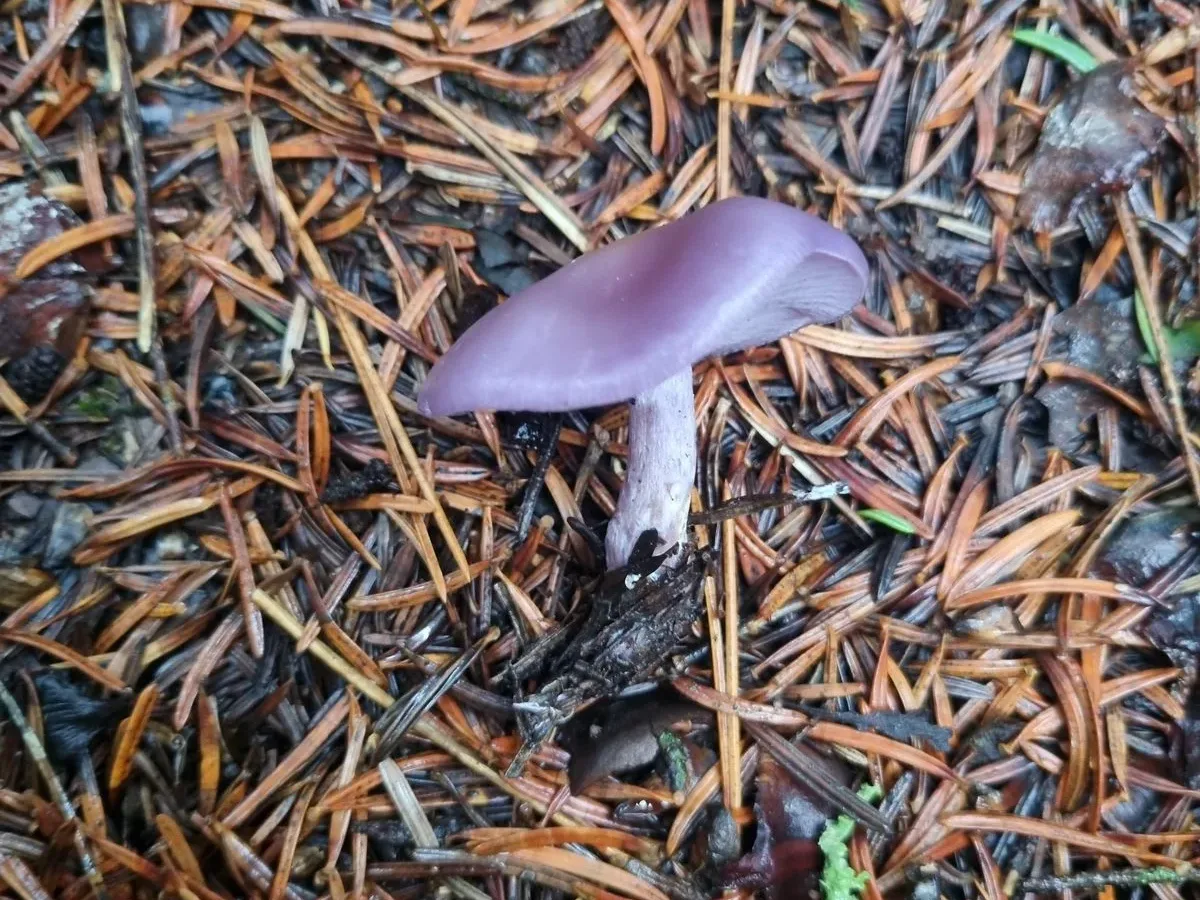 © Simone Graziosi (CC BY-SA)
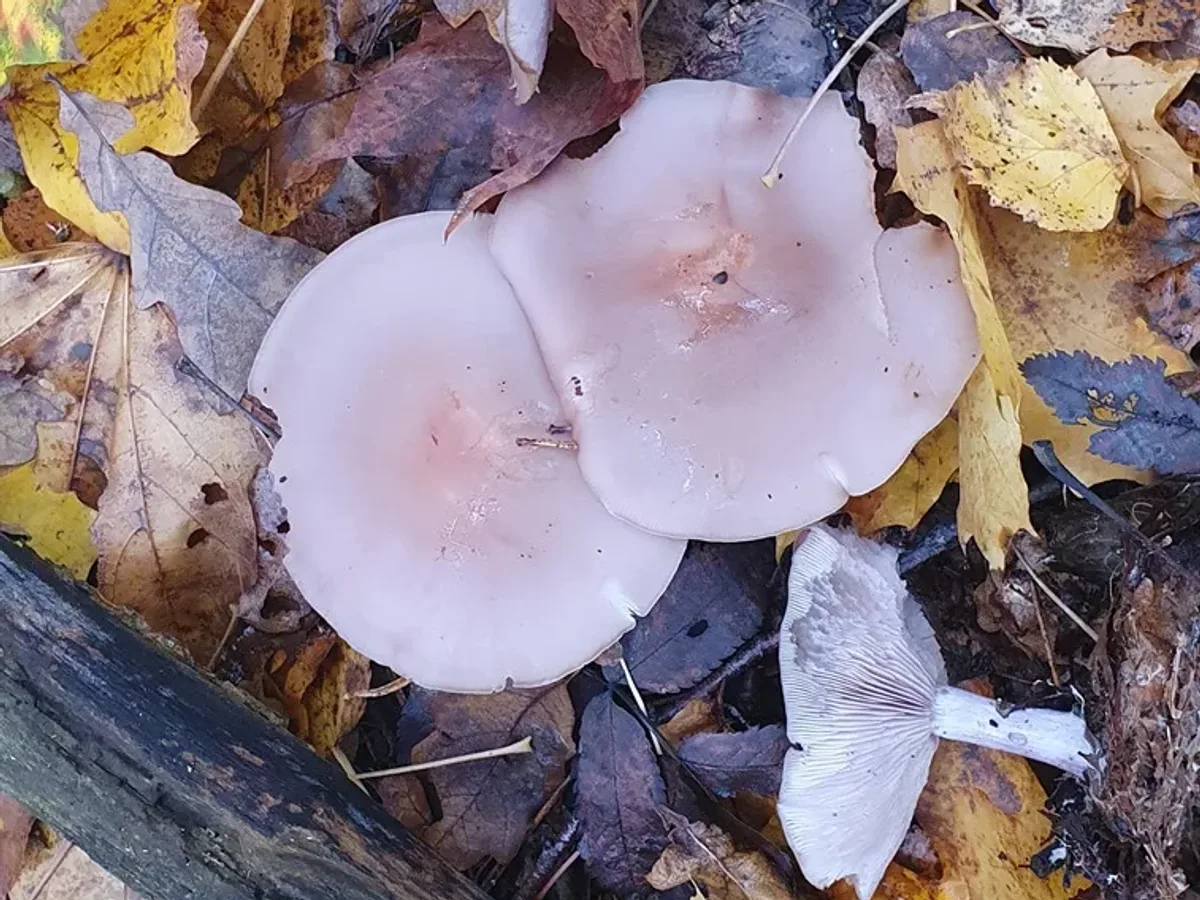 © Reidun Braathen (CC BY)
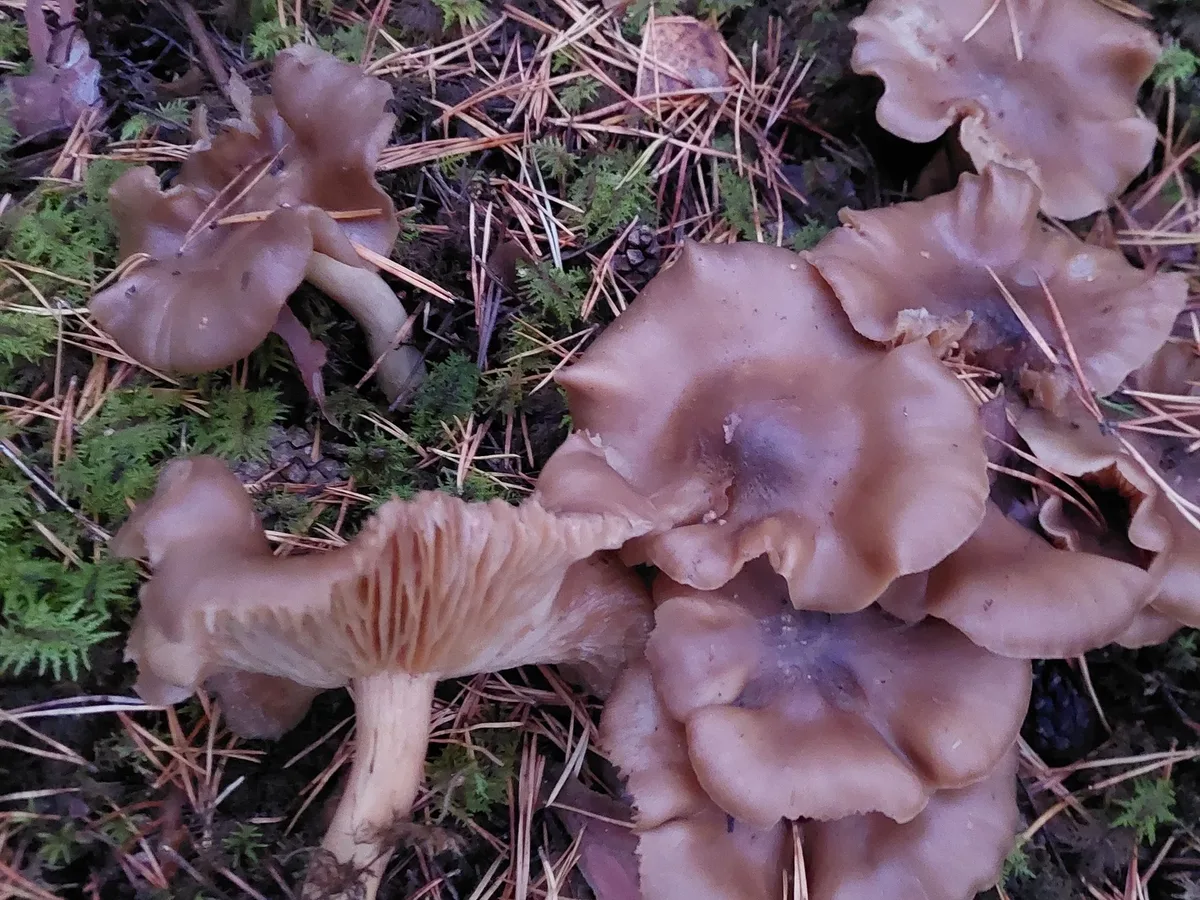 © Arja Kukkonen (CC BY-SA)
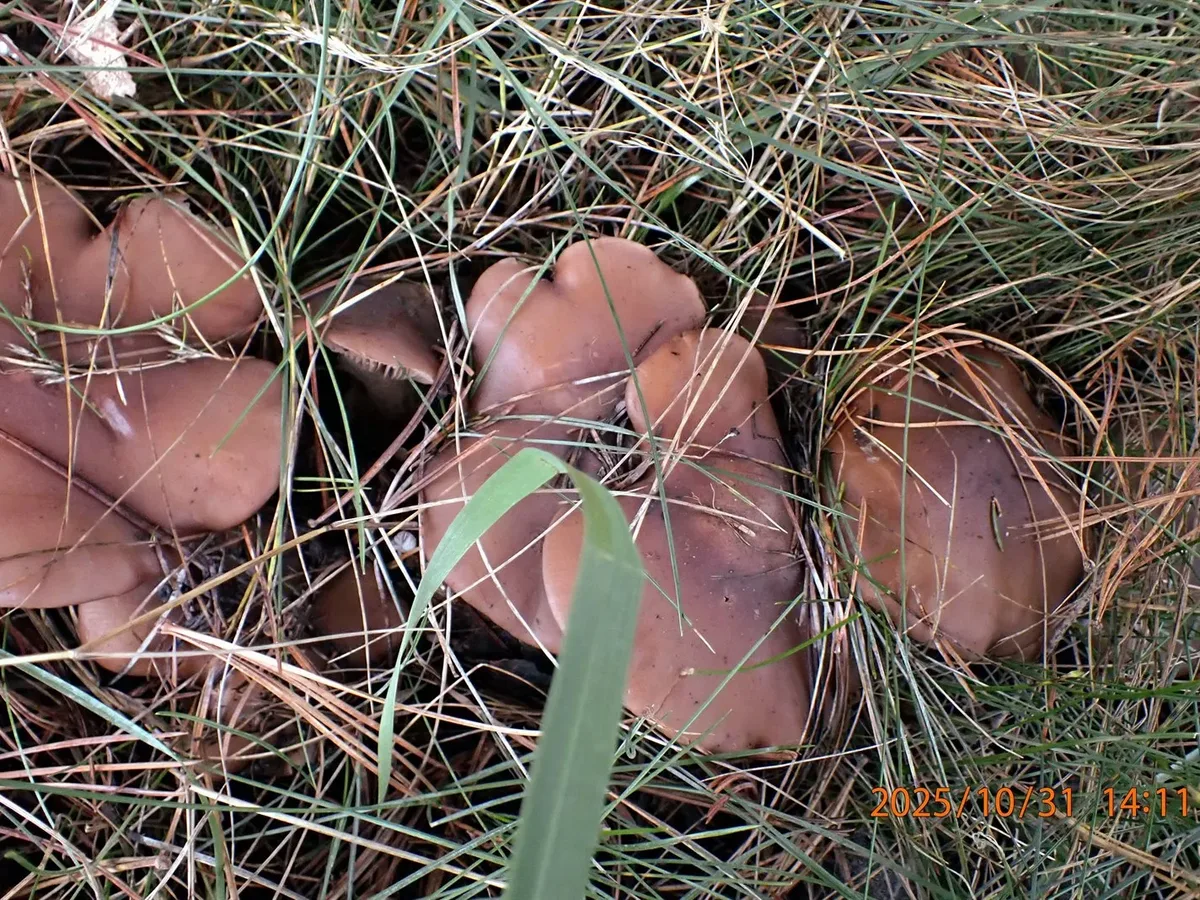 © Tove Jacobsen (CC BY)
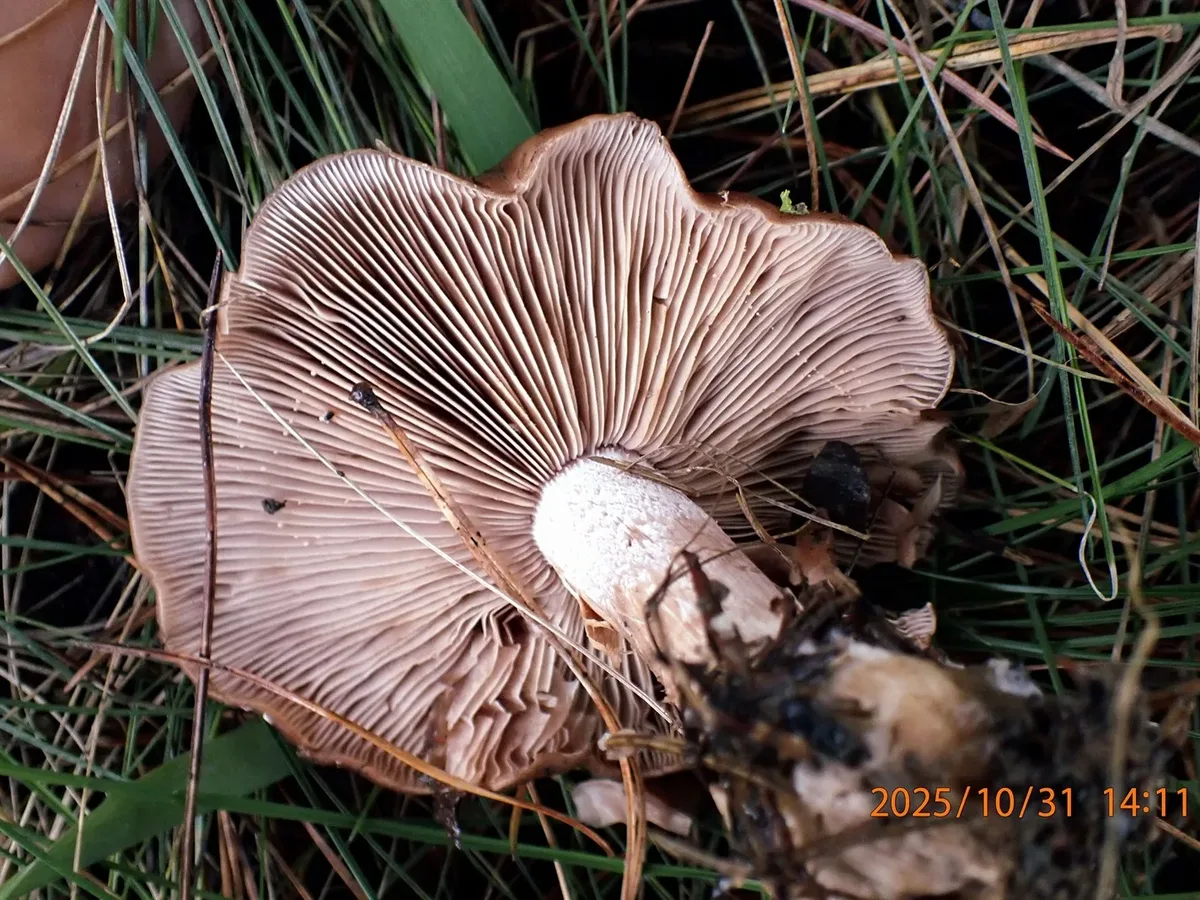 © Tove Jacobsen (CC BY)
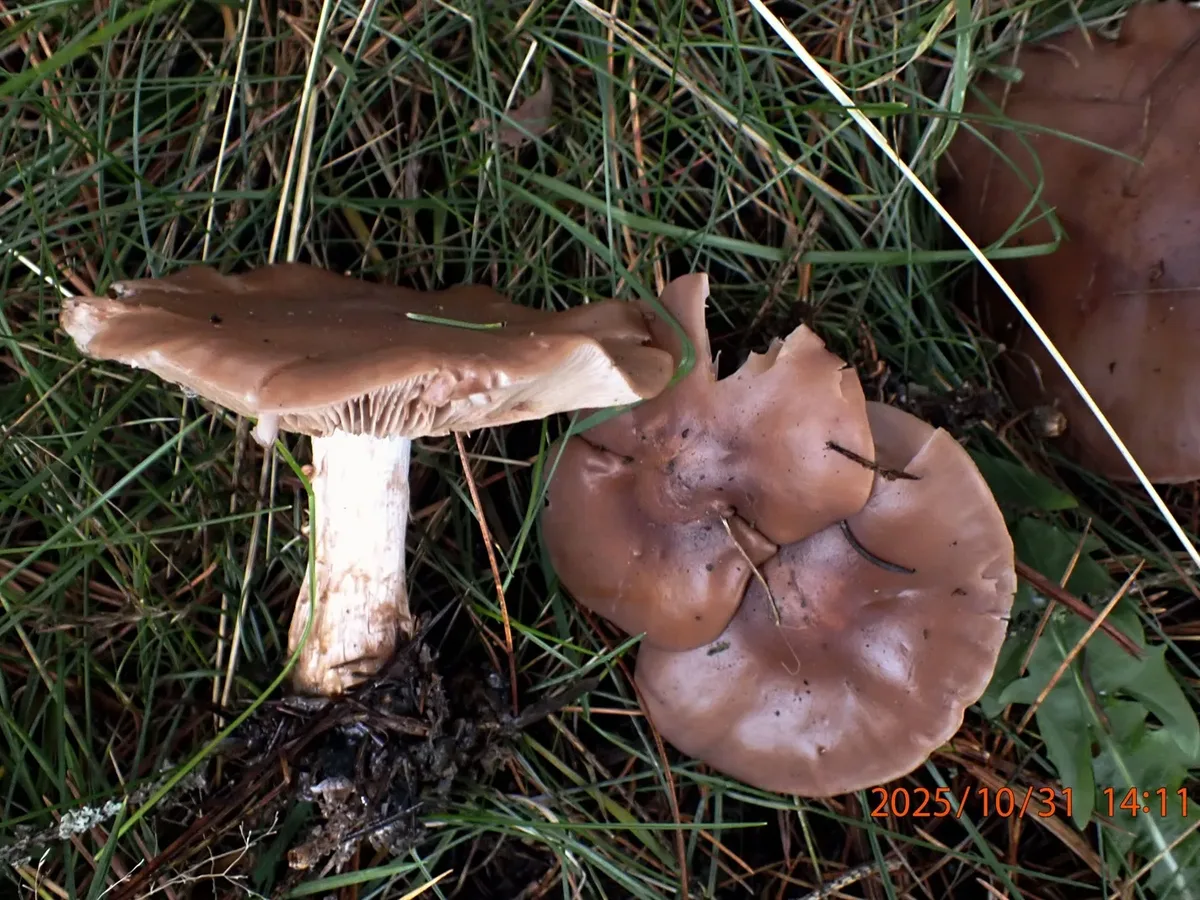 © Tove Jacobsen (CC BY)
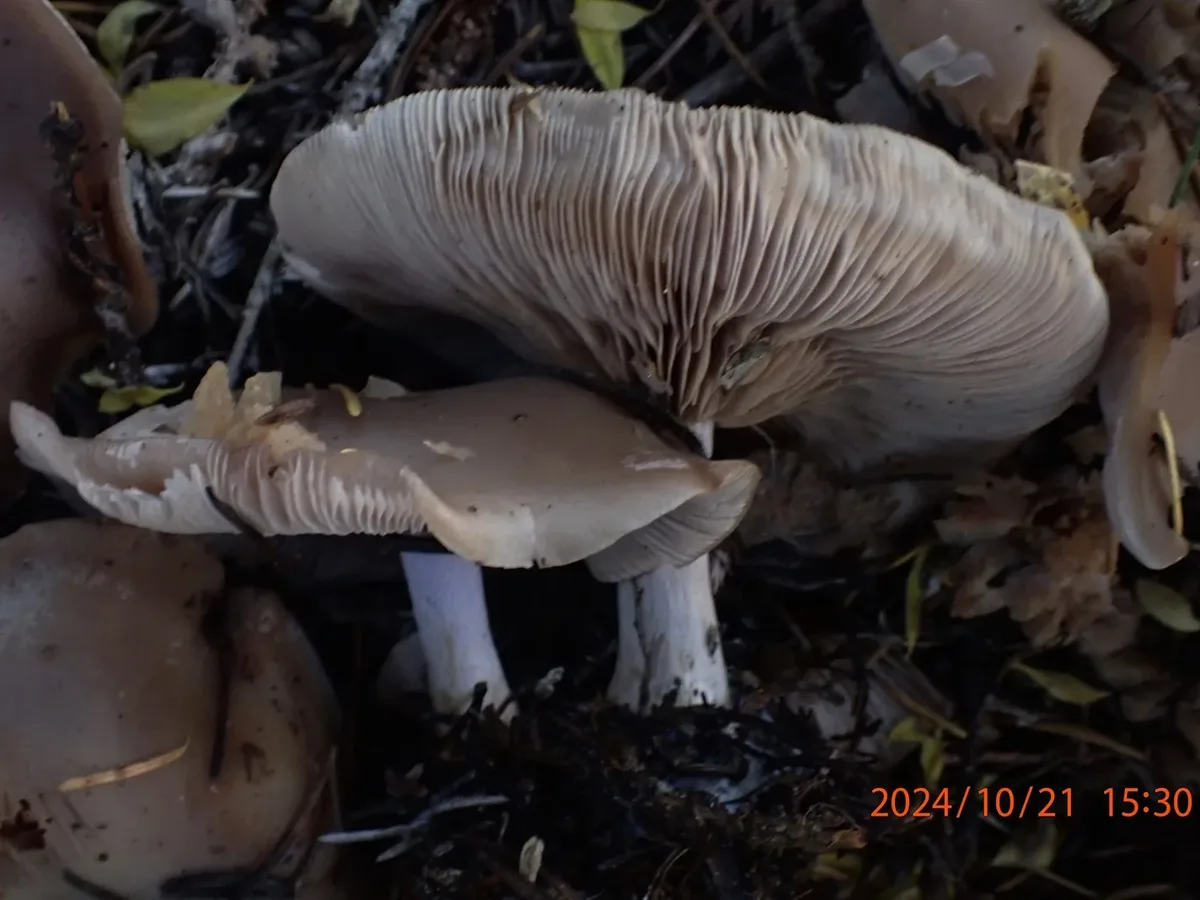 © Tove Jacobsen (CC BY)
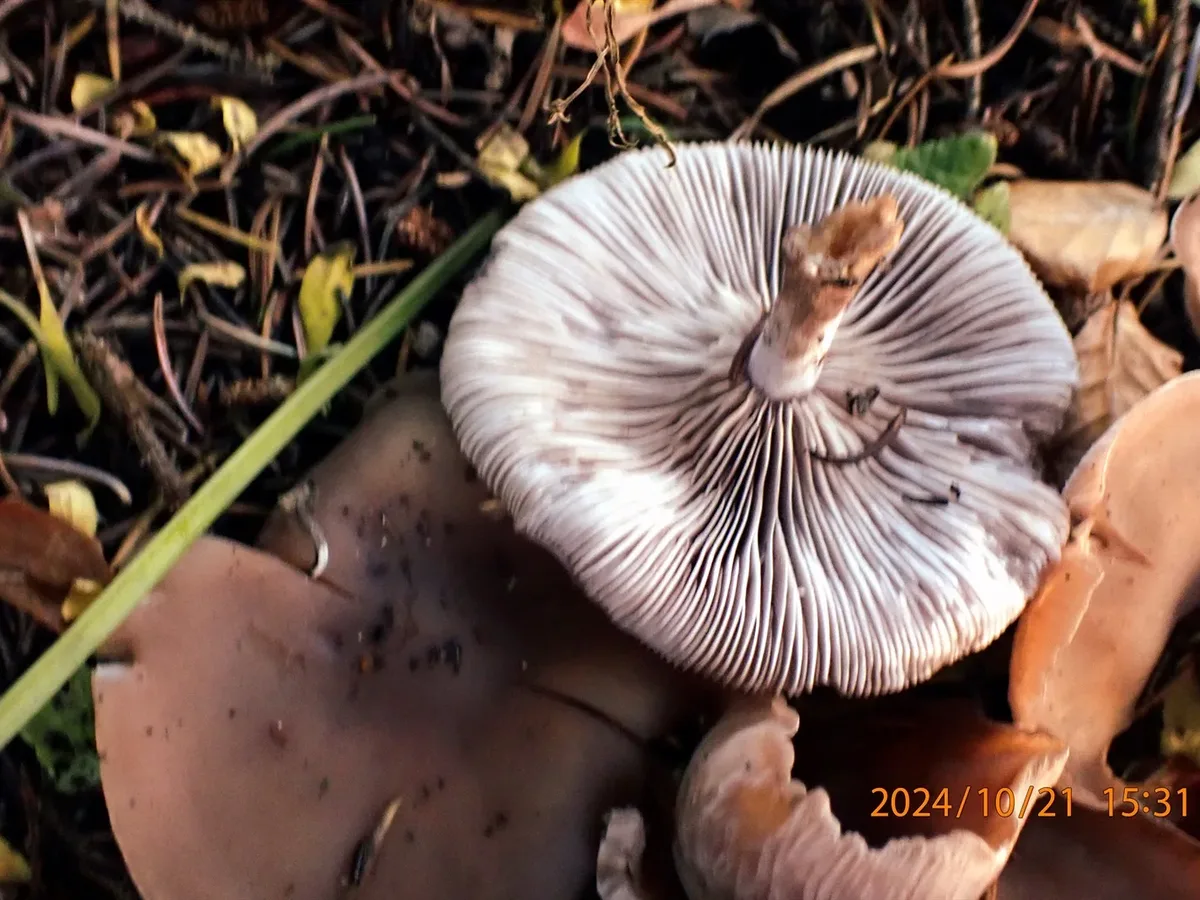 © Tove Jacobsen (CC BY)
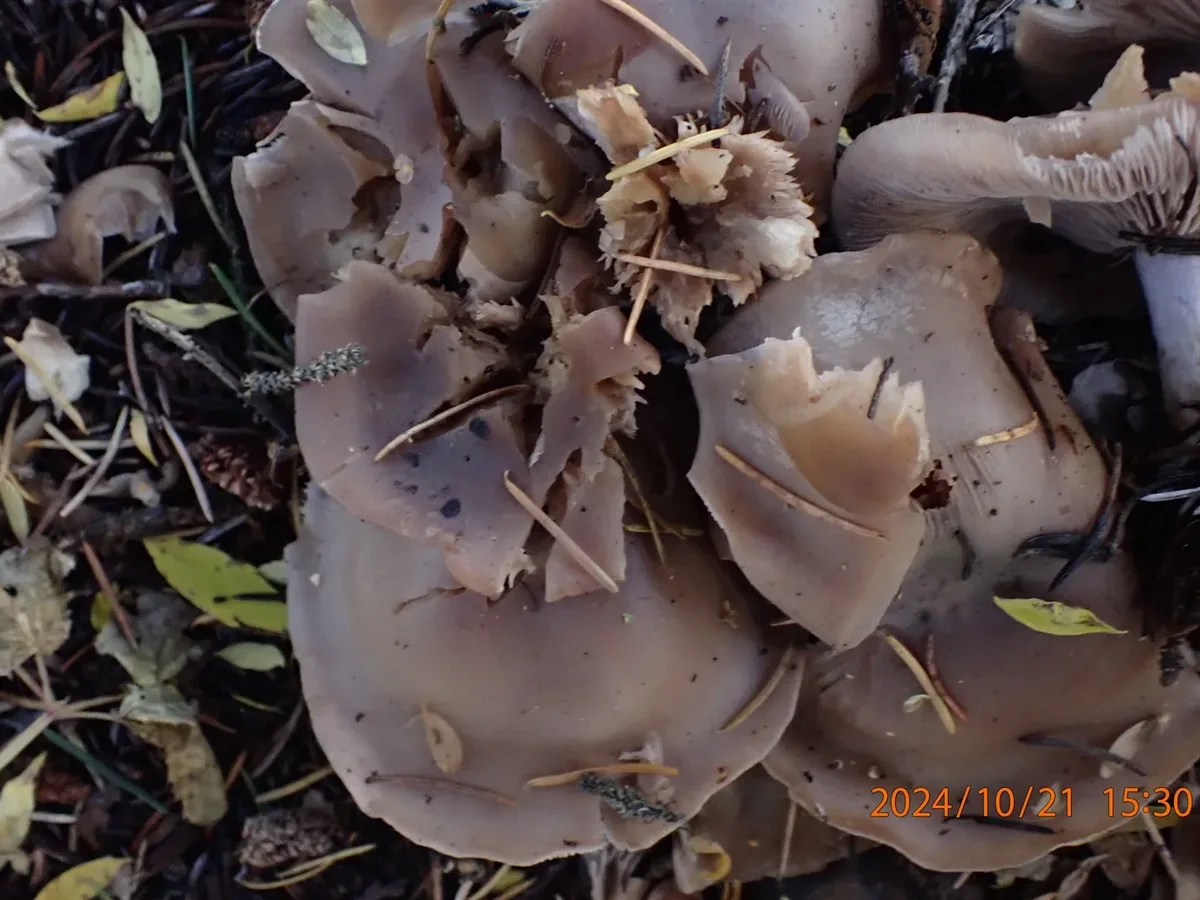 © Tove Jacobsen (CC BY)© Simone Graziosi (CC BY-SA)© Reidun Braathen (CC BY)
Edible only with the right preparation - or safe for some people but not others. Learn the caveats first.
Never eat a mushroom you are not 100% sure of - check the look-alikes below, and always cook wild mushrooms.
How to recognise it
Lepista sordida is the 'dingy' member of the blewit family - smaller, thinner, and less vividly coloured than the wood blewit (Lepista nuda), and precisely this understated quality makes it easy to overlook or misidentify.
Cap
The cap is 3-9 cm wide, opening from a gently convex shape with an inrolled margin into a broadly flat or shallowly wavy outline as it matures. The surface is smooth and slightly greasy to the touch in wet conditions, but the most important thing to understand is that it is strongly hygrophanous: the colour shifts dramatically depending on moisture.
Fresh, wet specimens show a dull violet-lilac to greyish-purple - clearly violet but without the deep, saturated plum colour of a vigorous L. nuda cap. As the cap surface dries out, the violet retreats and the cap fades centrifugally from the centre outward, leaving a disc of pale buff or ochre-tan with a residual violet rim.
Fully dried or old specimens can appear almost entirely beige, making field identification difficult and emphasising why fresh material is essential.
Gills
The gills are crowded, adnate to just slightly decurrent, initially lilac-grey to violet-grey, fading later to pale buff with a pinkish tone - the characteristic pale pinkish-buff colour that characterises the genus.
Stem
The stem is notably slender for a blewit: 2-6 cm tall and only 0.5-1.5 cm thick, cylindrical or gently twisted, with lilac to grey-violet colouration that mirrors the cap's fading behaviour. The base is often adorned with a tuft of pale lilac-white mycelium.
Flesh
The flesh is thin relative to L. nuda and not as robustly fleshy - a useful tactile distinction when handling the two species side by side.
Smell & taste
The smell is the most dependable character when colour has faded: distinctly mealy-farinaceous, like fresh-ground flour or cucumber, though somewhat milder than in the larger blewit relatives. Crush a piece of the cap or stem and the smell should be clearly present.
The spore print is pale pink to pinkish-buff - always check this; it is the single most important objective character separating Lepista from its dangerous lookalikes.
Where & when it grows
Habitat
Of all the blewit species, Lepista sordida is the most cosmopolitan and the most tolerant of human-altered landscapes.
In Australia and New Zealand, where it is probably the most frequently encountered Lepista species, it has adapted well to suburban and urban environments: it appears in garden beds, lawn edges, municipal parks, under established ornamental trees, in garden compost, along hedgerows, and at the margins of introduced Eucalyptus and Pinus plantings.
It is equally at home in semi-natural settings - damp sheltered gullies, the litter beneath native scrub and coastal heath, and the margins of moist forest - though it ventures further into disturbed ground than any of its relatives.
The ecological key is organic matter accumulation: wherever dead plant material - leaf litter, buried roots, old mulch, woody humus - has built up undisturbed over a season or two, the sordid blewit mycelium can establish and, given the right temperature and moisture trigger, push up fruit bodies.
In a garden context, patches that have been mulched repeatedly over several years are particularly productive.
In parkland and on lawns, it appears in the same kinds of recurring spots as the field blewit (Lepista saeva) - along old hedgerow bases, at the margins of established ornamental borders, and in the arcs traced by slowly expanding mycelial mats.
Unlike the mycorrhizal Cortinarius species that represent its most dangerous lookalikes, it is not tied to any particular host tree and may appear in suburban gardens with no native vegetation at all.
When
In Australia and New Zealand, the sordid blewit is a cool-season species, fruiting from late summer through autumn into early winter - broadly March to July, with the peak in April and May.
This is the period when summer heat has dissipated, soil temperatures are falling through the 8-15 °C band, and autumn rains have begun to wet the litter layer.
The species is frost-tolerant and productive flushes often follow a cold, wet night rather than being suppressed by it. Fruitbodies can be found in good condition right through June and into early July in wetter, more southerly or elevated areas such as the southern tablelands of NSW, Victoria's Otway Ranges, and New Zealand's South Island.
A useful ecological signal is the association with other late-season saprotrophic species: in Australia, the sordid blewit often fruits in the same weeks as Lepista nuda appears in deeper forest settings and as the terrestrial saprotrophic community transitions from the warm-season species to the cold-season flush.
In the Northern Hemisphere the season is the mirror image: October through December, peaking in November, with the same preference for cooling soil and autumn moisture.
How it grows
Like all Lepista species, the sordid blewit is a saprotrophic decomposer. Its mycelium threads through leaf litter, decomposing root networks, buried woody humus, and old mulch, digesting the dead organic material and returning nutrients to the soil. It does not form associations with living plant roots.
The mycelium can persist in the same patch of soil for many years, expanding slowly outward, which is why sordid blewit spots tend to be reliable and recurring - a productive patch in a garden bed or at the base of a hedge will often fruit again in subsequent autumns.
Where the mycelial mat is large enough, fruitbodies may appear in a partial arc or a short section of fairy ring, tracing the actively colonised outer edge of the expanding network.
Fruitbodies develop quickly once conditions align: from first pinning to full size in three to five days is typical. A single mycelial colony can produce multiple sequential flushes across an autumn season, with new pinheads appearing within days of the previous crop being harvested or collapsing.
This makes it a rewarding species for foragers who track individual productive sites: visit after every significant rain event during the season window and the same patch may yield several times.
Fruiting conditions
Southern Hemisphere: fruiting triggered by cooling autumn soils (falling below ~15 °C) combined with adequate autumn rainfall. Requires approximately 20+ mm rainfall in the preceding two weeks. Frost-tolerant; productive flushes can occur at soil temperatures as low as 4-5 °C. Dry autumn conditions strongly suppress fruiting. Northern Hemisphere season mirrors this: October-December, same temperature and moisture triggers in reverse.
Look-alikes
The most important safety concern is confusion with deadly Cortinarius species. In Australia and New Zealand, two violet to purple-blue webcap species are particularly relevant: Cortinarius archeri (archer's webcap) and Cortinarius rotundisporus (elegant blue webcap).
Both are confirmed or strongly suspected to carry orellanine, a nephrotoxin that causes fatal kidney failure with a deceptive latency of 1-3 weeks after ingestion. These Cortinarius species associate with native eucalypts and Nothofagus, and they share the violet-purple colour palette with the sordid blewit.
The decisive diagnostic differences are:
- 1Cortinarius species have a cobweb-like partial veil (cortina) visible in young specimens stretching between the cap margin and the stem - Lepista has no cortina at any stage.
- 2The spore print of any Cortinarius is rusty-brown to ochre-cinnamon - Lepista gives pale pink.
- 3Mature Cortinarius gills develop a rust-brown colour from spore deposition - Lepista gills stay pale buff to pinkish-buff.
Check all three features before eating any violet mushroom from Australian or New Zealand native forest.
The wood blewit (Lepista nuda) is closely related and also edible when cooked. It is distinguished by its larger, more robust stature, a more intensely and uniformly saturated plum-violet to blue-violet cap colour, and a preference for deeper forest leaf litter (especially under exotic deciduous trees, beech, or oak in parks) rather than the more disturbed open habitats where sordid blewit thrives.
Both must be thoroughly cooked.
Small white to greyish Clitocybe species - particularly the ivory funnel (Clitocybe dealbata) and fool's funnel (Clitocybe rivulosa) - are potentially dangerous muscarine-containing species that can grow in the same grassy, garden, and park habitats.
These are smaller, lack any violet colouration at any stage, have crowded gills that run slightly down the stem (decurrent), and give a white (not pink) spore print.
The amethyst deceiver (Laccaria amethystina) is a dramatically violet mushroom that might cause colour-based confusion in forest settings, but it is far more intensely coloured than sordid blewit, much smaller, and has widely spaced thick waxy gills that stay deep violet without fading to buff - and crucially its spore print is white, not pink.
DEADLY (orellanine nephrotoxin - heat-stable, no antidote, delayed onset). A violet to purple-blue webcap of native Australian and New Zealand forests, confirmed to carry orellanine. Distinguished from sordid blewit by: cobweb-like cortina visible in young specimens connecting cap margin to stem (Lepista has NO cortina at any stage); rusty-brown spore print (Lepista = pale pink); gills turning rust-brown as spores mature (Lepista gills stay pale buff). Any trace of cobwebby veil or rusty-brown on gills or spores is a hard stop - do not eat. Symptoms of orellanine poisoning may not appear for 1-3 weeks after ingestion.
DEADLY (orellanine class). A blue-violet webcap native to southeastern Australian eucalypt forests and NZ, with confirmed or strongly suspected orellanine content. More intensely blue-violet than sordid blewit; distinguished by the same critical trio: cobweb cortina in young specimens (Lepista: none), rusty-brown spore print (Lepista: pale pink), gills becoming rust-cinnamon at maturity (Lepista: pale buff). Never attempt to distinguish edible blewit from a violet Cortinarius in native Australasian forest by colour alone.
Seriously poisonous (muscarine). Much smaller and entirely white to greyish-cream, with crowded gills that are slightly decurrent (running down the stem), and a white spore print (not pale pink). Never shows any violet colouration. Co-occurs in lawns, grassland, and garden habitats. The absence of any violet or lilac, decurrent gills, and white spore print separate it from sordid blewit.
Small (cap 1-3 cm), with a silky-fibrous, radially splitting cap texture and a pale lilac to violet colour; gills brownish and closely packed; smell spermatic and unpleasant, not mealy-farinaceous; spore print clay-brown (not pale pink). Contains muscarine. Much smaller than sordid blewit, and the spermatic smell and clay-brown spore print are decisive.
Brilliant amethyst-violet throughout when fresh, far more intensely coloured than the dingy sordid blewit; cap 1-5 cm (usually much smaller); gills widely spaced, thick, waxy, and persistently deep violet rather than crowded and pale; spore print white (not pink). Edible, but can bioaccumulate arsenic from polluted soils. Colour and gill spacing are the quick separators.
Closely related and also edible when cooked. Distinguished by a notably more robust stature, thicker flesh, and a more deeply saturated plum-violet to blue-violet cap that holds its colour better - less hygrophanous and less 'washed out' than sordid blewit. Cap 5-20 cm vs 3-9 cm for sordid blewit. Prefers deep forest litter (especially under exotic deciduous trees) rather than the disturbed urban and garden habitats where sordid blewit thrives. Both are edible when thoroughly cooked and both have pale pink spore prints.
In the kitchen
Picking & cleaning
Collect only fresh, young specimens where the violet or lilac coloration is clearly present - faded, old, or dried-out caps are much harder to identify safely and should be left.
In the field, take a spore print before committing to the harvest: lay a cap gill-side-down on white paper (or half on white, half on dark paper to catch all shades) for 15-30 minutes.
The print must be pale pink to pinkish-buff. A white print suggests a Clitocybe; a rusty-brown print is the critical warning sign for Cortinarius. A non-pink print means do not eat.
Confirm the mealy-farinaceous smell by crushing a small piece of cap. Clean by brushing off adhering soil and litter in the field; the crowded gills trap debris readily.
Because the sordid blewit inhabits suburban gardens and urban parks as readily as wild ground, take note of any potential soil contamination - roadside verges, recently sprayed areas, or industrial-adjacent sites should be avoided regardless of how good the mushroom looks.
Carry in a breathable basket rather than a sealed bag. Refrigerate in paper and use within two days.
Cooking
The sordid blewit is a pleasant, mildly flavoured mushroom with the characteristic mealy-sweet quality of its genus. The flesh is thinner and more delicate than the wood blewit, so it responds best to quick, hot sautéing rather than long slow-braising.
- 1Begin in a dry, hot pan to drive off excess moisture. Crowding the pan or starting in cold fat produces steamed, pallid, slippery results.
- 2Once the liquid has evaporated, add butter or olive oil and cook until the edges begin to colour and the gills are dry.
The resulting flavour is mild, earthy, and faintly sweet, with a subtle mealy character that works well as a supporting note in mixed mushroom dishes, risottos, pasta sauces, omelettes, and soups.
It lacks the robustness and depth of the wood blewit, so stronger seasonings - garlic, thyme, a splash of white wine, cream - help the flavour develop.
Always cook through fully; the mushroom must not be eaten raw or undercooked. Individual batches can vary in moisture content depending on when they were picked relative to rainfall, so taste and adjust the cooking time accordingly.
Not commonly available commercially in Australia, but it can be found in some specialty markets and urban foraging communities during peak season.
Good to know
The sordid blewit is a genuinely edible mushroom when properly cooked, but four safety rules must all be satisfied before eating any collection.
- 1Confirm the mealy-farinaceous smell - this should be clearly present in the flesh. If the smell is absent, fruity, radish-like, or unpleasant in any way, discard the specimen.
- 2Take a spore print: it must be pale pink to pinkish-buff. Any white or rusty-brown print means do not eat.
- 3Look for a cortina in young specimens. Lepista has no cobweb veil at any stage; any trace of rust-coloured fibres on the stem or a cobwebby membrane connecting cap margin to stem indicates Cortinarius, which in Australasian native forest should be treated as potentially deadly.
- 4Cook thoroughly - raw or undercooked sordid blewit, like all blewits, may cause gastrointestinal upset; full heat through the flesh is required. Do not eat raw under any circumstances.
In Australia and New Zealand the deadly lookalike risk from Cortinarius species carrying orellanine is the overriding concern. Orellanine is heat-stable - it is not destroyed by cooking. There is no antidote.
Symptoms of poisoning may be entirely absent for one to three weeks after eating while progressive kidney damage is silently accumulating. This makes it among the most treacherous classes of poisoning in the world, because a victim who ate a misidentified mushroom and felt well for a fortnight is unlikely to connect the kidney failure they then experience to a meal eaten weeks earlier.
If any Cortinarius ingestion is suspected - even without symptoms - contact a Poisons Information Centre immediately:
- In Australia: 13 11 26.
- In New Zealand: 0800 764 766.
On a first encounter, try only a small cooked portion and wait several hours before eating more, as a small number of people have idiosyncratic sensitivity to blewit compounds even after thorough cooking.
A reference guide - never an edibility guarantee. When in doubt, leave it out.