Field blewit
Lepista saevasyn. Tricholoma saevum, Clitocybe saeva, Lepista personata, Tricholoma personatum var. saevum
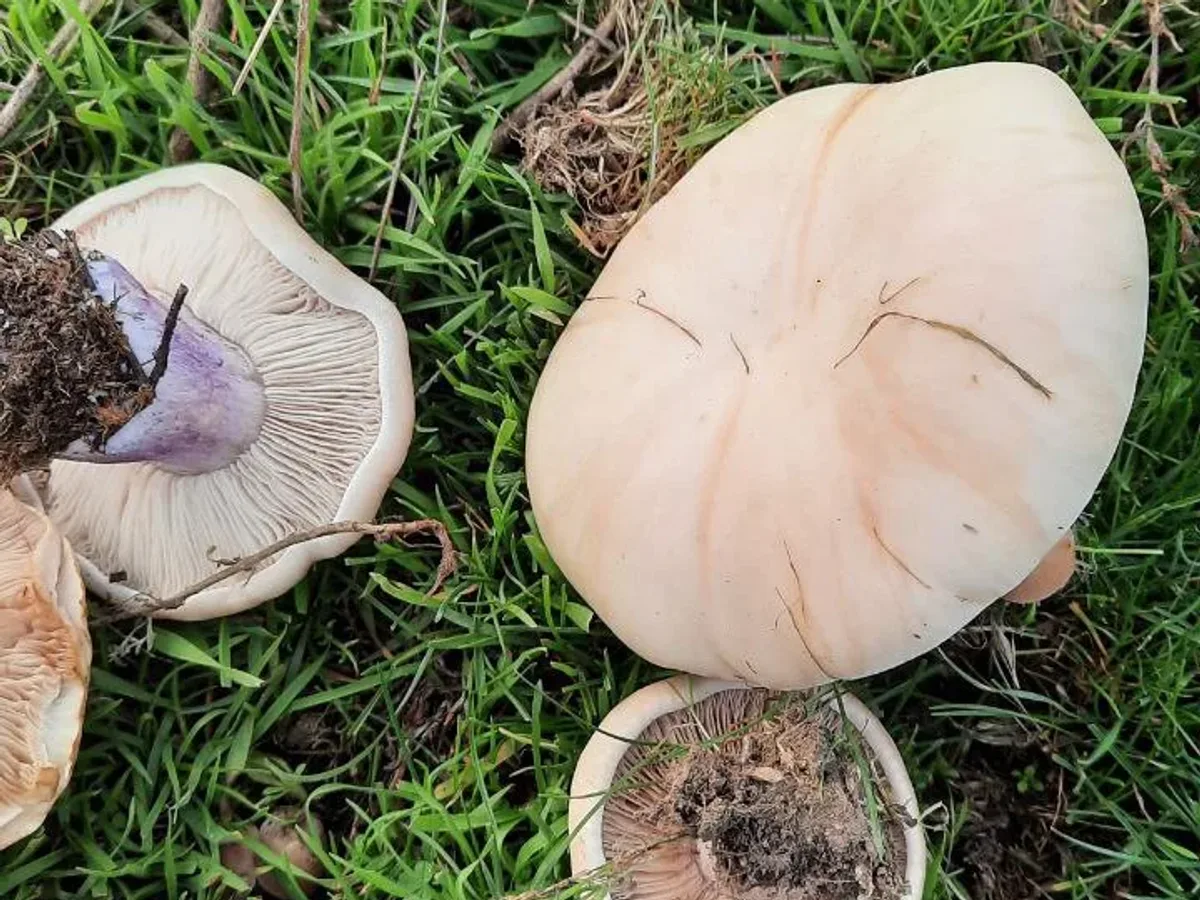 © vira (CC BY)
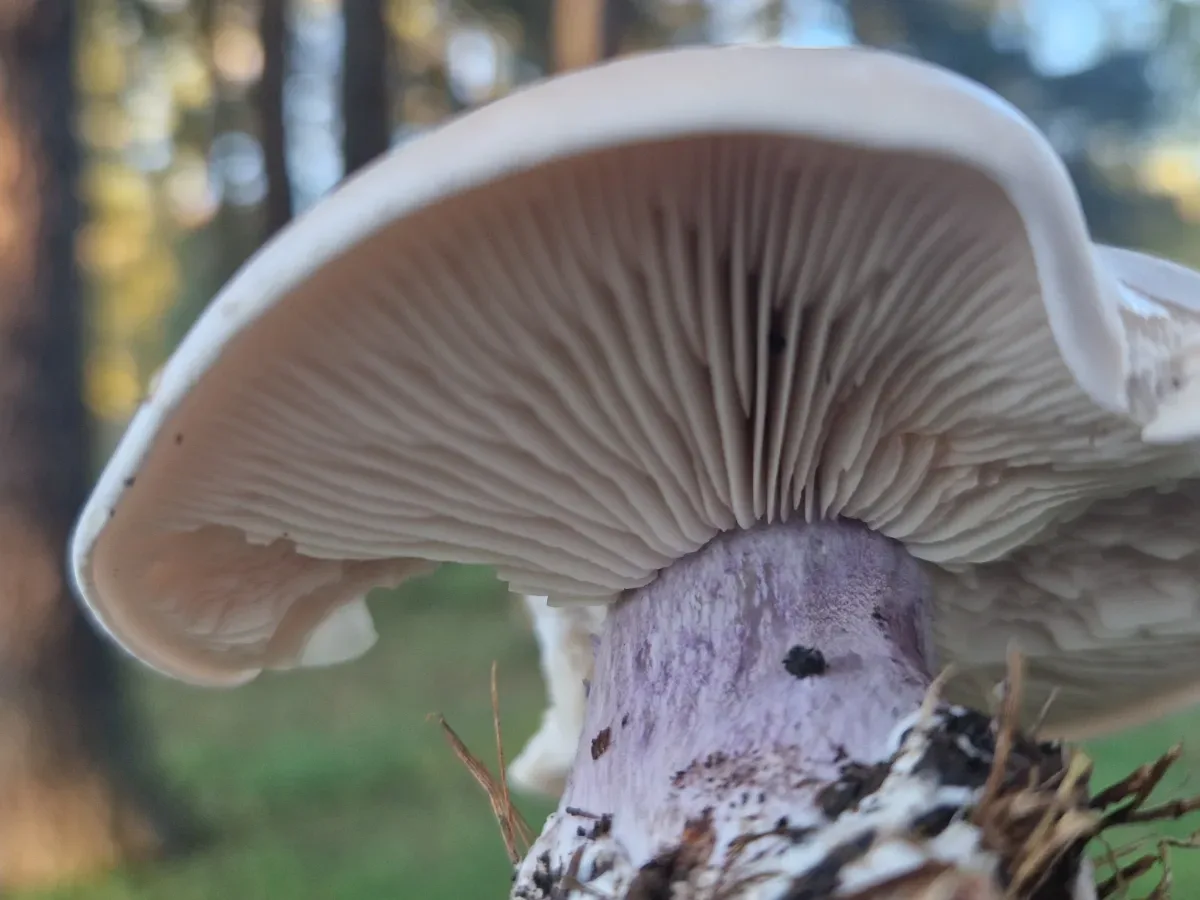 © Nina Lundberg (CC BY)
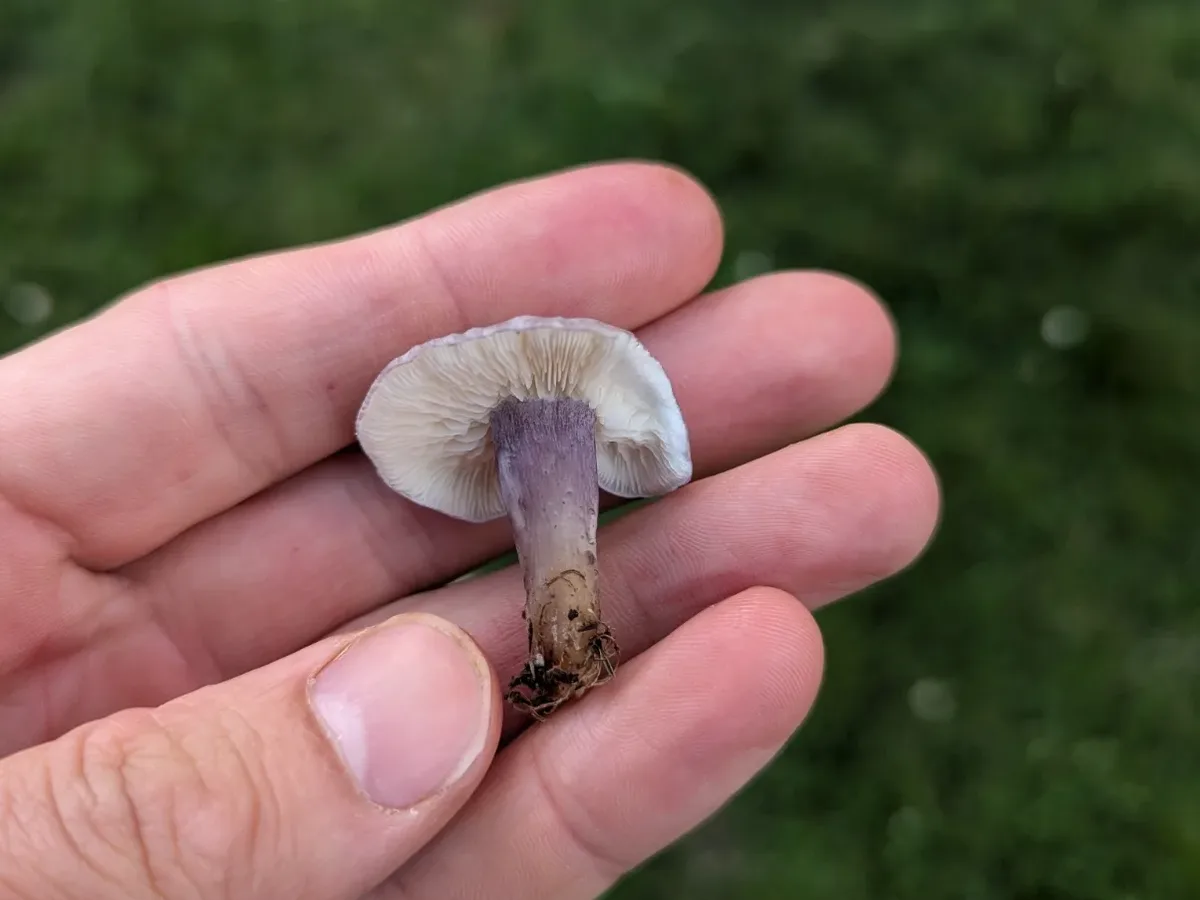 © Ole Christian Hagestad (CC BY)
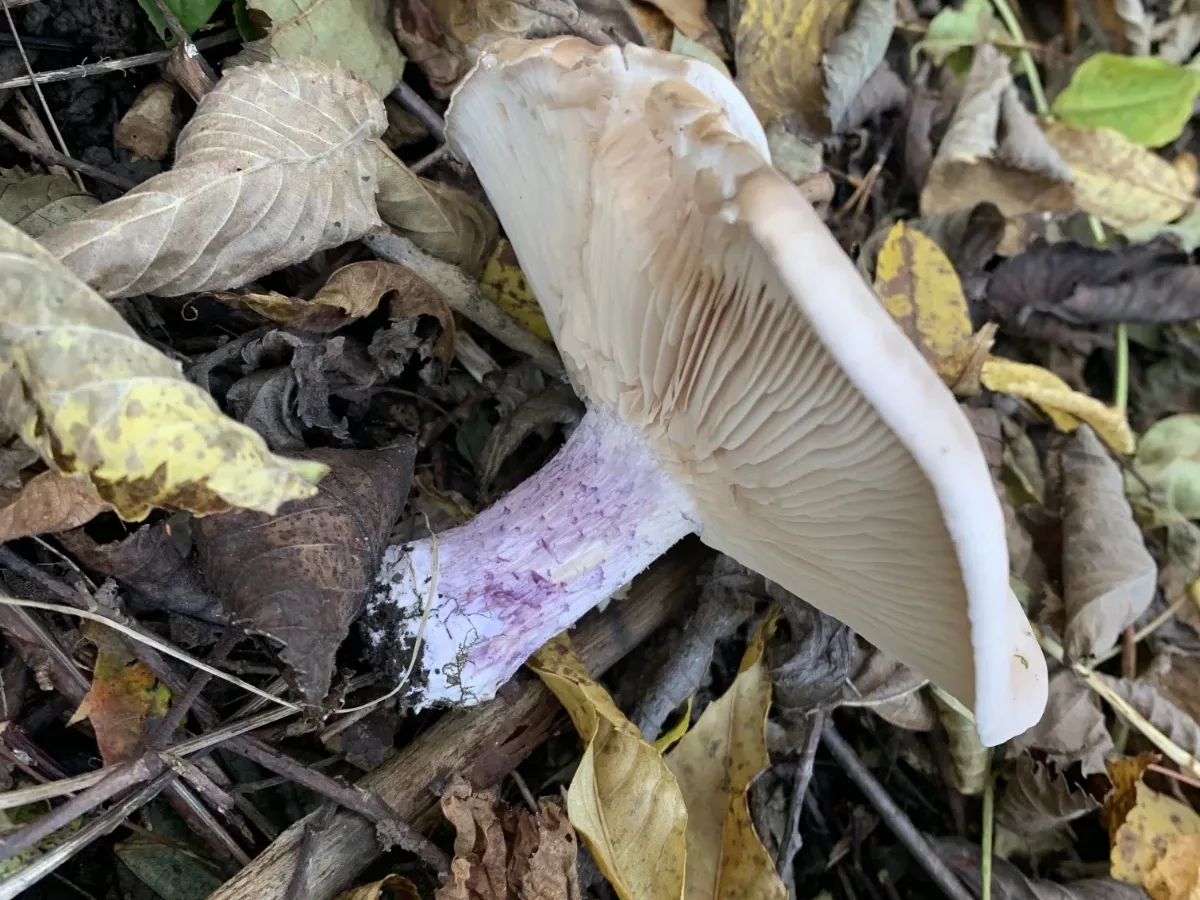 © Susann Pettersen (CC BY)
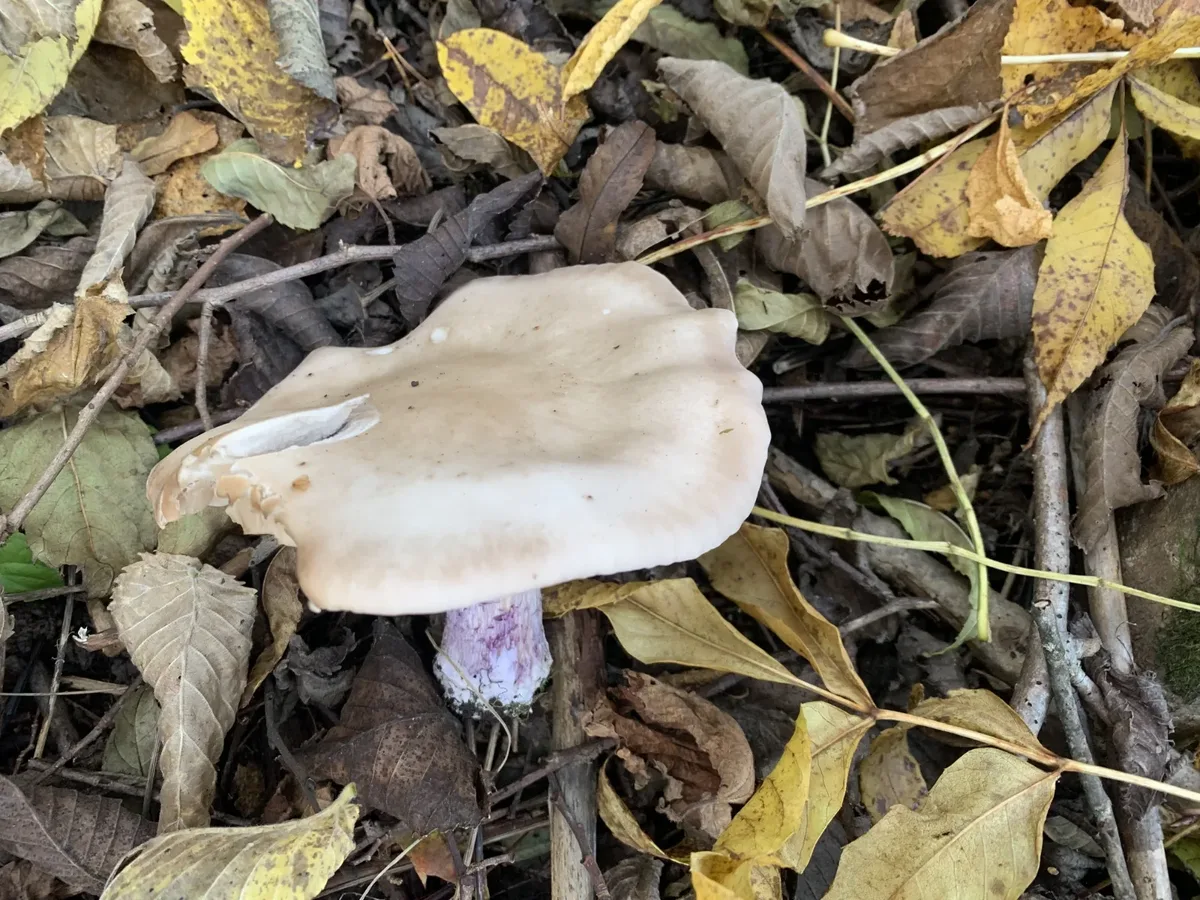 © Susann Pettersen (CC BY)
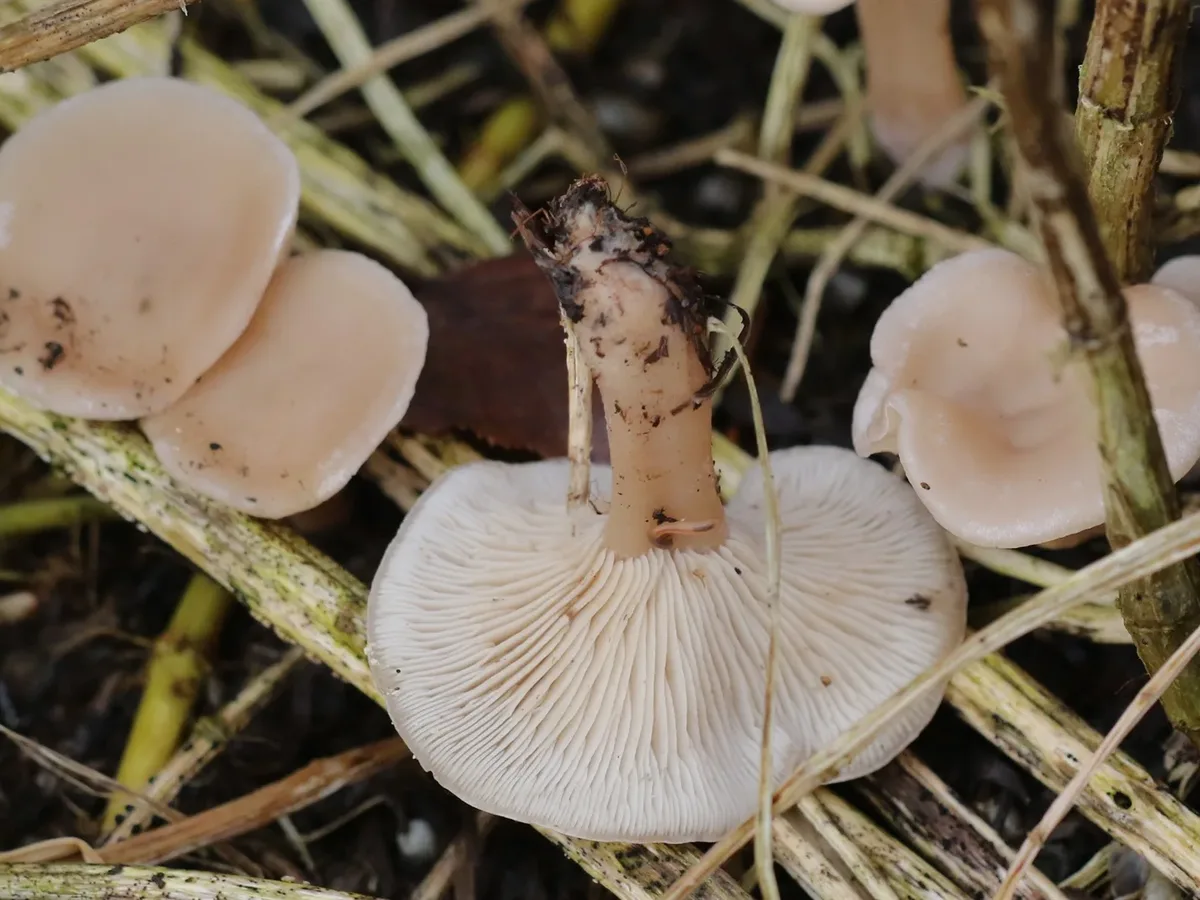 © Arild Omberg (CC BY)© vira (CC BY)© Nina Lundberg (CC BY)
One of the best mushrooms you can bring home - once you are certain of the identification.
Never eat a mushroom you are not 100% sure of - check the look-alikes below, and always cook wild mushrooms.
How to recognise it
The field blewit is a robust, stocky grassland mushroom easily recognised by the combination of a buff-to-tan cap and a strikingly lilac-violet stem.
Cap
The cap ranges from 5 to 15 cm in diameter, starting convex with a strongly inrolled margin, then flattening and sometimes developing a shallow central depression.
Its surface is smooth, dry to slightly viscid when wet, and coloured buff, pale greyish-tan or fawn, often with subtle lilac or pinkish tones when fresh that fade to plain ochre with age. The margin may become wavy or lobed on large specimens.
Gills
Gills are crowded, attached (adnate to sinuate), and pale cream to pinkish buff - not purple or violet, a point that surprises beginners who expect the violet colour to continue through the whole fruit body.
Stem
The stem is the species' hallmark: 3-7 cm tall and 1.5-3 cm thick, stout and solid, with persistent and vivid violet-lilac to bluish-purple colouration from base to apex, becoming fibrous-streaked and whitish with handling or age.
Flesh
The flesh is white to very pale buff throughout, firm and thick, with a strong mealy (farinaceous) smell strongly reminiscent of fresh cucumber or raw flour.
Spore print pale pink to salmon-buff. Spores broadly ellipsoidal, minutely warted, 6-8 × 3.5-5 µm.
Where & when it grows
Habitat
The field blewit is a saprotrophic grassland species that decomposes buried organic matter such as roots and old thatch.
It grows in permanent unimproved pasture, old lawns, parkland, field margins, churchyards, hedgerow bases, and roadside verges - never in unbroken forest (which separates it from wood blewit).
It favours mildly calcareous to neutral soils and is strongly site-faithful, returning to the same spots and fairy rings for many decades. Old grazed meadows that have never been ploughed or heavily fertilised are the most productive hunting grounds.
It is a characteristic species of traditional European pastoral landscapes and has declined sharply where intensive agriculture has replaced old permanent grassland.
When
The field blewit is a late-autumn to early-winter species. In central-western Europe the main season runs from October to December, peaking in November.
It appears earlier at altitude and in northerly regions, and later in milder Atlantic climates.
Fruiting bodies are notably tolerant of cold and can be found in good condition after light air frosts that destroy most other autumn mushrooms. In mild years a few fruits can persist into January.
How it grows
Field blewits are saprotrophic, decomposing soil organic matter including old grass roots and buried plant debris.
They typically fruit in fairy rings or partial arcs whose diameter slowly expands each year, a fact useful for locating them annually. Fruitbodies push up through grass in characteristic clusters or rings, sometimes partly buried in the turf.
Rings with a diameter of several metres indicate decades of growth and represent excellent recurring foraging spots.
Fruiting conditions
Flushes after autumn rainfall when soil temperatures drop below about 14 °C; notably frost-hardy and can continue fruiting at soil temperatures close to 3 °C. Persistent dry autumn weather suppresses fruiting.
Look-alikes
- Clitocybe dealbata (ivory funnel) and related small Clitocybe species - the most dangerous confusion, containing lethal amounts of muscarine. Much smaller, lacking the violet stem and mealy smell, with white to greyish-white decurrent gills, but can co-habit the same pasture.
- Lilac fibrecap (Inocybe geophylla var. lilacina) - another lethal muscarine-containing species with a violet flush. Much smaller (cap 1-3 cm), with a silky fibrous cap, brownish gills with a clay-brown spore print, and a spermatic rather than mealy smell. Always confirm the violet stem, crowded buff-pink gills, and pale pink spore print of L. saeva.
- Wood blewit (Lepista nuda) - closely related, equally edible, and similarly violet throughout, but grows in woodland litter or compost rather than open grass, and its cap is more strongly violet-purple overall.
- Lepista irina (flowery blewit) - an extremely similar grassland habitat and mealy smell but lacks the violet stem; edible but requires equally careful identification.
- Cortinarius species with violet tones (many are highly toxic - e.g., C. rubellus causing potentially fatal kidney failure from orellanine) - distinguished by rusty-brown spore prints, the presence of a cobweb-like cortina in young specimens, and a woodland (never open pasture) habitat.
- Young Agaricus campestris specimens - can share the habitat but have free pink-then-chocolate-brown gills and a ring.
Orange-brown, not buff-tan; conifer and mixed woodlands only; rusty-brown spore print; cobweb cortina on young specimens. Causes fatal nephrotoxic syndrome (orellanine). No grassland occurrence. The rust-brown spore print and woodland habitat are the decisive exclusions.
Similar to C. dealbata - small, white-greyish, crowded decurrent gills, often in fairy rings in grass. No violet coloration on stem or cap. Also muscarine-rich and potentially deadly. Frequently co-occurs with the field blewit in permanent pasture.
Clitocybe dealbata is much smaller (cap 2-5 cm), entirely white to greyish-white with crowded decurrent gills, lacks any violet coloration on stem or cap, has no mealy smell, and grows in the same grassy habitats. Contains high concentrations of muscarine and can be lethal. Always confirm the violet stem, buff-tan cap, and pale pink spore print of L. saeva before harvesting.
A small (cap 1-3 cm), silky-fibrous mushroom with a pale lilac to violet cap and stem, found in the same grassland and woodland-edge habitats. Contains lethal muscarine. Distinguished from L. saeva by its much smaller size, radially silky fibrous cap texture, brownish gills, clay-brown spore print (never pale pink), and spermatic (not mealy) smell. Never assume any violet grassland mushroom is a blewit without confirming the pale pink spore print.
Although C. violaceus itself is considered edible, it belongs to the Cortinarius genus, many members of which are lethally toxic (e.g., C. rubellus causing fatal orellanine kidney poisoning). Any violet-toned Cortinarius should be treated as potentially lethal: it grows under birch or conifers, never in open grassland; has a rust-brown spore print; and shows a cobweb-like cortina on young caps. The rust-brown spore print and woodland habitat exclude all Cortinarius species from confusion with L. saeva in a grassland context, but foragers who mistake a violet webcap for a blewit and then pick a toxic congener may suffer fatal consequences.
Greyish cap that auto-digests (deliquesces) into black inky liquid; gills dark grey to black at maturity; grows in clusters near buried wood; no violet coloration. Also causes antabuse-like reaction with alcohol (coprine toxin) - not safely edible when alcohol is consumed.
Very similar habitat and farinaceous smell. Differs in having a pinkish-buff to ochre cap and a concolorous pale stem that lacks the violet coloration. Edible but requires confident identification to separate from it and from toxic lookalikes sharing the habitat.
Also edible and closely related. The cap is violet-purple rather than buff-tan, gills are violet when young, and the whole fruit body tends to be more uniformly purple. Grows in woodland leaf litter or garden compost heaps, not in open grass. Must also be thoroughly cooked.
In the kitchen
Picking & cleaning
Field blewits must be cooked through before eating - the raw fruit body upsets some people and thorough heat is required to neutralise the responsible compounds.
When picking, look for firm, fresh specimens where the violet stem colour is vivid and intact; older fruit bodies fade to pale and become less reliable for identification.
Cut at the base with a knife and take a quick look at the stem interior - it should be solid and violet-fibrous; anything hollow and pale is a warning sign to discard.
The inrolled cap margins and stem base trap grass and soil, so brush or wipe clean rather than washing. Carry in an open basket rather than a bag so they arrive in good condition.
The flesh is notably firm and holds up well in the pan.
Cooking
Field blewit is prized across central Europe and Britain as one of the finest late-season edibles. The firm flesh holds up superbly to frying, braising, and slow cooking. It pairs beautifully with butter, garlic, thyme, and cream.
A classic preparation:
- 1Slice and fry in butter until golden.
- 2Deglaze with white wine.
- 3Finish with cream and fresh thyme.
- 4Serve on toast or with game.
The mealy flavour is assertive and works well as a principal ingredient rather than a background note. It can be added to risottos, pasta, omelettes, and soups.
Avoid boiling in water, which dilutes the flavour. Blewits dry adequately but lose some of their texture; they are better used fresh or frozen after brief blanching.
Good to know
Always cook the field blewit thoroughly before eating - raw or undercooked specimens cause gastrointestinal upset in some individuals, and the toxins responsible are neutralised only by adequate heat.
A small proportion of people react even to well-cooked specimens; try a small portion on first acquaintance.
The single greatest safety rule is to confirm the distinctive violet stem before picking - no other common grassland mushroom combines this with a buff-tan cap, crowded pale gills, and a strong mealy smell.
Do not pick pale-stemmed or small funnel-shaped specimens in the same area and assume they are field blewits; Clitocybe dealbata and related deadly muscarine-containing species co-occur.
The lilac fibrecap (Inocybe geophylla var. lilacina) is a small but deadly muscarine-containing species with violet tints - confirm the spore print is pale pink (not clay-brown) before eating anything from a grassland blewit patch.
On any doubt, discard. Never pick near roadsides that have been sprayed with herbicides or near industrial sites.
A reference guide - never an edibility guarantee. When in doubt, leave it out.