Fatal dapperling
Lepiota subincarnatasyn. Lepiota josserandii
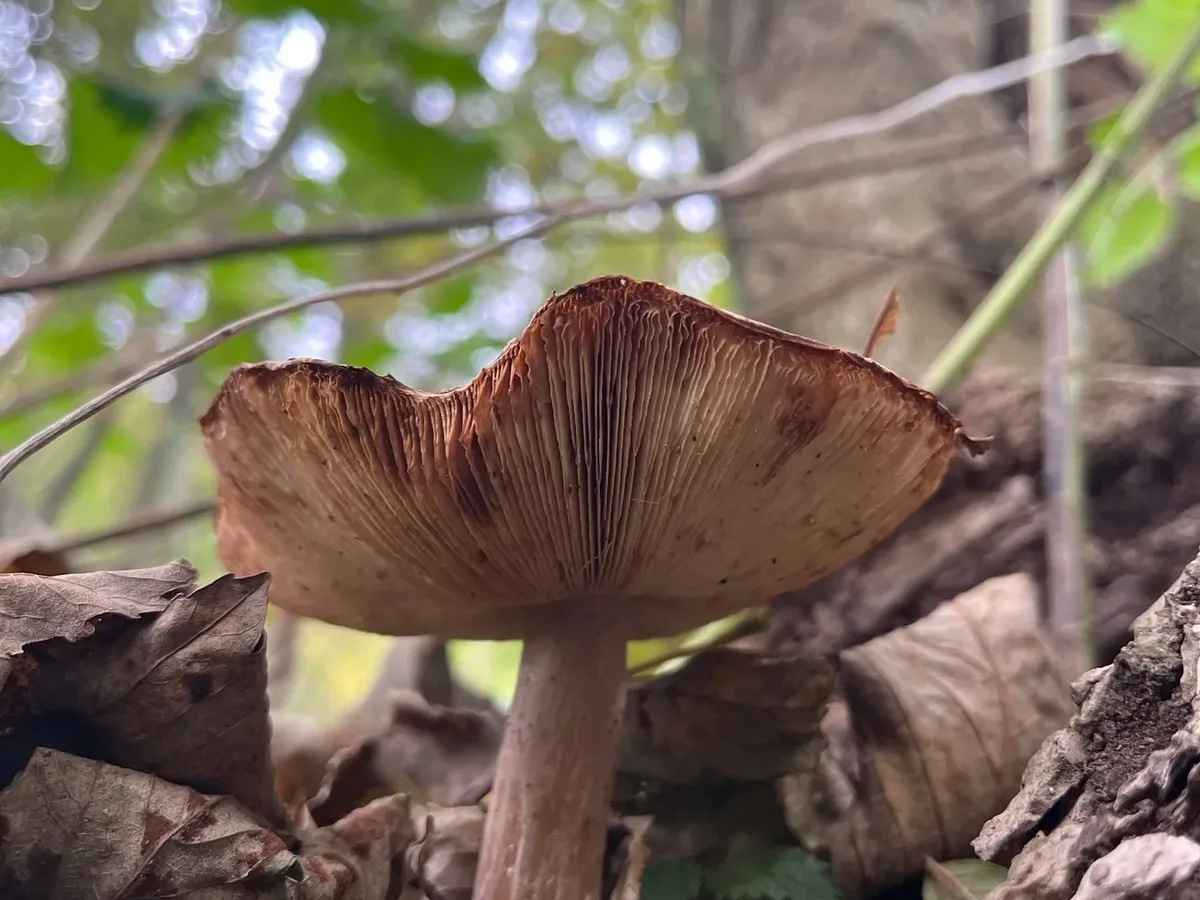 Toby Holman (CC0)
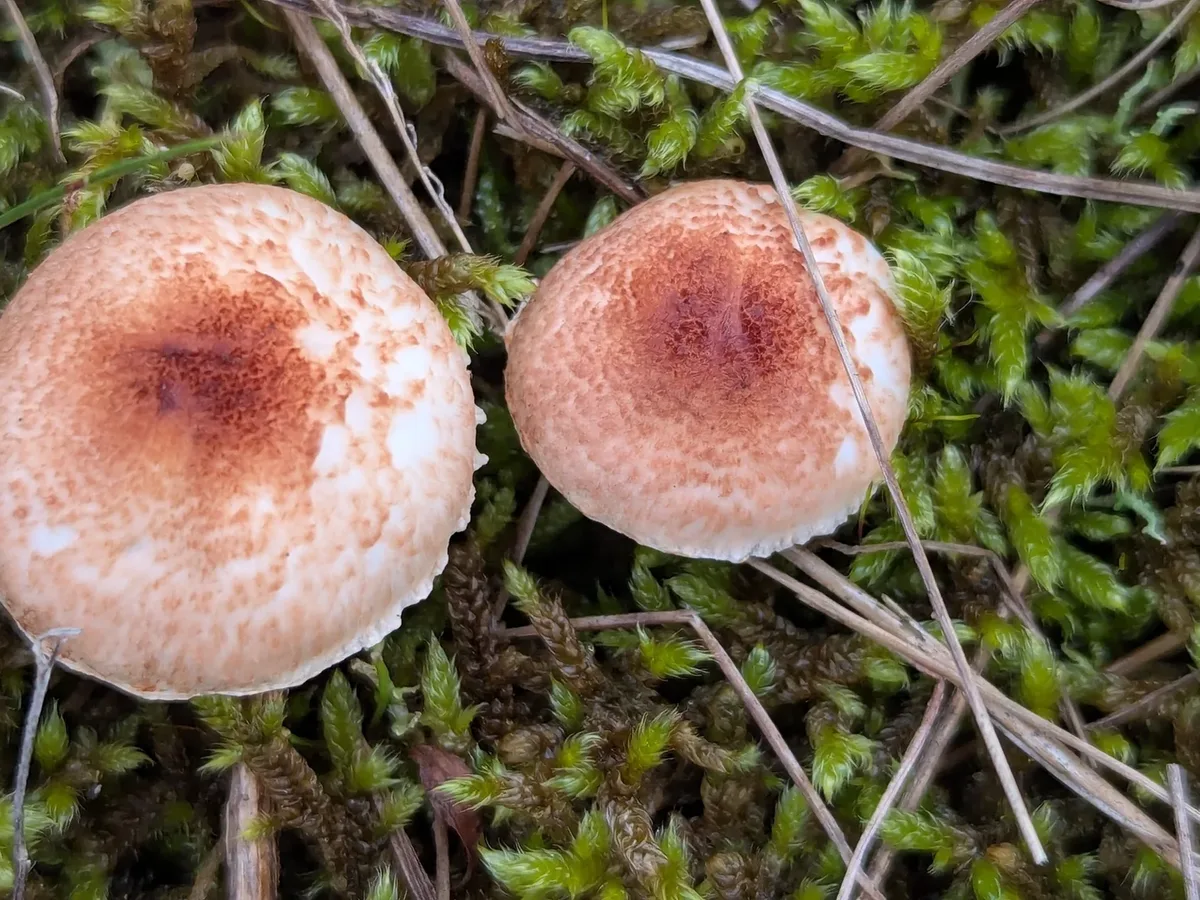 © Michel Langeveld (CC BY)
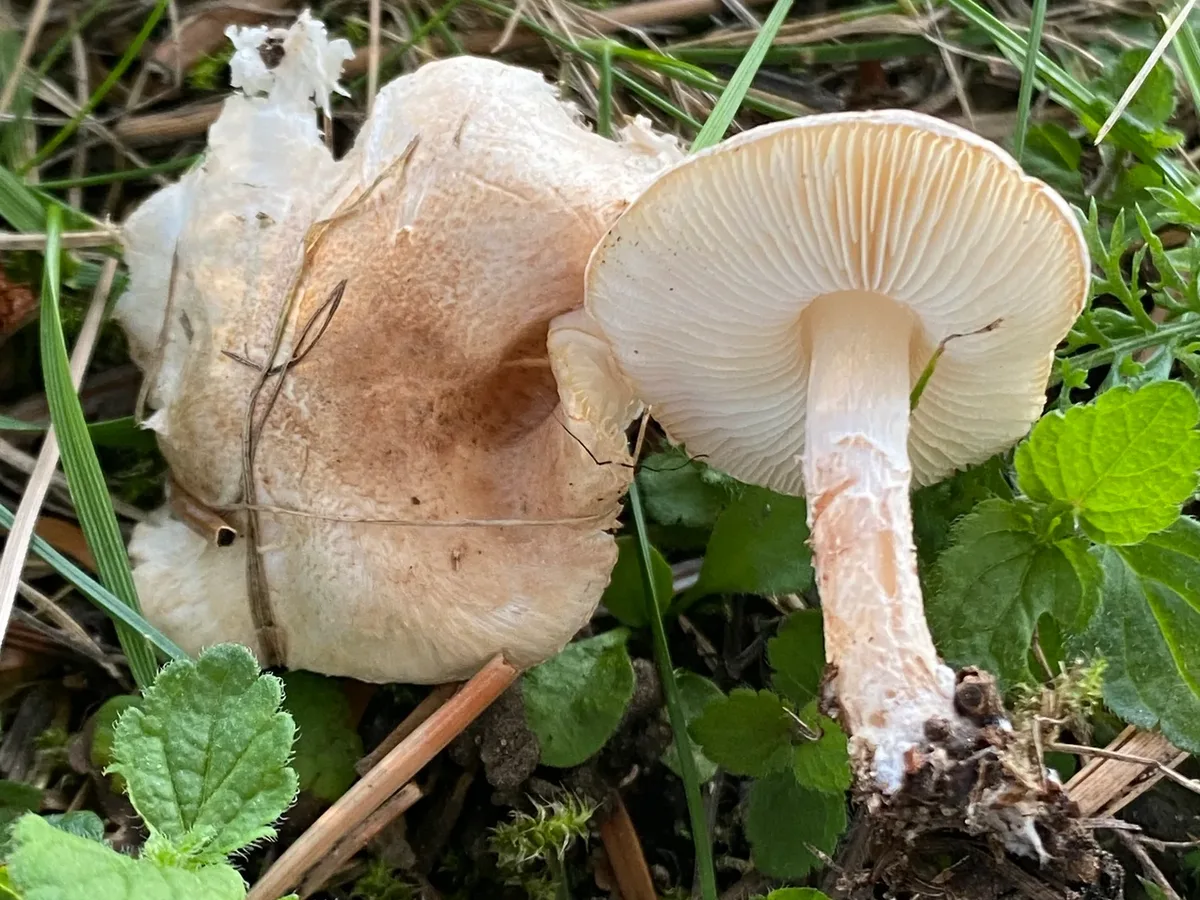 © Enrico Tomschke (CC BY)
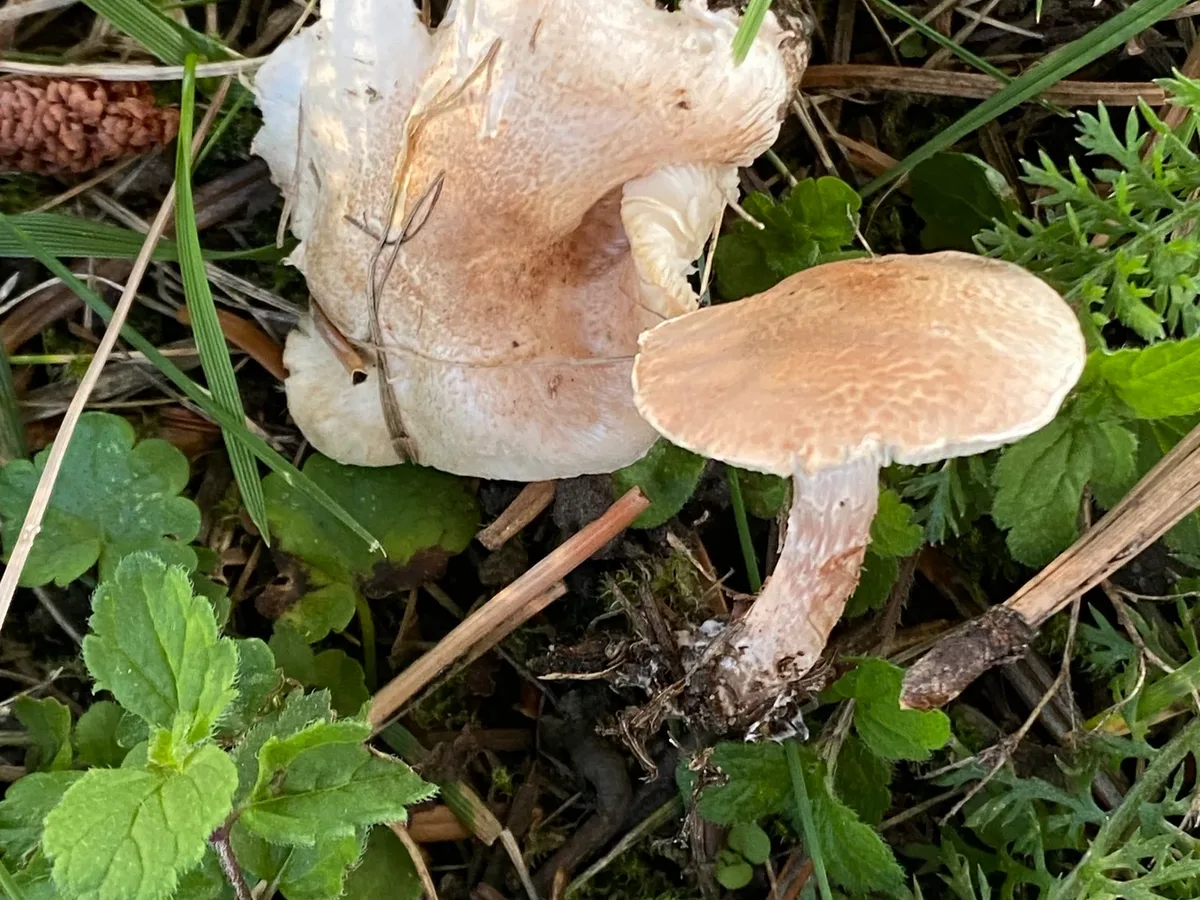 © Enrico Tomschke (CC BY)
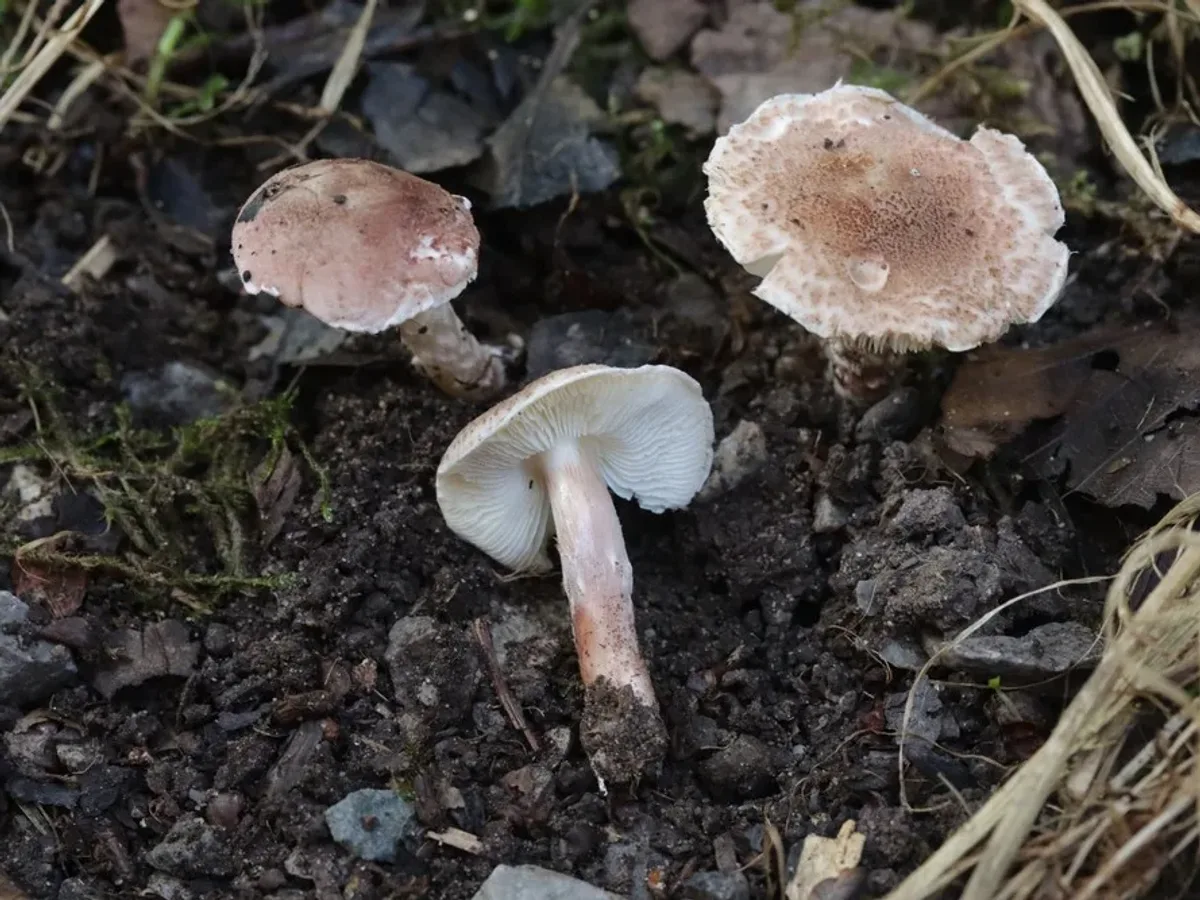 © Björn Sothmann (CC BY-SA)
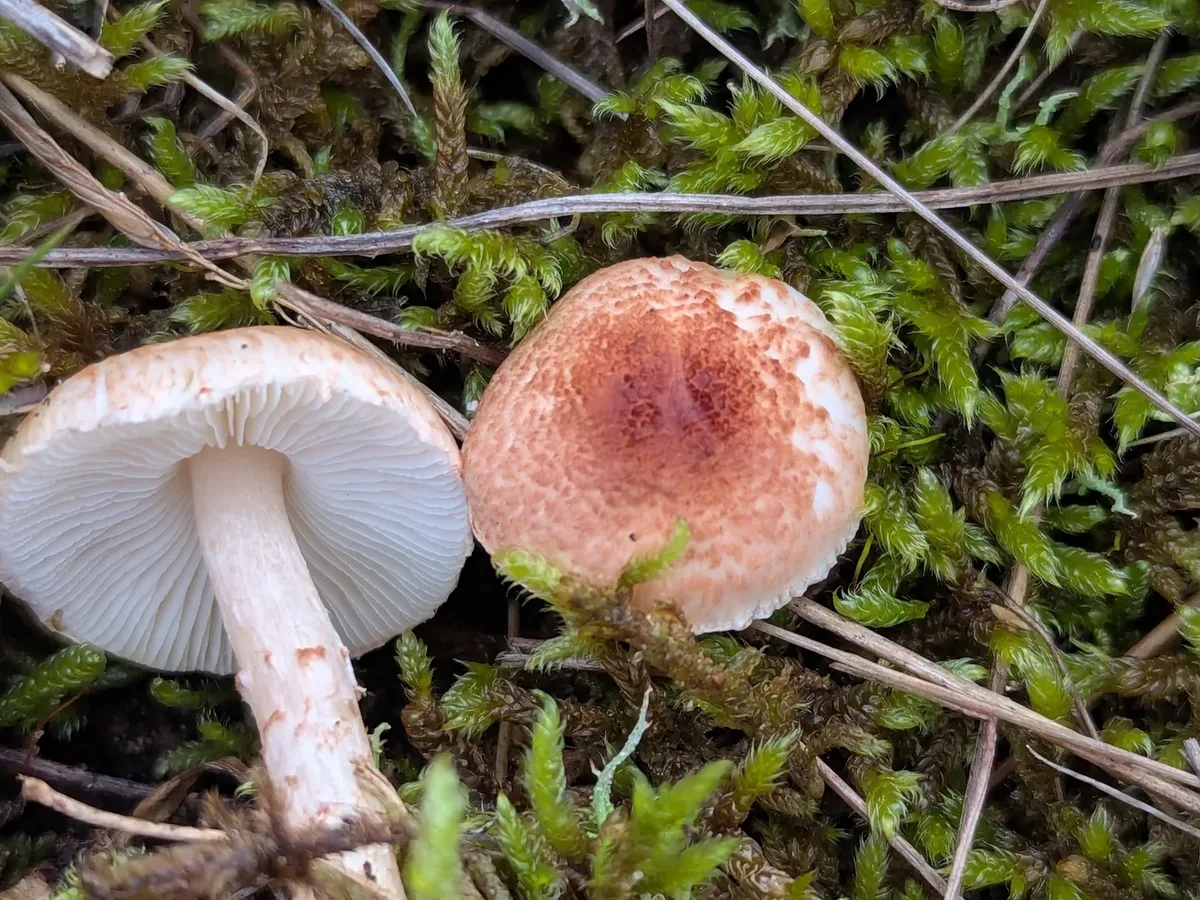 © Michel Langeveld (CC BY)
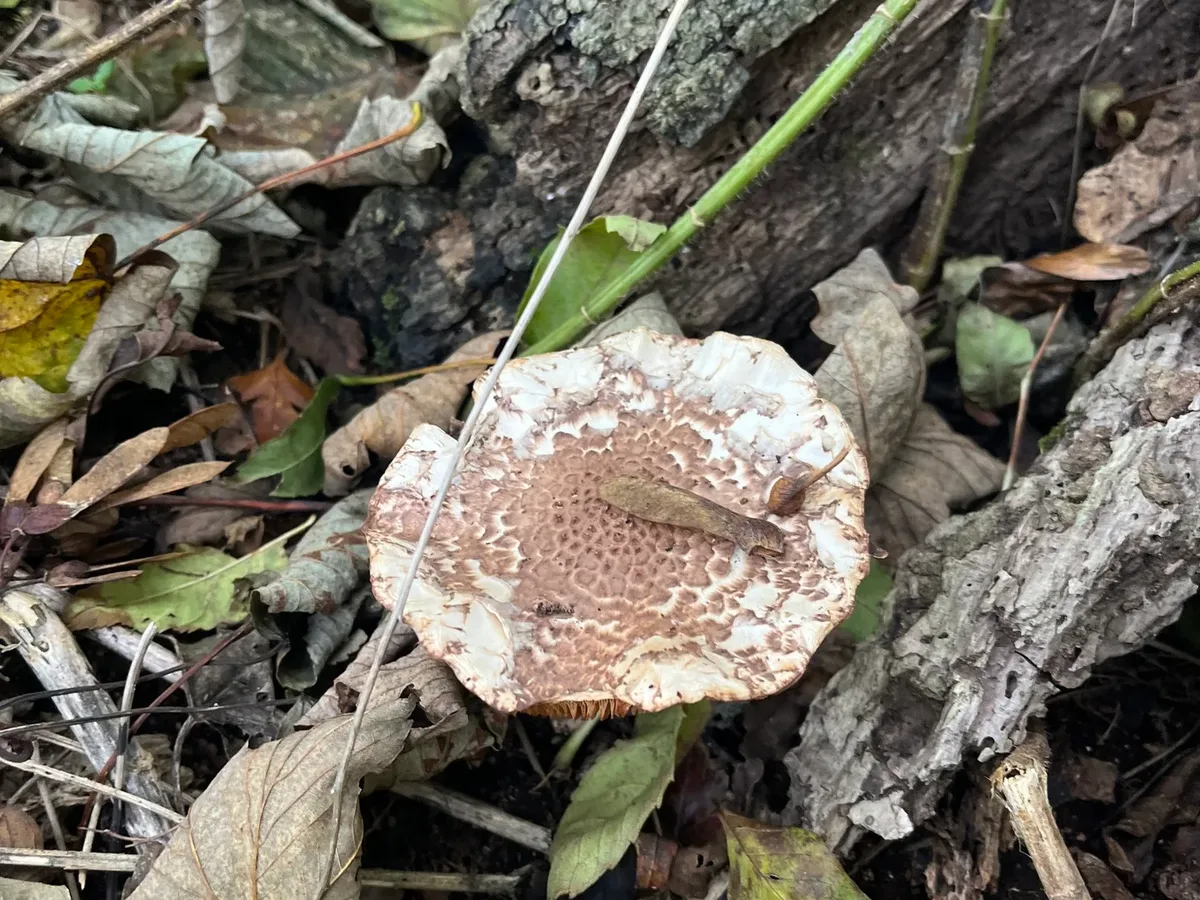 Toby Holman (CC0)Toby Holman (CC0)© Michel Langeveld (CC BY)
Toxic - and the most serious cases can be fatal. Never eat it, and wash your hands after handling.
Never eat a mushroom you are not 100% sure of - check the look-alikes below, and always cook wild mushrooms.
How to recognise it
A small to medium mushroom.
Cap
2-5 cm across, initially convex then broadly umbonate. The surface is pale pinkish-buff to flesh-coloured, covered in concentrically arranged fibrous scales of pinkish-brown to reddish-brown against a paler background; the central disc is a solid brownish colour.
Gills
Free, crowded, and persistently white-cream - never pink or brown.
Stem
Slender, 2-6 cm, carrying a fragile ring that deteriorates rapidly and may be entirely absent in older specimens. Below the ring the stem is fibrous and pinkish-brown.
Flesh
White, unchanging. Spore print white.
The overall palette - pale flesh tones with pinkish-brown banding - is the key visual signature of this species.
Why it's dangerous
Multiple fatalities have been attributed to Lepiota subincarnata in Europe.
- The lethal dose for an adult human is estimated at 50-100 g of fresh mushroom material - easily one or two small fruitbodies.
- Children are at significantly greater risk due to lower body mass; a single small cap may represent a lethal dose for a young child.
Poisoning cases have been recorded across France, Germany, Switzerland, and the United Kingdom. A notable cluster of fatalities occurred in France in the 1970s-1990s, and the species (under the synonym L. josserandii) was for a time considered responsible for more Lepiota deaths in Western Europe than any other small Lepiota species.
Any suspicion of ingestion requires immediate emergency hospital admission; do not wait for symptoms.
Toxin
Contains alpha-amanitin and beta-amanitin (cyclic peptide amatoxins), the same toxins responsible for the lethality of Amanita phalloides.
Concentrations of alpha-amanitin in Lepiota subincarnata are among the highest recorded for any mushroom - analyses have found up to 1.6-4 mg of alpha-amanitin per gram of dry weight in some samples.
The toxins are distributed throughout the fruitbody; there is no non-toxic part.
Symptoms
Amatoxin poisoning follows a characteristic three-phase course.
- 1Latent phase - no symptoms for 6-24 hours after ingestion, during which time the toxin is already absorbed and acting on the liver and kidneys.
- 2Gastrointestinal phase - sudden onset of severe watery diarrhoea, abdominal cramping, nausea, and vomiting, lasting 24-48 hours. Apparent improvement may follow, misleading both patient and physician.
- 3Hepatorenal phase - 3-5 days after ingestion, liver and kidney function deteriorates rapidly. Jaundice, coagulopathy, hepatic encephalopathy, and renal failure develop.
Without liver transplantation, death can occur 6-16 days after ingestion.
Staying safe
The overriding field rule for all small Lepiota species is absolute: no small mushroom in the genus Lepiota with white or cream gills should ever be collected for eating, under any circumstances, regardless of how confident the forager feels about the identification.
The genus contains multiple deadly species that are extremely similar to one another, and even experienced mycologists use microscopy to distinguish them reliably. If gills are white or cream, and the cap is small (under roughly 6 cm) and bears fibrous or cottony scales, treat the specimen as potentially lethal and leave it untouched.
Amatoxins (alpha-amanitin, beta-amanitin) are thermostable cyclic peptides. Cooking, boiling, drying, dehydrating, or prolonged heating does not neutralise them. There is no domestic or culinary preparation method that reduces the toxin load to a safe level.
This is a critical point because a common lay assumption is that thorough cooking makes any mushroom safe - that assumption is entirely false for amatoxin-containing species.
If you have eaten, or suspect you may have eaten, Lepiota subincarnata or any unidentified small Lepiota:
- Call emergency services immediately (112 in Europe, 999 in the UK, 911 in North America) and go to the nearest hospital emergency department without delay.
- Do not wait for symptoms to appear.
- If possible, bring a sample of the mushroom (or a photograph) to the hospital so that identification can be confirmed.
- Contact poison control centres in parallel.
The latent phase of amatoxin poisoning lasts 6-24 hours - during this window the patient feels completely normal while the toxin is already causing irreversible damage to liver cells. Waiting for symptoms means waiting until serious organ injury has already occurred.
Cross-contamination is a serious additional hazard. If Lepiota subincarnata was mixed in a basket or bag with other foraged mushrooms, all mushrooms in that container must be discarded without exception.
Amatoxins leach into surrounding material - fragments, liquid, and spores from a single fruitbody can contaminate edible mushrooms to a dangerous degree. Washing does not reliably remove transferred toxin from adjacent mushrooms. Even one fruitbody that passed through a mixed harvest is sufficient reason to discard the entire collection.
Where & when it grows
Habitat
Grows as a saprotroph on nutrient-rich, disturbed ground: lawns, parks, gardens, hedgerow bases, roadsides, and woodland margins. Often appears in manicured or semi-managed grassland where the soil is reasonably fertile.
This habitat overlaps closely with that of the field mushroom (Agaricus campestris) and of young parasol mushrooms (Macrolepiota), which is the root of most poisoning incidents - foragers in familiar-looking grassland find small scaly caps and assume they are safe.
When
Late summer to mid-autumn.
First fruitbodies typically appear in July-August after warm, moist spells, peaking through late August and into October, then tailing off with the first hard frosts.
How it grows
Grows singly or in small, loose groups on the ground - not clustered.
After suitable rain, new fruitbodies push up over the course of several days, so a patch that seems clear one morning may have fresh caps by the next.
Fruiting conditions
Warm-season saprotroph of managed grassland. Flushes follow rain events in late summer and autumn when soil temperatures are in the 12-22 °C range. Fruiting is most reliable in the August-October window across central-western Europe.
Look-alikes
The fatal dapperling is most dangerously confused with common field mushrooms (Agaricus campestris, A. bisporus) - both grow in grassland at similar sizes, and an inexperienced forager may mistake the small scaly cap for a young button mushroom.
The critical differences:
- Agaricus species have gills that progress from pink to chocolate-brown as they mature (never white), and a brown spore print.
- Lepiota subincarnata has persistently white-cream gills and a white spore print.
Other lookalikes:
- Young specimens of the edible parasol mushroom (Macrolepiota procera) also bear scales on the cap, but that species has a distinctive snakeskin pattern on the stem, a double-edged ring that slides freely, and grows much larger.
- The related Lepiota brunneoincarnata (deadly dapperling) is very similar and equally lethal - it tends toward a more brownish-pink colouration and slightly smaller scales, but the two are safely treated as interchangeable dangers.
- Lepiota castanea (chestnut dapperling) is another closely related lethal species with darker, chestnut-brown scales.
- Lepiota cristata (stinking dapperling) is also toxic and shares the habitat, recognisable by its sharper, more distinct reddish-brown scales and a distinctive unpleasant rubbery smell.
None of the small Lepiota species should ever be gathered for the table.
Lepiota castanea has distinctly darker, chestnut-brown to cinnamon scales that are more sharply defined, and the background cap colour is paler cream-white rather than pinkish. Also lethal due to amatoxins; not safely edible in any circumstances.
Lepiota brunneoincarnata is the most similar species: same habitat, same small size, same lethal amatoxin content. L. brunneoincarnata typically has more brownish-pink scales that are slightly coarser, and the background cap colour trends toward beige-brown rather than flesh-pink. In practice the two are nearly inseparable in the field and equally lethal - treat any encounter as equally dangerous.
Both grow in grassland and can appear at similar sizes when young. The decisive differences: Agaricus campestris has gills that are vivid pink when young, turning chocolate-brown at maturity - never white. Its spore print is dark brown. It lacks the pinkish-brown fibrous scales on the cap surface; the cap is smooth or finely silky. Any mushroom in grassland with white gills and white spore print is not an Agaricus and must not be eaten.
Young parasol mushrooms before the cap expands bear some superficial resemblance to small scaly Lepiota, but Macrolepiota procera has a characteristic snakeskin pattern of dark zigzag banding on the stem, a large, double-edged ring that slides freely up and down the stem, and grows much larger (cap ultimately 15-30 cm). If the stem lacks a snakeskin pattern and the ring is not a freely-sliding double collar, the mushroom is not M. procera and small Lepiota species must be considered.
Lepiota cristata has sharper, more distinct reddish-brown to brick-red scales that stand up more prominently, and has a very distinctive, unpleasant rubbery or chemical smell (sometimes described as garlic-like or like rubber). Although not as lethal as L. subincarnata, L. cristata is also toxic and must never be eaten. The two species share habitat and overall form.
A reference guide - never an edibility guarantee. When in doubt, leave it out.