Spiny dapperling
Lepiota spiculatasyn. Lepiota spiculata (Berk. & Broome) Sacc.
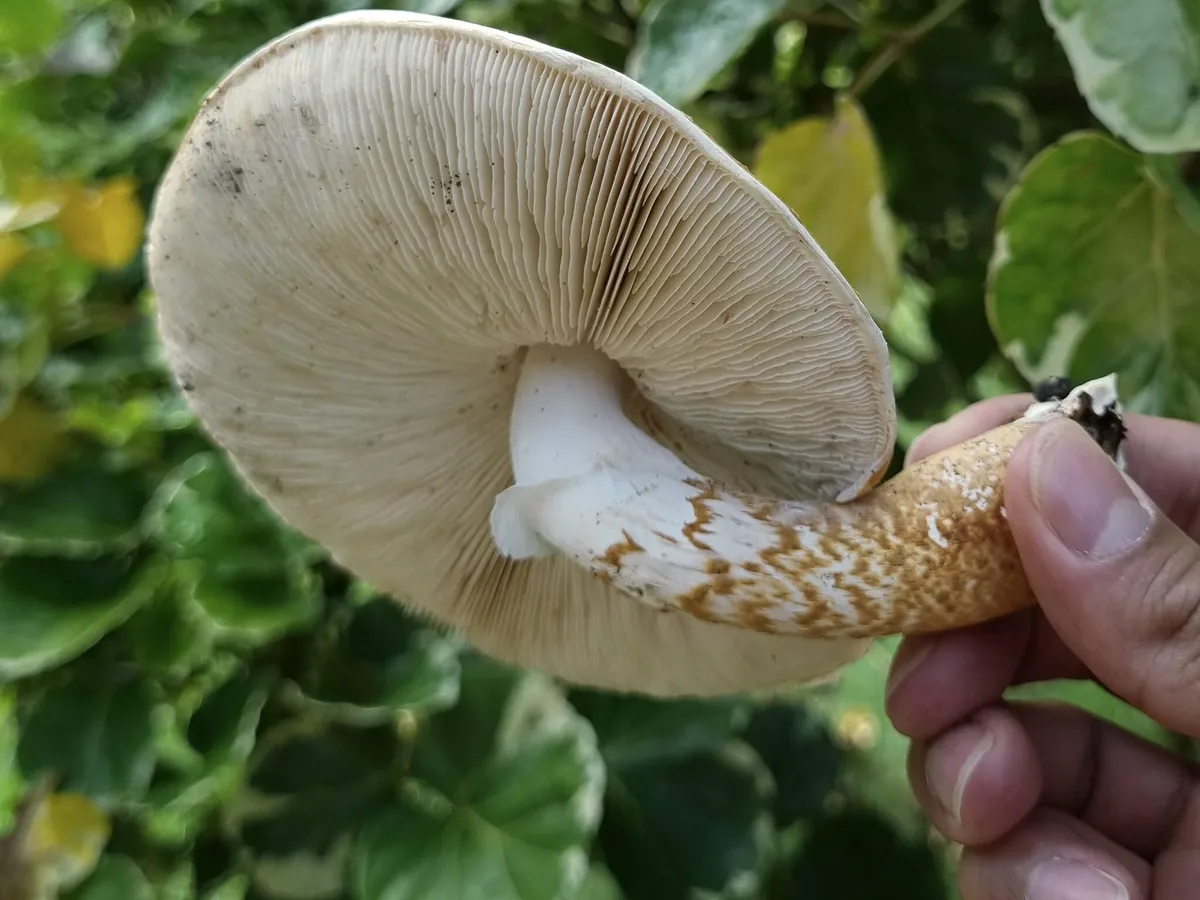 © Teodoro Chivatá Bedoya (CC BY)
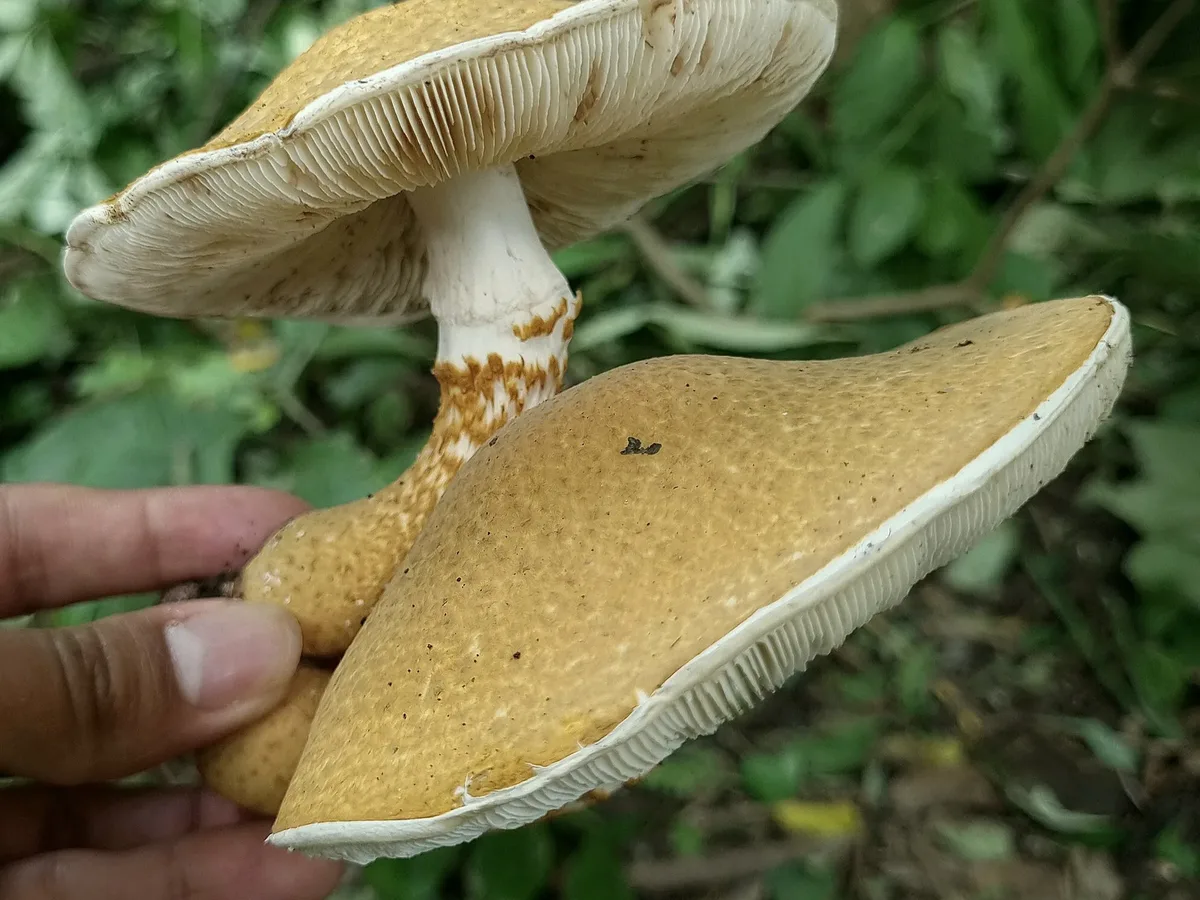 © Teodoro Chivatá Bedoya (CC BY)
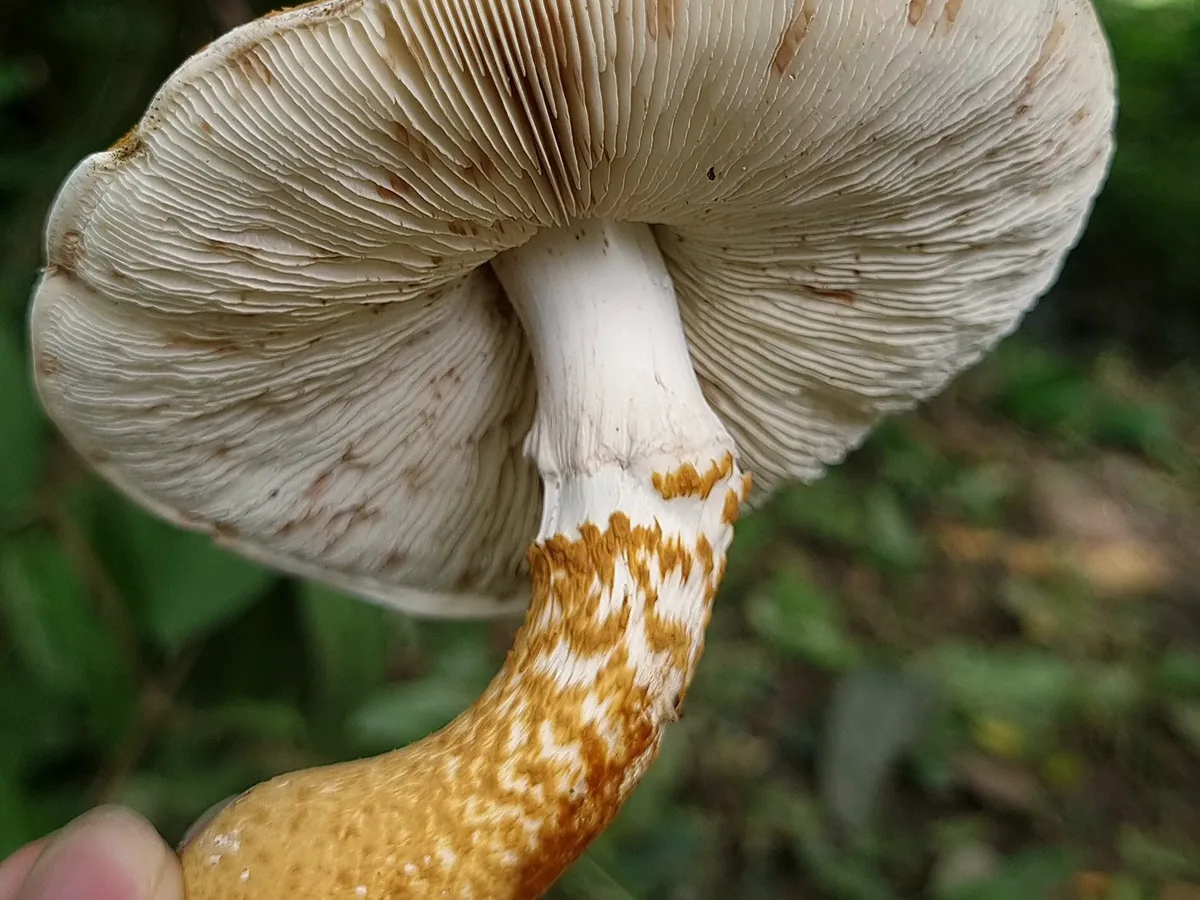 © Teodoro Chivatá Bedoya (CC BY)
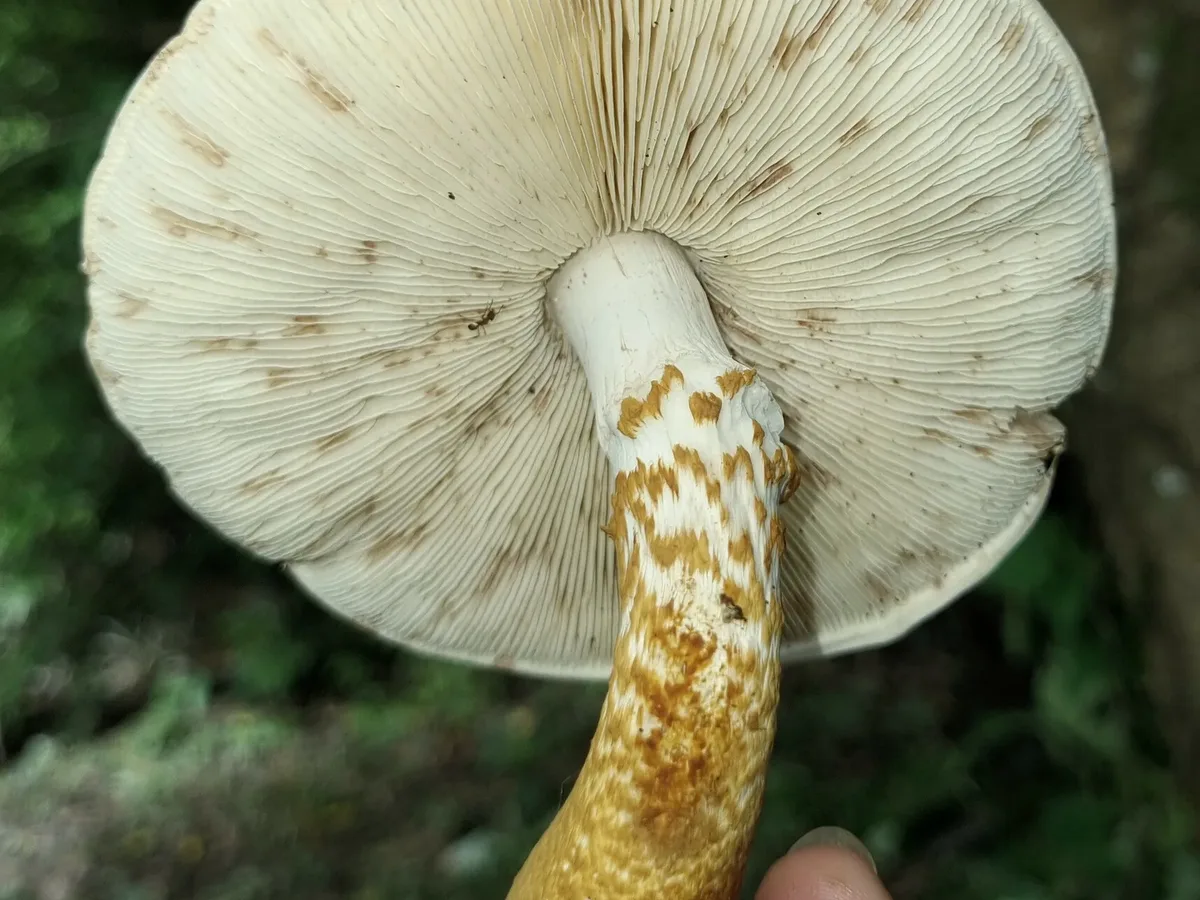 © Teodoro Chivatá Bedoya (CC BY)
 © Teodoro Chivatá Bedoya (CC BY)
 © Teodoro Chivatá Bedoya (CC BY)© Teodoro Chivatá Bedoya (CC BY)© Teodoro Chivatá Bedoya (CC BY)
Toxic - and the most serious cases can be fatal. Never eat it, and wash your hands after handling.
Never eat a mushroom you are not 100% sure of - check the look-alikes below, and always cook wild mushrooms.
How to recognise it
The defining feature of Lepiota spiculata is immediately apparent: a small pale cap densely studded with dark granular scales or spicule-like projections that give the surface an almost sand-papery or bristled texture.
Cap
This is not the coarser, more neatly pyramidal wart pattern of Lepiota aspera, but finer and more granular - each scale is small, roughly pointed, dark brown to reddish-brown, and crowded especially at the centre of the cap where they can form a nearly solid dark disc.
The pale cream to whitish background becomes visible at the margins, where scales thin out.
Caps measure 2-6 cm across and open from hemispherical to broadly convex, usually retaining a central umbo.
Gills / Pores
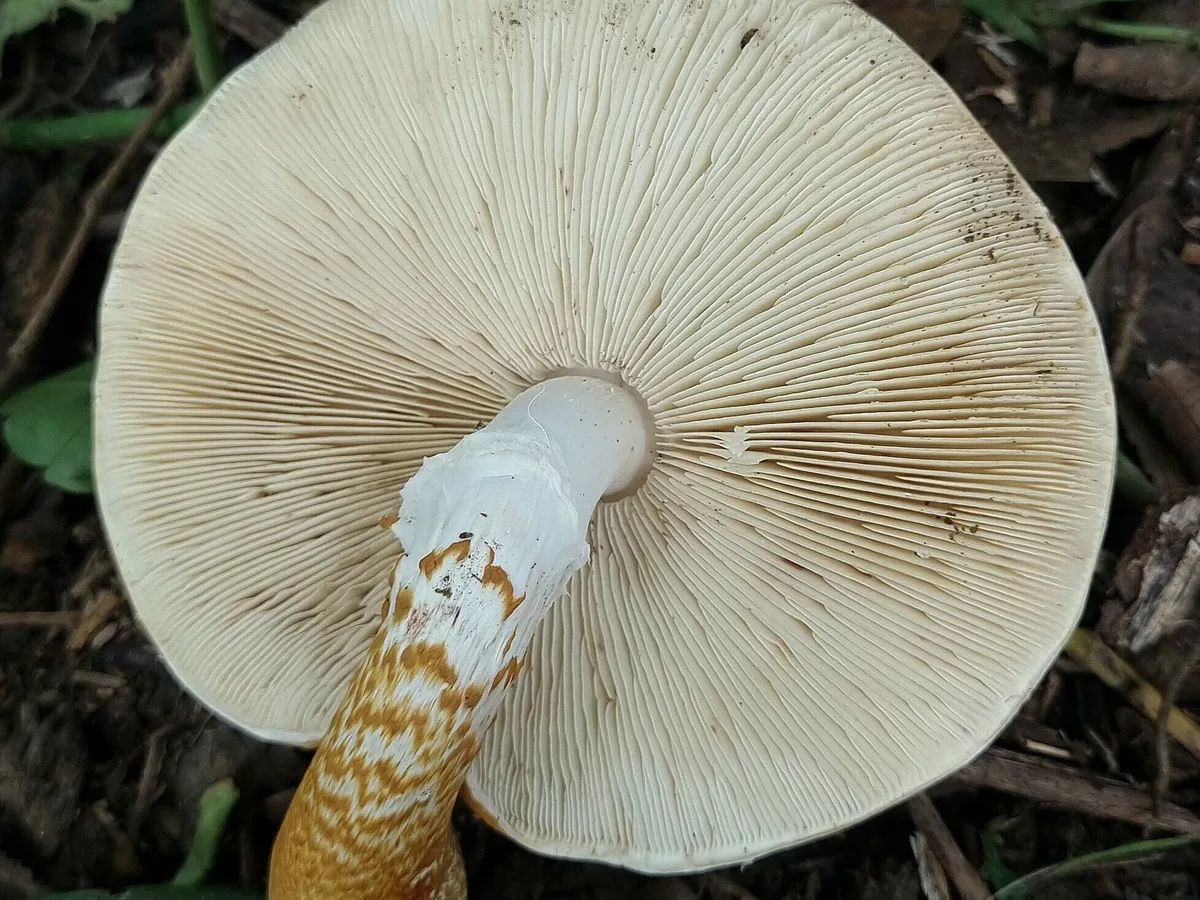
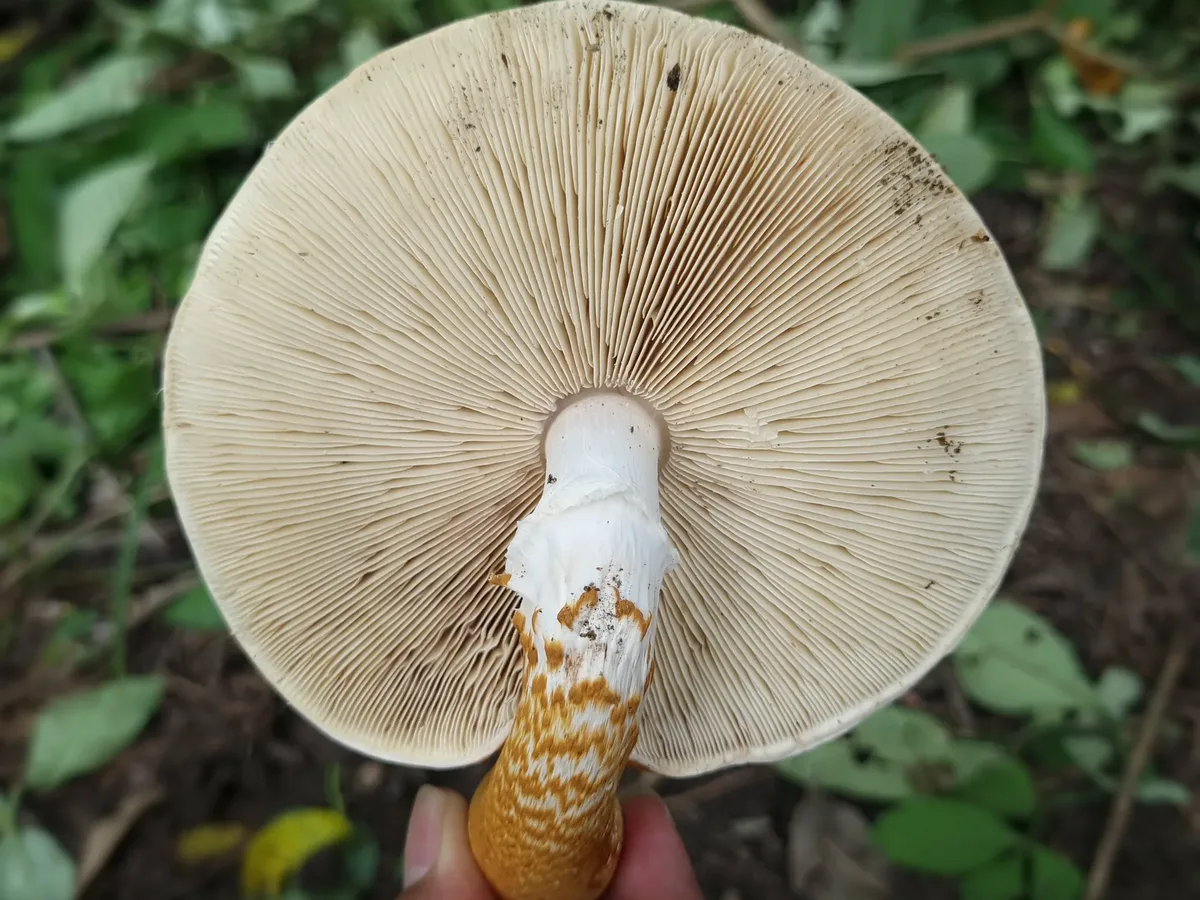
Gills are free from the stem, crowded, and persistently white - they never flush pink, brown, or grey. Spore print white.
Stem
The stem is slender (3-8 cm × 3-7 mm), pallid above the ring, with brownish granular veil fragments below. The ring is thin and membranous, situated in the upper part of the stem; it tends to be fragile and may become a ragged zone in mature specimens.
Flesh
Flesh white, unchanging.
Smell & taste
The smell is faintly disagreeable - slightly radishy or rubbery - and stands in clear contrast to the pleasant, nutty aroma of edible large parasols.
These features together - granular dark scales on a pale cap, free pale gills, a fragile ring, and a mildly off-putting smell - describe the species accurately in good fresh specimens, but the same features also describe multiple other small Lepiotas in the South American flora, some confirmed deadly. No single field character separates L. spiculata safely from its most dangerous relatives without microscopy.
Why it's dangerous
Lepiota spiculata represents one of the highest-priority mushroom safety risks in South America. The species is a small, nondescript dapperling that can appear in gardens, urban parks, and along roadsides - not just in remote forests - where it may be found by people with no mycological experience, including children.
The visual similarity to other small mushrooms (including species that are colloquially described as edible in local folk traditions in some regions) creates genuine confusion risk.
The amatoxin class of toxins, which must be assumed present, is responsible for approximately 90% of fatal mushroom poisonings globally. A single fruitbody of a confirmed amatoxin species contains enough toxin to kill an adult human.
South America lacks the institutional poisoning surveillance and public awareness of Europe or North America, and the introduced presence of Amanita phalloides in Chile and Argentina has already caused documented fatalities, indicating that the regional mycological risk landscape is expanding.
Any individual who has eaten an unidentified small dark-scaled dapperling in South America should be treated as a potential amatoxin poisoning victim requiring immediate emergency intervention regardless of the absence of symptoms.
Toxin
The principal toxins are suspected to be amatoxins - specifically alpha-amanitin and potentially beta-amanitin. This is inferred from the species' phylogenetic and morphological placement within a Lepiota section in which amatoxin production is confirmed in multiple allies (including the extensively studied L. subincarnata and L. brunneoincarnata).
Direct analytical data for L. spiculata specifically are limited in the published literature; the species has not received the same intensive toxicological scrutiny as European deadly dapperlings.
The precautionary principle in mushroom toxicology is clear: when a species belongs to a group with confirmed amatoxin producers and there are no published studies demonstrating absence of amatoxins, it must be assumed amatoxin-capable.
The toxin mechanism is irreversible RNA polymerase II inhibition, leading to protein synthesis failure and cell death in the liver and kidneys. The toxin is heat-stable and water-soluble.
Additional GI irritants may contribute to early-onset gastrointestinal symptoms (often appearing earlier than the 6-hour amatoxin-characteristic delay), which can mislead both victim and clinician into underestimating the severity of the poisoning.
Symptoms
If amatoxins are present (which must be assumed), the poisoning course unfolds in three phases.
- 1The first phase (latent period) lasts 6-24 hours after ingestion, during which the patient feels completely well - this silence is deceptive and dangerous, as it commonly leads to delayed medical attention.
- 2The second phase (gastrointestinal crisis) brings sudden onset of violent nausea, projectile vomiting, severe watery and potentially bloody diarrhoea, and intense abdominal cramping; this phase can cause dangerous dehydration and electrolyte imbalance and lasts 1-3 days.
- 3The third phase (apparent recovery) involves a brief and treacherous period of feeling better, during which liver enzymes are rising rapidly.
- 4The fourth phase (systemic organ failure) begins 4-9 days after ingestion: jaundice, coagulopathy, hepatic encephalopathy, oliguria, and acute renal failure. Without aggressive in-hospital support, this phase can be fatal.
If additional non-amatoxin GI irritants are present, earlier-onset (within 30-120 minutes) gastrointestinal symptoms may occur before the latent period of any amatoxins; these must never be interpreted as proof that the toxic phase has passed or that the poisoning is minor.
Staying safe
Lepiota spiculata must be treated as a deadly species. It belongs to a section of the genus Lepiota in which amatoxin production is well-documented in multiple allied species; amatoxins have been detected in several South American Lepiota species, and the morphological and phylogenetic proximity of L. spiculata to confirmed amatoxin-producing taxa makes it impossible to assume safety without chemical confirmation in each collection.
Amatoxins act by irreversibly inhibiting RNA polymerase II, the enzyme responsible for transcribing the genetic information needed to synthesise proteins in every cell. The organs most severely affected are the liver and kidneys, because they bear the highest exposure to the toxin as it is processed.
There is no antidote that reverses amatoxin binding once cellular damage has begun; treatment is intensive supportive care (silibinin, N-acetylcysteine, forced diuresis, and in severe cases liver transplantation).
The critical danger of amatoxin poisoning is the deceptive clinical timeline: symptoms are completely absent for 6 to 24 hours after eating a lethal dose, during which the toxin is silently destroying liver and kidney cells. When symptoms begin, the damage is already advanced.
This means that any person who has eaten a small, pale, dark-scaled dapperling in South America and develops gastrointestinal illness - or whose companion reports they have eaten such a mushroom even without symptoms - requires immediate emergency medical evaluation.
- Do not wait for symptoms.
- Do not assume that feeling well after an hour means the mushroom was safe.
- If ingestion is suspected, call emergency services or a poison control centre immediately.
- Bring the uneaten portion of the mushroom (in a bag) and take a photograph.
- Do not induce vomiting unless specifically instructed by a medical professional.
Where & when it grows
Habitat
Lepiota spiculata is a saprotroph of warm, humid soils, most at home in the organic-rich substrates of lowland to mid-altitude forest floors and disturbed habitats in tropical and subtropical South America.
It is frequently encountered at:
- forest margins
- transitional vegetation between cleared land and forest
- shaded roadsides
- parks or gardens with mature trees providing shade and leaf litter
This tolerance of disturbed and anthropically modified landscapes is an important safety consideration: unlike many deadly forest mushrooms that require remote habitats, this species can appear in backyards, roadside verges, and urban parks where it may be found by children or individuals with no mycological training.
It grows from soil or decomposing organic matter - never from living wood - singly or in small scattered groups.
Its distribution within South America is centred on Brazil and Argentina, with records from Uruguay and likely extending into adjacent countries wherever subtropical lowland or transitional forest habitat exists.
When
In the core Southern Hemisphere part of its range (southern Brazil, Argentina, Uruguay), Lepiota spiculata is a warm-season fruiter. It tracks the combination of high soil temperature and rainfall typical of the southern spring through early autumn: broadly October to April, with peak abundance from November through February.
This is the period when South American summer warmth coincides with adequate rainfall to sustain mycelial activity and fruit-body production.
In more tropical parts of its range (interior and northern Brazil, into adjacent equatorial countries), the fruiting season is less strictly seasonal and can extend year-round wherever rainfall maintains adequate soil moisture.
The fruitbodies are delicate and short-lived - they may appear overnight after rain and deteriorate within days, especially in the heat of a southern summer.
How it grows
Saprotrophic, growing singly or in small loose groups directly from humus-rich soil. Not clustered on wood, not associated with a specific tree partner.
The mycelium colonises and breaks down buried organic matter (leaf litter, woody debris, compost) in the soil, and fruitbodies emerge after triggering rainfall when soil is warm.
Growth is rapid in warm conditions: fruitbodies can appear and mature within 2-4 days of triggering rain.
Fruiting conditions
Warm-soil tropical and subtropical saprotroph; fruiting is triggered by rainfall events when soil is warm (optimum range approximately 18-26 °C). In the Southern Hemisphere range (Brazil, Argentina) the main season is the warm wet months of October-April. Flush lag is short under tropical conditions (often 2-5 days from triggering rain). In equatorial South America, fruiting can occur year-round wherever rainfall is adequate. Fruiting-threshold parameters are standard mycology estimates as no published species-specific data are available.
Look-alikes
Lepiota spiculata exists within a complex of morphologically similar small dapperlings in South America, several of which are confirmed or suspected deadly species.
- 1Lepiota subincarnata (Fatal dapperling) has also been recorded from South America; it has pinkish-buff to ochre cap scales, free white gills, and is a confirmed amatoxin-bearing species responsible for fatal poisonings in Europe and recorded from Neotropical collections. Separation from L. spiculata requires careful comparison of scale character (L. subincarnata scales are more ochre-pinkish and less granular-spiny) and microscopy.
- 2Lepiota brunneoincarnata (Deadly dapperling) is primarily a European species but the name has been applied to similar species in South America; any brownish-scaled, pinkish-toned Lepiota in this size range should be considered potentially deadly.
- 3Lepiota cristata (Stinking dapperling) has a very similar size and scale pattern in South American material but is distinguished by a very sharp, strong rubber or coal-tar smell; it is considered toxic though perhaps less reliably lethal than the confirmed amatoxin species.
- 4Other small South American Lepiota species (including undescribed or poorly known taxa in the L. helveola group and L. subgracilis) share the granular-scale morphology and occupy the same habitats. The South American Lepiota flora is taxonomically incompletely resolved, and the safest working assumption is that any small granular-scaled dapperling in the region should be treated as potentially amatoxin-bearing.
- 5Amanita phalloides (Death cap) is now established in parts of southern South America (Chile, Argentina, Uruguay) through introduced European trees; while morphologically very different from L. spiculata (it has a volva, a greenish cap, and an entirely different growth habit), any toxic mushroom confusion in South America must acknowledge the death cap's growing presence.
- 6Small Macrolepiota species (edible large parasols), when very young, could superficially suggest a Lepiota to an inexperienced eye; mature Macrolepiota differs in its much larger size, snakeskin-patterned stem, sliding ring, and pleasant smell.
A small confirmed-amatoxin dapperling with colder, darker chestnut to rusty-brown scales on a white background; the scale colour is distinctly less reddish than L. spiculata and more evenly distributed without a strongly darkened central disc. Recorded from South America. Lethal - same safety category as L. spiculata.
Primarily a European species but with reports of morphologically similar taxa in South America. Distinguished by more pinkish-brown cap tones and a more felty rather than granular-spiny scale texture. Also a confirmed amatoxin species responsible for numerous European fatalities. The distinction from L. spiculata is mainly of academic value - both are deadly.
Amanita phalloides is now established in southern South America (Chile, Argentina, Uruguay) through introduced European trees. While morphologically very different from L. spiculata - the death cap has a greenish to olive-yellow cap, white free gills, a prominent sac-like volva at the bulbous base, and a skirt-like pendant ring - very young buttons of both species can appear as small pale-capped mushrooms to an untrained eye. Any small mushroom found in southern South America under oaks, chestnuts, or pines should be viewed with extreme suspicion. The presence of a volva (a cup-like bag at the stem base, often partially underground) immediately distinguishes any Amanita from Lepiota. If uncertain, leave it and wash your hands.
Lepiota subincarnata is a confirmed amatoxin-bearing species that has been collected in South America. It is similar in size and general form, but its cap scales tend toward ochre-pinkish rather than dark reddish-brown and are more fibrous-felty than finely granular-spiny. The stem may show pinkish tones in the veil remnants. Separation in the field is unreliable without direct comparison and, for practical safety purposes, irrelevant - both species must be treated as lethal.
Young, still-closed Macrolepiota buttons have a dark brown cap and visible scales, and could superficially be confused with a dapperling by an inexperienced eye. At any stage of development, Macrolepiota has a stem with clear snakeskin-pattern brown banding on a pale background and (when present) a double-edged ring that slides freely; the smell is pleasant and nutty. L. spiculata is much smaller at all stages, has a mildly unpleasant smell, and its stem lacks any snakeskin patterning. Never pick any small-capped scaly mushroom as a presumed parasol - confirm the sliding ring and snakeskin stem before any Macrolepiota is treated as edible.
Lepiota cristata has been recorded from South America. It shares the general small dapperling form but has more crisply concentric reddish-brown scale bands on a whiter background, and - most diagnostically - an intensely unpleasant sharp smell of rubber, coal tar, or strong chemical. L. spiculata smells only mildly disagreeable by comparison. L. cristata is toxic (GI irritant, possible low-level amatoxins) and must not be eaten, though it is less reliably lethal than the confirmed amatoxin species.
A reference guide - never an edibility guarantee. When in doubt, leave it out.