Orange-girdled parasol
Lepiota ignivolvatasyn. Lepiota ignivolvata Boud. & Bres.
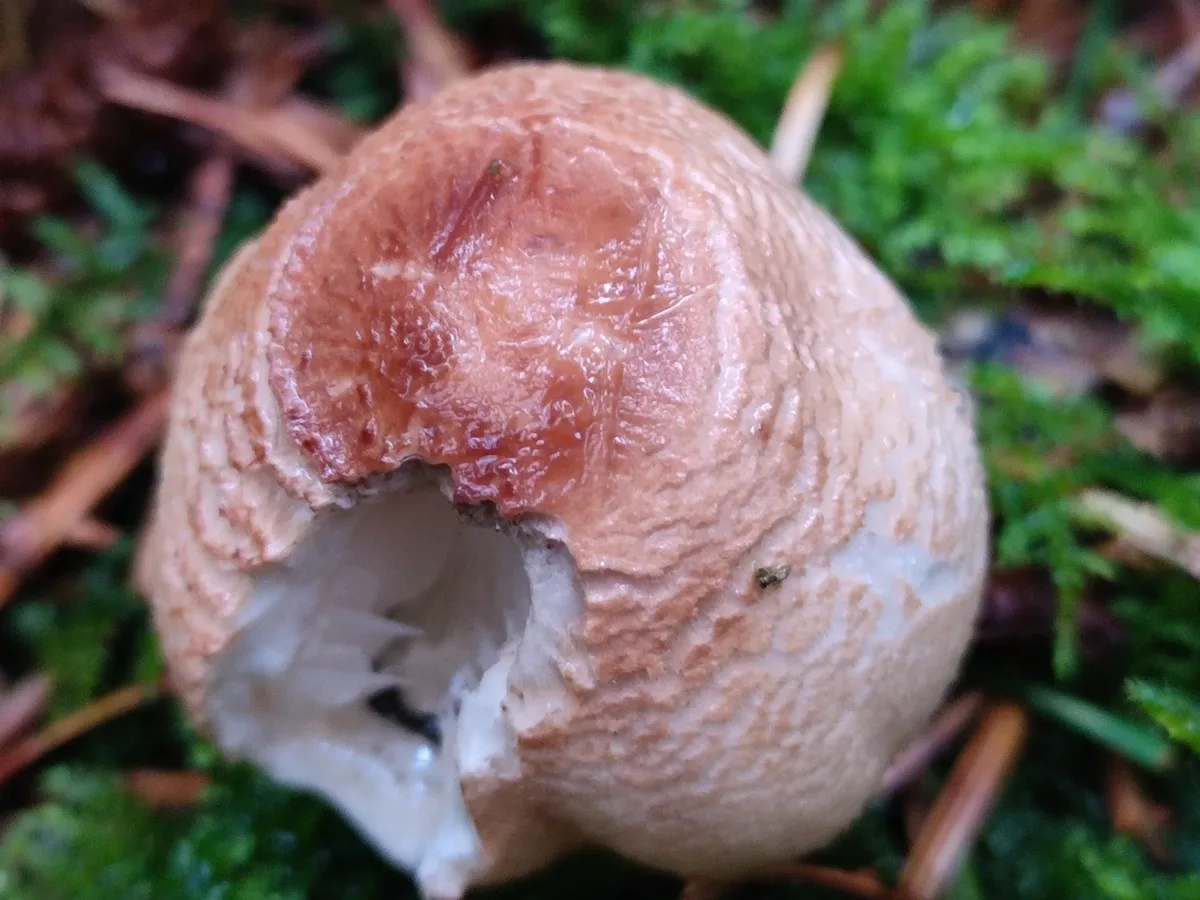 © victor laborde (CC BY)
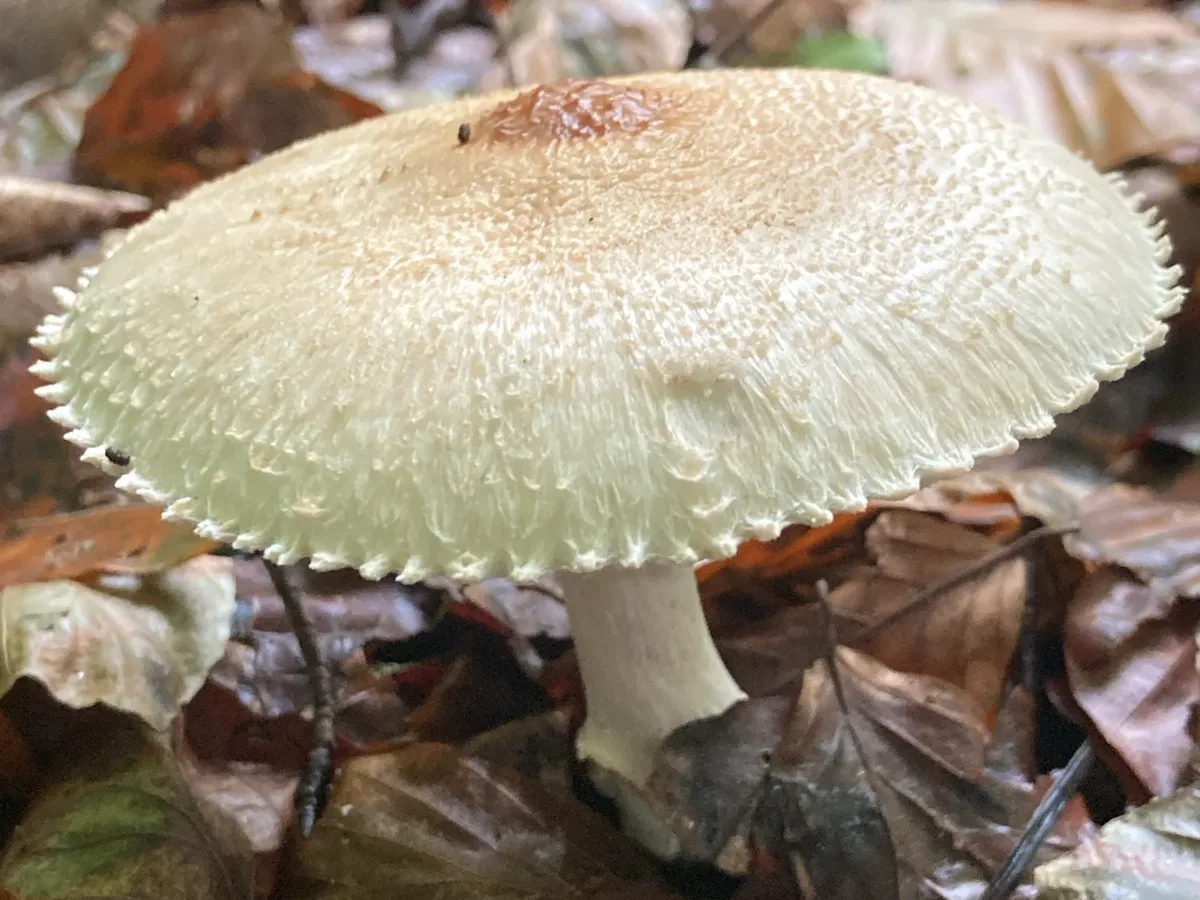 © norgram (CC BY)
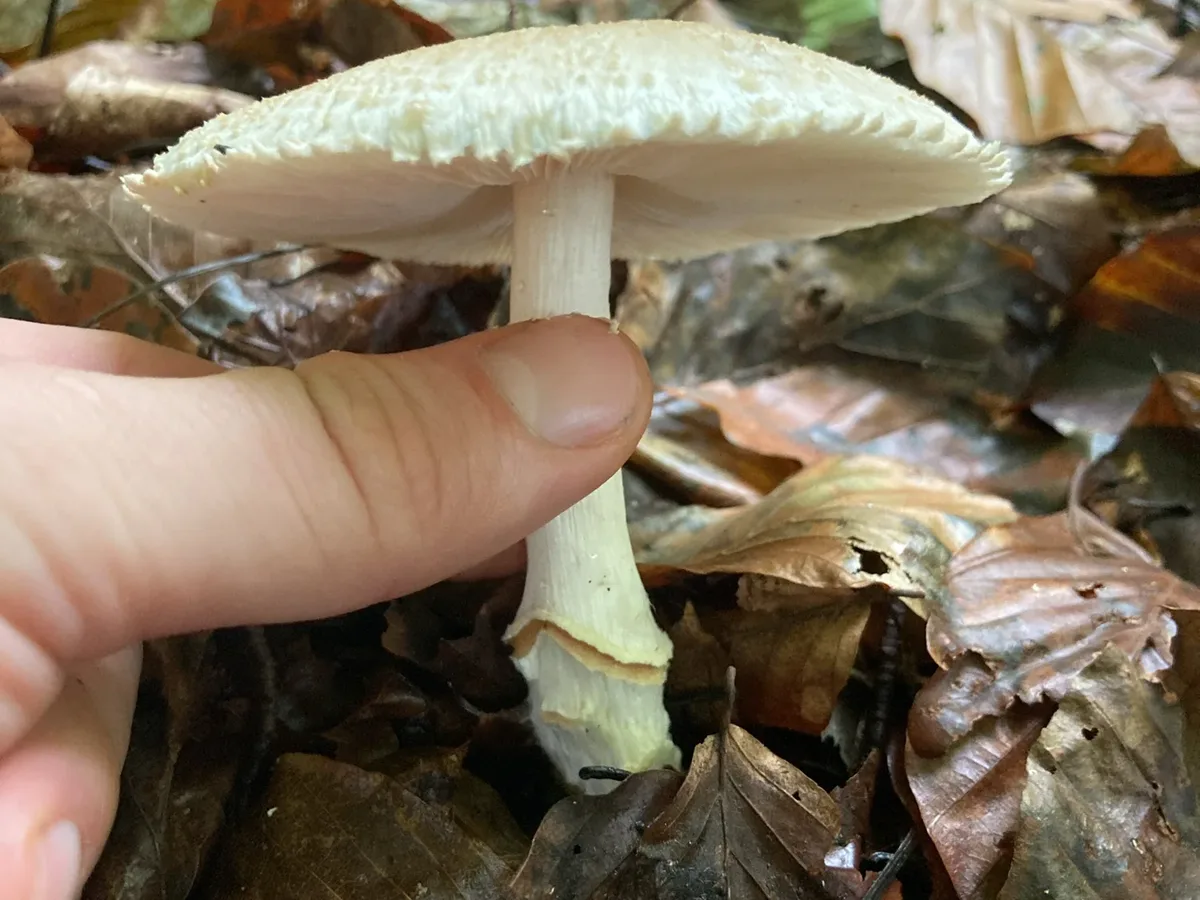 © norgram (CC BY)
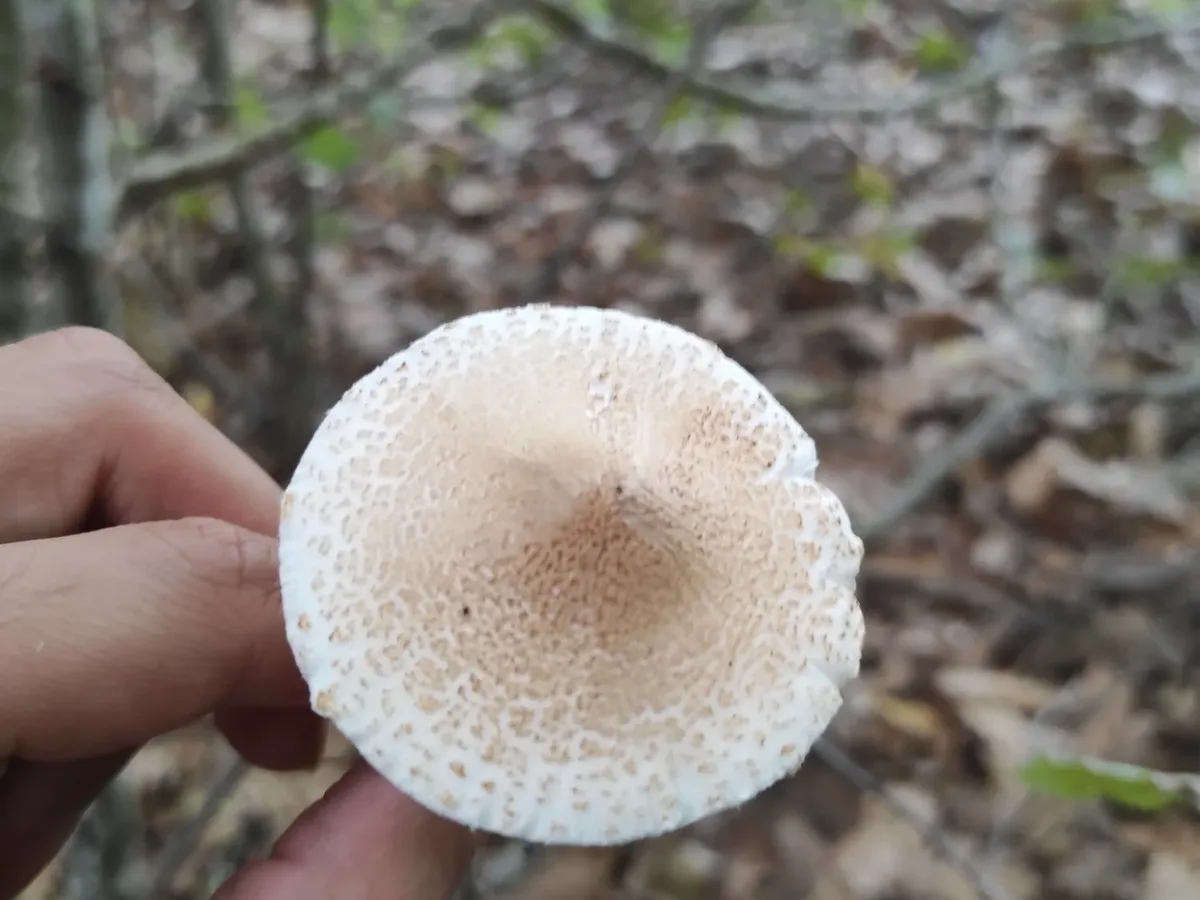 © Umut Nuri Erdoğan (CC BY)
 © Umut Nuri Erdoğan (CC BY)
 © Umut Nuri Erdoğan (CC BY)
 © Umut Nuri Erdoğan (CC BY)
 © victor laborde (CC BY)© victor laborde (CC BY)© norgram (CC BY)
Toxic - and the most serious cases can be fatal. Never eat it, and wash your hands after handling.
Never eat a mushroom you are not 100% sure of - check the look-alikes below, and always cook wild mushrooms.
How to recognise it
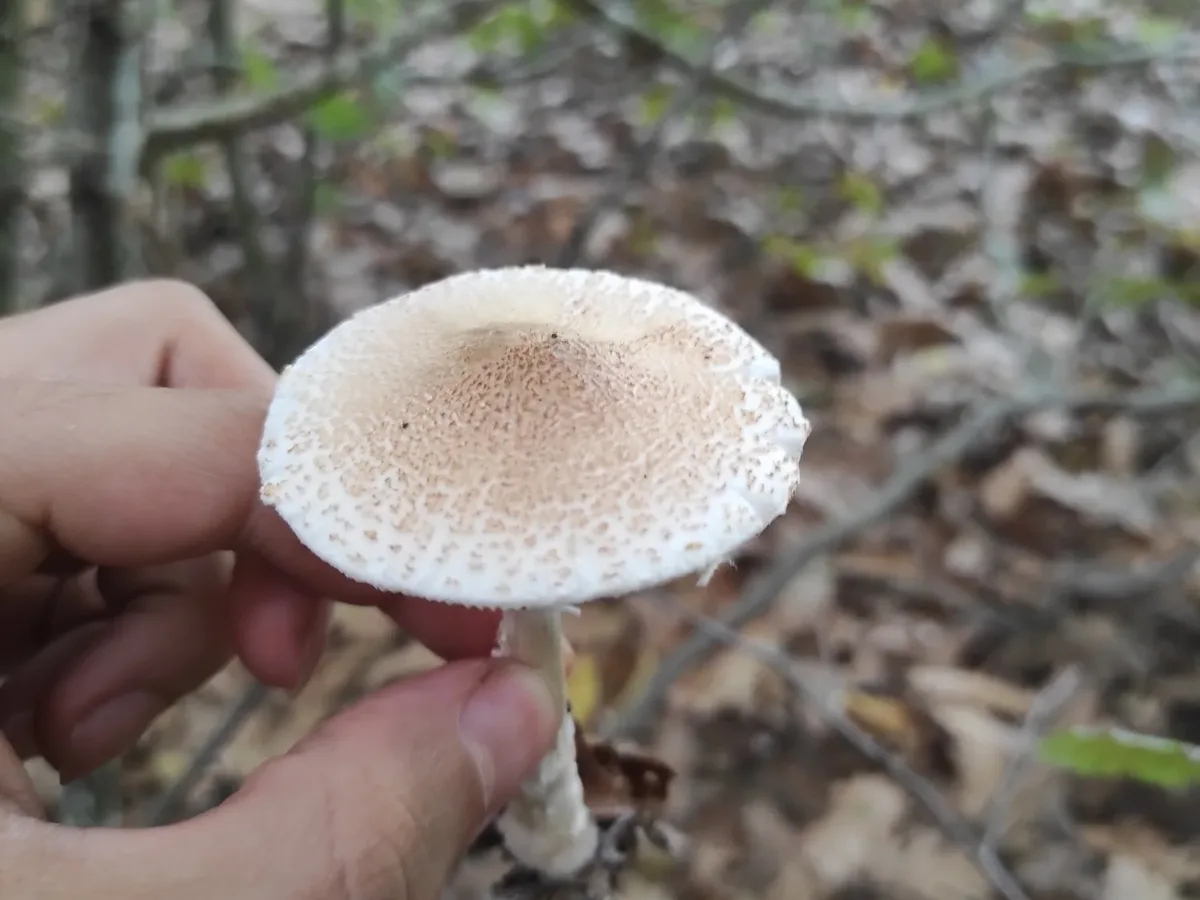
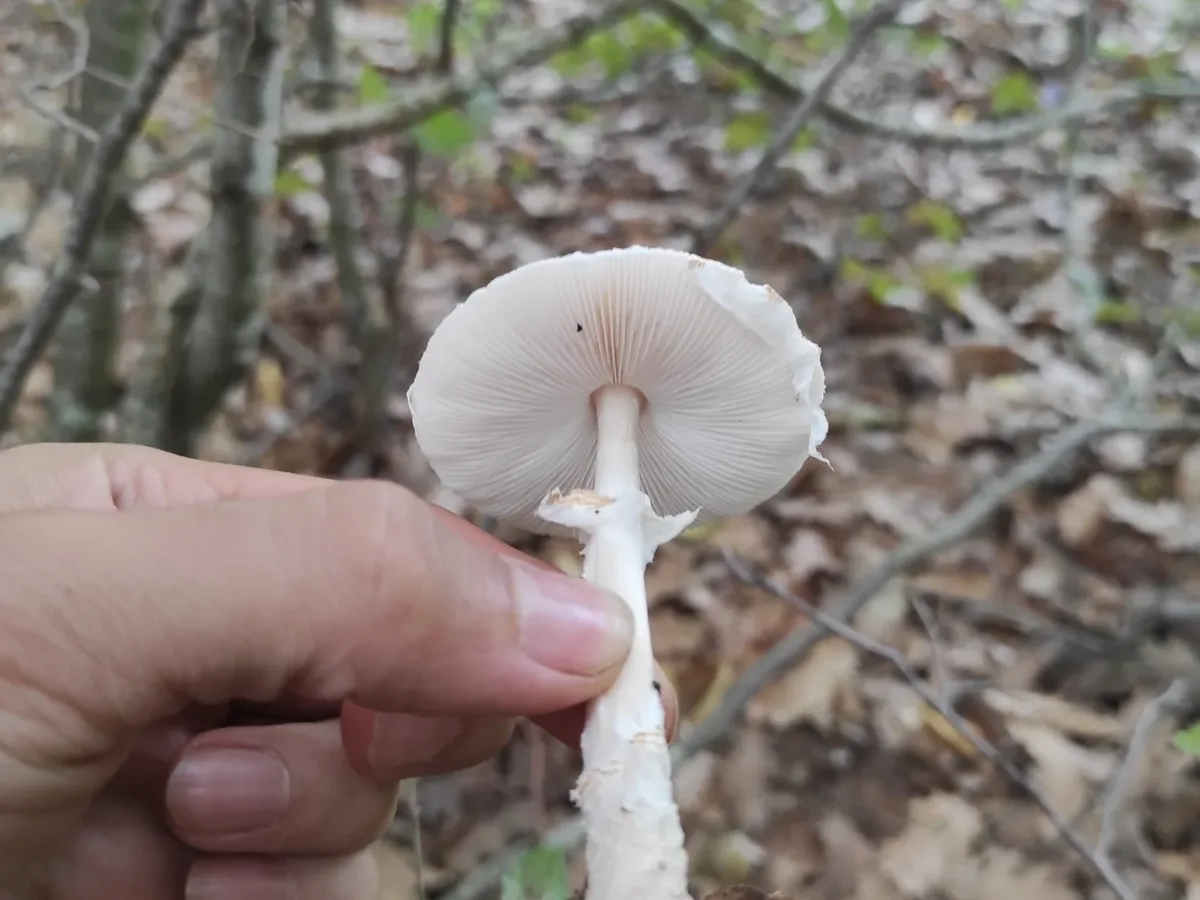
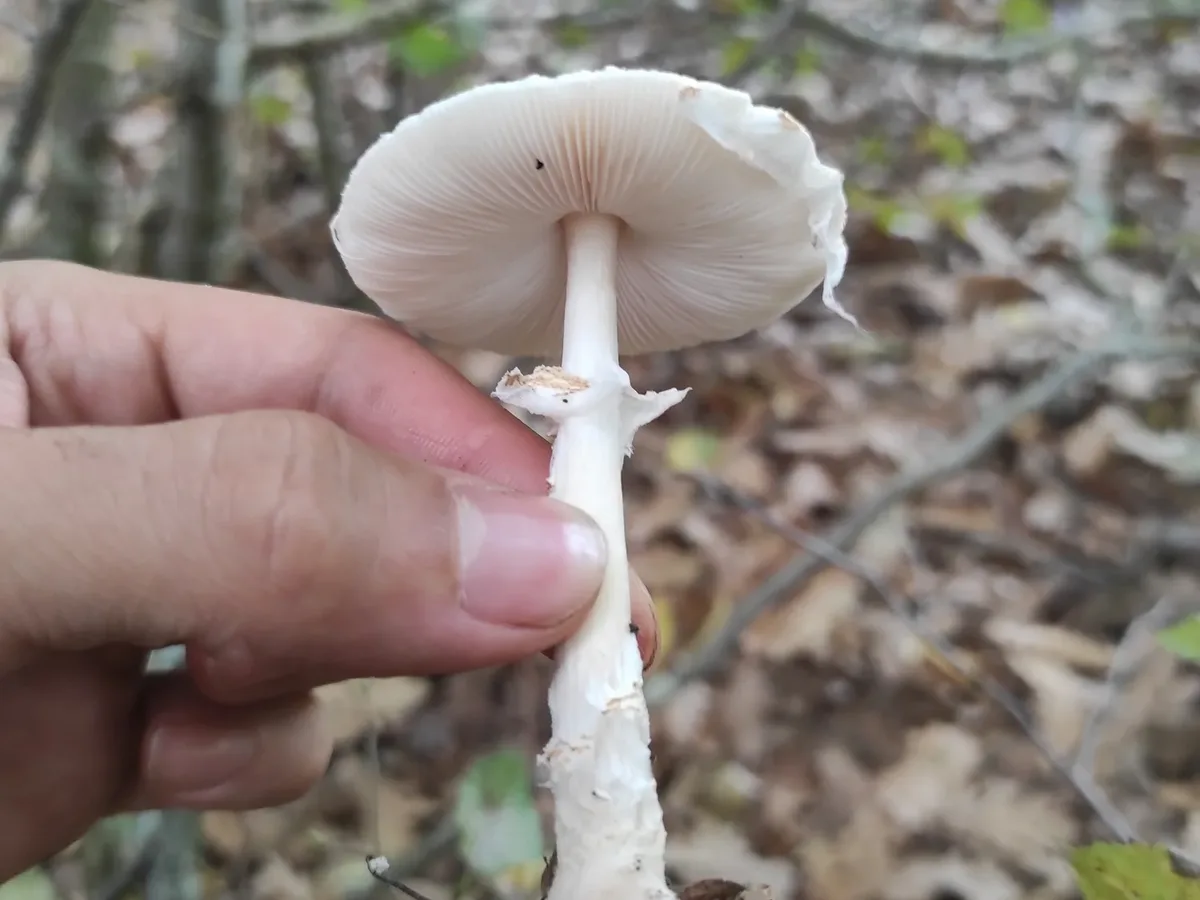
Lepiota ignivolvata is a mid-sized woodland Lepiota, instantly set apart from nearly all other species in the genus by a vivid orange-red zone encircling the stem just below or at the top of the ring.
Cap
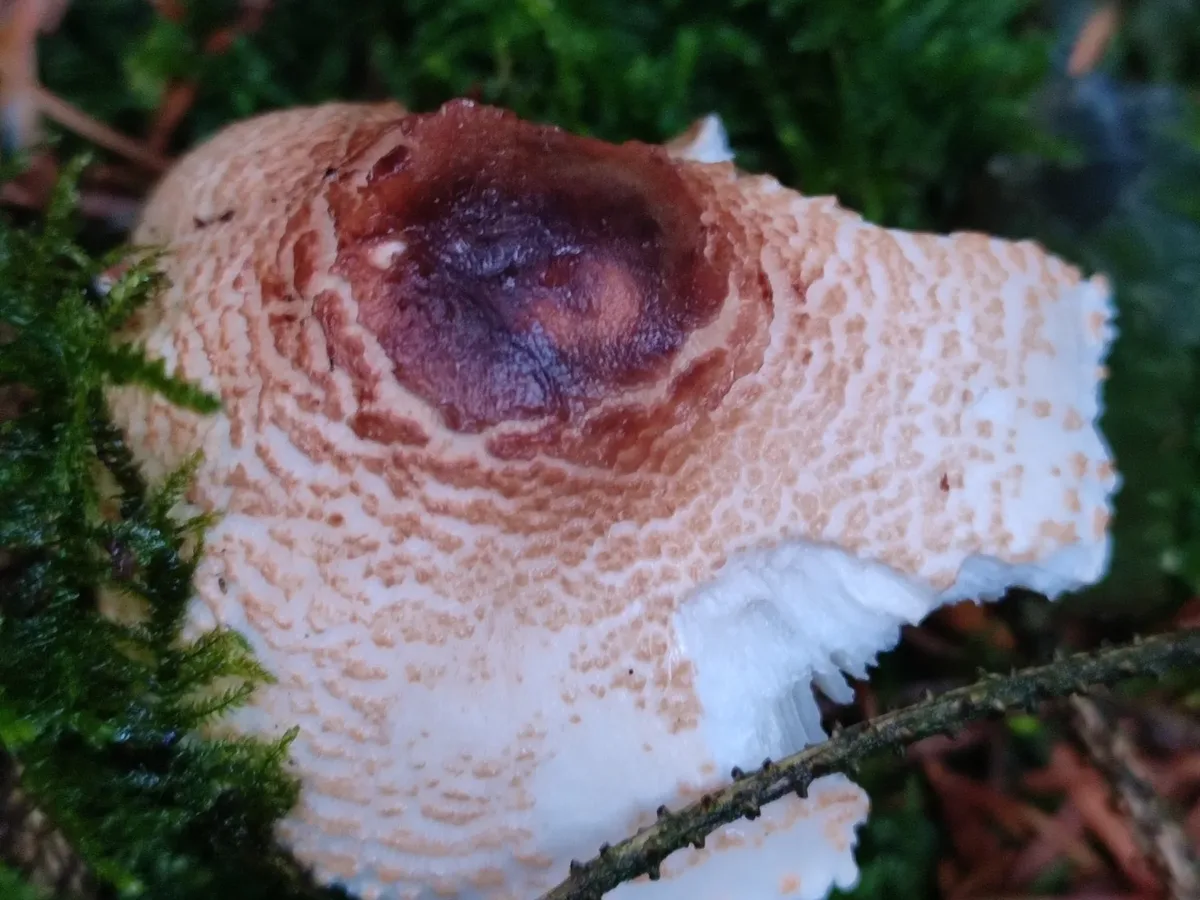
Begins broadly convex and flattens, 4-9 cm across. White to pale cream, with tawny-brown fibrous scales concentrated toward the centre and becoming paler and sparser near the margin.
Stem
White above the ring zone and pale orange-buff below.
The ring has two components: an upper free, membranous skirt that may slide down with age, and a lower broad band of brilliant orange to orange-red (the ignivolvata garter), which is the defining character.
Gills
White and free from the stem.
Flesh
White throughout, and does not change colour on cutting. Spore print white.
The combination of medium size, shaggy pale cap, white free gills, and the spectacular orange ring band makes this species identifiable in the field by an experienced eye, but identification alone is never a reason to eat.
Why it's dangerous
Any suspected ingestion of Lepiota ignivolvata or any unidentified Lepiota is a medical emergency. The delayed symptom onset (6 or more hours) means waiting to see whether symptoms develop is extremely dangerous; organ damage begins long before the patient feels unwell.
Go to the emergency department immediately and:
- take any remaining mushroom material or photographs for identification
- inform the treating team that amatoxin poisoning is possible
Treatment is intensive:
- aggressive supportive care
- silibinin (silymarin) infusion
- N-acetylcysteine
- monitoring of liver function
- in severe cases, consideration of liver transplantation
Prompt treatment dramatically improves prognosis; delays are potentially fatal.
Toxin
Amatoxins, principally alpha-amanitin, the same bicyclic octapeptide cyclopeptides responsible for the majority of fatal mushroom poisonings worldwide (the same toxins found in Amanita phalloides and Galerina marginata).
Alpha-amanitin irreversibly inhibits RNA polymerase II, blocking messenger RNA synthesis and protein production in cells.
The liver and kidneys suffer most, progressing to acute organ failure.
The toxins are thermostable and water-soluble; no domestic food preparation method neutralises them.
Symptoms
Amatoxin poisoning from Lepiota species follows the classical three-phase pattern.
- 1Phase 1 (latent, 6-24 hours after ingestion): abrupt-onset severe gastroenteritis with watery diarrhoea, vomiting, abdominal cramps, and dehydration, easily mistaken for ordinary food poisoning.
- 2Phase 2 (apparent recovery, 1-3 days): symptoms diminish and the patient feels better while liver enzymes rise silently in the bloodstream.
- 3Phase 3 (hepatorenal failure, 3-6 or more days): jaundice, coagulopathy, encephalopathy, acute liver and kidney failure, potentially leading to death.
The prolonged latent period is the deadliest feature: it creates false reassurance and delays the critical window for intervention.
Staying safe
Lepiota ignivolvata must be treated as potentially lethal.
It has been found to contain amatoxins (alpha-amanitin and related cyclopeptides) in laboratory analyses by European mycotoxicologists, and it is classified in the dangerous amatoxin-bearing Lepiota subgroup by authoritative French mycological sources.
Amatoxins cause delayed liver and kidney failure and can be fatal.
The rule for all small to medium Lepiota species in Europe is unambiguous: none should ever be eaten without expert verification, and most should simply be treated as deadly.
Cooking, drying or boiling does NOT destroy amatoxins.
If any part is accidentally ingested, seek emergency hospital care immediately.
Where & when it grows
Habitat
Look for this species wherever broadleaved trees have had time to build up a deep, undisturbed carpet of leaf litter - beech and oak woods on calcareous or mildly acid loam soils are the classic setting in central and western Europe.
It also turns up in parks, hedgerows and garden shrubberies that have mature deciduous trees and a good accumulation of woody organic matter underfoot.
It grows solitary or in small scattered groups directly in that accumulated leaf litter and humus, never in open grassland.
The consistent link to broadleaved woodland litter is one of its most reliable habitat cues.
When
The main fruiting season is late summer and autumn, August through October in central and western Europe, corresponding to warm nights, cooling days, and the first significant autumn rainfall.
The peak flush most often occurs in ISO weeks 35-40 (late August to early October).
Fruitbodies are short-lived and rot quickly in warm, wet conditions.
How it grows
Like all the litter-decomposing Lepiotas, this species earns its living by slowly breaking down the dead leaves and woody debris that accumulate on the woodland floor - a quiet but essential service the forest depends on.
It has no partnership with tree roots; it works alone, feeding on dead organic matter rather than tapping into living trees.
Fruitbodies appear scattered and solitary, occasionally in a loose pair or trio in the same litter patch, but never in dense clusters or fairy rings.
After sufficient autumn rain, with soil temperatures still above about 10-12 °C, the caps push up over two to four days - and then fade quickly once the weather turns.
Fruiting conditions
Typical late-summer/autumn woodland Lepiota: fruits after warm rain when soils are still holding summer warmth. Needs sustained moisture in the litter layer, not just surface wet. Flush lag is 3-7 days from rainfall event.
Look-alikes
The most dangerous confusions are with edible large parasol mushrooms and with other Lepiota species.
The Parasol Mushroom (Macrolepiota procera) and related Macrolepiota species are edible and superficially similar in form, with large scaly caps, free white gills and a ring on the stem. But Macrolepiota differ in key ways:
- significantly larger (cap 10-25 cm)
- the stem has a snakeskin-like pattern of brown streaks or zigzag banding
- the ring is a thick, double-edged, freely sliding structure without any orange coloration
The orange zone at the stem in L. ignivolvata is absent in all edible Macrolepiota.
Within the Lepiota genus, the deadly species L. brunneoincarnata, L. helveola, L. subincarnata and L. castanea are also medium-sized scaly-capped woodland Lepiotas but lack the vivid orange ring band.
The uniquely coloured orange ring girdle of L. ignivolvata is its most reliable distinguishing mark, though this alone should never be used to authorise eating.
A small, entirely chestnut-brown-capped deadly Lepiota with reddish-brown concentric scales; distinctly smaller than L. ignivolvata and uniformly darker with no orange ring zone. Both contain amatoxins.
L. brunneoincarnata is also a deadly amatoxin-bearing Lepiota of woodland litter, typically smaller (cap 3-7 cm) with a brownish-pink to purplish-flesh-toned cap surface covered in more densely arranged scales over a pinkish ground; it lacks the orange ring zone that characterises L. ignivolvata. Both are deadly and should never be eaten.
The Parasol is much larger (cap 10-25 cm vs 4-9 cm), its stem has a distinctive snakeskin brown zigzag or marbled banding pattern, and the ring is a thick double-edged freely sliding skirt without any orange coloration. Lepiota ignivolvata is considerably smaller and bears the unmistakable vivid orange-red girdle below the ring, which is absent in all Macrolepiota. Nonetheless distance and poor light can make size hard to judge; never pick anything as a parasol without checking the stem banding and ring character closely.
A common larger Lepiota with a shaggy cream to ochre-brown cap and a cottony-woolly stem covered in floccose scales below the ring. It lacks the clean orange ring girdle of L. ignivolvata. Distinguished by the woolly stem sheathing below the ring versus the smooth to fibrillose stem with an orange band in L. ignivolvata. Treat as inedible.
Smaller (cap 2-5 cm), with a pronounced unpleasant rubbery or coal-tar smell, a reddish-brown central boss on a whitish cap and concentric reddish scales. Lacks any orange ring feature. Treat as toxic and do not eat.
A reference guide - never an edibility guarantee. When in doubt, leave it out.