Green dapperling
Lepiota grangeisyn. Lepiota grangei var. grangei
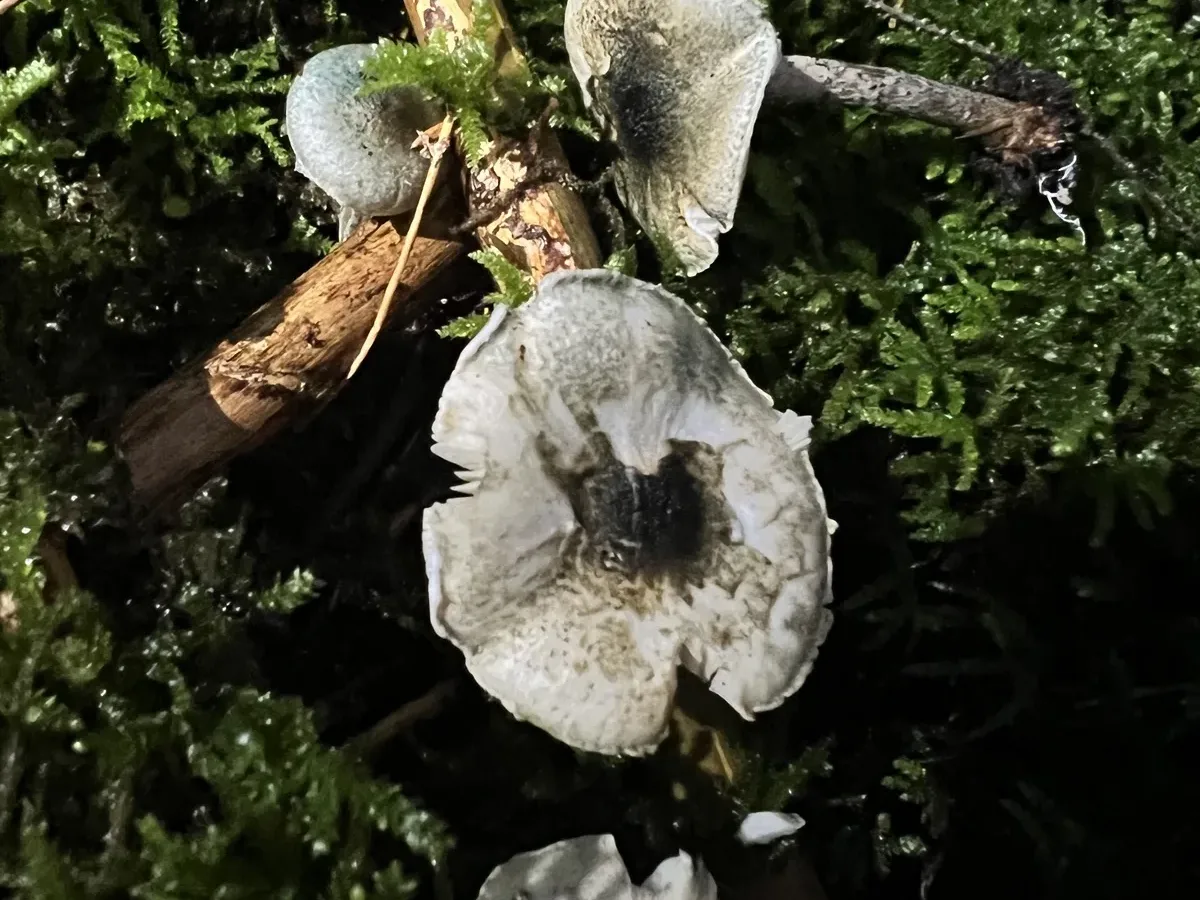 © Leila S. Berg (CC BY)
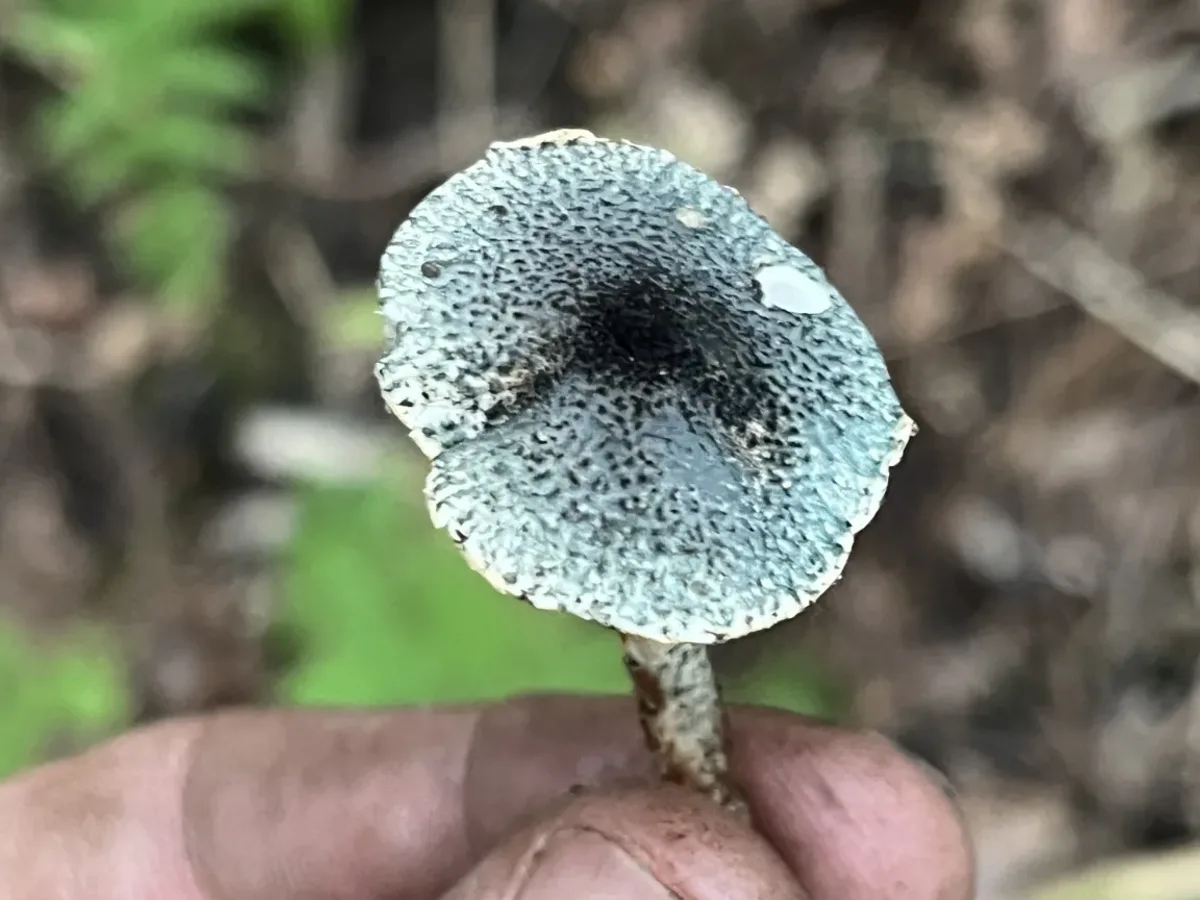 © Hallvard Holtung (CC BY)
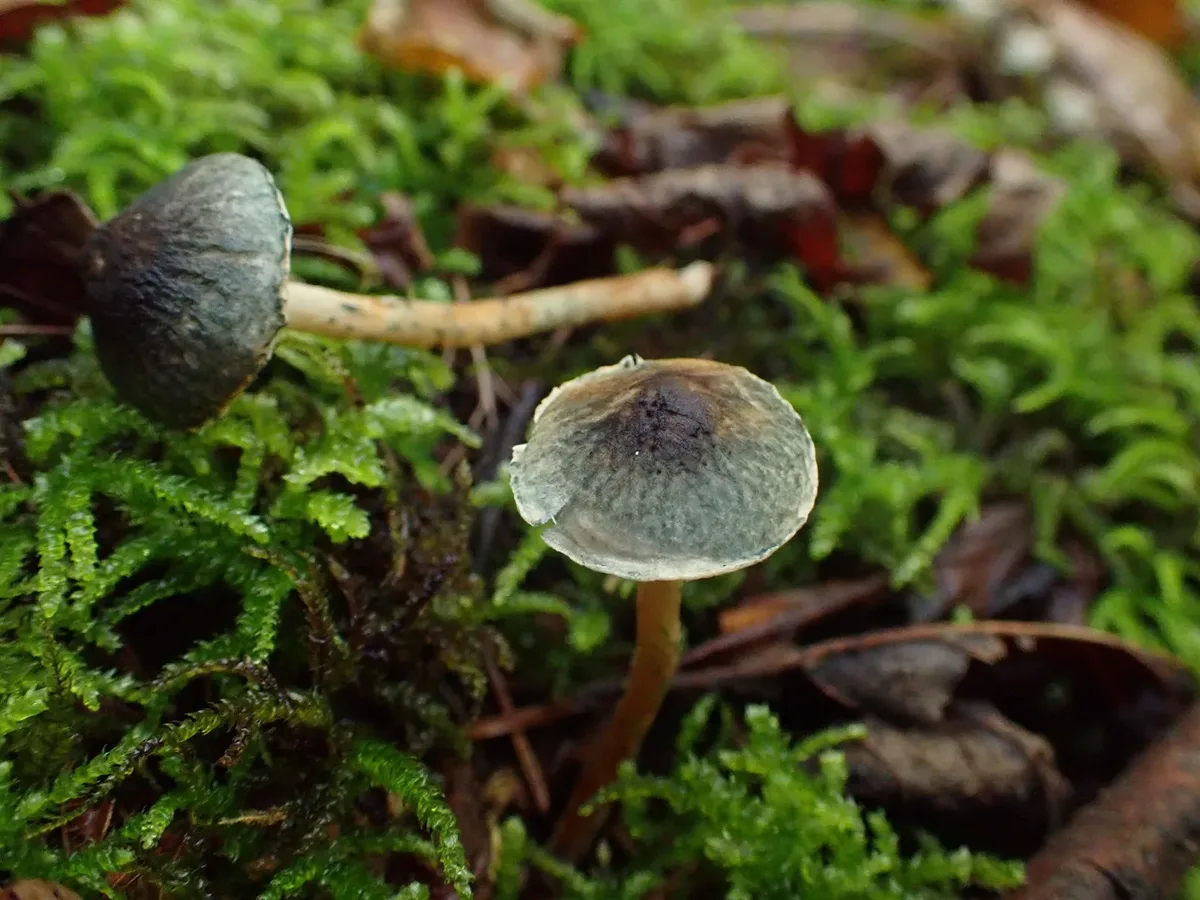 © Rune Solvang (CC BY)
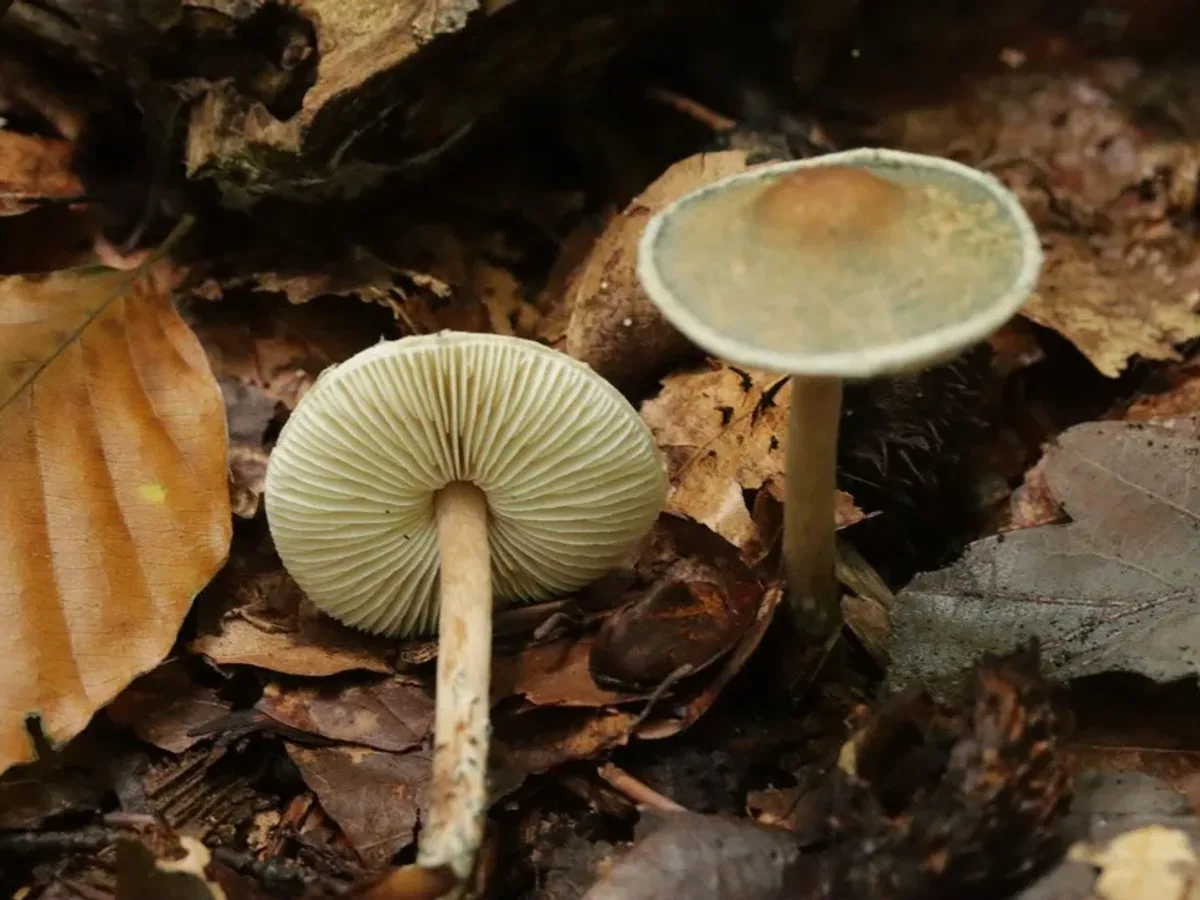 © Björn Sothmann (CC BY-SA)
 © Rune Solvang (CC BY)
 © Hallvard Holtung (CC BY)© Leila S. Berg (CC BY)© Hallvard Holtung (CC BY)
Toxic - and the most serious cases can be fatal. Never eat it, and wash your hands after handling.
Never eat a mushroom you are not 100% sure of - check the look-alikes below, and always cook wild mushrooms.
How to recognise it
Cap
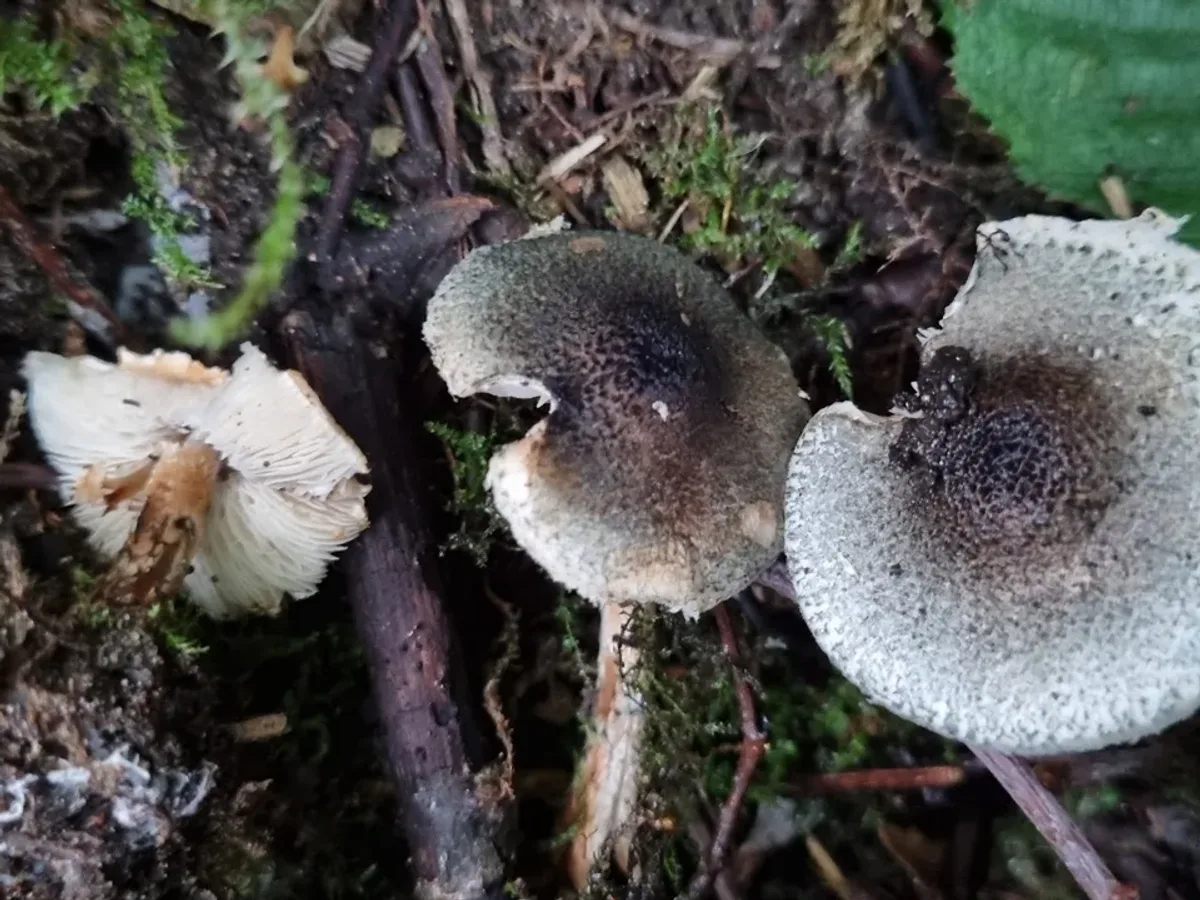
Cap 2-6 cm, hemispherical when young, expanding to broadly convex or flat-umbonate.
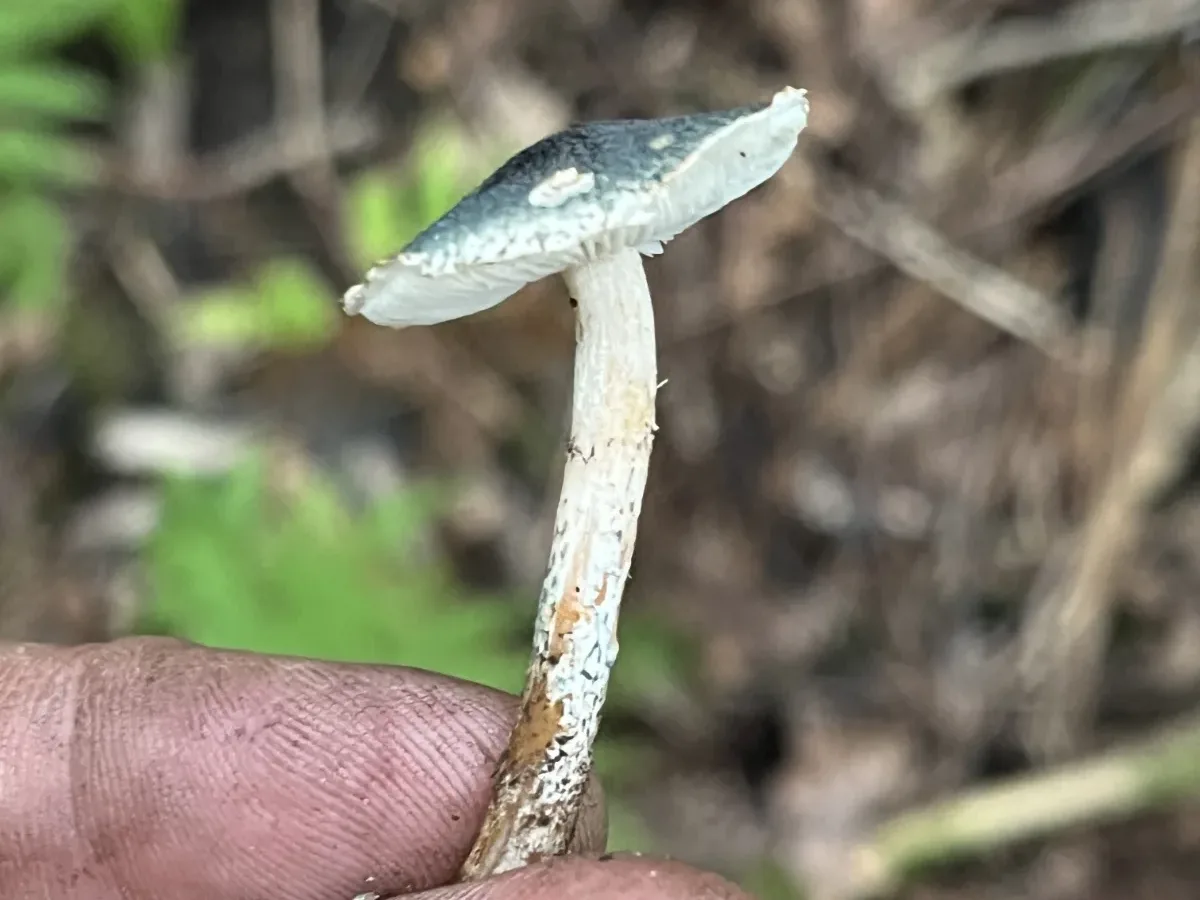
The olive-green to greyish-green coloration is the single most distinctive feature - no other small European dapperling shares it.
The cuticle breaks into adpressed fibrous scales over a pale greenish-white background, most densely olive at the centre.
Flesh
Flesh white to faintly greenish below the cuticle, thin, unchanging when cut.
Gills
Gills free, crowded, white to cream throughout. Spore print white.
Stem
Stem 3-7 cm, whitish above the ring, with greenish-grey fibrous scales below.
Ring thin, membranous, often greenish-edged, collapsing early.
Smell & taste
Smell faint and mealy.
Why it's dangerous
All small Lepiota species with amatoxins are capable of causing fatal poisoning in adults from a single meal.
Lepiota grangei is rare enough that it is not responsible for frequent poisonings by count. But its rarity means foragers may be unfamiliar with it, and the unusual olive-green coloration could invite curiosity from inexperienced foragers who do not recognise the genus.
The rule is unconditional: any small Lepiota species, regardless of colour, must be treated as potentially deadly.
If ingestion is suspected, contact emergency services immediately even if the patient feels entirely well in the first hours. The latent period is not a sign of safety.
Toxin
Amatoxin content is strongly presumed, based on two things:
- Lepiota grangei's taxonomic position within Section Lepiota (the 'small scaly Lepiota' group).
- Confirmed amatoxin presence in multiple closely related species, including L. brunneoincarnata, L. subincarnata, L. castanea, and L. helveola.
Amatoxins (principally α-amanitin and β-amanitin) are bicyclic octapeptides that irreversibly inhibit eukaryotic RNA polymerase II, blocking transcription and causing progressive cell death. The highest damage falls on hepatocytes and renal tubular cells.
They are absorbed intact from the gut and excreted in a first-pass through the liver (the 'enterohepatic cycle'), prolonging exposure. Heat, acid, and cooking do not inactivate them.
Symptoms
Amatoxin poisoning follows a characteristic three-phase pattern.
- 1Phase 1 (latent): 6-24 hours symptom-free after ingestion, during which toxin is absorbed and damage begins silently.
- 2Phase 2 (gastrointestinal): sudden onset of severe cholera-like illness - profuse watery diarrhoea, repeated vomiting, abdominal cramps, and dehydration - lasting 1-3 days.
- 3Phase 3 (hepatorenal): an apparent improvement ('false dawn') lasting 1-2 days, followed by progressive liver and kidney failure, evidenced by rising transaminases, jaundice, coagulopathy, and encephalopathy on days 3-6.
Without intensive supportive care or liver transplantation, fulminant hepatic failure and death can follow within 5-10 days.
Staying safe
Lepiota grangei belongs to the group of small, amatoxin-containing Lepiota species collectively responsible for multiple fatal poisonings in Europe. Amatoxin content has been demonstrated across closely related small Lepiota species by HPLC analysis, and L. grangei is treated as equally dangerous.
The distinctive olive-green colour makes identification of this particular species relatively straightforward when fresh, but this provides no safety margin - the species is deadly.
The ironclad rule applies: never eat any small Lepiota (cap under 10 cm) with scales on a pale background, regardless of scale colour.
The amatoxin syndrome has a deceptive 6-24-hour latent period that delays medical presentation.
Where & when it grows
Habitat
Found as a terrestrial saprotroph in broadleaf and mixed woodland, with beech, oak, and hornbeam as typical companions. Also in shaded parks, gardens, and woodland margins on moist, humus-rich soil.
Grows singly or in small scattered groups, rarely clustered.
Distributed across central and western Europe (France, Germany, Switzerland, Britain, Benelux, northern Iberia), but generally uncommon wherever it occurs.
When
Late summer through mid-autumn, July-November; peak August to October.
Fruiting follows late-summer and early autumn rainfall, once soil temperatures begin to ease back from the summer peak.
Flushes are typically sparse - this species does not build dense or reliable colonies, and many seasons may pass at a given site without a single fruitbody appearing.
How it grows
Grows singly or in small scattered groups, directly from humus-rich woodland soil.
Saprotrophic - it lives by quietly breaking down buried organic litter and humus, with no attachment to living roots or wood. Does not fruit on logs or stumps.
Fruiting conditions
Woodland saprotroph fruiting in late summer to mid-autumn. Flushes follow moderate rainfall (15 mm or more over 14 days) once soil temperatures begin dropping below approximately 20 °C after the summer peak. Fruiting events are typically sparse and sporadic rather than dense.
Look-alikes
Lepiota grangei's olive-green coloration is its most recognisable trait and separates it from most other small dapperlings at a glance - no other common European Lepiota shares this colour. However, the colour can fade in dry or older specimens, and the safety implications remain unchanged.
The most important confusions are with other deadly small Lepiota species:
- Lepiota brunneoincarnata (deadly dapperling) - pinkish-brown to purplish-brown cap, lacks green tones.
- Lepiota subincarnata (fatal dapperling) - pinkish-buff to ochre-pink.
- Lepiota helveola (blushing dapperling) - ochre to reddish-brown, sometimes with a pinkish tinge.
- Lepiota castanea (chestnut dapperling) - chestnut-brown.
All of these relatives are deadly.
Young specimens of edible Macrolepiota procera (parasol mushroom) will never show olive-green coloration and grow much larger, with a characteristic double-edged movable ring and snakeskin banding on the stem.
Clitocybe odora (anise funnel) has a pale grey-green tinge in youth and a strong anise smell, but it is a completely different form (funnel-shaped cap, attached gills, no ring, no scales) and is not easily confused at close inspection.
Ochre to reddish-brown cap, sometimes with pinkish or salmon tones; scales are brownish-pink. No olive coloration. Equally deadly due to amatoxin content. Favours more open habitats including meadow edges.
Chestnut-brown to dark rusty-brown scales on a white to cream background. No olive or green tones. Also contains amatoxins and is deadly. Differs clearly in cap colour from the olive-green L. grangei.
The most commonly encountered deadly small Lepiota. Has a pinkish-brown to warm purplish-brown cap with felty concentric scales and a flesh to pinkish-buff background; lacks any olive-green tones. Often found in grassland, gardens, and lawns rather than strictly in woodland. Both species are equally deadly and the distinction matters only for identification records, not for safety.
Pinkish-buff to pale ochre cap with concentric reddish or pinkish-brown scales and no green coloration. Also contains confirmed amatoxins and is equally deadly. A woodland species like L. grangei but differs completely in cap colour.
Edible when mature and large (cap 10-25+ cm). Young unexpanded buttons are scaly domes but never show olive-green coloration. The parasol has a characteristic double-edged movable ring that can be slid up and down the stem, and distinctive zigzag snakeskin markings on the lower stem - both absent in Lepiota grangei. Always wait for full maturity before even considering a parasol; any specimen under 10 cm with scales must be avoided.
Small (cap 1.5-5 cm), with a bright reddish-brown central boss and russet scales on white background; no green tones; distinguished by its strong unpleasant radish or rubber smell. Also poisonous (possibly low amatoxin and other gastrointestinal toxins) but not reliably lethal. Never edible.
A reference guide - never an edibility guarantee. When in doubt, leave it out.