Dark wine dapperling
Lepiota fuscovinaceasyn. Lepiota pseudohelveola var. fuscovinacea
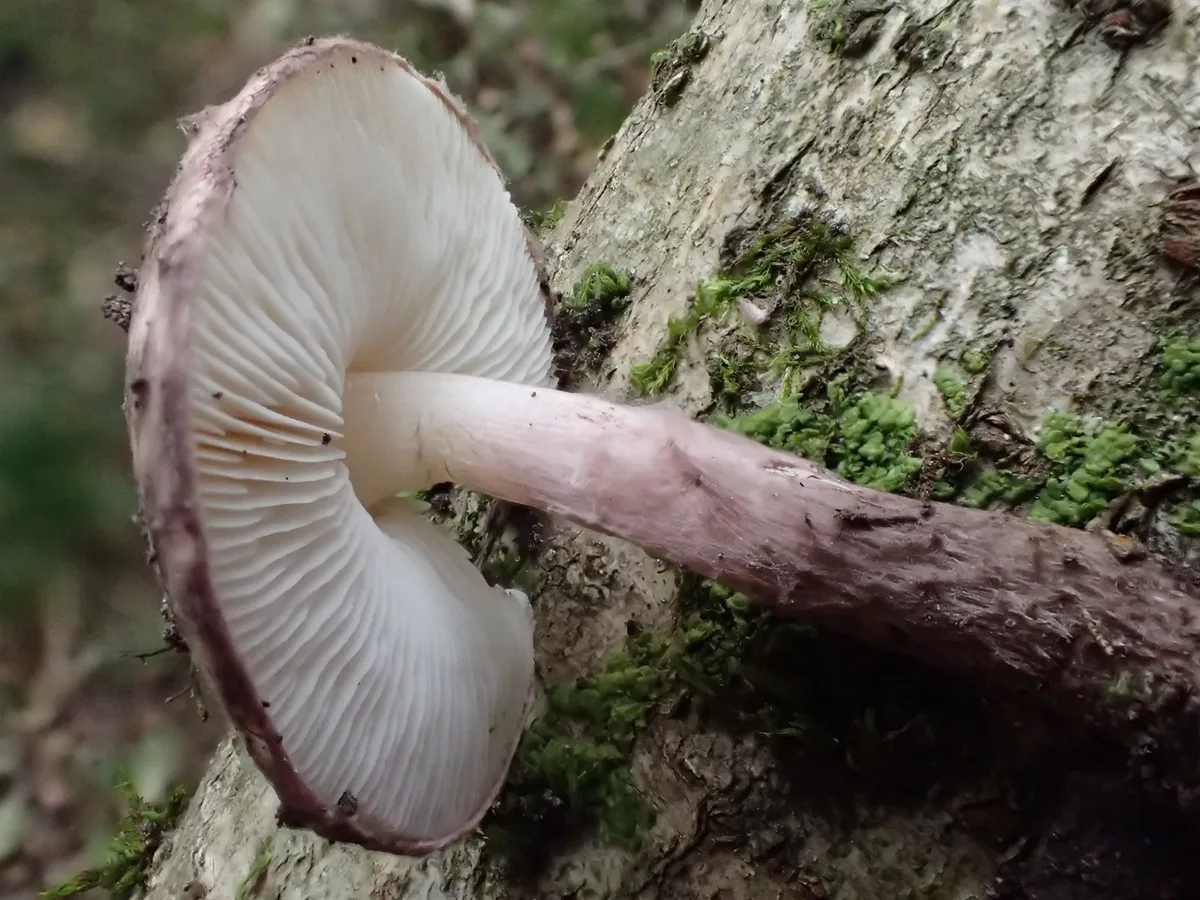 © Per Marstad (CC BY)
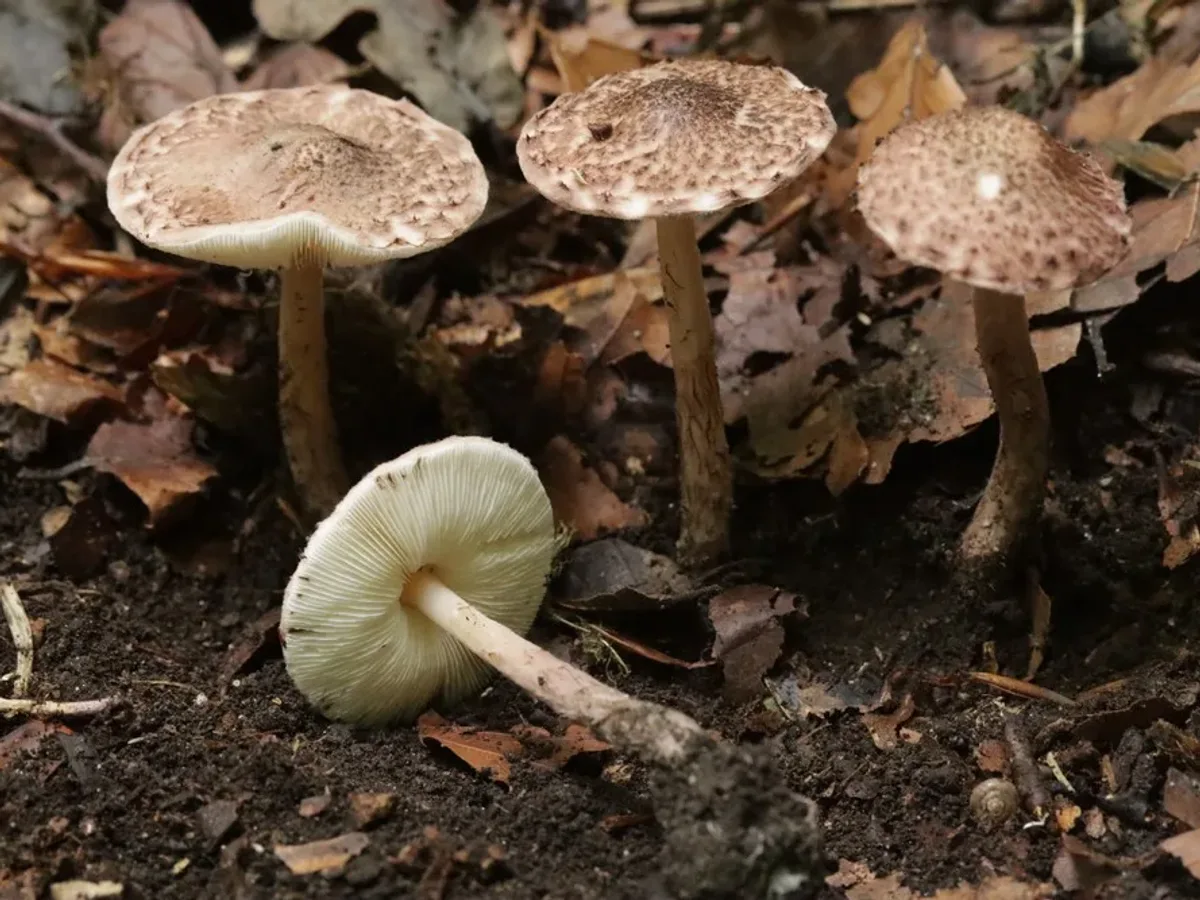 © Björn Sothmann (CC BY-SA)
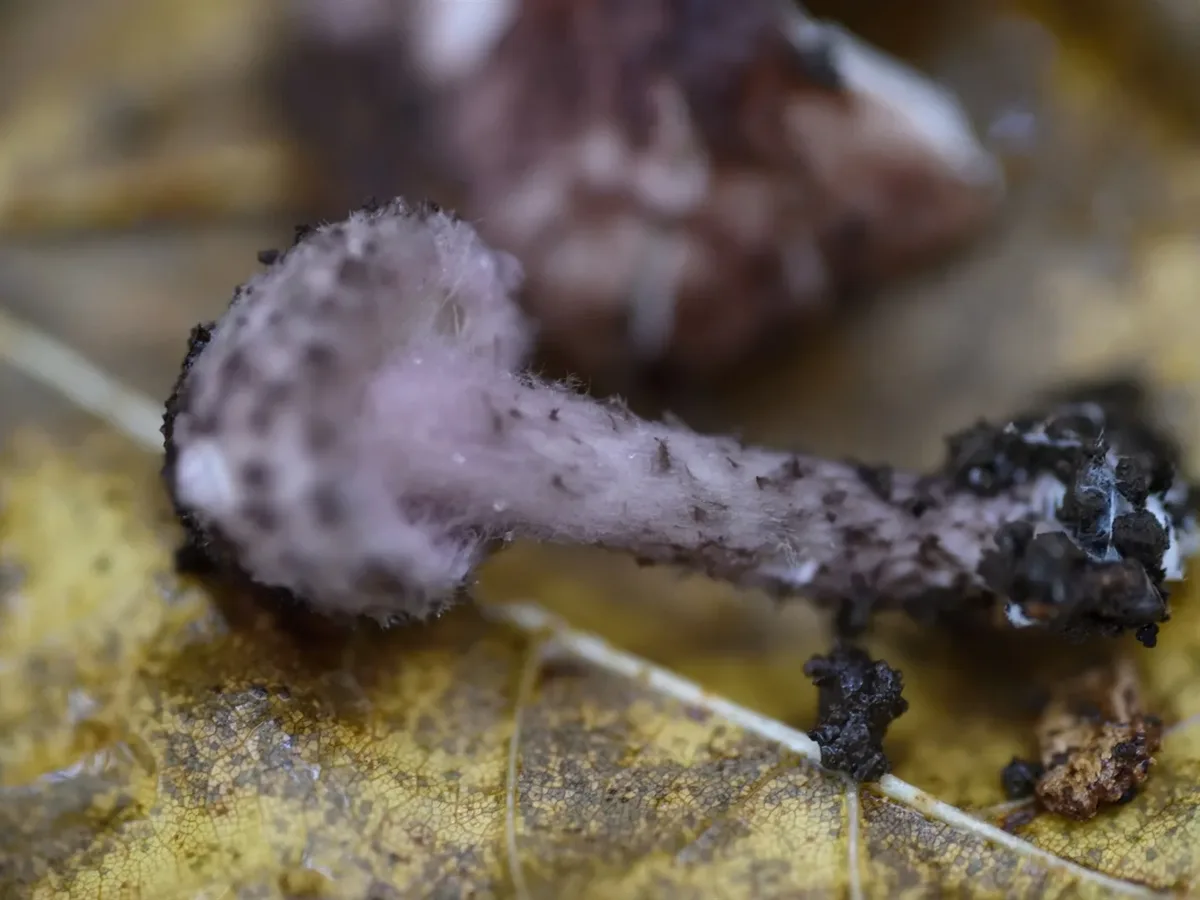 © Jon Trygve Johnsen (CC BY)
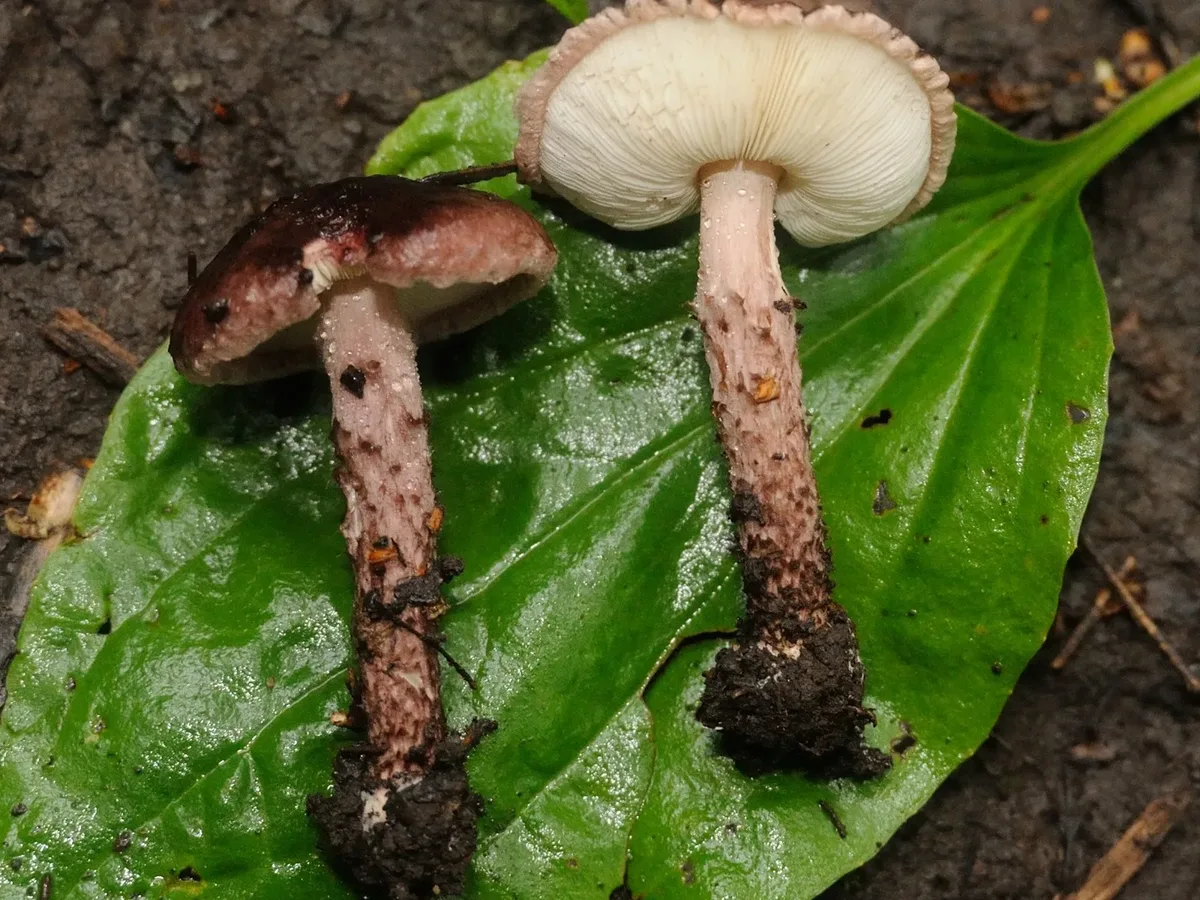 © Jon Trygve Johnsen (CC BY)
 © Jon Trygve Johnsen (CC BY)
 © Jon Trygve Johnsen (CC BY)
 © Per Marstad (CC BY)© Per Marstad (CC BY)© Björn Sothmann (CC BY-SA)
Toxic - and the most serious cases can be fatal. Never eat it, and wash your hands after handling.
Never eat a mushroom you are not 100% sure of - check the look-alikes below, and always cook wild mushrooms.
How to recognise it
Cap
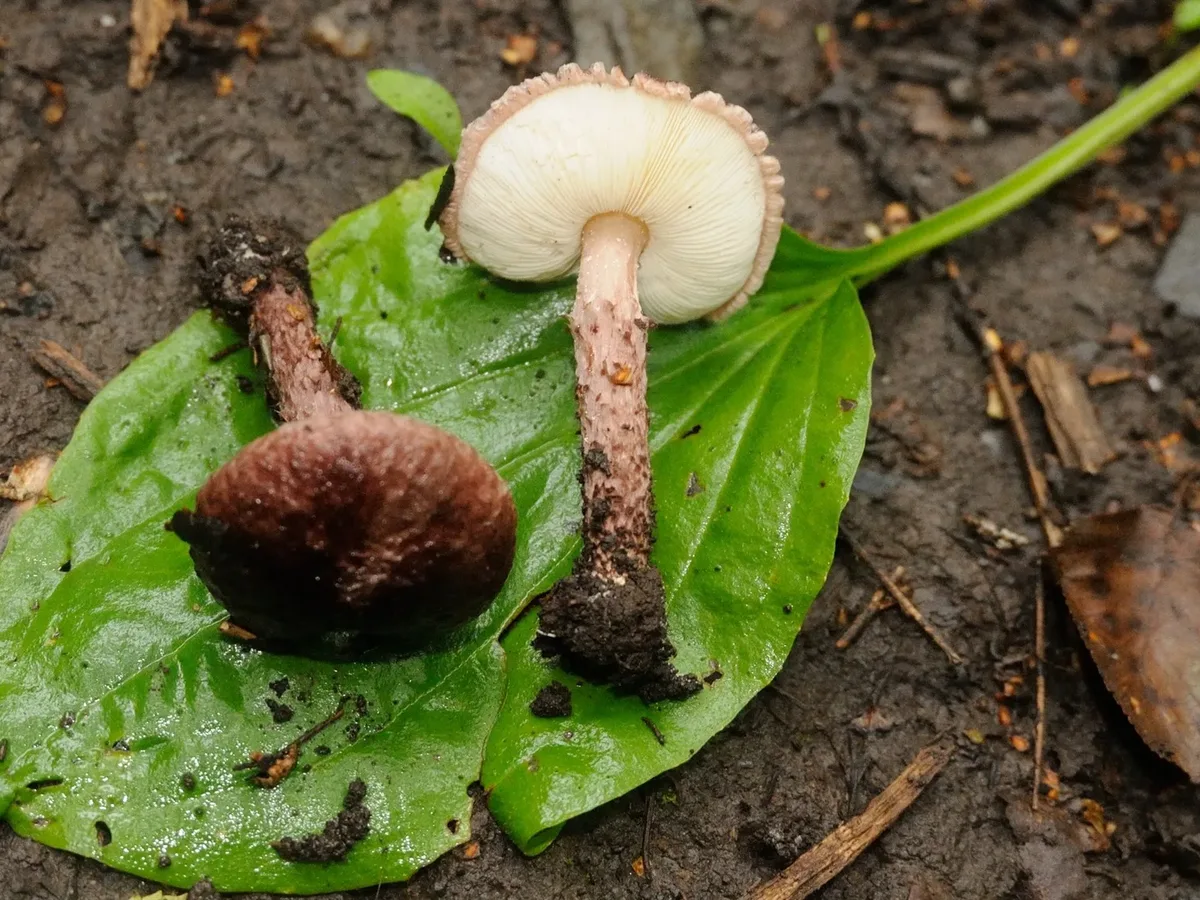
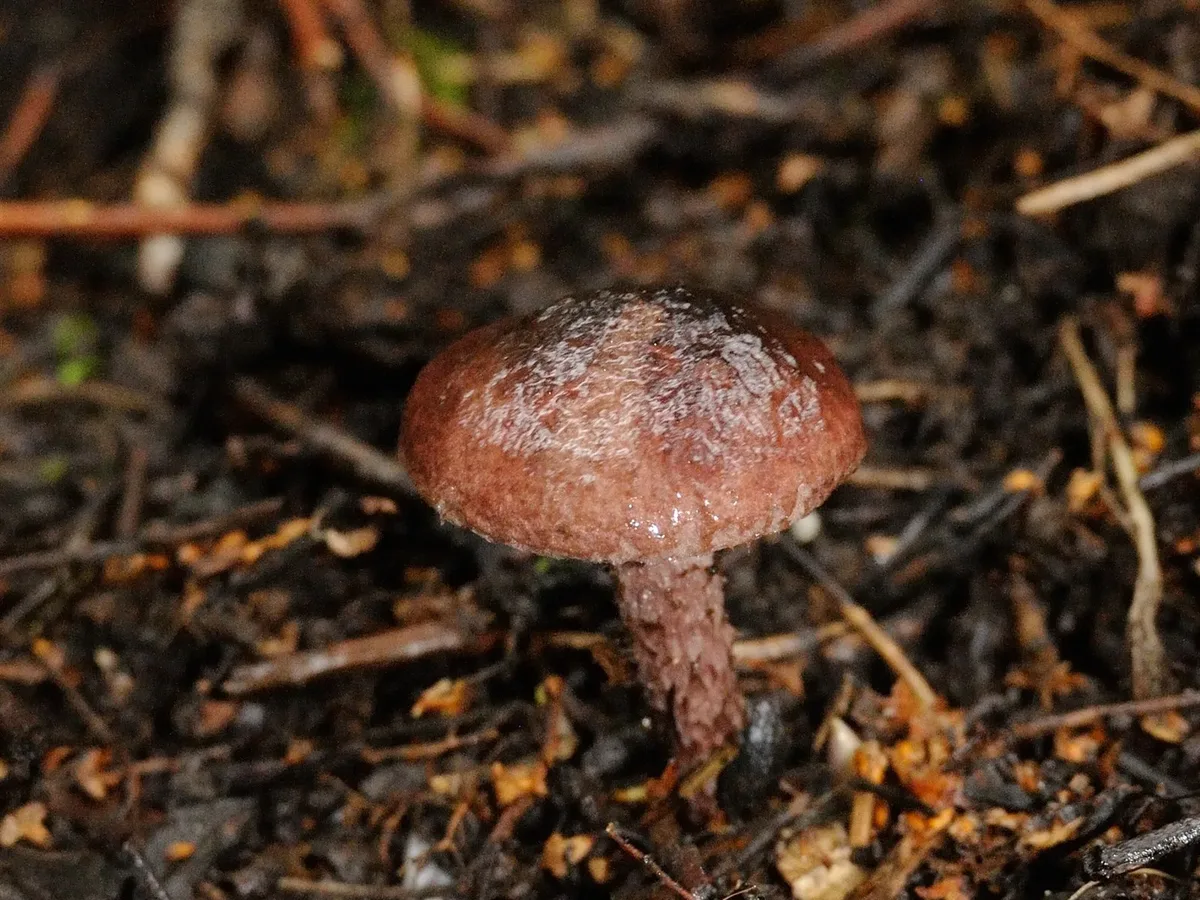
A small dapperling 2-5 cm across, starting as a tight hemisphere and opening to broadly convex or faintly umbonate.
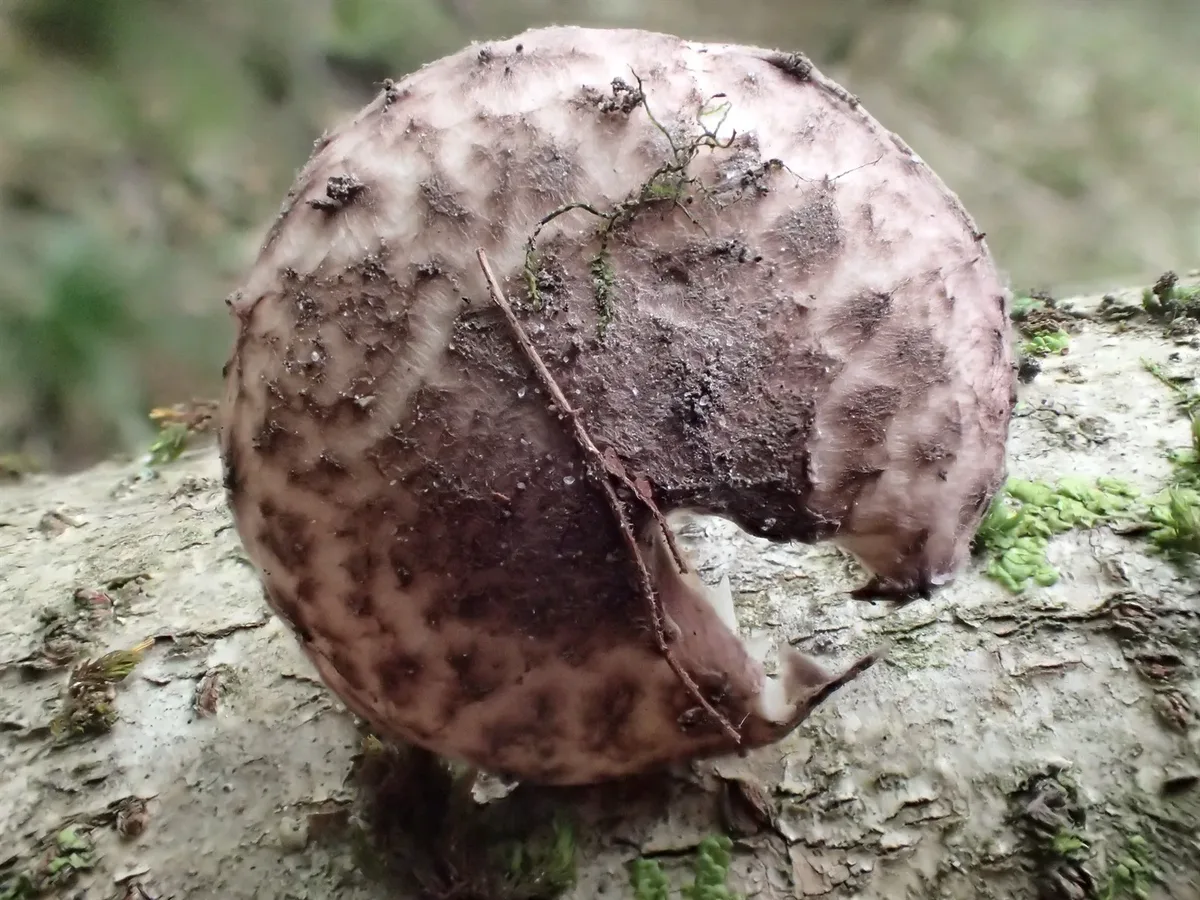
The diagnostic feature is the cap scaling: a white-buff background is overlaid with dense, flat-lying, concentrically arranged fibrous scales in a dark reddish-brown to wine-vinous colour. That combination of pale ground and dark wine-coloured scales is the species' most distinctive field character.
The central disc bears a continuous, deeper wine-brown patch rather than individual scales.
Gills
Free, crowded, and persistently white to cream. Spore print white.
Stem
Slender and white above a fragile, often evanescent ring; below the ring it carries reddish-brown fibrous floccules matching the cap.
Flesh
White throughout, unchanged on cutting.
Why it's dangerous
Lepiota fuscovinacea is a confirmed amatoxin-producing species, within a group of small Lepiotas responsible for a significant proportion of mushroom fatalities in Western Europe.
Its small size and woodland habitat, combined with the close resemblance to multiple other small Lepiota species, make accurate field identification impossible without laboratory methods.
The lethal dose of alpha-amanitin for an adult human is estimated at approximately 0.1 mg per kilogram of body weight - an amount potentially present in just a few grams of fresh mushroom tissue. Children are at markedly higher risk due to lower body mass.
Any suspicion of ingestion requires immediate emergency hospital admission, without waiting for symptoms.
Toxin
Contains alpha-amanitin, a bicyclic octapeptide amatoxin. It is a potent inhibitor of RNA polymerase II, the enzyme responsible for transcription of DNA into messenger RNA in eukaryotic cells.
Inhibiting RNA polymerase II halts protein synthesis in affected cells, leading to cell death. Liver hepatocytes and kidney tubular cells are the primary targets.
Amatoxins are absorbed through the gut, enter hepatic circulation, and are actively taken up by liver cells via bile salt transporter proteins. They then undergo enterohepatic recirculation, prolonging exposure.
The precise concentration of alpha-amanitin in L. fuscovinacea has not been as extensively published as for L. subincarnata or L. brunneoincarnata. But given its confirmed amatoxin content, the risk profile must be treated as equivalent to those species.
Symptoms
Amatoxin poisoning follows a characteristic three-phase course.
- 1Phase 1 - latent period: no symptoms for approximately 6-24 hours after ingestion. This asymptomatic window is deceptive and does not indicate that the toxin is absent or that harm has not begun.
- 2Phase 2 - gastrointestinal phase: sudden severe watery diarrhoea, violent abdominal cramps, nausea, and vomiting, typically starting 12-24 hours post-ingestion and lasting 24-48 hours; fluid loss can itself be life-threatening. A transient apparent recovery may follow, during which the patient feels improved.
- 3Phase 3 - hepatorenal phase: 3-5 days after ingestion, progressive liver and kidney failure becomes evident; jaundice, coagulopathy, hypoglycaemia, hepatic encephalopathy, and acute renal failure develop.
Without intensive medical intervention and potentially liver transplantation, death can occur between 6 and 16 days after ingestion.
Staying safe
The cardinal rule for small Lepiota species applies absolutely here: no small mushroom with white or cream gills in the genus Lepiota should ever be collected for eating, regardless of identification confidence.
The genus Lepiota contains numerous amatoxin-producing species that are extremely similar to one another. Even experienced mycologists routinely require microscopy - examination of spore shape, surface cells, and cystidia - to separate species reliably.
A field identification of Lepiota is not sufficient to determine edibility or lethality.
Lepiota fuscovinacea is confirmed to contain alpha-amanitin, the same cyclic peptide toxin responsible for the fatality of Amanita phalloides (death cap).
Amatoxins are thermostable: they are not broken down or inactivated by any domestic cooking method. Boiling, frying, baking, drying, and dehydrating all leave the toxin fully intact. There is no preparation step that renders this mushroom safe to eat.
If you have eaten, or suspect you may have eaten, Lepiota fuscovinacea or any unidentified small Lepiota: seek emergency medical care immediately, without waiting for symptoms.
The latent phase of amatoxin poisoning typically lasts 6-24 hours. During this window, patients feel completely normal while the toxin is already destroying liver and kidney cells. Waiting until symptoms appear means waiting until serious organ damage has already occurred.
- Contact emergency services (112 in Europe, 999 in the UK) and proceed to a hospital emergency department.
- Bring a sample or photograph of the mushroom if possible.
- Contact a poison control centre in parallel.
If Lepiota fuscovinacea or any suspect small Lepiota was mixed in a basket or container with other foraged mushrooms, discard the entire collection without exception.
Amatoxins leach onto adjacent materials. Washing does not reliably remove transferred toxin from other mushrooms.
Where & when it grows
Habitat
Grows as a saprotroph, breaking down leaf litter and humus-rich soil in deciduous woodland, mixed forest, and parkland with trees.
It turns up at woodland edges, in grassy glades within forest, along hedgerow bases, and in gardens near established deciduous trees. The combination of woodland proximity and enriched soil is its signature setting.
This habitat partly overlaps with where edible species like the field mushroom (Agaricus campestris) grow, though L. fuscovinacea is more strictly tied to woodland. Its comfort with parks and gardens means encounters with foragers are genuinely possible.
When
Late summer and autumn. First fruitbodies typically appear in July or August after warm, moist conditions, and fruiting continues through October.
Peak time is late August to early October across central-western Europe. Hard frosts bring the season to a close.
How it grows
Appears singly or in small loose groups on the ground among leaf litter and humus - never clustered.
Individual fruitbodies emerge intermittently across the season, responding to the right mix of warmth and moisture rather than fruiting all at once.
Fruiting conditions
Warm-season saprotroph fruiting in late summer and autumn. Flushes follow rainfall events when soil temperatures are in the 11-21 °C range. Woodland sites retain moisture longer than open grassland, extending the productive window. Peak fruiting is from late August through October in central-western Europe.
Look-alikes
Lepiota fuscovinacea is most readily confused with other small Lepiota species, all of which share the same overall form.
- Lepiota brunneoincarnata (deadly dapperling) is one of the closest confusables: similar pinkish-brown to brownish-pink fibrous scales, but typically lacks the strong wine-red colouration. Both are equally lethal.
- Lepiota subincarnata (fatal dapperling) has a more pinkish flesh tone to its scales and a slightly more pinkish background cap colour.
- Lepiota helveola has redder, slightly coarser scales and is also toxic.
- Lepiota castanea (chestnut dapperling) has darker, chestnut-brown scales and is also lethal.
None of these distinctions are reliable enough in the field to make collection safe.
Lepiota cristata (stinking dapperling) is distinguished by its sharp reddish-brown scales and a strong, unpleasant rubbery smell, and is also toxic though less lethal.
Young specimens could superficially resemble small Macrolepiota (parasol mushrooms), which are edible, but Macrolepiota has a distinctive snakeskin stem pattern, a large freely-sliding double ring, and eventually grows far larger.
Any small mushroom under roughly 6 cm with white gills, a scaly cap, and no snakeskin stem pattern should be treated as a potentially deadly Lepiota.
Lepiota castanea has distinctly darker, chestnut-brown to cinnamon-brown scales that are sharper and more defined, and the background cap colour is pale cream-white. Also lethal due to amatoxins. Both species may occur in the same woodland sites.
Lepiota brunneoincarnata has scales that tend more toward pinkish-brown to brownish-pink rather than wine-red, and the background cap colour is often a warmer buff-brown. In practice the two are near-indistinguishable in the field and equally lethal due to amatoxin content. Both should be treated as equally dangerous under any circumstances.
Lepiota subincarnata tends toward a pinkish flesh-toned background cap colour with pinkish-brown scales; the overall palette is warmer and more flesh-pink than the wine-red of L. fuscovinacea. Also lethal - amatoxin content confirmed, with some of the highest alpha-amanitin concentrations recorded for any Lepiota. Not distinguishable safely in the field.
Lepiota helveola has reddish-brown to brick-red scales on a pale cap, and its scaling pattern is somewhat coarser. It is also an amatoxin-containing species and must be treated as lethal. The distinction from L. fuscovinacea is unreliable without microscopy.
Young parasol mushrooms before cap expansion have a rounded, scaly cap at first glance similar to small Lepiota species. However, Macrolepiota procera has a characteristic snakeskin pattern of dark zigzag banding on the stem, a large, thick double ring that slides freely up and down, and ultimately grows far larger (cap to 30 cm). If the stem lacks the snakeskin pattern, treat the specimen as a potentially dangerous small Lepiota.
Lepiota cristata has sharper, more erect reddish-brown to brick-red scales and a strong, very distinctive unpleasant rubbery or chemical smell - variously described as garlic-like, rubber-like, or nauseating. Also toxic but considered less acutely lethal than confirmed amatoxin species. The strong odour is a consistent and useful discriminator, though smell alone should never be used as an absolute safety test.
A reference guide - never an edibility guarantee. When in doubt, leave it out.