Stinking dapperling
Lepiota cristatasyn. Agaricus cristatus, Lepiota cristata var. cristata, Lepiota cristatella
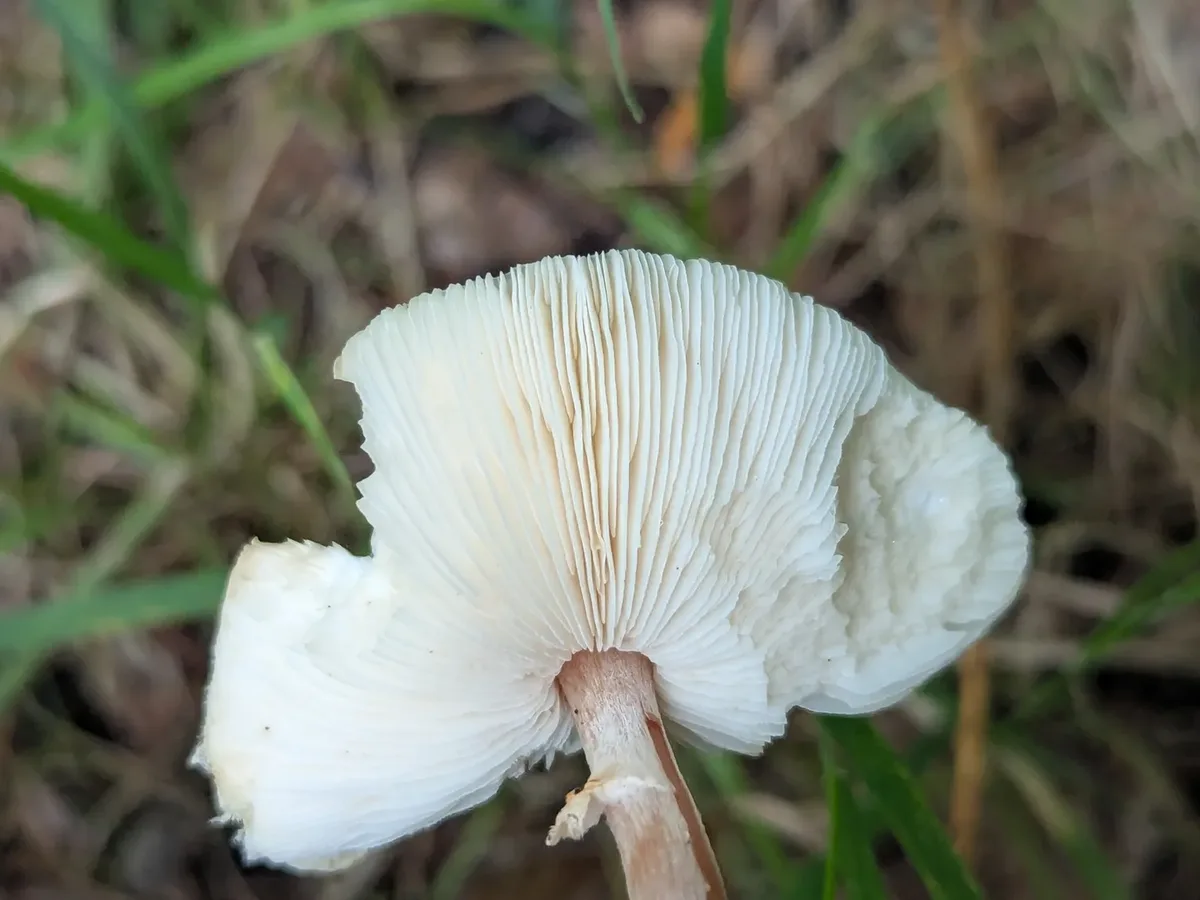 © Michel Langeveld (CC BY)
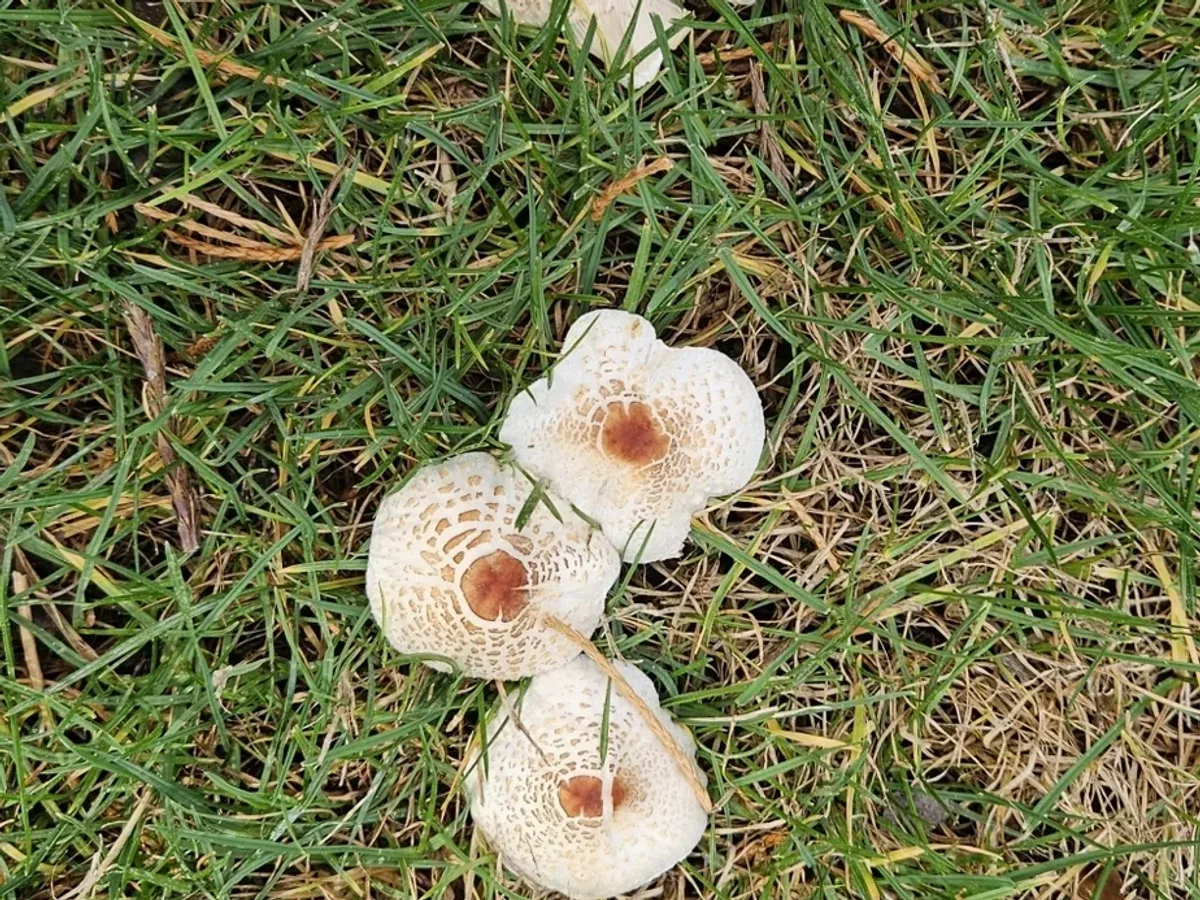 Shane O' Rahilly (CC0)
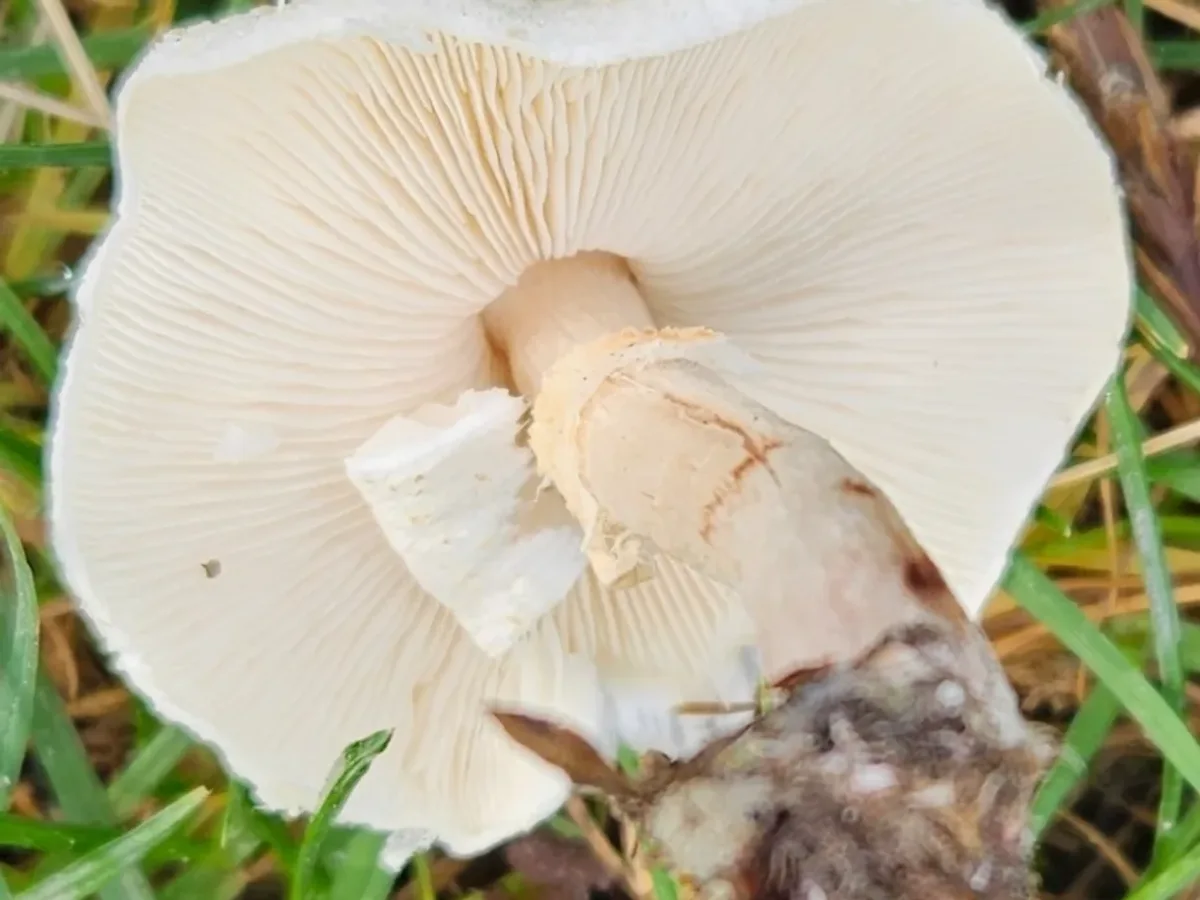 Shane O' Rahilly (CC0)
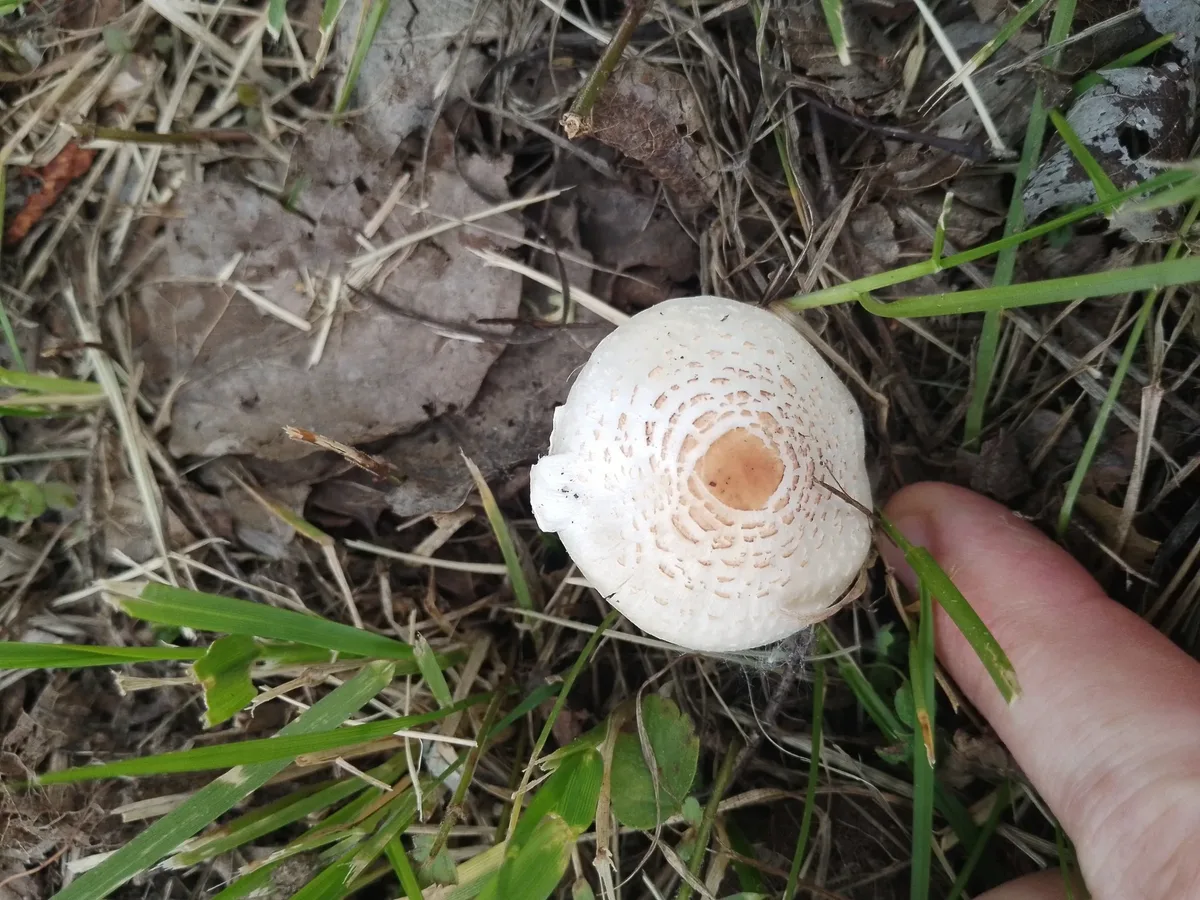 © Мирослав Соболев (CC BY)
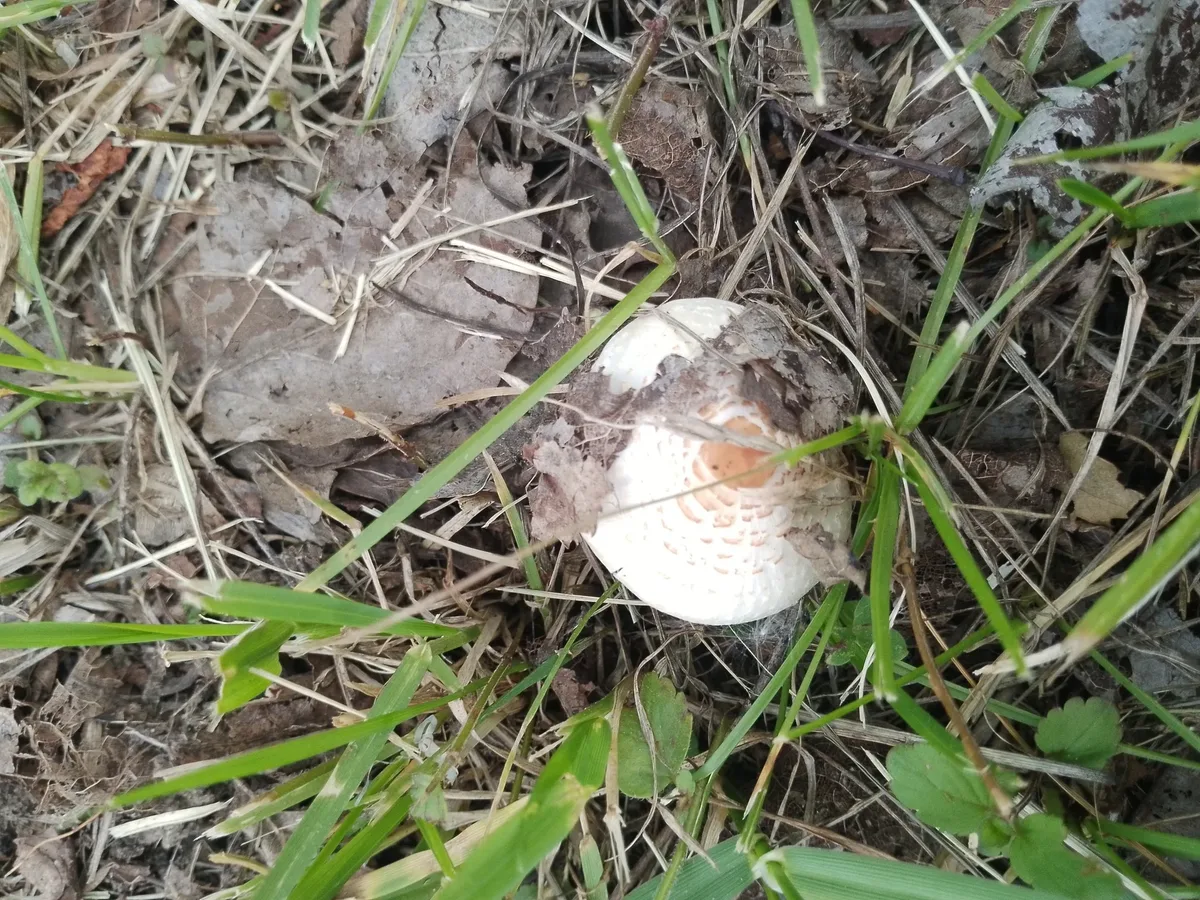 © Мирослав Соболев (CC BY)
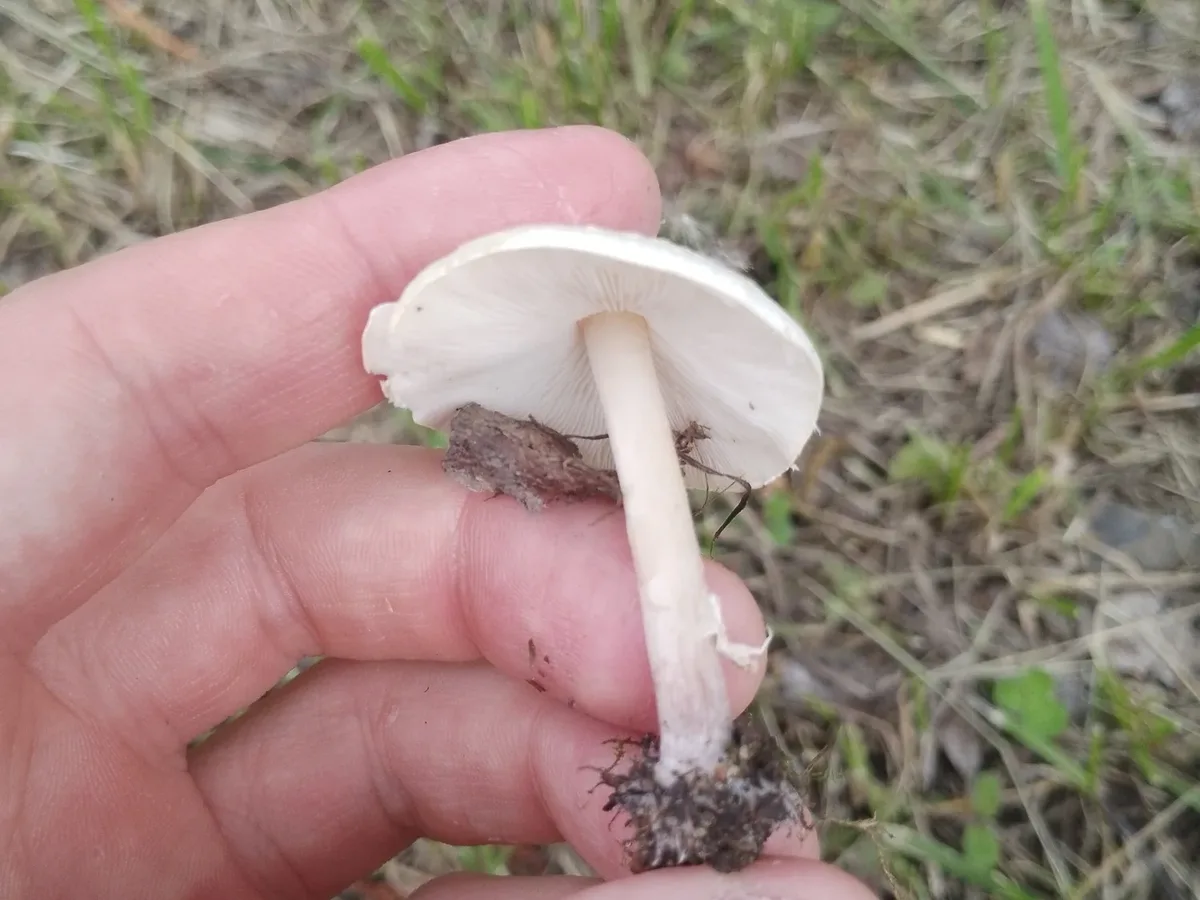 © Мирослав Соболев (CC BY)
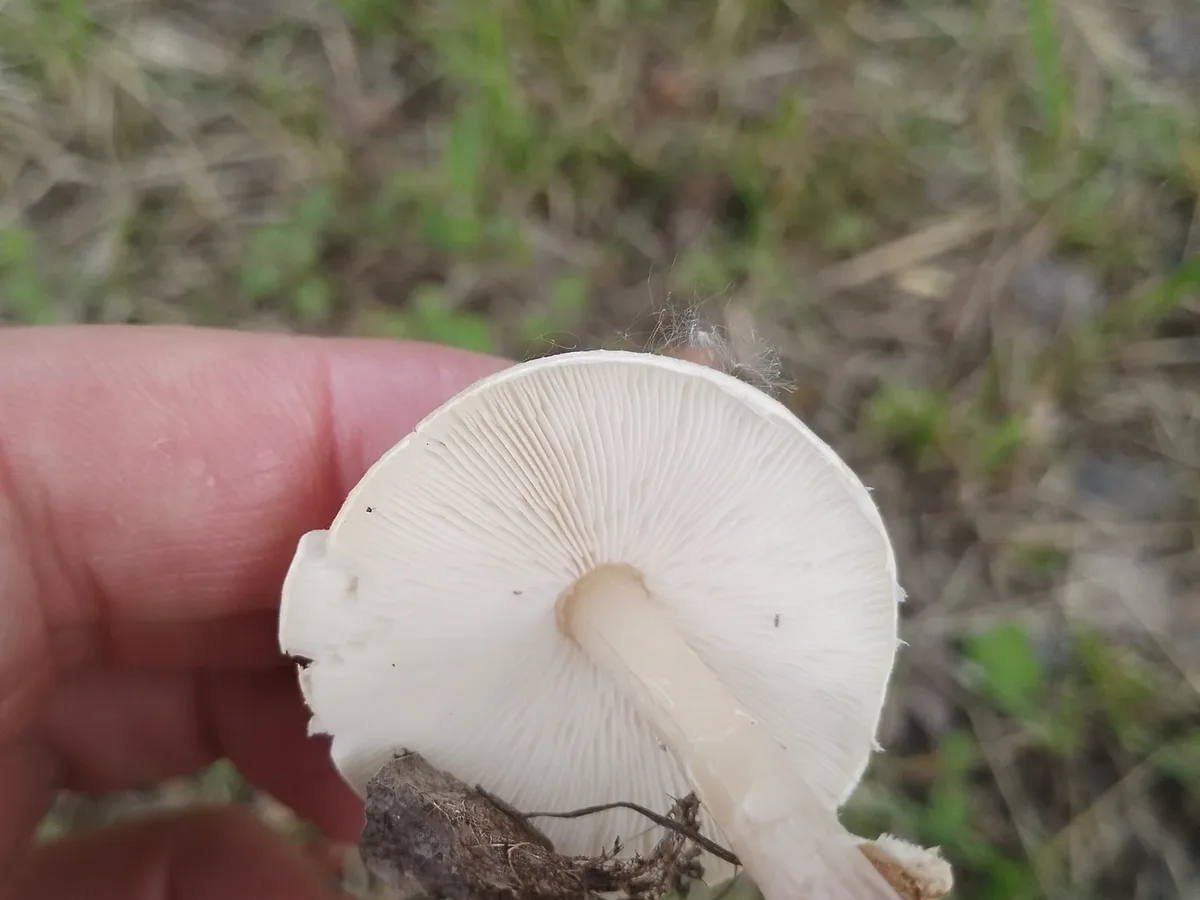 © Мирослав Соболев (CC BY)
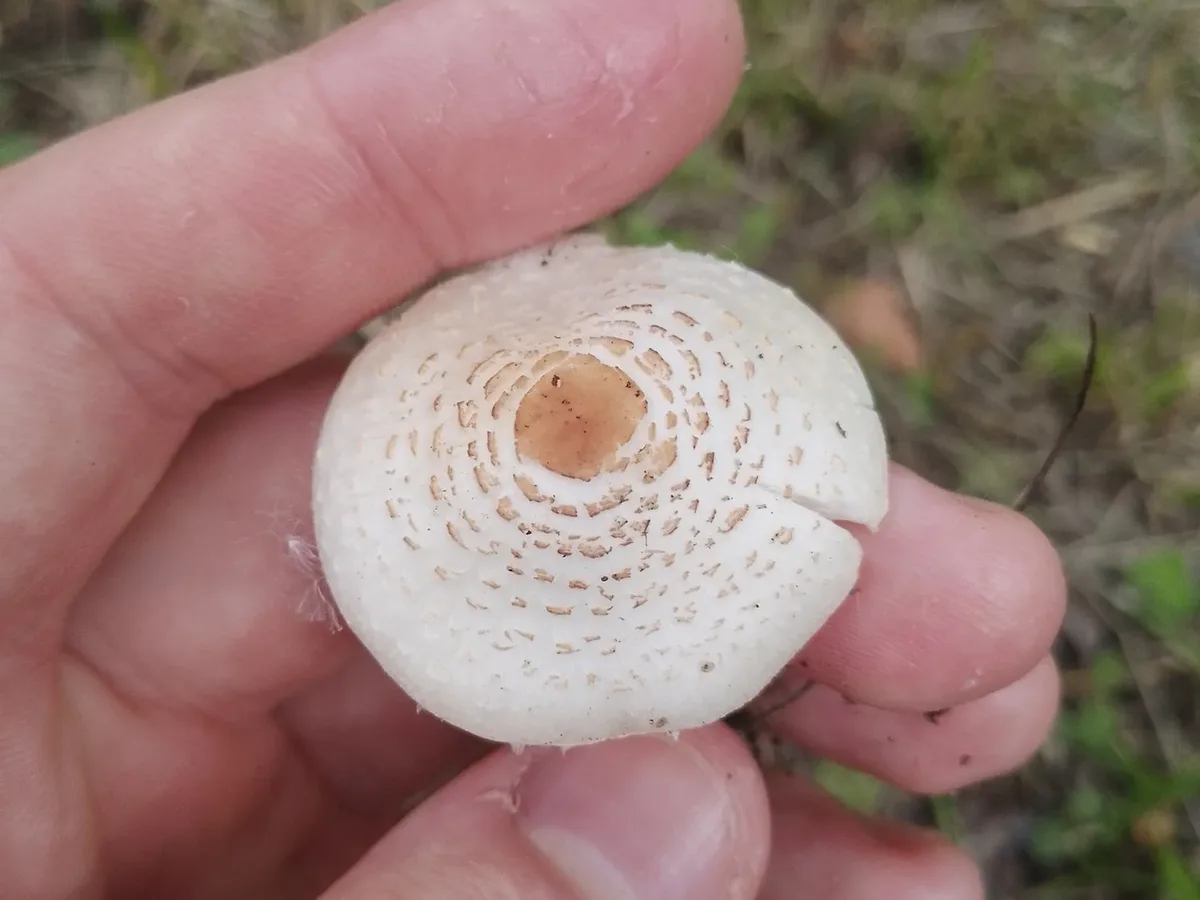 © Мирослав Соболев (CC BY)
 © Michel Langeveld (CC BY)© Michel Langeveld (CC BY)Shane O' Rahilly (CC0)
Toxic - and the most serious cases can be fatal. Never eat it, and wash your hands after handling.
Never eat a mushroom you are not 100% sure of - check the look-alikes below, and always cook wild mushrooms.
How to recognise it
Lepiota cristata is a small, white-capped dapperling you are likely to smell before you see.
Cap
The cap (2-5 cm) opens from a convex shape with a central boss to broadly flat while keeping a low umbo.
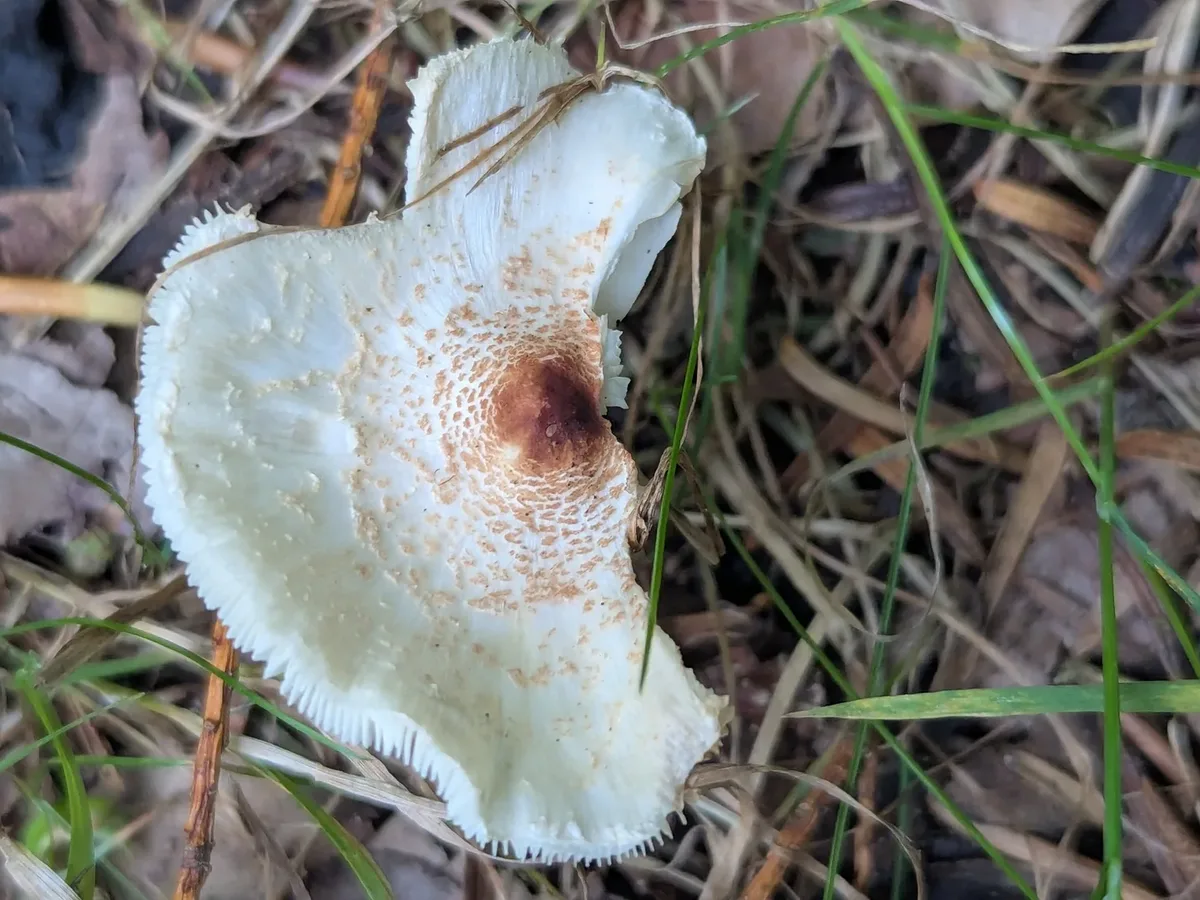
The background is white to cream, but concentric rings of flat, reddish-brown to chestnut fibrous scales radiate from a brown central disc, formed as the original cuticle fractures - giving the cap a distinctly zoned, 'crested' look that earned it the name cristata.
The margin often remains whitish and neatly fringed.
Gills
Gills are free, close, white to cream and stay that way.
Stem
The slender stem (2-6 cm) is white above a thin, moveable membranous ring, cream to pale pinkish below.
Flesh
Flesh is white, thin, unchanging. Spore print white.
Smell & taste
Its strong, acrid odour - rubber, burnt rubber, coal-tar, chemical solvent - is the most reliable thing about it and a clear warning to step back.
No edible mushroom you would find in the same garden or woodland path shares this smell.
Why it's dangerous
Any suspicion of Lepiota cristata ingestion is a medical emergency. Go to the emergency department immediately - do not wait for symptoms. Bring the best specimen available (or photograph it) for identification.
Treatment is supportive and intensive:
- IV rehydration
- Activated charcoal if early
- Monitoring of liver enzymes and kidney function
- Silibinin (silymarin) where available
- In severe cases liver transplantation may be the only option
Early hospital presentation dramatically improves prognosis; late presentation after liver failure has established is frequently fatal.
Children are at particular risk because small fruitbodies in gardens and parks may attract curiosity, and the dose-per-body-weight is disproportionately high.
Toxin
Lepiota cristata contains amatoxins, principally alpha-amanitin and beta-amanitin - the same cyclopeptide toxins responsible for the majority of fatal mushroom poisonings worldwide via Amanita phalloides and related species.
Amatoxins inhibit RNA polymerase II, blocking messenger-RNA synthesis and leading to progressive cell death, primarily in the liver and kidneys.
The toxins are water-soluble, heat-stable, and cannot be removed by cooking, boiling or any conventional food-preparation method.
Concentrations in L. cristata are generally lower than in L. brunneoincarnata or L. subincarnata, but no safe threshold for ingestion has been established.
Symptoms
Amatoxin poisoning proceeds in the classic three-phase pattern.
- 1Latent period (6-24 hours after ingestion, often longer): no symptoms, creating a false sense of safety and delaying the link to the meal.
- 2Gastrointestinal phase (onset ~12-24 hours): sudden and severe cholera-like illness with violent watery diarrhoea, profuse vomiting, abdominal cramps, and dehydration.
- 3Apparent improvement (24-72 hours): symptoms ease but liver and kidney damage continues silently.
- 4Organ failure (3-6 days and beyond): jaundice, coagulopathy, hypoglycaemia, hepatic encephalopathy, and potentially fatal hepatic and renal failure.
The long, symptom-free latent period is the most treacherous aspect of amatoxin poisoning.
Staying safe
TREAT AS DEADLY. Lepiota cristata contains amatoxins - including alpha-amanitin - as confirmed by chemical analysis in mycological literature (Michelot and Tebbett, 1990; Bresinsky and Besl, 1990).
While recorded fatalities are more commonly attributed to the closely related L. brunneoincarnata and L. subincarnata, the amatoxin content of L. cristata means it must be regarded as potentially lethal, particularly in large quantities or for vulnerable individuals (children, the elderly, those with liver or kidney impairment).
Amatoxins are heat-stable: cooking, boiling, drying and freezing do not deactivate them. There is no reliable home test.
If ingestion is suspected, seek emergency medical care immediately and retain a specimen for identification. Do not wait for symptoms - the characteristic long delay of 6-24 hours before onset means that by the time the victim feels ill, significant organ damage may already be under way.
Where & when it grows
Habitat
Primarily a woodland-edge and garden saprotroph, at home on humus-rich soil along shaded paths, in parks and cemeteries, in mulched beds, and at the margins of broadleaf and mixed woods.
Unlike the meadow-preferring relatives L. brunneoincarnata and L. subincarnata, L. cristata gravitates toward partial shade and organic-rich ground rather than open grassland.
It handles disturbed, urban, and suburban substrates well - which is precisely why it turns up in the places where people are most likely to casually encounter a small white mushroom: the garden border, the cemetery path, the shaded corner of a city park.
When
Fruits from midsummer into late autumn - roughly July to November in temperate central and western Europe, with the main flush through August, September and October.
Like many saprotrophs, it responds to the combination of lingering warmth and adequate soil moisture: a wet spell after a dry summer stretch can bring small groups up overnight across a patch of a few square metres, only to have them collapse and disappear within days.
How it grows
Saprotrophic, feeding on decaying organic matter in the soil and fruiting singly or in small scattered groups on or near humus and woody debris.
It forms no mycorrhizal partnership with any tree - it is simply taking its share of dead matter - though it often appears near broadleaf trees because their leaf litter creates the shaded, humus-rich conditions it prefers.
The fruitbodies are fragile and decay quickly, a brief surface signal of a longer decomposition job happening below.
Fruiting conditions
A warm-season humus saprotroph; flushes follow sufficient rain (or irrigation) once soil is warm, typically peaking in late summer and early autumn in temperate Europe.
Look-alikes
The dangerous confusion runs in both directions.
- 1Novice foragers may misidentify L. cristata as a small button mushroom (Agaricus) or as young Macrolepiota procera - the edible parasol mushroom. Agaricus develops pink then chocolate-brown gills and a brown spore print (L. cristata has white gills and white spore print); Macrolepiota procera is much larger (cap 10-30 cm) with a snakeskin-patterned stem and moveable double ring. The smell alone should deter eating L. cristata.
- 2L. cristata is closely similar to the even more dangerous L. subincarnata (Fatal dapperling) and L. brunneoincarnata (Deadly dapperling), both of which contain higher amatoxin concentrations and have caused fatalities. L. subincarnata has a pale pinkish-brown cap with a more vinaceous central disc and a slightly more rosy tint to the gills; L. brunneoincarnata has a more pinkish-brown overall cap colouration. Reliable separation from these deadly relatives requires careful observation of cap colour, spore size under a microscope, and a chemical profile - in the field, all three should be treated as equally dangerous.
- 3Leucoagaricus species and Lepiota clypeolaria superficially resemble L. cristata; the latter has a woolly-scaly stem below the ring and no strong odour.
None of these small Lepiota confusions are edible.
Lepiota brunneoincarnata has a more uniformly pinkish-brown cap surface, less strongly zoned, and a less pungent smell. It has higher confirmed amatoxin concentrations and is responsible for the majority of European Lepiota fatalities. Both are small (2-6 cm), both have white gills, white spore prints and fragile rings. Field separation is unreliable - treat as equally deadly.
Lepiota subincarnata (Fatal dapperling) is extremely similar and far more consistently implicated in lethal poisonings. It has a more pinkish-vinaceous tone to the cap scales and a slightly warmer disc colour; the overall cap is more rosy-brownish. Microscopic spore dimensions differ. In the field the two cannot be reliably separated - both contain amatoxins, both must be treated as deadly, and neither should ever be eaten.
Agaricus campestris and related species have gills that begin pink and mature to chocolate-brown, producing a dark brown spore print. Lepiota cristata always has white gills and a white spore print. The strong acrid rubber or coal-tar smell of L. cristata is also absent from all common Agaricus species, which are pleasantly mushroom-scented or anise-scented.
Leucoagaricus leucothites (white dapperling) has a smooth white cap without scale rings, a thicker stem, more persistent ring, and no unpleasant smell. However, as a general rule for field identification: any small white-capped Lepiota or dapperling-like mushroom (cap under 8 cm) found in gardens or woodland edges must be regarded with extreme caution and should not be eaten without expert confirmation.
Macrolepiota procera is dramatically larger (cap 10-30 cm), has a distinctive double ring that slides freely up and down the stem, a snakeskin-patterned fibrous brown stem, and a mild pleasant smell. Any 'small parasol' (under 8 cm cap) in a garden or woodland edge with an unpleasant smell must never be assumed to be a young Macrolepiota.
Lepiota clypeolaria has a more cottony-woolly stem below the ring with loose fibrous veil remnants, a paler cap with less well-defined concentric scales, and a milder, non-acrid smell. It is considered mildly toxic (not amatoxin-bearing) but should not be eaten. The strong rubbery smell and the neat concentric scale rings distinguish L. cristata.
A reference guide - never an edibility guarantee. When in doubt, leave it out.