Chestnut dapperling
Lepiota castaneasyn. Lepiota felina var. castanea
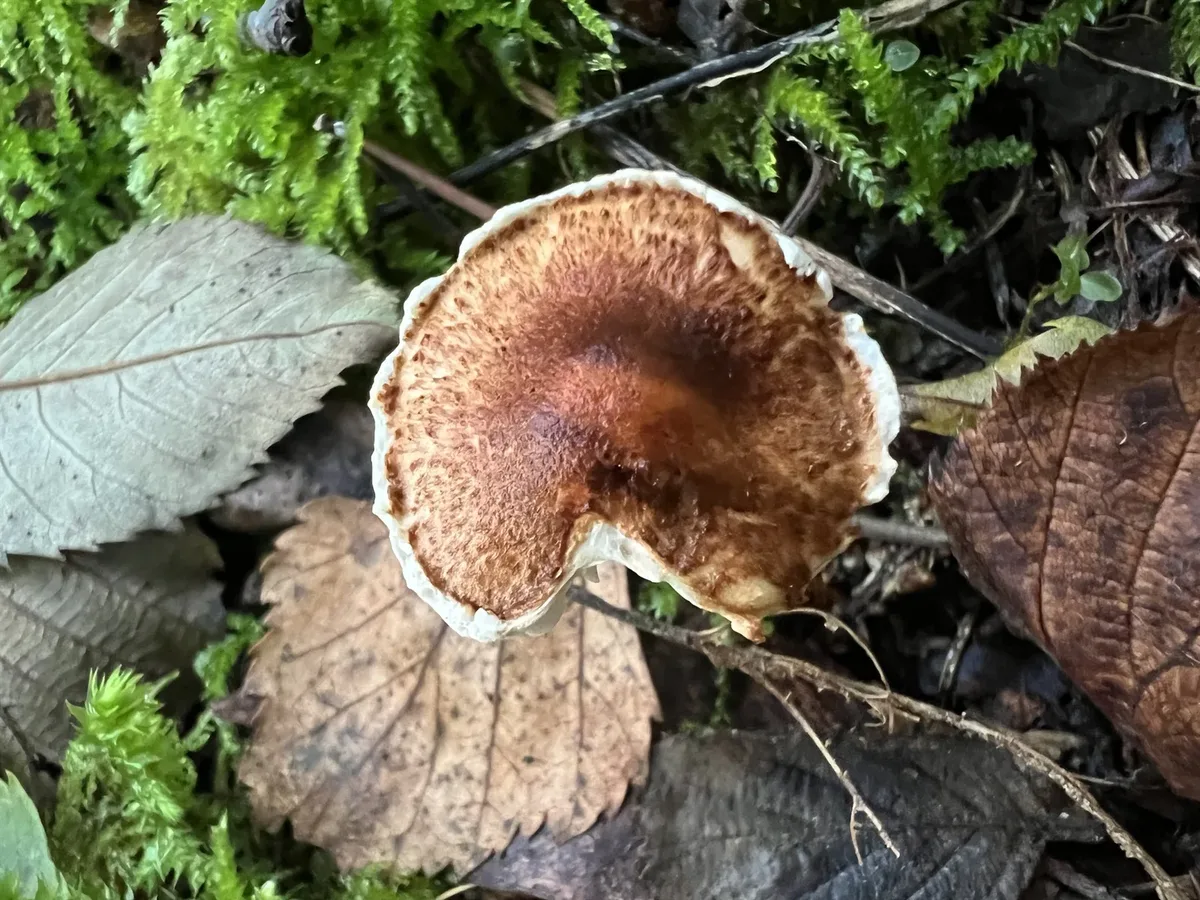 © Rune Zakariassen (CC BY)
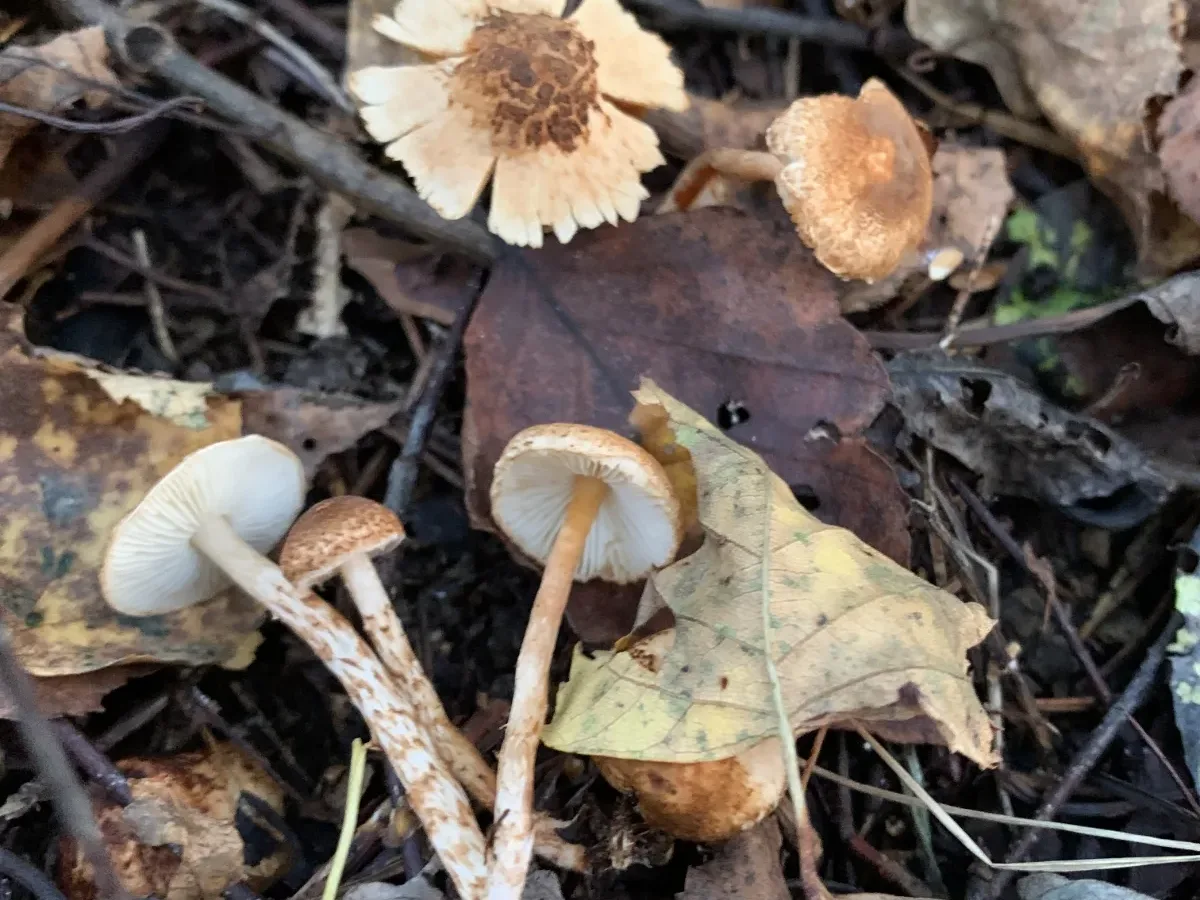 © Susann Pettersen (CC BY)
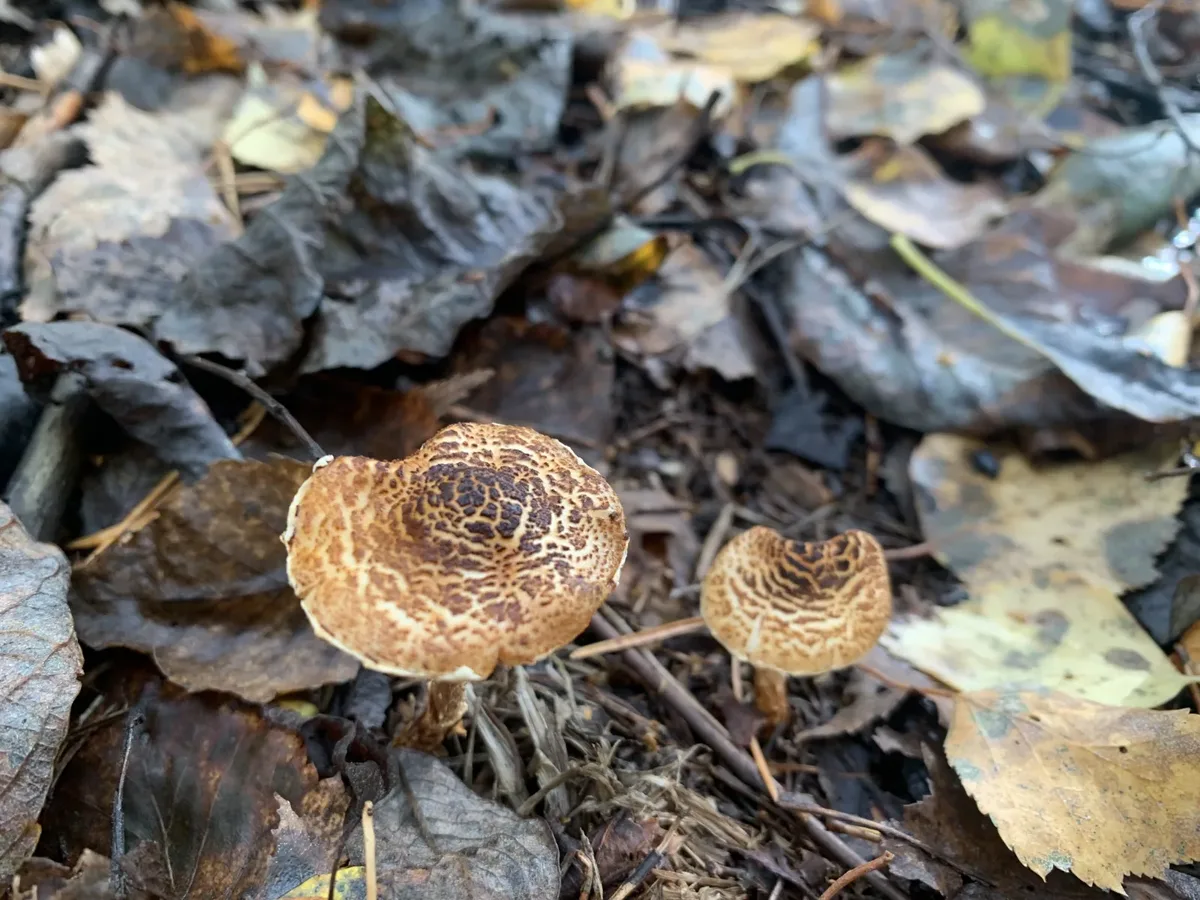 © Susann Pettersen (CC BY)
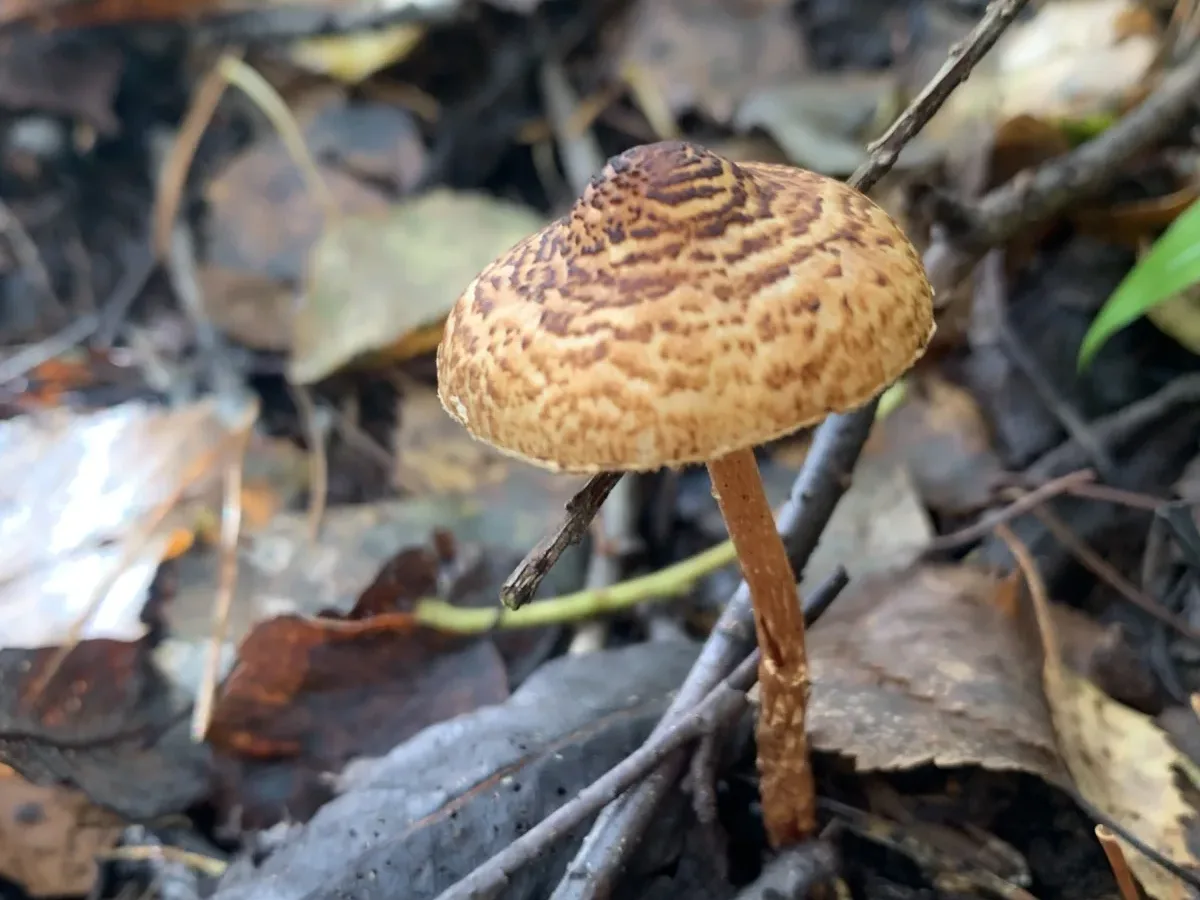 © Susann Pettersen (CC BY)
 © Susann Pettersen (CC BY)
 © Susann Pettersen (CC BY)
 © Rune Zakariassen (CC BY)© Rune Zakariassen (CC BY)© Susann Pettersen (CC BY)
Toxic - and the most serious cases can be fatal. Never eat it, and wash your hands after handling.
Never eat a mushroom you are not 100% sure of - check the look-alikes below, and always cook wild mushrooms.
How to recognise it
Cap
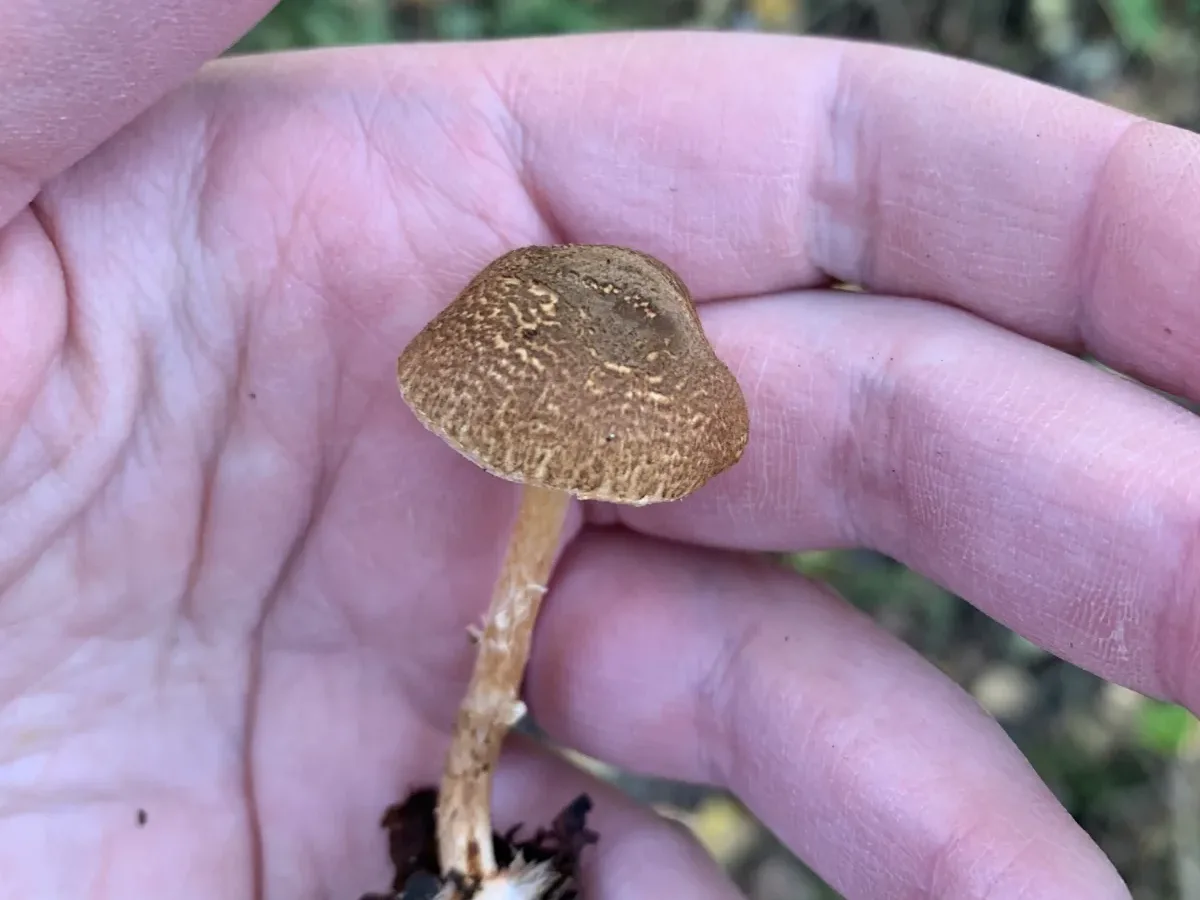
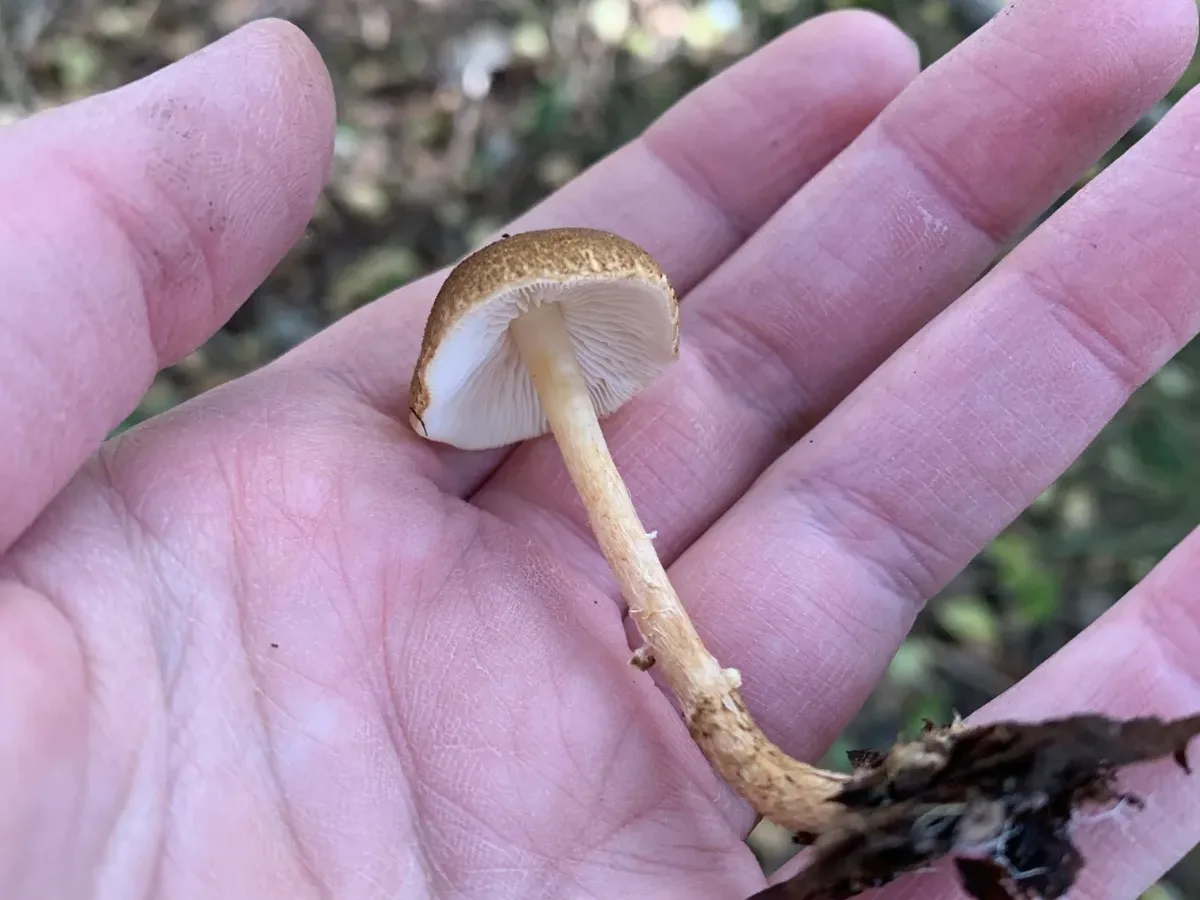
Cap 2-5 cm, convex when young and broadly umbonate at maturity, with a white to pale cream background overlaid by concentric chestnut-brown fibrous scales - densest and darkest at the centre, thinning outward so the pale base colour shows through at the margin.
Flesh
Flesh white, thin, and unchanging when cut.
Gills / Pores
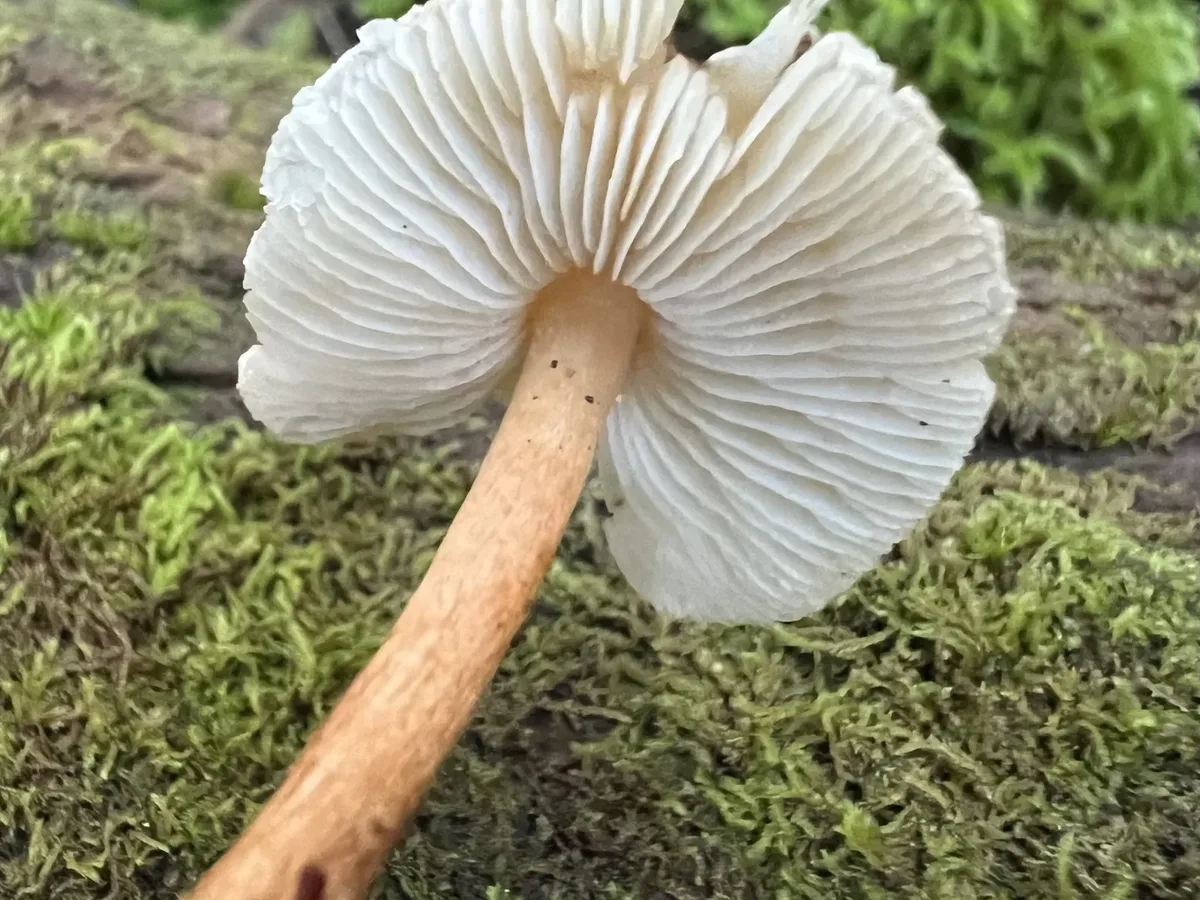
Gills are free (not touching the stem), crowded, and remain white to cream throughout.
Stem
The stem runs 3-7 cm tall, cylindrical with a slightly swollen base: white and smooth above the ring zone, then draped in matching chestnut-brown cottony scales below - giving the fruiting body a neat two-toned look.
The ring is fragile and membranous, often wearing away to leave only a ragged brownish band.
Smell & taste
Spore print white. Smell faintly radish-mealy.
Why it's dangerous
Lepiota castanea is responsible for confirmed fatal poisonings across France, Germany, and other central European countries.
The small size of the cap makes it easy for a forager to unknowingly collect multiple specimens, and the total amatoxin dose can be lethal in a single meal. Children and individuals with pre-existing liver conditions are at even greater risk from smaller doses.
There is no antidote to amatoxin poisoning; treatment is supportive.
Emergency physicians should be alerted immediately if ingestion is suspected - even if the patient feels well in the first hours, as the latent period is deceiving.
Toxin
Contains amatoxins - principally α-amanitin and β-amanitin - confirmed by HPLC analysis in multiple European studies.
Amatoxins are cyclic peptides that irreversibly inhibit RNA polymerase II, halting transcription in all cells but most severely damaging liver hepatocytes and kidney tubular cells.
The toxins are not inactivated by heat and are absorbed intact from the gut. Amatoxin content per gram dry weight is comparable to Lepiota brunneoincarnata.
Symptoms
Poisoning follows the classic amatoxin pattern with a characteristic delay:
- 1An initial symptom-free latency of 6-24 hours after ingestion.
- 2Sudden onset of severe cholera-like gastroenteritis (profuse watery diarrhoea, vomiting, cramping, dehydration) lasting 1-3 days.
- 3An apparent improvement ('false dawn') while liver and kidney damage is progressing silently.
- 4Overt hepatic and renal failure typically manifesting on days 3-5: jaundice, coagulopathy, encephalopathy, and rising transaminases.
Without supportive care or liver transplantation, death from fulminant hepatic failure can occur within 5-10 days.
Staying safe
The critical safety rule: ALL small Lepiota species with brown scales on a pale cap are potentially deadly.
There is no reliable field character that separates edible small Lepiota from deadly ones, and microscopic analysis is required for confident identification.
Amatoxins are heat-stable and destroyed neither by cooking nor drying.
The safety approach is absolute avoidance: do not eat any small-capped (under 10 cm) dapperling-type species.
Where & when it grows
Habitat
Terrestrial saprotroph in broadleaf and mixed woodland, woodland margins, parks, gardens, and roadsides, preferring organic-rich or disturbed soils.
Scattered or in small groups; rarely in open grassland.
Common and widespread across central and western Europe, extending into the Mediterranean basin.
When
Late summer to late autumn, August through November; peak September-October.
Flushes follow warm spells after late-summer rainfall as soil temperatures cool below 18 °C.
How it grows
Grows from soil, singly or in small scattered groups, never in tight clusters.
It is saprotrophic - living by quietly breaking down buried organic matter and leaf humus, returning nutrients to the soil one fruiting body at a time. It has no bond with living tree roots and does not grow on wood.
Fruiting conditions
Warm-to-cool woodland saprotroph. Flushes follow late-summer and early-autumn rainfall once soil temperatures begin to drop below approximately 18 °C. Peak fruiting in central-western Europe typically tracks the main autumn mushroom season in September and October.
Look-alikes
Lepiota castanea belongs to a group of small-to-medium Lepiota species that are all dangerously toxic and visually similar.
- Lepiota brunneoincarnata (deadly dapperling) - the most significant confusion species: it shares small size, free white gills, and a fragile ring, but has a pinkish-brown rather than chestnut-brown cap with coarser felty scales and grows more commonly in grassland. Both are deadly.
- Lepiota subincarnata (fatal dapperling) - equally deadly with a similar scale pattern.
- Lepiota cristata (stinking dapperling) - smaller, more strongly radish-smelling, with a brighter reddish-brown central boss; it is itself poisonous and possibly contains lower levels of amatoxins.
- Young Macrolepiota procera (parasol mushroom, edible) - may superficially resemble any small scaly Lepiota before the cap expands, but parasol grows much larger (cap to 25+ cm), has a distinctly double-sheathed movable ring, and its stem has a characteristic snakeskin-like banding pattern.
A firm rule: any small Lepiota (cap under 10 cm) with brown scales on a pale cap must be treated as potentially deadly.
Also deadly and contains amatoxins. Lepiota brunneoincarnata has a more pinkish-brown, felty cap with coarser scales and tends to grow in grassland, gardens, and lawns rather than woodland; the cap background has a warm pinkish or flesh tone vs. the colder white of L. castanea. Both are deadly - field separation is irrelevant for safety purposes; treat all small scaly Lepiota as deadly.
Equally deadly, with confirmed amatoxin content. Has a pinkish-buff to pale ochre cap surface with brownish-pink to reddish concentric scales; may be slightly paler and more flesh-toned than L. castanea. Distinction is academic - both are lethal.
The parasol mushroom is edible and beloved but only safe to pick when fully mature and large (cap 10-25+ cm). Young unexpanded buttons can appear as small scaly domes. The parasol has a distinctive double-edged movable ring that slides on the stem, and a stem with zigzag or snakeskin banding markings - absent in Lepiota castanea. When in doubt, wait: if a specimen is cap-sized under 10 cm with a pale background and brown scales, do not eat it.
Young button Agaricus can share a scaly whitish appearance, but Agaricus always has pink to chocolate-brown gills (not pure white), a brown spore print, and often a faint anise or almond scent. Lepiota castanea has permanently white gills and a white spore print. Inspecting the gill colour is the quickest check.
Smaller (cap 1.5-5 cm), with a sharper reddish-brown central boss (umbo) and brighter rusty scales; has a pronounced unpleasant radish or rubber smell. Also poisonous (possibly contains low amatoxin levels and other toxins); never edible but less reliably deadly than L. castanea. The strong smell is distinctive but not a safe guide to eat any similar species.
A reference guide - never an edibility guarantee. When in doubt, leave it out.