Freckled dapperling
Lepiota asperasyn. Lepiota acutesquamosa, Lepiota friesii, Agaricus asper
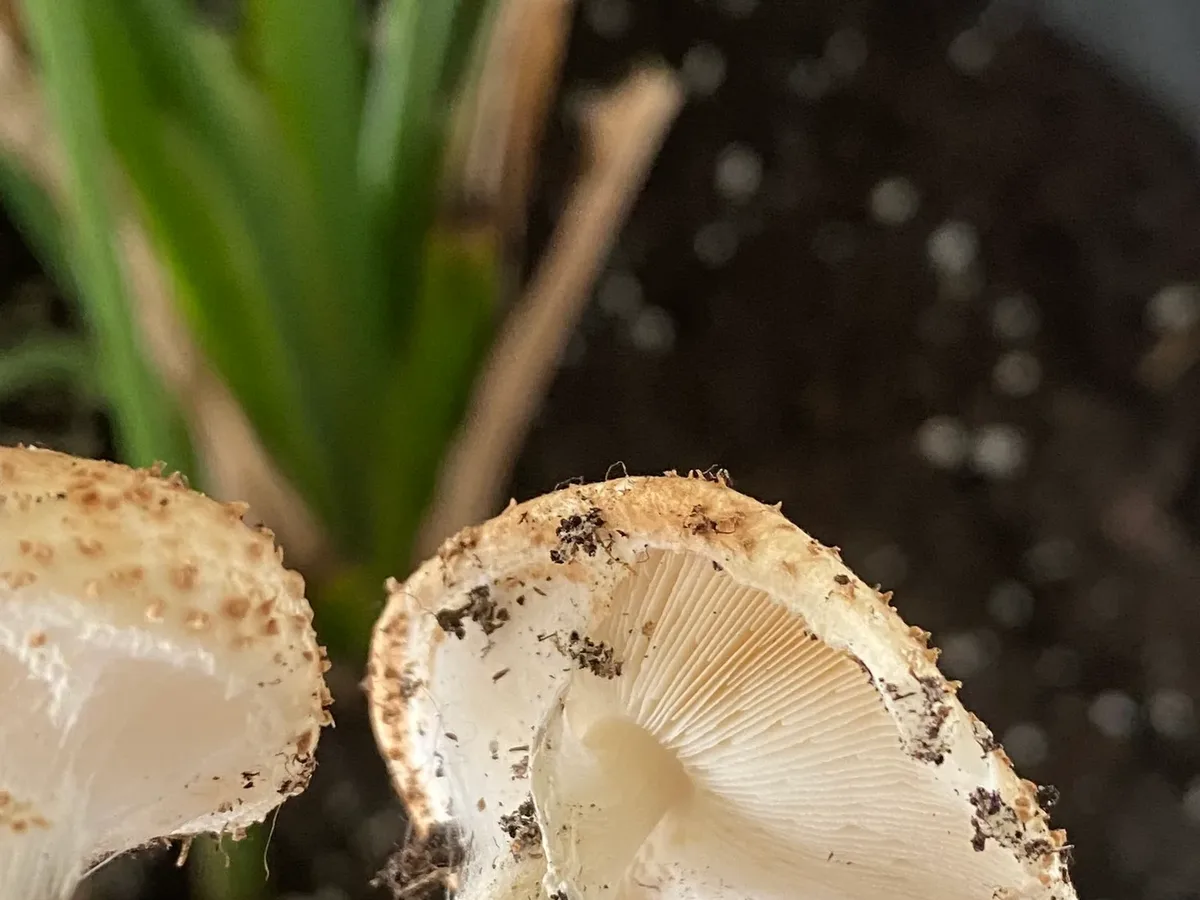 © Katharine Khamhaengwong (CC BY)
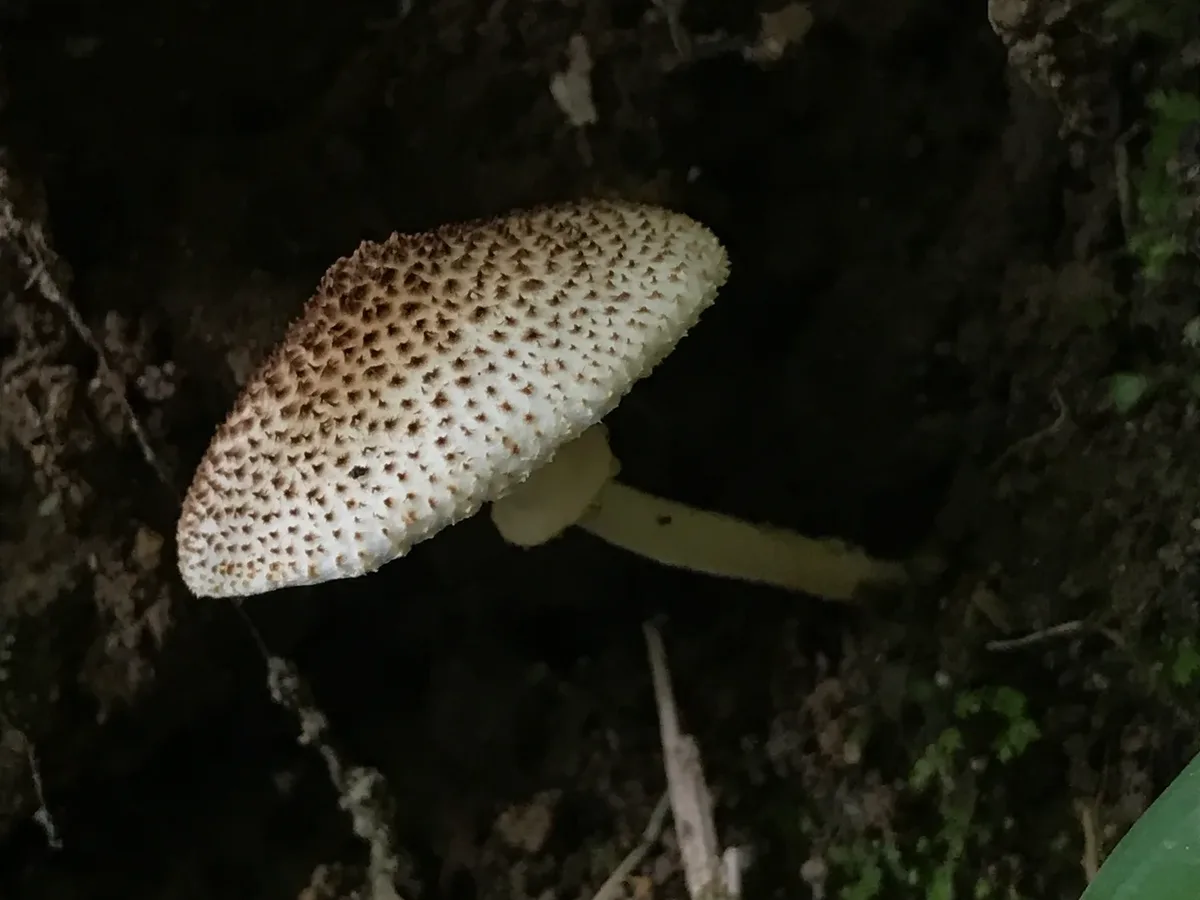 © Matthew Rozanoff (CC BY)
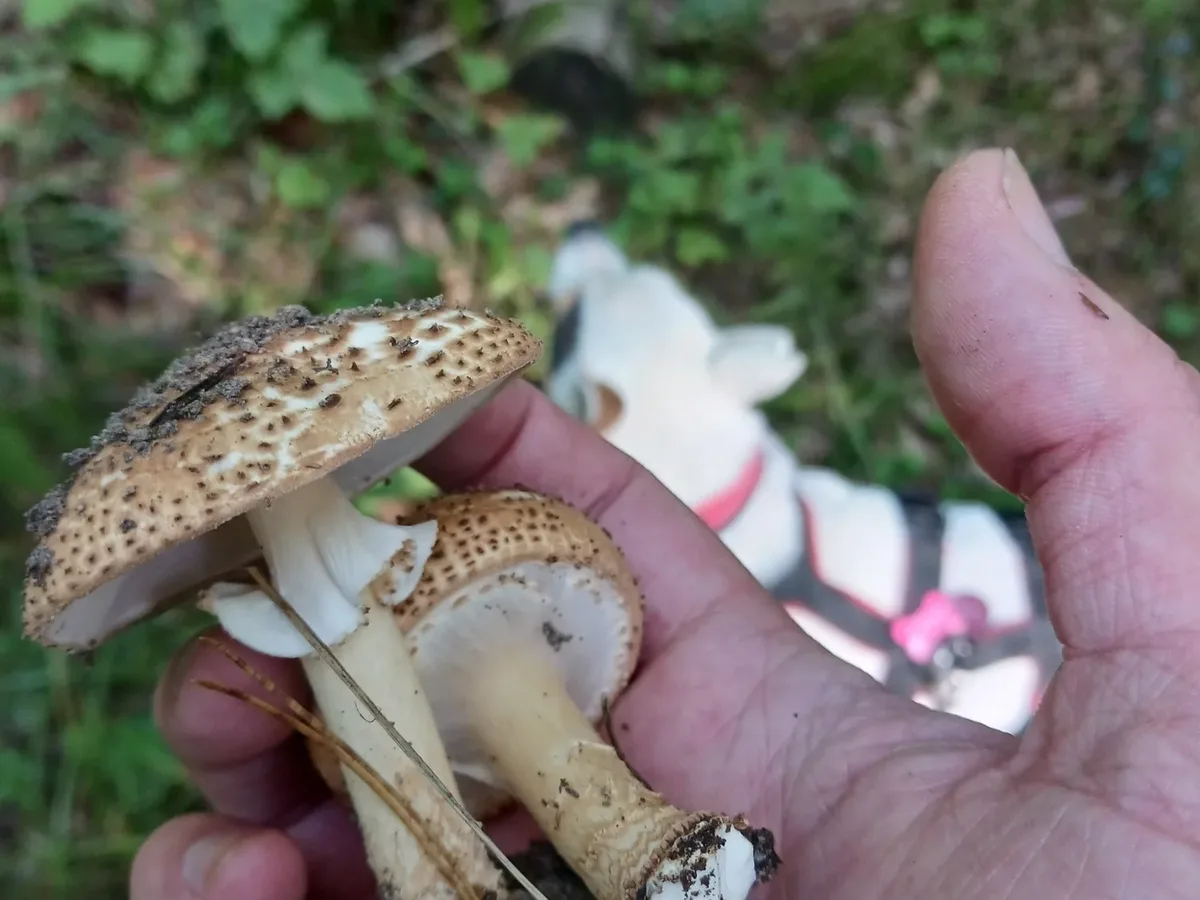 T. Pedro Hafermann (CC0)
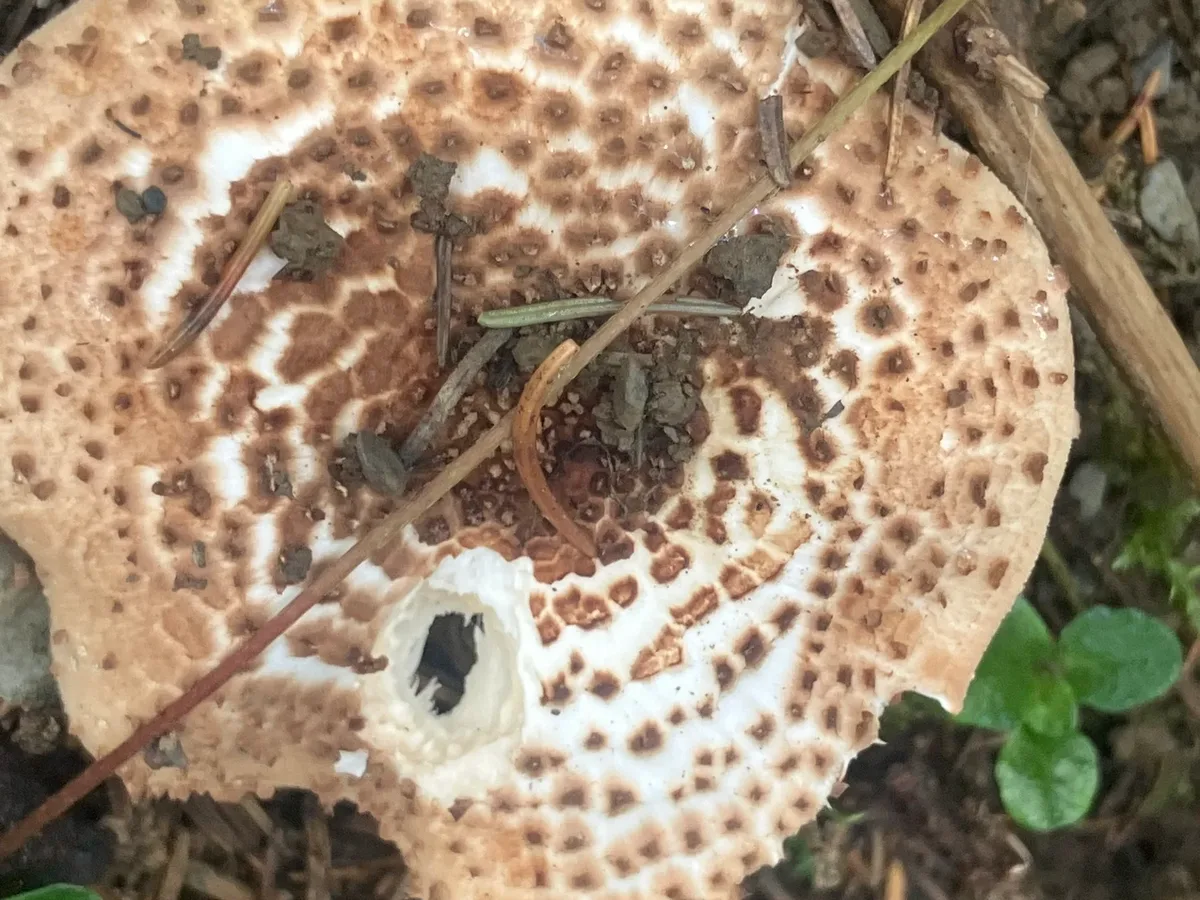 empressmoth (CC0)
 T. Pedro Hafermann (CC0)
 © Katharine Khamhaengwong (CC BY)
 © Katharine Khamhaengwong (CC BY)
 © Katharine Khamhaengwong (CC BY)© Katharine Khamhaengwong (CC BY)© Matthew Rozanoff (CC BY)
Edible only with the right preparation - or safe for some people but not others. Learn the caveats first.
Never eat a mushroom you are not 100% sure of - check the look-alikes below, and always cook wild mushrooms.
How to recognise it
Lepiota aspera announces itself with a texture unlike almost any other woodland mushroom.
Cap
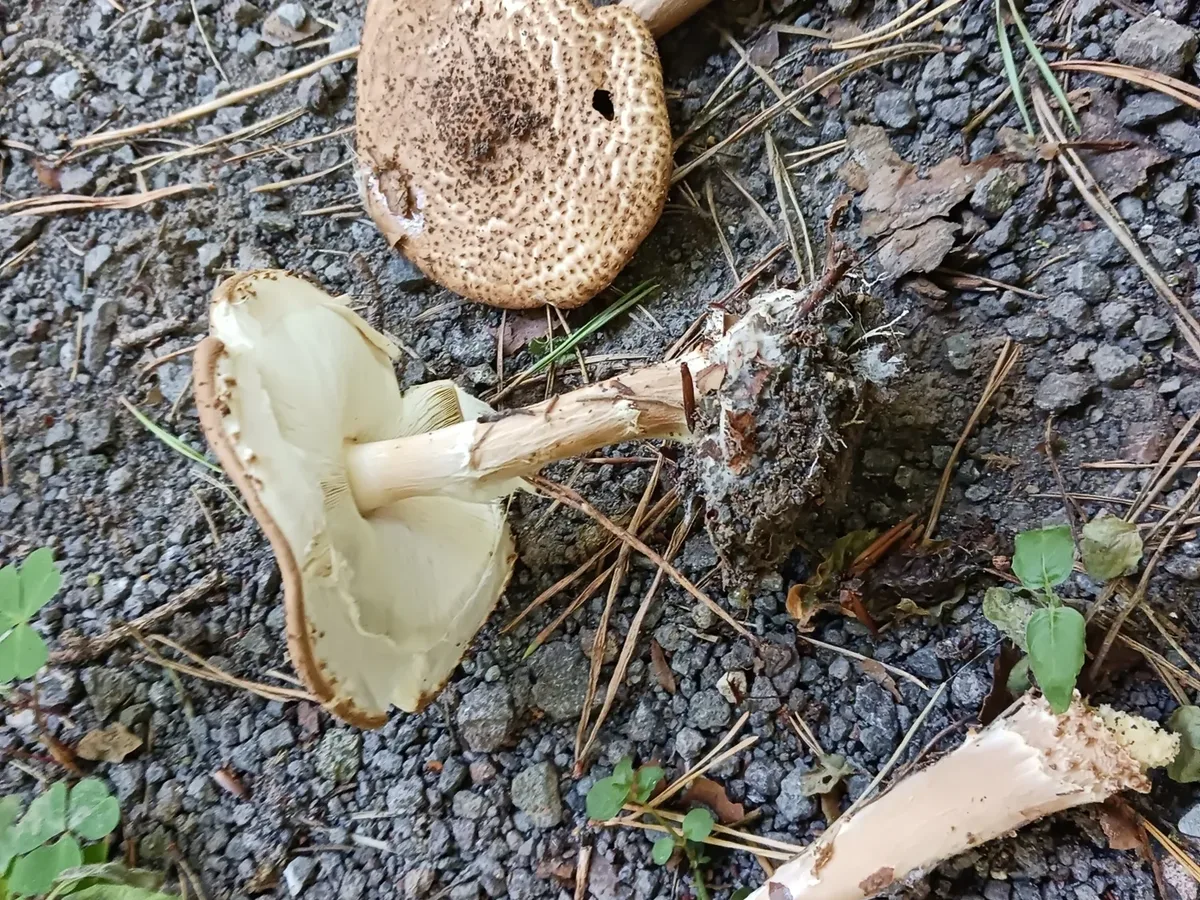
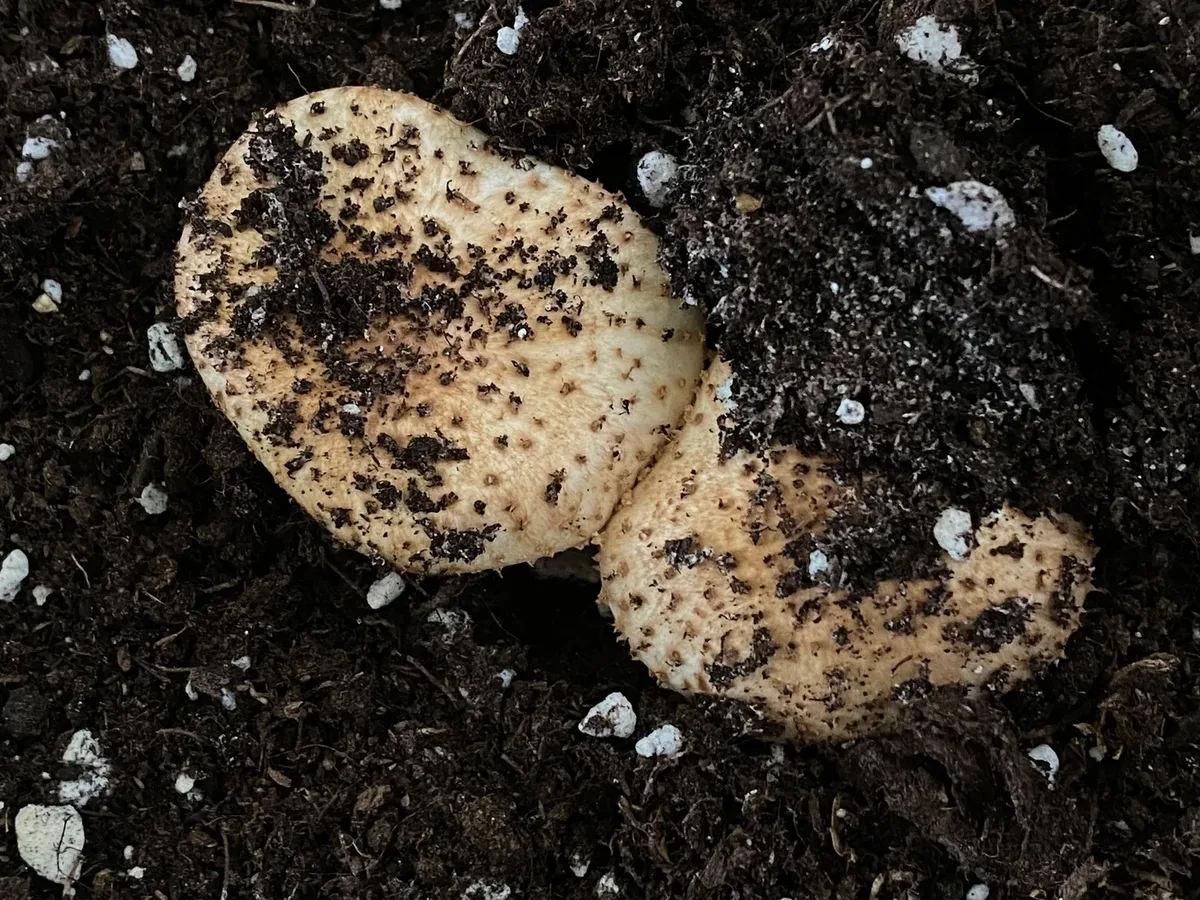
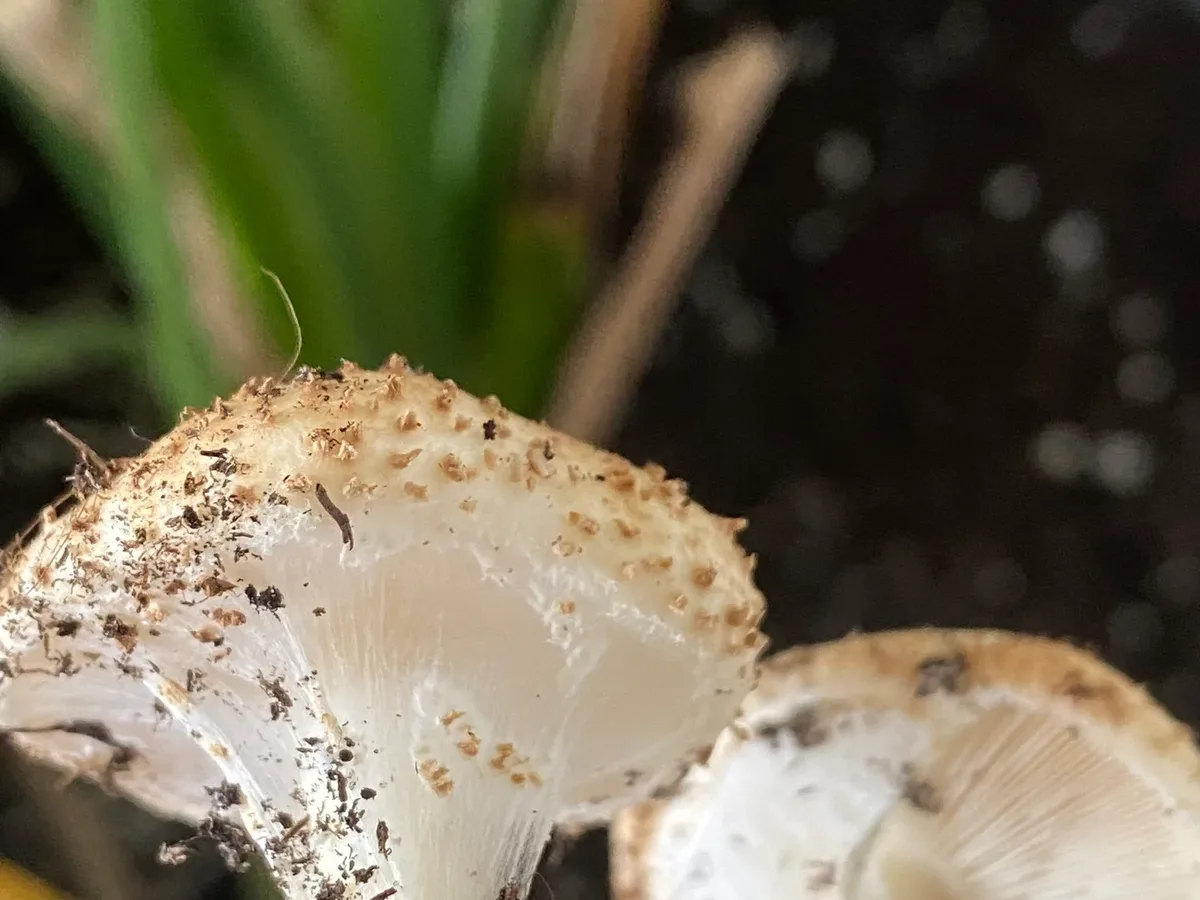
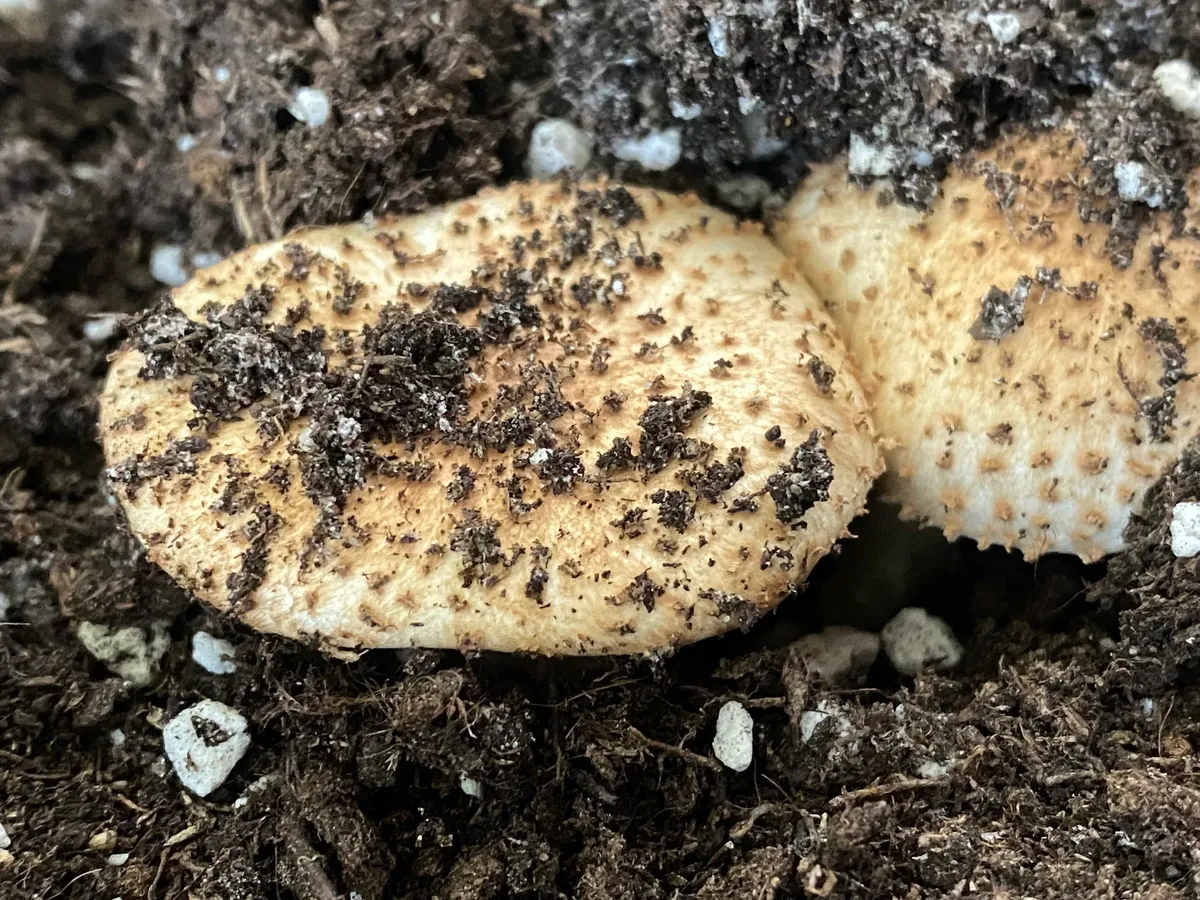
The cap surface is a pale ochre-buff to whitish background studded with upright, pointed, conical dark brown to reddish-brown scales - not smears or flat patches, but distinct spine-like warts standing proud of the surface.
They crowd most densely at the centre, where the cap is darkest (nearly solid brown), and thin out toward the margin, giving the whole cap a rough, almost bristling look.
Caps range from 4 to 12 cm and open from convex to broadly umbonate.
Gills
The gills are free from the stem - a hallmark of the dapperling group, never running down it - crowded, white to cream, and stay pale throughout the fruitbody's life.
Spore print white.
Stem
The stem (5-12 × 0.8-1.5 cm) carries the same rough character below the ring: brownish fibrous scales covering it consistently down to the base, so the whole fruitbody has a coherent, rough-all-over appearance. Above the ring the stem is smooth and whitish.
The ring itself is large and pendulous, hanging like a loose skirt. Its upper surface is white while the underside is brownish and scaly, and it tends to persist even in older specimens.
Flesh
Flesh white throughout, not changing colour when cut or bruised.
Smell & taste
The smell is distinctly unpleasant - musty, faintly of bitter almonds, or radish-like - and is a genuine warning sign worth taking seriously.
Why it's dangerous
Lepiota aspera is one of the most hazardous members of an already hazardous genus. Its relatively large size (up to 12 cm cap) places it in the range where it could be mistaken for the edible parasol mushroom Macrolepiota procera by inexperienced foragers.
The possible or suspected amatoxin content means that consumption of even a modest-sized specimen - one or two fruitbodies - may deliver a potentially lethal dose if those toxins are present.
Even if amatoxins are absent, the confirmed GI toxins cause severe illness that can require hospitalisation, and the species should be treated as potentially lethal.
The delayed symptom presentation (no discomfort for up to 24 hours under an amatoxin scenario) prevents victims from connecting illness to the meal.
Fatal cases of Lepiota poisoning across Europe have involved L. brunneoincarnata, L. helveola, L. subincarnata, and closely related species. L. aspera shares the same genus and a similar toxin profile, and must be treated with the same caution.
The genus rule is absolute: never eat any Lepiota species unless you are a trained mycologist who has microscopically confirmed the identification and verified the species is not amatoxin-bearing. In practice, no small or medium Lepiota found in Europe is worth the risk.
Toxin
The primary confirmed toxins are GI irritants.
Amatoxin presence has been reported in some analyses but has not been consistently reproduced. Amatoxins cannot be ruled out, and the genus as a whole contains confirmed amatoxin species. Treat as potentially amatoxin-bearing until proven otherwise.
If amatoxins are present, the principal compound is likely α-amanitin.
The overall toxin load is sufficient to cause severe illness from a single modest-sized meal, and potentially lethal injury if amatoxins are confirmed.
Symptoms
After a silent latent period of 8-24 hours comes the gastrointestinal phase (days 1-3):
- Severe vomiting
- Watery or bloody diarrhoea
- Abdominal cramps
If amatoxins are involved, this is followed by an apparent recovery (days 3-5) and then acute liver and kidney failure (days 4-9).
Even without confirmed amatoxins, the GI toxin phase alone can be severe and require medical intervention.
The delayed and deceptive symptom timeline associated with amatoxin poisoning is the central reason this group of mushrooms is so dangerous - victims frequently do not seek medical attention until organ damage is advanced.
Staying safe
Lepiota aspera is suspected to contain amatoxins based on some chemical analyses, though results are inconsistent across studies; confirmed GI toxins are present.
The risk profile is serious and the species must never be eaten, but the clinical course may differ from a confirmed amatoxin poisoning - medical assessment is still essential.
If amatoxins are present, they inhibit RNA polymerase II, causing irreversible shutdown of protein synthesis in liver and kidney cells, with a clinical course mirroring Amanita phalloides poisoning:
- 1A latent period of 8-24 hours with no symptoms.
- 2A violent gastrointestinal phase (severe vomiting, watery or bloody diarrhoea, abdominal cramps) lasting 1-3 days.
- 3A deceptive apparent recovery of 1-2 days.
- 4Acute liver and kidney failure developing 4-9 days after ingestion.
Even in the absence of amatoxins, the confirmed GI toxins cause severe, potentially dangerous illness.
Amatoxins, if present, are heat-stable and water-soluble: cooking, parboiling, drying, freezing, and soaking in water do not reduce toxicity.
There is no field antidote. In-hospital treatment includes silibinin (milk thistle extract) and N-acetylcysteine, but these must be administered as early as possible to be effective.
If ingestion of any Lepiota aspera - or any similar rough-scaled Lepiota - is suspected, call emergency services immediately without waiting for symptoms.
Where & when it grows
Habitat
Lepiota aspera is a saprotroph - it lives by breaking down organic matter in rich soil rather than by partnering with tree roots.
This distinction matters practically: unlike the deadly Amanita species, which are tied to woodland and mycorrhizal trees, L. aspera is a free-range decomposer that follows nutrient-rich, often disturbed ground wherever it finds it.
That means all of these are fair game:
- Deciduous and mixed woodland edges
- Park lawns
- Shaded garden beds
- Compost-enriched corners
- Roadsides
The well-mulched beds of a public park or a domestic garden are entirely typical habitat - this is not a remote-woodland-only species. Encounters with people who are not foragers at all are a real possibility.
When
Summer to late autumn - roughly July to November across central and western Europe, with the main flush running from late August through October.
Like many woodland saprotrophs, L. aspera waits for soil that has had time to warm up over summer, then responds to autumn rain and cooling temperatures. In mild years, secondary flushes can push into November.
How it grows
Solitary or in small scattered groups on the ground in leaf litter or rich soil. Does not grow in dense clusters.
Fruiting conditions
Woodland and garden saprotroph; flushes follow summer or autumn rain when soil temperature is between roughly 10 and 20 °C. Standard mycology estimate - no published fruiting-threshold data specific to this species.
Look-alikes
The most dangerous confusion is with the edible parasol mushroom (Macrolepiota procera). Both are large, scaly, have a big ring and free white gills.
The telling differences are:
- 1Scale type - L. aspera has dark brown, upright, pointed conical warts; M. procera has flat, loose, shaggy, pale brown scales radiating out from a darker central disc.
- 2Stem - M. procera has a distinctive snake-skin pattern of dark brown zigzag markings on a pale background; L. aspera's stem has a rough, uniformly brownish-scaly surface below the ring with no snakeskin pattern.
- 3Smell - M. procera smells pleasantly of hazelnuts or mild grain; L. aspera smells unpleasant, musty or of bitter almonds.
- 4Ring mobility - M. procera has a ring that can be slid up and down the stem; L. aspera's ring is fixed in place.
- 5Habitat - M. procera prefers open meadows, grassland edges, and field margins; L. aspera is a woodland and shaded-garden species.
Among other Lepiota species, L. aspera may be confused with other medium to large brown-scaled dapperlings (including L. brunneoincarnata, L. helveola, and the Chlorophyllum group), all of which in the 'small to medium Lepiota with brown scales' category should be considered potentially deadly.
L. castanea is smaller (cap 2-5 cm), has a chestnut-reddish-brown cap with fibrous-scaly rather than pointed-wart texture, and a slender stem. Both contain confirmed or suspected amatoxins. No Lepiota with brown scales in woodland should be eaten.
L. brunneoincarnata is smaller (cap 2-6 cm vs. 4-12 cm), pinkish-brown rather than ochre, and grows in open grassland rather than woodland shade. Both are confirmed or suspected amatoxin species; the distinction matters for identification training but not for safety - both must be avoided absolutely.
The edible parasol is the main confusion risk. Differences: M. procera has flat, loose, shaggy pale-brown scales on a whitish background; a snakeskin-patterned stem (zigzag dark markings on pale); a ring that slides freely up and down the stem; a pleasant nutty smell; and prefers open grassland and meadow edges. L. aspera has pointed, upright, dark-brown conical warts; a rough brownish-scaly stem with no snakeskin pattern; a fixed ring; and smells musty or of bitter almonds.
Chlorophyllum rhacodes also has a large scaly cap, but its scales are coarser and more shaggy-ragged, its flesh turns orange-red when cut (L. aspera does not change), its stem is smooth and lacks brownish scales, and it typically grows in richer, garden-compost habitats in denser clusters. Neither difference is enough alone - always check flesh colour change (reddening = C. rhacodes, no change = L. aspera) and smell.
L. cristata is considerably smaller (cap 2-5 cm), with a distinctive strong smell of rubber or coal tar. It also bears reddish-brown scales on a white background, but they are more evenly distributed and less pointed. L. cristata is classified as mildly toxic (gastrointestinal irritant). Any Lepiota with a bad smell should be left alone.
A reference guide - never an edibility guarantee. When in doubt, leave it out.