Tiger Sawgill
Lentinus tigrinussyn. Panus tigrinus, Agaricus tigrinus, Polyporus tigrinus, Lentinus lepideus var. tigrinus, Neolentinus tigrinus
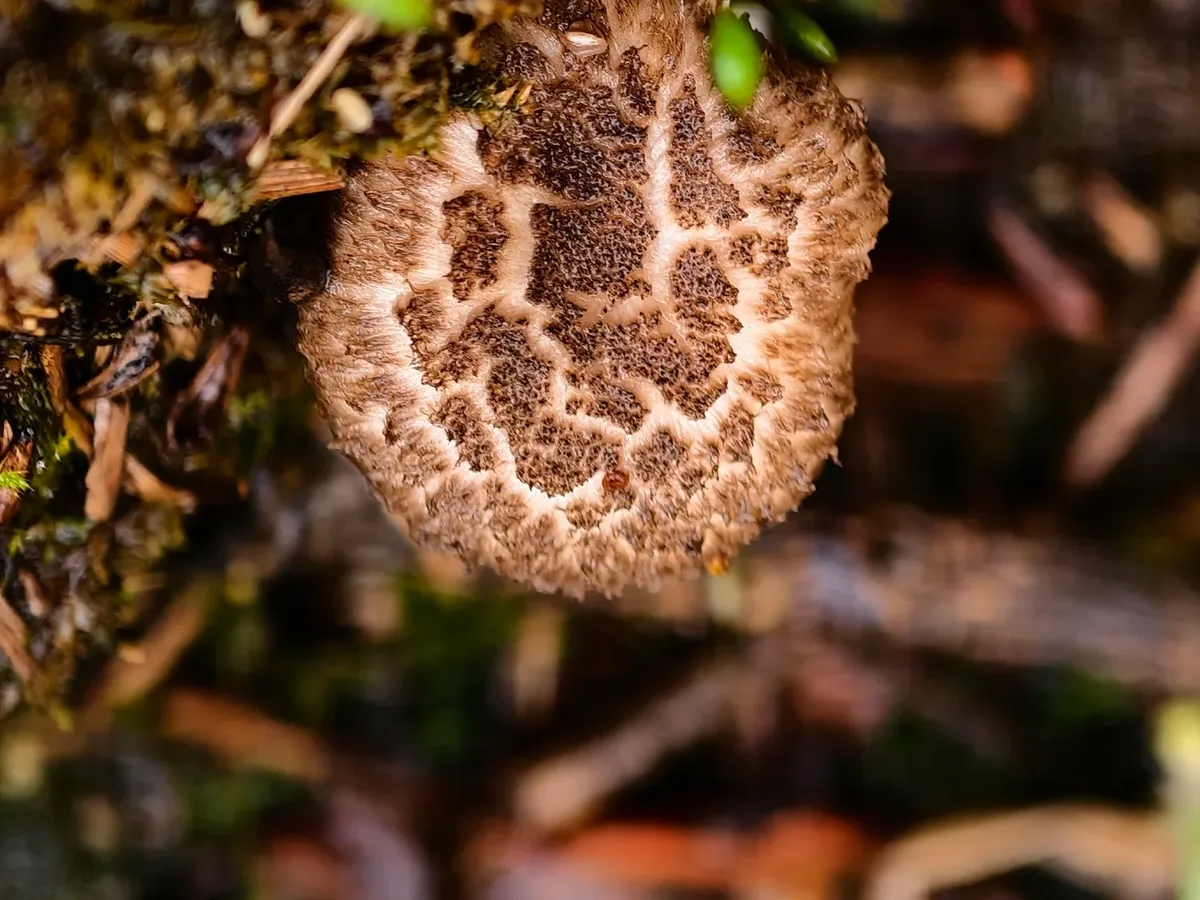 Michael Pongratz (CC0)
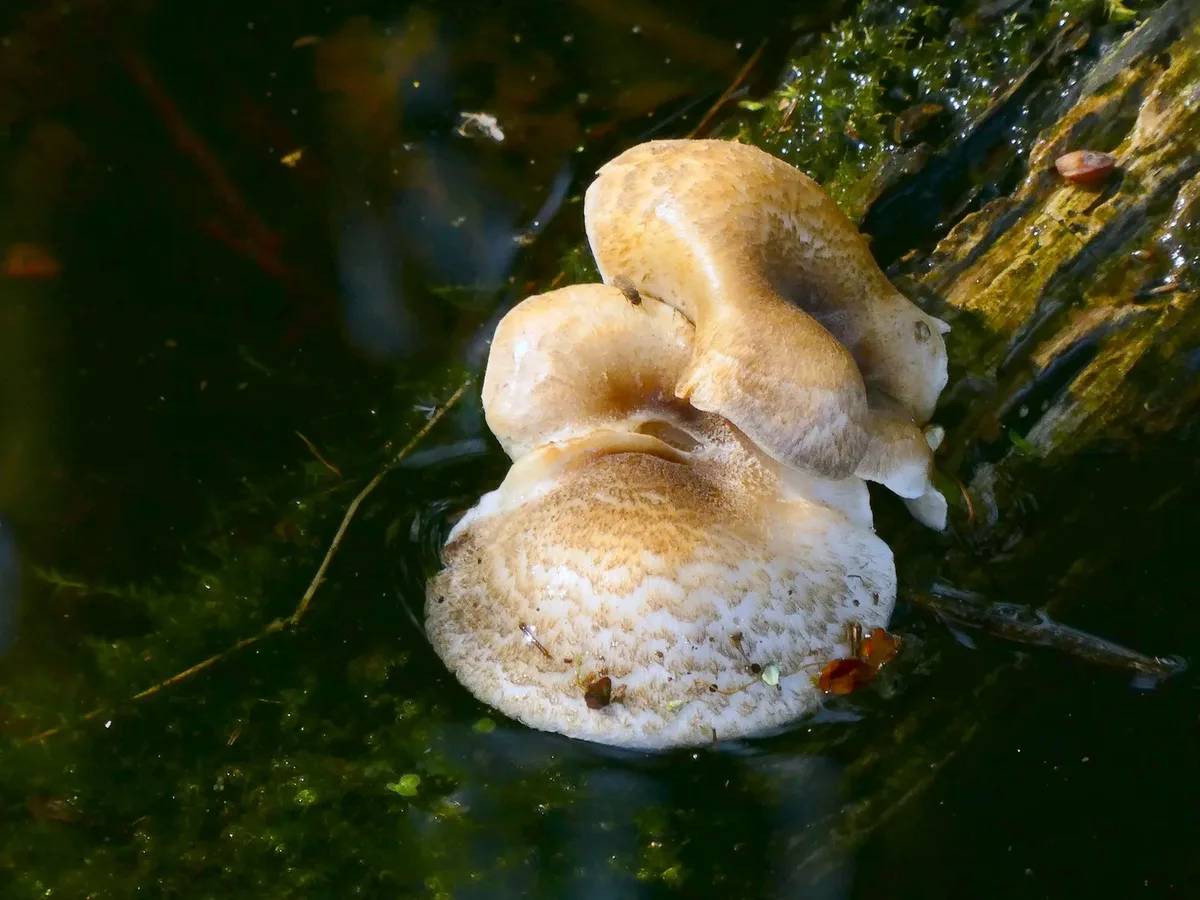 Patrick Le Mao (CC0)
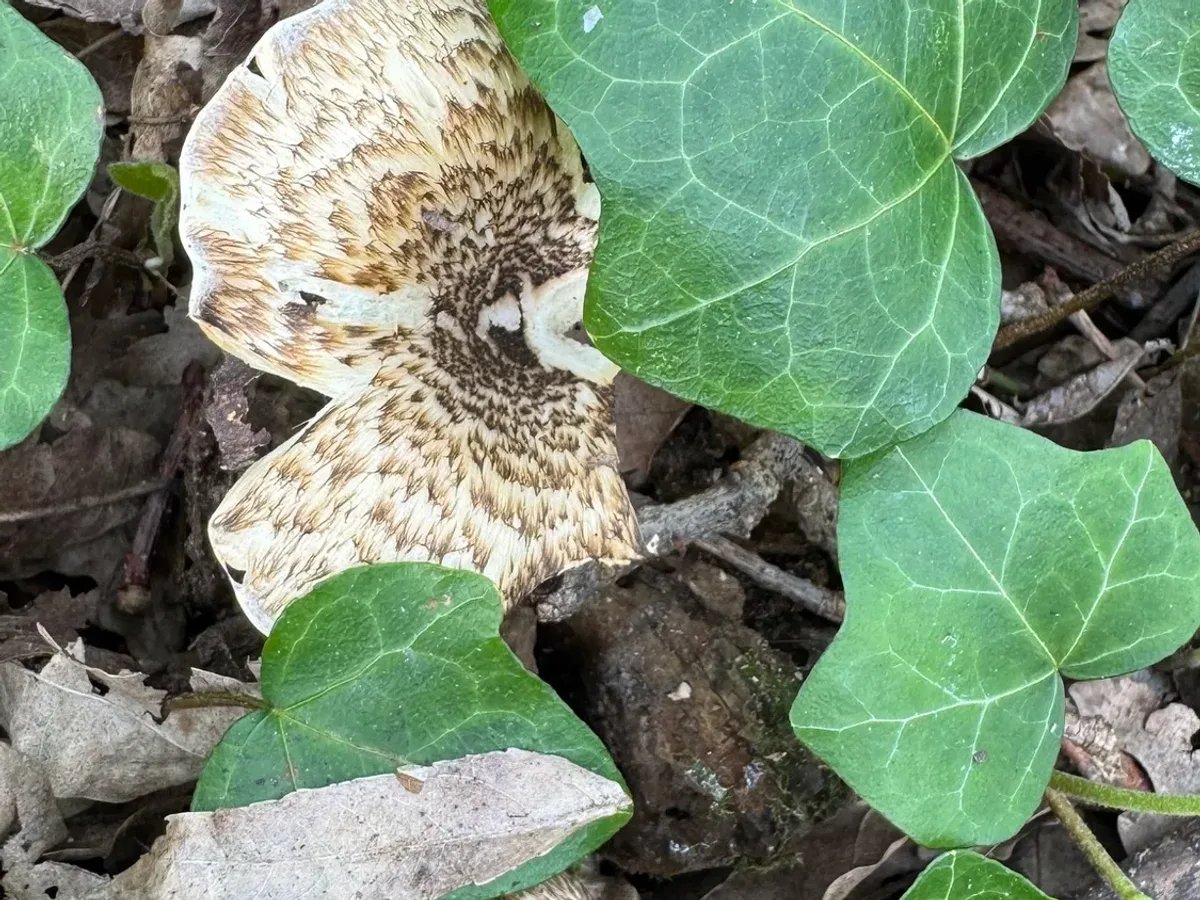 © Paolo Zucca (CC BY)
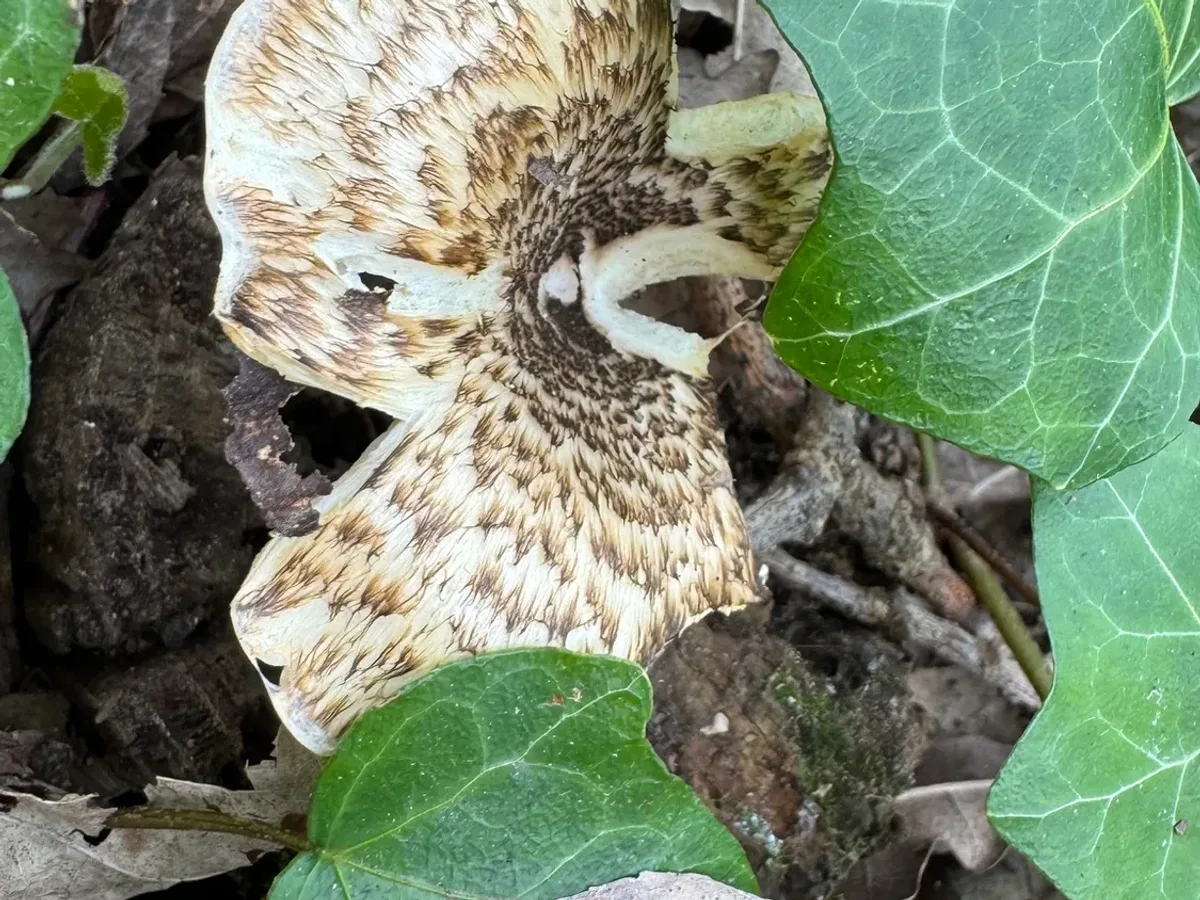 © Paolo Zucca (CC BY)
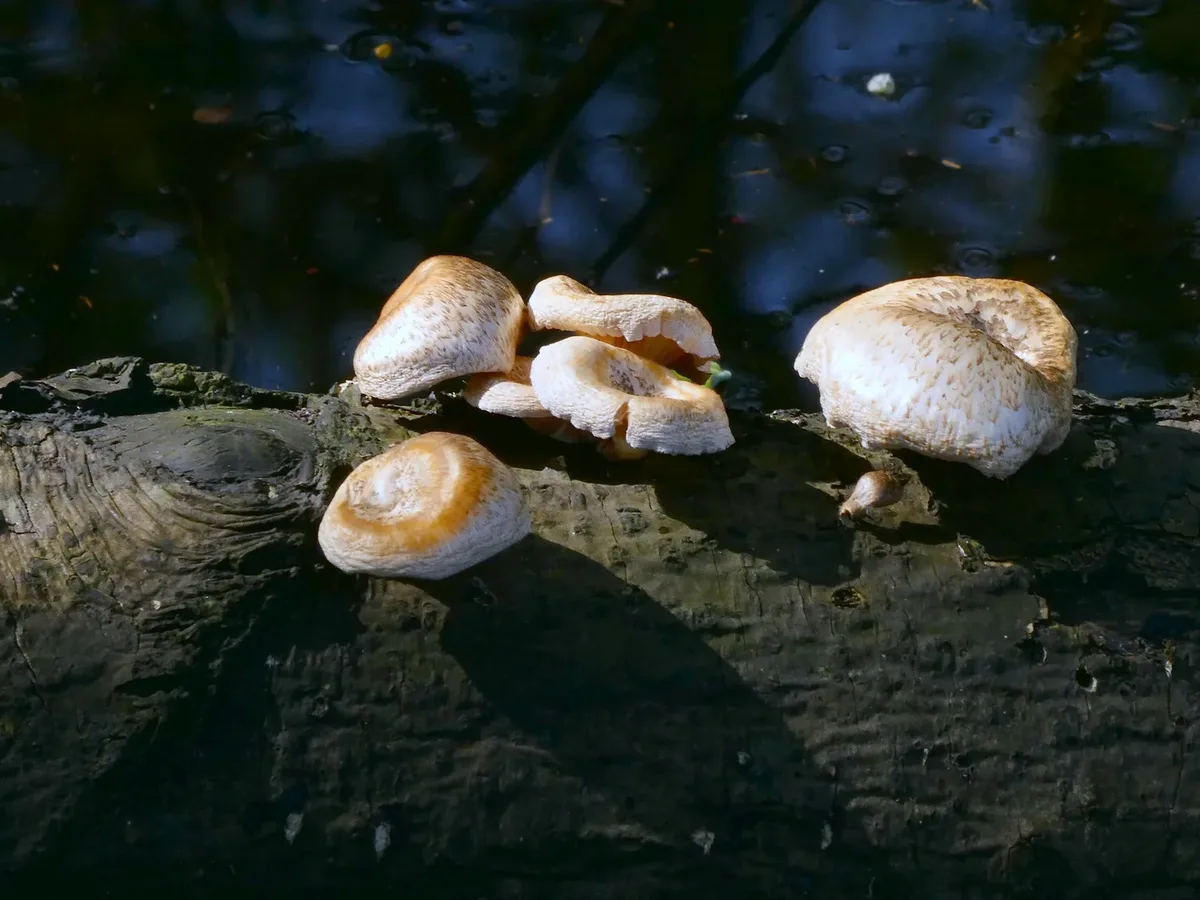 Patrick Le Mao (CC0)
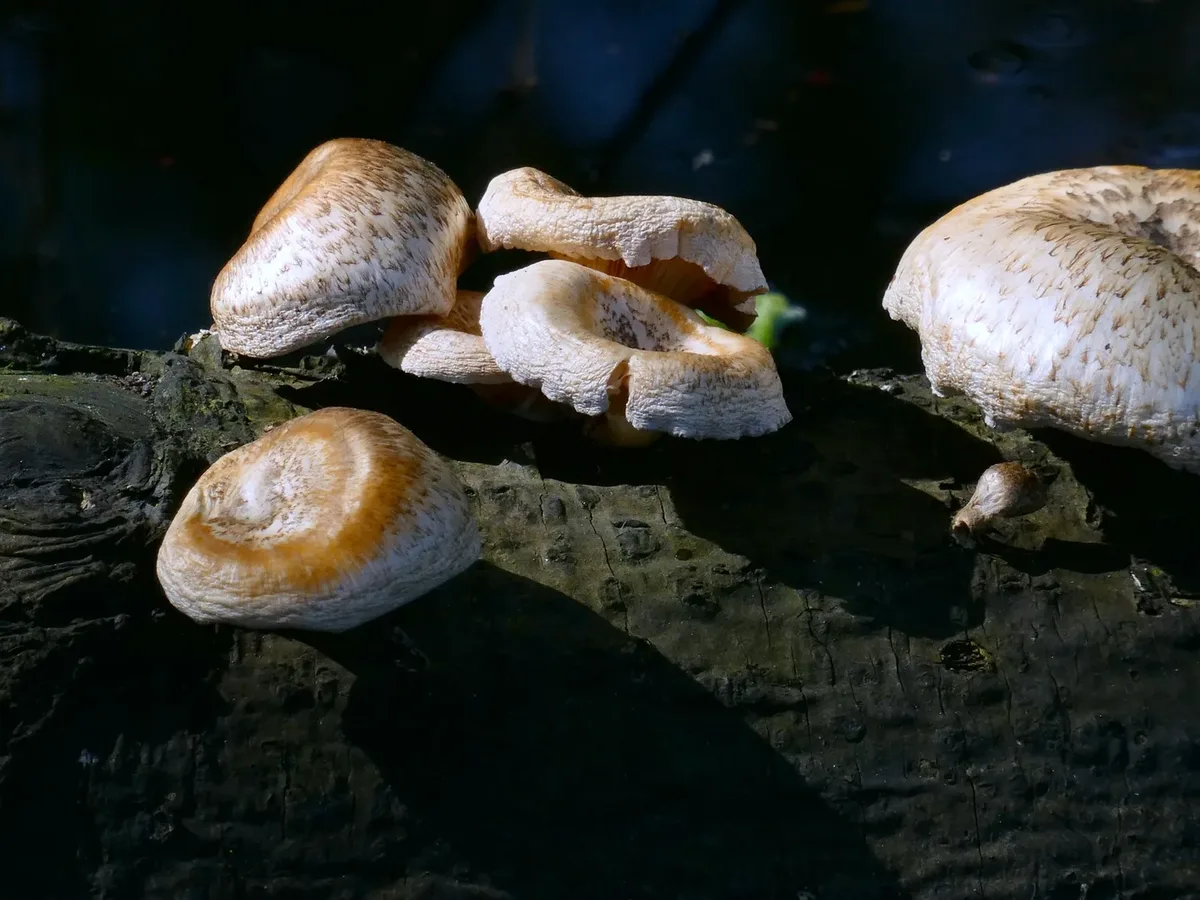 Patrick Le Mao (CC0)
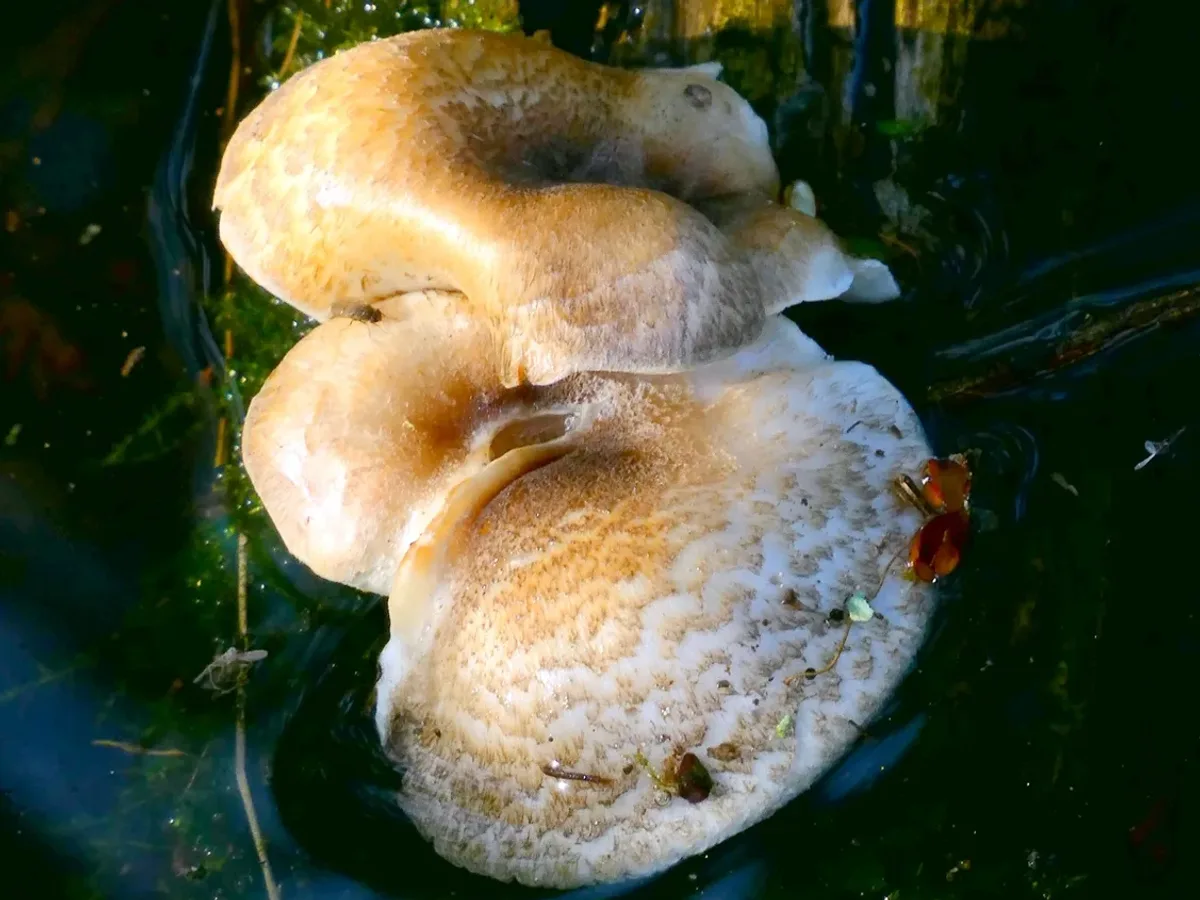 Patrick Le Mao (CC0)
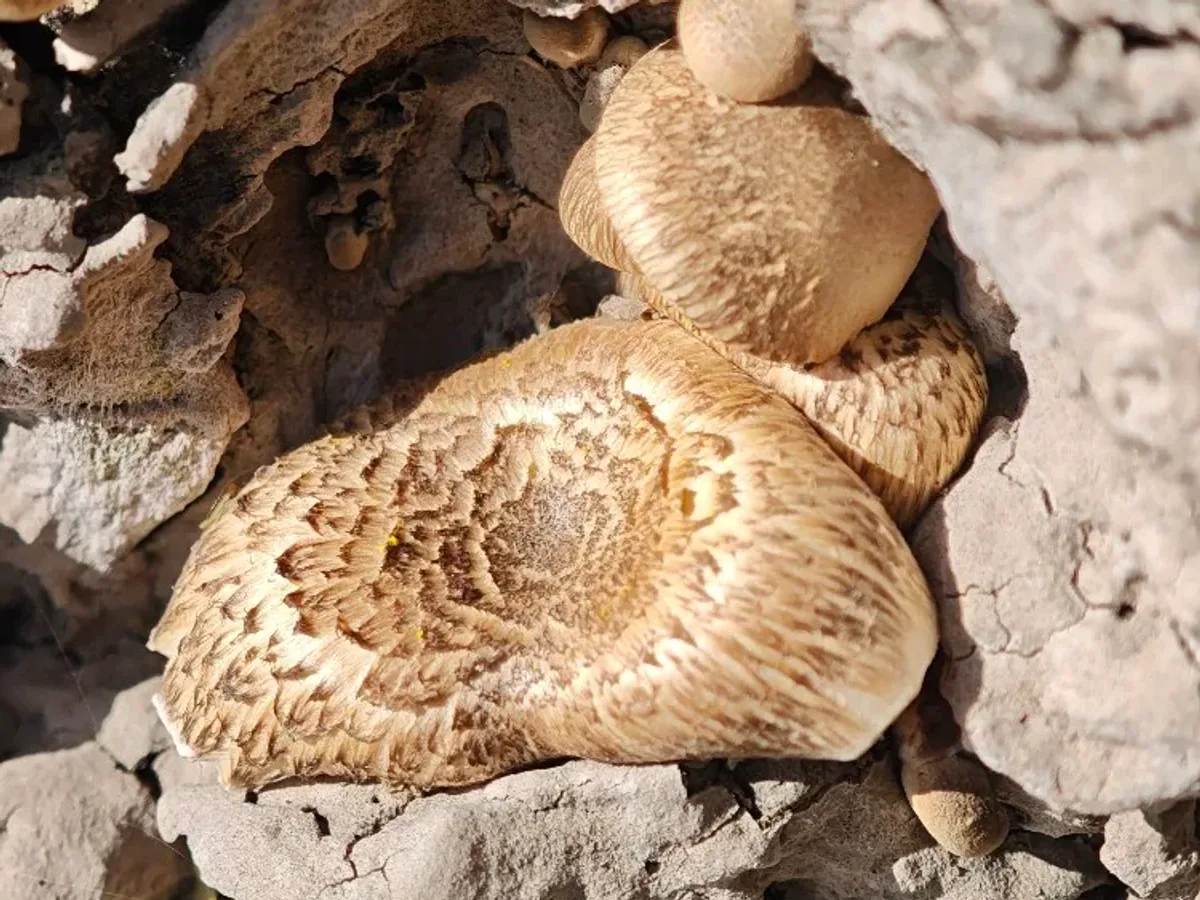 Stefan (CC0)Michael Pongratz (CC0)Patrick Le Mao (CC0)
Edible only with the right preparation - or safe for some people but not others. Learn the caveats first.
How to recognise it
Lentinus tigrinus is one of the easiest Lentinus species to recognise on sight, and its appearance is worth understanding in detail because that knowledge is the foundation of safe identification.
Cap
The cap surface carries a bold pattern of dark brown to near-black fibrous scales set against a pale cream to off-white background - a contrast so striking that the common name 'tiger' (or 'tiger-spotted') captures it precisely.
The scales are arranged concentrically, denser and darker toward the centre and becoming smaller and sparser toward the cap margin, which can sometimes appear almost clean-white at the rim. This dark-scale-on-pale-background pattern is consistent across the species and does not fade dramatically with age, though very old, dried-out specimens may bleach slightly.
The cap shape transforms as the mushroom ages: it begins as a convex dome with a firmly inrolled margin, then flattens, and in old specimens develops a distinct central depression or shallow funnel, with the margin straightening and sometimes becoming wavy or lobed.
Gills
The underside carries densely crowded gills that run down the stem. These gills are white to cream and carry fine serrations or teeth along their lower edge - an important feature that places this species firmly in Lentinus and separates it from many superficially similar mushrooms.
Stem
The stem is solid, firm, and white to cream, often bearing small dark scales near the top mirroring those on the cap. There is no ring and no volva.
Flesh
The flesh is white throughout, becoming notably tougher and more fibrous with age - old specimens can be genuinely leathery. Spore print white.
Where & when it grows
Habitat
Lentinus tigrinus is a creature of waterside woodlands. Its affinity for willows, poplars, elms, and alders - all species that thrive in wet, riparian soils - means it is disproportionately found along riverbanks, lake margins, stream corridors, flood-plain woodlands, and the edges of wetlands.
This habitat preference is a useful field clue: if you are in dry upland oak woodland, you are less likely to encounter L. tigrinus than if you are walking along a floodplain lined with crack willows and poplars.
It is a white-rot decomposer, meaning its mycelium breaks down both the cellulose and the lignin of the wood it colonises, leaving behind a soft white fibrous residue over time.
It tends to fruit from cracks, cut surfaces, and wounds in logs and stumps, and will return to the same substrate for several seasons as long as adequate undecomposed wood remains. Look for it on exposed cut ends of logs and on fallen limbs partially submerged in or near water - the species tolerates fairly high wood moisture levels.
In East Asia it is also found in more open habitats including orchard margins and park trees where willows and poplars have been planted.
When
The fruiting season in temperate East Asia and Europe runs from late spring through autumn, broadly May to October, with the core activity in the warm humid months of June through September.
The trigger is a combination of warm temperatures (wood surface and ambient temperatures above about 18 °C) and significant rainfall that wets the wood substrate deeply.
In central and southern China, June and July are prime months as the Meiyu (plum rain) front delivers prolonged wet weather; in Japan the rainy season (tsuyu) in June and July similarly drives the main flush. A flush can emerge within about a week of a triggering rain event in already-warm conditions.
In subtropical parts of the range, a secondary fruiting can occur in October-November as autumn temperatures and renewed rainfall create a second suitable window. The species is not frost-tolerant and will not fruit below roughly 12-15 °C air temperature.
How it grows
As a saprotrophic white-rot fungus, Lentinus tigrinus establishes mycelium in dead or dying hardwood and persists there for months to years. It consumes the wood gradually before producing above-ground fruiting bodies in response to the right combination of warmth and moisture.
Fruiting bodies emerge singly or in small groups of two to five from the same point on the substrate - occasionally in slightly larger clusters on a well-colonised log. They develop relatively quickly: pins can expand to harvestable caps in five to ten days under warm humid conditions.
The saprotrophic lifestyle is evident in the tough, fibrous texture of the flesh, which reflects the fungus's role as a structural wood decomposer rather than a delicate soil dweller.
The same log or stump can produce multiple flushes across a season and across several seasons, though yields decline as the wood is progressively consumed.
Fruiting conditions
Fruiting is triggered by warm, humid conditions following significant rainfall. A minimum of approximately 25 mm of rain over the preceding 14 days, combined with ambient and wood temperatures above 15-18 °C, initiates primordia formation; optimal fruiting occurs at 20-28 °C. Because the substrate is wood (which buffers temperature and moisture more slowly than soil), the lag from triggering rain event to visible fruit bodies is typically 5-12 days. The species has no cold-shock requirement and will not fruit in temperatures below approximately 12 °C. Repeated flushes from the same substrate are common across the growing season as long as warm humid conditions persist.
Look-alikes
Lentinus tigrinus is one of the easier Lentinus species to identify confidently because the combination of bold dark scales on a pale cap, decurrent gills with serrated edges, white spore print, wood-growing habit, and riparian habitat is quite distinctive. Nonetheless, several species merit attention:
- Lentinus lepideus (Scaly Sawgill) - a close relative with a similar scaly cap, also growing on wood; distinguished by its preference for conifer wood (pine, spruce, larch), by yellower-brown rather than dark-on-pale scale colouring, and by a ring (annulus) present on the stem that is absent in L. tigrinus. Occurs in Europe and North America; edible but of poor quality due to tough flesh and sometimes resinous flavour on pine substrates.
- Lentinus squarrosulus - a tropical relative with shaggy recurved scales; lacks the tiger-spotted concentric pattern of L. tigrinus; grows in tropical Asia and Africa. Edible and consumed in West Africa.
- Panus conchatus (Violet-gilled Lentinus) - white to tan cap without the bold dark scales; gills have a distinctive violet to lilac tint when young (fading to buff in age); tough and leathery; grows on hardwood stumps. Not considered edible due to texture.
- Panus neostrigosus - a similar tough, scaly Panus growing on hardwood in North America and Asia; cap surface more brownish overall rather than pale with dark scales; smooth-edged gills distinguish it from Lentinus.
- Neolentinus lepideus - formerly classified as Lentinus lepideus; grows on conifer wood; has a ring on the stem; paler, more uniformly brownish-scaly rather than the stark pale-cap-with-dark-spots pattern of L. tigrinus.
- Galerina marginata (Deadly Galerina) - this deadly wood-rotting mushroom shares no visual similarity with L. tigrinus in practice, but it is worth knowing why. Galerina marginata is dramatically smaller (cap 1-5 cm, rarely to 8 cm), uniformly honey-brown to tawny-brown with no scales, has smooth gill edges, possesses a ring (skirt) on the stem, produces a rusty-brown spore print, and contains lethal amatoxins. No reasonable resemblance to L. tigrinus exists, but any small brown mushroom on wood in the same habitat must never be eaten without careful positive identification.
- Armillaria species (Honey fungi) - clustered, caramel-brown to honey-yellow capped mushrooms growing in large tufts at the base of trees or from buried roots; ring present on stem; smooth gill edges; brown spore print. Some cause mild gastrointestinal upset when undercooked. No serious visual similarity to L. tigrinus but worth knowing as a common wood-growing neighbour.
Grows on hardwood stumps in Asia and North America; cap brownish to pinkish-tan with a velvety-hairy to fibrous-scaly surface, but lacking the bold pale-background-with-dark-contrasting-scales pattern of L. tigrinus. Gills run down the stem and are crowded, but their edges are smooth (not serrated), distinguishing it from all Lentinus species at a glance with a hand lens. Tough, inedible. The smooth gill edges are the key separator.
Honey-coloured to tawny-brown cap with or without small dark central scales; grows in large dense tufts at the base of trees or from buried roots; always has a distinct ring on the stem; gills are white to cream with smooth (not serrated) edges; spore print is white to very pale cream. Can cause mild gastrointestinal upset when undercooked. The densely tufted growth, ring on the stem, smooth gill edges, and uniformly brownish colouring clearly differentiate Armillaria from L. tigrinus. Nevertheless, any mushroom on wood should have its gill edges checked before consumption.
A close relative also bearing coarse scales on the cap, but the cap background colour is more uniformly ochre-buff to yellow-brown rather than the pale cream with contrasting dark-brown-to-black scales of L. tigrinus. Critically, L. lepideus grows almost exclusively on conifer wood (pine, spruce, larch, Douglas-fir) rather than the hardwoods and riparian trees preferred by L. tigrinus, and possesses a distinct ring (annulus) on the stem, which is absent in L. tigrinus. Also edible but tough; the ring and conifer habitat are the most reliable distinguishing features.
Formerly Lentinus lepideus; grows on dead conifer wood, often on cut timber, railway sleepers, and mine props as well as fallen logs. Cap pale cream-buff with pale ochre-brown fibrous scales; scales are generally paler and less starkly contrasting than the dark-brown-to-black scales of L. tigrinus. A persistent ring on the stem is present in fresh specimens. Edible but unpleasantly resinous-flavoured on pine substrates.
White to pinkish-tan cap without the bold dark concentric scales of L. tigrinus; gills have a distinctive violet to lilac flush when fresh, fading to pale buff in age - a colour absent in L. tigrinus. Also wood-growing and tough-fleshed. Gill edges are serrated in both species. Not considered edible due to very tough texture; not toxic. Distinguished reliably by the violet gill tinge in young specimens and the uniformly pale, un-spotted cap surface.
In the kitchen
Picking & cleaning
Harvest young to medium-aged caps for the best eating results. The ideal moment is when the cap has flattened from its initial convex shape but the margin is still mostly straight or only slightly wavy - at this stage the flesh is thickest, firmest, and most flavourful, while remaining just tractable enough to chew after cooking.
Very old specimens with funnel-shaped caps, extensively wavy margins, and visibly leathery flesh are edible but require prolonged cooking and even then retain a notably tough texture.
Twist the stem gently at the base or cut cleanly with a knife. The stem is edible but typically tougher than the cap; for eating, trim off any hardened or soil-soiled base and slice the stem thinly across the grain. Brush off debris and any attached insects.
Consume within one to two days of picking, stored in a paper bag in the refrigerator; the flesh is reasonably moisture-retentive and holds well. The mushroom can also be dried and reconstituted, though the already-firm texture becomes even chewier.
Cooking
Lentinus tigrinus demands a different culinary approach than delicate foraged mushrooms - its tough, fibrous flesh requires either prolonged cooking to tenderise, or preparation methods that turn its chewy texture into an asset.
The flavour is mild, pleasant, and mildly savoury but not particularly complex or distinctive; it readily absorbs surrounding flavours.
Young caps, sliced 5-8 mm thick across the grain, can be sautéed over medium-high heat in oil or butter with garlic for 8-12 minutes until they soften and develop light browning. They will remain somewhat chewier than oyster mushrooms but become pleasantly firm rather than rubbery.
For older specimens, longer cooking is essential: braise in a broth or sauce for 20-30 minutes, or add to slow-cooked dishes - soups, stews, and curries - where extended heat breaks down the fibrous flesh.
In East Asian cuisine it appears in soy-braised mushroom dishes, hot-pot stocks, and slow-simmered soups where the chewy texture is regarded as a desirable contrast to softer ingredients.
The stem is edible but should be sliced very thinly or slow-cooked for a long time; discard the hardened base. Dried slices reconstitute well in hot water and can add body and mild flavour to soups and noodle dishes.
Do not expect the fine flavour of chanterelles or ceps - think of L. tigrinus as a robust, textural workhorse mushroom best deployed in strongly flavoured, long-cooked preparations.
Good to know
Lentinus tigrinus is an edible species with no documented toxicity in the published mycological literature. It has a history of consumption in parts of East Asia, particularly in China, where it is occasionally sold in rural markets.
That said, it is not considered a choice edible: the flesh is tough, chewy, and of modest flavour even in young specimens, and old specimens become genuinely leathery and difficult to render palatable. No reports of poisoning have been attributed to correctly identified L. tigrinus.
However, several sensible precautions apply:
- 1Always cook it thoroughly - eating raw or undercooked mushrooms of this genus is inadvisable.
- 2The tough texture means that improperly chewed or very old specimens may cause indigestion or discomfort in sensitive individuals.
- 3The bold dark-scale pattern is the most important identification anchor: if the scales are absent or the cap is uniformly brown without a pale background, reconsider the identification.
- 4Confirm the serrated gill edges, white spore print, and absence of a ring. If any feature is ambiguous or does not fit, do not eat the collection.
Individuals trying this species for the first time should begin with a small portion.
A reference guide - never an edibility guarantee. When in doubt, leave it out.