Sajor-Caju Mushroom
Lentinus sajor-cajusyn. Panus sajor-caju, Polyporus sajor-caju, Agaricus sajor-caju, Lentinus flabelliformis, Pleurotus sajor-caju
 © Karen Eichholz (CC BY)
 © Nicola van Berkel (CC BY-SA)
 © Nicola van Berkel (CC BY-SA)
 © Nicola van Berkel (CC BY-SA)
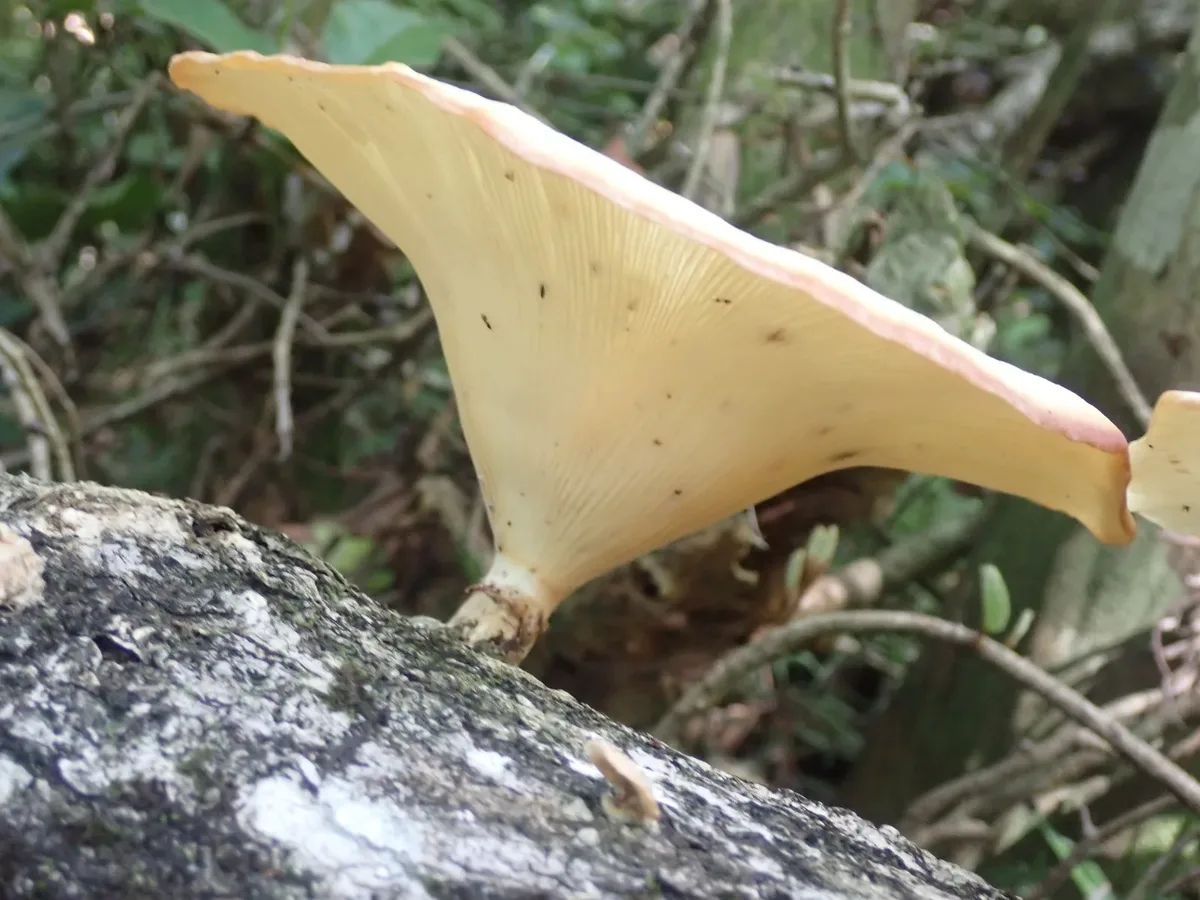 © Nicola van Berkel (CC BY-SA)
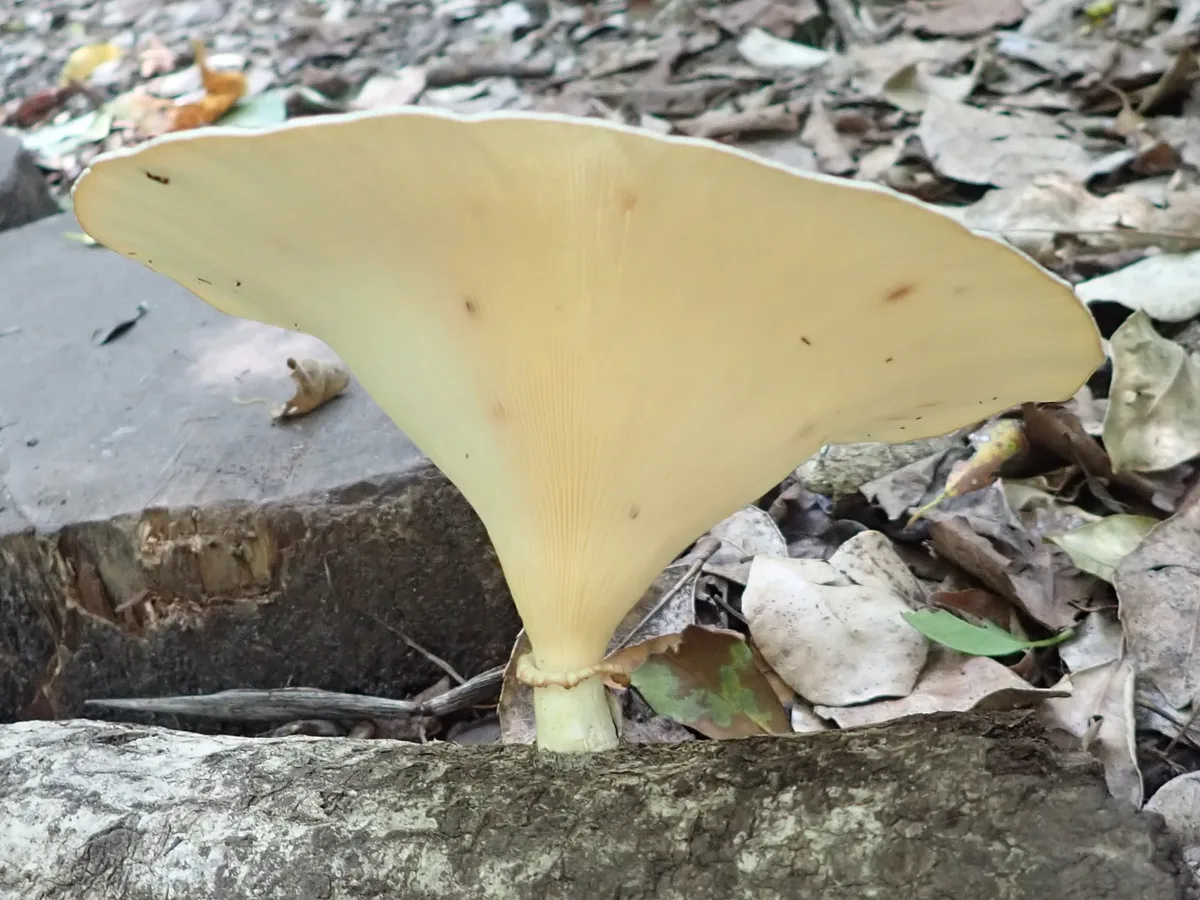 © Nicola van Berkel (CC BY-SA)
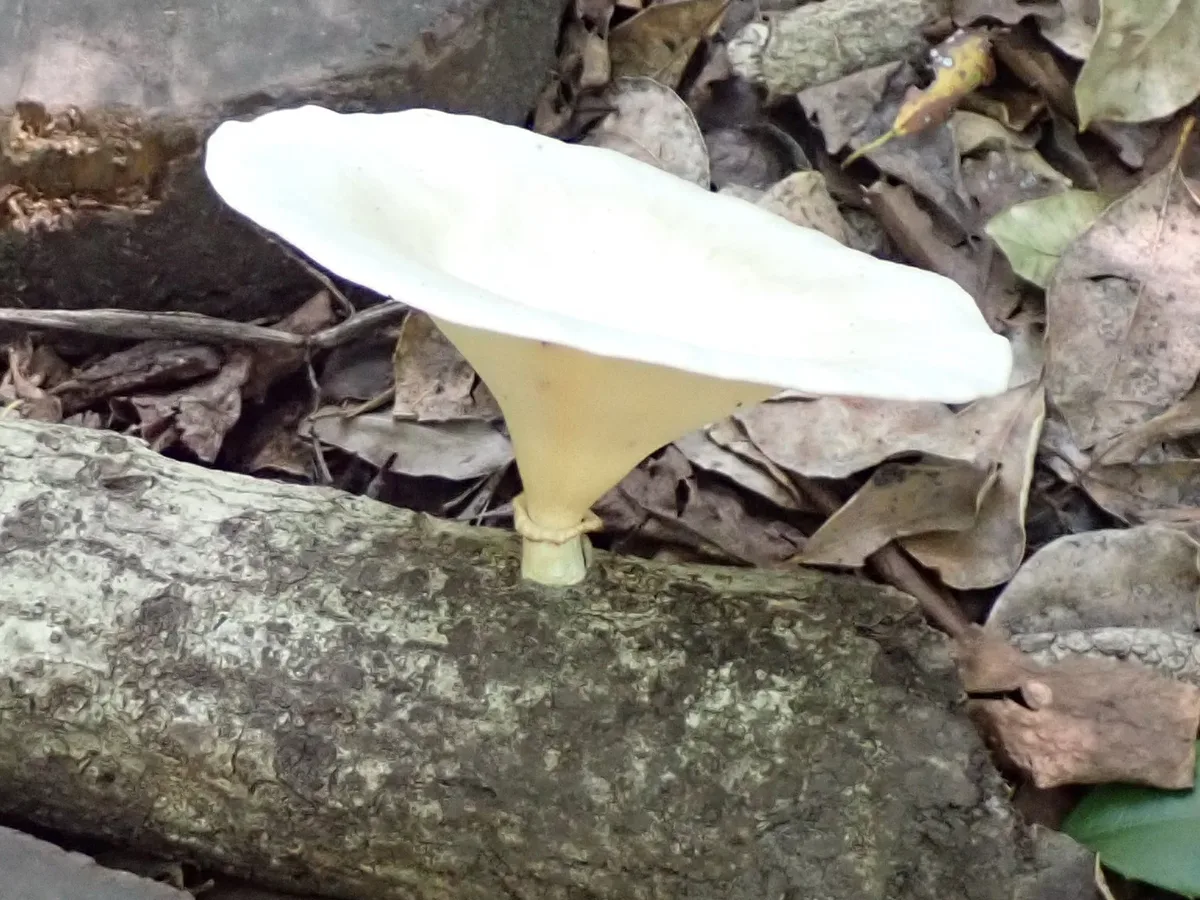 © Nicola van Berkel (CC BY-SA)© Karen Eichholz (CC BY)© Nicola van Berkel (CC BY-SA)
Good to eat, once you have identified it with certainty and cooked it through.
How to recognise it
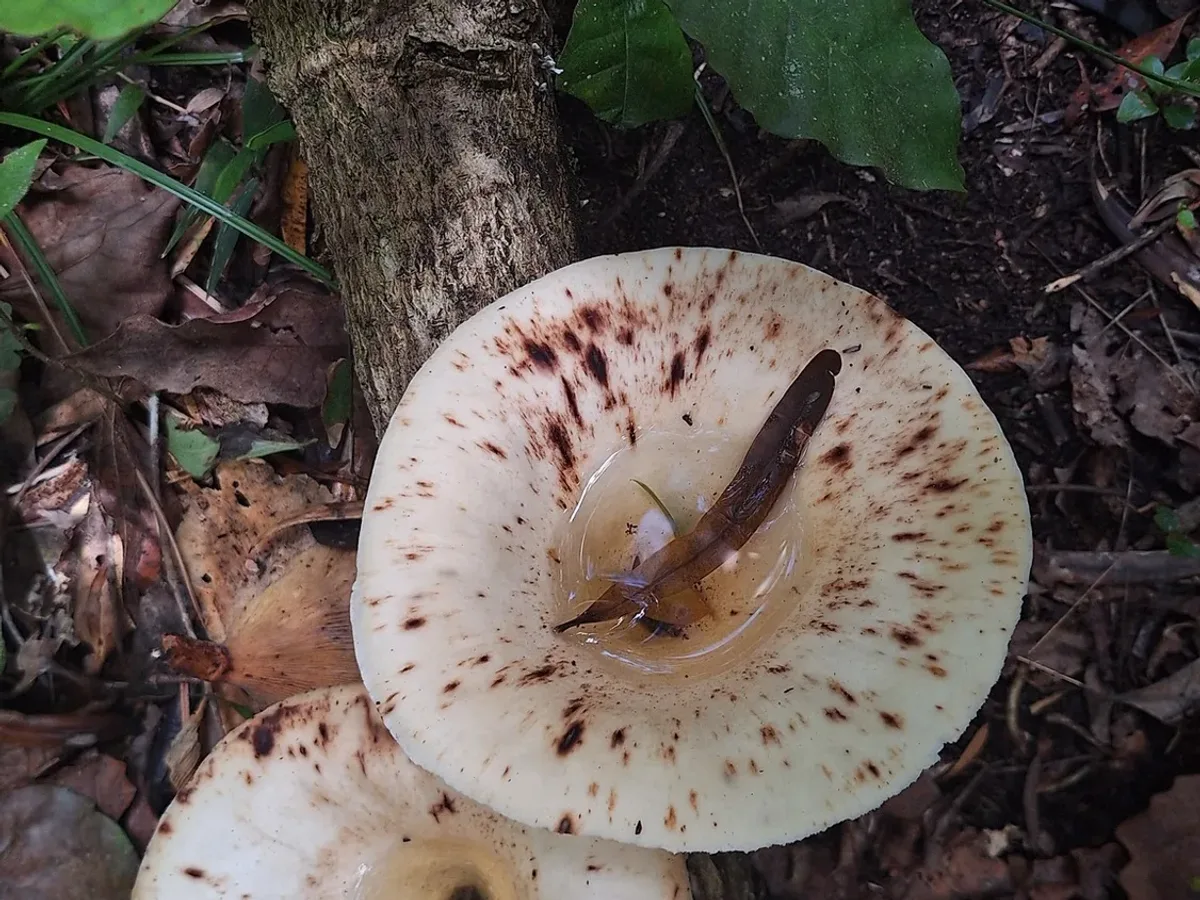
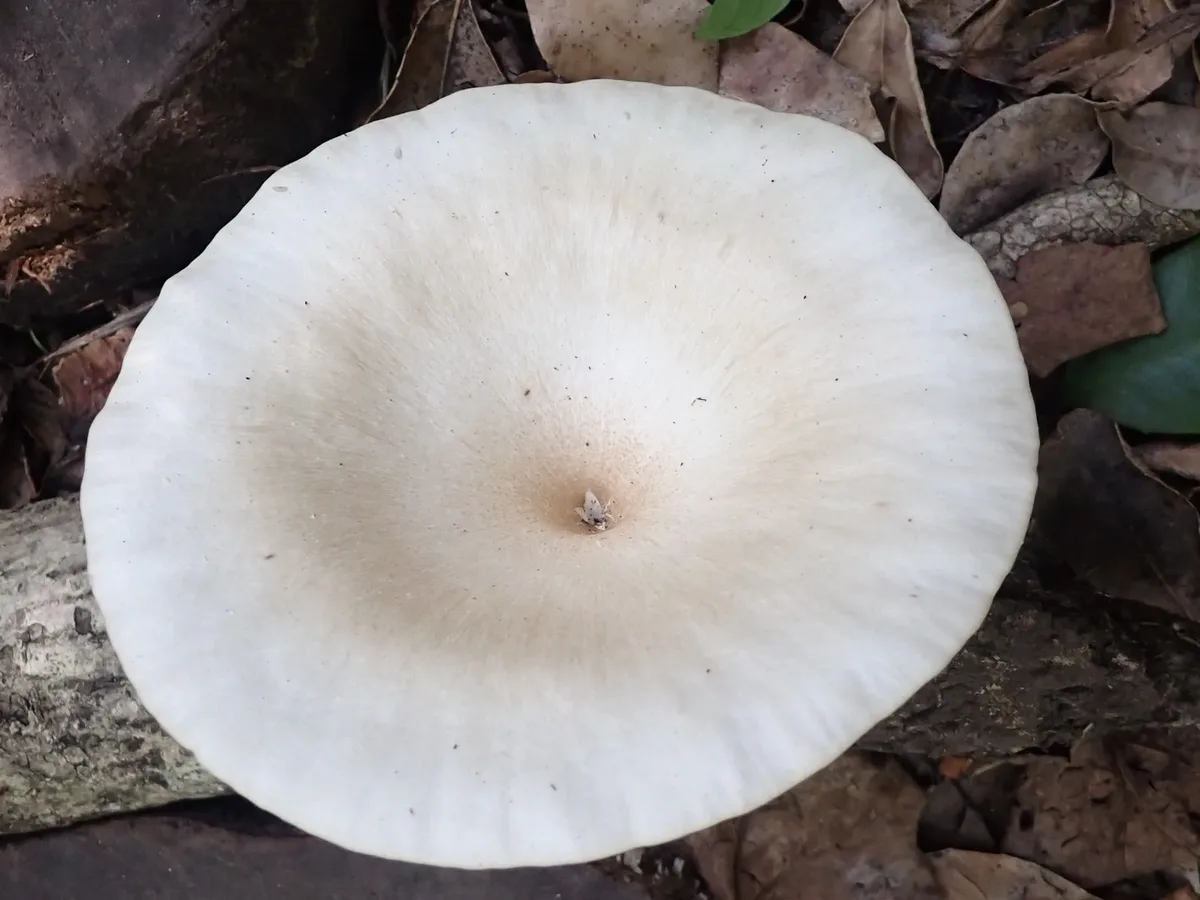
Lentinus sajor-caju is a sturdy, attractive fungus whose white to pale grey-cream colouring and elegant funnel-shaped cap make it one of the more photogenic finds in a Southeast Asian or South Asian forest.
Cap
Young caps are convex and tightly enrolled at the margin, opening progressively to a broad shallow funnel with undulating, sometimes lobed edges in full maturity.
The surface is smooth and dry, typically cream to pale buff-grey, occasionally with faint concentric bands of slightly darker colour.
Gills
The most reliable identification character - one worth committing to memory - is the gill edge. Under a hand lens or even the naked eye you can see the gills are finely serrated or toothed along their lower margin, not cleanly smooth like most gilled mushrooms.
This is a genus-level feature of Lentinus and immediately distinguishes it from true oyster mushrooms (Pleurotus), which have smooth gill edges. The crowded white decurrent gills run well down the firm, central stem.
Stem
There is no ring on the stem.
Flesh
Flesh is white, firm-to-tough, and notably more chewy and fibrous in older fruiting bodies - very old specimens become genuinely leathery and are not worth eating.
The spore print is white.
Where & when it grows
Habitat
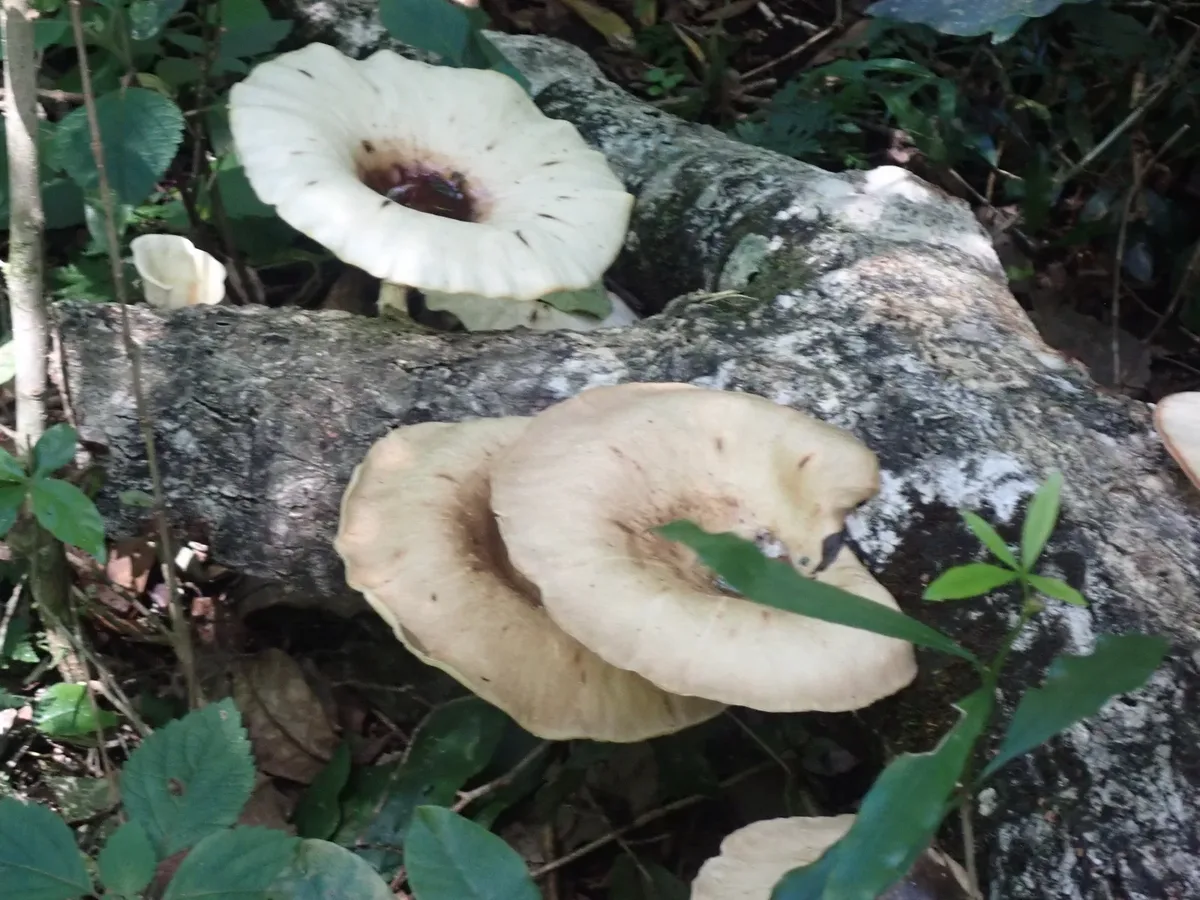
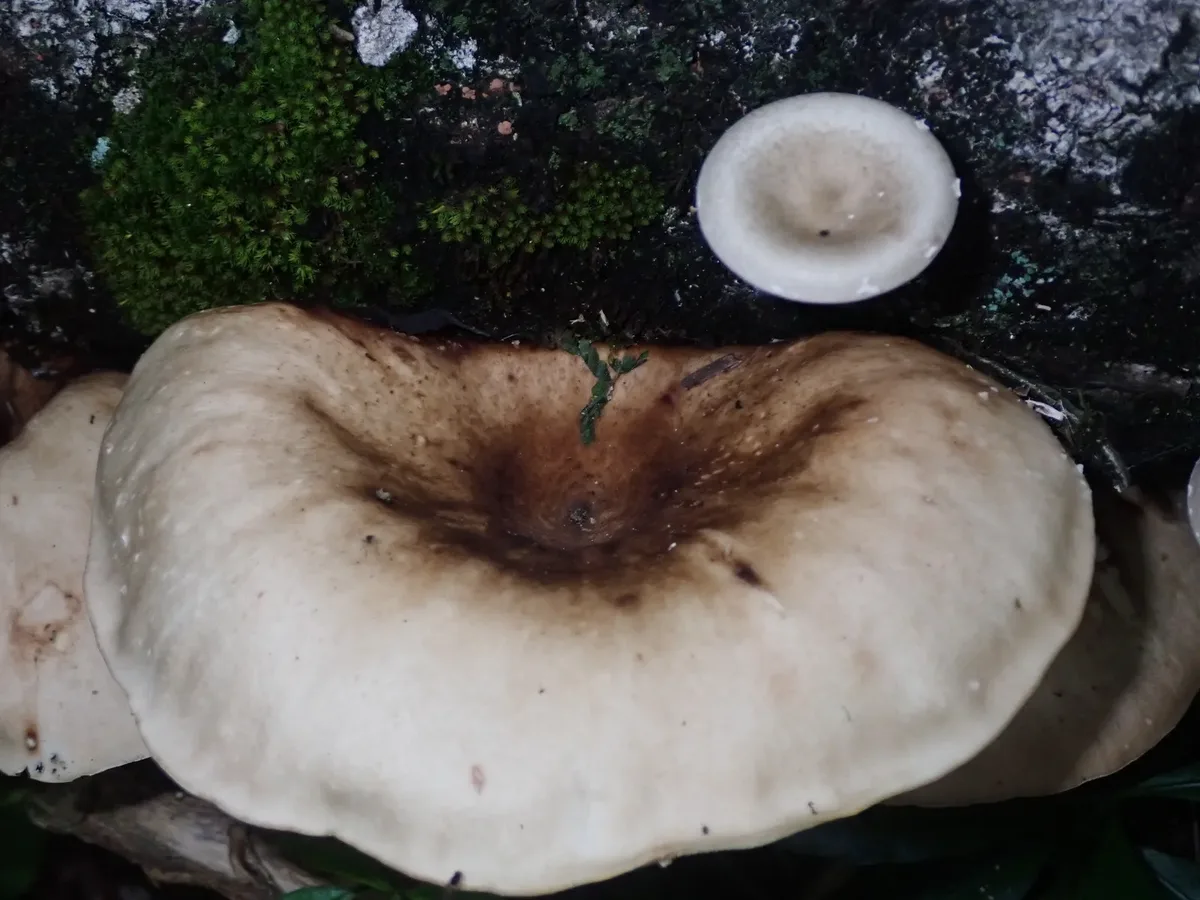
A vigorous white-rot decomposer of hardwood, found wherever dead or dying tropical broadleaf trees provide suitable substrate.
In forests it fruits on fallen logs, large branches, and stumps; in gardens, orchards, and rubber plantations it appears on pruning waste, cut stumps, and abandoned wood piles.
Unlike the true oyster mushrooms (Pleurotus spp.), which often form large overlapping shelf clusters, L. sajor-caju more typically produces scattered solitary to small-grouped fruiting bodies from the same substrate.
It colonises an exceptionally wide range of hardwood hosts - essentially any dead tropical broadleaf wood - which is why it became an ideal candidate for commercial cultivation on cheap agricultural waste substrates like paddy straw and sawdust. It is absent from conifer wood in its native range.
When
The fruiting window is governed almost entirely by warmth and moisture.
In South Asia, fruiting runs from the onset of the pre-monsoon rains in April through to the end of the northeast monsoon in November, with the heaviest flush in June-September when both heat and humidity are at their peak.
In equatorial Southeast Asia, where temperature varies little through the year, fruiting responds primarily to rainfall and can occur in any month following adequate rain.
The trigger is a sustained period of high relative humidity (above 80 %) combined with temperatures of 22-32 °C. A spell of drying wind or temperatures below 18 °C interrupts fruiting until conditions recover.
How it grows
Lentinus sajor-caju is a saprotrophic white-rot fungus. Its mycelium secretes lignocellulolytic enzymes that break down both the cellulose and lignin components of wood, ultimately reducing the substrate to a soft white fibrous mass.
In nature the mycelium colonises the wood over days to weeks before producing visible primordia. Fruiting bodies emerge singly or in small groups of two or three from the wood surface, often at cracks or wounds in the bark.
Primordia appear as small cream-coloured buttons and expand rapidly under warm humid conditions - a pin can become a full-sized cap in 3-7 days. Individual fruiting bodies can reach impressive sizes; caps of 15 cm are not unusual on large substrates.
The same log or stump can produce multiple flushes over a growing season as the mycelium progressively colonises new wood tissue.
Fruiting conditions
Fruiting is triggered by sustained high humidity (>80% RH) and warm temperatures (optimum 22-32 °C). In the wild, significant rain events that wet the wood substrate deeply initiate primordia within 3-7 days; visible caps appear 3-7 days after pin formation. A lag of 3-10 days from triggering conditions to harvestable fruiting bodies is typical. The species does not require a cold shock and is inhibited by temperatures below approximately 18 °C. Multiple flushes from the same substrate are common over a growing season.
Look-alikes
Lentinus sajor-caju shares its wood-growing habit and general form with several other species, but none that are seriously dangerous to a careful observer. The most important distinguishing feature at the genus level is the serrated or toothed gill edge, which sets Lentinus apart from most lookalikes.
Species to be aware of include:
- Lentinus tigrinus (tiger sawgill) - grows on wood in temperate and subtropical zones; white to buff cap with distinctive dark brown-black scales arranged concentrically; gill edges are also serrated; smaller than L. sajor-caju and more commonly found in temperate regions. Edible but tough; not dangerous.
- Lentinus squarrosulus - a closely related tropical species, similar in size and habitat, with a scaly-fleecy cap surface and serrated gills. Edible and consumed in West Africa and parts of Asia.
- Pleurotus ostreatus (oyster mushroom) - grows in overlapping lateral shelf clusters on wood; cap is smoky grey to brownish (not white-cream); gills are smooth-edged (not serrated); eccentric to lateral stem. Fully edible and choice.
- Pleurotus djamor (pink oyster) - vivid pink colouring when fresh (not white); overlapping shelf clusters; smooth gill edges. Edible.
- Panus conchatus (violet-gilled lentinus) - white to tan cap, violaceous gills when young fading to buff; tough and leathery; inedible. Serrated gill edges; grows on hardwood stumps.
- Galerina marginata and related deadly Galerina species - small, brown-capped mushrooms that grow on wood in the same regions; much smaller (cap 1-5 cm, rarely to 8 cm), distinctly honey-brown to tawny-brown (never large and white), with a ring on the stem, smooth gill edges, and a rusty-brown spore print; contain deadly amatoxins. Size alone (Galerina is dramatically smaller) plus the brown cap, brown spore print, and ring distinguish them from L. sajor-caju.
However, any mushroom growing on wood in tropical forest that cannot be positively identified should be left alone.
A small to medium white to pale-grey fan-shaped to spoon-shaped mushroom growing on hardwood debris; cap 2-8 cm, white to greyish-white, gills white and smooth-edged (not serrated), stem rudimentary or lateral, texture gelatinous-rubbery. Smaller, thinner-fleshed, and lacks the firm central stem and serrated gill edges of L. sajor-caju. Not seriously toxic; not typically considered edible due to texture.
Grows in overlapping shelf-like lateral clusters on wood; cap smoky-grey to brownish or whitish; gills run down an eccentric or lateral (off-centre) stem and have smooth (not serrated) edges; no central stem in typical forms. Spore print lilac-white. Fully edible and choice; confusion would result in eating another valued edible mushroom, not a dangerous one.
A closely related tropical Lentinus with similar funnel-shaped white cap and serrated gills; cap surface is more distinctly shaggy-scaly (squarrose) with recurved white to brownish scales, especially near the centre. Edible and consumed in West Africa and parts of Asia. No toxicological concern - confusion simply yields another edible species.
Shares the serrated gill edges and wood-growing habit of L. sajor-caju but has distinctive dark brown to black fibrous scales arranged concentrically on a paler cap, making it look strikingly spotted or tiger-striped. Smaller than L. sajor-caju (cap usually 3-10 cm) and more commonly found in temperate regions on willow, poplar, and elm. Edible but quite tough.
White to pinkish-tan cap, similar shape and wood-growing habit; gills have a distinctive violet to lilac flush when fresh (fading to pale buff in age) and serrated edges. Tough and leathery at all stages; not considered edible due to texture. Lacks the pale cream-only colouring and larger robust build of L. sajor-caju; the violaceous gills when fresh are unmistakable.
In the kitchen
Picking & cleaning
Harvest young to medium-aged caps for the best eating - aim for caps that have flattened but whose margin has not yet split or begun to split, typically 5-12 cm across. At this stage the flesh is firm but not yet tough, and the flavour is fullest.
Very young buttons with still-inrolled margins are also excellent. Older caps with split or heavily lobulate margins and leathery flesh are edible but are best slow-cooked or dried.
Twist gently at the base and cut cleanly with a knife; leaving the myceliated wood undisturbed encourages further flushes.
Brush off any debris. The stem is edible but can be noticeably tougher than the cap, especially in larger specimens - slice it thinly or discard the base.
Consume or refrigerate promptly; fresh caps hold well for 2-3 days in a paper bag in the refrigerator.
Cooking
The texture of L. sajor-caju ranges from pleasantly firm in young caps to notably chewy or even tough in mature and old ones - so choose the cooking method accordingly.
- Young caps: slice and sauté over medium-high heat in oil or butter with garlic; the edges will crisp slightly and the flavour develops a mild savoury-umami depth. They hold up well in stir-fries, noodle soups, and curry - unlike the delicate oyster mushroom, they can handle longer cooking times without disintegrating.
- Mature caps: benefit from longer, slower cooking - braising, simmering in coconut curries, or adding to slow-cooked rice dishes - which tenderises the fibres.
In Sri Lanka and southern India, sajor-caju mushrooms are commonly cooked in coconut milk curries with turmeric, chilli, and curry leaves; in Thailand and Vietnam they appear in clear soups and hot-pots. The cap holds its shape well and absorbs surrounding flavours readily.
Dried mushrooms reconstitute well in hot water and add a pleasant chewy texture and mild flavour to soups and stews. The stem, particularly in older specimens, is best sliced thin or slow-cooked; if very tough it can be discarded.
Good to know
Lentinus sajor-caju is a well-established edible species with a long history of safe consumption across South and Southeast Asia, where it has been collected wild and cultivated commercially for decades. No documented human toxicity is attributed to this species when properly identified and cooked.
As with virtually all wild mushrooms, it should not be eaten raw; thorough cooking improves both digestibility and flavour. Very old, leathery specimens may cause mild gastrointestinal discomfort in some individuals due to tough indigestible fibre, so choose younger specimens for eating.
The key identification anchors - confirm all three before consuming any collection:
- serrated gill edge
- white spore print
- wood-growing habit
As always with wild fungi, if any doubt remains about identification, do not eat. Individuals with known fungal sensitivities should exercise usual precaution when trying any species for the first time.
A reference guide - never an edibility guarantee. When in doubt, leave it out.