New Zealand shiitake
Lentinula novae-zelandiae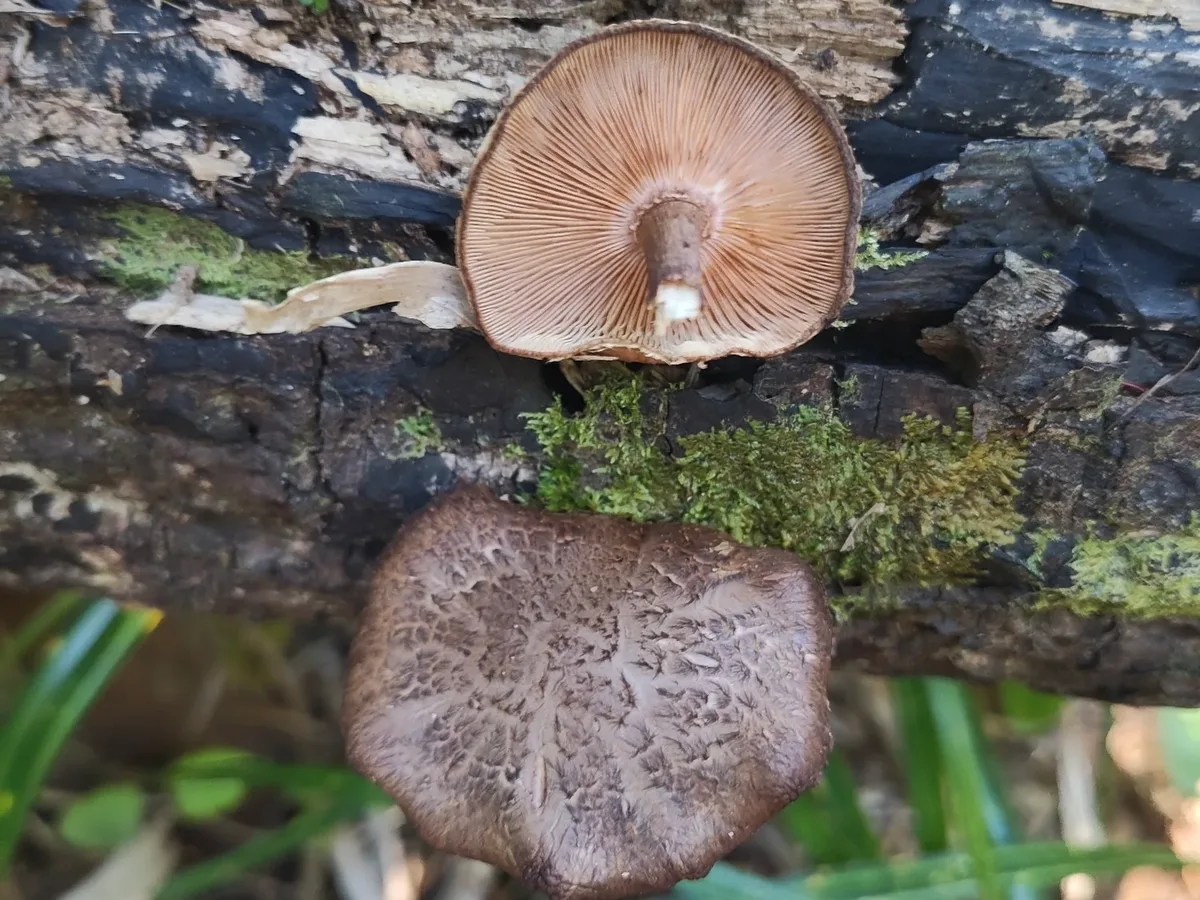 © Bryan Menger (CC BY)
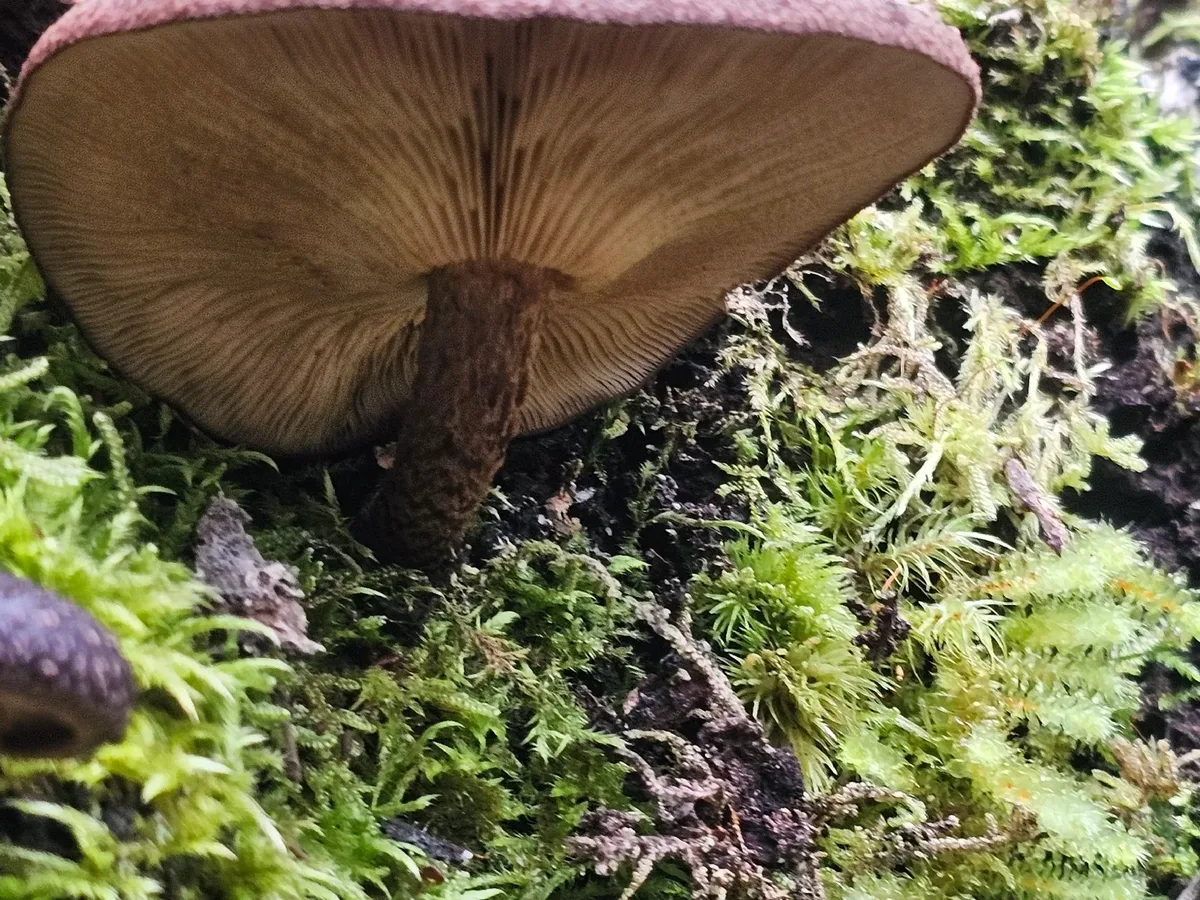 Henry Hart (CC0)
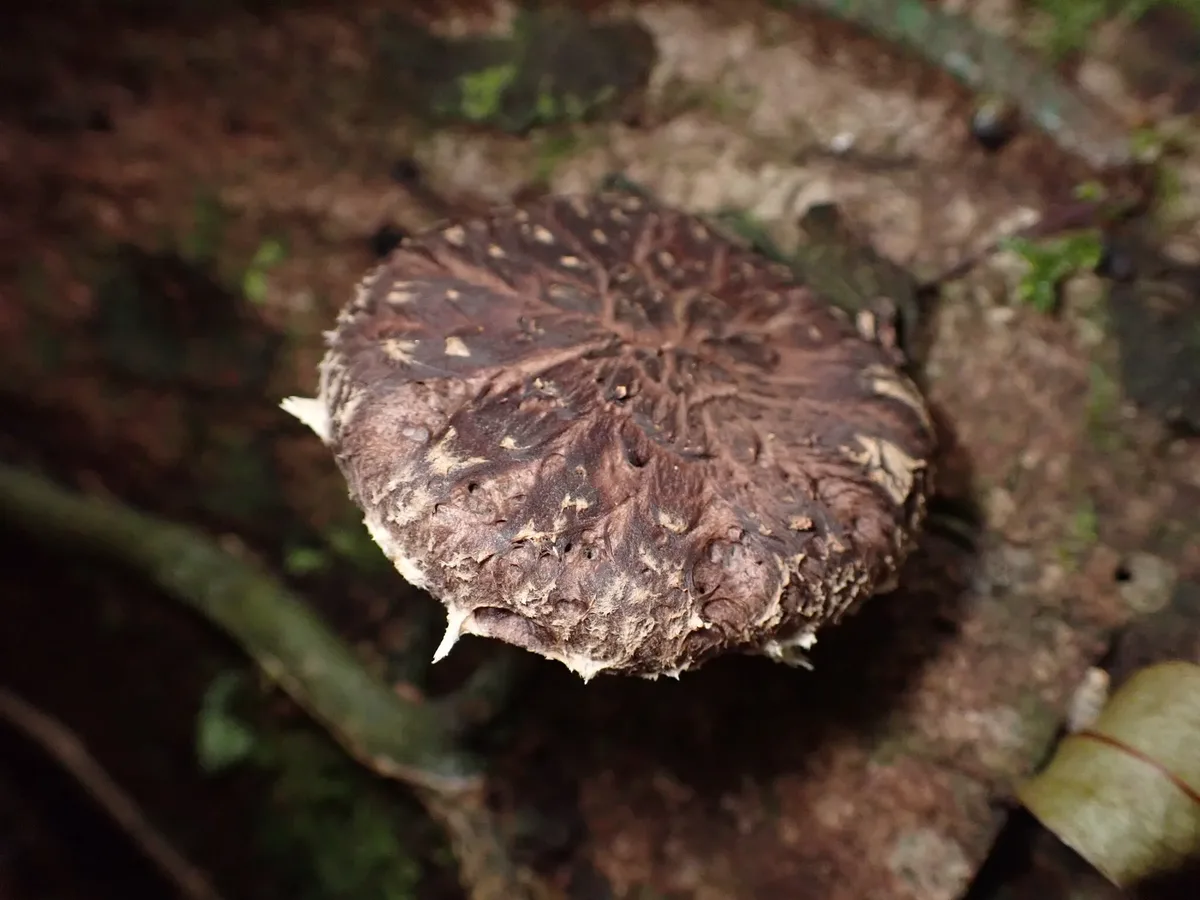 © Lisa Bennett (CC BY)
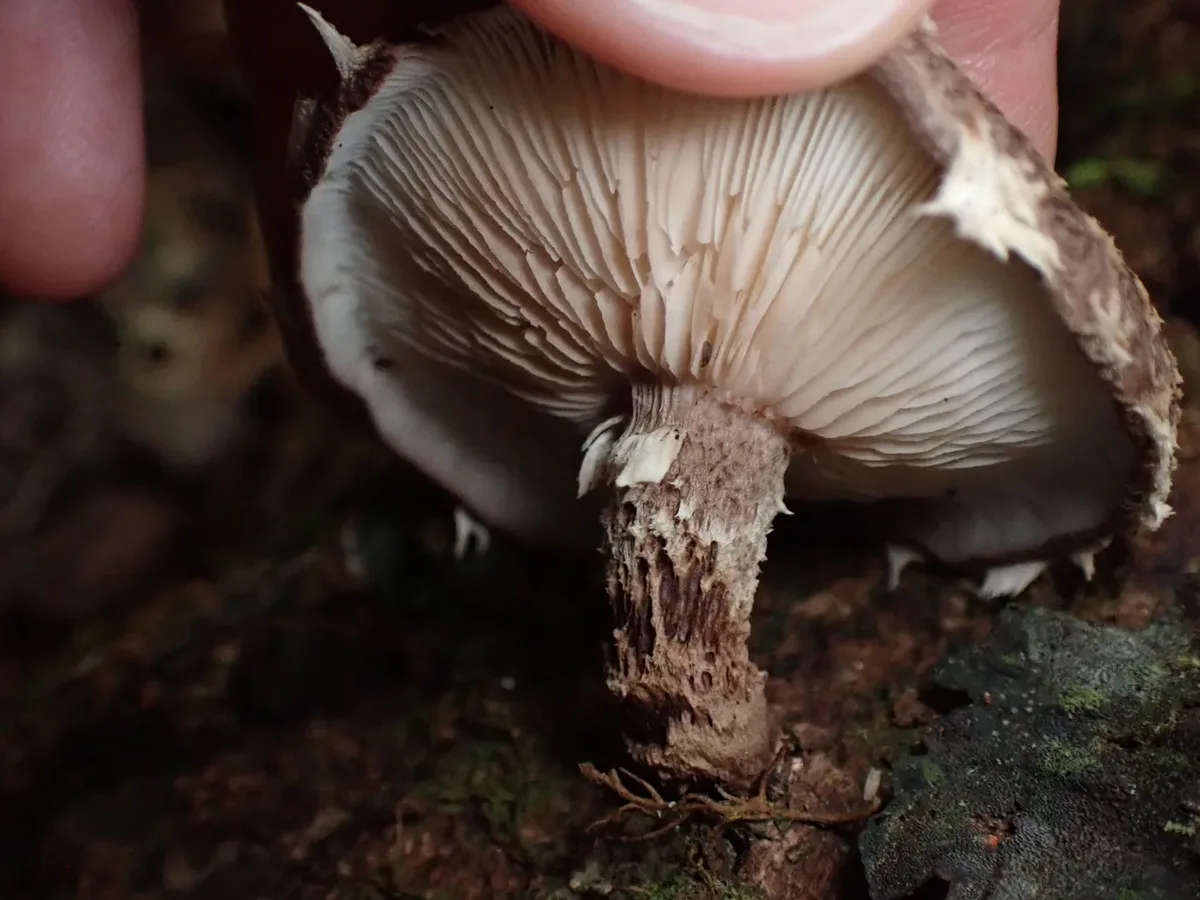 © Lisa Bennett (CC BY)
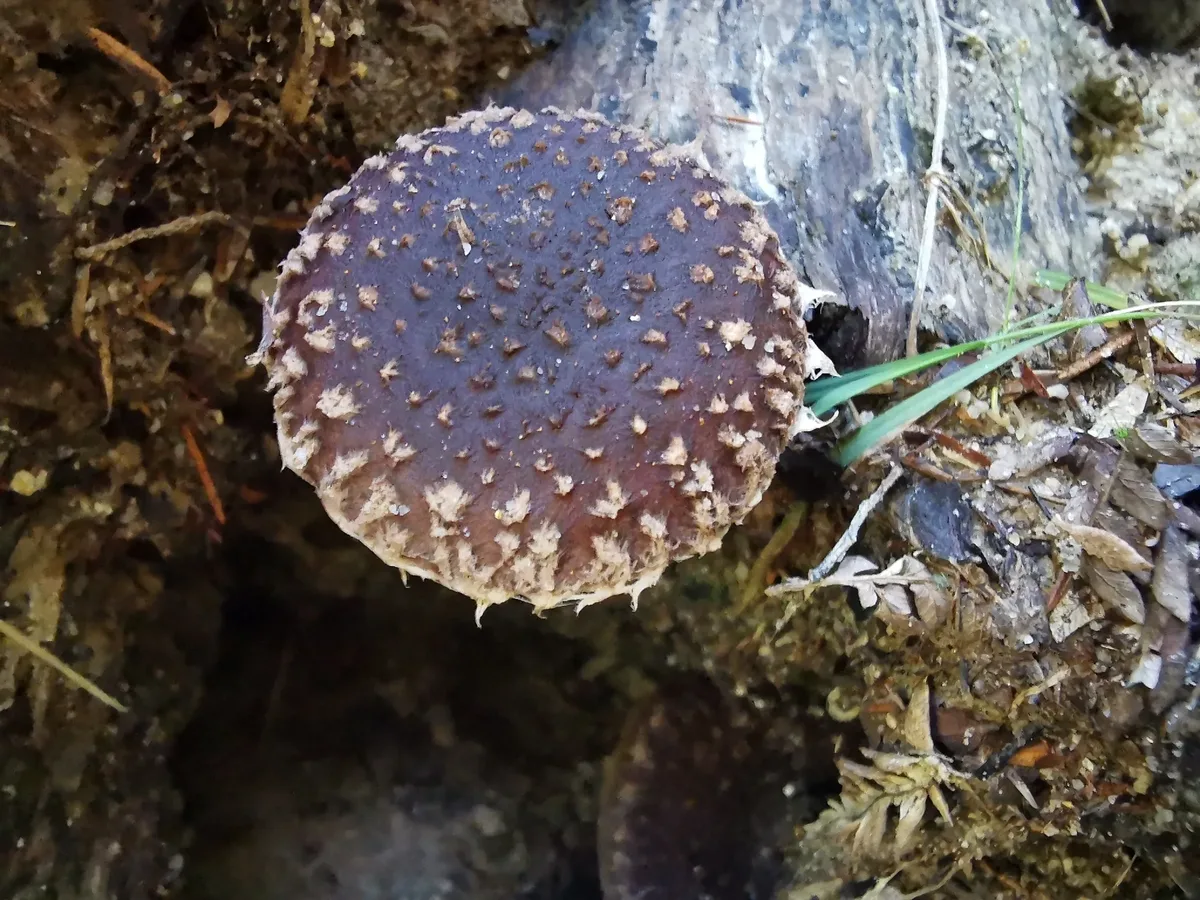 © Luisa Atzei (CC BY)
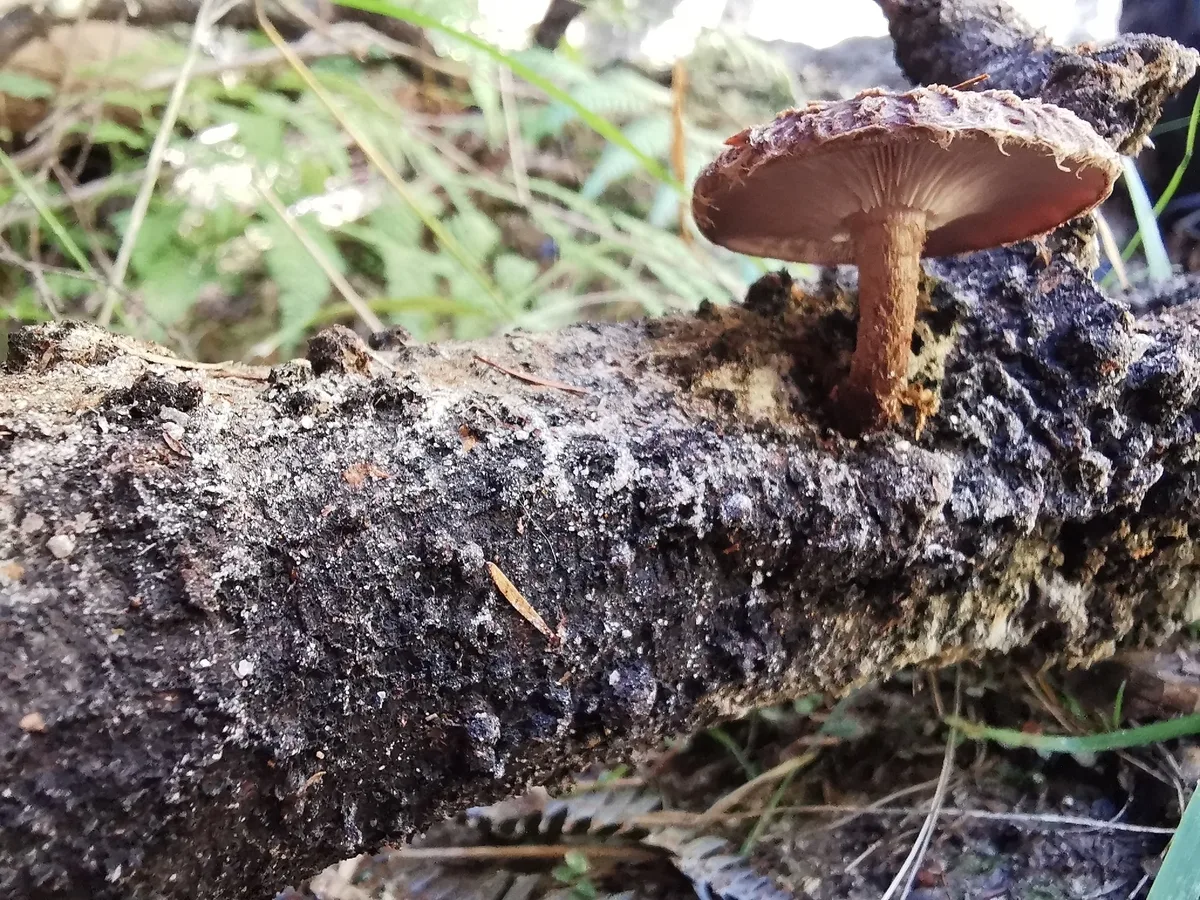 © Luisa Atzei (CC BY)© Bryan Menger (CC BY)Henry Hart (CC0)
Good to eat, once you have identified it with certainty and cooked it through.
Never eat a mushroom you are not 100% sure of - check the look-alikes below, and always cook wild mushrooms.
How to recognise it
Cap
Cap 3-12 cm, starting convex, expanding to broadly umbonate or nearly flat. The surface is dry, dull brown to reddish-brown, smooth or with faint fibrous radial streaks, margin slightly wavy or irregular.
Gills
Gills white to cream, crowded, adnate.
Stem
Stem 2-6 cm long, whitish above and pale brown to fibrous below, firm and solid.
Flesh
Flesh white, firm, with a pleasant mild mushroom aroma comparable to shiitake but subtler.
Spore print white.
Where & when it grows
Habitat
This species lives as a wood-rotter - a white-rot saprotroph that slowly dismantles dead hardwood and returns it to the forest floor.
It fruits on fallen logs, large branches, and decaying trunks of native broadleaf trees: tawa, kamahi, and the southern beeches (Nothofagus) are its preferred hosts.
You'll find it in mature, humid native bush from the lowlands up into montane zones, wherever large-diameter dead logs have had time to accumulate moisture.
It forms no mycorrhizal partnership with living trees; its entire life is bound to the dead wood it decomposes.
When
Fruits through the Southern Hemisphere autumn and into winter, roughly March to August. The peak is April and May, when temperatures begin to fall and autumn rain settles in for sustained spells.
The fungus needs that combination - a good soaking of 20+ mm or more over a few weeks, followed by mild, persistently humid conditions - before the mycelium commits to fruiting. Hard frosts will shut it down.
How it grows
New Zealand's native counterpart to the cultivated shiitake, and closely related to it - both sit in the genus Lentinula.
The mycelium threads silently through dead hardwood logs for months or years before conditions are right to fruit. When they are, bodies appear in clumps or scattered groups directly on the log surface, sometimes several flushes emerging from the same piece of wood over successive seasons.
Because its biology so closely mirrors that of Lentinula edodes, it can in principle be cultivated on hardwood logs or sawdust blocks using standard shiitake techniques, though commercial cultivation remains rare.
Fruiting conditions
Autumn-winter fruiting species (Southern Hemisphere). Requires sustained rainfall and falling temperatures. Fruiting bodies emerge 7-21 days after sufficient rain when soil temperatures are in the 6-18 °C range. Frost will suppress fruiting.
Look-alikes
DEADLY RISK - Galerina marginata (deadly Galerina, funeral bell) is the most important dangerous lookalike. It grows on dead wood, is small to medium brown, and contains lethal amatoxins (alpha-amanitin).
It is much smaller (cap 1-4 cm) and has a distinctive rust-brown to orange-brown spore print (compared to L. novae-zelandiae's white spore print) and a fragile ring on the stem. However, the ring can wear off, making the spore print test absolutely critical.
Always take a spore print: white = safe for Lentinula; rusty-brown = potentially Galerina.
Armillaria novae-zelandiae (NZ honey fungus) also grows in similar habitats on dead wood, in large clusters, with a ring and honey-brown caps - it is edible when cooked but causes digestive upset when raw. It can be distinguished by its clustered growth habit, distinctive ring, and pinkish-buff spore print.
Hypholoma fasciculare (sulphur tuft) can occur on similar substrates - it has yellow-olive flesh, bitter taste, and a dark purple-brown spore print.
Deadly - contains lethal amatoxins (alpha-amanitin). Much smaller (cap 1-4 cm), rust-brown to orange-brown spore print (vs. white), fragile ring (may be absent on older specimens). Always take a spore print: white = Lentinula, rusty-brown = Galerina.
Grows in large crowded clusters from a common base, honey-brown cap with fine dark scales, prominent white-creamy ring, pinkish-buff spore print. Edible when thoroughly cooked but can cause gastrointestinal upset when raw or undercooked.
Clusters on dead wood, bright sulphur-yellow caps and gills (often with green-olive hue), very bitter taste, dark purple-brown spore print. Toxic - causes gastrointestinal symptoms.
In the kitchen
Picking & cleaning
Cut the stem at the base with a sharp knife, leaving the mycelial mat undisturbed to allow further flushes. The tough lower stem is often discarded.
Young, firm caps are best; older caps become rubbery and develop a tougher texture. Brush clean rather than washing.
Cooking
Cook thoroughly before eating. Flavour is mild and pleasant, reminiscent of shiitake but subtler - it works well in stir-fries, soups, risottos, and as a meat accompaniment.
Dried specimens develop a more concentrated umami flavour. The soaking water from dried specimens makes a useful stock.
Preparation mirrors that of shiitake:
- Sauté in butter or oil
- Add to broths
- Include in Asian-style dishes
Good to know
This is an edible species, but it carries a critical safety obligation: always confirm a white spore print before eating any brown, wood-growing mushroom in New Zealand bush.
The deadly Galerina marginata (which contains the same amatoxins as death caps) can grow in similar micro-habitats. The spore print is the decisive test - white for Lentinula, rusty-brown for Galerina.
Never eat a small to medium brown wood-decaying mushroom without this check.
A reference guide - never an edibility guarantee. When in doubt, leave it out.