Australian shiitake
Lentinula lateritiasyn. Lentinus lateritius, Lentinus edodes var. australiensis
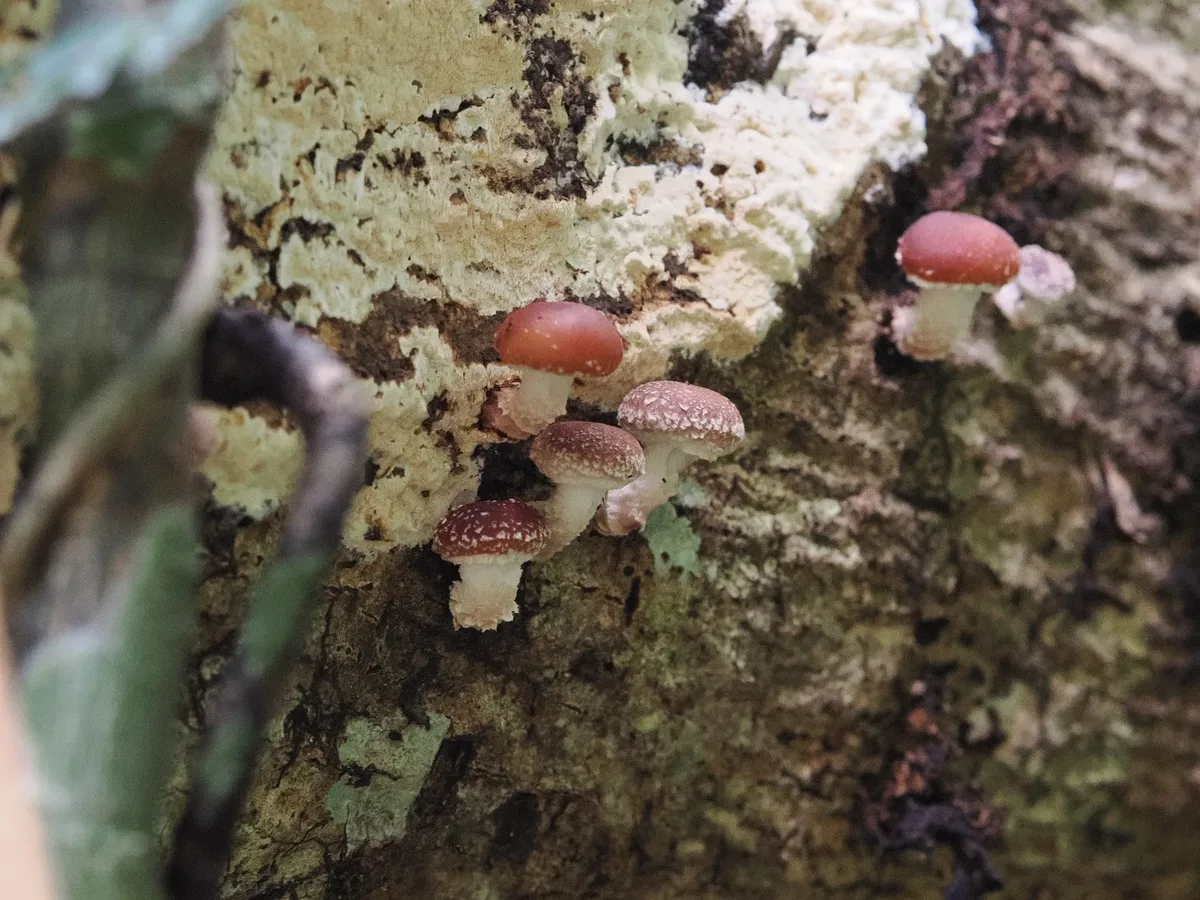 © Lucas Christofides (CC BY)
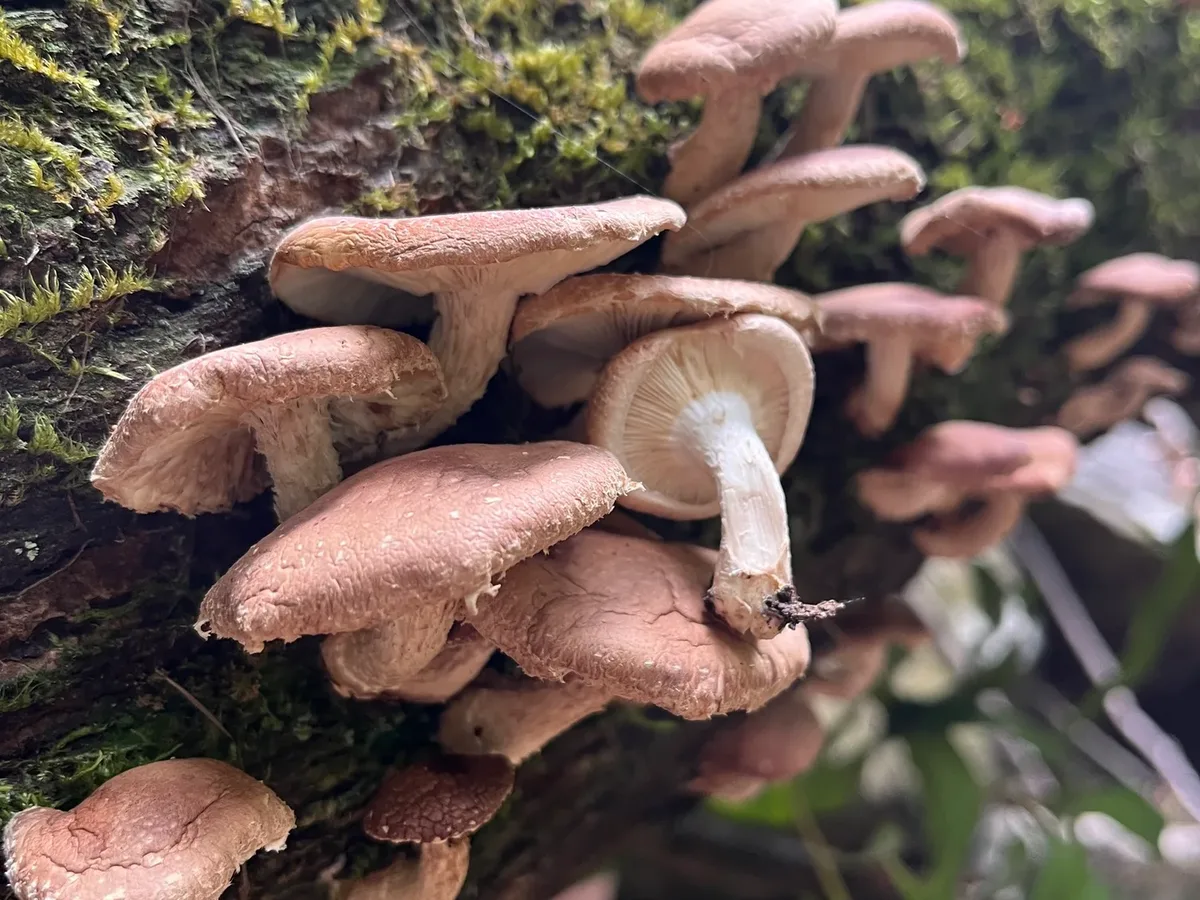 © Todd Huang (CC BY)
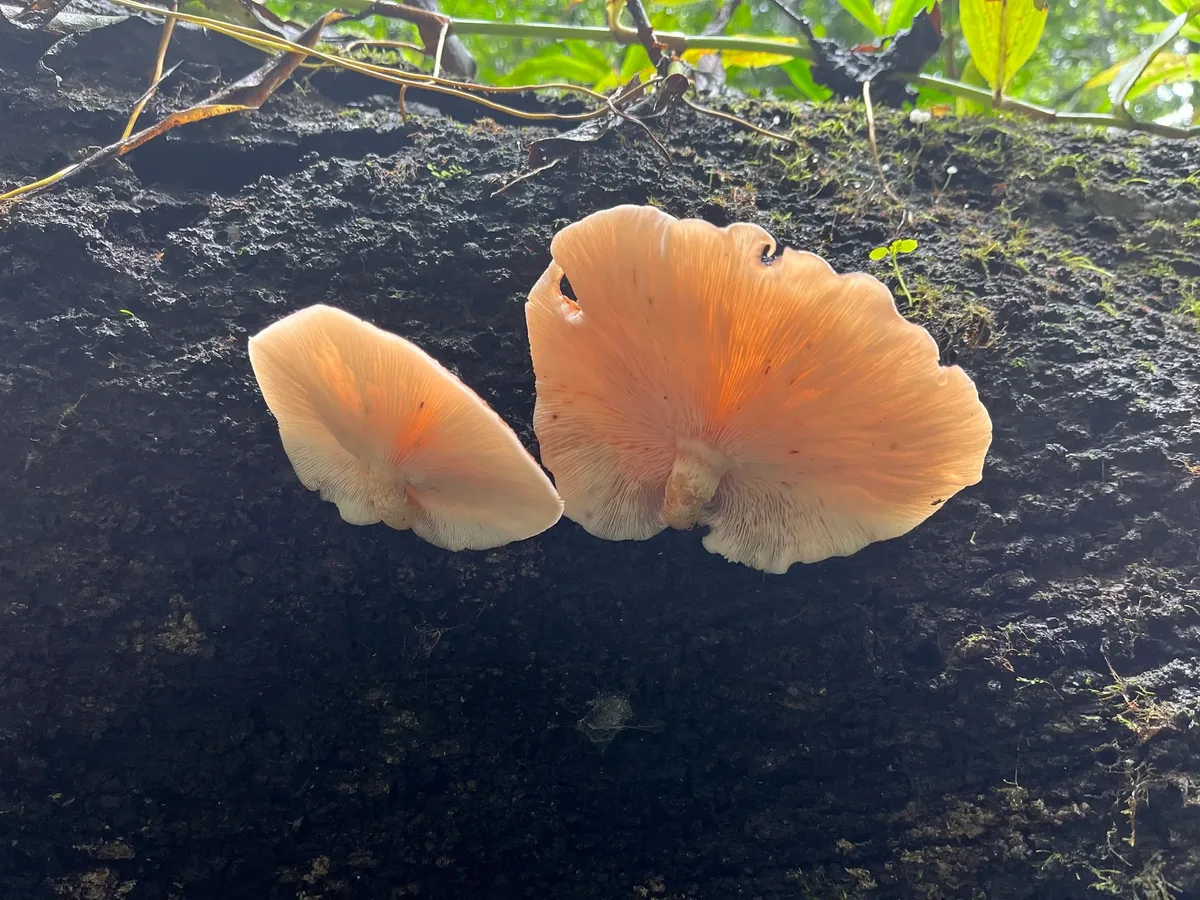 © Todd Huang (CC BY)
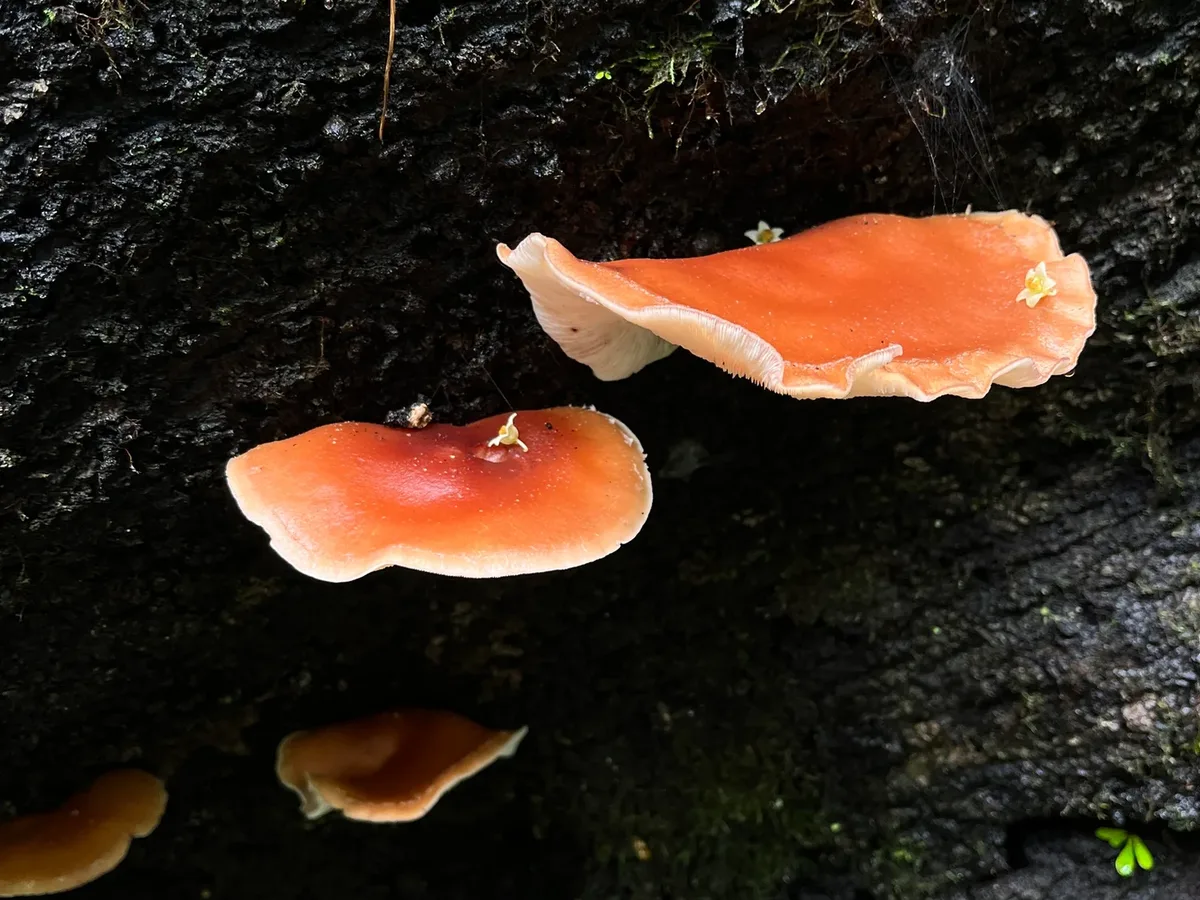 © Todd Huang (CC BY)
 © Sofia Zvolanek (CC BY)
 © Sofia Zvolanek (CC BY)
 © Sofia Zvolanek (CC BY)
 © Sofia Zvolanek (CC BY)
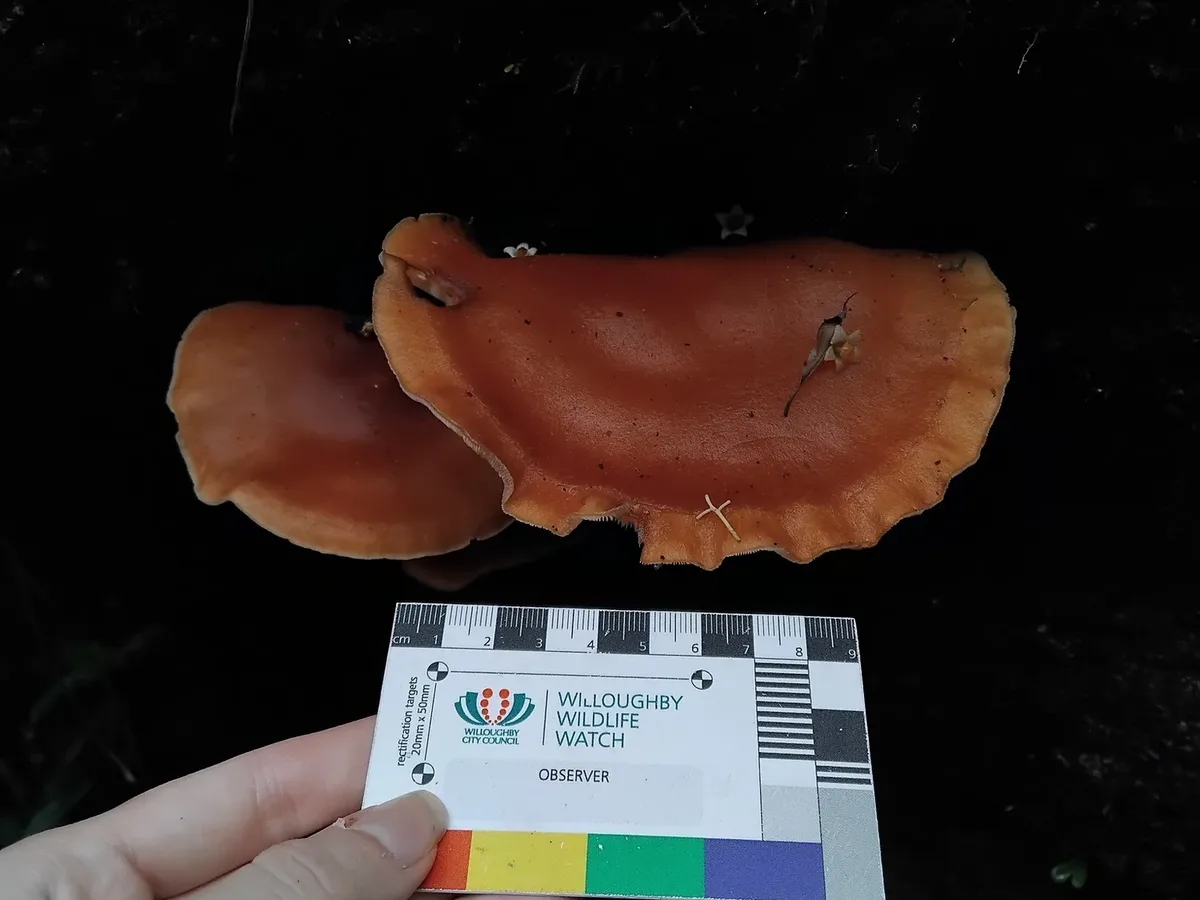 © Sofia Zvolanek (CC BY)
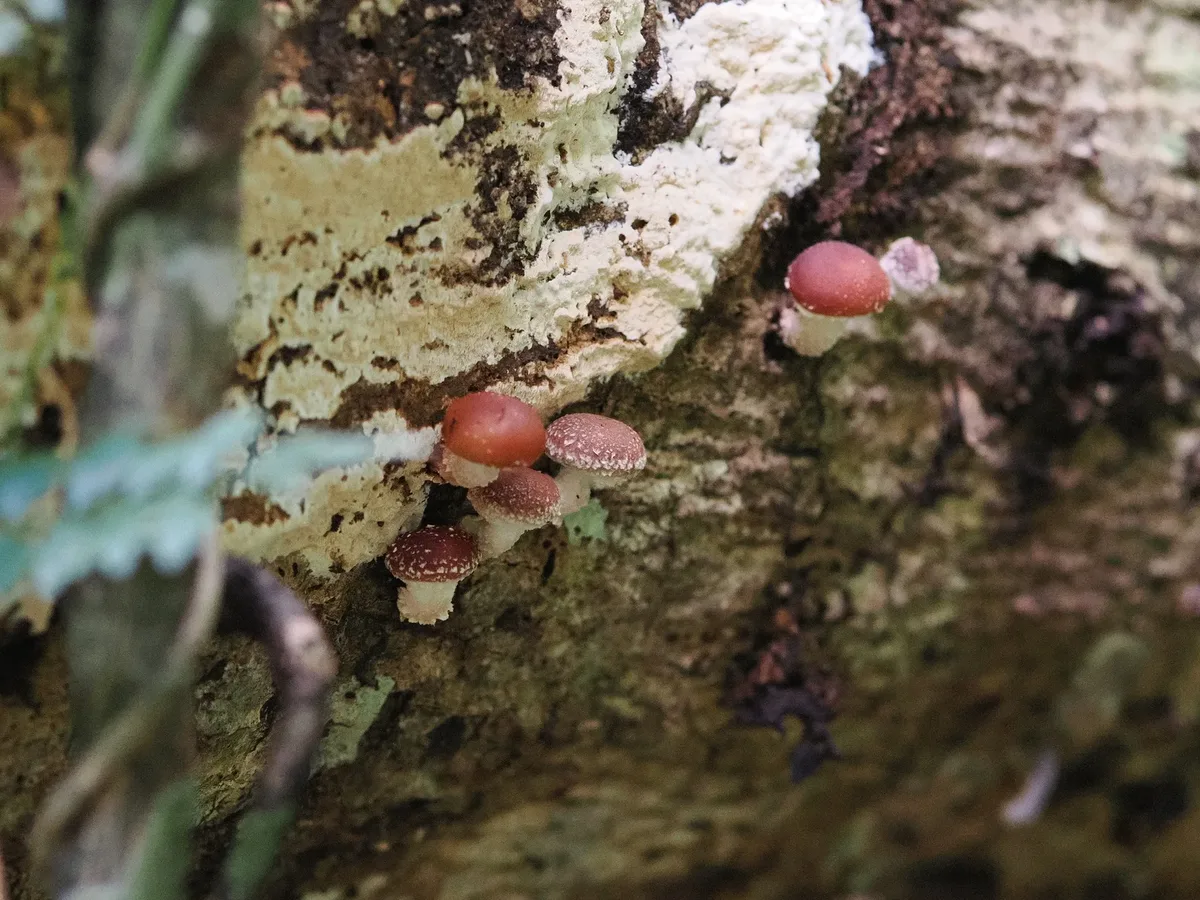 © Lucas Christofides (CC BY)© Lucas Christofides (CC BY)© Todd Huang (CC BY)
One of the best mushrooms you can bring home - once you are certain of the identification.
Never eat a mushroom you are not 100% sure of - check the look-alikes below, and always cook wild mushrooms.
How to recognise it
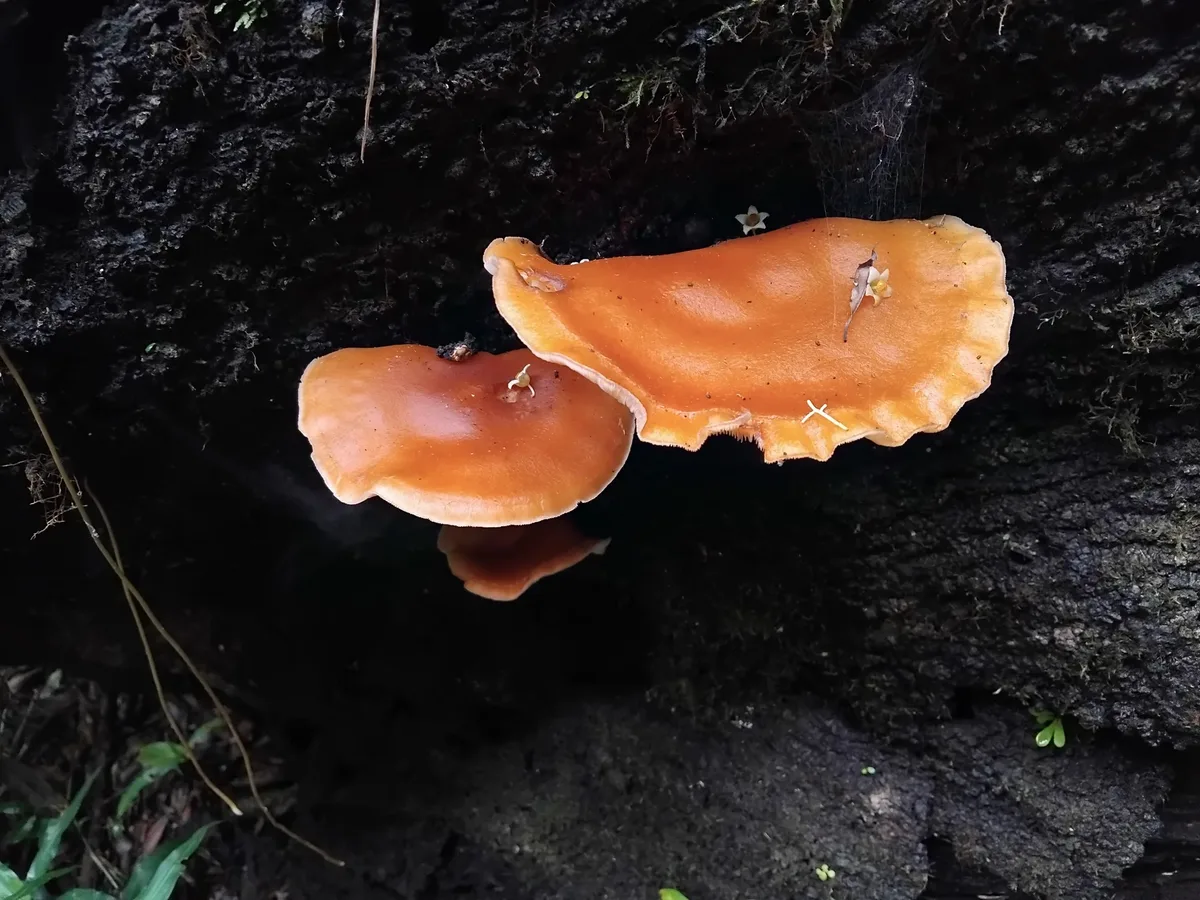
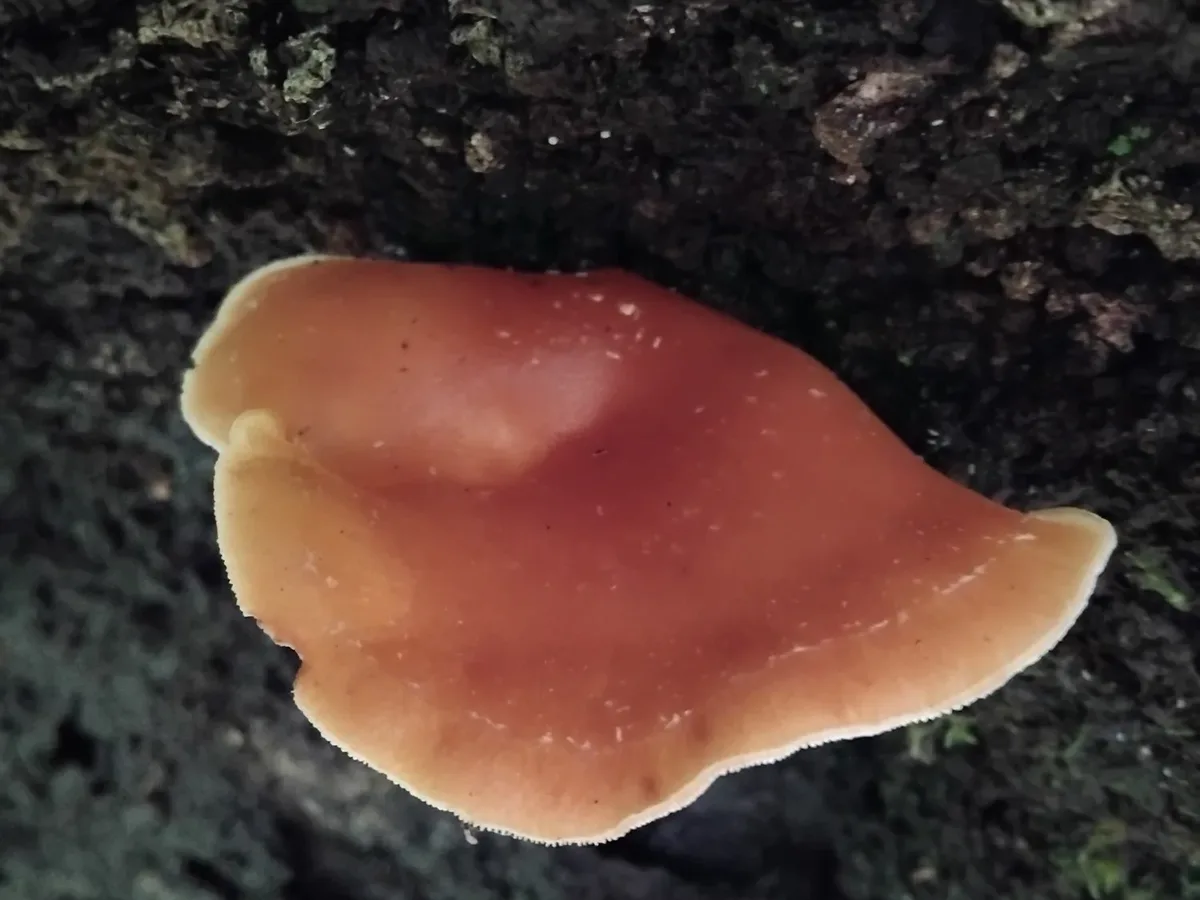
Lentinula lateritia is immediately recognisable in Australian forests by the warm, brick-red to reddish-chestnut cap that gives it both its scientific name and its folk name 'Australian shiitake'.
Cap
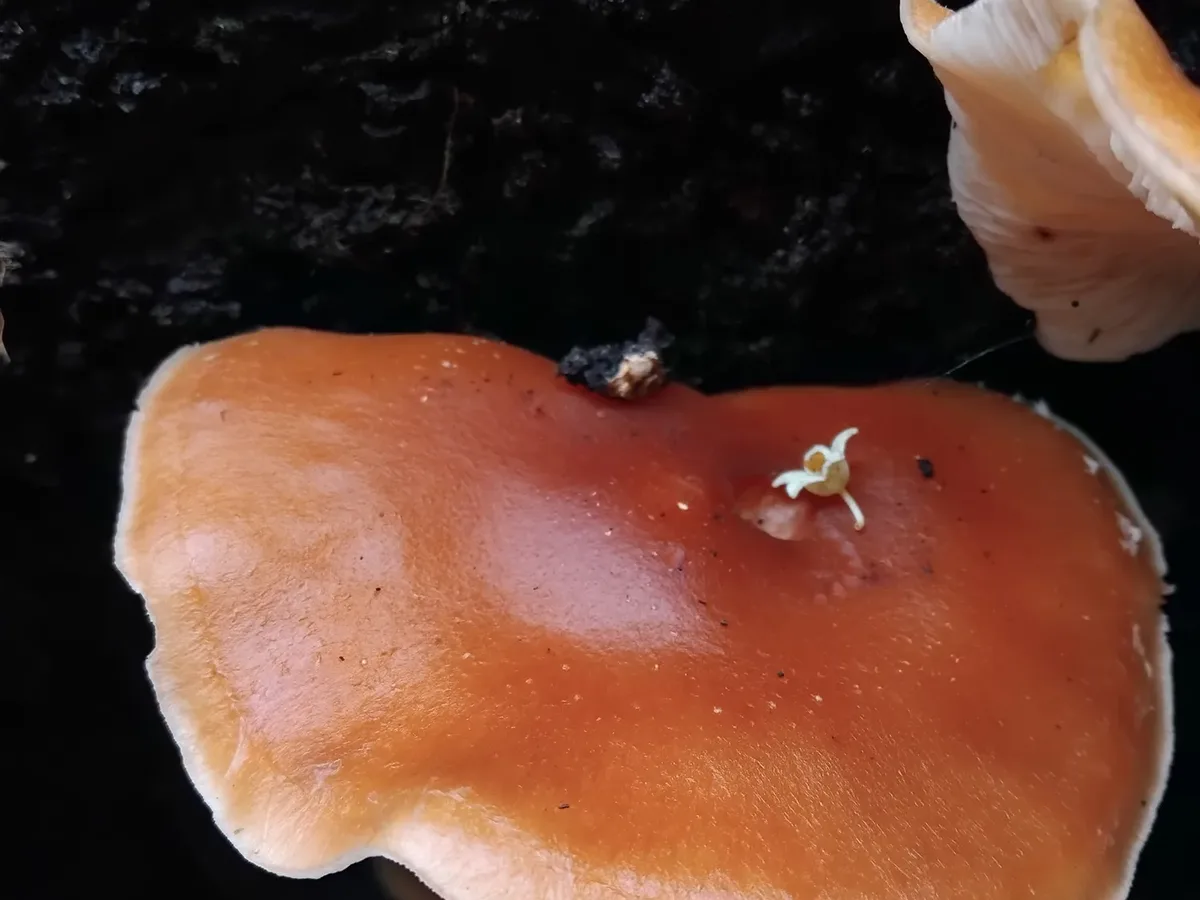
The caps range from 4 to 15 cm across, starting as tight, convex buttons with an involuted margin before broadening into a flat to shallowly umbonate disc.
The surface is dry and matt to faintly silky - distinctly different from the slippery or viscid surface of many other brown-capped wood-rotters. The central disc is usually the deepest brick or chestnut tone, with the margin slightly paler.
In very dry conditions the outer cuticle may crack into irregular pale patches over the darker ground, an effect structurally similar to the prized 'flower mushroom' patterning of cultivated shiitake but less dramatic.
Gills
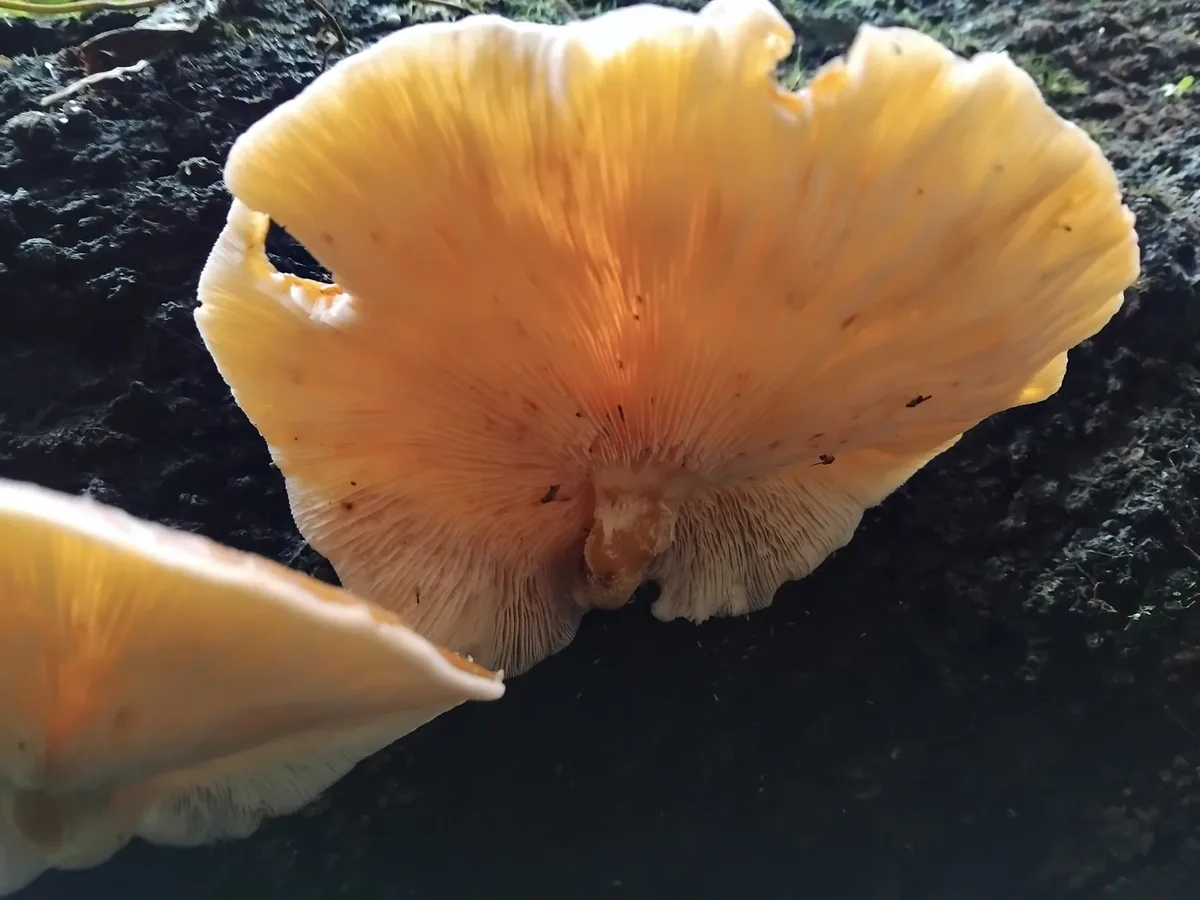
The gills are white to cream, crowded, and adnate - they meet the stem cleanly and do not run down it, which is an important distinguishing feature.
Young specimens retain a white, cottony partial veil over the gills; this tears as the cap opens, leaving a ring or ring remnants on the upper stem that can persist or wear off on older fruitbodies.
Stem
The stem is firm, whitish above, fibrous-brown below, and noticeably tougher in texture than the cap flesh - characteristic of the whole Lentinula genus.
Spore print white.
Where & when it grows
Habitat
This species is a white-rot wood decomposer that breaks down the lignin and cellulose of dead native hardwood in eastern Australia's moist forests. It has no mycorrhizal partnership with living trees; its biology is entirely bound to the colonisation and slow digestion of dead wood.
It is most often encountered on large-diameter fallen eucalypt logs, and occasionally on standing dead trees, in wet sclerophyll and mixed forest. The logs it favours have typically been dead for at least two or three years - long enough for bark to loosen, the wood surface to soften, and the mycelium to colonise deeply - but not so far advanced in decay that structural integrity is completely lost.
Habitat quality is strongly associated with old-growth or mature-regrowth forest carrying large dead woody debris: where fire or logging removes logs from the forest floor, the species disappears.
It also occurs in rainforest margins and creek-line forests where humidity remains high through the fruiting season. The combination of high moisture and moderate temperatures that triggers fruiting is most reliable in the sheltered gullies and south-facing slopes of the Great Dividing Range.
When
Fruiting is a Southern Hemisphere autumn and winter phenomenon, following the same broad logic as the northern-hemisphere shiitake. The wood's internal mycelium, metabolically low-key during summer's warmth and aridity, responds to the onset of autumn rains and cooling temperatures by committing resources to fruitbody development.
Regional timing:
- Queensland: the season typically begins in March or April as the dry season ends and tropical moisture returns.
- New South Wales and Victoria (further south): peak is April through June, with some fruiting continuing into July and August in sheltered, frost-free gullies.
The key biological trigger is the arrival of sustained rainfall (multiple events totalling 25-40 mm or more over two weeks) combined with air temperatures falling into the 10-22 °C range. A single heavy rain event is rarely sufficient; the log's internal moisture must be recharged and maintained.
Within that window, fruitbodies develop steadily over 7-14 days from the first visible pin to full cap expansion.
How it grows
Like its sister species - the cultivated shiitake (L. edodes) and New Zealand's endemic L. novae-zelandiae - L. lateritia is a saprotrophic decomposer. It secretes lignocellulolytic enzymes (laccases, peroxidases) that convert dead wood into nutrients.
The mycelium colonises logs along the grain over months to years before conditions are right for fruiting. Once a log is established, successive seasonal flushes can be produced for three to seven years, each typically emerging from the same mycelial mats just below the bark surface.
Fruitbody initiation follows the classic Lentinula trigger sequence - signals that collectively indicate the arrival of a productive autumn rain period:
- sustained log rehydration
- a thermal drop of several degrees Celsius
- improved air movement
Given how closely L. lateritia parallels L. edodes in biology, it can in principle be cultivated on hardwood logs or sawdust blocks using standard shiitake cultivation techniques, and small-scale experimental cultivation in Australia has confirmed its suitability for log inoculation. However, it has not been commercially developed to the same extent as the Asian species.
Fruiting conditions
Autumn-winter fruiting species (Southern Hemisphere, March-August). Fruitbodies emerge after sustained rainfall recharges log moisture and air temperatures fall into the 8-22 °C range. A cumulative rainfall of 25-40 mm over 10-14 days, combined with a temperature drop of several degrees from summer baseline, reliably triggers pinning. A single heavy rain event is usually insufficient; the log must maintain elevated internal moisture for the mycelium to commit to fruiting. Pins visible within 7-14 days of the triggering rain event; full cap expansion in a further 5-7 days. Hard frosts suppress fruiting but do not kill the mycelium.
Look-alikes
DEADLY RISK - Galerina marginata (the deadly Galerina or funeral bell) is the critical lookalike concern for all wood-growing brown-capped mushrooms in eastern Australia. It is small to medium (cap 1-4 cm), honey-brown to orange-brown, grows on dead wood including eucalypts, and contains lethal amatoxins (alpha-amanitin) at the same concentration as the death cap (Amanita phalloides). A few amatoxin-containing Galerina can kill an adult.
The decisive field test is the spore print: Galerina marginata produces a rust-brown to ochre-brown spore print; Lentinula lateritia produces a white spore print.
Galerina is also much smaller, with caps rarely exceeding 4 cm and usually under 2-3 cm, and often carries a fragile membranous ring that can wear off on older specimens - making the spore print test non-negotiable before consuming any brown-capped, ring-bearing mushroom from dead wood.
Other species to know:
- Cortinarius species (webcaps): include some deadly species with a similar brown-capped, wood or litter habitat, but these are mycorrhizal (associated with living trees), have a cobweb-like cortina (veil), and a rust-brown spore print.
- Hypholoma fasciculare (sulphur tuft): grows in dense clusters on dead wood and has yellow to sulphur-coloured flesh, a bitter taste, and a dark purple-brown spore print - not likely to be confused with the brick-red cap of L. lateritia, but worth knowing as a toxic companion species on the same logs.
- Armillaria species (honey fungi): grow on wood in Australia and have brown-capped, ring-bearing fruitbodies, but they always grow in dense, clustered masses from a common base and produce a white to yellowish spore print; some Australian Armillaria cause gastrointestinal illness when undercooked.
DEADLY - contains lethal amatoxins (alpha-amanitin). Much smaller than L. lateritia: cap 1-4 cm, honey-brown to orange-brown. Spore print rust-brown to ochre-brown (never white). Often has a fragile ring that wears off on older specimens. Always take a spore print: white = Lentinula lateritia, rust-brown = Galerina. Do not eat any brown wood-growing mushroom without this confirmation.
Several Australian Armillaria species grow on dead or living wood, with brown-capped, ring-bearing fruitbodies. They grow in large, densely clustered masses from a common base (L. lateritia is solitary to scattered). Spore print white to yellowish. Some species cause gastrointestinal illness when undercooked; none are deadly. The dense clustered growth from a single base is the key distinction.
The New Zealand counterpart; same genus, similar morphology, edible. Distinguished by geography (New Zealand only, not found in Australia) and by subtly paler, dull brown rather than brick-red cap tones. Both have a white spore print. Edible and interchangeable in the kitchen.
Several Pholiota species grow on dead wood in Australia with brown scaly caps and rings. They typically have a viscid (slimy-sticky) cap surface when moist, scales on both cap and stem, and a rust-brown to yellowish-brown spore print - in contrast to the dry cap and white spore print of L. lateritia. Most Pholiota species are unpalatable or mildly toxic.
Toxic - causes gastrointestinal symptoms. Grows in dense, tightly packed clusters on dead wood; caps bright sulphur-yellow to greenish-yellow (very different from the brick-red of L. lateritia); flesh yellow-olive and extremely bitter; spore print dark purple-brown. The colour and bitter taste distinguish it immediately.
In the kitchen
Picking & cleaning
Cut the stem cleanly at the base with a sharp knife, leaving the mycelial mat on the log surface undisturbed so that subsequent flushes can emerge from the same growth points. Harvesting by twisting or pulling risks tearing the mycelium and disrupting future flushes from that spot.
Pick at the stage when the partial veil has just torn - when the cap has opened to about three-quarters of its final span - for the best balance of firmness, flavour, and shelf life. Fully expanded caps are still excellent eating but deteriorate more rapidly.
Brush off debris with a dry brush; avoid washing fruitbodies under running water, as the caps absorb moisture and deteriorate faster.
The stem is significantly tougher than the cap, as is true across the Lentinula genus, and is best removed before cooking; save it for stocks and broths, where slow simmering extracts its good flavour.
Fresh caps keep for 3-5 days under refrigeration in a paper bag or open container. They also dry well at 40-50 °C, concentrating their umami flavour as enzymatic activity before full dryness converts nucleotides to flavour-active compounds.
Cooking
Australian shiitake has a pleasant, mildly savoury-earthy flavour that deepens noticeably with heat, closely resembling cultivated shiitake (L. edodes) though somewhat subtler in its raw aroma. The cap flesh is firm and meaty, holding its structure well during most cooking methods.
Sautéing over medium-high heat in butter or good olive oil until the edges begin to colour is the simplest preparation and develops the best flavour - allow enough space in the pan to brown rather than steam.
The mushroom is excellent in risotto, pasta, soups, braises, and stir-fries. It responds particularly well to umami-amplifying companions: soy sauce, miso, parmesan, or a splash of fish sauce.
Dried L. lateritia develops a more concentrated savoury depth:
- Slice caps 4-6 mm thick and dry at 40-50 °C until fully desiccated, then store in an airtight container.
- Reconstitute in warm water for 20-30 minutes and use the soaking liquid as a flavourful stock.
The tough stems should be removed and reserved for slow-cooked stocks and broths rather than served directly.
Good to know
Lentinula lateritia is an edible species with a good safety record in Australia. But it carries the same mandatory spore-print obligation as any brown-capped, wood-growing mushroom: never eat a specimen without first confirming a white spore print.
The presence of Galerina marginata - which contains the same lethal amatoxins responsible for most fatal mushroom poisonings worldwide - in similar habitats on dead wood makes this check genuinely life-critical, not a precautionary formality.
A white spore print is the primary confirmation that you have Lentinula rather than Galerina. Secondary confirmatory features are:
- the relatively large cap size (4-15 cm in L. lateritia versus 1-4 cm in Galerina)
- the dry, brick-red to reddish-brown cap surface
- the white gills
- the pleasant, mild mushroom aroma
Consume thoroughly cooked. While no toxicity equivalent to shiitake dermatitis (caused by lentinan in L. edodes) has been specifically documented for L. lateritia, the structural similarity of the species means that raw consumption cannot be recommended.
As with all wild fungi, if any doubt remains about identification, do not eat.
A reference guide - never an edibility guarantee. When in doubt, leave it out.