Foxy bolete
Leccinum vulpinumsyn. Boletus vulpinus, Krombholziella vulpina, Leccinum testaceoscabrum var. vulpinum
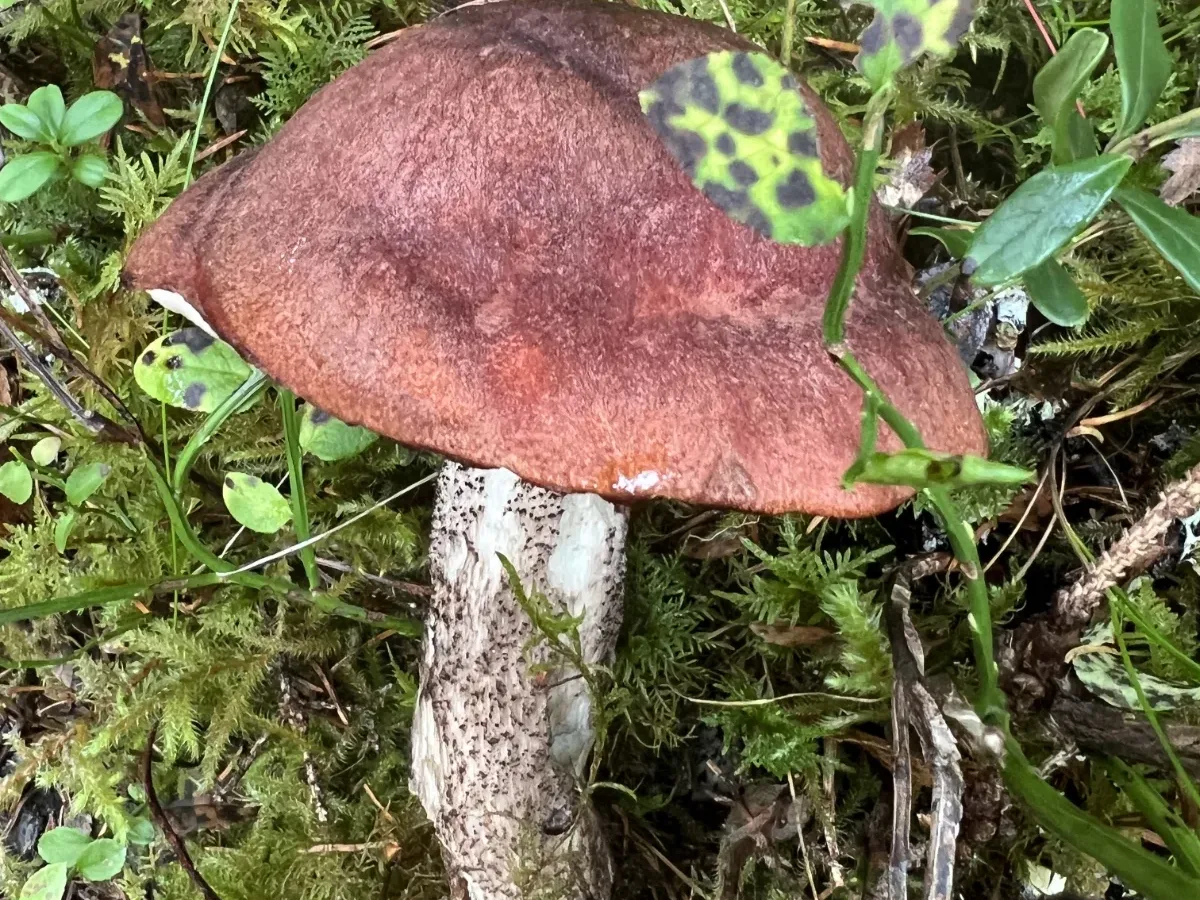 © Ulla-Britt Bøe (CC BY)
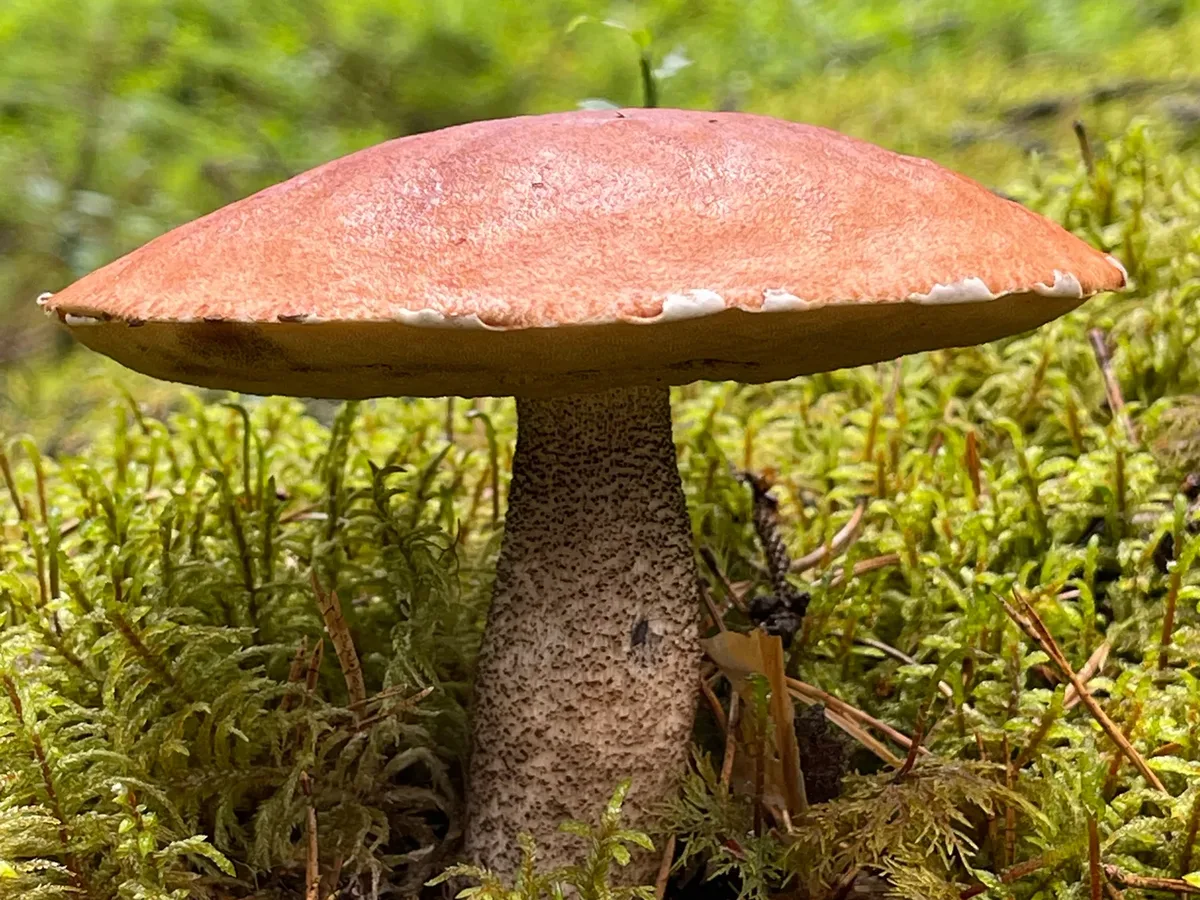 © wkee4ager (CC BY)
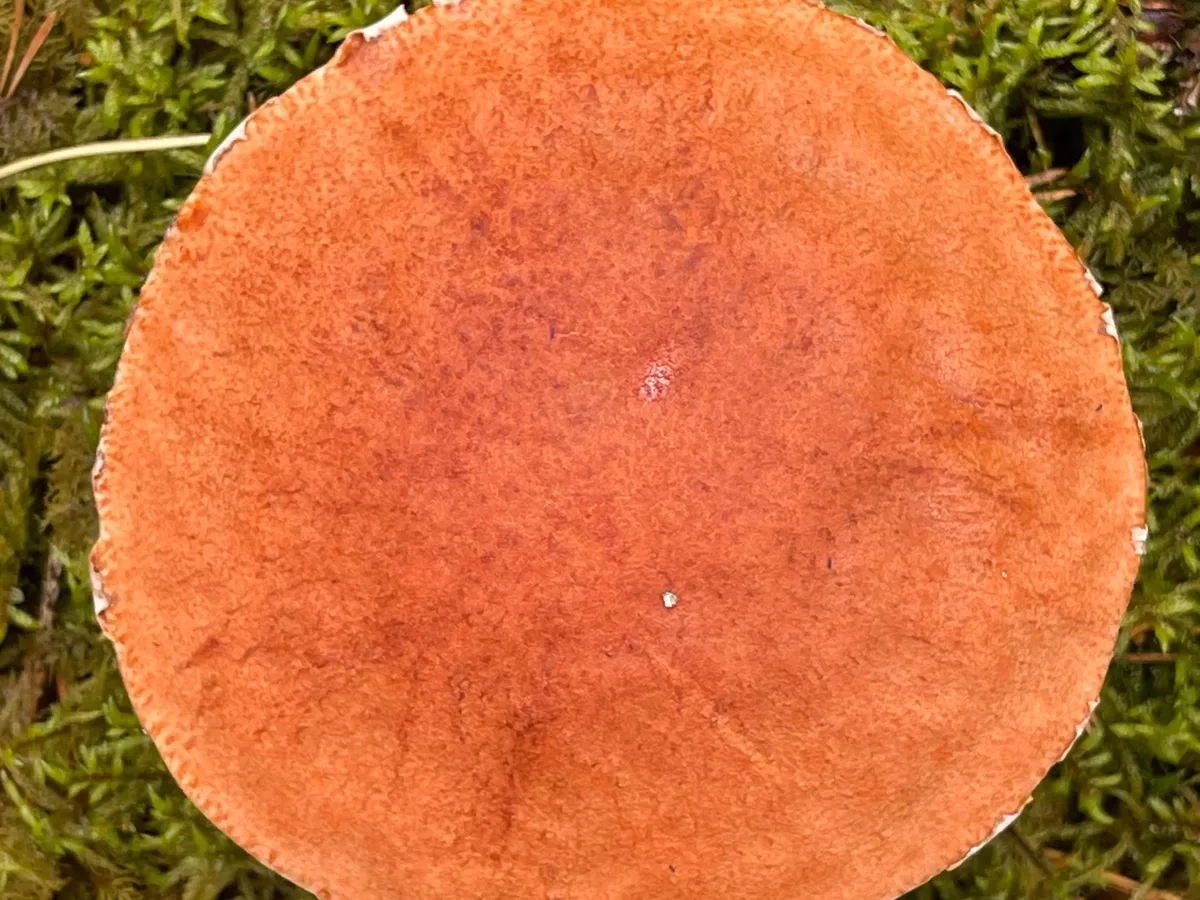 © wkee4ager (CC BY)
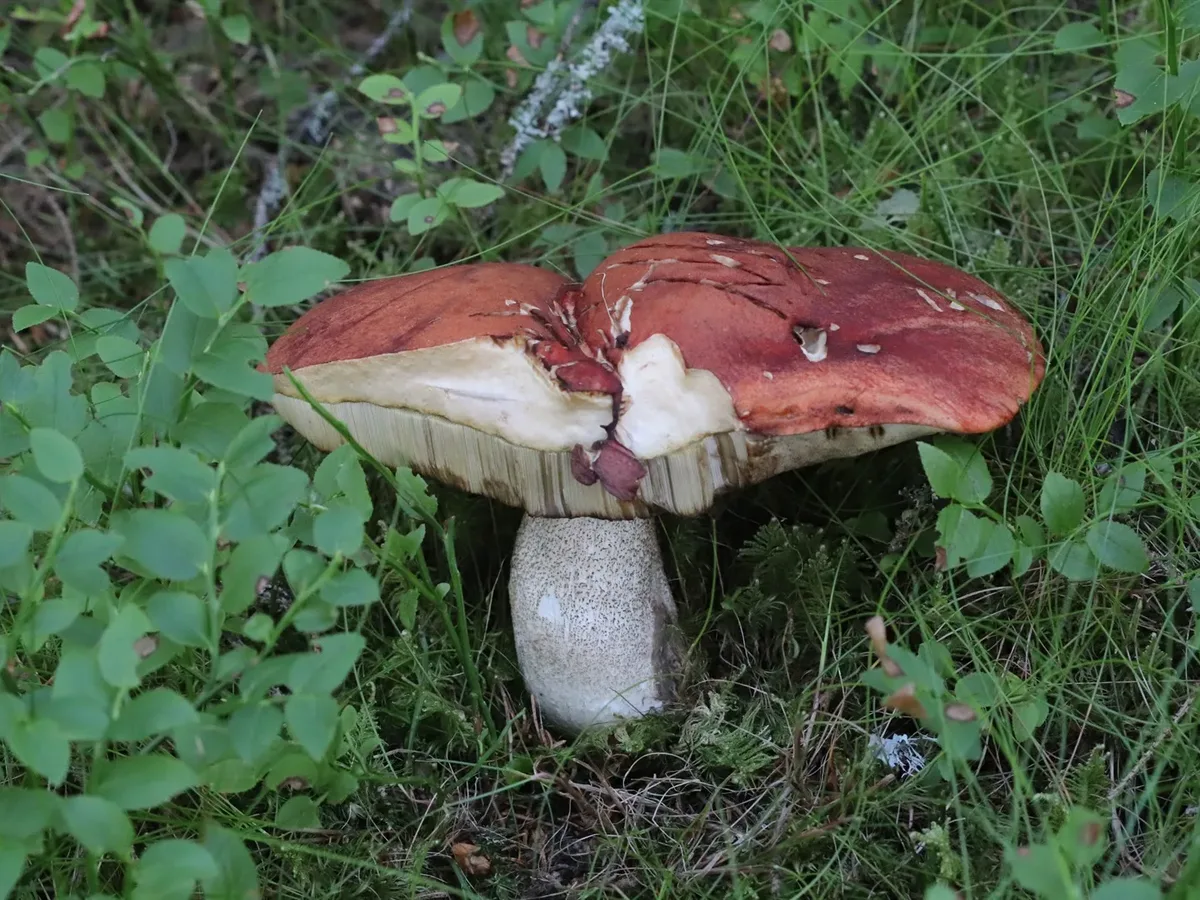 © Rob van Kruining (CC BY)
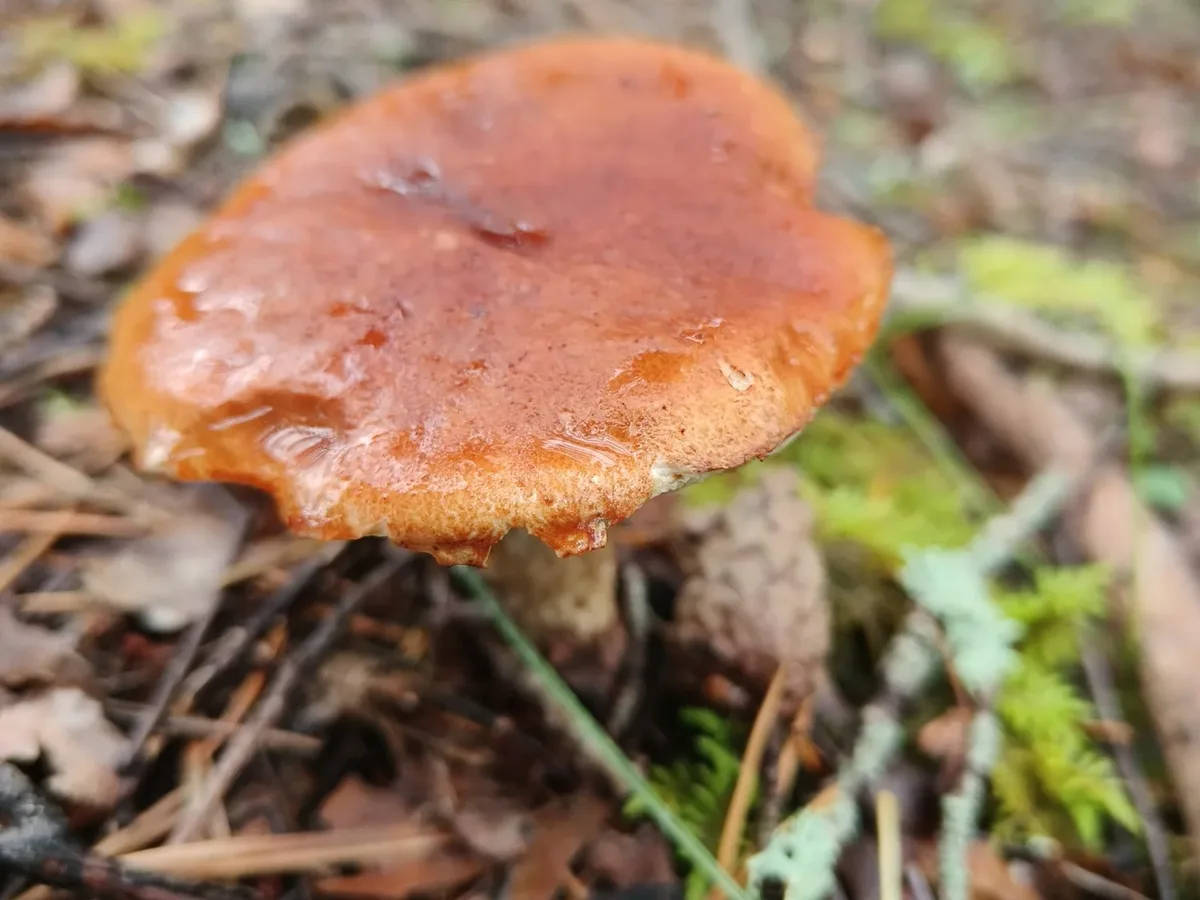 © Iida Österman (CC BY)
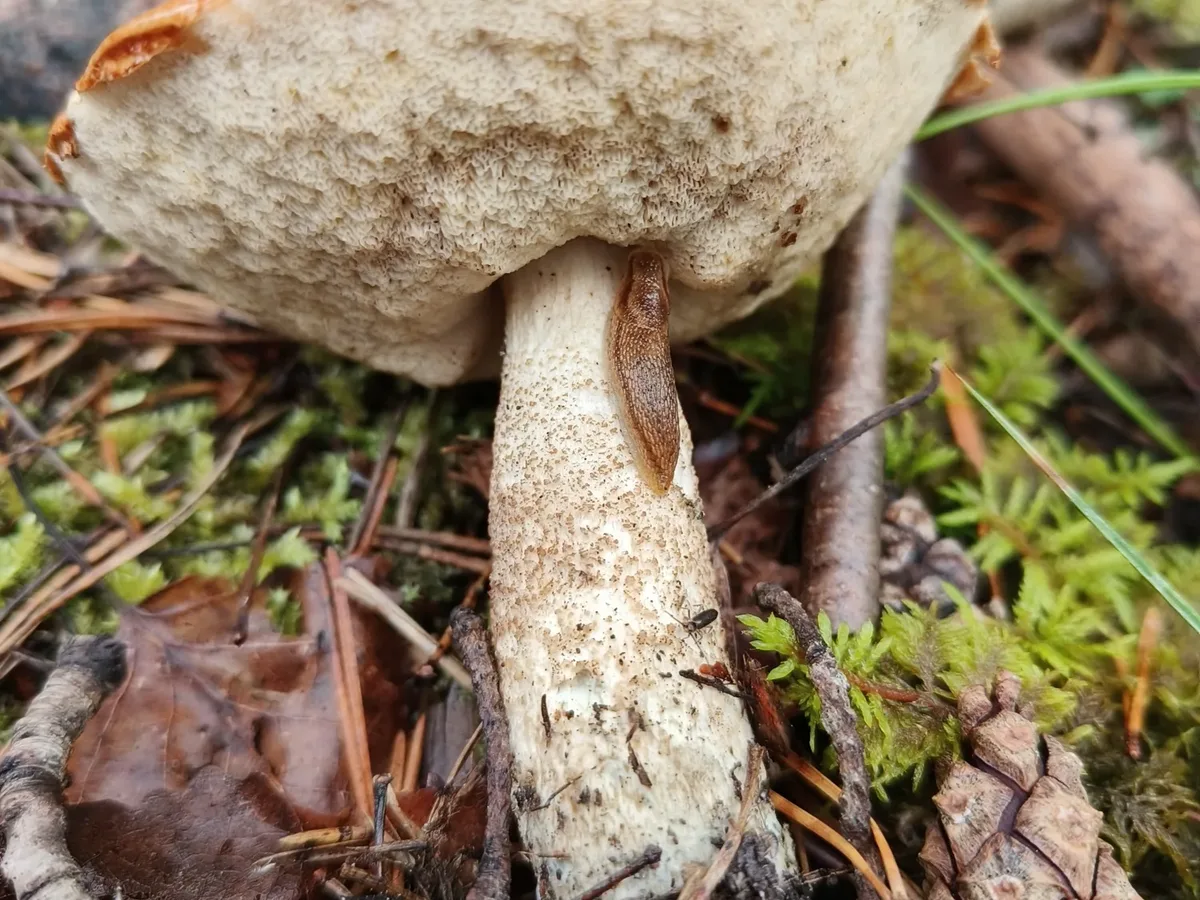 © Iida Österman (CC BY)© Ulla-Britt Bøe (CC BY)© wkee4ager (CC BY)
Edible only with the right preparation - or safe for some people but not others. Learn the caveats first.
How to recognise it
The foxy bolete is one of the signature large boletes of Scots pine forest in northern Europe.
Cap
The cap is broadly domed at first - young specimens look nearly hemispherical - before expanding to a broad cushion shape typical of the Leccinum genus.
The characteristic colouration ranges from a warm reddish-brown or brick-red to a tawny fox-pelt orange, the latter earning the species its English and scientific names (vulpinum = 'of the fox').
The cap surface is dry, slightly velvety, and matt rather than shiny. A useful identifier is that the cap cuticle overhangs the margin slightly as a fringe, visible on medium-sized specimens.
Gills / Pores
The pores on the underside are small and whitish-cream in fresh specimens, bruising to brownish-grey where touched or damaged. The tube layer beneath is pale cream to white, also darkening with age.
Stem
The stem is one of the most reliable identification features of this genus. The white-grey background of the stem is almost completely hidden by dense coarse scabers - rough, erect projections - which begin pale rufous to whitish and darken to chocolate-brown or near-black as the fruit body ages, or immediately on handling.
This gives the stem a distinctly rough, grated-looking texture, quite unlike the smooth stems of most other boletes.
Flesh
When the flesh is sliced, a notable colour change occurs. Fresh flesh is white and firm, but within minutes it begins to flush pale pink, gradually developing through lilac-grey to blue-grey and finally settling at dark grey or nearly black, especially in the lower stem and base.
This progressive multi-stage staining is a characteristic and diagnostically important reaction of the orange-red Leccinum group.
Why it's dangerous
Risk depends heavily on preparation:
- LOW to MODERATE risk when properly cooked for 15-20 minutes.
- MODERATE to HIGH risk when raw or undercooked.
The orange-capped Leccinum group (including L. vulpinum) has the highest documented incidence of adverse reactions within the Leccinum genus. Hospitalised cases are on record in Norway.
The toxins are heat-labile and are reliably reduced or eliminated by thorough cooking.
The foxy bolete therefore rewards caution: first-time tasters should start with a small, well-cooked test portion. Not recommended for children as a first wild mushroom experience.
Confident identification as a pine-associated orange Leccinum, rather than assuming any orange bolete is safe, is the first step.
Toxin
Unidentified heat-labile compound or compounds present throughout the fruit body. The chemical identity has not been isolated or characterised.
The toxic fraction is thermolabile - destroyed by sustained cooking at high temperature (15-20 minutes at cooking temperature).
The same class of compounds affects all orange-capped Leccinum species (L. versipelle, L. aurantiacum, L. vulpinum). This colour group appears to carry a higher risk of symptoms than brown-capped congeners such as L. scabrum.
Symptoms
Gastrointestinal syndrome, typically with onset 30 minutes to 3 hours after ingestion.
Symptoms include:
- Nausea
- Vomiting
- Abdominal cramps
- Diarrhoea
Severity ranges from mild discomfort to severe illness requiring hospitalisation (documented in Norway).
The reaction is more likely and more severe when the mushroom is undercooked or eaten raw, and appears to correlate with individual susceptibility - some individuals within the same meal group may be unaffected.
Symptoms are generally self-limiting and resolve within 24-48 hours. No systemic organ toxicity has been reported.
Staying safe
The foxy bolete requires thorough cooking and should never be eaten raw or undercooked.
All orange-capped rough-stalked boletes (Leccinum versipelle, L. aurantiacum, L. vulpinum, and related species) are associated with a clinically meaningful rate of gastrointestinal symptoms even in people who eat well-cooked specimens. The rate and severity of incidents is higher for this colour group than for the brown-capped Leccinum species such as L. scabrum.
In Norway, there are documented cases of orange-capped Leccinum (attributed variously to L. versipelle or the vulpinum/aurantiacum group) causing gastrointestinal illness requiring hospital care.
The responsible compound or compounds have not been chemically characterised but appear to be heat-labile and destroyed by sustained cooking. The precise mechanism - and why some individuals are affected while others who ate the same preparation are not - is unknown.
The critical safety rules are:
- 1Always cook thoroughly (at least 15-20 minutes of sustained heat, not a brief sauté).
- 2Never eat raw or dried without subsequent thorough rehydration and cooking.
- 3If trying for the first time, eat a small, well-cooked portion and wait 24 hours before eating larger quantities.
Children, the elderly, pregnant individuals, and those with gastrointestinal conditions should exercise particular caution or avoid the species.
The progressive darkening of the flesh when cut and cooked - from white through pink-lilac to dark grey or black - is a normal enzymatic browning reaction and is not a toxicity indicator. The flesh is safe once properly cooked regardless of its grey colour.
Where & when it grows
Habitat
Leccinum vulpinum is functionally inseparable from Scots pine (Pinus sylvestris). It forms an obligate ectomycorrhizal relationship in which the fungal hyphae ensheath the pine's fine root tips, creating a mutualistic exchange of soil nutrients (especially phosphorus and water) for photosynthetically produced sugars from the tree.
This means that finding Leccinum vulpinum requires finding Scots pine: look for fruiting bodies directly under or immediately adjacent to pine trees, usually among the characteristic orange-red needle litter layer beneath mature trees.
The most productive habitats are open, dry to mesic Scots pine heathland and boreal pine forest on acid sandy soils, where the trees grow sparsely enough to allow light to the ground. Mixed pine-birch woodland is also productive.
In Scandinavia, the species is particularly abundant in the characteristic bilberry-moss boreal pine forests of Sweden, Finland, and Norway. It is notably less common in dense plantation pine, preferring more structurally diverse, older, or semi-natural stands.
At southern range limits it may appear in mixed conifer stands with Norway spruce, but always requires some Scots pine present.
When
The foxy bolete fruits from July through October across most of its range, with the heart of the season falling in August and September. In boreal Scandinavia and Finland, where autumn arrives earlier, the effective window compresses to late July through September.
Fruiting picks up when autumn's first cool, damp weather follows the warmth of summer - a combination of adequate soil moisture and falling soil temperatures that signals the shift of season.
A meaningful flush typically appears 7-14 days after a good soaking of 20 mm or more of rain over a fortnight, particularly when that rain breaks a warm, dry spell. Prolonged summer drought suppresses fruiting sharply even if temperatures are otherwise right.
In warm years an early flush may emerge in July before the main September peak. By the time overnight soil temperatures at root depth drop toward the 6-8 °C mark, the season is effectively over.
How it grows
Fruit bodies emerge singly or in small scattered groups of two to five beneath pine trees. Individual specimens develop over 7-12 days from pinhead to maturity in favourable conditions.
The firm, dense flesh of young foxy boletes makes them somewhat resistant to fungus-gnat (Mycetophilidae and Sciaridae) larval infestations compared to softer-fleshed boletes. Older specimens - particularly those more than 10-12 days old - are commonly bored through by larvae.
The same trees tend to produce fruit bodies year after year; experienced collectors map productive pine trees and return to them reliably.
The species often fruits synchronously across an area after rainfall events, making productive days extremely so.
Fruiting conditions
Fruiting is triggered by a combination of adequate soil moisture from rainfall and soil temperatures in the 8-18 °C range at mycorrhizal root depth. A flush typically develops 7-14 days after significant precipitation (20+ mm over 14 days). Dry summer conditions strongly suppress fruiting. The season closes when soil temperatures at depth fall below approximately 6-8 °C in autumn.
Look-alikes
Leccinum vulpinum belongs to the orange-red Leccinum complex, a group that can be confusing even for experienced collectors. None of the realistic lookalikes are deadly, but correct species identification within the group matters for understanding safety caveats, since the orange-red Leccinum species have a more significant track record of causing gastrointestinal symptoms than the brown-capped species.
- Leccinum versipelle (Orange birch bolete): The most likely confusion - very similar in appearance with an orange to brick-red cap and dark stem scabers. The critical difference is the host tree: L. versipelle grows exclusively under birch (Betula species), not pine. If pine trees are absent and birch is present, it is L. versipelle. The cap of L. versipelle tends toward a brighter, more vivid orange, while L. vulpinum is generally slightly duller and more reddish-brown, but overlap is substantial; host tree is the reliable character.
- Leccinum aurantiacum (Red aspen bolete): Also orange to orange-red capped with dark scabers, but grows exclusively under aspen and poplar (Populus species). Confusion is possible where pine grows near aspen, but careful attention to which tree species the fruit body is closest to, and which roots it is associated with, will separate them. Cap on L. aurantiacum tends to be more intensely orange-red.
- Leccinum scabrum (Brown birch bolete): Dull grey-brown to mid-brown cap; associated with birch; stem scabers pale whitish-brown rather than dark. The lack of orange colouration makes this readily separable.
- Leccinum piceinum (Spruce bolete): Very closely related and sometimes considered a variety of L. vulpinum or even synonymous. Associated primarily with Norway spruce rather than pine; cap slightly more brownish-orange. The two are practically interchangeable in terms of edibility and safety; some authorities treat them as separate species, others do not. Where spruce rather than pine is the dominant host, consider L. piceinum.
- Suillus bovinus (Bovine bolete): Also a pine associate with a buff-orange-brown cap, but immediately separable by its angular, large pores (not tiny round ones), its slimy rather than dry cap surface, and the absence of stem scabers. Suillus species look quite different once examined closely.
Also found under Scots pine with a buff-orange-brown cap, but immediately distinguished by its large, angular composite pores (not small round ones), slimy rather than dry cap surface, and complete absence of stem scabers. A very different appearance on close inspection.
Dull grey-brown to mid-brown cap without orange tones; always found under birch. Stem scabers are pale whitish-brown rather than dark brown-black. The absence of orange colouration makes this readily separable from L. vulpinum.
Very similar in appearance with an orange to brick-red cap and dark stem scabers, but grows exclusively under birch (Betula spp.), never under pine. Host tree identification is the decisive character. Both require thorough cooking and share the same safety caveats.
Also orange-red capped with dark scabers, but grows strictly under aspen and poplar (Populus spp.). Cap tends to be more intensely orange-red. Check the nearest tree species carefully where pine and aspen grow together. Edibility caveats identical.
Very closely related and sometimes treated as synonymous or as a variety; differs primarily in its preference for Norway spruce (Picea abies) over Scots pine. Cap is slightly more brownish-orange. In mixed pine-spruce forest the two may be inseparable in the field; edibility and safety advice is identical.
A reference guide - never an edibility guarantee. When in doubt, leave it out.