Orange birch bolete
Leccinum versipellesyn. Leccinum testaceoscabrum, Boletus versipellis
 © agujaceratops (CC BY 4.0)
 © Wolfgang Wollschweber (CC BY 2.0)
 © Petri Roponen (CC BY-SA)
 © Perry Gunnar Larsen (CC BY)
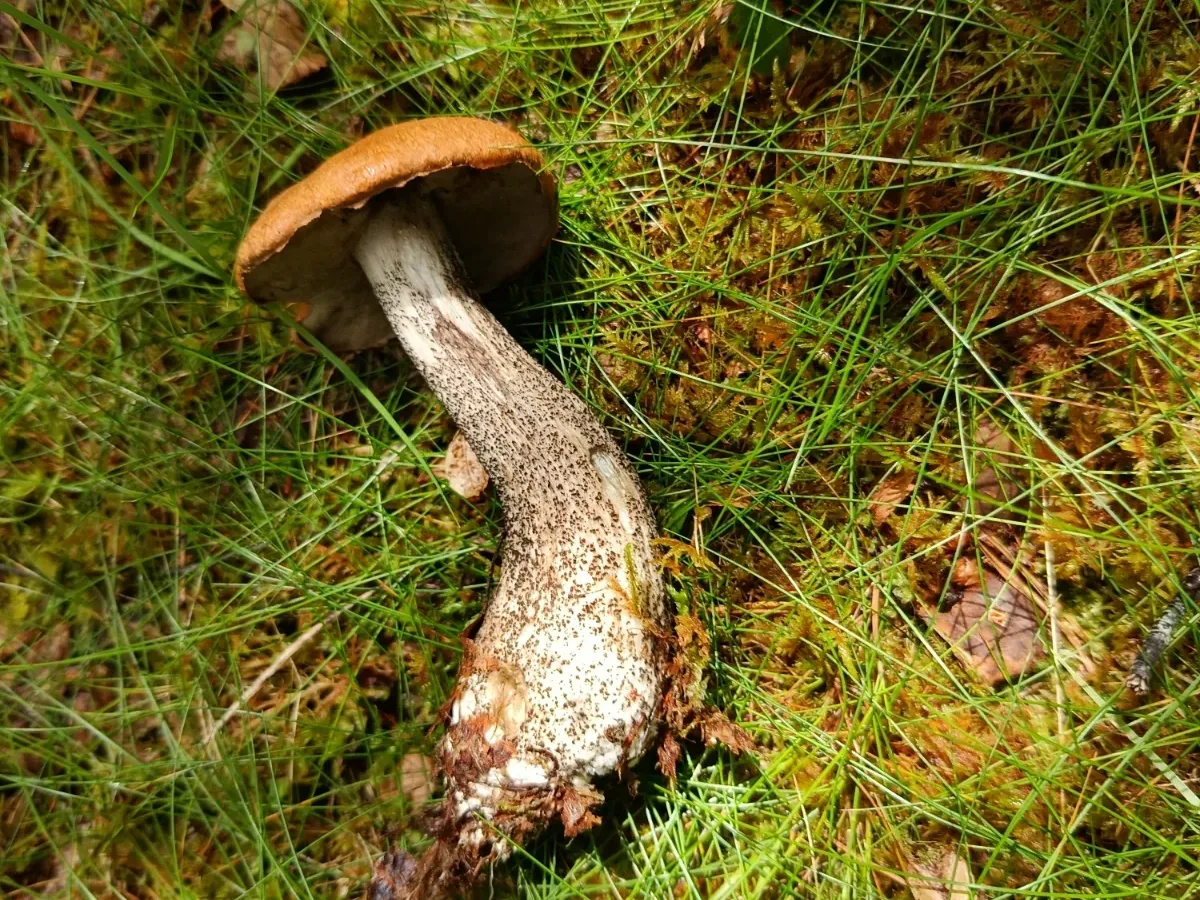 © Arild Skylstad (CC BY)
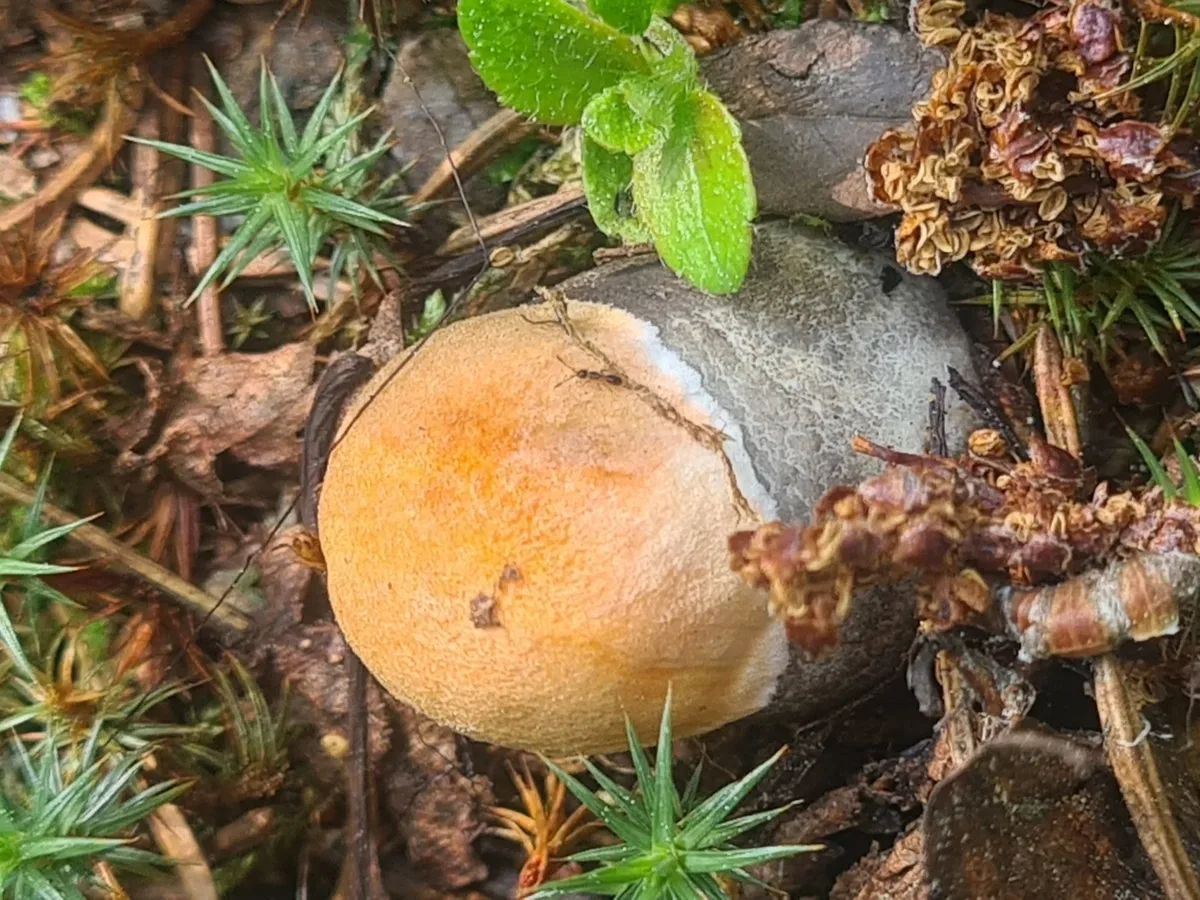 © Tatiana Strus (CC BY)
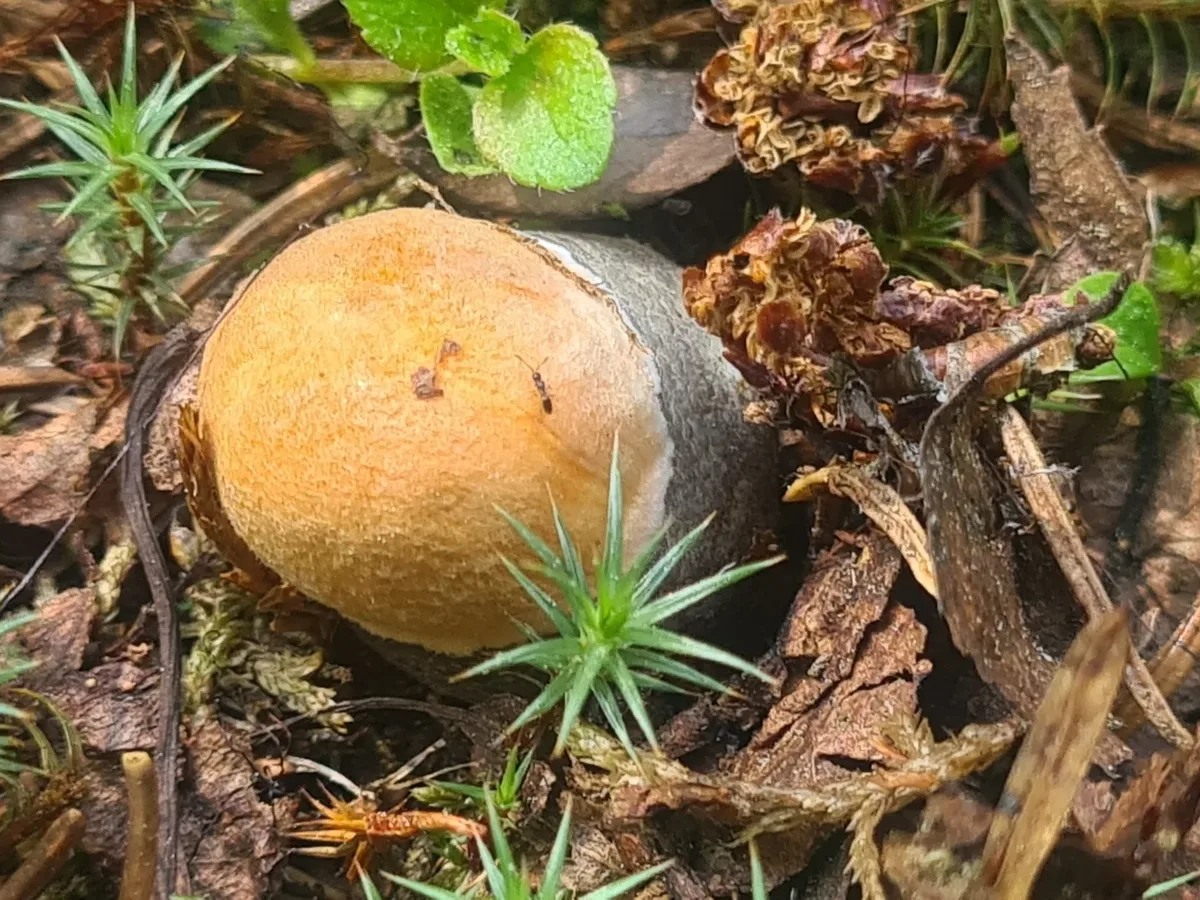 © Tatiana Strus (CC BY)
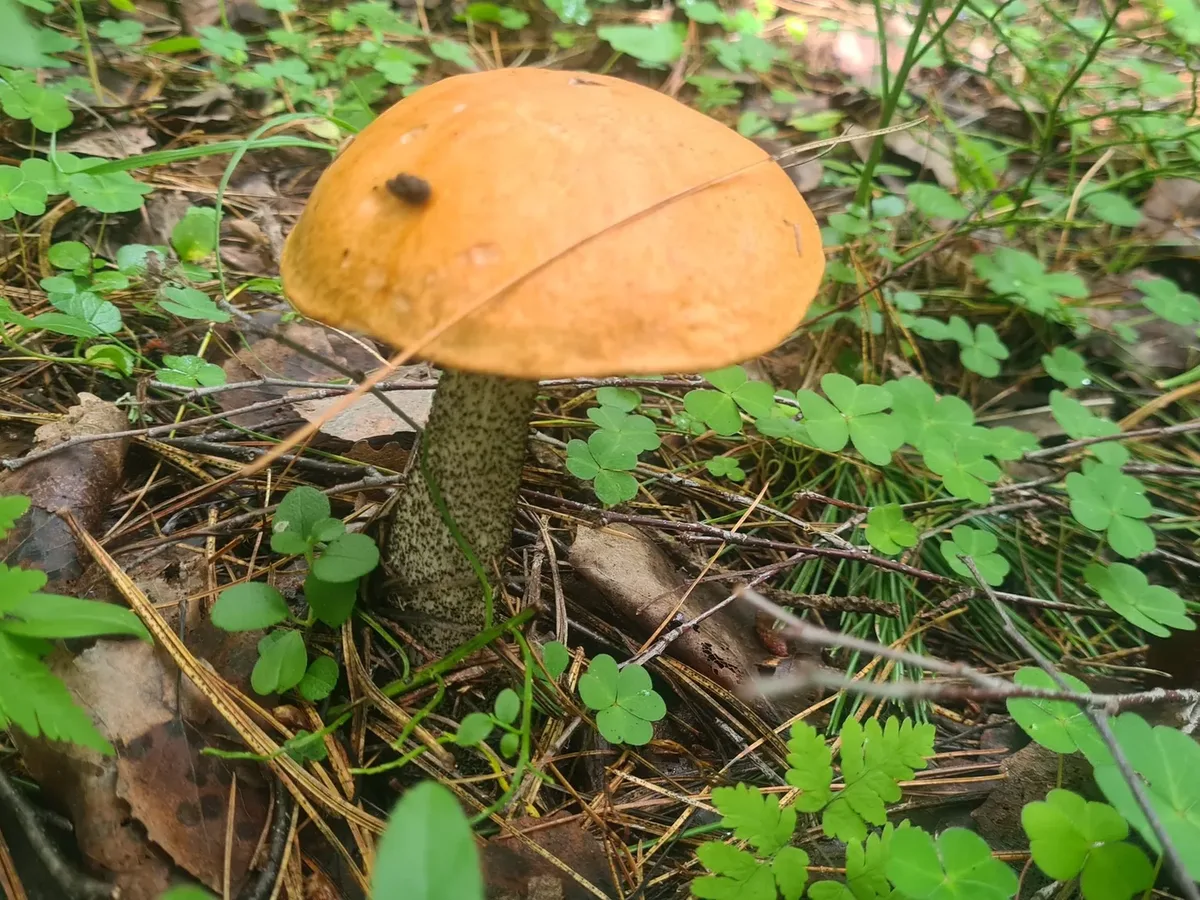 © Tatiana Strus (CC BY)
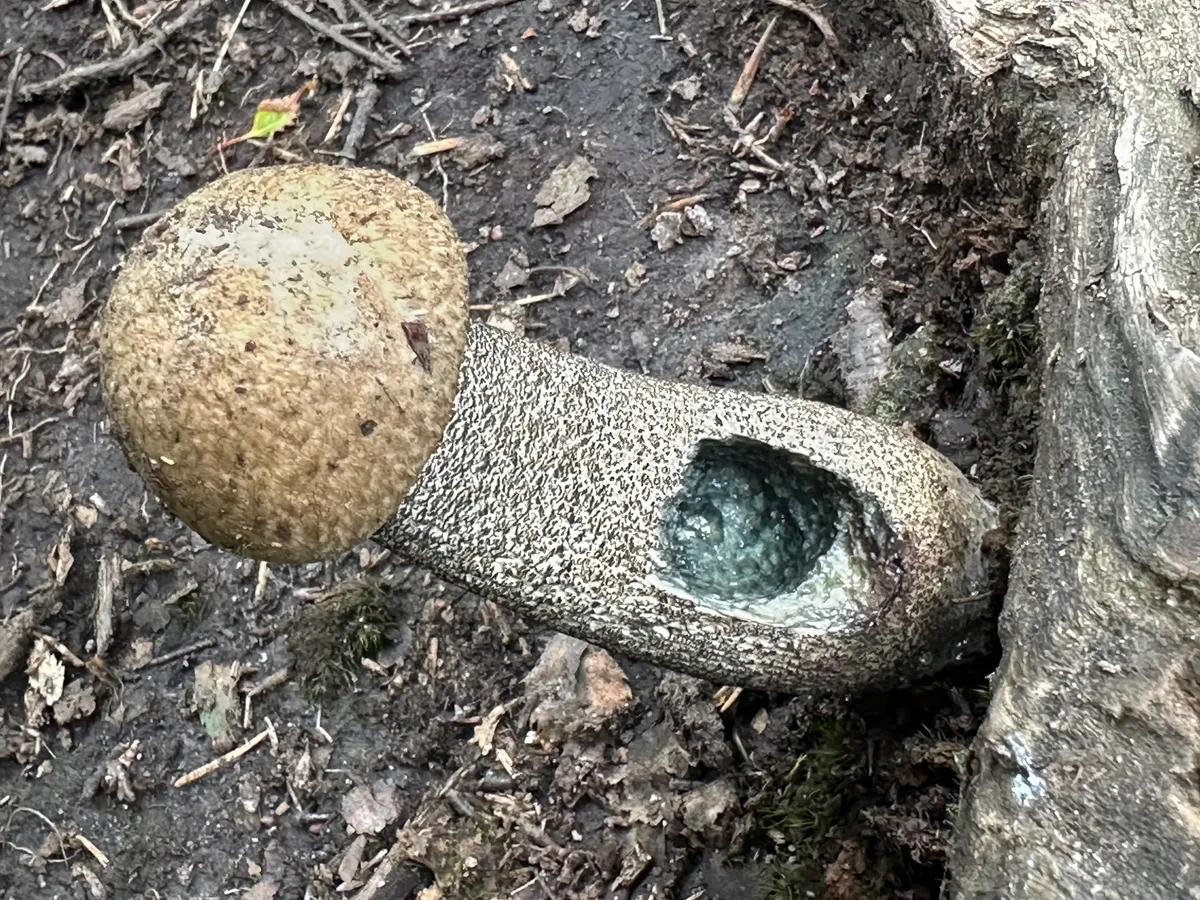 © L. Westerlund (CC BY)
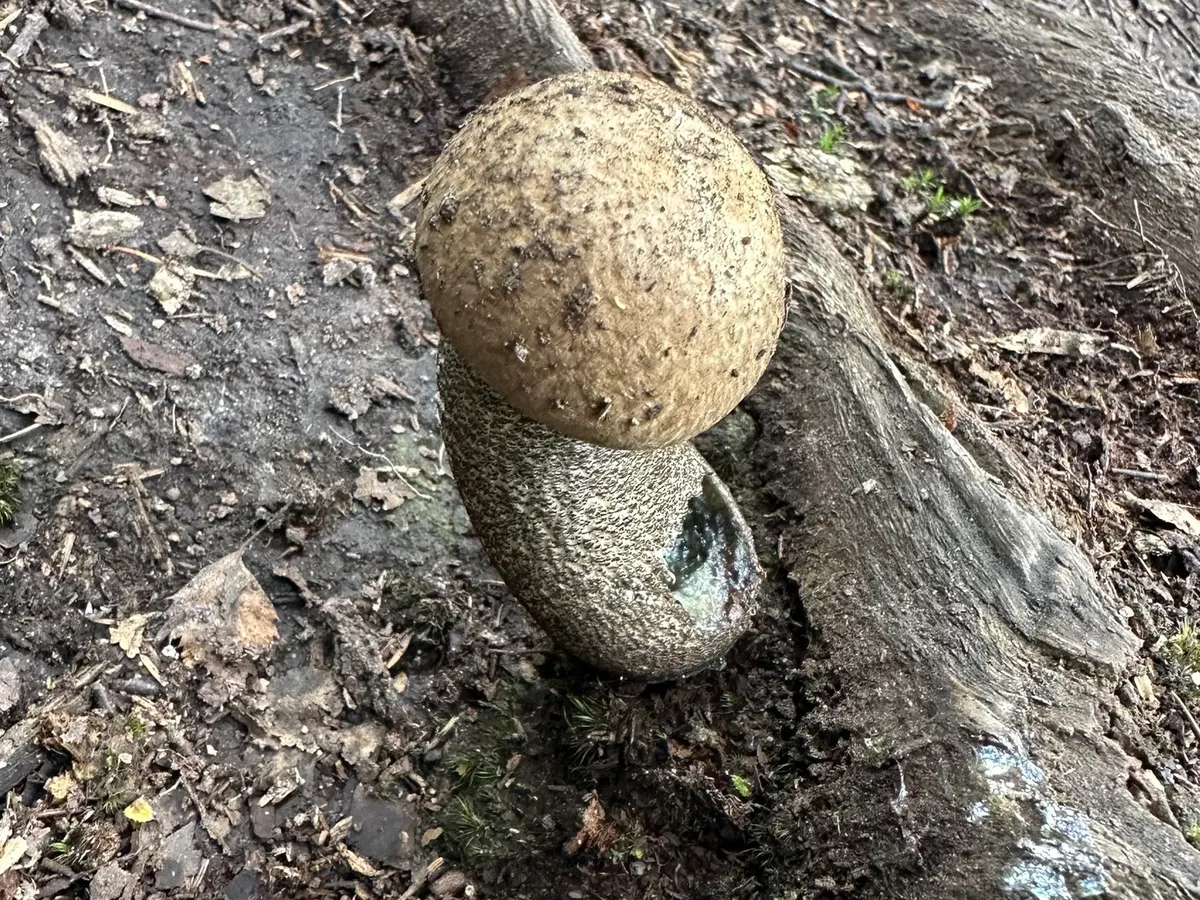 © L. Westerlund (CC BY)
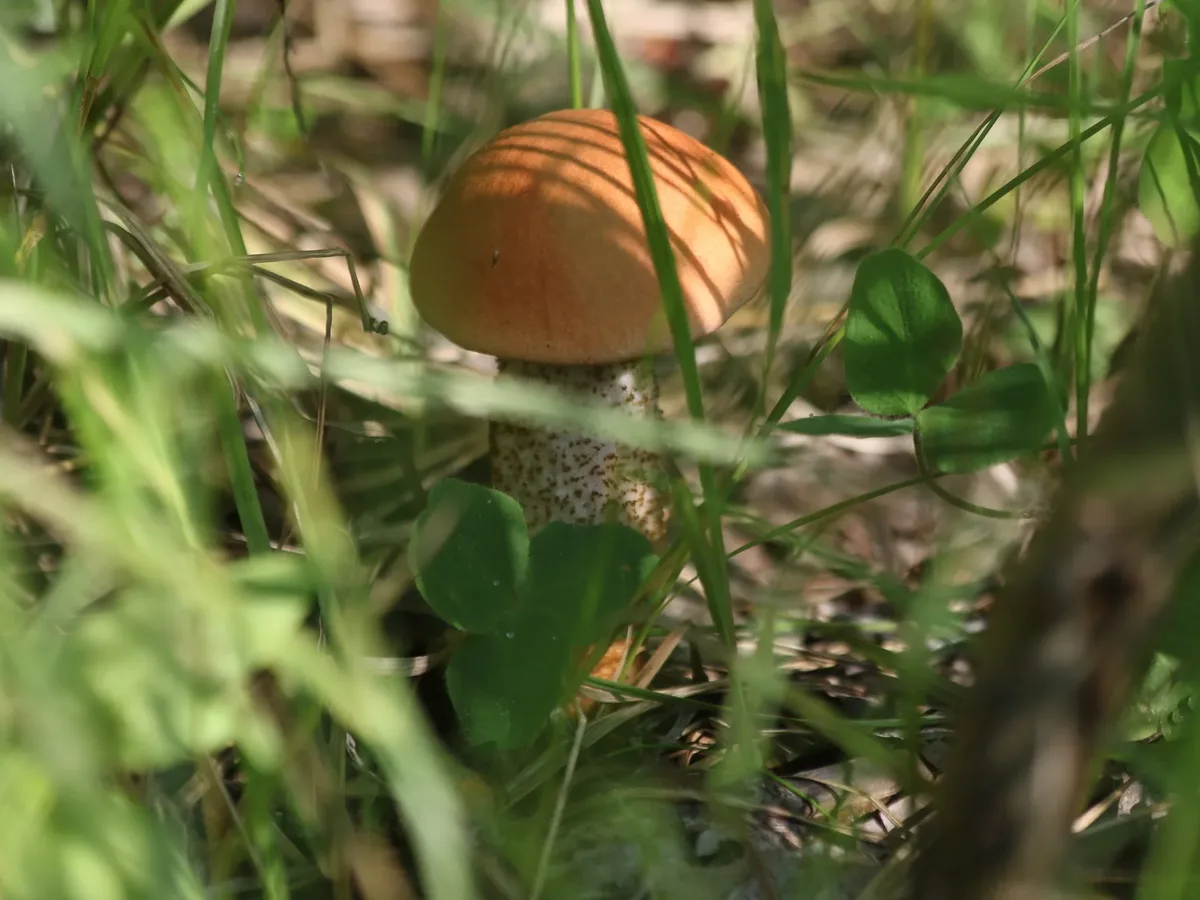 © Tatiana Strus (CC BY 4.0)
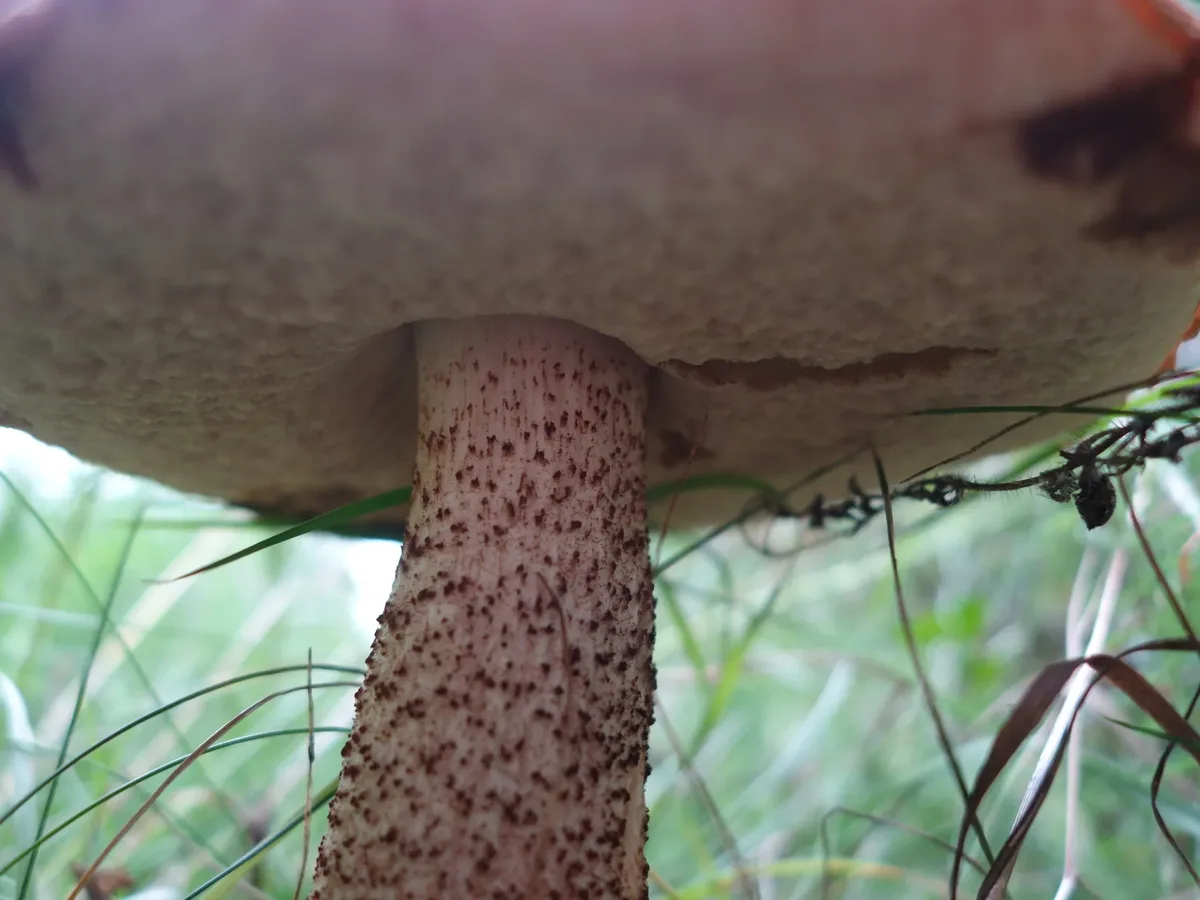 © agujaceratops (CC BY 4.0)© agujaceratops (CC BY 4.0)© Wolfgang Wollschweber (CC BY 2.0)
Good to eat, once you have identified it with certainty and cooked it through.
How to recognise it
The orange birch bolete is one of the more visually distinctive boletes in northern forests, even at a distance.
Cap
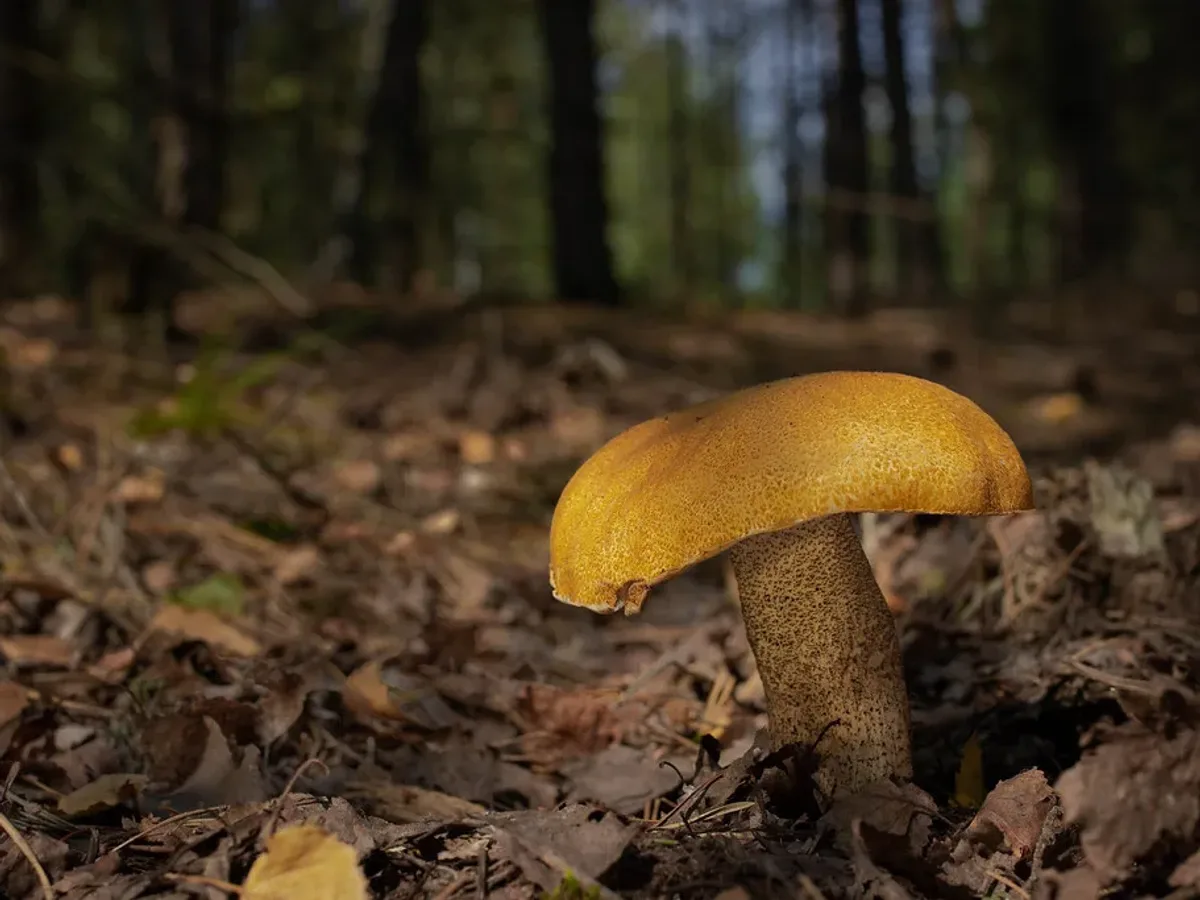
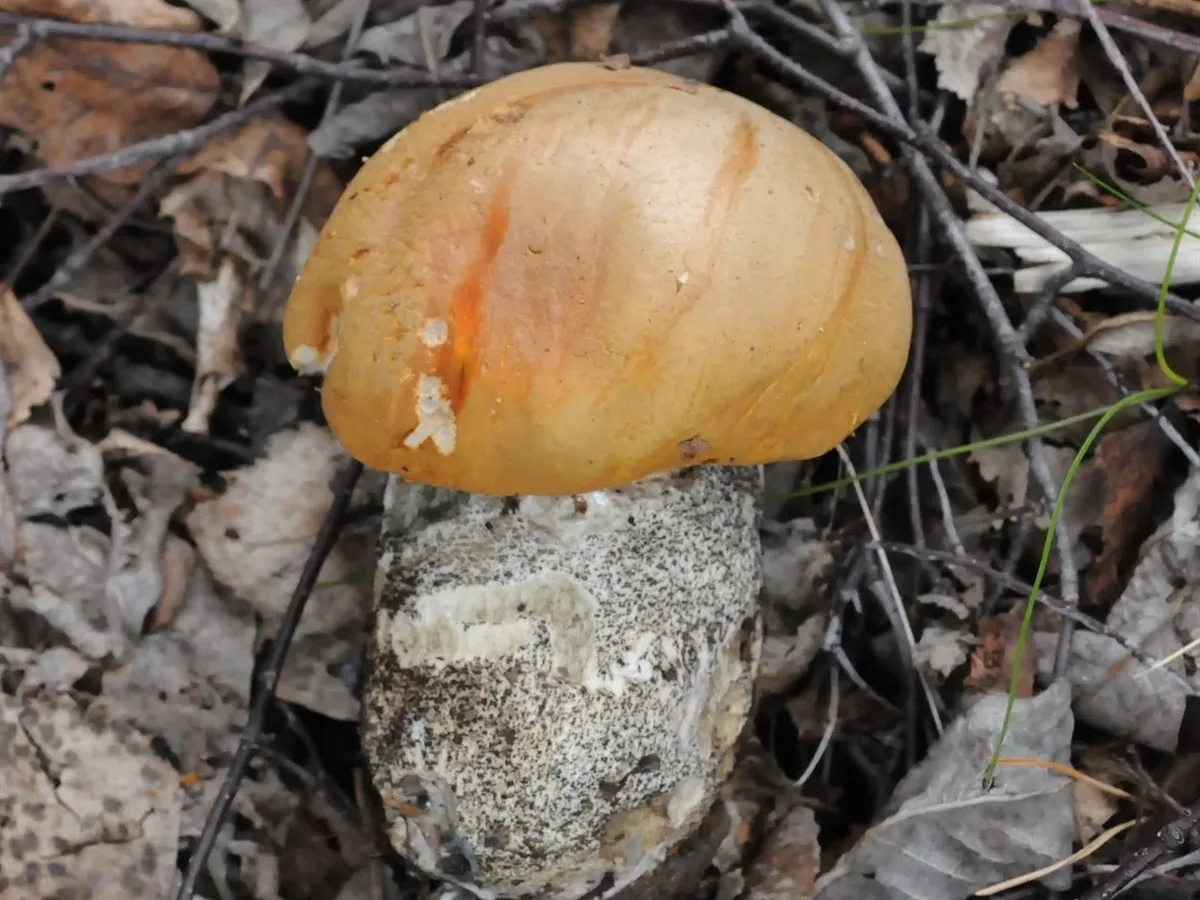
The cap begins as a tight, almost spherical dome - deeply convex, with the margin pressed close against the stem - before flattening out with age to a broad, irregular cushion that can reach 15-20 cm across in old specimens.
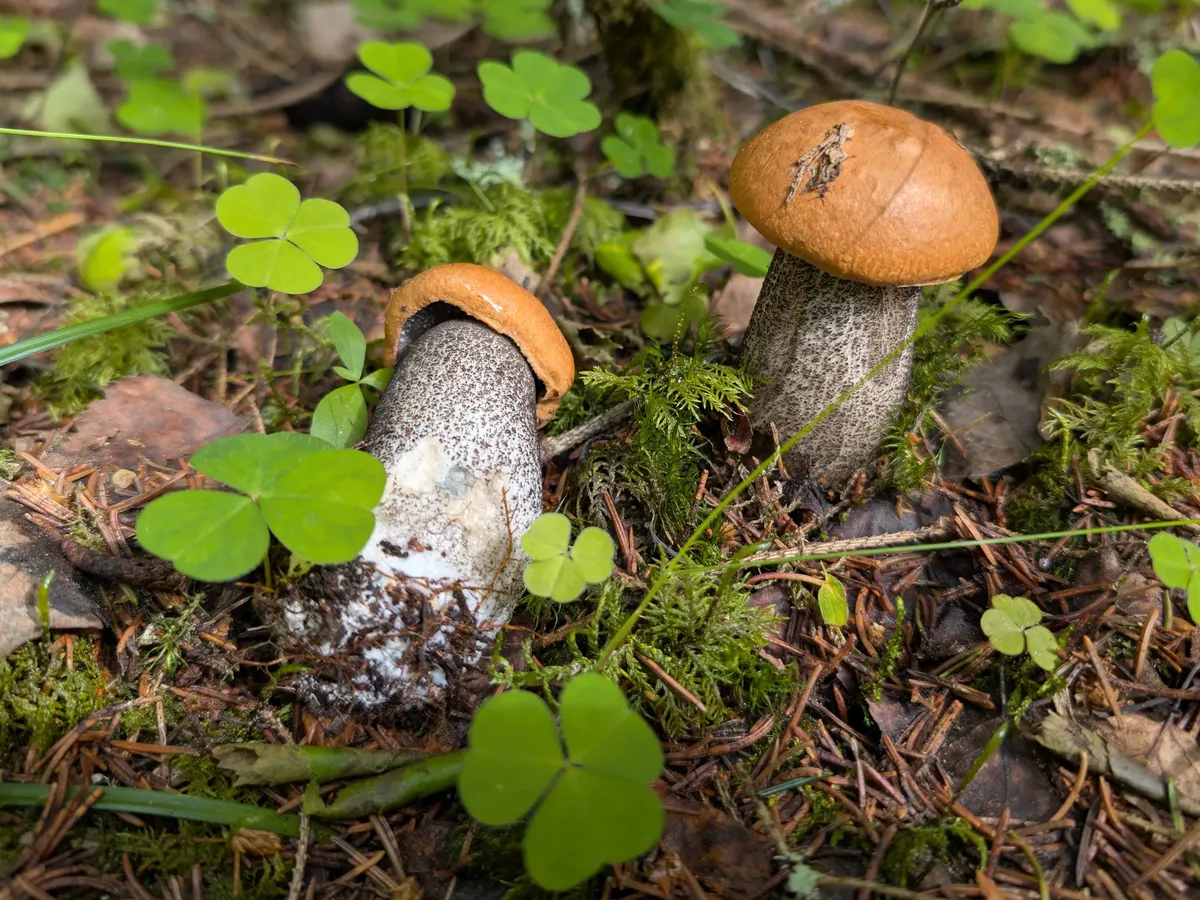
Colour is the first thing that catches the eye: the cap surface runs from warm burnt-orange through brick-red to a rich red-brown, sometimes with subtle olive tints at the margin. In dry spells the cap can appear dull and slightly cracked; after rain it regains its sheen.
The skin extends just past the cap margin, giving the edge a faint overhanging lip.
Gills / Pores
Underneath lies a pore surface - not gills - which is dirty cream to pale grey-buff, bruising slightly brownish when pressed.
Stem
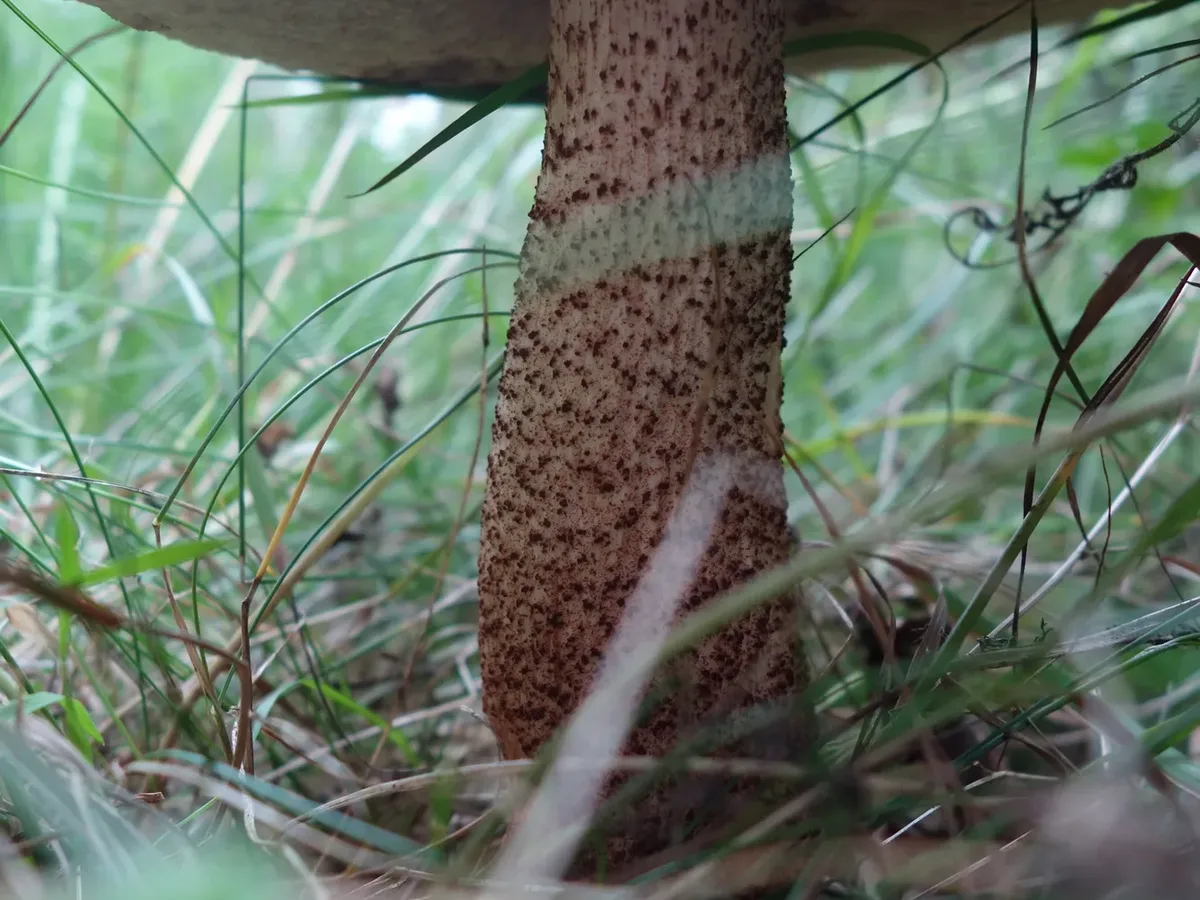
The stem is the species' most reliable field mark: long (often 10-20 cm), club-shaped or cylindrical, pale at the base but densely clothed in dark felty tufts or scabers that blacken sharply at their tips. These tufts are arranged in roughly vertical rows; they are a structural feature built into the stem, not a smear of dirt.
Flesh
The flesh is firm and white when first cut, but within minutes it begins to shift - first lilac-grey, then grey, and finally almost black in the stem base. This slow darkening is caused by enzymatic oxidation reactions in the flesh and is a useful confirmatory character, though not a cause for concern.
Where & when it grows
Habitat
Leccinum versipelle is an obligate mycorrhizal partner of birch (Betula species), which means it cannot complete its life cycle without a living birch host. The underground network of fine fungal threads - hyphae - wraps around the outermost tips of birch rootlets and trades phosphorus, nitrogen, and water for carbon sugars produced by the tree.
This partnership is ancient: the Leccinum lineage and birch co-evolved as birch expanded into post-glacial landscapes across the northern hemisphere, and the bond is tight enough that you will rarely find a fruiting body more than a few metres from a birch trunk.
In Scandinavia the species occupies a broad range of birch-associated habitats:
- mature boreal birch-spruce forest
- open birch woodland
- boggy birch scrub (particularly on peat with downy birch, Betula pubescens)
- roadside birch rows
- subarctic mountain birch (fjällbjörk) zones well above the treeline
In Lappland and the Norwegian highlands it is often the dominant large bolete in the landscape and has been formally recognised as the provincial mushroom of Lappland. Further south it mingles with spruce and pine forest as long as birch is present.
Rich, slightly acidic soils with good moisture retention suit it best, but it tolerates quite poor, gravelly ground in the sub-alpine belt.
When
The orange birch bolete is a late-season species, with its main flush running from mid-August through October across most of Scandinavia. In warmer lowland sites the first solitary fruiting bodies may appear in July.
Timing shifts significantly with latitude and altitude. In sub-alpine birch scrub in Lappland, where the growing season is compressed, the main flush can be over by mid-September, while in southern Sweden fruiting often continues into November in mild years.
The trigger is the convergence of adequate soil moisture - typically requiring 25 mm or more of rain over two weeks - and a drop in soil temperatures into the 8-18 °C window that suits mycelial activation. After a spell of cool, wet weather in late August, the species can emerge in large numbers across wide areas almost simultaneously.
Individual fruiting bodies develop quickly and peak condition is brief: a fresh specimen can go from button stage to fully expanded and beginning to soften in under a week. Larvae find them within days of emergence, so timing the visit matters as much as finding the right habitat.
How it grows
Like all mycorrhizal boletes, Leccinum versipelle spends the vast majority of its existence as mycelium - a diffuse web of hyphae that may have been living among birch roots for decades without producing a single visible fruiting body.
The mycelium overwinters in the soil, surviving frost by entering a dormant state, and resumes growth when soil temperatures rise in spring and early summer. The primordia - the first microscopic knots of tissue that will become fruiting bodies - form underground weeks before anything breaks the surface.
When conditions align in late summer, these primordia swell rapidly, drawing on carbohydrate reserves shared with the host tree, and push up through the soil layer. The stem elongates first, sometimes lifting a plug of soil or leaf litter on the cap as it emerges.
The entire process from primordium to fully expanded cap can take as little as five to seven days in warm, wet conditions.
Fungus-gnat larvae (Mycetophilidae and related families) locate fresh fruiting bodies quickly, often laying eggs within hours of emergence; the larvae then bore winding tunnels through the stem and into the cap flesh. A stem that looks pristine outside can be riddled with tunnels within.
This is a biological reality of foraging Leccinum species, not a sign of poor habitat - it reflects how productive the environment is for insects as well as fungi.
Fruiting conditions
Conservative standard mycology estimate; the guide gives no quantitative fruiting triggers.
Look-alikes
The orange birch bolete sits within the rough-stemmed bolete genus Leccinum, and its lookalikes are other members of the same genus - none of which are deadly.
- The birch bolete (Leccinum scabrum) is the most common confusion species: it shares the birch habitat and the dark-scabered stem but has a duller, grey-brown to tan cap, not orange or red.
- The aspen bolete (Leccinum aurantiacum) comes closest in cap colour - it can be intensely brick-red - but grows exclusively with aspen (Populus tremula), not birch; in mixed woodland where birch and aspen grow together this distinction matters.
- Other Leccinum species (Leccinum holopus, with a whitish cap on boggy ground; Leccinum melaneum, dark brown cap with spruce) are all edible when cooked, though some cause gastrointestinal upset if undercooked or eaten raw.
None of the Leccinum species produce a ring or volva, which separates the entire group from dangerous Amanita species. The sponge pore surface, rather than gills, instantly rules out any gilled species.
No bolete in northern Europe with a non-red/non-orange pore surface and dark-scabered stem is known to cause serious poisoning, but the key identification character for Leccinum versipelle remains the combination: orange to brick-red cap, birch habitat, and stem tufts that are distinctly blackened at their tips.
Grows with aspen and has an intensely red cap; edible when well cooked.
Another rough-stemmed bolete; edible when well cooked.
In the kitchen
Picking & cleaning
Selecting good specimens is the core skill when foraging the orange birch bolete. The ideal candidate is young and firm - the cap is still convex and the stem is solid and white at the cut base, not yet beginning to grey heavily.
Before the mushroom goes into your basket, cut the stem in half lengthways with a clean knife and inspect the interior:
- A sound specimen will show solid white flesh with perhaps a faint lilac tinge beginning.
- A wormy one will reveal a network of yellow-brown tunnels often concentrated in the lower stem.
Light larval activity in the cap alone, with a clean stem, is acceptable - trim the affected sections and the rest is usable. Heavier infestation makes the flesh soft and unpleasant and is not worth carrying.
As a mycorrhizal species, leaving some fruiting bodies in place is ecologically sensible; the mycelium is not harmed by picking, but fruiting bodies do distribute spores and may contribute to local colonisation. Cut at ground level rather than uprooting, which avoids disturbing the mycelium.
Collect in an open basket or breathable bag - closed plastic bags accelerate softening and drive up moisture in the flesh. Transport quickly and process on the same day if possible; the flesh deteriorates faster than most boletes once cut.
Cooking
The orange birch bolete rewards patience in the kitchen more than most wild mushrooms. The flesh is dense and holds its structure through long cooking, making it well suited to braises, rich stews, and slow-cooked sauces where 20-30 minutes of sustained heat is natural.
The colour shift of the flesh - from white to grey to near-black - happens in the pan as well, so the cooked mushroom is dark and somewhat unattractive on its own; combine it with other ingredients or use it in dishes where colour is not the point.
The flavour is earthy and substantial, less delicate than cep (Boletus edulis) but similarly meaty in texture.
Drying is one of the most practical ways to preserve a large harvest:
- Slice the cap and stem thinly (5-8 mm).
- Dry at 40-50 °C until brittle.
- Store in an airtight jar.
Dried slices rehydrate well in warm water or stock, and the soaking liquid carries flavour worth keeping.
For fresh use, a robust initial sauté in butter or oil - hot pan, not crowded - drives off excess moisture before the flesh can steam and turn waterlogged.
Adding the mushrooms to soups or grain dishes (barley, farro) early in cooking works well; the texture survives the longer simmer.
Avoid lightly cooked preparations such as brief stir-fries or carpaccio-style dishes: safety and palatability both depend on thorough heat.
Good to know
The orange birch bolete is classified as edible, but it carries a clear and documented caveat: it must be thoroughly cooked before eating.
Eating it raw or insufficiently heated causes gastrointestinal upset - nausea, vomiting, stomach cramps and diarrhoea. The responsible compounds are not fully characterised but appear to be heat-labile proteins or lectins present in the raw flesh.
In Norway, cases of gastrointestinal illness requiring hospital care have been linked specifically to Leccinum versipelle and Leccinum aurantiacum (orange-capped rough-stemmed boletes), even among people who cooked them, which has led Norwegian food safety authorities to advise particular caution. The risk appears higher with large quantities, undercooked specimens, or individuals with sensitive digestion.
Thorough cooking - genuinely sustained high heat for at least 15-20 minutes - eliminates the risk for most people. Dried specimens that are later rehydrated and cooked are generally considered safe.
The darkening of the flesh after cutting (white to grey to near-black) is an enzymatic reaction and is not a toxicological signal - it does not indicate spoilage or increase risk.
Until you know how your body responds:
- Do not eat it raw.
- Do not eat it lightly sautéed.
- Do not eat large quantities in a single meal.
A reference guide - never an edibility guarantee. When in doubt, leave it out.