Oak bolete
Leccinum quercinumsyn. Boletus quercinus, Leccinum aurantiacum var. quercinum
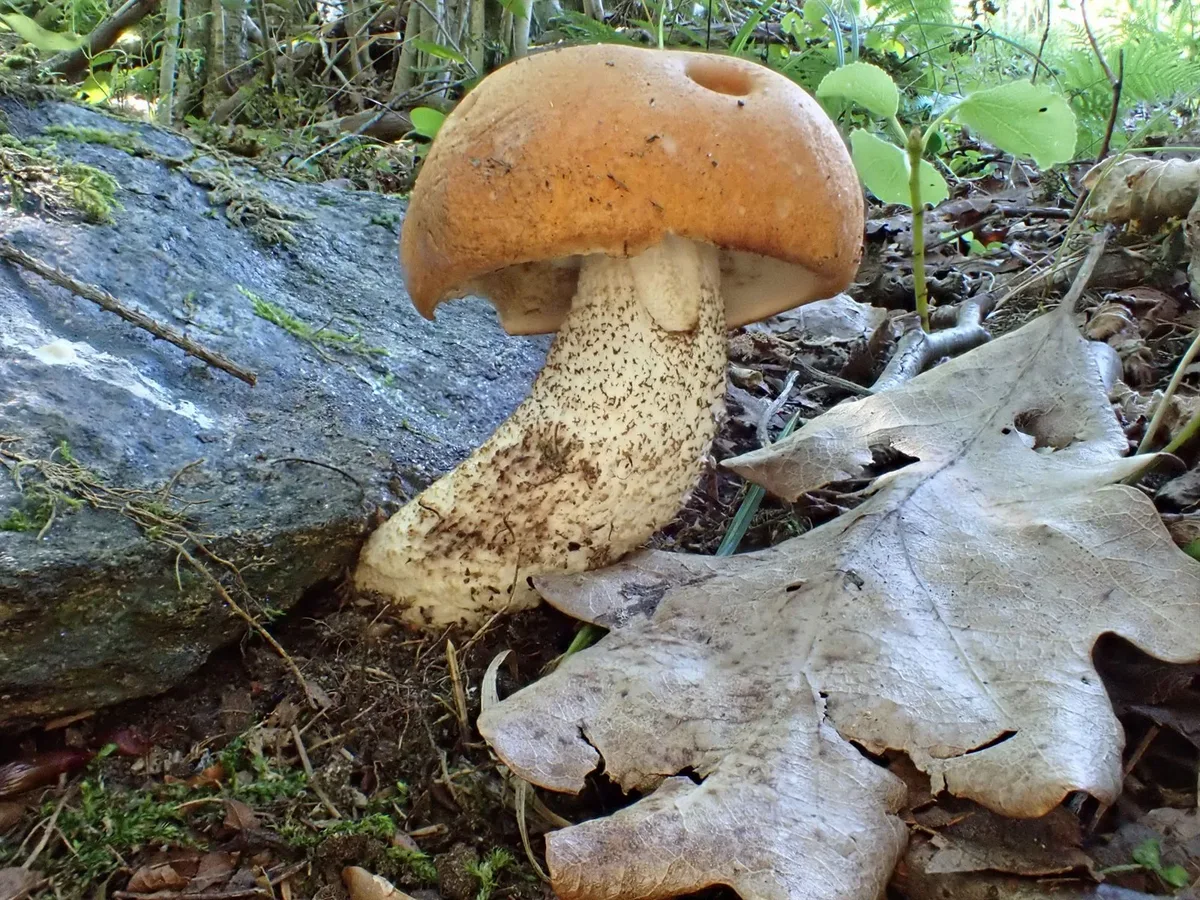 © Inger-Lise Fonneland (CC BY)
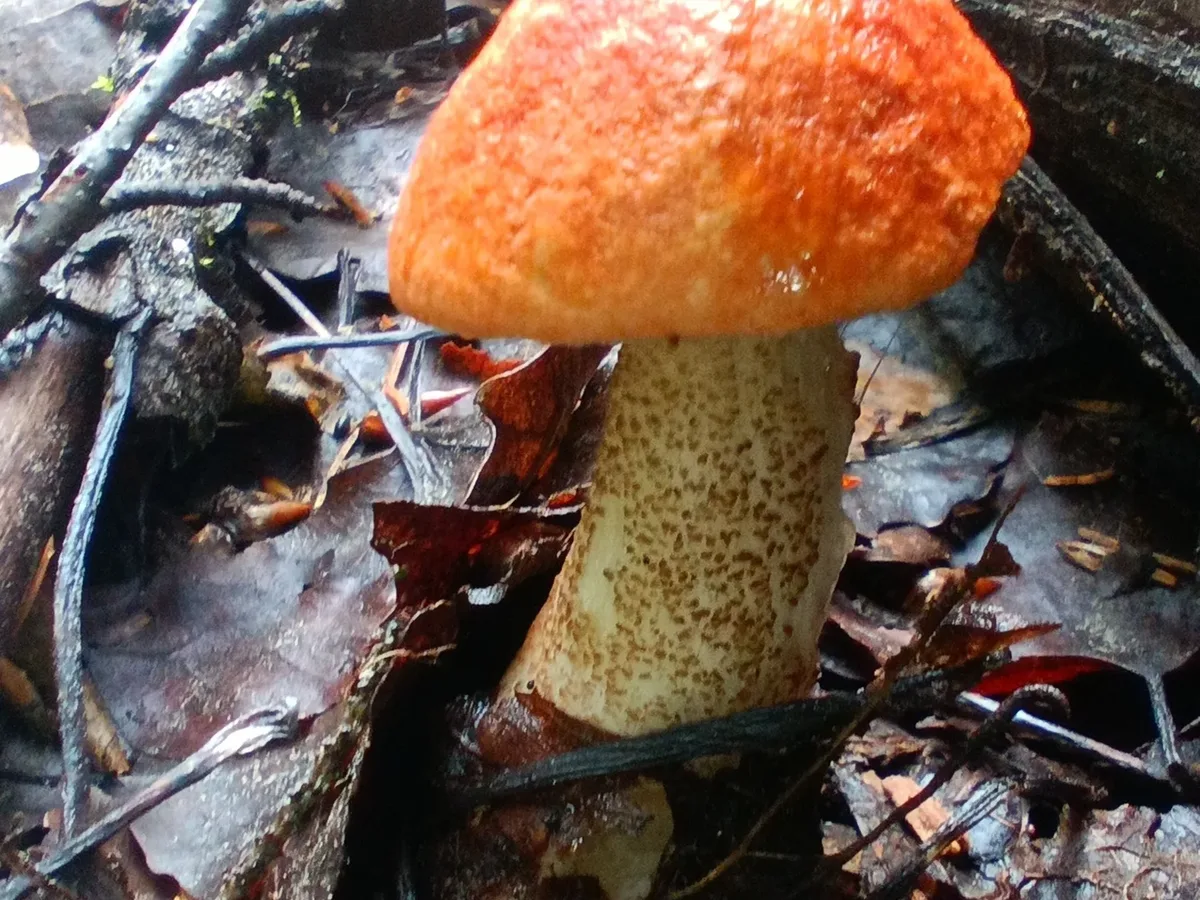 © Михаил Языков (CC BY)
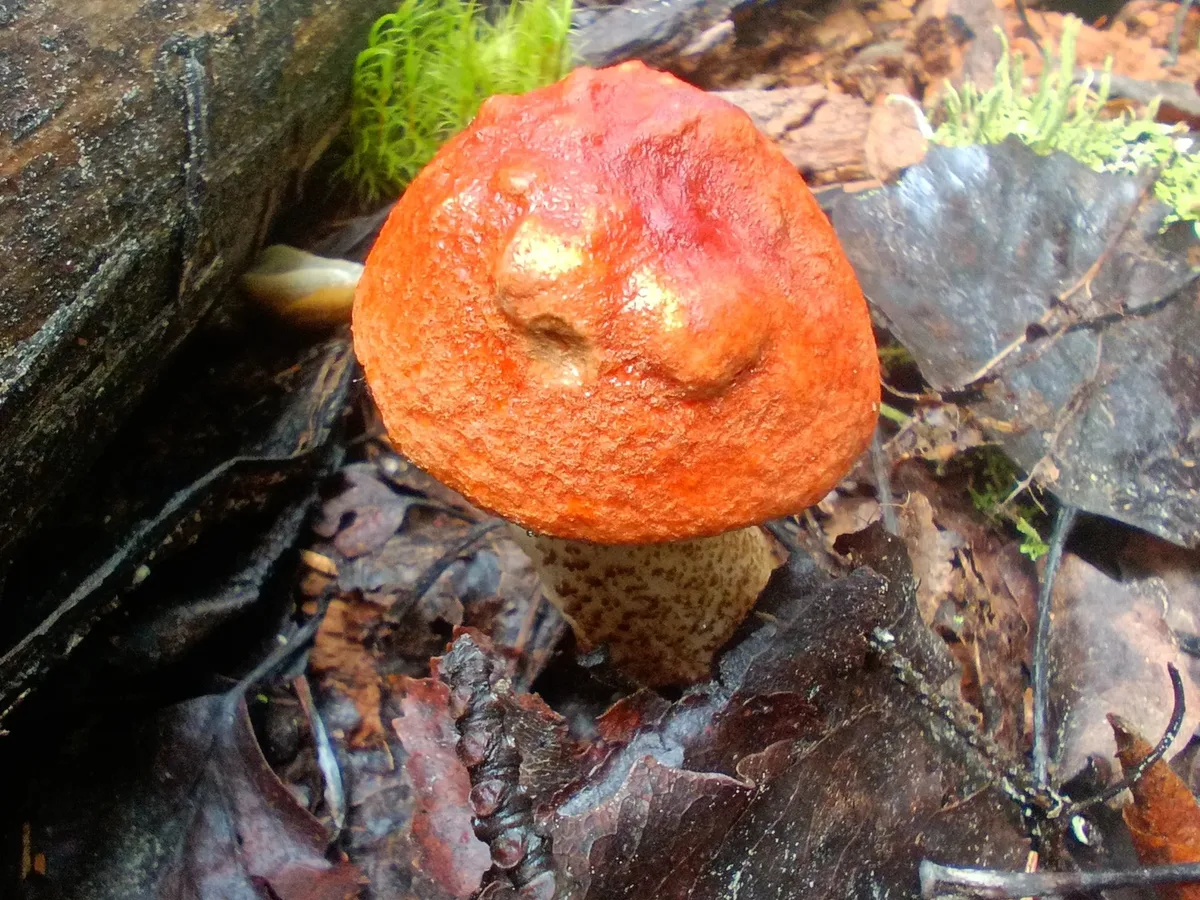 © Михаил Языков (CC BY)
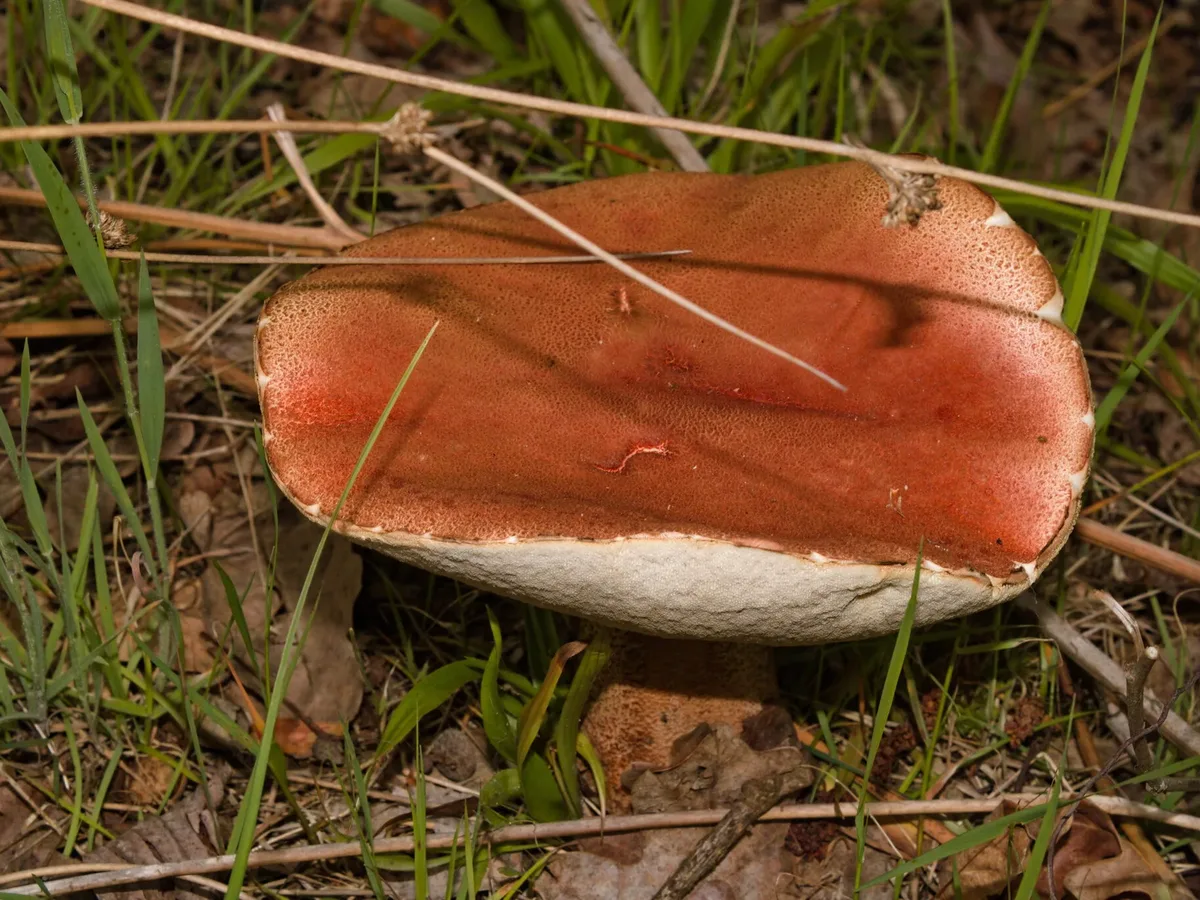 © Bobo-X (CC BY)
 © Bobo-X (CC BY)
 © Bobo-X (CC BY)
 © akhmelyuk (CC BY)
 © Svein Olav B. Drangeid (CC BY)© Inger-Lise Fonneland (CC BY)© Михаил Языков (CC BY)
Edible only with the right preparation - or safe for some people but not others. Learn the caveats first.
Never eat a mushroom you are not 100% sure of - check the look-alikes below, and always cook wild mushrooms.
How to recognise it
Cap
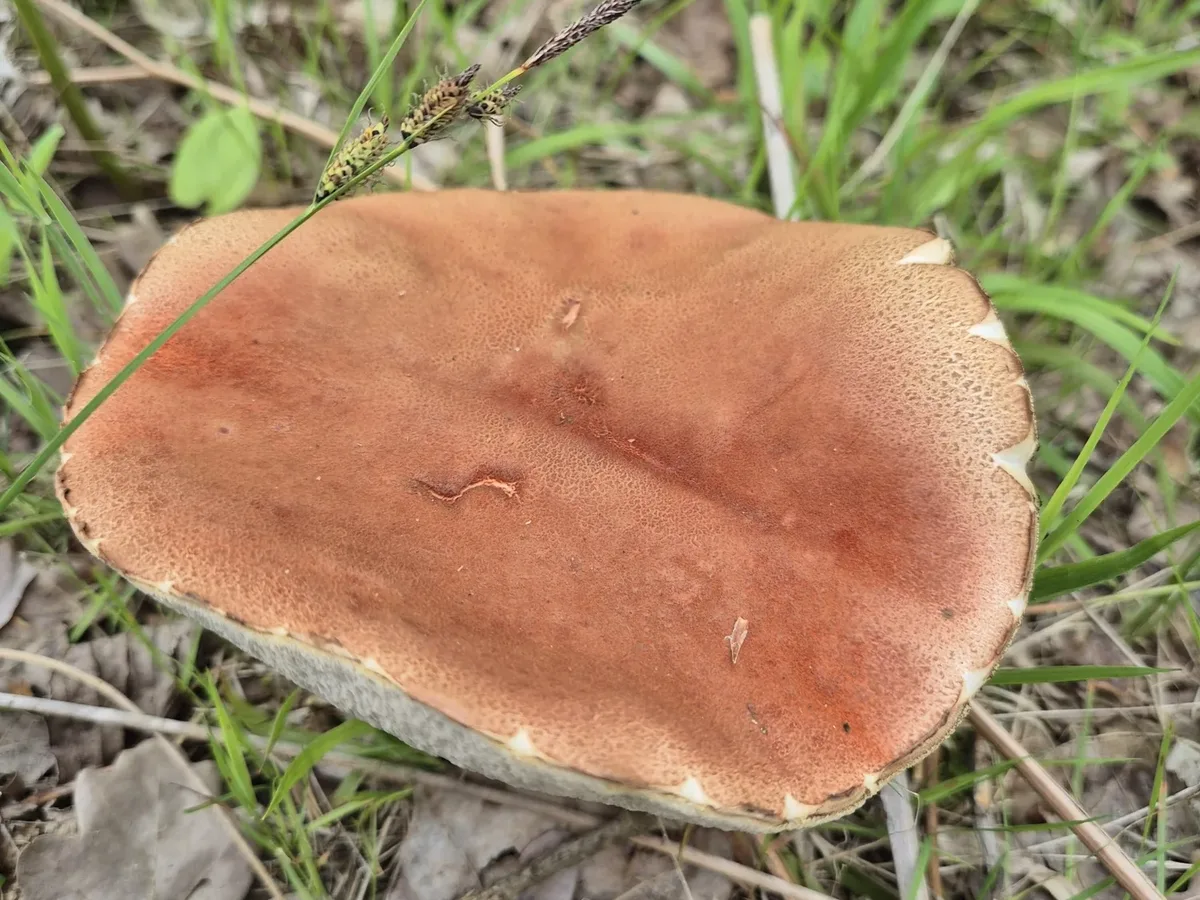
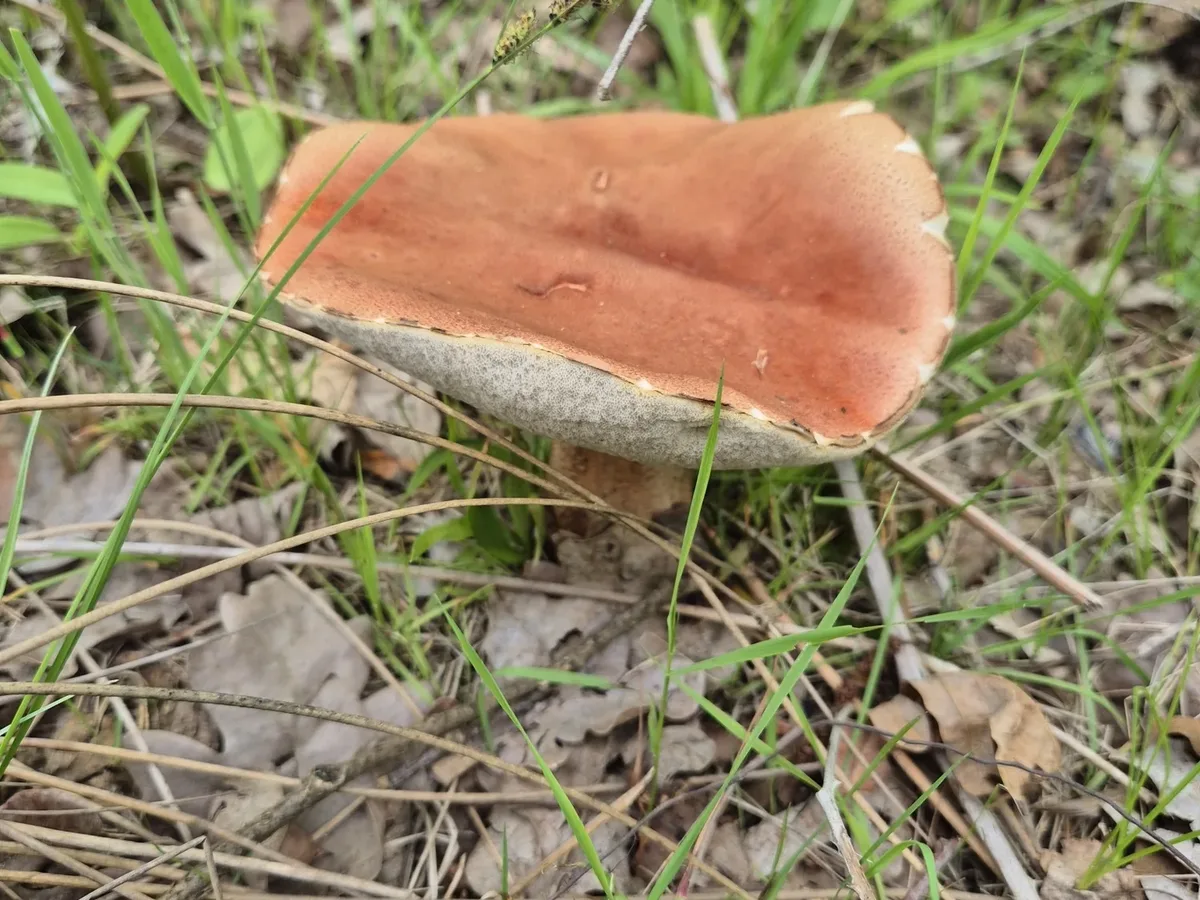
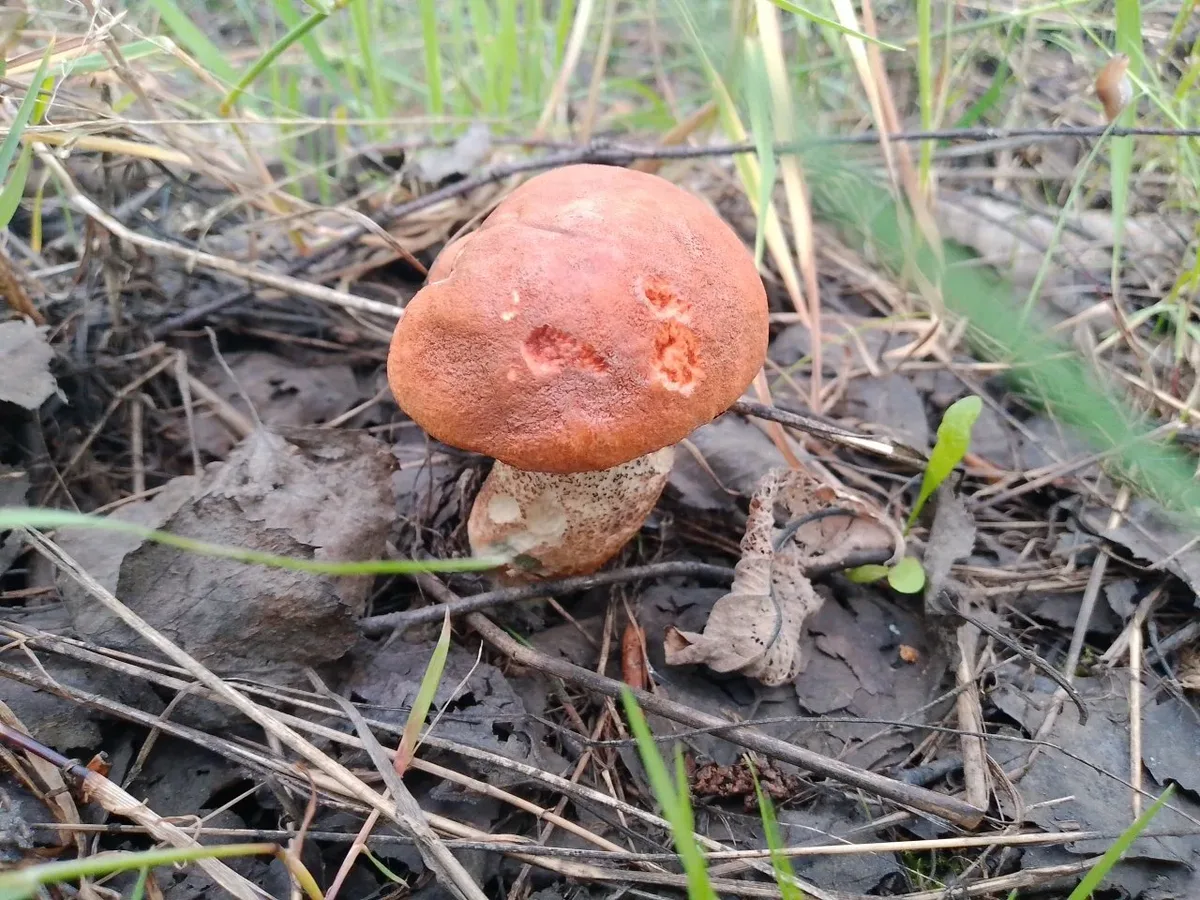
Cap 6-18 cm, convex when young and broadening with age into a gently domed, wide pillow shape. The colour is a warm brick-red to deep orange-red or chestnut-red, with a slightly dry, finely fibrous surface that smooths out over time.
Gills / Pores
Pore surface starts white to grey-white and shifts to dirty cream or pale grey; pores are small and bruise brownish.
Stem
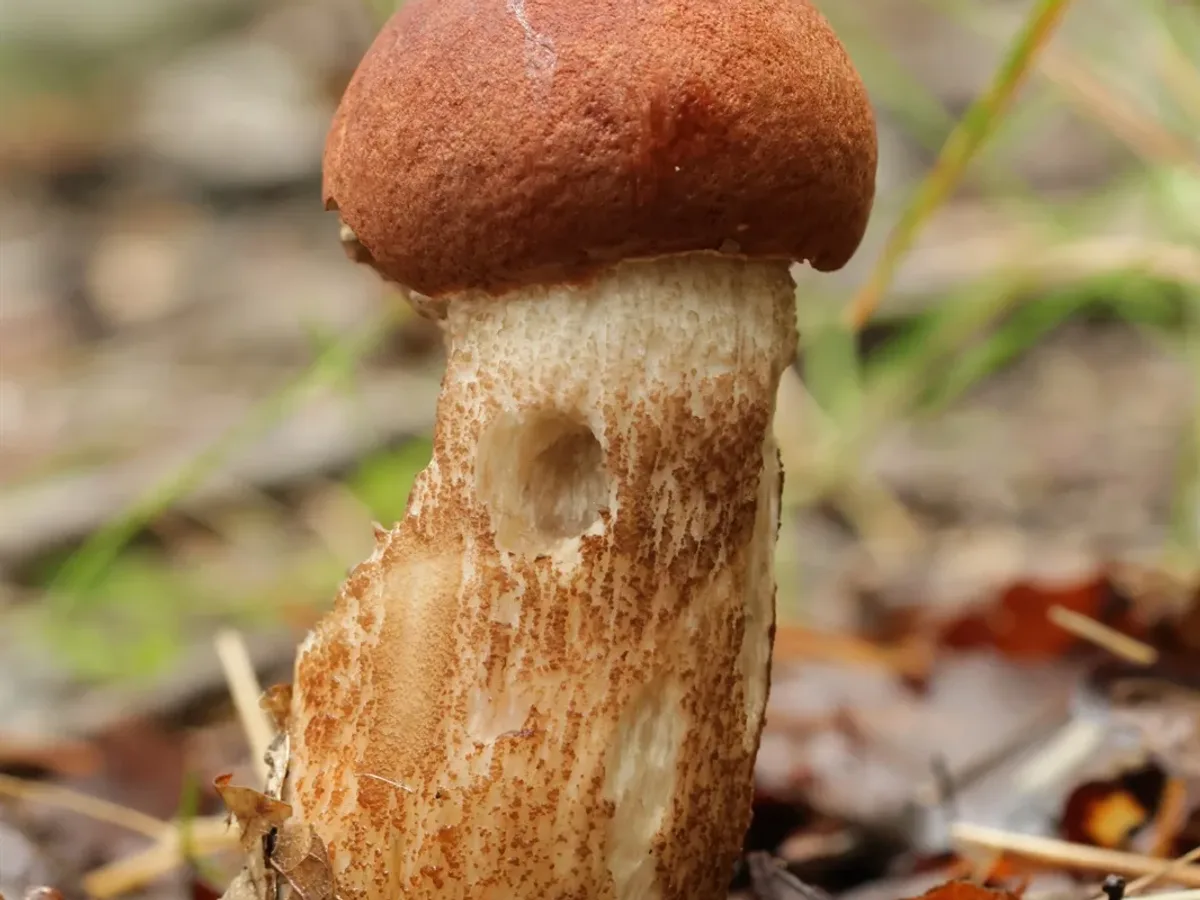
The stem (8-18 cm) is whitish to pale buff and armoured in coarse scabers - rough granular tufts that start pale and steadily darken to brown or black as the mushroom ages. This rough, darkening stem is the signature of the Leccinum genus.
No reticulation (net pattern) on the stem - that separates it from the cep group.
Flesh
The clinching diagnostic character: cut through the flesh and it shifts from white through pinkish-violet to grey or blue-black, most dramatically at the stem base.
Why it's dangerous
Not life-threatening when cooked correctly. But the red pore check for Rubroboletus satanas (Satan's bolete) is critical - that species is seriously toxic and shares the oak woodland habitat.
Any bolete with red pores under oak must be rejected immediately.
Toxin
Heat-labile gastrointestinal irritants, chemically not fully characterised. Degraded by sustained cooking at high temperature.
Raw or undercooked mushrooms retain enough irritant to cause vomiting and diarrhoea.
The same group of compounds (or closely related ones) in other red-capped Leccinum species has been implicated in serious GI episodes in Scandinavia.
Symptoms
Onset 30 minutes to 3 hours after ingestion.
Symptoms include nausea, vomiting, abdominal cramps, and diarrhoea; usually self-limiting within 12-24 hours.
Rare cases have been more severe, especially in individuals who ate large quantities or whose specimens were undercooked.
Staying safe
Leccinum quercinum belongs to the red-capped Leccinum group, which contains heat-labile gastrointestinal irritants that are destroyed by thorough cooking. Eating these mushrooms raw or undercooked produces vomiting and diarrhoea.
More concerning, documented cases of serious gastrointestinal illness - including cases requiring medical attention - have been linked to red-capped Leccinum species even after apparently adequate cooking. The exact irritant compounds are not fully characterised.
The decisive rule:
- Cook thoroughly (minimum 15-20 minutes at full heat).
- Discard old, soft, or maggot-eaten specimens.
- Start with a small portion the first time.
Do not eat if you are pregnant, immunocompromised, or have a sensitive digestive system.
The deadly lookalike Satan's bolete (red pores, red stem, strong blue bruising) shares the oak habitat. Confirm all three:
- Red pores absent.
- Stem scales only (no red stain).
- No blue bruising.
Where & when it grows
Habitat
Grows only in mycorrhizal partnership with oak (Quercus robur, Q. petraea) - it simply does not appear under other trees.
Look for it in broadleaf woodland, parkland, wood edges, and alongside solitary roadside or orchard oaks wherever the canopy is old enough to have built a real root network underground.
The oak association is your single most reliable habitat clue: no oak, no oak bolete.
When
July through October, with the best fruiting in August and September.
Like all mycorrhizal boletes, the oak bolete needs a nudge from the weather: a good soaking of 15-25 mm over a day or two when the soil is still warm (above 10 °C) is the classic trigger, and fruit bodies typically push up 5-10 days later.
A warm, wet late summer often produces the most generous flushes.
How it grows
A strictly mycorrhizal species - the underground partnership with oak roots cannot be replicated in cultivation, so every oak bolete you find is a wild one.
Fruit bodies grow singly or in small scattered groups, pushing up from the soil over 3-5 days.
The bad news is that the flesh is highly attractive to fly larvae; red-capped Leccinum species are among the first boletes to be riddled with maggot tunnels.
Always slice the stem lengthwise before adding anything to your basket.
Fruiting conditions
Flush triggered by warm rain (≥15-20 mm over 1-2 days) when soil temperature is 10-20 °C; fruit bodies emerge 5-12 days after triggering rain. Typical of mycorrhizal boletes in temperate broadleaf woodland.
Look-alikes
Satan's bolete (Rubroboletus satanas) also grows with oak in central and western Europe and can have a brownish-reddish cap at certain ages.
It is distinguished by three signs - any of them means do not eat:
- Blood-red to orange pores (never white).
- A red-stained stem.
- Strong blue bruising.
The orange birch bolete (Leccinum versipelle) is very similar but grows strictly under birch; it also turns dark when cut.
The aspen bolete (Leccinum aurantiacum) grows under aspen and poplar.
All red-capped Leccinum species should be treated the same way: cooked thoroughly, never raw.
Shares the oak habitat in central and western Europe. Satan's bolete has blood-red to orange pores (never white), a red-stained stem, and turns intensely blue when bruised. Oak bolete has white to grey pores, no red colouration in the stem, and no blue bruising. If you see red pores, stop immediately.
Nearly identical morphology with an intensely orange-red cap. Grows under aspen and poplar, not oak. Same cooking precautions apply.
Has a grey-brown to brownish cap rather than brick-red; grows under birch. Flesh also discolours but less dramatically. Edible when cooked.
Very similar in appearance and also turns dark when cut. Grows exclusively under birch, not oak. If the nearest tree is a birch, you have versipelle, not quercinum. Both require thorough cooking.
A reference guide - never an edibility guarantee. When in doubt, leave it out.