Spruce bolete
Leccinum piceinumsyn. Boletus piceinus, Krombholziella piceina, Leccinum vulpinum var. piceinum, Leccinum testaceoscabrum var. piceinum
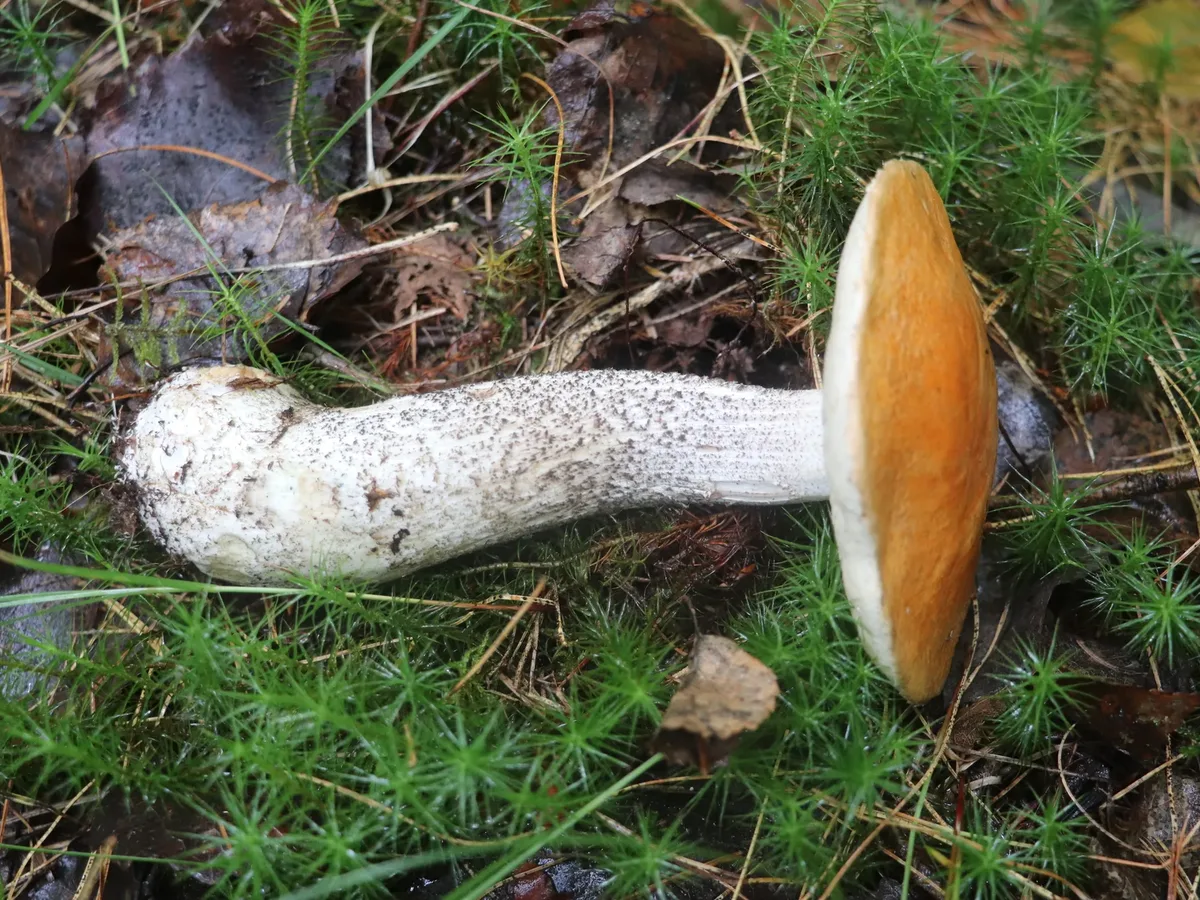 © Nina Filippova (CC BY)
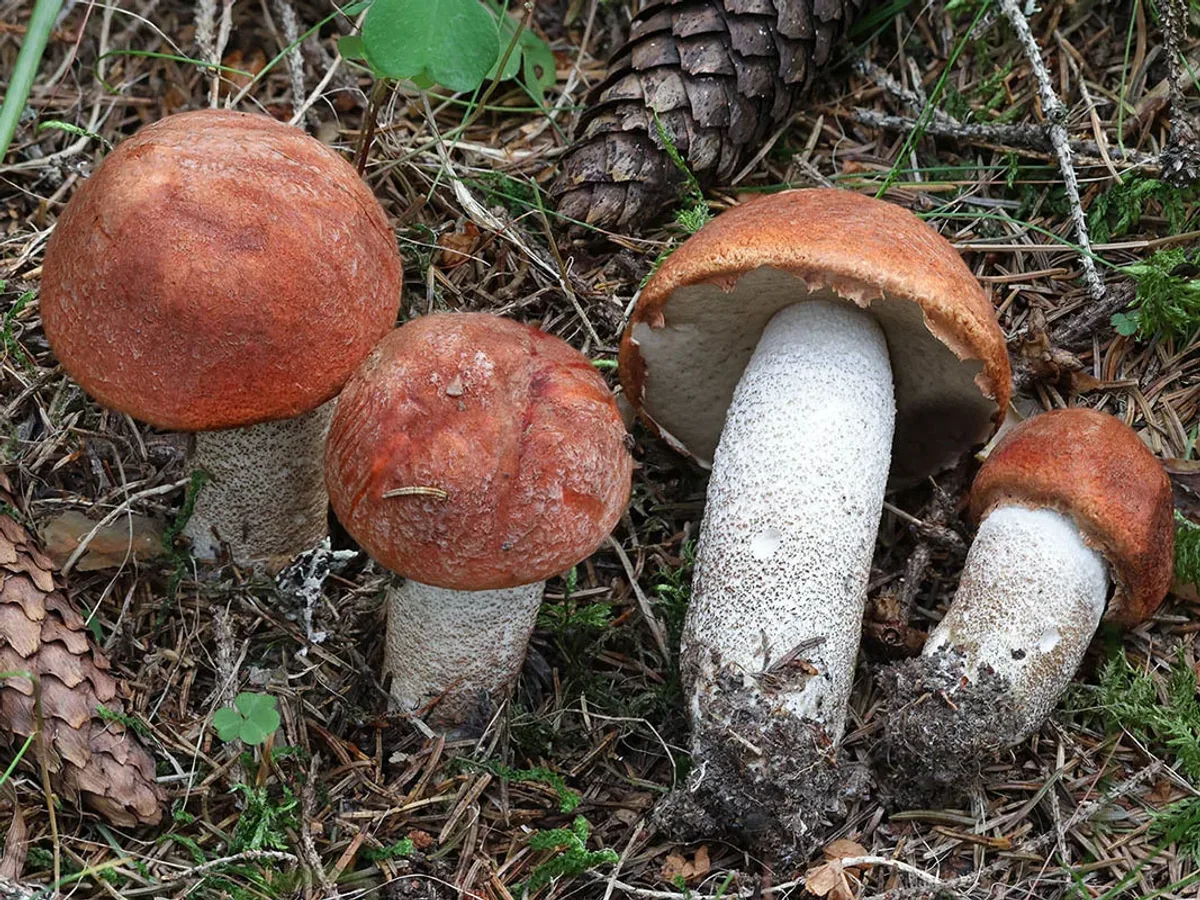 © Daniel Ghyselinck (CC BY)
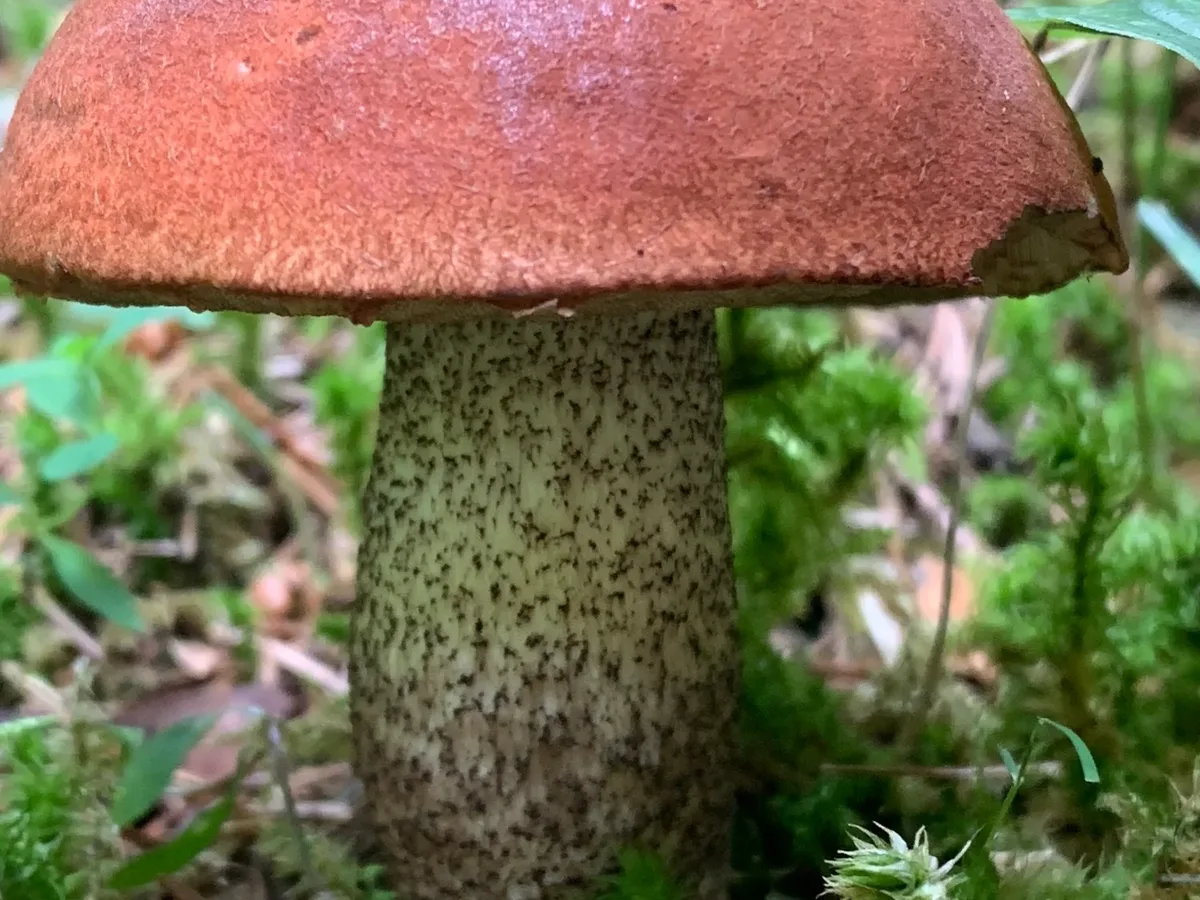 © Manuela Fiorini (CC BY)
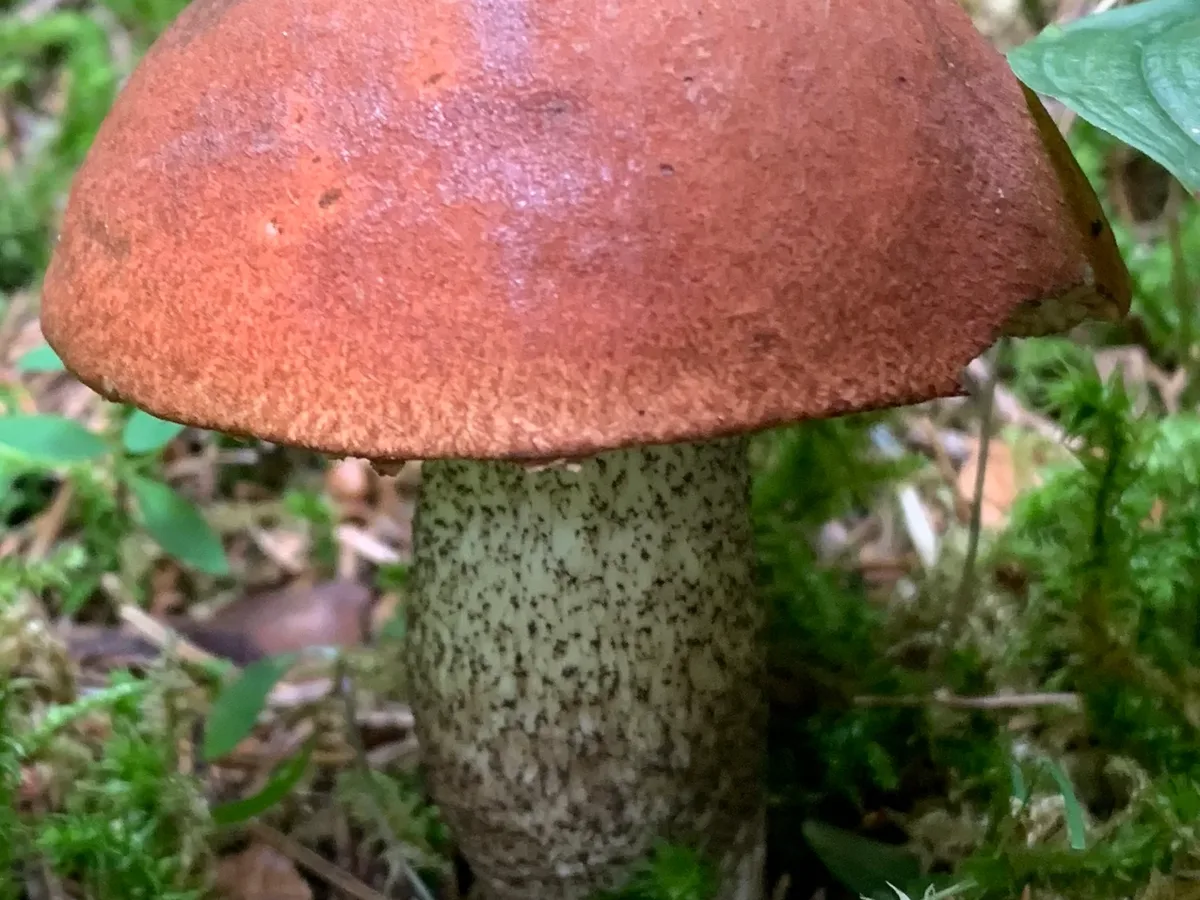 © Manuela Fiorini (CC BY)
 © Manuela Fiorini (CC BY)
 © Manuela Fiorini (CC BY)
 © Manuela Fiorini (CC BY)
 © Nina Filippova (CC BY)© Nina Filippova (CC BY)© Daniel Ghyselinck (CC BY)
Edible only with the right preparation - or safe for some people but not others. Learn the caveats first.
How to recognise it
The spruce bolete is one of the characteristic large boletes of Norway spruce forest in northern and central Europe - a substantial, satisfying mushroom that announces itself firmly from among the needle litter.
Cap
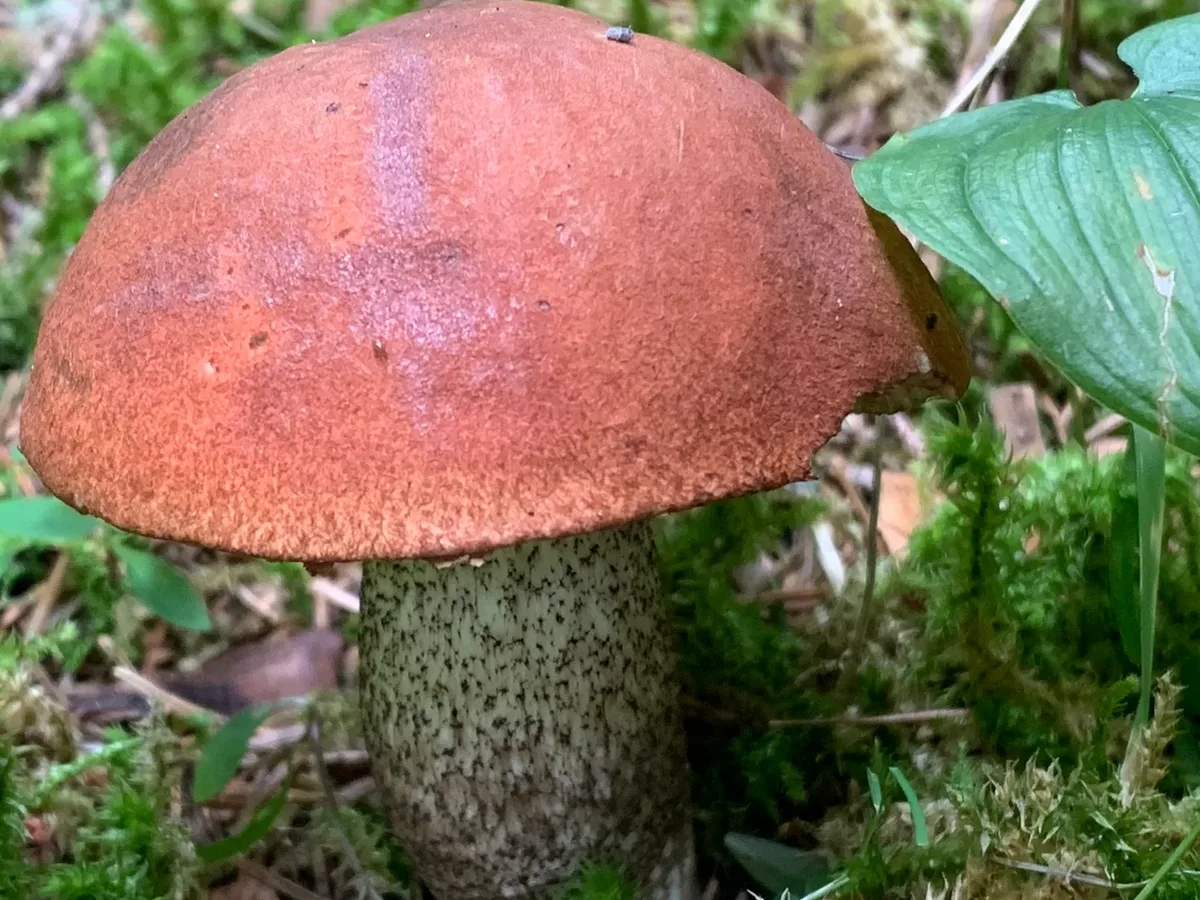
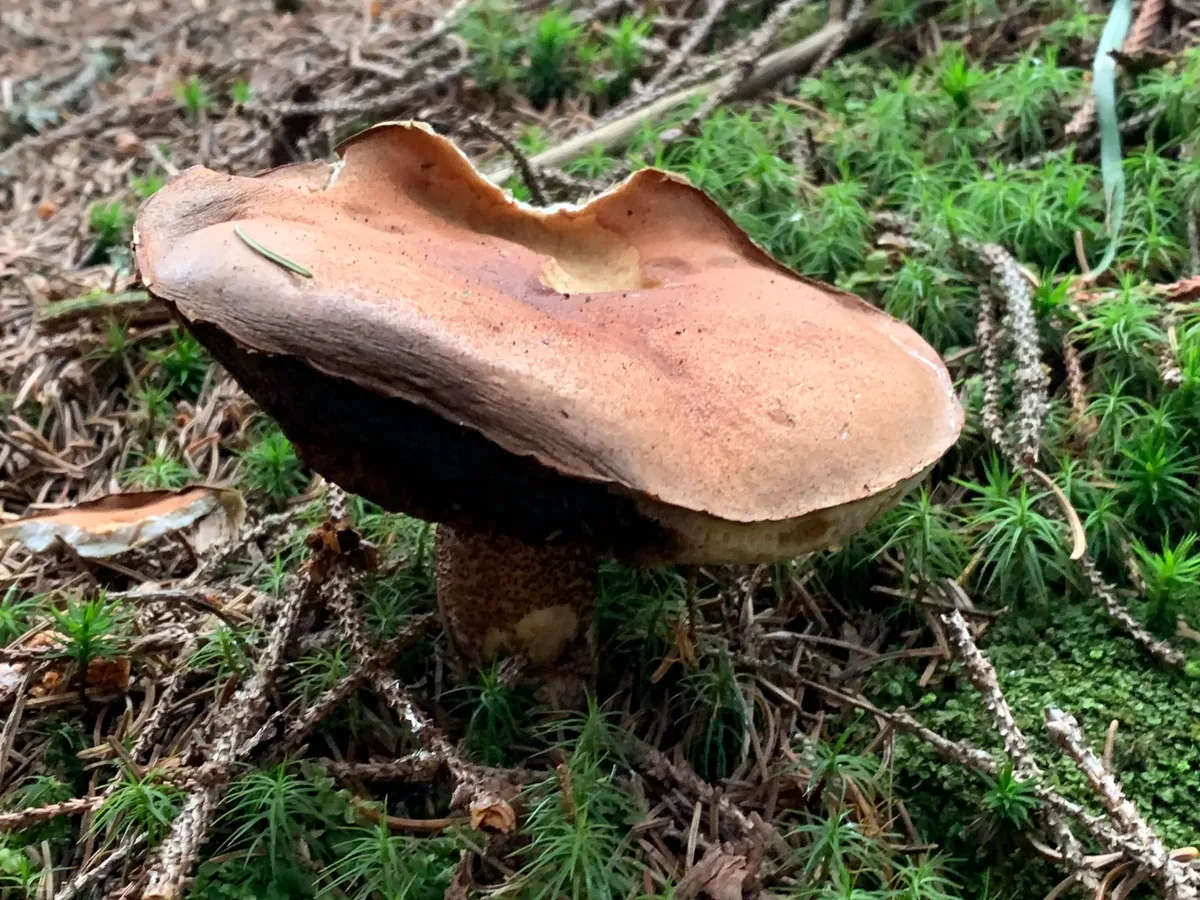
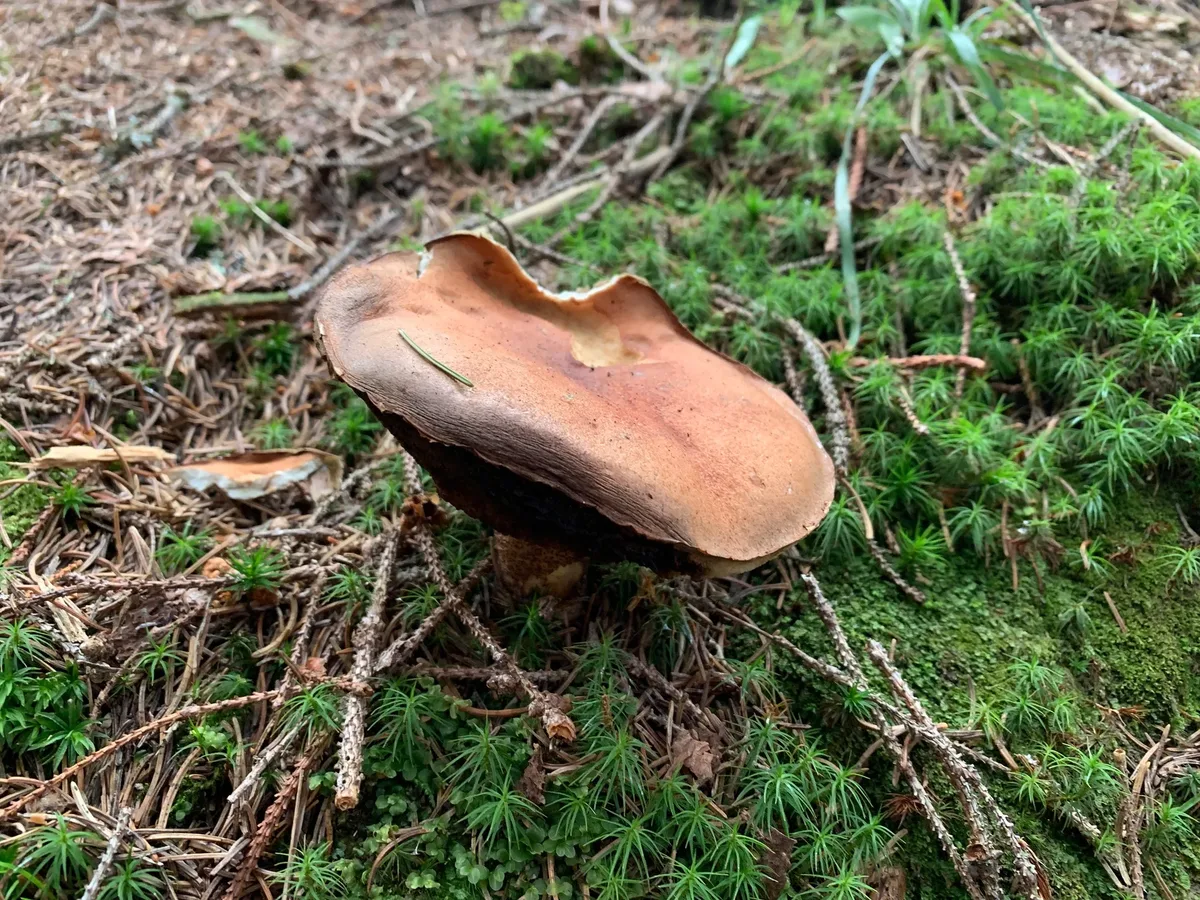
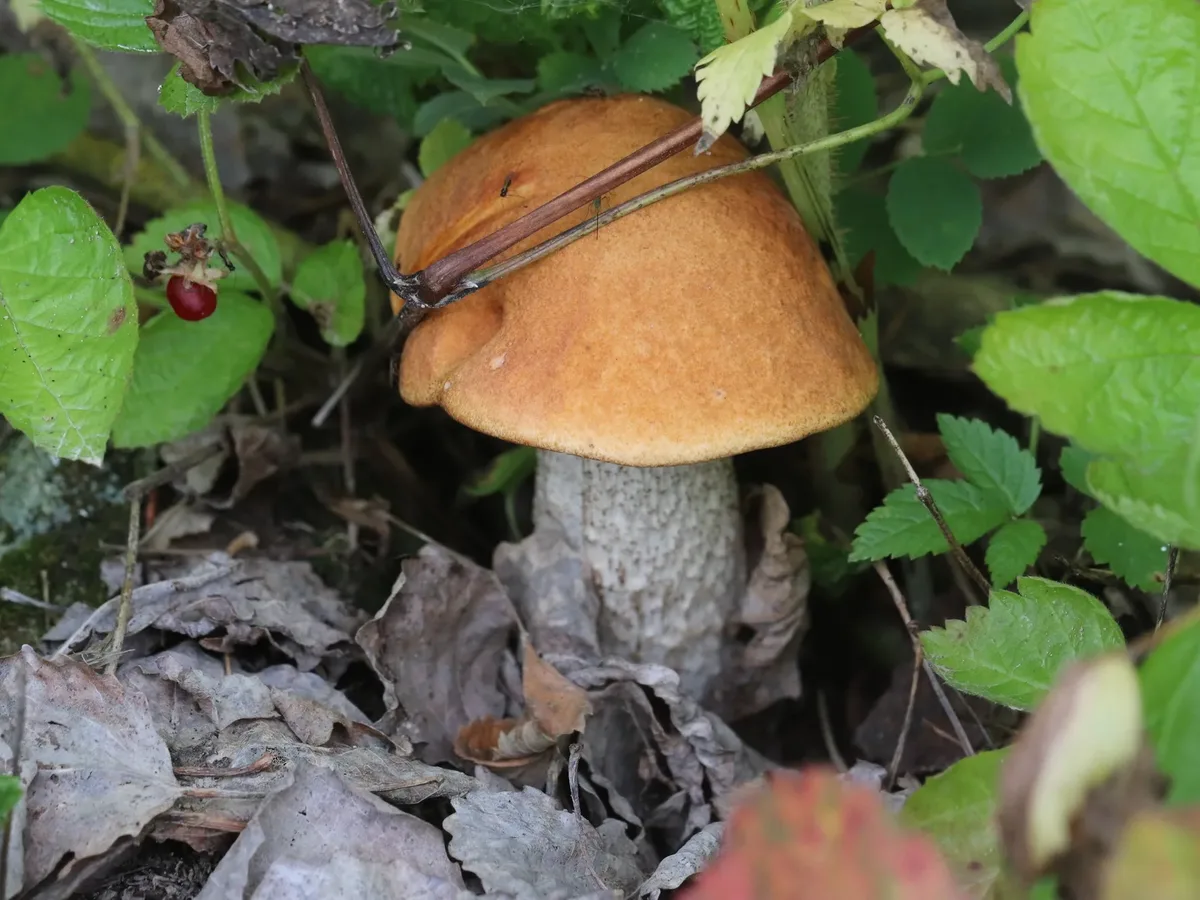
Young fruit bodies emerge as firm, nearly hemispherical domes in the classic Leccinum shape, gradually broadening into a wide cushion as the cap expands.
Touch a fresh young cap and you will feel the dry, velvety surface that is one of its quiet charms; older caps become smoother but retain the dry texture.
The cap colour ranges from orange-brown to reddish-brown with tawny highlights, closely resembling the foxy bolete (Leccinum vulpinum) of Scots pine forest.
On average L. piceinum runs a shade more brownish and a little less vivid orange-red, but individual variation is wide enough that colour alone rarely settles a confident distinction - you will need to check the host tree.
The cap cuticle overhangs the margin fractionally as a fine fringe, a characteristic of the Leccinum genus that is worth noticing on medium-sized specimens.
Gills / Pores
Flip the cap over and the pore surface on the underside reads white to pale cream in fresh young specimens - a reliable freshness indicator.
As specimens age the pores turn ochraceous-grey, and where handled or cut they bruise brownish-grey.
Stem
The stem is the most immediately recognisable feature of any Leccinum, and the spruce bolete is no exception.
What should be a pale grey background is almost entirely hidden under dense, erect, short projections called scabers that give the stem a rough, grated-rind texture found in no other European bolete genus.
In young specimens the scabers begin whitish to pale buff; with age and handling they darken steadily to dark brown or near-black.
This rough-textured, darkening stem sets Leccinum apart at a glance from smooth-stemmed genera like Boletus, Suillus, or Imleria.
Flesh
Cutting the flesh open reveals one of the more striking transformations in the mushroom world.
The flesh starts white and firm, then within a few minutes of exposure to air it begins flushing pale pink-vinaceous, shifts through lilac-grey and blue-grey, and arrives at dark grey or blackish - most intensely in the lower stem base.
The full sequence can unfold over 20-40 minutes and is entirely harmless; it is an enzymatic oxidation reaction characteristic of the orange-capped Leccinum group.
This multi-stage staining - pink to grey to near-black - distinguishes L. piceinum from the brown-capped species such as L. scabrum, which discolour only faintly.
Why it's dangerous
Risk depends almost entirely on cooking:
- LOW to MODERATE risk when properly cooked for 15-20 minutes
- MODERATE to HIGH risk when undercooked
- HIGH risk when consumed raw
The orange-capped Leccinum group to which L. piceinum belongs has the most significant documented record of causing gastrointestinal illness within the genus, including hospitalised cases in Norway.
However, the responsible compounds are heat-labile and the risk is manageable with thorough cooking.
Confirm identification before consumption:
- Spruce host
- Orange-brown cap
- Dark scabers
- Dramatic pink-to-black flesh change
First-time tasters should eat a small, thoroughly cooked trial portion.
Not recommended as a beginner's wild mushroom, due to the mandatory cooking requirement and the subtle species-level distinctions within the orange Leccinum group.
Toxin
Unidentified heat-labile compound or compounds distributed throughout the fruit body.
The responsible chemical fraction in the orange-capped Leccinum group (L. piceinum, L. vulpinum, L. versipelle, L. aurantiacum) has not been isolated or characterised, despite the clinical documentation of their effects.
The key property is thermolability: the toxic fraction is reliably reduced or eliminated by sustained cooking at high temperature (at least 15-20 minutes at full cooking heat).
It is not an amatoxin, orellanin, gyromitrin, muscarine, or ibotenic-acid compound; it is provisionally classed as a gastrointestinal irritant of unknown identity.
Symptoms
Gastrointestinal syndrome with onset typically 30 minutes to 3 hours after ingestion of raw or inadequately cooked material.
Symptoms include:
- Nausea
- Vomiting
- Abdominal cramps
- Diarrhoea
Severity is closely related to how thoroughly the mushroom was cooked: well-cooked specimens rarely cause symptoms in healthy adults, while undercooked or raw material reliably produces reactions in susceptible individuals.
Individual susceptibility varies and some people within the same meal group may be unaffected.
Symptoms are generally self-limiting and resolve within 12-48 hours.
No systemic organ toxicity, and no fatalities, have been attributed to L. piceinum.
Staying safe
The spruce bolete must be cooked thoroughly before eating and must never be consumed raw or undercooked.
It belongs to the orange-capped Leccinum complex - which includes L. vulpinum, L. versipelle, and L. aurantiacum - and this colour group has the most clinically significant record of gastrointestinal adverse events within the Leccinum genus.
Documented incidents in Norway and other Nordic countries include cases severe enough to require hospital care. The causal agent or agents have not been chemically characterised but appear to be heat-labile compounds that are reduced or eliminated by thorough sustained cooking.
The key safety rules are:
- 1Always cook thoroughly - at minimum 15-20 minutes of sustained heat at cooking temperature, not a brief sauté.
- 2Do not eat raw under any circumstances, including dried-raw preparations.
- 3Individuals trying the species for the first time should eat a small, thoroughly cooked test portion and wait 24 hours before consuming more.
- 4Children, elderly individuals, pregnant people, and those with gastrointestinal conditions should approach all Leccinum species with additional caution or avoid them.
Because L. piceinum and L. vulpinum are so closely related as to be considered synonymous by some authorities, their safety profiles are treated as identical. Both carry the same orange-capped Leccinum caution.
The dramatic grey-to-black discolouration of the flesh during cooking is a harmless enzymatic oxidation reaction and is not a toxicity signal.
Where & when it grows
Habitat
The spruce bolete is, in the most literal sense, a creature of the Norway spruce.
Like all Leccinum species it is an obligate ectomycorrhizal fungus: its mycelium weaves into the fine root tips of spruce trees and exchanges minerals for sugars in a partnership that benefits both partners and that has likely persisted in these forests for thousands of years.
The fruit bodies you find above ground are only the tip of this hidden network - the mycelium itself threads through the soil year-round, waiting for the right combination of warmth and moisture to push up a crop.
Without a living spruce nearby, L. piceinum simply cannot fruit. Confirming Norway spruce is present is the single most important step after you have noticed the bolete shape and colour.
The most productive spots are mature or semi-mature Norway spruce forest and mixed spruce-birch boreal forest on moderately moist, acid soils.
Old-growth or near-natural spruce stands on deep humus-rich soils tend to produce the most reliably, but well-established spruce plantations also host it regularly.
At subalpine elevations in the Scandinavian mountains and the Alps it appears in the upper spruce belt, where trees grow more slowly and the forest opens out.
In mixed stands where spruce grows alongside Scots pine, the closely related L. vulpinum may fruit at the same time; telling which fruit body belongs to which host can be genuinely difficult and requires careful attention to which tree the stem is closest to.
L. piceinum is most abundant across Scandinavia - particularly Sweden and Finland - as well as Norway, the Baltic states, northern and central Poland, the mountainous parts of central Europe (German and Austrian Alps, Czech and Slovak highlands), and the extensive spruce forests of Romania and Russia.
Its western range reaches into Scotland and northern England wherever Sitka spruce plantations provide a suitable ectomycorrhizal partner.
When
The fruiting season runs from July through October across most of the range, with the most reliable and abundant flushes appearing in August and September.
In boreal Scandinavia and Finland, where autumn arrives earlier, the effective productive window is often compressed to late July through September.
The triggers follow the general Leccinum pattern: soil temperatures at mycorrhizal root depth (around 5-15 cm) between roughly 8-18 °C, combined with adequate moisture from summer or early-autumn rainfall.
A good flush typically emerges 7-14 days after a meaningful rain event - around 20 mm or more accumulated over two weeks - provided soil temperatures stay within that range.
Dry summers suppress fruiting substantially, as the underground mycelium needs sustained moisture to build a fruit body.
Early July flushes happen in warm years, but the main pulse is most reliably in August-September, when summer-warmed soils meet the first real autumn moisture.
Fruiting tails off when soil temperatures at depth fall below roughly 6-8 °C - usually in October across the Nordic region, though a warm autumn can stretch the season by two or three weeks.
Experienced pickers learn to read the land around them. Reliable field signals that the Leccinum season is at or near peak:
- Bilberry fully ripe
- Lingonberry beginning to darken
How it grows
Fruit bodies emerge singly or in small scattered groups of two to five beneath spruce trees, pushing up through the needle litter and any moss layer.
Individual specimens develop from pinhead to a mature, pick-ready fruit body over roughly 7-12 days in warm, moist conditions; cool weather slows this considerably.
The firm, dense flesh of young specimens resists fungus-gnat larval infestation better than softer mushrooms. But older specimens - more than 10-14 days old - are routinely bored through by larvae that enter from the stem base and tunnel upward.
A productive spot under an established spruce tree tends to fruit reliably year after year, as the perennial mycelial network matures and extends through the soil. It is worth recording or noting good sites and returning in subsequent seasons.
Fruiting conditions
Fruiting is triggered by adequate soil moisture (typically 20 mm or more of rainfall over a 14-day window) combined with soil temperatures of 8-18 °C at mycorrhizal root depth (5-15 cm). A productive flush typically emerges 7-14 days after the triggering rainfall event. Dry conditions strongly suppress fruiting even when temperatures are suitable. The season closes when soil temperatures at depth fall below approximately 6-8 °C in autumn, usually in October across much of the range.
Look-alikes
Leccinum piceinum belongs to the orange-capped rough-stalked bolete complex, a group that is genuinely confusing at species level.
No realistic lookalike is deadly, but correct identification matters: the orange-capped Leccinum species as a group have a documented record of causing gastrointestinal illness at a higher rate than the brown-capped species, and require thorough cooking.
- Leccinum vulpinum (Foxy bolete / Pine bolete) - The closest and most frequently encountered confusion. Virtually identical in appearance: same orange-brown to reddish-brown cap, same dark scabers on the stem, same dramatic pink-to-black flesh discolouration. The sole reliable distinction is the host tree - L. vulpinum grows under Scots pine (Pinus sylvestris), L. piceinum under Norway spruce (Picea abies). In mixed pine-spruce forest the two may genuinely be impossible to distinguish without careful root-tracking. Edibility status and safety advice are identical; many European mycologists treat the two as conspecific.
- Leccinum versipelle (Orange birch bolete) - Grows under birch (Betula spp.) rather than spruce. Cap colouration tends to be brighter and more vivid orange than L. piceinum, and the scabers are dark from the outset. Host tree is the decisive separator: no birch, no L. versipelle. Shares the same safety caveats and thorough-cooking requirement.
- Leccinum aurantiacum (Red aspen bolete) - Vivid orange-red to flame-red cap, growing under aspen and poplar (Populus spp.). Distinguishable by host tree and typically more intensely coloured cap. Edibility caveats identical.
- Leccinum scabrum (Brown birch bolete) - Dull fawn-grey to mid-brown cap - no orange tone - and associated with birch. The absence of orange or red cap colouration makes separation straightforward in good light. Scabers are pale whitish-grey to pale brown rather than darkening strongly.
- Suillus species (various slippery boletes) - Several Suillus species also associate with spruce and have buff or orange-tinged caps. However, all Suillus are immediately distinguished by their slimy cap surface (where L. piceinum is dry and velvety), their angular or composite larger pores (where L. piceinum has tiny round pores), and the complete absence of stem scabers. Once examined at close range, Suillus species look very different.
Dull fawn-grey to mid-brown cap with no orange or red tones; always grows under birch. Scabers are pale whitish-grey to light brown rather than darkening strongly to near-black. The absence of warm orange colouration makes separation straightforward in good light.
Virtually identical in appearance - same orange-brown to reddish-brown cap, dark scabers, and pink-to-black flesh change. The only reliable distinction is the host tree: L. vulpinum grows under Scots pine (Pinus sylvestris), L. piceinum under Norway spruce (Picea abies). In mixed pine-spruce forest they can be genuinely inseparable in the field. Edibility and safety advice are identical; many authorities treat them as conspecific.
Also orange-red capped with dark scabers and the same flesh-change reaction, but grows exclusively under birch (Betula spp.), not spruce. Cap tends to be more vivid orange. Check the nearest tree species - birch versus spruce - as the decisive character. Edibility and cooking requirements are identical.
Vivid flame-orange to orange-red cap, growing exclusively under aspen and poplar (Populus spp.). Host tree is the separator; cap colour is generally more intensely orange-red than L. piceinum. The same safety caveats apply.
Some Suillus species associate with spruce and have buff or orange-tinged caps. All Suillus are immediately distinguished from L. piceinum by: slimy (glutinous) cap surface in wet conditions vs. dry, velvety cap; much larger, angular or composite pores vs. tiny round pores; and complete absence of stem scabers. Close inspection removes all ambiguity.
A reference guide - never an edibility guarantee. When in doubt, leave it out.