Manzanita bolete
Leccinum manzanitaesyn. Boletus manzanitae (Thiers), Leccinellum manzanitae (Thiers) Bresinsky & Manfr.Binder
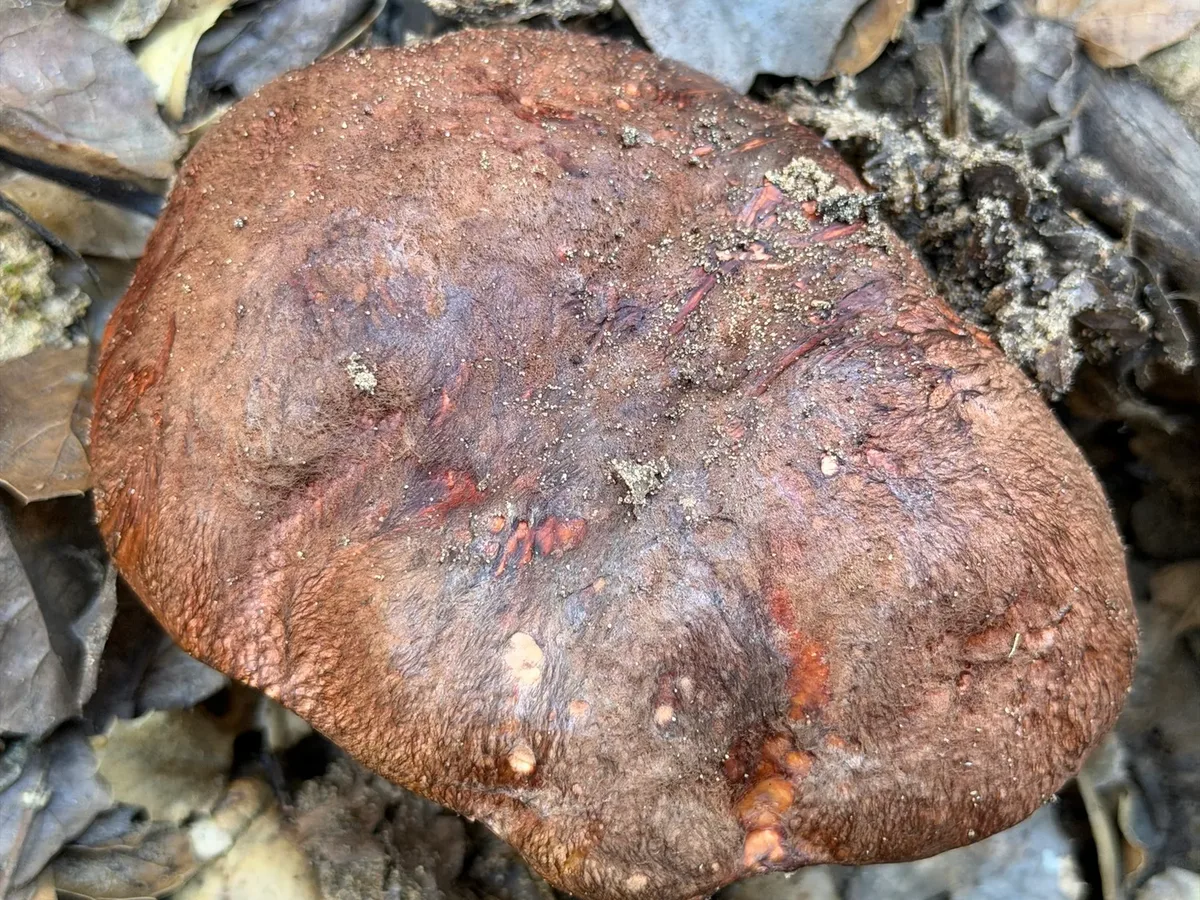 Alex Heyman (CC0)
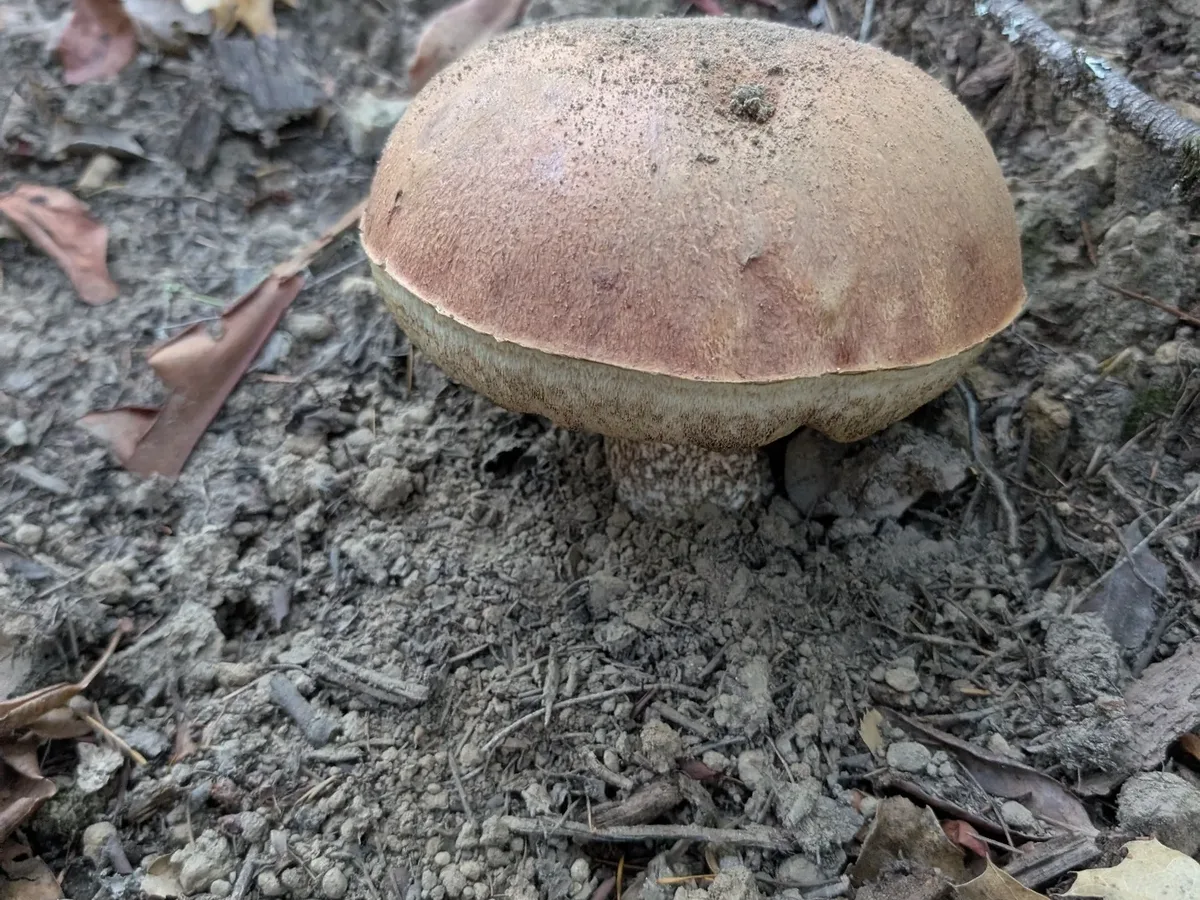 © Elliot Kulakow (CC BY)
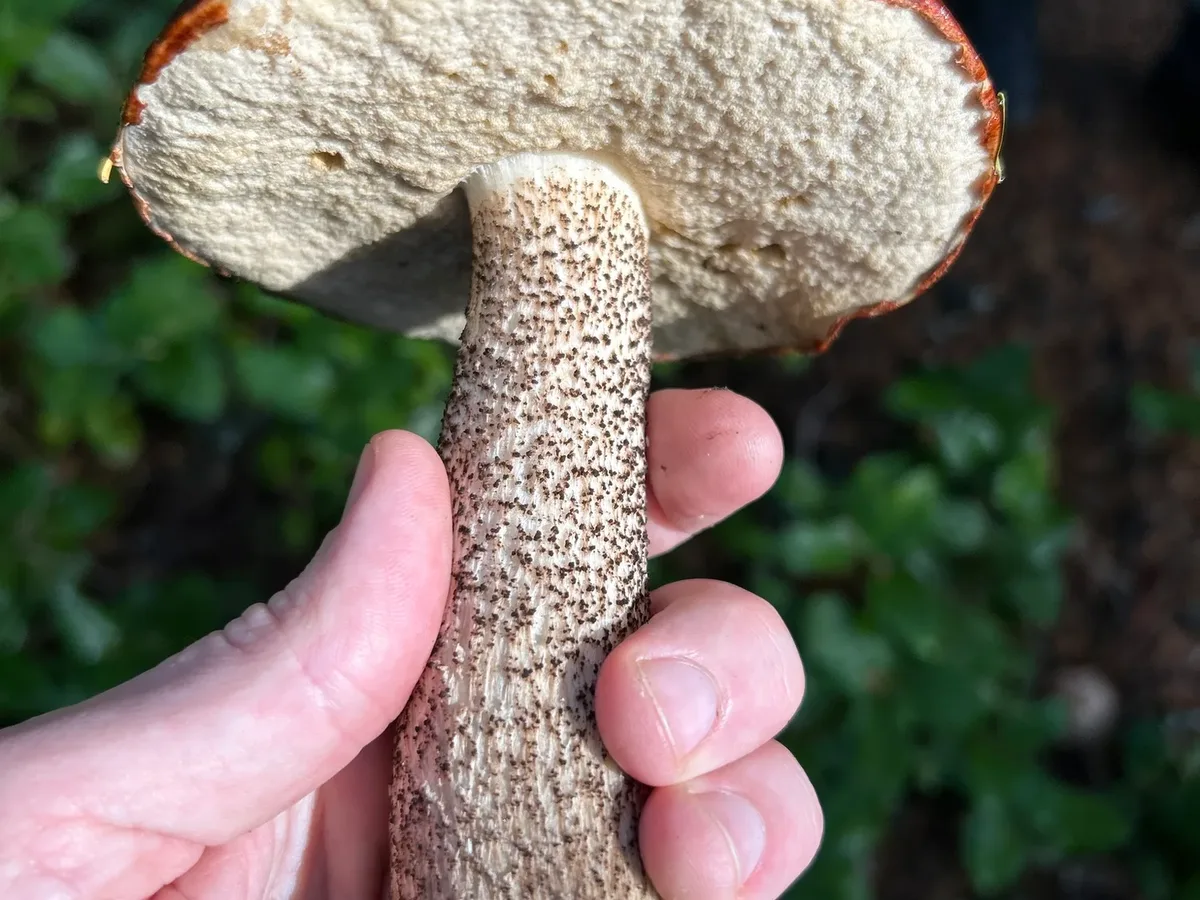 Robert Pennington (CC0)
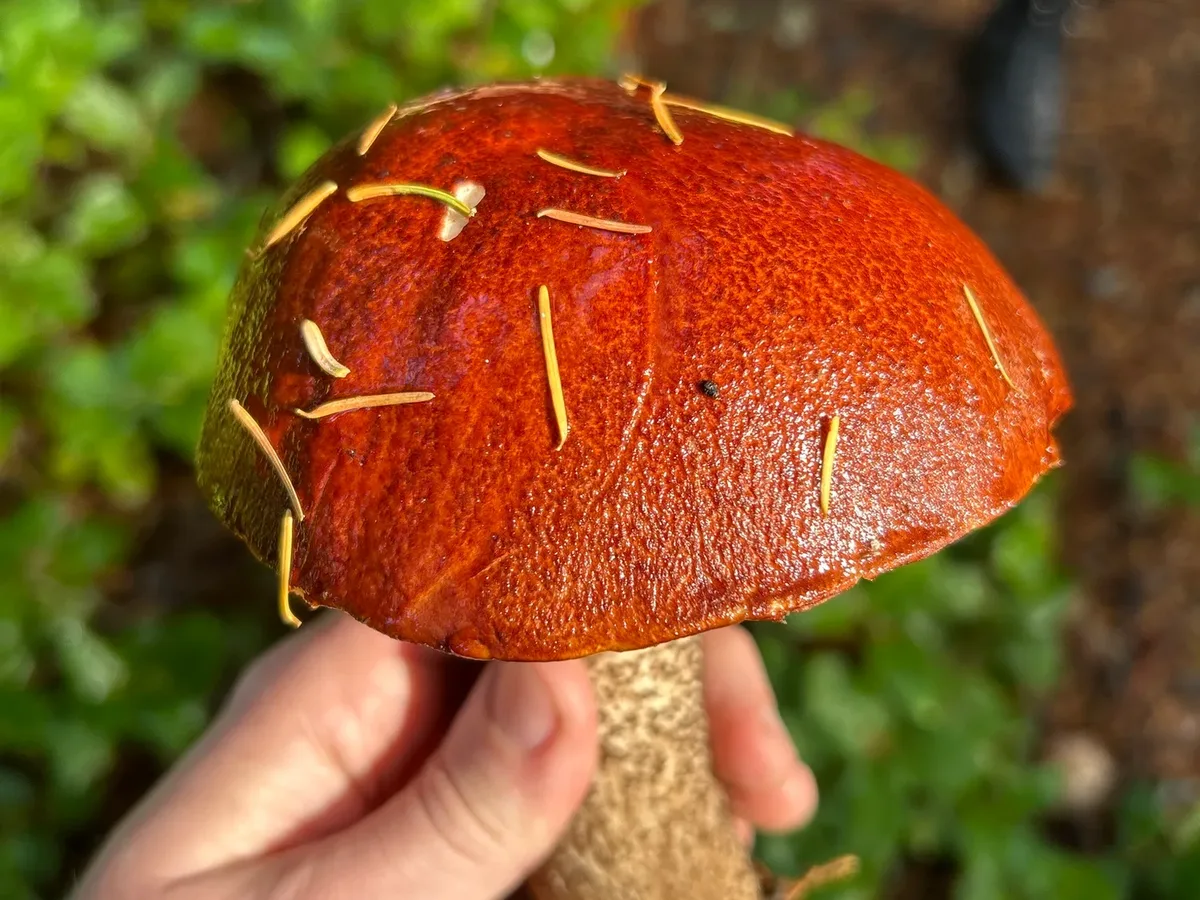 Robert Pennington (CC0)
 © Mandy Hackney (CC BY)
 © Elliot Kulakow (CC BY)
 Alex Heyman (CC0)Alex Heyman (CC0)© Elliot Kulakow (CC BY)
Edible only with the right preparation - or safe for some people but not others. Learn the caveats first.
Never eat a mushroom you are not 100% sure of - check the look-alikes below, and always cook wild mushrooms.
How to recognise it
Cap
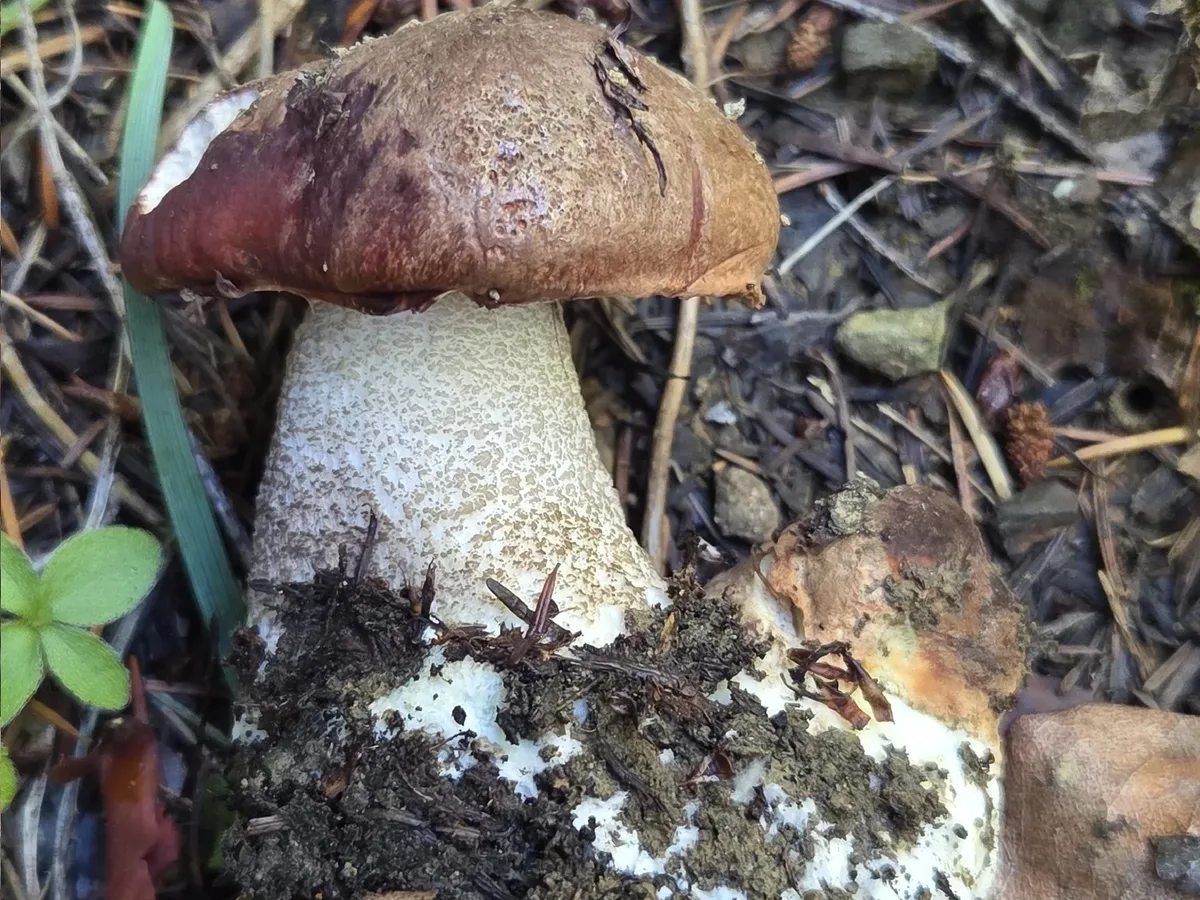
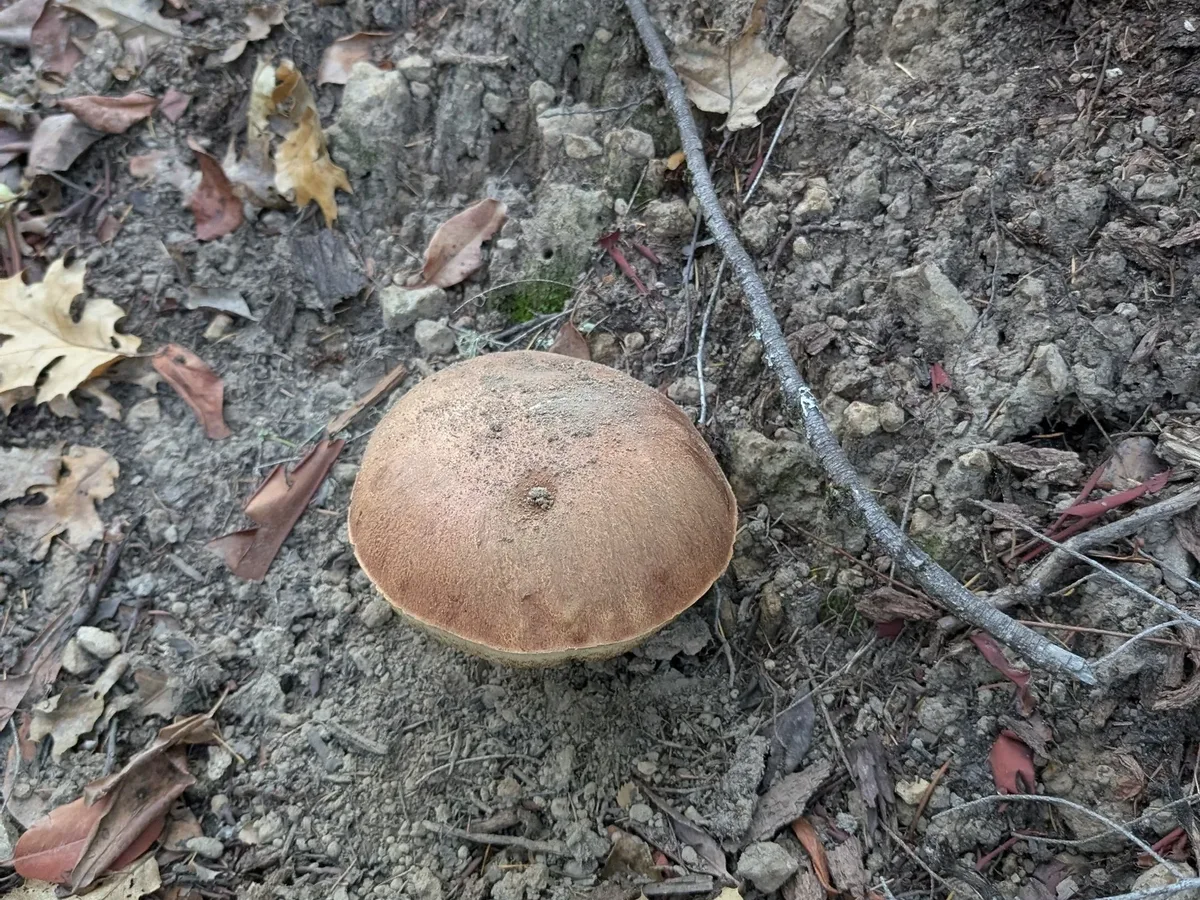
Leccinum manzanitae is a medium to large bolete with a pleasingly solid, earthy presence. The cap starts as a tight, firm dome before expanding into a broad, flattened cushion - a shape typical of the genus.
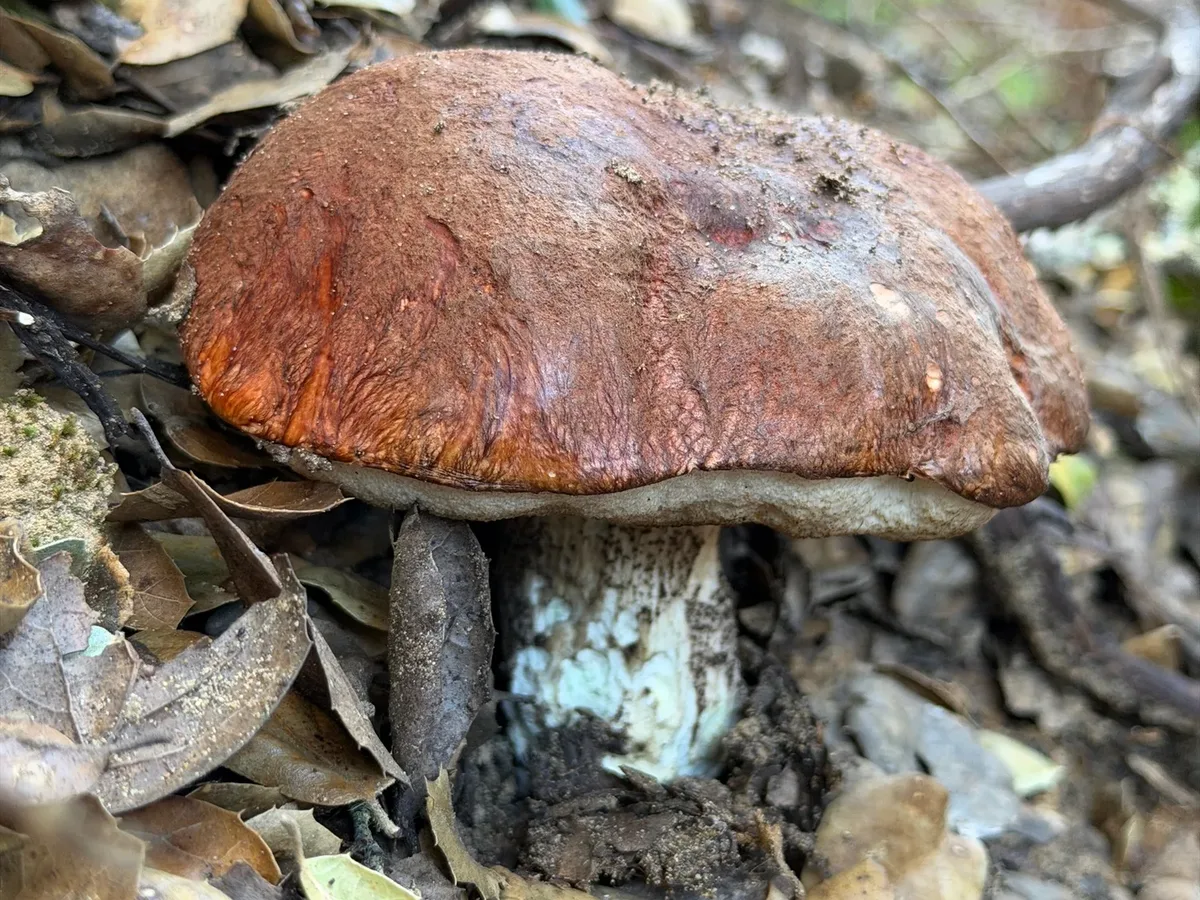
Its colour sits in the warm end of brown: dark reddish-brown, bay, or cinnamon, with occasional ochre hints toward the margin on young specimens. The surface is dry or barely tacky when wet, finely textured, and lacks the dramatic colour of the orange-capped birch boletes or the velvety maroon of Aureoboletus mirabilis.
Pores
The pore surface below the cap is white to cream in youth, ageing through pale grey-ochre to brownish-buff, with small, tidy round pores.
Critically, pressing or cutting the flesh and pore surface does not produce any blue or green discolouration - the flesh turns pink, grey, and ultimately near-black through a separate oxidative reaction, but never the rapid blue-green of a bluing bolete.
Stem
The stem is the genus's calling card: covered apex to base in dense, coarse, tufted scabers that start pale and deepen to reddish-brown or blackish with age, giving the stem a rough, bristled texture quite unlike any other bolete group.
Flesh
Cutting the firm white flesh reveals a slow-motion colour show: white turning pinkish, then lilac-grey, then dark slate or near-black over the next 10-20 minutes. This is a normal and characteristic oxidation event for all Leccinum; it is not a sign of spoilage or poisoning.
Spore print dark olive-brown.
Why it's dangerous
The risk posed by Leccinum manzanitae is confined to raw or undercooked consumption and is gastrointestinal in character: it is not hepatotoxic, nephrotoxic, or neurotoxic. No fatalities are attributable to this species in the literature.
However, the genus-wide requirement for thorough cooking must be respected. Gastrointestinal illness after undercooked Leccinum is well documented across the genus, and the standard of care from mycological authorities is clear: no Leccinum should be eaten raw or barely heated.
The practical risk management rule is straightforward:
- Cook thoroughly at high heat for a minimum of 15 minutes.
- Confirm all flesh is uniformly heated through (not merely surface-hot).
- Do not serve Leccinum to children or vulnerable individuals in any partly raw preparation.
The grey-black colour of properly cooked flesh is harmless. There are no deadly species that realistically mimic this mushroom in its characteristic manzanita chaparral habitat when the scabrous stem and host association are confirmed.
Toxin
The toxic principle in Leccinum manzanitae - as in all Leccinum species - is a heat-labile compound present in raw and insufficiently cooked fruiting bodies. Its chemical identity has not been established or characterised in the toxicological literature.
What is empirically established is that the compound is thermally unstable: it is destroyed when the mushroom tissue is heated above approximately 70-80 °C throughout and maintained for at least 15 minutes of sustained cooking. This thermal behaviour explains why the genus is edible after proper cooking but causes illness when eaten raw or undercooked.
The toxin does not cause systemic organ damage and is not a classical alkaloid or peptide toxin in the manner of amatoxins. Its mechanism of action is unknown but is consistent with a local gut irritant or pro-inflammatory compound acting on the gastrointestinal mucosa.
The flesh-darkening phenomenon (oxidation of catechol-based pigments) is a separate, chemically distinct process and is not associated with the toxic activity.
Symptoms
Consumption of raw or undercooked Leccinum manzanitae produces a gastrointestinal syndrome: nausea, vomiting, abdominal cramps, and diarrhoea. Onset is typically within 30 minutes to 3 hours of ingestion, reflecting the toxin's local rather than systemically absorbed mode of action.
Symptoms are usually self-limiting and resolve within 6-24 hours with supportive care (rest, fluid replacement). Severity depends on the quantity consumed, degree of undercooking, and individual susceptibility. Most cases are mild to moderate.
Severe cases involving significant dehydration requiring medical intervention have been documented within the Leccinum genus (notably for Leccinum aurantiacum in Scandinavia), and caution proportional to that precedent is warranted for all rough-stalked boletes. Children, the elderly, and immunocompromised individuals face heightened risk of complications from dehydration.
If symptoms are severe, prolonged beyond 24 hours, or accompanied by any neurological signs (not typical for Leccinum poisoning), seek medical attention promptly.
Staying safe
Leccinum manzanitae must be thoroughly cooked before eating. This is a genus-wide requirement for all Leccinum species and is not optional: the genus is known to cause gastrointestinal illness (nausea, vomiting, cramps, diarrhoea) when consumed raw or insufficiently cooked.
The responsible compound is heat-labile and destroyed by sustained high heat, rendering properly cooked specimens safe for most people. The same caution applies here as to other Leccinum: cook at high heat for at least 15 minutes.
The flesh-darkening reaction - white flesh turning pinkish, then lilac-grey, then near-black on cutting and cooking - is a normal oxidative process and does not signal danger. The cooked mushroom will be grey to dark grey, which alarms many newcomers but is entirely benign.
Do not eat raw; do not half-cook.
As with all wild mushrooms, individuals with particular sensitivities, compromised immune systems, or serious gastrointestinal conditions should exercise additional caution. No deadly confusion species exists within the manzanita chaparral habitat when the host association and scabrous stem are properly confirmed.
Where & when it grows
Habitat
This is a mushroom of the California chaparral and coastal scrub - a completely different world from the birch forests and alder riverbanks where most Leccinum feel at home.
Leccinum manzanitae forms mycorrhizal partnerships with manzanita (Arctostaphylos spp.) and Pacific madrone (Arbutus menziesii), both members of the heath family (Ericaceae). This ericaceous host association is ecologically unusual for Leccinum and confines the species to the specific habitats where manzanita thrives: dry, rocky hillsides, chaparral slopes, coastal sage scrub, canyon edges, and the open borders of California oak woodland.
The soils are typically acidic, well-drained, low in organic matter, and often derived from sandstone, serpentine, or granitic parent material. The habitat is characteristically hot and dry in summer and wet in winter - a Mediterranean climate cycle that shapes the species' unusual autumn-to-spring fruiting window.
Look for it where manzanita forms its characteristic twisted, mahogany-barked thickets or where Pacific madrone arches over sunlit slopes. The combination of bolete form plus ericaceous host in chaparral habitat is itself a near-diagnostic indicator.
When
Leccinum manzanitae does not follow the summer-autumn schedule of its northern relatives. It is adapted to the Mediterranean climate of coastal California and southern Oregon, which means it awaits winter rain to trigger fruiting - a pattern shared with chanterelles, hedgehogs, and black trumpets across California's woodlands.
Expect fruit bodies from October through March, with the main productive period from November through February.
The trigger is the onset of substantial autumn rain - typically 20-30 mm over two weeks - following the long, dry California summer. Once the soil is thoroughly moistened and soil temperatures drop into the 7-14 °C range, fruit bodies emerge over the following week to two weeks.
Warm, wet winter spells reliably produce the best flushes. Hard frost pauses fruiting; spring warmth gradually ends it as the soil dries. In El Niño years, mild, wet winters can produce extended and abundant fruiting seasons.
How it grows
Fruit bodies emerge singly or in small scattered groups among the leaf litter, gravel, and sparse organic duff beneath manzanita and madrone.
The mycelium is perennial, and productive sites can be reliably revisited across multiple seasons as long as the host shrubs remain healthy. Individual fruit bodies push up over about a week, driven by winter warmth and moisture.
The cap blends into the brown leaf litter and red-barked manzanita stems surprisingly well; the rough, darkening scabers of the emerging stem are often the first visual cue.
As with most Leccinum, dipteran larvae (fungus gnats, blow flies) are attracted to the flesh and can infest specimens significantly, especially in older or warmer weather. Young, firm specimens collected promptly after emergence are far less likely to be maggot-ridden.
Fruiting conditions
Fruiting is triggered by the onset of autumn-winter rain (25 mm or more over 14 days) after the dry California summer, with soil temperatures in the 7-15 °C range. The Mediterranean climate of the core range means fruiting is concentrated October through March, peaking November-February. Hard frost pauses fruiting; extended warm dry spells in winter suppress it. Best flushes typically follow sustained soaking rain after the first cold snap of the season.
Look-alikes
Leccinum manzanitae occupies a distinctive niche - a scaber-stemmed bolete in manzanita and madrone chaparral - that limits realistic confusion with dangerous species. The key confusions within Leccinum are host-based: other California Leccinum species associate with different hosts.
- Leccinum insigne (aspen bolete) - vivid orange to orange-brown cap, grows exclusively under aspen (Populus tremula) in more montane settings; its orange colour and very different habitat separate it immediately.
- Leccinum scabrum (birch bolete) - pale grey-brown to buff cap, found under birch; rarely in chaparral settings.
- Boletus edulis and its close relatives (ceps, porcini) - may grow in nearby oak and conifer woodlands and share the general bolete form, but have a smooth stem (no scabers), a reticulate (net-patterned) stem surface, and a pale tan to brown cap without the reddish-brown tones; the sponge-like pore surface and scaber-free stem immediately separate porcini from any Leccinum.
No deadly species is realistically confused with a correctly identified Leccinum in chaparral habitat.
- The genuinely dangerous boletes of the region - Rubroboletus pulcherrimus with its brilliant red pores that blue instantly - are conifer-associated, lack the scabrous stem, and differ dramatically in pore colour.
- Amanita species (death cap, destroying angel) - gill fungi with white gills, a ring on the stem, and a volva at the base; they cannot be confused with a bolete that has a spongy pore surface and no gills by any careful observer.
Conifer-associated (not manzanita chaparral), has brilliant blood-red to orange-red pores that instantly turn deep blue-green when cut or pressed - the exact opposite of Leccinum manzanitae's non-bluing cream pores. Stem lacks scabers, having a red-blotched net pattern instead. Has caused at least one confirmed fatality in the Pacific Northwest. Any bolete with red pores and instant bluing must never be consumed.
Has a vivid orange to orange-brown cap - much brighter and more saturated than the reddish-brown to bay cap of L. manzanitae. Grows strictly under aspen (Populus spp.) in montane settings, not in manzanita chaparral. Edible with the same cooking requirements as all Leccinum.
Smooth, chestnut bay-brown cap without scabrous stem; pore surface slowly blues faintly when pressed or cut - absent in L. manzanitae; stem has no coarse scabers. Typically conifer-associated. Edible.
Pale grey-brown to buff cap rather than reddish or bay-brown; grows under birch (Betula spp.) in moist forest, not in dry chaparral with manzanita. The host tree is the decisive ecological separator. Edible when thoroughly cooked.
Similar large brown-capped bolete that may occur in nearby oak and conifer woodland. Distinguished immediately by its smooth stem with white reticulation (net-like ridges) rather than the coarse dark scabers of Leccinum; flesh does not darken on cutting; pore surface cream to yellow (never greying with age). Not found in manzanita chaparral. Choice edible.
A reference guide - never an edibility guarantee. When in doubt, leave it out.