Aspen bolete
Leccinum insignesyn. Boletus insignis (A.H. Sm., Thiers & Watling), Krombholziella insignis (A.H. Sm., Thiers & Watling) Šutara
 © Norma Malinowski (CC BY)
 Nick Bédard (CC0)
 © Alissa Iverson (CC BY)
 © Alissa Iverson (CC BY)
 Nick Bédard (CC0)
 © Norma Malinowski (CC BY)© Norma Malinowski (CC BY)Nick Bédard (CC0)
Edible only with the right preparation - or safe for some people but not others. Learn the caveats first.
How to recognise it
Leccinum insigne is one of the most commonly encountered boletes of aspen forest in eastern North America, and once you know the genus it announces itself quickly.
Cap
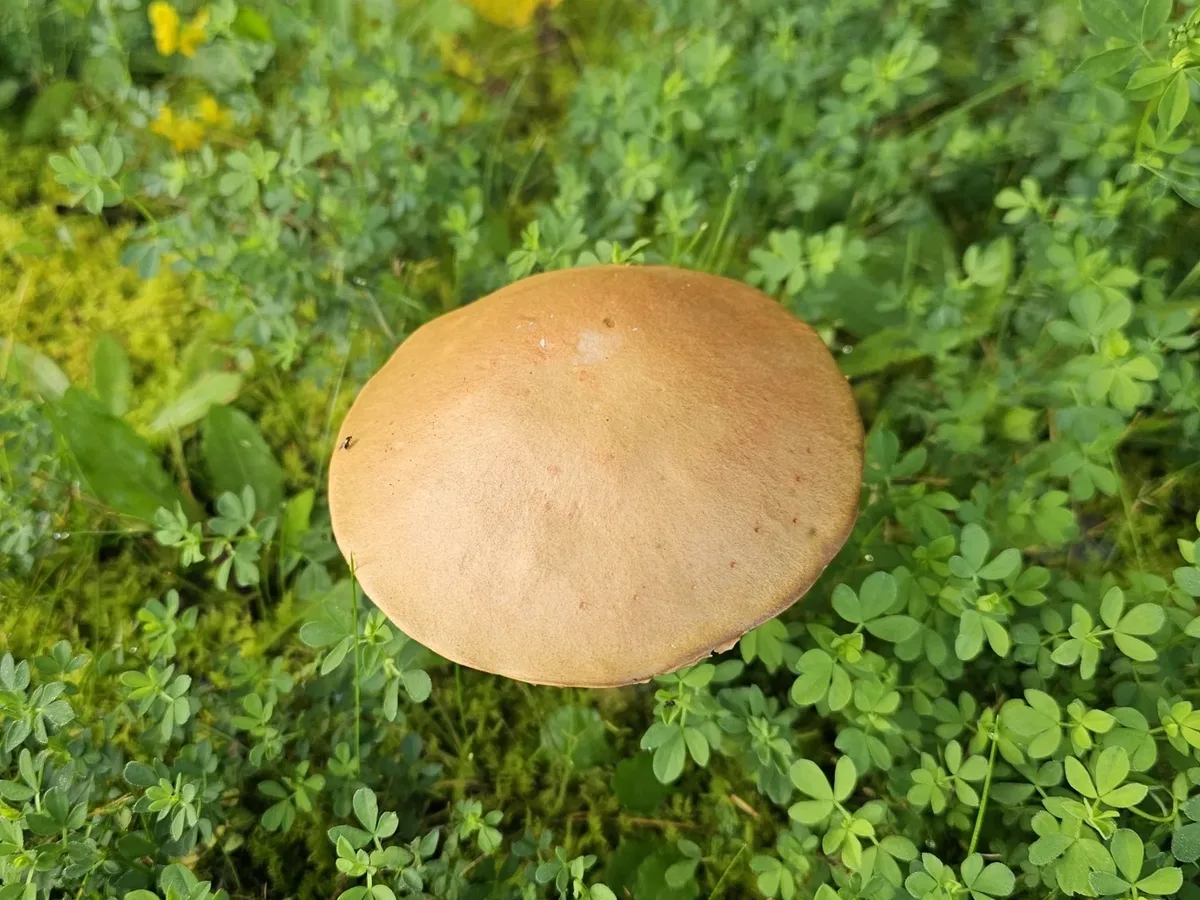
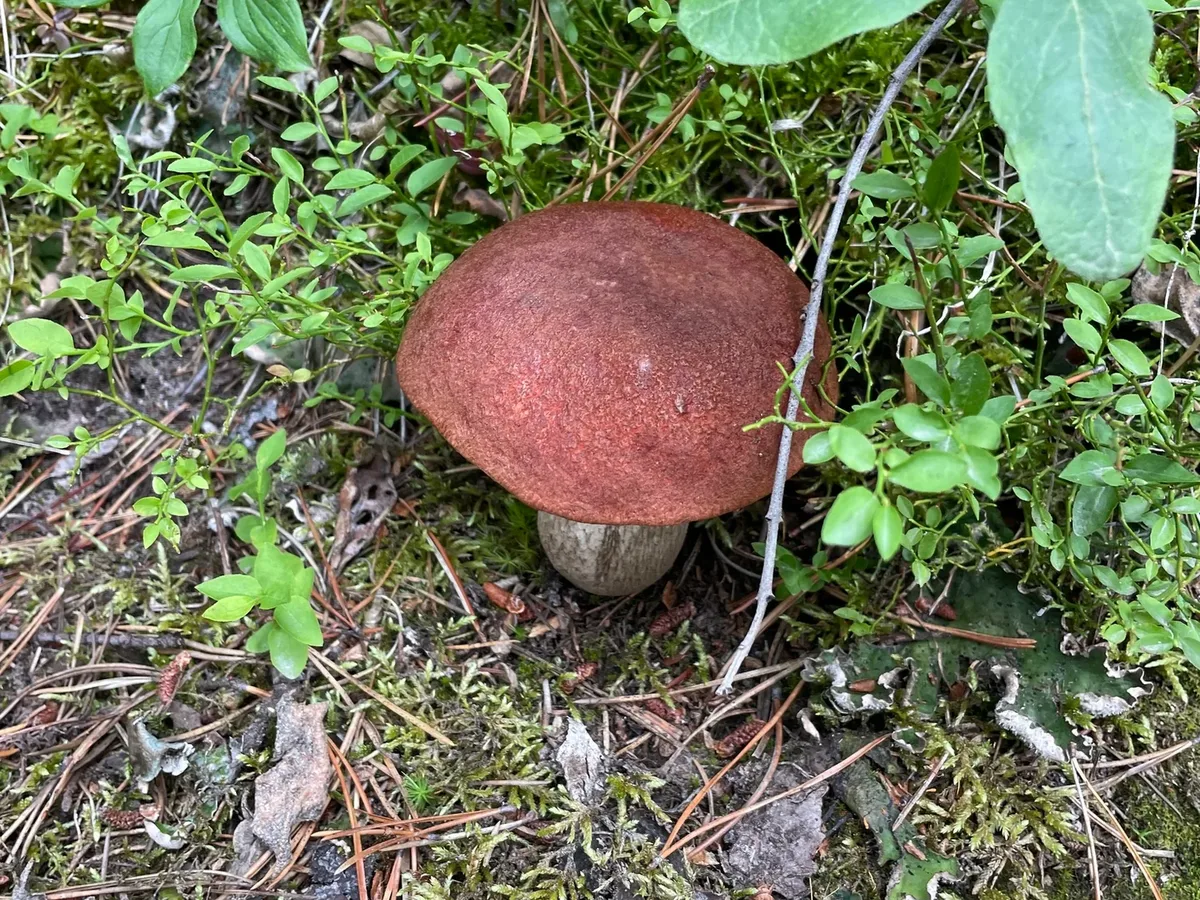
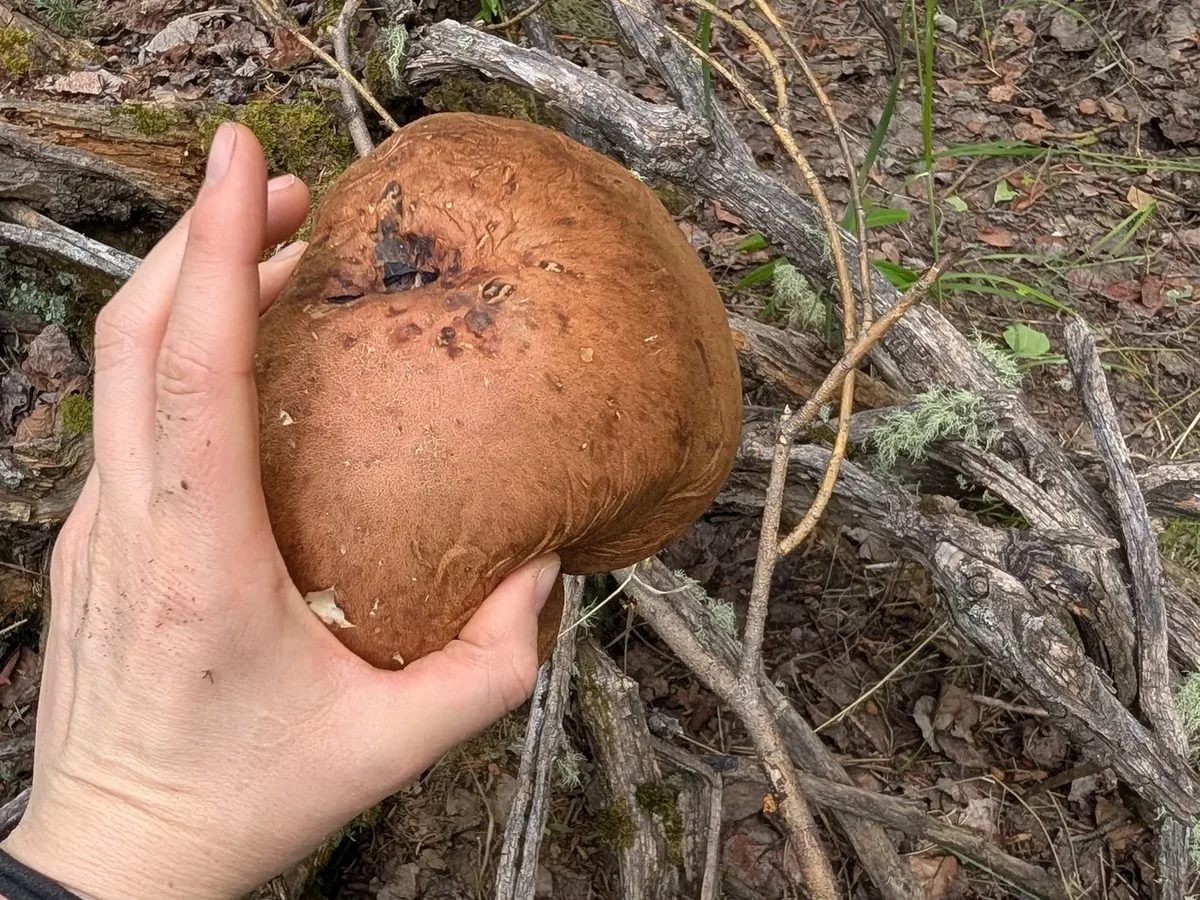
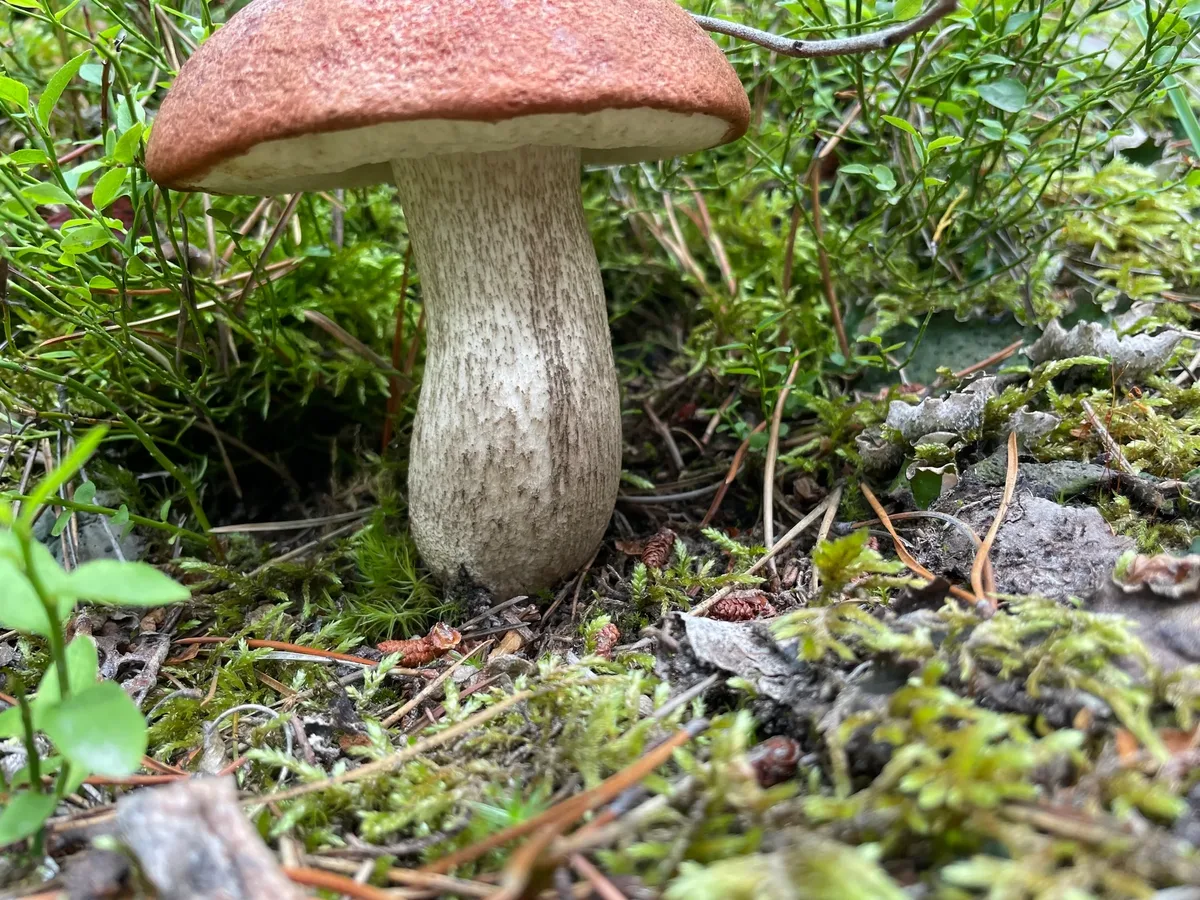
The cap is broad and substantial - up to 20 cm across on well-grown specimens - and carries the warm tawny orange to brick-brown colouration of the orange-capped Leccinum group.
In youth the cap is tightly domed, almost hemispherical, and the surface has a pleasant dry, velvety-woolly texture; as the fruit body matures it expands into the broad cushion shape typical of the genus.
The colour shifts slightly as the cap stretches - often paling a touch at the margin while staying richer in the centre - and in age or drought conditions the surface may develop faint radial cracking.
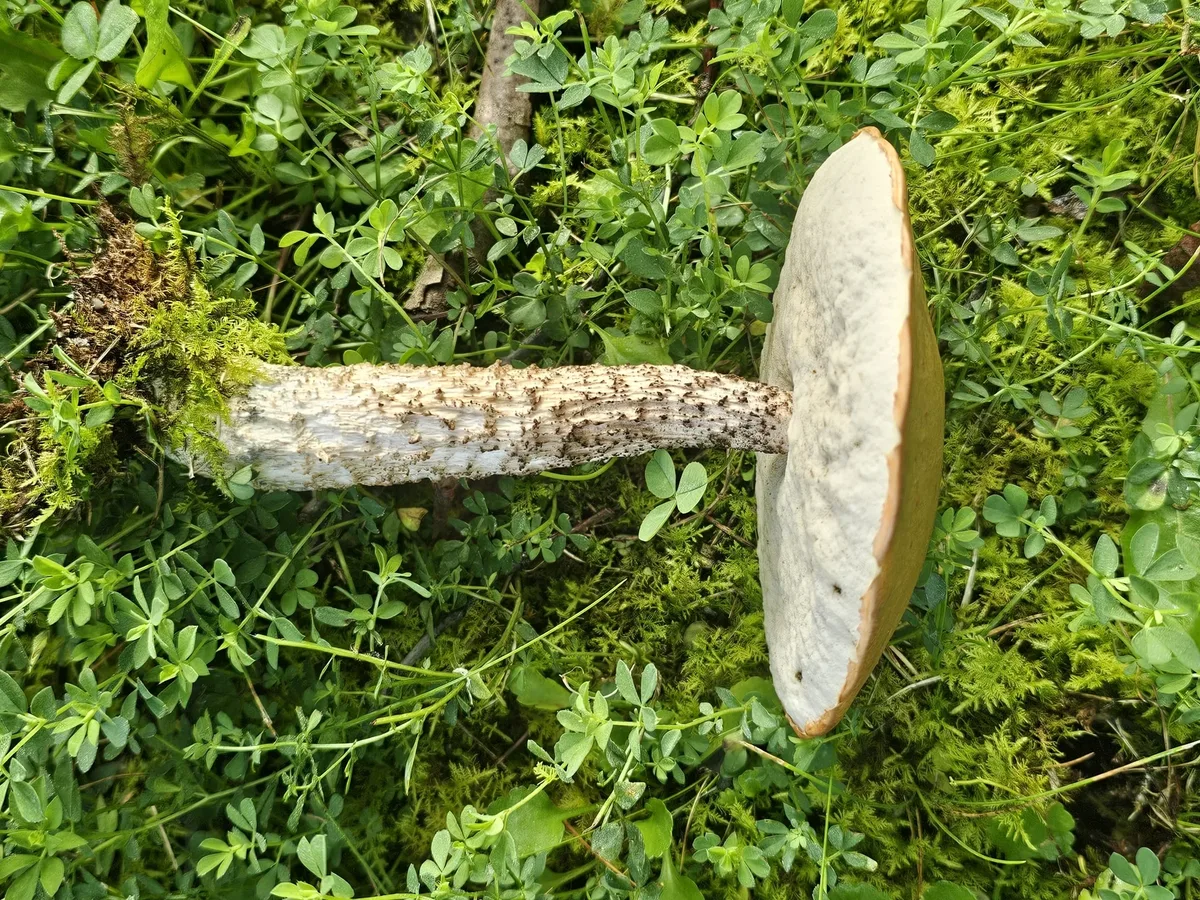
A small but reliable detail: look at the cap margin and you will see the cuticle extends slightly past the edge as a thin fringed overhang, visible particularly when the cap has begun to flatten.
Gills / Pores
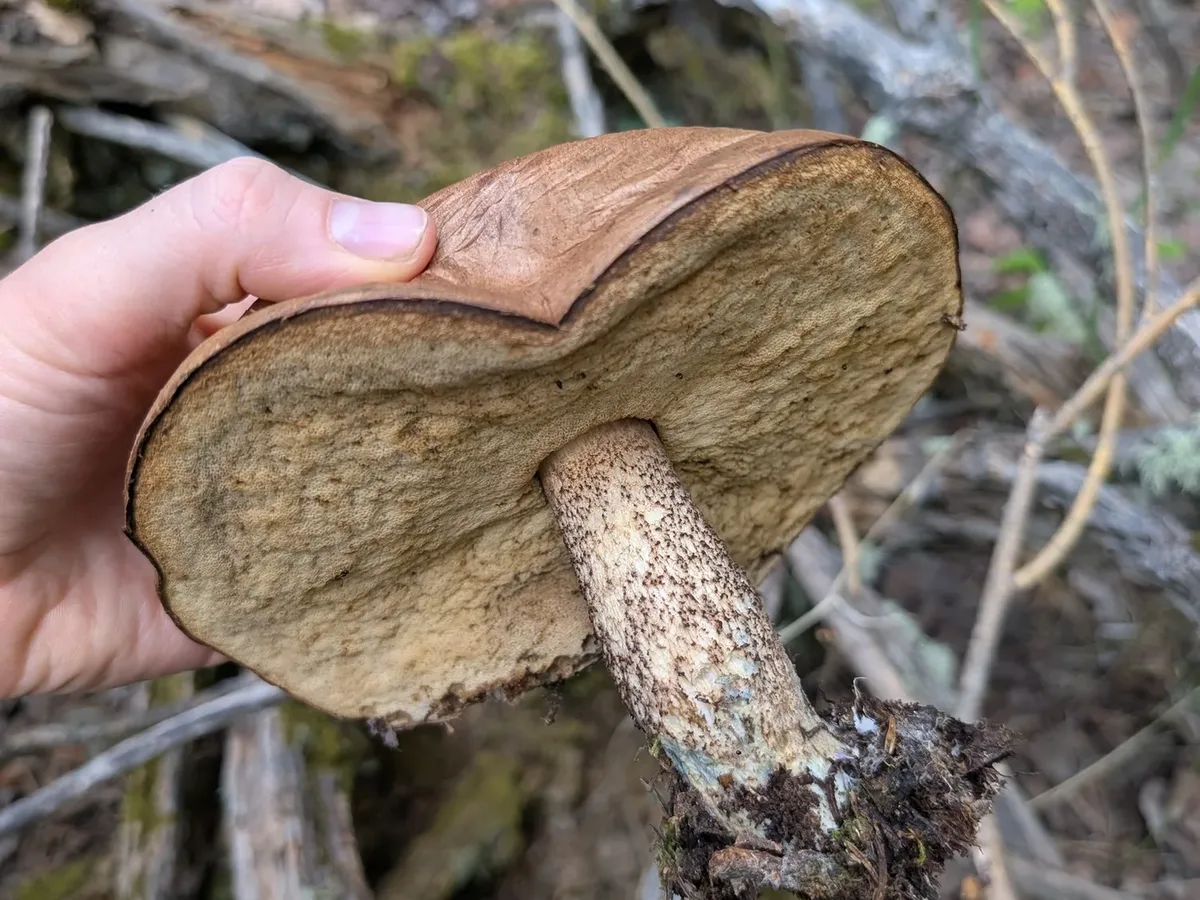
Flip the cap over and the underside shows small, neatly regular pores - cream to white when fresh, ageing to pale greyish-ochre. This spongy, tube-bearing surface is the fundamental identifier of a bolete, separating it from all gill-bearing mushrooms including every dangerous Amanita species.
Stem
The stem is the genus's signature. White internally, its surface is densely covered from base to apex with coarse, upright scabers - rough, tufted scale-like projections that start pale tan or rusty-buff and progressively darken to reddish-brown or near-black with age and handling.
Running a fingertip along the stem reveals the rough, bristled texture immediately. This character is unique to Leccinum among boletes and is diagnostic to genus.
Flesh
Cut or break the flesh and the drama begins: white at first, the interior starts flushing pale pink within a few minutes, deepening through lilac-grey and blue-grey, and finally settling at dark slate-grey or near-black - especially pronounced in the base of the stem - over the following 20 to 40 minutes.
This enzymatic oxidation reaction, driven by catechol compounds in the flesh reacting with oxygen, is completely harmless and is one of the most striking and memorable field tests in North American mycology. Its intensity varies somewhat between collections but is consistently present.
Why it's dangerous
LOW risk when thoroughly cooked for 15-20 minutes at high heat. MODERATE to SIGNIFICANT risk when consumed raw or undercooked.
The orange-capped Leccinum group has the strongest documented adverse-reaction history within the genus in North America and Europe. The toxin is heat-labile and reliably destroyed by proper cooking, making preparation the single controlling variable.
The rule is simple: never eat Leccinum insigne raw, partially cooked, or only briefly heated; ensure cooking is thorough throughout the flesh, not just at the surface. First-time eaters should start with a small, well-cooked portion.
No confirmed fatalities are documented for this species, but hospitalisation-level gastrointestinal illness has occurred with close congeners in documented North American and European cases, and the genus-level caution must be taken seriously.
The practical advice: cook it well, confirm the host tree is aspen, and it is a worthwhile wild edible; skip either step and the risk is real.
Toxin
An uncharacterised, heat-labile gastrointestinal irritant present in raw and insufficiently cooked fruit bodies of Leccinum insigne and other orange-capped Leccinum species. As of current mycological and toxicological literature, the specific compound or compounds have not been isolated or structurally characterised.
What is established is its thermal behaviour: sustained cooking above approximately 70-80 °C throughout the tissue for at least 15 minutes destroys the irritant and renders the mushroom safe to eat.
The compound is not an alkaloid, peptide toxin, or structurally related to the classical mushroom toxins (amatoxins, orellanin, gyromitrin). It does not cause systemic hepatotoxicity, nephrotoxicity, or neurotoxicity. Its mechanism of action is localised to the gastrointestinal mucosa - likely a local irritant or inflammatory compound.
The flesh-staining reaction (white to slate-grey-black on cutting and cooking) is a completely separate chemical process involving catechol oxidation and is entirely unrelated to the toxic principle.
Symptoms
Gastrointestinal syndrome with onset typically 30 minutes to 3 hours after ingestion of raw or undercooked specimens. Symptoms include nausea, vomiting, abdominal cramping, and diarrhoea.
The short latency reflects localised GI irritation rather than systemic absorption and distribution. Most cases are self-limiting, resolving within 6-24 hours with supportive care: hydration, rest, monitoring.
Severity correlates with the amount consumed, the degree of undercooking, and individual susceptibility; within a group eating the same mushrooms, some individuals may be unaffected while others are significantly ill.
No systemic organ toxicity - liver, kidney, or nervous system - has been documented for this species or the orange-capped Leccinum group.
Seek medical attention if:
- symptoms are severe, or persist beyond 24 hours;
- the affected person is a child, elderly, or has underlying health conditions;
- any neurological symptoms appear (which would not be typical and would suggest a different ingested species).
Staying safe
Leccinum insigne must always be thoroughly cooked before eating. This is the governing rule for the species and for the entire orange-capped Leccinum group.
Raw or undercooked specimens have caused gastrointestinal illness in North America, consistent with a pattern documented extensively in Europe for closely related species. The responsible compound is heat-labile - destroyed by sustained cooking at sufficient temperature - so the risk is a direct function of preparation quality.
The practical rules are:
- 1Always cook thoroughly at high heat for a minimum of 15-20 minutes throughout the flesh, not merely a surface warm-through.
- 2Never eat raw, pickled without cooking, or only briefly sautéed.
- 3If eating for the first time, start with a small, well-cooked portion and wait 24 hours before eating more.
- 4Do not serve to children, elderly individuals, pregnant individuals, or those with gastrointestinal conditions without ensuring they understand and apply the cooking requirement.
The grey-to-black colour of properly cooked Leccinum flesh is a normal enzymatic browning reaction and does not indicate spoilage or danger - it is the same process visible when slicing the raw mushroom. Do not discard properly cooked, firm-smelling specimens on account of this colour change.
There are no deadly species that can realistically be confused with a correctly identified Leccinum insigne. The spongy pore surface, dark-scalered stem, and flesh-staining reaction together are conclusive identifiers to genus that no dangerous gill-bearing fungus can mimic.
Where & when it grows
Habitat
The aspen bolete's entire existence is organised around one ecological relationship: its mycorrhizal partnership with aspen trees, particularly trembling aspen (Populus tremuloides).
The fungal mycelium forms intimate associations with the tree's fine root tips, trading mineral nutrients and water absorbed from the soil in exchange for photosynthetically produced sugars from the tree. Neither organism thrives in the other's absence; a Leccinum insigne far from an aspen would not have fruited there.
This obligate dependency is the most useful field-identification tool the species offers: wherever you find Leccinum insigne, you are standing beneath or beside a Populus tree.
Trembling aspen is one of the most ecologically wide-ranging trees in North America - a pioneer species that colonises disturbed ground, forms clonal groves via root sprouting, dominates clearcuts and burned areas, and occurs from sea level to the treeline across a vast swath of the continent.
In eastern North America it is a characteristic tree of the Great Lakes basin, the Appalachian uplands, New England, and the boreal forest belt stretching across Ontario, Quebec, and the Maritime provinces. Wherever this tree grows in significant stands, L. insigne is likely to follow.
Beyond the host tree, the species is tolerant of a range of soil types: moist to well-drained, mineral-rich soils with decent organic matter content produce the most productive fruiting, but the species is found in open groves on glacial till, in mixed forest edges, in second-growth stands, and at the fringes of wetlands where aspen colonises disturbed margins.
Closed-canopy pure conifer stands without aspen are the main habitat absent from this species' repertoire.
When
Leccinum insigne is a summer-to-autumn bolete with a relatively long potential season across eastern North America, but the timing varies significantly with latitude and elevation.
In the southern portions of its range - the Appalachians, the mid-Atlantic states, and the southern Great Lakes - the first fruit bodies can appear in late June or early July following good rainfall.
Across the northern tier of the range - Ontario, Quebec, the Great Lakes north shore, and New England - the main season runs from mid-July through September, with some fruiting extending into October before hard frosts end things.
The trigger for fruiting is the same pattern documented across the Leccinum genus: adequate rainfall - typically 15-20 mm or more over a 14-day window - combined with soil temperatures above roughly 8-10 °C at root depth.
In eastern North America's humid continental climate, summer thunderstorm activity and frontal rain systems provide the necessary moisture regularly. The late-summer period (August-September) is typically when aspen-forest boletes peak, as the combination of still-warm soil and late-summer precipitation provides ideal conditions. A productive flush follows a major rainfall event by 7-14 days.
Fruiting ends sharply when overnight frost begins to penetrate the surface soil. In the northern boreal zone, this can happen as early as mid-September; in the southern Appalachians, productive fruiting may continue through October in good years.
How it grows
Fruit bodies emerge singly or in small scattered groups of two to five, always directly beneath or adjacent to aspen trees.
The aspen's clonal grove structure - where multiple trunks share one genetic individual connected through root suckers - means the underlying mycorrhizal network can be extensive, and productive sites tend to be consistently rewarding over multiple years.
After a triggering rainfall event, fruit bodies develop over 7-12 days from pinhead to maturity.
The dense, firm flesh of young specimens is somewhat resistant to insect larval tunnelling relative to softer boletes, but older specimens, or those caught in prolonged warm wet weather, frequently harbour maggot damage. Larvae typically enter through the stem base and tunnel upward; always slice the stem vertically in the field to assess.
Fruiting is often synchronous across a stand: after a significant rain, multiple fruit bodies of similar age appear together, making a productive flush genuinely rewarding.
The pale-barked aspen groves in which the species fruits are particularly striking habitats in late summer and autumn, and the combination of golden foliage and substantial orange-capped boletes is one of the more memorable sights in North American foraging.
Fruiting conditions
Fruiting is triggered by adequate rainfall (15-20 mm or more over 14 days) combined with soil temperatures above 8 °C at mycorrhizal root depth. In eastern North America's humid continental climate, summer thunderstorm activity and frontal rain systems provide the necessary moisture regularly through the season. The most productive flushes follow late-summer or early-autumn rainfall events when soils are still warm; a flush typically emerges 7-14 days after the triggering rain. Fruiting ceases when overnight frosts begin to penetrate the surface soil, which varies from mid-September in the northern boreal zone to October in the southern portions of the range.
Look-alikes
Leccinum insigne belongs to the orange-capped rough-stalk complex of North American Leccinum, a group whose taxonomy has been revised multiple times and remains partly unresolved.
The practical consequence for the forager is that several closely related species are morphologically very similar and the most useful separations are ecological (host tree) rather than morphological. No realistic lookalike is deadly.
- Leccinum aurantiacum (Red aspen bolete): The European species with which L. insigne has been extensively confused; some older North American records of 'aurantiacum' refer to what is now called insigne. In the field, both grow under Populus, both have orange to orange-brown caps with dark stem scabers, and both have the same flesh-staining reaction. Edibility and safety advice is identical. Separation requires microscopy and precise host data and is rarely necessary in practice.
- Leccinum columbianum (Columbia leccinum): The corresponding orange-capped aspen Leccinum of the Pacific Northwest interior. Morphologically very similar; overlaps with L. insigne in the Rocky Mountain transitional zone. Both grow under trembling aspen and black cottonwood. Edibility caveats identical. Not separable with confidence in the field.
- Leccinum versipelle (Orange birch bolete): Very similar orange cap and dark scabers, but grows strictly under birch (Betula spp.) rather than aspen. Where birch and aspen grow in proximity - common across northern North America - the tree directly above the fruit body is the critical separator. The host tree association makes identification reliable in the field. Edibility caveats identical.
- Leccinum scabrum (Brown birch bolete): Dull grey-brown to mid-brown cap lacking orange tones; associated with birch rather than aspen. Readily separable by cap colour (no orange tones) and host tree.
- Leccinum holopus (White birch bolete): Very pale, almost white to cream cap; grows in wet, boggy birch woodland. Colour difference makes separation straightforward.
- Suillus americanus (White pine suillus) or Suillus granulatus: Found in conifer-associated forest, sometimes near aspen edges, but immediately distinguishable by viscid-slimy cap surface, angular to compound pores, smooth stem with glandular dots or ring remnant, and complete absence of dark stem scabers. Not a realistic confusion once the cap underside is examined.
None of the Amanita species that would concern foragers - Amanita phalloides (death cap), Amanita bisporigera (destroying angel), Amanita ocreata - can be confused with any Leccinum: Amanita species bear gills (not a spongy pore layer), typically have a ring on the stem, emerge from a cup-like volva at the base, and lack the rough dark scabers of the Leccinum stem. The pore surface and scalered stem of L. insigne are collectively decisive against any dangerous lookalike.
Dull grey-brown to mid-brown cap lacking orange tones; always found under birch rather than aspen. The absence of orange or brick-brown colouration and the different host tree make this readily separable from L. insigne. Edible when properly cooked.
The orange-capped aspen Leccinum of the Pacific Northwest interior, morphologically very similar and overlapping with L. insigne in the Rocky Mountain transitional zone. Both grow under trembling aspen; both have dark-scalered stems and the same flesh-staining reaction. Not reliably separated in the field; treat as interchangeable for safety and culinary purposes - always cook thoroughly.
Very similar vivid orange cap and dark stem scabers, but grows under birch (Betula spp.) rather than aspen. In mixed aspen-birch forest, confirm which tree the fruit body is closest to; the host tree is the critical separator. Edibility caveats identical - thorough cooking required.
The European Leccinum with which L. insigne has historically been confused; North American material formerly identified as L. aurantiacum may include L. insigne. Both grow under Populus, both have orange to orange-brown caps with dark scabers, and the flesh-staining reaction is identical. Edibility and safety advice are the same. Reliable separation requires microscopy; for foraging purposes treat them as interchangeable - thorough cooking required for both.
Found under white pine, often in areas that also include aspen; distinguishable immediately by its slimy-viscid yellow cap with reddish-brown fibrils, large angular pores, and smooth stem with small glandular dots - no dark scabers. Not a realistic confusion once the underside of the cap is examined.
A reference guide - never an edibility guarantee. When in doubt, leave it out.