White birch bolete
Leccinum holopussyn. Boletus holopus, Leccinum nucatum, Krombholzia holopus
 © Алёна Осипова (CC BY)
 © Morten Pettersen (CC BY)
 Nathan Cobbett (CC0)
 © Ulrik Andreassen (CC BY)
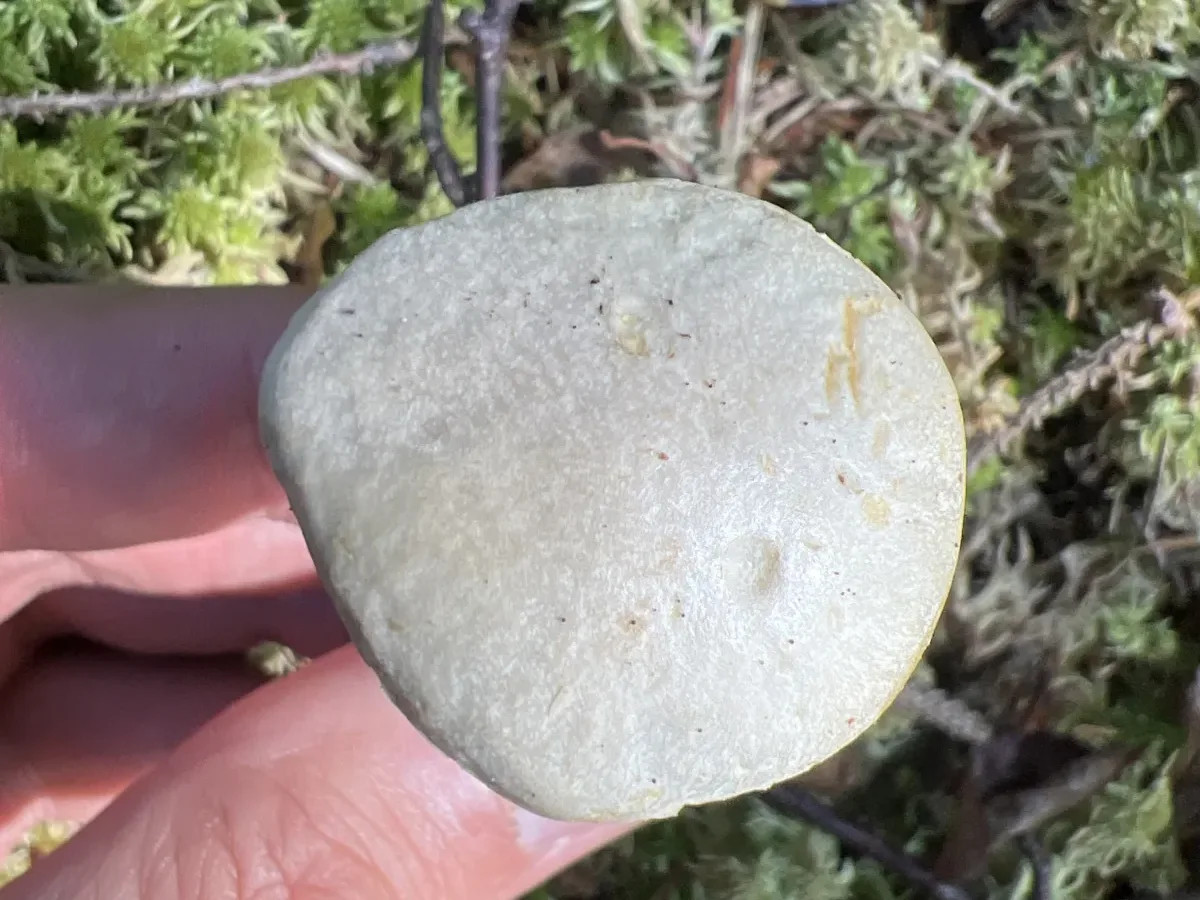 © Ulrik Andreassen (CC BY)
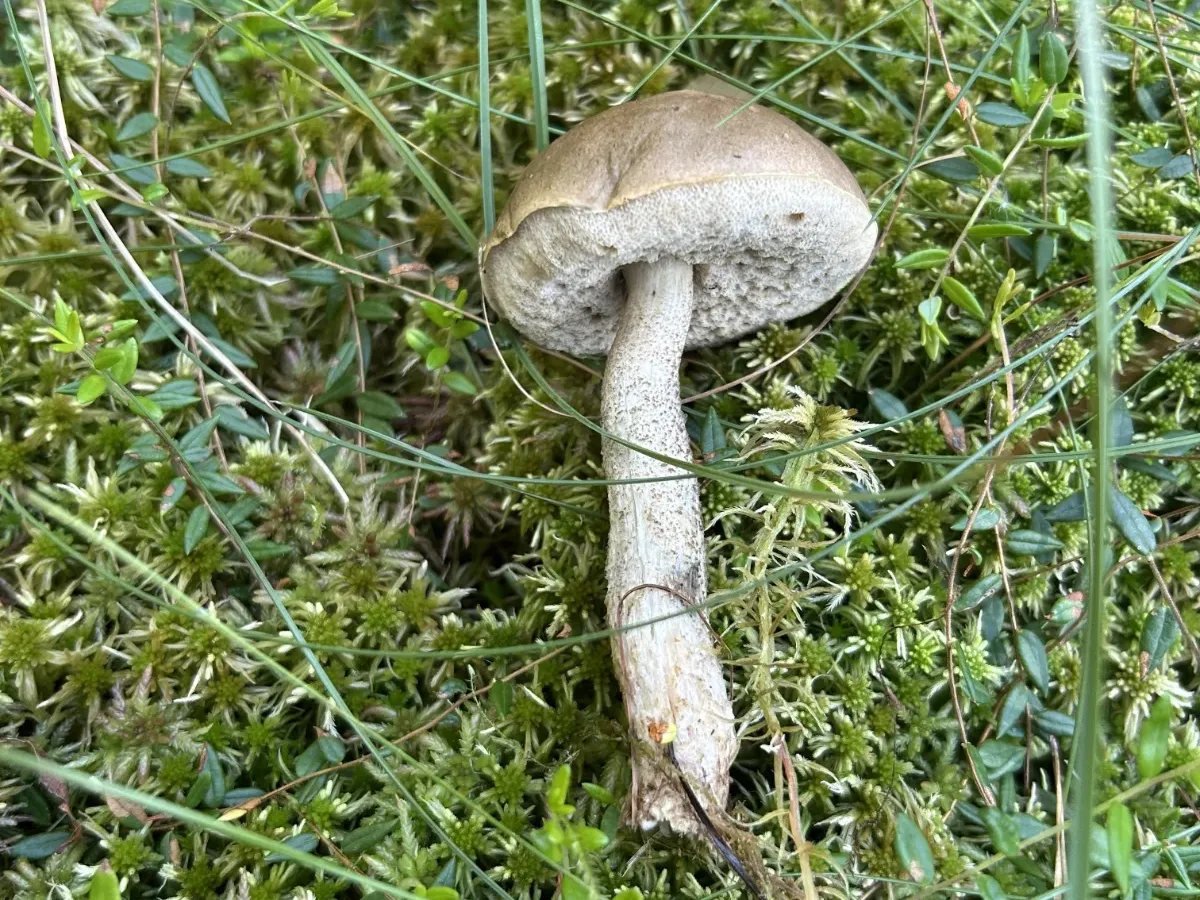 © Remi Aleksander Nielsen (CC BY)© Алёна Осипова (CC BY)© Morten Pettersen (CC BY)
Good to eat, once you have identified it with certainty and cooked it through.
How to recognise it
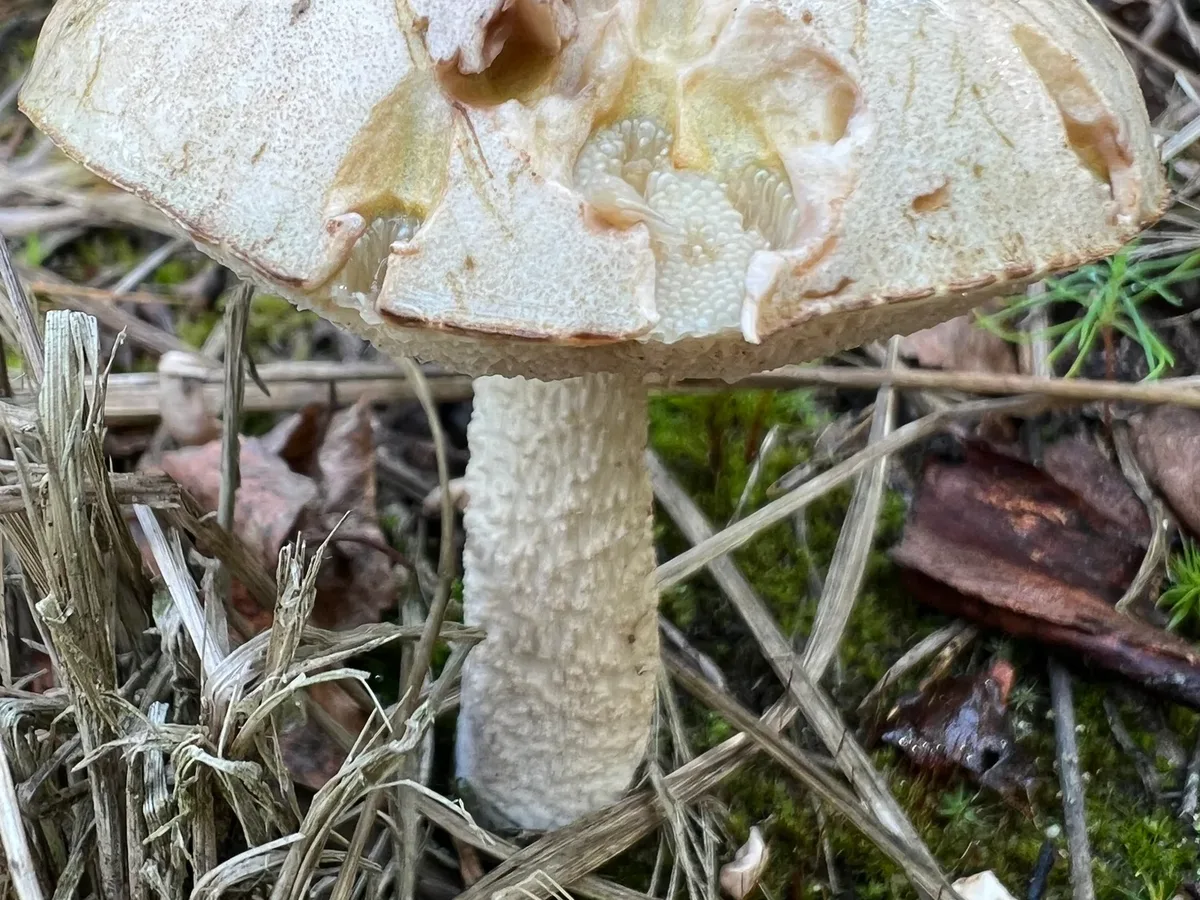
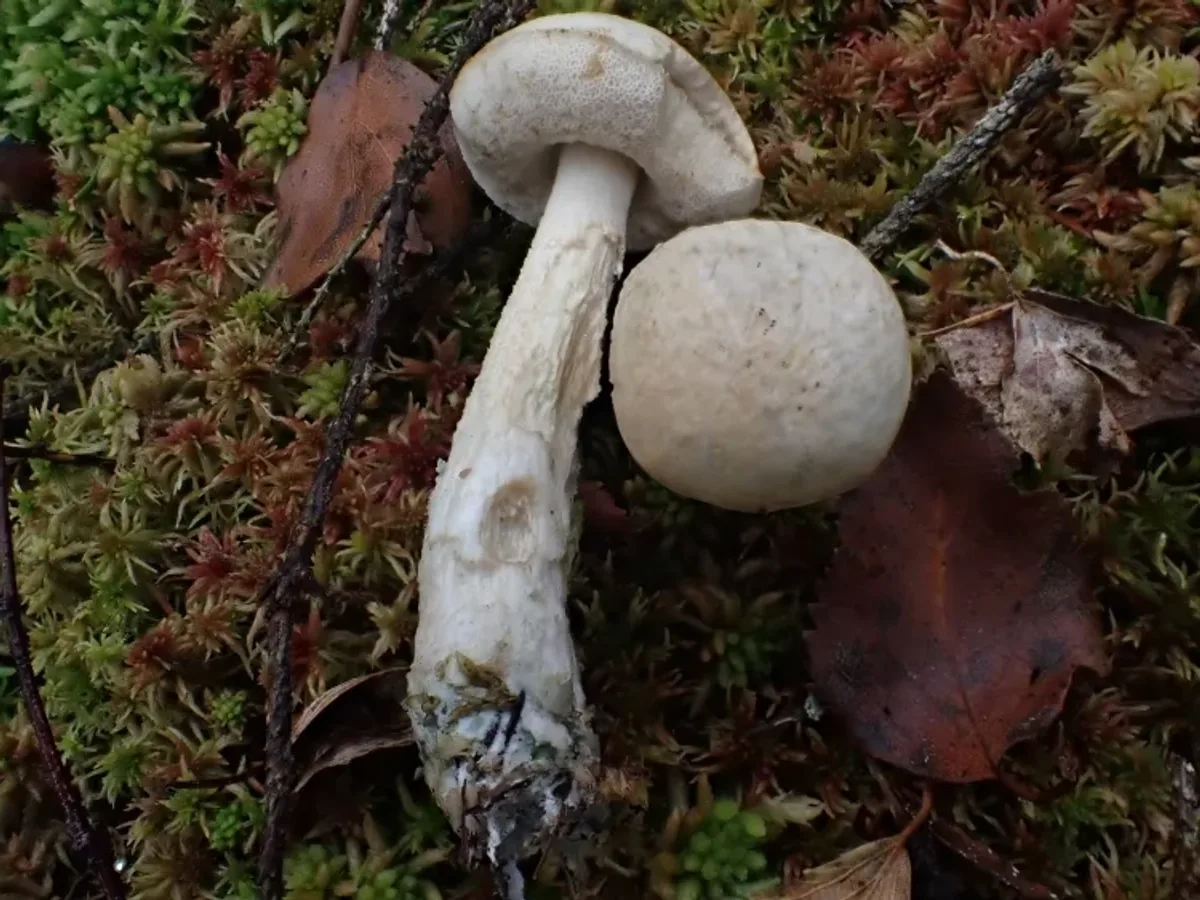
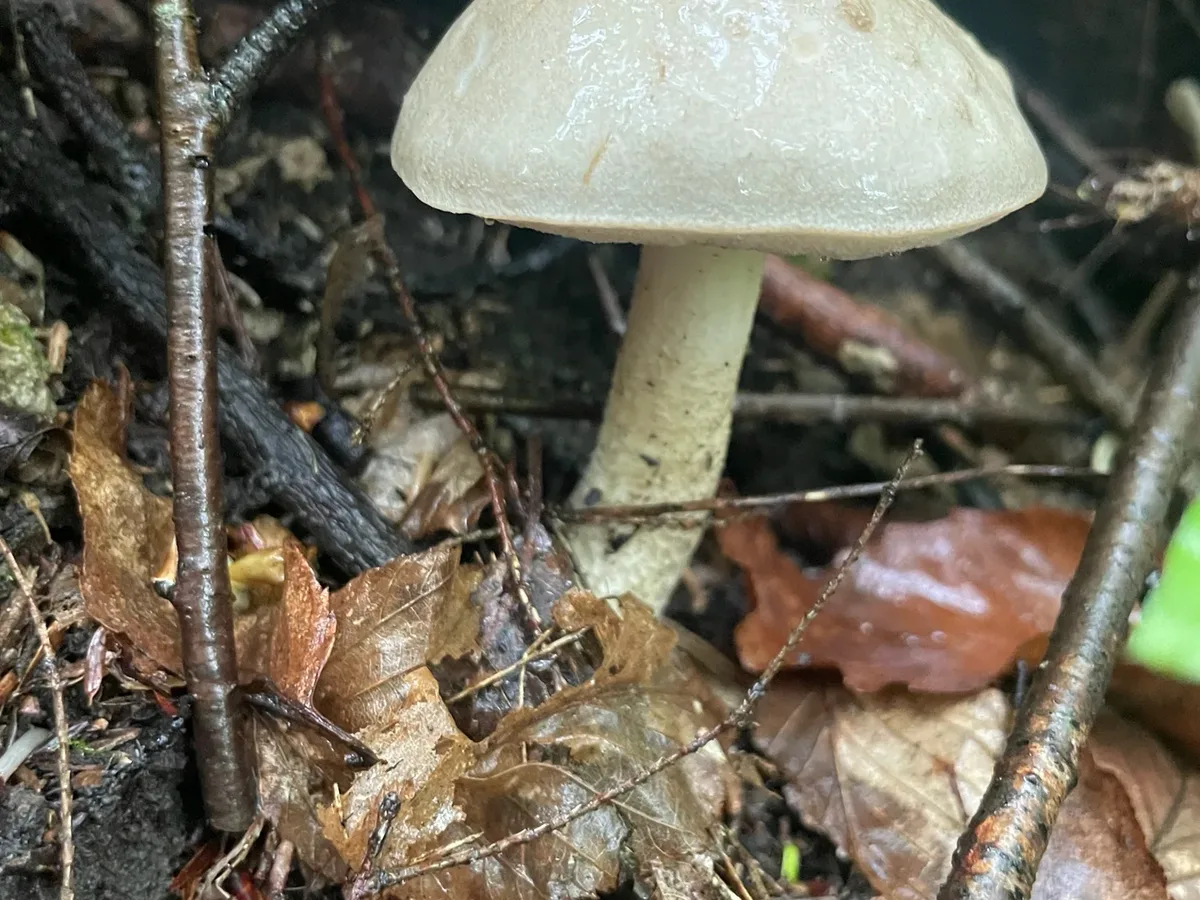
Among the pale boletes of the northern forest, the white birch bolete stands out for its ghostly colouring - the cap is white to very pale greyish-cream rather than the orange, brick-red or brown you expect from its relatives.
Cap
The cap (4-12 cm) is convex, dry and finely downy when young, becoming smooth with age.
Gills / Pores
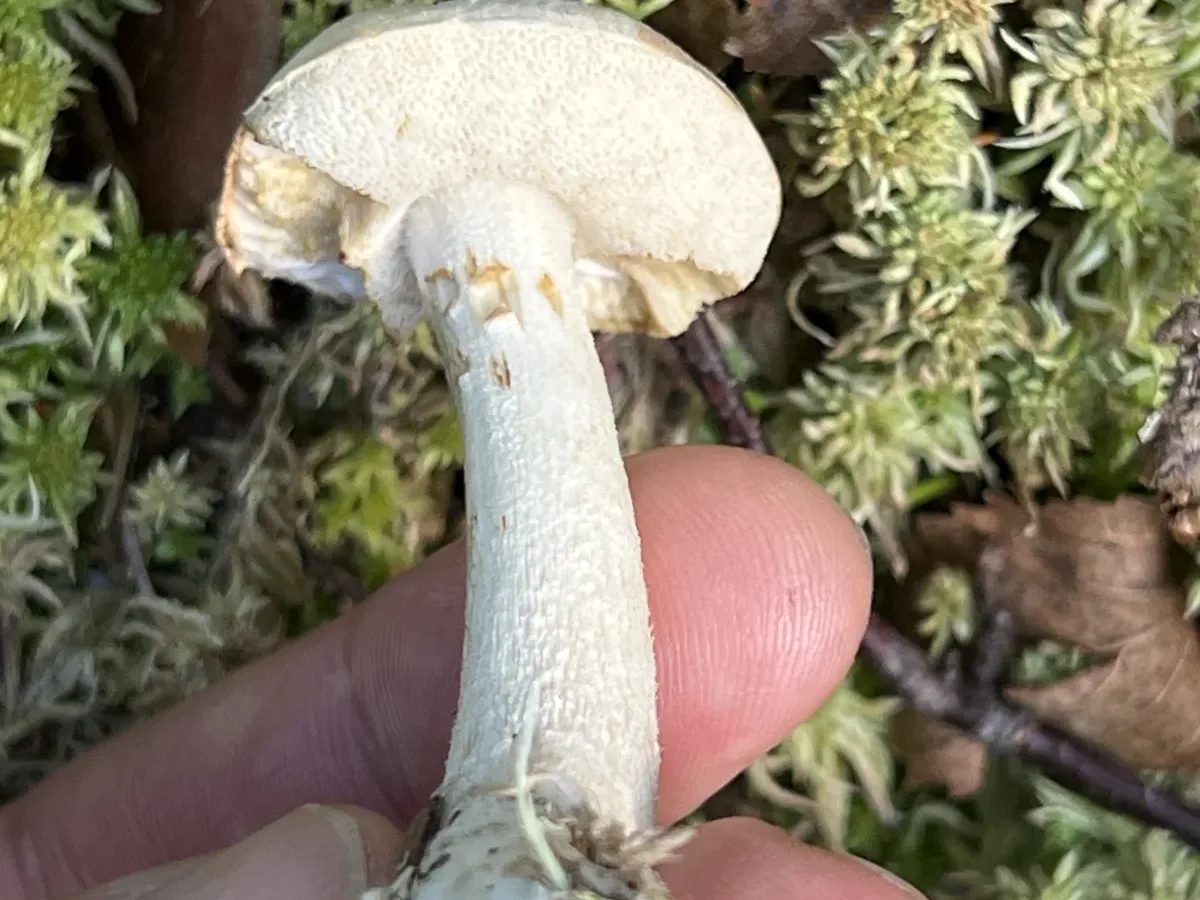
The pore surface starts white and ages to a dirty grey-white.
Stem
The stem (7-15 cm) is slim for the genus and dusted with small dark felty scales (scabers) against a white background - that combination of pale cap and dark-scabered white stem is the key recognition feature.
Flesh
Flesh is white; it may show a very subtle bluish-green tinge when cut, especially at the stem base, but the colour change is far less dramatic than in Leccinum versipelle or L. aurantiacum.
Where & when it grows
Habitat
A strict mycorrhizal partner of birch - it does not grow under conifers or hardwoods.
Unlike most Leccinum, the white birch bolete has a marked preference for wet, peaty ground:
- Sphagnum bogs
- Boggy birch woodland
- Mire edges
- River-margin carr
If you find a very pale bolete pushing up through sphagnum moss in a wet birch landscape in Scandinavia, this species is the prime candidate. It is absent from the dry sandy soils where the common birch bolete (L. scabrum) thrives.
When
Fruiting runs from July to October, with the main flush in late July through early September at Nordic latitudes.
The boggy habitats this species calls home work in its favour during dry spells. The standing water held in sphagnum moss keeps the subsurface moist long after the surrounding forest has dried out, making the white birch bolete one of the more reliable Leccinum finds in a dry summer.
How it grows
Mycorrhizal with birch, the white birch bolete's mycelium can thread through peaty soil for decades, returning fruit to the same waterlogged ground year after year.
Fruiting bodies emerge singly or in small groups, often pushing up directly through a carpet of sphagnum.
Like all Leccinum species, caps are frequently attacked by Drosophila and fungus-gnat larvae, which tunnel through stem and cap from below - young, firm specimens are far less infested.
Fruiting conditions
Boggy sphagnum habitat buffers soil moisture, so minimum rain threshold is lower than for dry-forest Leccinum. Soil temperature needs to stay above 8 °C for consistent fruiting; in Nordic taiga-edge habitats this typically means late July to September.
Look-alikes
No deadly species are known to be confused with this mushroom.
- Common birch bolete (Leccinum scabrum) - the most frequent confusion. It has a grey-brown to fawn cap (never truly white) and prefers dry to mesic birch forest rather than boggy ground.
- Other pale or whitish Leccinum exist. Leccinum cyaneobasileucum (also pale, boggy birch habitat) differs by a stronger blue-green discoloration at the stem base and in the flesh; it is also edible.
- Bitter bolete (Tylopilus felleus) - the white birch bolete could conceivably be confused with overripe specimens, which can be quite pale. But T. felleus has pink-tinted pores when mature and a very bitter taste; a small taste of the raw pore surface will instantly reveal the bitterness.
Can be pale when young; distinguished by pink-tinged pores at maturity, a coarse dark net (reticulation) on the stem upper half, and an intensely bitter taste - unmistakable when a small piece of raw pore surface is touched to the tongue. Not poisonous but inedible due to bitterness.
Has a grey-brown to fawn cap, never pure white; prefers dry to mesic birch forest, not boggy ground. Flesh does not blue. Edible when cooked thoroughly.
Also pale-capped and found in wet birch habitat, but shows a more pronounced blue-green to blue-grey discoloration in the stem base and flesh when cut. Both are edible when cooked.
In the kitchen
Picking & cleaning
- Cut or twist the stem cleanly at the base.
- Carry in a basket rather than a bag to avoid sweating.
- Trim the stem base (often muddy or mossy).
- Always check the stem and lower cap for larval tunnels - press the stem gently; if it feels hollow or soft inside, discard or trim heavily.
- Remove the spongy tube layer on older specimens.
Cooking
Best cooked simply:
- Sautéed in butter or oil
- Added to soups and stews
- Sliced and dried
The pale flesh does not discolor dramatically during cooking. Drying concentrates the mild nutty flavour. Pairs well with wild garlic, cream and tarragon in Scandinavian-style preparations.
Because the cap flesh can be quite soft (especially in boggy conditions), overcooking produces a mushy texture - use moderate heat and avoid extended simmering.
Good to know
The white birch bolete is a well-regarded edible with no confirmed record of toxicity. However, it must be cooked thoroughly before eating.
Raw or undercooked Leccinum boletes as a group have caused gastrointestinal upset in some individuals, and the white birch bolete is not an exception. Do not eat raw, do not eat undercooked.
In individuals sensitive to Leccinum generally, even cooked specimens may occasionally cause mild digestive discomfort; try a small portion first if you have not eaten this species before.
A reference guide - never an edibility guarantee. When in doubt, leave it out.