Slate bolete
Leccinum duriusculumsyn. Boletus duriusculus, Krombholziella duriuscula, Leccinum aurantiacum var. duriusculum
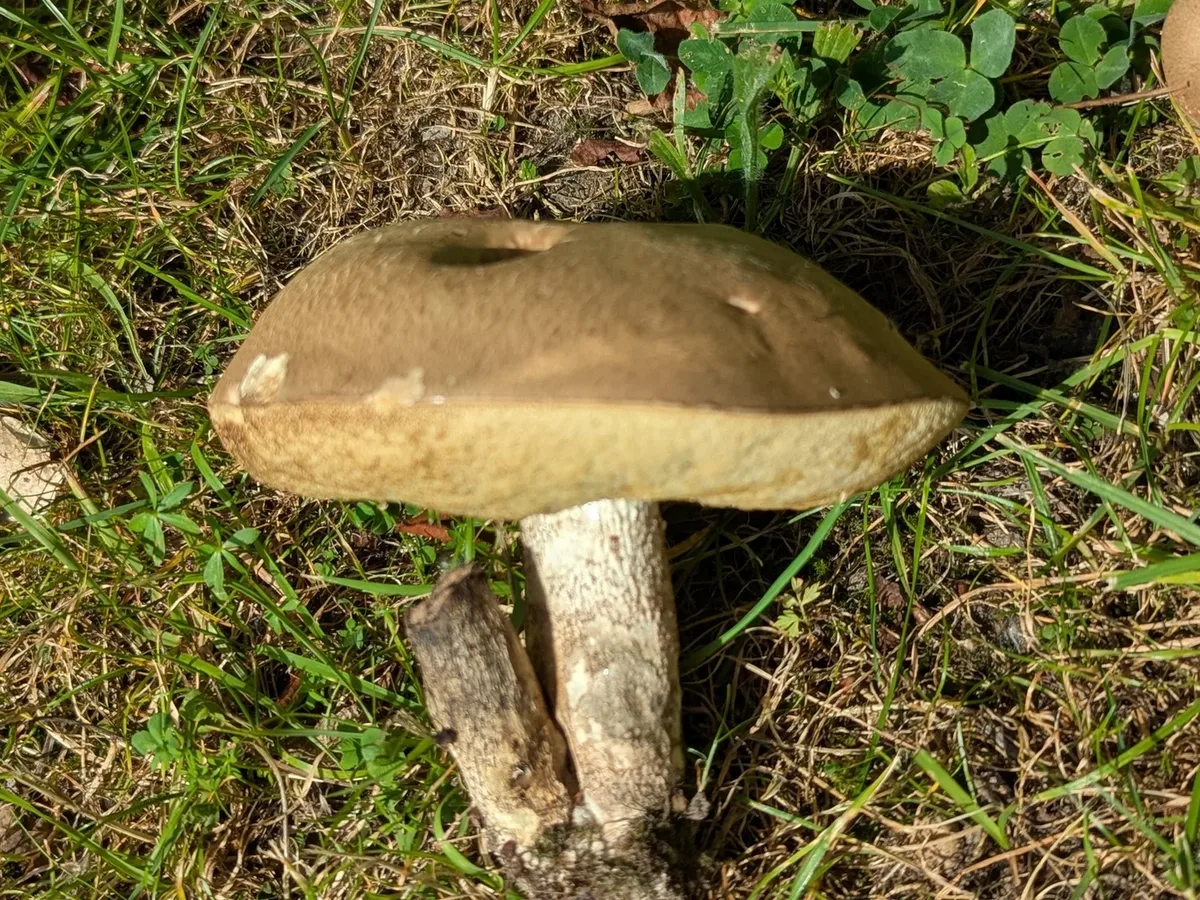 © Michel Langeveld (CC BY)
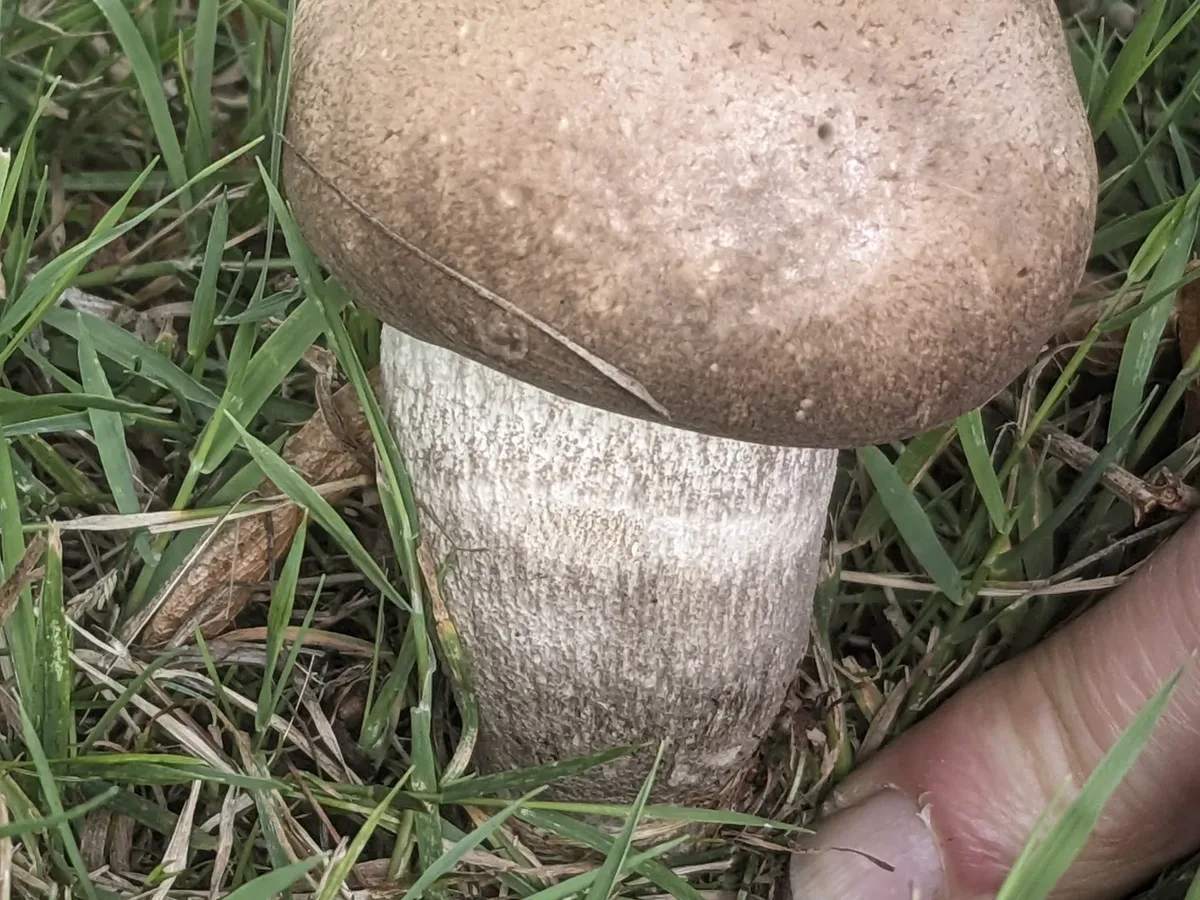 © Richard Shirky (CC BY)
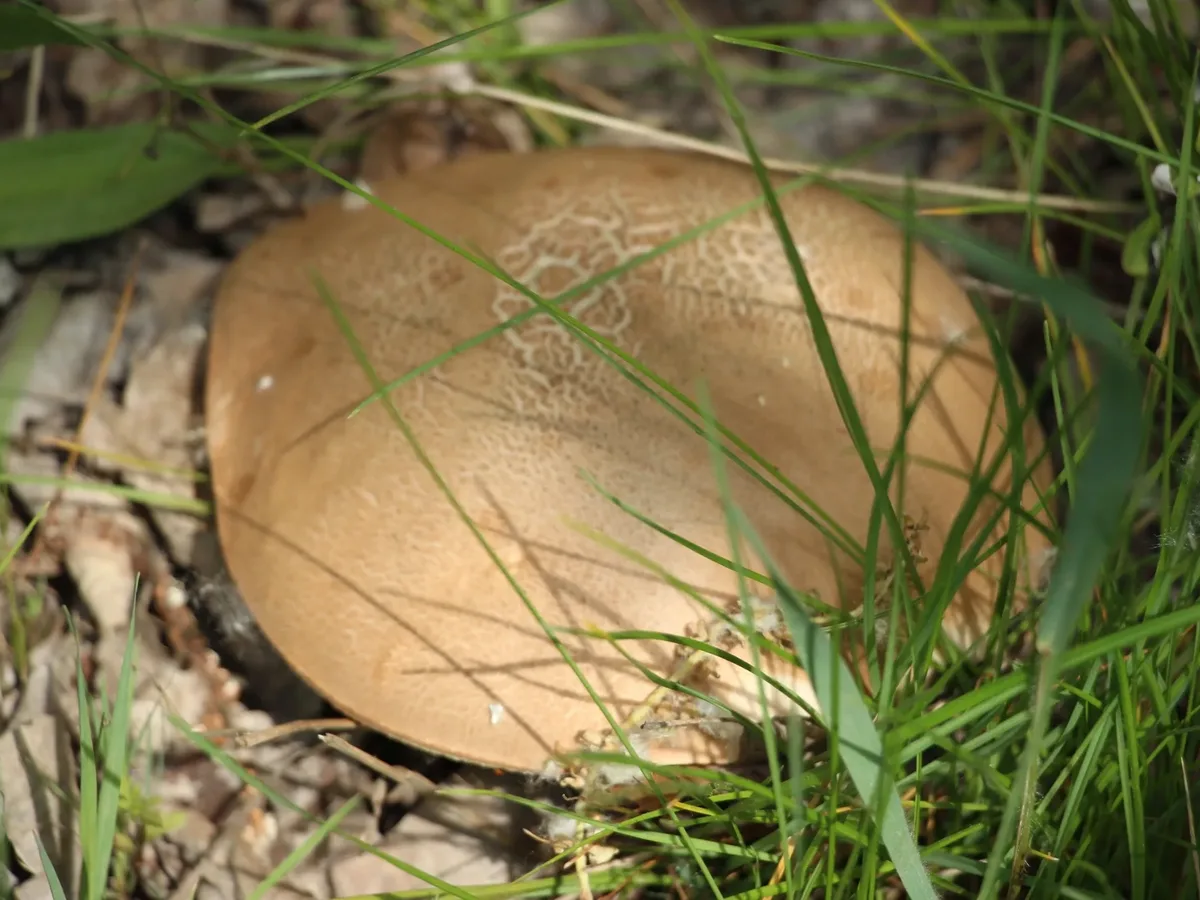 © Petro Miroshnyk (CC BY)
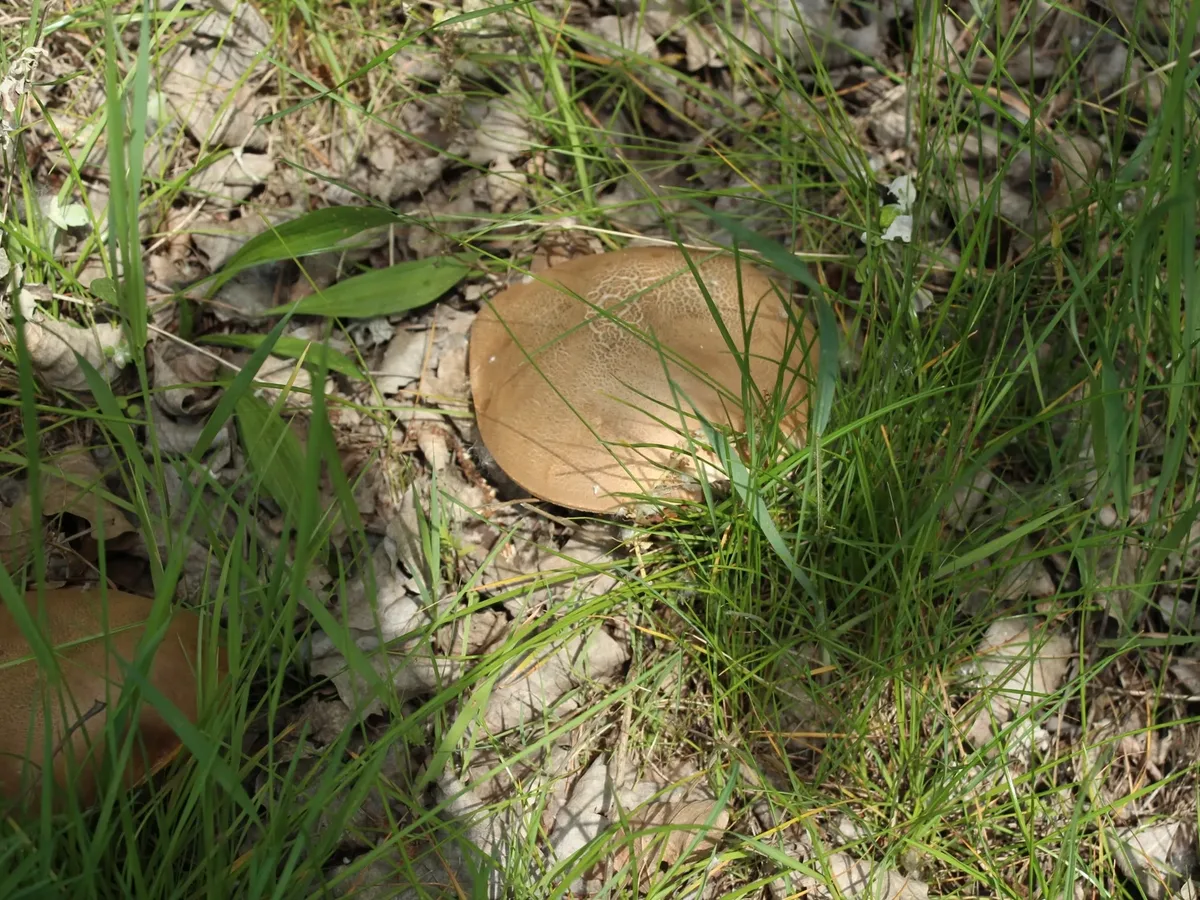 © Petro Miroshnyk (CC BY)
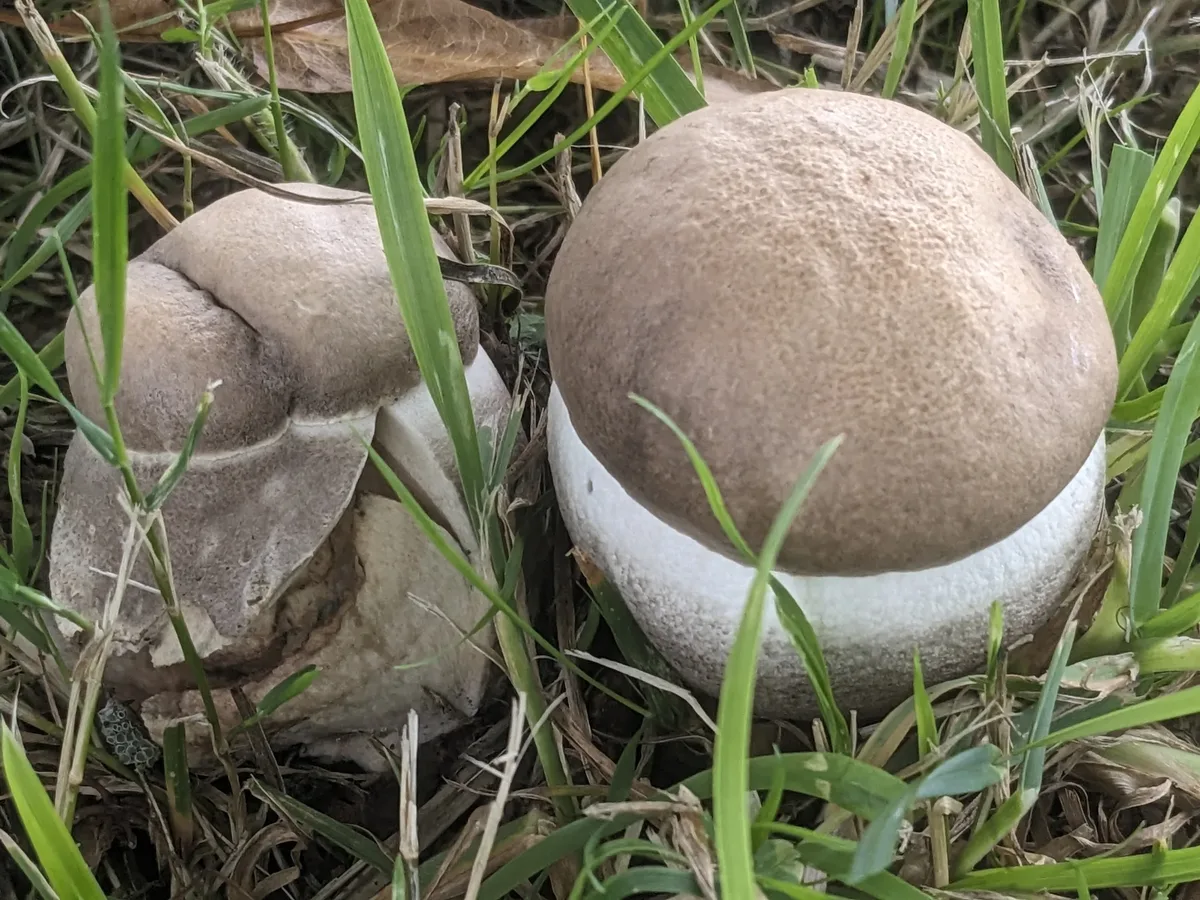 © Richard Shirky (CC BY)
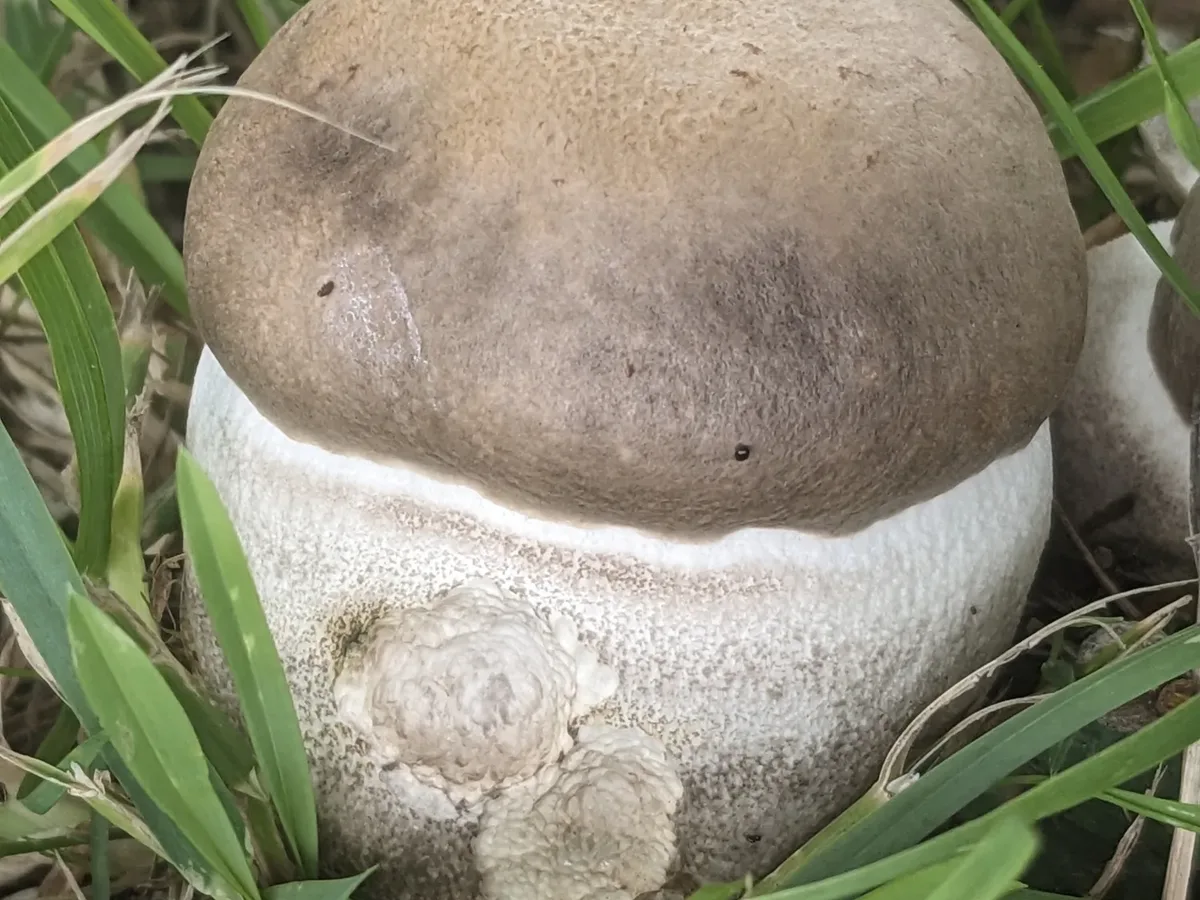 © Richard Shirky (CC BY)
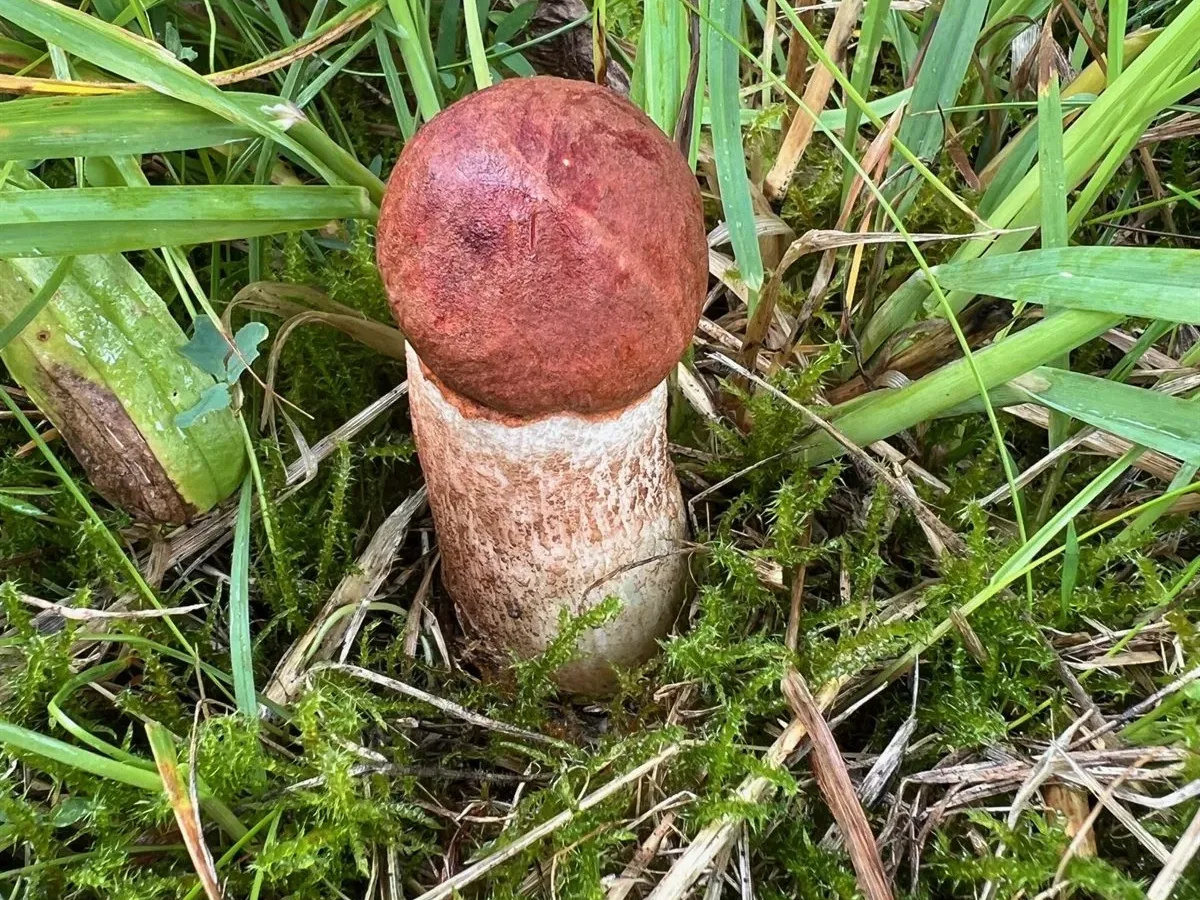 © Kirsti Anne Mandal (CC BY)
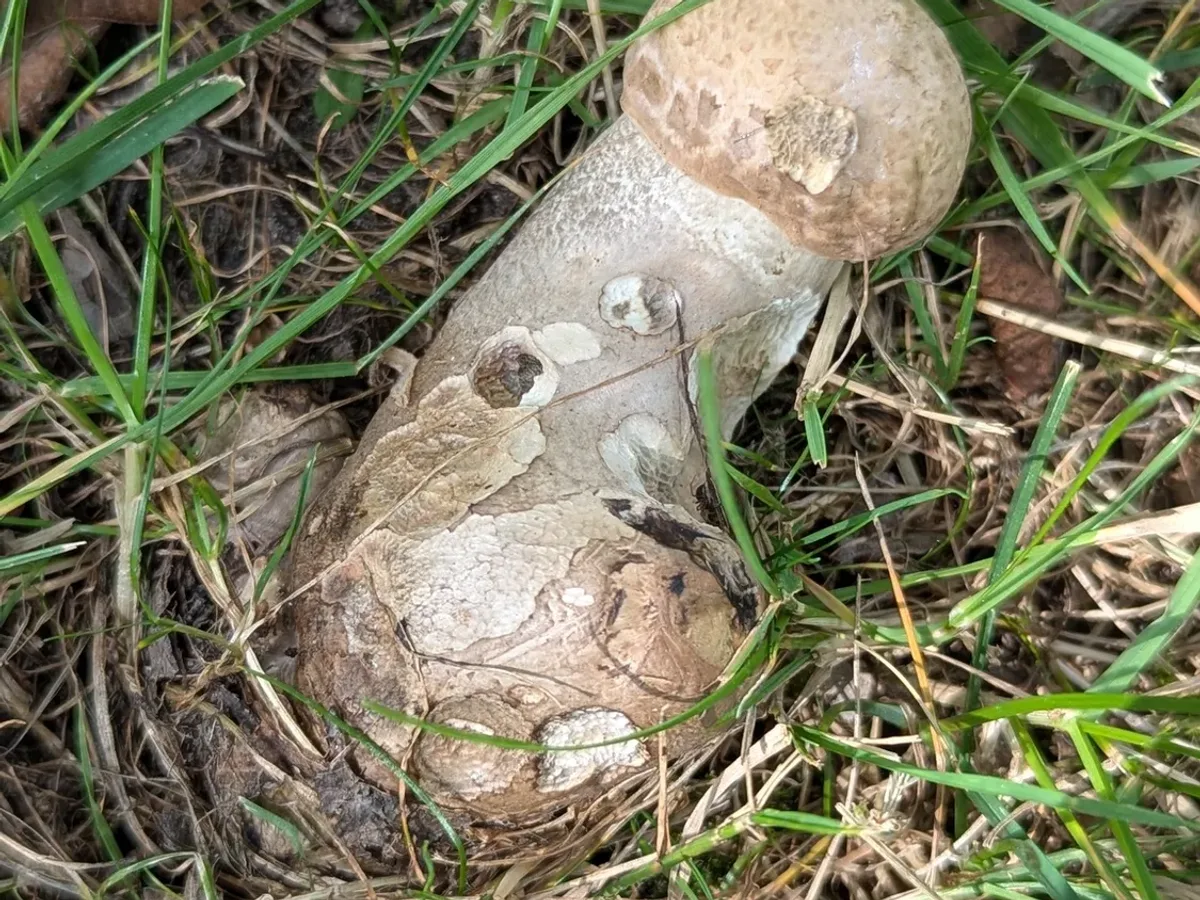 © Michel Langeveld (CC BY)© Michel Langeveld (CC BY)© Richard Shirky (CC BY)
Edible only with the right preparation - or safe for some people but not others. Learn the caveats first.
How to recognise it
Of all the rough-stalked boletes, the slate bolete is the one you can practically feel its name in: the young cap is strikingly dense and hard to the touch - duriusculum means 'rather tough' - an impression quite unlike the softer, more yielding flesh of its orange-capped relatives.
Cap
The cap opens from a tight, firm hemisphere into a broad, cushion-shaped dome, holding that sturdy domed profile longer than most Leccinum species.
The colouring is muted and cool: slate-grey to greyish-brown, sometimes with a faint olive cast, noticeably darker and less warm than the orange cap of Leccinum versipelle or the tawny-brown of Leccinum aurantiacum.
The dry, matt, finely felty surface sheds moisture easily and stays velvety even in wet conditions.
Gills / Pores
The pores are a clean ivory-white in youth, ageing to creamy ochre, and bruise slowly to brownish-grey when pressed. The tube layer underneath is correspondingly pale.
Stem
The stem is stout and immediately recognisable: a whitish-grey background almost entirely buried under dense, coarse, dark brown to blackish scabers that blacken further with handling and age.
The effect is a bristled, rough-textured stem that looks almost charred in older specimens. The base may taper slightly or swell gently to a club shape.
Flesh
Cut into the stem, especially the base, and you witness one of the more striking transformations in the bolete world: firm white flesh moves unhurriedly through pale pink, then lilac-grey, and finally settles at a dark slate-grey or near-black. The full change takes 15-45 minutes and is most vivid deep in the stem base.
Smell & taste
Smell is pleasantly mild and fungal; taste is unremarkable. Spore print olivaceous-brown.
Why it's dangerous
LOW to MODERATE when properly cooked; MODERATE to HIGH when raw or undercooked.
The toxins are heat-labile and reliably destroyed by thorough cooking (15-20 minutes sustained heat), making this species safe for most adults when correctly prepared. The danger is primarily from inadequate cooking or from eating it raw.
Start with a small well-cooked portion if you are:
- immunocompromised
- affected by pre-existing gastrointestinal conditions
- trying the species for the first time
Not recommended for children as a first wild mushroom. No fatalities are on record for this species.
Toxin
Unidentified heat-labile compounds present throughout the fruit body.
The exact chemical identity has not been isolated, but the toxic fraction is thermolabile - it is destroyed by sustained cooking at high temperature (>=15-20 minutes of genuine heat).
The same class of compounds affects all Leccinum and Leccinellum species.
Symptoms
Gastrointestinal syndrome with onset typically 30 minutes to 3 hours after ingestion. Symptoms include nausea, vomiting, abdominal cramps, and diarrhoea.
Severity correlates with how thoroughly the mushroom was cooked: raw or undercooked specimens produce stronger reactions.
Symptoms are self-limiting and resolve within 24 hours in most cases. No systemic or organ toxicity has been reported.
Sensitive individuals (children, the elderly, those with GI conditions) may experience more pronounced reactions.
Staying safe
The slate bolete is edible after thorough cooking but requires meaningful caution. All Leccinum species contain heat-labile compounds that cause gastrointestinal symptoms - nausea, vomiting, cramps, and diarrhoea - when eaten raw or inadequately cooked. These reactions are well documented across multiple European countries for the Leccinum/Leccinellum group.
The critical rule is to cook fully: at least 15-20 minutes of genuine sustained heat. Rapid stir-frying, brief sautéing, or inclusion in dishes that do not reach full cooking temperature may leave problematic compounds intact.
Leccinum duriusculum in particular has been associated with gastrointestinal incidents in Eastern Europe, and some mycological sources in Germany and Poland rate it as requiring particular care or flag it as only conditionally edible for sensitive individuals. Do not dry and reconstitute without subsequent thorough cooking. People trying this species for the first time should begin with a small, well-cooked portion.
The progressive blackening of the flesh when cut is a normal enzymatic browning reaction (oxidation of iron-containing compounds in the vacuoles) and is not a toxicity indicator; it does not affect flavour or safety of properly cooked specimens.
Where & when it grows
Habitat
The slate bolete lives in a close mycorrhizal partnership with aspen and its close relatives - a bond so tight that the fungus simply will not fruit without a Populus host within reach. This makes learning to recognise aspen (Populus tremula) and black poplar (Populus nigra) the single most useful skill for finding this species reliably.
The mycelium threads through the root zone of the host tree, exchanging mineral nutrients for sugars in the way that ectomycorrhizal fungi have done with trees for millions of years - the fruit body that pushes up through the leaf litter is just the visible tip of that long relationship.
The most productive spots are:
- open or semi-open aspen woods
- riverine floodplain forests with black poplar
- shelterbelts and windbreaks of hybrid poplars
- urban parks or roadsides where mature aspen or poplar grow
The species is broadly tolerant of soil type - moist alluvial soils or drier sandy loams - but fruits most reliably where the ground holds some moisture after rain. Unlike the birch boletes, it has no affinity for bogs or wet heathland unless aspen happens to be growing there.
When
The main season runs from July through October, with the primary flush in August and September corresponding to the peak mycorrhizal activity of its Populus hosts.
Fruiting is triggered by the combination of:
- warm soil temperatures (10-20 °C at depth)
- adequate soil moisture from summer or early-autumn rains
- the metabolic cues of the host tree moving through its growing season
A flush typically develops 7-14 days after a significant rainfall event of at least 20 mm over two weeks. October fruits persist in warm autumns but quality declines with falling night temperatures.
How it grows
Fruit bodies emerge singly or in small scattered groups of two to five, typically a week to a fortnight after significant rain. Growth from pinhead to a full, mature cap takes 6-12 days in warm, moist conditions.
The unusually firm flesh is a genuine advantage for the forager: young specimens resist insect damage far better than the softer Leccinum species, so you often find clean, solid fruiting bodies where other boletes would already be riddled.
Older specimens - past roughly 10 days - do become infested by fungus-gnat larvae, so fresh finds are worth the effort.
Because this species maintains its mycorrhizal partnership with the same aspen or poplar roots year after year, the same productive spots tend to deliver reliably across seasons. Noting the GPS coordinates of a good find is time well spent.
Fruiting conditions
Fruiting is triggered by adequate summer or early-autumn rainfall combined with warm soil temperatures. Flushes typically develop 7-14 days after significant precipitation. Dry summer conditions suppress fruiting; the season effectively ends when night soil temperatures fall below about 8-10 °C in October.
Look-alikes
Leccinum duriusculum belongs to the dark-scabered aspen/poplar bolete complex and can be confused with several related species, all of which share the same edibility caveats. No deadly species closely resembles it, but careful identification is still warranted because Leccinum species as a group require thorough cooking.
Leccinum aurantiacum (Red aspen bolete): The most commonly confused species - also aspen-associated, also dark-scabered, but the cap is distinctly orange to orange-red rather than grey-brown. Cap colour is the primary differentiator; L. aurantiacum also has softer flesh. Both species occur together under aspen.
Leccinum populinum (Poplar bolete): Very closely related, also found under aspen and poplar; tends to have a paler buff-brown to light greyish-brown cap (less dark than L. duriusculum) and less spectacularly hard flesh. The two species are sometimes treated as conspecific or as varieties; edibility and safety caveats are identical.
Leccinum versipelle (Orange birch bolete): Bright orange cap; strictly birch-associated, never under aspen or poplar; flesh blackens rapidly. Colour and habitat immediately separate it.
Leccinum scabrum (Brown birch bolete): Dull brown cap; associated with birch; stem scabers pale whitish-brown rather than dark; flesh turns pinkish-grey without dramatic blackening. Habitat is the clearest separator.
Tylopilus felleus (Bitter bolete): Lacks scabers; has a coarse pink reticulum on the stem; pores turn pink; intensely bitter taste. Easily separated by taste and lack of scabers.
No scabers on the stem; instead has a coarse raised pink network on a pale background; pores age to pink and produce a pink spore print; intensely bitter taste even from a tiny piece. Taste and the absence of scabers make confusion unlikely once noticed.
Dull brown cap; always found under birch rather than aspen or poplar; stem scabers whitish to pale brown, not dark brown-black; flesh turns only mildly pinkish-grey without pronounced blackening. Habitat is the decisive character.
Bright orange to brick-red cap; grows strictly under birch, never aspen or poplar; flesh blackens rapidly rather than progressively. The vivid orange cap colour and birch association immediately distinguish it.
Very closely related; also aspen/poplar-associated; tends to have a paler buff-brown to light greyish-brown cap, slightly softer flesh, and less extreme flesh discolouration. The two species are sometimes considered conspecific; edibility advice is identical.
Also grows under aspen with dark stem scabers, but the cap is distinctly orange to orange-red rather than grey-brown to slate. Cap colour is the immediate separator; both share the same edibility caveats and require thorough cooking.
A reference guide - never an edibility guarantee. When in doubt, leave it out.