Saffron bolete
Leccinum crocipodiumsyn. Leccinum nigrescens, Krombholziella crocipoda, Boletus crocipodius
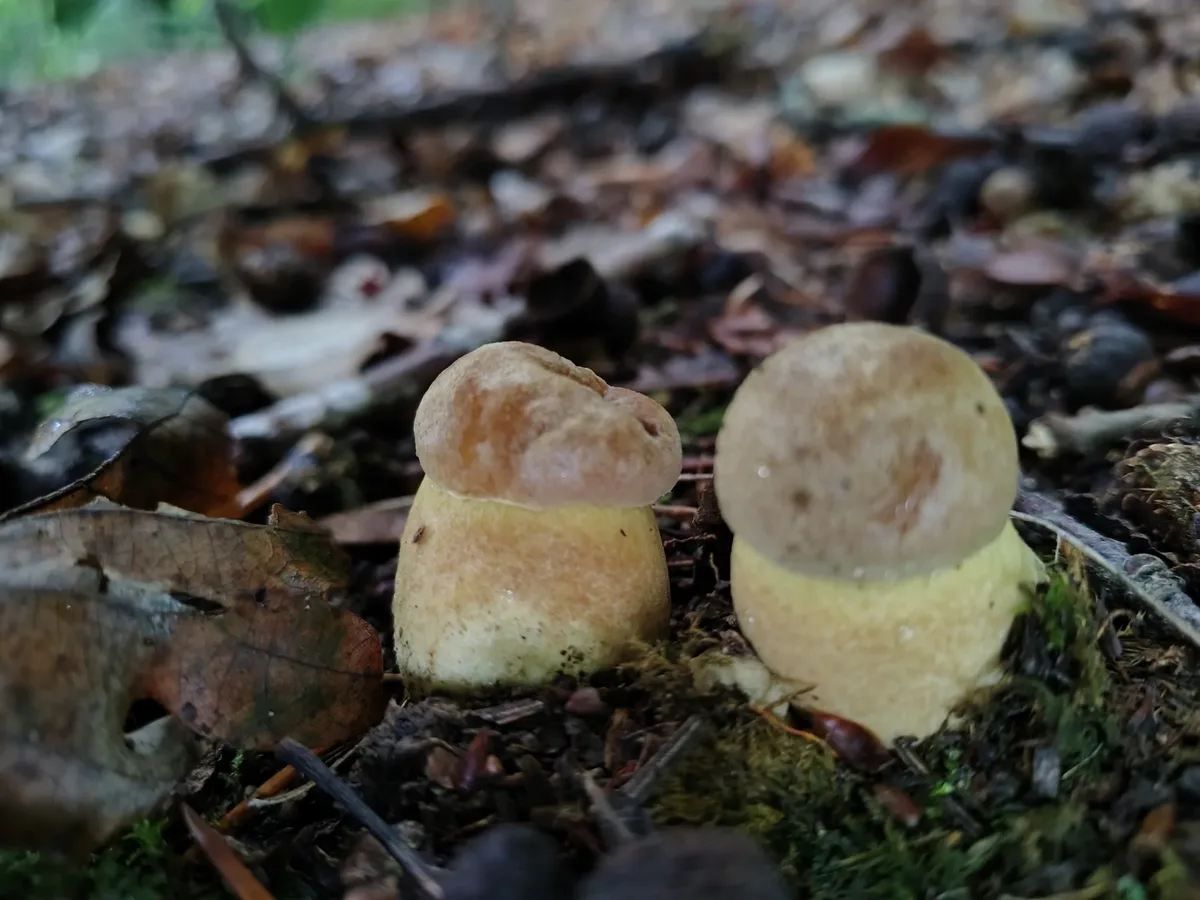 © vuikaan (CC BY)
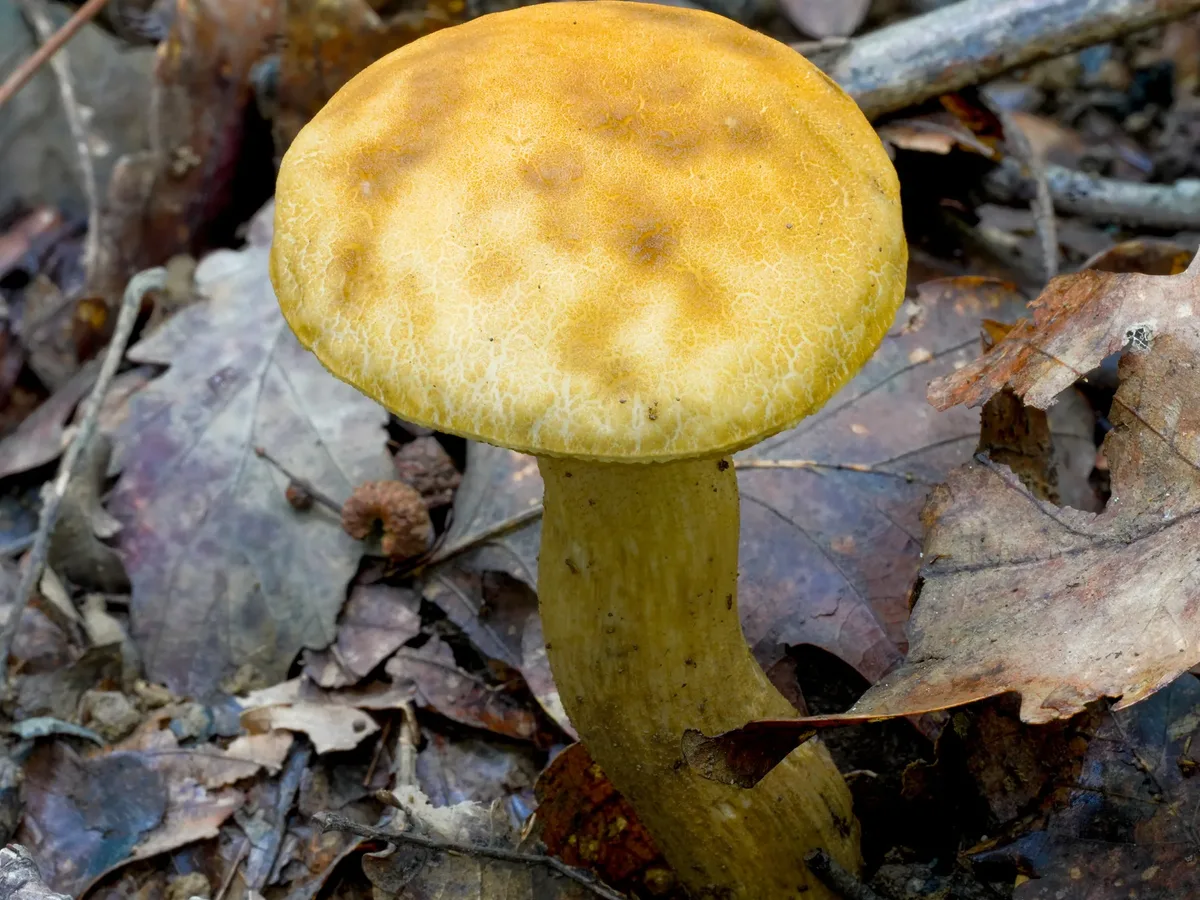 © Matej Frančeškin (CC BY)
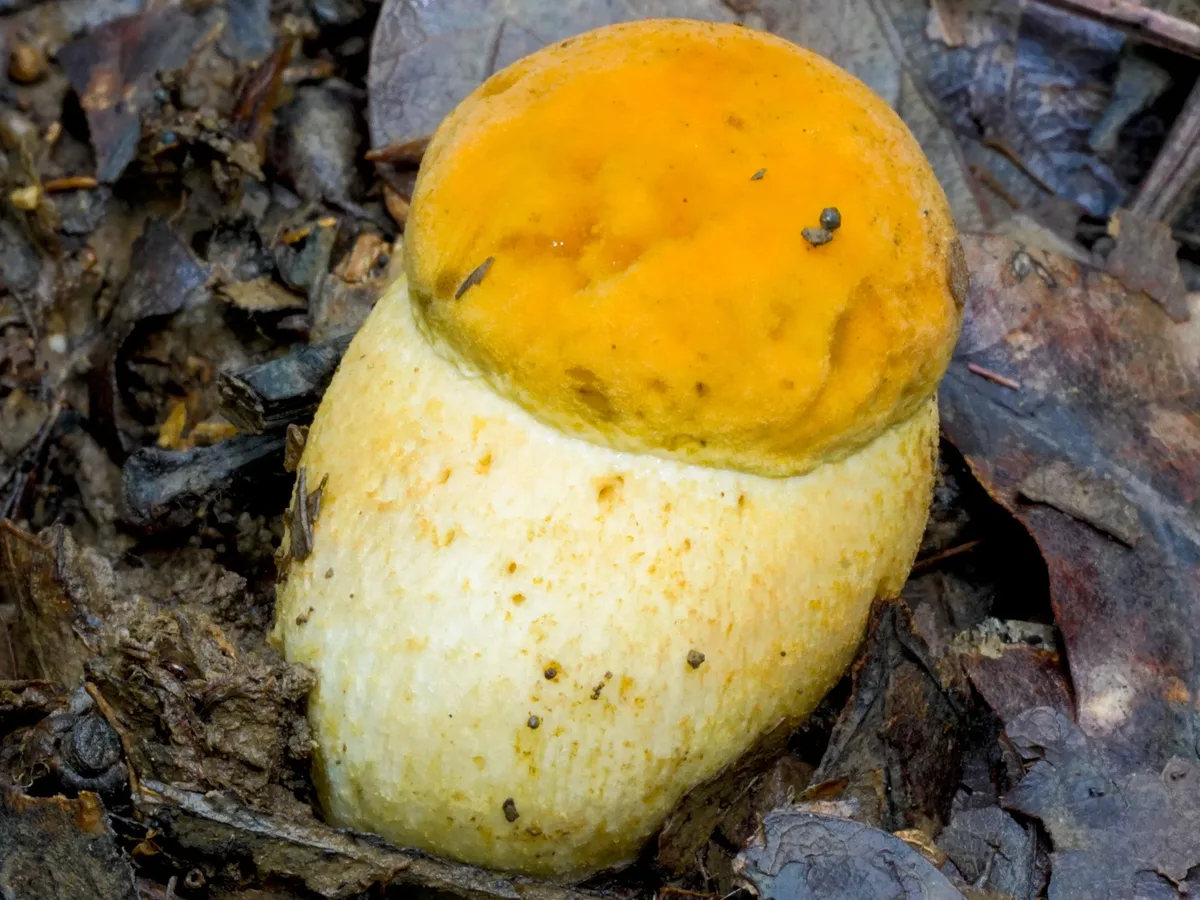 © Matej Frančeškin (CC BY)
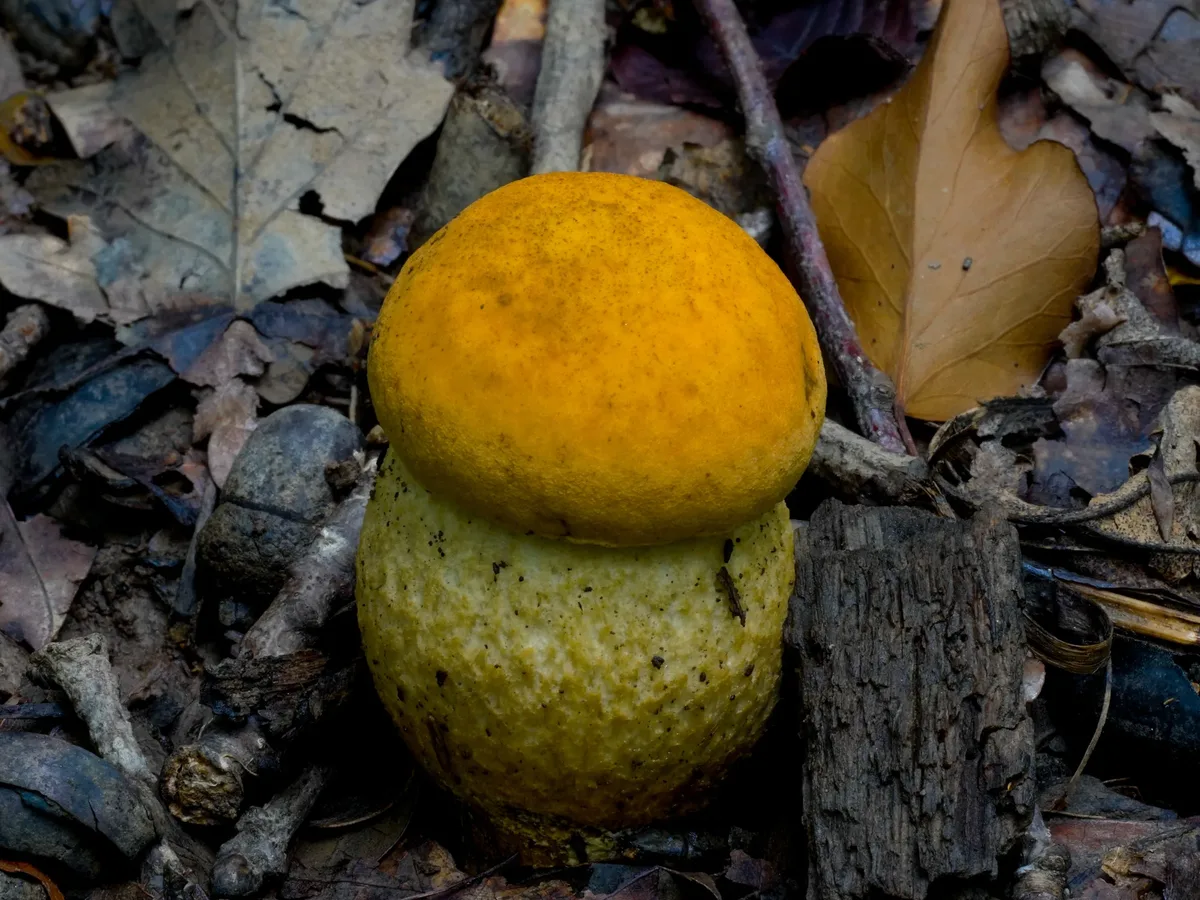 © Matej Frančeškin (CC BY)
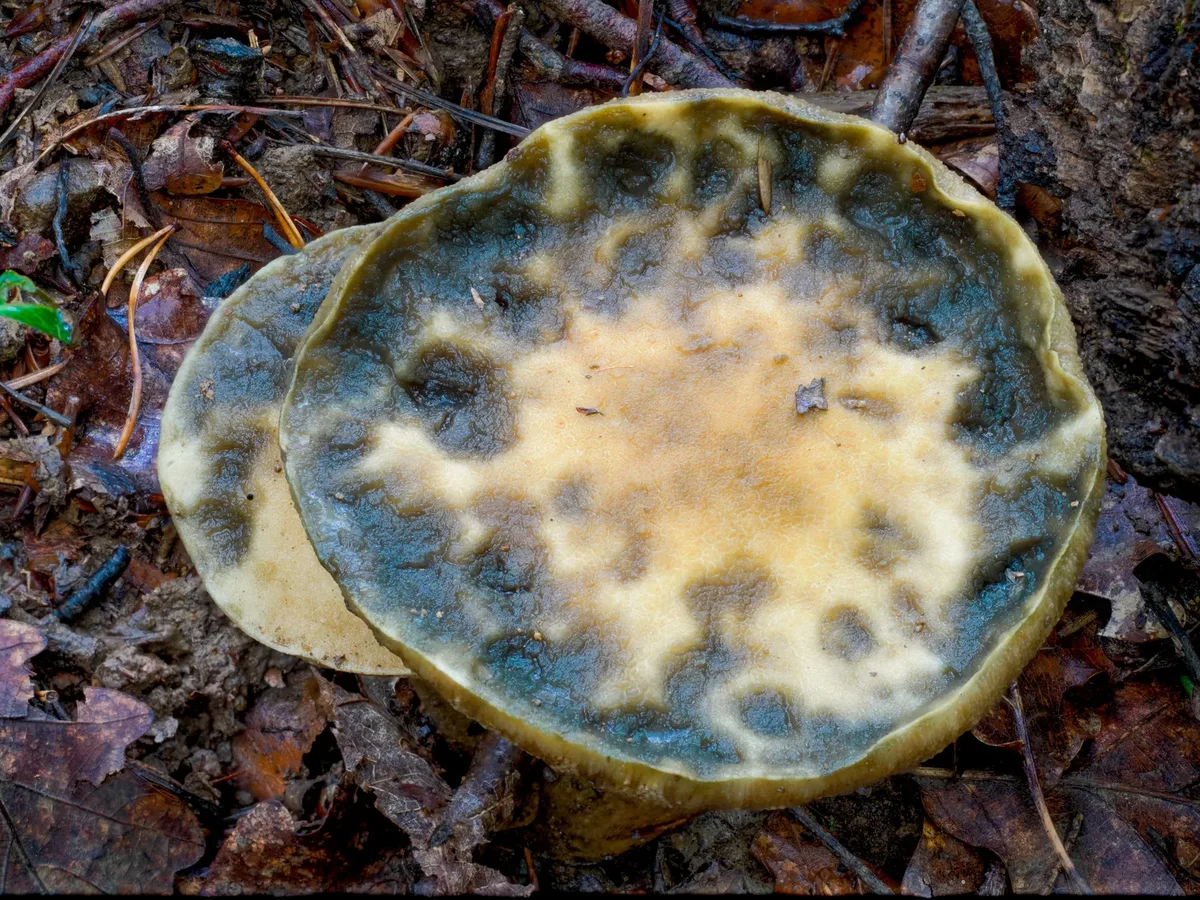 © Matej Frančeškin (CC BY)
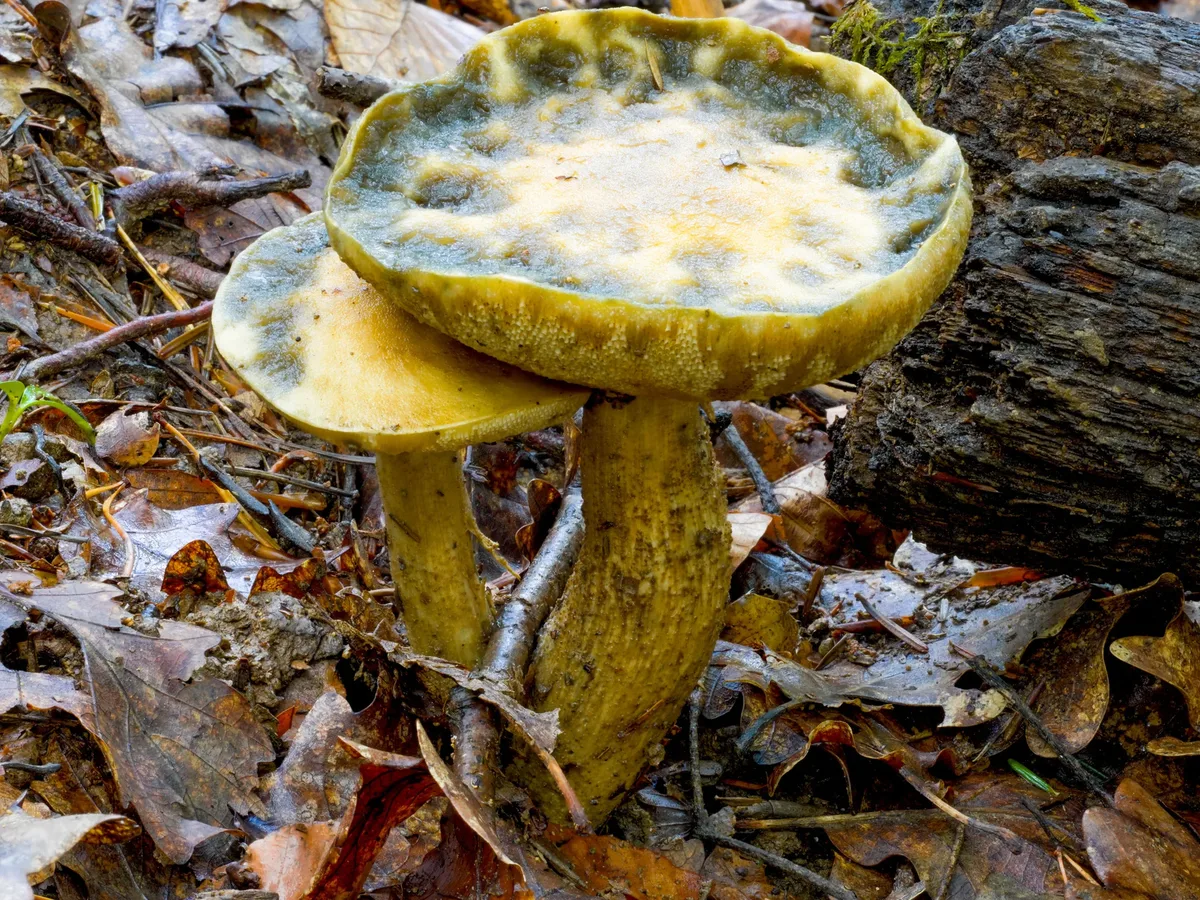 © Matej Frančeškin (CC BY)
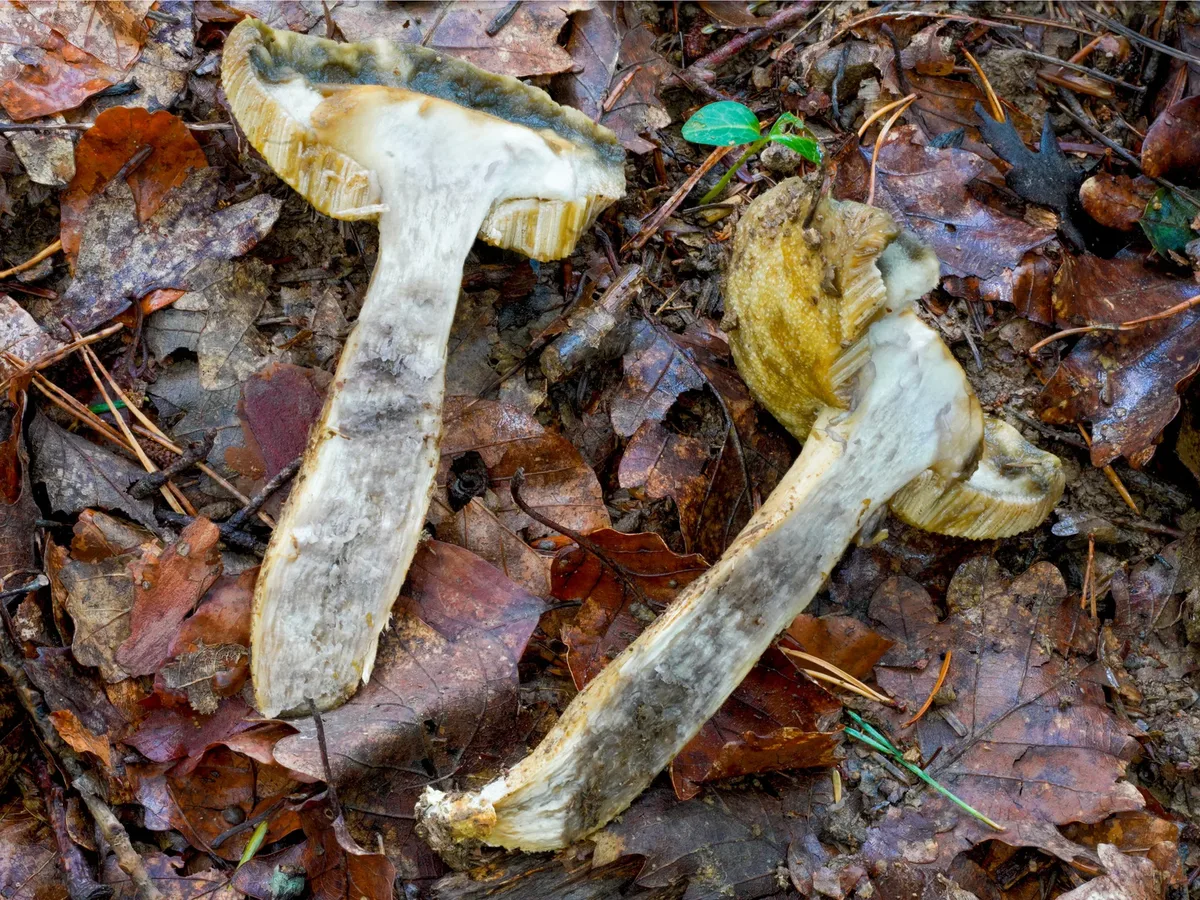 © Matej Frančeškin (CC BY)© vuikaan (CC BY)© Matej Frančeškin (CC BY)
Edible only with the right preparation - or safe for some people but not others. Learn the caveats first.
How to recognise it
Cap
Cap 5-15 cm, convex to broadly umbonate, dry and felted-granular (never viscid), ochre-yellow to golden-brown or tawny-orange with an overhanging cuticle.
Gills / Pores
Pores small, pale yellow, ageing dirty yellow. Spore print olive-brown.
Stem
Stem robust (6-14 cm), pale yellow with dense scabers - these distinctive coarse tufts begin pale ochre-yellow and progressively darken to brownish-black as the mushroom ages, giving the stem a two-tone 'dirty gold' look.
Flesh
Flesh pale yellow initially, but undergoes dramatic and rapid blackening when cut: within minutes it turns deep slate-grey, then almost black throughout the cap and stem. This intense, complete flesh-blackening is the single most reliable field mark separating L. crocipodium from most other Leccinum species.
Why it's dangerous
Low to moderate - provided the mushroom is always thoroughly cooked. The risk is entirely preparation-dependent: correctly cooked specimens pose no known toxicity risk.
Eating raw or briefly sautéed specimens is the only credible danger. Not considered life-threatening; no fatalities attributed to L. crocipodium are documented.
The following should exercise additional caution and ensure extremely thorough cooking, or avoid this species:
- People who are sensitive to GI irritants
- Elderly foragers
- Children
- Pregnant individuals
Toxin
Heat-labile irritants - not fully characterised, but consistent with lectins or similar thermolabile proteins present in raw Leccinum flesh.
These compounds are denatured and rendered harmless by thorough cooking (sustained heat for at least 10-15 minutes). They are not present at hazardous levels in properly cooked specimens.
Symptoms
Gastrointestinal syndrome: nausea, vomiting, abdominal cramping, and diarrhoea, typically onset 30 minutes to 2 hours after consumption of raw or undercooked material.
Symptoms are self-limiting and resolve within several hours in most cases. No systemic organ toxicity has been documented for this species specifically, unlike some other Leccinum species in the darkening-flesh group.
Staying safe
Must be cooked thoroughly before eating. Like all Leccinum species, the raw flesh contains heat-labile compounds (not fully characterised, but likely lectins or similar proteins) that can cause gastrointestinal irritation - nausea, vomiting, cramping - even from small amounts eaten raw or undercooked.
A brief sauté is not enough: cook until thoroughly heated through (at least 10-15 minutes at full heat).
The blackening of the flesh is entirely normal and does not indicate spoilage or toxicity - it is a stable pigment reaction (variegatic acid oxidation) and does not disappear on cooking (the flesh will remain dark grey to black when cooked). Some foragers discard the mushroom on seeing the blackening, which is unnecessary waste.
Gastrointestinal upset from undercooked specimens has been reported in the literature, particularly from France. As with other darkening-flesh Leccinum, err toward thorough cooking.
Where & when it grows
Habitat
Mycorrhizal partner of oak (Quercus spp.), especially pedunculate oak (Q. robur), sessile oak (Q. petraea), and holm oak (Q. ilex). Occasionally associates with chestnut (Castanea sativa).
Prefers warm, well-drained, calcareous or neutral soils, sunny woodland edges, glades, and south-facing slopes. Largely absent from cool, acidic, birch/pine-dominated forests where other Leccinum species dominate.
Distribution centres on southern and central Europe: France (especially Midi, Dordogne, Provence), Italy, Spain, and the warmer parts of central Europe including the Rhine valley, southern Germany, Austria, and the Balkans.
When
Primarily a summer species with peak fruiting in June-July, triggered by warm soil temperatures combined with adequate June or July rain. A secondary flush occurs in September-October.
In Mediterranean climates it may appear as early as late May and persist into November. In continental central Europe it is largely a summer mushroom, finishing earlier than autumn-dominant Leccinum spp.
How it grows
Solitary or scattered, never in dense clusters - each fruiting body pushes up alone, fed by the underground mycorrhizal threads it shares with the oak above.
Growth is unhurried for a bolete: the cap takes several days to fully unfold, rising slowly from a compact button to its broad umbonate form.
Like many Leccinum species, these mushrooms are popular with fungus-gnat larvae (sciarid flies) that tunnel upward from the stem base through the flesh; the rapid blackening makes larval channels harder to spot than in paler boletes. Picking young, tight specimens is the best way to stay ahead of the insects.
Fruiting conditions
Thermophilic bolete requiring warm soil (above 12 °C) and moderate summer rain; peaks in June-July after warm post-rain conditions, with a secondary autumn flush in September-October.
Look-alikes
Leccinum crocipodium is most similar to other Leccinum species in oak-dominated habitats.
- Leccinum pseudoscabrum (hornbeam bolete) also blackens dramatically but grows strictly with hornbeam (Carpinus betulus), has a brownish-grey cap, and stem scabers that are typically darker from the start.
- Leccinum quercinum (oak bolete) has a more orange-brick cap, grows with oak, and has reddish-orange scabers; its flesh also darkens but less completely and more slowly than L. crocipodium.
- Leccinum aurantiacum (aspen bolete) has an intensely orange-red cap and grows exclusively with aspen/poplar - not oak.
- Neoboletus luridiformis and Suillellus luridus share the oak woodland habitat but have red pores that blue intensely and are more dangerous if undercooked; any bolete with red pores should be treated with additional caution.
No deadly species realistically mimics L. crocipodium: the combination of yellow-ochre felted cap, yellow stem with pale-to-dark scabers, and intense total blackening of the flesh is distinctive.
Intense orange-red cap; grows exclusively with aspen and poplar, not oak. Flesh darkens greyish but not as completely as L. crocipodium.
Grows with birch, not oak; cap brownish-grey; stem scabers pale greyish to brown. Flesh barely darkens or darkens pinkish, not the intense total blackening of L. crocipodium.
Also darkens dramatically but grows strictly with hornbeam (Carpinus betulus), not oak. Cap brownish-grey rather than ochre-yellow. Stem scabers darker from the start.
Grows with oak and has an orange-brick cap with reddish-orange scabers. Flesh also darkens but less completely and more slowly than L. crocipodium.
Shares oak woodland habitat but has red pores and strong blue reaction when cut. Edible only when well cooked. Any bolete with red pores requires extra caution.
A reference guide - never an edibility guarantee. When in doubt, leave it out.