Columbia leccinum
Leccinum columbianumsyn. Boletus columbianum (Thiers), Krombholzia columbiana
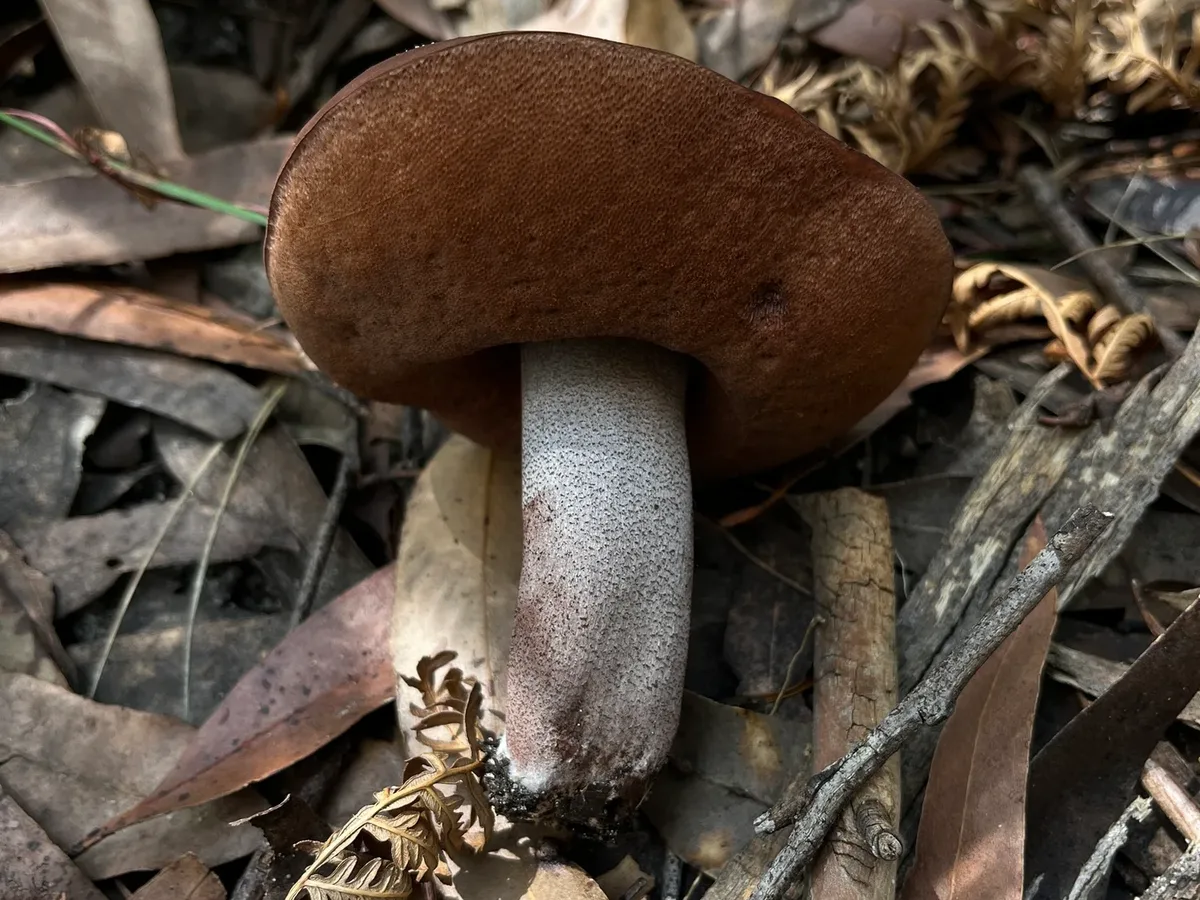 © Atlas of Living Australia (CC BY)
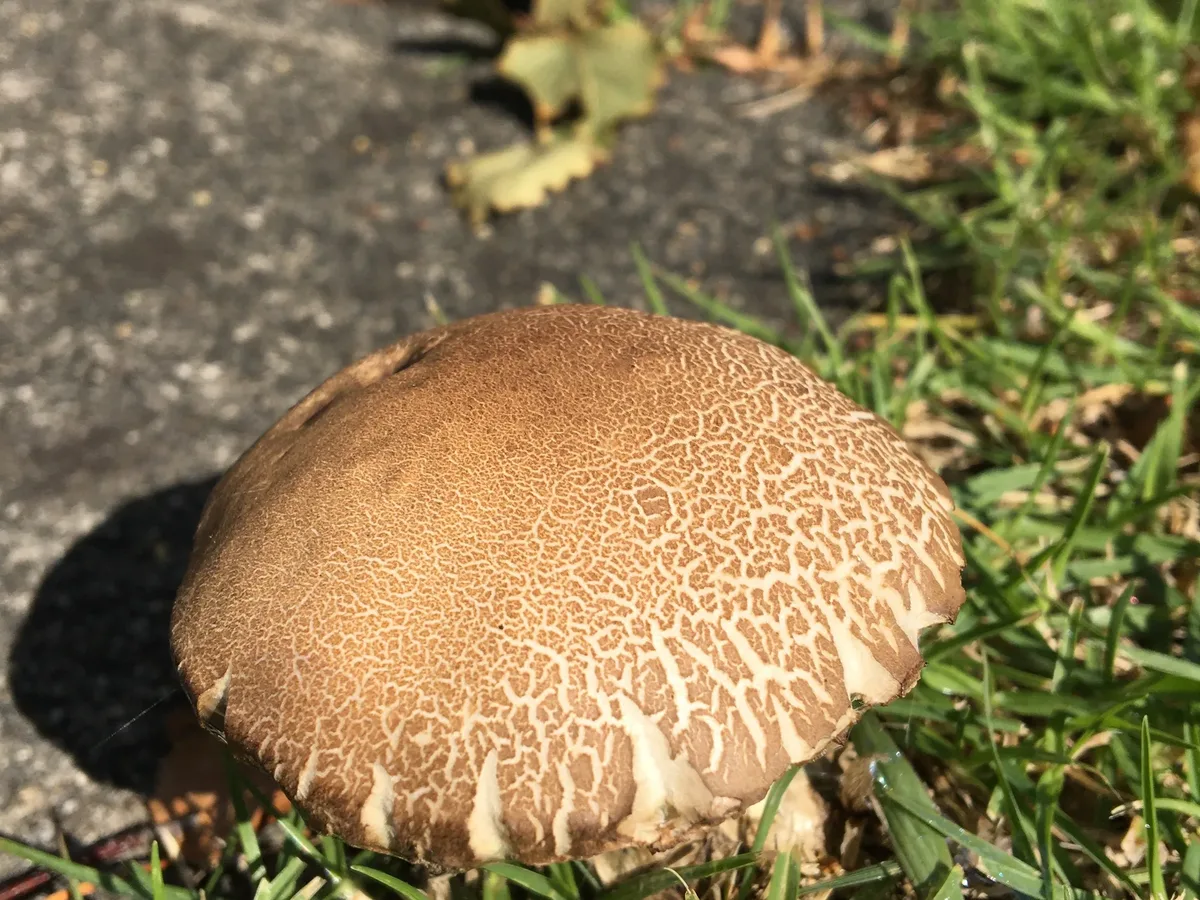 Atlas of Living Australia (CC0)
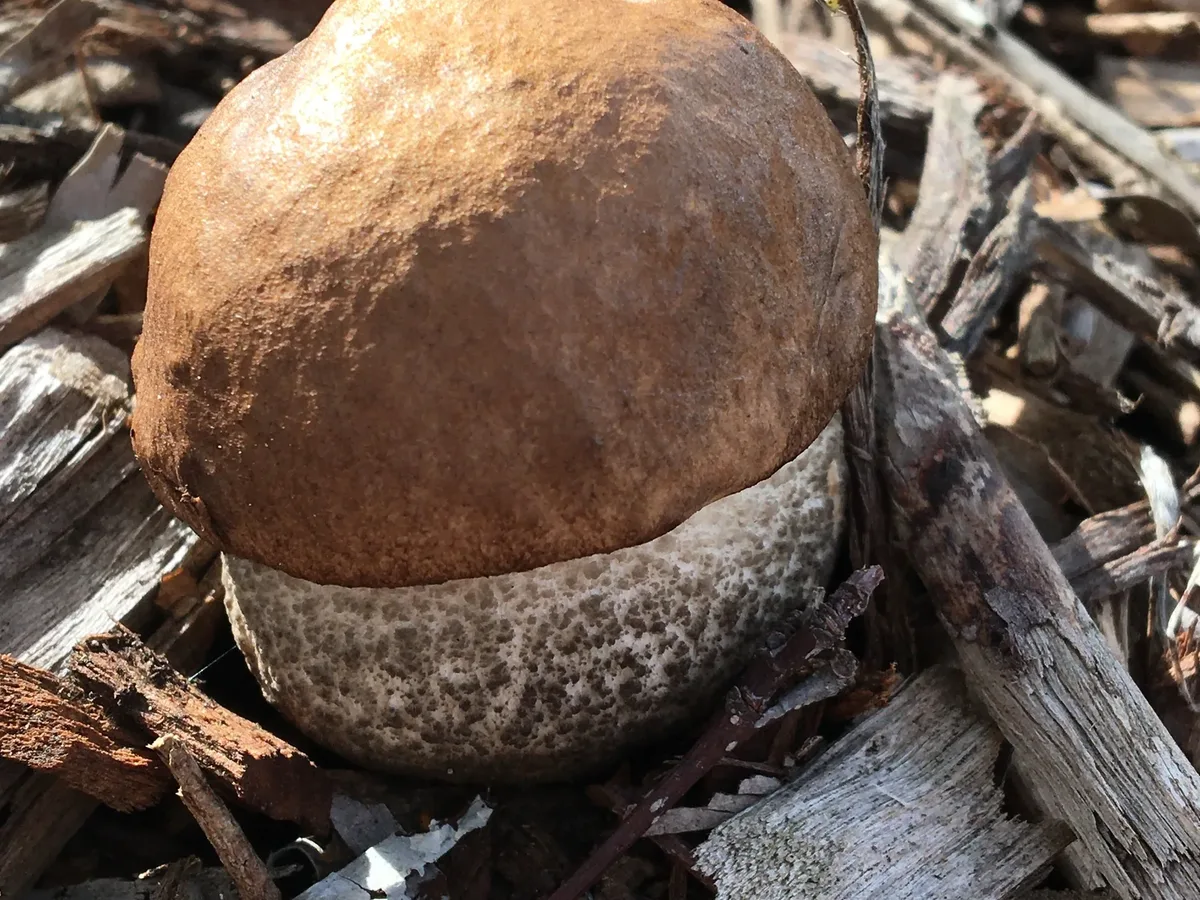 Atlas of Living Australia (CC0)
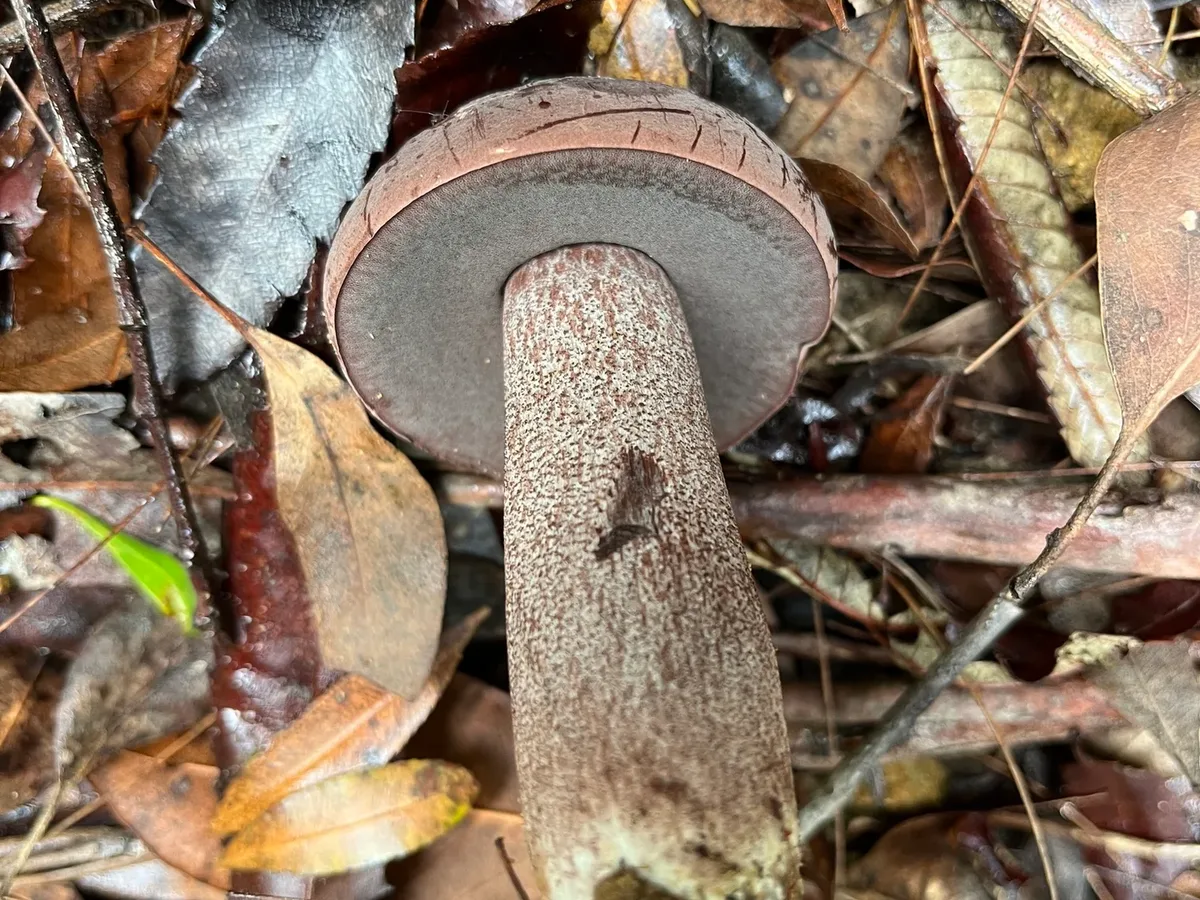 © Atlas of Living Australia (CC BY)© Atlas of Living Australia (CC BY)Atlas of Living Australia (CC0)
Edible only with the right preparation - or safe for some people but not others. Learn the caveats first.
How to recognise it
The Columbia leccinum is one of the larger and more handsome boletes of the Pacific Northwest, belonging unmistakably to the orange-capped rough-stalk group of the Leccinum genus.
Cap
The cap begins tightly domed and very firm - nearly hemispherical in young specimens - before expanding into the broad, rounded cushion shape that the genus is known for.
Its colour is a warm orange-brown to tawny orange or brick-red, sometimes approaching the vivid orange of the related Leccinum versipelle but often a shade more muted and brownish.
The cap surface is dry and finely velvety when young, gradually becoming smoother with age, and never develops the sliminess characteristic of Suillus boletes.
A small but reliable detail: the cap cuticle extends slightly past the margin, creating a faint fringed overhang visible on mature specimens.
Gills / Pores
The underside bears small, regular pores, cream-white when fresh, bruising slowly to brownish-grey.
The pore layer is spongy rather than gilled, which immediately separates all boletes from the dangerous Amanita species.
Stem
The stem is the genus's diagnostic centrepiece. White in the interior, its surface is almost completely obscured by dense, upright scabers - rough scale-like projections - that darken progressively from pale rufous-buff in young fruit bodies to chocolate-brown or near-black in older ones, or instantly on handling.
This rough, bristled stem texture is diagnostic for Leccinum and cannot be mistaken for any dangerous species.
Flesh
Slice the flesh and the most striking character of the orange Leccinum group is revealed: the white interior begins to flush pale pink within minutes, shifting through lilac-grey and blue-grey, and settling at dark slate-grey or nearly black over the following 20-40 minutes, most intensely in the lower stem.
This progressive multi-stage colour change is enzymatic, completely benign, and is one of the most memorable field tests in Pacific Northwest mycology.
Why it's dangerous
LOW risk when thoroughly cooked for 15-20 minutes; MODERATE to HIGH risk when raw or undercooked. The orange-capped Leccinum group to which L. columbianum belongs carries the highest documented rate of adverse reactions within the genus.
The responsible toxin is heat-labile and is reliably destroyed by adequate cooking, making preparation the controlling variable.
The practical rule is simple:
- never eat Leccinum columbianum raw or partially cooked
- ensure cooking is thorough throughout (not just surface-hot)
- treat it as a species requiring the same care as any conditionally edible wild mushroom
First-time eaters should start with a small, well-cooked portion.
No fatalities are documented for this species or the orange Leccinum complex, but hospitalisation-level gastrointestinal illness is on record for close congeners, and the genus-level caution should be taken seriously.
Toxin
An uncharacterised, heat-labile gastrointestinal irritant present in the raw and insufficiently cooked fruit body. The specific compound or compounds have not been isolated or structurally identified in the scientific literature as of 2025.
The compound is thermally destroyed by sustained cooking above approximately 70-80 °C for at least 15 minutes throughout the tissue.
The same compound class is believed responsible for the gastrointestinal syndrome documented across the orange-capped Leccinum group in both North America and Europe (L. aurantiacum, L. versipelle, L. vulpinum).
It does not cause hepatotoxicity, nephrotoxicity, or neurotoxicity; its action is localised to the gastrointestinal tract.
The flesh-darkening reaction (white to slate-grey-black on cutting and cooking) is a separate chemical process involving catechol oxidation and is unrelated to the toxic principle.
Symptoms
Gastrointestinal syndrome with onset typically 30 minutes to 3 hours after ingestion. Symptoms include:
- nausea
- vomiting
- abdominal cramping
- diarrhoea
The short latency reflects local GI tract irritation rather than systemic absorption.
Most cases are self-limiting and resolve within 6-24 hours with supportive care (hydration, rest).
Severity correlates with the amount consumed, degree of undercooking, and individual susceptibility; some individuals within a group may be unaffected while others are significantly ill.
No systemic organ toxicity (liver, kidney, nervous system) has been documented for this species or the orange Leccinum group.
Seek medical attention if symptoms are severe, persist beyond 24 hours, or if the affected person is a child, elderly, or has underlying health conditions.
Staying safe
Leccinum columbianum should be treated as a caution-grade edible and must always be thoroughly cooked before eating. This instruction applies to the entire genus, and is especially important for the orange-capped Leccinum species to which L. columbianum belongs.
Orange-capped rough-stalk boletes have a documented history of causing gastrointestinal illness when eaten raw, undercooked, or consumed in large quantities - even in individuals who have eaten the same species without ill effect on prior occasions, suggesting variable concentration of the responsible compound and individual susceptibility.
In North America, adverse reactions to orange-capped Leccinum species have been reported, consistent with the pattern documented more extensively in Norway and Scandinavia for the closely related European species.
The responsible compound has not been chemically characterised but is known to be heat-labile: it is destroyed by sustained cooking at high temperature. This means the risk is a function of preparation, not of the mushroom being intrinsically dangerous to all comers.
Practical rules:
- 1Always cook thoroughly - at least 15-20 minutes of active cooking at high heat, not a superficial warm-through.
- 2Never eat raw or lightly sautéed.
- 3If eating for the first time, eat a small, well-cooked test portion and wait 24 hours before eating more.
- 4Do not give raw or undercooked specimens to children, the elderly, pregnant individuals, or those with gastrointestinal conditions.
The grey-to-black colour of properly cooked flesh is a normal enzymatic browning reaction and does not indicate spoilage or danger.
No deadly species can realistically be confused with a Leccinum once the spongy pore surface and dark-scalered stem are confirmed.
Where & when it grows
Habitat
Leccinum columbianum is ecologically wedded to Populus - particularly trembling aspen (Populus tremuloides) and black cottonwood (Populus trichocarpa) - through an obligate ectomycorrhizal partnership.
The fungal mycelium enwraps the tree's fine root tips and exchanges mineral nutrients and water from the soil for photosynthetically produced sugars from the tree; neither partner thrives in isolation.
This means that finding the Columbia leccinum requires first finding its host: look for fruit bodies directly beneath aspen or cottonwood trees, typically among the leaf litter of their characteristic pale-barked groves.
The Pacific Northwest offers numerous habitat niches where Populus thrives:
- riparian corridors along streams and rivers, where black cottonwood forms tall, dense gallery forest
- aspen groves on well-drained valley slopes and moraines
- mixed forest edges where aspens colonise disturbance gaps
- the subalpine ecotone where trembling aspen forms a distinctive belt between montane conifers
Leccinum columbianum follows all of these.
The species is particularly associated with the interior ranges - the Cascades east slope, the Okanagan Highlands, the Columbia River watershed, and the interior ranges of British Columbia - where aspen stands are extensive. It occurs less commonly in the wetter coastal belt, where cottonwood is more prevalent than aspen.
Most productive on moist to mesic mineral soils with good organic matter content; it is less common on waterlogged or very dry soils. Open or semi-open groves allow better light penetration and seem to support more productive fruiting than very dense closed-canopy sites.
When
The Columbia leccinum is a summer-to-autumn species, with a season that tracks both the host tree's phenology and the Pacific Northwest's characteristic dry-summer, wet-autumn climate pattern.
At lower montane elevations and in the interior valleys, the first fruit bodies may appear in late June or early July if early summer rain has been adequate.
The main productive period across most of the region is July through September, coinciding with the monsoonal-influenced summer rains of the interior ranges and the late-summer moisture events that build ahead of the autumn rains.
At higher elevations - subalpine aspen groves above 1,000 m - the season compresses into August and September, sometimes extending into early October before frost shuts things down.
In the interior of British Columbia, Washington, and Oregon, where continental influence makes summer drier, the best fruiting often comes in late August and September following the first meaningful late-summer rain.
The season ends abruptly when overnight frosts begin to penetrate the soil: aspens that have yellowed and shed their leaves are rarely accompanied by productive fruit bodies.
The trigger is consistent with the Leccinum genus: 15-20 mm of rain over 14 days, combined with soil temperatures still above 8-10 °C, produces a flush 7-14 days later.
How it grows
Fruit bodies emerge singly or in small groups of two to five, always directly beneath or close to aspen or cottonwood trees.
The mycorrhizal network can be perennial and productive; experienced collectors return to known aspen groves year after year.
Individual fruit bodies develop over 7-12 days from pinhead stage to maturity in warm, moist conditions.
The dense, firm flesh of young specimens is somewhat resistant to insect larval tunnelling compared to softer boletes. But older specimens - particularly those more than ten days old or caught in wet, warm weather - commonly show maggot damage.
The stem base is the entry point for larvae, which bore upward; always cut the stem vertically in the field to check.
Fruiting is often synchronous across a stand after a triggering rain event, making productive days very productive.
The pale-trunked aspen groves the species frequents are some of the most visually striking habitats in the Pacific Northwest in autumn, and the combination of golden foliage and substantial boletes makes this a rewarding species to hunt.
Fruiting conditions
Fruiting is triggered by adequate rainfall (15-20 mm over 14 days) combined with soil temperatures above 8 °C at mycorrhizal root depth. In the dry-summer interior Pacific Northwest, the most productive flushes follow the late-summer or early-autumn rains that break the seasonal drought, typically from late July onward at lower elevations and from August onward at higher elevations. The season closes when overnight frosts drive soil temperatures below 6-8 °C; aspen groves in interior valleys can experience this early, so the window is shorter than coastal sites.
Look-alikes
Leccinum columbianum belongs to the orange-capped rough-stalk bolete complex, which includes several closely related species in the Pacific Northwest.
None of the realistic lookalikes are deadly, but correct species determination within the group is useful for understanding safety context, and separating boletes as a group from any dangerous gill-bearing fungus is always the first priority.
- Leccinum aurantiacum (Red aspen bolete): The species most likely to be confused with L. columbianum, as both grow with Populus species and have orange to orange-red caps with dark stem scabers. In Europe, L. aurantiacum is the predominant aspen-associated Leccinum; in North America its range overlaps with L. columbianum, particularly in the Rocky Mountain region and eastward. The two are morphologically very similar and some collections are difficult to separate without microscopy. Edibility and safety advice is identical. In the Pacific Northwest, L. columbianum is the more likely species, particularly in the interior ranges.
- Leccinum insigne (Aspen scaber stalk): Another North American Populus-associated Leccinum, considered by some authors to be synonymous with or inseparable from L. aurantiacum; the taxonomy is not fully resolved. It is slightly paler-capped on average (more tawny-orange than brick-red) and occurs across a wide range of interior North America. Edibility and safety the same. Not separable with confidence without microscopy and host data.
- Leccinum versipelle (Orange birch bolete): Very similar orange cap and dark stem scabers, but grows strictly under birch (Betula spp.) rather than aspen. Where birch and aspen grow together, the host tree beneath the fruit body is the critical separator. Edibility caveats identical.
- Leccinum scabrum (Brown birch bolete): Dull grey-brown to mid-brown cap - lacking orange or brick-red tones - and associated with birch rather than aspen. Readily separable by cap colour and host tree. Edible when cooked.
- Suillus caerulescens or Suillus lakei (Douglas-fir slimy jack): Encountered in the same Pacific Northwest forests, sometimes near aspen-conifer transition zones, but immediately distinguishable by slimy cap surface, angular compound pores (not small round ones), and smooth stem with a ring remnant - no scabers. Edible when cooked.
- Gyroporus castaneus (Chestnut bolete): Also lacks gills and has a spongy pore surface, but has smaller stature, a chestnut-brown cap, and hollow stem - and is not associated with Populus. Not a realistic field confusion.
Another North American Populus-associated Leccinum sometimes treated as synonymous with L. aurantiacum. Slightly paler on average (tawny-orange vs brick-red) and occurring across interior North America. Not reliably separable from L. columbianum in the field; the two are best treated as interchangeable for safety and culinary purposes. Always cook thoroughly.
Very pale, almost white to cream cap; grows in wet, boggy birch woodland, not with aspen or cottonwood. Colour difference alone makes this easy to separate.
Dull grey-brown to mid-brown cap without orange tones; always found under birch. The absence of orange or brick-red colouration and the different host tree make this readily separable from L. columbianum. Edible when cooked.
Very similar orange cap and dark scabers, but grows under birch (Betula spp.), not aspen or cottonwood. Where birch and aspen grow in proximity, confirm which species the fruit body is growing closest to. Edibility caveats identical.
The closest relative and most likely confusion species; also grows under Populus species and has an orange to orange-red cap with dark stem scabers. Morphologically very similar and some collections are inseparable without microscopy. In the Pacific Northwest interior, L. columbianum is the more likely name; in the Rocky Mountains and eastward, L. aurantiacum is more commonly applied. Edibility and safety advice identical for both - thorough cooking required.
Found in conifer forest of the Pacific Northwest; has a brownish-orange fibrous cap but is immediately distinguishable by its slimy-viscid cap surface, large angular composite pores (not small round ones), smooth stem with a ring remnant, and absence of any stem scabers. Not found under aspen.
A reference guide - never an edibility guarantee. When in doubt, leave it out.