Orange birch bolete
Leccinum aurantiacumsyn. Leccinum versipelle
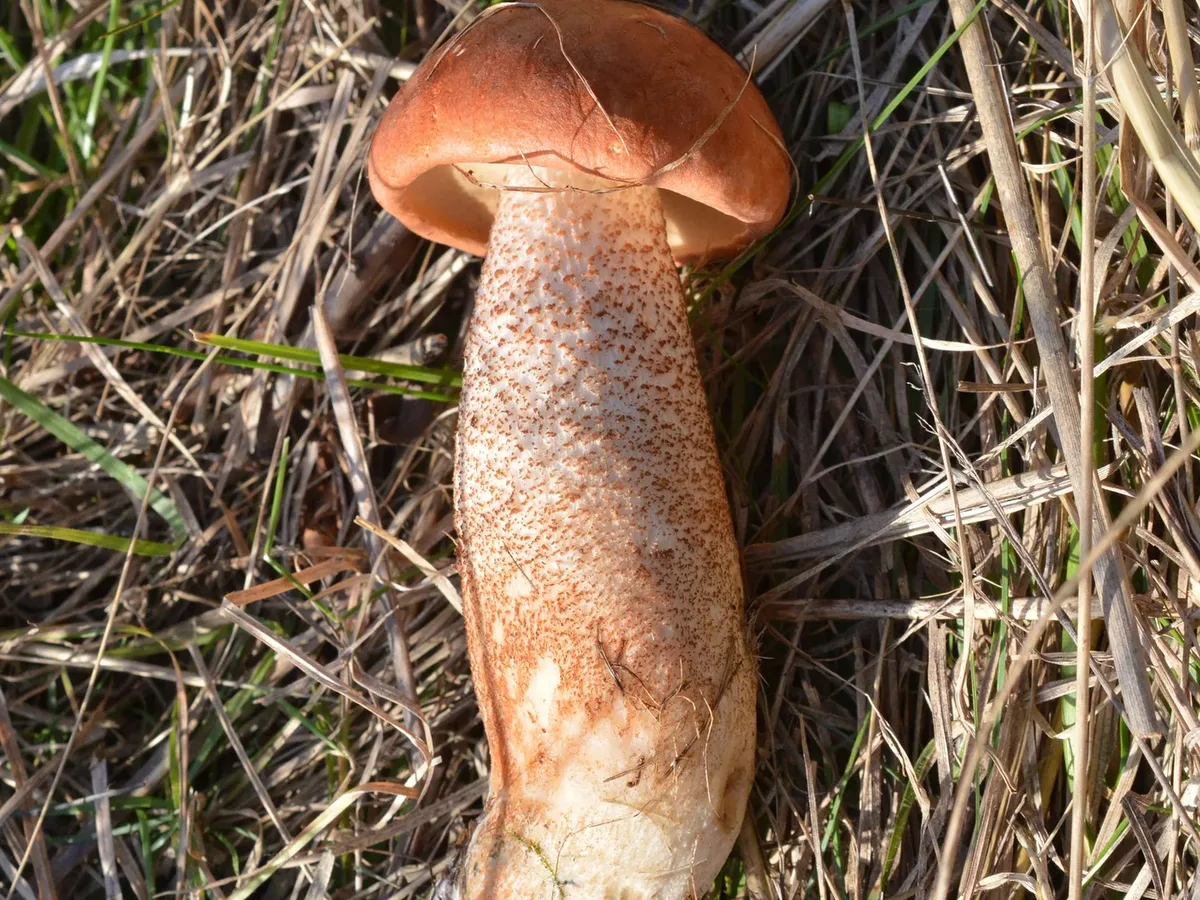 © Dimitǎr Boevski (CC BY 4.0)
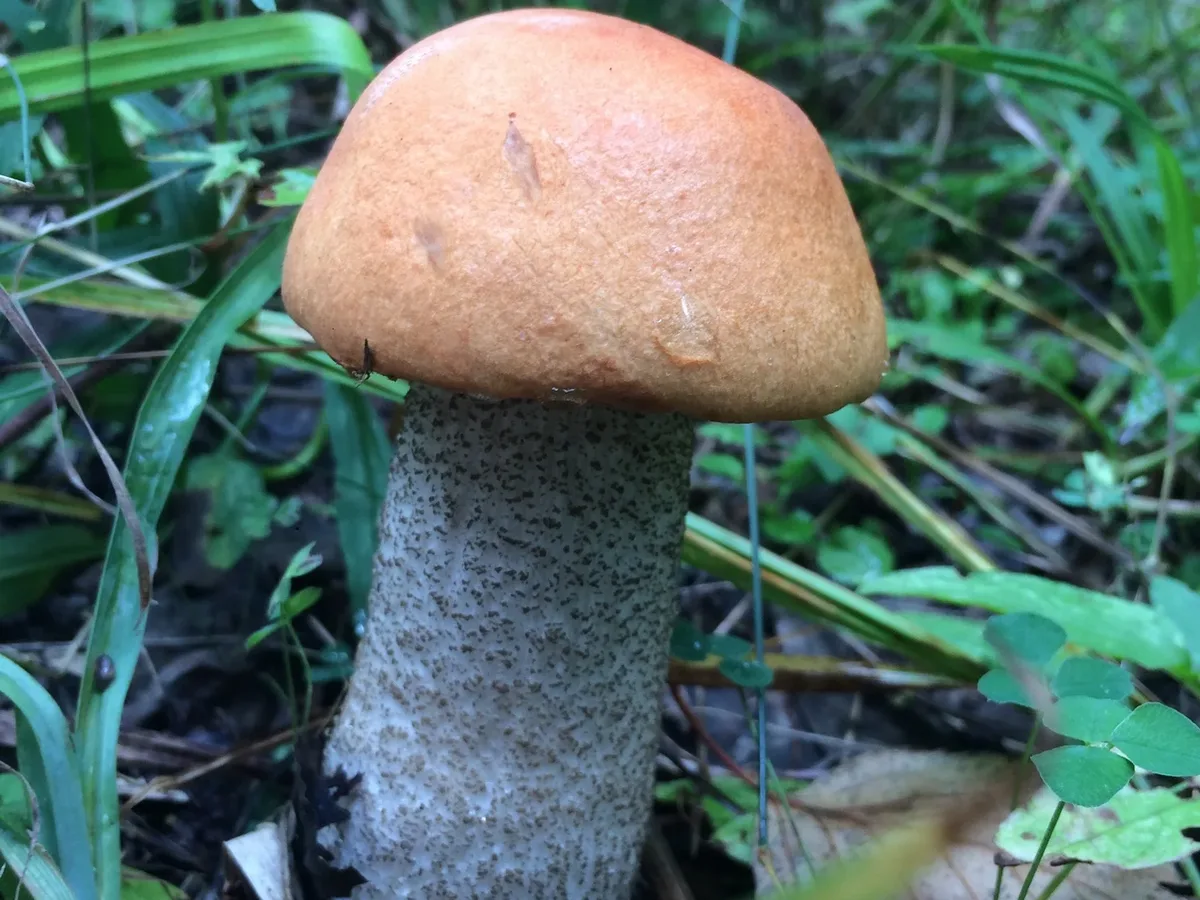 Rachel Bosley (CC0)
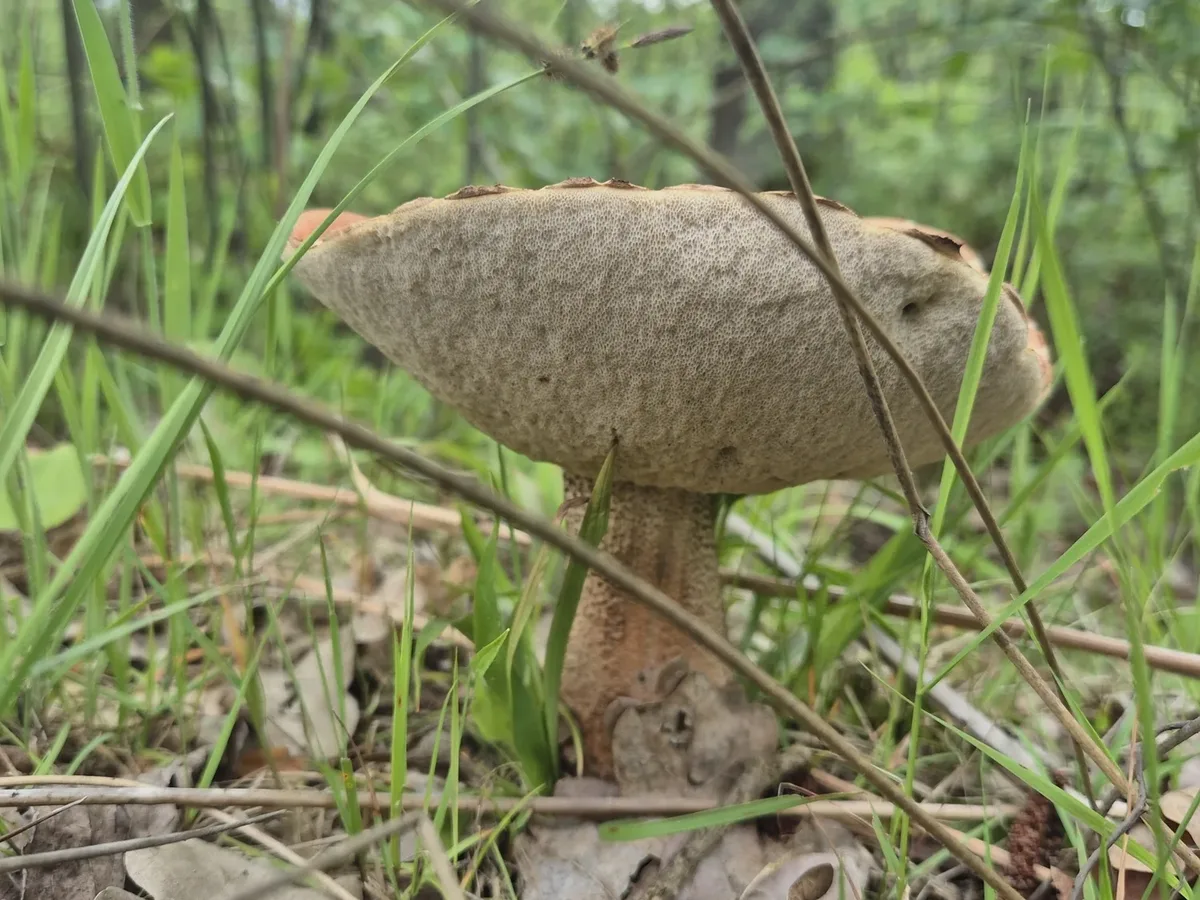 © Bobo-X (CC BY)
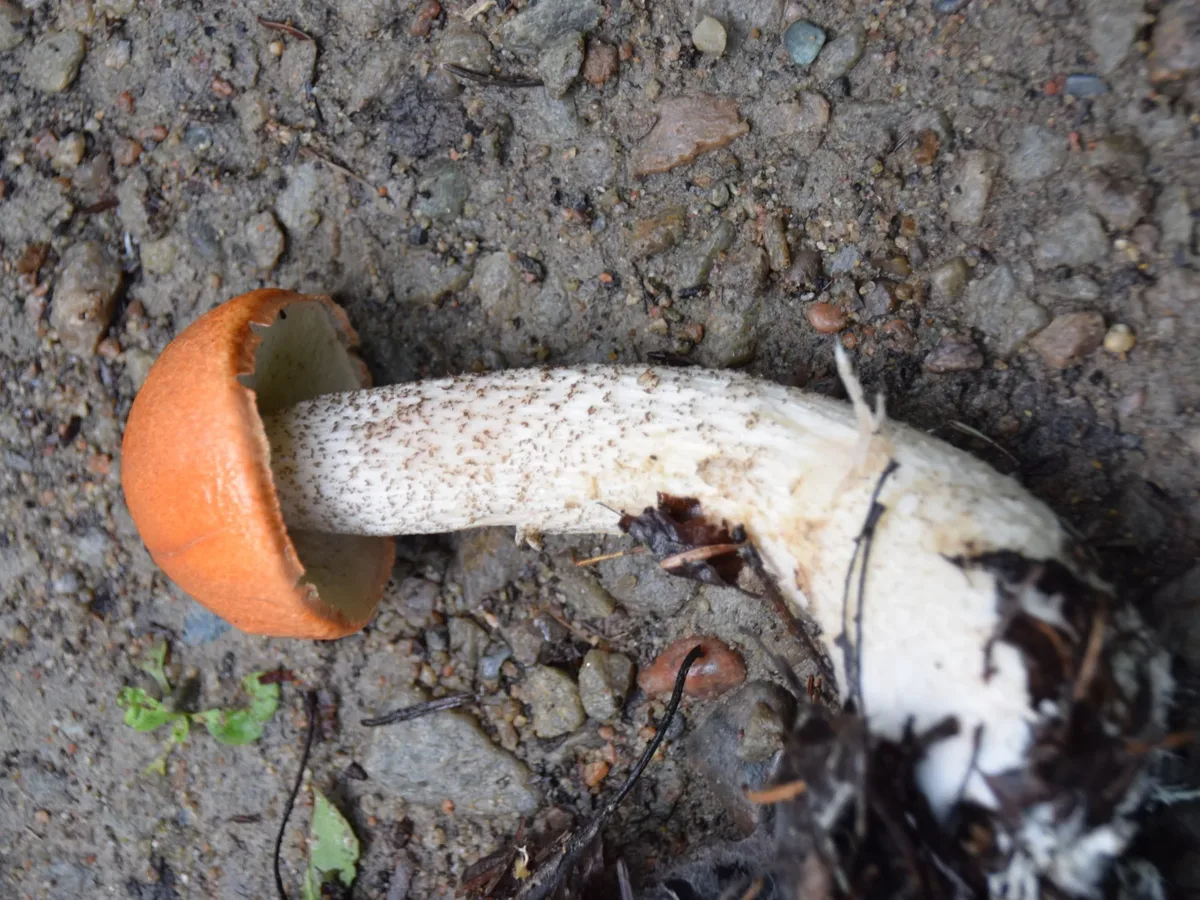 Pierre Cartier (CC0)
 Dustin Minialoff (CC0)© Dimitǎr Boevski (CC BY 4.0)Rachel Bosley (CC0)
Good to eat, once you have identified it with certainty and cooked it through.
How to recognise it
Leccinum aurantiacum is among the most visually distinctive boletes of the Northern Hemisphere.
Cap
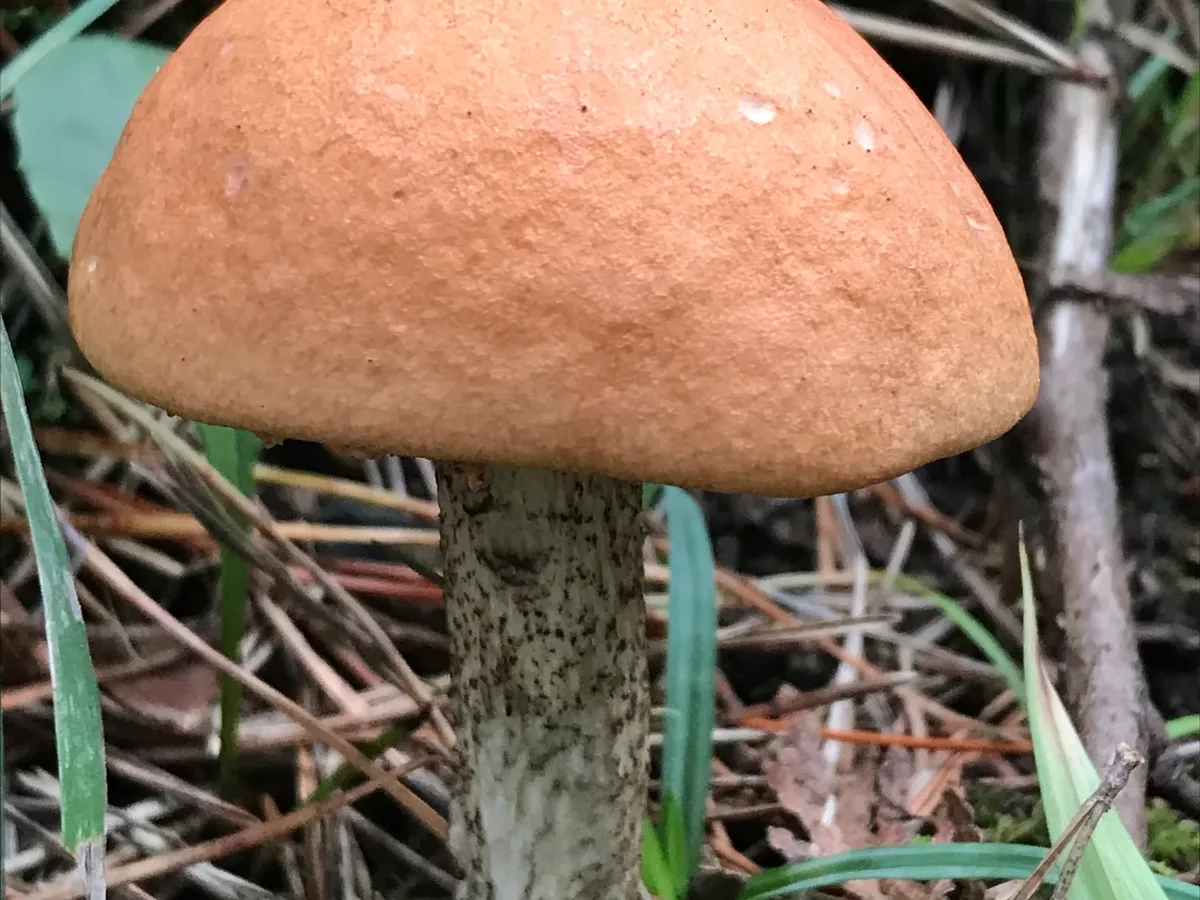
A mature cap spans 6-20 cm and is convex when young, flattening with age into a broad, cushion-shaped dome. The surface is dry and slightly felty, sometimes cracking in dry weather, and carries a colour palette running from vivid orange through brick-red to deep rust-brown - colours that shift subtly with the light and with the cap's age.
Gills / Pores
The underside is a pale, sponge-like pore surface: creamy white to pale grey, bruising brownish when pressed.
Stem
The stem is the other standout feature: tall and barrel-shaped, 8-20 cm high and 2-4 cm wide, white to off-white but densely clothed from base to apex with coarse, dark-brown to blackish fibrous tufts called scabers - the feature that gives the whole genus its folk name "scaber stalk."
Flesh
In cross-section the white flesh is firm and dense. Within minutes of cutting, the flesh oxidises from white through lilac-grey and then to a deep blue-grey that settles to near-black. This reaction - driven by enzymatic oxidation of phenolic compounds - is not a sign of toxicity or spoilage; it is a reliable marker of the genus and happens identically in the pan.
Smell & taste
The flesh smells faintly of damp earth and mild flour.
Where & when it grows
Habitat
Leccinum aurantiacum is an obligate mycorrhizal partner, meaning it cannot fruit without an established tree host. Across its range - from Scandinavia and Central Europe through the forests of Russia east to Siberia - aspen (Populus tremula) is its primary partner.
In some regional forms and at the edges of aspen stands, birch (Betula spp.) can substitute as host, and the relationship with oak has been documented in some literature, though aspen dominates overwhelmingly in practice.
The fungus grows wherever aspens grow:
- along forest margins
- in clearings where aspens colonise after disturbance
- in riverside and floodplain woodland
- in the broad mixed-forest belts of the Russian taiga
It is not a deep-shade species - the open, airy canopy of aspen stands suits it well. Look beneath the pale, flickering leaves of aspens on mineral soils with moderate moisture; the mushroom rarely appears under closed, dense conifer canopy unless aspens are present.
In forests shared with birch and pine, the presence of even a few aspens is enough to host a productive mycelium network.
When
The season runs from mid-July through October across most of its range. The first boletes typically appear after the warmth of July has sufficiently heated the soil and the first substantial summer rains arrive.
In warmer, southern parts of the range (Poland, Central Europe) the season can open in June; in the boreal north of Scandinavia and Siberia it may not begin until August. The peak is reliably August to September, when days are still warm but nights begin to cool - conditions that bring on the largest flushes.
After sustained rain of 20 mm or more over a couple of weeks, fruiting follows in roughly seven to fourteen days as the mycelium responds to the change in soil moisture and temperature.
A single productive aspen stand will often flush in waves across the season:
- a first appearance in late July
- a larger midsummer flush in August
- sometimes a final October push before the first frosts
Cold snaps below about 5 °C end fruiting abruptly.
How it grows
Underground, the mycelium of Leccinum aurantiacum is woven through the fine root tips of aspen trees in a dense, mutually beneficial network that may have been in place for decades.
The fungus sheathes each root tip in a sleeve of hyphal threads - the ectomycorrhizal mantle - then extends outward as a web of exploration hyphae that mine phosphorus, nitrogen, and water from the surrounding soil. The tree supplies the fungus with photosynthetically fixed sugars in return.
This partnership predates many of the trees above it. The mycelium persists through dry summers and hard winters, alive but invisible, waiting for the soil temperature and moisture cues that trigger fruiting.
When conditions are right, a fruitbody assembles from a pin-head knot of hyphal tissue in as little as four to seven days, pushing through the leaf litter as a compact orange globe before expanding into the full, proud cap.
It fruits singly or in small scattered groups rather than tight clusters - each stem marks a different strand of the same mycelial web, or the territory of a neighbouring network. Old, well-established aspen woods reliably produce fruitbodies in the same microspots year after year.
Fruiting conditions
Conservative mycology estimate; the guide gives no quantitative fruiting triggers. Fruits a week or two after sustained late-summer rain.
Look-alikes
Within the genus Leccinum, the most frequent companion or confusion species is the birch bolete (Leccinum scabrum), which shares the scabrous stem and bluing flesh but carries a grey-brown to pale fawn cap rather than the vivid orange of L. aurantiacum, and is associated with birch rather than aspen. Both species are edible and safe when cooked; there is no dangerous confusion between them.
Other orange-capped Leccinum species are all edible and in the same safe genus:
- Leccinum versipelle (sometimes treated as a synonym)
- L. testaceoscabrum
- L. vulpinum (fox bolete, associated with pine)
No deadly or seriously toxic mushroom shares the full suite of characters:
- the large orange-to-red dry cap
- the pale-cream pore surface
- the scaber-roughened stem
- the rapid blue-black bluing of the cut flesh
Boletus and Neoboletus species with red pore surfaces (such as Rubroboletus satanas or Rubroboletus legaliae) are a theoretical concern for very inexperienced foragers, but those species have prominently red pores - not the pale cream of L. aurantiacum - and do not produce the characteristic scaber scales on the stem.
The combination of orange cap, pale pores, scaber stem, and bluing flesh is diagnostic.
Another edible Leccinum; no dangerous confusion.
In the kitchen
Picking & cleaning
Harvest at any stage from the firm young button through to a fully open adult cap, provided the sponge beneath is still pale and the stem firm - waterlogged or overly soft specimens are past their best.
Cut cleanly at the base with a knife rather than twisting or pulling, leaving the stump and the attached mycelium intact so the network is undisturbed for future flushes.
In wet conditions, older caps can become spongy and heavy with water; these are edible but best reserved for soups or slow-cooked dishes where excess moisture cooks off. The scaber-rough stem of older specimens can be tough and fibrous and is sometimes discarded, though young stems are fine throughout.
Do not be startled by the flesh darkening to grey or near-black in the basket or on the cutting board - this is the normal enzymatic oxidation and has no bearing on quality or safety.
If picking large quantities for preserving, wipe caps clean of debris rather than washing, which encourages waterlogging. Leccinum aurantiacum has no strong fragrance in the fresh state - a faint, pleasant, earthy-floury scent is normal.
Cooking
Leccinum aurantiacum is highly regarded in Eastern European and Russian kitchens and lends itself to a wide range of preparations. The dense, firm flesh has good structural integrity and a mild, meaty, earthy flavour - subtler than cep (Boletus edulis) but richer than birch bolete.
Do not be deterred by the flesh turning grey-black in the pan - the colour change is inevitable and entirely normal, and the flavour is unaffected.
- Frying in butter over medium-high heat produces a golden, slightly crisp exterior with a tender centre; add onion, sour cream, and dill for the classic Russian preparation served on dark bread or alongside kasha.
- For soups and stews, the flesh holds its shape well through long, slow cooking and contributes a round, savoury depth.
- It pickles beautifully in a light vinegar brine with bay leaf, allspice, and black pepper - a preparation traditional across Russia and Poland where jars are put up in autumn for winter use.
- Drying concentrates the flavour and produces a dark, intensely savoury product excellent for stocks and sauces; rehydrate in warm water and use the soaking liquid in the dish.
- Marinating briefly in oil, garlic, and herbs before grilling also works well.
Remove the stem of older, large specimens if it has become very fibrous; younger stems are entirely usable.
Good to know
Leccinum aurantiacum is a reliable edible species with a long foraging tradition across Eastern Europe and Russia, where it is among the most prized of the boletes.
The one firm rule is thorough cooking. Like most boletes, eating it raw or undercooked can cause gastric upset in some individuals. Boiling for at least ten minutes or frying until fully cooked through eliminates this risk entirely, and there are no reported cases of serious poisoning from properly cooked L. aurantiacum.
The dramatic bluing of the flesh - turning slate-grey and then nearly black - is a purely cosmetic enzymatic reaction involving oxidation of variegatic acid and other phenolic compounds, and has no bearing on safety or edibility. The darkened flesh is completely safe to eat.
The species is generally considered suitable for beginners, thanks to its distinctive appearance and the absence of dangerous lookalikes in its typical aspen-woodland habitat.
A reference guide - never an edibility guarantee. When in doubt, leave it out.