Hazel bolete
Leccinellum pseudoscabrumsyn. Leccinum pseudoscabrum, Leccinum carpini, Boletus carpini, Krombholziella pseudoscabra
 © Markus Krieger (CC BY)
 © Patrick Bayan (CC BY)
 © Patrick Bayan (CC BY)
 © Per Gerhard Ihlen (CC BY)
 © Per Gerhard Ihlen (CC BY)
 Galloway and Southern Ayrshire UNESCO Biosphere Official Account (CC0)
 Galloway and Southern Ayrshire UNESCO Biosphere Official Account (CC0)
 Galloway and Southern Ayrshire UNESCO Biosphere Official Account (CC0)
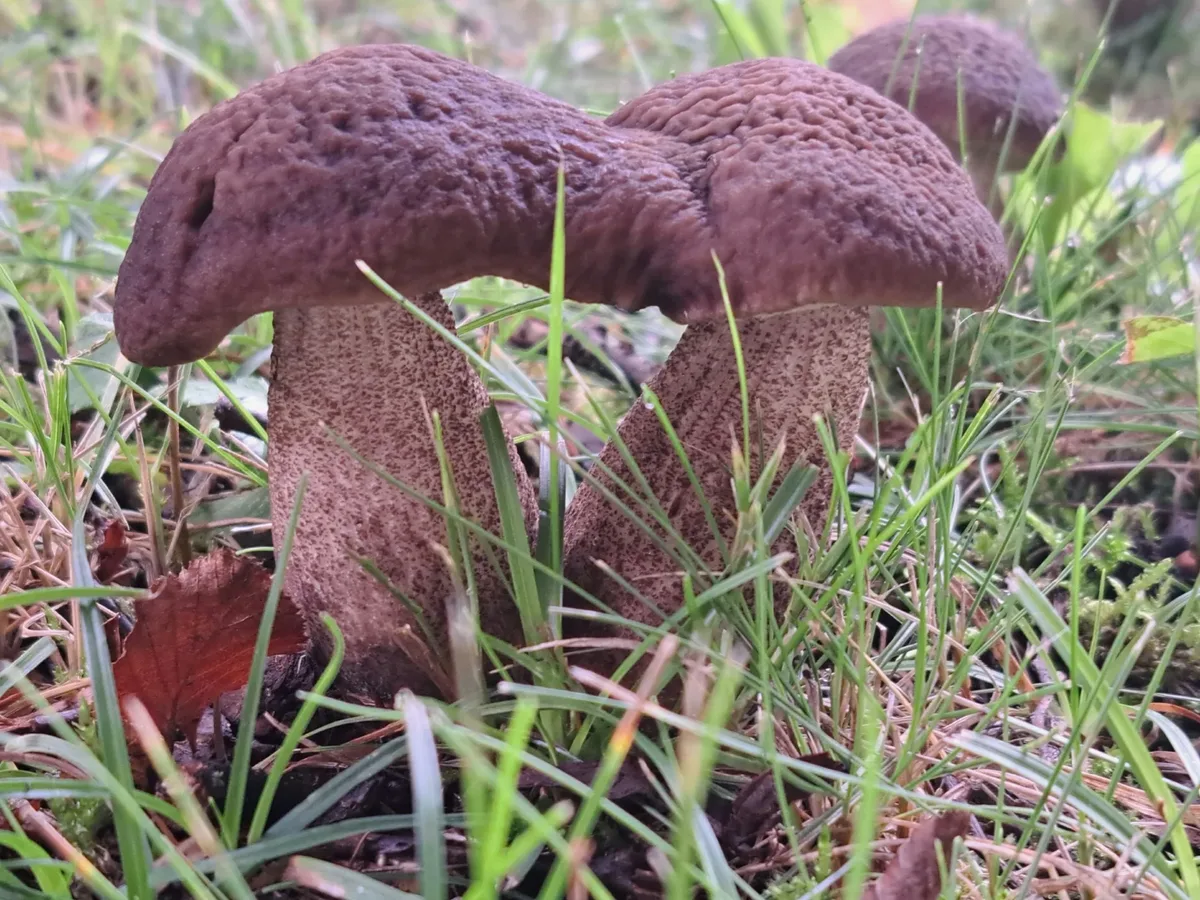 © Markus Krieger (CC BY)
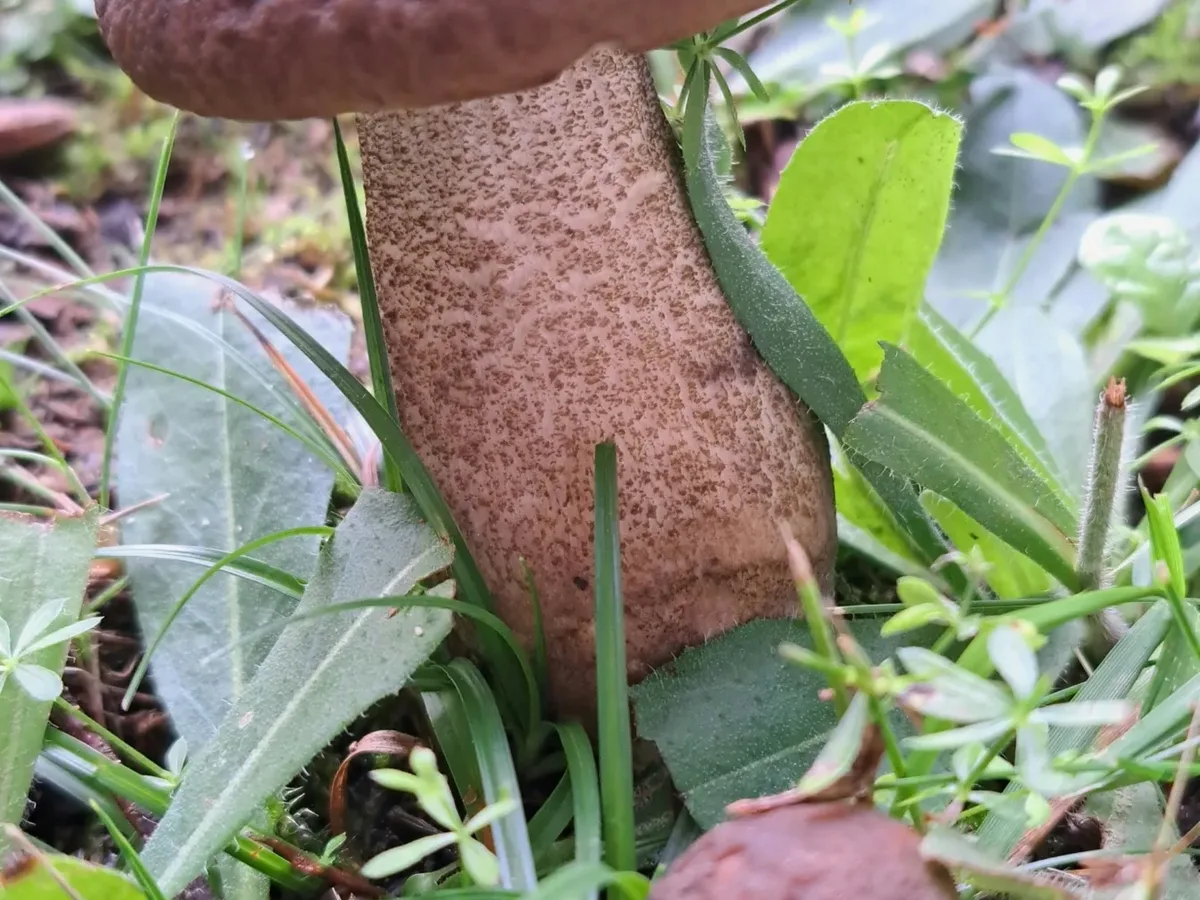 © Markus Krieger (CC BY)© Markus Krieger (CC BY)© Patrick Bayan (CC BY)
Edible only with the right preparation - or safe for some people but not others. Learn the caveats first.
How to recognise it
A solidly built, unhurried mushroom in muted woodland colours.
Cap
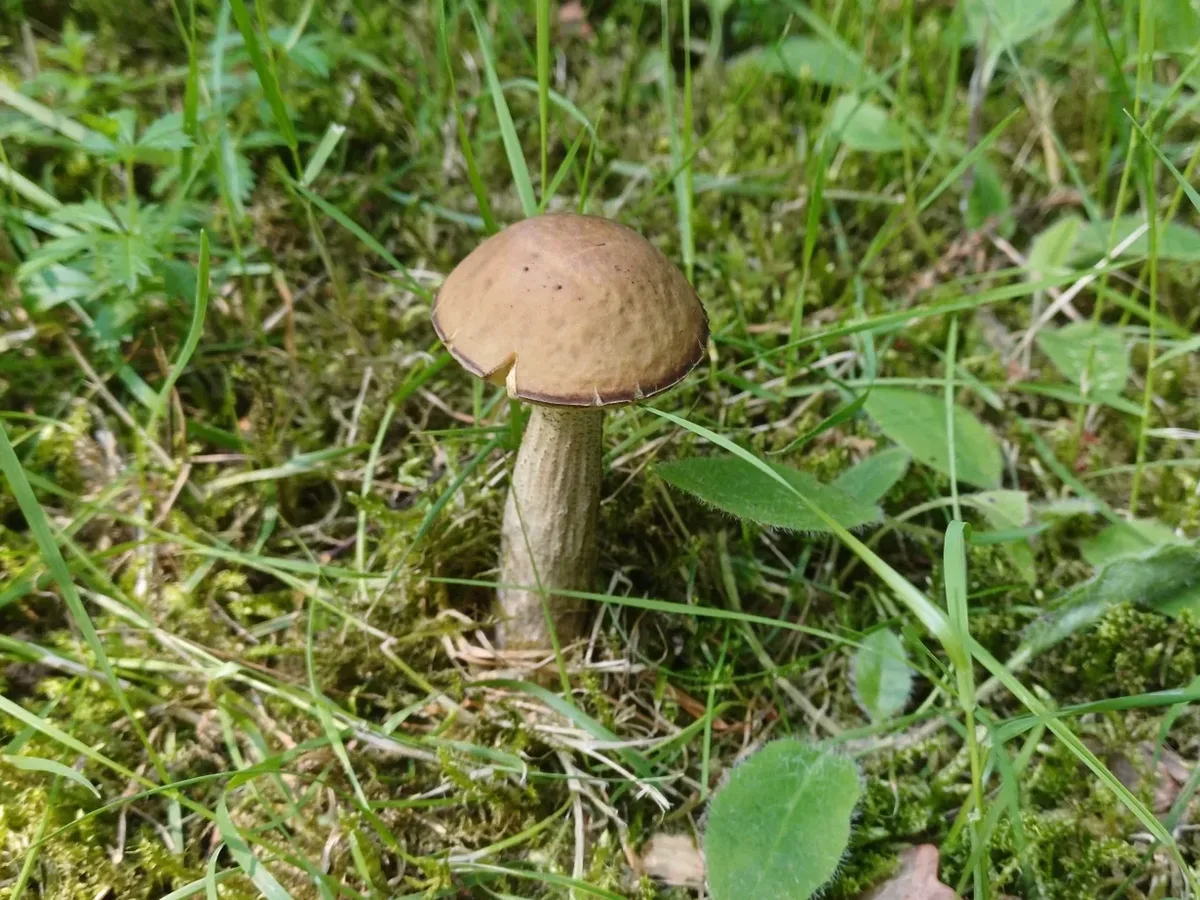
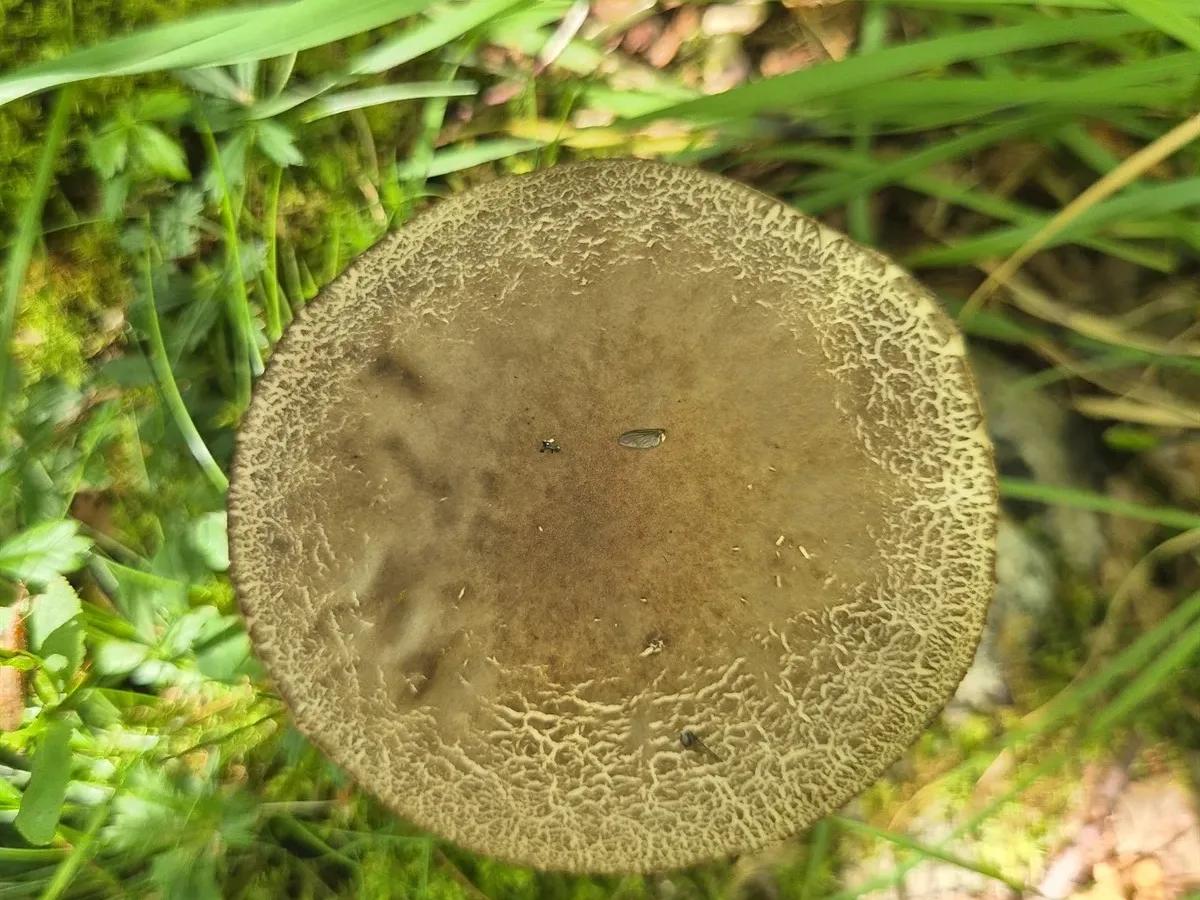
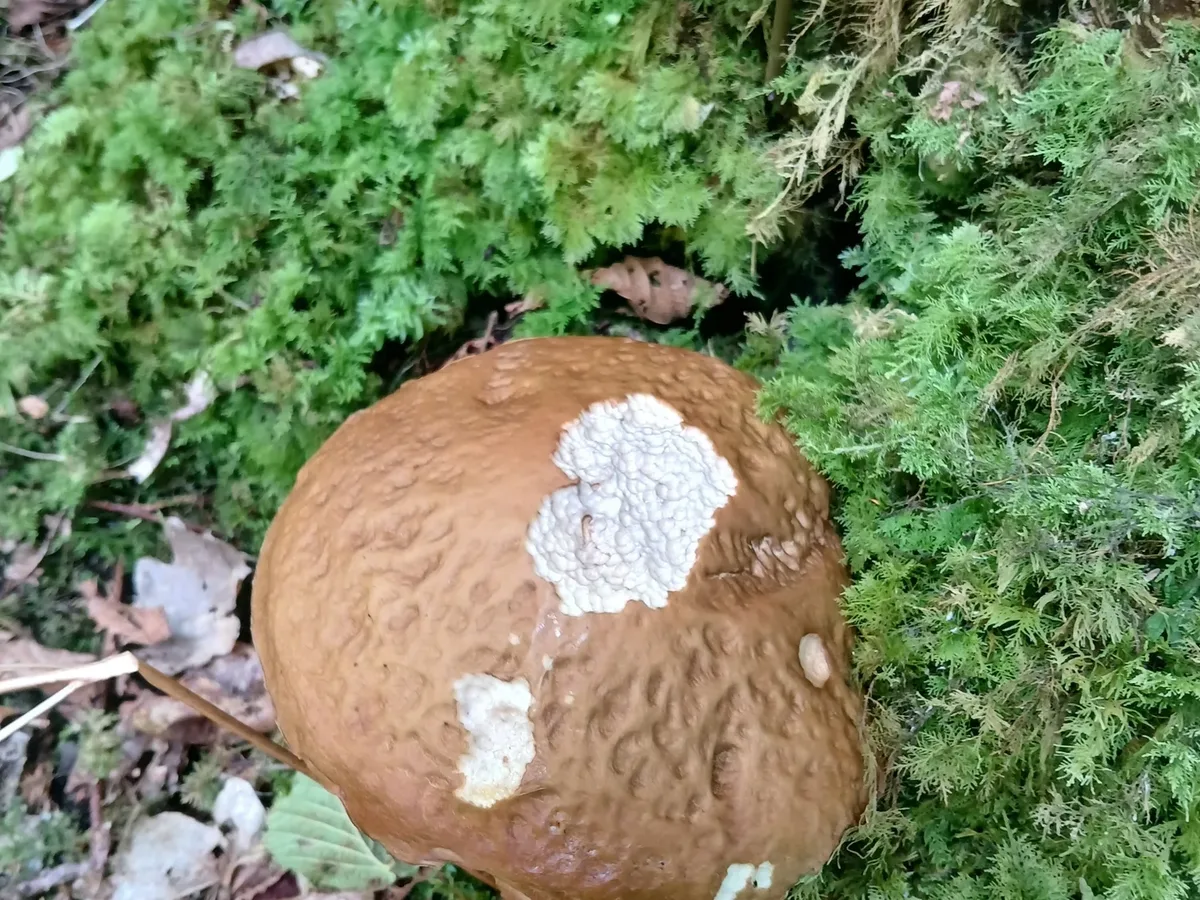
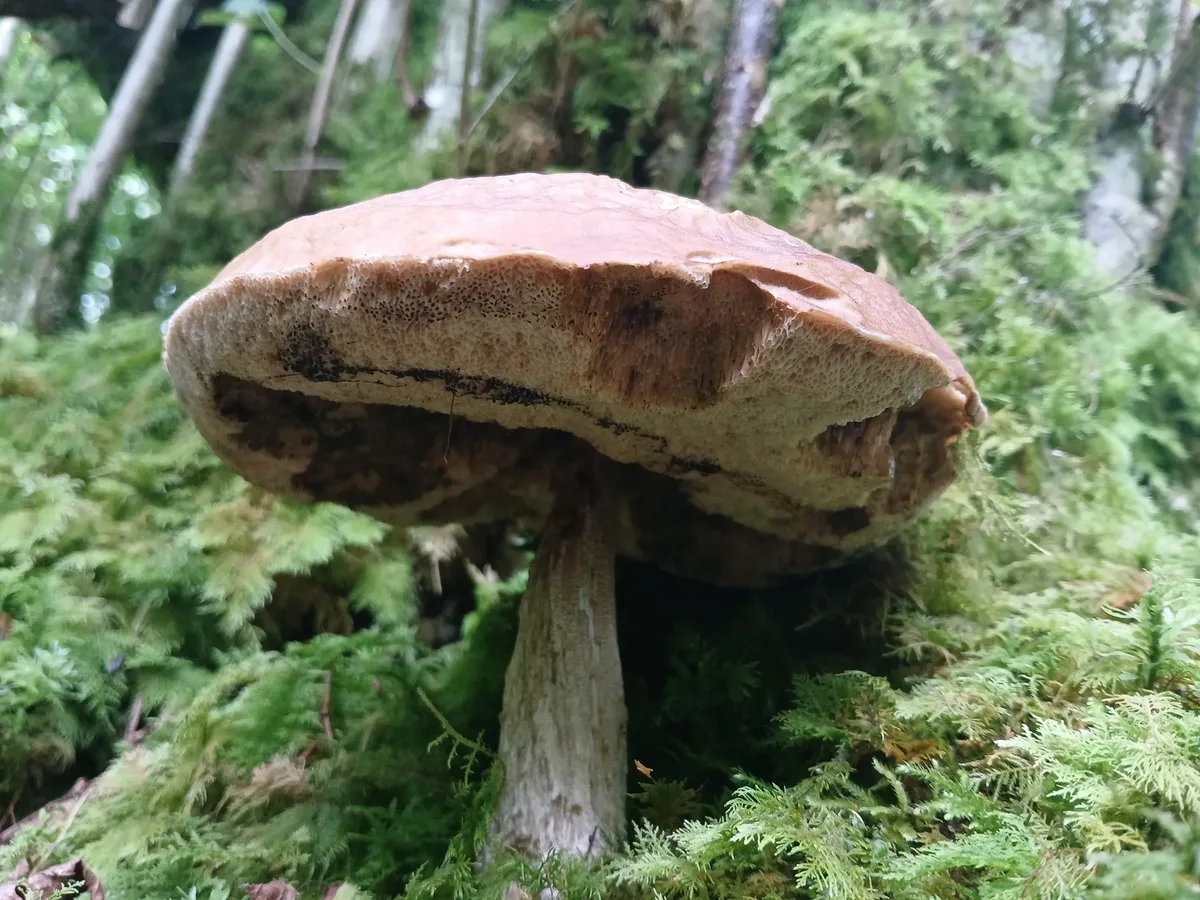
The cap reaches 5-15 cm across, beginning as a tight rounded dome and expanding to a broad cushion-shape that rarely flattens even in old age. Its surface is dry and matt - finely velvety when young - coloured in understated tones of greyish-buff, pale ochre-brown, or mousy-grey, sometimes with a subtle greenish-grey undertone. The margin typically overhangs the tube layer by a millimetre or two, giving the cap a slightly pouty edge.
Gills / Pores
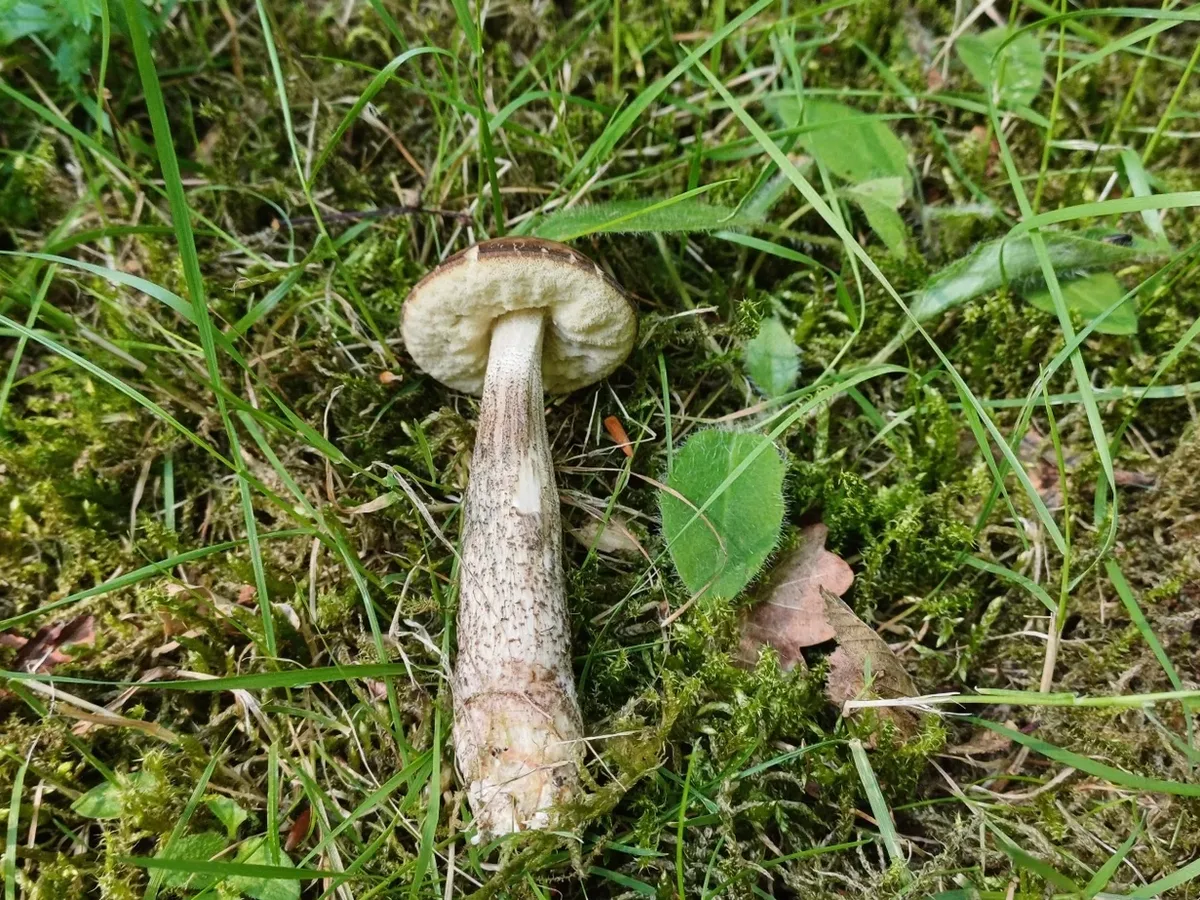
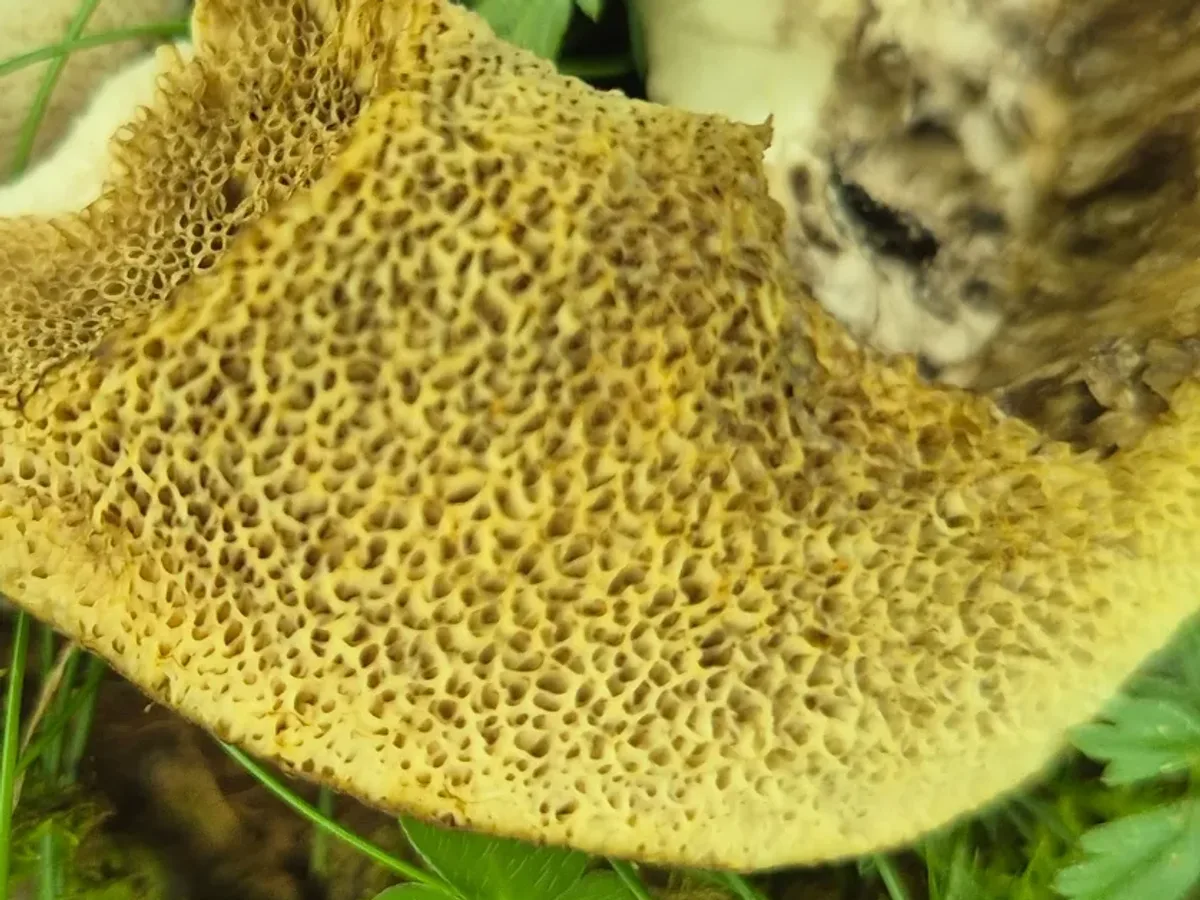
The pore surface starts white and smooth, ageing to cream then pale grey-ochre; pressed or damaged, it bruises slowly to brownish-grey or nearly black. The tubes beneath run 10-20 mm deep and are slightly depressed around the stem.
Stem
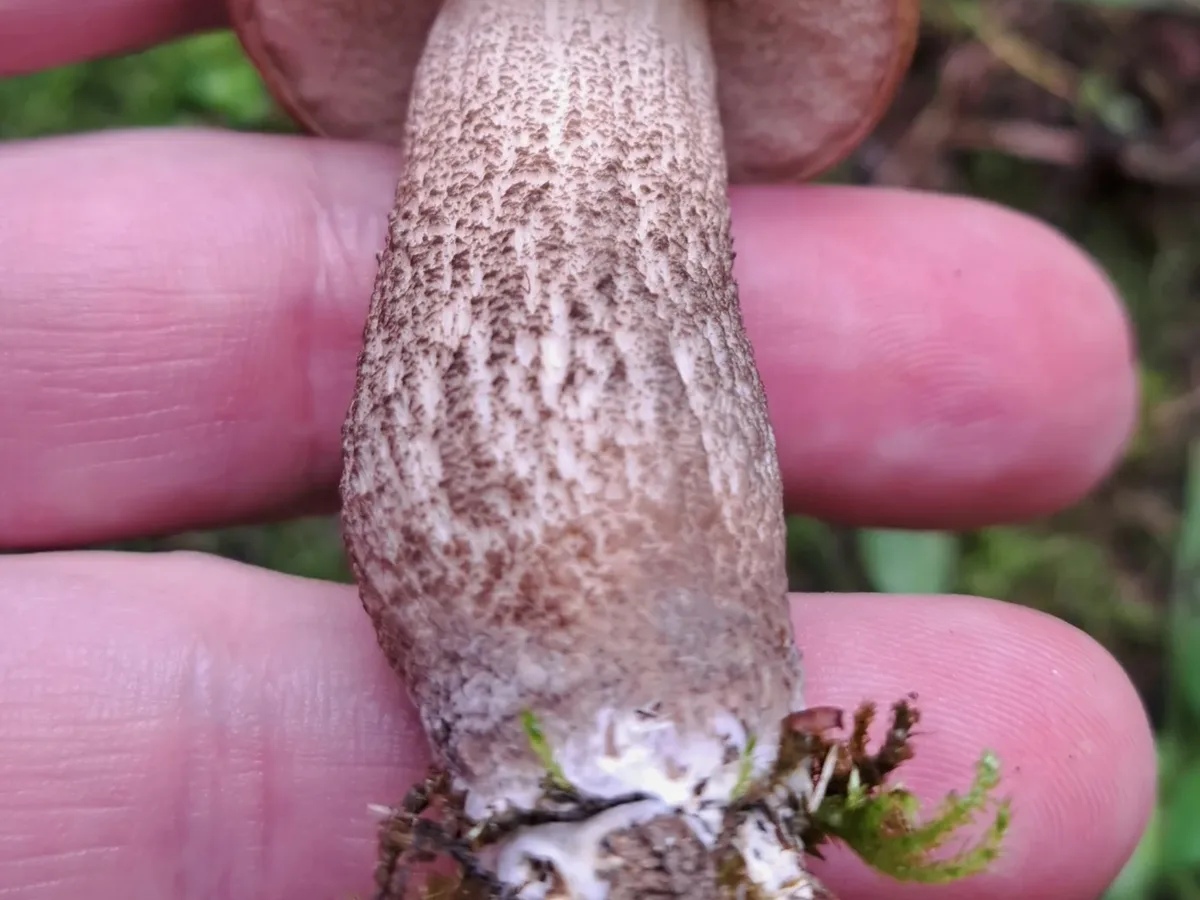
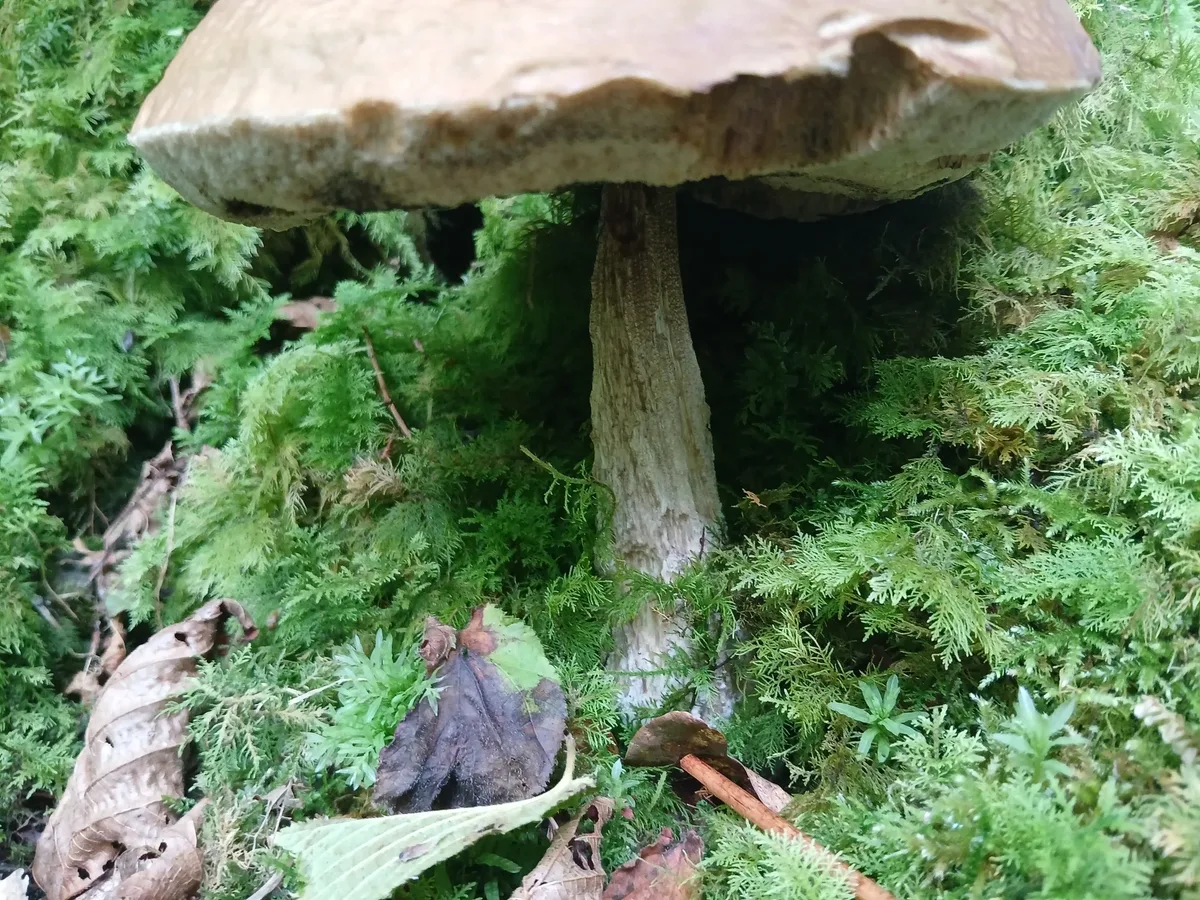
The stem is the most distinctive feature: stout and solid (6-14 cm tall, 1.5-3.5 cm wide), its pale grey-white background almost entirely cloaked in dense, coarse, dark brown to blackish scabers - rough raised projections that darken further on handling, giving the stem a distinctly bristled, sooty texture. The scabers are noticeably darker than those of related species such as Leccinum scabrum, and that contrast is one of the quickest ways to recognise this bolete in the field.
Flesh
Cut the flesh, and the most dramatic event unfolds over the next quarter-hour: firm white flesh flushes pale pink, then lilac-grey, then settles into a deep slate-grey to near-black - especially in the lower stem and base. This colour change is purely enzymatic and entirely normal, but it is striking enough to be an important identification character.
Smell & taste
Smell is mild and pleasantly fungal; taste mild. Spore print olivaceous-brown.
Where & when it grows
Habitat
This species lives in a close, obligate partnership with hornbeam (Carpinus betulus) - the two organisms exchange nutrients through interlocking root networks that may persist for many years, making Leccinellum pseudoscabrum essentially the bolete of hornbeam woodland.
Where an old hornbeam stand has been in place for decades, the mycelium will have quietly threaded the soil all that time, fruiting body or not. That long-term association also makes it a useful indicator of veteran hornbeam trees.
Look for it in:
- coppiced hornbeam copses
- mature hedgerows with old hornbeam
- mixed deciduous woods where hornbeam forms part of the canopy or understorey
- old parkland and estate woodland
- occasionally urban parks with mature planted hornbeam
Secondary hosts include hazel (Corylus avellana) in calcareous districts and, more rarely, the fringes of beech or oak stands where hornbeam is present nearby.
The species tolerates a range of soils but appears most productive on mildly calcareous or brown-earth ground with reasonable moisture retention. It does not venture into purely coniferous forest unless hornbeam or hazel grows at the margins.
When
The main fruiting window runs from June through October, with the heart of the season in August and September.
The mycelium has been active in the soil all year; it is rainfall and soil warmth that finally trigger above-ground fruiting, typically 7-14 days after a significant wet spell.
Early fruits in June and July follow prolonged warm, wet conditions. October fruits appear in mild autumns with adequate soil moisture.
Within a single site, fruiting tends to be fairly synchronous - a productive hornbeam copse can produce several visible flushes over a season, each lagging a week or two behind a rain event.
How it grows
Fruit bodies emerge singly or in small scattered groups of two to five, occasionally forming loose clusters in productive years. They grow from the soil, often with the stem partially buried in leaf litter or moss.
Growth from pin to mature cap takes 5-10 days under favourable conditions.
Large, undisturbed hornbeam copses and old parkland trees tend to produce reliably year after year in the same spots, making them worth revisiting.
Fruiting conditions
Fruiting is triggered by adequate soil moisture combined with warm soil temperatures; flushes typically lag 7-14 days behind significant rainfall events in summer and early autumn. Prolonged dry spells suppress fruiting entirely.
Look-alikes
The genus Leccinellum and the broader Leccinum group contain several confusable species, some of which have caused gastrointestinal problems when consumed raw or inadequately cooked.
- Leccinum scabrum (Brown birch bolete): the most commonly confused species. Associated with birch rather than hornbeam or hazel; cap usually more uniform brown; stem scabers white to pale grey-brown rather than dark brown to blackish; flesh does not blacken as dramatically, typically turning only pinkish-grey. Habitat is the clearest separator.
- Leccinum variicolor (Mottled bolete): also birch-associated; cap mottled with patches of grey and dark brown; stem base often flushes blue-green on cutting; not found in pure hornbeam stands.
- Leccinum versipelle (Orange birch bolete): bright orange-red cap; associates strictly with birch; flesh turns deep lilac-black rapidly; edible but occasionally problematic when raw.
- Leccinum aurantiacum (Red aspen bolete): orange to orange-red cap; strictly under aspen and poplar; not a hornbeam species.
- Leccinellum crocipodium (Saffron bolete): yellow-capped bolete associated with oak; cap surface cracks to reveal yellow-orange flesh beneath; pores yellow. Clearly distinct by colour.
- Tylopilus felleus (Bitter bolete): superficially similar in overall shape; pinkish spore print and strongly bitter taste immediately separate it; no scabers.
Lacks scabers on the stem; has a coarse pink network on a pale background; pores turn pink with age and produce a pink spore print; intensely bitter taste even from a tiny piece. Inedible but not deadly.
L. scabrum is strictly associated with birch, not hornbeam or hazel. Its stem scabers are pale whitish-grey to pale brownish rather than the dark brown to blackish scabers of L. pseudoscabrum. Flesh may turn pinkish-grey but rarely blackens as intensely. Habitat is the most reliable separator.
Associated with birch; cap distinctly mottled with patches of grey, buff, and dark brown giving a marbled pattern; stem base often stains blue-green when cut; not found in hornbeam woodland.
Cap bright orange to orange-red, much more vivid than the grey-buff cap of L. pseudoscabrum; strictly birch-associated; flesh turns deep lilac then black quickly. Colour alone distinguishes it.
Cap orange to orange-red; found strictly under aspen (Populus tremula) and poplar, never hornbeam or hazel. The vivid cap colour and different tree association separate it immediately.
Much smaller; cap surface cracks to reveal red flesh; no scabers; pores bright yellow, bruising blue; weakly edible but easily separated by size, pore colour, and lack of scabers.
Yellow to ochre-yellow cap that cracks in dry weather to reveal yellow-orange flesh; pores yellow; associated with oak not hornbeam; entirely distinct by colour scheme.
In the kitchen
Picking & cleaning
Select young to medium-aged specimens with firm, white flesh.
Avoid very old individuals with blackened flesh, softening caps, or evidence of maggot infestation - Leccinum boletes are heavily infested by fly larvae, especially in warm weather. Larger specimens should always be sliced in the field to check for grubs.
Twist-and-pull or cut the stem at the base, then brush off soil.
The blackening of the flesh is normal and not a sign of spoilage; however, the dramatic colour change can be alarming if unexpected. Consume promptly after picking as the flesh degrades quickly once cut.
Cooking
Leccinellum pseudoscabrum must be thoroughly cooked before eating - never consume it raw or only lightly heated. Raw and undercooked Leccinum-group boletes contain heat-labile compounds (the exact chemistry is not fully characterised) that cause gastrointestinal upset - nausea, vomiting, and cramps - in a significant proportion of people who eat them inadequately prepared.
The key rule is continuous, high heat for a minimum of 15-20 minutes; a quick flash in a pan is not sufficient.
Preparation: trim the stem base, which can be quite tough and stringy even when cooked, especially in larger specimens. The dramatic greying-to-black of the flesh is purely enzymatic and has no bearing on safety or flavour, but it will turn any sauce or risotto dark - this can look unappetising, so some cooks parboil and discard the water first. The cap flesh, once fully cooked, has a mild, pleasantly earthy flavour and holds together reasonably well.
Cooking methods: sautéing in butter or olive oil over sustained medium-high heat works well, provided pieces are small enough to cook through (slice caps 5-8 mm thick). Soups and risottos benefit from a long simmer. Avoid blending briefly-cooked chunks into creamy sauces where the centre may never have reached full temperature. Drying concentrates flavour but does not reliably neutralise the problematic compounds - rehydrated dried pieces should still be simmered for at least 15 minutes before eating.
Portion caution: people trying this species for the first time should start with a small portion, even when fully cooked, since individual sensitivity to Leccinum-group boletes varies. Those with a history of sensitivity to other Leccinum species (e.g., Leccinum versipelle or Leccinum scabrum) should approach this species with additional care.
Good to know
Leccinellum pseudoscabrum is generally considered edible after thorough cooking, but several important cautions apply.
Raw or undercooked Leccinum-group boletes have caused gastrointestinal illness (nausea, vomiting, cramps) in numerous documented cases across Europe, likely due to heat-labile compounds. Always cook specimens thoroughly - at least 15-20 minutes of genuine heat. Dried or very lightly sautéed pieces may remain problematic.
A subset of individuals react adversely to Leccinum species even when well-cooked; a small number of cases in the literature describe more serious GI symptoms after ingestion. Those new to this species should consume only a modest portion initially.
The dramatic blackening of the flesh, while striking and sometimes off-putting, is a normal enzymatic reaction and not in itself a toxicity indicator.
However, identify with care before consumption any specimen with:
- a strongly bitter taste
- a pinkish spore print
- association with trees other than hornbeam or hazel
A reference guide - never an edibility guarantee. When in doubt, leave it out.