Agarikon
Laricifomes officinalissyn. Fomes officinalis, Polyporus officinalis, Boletus laricis, Agarikon, Daedalea officinalis, Ungulina officinalis
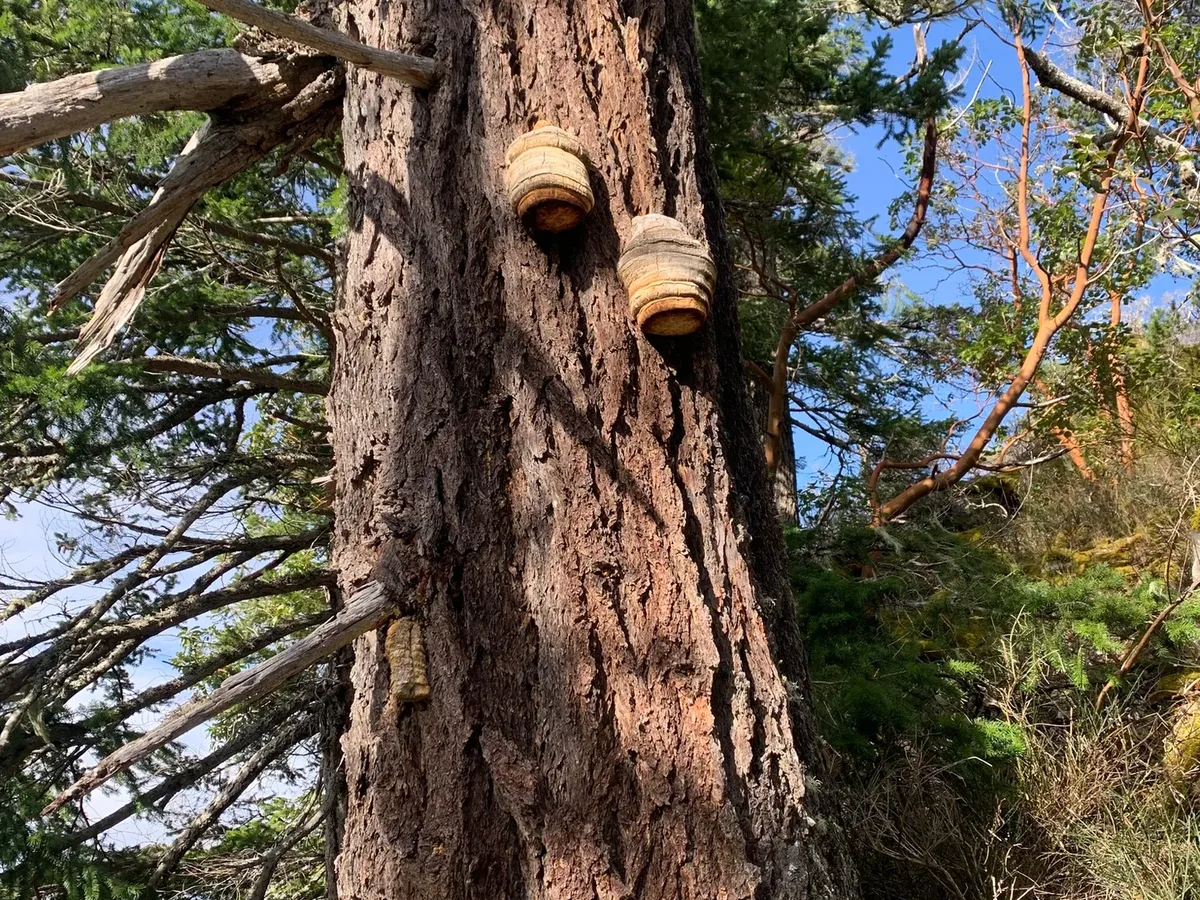 davidbroadland (CC0)
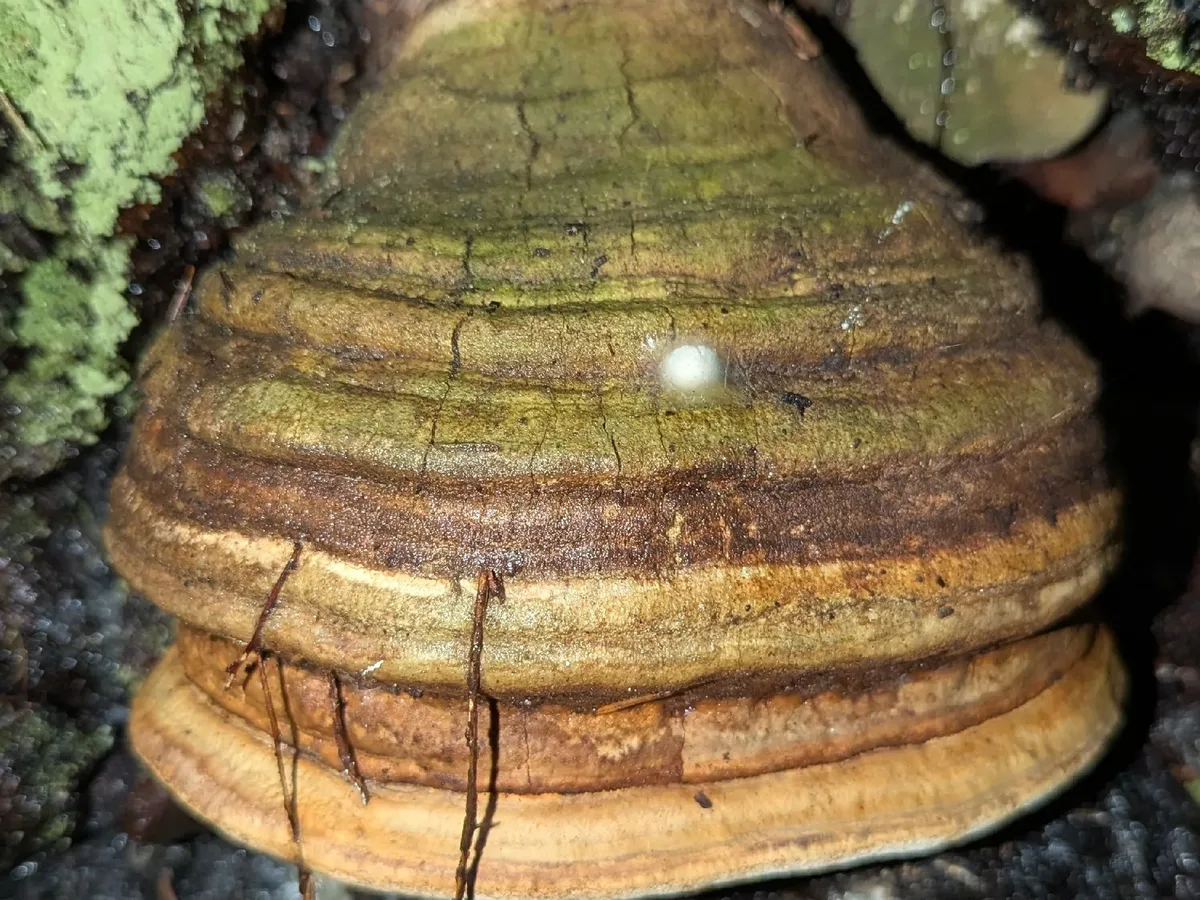 Ben Keen (CC0)
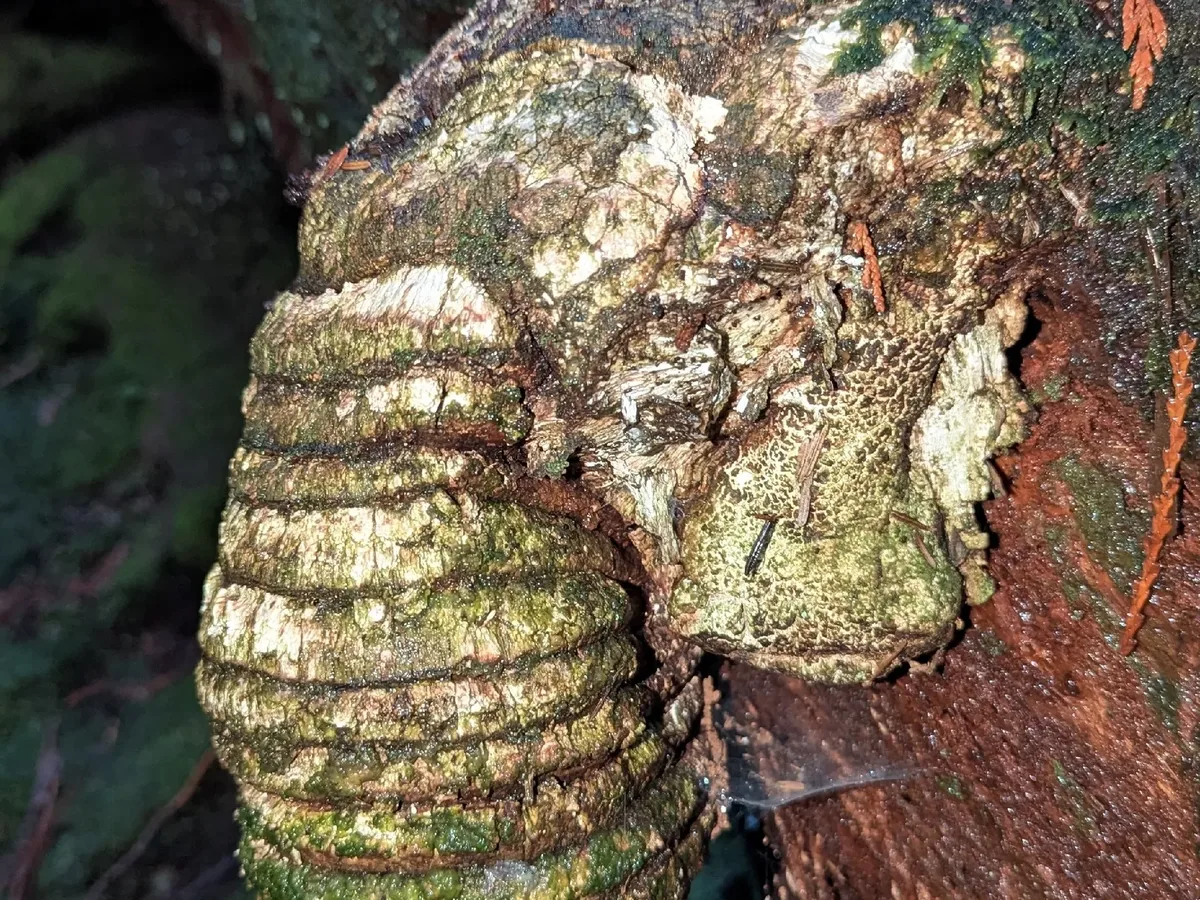 Ben Keen (CC0)
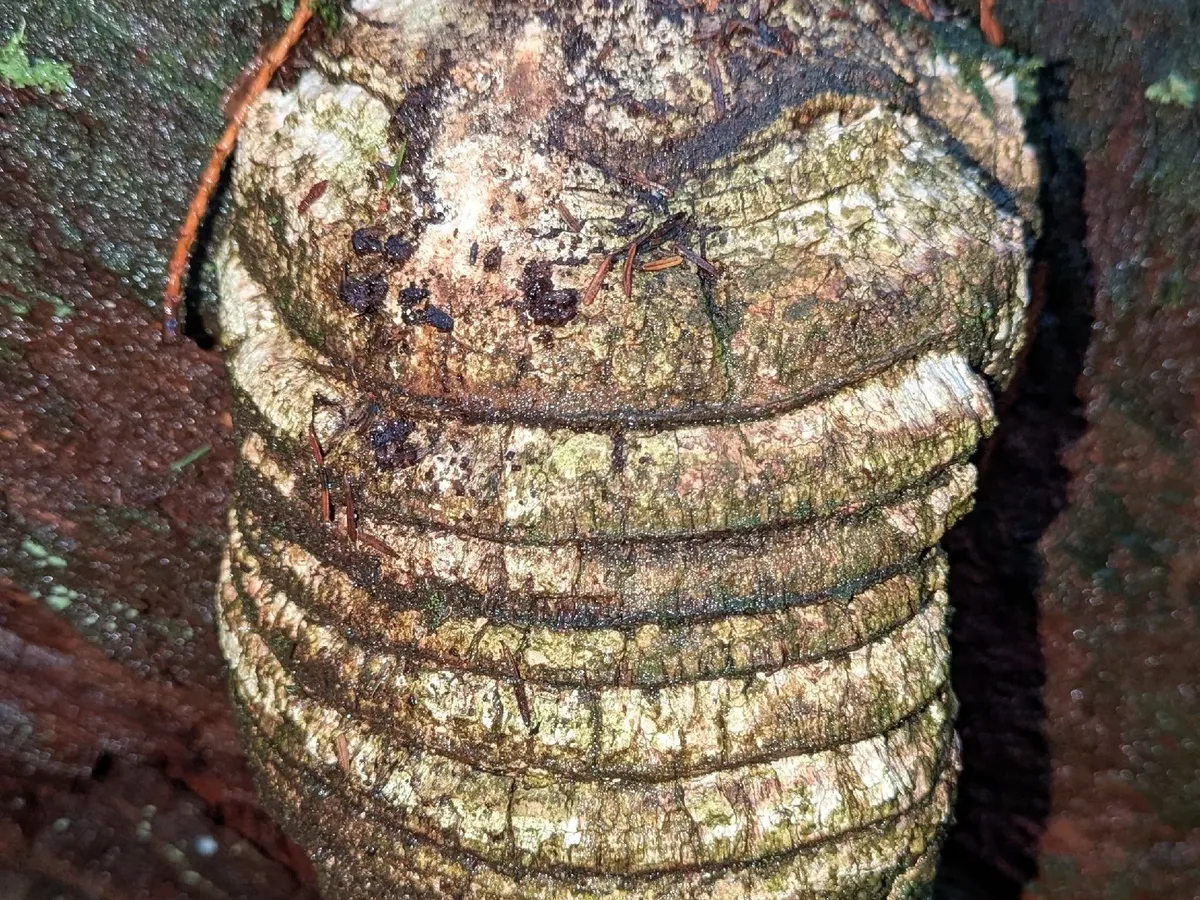 Ben Keen (CC0)
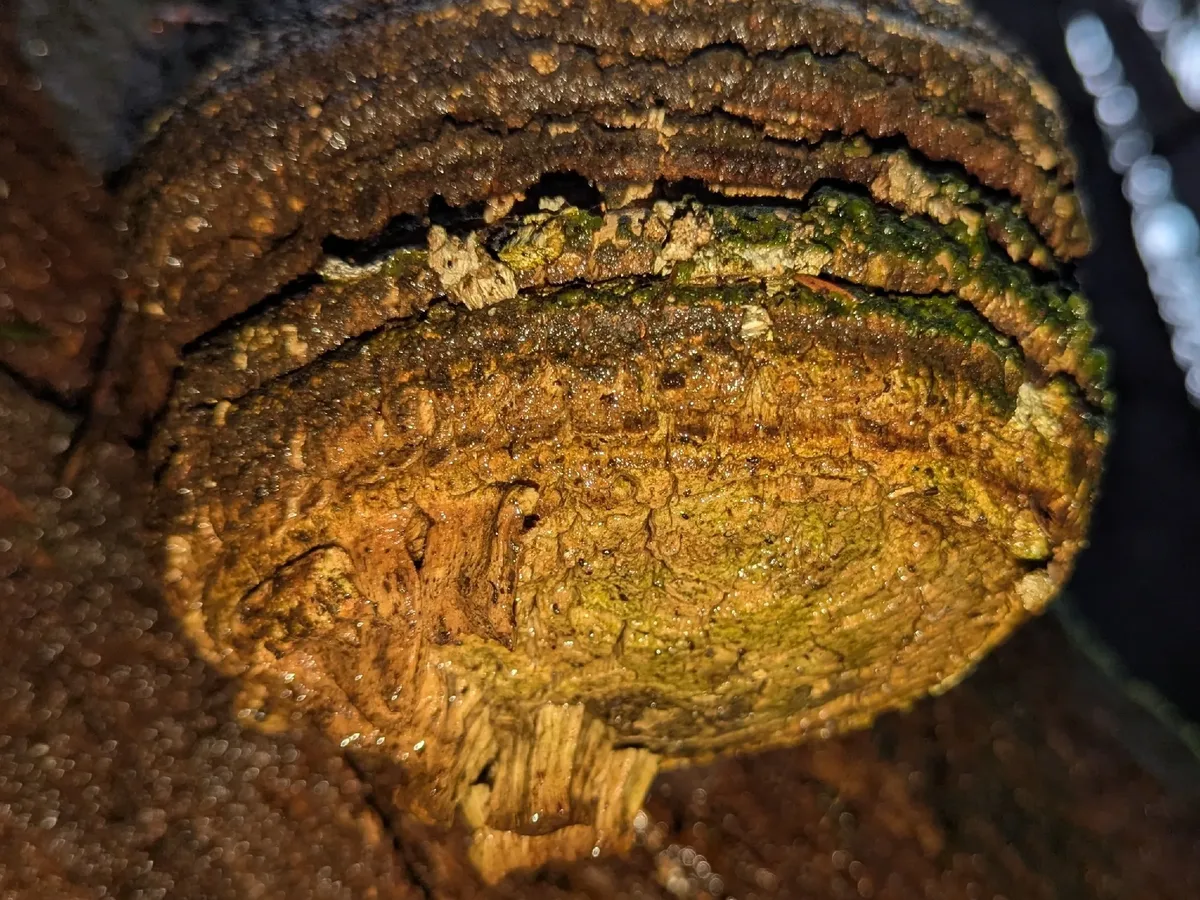 Ben Keen (CC0)
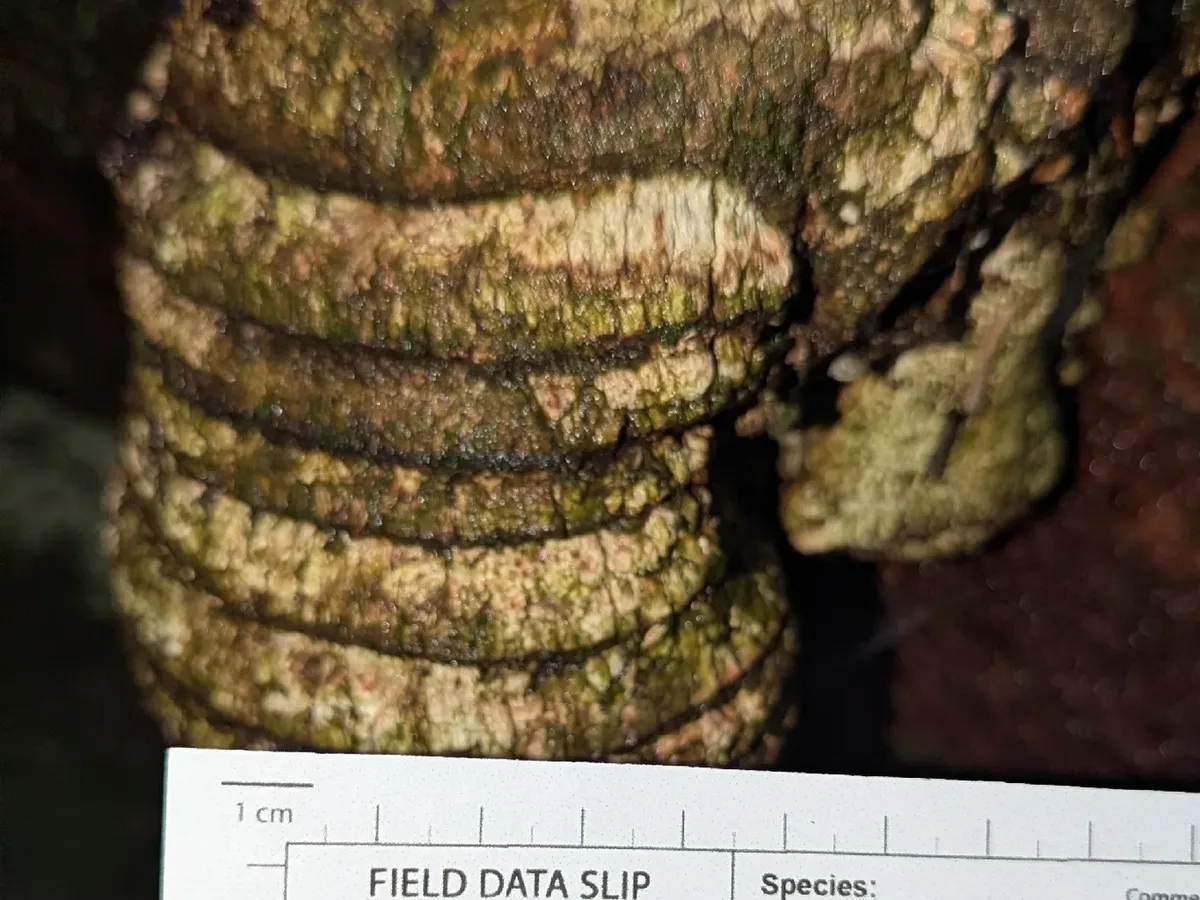 Ben Keen (CC0)
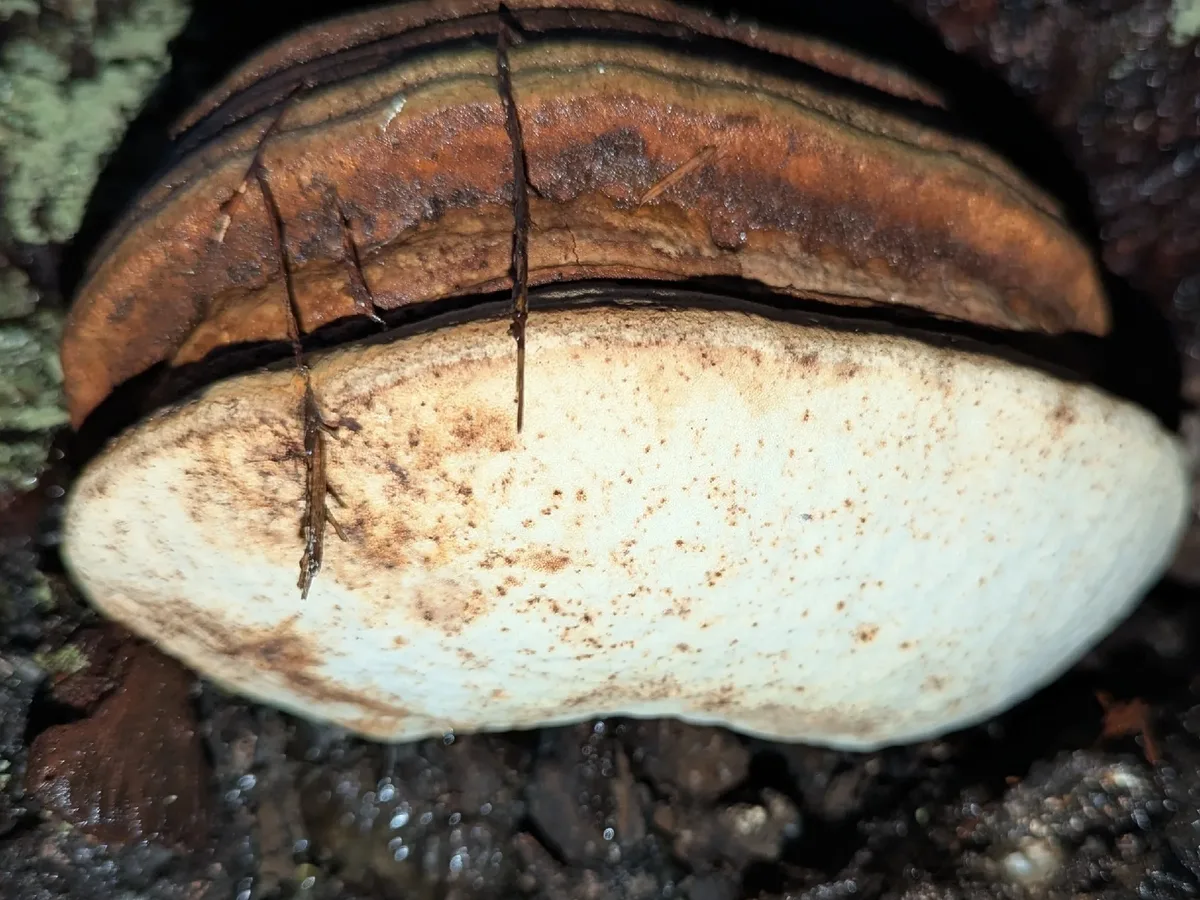 Ben Keen (CC0)
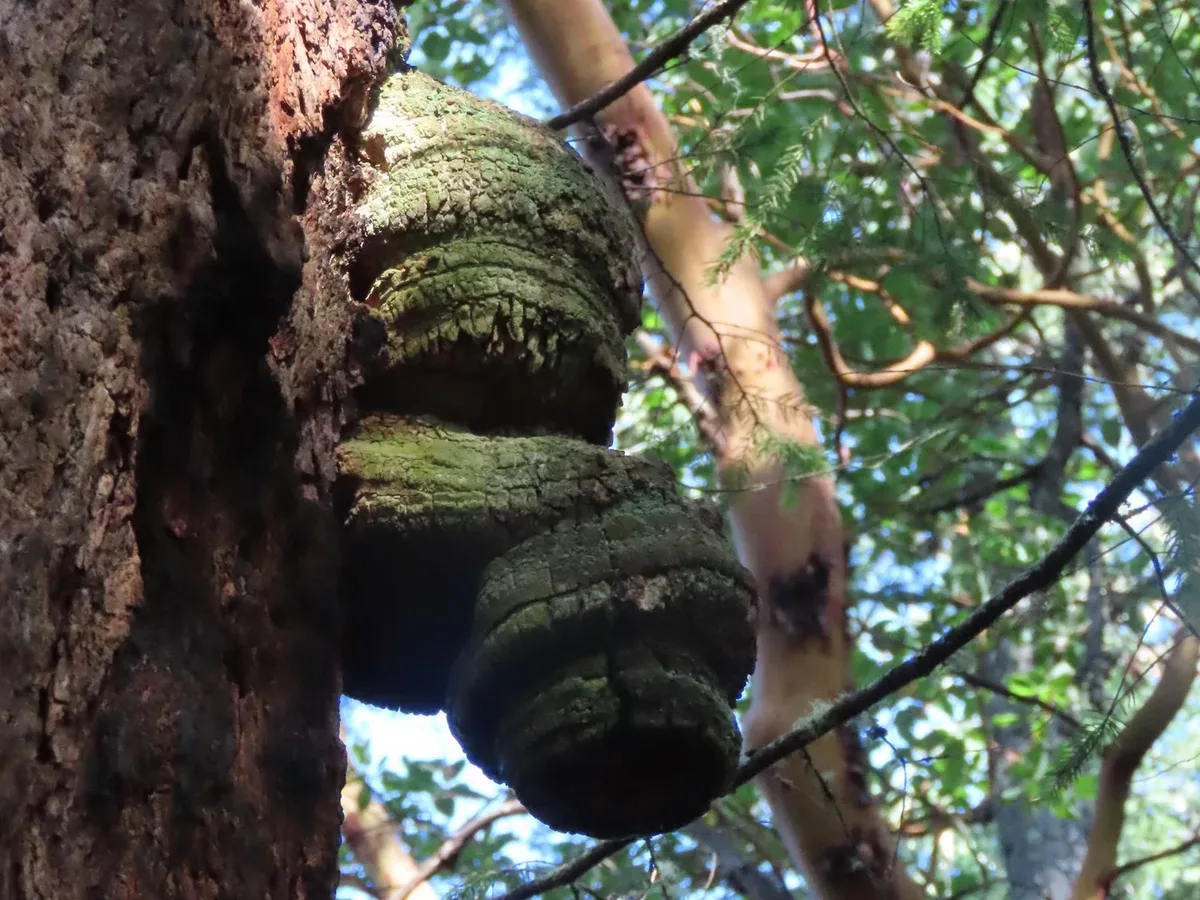 Erin Springinotic (CC0)davidbroadland (CC0)Ben Keen (CC0)
Not poisonous, but not worth eating - too tough, bitter, or bland for the pot.
How to recognise it
Laricifomes officinalis produces one of the most architecturally distinctive fruiting bodies in the fungal kingdom. Young conks emerge as pale, chalk-white, finger- to pillar-shaped projections from the bark of aging conifers, sometimes almost perfectly cylindrical before broadening.
Over years to decades they develop the massive hoof or elongated column shape - occasionally resembling a weathered block of chalk or a wedge of hard cheese. Old specimens can measure 50 cm or more in their longest dimension and weigh several kilograms.
Cap
The sterile upper surface becomes concentrically furrowed and cracked, pale grey-tan to almost silver, with rectangular scaling that resembles worked stone.
Gills / Pores
The pore surface on the underside is pure white when fresh and active, with an extremely fine texture (3-5 tiny pores per mm) that distinguishes it from coarser-pored polypores.
Flesh
Flesh is extraordinarily thick and dense - chalky-white, corky-fibrous, and intensely bitter.
Smell & taste
The bitterness of the flesh is one of its most reliable identification characters: even a tiny fragment placed on the tongue produces a pronounced, prolonged, quinine-like bitterness.
Where & when it grows
Habitat
A strict old-growth specialist, Laricifomes officinalis is essentially absent from managed forests and is one of the clearest indicator species for ecologically intact conifer old-growth in the Pacific Northwest. It requires large-diameter, centuries-old trees to establish and persist.
In North America the heartland of its range is the interior Columbia River basin and the Cascades, where western larch (Larix occidentalis) grows to enormous girth. In the European Alps it was once common on ancient Larix decidua stands but is now critically rare due to forest clearance and conversion.
Look for it on the middle and lower bole of the largest, oldest larch trees - frequently on the upslope or sheltered side, often emerging from old branch scars, fire wounds, or mechanical damage.
Elevation: typically 600-2000 m in the Pacific Northwest, lower in northern latitudes. Associated forests are often park-like, open-canopy old-growth stands with a long fire-return interval.
When
Unlike almost every other fungus you might encounter, Laricifomes officinalis is not a seasonal visitor - it is a permanent resident.
Because the fruiting body is perennial, persisting for 70-100+ years in documented cases, the same conk can be revisited in any month of any year.
The fungus quietly adds a new, thin, white pore layer each growing season - typically spring to summer - so the freshest pore surface appears cream-white in May-August; older layers yellow with age. Spores are dispersed from late spring onward.
In practice, mycologists and ethnobotanists seek this species during summer and early autumn surveys of old-growth stands, when forest access is easiest and the new pore layer is at its most active.
How it grows
Laricifomes officinalis establishes itself on living or recently dead conifers when spores find entry through wounds, fire scars, or old branch stubs.
Once inside, it causes a brown cubical rot of the heartwood - the decayed wood breaking into characteristic brick-like cubes - that can eventually kill the host tree after decades of slow, patient decay.
The fruiting body itself grows at a pace that demands a different sense of time: increment measurements on known specimens show only 2-10 mm of new growth per year. A conk 40 cm tall may represent 50-80 years of continuous growth from a single infection event.
Some documented specimens on ancient larches in the U.S. Pacific Northwest have been estimated at over a century old - the same basidiocarp, on the same tree, outlasting the people who first recorded it. They are among the longest-lived known fruiting bodies of any fungus on earth.
Fruiting conditions
Perennial polypore; fruiting body growth is not triggered by discrete rainfall events. Pore layer deposition occurs each spring-summer growing season. Standard flush-trigger models do not apply.
Handle with care
Toxin
Agaric acid (agaricin) is responsible for the pronounced bitterness and historical purgative activity.
It is not a toxin in the mycological sense - no amatoxins, orellanine, or muscarine.
Large doses of agaricin could cause gastrointestinal distress.
Symptoms
Ingestion of significant quantities may produce nausea, vomiting, and diarrhoea due to the strong bitter compounds.
No life-threatening toxicity documented.
Look-alikes
The combination of strictly conifer substrate (especially larch), massive white-to-grey chalky pillar shape, very fine white pore surface, intensely bitter flesh, and perennial habit is essentially unmistakable to an observer familiar with polypores.
- Fomitopsis pinicola (red-belted conk) shares the conifer-polypore habit but has a distinctive red-brown to black upper surface with a bright red-orange band at the growing margin, non-bitter whitish flesh, and different pore colour.
- Fomitopsis betulina (birch polypore) occurs on birch only.
- Ganoderma species may produce large perennial conks but have a brown to mahogany lacquered upper surface, brown pore surface, and brown spore print.
On larch, no other species approaches the size, chalky colour, and extreme bitterness of mature Laricifomes officinalis.
Why it matters
Low direct toxicity risk. The primary conservation concern greatly outweighs any question of edibility.
Brown cocoa-coloured pore surface bruising white when scratched; brown spore print; upper surface grey-brown, not chalky white; occurs on hardwoods and conifers; lacks extreme bitterness.
Grows only on birch; annual bracket with smooth greyish-white upper surface, very fine white pores, white flesh - but kidney-shaped rather than columnar, and strongly associated with birch bark; not bitter.
Distinctively lacquered, shiny reddish-mahogany to orange-brown cap with a lateral stipe when young; brown pore surface; smaller and with a very different appearance.
Fomitopsis pinicola has a vivid red-orange to red-brown band at the growing margin and a dark resinous upper crust; flesh is white and not intensely bitter; pore surface cream to yellowish; grows on both conifers and hardwoods.
In the kitchen
Picking & cleaning
Laricifomes officinalis should not be collected from wild trees under any circumstances in most jurisdictions.
It is a Species of Conservation Concern throughout its range and is listed as threatened or near-threatened across much of Europe. In the Pacific Northwest it is an old-growth indicator tracked by forest management agencies.
Commercial collection for medicinal purposes drove significant historical over-harvest. Do not damage or remove specimens.
For ethnobotanical or research purposes, small samples of dried flesh may occasionally be collected under permit, but foragers should treat this species as strictly off-limits.
Observe, photograph, and record GPS coordinates to contribute to distribution databases.
Cooking
Laricifomes officinalis cannot be eaten and should never be prepared as food.
The flesh is composed of densely packed, corky-fibrous hyphae that are physically indigestible - no amount of boiling, slow cooking, pressure cooking, or drying will break down its woody matrix into anything the human gut can process.
Beyond texture, the flesh is saturated with agaric acid (agaricin), a bitter compound responsible for the species' pronounced quinine-like taste that persists through any cooking process. Even tiny amounts produce an overwhelming, prolonged bitterness.
Historical ethnobotanical preparations used dried, powdered material in small medicinal doses specifically because the bitter compounds were pharmacologically active - these are not culinary preparations and should not be replicated.
There is no culinary tradition anywhere in the world of eating this species as food, and attempting to consume significant quantities would likely cause nausea, cramping, and diarrhoea from the purgative compounds.
Beyond practical inedibility, wild specimens belong to a conservation-sensitive old-growth species and must not be harvested. The only appropriate interaction with this species in the field is observation and documentation.
Good to know
Laricifomes officinalis is not edible due to extreme bitterness and tough, indigestible woody flesh. It is not toxic in the conventional sense - there are no documented cases of poisoning from ingestion.
Historically it was the source of 'agaric acid' (agaricin), a bitter compound with purgative and antiperspirant properties, once used medicinally as a treatment for tuberculosis, excessive sweating, and as a quinine substitute. These uses are obsolete and should not be attempted.
The species has attracted scientific interest as a source of novel antiviral and immunomodulatory compounds (including activity against poxviruses), but no safe or effective dose has been established for human use.
Do not attempt self-medication with this species.
A reference guide - never an edibility guarantee. When in doubt, leave it out.