White punk
Laetiporus portentosussyn. Polyporus portentosus Berk., Grifola portentosa, Laetiporus sulphureus var. portentosus
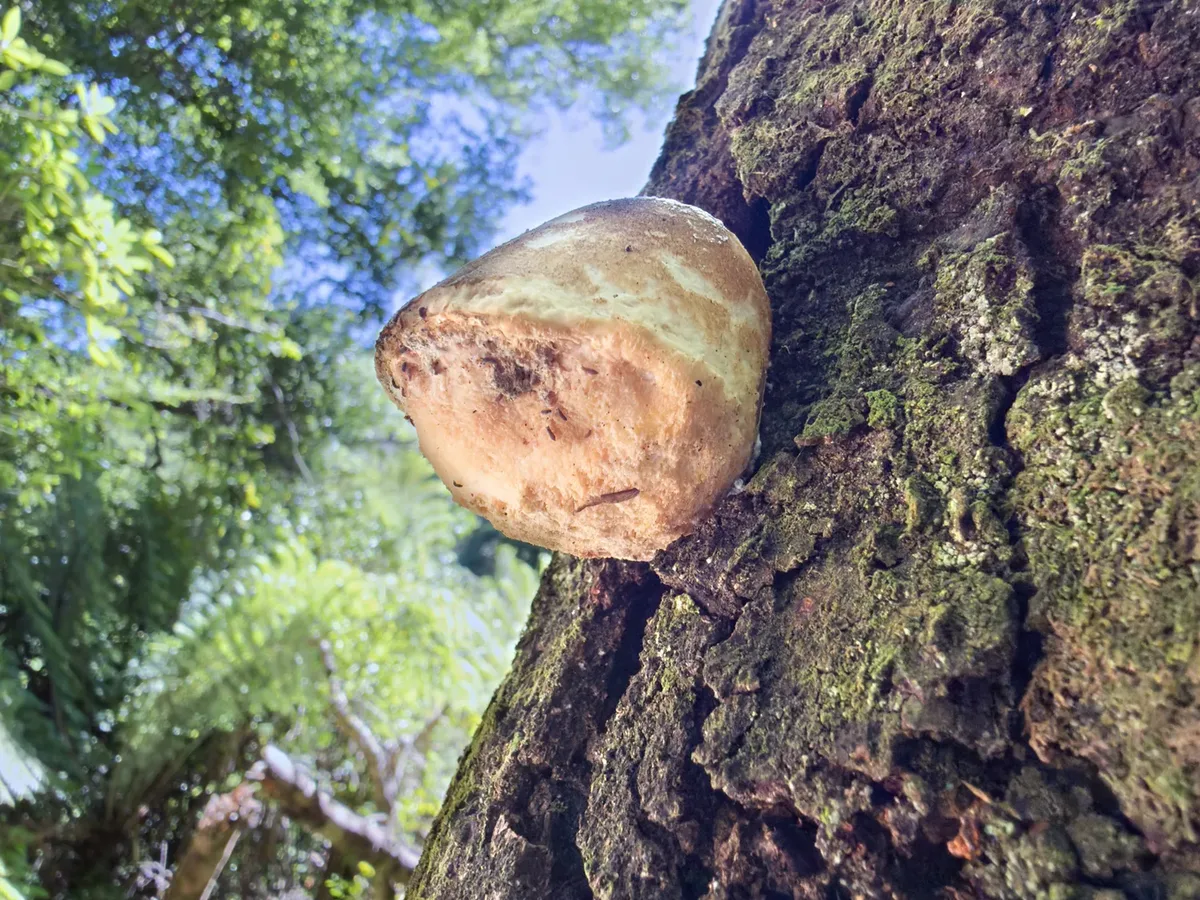 © Jeremy Rolfe (CC BY)
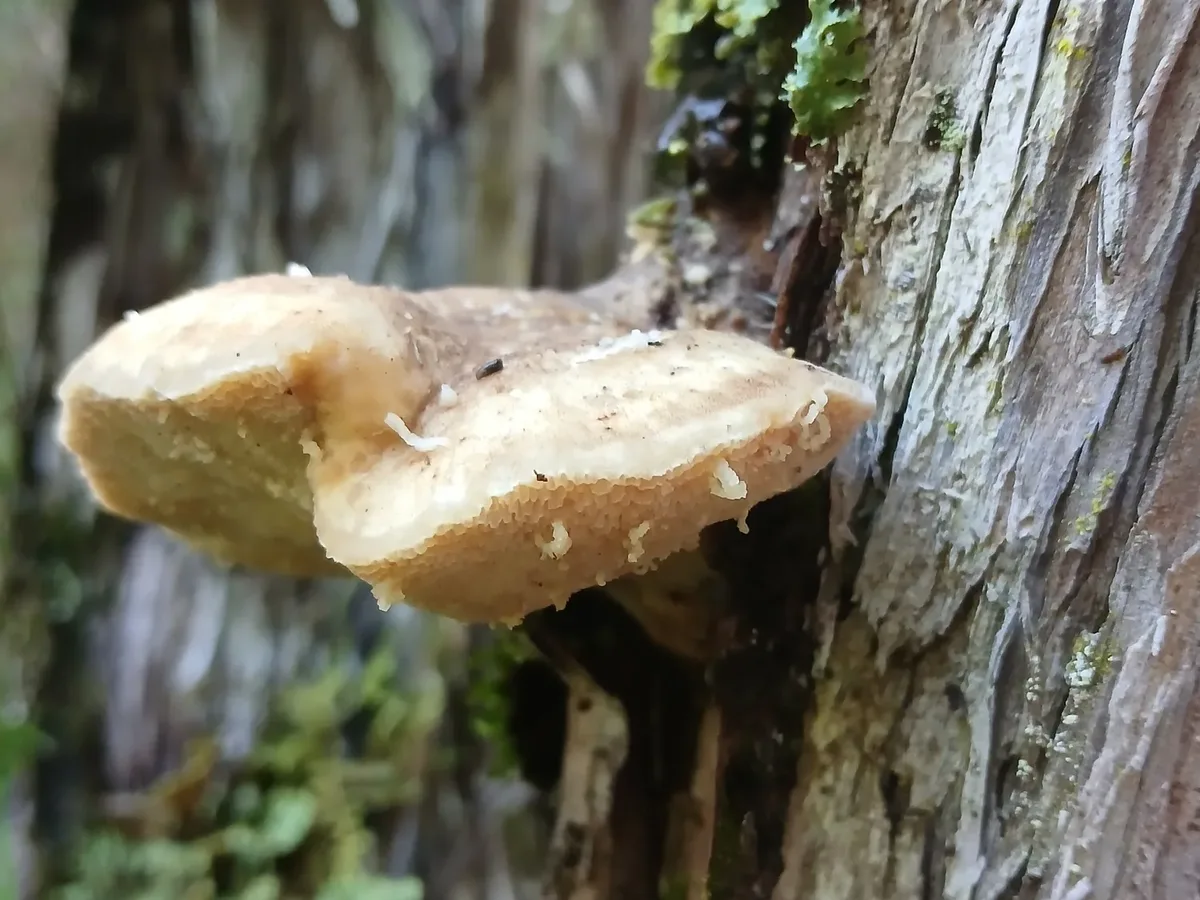 © claire (CC BY)
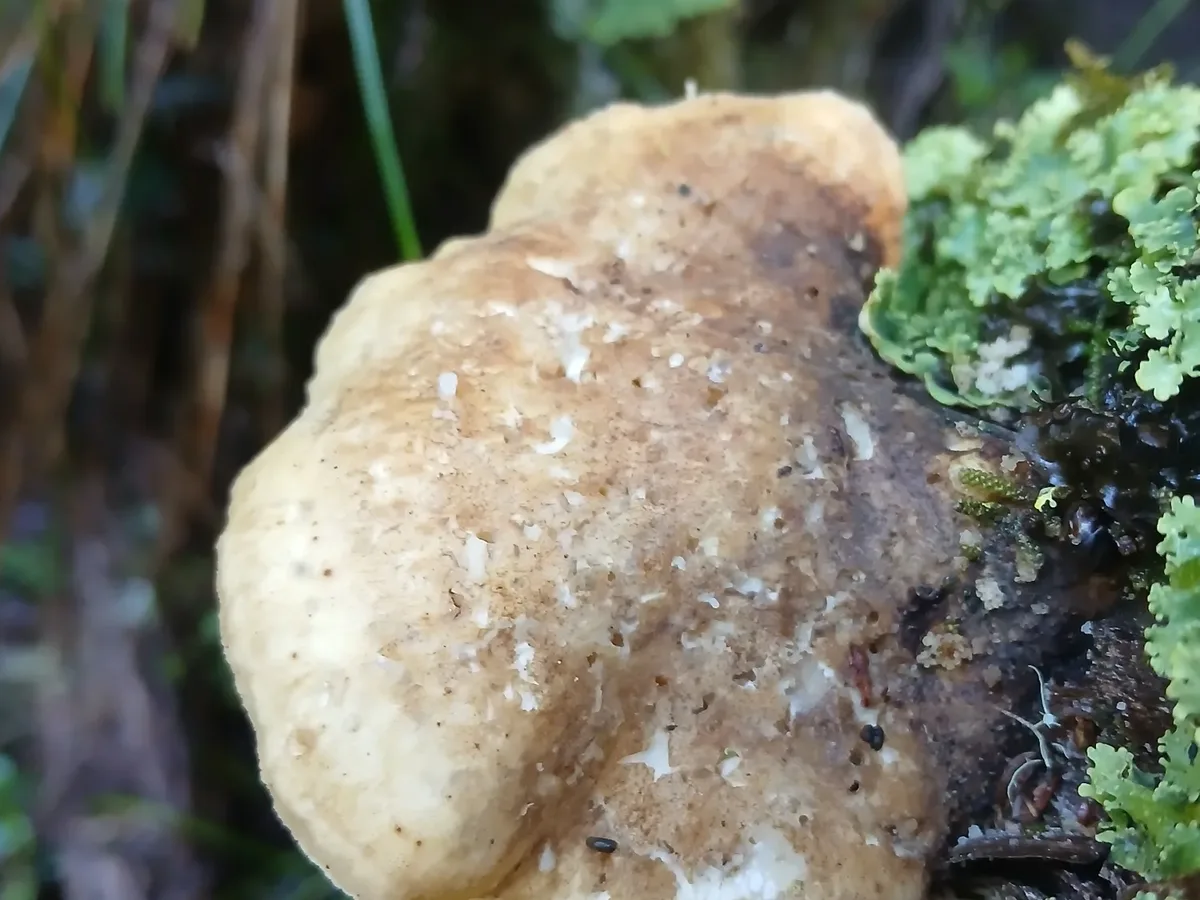 © claire (CC BY)
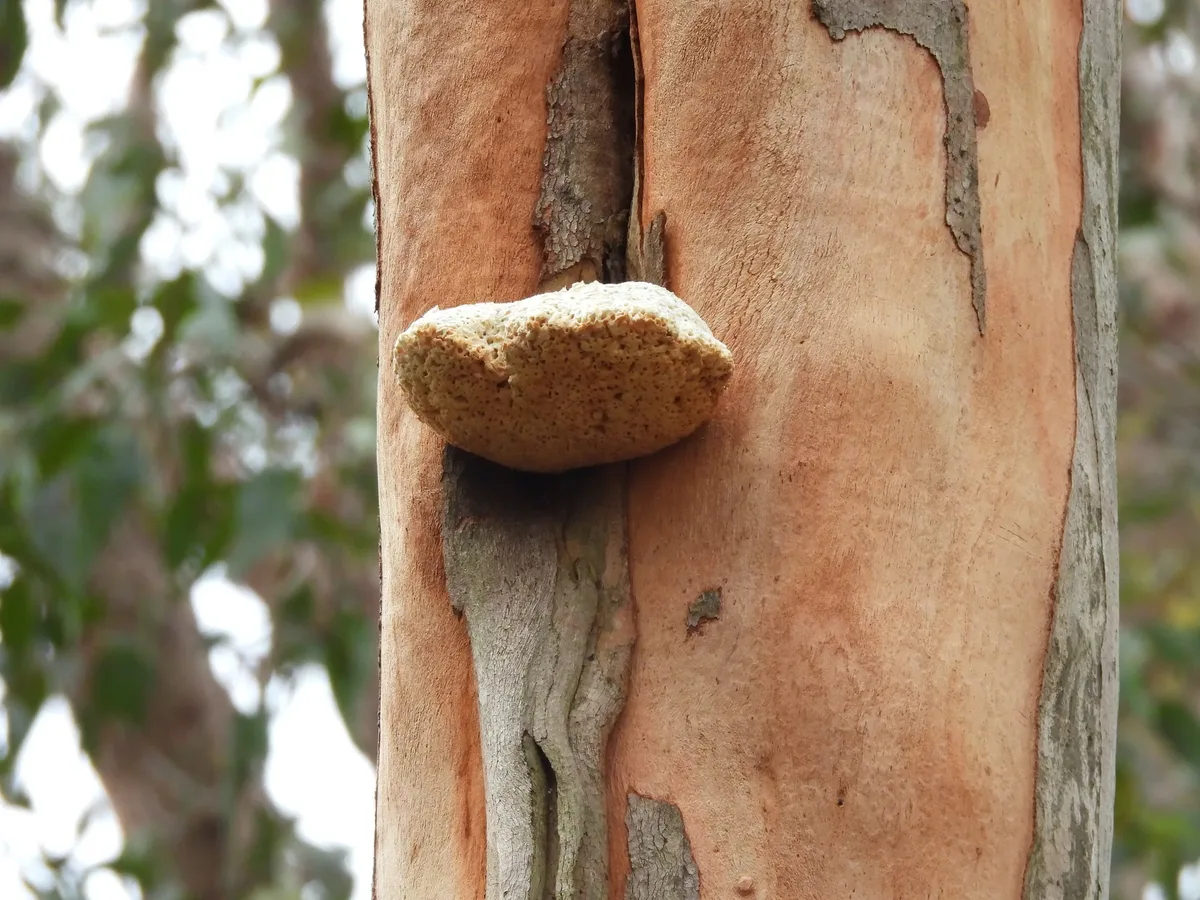 © Mark Clarke (CC BY)
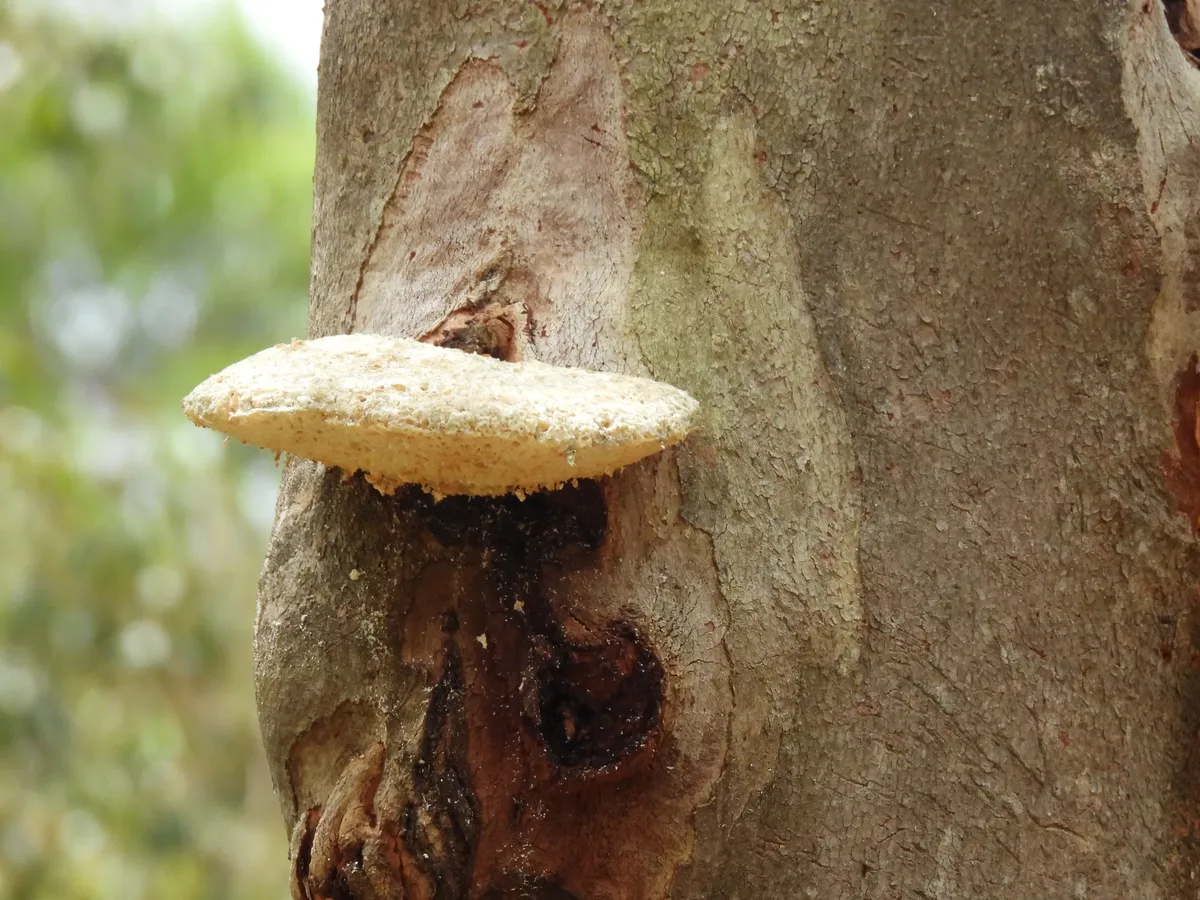 © Mark Clarke (CC BY)
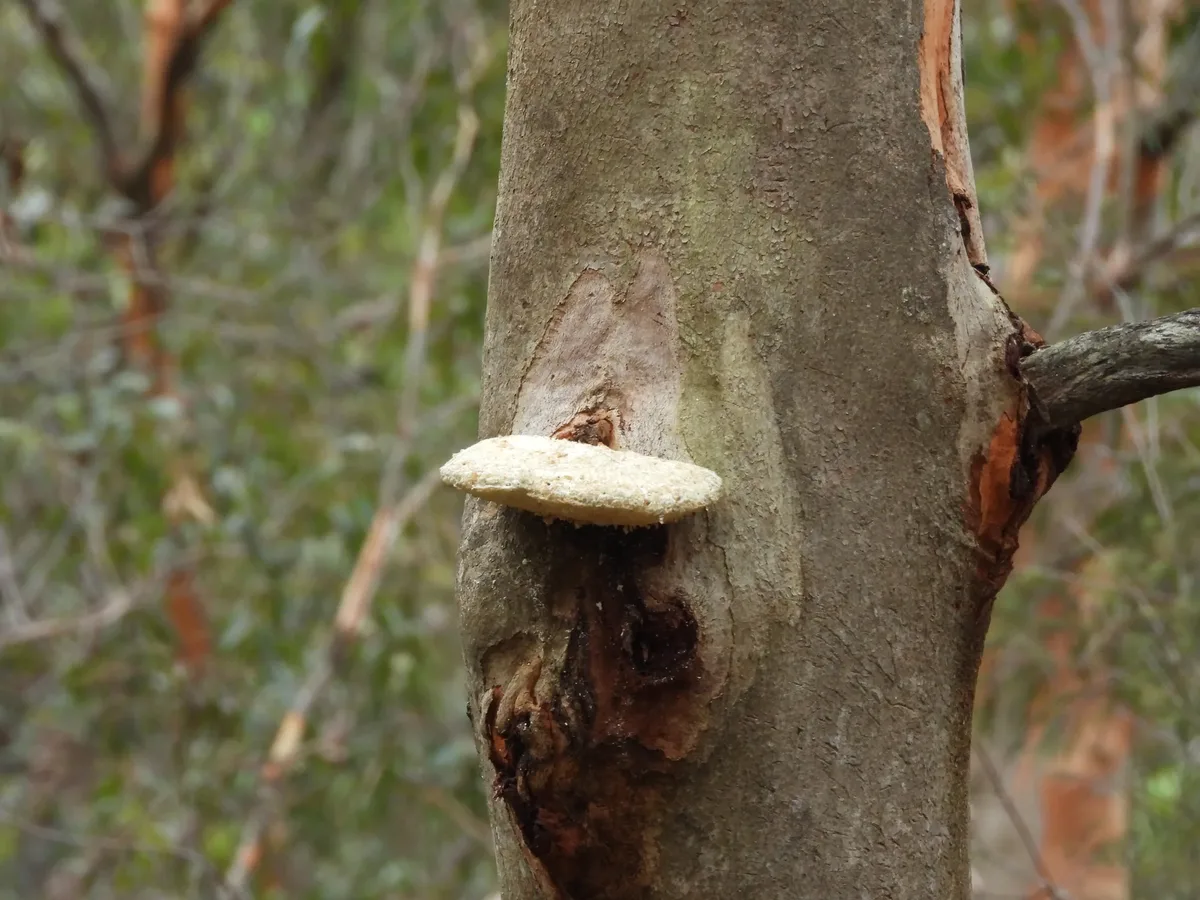 © Mark Clarke (CC BY)
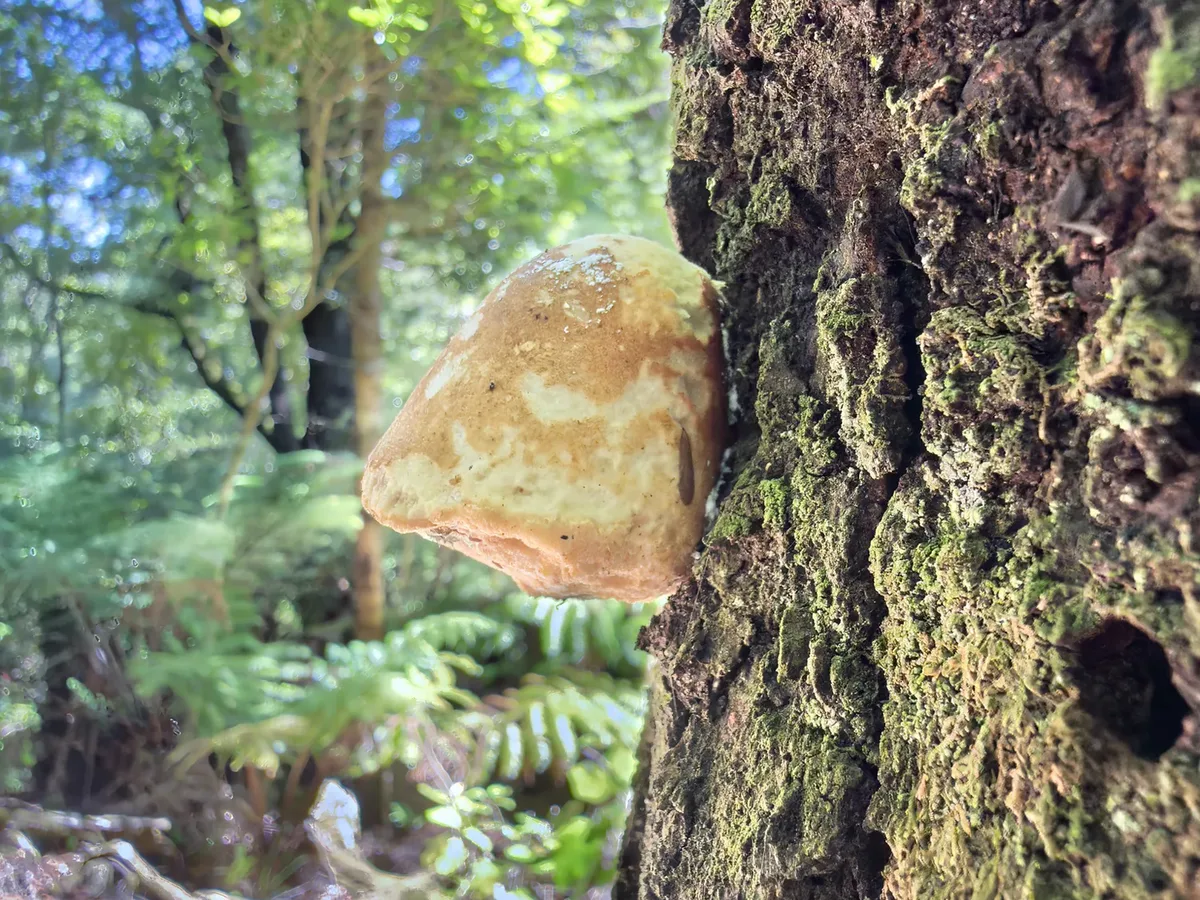 © Jeremy Rolfe (CC BY)© Jeremy Rolfe (CC BY)© claire (CC BY)
Edible only with the right preparation - or safe for some people but not others. Learn the caveats first.
How to recognise it
Laetiporus portentosus is the southern hemisphere's answer to the famous chicken of the woods, and like its northern relatives it announces itself dramatically: a large, pale tiered shelf or rosette of overlapping brackets on the flank of a Eucalyptus or southern hardwood, impossible to overlook once you know the shape.
The individual shelves are fan- to tongue-shaped, typically 10-40 cm across - large specimens can encompass the whole visible trunk surface and weigh several kilograms - and they emerge in overlapping layers like a loose stack of thick pancakes.
The key colour detail is subtler here than with the famous sulphur-yellow L. sulphureus of the Northern Hemisphere: L. portentosus tends toward a pale orange to apricot-cream or salmon-white on the upper surface, with the actively growing outer margin showing the most colour and the inner tissue already fading to buff or cream while the outer edge is still at its most vivid. Old specimens can appear almost entirely cream-white.
Turn any shelf over and inspect the underside - this is where the most reliable identification character sits: the pores are white to cream, small, and densely packed, roughly 3-5 per millimetre, forming a smooth, spongy, finely stippled surface that is never sulphur-yellow.
The flesh throughout is uniformly white, firm, and somewhat moist when young, without any colour change when cut or bruised.
There is no distinctive odour; the taste is mild.
The overall impression of a pale, cream-orange tiered bracket on Eucalyptus in Australian bush or southern South American forest is essentially diagnostic for this species in its range.
Where & when it grows
Habitat
This is a fungus of the southern hemisphere's hardwood landscapes, most at home in Eucalyptus forest and woodland - the sprawling, sun-drenched Australian ecosystems where Eucalyptus dominates from sea level to the montane fringe.
It is found across the eastern, southern, and southwestern parts of Australia wherever mature Eucalyptus trees are present: native bushland, timber plantation, national park, and the pockets of large old gums that survive in urban parks, roadsides, and paddock margins.
In South America it extends through the temperate forests of Argentina and Chile, particularly where Nothofagus (southern beech) and Quillaja are present, and it follows Eucalyptus plantations across the southern cone and into southern Brazil.
The fungus is not a root partner - it does not form mycorrhiza - but an invader of woody tissue, entering through wounds, scars, or dead branch stubs and colonising the heartwood.
Once established inside a large host, the mycelial network can persist for years, and the same tree or stump may produce bracket crops repeatedly in successive autumns as long as sufficient substrate remains.
The visible bracket on the outside is only the tip; inside, the wood is often already reddish-brown and crumbling in the characteristic cubically fractured pattern of a brown rot.
Look at the base of trunks, around large wounds, and on the upper surface of major fallen logs; fruitbodies can emerge anywhere from ground level to several metres up.
When
Laetiporus portentosus follows the seasonal rhythm of the temperate southern hemisphere, fruiting in the cooler and wetter months of autumn and early winter - from roughly February to June, with the peak crop in March, April, and May (ISO weeks 9-21 approximately).
This is the direct seasonal mirror of autumn-fruiting Laetiporus in Europe and North America, shifted six months because the hemispheres are inverted.
The trigger is the classic combination of cooling air temperatures after the summer heat and the return of significant autumn rainfall: the mycelium inside the host wood rehydrates after summer dormancy and responds to the first sustained wet spell of autumn by pushing bracket tissue out through the bark.
A flush typically appears 7-18 days after 25 mm or more of rain over a two-week period, provided air and wood temperatures have dropped below roughly 25 °C. In wetter years with a warm early autumn, fruitbodies can appear from late January.
In tropical and subtropical northern Australia - where temperatures remain high year-round - the seasonal window is broader and tracks the monsoon wet season rather than temperature cues, meaning fruiting can begin as early as October-November and persist into May.
Brackets grow relatively quickly once started, sometimes adding several centimetres per day in humid conditions, and a full fruitbody can develop from primordium to harvest size in one to three weeks.
The edible window is short: once the outer margin stops growing and turns pale buff, the flesh rapidly toughens.
In South America (Argentina, Chile) the productive window aligns similarly with the austral autumn.
How it grows
Like all members of the genus, L. portentosus is a white-spored, pore-bearing bracket polypore that causes a brown rot. It selectively decomposes the cellulose and hemicellulose of wood while leaving most lignin intact, so colonised wood turns reddish-brown, then chocolate-brown, then fractures into small rectangular blocks with a dry, spongy texture.
This structural digestion is what is happening invisibly inside the host year-round; the visible brackets are only the seasonal reproductive phase.
The mycelium penetrates through injuries or branch stubs and spreads outward through the sapwood and heartwood over months to years before the tree's structure is critically compromised.
Fruitbodies emerge from the mycelium-rich zone just beneath the bark surface, pushing through cracks or thin bark in a matter of days when conditions are right. Individual brackets grow rapidly from small cream-coloured primordial knobs, expanding and differentiating into the layered shelf form within a week to ten days.
Spores are released as a fine white powder from the underside pores and dispersed by wind.
Because the internal mycelium persists regardless of bracket harvest, removal of fruitbodies does not significantly affect the fungus or the host's decay trajectory - the same location on a live or dead tree may produce brackets for many seasons consecutively.
Fruiting conditions
A wood-decay bracket fungus of the southern hemisphere; fruiting is triggered by the onset of austral autumn cooling combined with the return of meaningful rainfall after summer. The mycelium is housed inside the host wood and is relatively insensitive to soil temperature per se; ambient and wood-temperature cooling below about 22 °C, combined with at least 20 mm of rain over a 14-day period, is the primary cue. Flush lag of 7-18 days reflects the time from hydration stimulus to bracket emergence through the bark surface. Productive host trees often refruit in the same spot across multiple austral autumn seasons.
Look-alikes
Within its southern hemisphere range, L. portentosus has no lookalikes that are deadly or seriously toxic, which makes it one of the more approachable large bracket fungi for cautious beginners - though thorough identification and cooking remain mandatory.
The species most likely to cause confusion:
- Other Laetiporus species that may overlap, including introduced L. sulphureus on introduced oaks or sweet chestnuts in Australia or South America, which has distinctly sulphur-yellow pores - the most useful separator.
- Ganoderma species: bracket polypores on hardwoods in both regions, but distinguished immediately by their hard, woody, usually varnished or lacquered texture and dark reddish-brown to purplish coloration - they are never soft or pale orange.
- Phlebia or Merulius species: thin, irregular, resupinate or semi-bracket crusts on wood, never thick and fleshy.
Young Laetiporus primordia before the bracket has opened can look like pale, club-shaped or lobate protrusions from bark and may briefly resemble oyster mushroom buttons or other bracket primordia, but they quickly develop the characteristic layered shelf form and white-pore underside.
The jack-o'-lantern Omphalotus species, while orange and clustered near tree bases, produce capped mushrooms with gills (never pores) and are immediately distinguishable on inspection of the underside - a check that takes seconds and is always worth doing.
Trametes and allied thin, tough, multi-zoned bracket polypores grow on hardwood throughout Australia and South America. They are much thinner (a few mm), leathery, and distinctly zoned in brown-grey-cream concentric bands, not thick and fleshy. They share white pores but are immediately distinguishable from L. portentosus by their thinness, toughness, and colour banding. Not edible but harmless.
The ghost fungus (Omphalotus nidiformis) of Australia produces clusters of cream to whitish capped mushrooms near the base of dead or dying hardwoods; it is bioluminescent (faintly glowing in darkness) and has radiating gills - not pores - on the underside. Gills versus pores is a zero-ambiguity separator: turn the specimen over and if you see radiating blade-like ridges it is not Laetiporus. Omphalotus causes severe gastrointestinal poisoning; while not lethal in confirmed cases, it produces very unpleasant symptoms. The gill check is mandatory any time you harvest a pale bracket-like cluster near a tree base in Australia.
Ganoderma brackets on Eucalyptus and southern hardwoods are hard, woody, and often varnished or lacquered in dark reddish-brown, purplish, or cream tones - never soft, fleshy, or pale orange. The pore surface bruises brown and quickly darkens. Anyone who touches both a fresh L. portentosus and a Ganoderma will find the contrast in texture and colour immediately obvious; there is no realistic danger of sustained confusion.
The classic Northern Hemisphere chicken of the woods has bright sulphur-yellow pores on the underside and a more intensely orange-and-yellow upper surface. L. portentosus has white to cream pores and tends to paler, more cream-orange or apricot tones overall. In Australia and South America L. sulphureus can occasionally occur on introduced European oaks or sweet chestnuts; pore colour is the cleanest separator. Both are edible only when thoroughly cooked and carry the same individual-sensitivity caveats.
In the kitchen
Picking & cleaning
Harvest only the young, actively growing outer portions of each bracket, where the tissue is pale orange to apricot-coloured, firm but slightly yielding to thumb pressure, and visibly moist.
The inner portions near the attachment point age and toughen first; the outer 3-8 cm of a fresh-growing shelf is the prize.
Cut with a clean knife, leaving the rest of the bracket - this causes no harm to the fungus and keeps the substrate intact for future crops.
Inspect the cut face: good eating tissue is uniformly white, moist, and clean-smelling. Reject any section that is yellowed, slimy, insect-riddled, or smells unpleasant.
Brackets on fallen logs or standing dead timber in cool, dry weather keep well for a day or two; in hot or humid conditions harvest and refrigerate promptly.
There is an important host-tree consideration unique to this species: some reports of stronger reactions and less pleasant flavour come from specimens growing on Eucalyptus species that are naturally high in terpenoids or phenolics.
Where possible, identify the host species - specimens on species known for highly aromatic or medicinal oils may carry more host compounds into the tissue and are best avoided or eaten with extra caution. Specimens from Nothofagus or other non-Eucalyptus hosts in South America are generally considered to cause fewer issues.
Cooking
The firm, white, meaty flesh of young L. portentosus has the characteristic fibrous pull that earns the genus its 'chicken of the woods' reputation - sliced and cooked it does genuinely recall the texture of chicken breast, absorbing sauces and browning well on a hot surface.
Thorough cooking is the absolute prerequisite: every piece must be cooked to the centre, not merely browned. Slice brackets approximately 1 cm thick for even cooking; thicker slices risk an undercooked centre.
A hot, dry or lightly oiled pan with plenty of space - do not crowd - allows surface moisture to evaporate and the flesh to sear to a golden, slightly crisp exterior. Finish with butter and aromatics, or transfer to a sauce or braise once seared.
The mild flavour accepts bold seasonings: garlic, lemon, herbs, spices, and soy- or miso-based glazes all work well.
In Australian bush cooking traditions the species is sometimes seasoned simply and pan-fried or used in pies and pasta. In South America it is used in stews and as a meat substitute in traditional dishes.
The flesh does not hold well raw - use within one to two days of harvest, or blanch briefly (two to three minutes in boiling water) and freeze for longer storage. Dried L. portentosus rehydrates poorly; freezing after blanching is the preferred preservation method.
Discard any part that remains tough, rubbery, or discoloured after cooking.
Good to know
Laetiporus portentosus must be thoroughly cooked before eating - not lightly sautéed, but cooked through to the centre of every piece.
Raw or undercooked flesh reliably causes gastrointestinal upset (nausea, vomiting, diarrhoea) in line with the broader Laetiporus genus pattern. This is not a matter of individual sensitivity but a consistent property of raw tissue.
Even after thorough cooking, some individuals experience adverse reactions - lip swelling, tingling, nausea, or vomiting - and Australian mycological reports document this reaction pattern specifically for L. portentosus more frequently than for some other Laetiporus species.
The host tree matters: the Eucalyptus genus produces a wide range of volatile terpenoids, phenolics, and other bioactive compounds in its wood, bark, and sap, and there is reasonable evidence that some of these compounds are taken up by the fungal tissue and not fully denatured by normal cooking. Specimens growing on strongly aromatic Eucalyptus species are considered higher risk.
Standard precautions:
- Eat only a small portion (a few bites) the first time you try a specimen from any new host or location.
- Wait 24 hours before eating more.
- Never serve to children, pregnant women, or immunocompromised individuals without medical guidance.
- If any mouth swelling, throat discomfort, or significant nausea occurs after eating, seek medical attention and retain a specimen or photograph for identification.
There are no confirmed fatalities, no amatoxins, no orellanin, and no other life-threatening compounds known in this species.
A reference guide - never an edibility guarantee. When in doubt, leave it out.