Conifer Chicken of the Woods
Laetiporus conifericolasyn. Laetiporus sulphureus var. conifericola
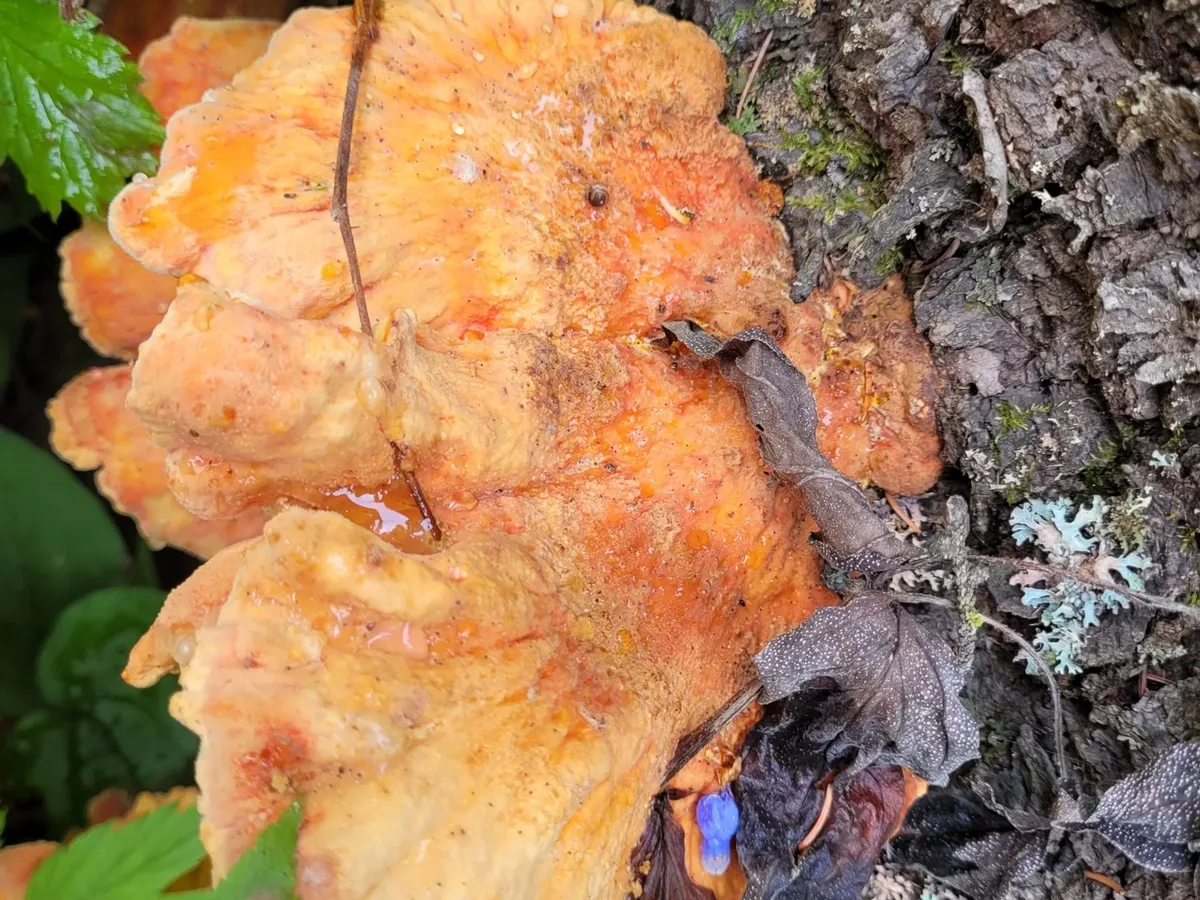 © Robyn Perkins (CC BY)
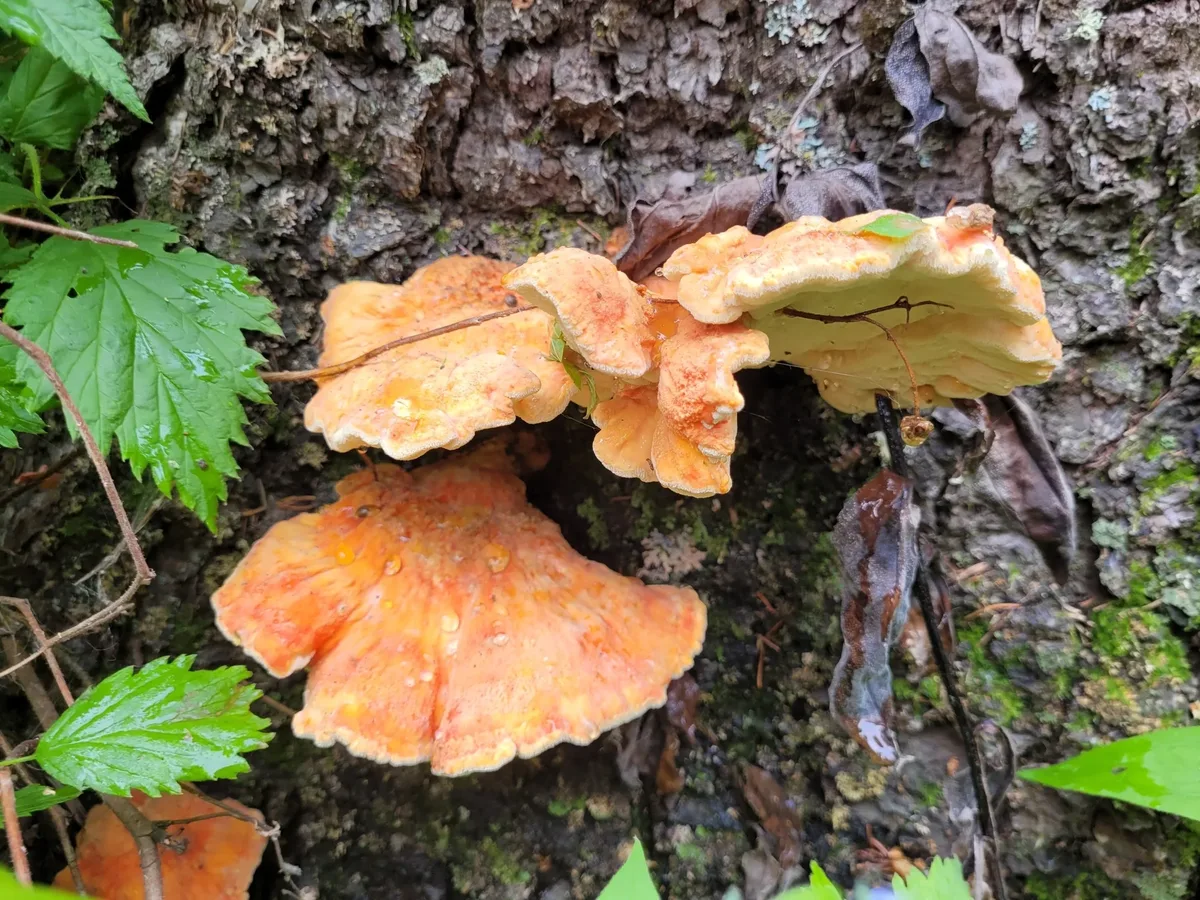 © Robyn Perkins (CC BY)
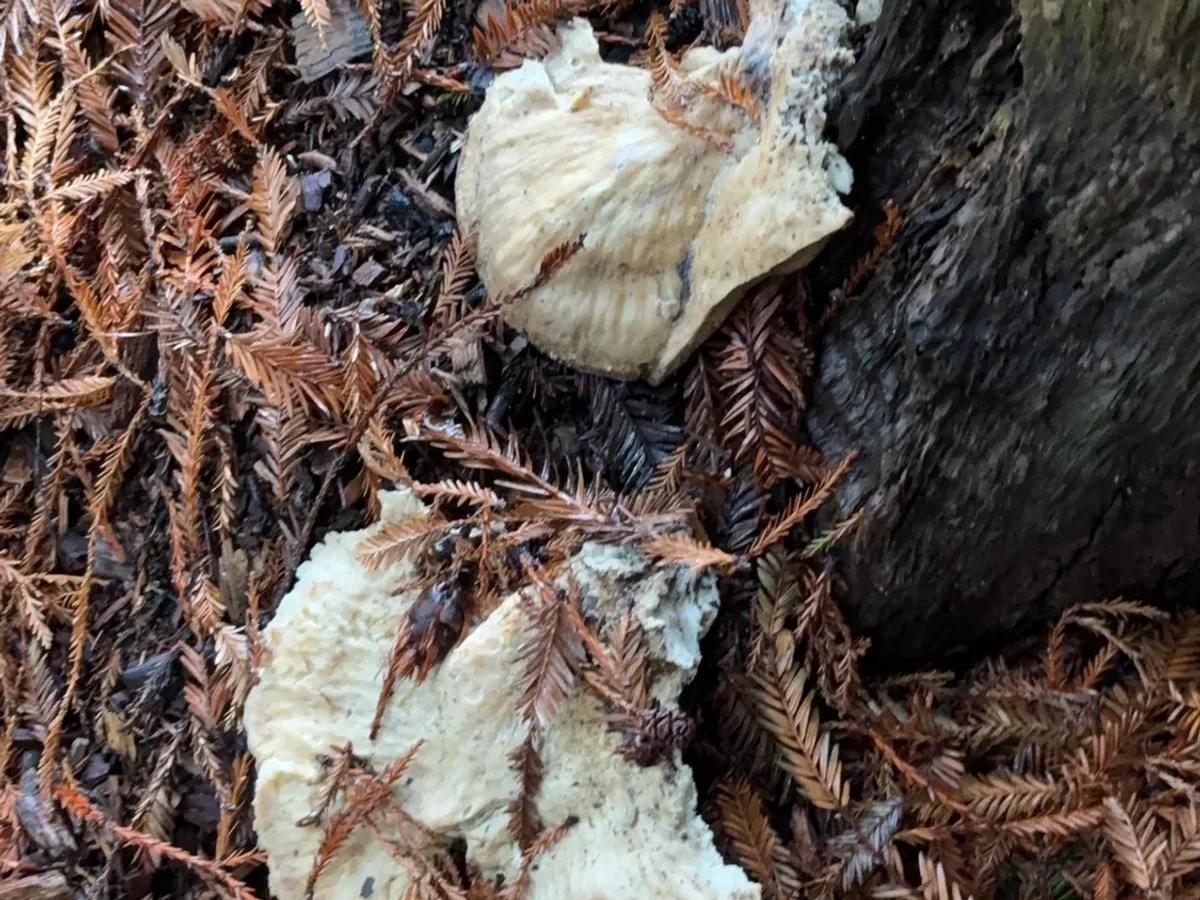 © kdcs (CC BY)
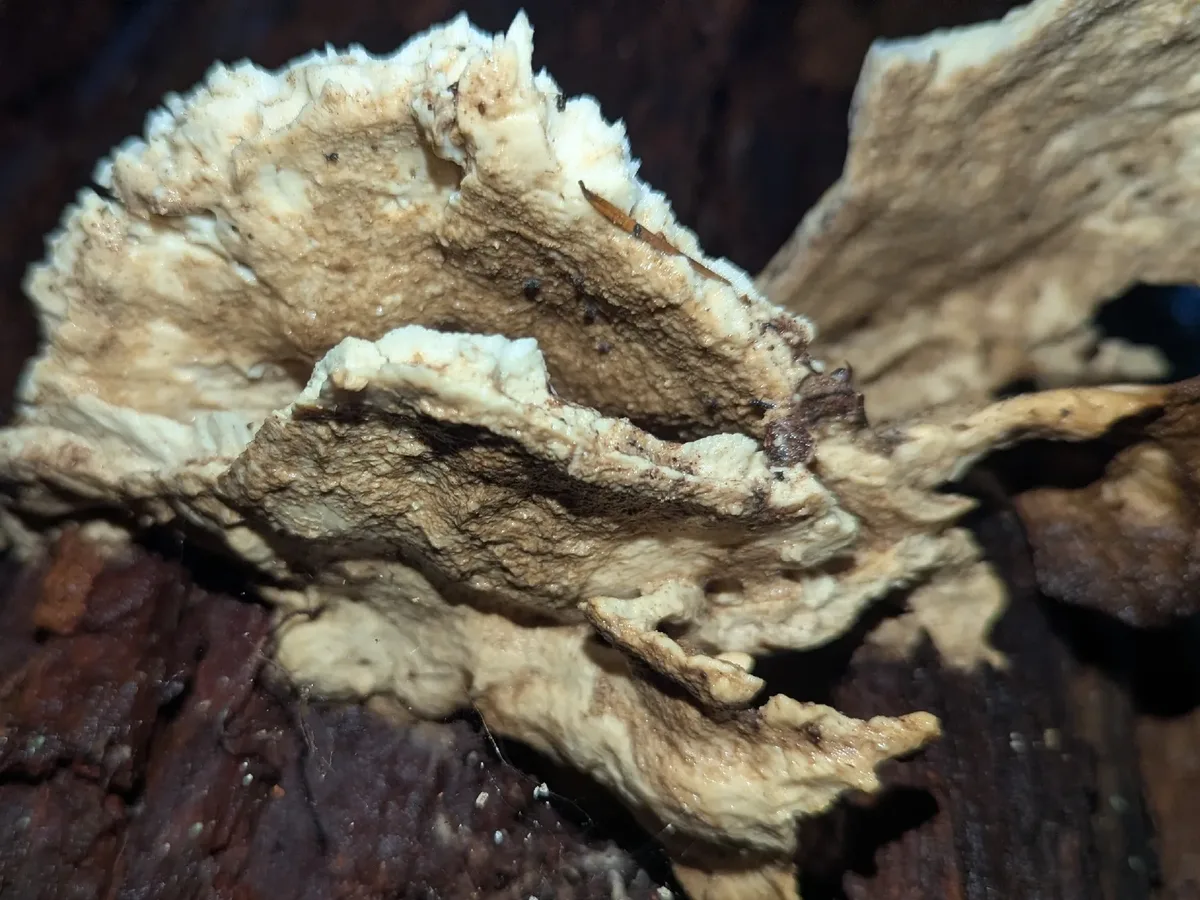 Ben Keen (CC0)
 Ben Keen (CC0)
 © Alexandria 'Alex' Wenninger (CC BY)
 © Alexandria 'Alex' Wenninger (CC BY)
 © Robyn Perkins (CC BY)© Robyn Perkins (CC BY)© Robyn Perkins (CC BY)
Edible only with the right preparation - or safe for some people but not others. Learn the caveats first.
How to recognise it
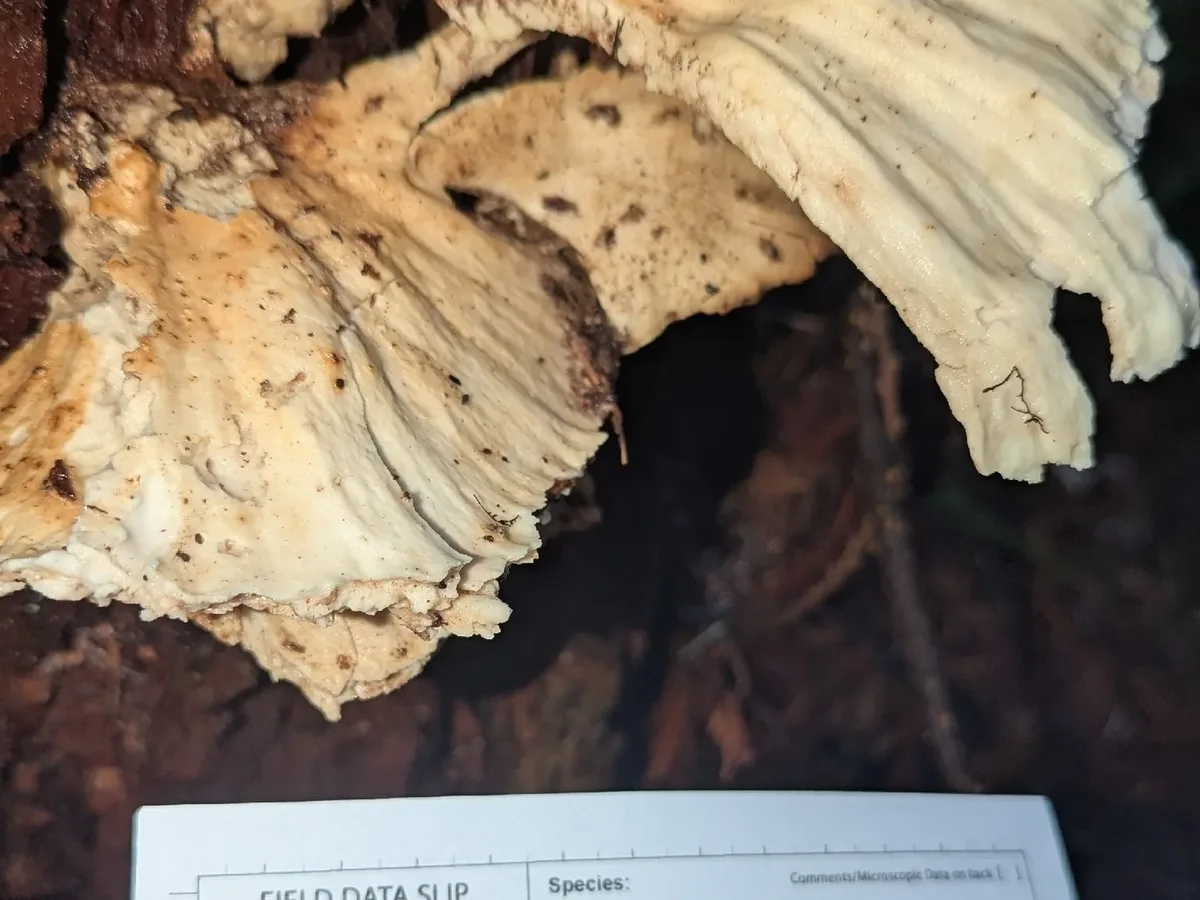
Laetiporus conifericola shares the vivid colour and bracket architecture that makes all chicken of the woods fungi impossible to overlook, but carries one feature that distinguishes it cleanly from the famous Eastern sulphur shelf: the pores on its underside are white to cream, never sulphur-yellow.
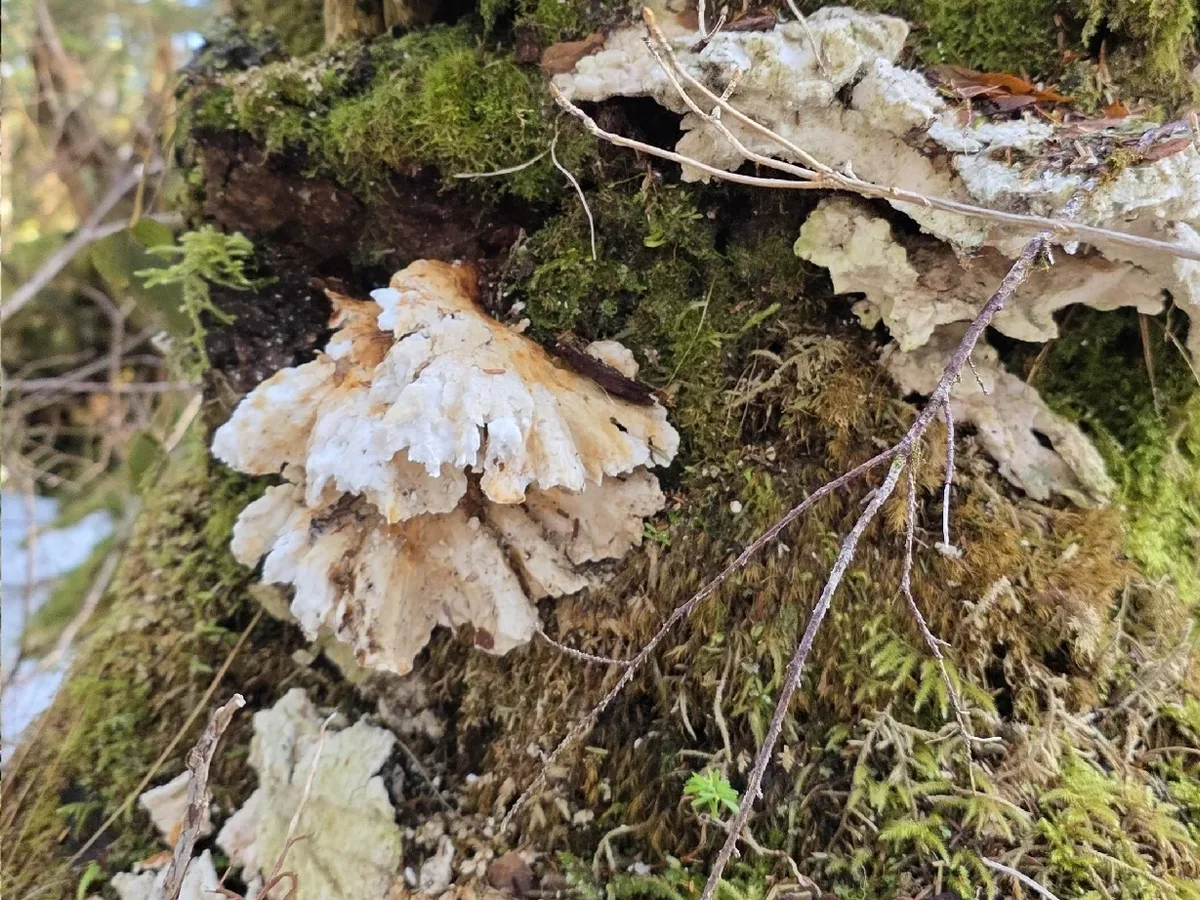
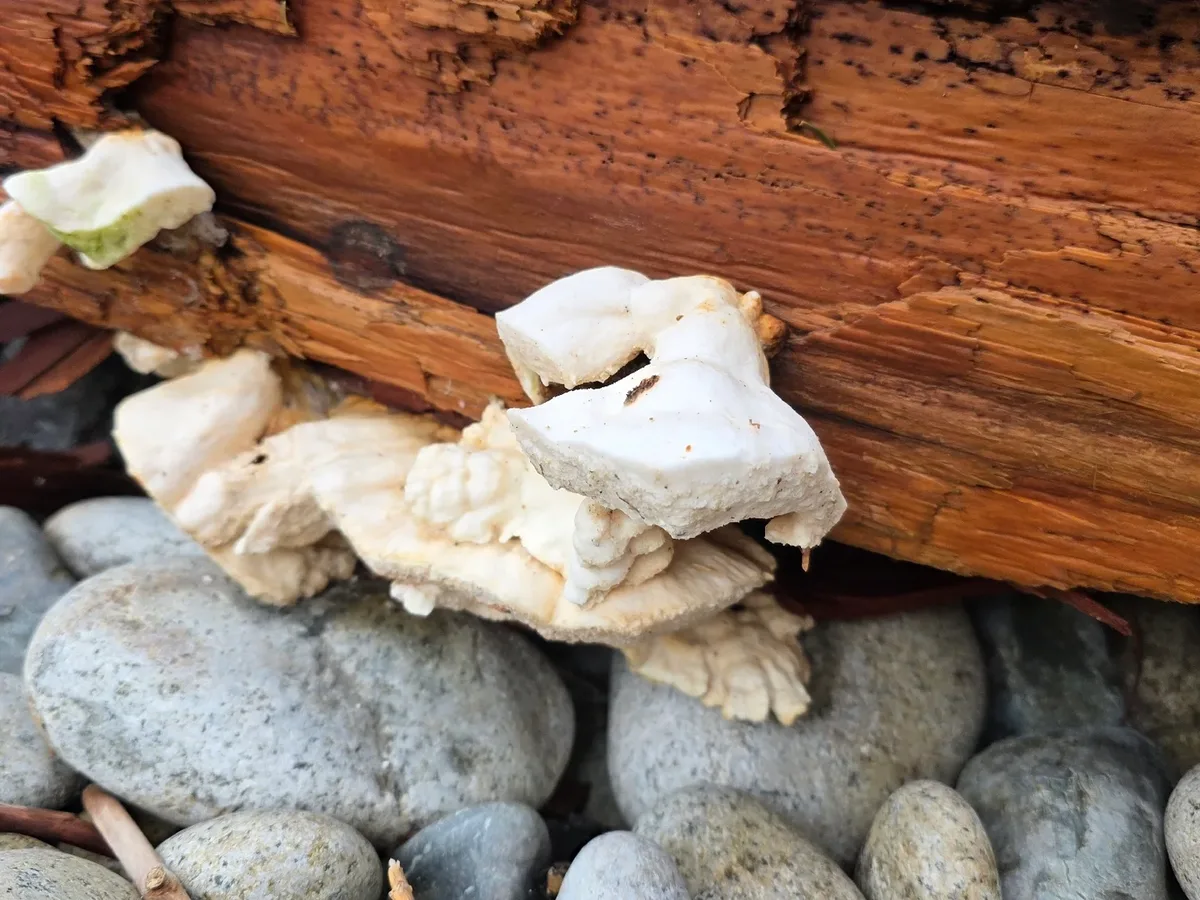
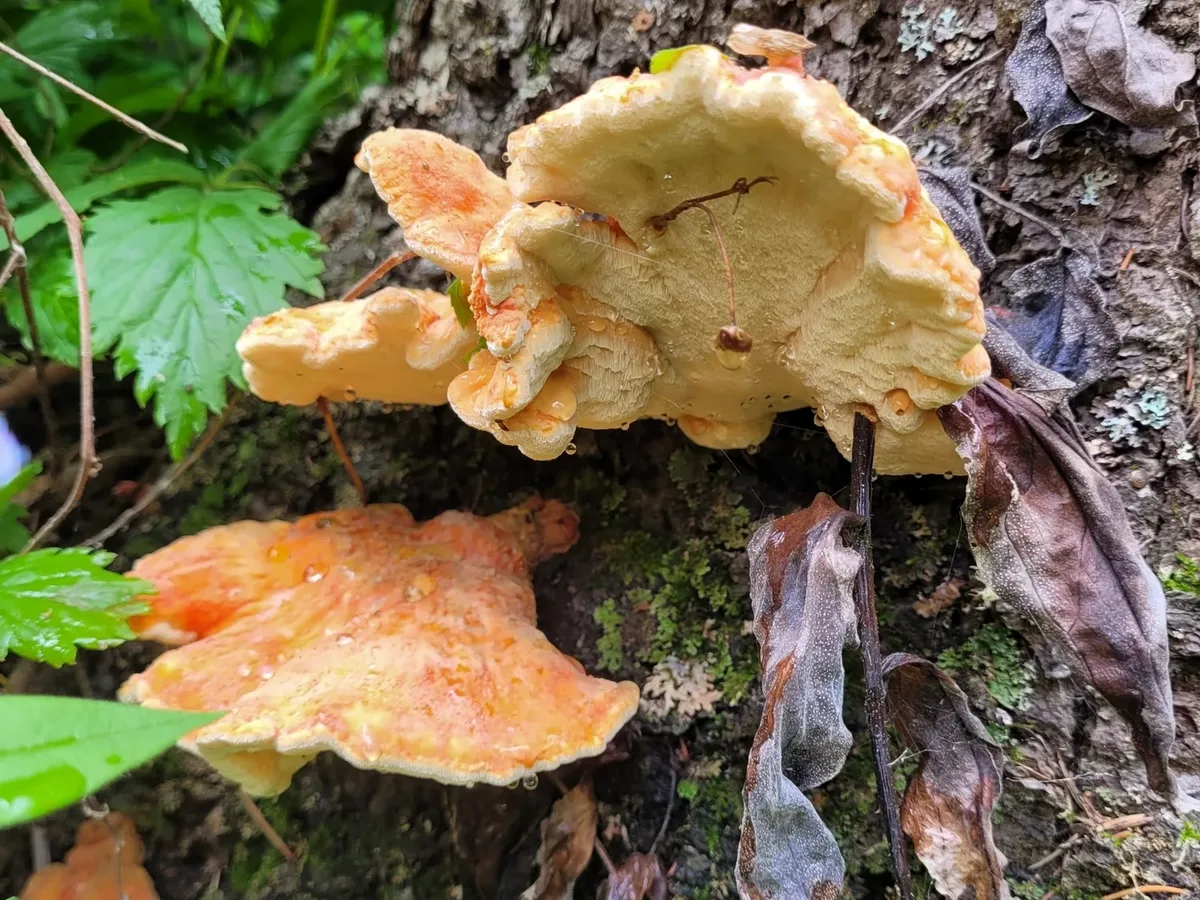
The fruiting body builds itself as an overlapping stack of fan- to tongue-shaped shelves emerging from conifer wood - sometimes a relatively small rosette of three or four shelves spanning 20-30 cm, sometimes a magnificent tiered mass that can cover a large section of trunk and weigh several kilograms.
Each shelf is smooth to faintly felty on top when fresh, most saturated in colour at its outer growing margin: bright orange or orange-yellow, shading toward apricot and buff closer to the attachment point. As with all Laetiporus, ageing and drying drive the colour toward pale tan and eventually chalky cream, and this progression signals the end of any culinary value.
Gills / Pores
The underside - the fertile surface from which the spores disperse - is always worth inspecting as the primary identification check. In L. conifericola the pores are white to pale cream in fresh, young material, densely packed at roughly 3-4 per millimetre, and have a smooth, dry texture.
There are no gills anywhere on the specimen: the underside is always a spongy pore surface, never radiating ridges.
Flesh
Slice through a young outer shelf and the cut face is uniformly white to cream, firm, and faintly moist, with no colour change on exposure to air.
Smell & taste
The flesh has a mild, faintly mealy or neutral smell and a bland taste when raw. Spore print white.
Where & when it grows
Habitat
This is a fungus of the great conifer forests of the Pacific Northwest - among the most productive and biologically dense temperate forest ecosystems on Earth.
Look for it in:
- old-growth or mature second-growth stands of western hemlock and Douglas-fir west of the Cascade crest
- the coastal Sitka spruce and hemlock rainforest of the Olympic Peninsula and British Columbia coast
- true fir and mixed conifer zones extending eastward into the northern Rocky Mountains
It grows directly on its substrate: a dead or dying conifer trunk, a large fallen log in late stages of decay, a stump, or occasionally the buried root zone of a recently dead tree.
The mycelium invades through wounds, branch scars, or root damage and causes a brown rot - the characteristic reddish-brown, cuboidal, crumbling wood interior that can persist for years inside a host before any bracket appears on the outside.
Because the mycelium is persistent inside the host wood, a productive tree or stump often refuits at or near the same location in successive seasons: this makes noting successful harvest sites valuable.
It is not mycorrhizal and gains no benefit from live tree roots; the bracket you find is the reproductive tip of a network that may have been digesting the host for a long time before revealing itself.
The abundance of large-diameter fallen logs and old-growth snags in Pacific Northwest forest creates ideal substrate, and the species can produce impressive crops where these old-growth elements are retained.
When
The Pacific Northwest has long, dry summers, and L. conifericola's fruiting is almost entirely an autumn event triggered by the return of Pacific rain after the summer drought.
The first specimens appear from mid-summer (July-August) in cooler, wetter coastal and north-facing settings, but the main crop arrives in September and October when the first sustained autumn rains rehydrate the mycelium inside seasoned conifer wood.
This timing is a little later than many co-occurring mycorrhizal fungi because the wood-interior mycelium needs more moisture to penetrate and hydrate than roots near the surface. Once stimulated, brackets can emerge quickly, sometimes reaching harvest size within seven to fourteen days of a significant rain event.
November can still yield good specimens in mild coastal years, but by December declining temperatures and saturating wood conditions push the season to a close.
Because it is a wood-decay species and not tied to living tree root phenology, the season can extend later or start earlier than the main chanterelle and hedgehog season in the same forest.
Individual fruitbodies grow relatively rapidly during warm, humid spells, and a cluster can double in size in a few days under optimal conditions. A single colonised stump or log can produce bracket crops repeatedly across multiple autumns as long as substrate remains.
How it grows
Laetiporus conifericola causes a brown rot: it selectively decomposes cellulose and hemicellulose from inside the host's woody tissue while leaving much of the structural lignin behind.
The result, visible when you crack open colonised wood, is a characteristic reddish-brown, dry, crumbling mass that fractures into small brick- or cube-shaped blocks - a texture sometimes described as dry brown cheese. This is distinctly different from the pale, fibrous remains left by a white-rot fungus, and the brown-rot signature is useful confirmation when investigating a fruiting site.
The mycelium typically enters through a wound, a branch stub, a lightning scar, or root damage, and spreads through the heartwood over months to years before the colony is large enough to allocate energy to reproduction.
The visible bracket is only the seasonal, short-lived reproductive structure; the mycelium inside the wood persists year-round.
Once conditions are right - adequate moisture and a suitable temperature window - the primordial tissue pushes outward through cracks or thin bark and expands rapidly into the characteristic shelf form. Young brackets can add centimetres of growth per day during warm, humid periods.
The spores are released as a fine white powder from the pore tubes on the underside and dispersed by air currents. The mycelium is not meaningfully affected by harvesting the bracket; the colony continues and may produce again the following year.
Fruiting conditions
A conifer wood-decay bracket fungus in the Pacific Northwest. Fruiting is triggered by the return of autumn rainfall after the summer drought, when at least 25 mm of rain over a 14-day period rehydrates the mycelium inside the host wood. Soil temperature is less directly relevant than wood moisture and ambient temperature; the 7-18 day flush lag reflects the time needed to push new bracket tissue through bark after hydration. Air and wood temperatures of 7-20 °C suit the main fruiting window. The same colonised host often produces bracket crops in the same location across multiple autumn seasons.
Look-alikes
Laetiporus conifericola has no deadly lookalikes in the traditional sense - no lethal species closely mimics its specific combination of bracket growth on conifers, white pores, and orange colouration. The relevant comparisons are:
- 1Laetiporus sulphureus sensu stricto, the Eastern chicken of the woods, has distinctly sulphur-yellow pores and is primarily associated with hardwoods. Where the two species concepts overlap in the Rocky Mountains or introduced settings, pore colour is the key separator.
- 2Laetiporus huroniensis, described from eastern North America on hemlock (Tsuga canadensis), is morphologically very similar to L. conifericola and some researchers consider them closely related or part of a complex; it is also associated with elevated adverse reactions on hemlock hosts. For the Pacific Northwest forager the practical implication is the same: conifer-growing chicken of the woods from this region falls into the L. conifericola concept and should be treated with the heightened caution this name implies.
- 3Omphalotus olivascens (the western jack-o'-lantern) is orange and grows in clusters near tree bases in California and parts of the Pacific Coast - it is poisonous and causes severe gastrointestinal illness. It produces individual cap-and-stem mushrooms with distinct blade-like gills on the underside, not overlapping bracket shelves with pores. The gill-versus-pore check is definitive and takes seconds: run a finger along the underside of your specimen and feel for a spongy, stippled pore surface (Laetiporus) versus sharp radiating ridges (Omphalotus). This check is non-negotiable.
- 4Ganoderma oregonense and other western Ganoderma species (artist's conk, red belt conk) grow as bracket polypores on conifers in the Pacific Northwest but are immediately distinguishable by their hard, woody, often varnished or zoned texture and reddish-brown to cream colouration - they are never soft, fleshy, or orange.
The combination of orange colour, soft fleshy texture, white pores, and conifer substrate is essentially sufficient to identify L. conifericola in the Pacific Northwest with confidence, as long as the underside pore check is performed.
Also bracket polypores on Pacific Northwest conifers, but immediately distinguished by their hard, woody texture, often zoned or varnished reddish-brown to grey-cream upper surface, and by being much tougher and less fleshy than L. conifericola. Never orange, never soft. Collected for medicinal use; not edible as food. There is no realistic confusion for anyone who touches both species.
A closely related eastern North American species also growing on hemlock (Tsuga canadensis) and associated with elevated adverse-reaction rates; morphologically very similar to L. conifericola and sometimes considered part of the same complex. The host species and geographic range differ: L. huroniensis is an eastern species on eastern hemlock, L. conifericola is the western Pacific species. Both require full cooking and the same caution. The practical implication for the forager: any conifer-associated Laetiporus in North America carries heightened caution relative to hardwood-associated forms.
A common Pacific Northwest conifer bracket with a characteristic reddish-brown belt and cream to buff margin; tough, hard, and woody - never soft and fleshy. The underside pores are white and bruise yellow-brown. Distinguished from L. conifericola immediately by the woody hardness of the flesh, the red-banded zoning on the upper surface, and the lack of orange colouration. Not edible.
L. sulphureus has distinctly sulphur-yellow pores on the underside - the most reliable field separator. It is primarily associated with hardwoods (oak, cherry, willow) in eastern North America; where it occurs on introduced hardwoods in the Pacific Northwest the pore colour remains diagnostic. Both species require thorough cooking and carry individual-sensitivity caveats, but L. sulphureus on hardwood is generally associated with fewer adverse reactions than L. conifericola on conifers.
Orange and conspicuous near tree bases in California and parts of the Pacific Coast, and causes severe gastrointestinal poisoning. Produces individual capped mushrooms on a central stem with radiating blade-like gills on the underside - not overlapping bracket shelves. The gill-versus-pore check is definitive: run a finger along the underside and feel for sharp ridges (gills = Omphalotus) versus a spongy stippled surface (pores = Laetiporus). This check takes seconds and must always be performed.
In the kitchen
Picking & cleaning
Harvest only the young, actively growing outer portions of each shelf - the outermost 3-6 cm where the tissue is vivid orange, firm, and gives slightly to gentle thumb pressure before springing back. The inner tissue near the attachment point ages and stiffens first; by the time the outer edge is at its best, the inner portions may already be approaching the tough, chewy stage.
Use a clean knife to cut the outer shelves free, leaving the older inner tissue on the host - this causes no harm and keeps the substrate intact for future crops. The cut face of good eating tissue should be uniformly white and moist, with a clean, mild smell.
Reject any section that is yellowed, slimy, strongly odorous, or visibly tunnelled by insect larvae; larvae are common in older tissue but less prevalent in young outer tissue.
A critical host-tree consideration applies: L. conifericola growing on western hemlock (Tsuga heterophylla) is associated with a substantially higher rate of adverse reactions than specimens from other hosts, and some cautious foragers avoid hemlock-associated material entirely. If the host tree is identifiable, note it - specimens on Douglas-fir are generally considered lower risk than those on hemlock.
Do not harvest from obviously treated, chemically managed, or heavily polluted sites. Brush debris off in the field; the bracket surface is relatively clean compared with terrestrial species but can harbour conifer needles and bark fragments in the overlapping shelves.
Cooking
The outer, young tissue of L. conifericola has the firm, moist, slightly fibrous texture that gives the chicken of the woods group its culinary reputation - when cooked through it acquires a somewhat meaty, chickeny pull that makes it one of the more convincing meat substitutes in the mushroom kingdom. Flavour is mild and relatively neutral, accepting bold seasonings well.
Thorough cooking through to the centre of every piece is mandatory - not just a sear on the outside. Slice the shelves about 1 cm thick for even heat penetration; thicker pieces risk remaining undercooked in the centre.
Use a hot, lightly oiled pan with space for each piece to sear (do not crowd - overcrowding causes steaming rather than browning): cook until golden on both sides and fully cooked through, then finish with butter, garlic, fresh herbs, or other aromatics.
It works well in stews, curries, pasta sauces, and stir-fries where longer cooking times guarantee full heat penetration. The Pacific Northwest context makes it a natural match for preparations using local aromatics - thyme, sage, a splash of white wine, or a cream sauce.
Fresh is always best; use within one to two days of harvest. For longer storage, blanch pieces for two to three minutes in boiling water and freeze - this is significantly more effective than drying, which yields a poor-textured product on rehydration.
Given the elevated reaction rate compared to L. sulphureus, particularly on hemlock hosts, starting with a modest portion at any new collection is the sensible precaution regardless of previous positive experience with other Laetiporus species.
Good to know
Laetiporus conifericola must always be thoroughly cooked before eating - raw or undercooked flesh reliably causes gastrointestinal upset, and this applies to all members of the Laetiporus genus. This is not negotiable and not a matter of personal risk tolerance.
More importantly for this specific species: even with thorough cooking, the rate of adverse reactions is considered higher than for L. sulphureus on hardwoods.
Documented reactions typically begin 30 minutes to a few hours after eating:
- swollen or tingling lips
- numbness around the mouth
- nausea
- vomiting
- dizziness
The mechanism is incompletely understood but likely involves bioactive secondary compounds absorbed from conifer hosts - particularly resinous terpenes and phenolics from western hemlock - that are not fully destroyed by standard cooking temperatures.
The reaction risk appears to vary by host tree: specimens from western hemlock are most frequently implicated; those from Douglas-fir or true fir are generally considered lower risk, though not risk-free.
A conservative approach on your first attempt with this species:
- 1Cook a small portion (two or three bites only).
- 2Eat it, and wait 24 hours before eating more.
Do this each time you try a new collection from a different host tree or location.
Do not serve to children, pregnant women, elderly individuals, or anyone with a compromised immune system without medical advice.
There are no confirmed fatalities and no life-threatening toxins (no amatoxins, no orellanin, no gyromitrin) known in this species.
If significant mouth swelling, throat tightening, or severe vomiting occurs after eating, seek medical attention and bring a sample or photograph for identification.
The species is rated caution, not deadly, but its elevated reaction rate distinguishes it from most other choice Pacific Northwest fungi.
A reference guide - never an edibility guarantee. When in doubt, leave it out.