Weeping Milk Cap
Lactifluus volemussyn. Lactarius volemus, Agaricus volemus, Galorrheus volemus, Lactarius lactifluus
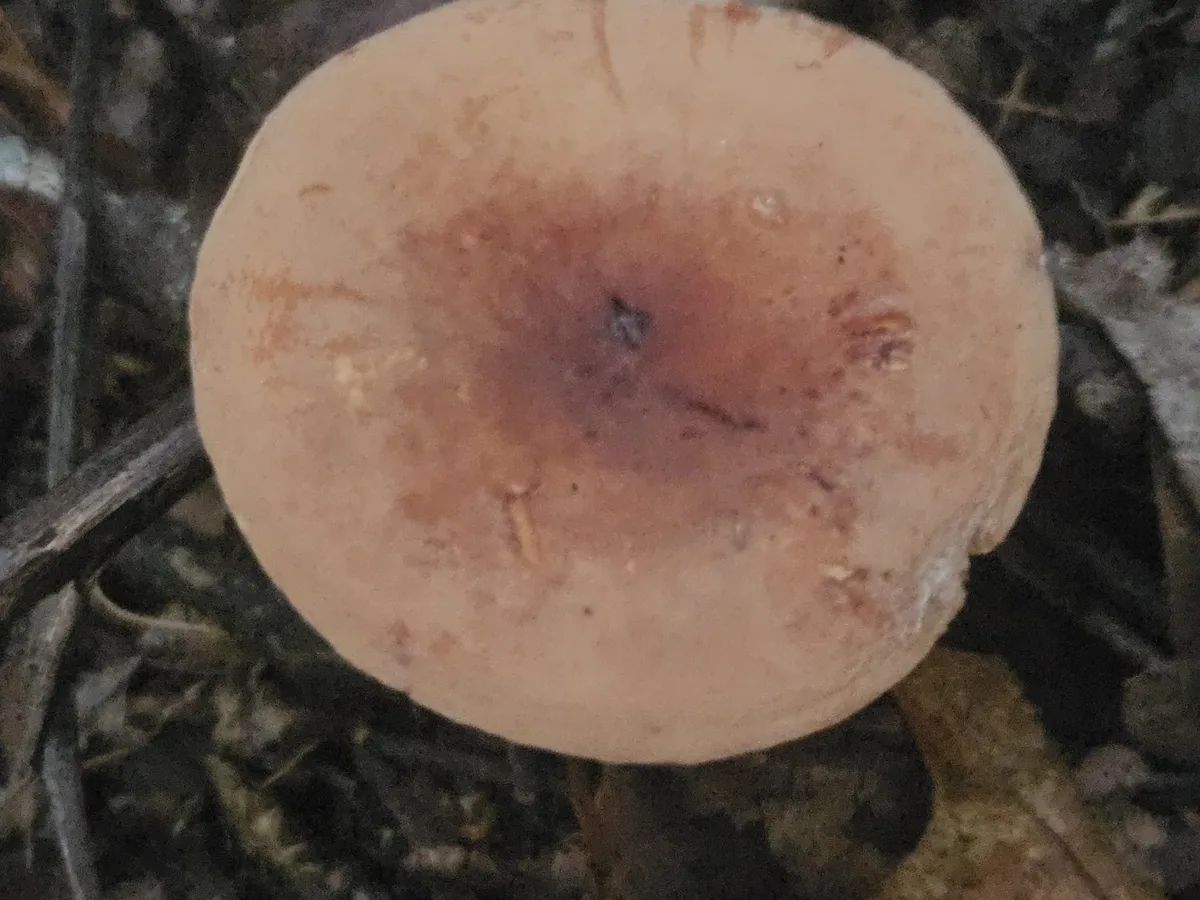 © willingarden (CC BY)
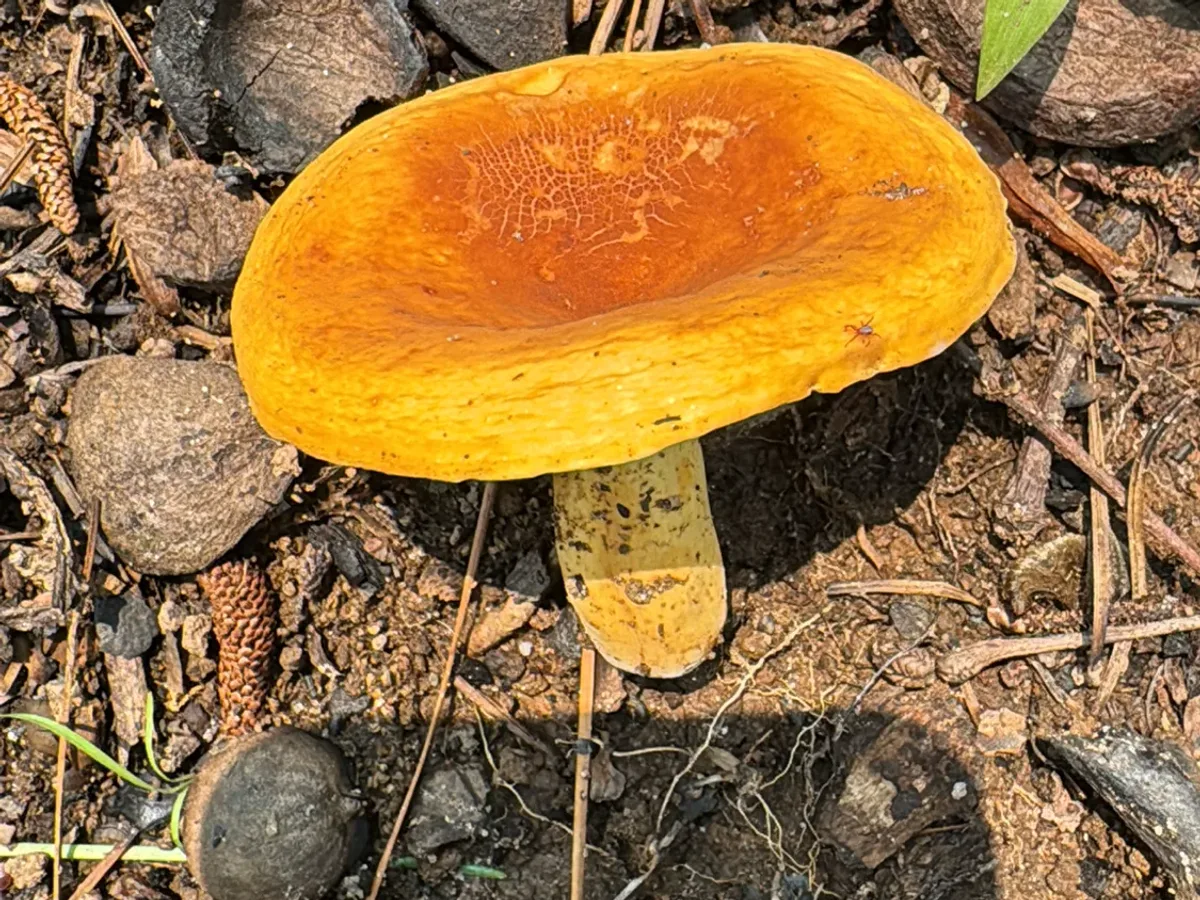 decaturjosh (CC0)
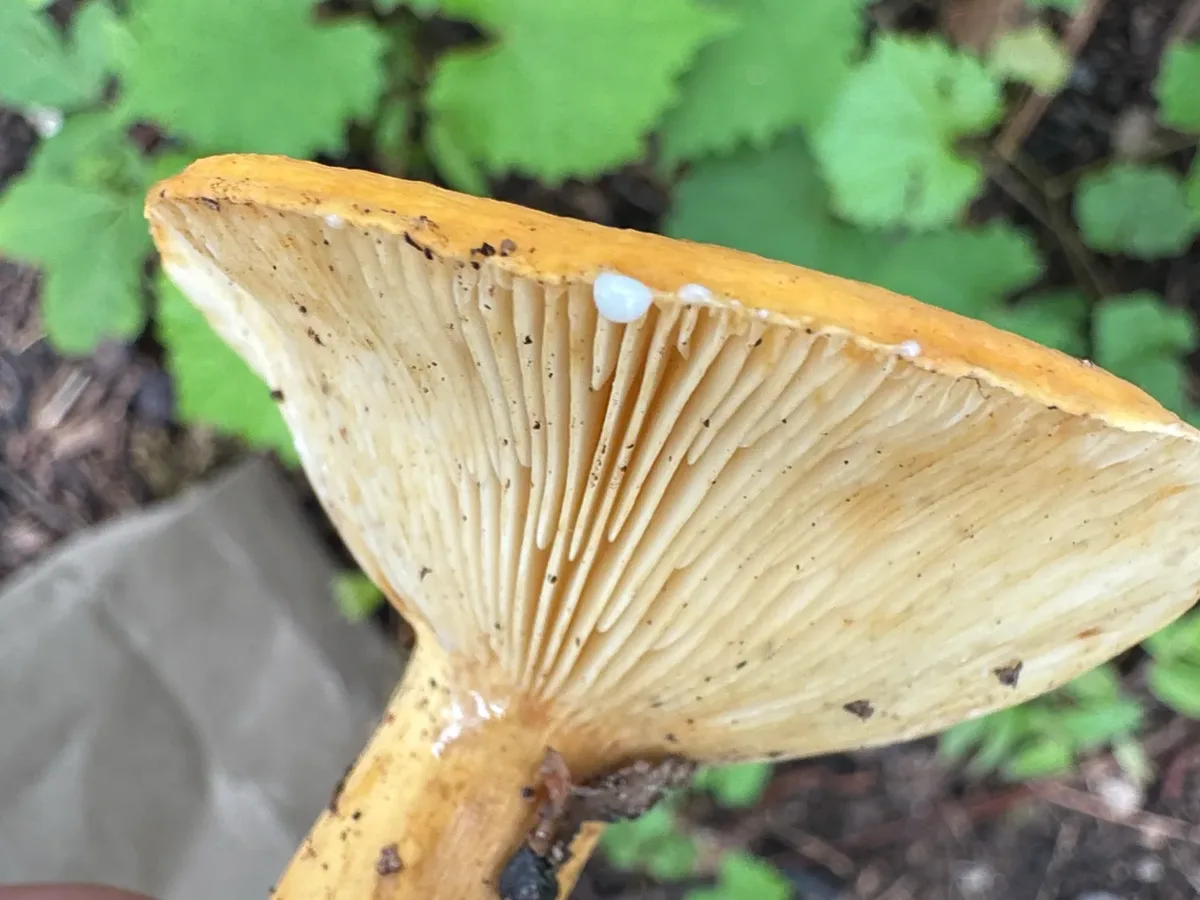 decaturjosh (CC0)
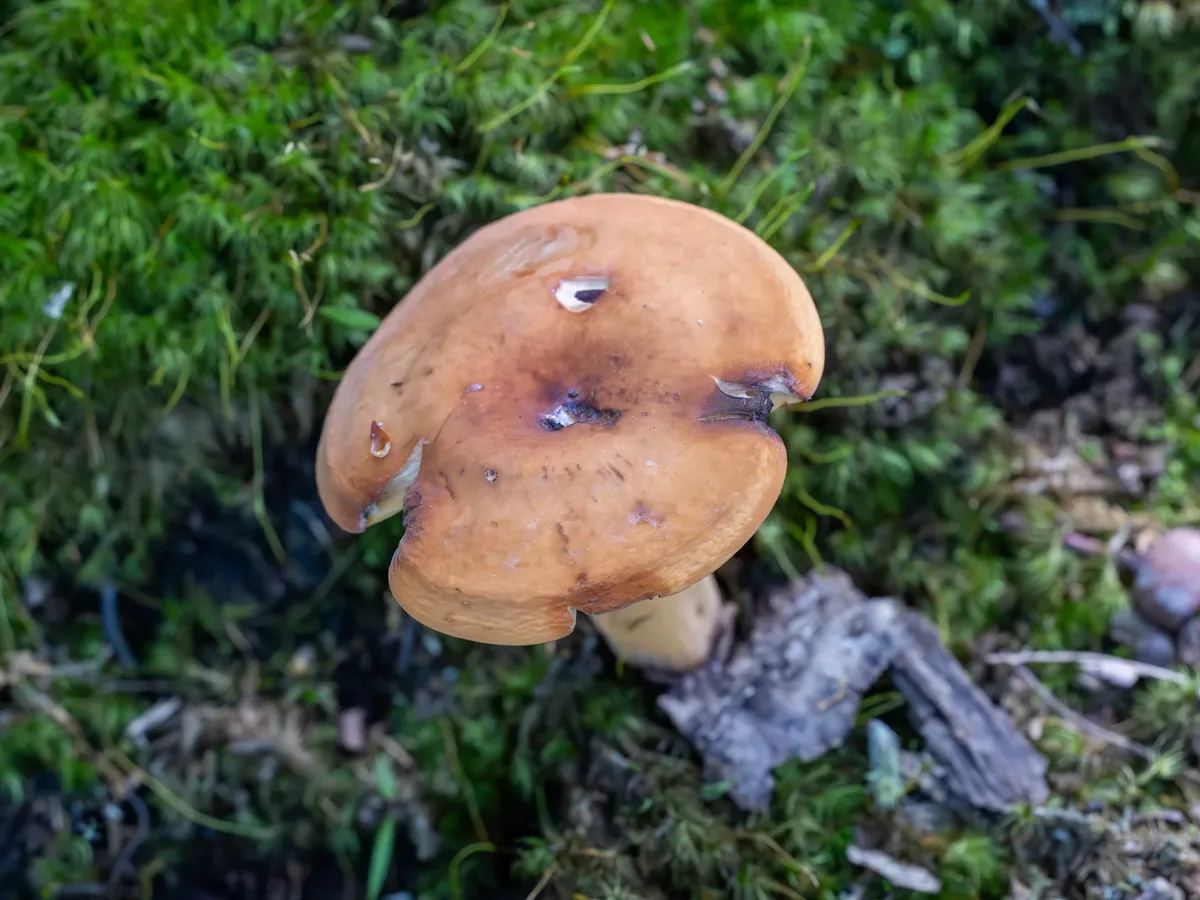 © Richard Jacob (CC BY)
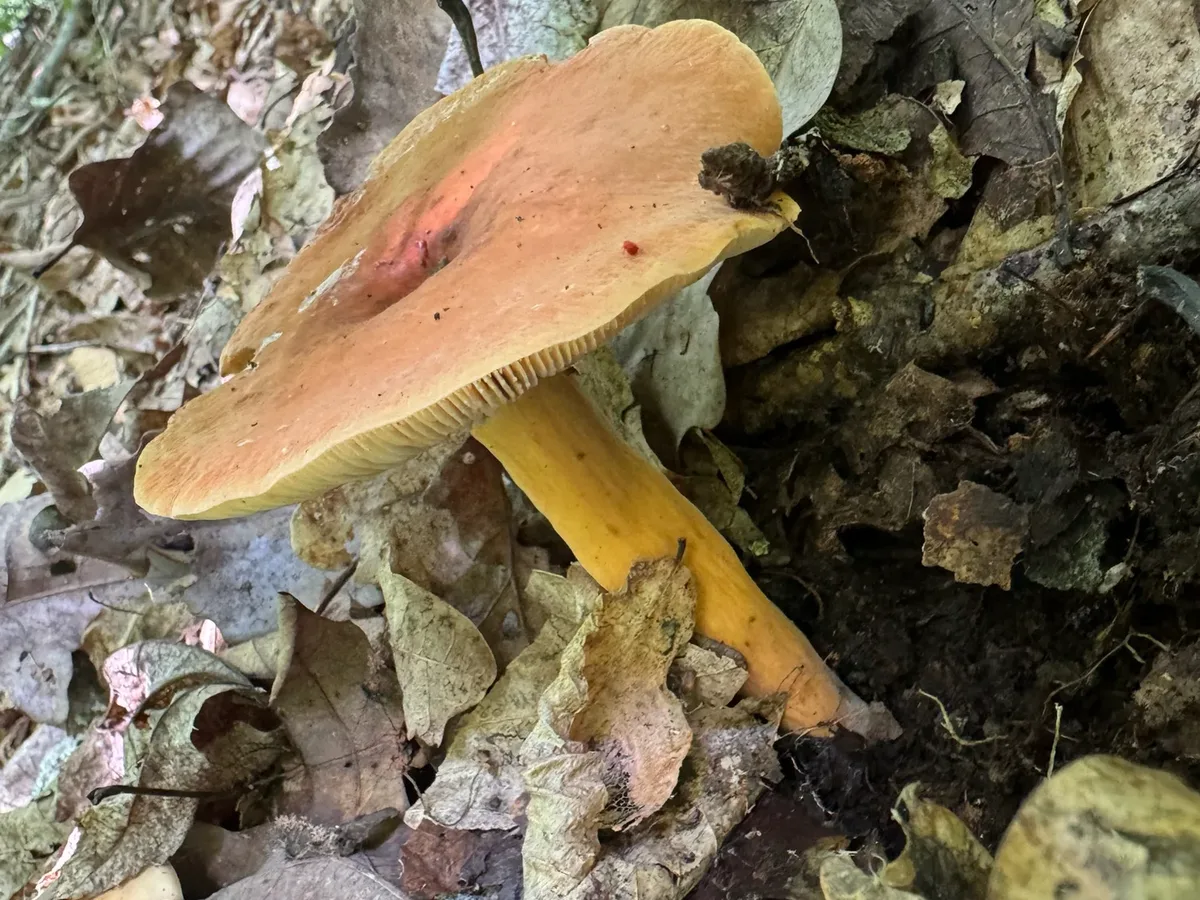 © Shelby Lyn Sanders (CC BY)
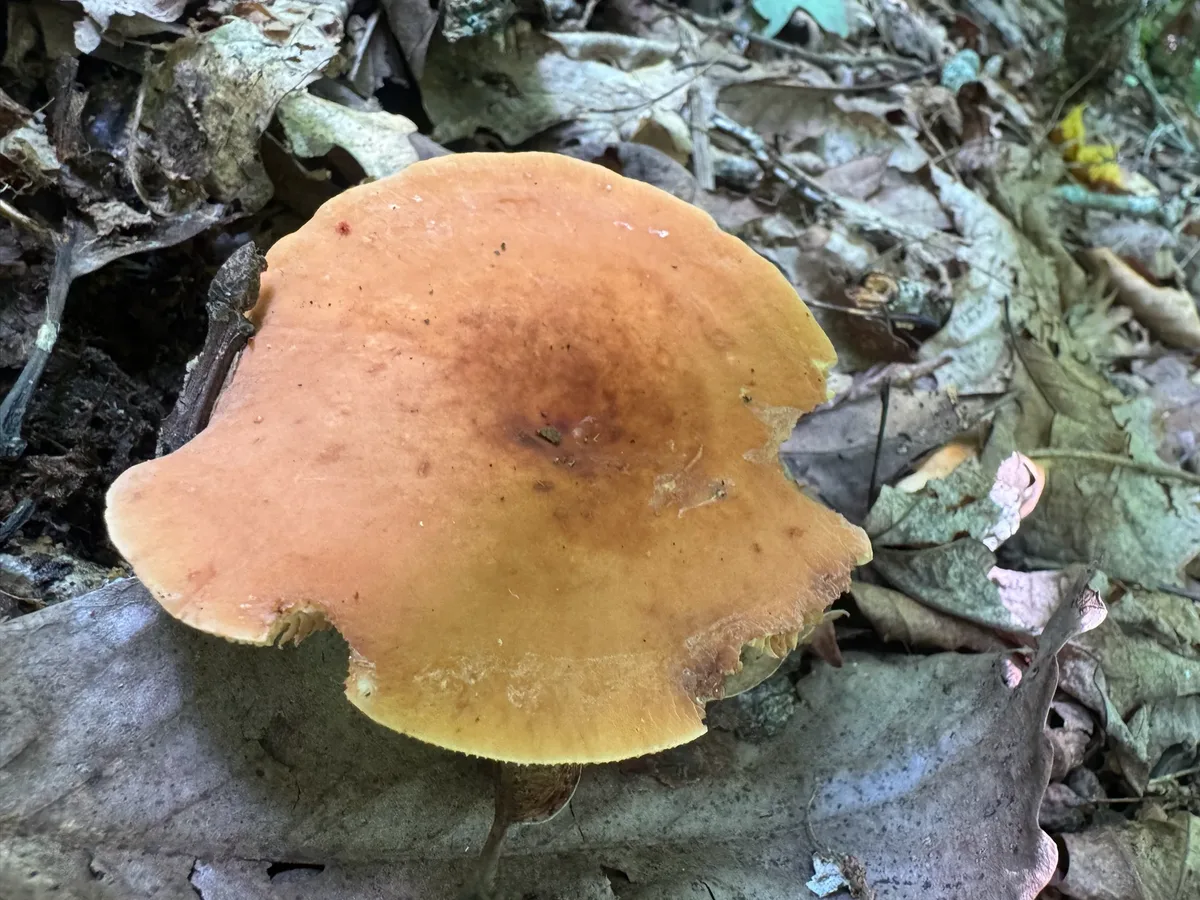 © Shelby Lyn Sanders (CC BY)
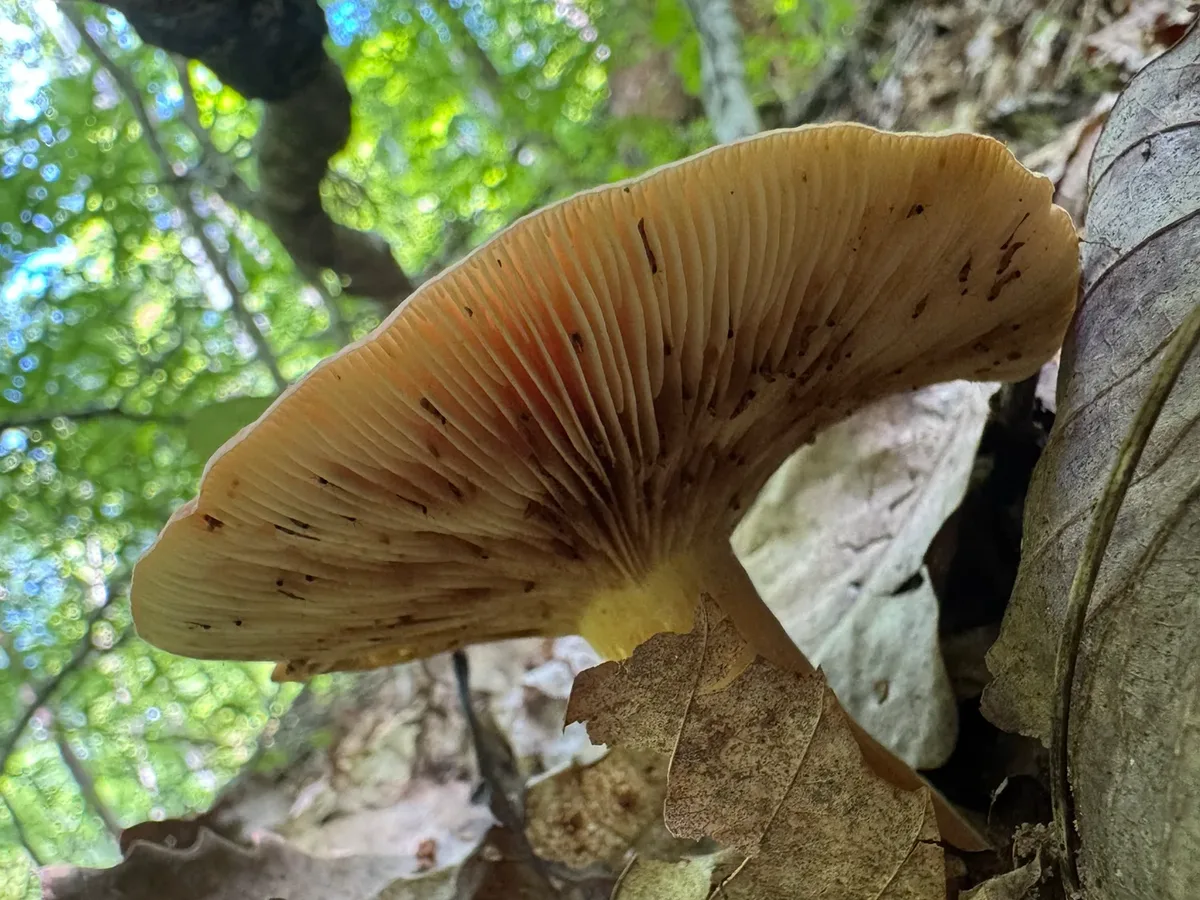 © Shelby Lyn Sanders (CC BY)
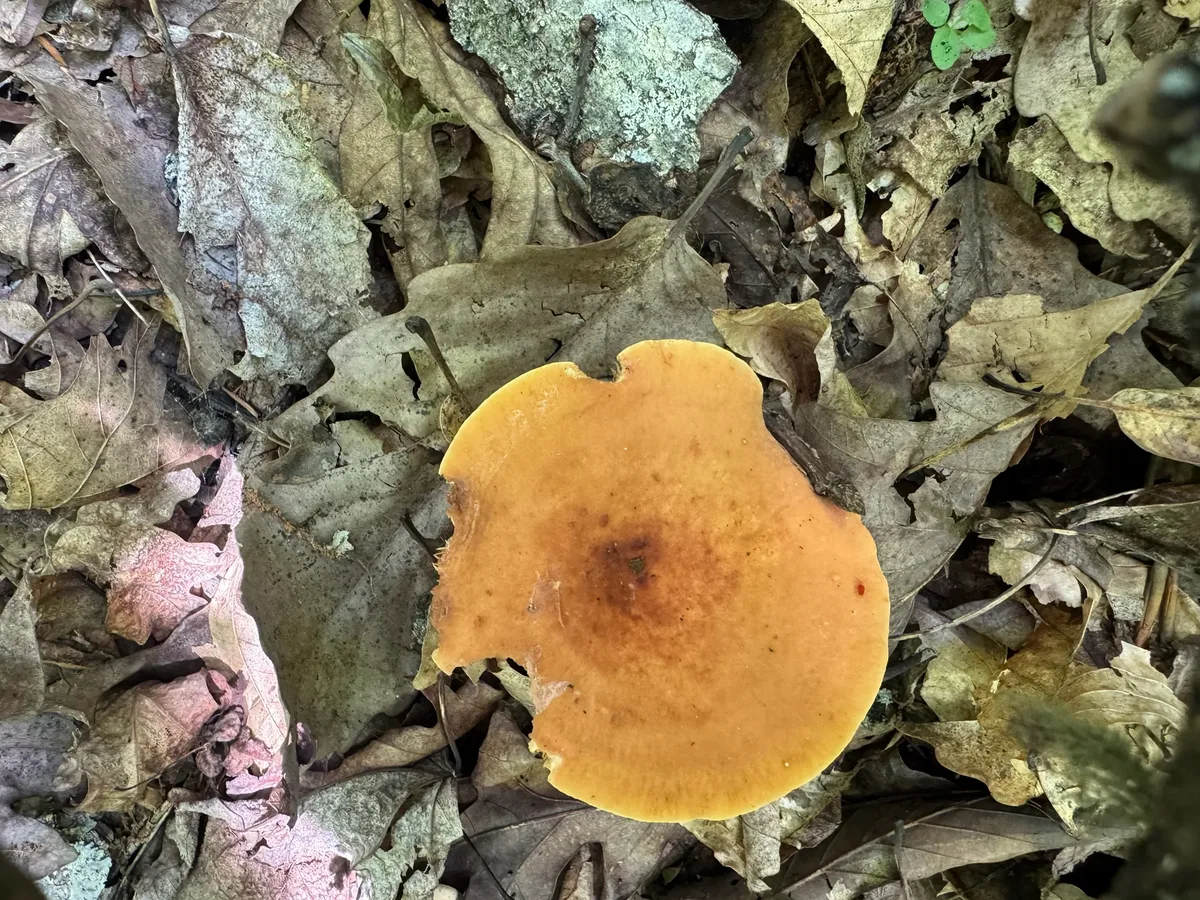 © Shelby Lyn Sanders (CC BY)
 © Grace Merkert (CC BY)© willingarden (CC BY)decaturjosh (CC0)
One of the best mushrooms you can bring home - once you are certain of the identification.
Never eat a mushroom you are not 100% sure of - check the look-alikes below, and always cook wild mushrooms.
How to recognise it
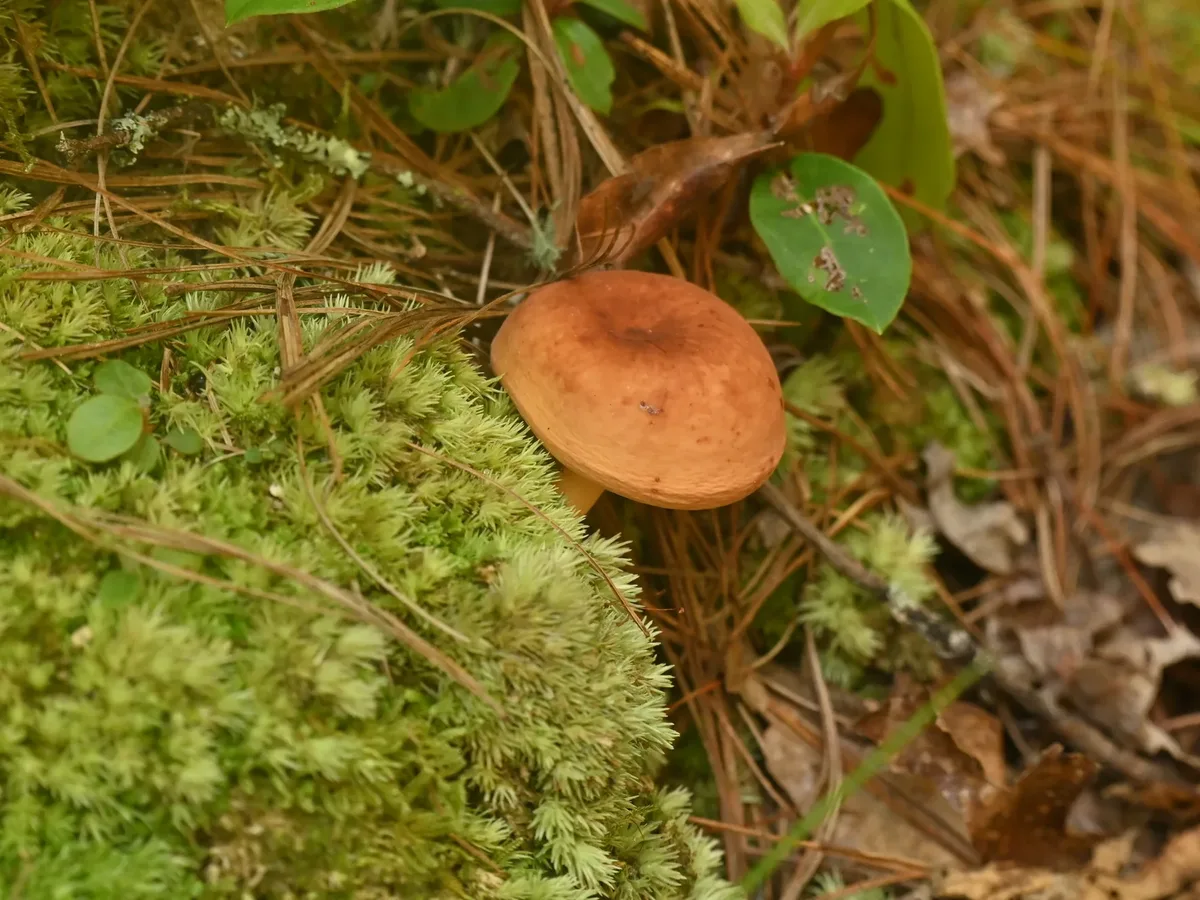
Lactifluus volemus is one of the most distinctive and recognizable milkcaps, an attractive medium-to-large mushroom in warm shades of apricot, tawny orange, rusty gold, and ochre-brown.
Cap
The cap, 5-12 cm and occasionally to 15 cm across, starts convex with a tightly inrolled margin and matures flat with a shallow central dip, sometimes a little funnel-shaped in old age.
Its surface is dry and matte, never sticky or shiny, and in dry summer weather it can crack into a fine network of patches, especially toward the center.
Gills
The gills are crowded, fairly narrow, white to pale cream or pale yellowish, run a little down the stem (adnate to subdecurrent), and fork here and there near the apex. Crucially, they bruise and stain brown wherever bruised or where the milk dries on them.
Stem
The stem matches the cap in color or is slightly paler, is firm and solid, roughly cylindrical, dry and finely felted to smooth.
Flesh
Cut anywhere and the firm white flesh releases a flood of watery white latex that is mild and sweetish to taste, dries brown, and often beads spontaneously from intact gills.
Smell & taste
With handling and age the whole fungus takes on a powerful smell of fish, crab, or shellfish - a feature that, with the abundant sweet milk and brown-staining flesh, makes the species hard to confuse once learned.
Spore print is white to cream.
Where & when it grows
Habitat
An ectomycorrhizal species, Lactifluus volemus lives in symbiosis with the roots of forest trees, exchanging soil nutrients and water for sugars from its host.
It grows directly from the ground, singly or in small scattered troops, in deciduous and mixed woods, along shaded woodland rides and edges, and in grassy clearings and parkland.
It associates most strongly with oak, beech, chestnut, hornbeam and other broadleaves, but is also reported with birch, hazel and at times conifers such as pine and spruce.
It tolerates a range of soils, often doing best on slightly acidic to neutral, free-draining ground, and is widespread through the temperate broadleaf forests of Europe, Asia and eastern North America.
When
This is a summer-into-autumn mushroom that fruits noticeably earlier than most of its milkcap relatives.
In much of its range it can appear from June, runs strongly through the warm, humid weeks of late July, August and September, and tails off in October.
In cooler northern areas the main flush is August-September. In warmer continental, Asian and Mediterranean climates the season opens earlier and is strongly tied to warm thundery rains.
Heat plus moisture is the key: a wet, muggy spell after summer warmth typically triggers fruiting within one to two weeks.
How it grows
Fruitbodies arise singly or in loose scattered groups from mycorrhizal mats on tree roots, never in dense clusters and never on wood.
Caps expand from button to broadly flat or shallowly funnel-shaped over several days.
The fungus is firm and relatively durable for a milkcap, holding its shape reasonably well. Older specimens slump, deepen in color and intensify the fishy smell.
Because it is mycorrhizal it cannot be cultivated, and good sites tend to recur in the same spots year after year as long as the host trees and woodland remain.
Fruiting conditions
A warm-season fruiter triggered by humid summer rains after periods of heat; needs warmer soils than most autumnal milkcaps, with flushes typically appearing 1-2 weeks after significant warm rain.
Look-alikes
The genus Lactifluus/Lactarius contains only milk-bleeding mushrooms, which already separates this group from most other fungi.
Within the milkcaps, the closest matches are two edible relatives:
- Lactifluus corrugis (the corrugated-cap milky), a darker, more wrinkled species
- Lactifluus hygrophoroides, very similar but with distinctly widely spaced gills, staining brown more weakly and slowly
All three are good edibles, so confusion among them is not dangerous.
Lactarius fulvissimus and other small tawny milkcaps are duller, smaller and lack the abundant sweet milk and strong fishy smell.
The unrelated saffron milkcaps (Lactarius deliciosus group) bleed orange, carrot-colored milk, not white, and grow with conifers. The peppery milkcap (Lactarius/Lactifluus piperatus) is pale whitish with intensely acrid white milk, not a tawny cap.
Most importantly, no milkcap in this color range is deadly. The genuinely dangerous orange-to-brown woodland mushrooms - such as the deadly Galerina marginata or various Cortinarius species - do not bleed milk at all, so the simple milk test reliably rules them out.
Beginners should nonetheless confirm the white sweet latex, brown staining and fishy odor together before eating.
A small brownish deadly amatoxin mushroom of dead wood with a ring on the stem, brown spore print, and crucially NO milk - it never exudes latex. The milk test alone separates it: L. volemus weeps abundant white milk, Galerina bleeds nothing and grows on wood, not soil.
Some orange-brown Cortinarius are dangerously toxic (orellanine), but they have a rusty-brown spore print, a cobwebby cortina/veil, often a sticky cap, and never bleed milk. Absence of latex rules out L. volemus instantly.
A very close, edible relative; typically darker and browner with a more wrinkled, corrugated cap surface and often more decurrent gills. Both are good edibles, so confusion is not dangerous; it also bleeds copious white milk and smells fishy.
The most easily confused relative, especially in North America: very similar orange-tawny cap and copious white milk, but the gills are distinctly widely spaced (not crowded), and bruised tissue stains brown only weakly and slowly. Also a good edible, so the confusion is harmless.
A whitish (not tawny) milkcap with very crowded gills that bleeds white milk like L. volemus, but the milk is intensely acrid/peppery (taste a tiny dab on the tongue tip and spit) and the cap is not orange-brown. Not deadly, but acrid and an irritant if eaten poorly cooked.
Bleeds bright orange/carrot-colored milk (not white), often has greenish bruising and concentric cap zones, and grows with conifers (pines). Edible, but clearly different milk color.
Smaller and duller orange-brown, with sparse white milk that does not weep abundantly, no strong fishy smell, and less pronounced brown staining. Considered of poor edible value, not toxic.
In the kitchen
Picking & cleaning
Look for the warm orange-tawny, dry, matte cap on the woodland floor in high summer.
To confirm, nick a gill or the stem flesh. A true L. volemus:
- weeps copious watery-white milk almost immediately
- the milk and bruised surfaces slowly stain brown
- a fishy/crab odor develops with handling
Cut the stem at the base rather than uprooting, to protect the mycelium, and collect firm, fresh young to middle-aged specimens; old ones are spongy, strongly fishy and less pleasant.
Brush off debris in the field. Carry finds in an open basket so the brittle, milk-leaking caps are not crushed.
Cooking
A prized edible in many cultures, especially in central and eastern Europe and in East Asia, where it is highly valued.
The firm flesh holds together well when cooked, making it good for sautéing, grilling and adding to stews, soups and sauces. In Japan (as chichitake) it is a popular ingredient in dishes such as noodle broths.
It should always be cooked, never eaten raw.
Because it exudes so much latex, slow cooking, stewing or braising generally works better than quick dry pan-frying.
Cooking mellows the texture and develops a nutty, sometimes slightly seafood-like savory flavor. The German common name Brätling ('the one for frying') reflects its reputation pan-fried.
The fishy raw odor largely dissipates with proper cooking.
Clean caps simply, slice, and cook until firm-tender; it pairs well with butter, onions and herbs. Older specimens with a strong smell are best discarded or used sparingly.
Good to know
Lactifluus volemus is a safe, well-regarded edible with no deadly lookalikes. Its defining trait - copious mild white milk from a dry tawny cap, staining brown, with a crab/fish smell - is shared by no toxic species.
The reliable safety check is the milk test: if a tawny woodland mushroom does not exude abundant white latex, it is not this species and should not be eaten.
Note that 'L. volemus' is now understood to be a complex of several closely related species (e.g. L. subvolemus, L. oedematopus in Europe, and distinct taxa in North America and Asia). These are all believed edible and similar, but it means microscopic certainty to a single species is not always possible.
As with all wild fungi:
- eat only firm, fresh, correctly identified specimens
- cook them thoroughly
- try a small portion the first time
- avoid old, waterlogged or maggoty fruitbodies
People with shellfish-style odor sensitivity or general fungal intolerance should be cautious.
Never rely on a single feature; confirm white sweet latex, brown staining, dry matte cap and fishy odor together.
A reference guide - never an edibility guarantee. When in doubt, leave it out.