Peppery milkcap
Lactifluus piperatussyn. Lactarius piperatus, Agaricus piperatus, Galorrheus piperatus
 © Manuela Fiorini (CC BY)
 © Lucian Clanet (CC BY)
 © serni bams (CC BY)
 © Patrick Bayan (CC BY)
 University of North Carolina Asheville (UNCA-UNCA) (CC0)
 © Manuela Fiorini (CC BY)
 © Manuela Fiorini (CC BY)
 © Manuela Fiorini (CC BY)© Manuela Fiorini (CC BY)© Lucian Clanet (CC BY)
Edible only with the right preparation - or safe for some people but not others. Learn the caveats first.
Never eat a mushroom you are not 100% sure of - check the look-alikes below, and always cook wild mushrooms.
How to recognise it
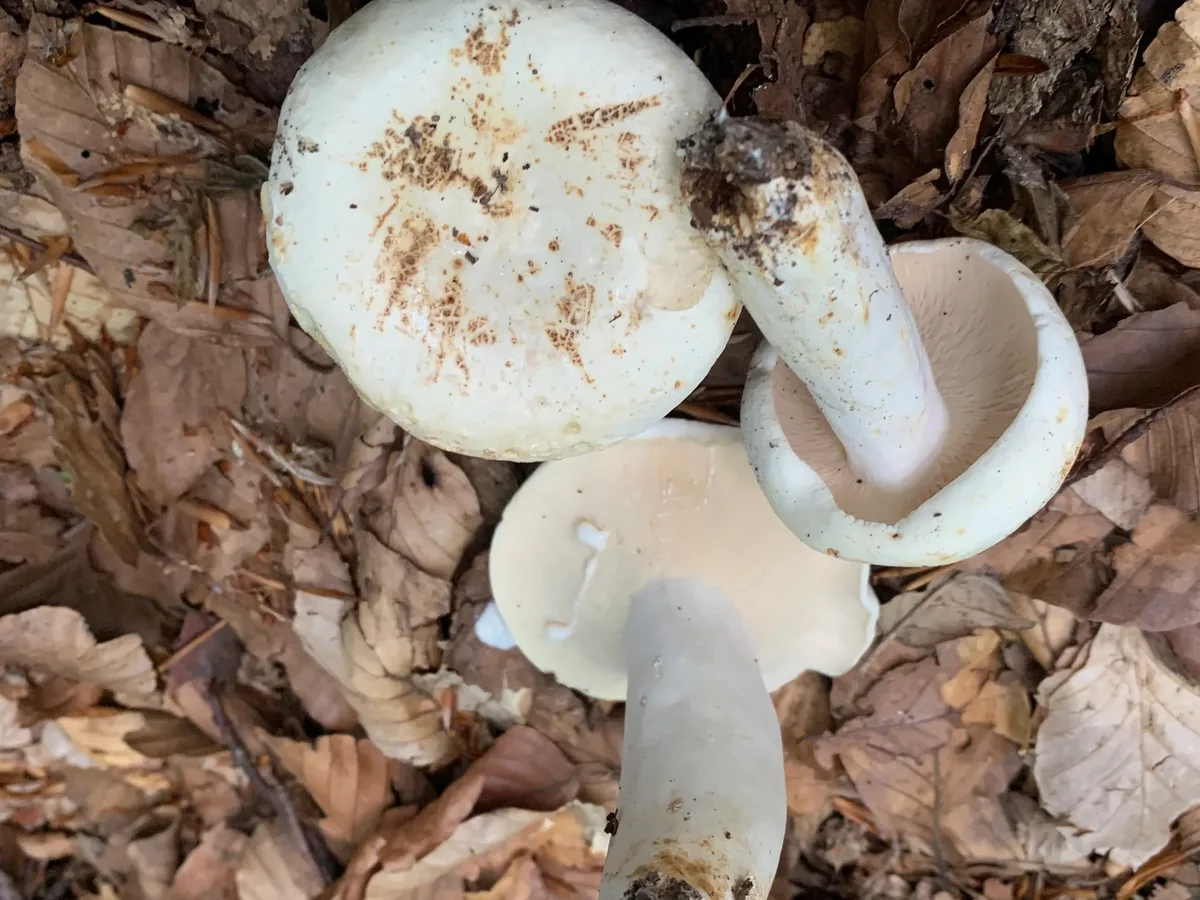
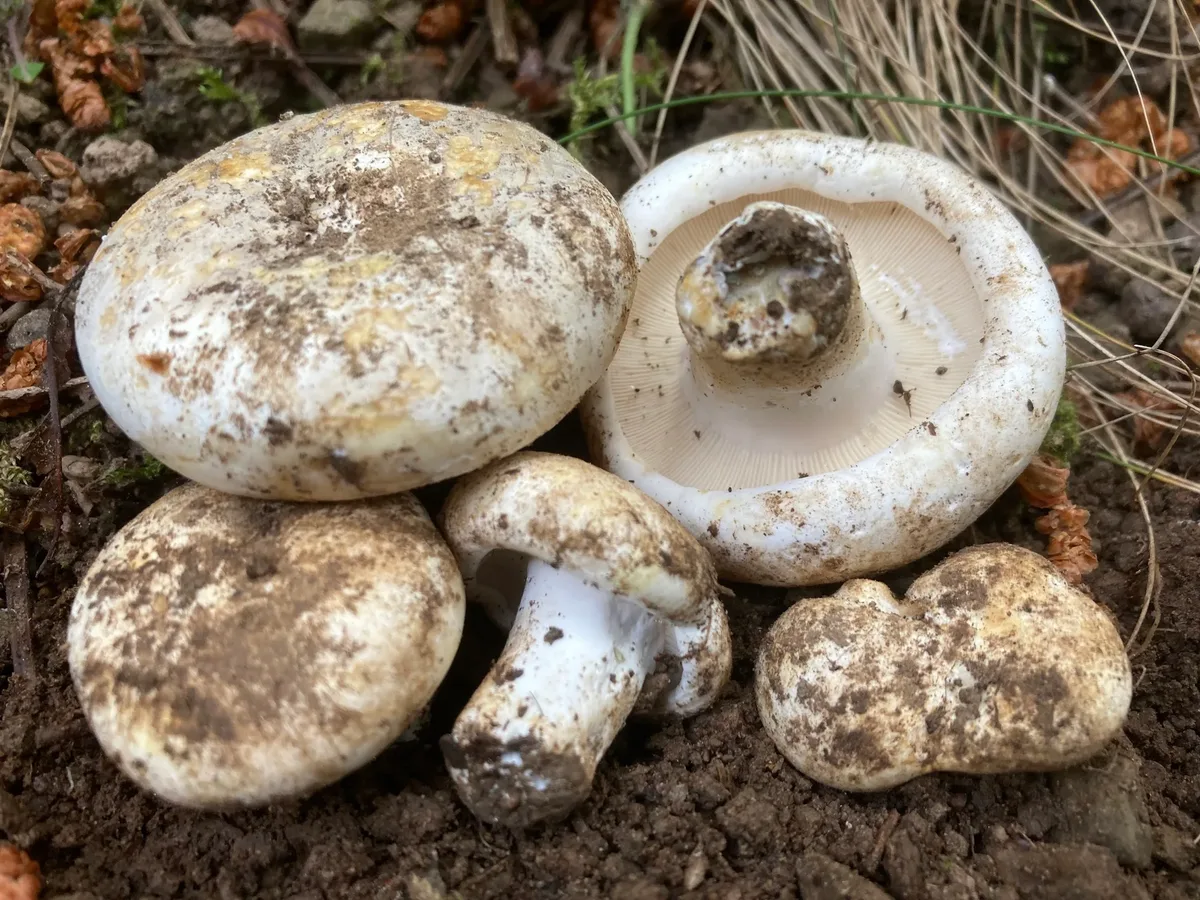
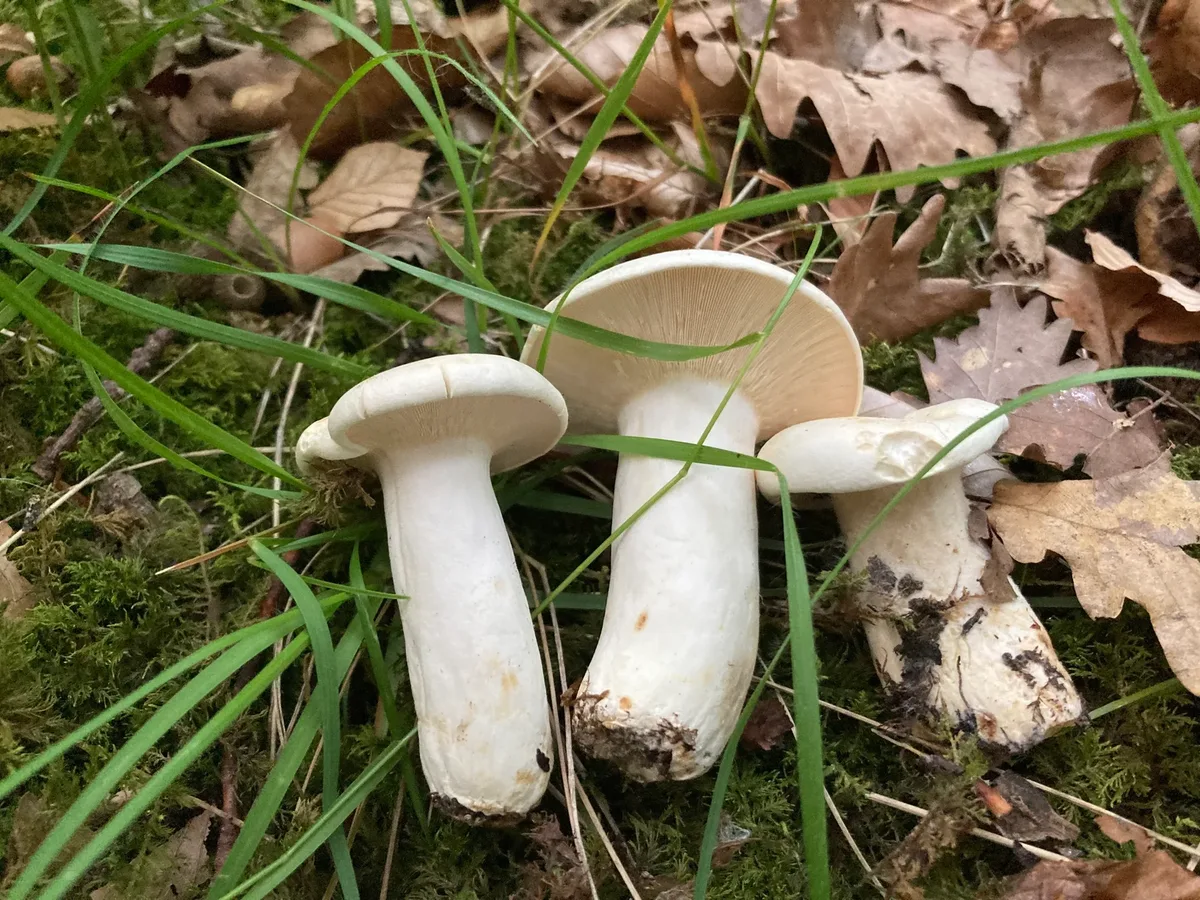
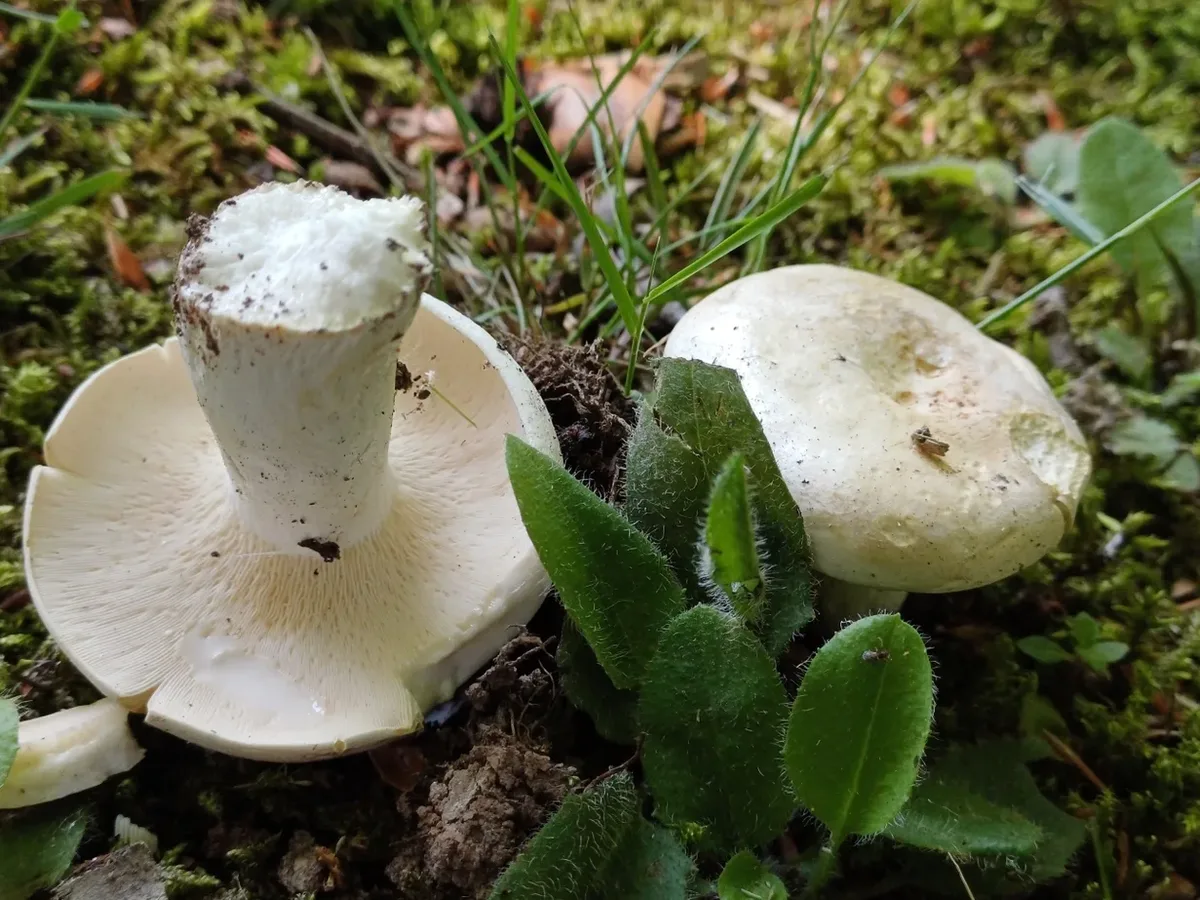
Lactifluus piperatus is a large, all-white to ivory milkcap of singular appearance once the key features are appreciated.
Cap
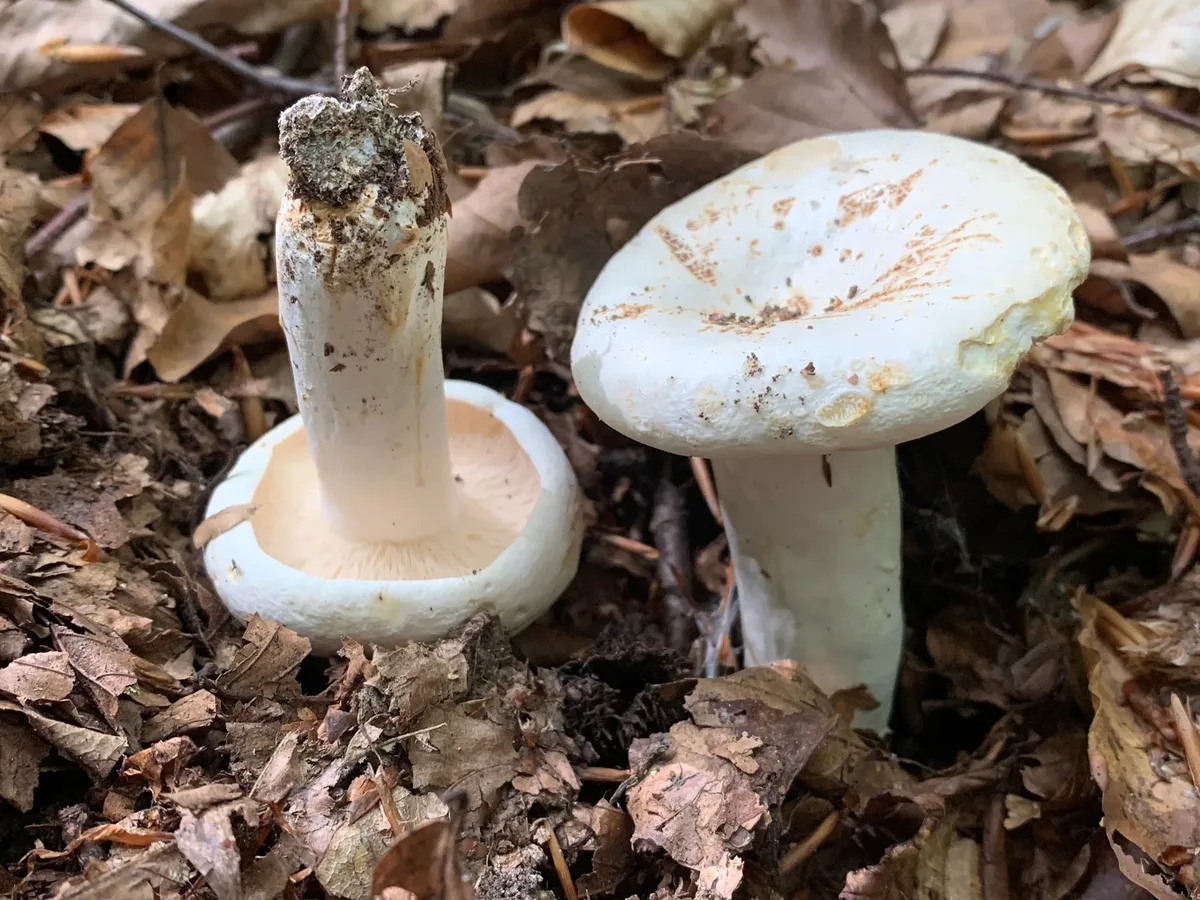
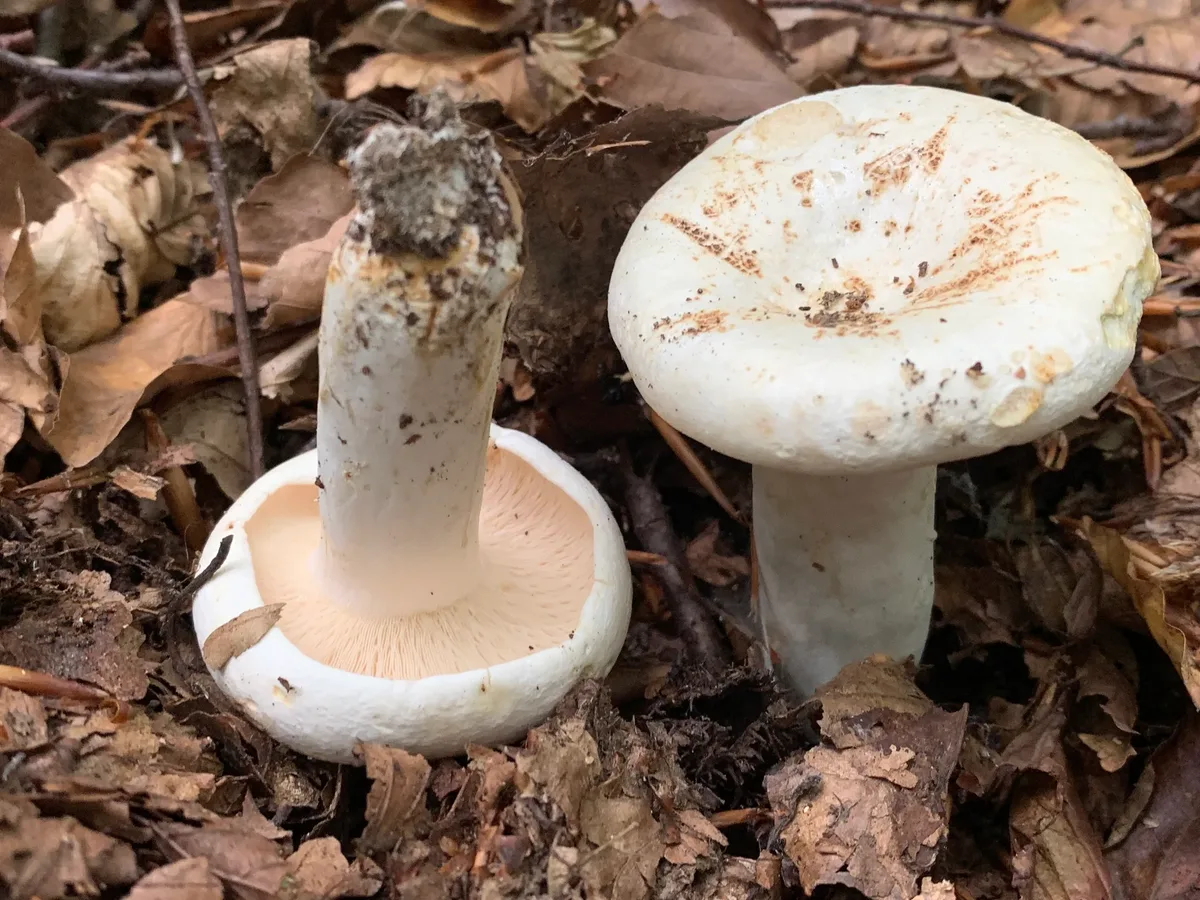
The cap, 6-15 cm across, starts broadly convex with a firmly inrolled margin and matures to a wide, centrally depressed funnel-shape. The smooth, dry, matte surface stays pale - white, ivory, or faintly buff - and does not develop the orange or tawny tones of other milkcaps.
Gills
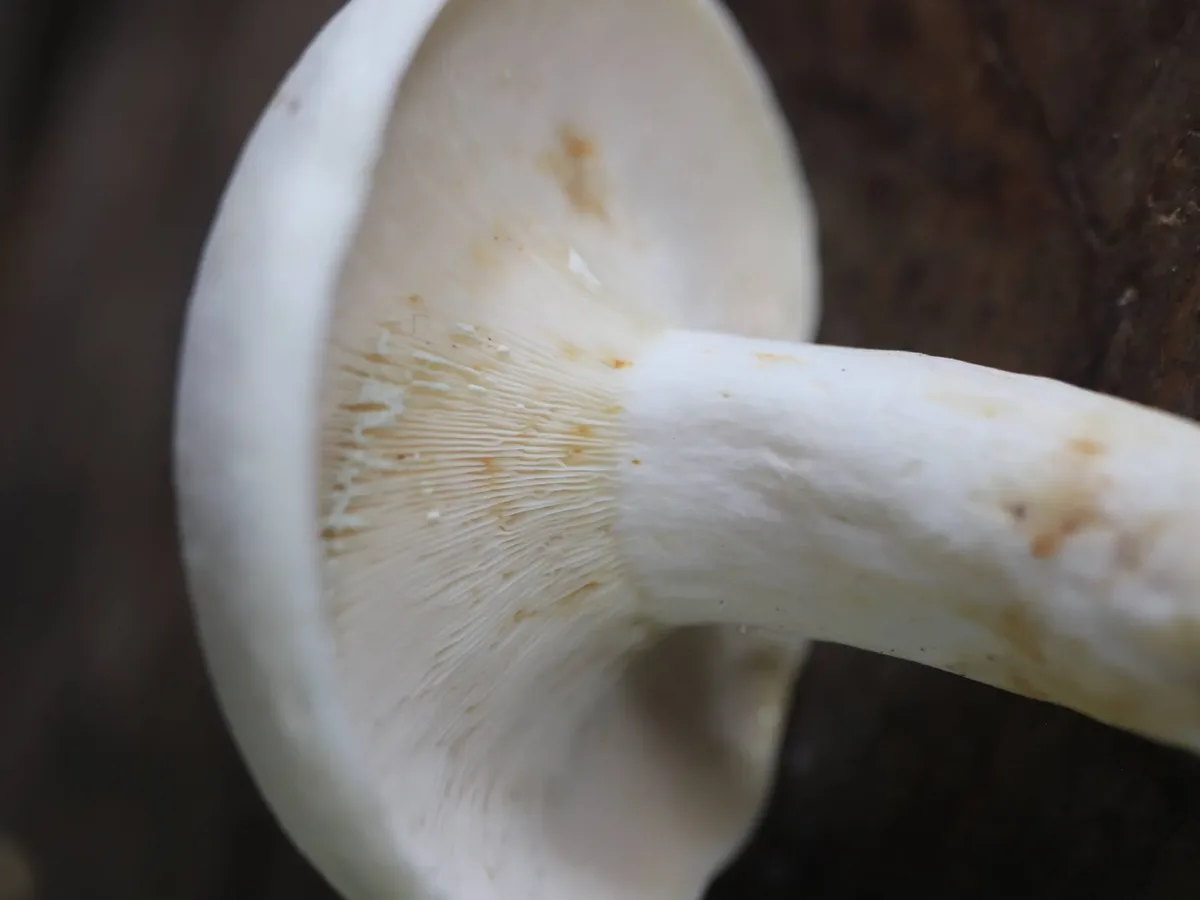
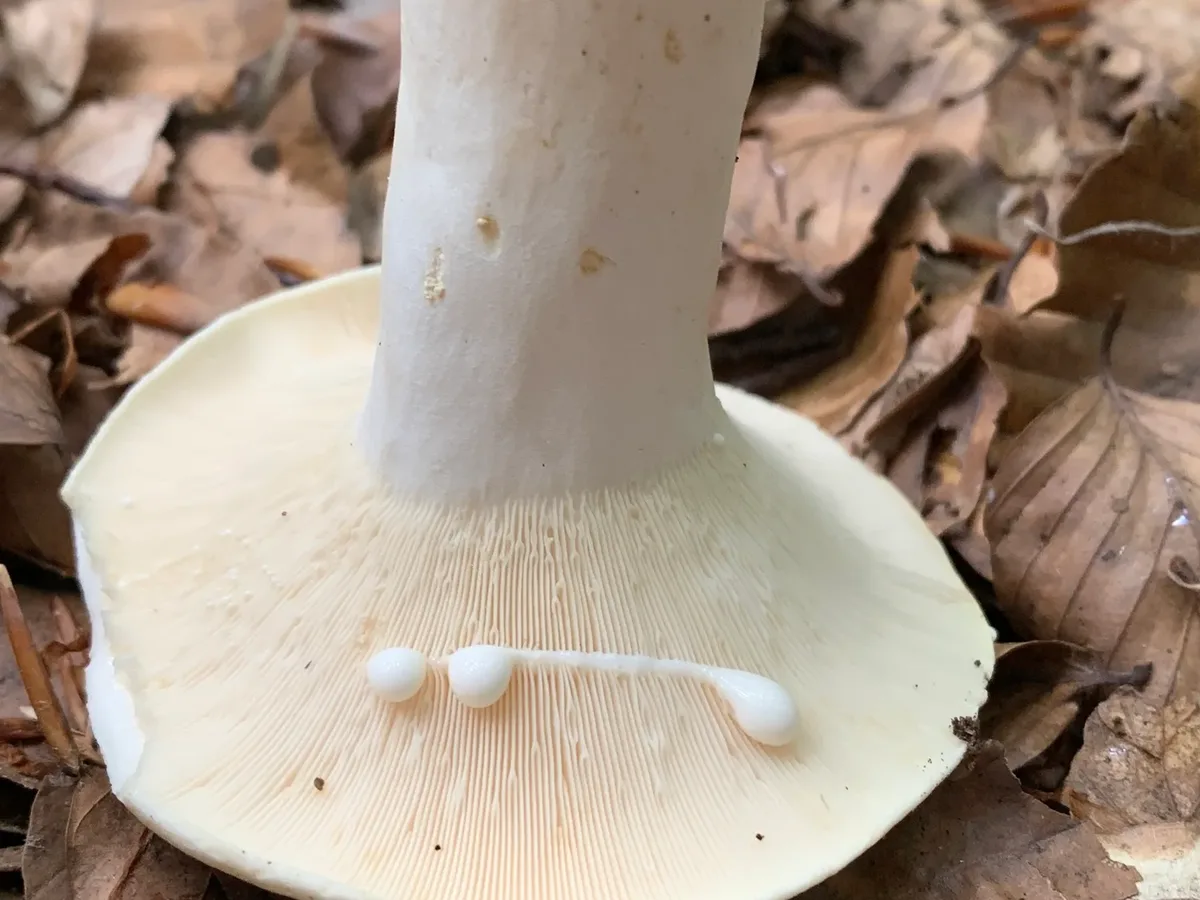
The defining anatomical detail is the gills: they are extraordinarily crowded, narrow, frequently forking and running down the stem, so tightly packed that the undersurface of the cap looks almost shaved or fleece-like compared with most agarics.
Stem
The stem is stout, white, solid, and dry.
Flesh
Cut or break any part and the flesh releases copious, watery-white latex instantly. The spore print is white to very pale cream. Old specimens may yellow slightly and can develop faint brown blotches, but they retain the diagnostic crowded gills and acrid milk.
Smell & taste
Test the latex on the tongue-tip (do not swallow) and within seconds it delivers an unmistakable, powerful, burning-peppery sensation - the single most distinctive identifying feature.
Why it's dangerous
Danger is low to moderate when the mushroom is correctly prepared, but high if eaten raw or underprepared.
These groups should not consume this species:
- children
- pregnant individuals
- the elderly
- those with existing gastrointestinal conditions
The danger is not life-threatening in healthy adults, but the GI symptoms can be severe and distressing.
The key risk scenario is eating it raw (e.g. in a salad or tasted in the field) or after insufficient parboiling - even a small raw piece is enough to cause pronounced oral burning.
Toxin
The acrid, irritant properties of Lactifluus piperatus are caused by sesquiterpene compounds, principally velutinal esters (stearoyl- and palmitoyl-velutinal) and related sesquiterpene lactones concentrated in the latex and flesh.
These compounds are heat-labile and are substantially broken down by prolonged boiling or long-term salting, which is why traditional preparation renders the mushroom tolerable.
They are not structurally related to amatoxins, orellanine, or any organ-damaging toxin class.
Symptoms
Raw or underprepared consumption causes intense burning and irritation of the lips, mouth, tongue, and throat within minutes of ingestion, followed by nausea, vomiting, abdominal cramping, and diarrhoea.
Symptoms are primarily gastrointestinal and mucosal. Onset is rapid (typically within 30 minutes to 2 hours).
Symptoms are self-limiting in healthy adults and resolve within 12-24 hours without specific treatment beyond supportive care (hydration).
No organ damage, systemic toxicity, or deaths have been recorded from this species.
Staying safe
Lactifluus piperatus is not a deadly mushroom, but it demands caution.
The raw latex and raw flesh contain sesquiterpene compounds that act as powerful mucosal irritants; eating the mushroom raw or underprepared causes severe burning of the mouth, throat, and digestive tract, with likely nausea, vomiting, and gastrointestinal distress.
It is therefore rated 'caution' in this encyclopedia - it can be used in cooking after specific preparation, but incorrect or casual preparation makes it genuinely unpleasant at best and harmful at worst.
Traditional preparation methods that render it safe include:
- very prolonged boiling (with water changes)
- drying and grinding into a spice powder (the dried lactifluus loses its acridity and the powder is used like pepper in parts of Eastern Europe and Asia)
- possibly pickling in brine
A critical safety note: the absence of a deadly lookalike in the strict sense does not mean this species is low-risk for beginners. Anyone who is not an experienced forager should not attempt to identify or eat it, and the standard advice applies:
- eat only after correct preparation
- start with a small portion
- never eat raw
The 'milk test' (acrid burn on tongue-tip from a cut surface) is a confirming identifier for this species - but that same test is also a warning about the irritant content.
Where & when it grows
Habitat
This species is fully dependent on a living ectomycorrhizal partnership with the roots of forest trees, meaning it cannot grow on bare ground, dead wood, or in the absence of a suitable host.
In practice this means looking in mature, shaded deciduous woodland - primarily beech-oak and hornbeam-lime forest across temperate Europe - on ground that is not waterlogged, mildly acidic to neutral. It tends to grow on slightly richer ground than the more heathery, conifer-associated milkcaps.
Scattered single fruitbodies or small loose groups grow directly from the soil, often along shaded woodland rides, beneath dense canopy, or on grassy woodland edges.
Because the partnership is long-lived, productive sites tend to recur in the same location year after year as long as the woodland is undisturbed.
When
Lactifluus piperatus is a midsummer-to-autumn species in temperate Europe.
It can first appear in July during warm, wet summers, runs through August and September at peak, and tails off in October as soil temperatures drop. In warmer southern and Mediterranean areas the season opens as early as June.
The key trigger is a significant pulse of summer rain - 20+ mm over a few days - following warm weather when soil temperatures are above 14-15°C; fruitbodies typically emerge one to two weeks after such an event.
Unlike the autumn-flush species, it does not require the cooler, wetter conditions of October.
How it grows
Fruitbodies appear singly or in small scattered groups, never in clusters and never on wood - always pushing up directly from the soil, anchored to tree roots hidden beneath.
They come up slowly for a milkcap, expanding over several days rather than overnight, and once fully open they hold their condition well, staying firm and intact for longer than many of their relatives.
The cap broadens as the centre sinks into its characteristic funnel, but the margin is in no hurry: it stays firmly inrolled for much of the mushroom's life, only relaxing in older specimens.
Because the mycelium lives on in a long-term partnership with its host trees, a productive patch will return to the same few square metres of woodland floor year after year, making it worth noting exactly where you find them.
Fruiting conditions
Fruiting is triggered by significant summer rainfall (20+ mm) when soils are warm (above 14°C), with fruitbodies emerging 1-2 weeks after a wet spell. Most active in the warm, humid weeks of August and September in temperate Europe.
Look-alikes
The combination of large size, white cap, very crowded decurrent gills, dry surface, and strongly acrid white milk is highly distinctive and separates Lactifluus piperatus from almost everything else in European woodland.
A few large white milkcap relatives are the main confusion risks:
- Lactifluus vellereus (the fleecy milkcap / Velvet milkcap) is the closest confusion risk: also large, white, funnel-shaped and bleeds white milk, but its gills are much more widely spaced and its milk is less intensely acrid (still acrid, but milder); it is also not deadly.
- Lactifluus glaucescens is a near-twin that differs subtly in having milk that dries green (the dried latex turns greenish), which is a useful but not always obvious distinguishing feature; it too is not deadly and behaves similarly in the kitchen after correct preparation.
- Lactifluus bertillonii is another close relative with similarly crowded gills but slightly differently shaped cap and subtler taste differences.
Crucially, all of these white milkcap relatives are in a similar toxicological category - acrid raw, potentially irritant if undercooked, but none are deadly.
The main safety-critical separation is from white Amanita species (Amanita virosa group, destroying angels). They can superficially resemble pale or white milkcaps at a glance but are immediately and completely different on examination:
- a volva (cup-like base)
- a ring on the stem
- free (not decurrent) gills
- typically no milk whatsoever
- a different spore print color
Any white mushroom growing from a cup-like bag at the base must be treated as potentially deadly regardless of other features.
The milk test is protective: Lactifluus piperatus bleeds copious acrid white latex from any cut; Amanita virosa bleeds nothing.
A deadly white mushroom of the same woodland habitat. Critically: Amanita virosa emerges from a cup-like volva at the base, has a white ring on the stem, free (not decurrent) gills, and does NOT exude any milk when cut. The milk test is definitive - if a white woodland mushroom does not bleed latex from a cut, it is not a milkcap. Any white woodland mushroom growing from a cup-like bag must be assumed deadly.
Another very similar white milkcap with crowded gills and acrid white milk. Distinguished by subtle differences in cap shape and microscopical spore features; practically inseparable in the field without experience. All three piperatus-group members behave the same way culinarily - acrid raw, tolerable after correct preparation. None are deadly.
Also large, white and funnel-shaped with acrid white milk, but the gills are much more widely spaced (not the extremely crowded, fleece-like gills of piperatus). The milk in vellereus is acrid but generally milder, and the cap surface tends to be slightly more felty-velvety. Both species are unsafe raw, but neither is deadly.
A very close relative and near-twin that is best separated by watching the latex dry: in glaucescens the dried milk turns greenish on the cap and gills (a reliable test), whereas in piperatus it dries white or pale. Both have similarly crowded gills and both are similarly acrid. Neither is deadly.
This is the former name of the same species. The binomial shift from Lactarius to Lactifluus is a molecular reclassification; there is no biological difference. Older field guides may use the Lactarius name.
A reference guide - never an edibility guarantee. When in doubt, leave it out.