Hygrophorus milkcap
Lactifluus hygrophoroidessyn. Lactarius hygrophoroides Berk. & M.A. Curtis, Agaricus hygrophoroides Berk. & M.A. Curtis
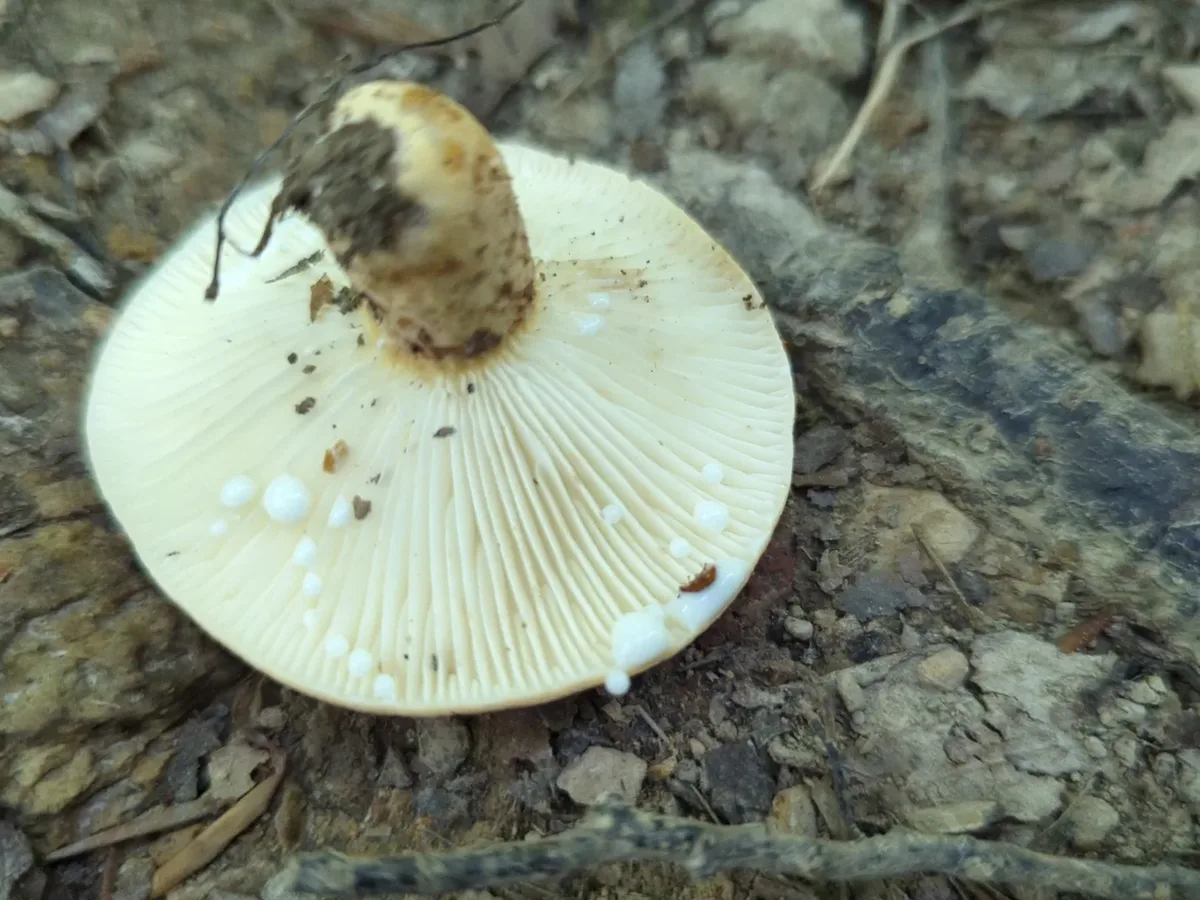 © Mike Tilley (CC BY 4.0)
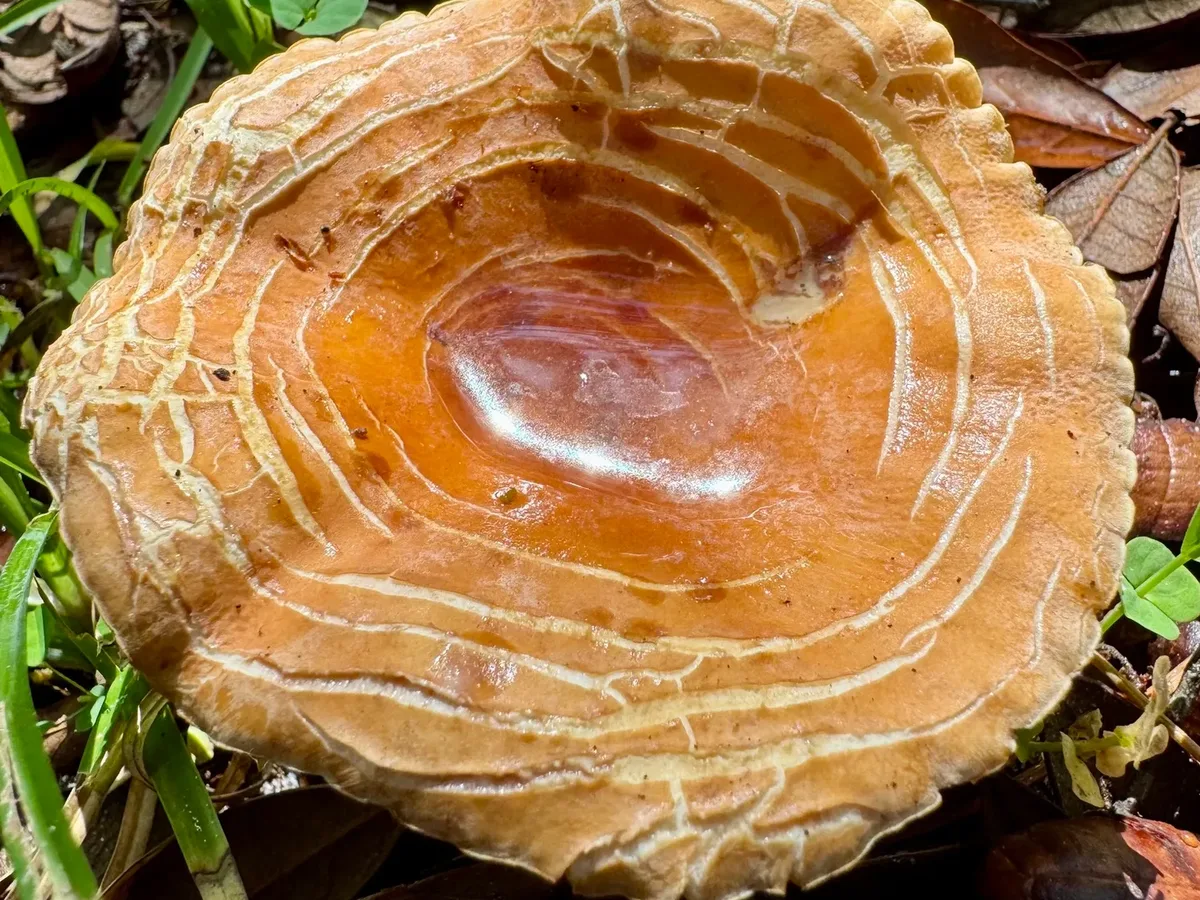 © Karen Guin (CC BY)
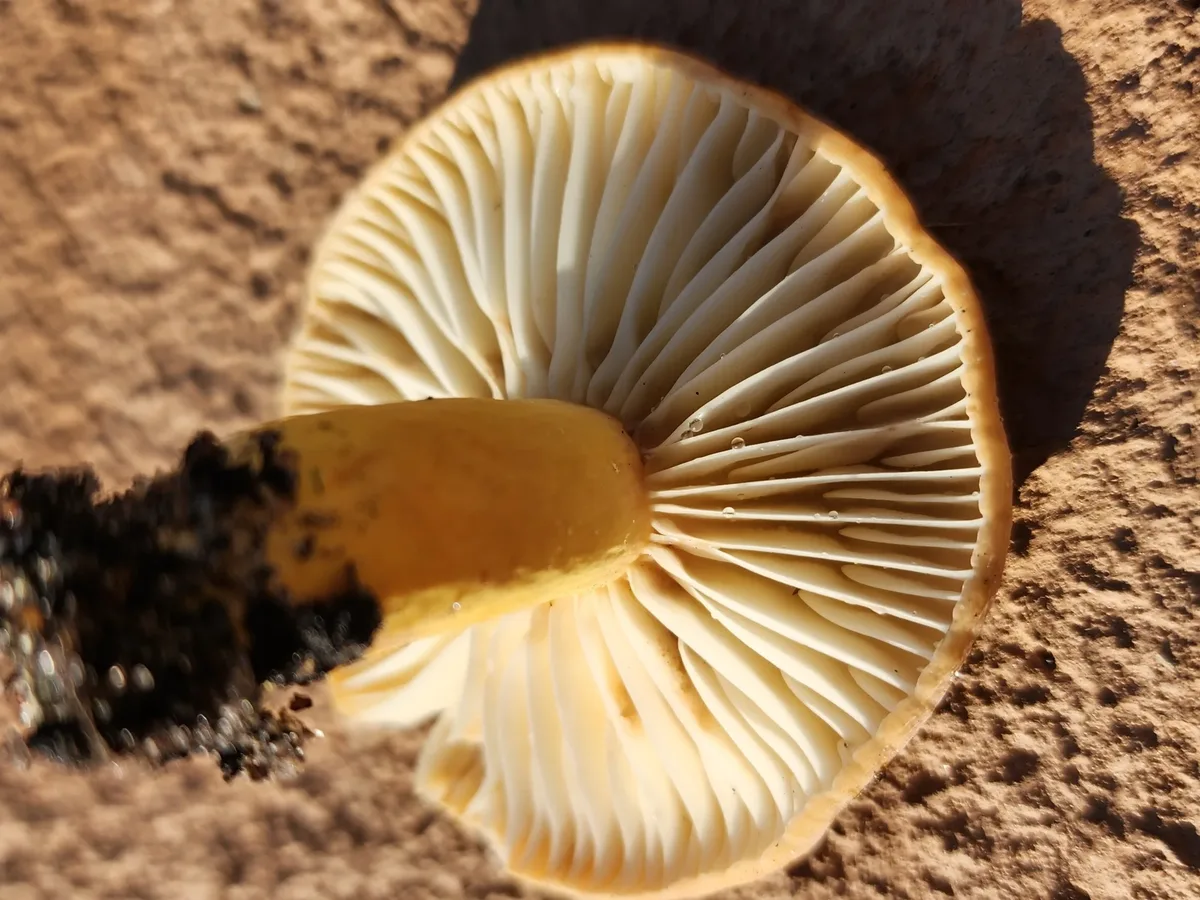 © Benjamin Tomerlin (CC BY)
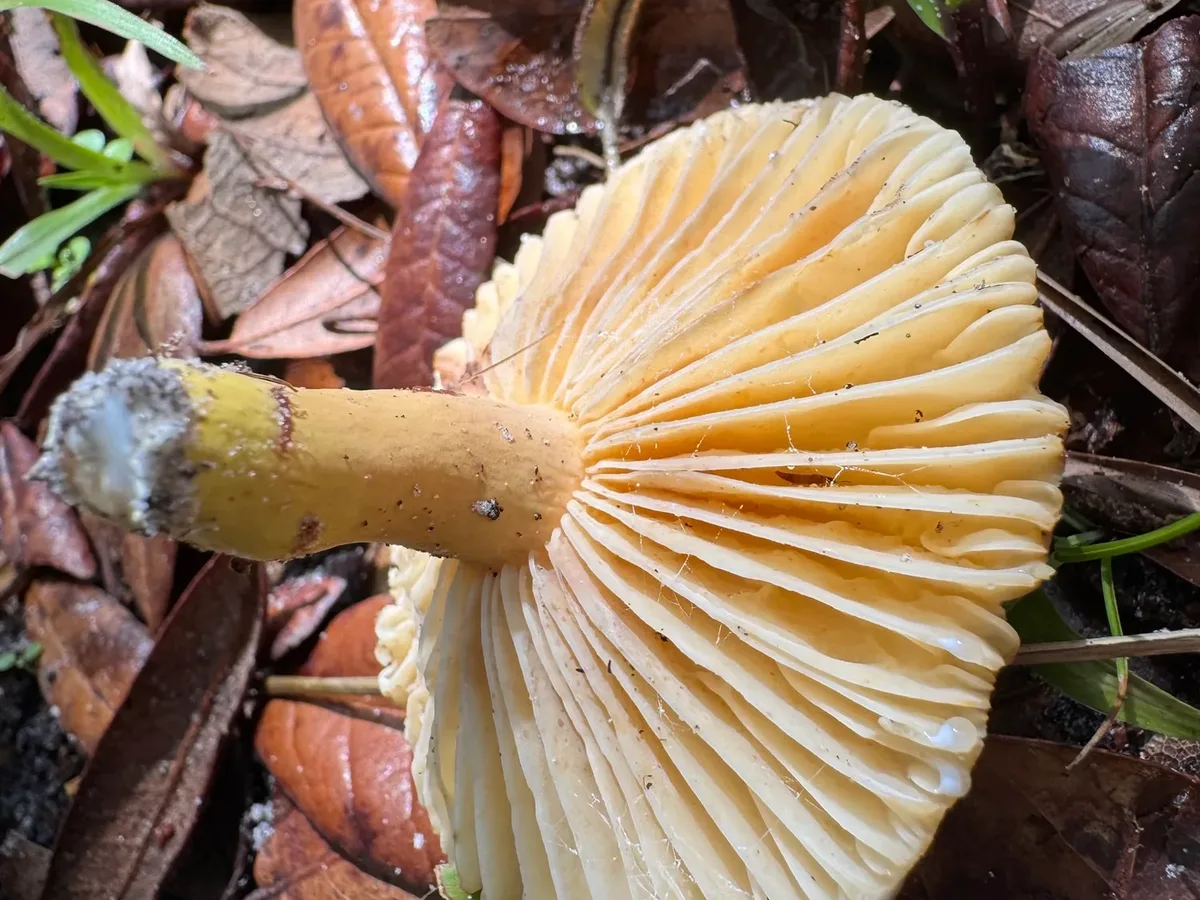 © Karen Guin (CC BY)
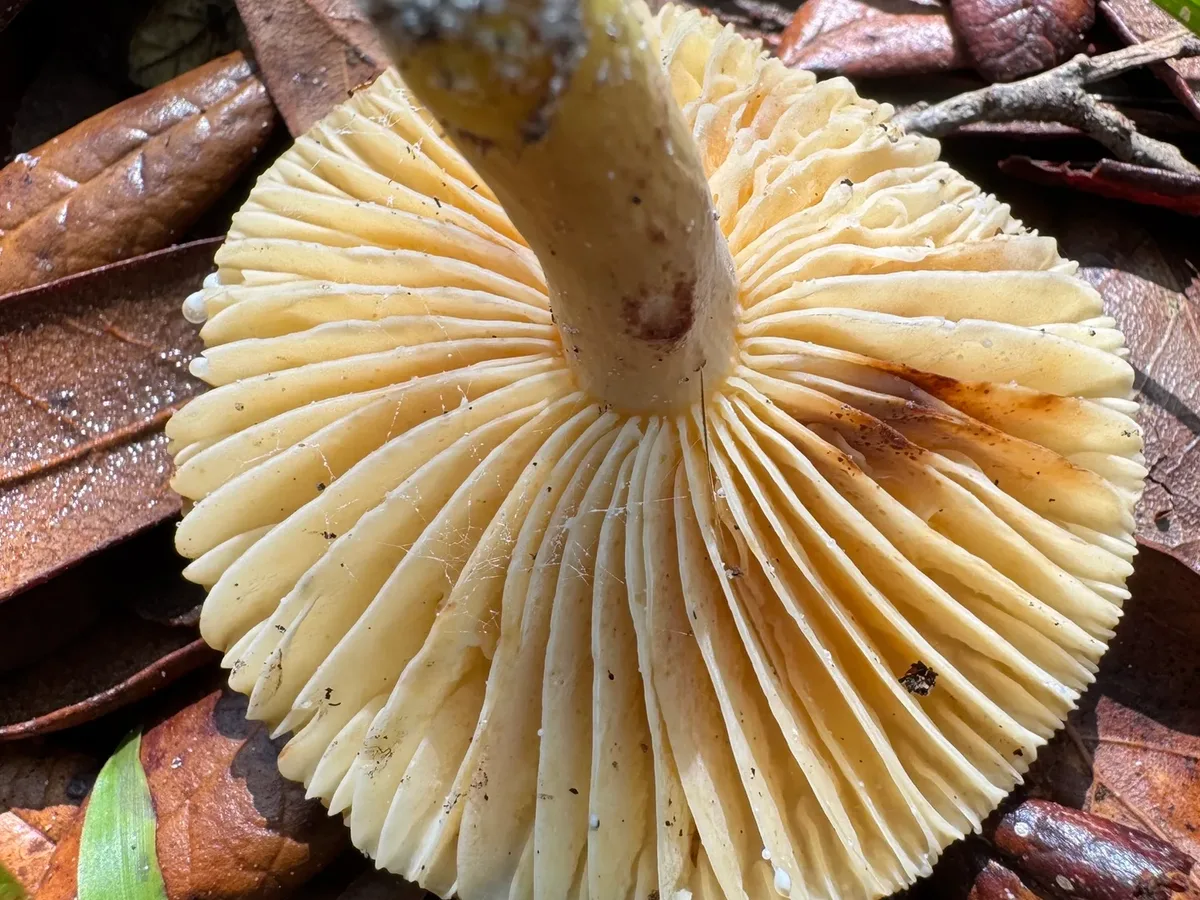 © Karen Guin (CC BY)
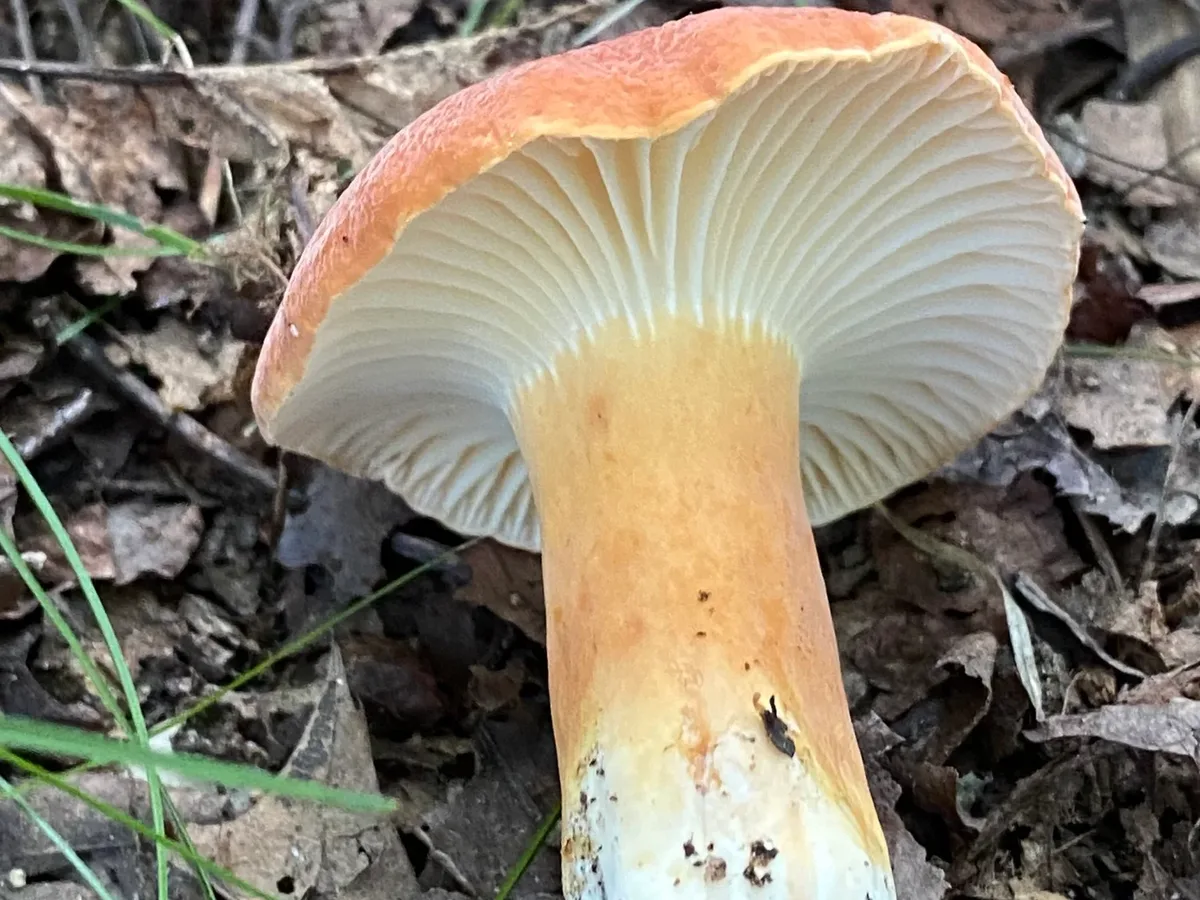 © W Rao (CC BY)
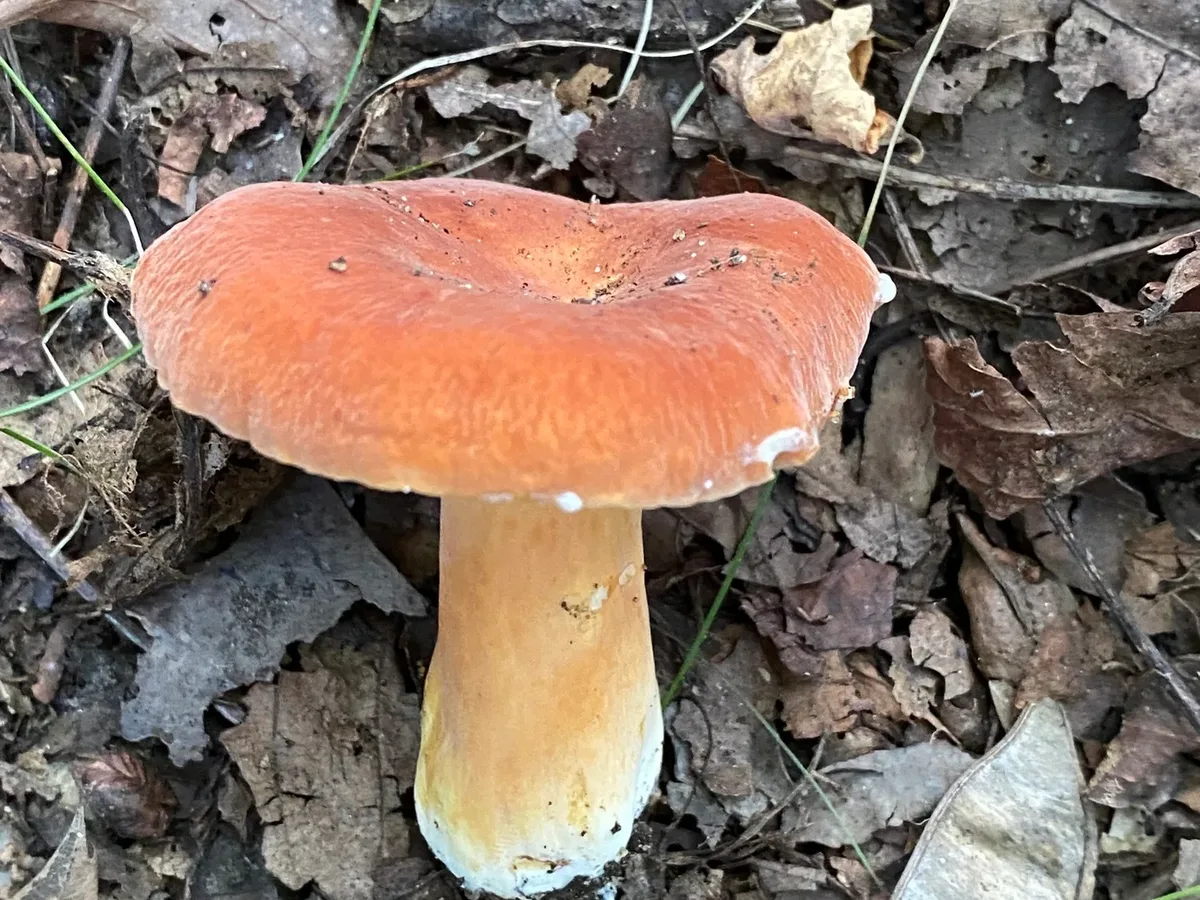 © W Rao (CC BY)
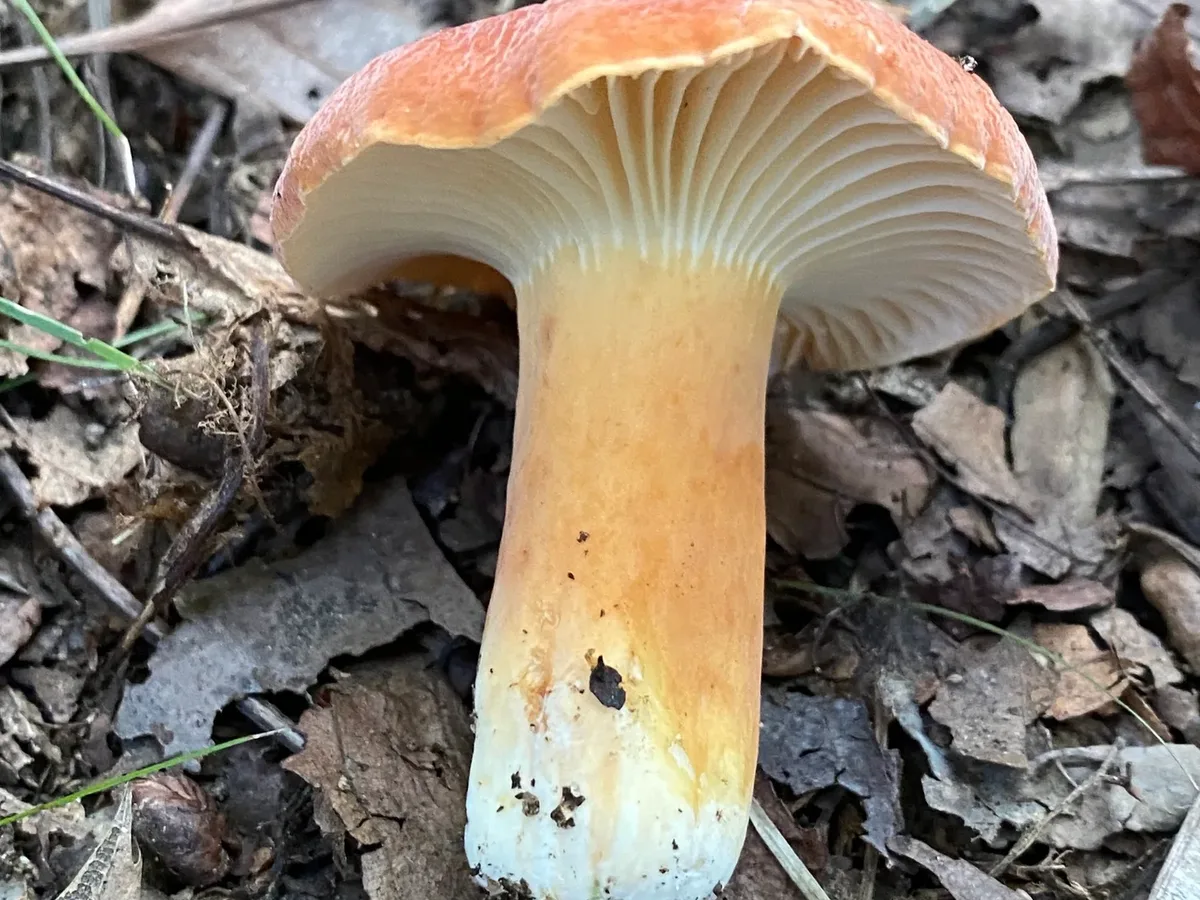 © W Rao (CC BY)
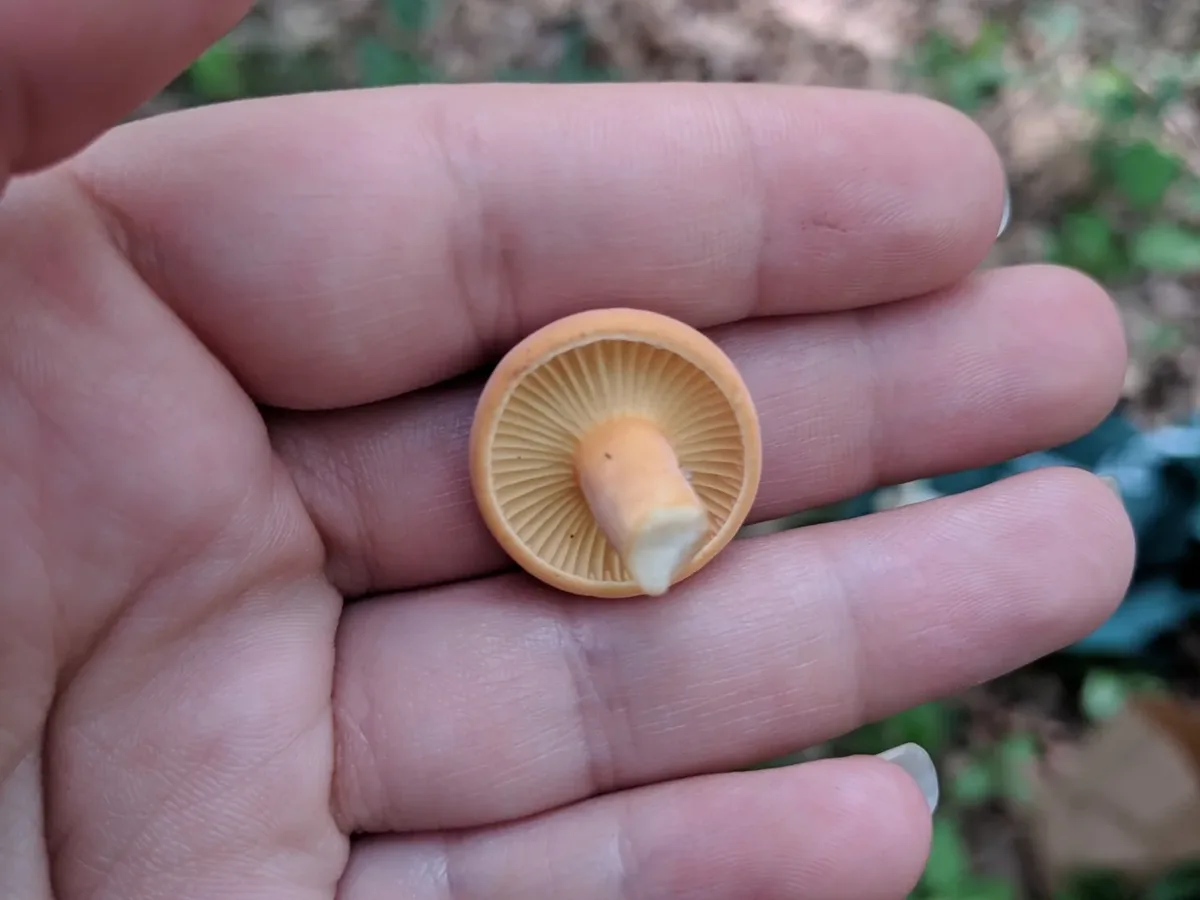 © Sarah DeLong-Duhon (CC BY 4.0)
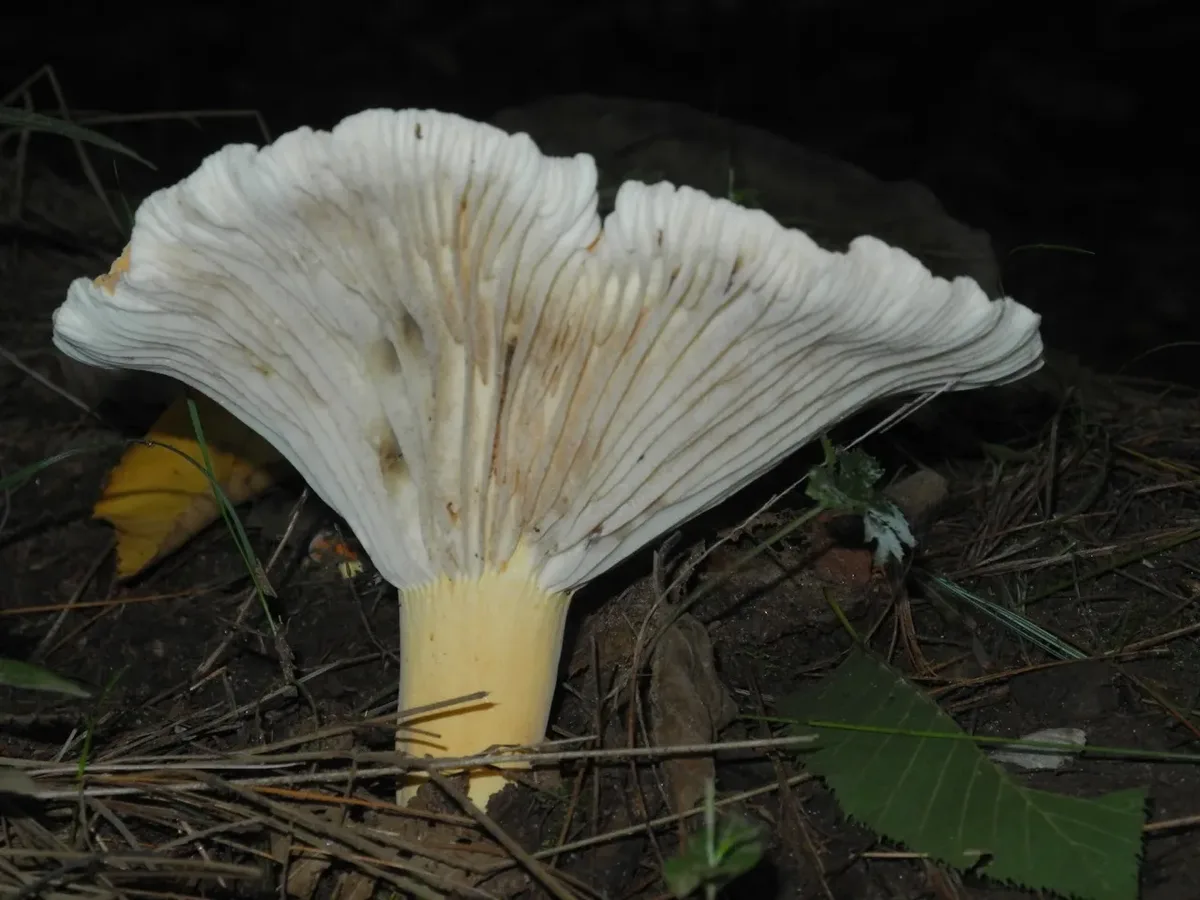 © Michael J. Papay (CC BY 4.0)© Mike Tilley (CC BY 4.0)© Karen Guin (CC BY)
One of the best mushrooms you can bring home - once you are certain of the identification.
Never eat a mushroom you are not 100% sure of - check the look-alikes below, and always cook wild mushrooms.
How to recognise it
Lactifluus hygrophoroides is a handsome, medium-sized milkcap immediately distinguished by its exceptionally wide-spaced, thick, waxy gills - an unusual feature among milkcaps that makes the species recognizable at a glance once the pattern is learned.
Cap
The cap (4-10 cm) is convex and slightly bumped in the centre when young, soon flattening and becoming broadly depressed in age, dry and finely velvety in texture, in shades of warm orange-brown to cinnamon-tawny.
Gills
The gills are white to pale cream, widely separated (you can clearly see gaps between adjacent lamellae), thick and almost waxy in texture, slightly decurrent, and running a short way down the sturdy stem.
Stem
The stem is firm, solid, dry, roughly the same warm brown as the cap.
Flesh
Cut or break the flesh anywhere and it exudes copious watery-white milk that is mild and pleasant on the tongue - not acrid, not peppery.
Crucially the milk does NOT stain the flesh or gills brown as it dries: the tissues remain white or faintly cream.
Smell & taste
There is no fishy or crab-like odor; the scent is mild and faintly pleasant.
Spore print white.
Where & when it grows
Habitat
This milkcap forms ectomycorrhizal partnerships with oaks and related hardwoods, exchanging carbon from the tree's photosynthesis for soil minerals and water mediated through the fungal mycelium.
It grows from soil - never from wood - singly or in loose scattered groups, typically beneath mature oaks in deciduous or mixed forests, along forest edges and in open oak woodland.
It is especially associated with the mesic to dry-mesic deciduous forests of the eastern USA and Appalachian region, where white oak, red oak, chestnut oak and related species are dominant.
It is also reported from Central America under oaks, and from Japan.
It favours well-drained, somewhat acidic soils and is most productive during warm, humid summer conditions.
When
Lactifluus hygrophoroides is a warm-season fruiter that emerges earlier and runs longer than many autumn milkcaps.
Across most of the eastern USA it can appear from June and fruits strongly through July and August, often persisting into September and occasionally early October.
The trigger is warm soil (above about 18 °C) combined with adequate summer rainfall; a period of warm, wet weather - summer thunderstorms are classic - typically brings a flush within a week to two weeks.
In cooler northern parts of the range the season is compressed into August-September. It is not a spring species.
How it grows
Fruit bodies arise singly or in small scattered groups from ectomycorrhizal mats attached to oak rootlets, never from wood or clustered in tight bunches.
Caps expand from small rounded buttons to broadly flat or shallowly funnel-shaped over several days.
Unlike saprotrophic species, Lactifluus hygrophoroides cannot be cultivated - it depends entirely on a living oak host.
Good sites tend to recur year after year at the same spots as long as the host oaks and habitat persist, making it worth noting productive locations for future visits.
Fruiting conditions
A warm-season fruiter triggered by summer thunderstorms and humid spells after soil temperatures reach at least 17 °C; flushes typically appear 1-2 weeks after significant warm-season rainfall. Drought suppresses fruiting even from established mycelium.
Look-alikes
Within the milkcap genus, confusion is most likely with Lactifluus volemus (the Weeping Milk Cap or Tawny Milkcap), a very close relative with a similar warm orange-brown cap and abundant white milk.
The two are readily separated: L. volemus has densely crowded gills (not widely spaced) and its milk stains both flesh and gills brown as it dries; it also develops a strong fishy or crab-like odor with age, which L. hygrophoroides does not. All confusion within this edible group is harmless.
Lactifluus corrugis (the Corrugated-cap Milky) is another similar relative, recognizable by its darker brown, more wrinkled cap surface; also edible.
Lactarius fulvissimus and related tawny milkcaps are smaller, duller, and exude sparse white milk that may be slightly bitter; they are of poor edible quality but not known to be toxic.
The unrelated saffron milkcaps (Lactarius deliciosus group) produce bright orange milk, not white, and grow under conifers.
Most importantly, milkcaps can be separated from all dangerous lookalikes by a single reliable test: any mushroom that bleeds copious white milk from a dry, non-gilled underside in deciduous woodland belongs to the milkcap group, and no milkcap of this tawny color in eastern North America is known to cause serious poisoning.
The deadly Galerina marginata (Funeral Bell) grows on wood, has a ring, brown spore print, and never bleeds milk. The deadly Cortinarius species have rusty-brown spore prints, a cobwebby cortina veil, and no latex. Absence of milk instantly rules out both.
A deadly amatoxin-containing species that grows on decaying wood (not soil), has a ring on the stem, brown gills, a brown spore print, and produces absolutely no latex. The milk test alone rules it out: if you cut the flesh and no white milk appears, it is not a milkcap.
Several Cortinarius species (especially the orellanine group) are dangerously toxic; some are orange-brown and superficially suggestive of a milkcap in color. They are separated by rusty-brown spore print, a cobwebby cortina veil remnant on the stem, often a sticky cap, and crucially the complete absence of any latex. No latex = not a milkcap.
Another close edible relative; darker and browner with a distinctly wrinkled, corrugated cap surface. Also exudes copious white milk but gills are more crowded than in L. hygrophoroides. Confusion is harmless.
Exudes bright orange, carrot-colored milk - not white - and typically shows green staining and faint concentric cap zones; grows strictly under conifers (pines). Milk color alone instantly separates it.
Smaller, duller orange-brown cap with gills that are moderately spaced but not as dramatically wide as L. hygrophoroides; milk is more sparse and may be mildly bitter. Of poor edible quality but not known to be toxic.
The most commonly confused relative in eastern North America: similar warm orange-brown cap and copious white milk. Key differences - L. volemus has densely crowded gills (not widely spaced), its milk stains flesh and gills brown as it dries, and it develops a strong fishy or crab-like smell with age. Confusion is harmless as both are choice edibles.
In the kitchen
Picking & cleaning
Look for a dry, velvety, orange-brown cap on the forest floor beneath oaks in summer. Confirm identity before collecting by performing three checks:
- 1Break or nick the flesh - it should immediately exude copious watery-white milk that tastes mild, not acrid.
- 2Check the gills - they should be strikingly widely spaced, thick, and waxy, unlike the crowded gills of most other milkcaps.
- 3Verify the milk does not rapidly stain the flesh brown (wait a minute after nicking).
Collect firm, fresh young to mid-aged specimens and cut the stem at the base rather than uprooting. Carry in an open basket; the firm flesh holds up well. Discard any maggot-infested, waterlogged, or very old specimens.
Cooking
A choice edible with firm, white flesh that cooks well. The texture holds up to sautéing, grilling, roasting, and addition to soups and stews.
Because the flesh is firm and exudes milk during cooking (which can make a pan briefly wet), cook over medium-high heat in butter or oil to evaporate the moisture and allow browning; the flavor deepens and becomes pleasantly nutty-savory when properly caramelized.
The mild, non-fishy flavor makes it more versatile in the kitchen than the pungently fishy L. volemus - it pairs well with butter, garlic, herbs, and light creamy sauces.
It can also be sliced and dried for storage, reconstituting well in soups.
Always cook before eating. Young, firm caps are best; older specimens may become soft and lose culinary appeal without becoming dangerous.
Good to know
Lactifluus hygrophoroides is a well-regarded edible with a strong safety record and no deadly lookalikes.
Its most important safety feature is the copious mild white latex: this trait is shared by no deadly species in its range, and its combination with the widely spaced gills and non-staining milk makes identification straightforward for a careful forager.
The milk test is non-negotiable. Confirm before eating:
- abundant white milk
- mild taste
- widely spaced gills
- dry velvety cap
- non-staining latex
As with all wild fungi:
- cook thoroughly
- avoid raw consumption
- try a small first portion if eating for the first time
- discard old or maggoty specimens
There are no known toxins in this species and no credible reports of poisoning attributable to correctly identified L. hygrophoroides.
A reference guide - never an edibility guarantee. When in doubt, leave it out.