Flockton's Milkcap
Lactifluus flocktoniaesyn. Lactarius flocktoniae (Cleland) Gillet, Lactarius flocktoniae Cleland
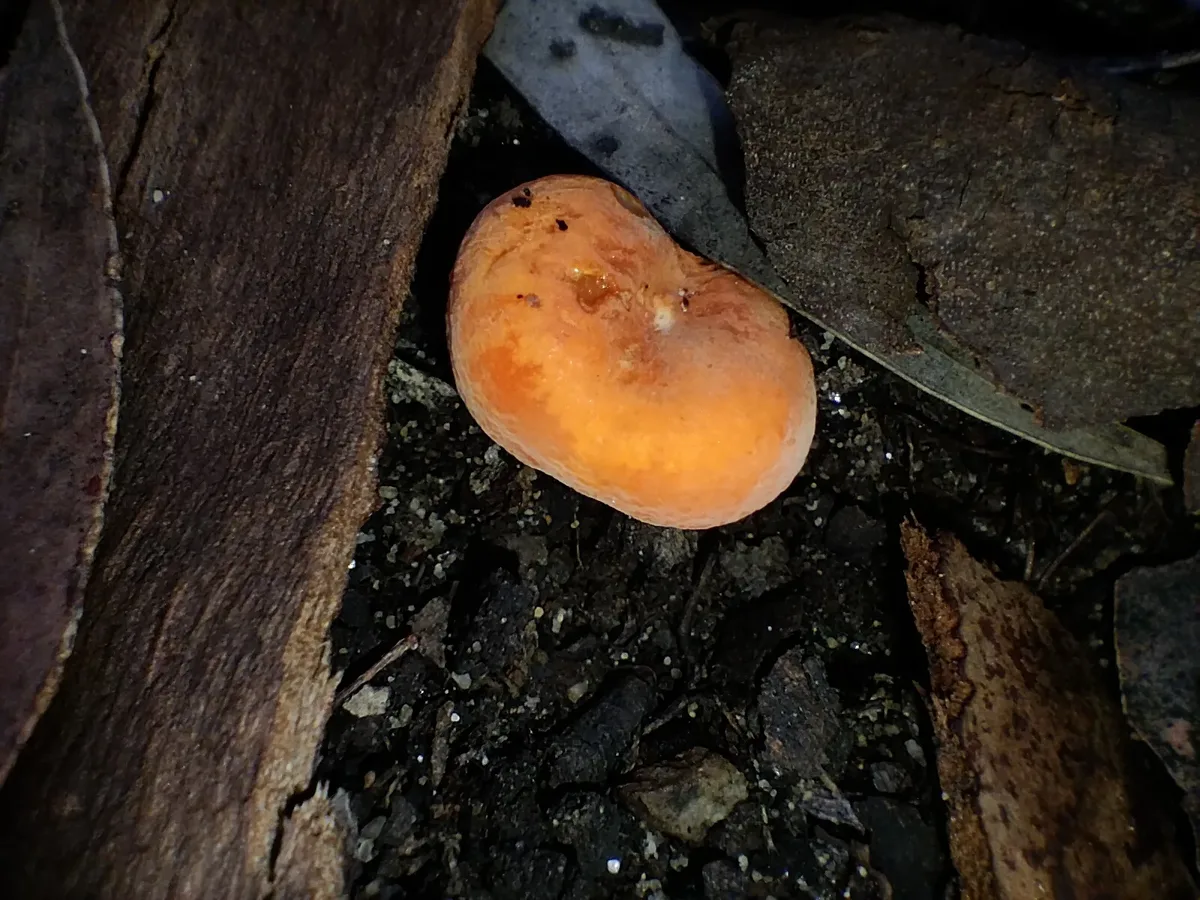 © Sofia Zvolanek (CC BY)
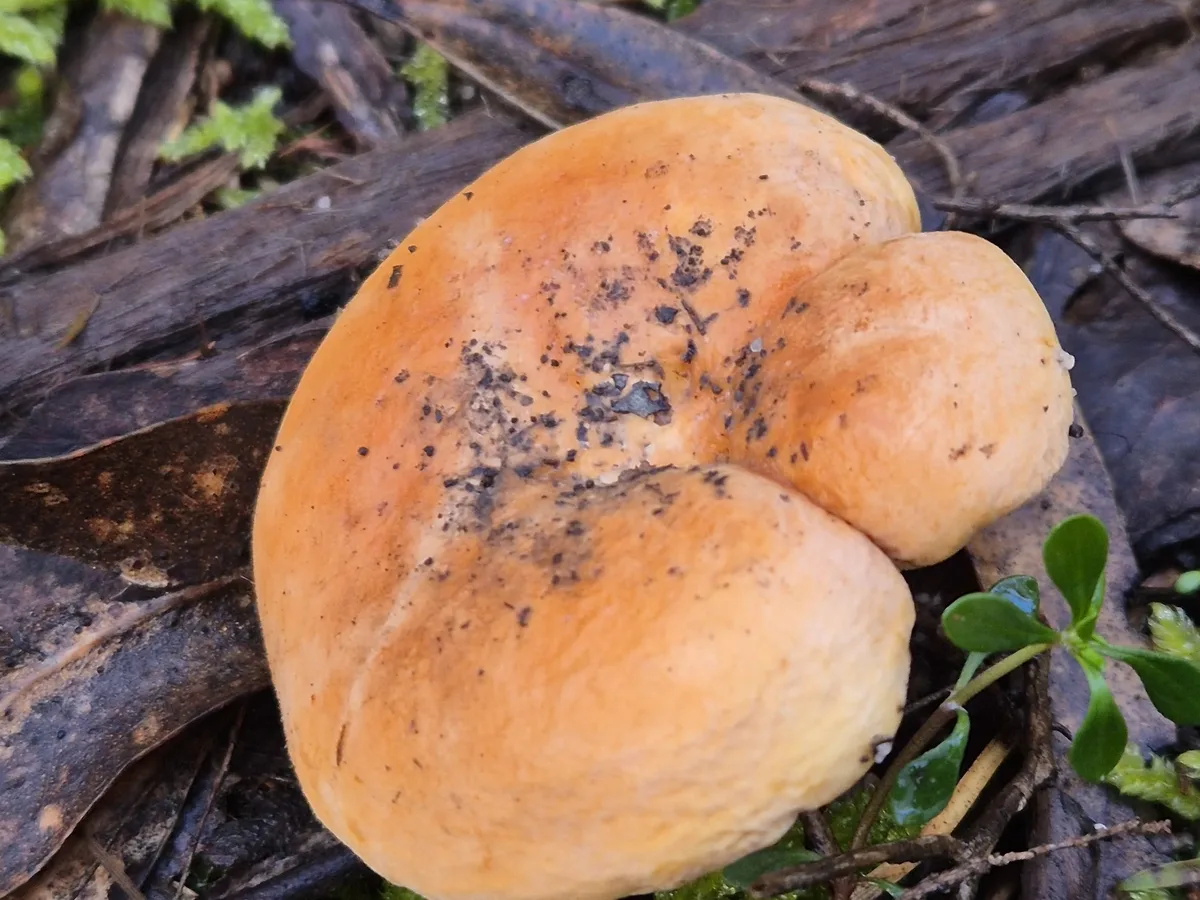 Eileen Laidlaw (CC0)
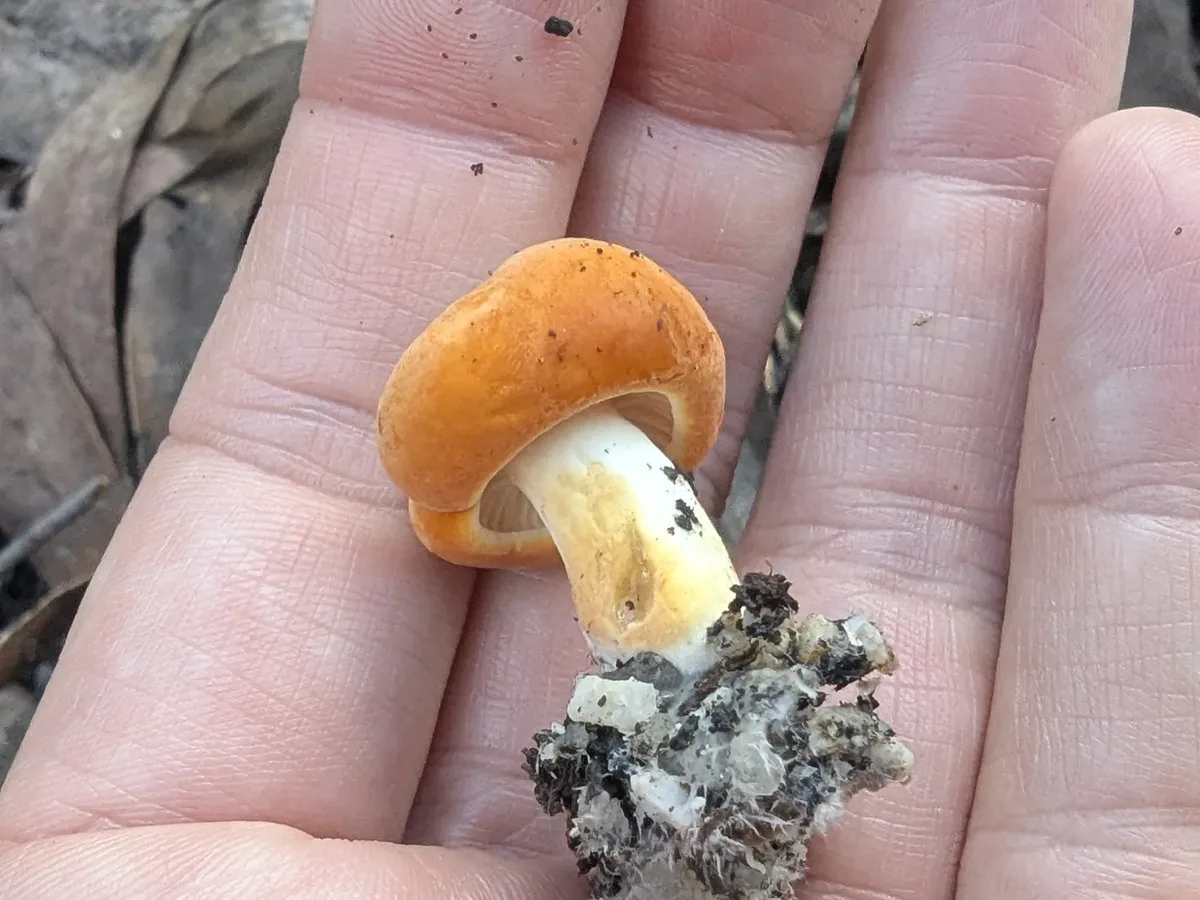 © Alesha Teitzel (CC BY)
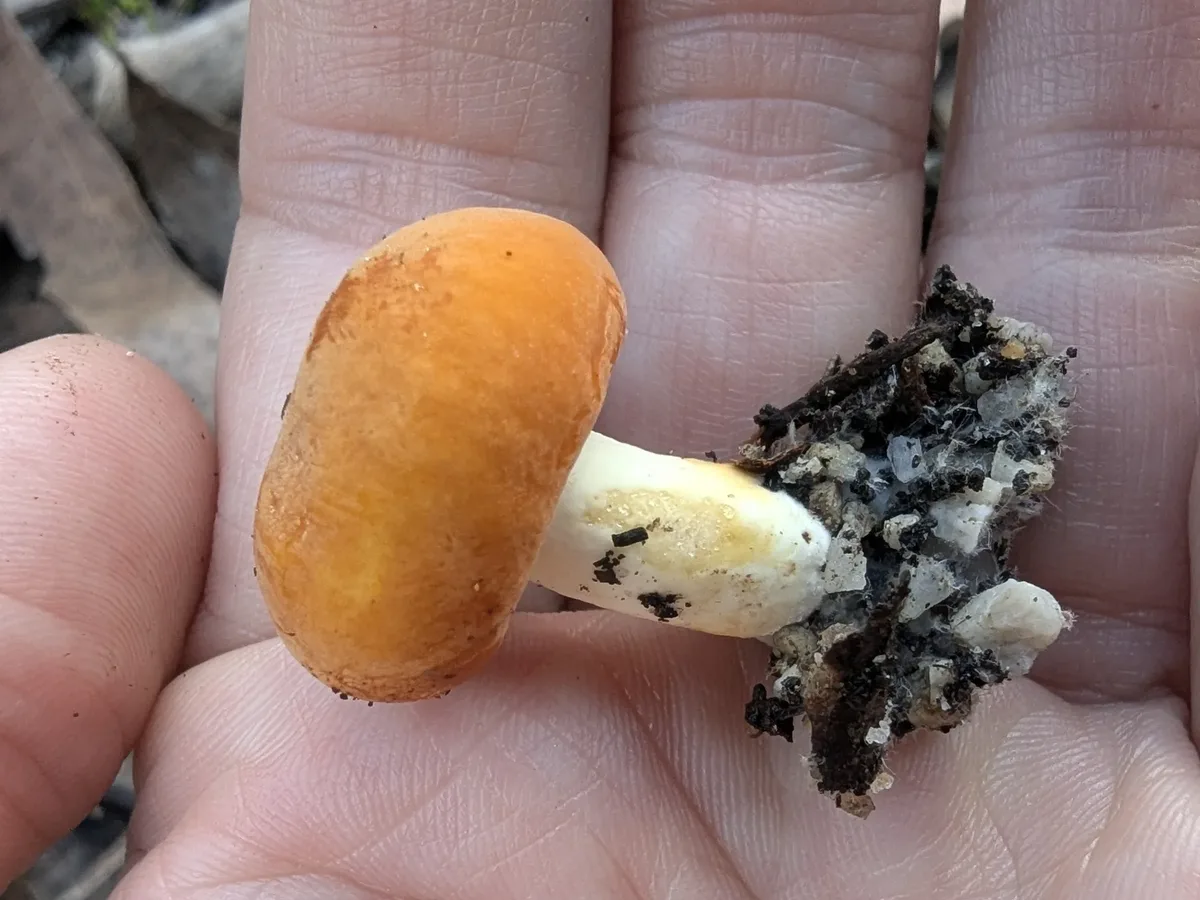 © Alesha Teitzel (CC BY)
 © Alesha Teitzel (CC BY)
 Eileen Laidlaw (CC0)© Sofia Zvolanek (CC BY)Eileen Laidlaw (CC0)
Good to eat, once you have identified it with certainty and cooked it through.
Never eat a mushroom you are not 100% sure of - check the look-alikes below, and always cook wild mushrooms.
How to recognise it
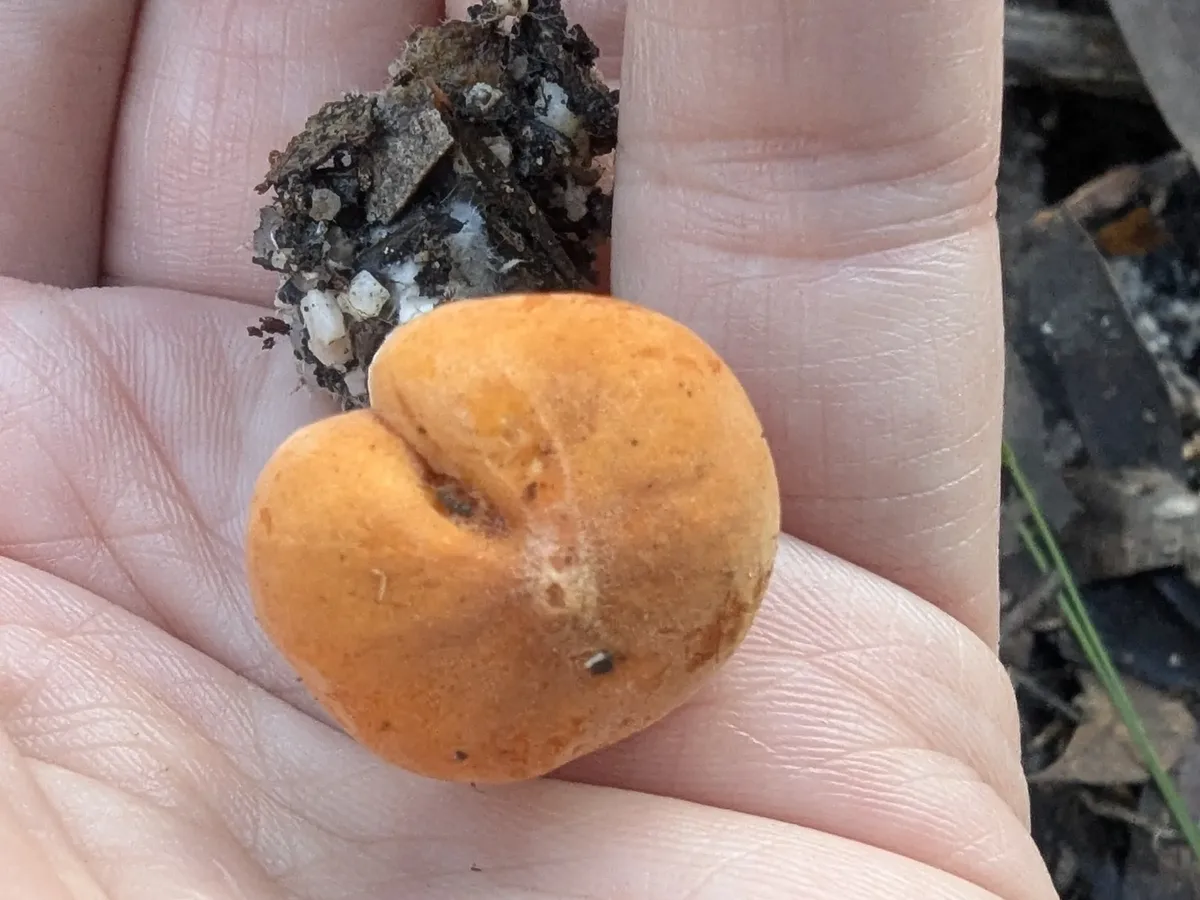
Flockton's Milkcap is a clean, pale-coloured mushroom that stands out against dark eucalyptus leaf litter through its creamy-buff uniformity rather than any vivid colouration.
Cap
The cap runs from moderately convex in youth to plane or shallowly funnel-shaped in age, with the margin typically staying inrolled longer than the centre flattens - a character shared with many milkcaps that gives young specimens a distinctly rounded, enclosed appearance.
The surface is consistently dry and non-sticky regardless of weather, and smooth to the touch with perhaps a very faint velvetiness visible in good light.
Colours are understated: pale buff, ivory-ochre, or cream, usually a shade or two darker at the hub and fading toward a near-white margin.
Gills / Pores
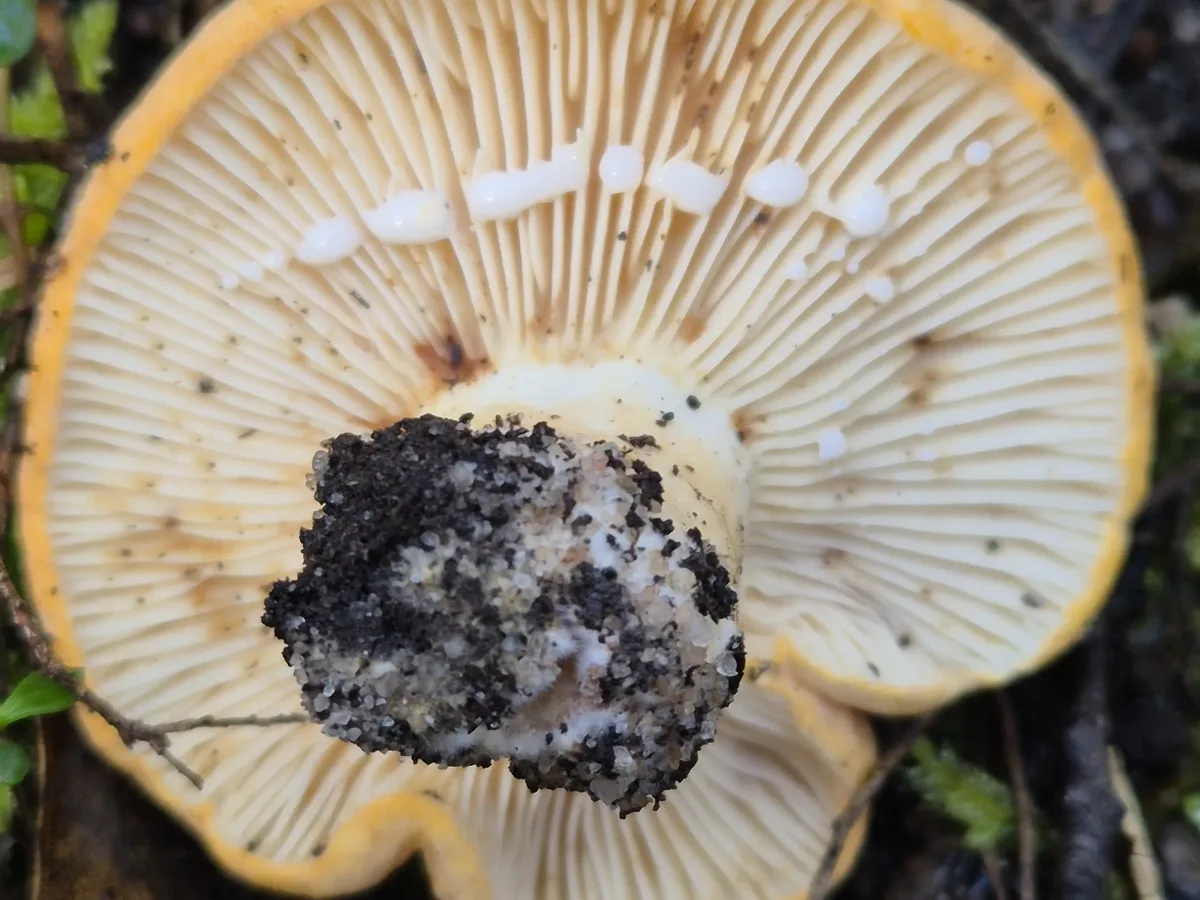
The gills are white to very pale buff.
Stem
The stem is white to very pale buff, giving the entire fruitbody a coherent light cream-to-ivory palette.
Flesh
The defining diagnostic feature - shared by all true milkcaps - is the copious white latex that bleeds immediately from any broken surface: break a gill with a fingernail or nick the flesh with a knife, and watery-white milk flows at once.
In Flockton's Milkcap this latex remains white and does not change colour on exposure to air. The flesh itself also remains white, not staining on cut surfaces.
Spore print white to very pale cream.
Smell & taste
Taste the latex: it should be mild, not acrid or peppery.
Where & when it grows
Habitat
This species exists only in partnership with living tree roots - it cannot grow on dead wood, compost, or in any setting without an established host tree.
The mycorrhizal association means that each fruitbody above ground is the visible tip of a much larger underground fungal-root network, often decades old, that has woven itself into the fine root hairs of one or more eucalyptus trees.
In practice this directs the forager to tall, undisturbed eucalyptus forest. Its primary haunts are:
- the wet sclerophyll forests of Victoria's central highlands and Otway and Dandenong Ranges
- the mixed forests of the NSW southern tablelands
- the diverse eucalyptus woodlands of Tasmania
The association with myrtle beech in cool-temperate gullies of Victoria and Tasmania means that sheltered gully habitats are also productive. Well-drained acidic soils with a layer of eucalyptus or beech leaf litter are the characteristic substrate.
Because the mycelium is perennial and tied to a living tree, productive sites tend to fruit in the same location year after year as long as the host trees and habitat remain intact.
When
The Australian autumn is when Flockton's Milkcap reliably makes its appearance, and understanding the trigger helps predict productive days.
During summer the soils of southeastern Australia dry and warm significantly. The mycorrhizal network persists underground but does not produce fruitbodies in the heat and drought.
The first meaningful autumn rains - even moderate falls of 15-25 mm over a one- to two-week period - begin to rehydrate the soil profile, and as daytime temperatures fall below about 18 °C the mycelium responds. Fruitbodies typically emerge within one to two weeks of this rain-and-cooling combination.
April and May are the most consistently productive months across most of the range:
- At higher elevations in Tasmania, collections have been made in March.
- At warmer, lower-elevation mainland sites, May and even early June can be equally good.
The season usually closes by July as temperatures fall too low for active growth.
How it grows
Fruitbodies emerge from the soil singly or in loose groups, typically one to five within a few metres of one another, rarely forming larger gregarious troops.
Being a mycorrhizal species rather than a saprotroph, it cannot be cultivated and will not fruit in cleared ground, gardens, or outside the range of its host trees.
A good site with mature host trees and established mycelium may recur annually, making it worth marking productive locations.
The cap expands over five to ten days from a tight, inrolled button to a broadly open, flattened adult. Young buttons are firm throughout, while older specimens soften somewhat and become more prone to insect larvae colonisation.
Fruiting conditions
Fruiting triggered by the first significant autumn rainfall following the summer-dry period in southeastern Australia, in combination with soil temperatures cooling below approximately 18 °C. A minimum of approximately 20 mm over the preceding two weeks combined with cooling soil temperatures (8-18 °C range) produces reliable flushes 7-16 days after the triggering rain event. Peak fruiting in April-May; does not flush during the warm dry summer or in mid-winter cold.
Look-alikes
The most serious confusion risk in southeastern Australian eucalyptus forest is with Cortinarius species (webcaps), which can produce pale buff to ochre-tan, cream, or pale brown caps in similar sizes and in identical habitat and season.
Some Australian Cortinarius species contain orellanine, a potent nephrotoxin that destroys kidney tissue with a characteristically delayed onset of one to four weeks - by which time irreversible damage has accumulated and the victim may not connect the mushroom meal to the illness.
Cortinarius species never produce latex of any colour: cut or break the flesh anywhere and no milk appears. They also differ in that:
- the spore deposit is rusty-brown to cinnamon-brown
- the gills progressively rust-brown with age
- young specimens carry a cobwebby (cortinate) partial veil
The latex test is the single most reliable separator: confirm white latex before collecting anything, and discard any pale gill-mushroom in eucalyptus forest that does not bleed immediately when nicked.
Within the milkcap genus Lactifluus and the closely related Lactarius, several other Australian species share the pale buff to cream colouration:
- Lactifluus clarkeae has an orange-red to brick-red cap (notably more vivid and orange in colour) and produces latex that turns lilac-mauve on exposure to air - its cap colour and latex colour-change distinguish it instantly.
- Lactarius eucalypti and related tawny-to-russet Australian milkcaps can have overlapping cap colours, but similarly produce white non-staining latex and are edible; careful attention to cap colour, latex taste, and spore print can distinguish them, and any confusion is harmless within the edible-milkcap group.
- The acrid milkcaps (Lactarius wirrabara and related species) are separated by their intensely burning latex on the tongue - Flockton's Milkcap never burns.
Amanita species in native eucalyptus forest are occasionally cream-coloured and of similar size, but produce absolutely no latex, have free gills, and typically show a ring on the stem and/or a volva at the base.
Cream to pale buff Amanita species in southeastern Australian native forest are occasionally encountered by foragers. They share nothing with Flockton's Milkcap beyond a superficial colour match: Amanita species produce absolutely no latex, have gills that are free from the stem (not decurrent or adnate), a ring (annulus) on the upper stem in many species, and often a cup-like volva or bulb at the stem base visible when carefully dug up. Check for white milk on any gill-mushroom in native forest before considering edibility.
DEADLY RISK. Pale buff to ochre or cream-coloured Cortinarius species are common in southeastern Australian eucalyptus forest in the same autumn season. Some contain orellanine, a nephrotoxin causing irreversible kidney failure with symptoms delayed up to several weeks. They produce NO latex whatsoever: cut the flesh anywhere and no milk appears. Their gills also develop a rust-brown to cinnamon-brown colour at maturity from the spore deposit, and young specimens show a cobwebby cortina (partial veil) between cap edge and stem. Always cut and confirm white latex before collecting any pale milkcap candidate - if no latex flows, do not eat it.
A native Australian milkcap occurring in the same eucalyptus forest habitat. Distinguished by its vivid orange-red to brick-red cap colour - considerably more vivid and saturated than the pale buff to cream cap of Flockton's Milkcap - and its white latex that turns distinctly lilac-mauve on exposure to air within two to three minutes, whereas the latex of Flockton's Milkcap stays white. The colour change test on a tissue or white surface is definitive. Confusion is harmless as both are edible.
A closely related Australian Lactarius occurring in similar eucalyptus forest habitat. Can be similar in cap colour (pale tawny to buff) and has white non-staining latex. Tends to have a more russet or orange-tawny cap and slightly more crowded gills. Edible, and any confusion within this group of edible milkcaps sharing the same habitat is harmless; always confirm white latex either way.
A pale ochre-buff to clay-coloured native Australian milkcap in similar sclerophyll habitats; produces white latex that stays white but is intensely acrid-burning on the tongue - quite unlike the mild, non-burning latex of Flockton's Milkcap. The taste test (touching a drop of latex to the tip of the tongue) separates the two instantly. L. wirrabara is classified as caution because of its acrid irritant content.
In the kitchen
Picking & cleaning
Before collecting any specimen, perform the latex check: break or nick a small section of gill or stem flesh and verify that abundant white milk exudes immediately.
This is non-negotiable - it is the defining feature that separates true milkcaps from all dangerous look-alikes in eucalyptus forest.
Once the latex is confirmed, taste a small amount from a finger or tissue: it should be mild, without burning or harsh acrid heat.
Collect firm, young to mid-maturity specimens where the cap has not yet fully flattened and the gills and flesh are still firm; old, waterlogged, or heavily insect-damaged specimens are best left.
- Cut at the stem base with a knife rather than pulling, to minimise disturbance to the mycelial mat.
- Carry in a ventilated basket; avoid plastic bags, which cause sweating and rapid deterioration.
- Clean lightly in the field to remove clinging leaf litter, and use promptly - milkcaps are best eaten within one to two days of harvest.
The mild white latex does not stain significantly, unlike the lilac-staining latex of the related Lactifluus clarkeae.
Cooking
Flockton's Milkcap has firm, white flesh with a mild, clean flavour - pleasant without being emphatic, making it versatile in the kitchen.
The absence of acrid latex means it does not require parboiling or special treatment to remove bitterness, and the flesh cooks down cleanly without the aggressive colour changes seen in some related species.
Slice and sauté in butter or light olive oil over medium to high heat, allowing the moisture to cook off so the caps take on a light golden colour. The flavour deepens and becomes mildly nutty when properly caramelised.
It suits pasta, risotto, and egg dishes, and combines well with other wild mushrooms from the same autumn harvest. The mild flavour accepts garlic, thyme, and light cream-based sauces without being overwhelmed.
It can be added to slow-cooked soups and stews, but hold back addition until the final twenty minutes to retain some texture.
Always cook thoroughly; the raw milkcap is not recommended for consumption.
Good to know
Flockton's Milkcap is considered edible in Australian mycological literature, with mild-tasting non-acrid latex and no documented toxicity.
The primary safety procedure for collecting this species is the latex test, and it must be performed every time without exception: break a gill or nick the flesh and confirm immediate white milk.
Any cream to buff-coloured, gill-bearing mushroom in eucalyptus forest that does not bleed white latex should be treated as potentially dangerous and discarded.
This precaution is critical because some native Australian Cortinarius species in the same habitat and season contain orellanine, which causes irreversible kidney failure with a latent period so long (up to several weeks) that the mushroom meal may have been entirely forgotten by the time symptoms appear.
Poisoning information:
- Australia - Poisons Information Centre 13 11 26
- New Zealand - National Poisons Centre 0800 764 766
Cook specimens thoroughly before eating; do not eat raw. As with any wild edible tried for the first time, begin with a small quantity and monitor for any adverse reaction.
A reference guide - never an edibility guarantee. When in doubt, leave it out.