Deceiving milkcap
Lactifluus deceptivussyn. Lactarius deceptivus Peck, Lactarius deceptivus var. deceptivus
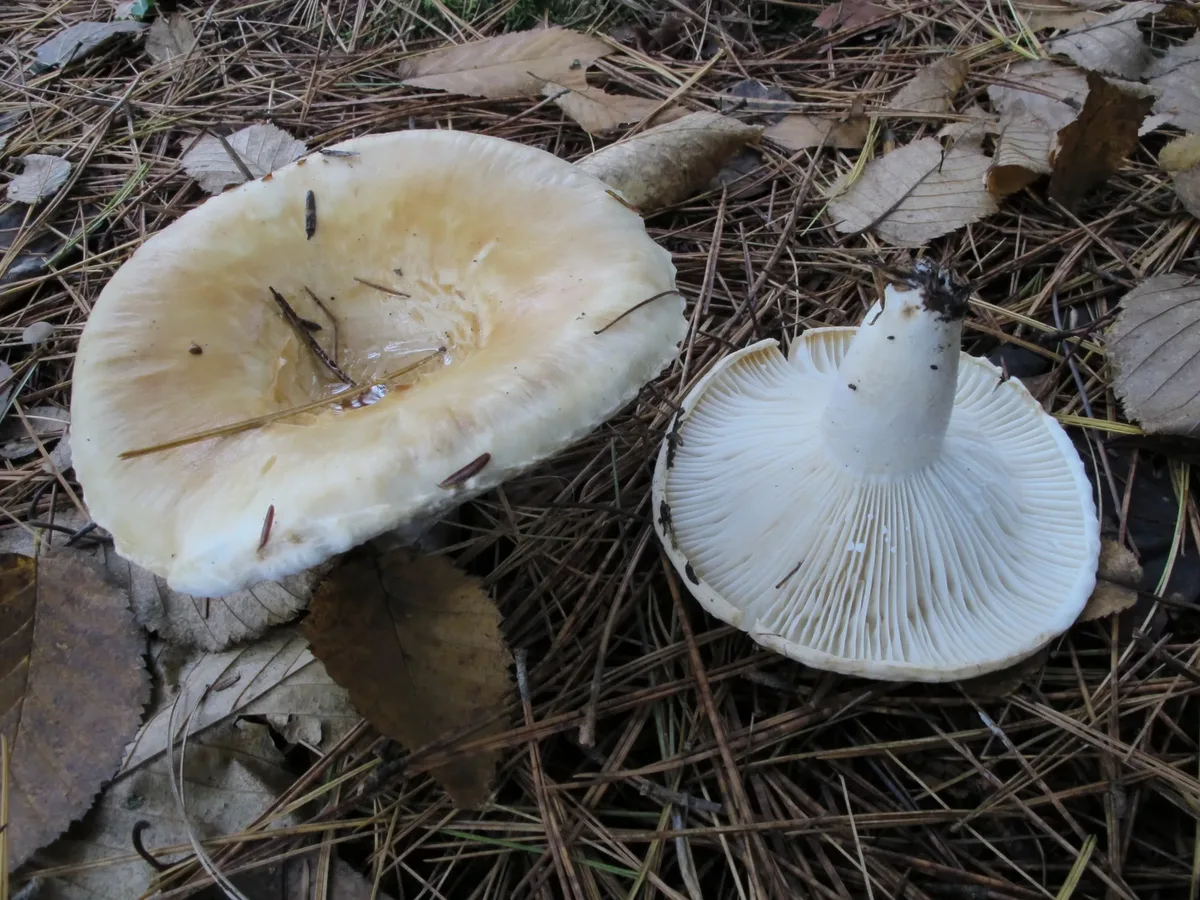 © mycowalt (CC BY-SA 4.0)
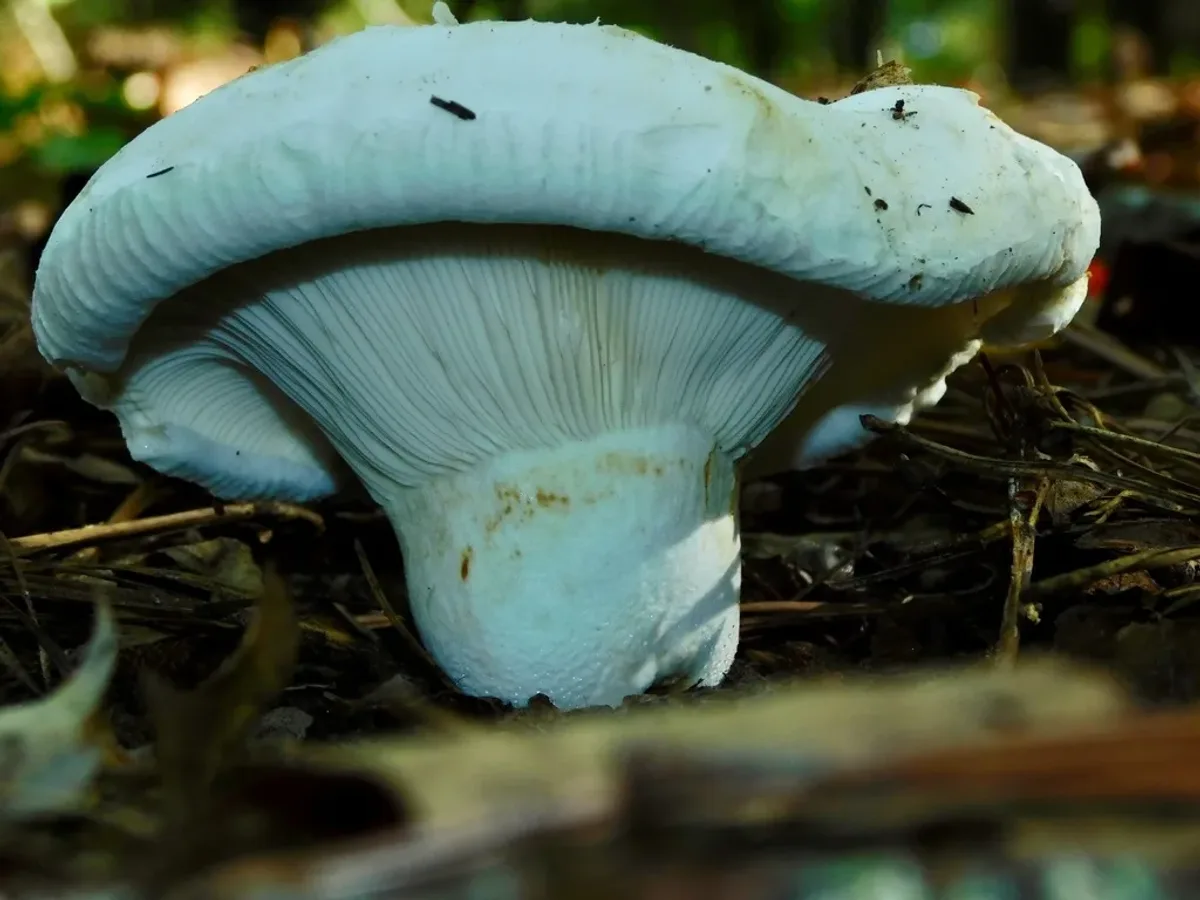 (c) Michael J. Papay, some rights reserved (CC BY)
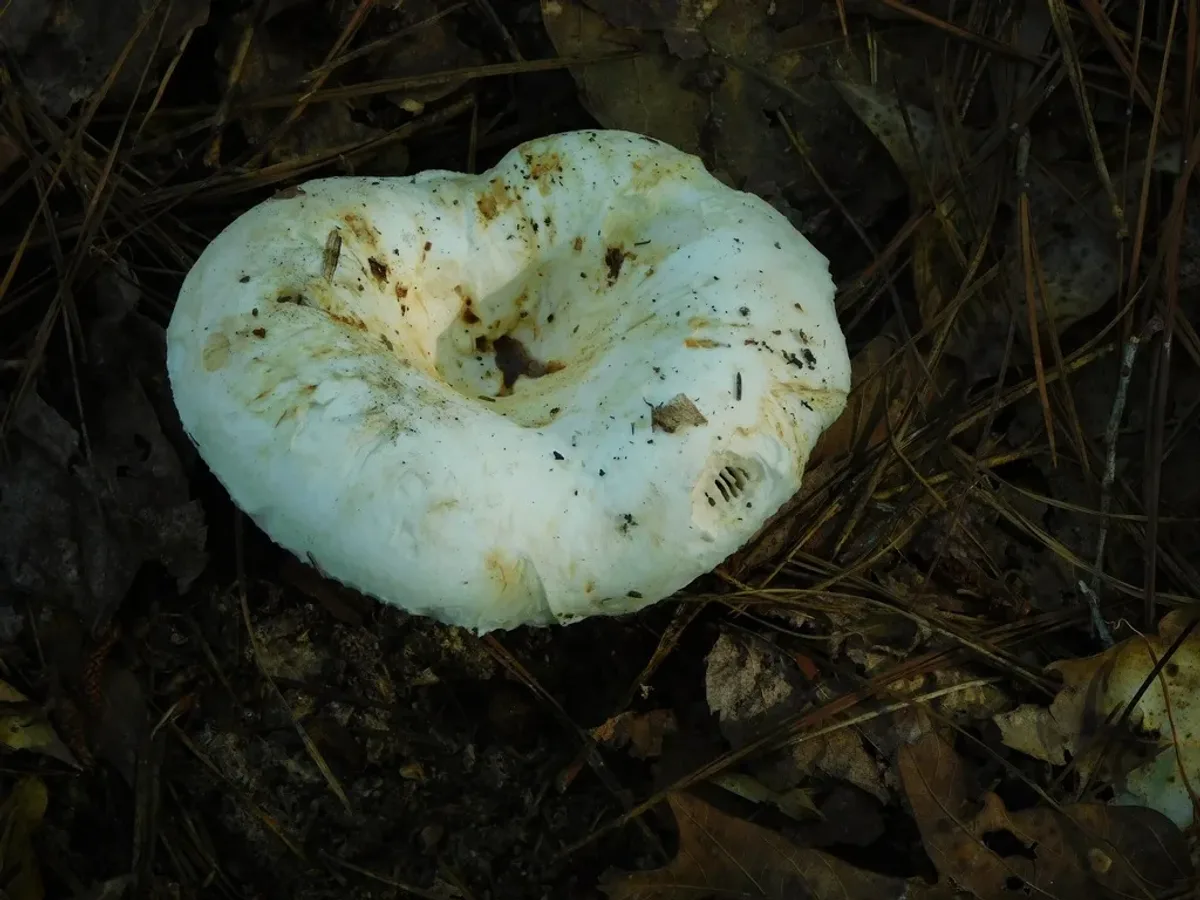 (c) Michael J. Papay, some rights reserved (CC BY)
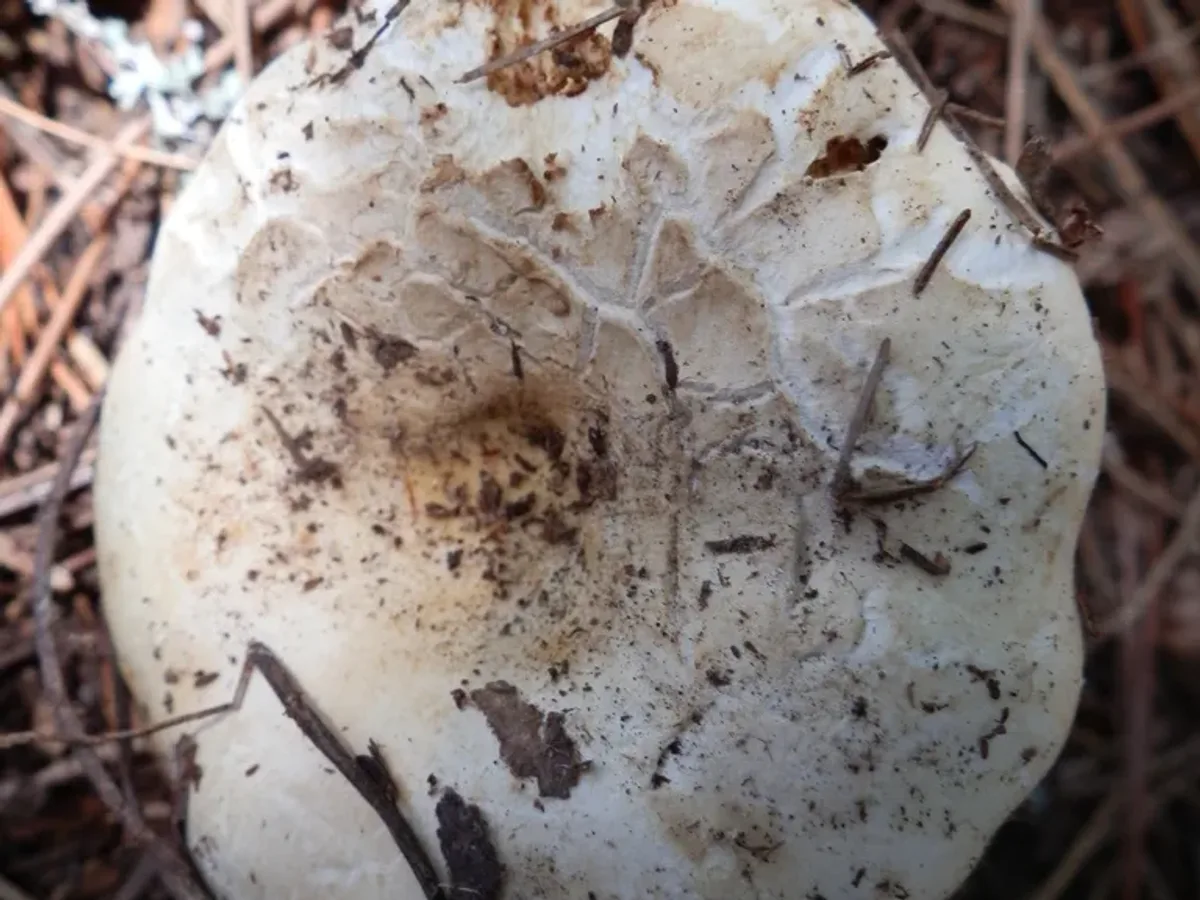 (c) pinonbistro, some rights reserved (CC BY-SA)
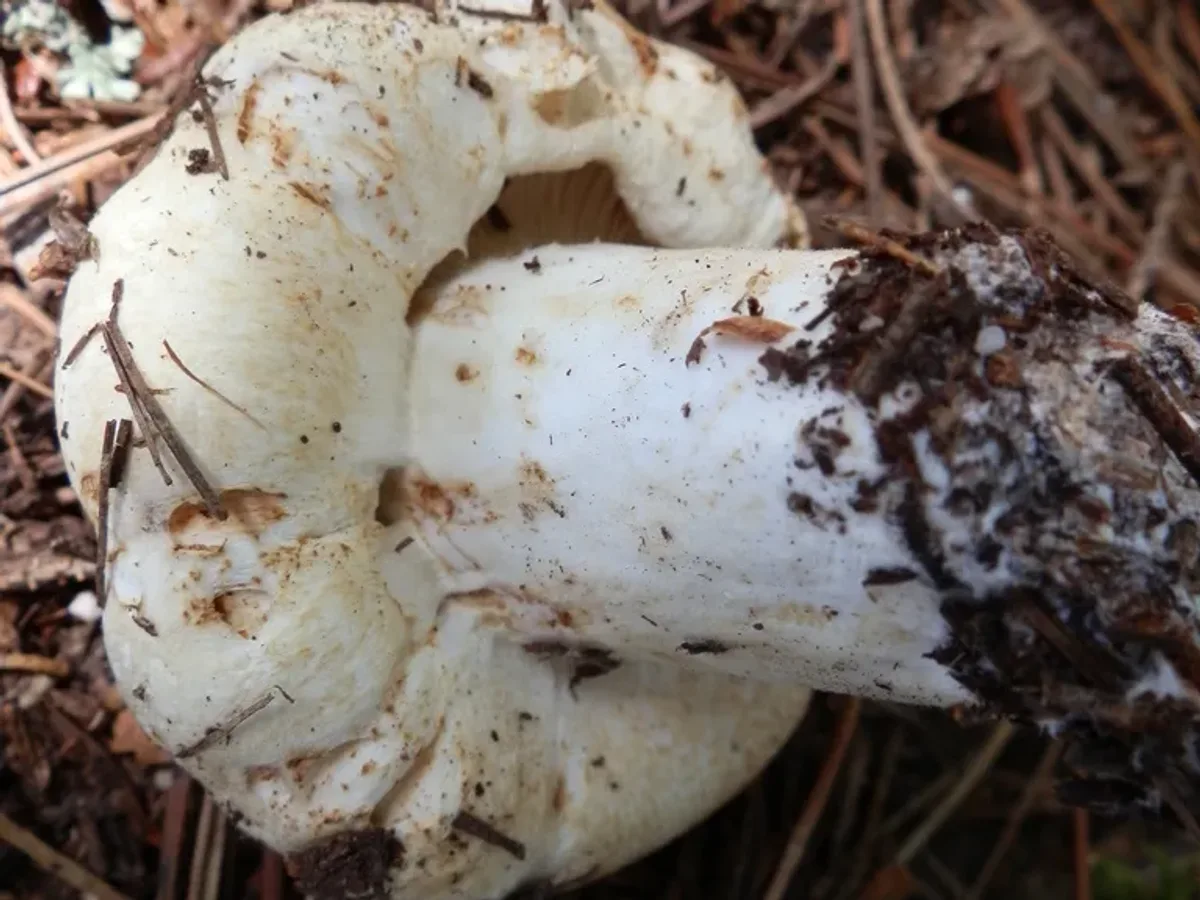 (c) pinonbistro, some rights reserved (CC BY-SA)
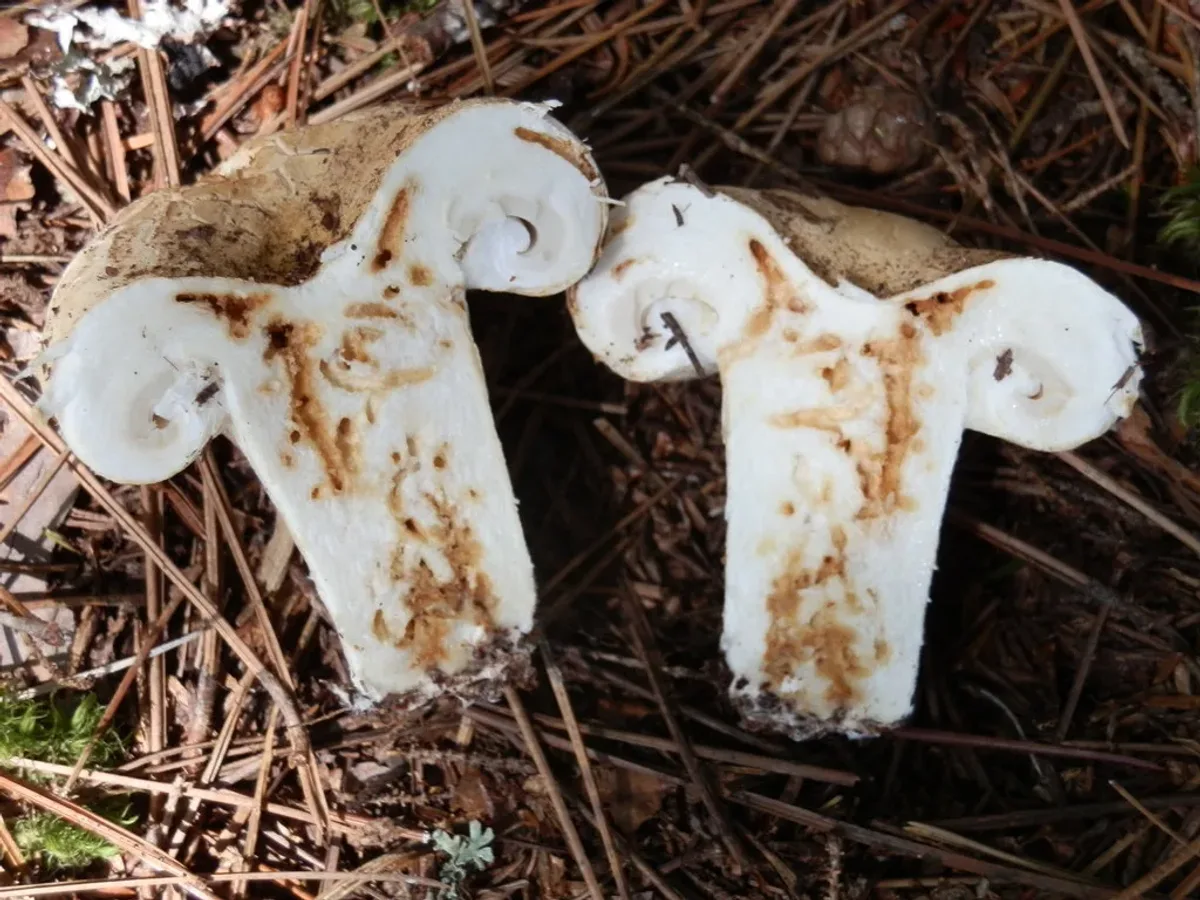 (c) pinonbistro, some rights reserved (CC BY-SA)
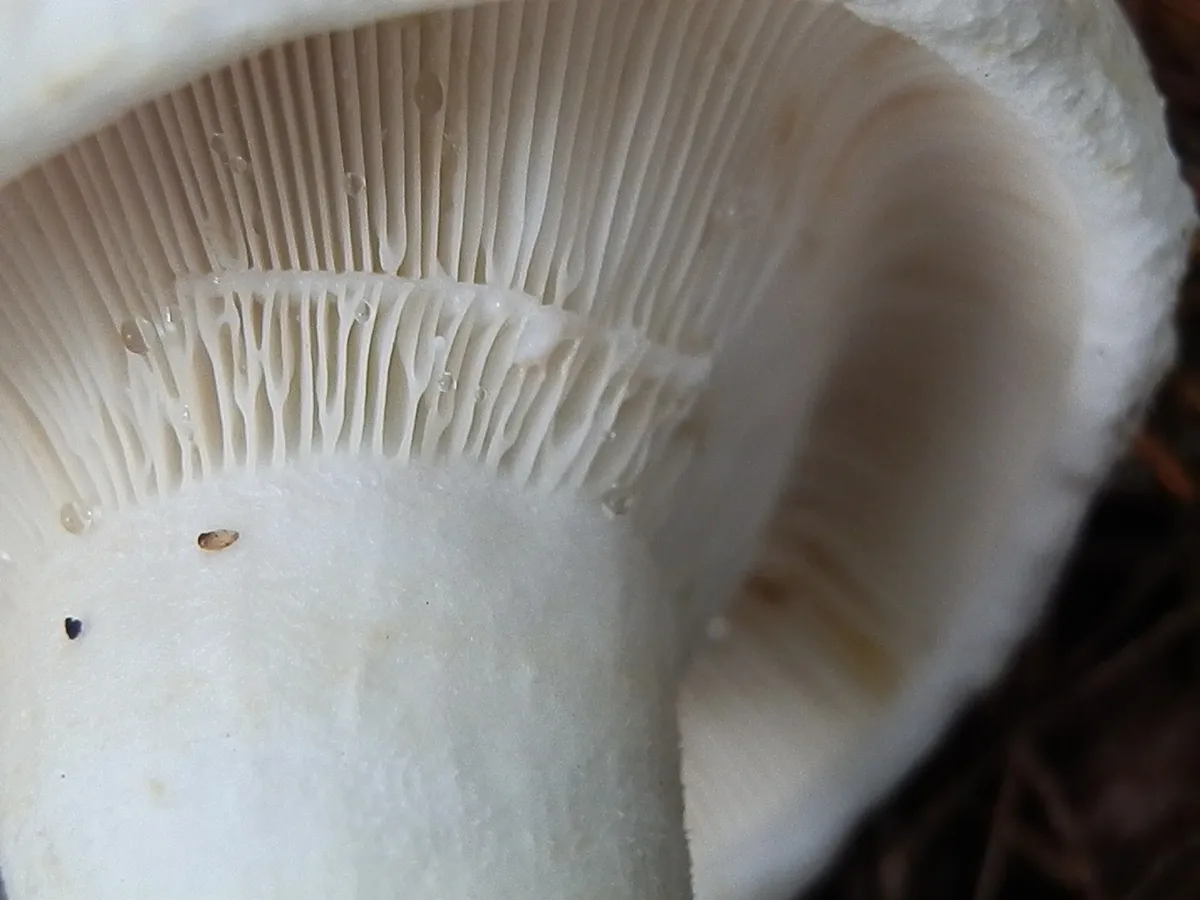 © pinonbistro (CC BY-SA 4.0)© mycowalt (CC BY-SA 4.0)(c) Michael J. Papay, some rights reserved (CC BY)
Edible only with the right preparation - or safe for some people but not others. Learn the caveats first.
Never eat a mushroom you are not 100% sure of - check the look-alikes below, and always cook wild mushrooms.
How to recognise it
Lactifluus deceptivus is one of the largest white milkcaps in eastern North America, and it carries two field marks that together make it nearly unmistakable.
The first is its cap margin: even in fully mature, wide-open specimens it remains at least partially inrolled and edged with a distinctive fringe of thick, cottony-white hairs - a feature you won't find on any other white milkcap in these forests.
The second is its milk: break a gill or nick the flesh and the mushroom bleeds copiously, releasing a white latex that burns the tongue with immediate, lasting intensity, far sharper than most other acrid milkcaps.
The cap itself is white to dingy cream or pale buff, sometimes picking up ochre or tan tones with age, and expands from convex to broadly flat or shallowly funnel-shaped over the course of maturity.
Gills are crowded and white to cream. The stem is thick, solid, and white, matching the cap in color and feel. The flesh is hard and brittle, snapping cleanly.
That acrid latex is the feature to verify - it is what makes the species both hazardous if eaten unprepared and reliably identifiable once you know to test for it.
Why it's dangerous
The primary danger of Lactifluus deceptivus is NOT the mushroom's own toxin, which causes self-limiting GI irritation only, but the risk of confusing it with deadly Amanita species (destroying angels). This confusion has been documented as a fatal misidentification in North America.
Any large white mushroom collected in eastern hardwood forests must be subjected to two checks before any consideration of eating:
- The milk test: break the flesh - milkcap bleeds white latex, Amanita does not.
- A volva check: destroying angels have a cup-like base, often buried, absent in milkcaps.
The species is also classified caution because adequate preparation is required to remove irritant compounds, and because individual sensitivity to residual sesquiterpene irritants varies.
Toxin
The acrid burning compound in Lactifluus deceptivus (as in other acrid milkcaps) is believed to be a mixture of sesquiterpene lactones - compounds with a ring structure that act as mucous-membrane irritants.
These molecules denature upon prolonged heating and leaching in water, explaining why traditional preparation methods (multiple water blanches) can render the mushroom edible.
Unlike amatoxins (Amanita phalloides group) or orellanine (Cortinarius), these compounds are not organotoxic or nephrotoxic at normal dietary doses - they cause irritation, not organ damage.
Raw or insufficiently prepared mushrooms cause burning in the mouth, throat, esophagus, and stomach within minutes of ingestion, followed by nausea, abdominal cramping, vomiting, and diarrhea that typically resolve within 12-24 hours.
Symptoms
Immediate burning sensation in the mouth and throat on raw contact with the latex.
After ingesting raw or undercooked material: onset of nausea within 30 minutes to 2 hours, followed by abdominal cramps, vomiting, and diarrhea.
Symptoms are gastrointestinal only and typically resolve within 12-24 hours with supportive care (fluids, rest). There is no systemic organ toxicity.
Seek medical attention if vomiting or diarrhea is severe or prolonged, if dehydration is suspected, or if there is any doubt about the identity of what was consumed - misidentification with Amanita is a genuine life-threatening emergency.
Staying safe
Lactifluus deceptivus is not regarded as safe to eat without extensive preparation, and is best avoided by all but the most experienced foragers with a specific interest in acrid milkcap cuisine.
The raw mushroom is intensely acrid. It will cause immediate burning of the mouth and throat and, if swallowed, gastrointestinal irritation, nausea, vomiting, and diarrhea.
Traditional preparation from Slavic and East European culinary traditions (where similar acrid milkcaps are popular salted mushrooms) calls for extended blanching in multiple changes of boiling water to leach out the irritant compounds, followed by prolonged salting or pickling. Even after such preparation, some individuals may experience GI upset.
The species is classified 'caution' for two reasons: the intrinsic acrid irritant compounds, and the serious risk of misidentification. The most dangerous scenario is a novice confusing any large white forest mushroom with the deadly Amanita bisporigera (destroying angel).
The only reliable safety check that separates ALL milkcaps from all Amanitas is the milk test - break the flesh and confirm white latex flows immediately. If there is no milk, do not eat it.
Where & when it grows
Habitat
Lactifluus deceptivus is a mushroom of mature, undisturbed eastern hardwood and mixed woodland. It lives as a mycorrhizal partner - its mycelium threads through the forest soil, woven into the fine feeder roots of trees and trading mineral nutrients for the carbohydrates the trees fix from sunlight.
Most commonly it partners with oaks and beeches, though it also associates with eastern hemlock in mixed stands and a range of other broadleaves. Look for it in established forest with deep, acidic leaf litter, not in disturbed clearings or young plantations.
It tends to appear singly or in small scattered groups, returning to the same patches year after year as the underground mycelium persists.
Its range spans the entire eastern part of the continent, from the Gulf Coast states north through New England and into Ontario and Quebec.
When
In eastern North America this species fruits from mid-summer into mid-autumn, broadly from July through October. The warm, humid conditions of late July through September are optimal.
Fruitings are especially tied to periods of significant rainfall (15 mm or more over 10-14 days) combined with warm soil temperatures.
In the southern part of its range (Appalachians, Gulf States) fruiting may begin in June; in the northern states and Canada the season concentrates in August-September.
It is absent or rare during drought, and tends to disappear quickly once temperatures drop below about 10 °C at night consistently.
How it grows
Fruitbodies push up singly or in loose scattered groups from the leaf litter and humus, never in tufts and never from wood.
Growth is unhurried by mushroom standards - the massive cap and distinctive cottony margin develop over several days to a week. Buttons are squat and rounded, already showing the woolly fringe from the start.
Mature caps can reach 20 cm across, making this one of the more imposing milkcaps of the eastern forest.
The thick flesh holds its firmness well, and the species tends to resist invertebrate attack longer than many thinner-fleshed relatives.
Fruiting conditions
A warm-season fruiter triggered by significant summer rainfall after a period of adequate soil warmth; requires moist, humus-rich forest floor with an established ectomycorrhizal host. Flushes typically appear 1-2 weeks after soaking summer rains in mature hardwood forest.
Look-alikes
The most dangerous confusion - and the one that has led to fatalities in North America - is with Amanita bisporigera and Amanita virosa (collectively known as destroying angels). These large white mushrooms grow in the same eastern hardwood forests and can be superficially similar in overall color and stature to a large, pale milkcap.
Destroying angels are DEADLY - they contain amatoxins that cause fatal liver and kidney failure, and ingesting even a small portion of a young button can be lethal.
They can be immediately distinguished from any milkcap by a completely reliable test: break or cut any part of the flesh or gills. A milkcap produces white latex immediately, whereas Amanita produces no latex whatsoever.
Additionally, Amanita species have:
- A distinctive free-standing volva (a cup or sac at the stem base, often buried).
- A ring (annulus) on the stem.
- White to yellowish gills that lack the crowded, cottony-margin character of Lactifluus deceptivus.
Never collect large white mushrooms in eastern North American forests without performing the milk test and checking for a volva.
Within the milkcaps themselves:
- Lactifluus piperatus (peppery milkcap) is similarly pale and acrid but typically lacks the distinctive woolly inrolled margin and is smaller.
- Lactarius subvellereus is closely related and very similar - it differs in microscopic characters and subtle macromorphology, and for practical purposes the two species are treated identically (both acrid, both caution-tier).
- Lactifluus vellereus (fleecy milkcap) of Europe is a close ecological and morphological counterpart but is not native to North America.
None of the milkcap lookalikes are deadly.
A DEADLY white Amanita of eastern North American hardwood forests containing lethal amatoxins that cause fatal liver and kidney failure. Like L. deceptivus it is a large, pure white mushroom of the same forests and same season. The single most reliable distinction: break the flesh or gills - L. deceptivus bleeds abundant white latex immediately; Amanita bisporigera produces NO milk whatsoever. Additionally, the destroying angel has a free volva (cup or sac) at the stem base (often buried - dig carefully), a skirt-like ring (annulus) on the stem, and free gills. L. deceptivus lacks volva, annulus, and never grows with a ring on the stem. Never collect large white mushrooms in eastern forests without performing both the milk test and the volva check.
Another deadly white Amanita occasionally considered in identifications by foragers familiar with European species. Same principle applies: DEADLY, contains amatoxins, produces NO latex. Milk test and volva check immediately separate it from any milkcap.
Some white, large Clitocybe species (including toxic ones such as Clitocybe dealbata, which contains muscarine) grow on similar forest substrates. They can be told from L. deceptivus by the complete absence of latex - no milkcap produces no milk at all. White Clitocybe also generally have decurrent gills, a funnel-shaped cap without a woolly margin, and a characteristic mealy or spermatic smell.
The European ecological counterpart of L. deceptivus: a large, white, dry, woolly-margined milkcap with acrid white milk. Not native to North America. Similar caution-level edibility profile. Confusion between them is a taxonomic issue, not a safety issue.
A very closely related, morphologically near-identical acrid white milkcap of eastern North America. Also has a white dry cap and white acrid milk, but tends to have a less strongly woolly margin and subtle microscopic differences in spore ornamentation and cystidia. For practical field purposes the two species are treated identically - both are acrid, both require the same caution-level preparation, and confusion between them carries no additional safety risk.
Also a large, white, acrid milkcap with abundant white milk, but typically lacks the thick woolly-cottony inrolled margin that distinguishes L. deceptivus. The cap of L. piperatus is smooth and not tomentose. Edibility status is similar - acrid, requiring preparation, not recommended raw. Not dangerous in itself.
A reference guide - never an edibility guarantee. When in doubt, leave it out.