Corrugated-Cap Milkcap
Lactifluus corrugissyn. Lactarius corrugis Peck, Agaricus corrugis (Peck) Sacc.
 © willingarden (CC BY)
 © Michael J. Papay (CC BY)
 © Michael J. Papay (CC BY)
 © Hill Craddock (CC BY)
 © willingarden (CC BY)
 © ladyjanaye (CC BY)
 © willingarden (CC BY)
 © willingarden (CC BY)© willingarden (CC BY)© Michael J. Papay (CC BY)
Good to eat, once you have identified it with certainty and cooked it through.
Never eat a mushroom you are not 100% sure of - check the look-alikes below, and always cook wild mushrooms.
How to recognise it
Lactifluus corrugis is one of the most visually distinctive milkcaps once its key features are known, yet it is also the species most likely to teach beginners to read a mushroom carefully rather than casually.
Cap
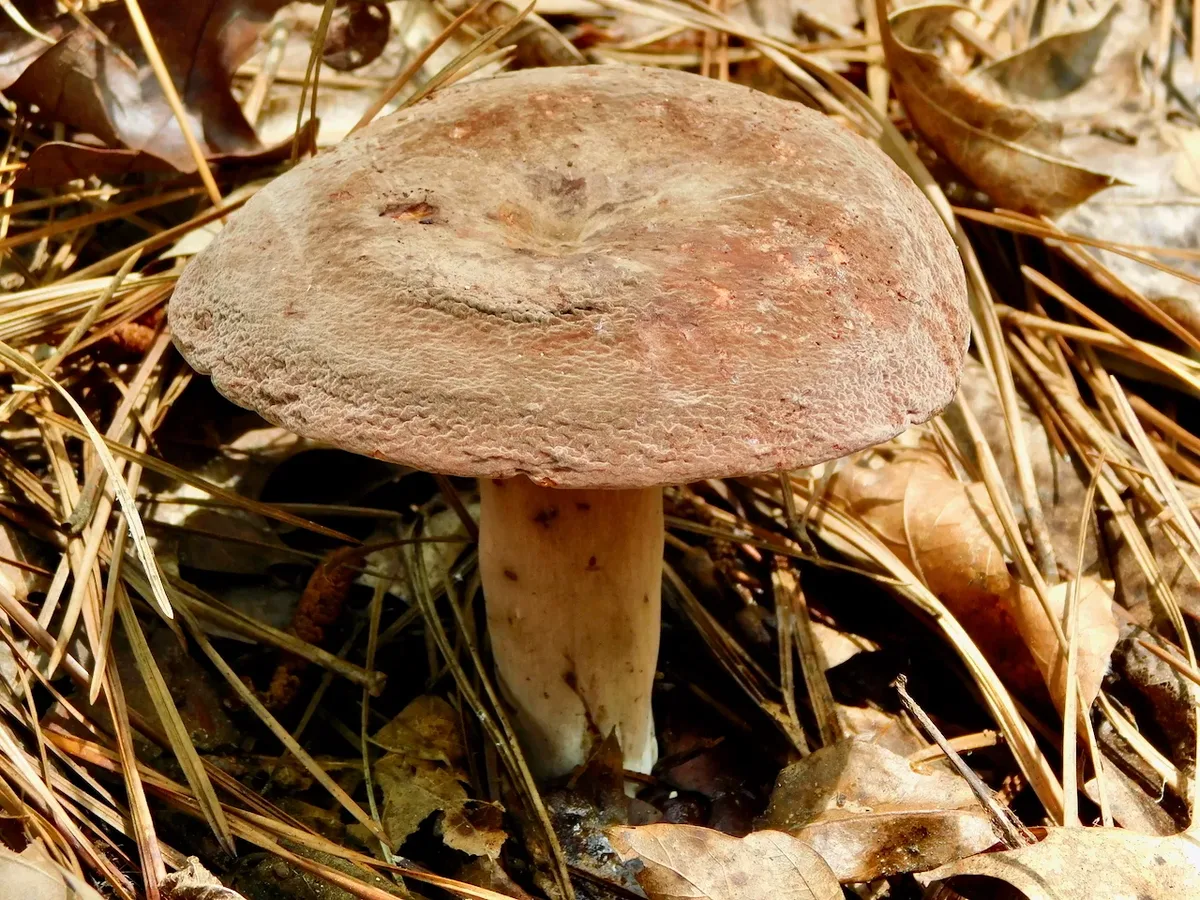
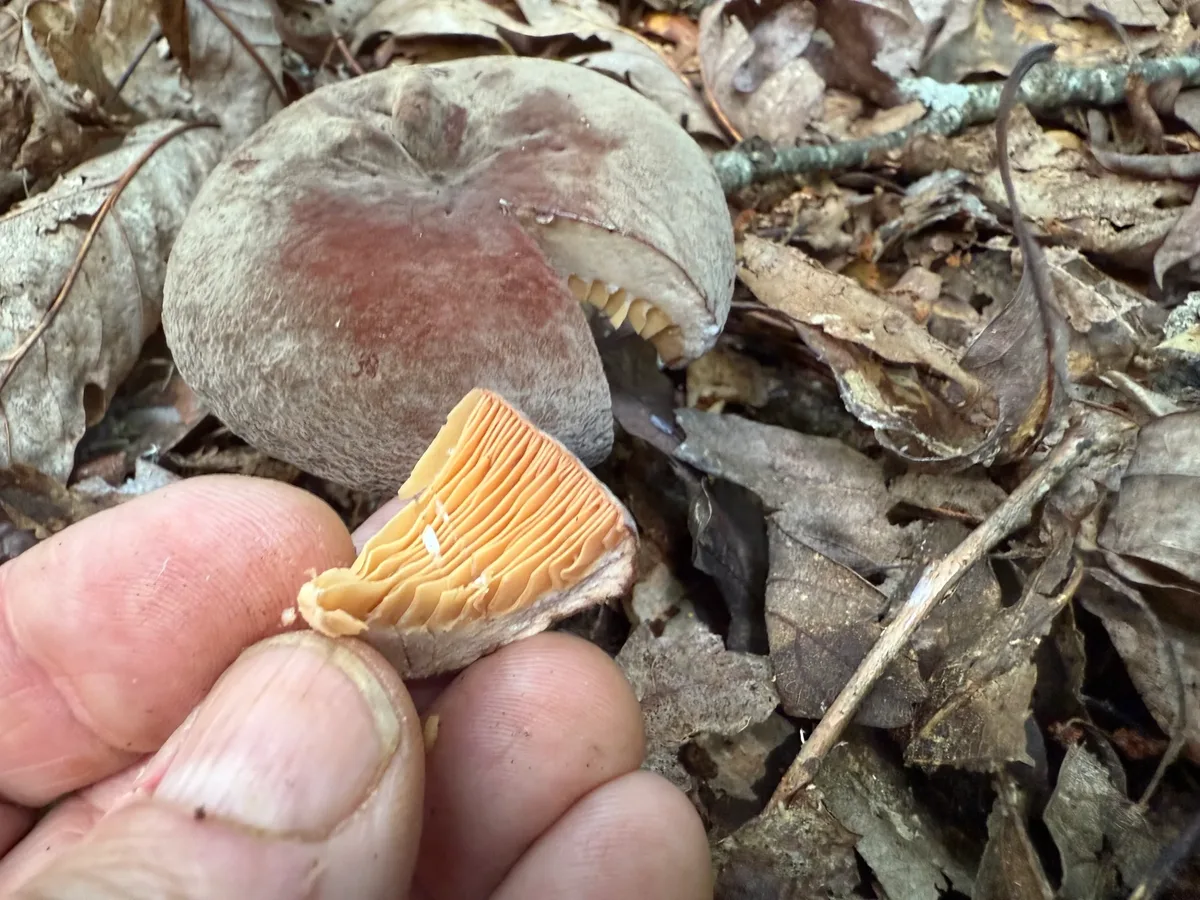
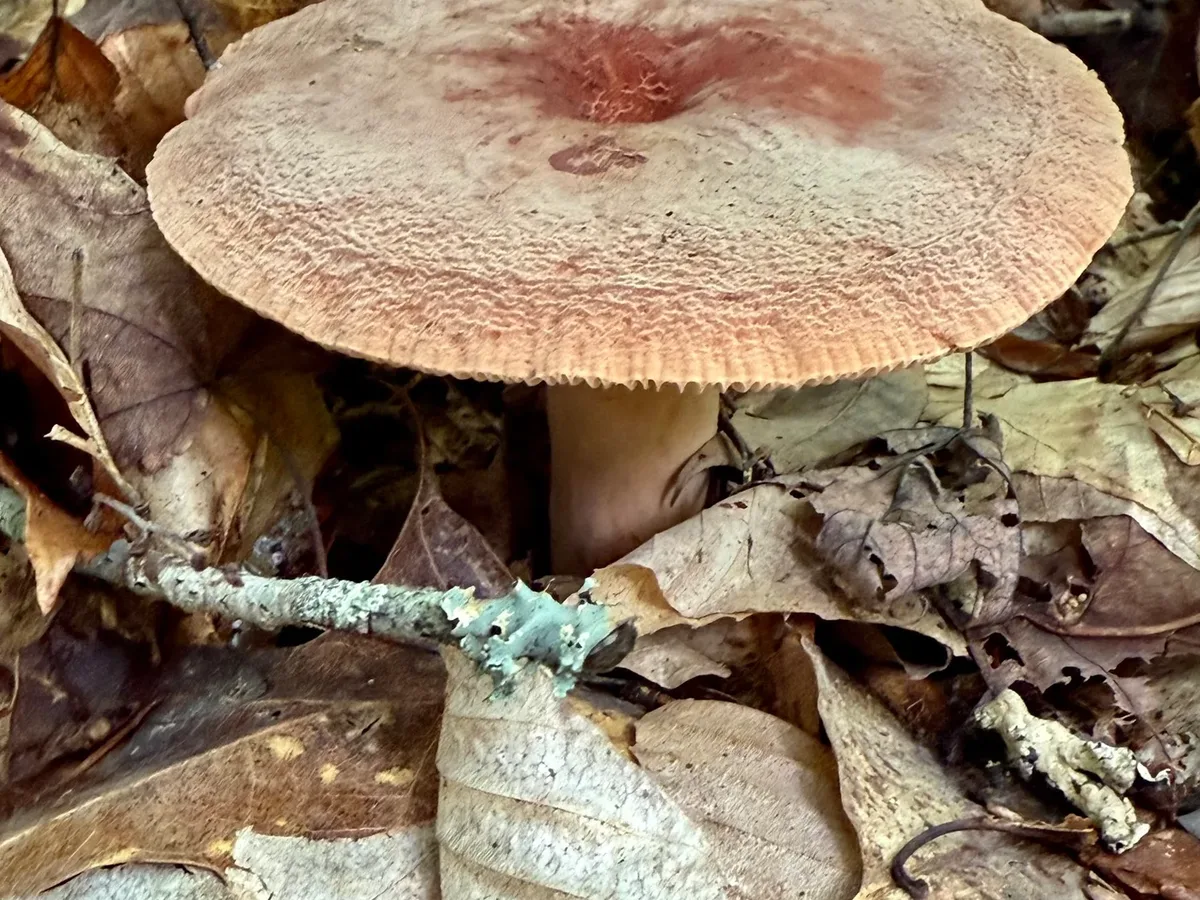
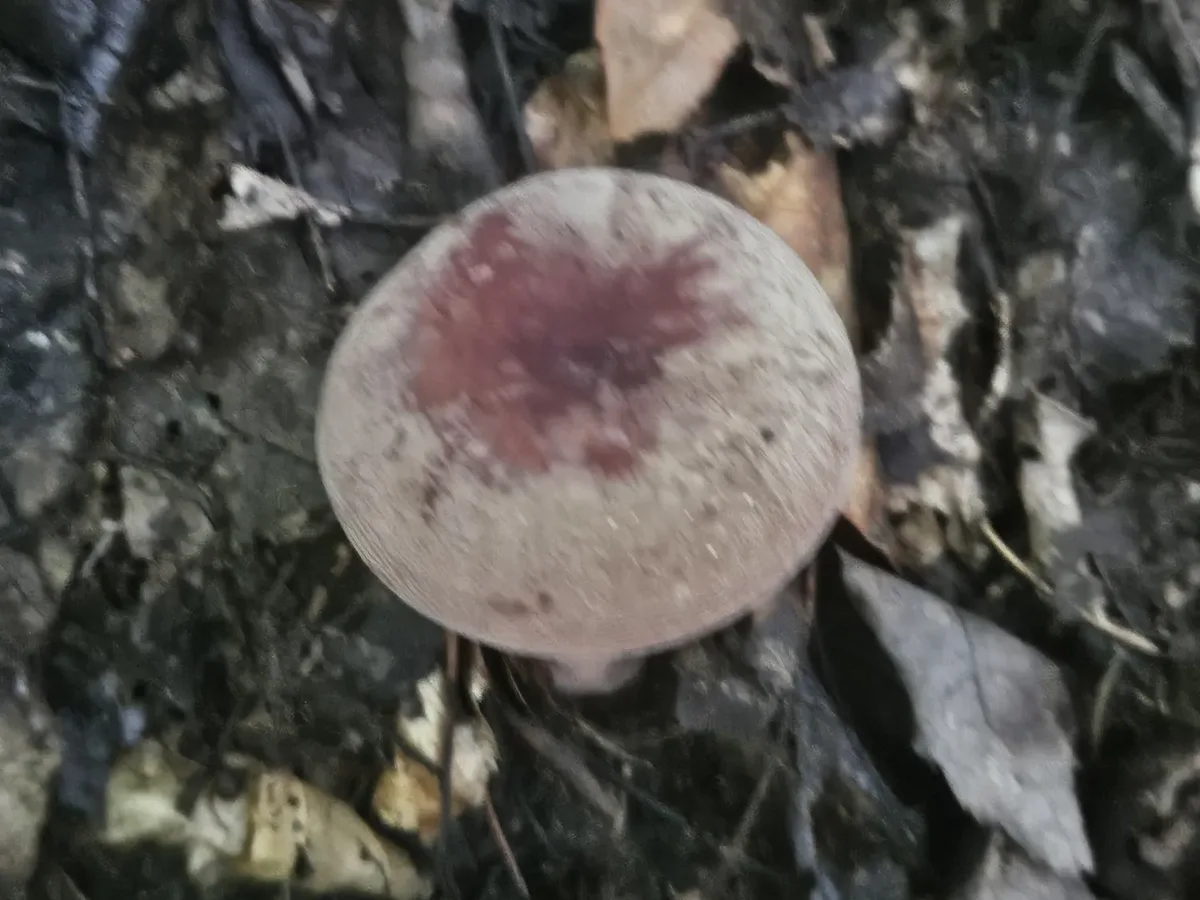
The dark, chocolate-brown, velvety cap with its characteristic radial corrugations or wrinkles - particularly prominent toward the margin - sets it immediately apart from the orange-brown tones of close relatives like L. volemus and L. hygrophoroides.
The cap (5-12 cm, occasionally larger) begins convex, then flattens and develops a broad central depression as it matures. Run your fingers across the surface: the dry velvet texture combined with the rugose wrinkling is tactilely unmistakable.
Gills / Pores
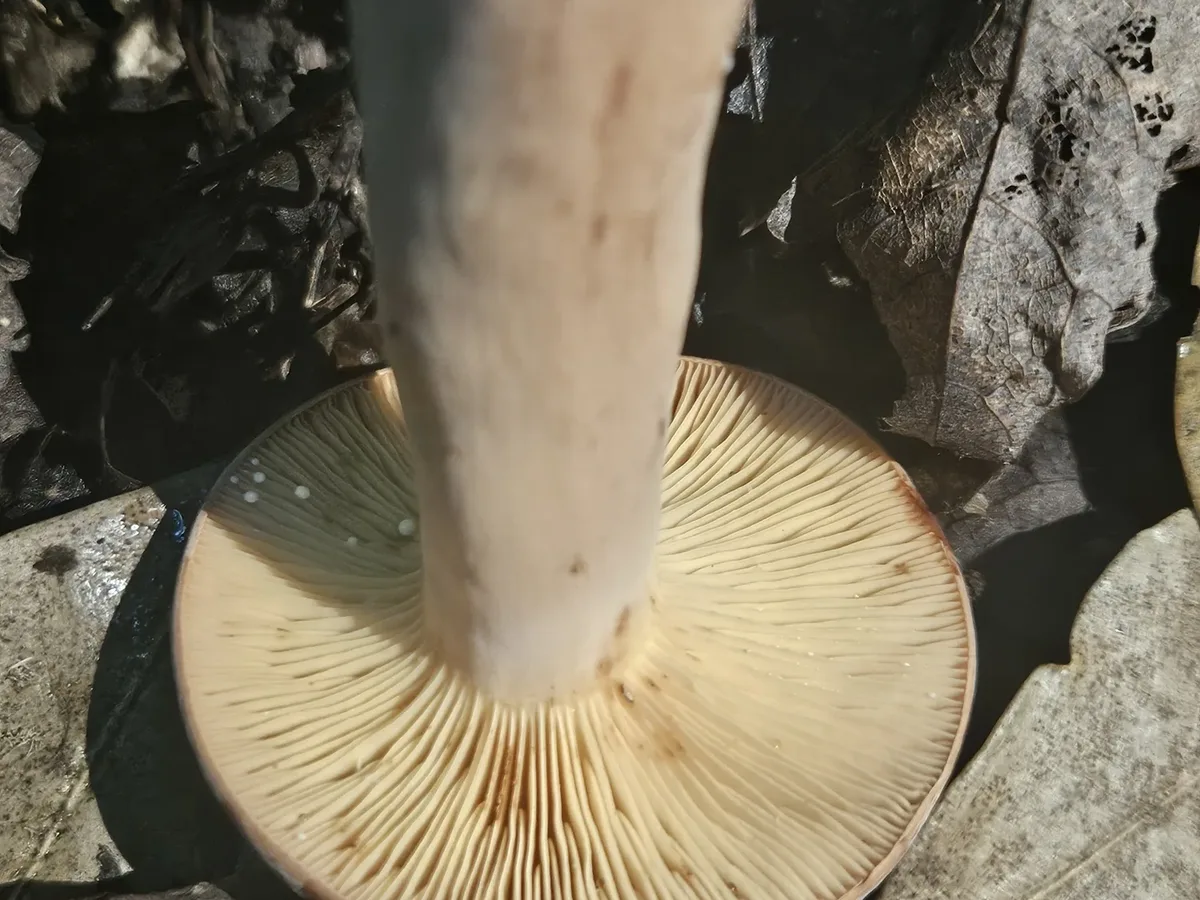
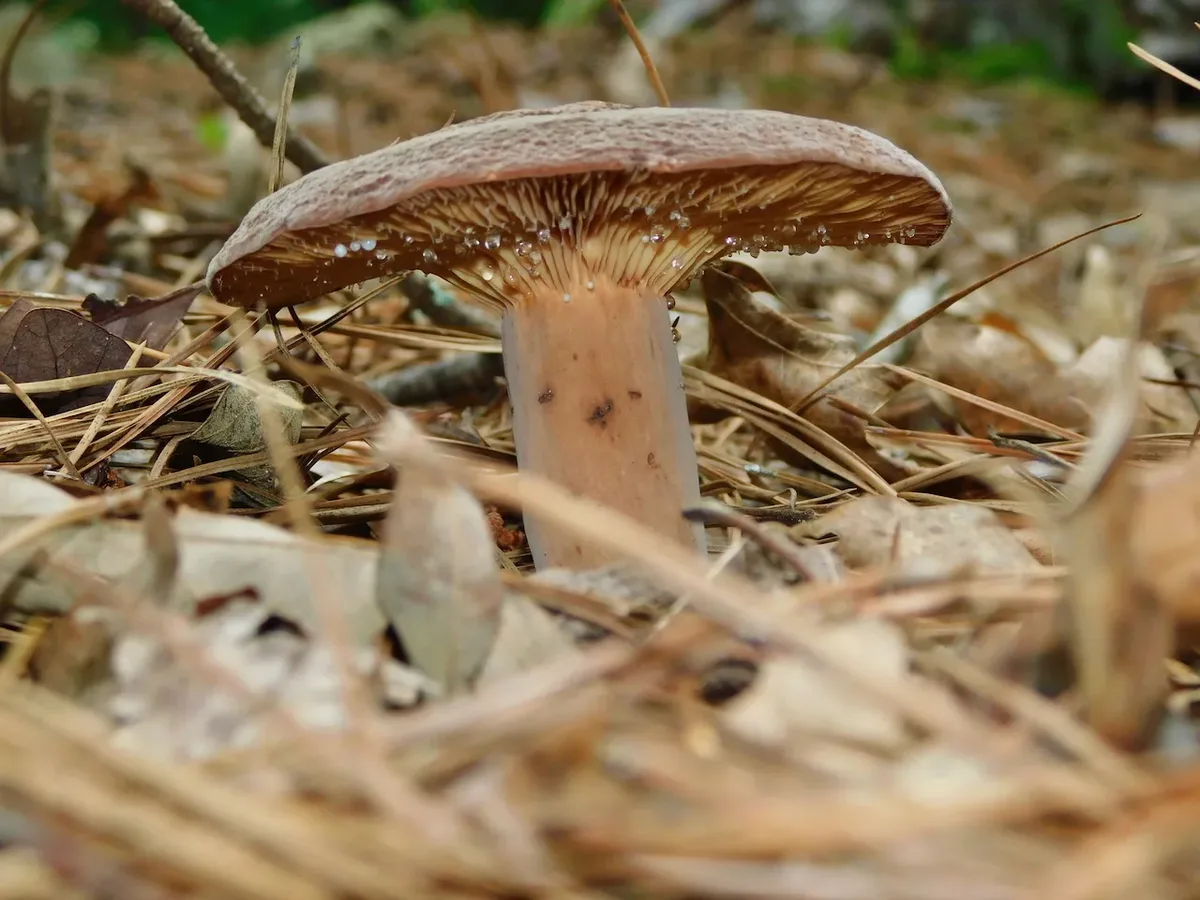
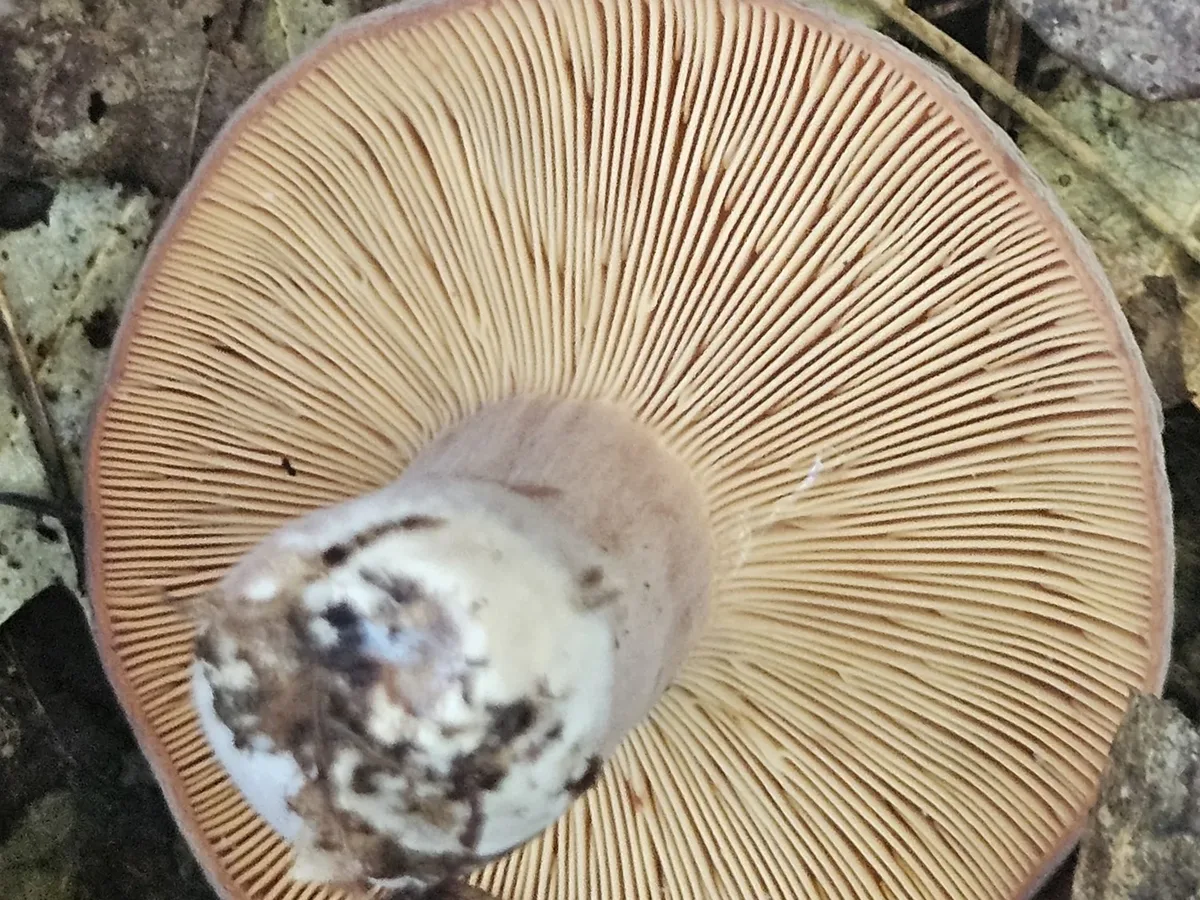
The gills are crowded, pale cream to whitish, and slightly decurrent; they may develop pale tawny staining where the latex has dried.
Stem
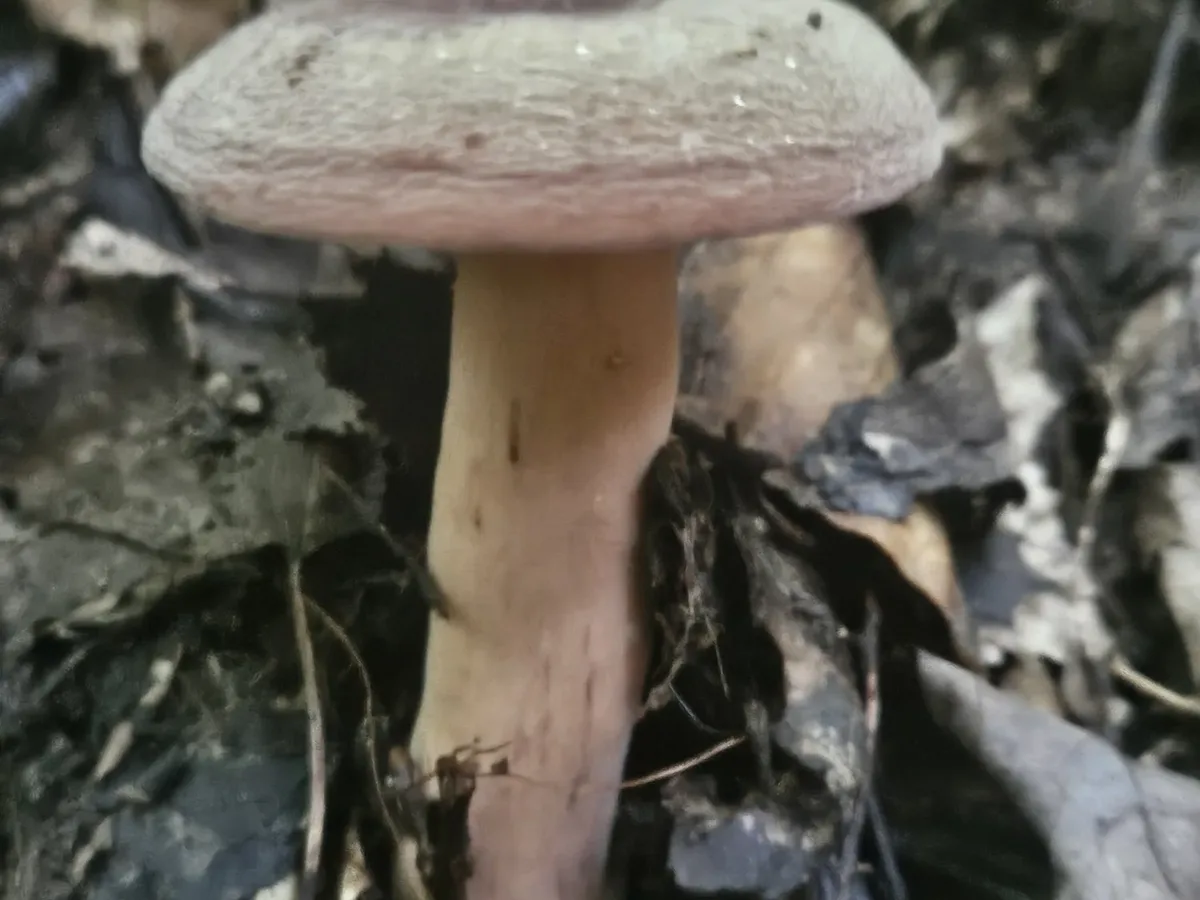
The stem is similarly dark, firm, and solid - a robust mushroom overall.
The most diagnostic test is the latex: break or nick any part of the gills or flesh and thick, viscous white milk wells up immediately. This milk is copious, noticeably viscous (thicker than water, almost syrupy), and on exposure to air dries to a pale buff-brown stain on the gills and cut surfaces.
The taste is mild to slightly nutty - emphatically not acrid or peppery. Spore print white to pale cream.
Where & when it grows
Habitat
Lactifluus corrugis is an obligate ectomycorrhizal partner of trees in the beech family (Fagaceae).
The fungal mycelium sheaths the fine rootlets of its host trees in a mutually beneficial exchange: the tree supplies photosynthetic carbon, and the fungus provides access to soil minerals, water, and the extended surface area of the mycelial network extending beyond the rootzone.
This dependence on living host trees means the species cannot be cultivated and is always found growing from soil (never from wood), in intact deciduous or mixed broadleaf forest.
In East and Southeast Asia - the region where it is most diverse and best documented - the primary hosts are oaks (Quercus), chinquapins (Castanopsis), and chestnuts (Castanea), all members of the Fagaceae that dominate the temperate and subtropical broadleaf forest of the region.
In forest where these trees are present, look on well-drained slopes and ridge tops with open, leaf-littered ground. The species grows singly or in small loose groups; dense clusters are not characteristic.
When
Across its entire range, Lactifluus corrugis is a warm-season fruiter closely tied to heat and humidity.
In eastern North America, it appears from June and fruits through October, peaking in the humid heat of July-August when summer thunderstorms deliver the soil moisture that triggers fruiting.
In East and Southeast Asia, its seasonal window broadly coincides with the monsoon. In subtropical southern China, Vietnam, Thailand, and Laos, the season runs May-October and peaks during the height of the monsoon rains in July-September.
In temperate Japan and Korea, the season is compressed into July-September.
In all areas, the functional trigger is warm soil (at least 18-20 °C) plus a spell of sustained rainfall - typically 20-40 mm over a 10-14 day period is enough to stimulate a flush, with fruiting bodies emerging 7-14 days after significant rain.
In the subtropical zone, the species can fruit in multiple flushes through the monsoon season if rain returns after a dry interlude. It is not a spring or autumn species and does not appear during cool or dry periods.
How it grows
Fruit bodies arise singly or in small scattered groups from mycorrhizal mycelium attached to the rootlets of Fagaceae host trees. Young buttons are rounded and densely velvety, soon expanding to broadly depressed caps over 3-6 days.
Because the association is with living tree roots, the same patches tend to fruit year after year at the same trees. Once you find a productive spot, it is valuable to note the specific trees and locations.
The species does not form clustered or gregarious groups like many saprotrophic fungi. Finding three or four large, well-spaced fruit bodies under a single oak is a typical experience.
Individual caps grow large and are therefore rewarding to collect - a single cap can weigh 80-150 g in good condition.
Fruiting conditions
Fruiting is triggered by warm soil temperatures (above 18 °C) combined with sustained humidity and a rainfall accumulation of at least 20 mm over 14 days. Classic trigger is a warm, wet spell - summer thunderstorms in eastern North America, monsoon rains in Asia. Fruiting bodies typically emerge 7-14 days after the triggering rain event. Drought suppresses fruiting even from well-established mycelium. In subtropical Asia, multiple flushes may occur through the monsoon season if rain is intermittent.
Look-alikes
Within the milkcap group, the most frequent confusion is with Lactifluus volemus (the Weeping Milk Cap or Tawny Milkcap).
Both are large, firm-fleshed milkcaps with copious white latex, but L. volemus is distinctly orange-brown to tawny-orange (not dark chocolate-brown), its cap surface lacks the prominent corrugation of L. corrugis, and L. volemus is famous for the strong fishy or crab-like odor it develops with age - especially once the cap is handled or the latex exposed to air. Both species are choice edibles, so confusion between them is harmless; they are in fact closely related and sometimes co-occur.
Lactifluus hygrophoroides (Hygrophorus Milkcap) is also similar in habitat and season, but has a warm orange-brown (not dark chocolate-brown) cap without corrugations and, most distinctively, dramatically widely spaced, thick, waxy gills - the gill spacing alone instantly separates it.
Lactarius lignyotus (the Sooty Milkcap) of temperate forests shares the dark brown velvety cap but is a smaller, slender species with white latex that does not stain, narrower gills, and it grows under spruce rather than hardwoods; it is also edible.
The species described in some East Asian literature under the name 'chichitake' (チチタケ) in Japan refers primarily to L. corrugis itself, a highly regarded edible there.
No deadly species closely mimics the full combination of dark chocolate-brown corrugated cap + copious viscous white latex + decurrent crowded gills + Fagaceae habitat.
However, all foragers should be aware that dangerous Galerina and Cortinarius species may occur in the same habitat. Both are absolutely separated from any milkcap by the complete absence of white latex - if you cut the flesh and no milk appears, do not eat the mushroom.
A dark reddish-brown Cortinarius species containing orellanine, a potent nephrotoxin causing delayed kidney failure. It lacks any latex, has a fibrous cobwebby (cortina) veil remnant at the stem, a rusty-brown spore print, and gills that are initially tawny rather than white. No latex = not a milkcap. The dark colour of some Cortinarius could confuse a careless observer; always cut the flesh and verify the white milky flow.
A deadly amatoxin-containing species that grows on decaying wood (not soil), has a skirt-like ring on the stem, crowded brown gills, a rusty-brown spore print, and produces absolutely no latex. The complete absence of white milk when flesh is cut instantly and definitively rules out any milkcap.
A warm orange-brown (not dark brown) cap without corrugations, and dramatically widely spaced, thick, waxy gills that are unmistakable - far more widely separated than in any other milkcap. The wide-gilled character alone distinguishes it instantly from the crowded gills of L. corrugis. Also an excellent edible.
Shares the dark brown velvety cap, but is a smaller and more slender species (cap typically 2-7 cm), grows strictly under spruce (not Fagaceae), and has white latex that dries white without a buff-brown stain. Edible but of lesser quality.
The most commonly confused relative: also large, firm, with copious white latex. L. volemus is distinctly orange-tawny to warm orange-brown (not dark chocolate-brown), lacks the cap corrugations, and develops a strong characteristic fishy or crab-like odor with age. Both are choice edibles and closely related; confusion is harmless.
In the kitchen
Picking & cleaning
Select young to middle-aged specimens with firm, unwrinkled gills and a fresh-smelling, non-slimy cap.
Before collecting, always perform the latex test: nick or break a gill at the cap edge and confirm the immediate, copious flow of thick white milk. The milk of L. corrugis is noticeably viscous compared with water-thin relatives; this viscosity, combined with the dark brown corrugated cap, makes field identification reliable.
Cut the stem cleanly at the base rather than twisting and uprooting, to avoid disrupting the mycelium. The caps are robust and hold up well in a basket; the firm flesh does not bruise easily.
Rinse under cold water and trim the stem base before cooking. Use or refrigerate within two days of harvest.
Avoid very old specimens where the gills are brownish-stained throughout and the cap has become soft or waterlogged.
Cooking
A choice edible with substantial, firm white flesh and a pleasant mild, slightly nutty-savory flavor.
In Japan, chichitake (L. corrugis) is a beloved traditional ingredient. It is used in soba dishes (mushroom soba), miso soup, and braised preparations where its flavor builds a characterful broth.
The thick, viscous latex can make a skillet wet during cooking. Use medium-high heat in butter or a neutral oil to evaporate moisture and allow browning, which deepens the flavor through caramelization.
The firm texture holds up well to grilling (whole or halved caps), sautéing with garlic and herbs, and long braising in soups and stews. In Vietnamese and southern Chinese cooking, it is stir-fried with garlic, ginger, or combined with other vegetables in savory sauces.
Drying is practical: slice caps, dry at low heat or in sun, and store. Dried L. corrugis reconstitutes well and develops an intense umami character suitable for stocks.
Always cook before eating - raw consumption is not recommended.
Good to know
Lactifluus corrugis has an excellent safety record across its extensive range, where it has been consumed as a food mushroom for centuries in Japan, Korea, China, and Vietnam, as well as in eastern North America.
There are no known toxins, no documented cases of poisoning from correctly identified specimens, and no credible reports of adverse reactions from properly cooked material. The species is listed as edible in all major regional mycological references covering its range.
The latex test is the safety cornerstone: the immediate, copious, thick white milk that flows from any cut surface is a trait shared by no deadly mushroom in its habitat.
Confirm:
- 1copious viscous white latex on cutting
- 2mild non-acrid taste of the latex
- 3dark brown corrugated dry cap
- 4growth from soil under Fagaceae (not on wood)
If all four are present, the identification is secure.
As with all wild fungi:
- cook thoroughly before eating
- try a moderate first portion if new to this species
- discard old, waterlogged, or maggot-infested specimens
Do not eat raw.
A reference guide - never an edibility guarantee. When in doubt, leave it out.