Orange-red milkcap
Lactifluus aurantiorubersyn. Lactarius aurantioruber, Lactarius aurantioruber (McNabb) McNabb
 © duaneg (CC BY)
 © Sebastian Doak (CC BY)
 © Sebastian Doak (CC BY)
 © claire (CC BY)
 © claire (CC BY)
 © Ian Dickie (CC BY)
 © Ian Dickie (CC BY)
 © Ian Dickie (CC BY)
 © Ian Dickie (CC BY)© duaneg (CC BY)© Sebastian Doak (CC BY)
Good to eat, once you have identified it with certainty and cooked it through.
How to recognise it
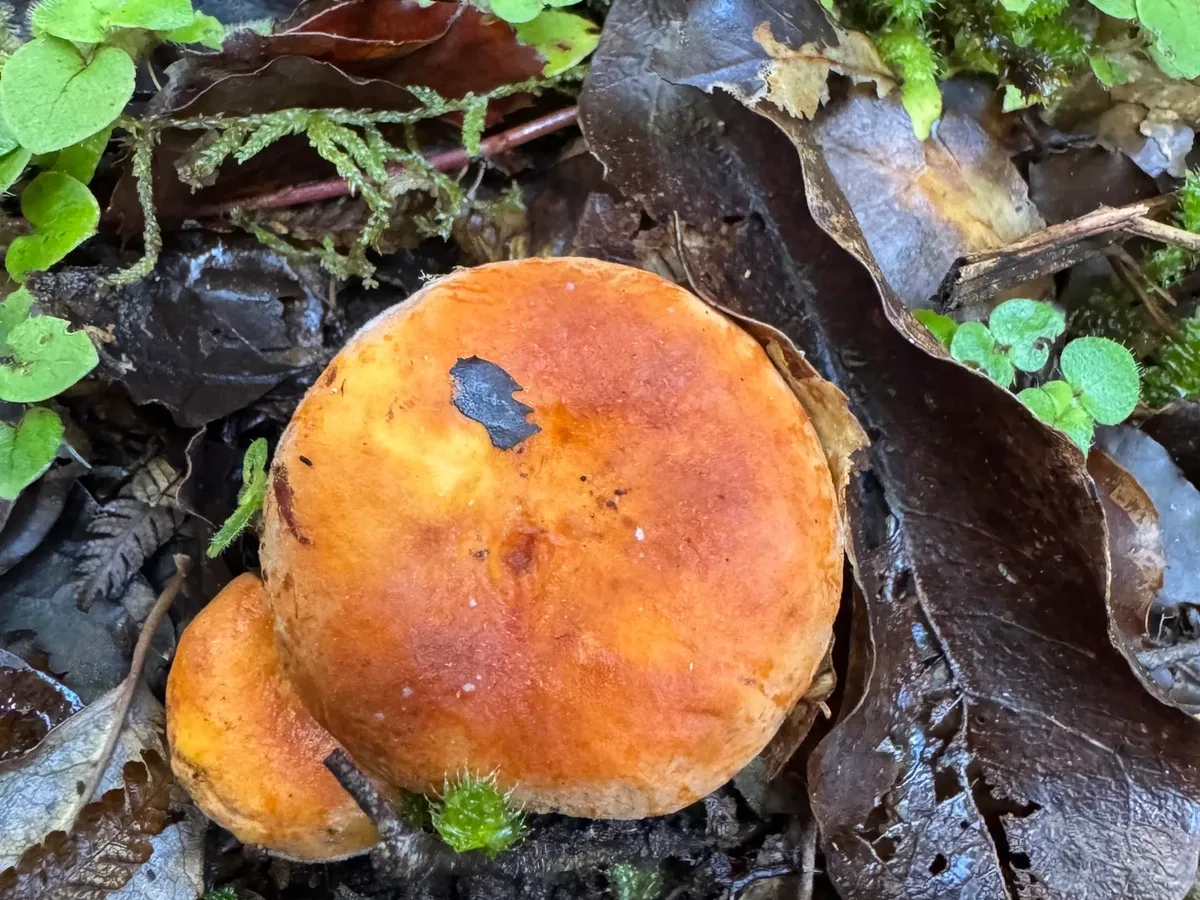
Lactifluus aurantioruber makes an immediate impression in the field: few Australasian fungi carry the deep, saturated orange-red to brick-red colouring of its cap and stem across a mushroom of this size.
Cap
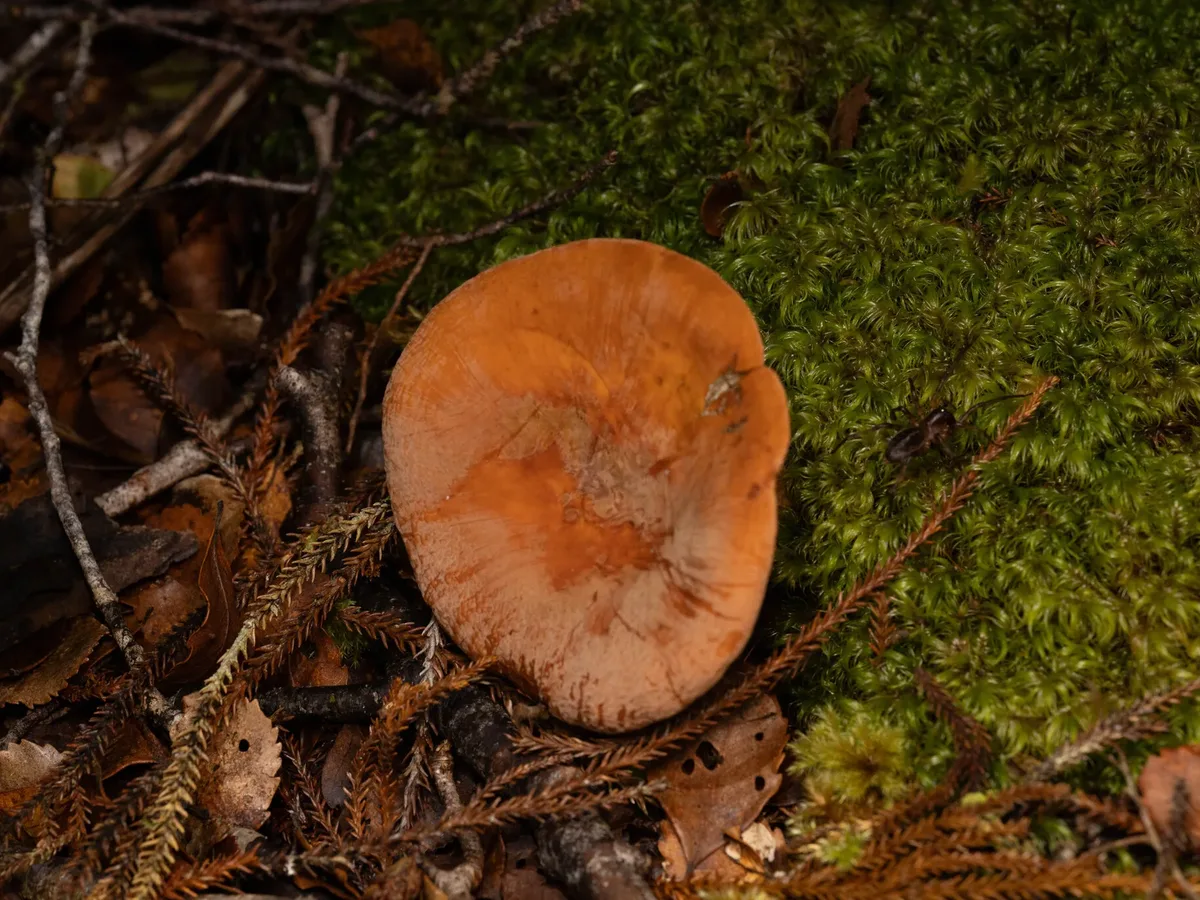
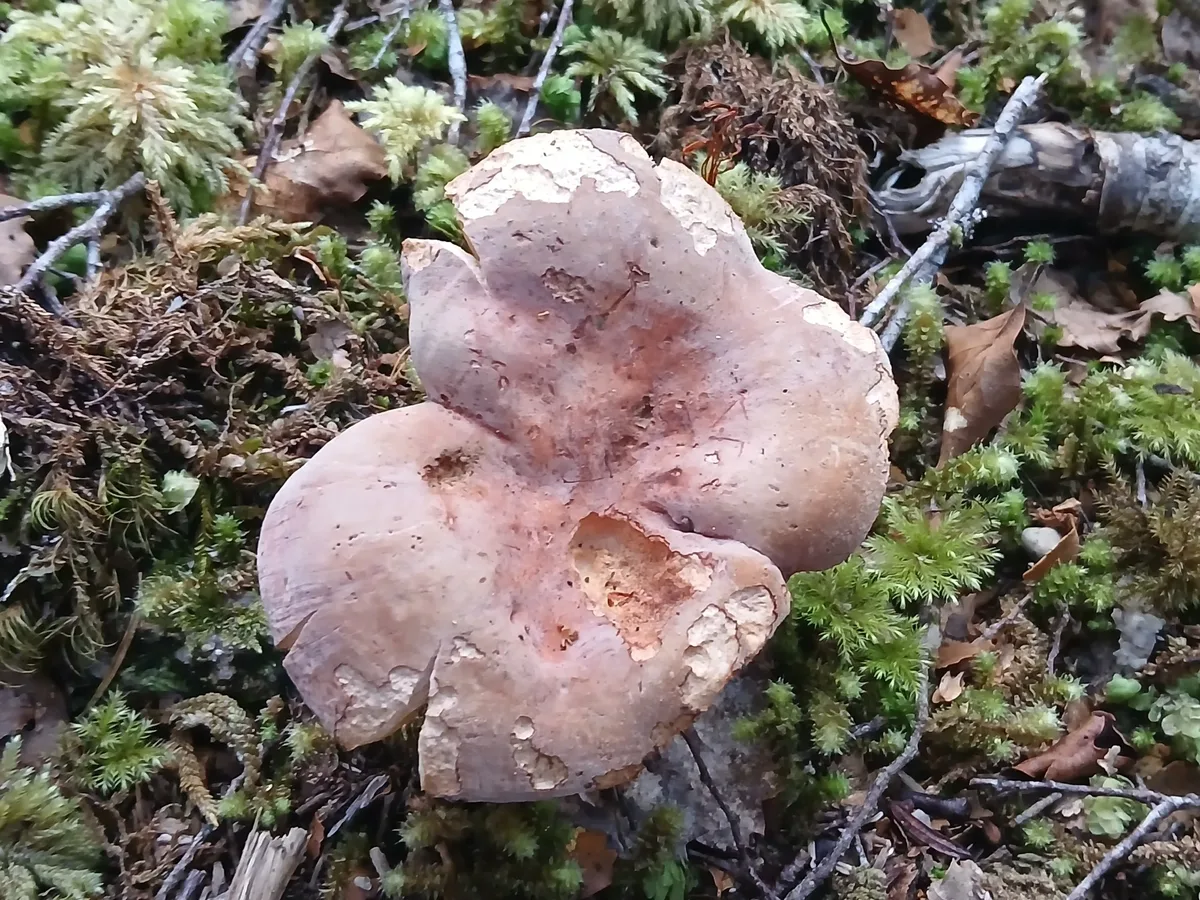
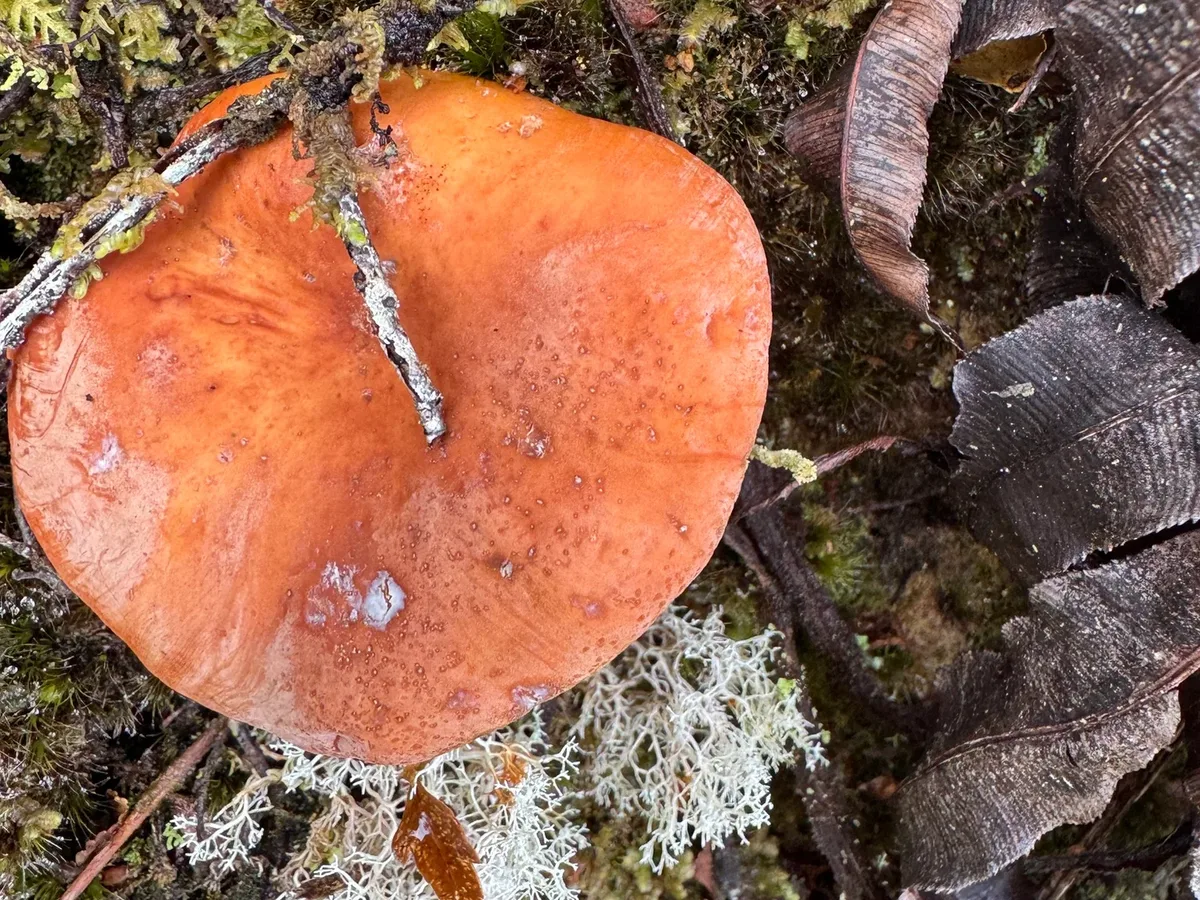
The cap (5-15 cm) passes through a compact convex button stage before flattening broadly, and eventually the centre depresses so the cap becomes a shallow funnel in old specimens - a typical milkcap growth arc. The surface is dry, smooth to very finely downy, and the orange-red pigment is vivid and deep at the disc, fading to paler orange toward the margin.
Gills / Pores
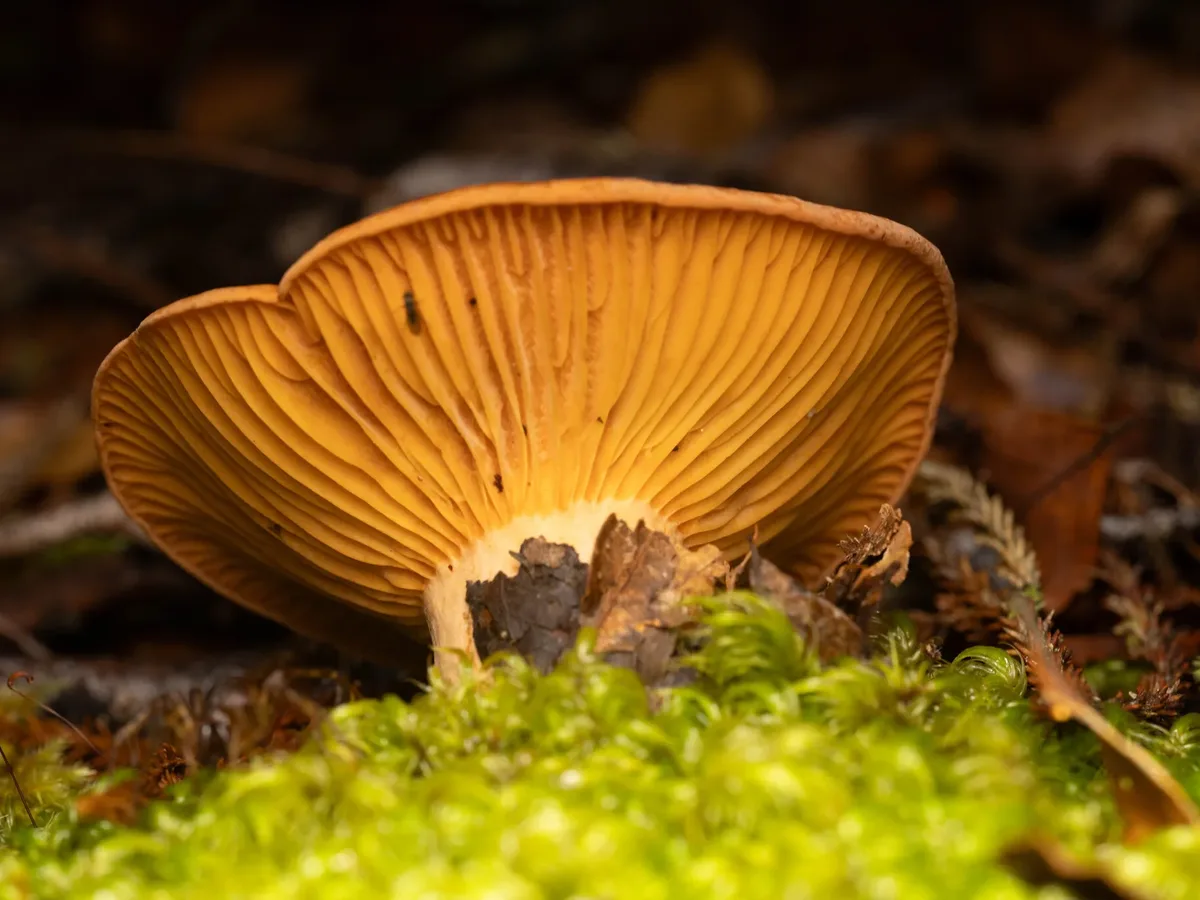
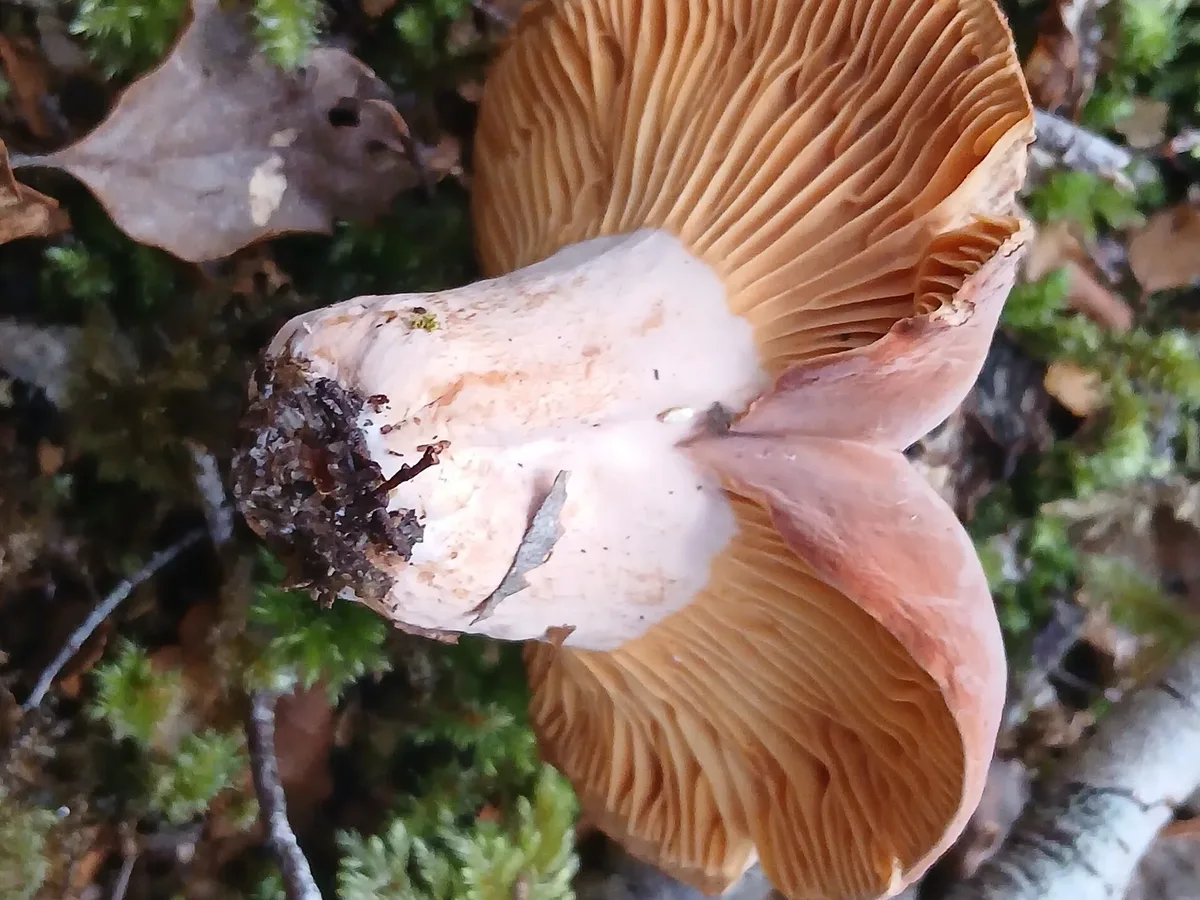
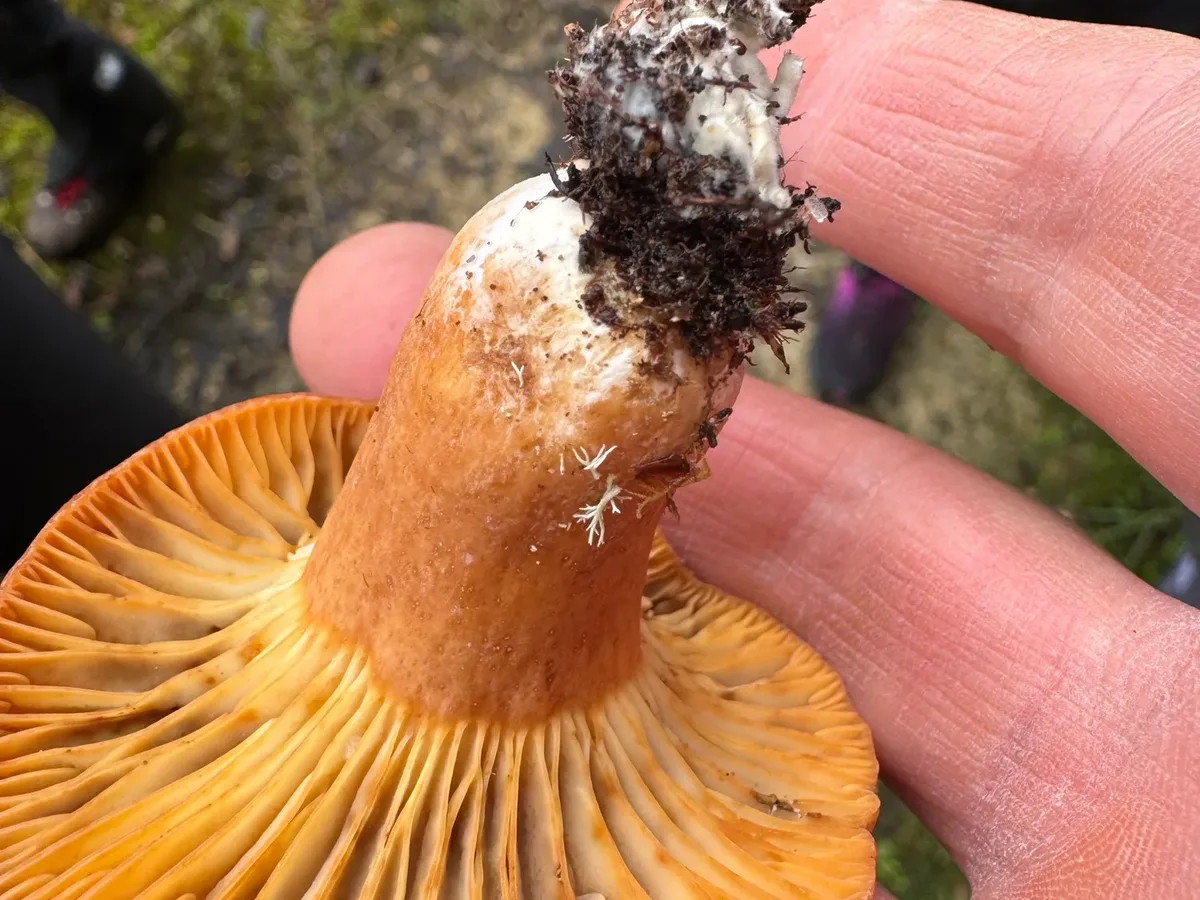
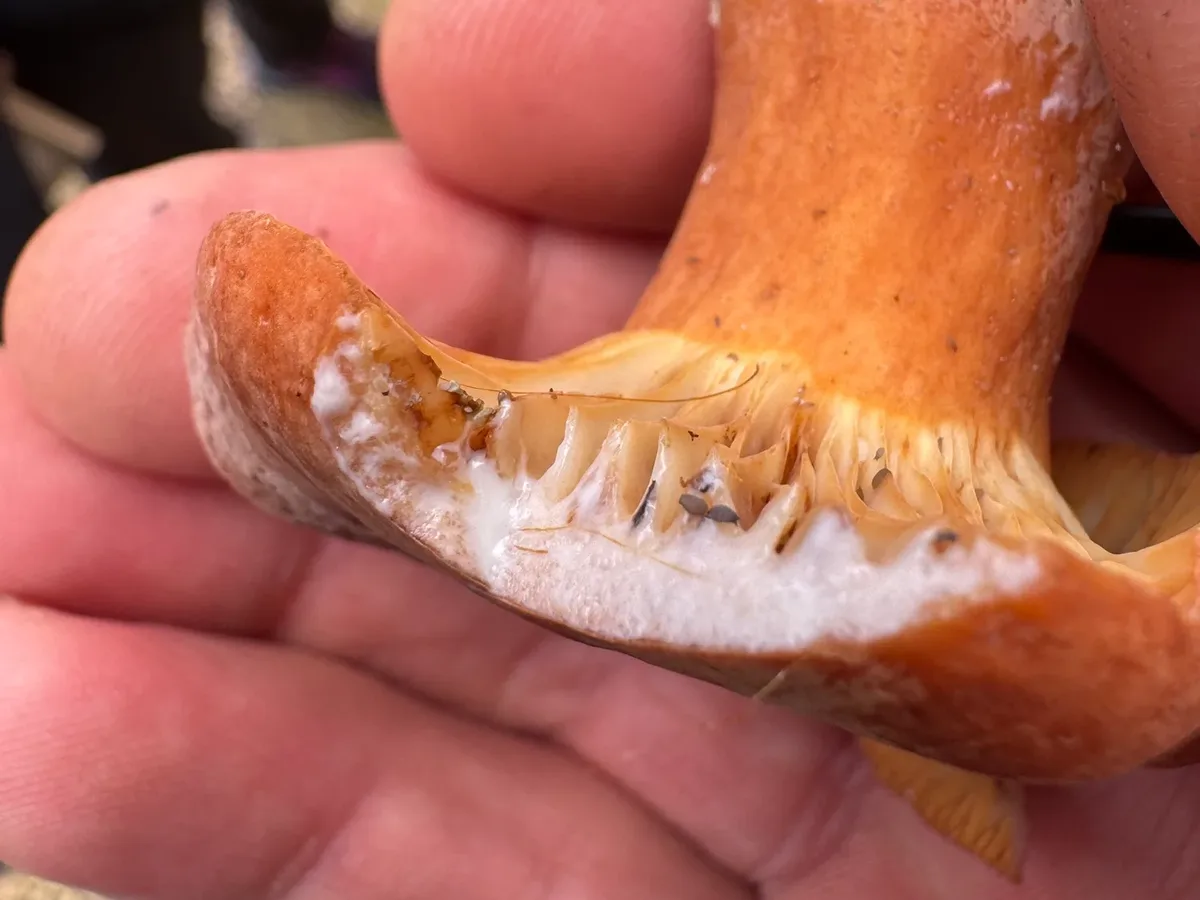
The gills are cream to pale buff-salmon, closely spaced, decurrent, and bruise brownish on damage.
Stem
The stem is stout and shares the cap's orange-red colour.
Smell & taste
The most important identification feature of any milkcap comes from a simple test: nick the flesh or a gill with a fingernail. White latex flows freely and immediately.
In L. aurantioruber that latex is white, does not stain the flesh or gills significantly (it may dry faintly cream or pale brown), and tastes mild to barely perceptibly bitter - it is not fiercely acrid or burning in the manner of the peppery milkcaps.
Flesh
The flesh itself is white inside, with only the outermost layer beneath the cuticle showing the orange-red pigmentation. Spore print is white to pale cream.
Where & when it grows
Habitat
This milkcap is a child of the ancient southern beech forests - the Nothofagus-dominated cool-temperate rainforests that are one of Australasia's most distinctive habitats and a biogeographic remnant of the old Gondwanan landmass.
The partnership between L. aurantioruber and Nothofagus is ectomycorrhizal: the fungal mycelium forms a dense sheath around the tree's fine rootlets, and the two organisms exchange carbon from photosynthesis for mineral nutrients and water drawn from the soil.
This obligate dependence on the living tree means that L. aurantioruber can only be found where mature, undisturbed Nothofagus (and to a lesser extent eucalyptus) forest survives.
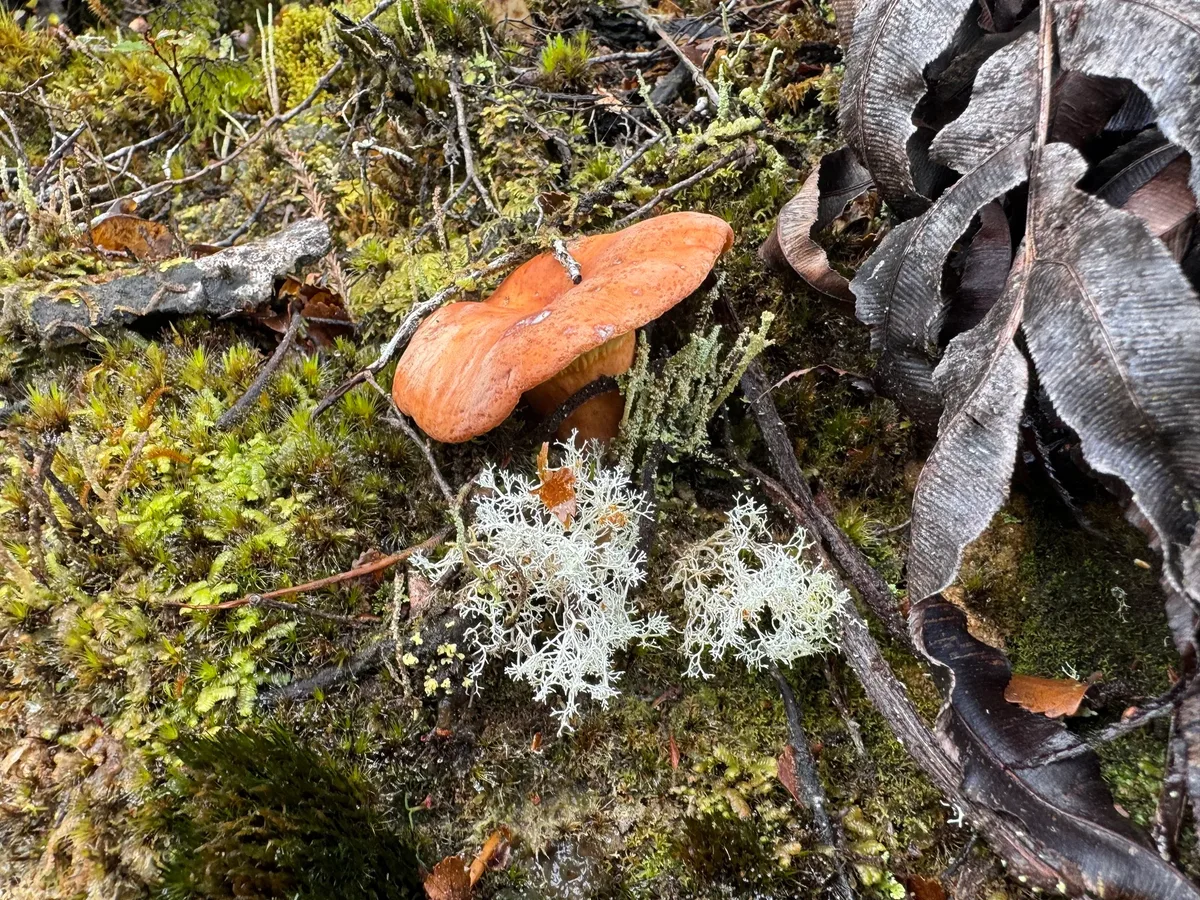
Look for it on dark, organic-rich, moist and acidic soils in the cool shade of the forest understorey, where mosses and deep leaf litter accumulate. The vivid colour of the cap stands out sharply against this dark background, making it one of the easier milkcaps to spot from a short distance.
In New Zealand the association is strongly with red beech and silver beech; in southeastern Australia it occurs in myrtle beech forest and occasionally under tall eucalypts forming mixed stands.
When
Fruiting occurs through austral late-summer and autumn - a season of cooling temperatures and increasing rainfall after the dry summer.
In most of the Australian range, the main flush begins in March and runs through May, with April often the most productive month.
In New Zealand's South Island beech forests, where the climate is more maritime and consistently wet, fruiting can begin in late February and persist into June.
The trigger is essentially the same wherever it occurs: a meaningful rain event (typically 20 mm or more over a week to ten days) combined with soil temperatures that have cooled below approximately 15 °C from summer highs but remain above roughly 6-7 °C. Once those conditions converge, caps typically emerge within 8-15 days.
In warm, dry autumns the season is compressed or curtailed; in cool, wet years it extends and peaks strongly. Spring or summer fruiting is not expected.
How it grows
Fruit bodies emerge singly or in loose, scattered groups from the mycelial mat threading through the root zone of host trees. They are never clustered on wood and do not grow in tight bunches.
Individual caps push up through the leaf litter from small, rounded buttons. In good sites under productive Nothofagus trees the species can be locally frequent, with several fruiting bodies appearing within a few square metres during a productive autumn.
Because the mycelium is a long-lived organism tied to the same tree root network, known sites tend to fruit reliably year after year as long as the host forest remains undisturbed. Experienced foragers in New Zealand and southern Australia return to their marked spots each autumn.
Fruiting conditions
Fruiting is triggered by the convergence of autumn cooling and seasonal rainfall in Southern Hemisphere beech and eucalyptus forests. Soil temperatures cooling from summer highs to approximately 6-15 °C, combined with at least 20 mm of rainfall in the preceding two weeks, reliably induces flushes. Caps typically emerge 8-15 days after a productive rain event. Dry summers strongly suppress fruiting even in otherwise suitable sites.
Look-alikes
Lactifluus aurantioruber is a relatively distinctive species in the Australasian context. No deadly milkcap or closely related dangerous fungus shares the combination of vivid orange-red cap, stout orange-red stem, and copious white non-staining latex in Nothofagus or eucalyptus forest.
The most realistic confusions are with other reddish or orange milkcaps within the genus:
- In Australia and New Zealand, Lactifluus gerardii (and its southern relatives) can approach orange-brown colouring but typically has a darker, more deeply umbonate cap with a distinctly velvet-textured surface and widely spaced gills.
- Lactifluus piperatus, should it be encountered, has a cream to white cap (not orange-red) and a fiercely acrid, burning latex.
- Lactarius sanguifluus and related saffron milkcaps - found under Mediterranean pines in Europe - produce orange to blood-red latex, not white, and are not present in native Australasian forests.
Outside the milkcap genus, the most important group to consider is Cortinarius: some orange-red Cortinarius species are brightly coloured and share the same beech forest habitat.
However, Cortinarius absolutely never exudes latex when cut; it always has a rusty-brown spore print and, in young specimens, visible cobwebby cortina veil fibrils stretching between the cap margin and stem. A single latex test instantly separates L. aurantioruber from all Cortinarius.
No deadly species in Australasian native forests shares all three features - orange-red colouring, ectomycorrhizal growth from soil, and white latex - simultaneously.
Several Cortinarius species in Australasian Nothofagus and eucalyptus forest are brightly orange to rust-red. However, Cortinarius absolutely never produces any latex when cut - the flesh is dry throughout. Cortinarius also has a rusty-brown spore print, free to adnate gills (not decurrent), and residual cobwebby cortina fibrils on the stem of young specimens. Some Cortinarius species in the orellanin group are nephrotoxic, though the most dangerous species are primarily European. Latex test resolves all cases: no latex = not a milkcap.
Piperatus group milkcaps have pale cream to white caps - not orange-red - and a fiercely acrid, burning latex that is unmistakable on the tongue. Cap colour alone should prevent confusion; the burning latex taste confirms it instantly. Not significantly toxic when cooked but of poor culinary quality raw.
Lactarius deliciosus and relatives (the saffron milkcaps) are established in Australia and New Zealand under introduced pine plantations. They produce vivid orange to carrot-coloured or blood-red latex - never white. They also show characteristic concentric colour zones on the cap, green staining with age, and grow strictly under pines. The latex colour alone distinguishes them immediately from L. aurantioruber.
Some forms of L. gerardii and related southern species can appear orange-brown with a velvety cap, but are typically darker and browner rather than vivid orange-red. The cap of L. gerardii is deeply umbonate and the gills are markedly widely spaced - far wider than in L. aurantioruber. Both produce white latex; taste test reveals mild latex in both. Harmless confusion between edible species.
In the kitchen
Picking & cleaning
The vivid orange-red colour and copious white latex together make L. aurantioruber one of the more confidently identifiable milkcaps in its range.
Before collecting any specimen, confirm all three of the following:
- 1the cap and stem are genuinely orange-red to brick-red (not a brown or grey milkcap)
- 2cutting or nicking any part of the flesh or gills produces an immediate flow of white latex
- 3that latex tastes mild or barely bitter, not fiercely burning
Collect young to mid-age specimens - caps that are convex to just beginning to flatten, with firm flesh and no soft or maggot-infested patches.
- Cut at the base with a knife rather than pulling, to leave the mycelial connection intact.
- Carry in an open basket rather than a sealed bag; the firm flesh holds up well in transport.
- Use within two to three days of collection and refrigerate promptly.
Cooking
The firm, white flesh of L. aurantioruber holds up well to heat and offers a pleasant, mild, slightly nutty flavour without the pungent earthiness of some larger milkcap relatives.
Like most milkcaps, the flesh releases moisture during early cooking. Working over medium-high heat in butter or neutral oil allows the moisture to evaporate and the flesh to begin browning, at which point the flavour deepens agreeably.
Slice caps and stems into thick pieces; smaller buttons can be cooked whole. It suits:
- sautéing with garlic and herbs
- addition to pasta or risotto
- incorporation into soups and stews where the firm texture prevents it from dissolving
The visual impact of the orange-red skin - which mostly fades to golden-brown during cooking but retains some warmth - can add colour to a dish.
Drying is possible and preserves flavour reasonably well; dried pieces rehydrate in warm water for use in broths and slow-cooked preparations. Always cook before consuming.
Good to know
Lactifluus aurantioruber is documented as edible in Australian and New Zealand mycological literature, with no credible reports of toxicity from correctly identified specimens.
The mild latex (not burning) is consistent with low sesquiterpene irritant load; it does not require special preparation such as parboiling. The species has no deadly lookalikes in its native range, provided that the latex test is conducted.
The latex test is non-negotiable as a final identity confirmation: if no white milky liquid flows when the flesh is cut, do not eat the mushroom - it is not this species.
As with all wild fungi:
- cook thoroughly before eating
- do not eat raw
- try a modest quantity on a first occasion
- discard any old, waterlogged, or maggot-riddled specimens
People who are generally sensitive to novel wild fungi or who have gastrointestinal conditions should exercise standard caution. No toxins have been reported for this species.
A reference guide - never an edibility guarantee. When in doubt, leave it out.