Banded milkcap
Lactarius zonariussyn. Agaricus zonarius Batsch, Lactarius insulsus var. zonarius (Batsch) Bres., Lactarius zonarius f. scrobipes
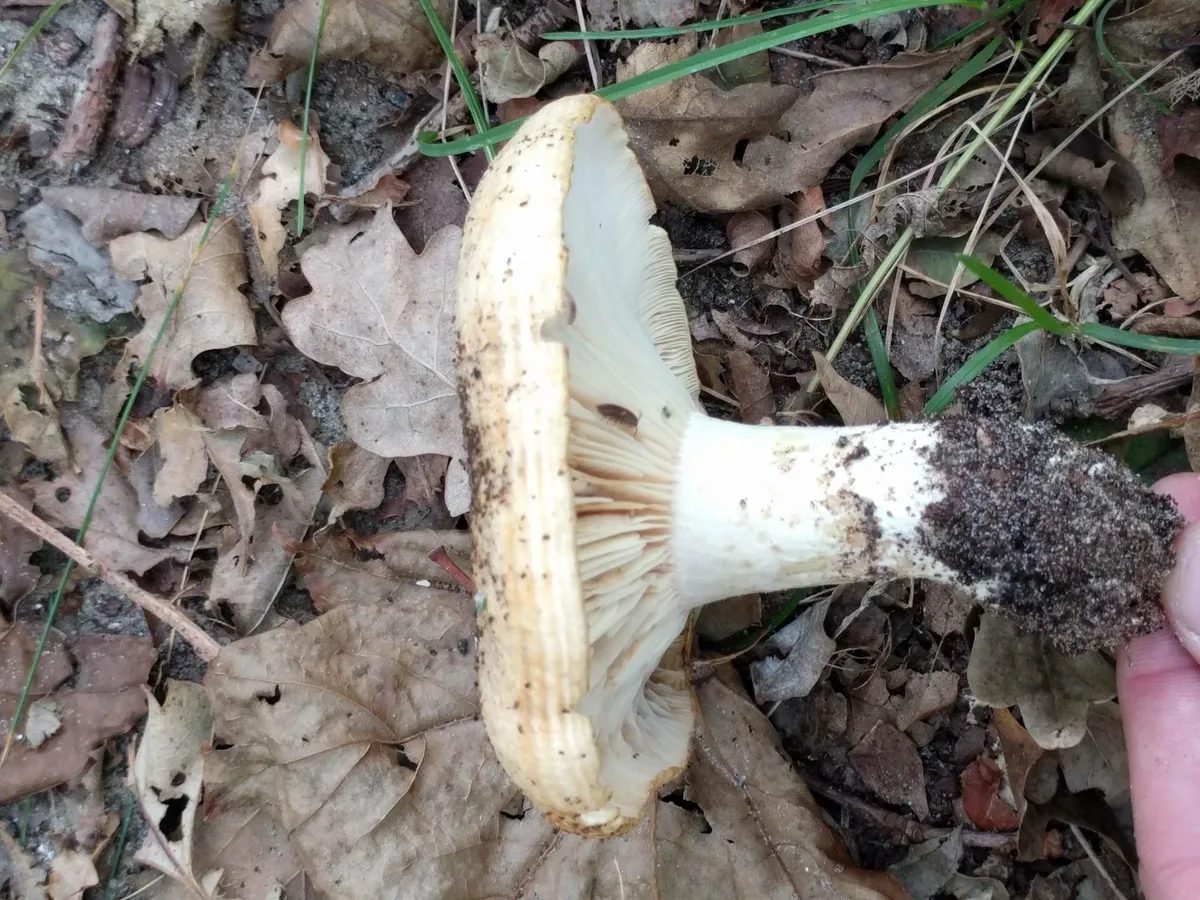 © Michel Langeveld (CC BY 4.0)
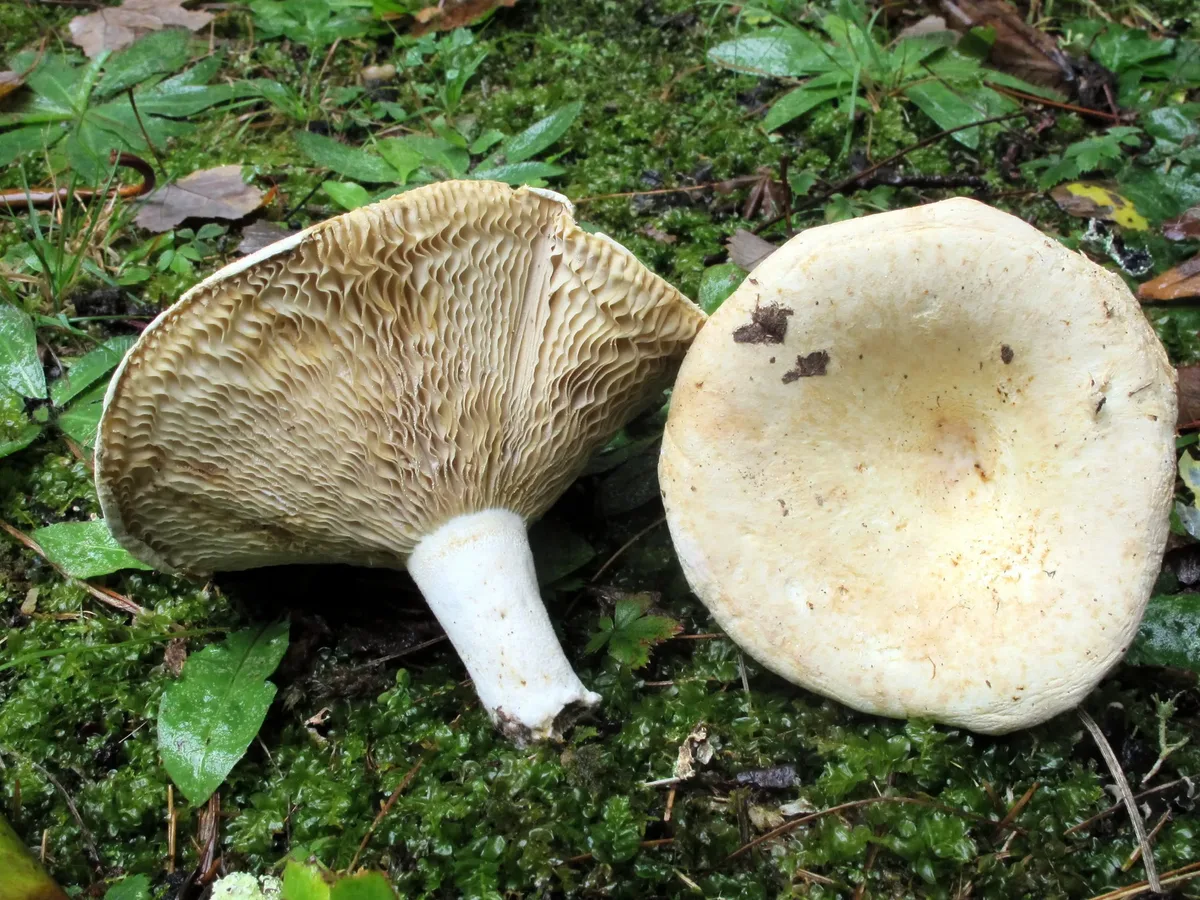 © mycowalt (CC BY-SA 4.0)
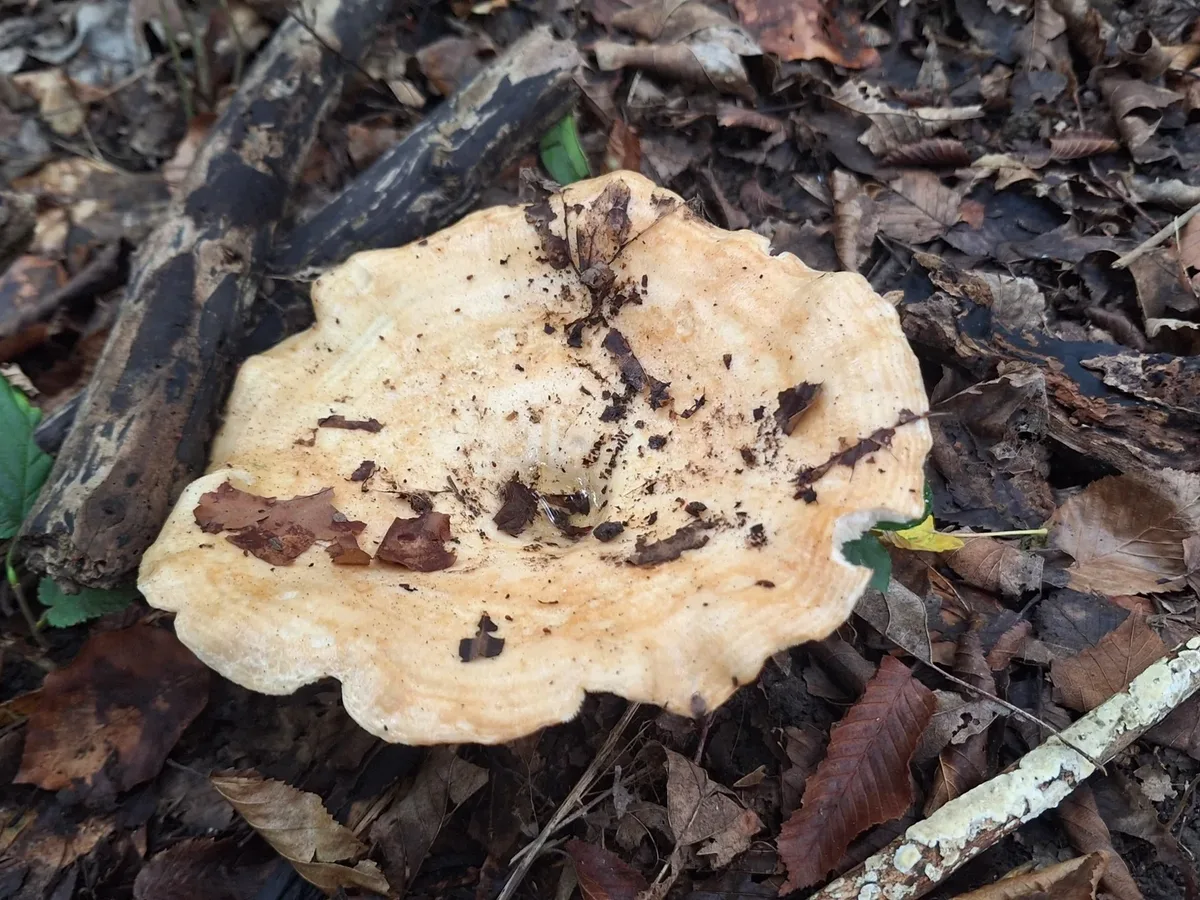 © yellowplant (CC BY)
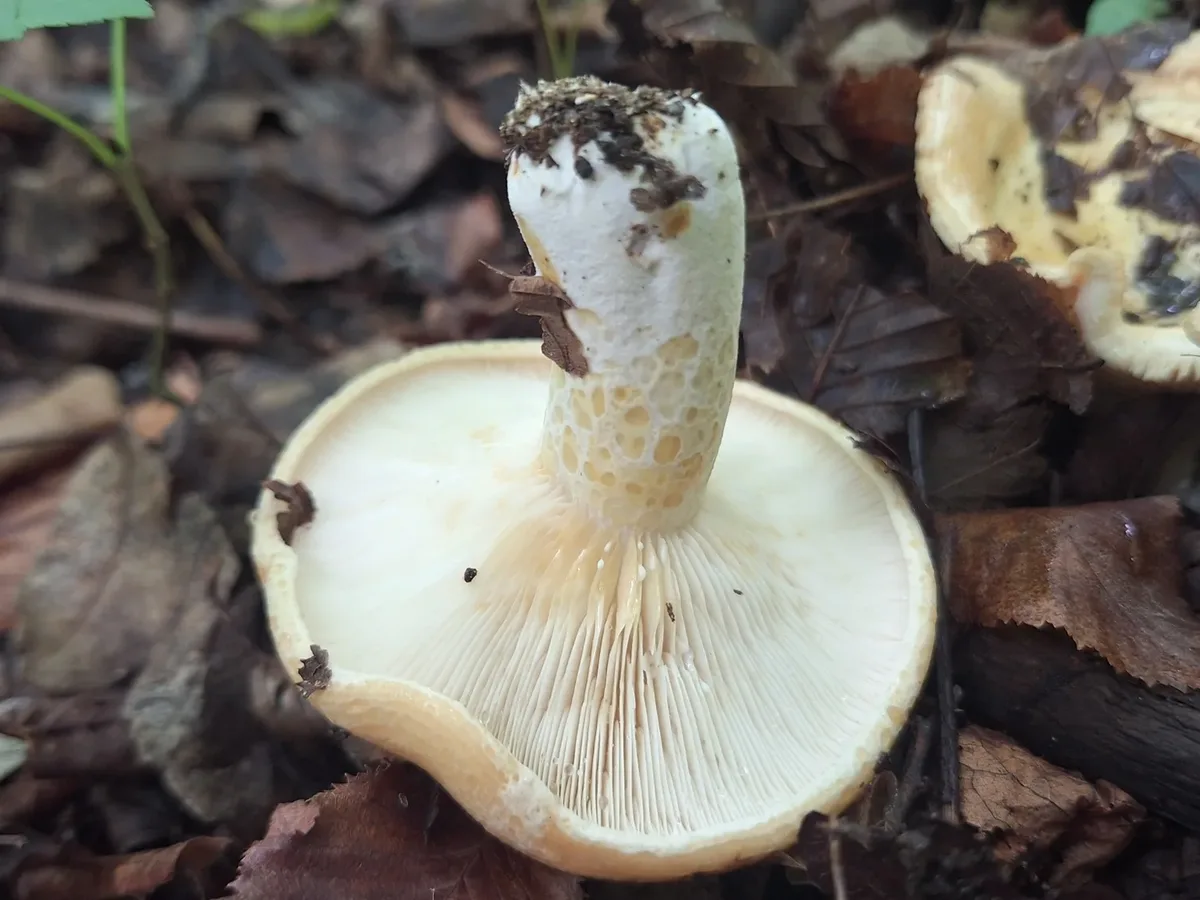 © yellowplant (CC BY)
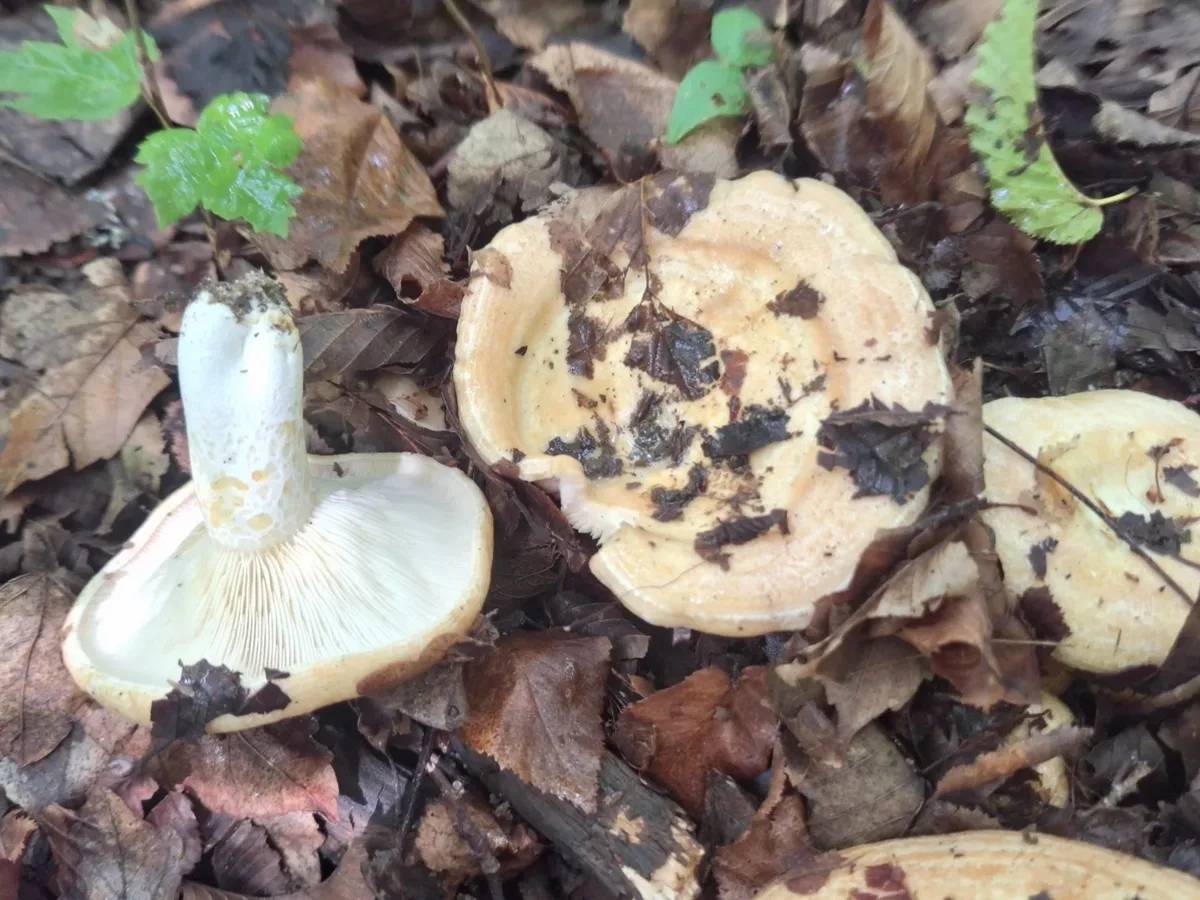 © yellowplant (CC BY)
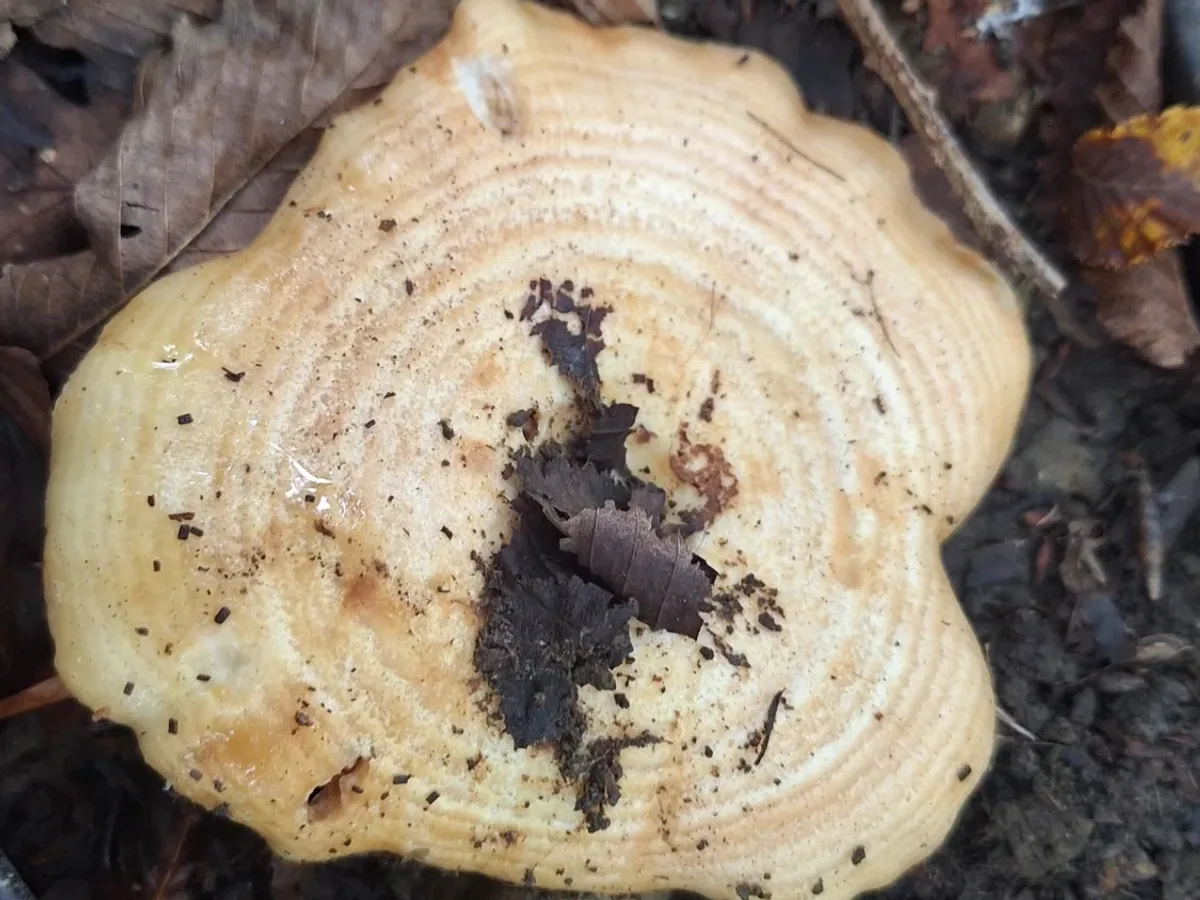 © yellowplant (CC BY)
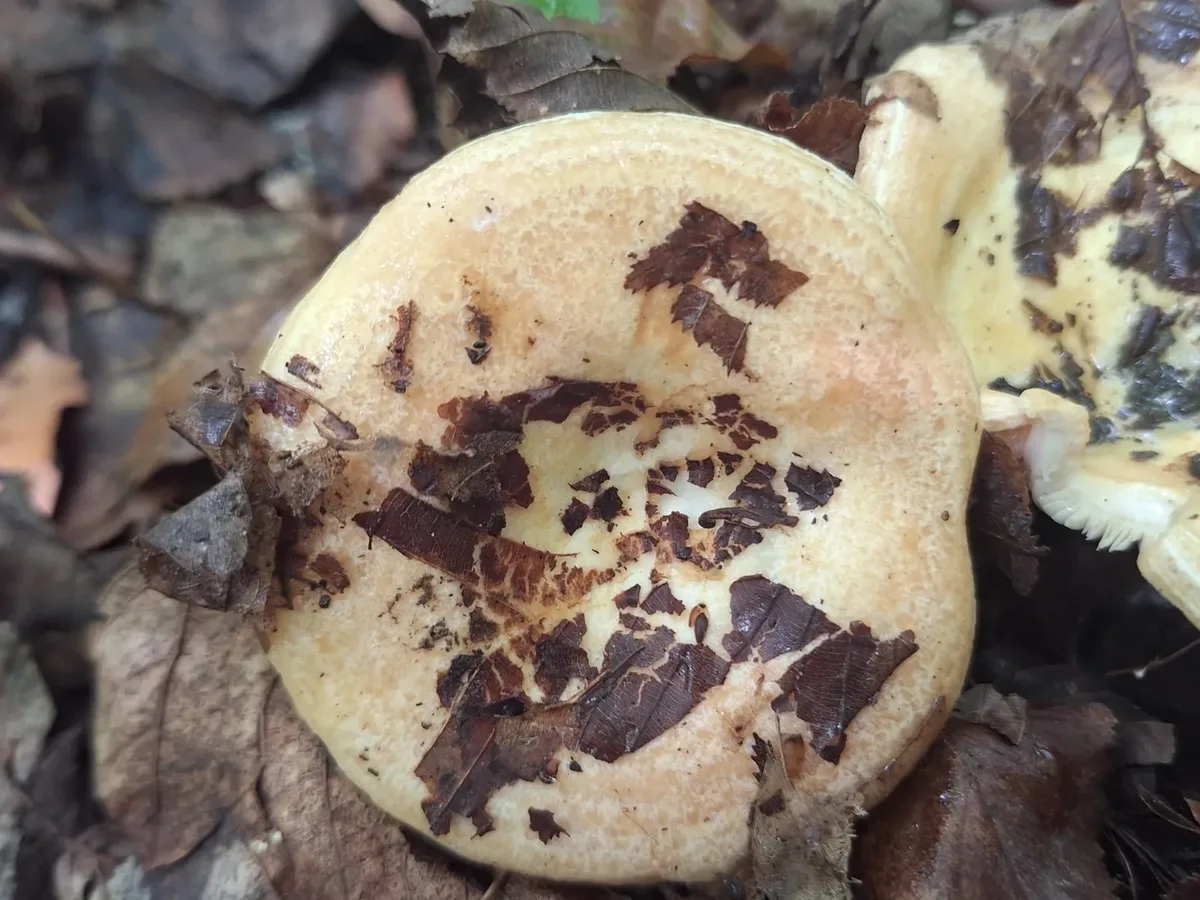 © yellowplant (CC BY)
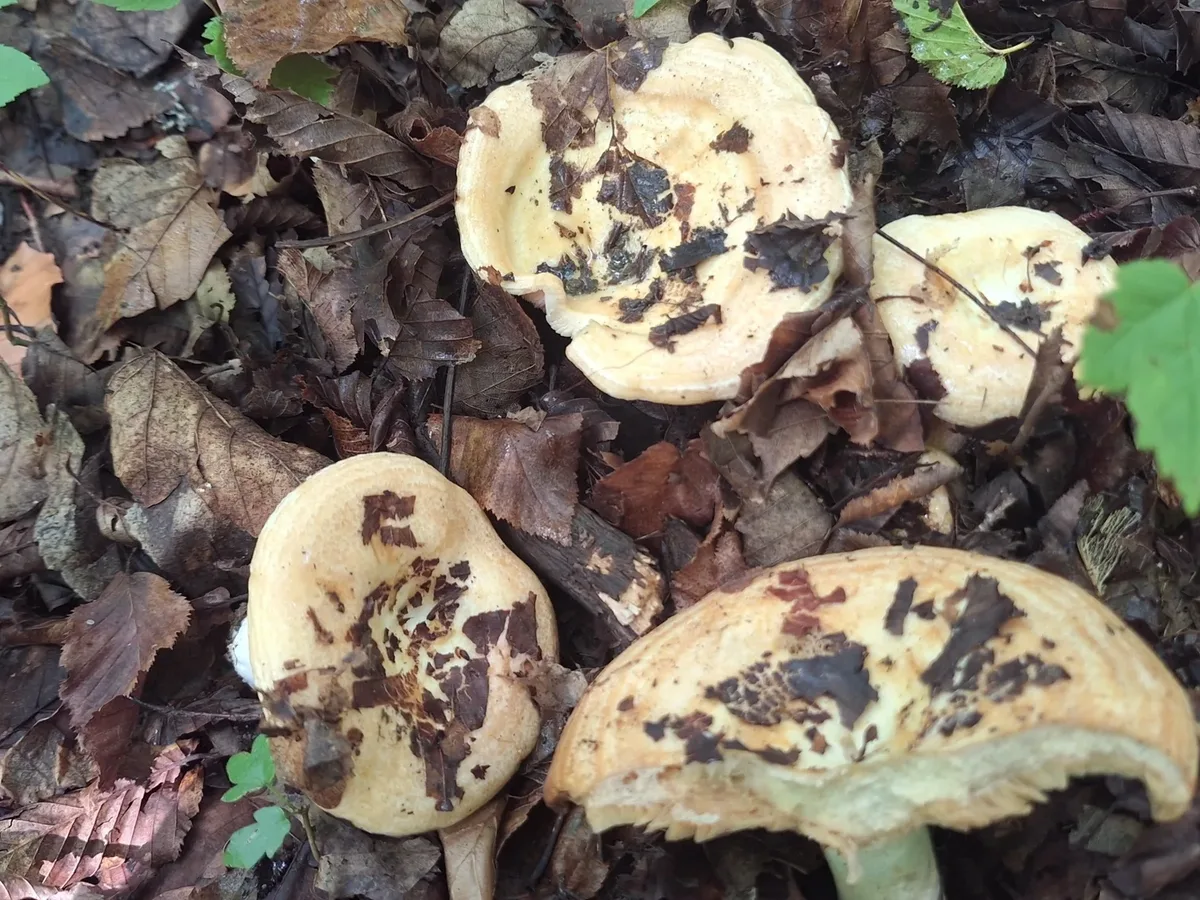 © yellowplant (CC BY)
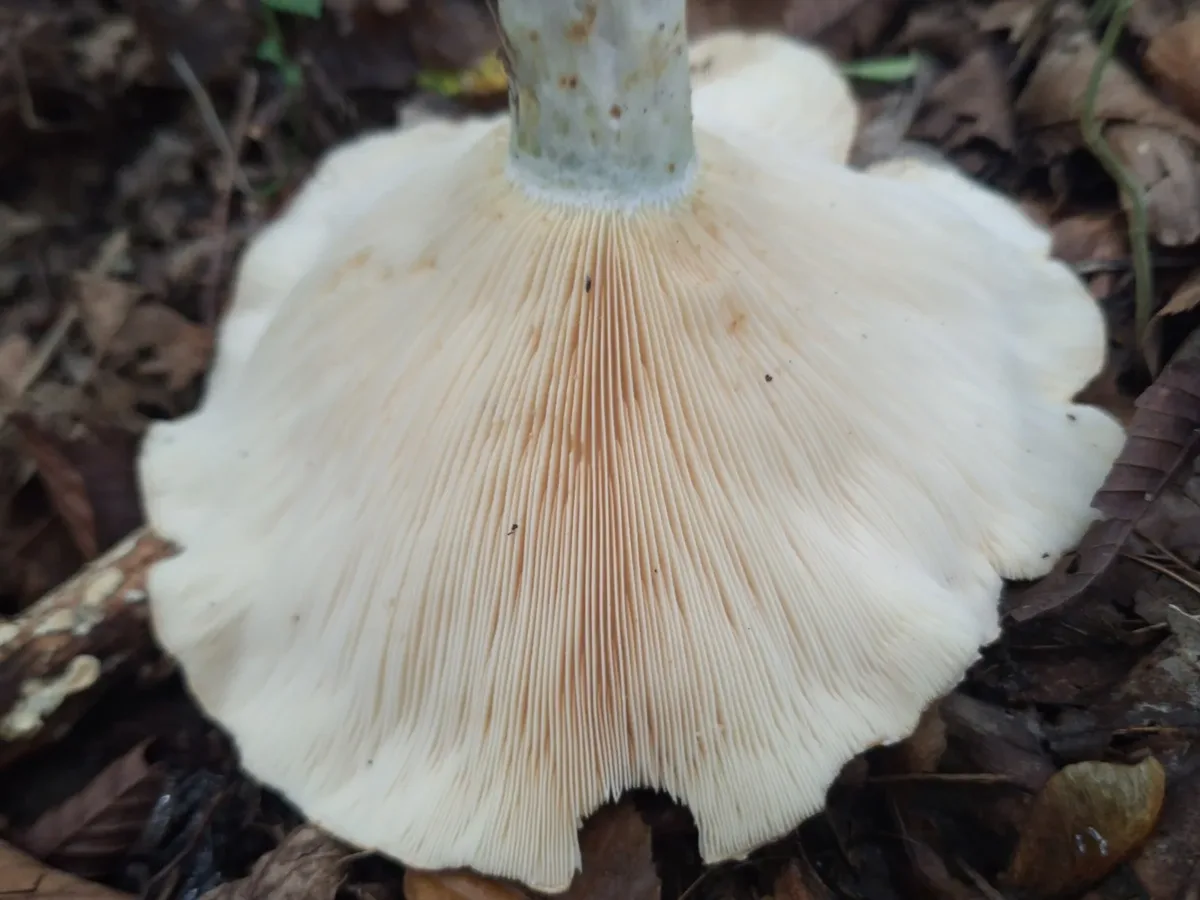 © yellowplant (CC BY)
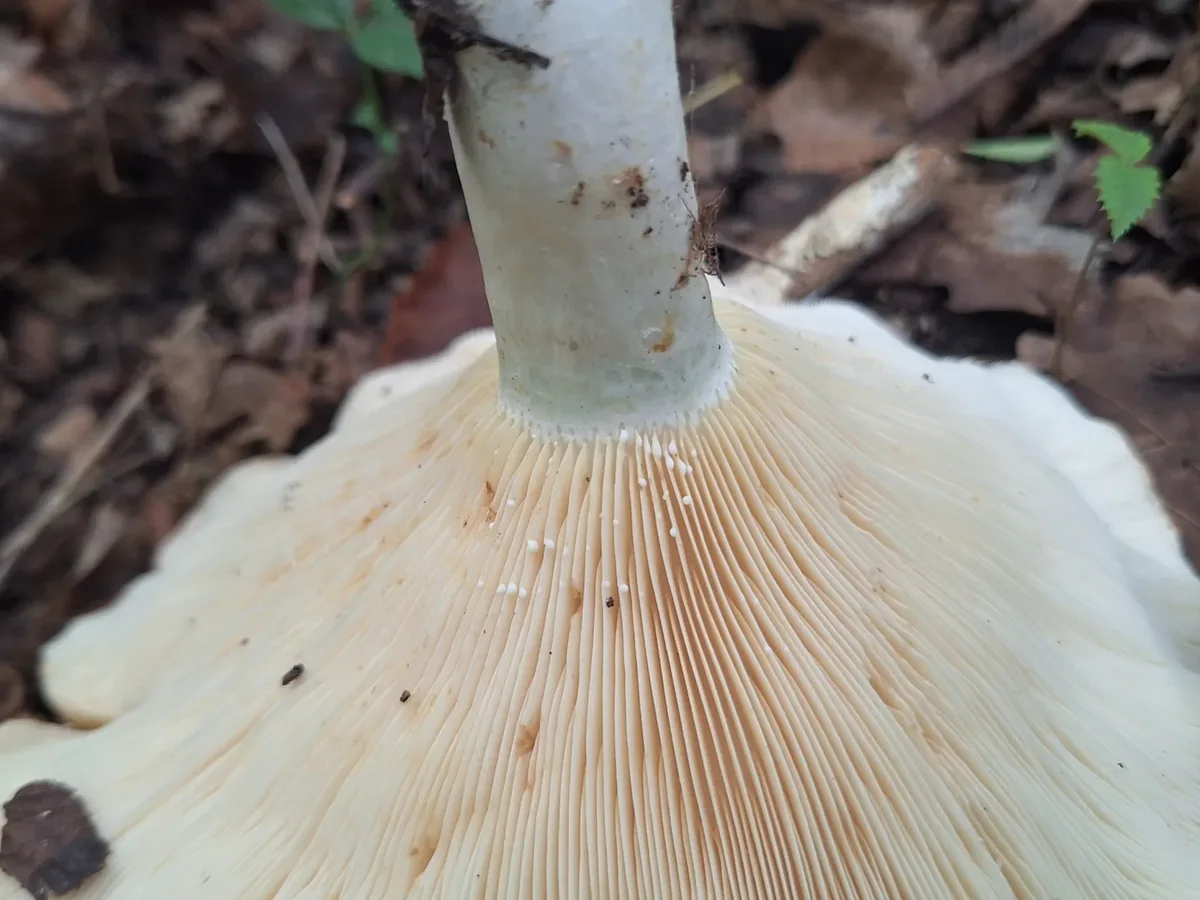 © yellowplant (CC BY)
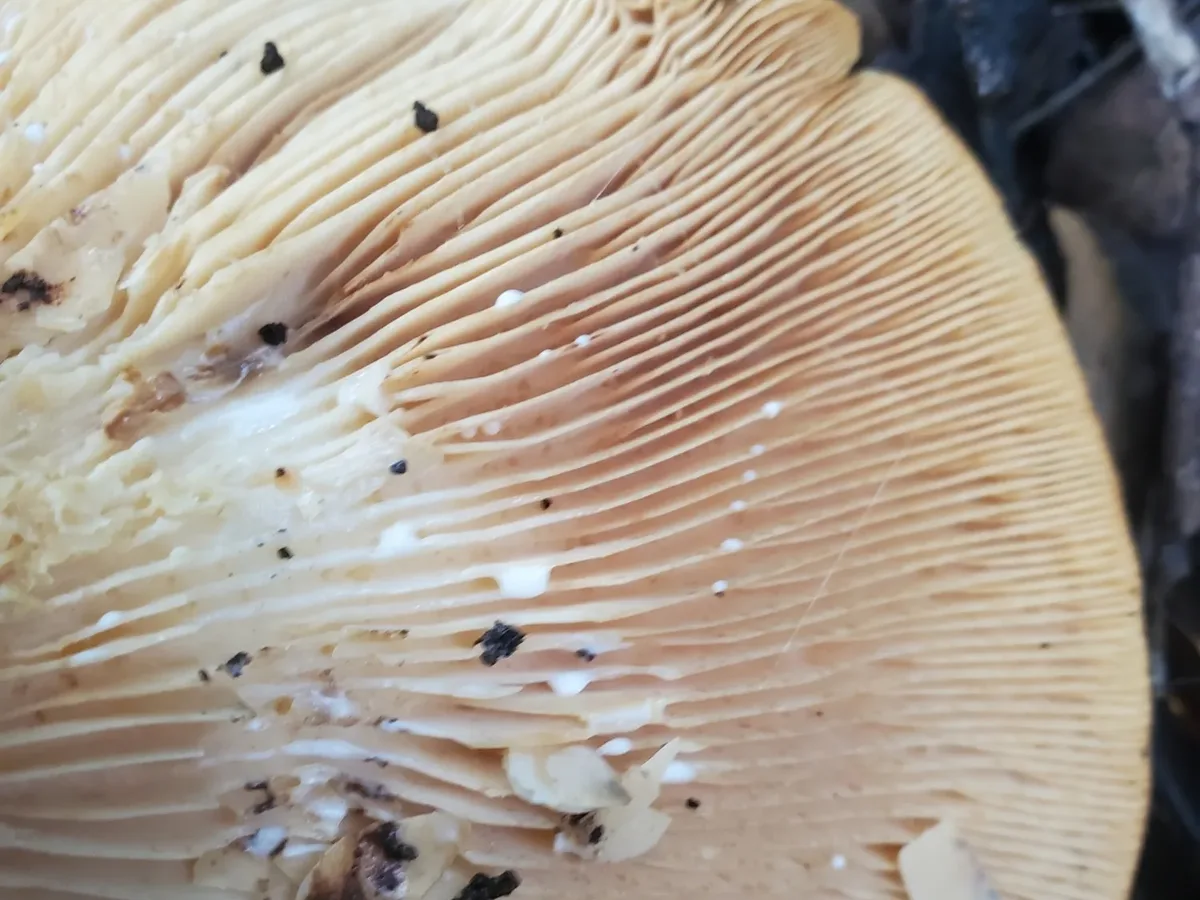 © Mitch Van Dyke (CC BY 4.0)© Michel Langeveld (CC BY 4.0)© mycowalt (CC BY-SA 4.0)
Edible only with the right preparation - or safe for some people but not others. Learn the caveats first.
How to recognise it
Lactarius zonarius is identified principally by the combination of its large, funnel-shaped cap with strongly concentric colour banding, white unchanging acrid latex, and association with Mediterranean oaks.
Cap
The cap starts convex with a tightly inrolled margin and progresses to a broad funnel shape - a shape typical of the acrid milkcap group - with the margin remaining rolled inward for a surprisingly long time.
The banding (zonation) consists of alternating rings of pale cream to honey-buff and slightly richer ochre-orange, most vivid near the cap margin; this gives the cap a slightly ringed or tiger-striped appearance in good light.
The surface is smooth and dry in normal conditions but becomes slightly slippery when wet, betraying the gelatinised cuticle layer.
Gills
Gills run down the stem, are densely packed, cream to ochre-cream, and fork near the stem base.
Stem
The stem is stout, whitish to straw-coloured, and remains solid or stuffed even in mature fruit.
Flesh
Most critically, cutting any part of the flesh or gills releases copious white milk (latex) almost instantly - this milk does not yellow, grey, or change colour over minutes or hours, distinguishing it from the milk of Lactarius scrobiculatus or Lactarius chrysorrheus.
Smell & taste
The taste of the raw flesh is intensely, burningly acrid and persistent - one of the most pungent milkcaps in the European flora.
Why it's dangerous
Lactarius zonarius is moderately toxic in the raw or undercooked state due to its acrid sesquiterpene content. It is NOT lethal, and no fatalities have been reported from this species.
The danger level is comparable to other acrid milkcaps (Lactarius torminosus, Lactarius vellereus). Its lookalikes in European oak woodland are all also non-deadly.
The main practical danger is misidentifying it as a mild or edible milkcap and consuming it without adequate preparation.
This species is not a foraging target of merit - given that tastier, safer alternatives are always available, avoidance is the sensible approach.
Toxin
The acrid latex of Lactarius zonarius contains sesquiterpene lactones, a class of compounds responsible for the characteristic burning and irritant taste common to the acrid milkcap group.
These compounds are thermolabile and are substantially degraded or leached out by extended boiling in water. The primary toxic mechanism is direct mucosal irritation of the gastrointestinal tract.
The specific sesquiterpenes have not been fully characterised in L. zonarius specifically, but the irritant syndrome is well-established for the species group as a whole.
Symptoms
Consumption of raw or inadequately prepared Lactarius zonarius causes gastrointestinal irritant syndrome, with onset typically 30 minutes to 2 hours after ingestion.
Symptoms include:
- Burning sensation in the mouth and throat, beginning immediately on chewing the raw flesh
- Nausea
- Abdominal cramping
- Vomiting
- Diarrhoea
Symptoms are typically self-limiting and resolve within 6-24 hours with supportive care. No long-term organ damage is expected.
Severity depends on the quantity consumed and the degree of preparation. In children or individuals with pre-existing gastrointestinal conditions, symptoms may be more pronounced.
Staying safe
Lactarius zonarius is poisonous when raw and capable of causing significant gastrointestinal upset. Do not eat raw under any circumstances.
The milk is an unreliable safety shortcut: white unchanging milk is shared by several acrid milkcaps and by the deadly Cortinarius species, which produce NO milk at all - always confirm latex flow before collecting any reddish-brown mushroom.
The presence of flowing white latex confirms this is a milkcap (Lactarius), but does not make it edible.
Among milkcaps, the distinction between 'acrid' (potentially toxic when undercooked) and 'mild' (safe) species is fundamental - taste a tiny fragment of fresh gill by touching it briefly to the tip of your tongue; burning acrid = do not eat without thorough preparation.
In Mediterranean foraging contexts, be especially careful not to conflate L. zonarius with the much more rewarding Lactarius sanguifluus or Lactarius deliciosus, whose blood-red or orange latex is immediately distinctive.
Where & when it grows
Habitat
This species belongs to the Mediterranean ecological zone and is firmly tied to warm, calcareous, sun-exposed oak woodland. It forms obligate ectomycorrhizal partnerships with its oak hosts, meaning it cannot grow independently of a living tree root partner.
Look for it in:
- Open holm oak forest
- Margins of cork oak and mixed oak stands
- Sun-dappled glades
- South-facing slopes where the soil dries out in summer before autumn rains restart fungal activity
It is rarely found in dense, shaded forest - it benefits from soil warmth that penetrates more open canopies. The species also tolerates mixed associations with Cistus, Arbutus, and other sclerophyllous Mediterranean shrubs.
Soil type ranges from calcareous limestone-derived soils to siliceous sandy or clay loam, provided drainage is adequate; it does not favour waterlogged or heavy clay.
In Italy it also appears in Apennine chestnut woodland; in the Balkans under downy and mixed oak.
When
Lactarius zonarius is fundamentally an autumn-winter fungus across its Mediterranean range, responding to the climatic rhythm of dry summer followed by autumn rainfall.
Fruiting is triggered by the first significant autumn rains - typically from September onward on the Iberian Peninsula and October in southern France and Italy - when soil temperatures in the upper 10 cm drop from summer highs toward the 15-20 °C range and accumulated rain rewets the dry mineral soil. The flush lag between rain and emergence is typically 7-14 days.
Peak fruiting runs through October and November, with stragglers persisting into December.
Unlike many northern European milkcaps, this species does not tolerate hard frost and fruiting ceases when soil temperatures fall consistently below 5 °C. In particularly dry autumns fruiting may be sparse or absent altogether.
How it grows
Grows scattered to gregarious across the forest floor, often forming loose troops of several individuals under the same oak tree or along hedgerows of Mediterranean scrub.
Individual fruit bodies are not clustered together at the base, but neighbours are common - a reflection of the mycorrhizal mycelium spreading outward through the soil from a host root, pushing up fruit bodies as it goes.
Buttons emerge with a smooth, rounded ochre cap and develop their concentric banding progressively as they expand. In warm conditions, full-sized specimens can appear within 5-10 days of the triggering rains.
Old fruit bodies break down quickly in wet weather but persist longer through drier autumn spells.
Fruiting conditions
Triggered by the first significant autumn rains breaking the Mediterranean summer drought; requires a cumulative rainfall event of at least 30 mm over two weeks to reliably initiate fruiting; soil temperatures between 10 and 18 °C are optimal; does not tolerate sustained soil frost; flush lag of 7-14 days typical
Look-alikes
The most important confusion species within the Lactarius genus all share the funnelled shape, zonate cap, white latex, and Mediterranean habitat, making careful attention to detail essential.
- Lactarius controversus is the closest look-alike: it has a very similar large pale cap with faint zonation and grows under poplar (Populus) and willow (Salix) along rivers and irrigation channels rather than under oaks; its cap colour is paler (white to pinkish-cream with pink blotches) and its gills often have a distinctive pink flush - the habitat difference (riverside poplars vs oak woodland) is the most reliable separation.
- Lactarius insulsus (the 'mild banded milkcap') is closely related and was historically confused with L. zonarius; it is typically slightly smaller, less vividly zonate, and has a milder (less burning) acrid taste; it tends to occur under deciduous broadleaf trees in more northerly and continental settings; both are poisonous.
- Lactarius scrobiculatus shares the large funnel shape and Mediterranean/montane conifer habitat, but is distinguished by its yellow milk: the latex of L. scrobiculatus turns sulphur-yellow within seconds of exposure to air, whereas L. zonarius latex stays white permanently.
- Lactarius chrysorrheus grows under oaks and also has a zoned pale cap, but its latex rapidly turns bright sulphur-yellow and it is smaller (4-8 cm).
- Lactarius deliciosus and related saffron milkcaps have orange or carrot-coloured latex and grow under conifers, not oak - easily separated.
None of the realistic confusion species for L. zonarius is deadly; however, since it grows in oak woodland, foragers should remain alert to other potentially toxic species in the habitat.
Closely related and historically confused; tends to be slightly smaller with less vivid zonation and a somewhat milder (though still acrid) taste; grows more commonly in continental and northerly broadleaf woodland (beech, oak) outside the strict Mediterranean zone. Both are acrid and poisonous when raw.
Very similar large, pale, faintly zonate cap with white unchanging acrid latex, but grows exclusively under poplar (Populus) and willow (Salix) in riverine and irrigated landscapes, not under oaks. Cap colour is typically paler with distinctive pinkish blotches or a pink flush to the gills. Habitat is the single most reliable separation.
Large funnel-shaped cap with a pitted or scrobiculate stem base and zonate pale-ochre cap superficially similar. Latex turns bright sulphur-yellow within seconds of exposure to air - the most immediate and reliable distinction from L. zonarius, whose latex stays white. Grows mainly under spruce and fir in montane conifer forest.
Grows under oaks in similar Mediterranean and southern European settings; cap pale ochraceous with a faint zonate pattern. Latex turns sulphur-yellow rapidly on exposure to air, immediately distinguishing it from the permanently white latex of L. zonarius. Generally smaller cap (4-8 cm).
A reference guide - never an edibility guarantee. When in doubt, leave it out.