Wirrabara milkcap
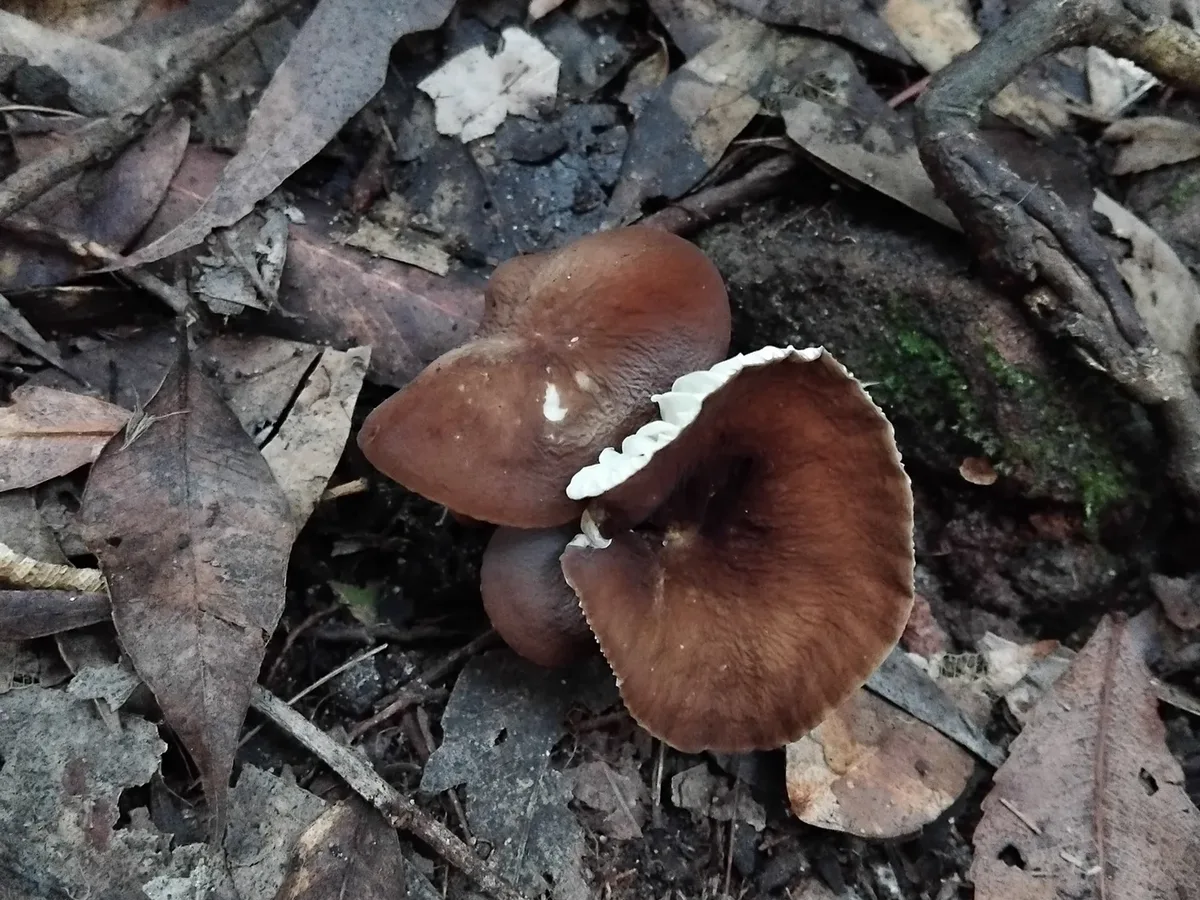
Lactarius wirrabara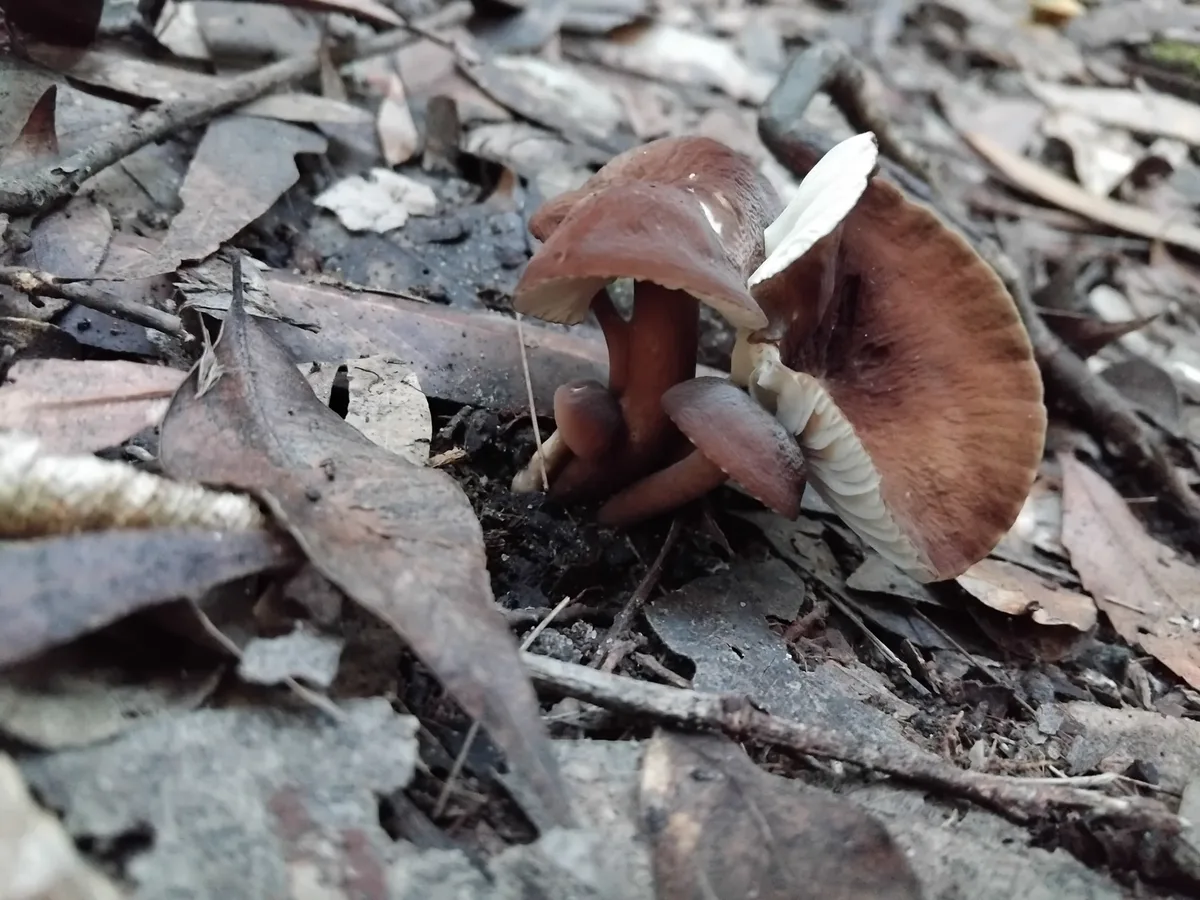 © Sofia Zvolanek (CC BY)
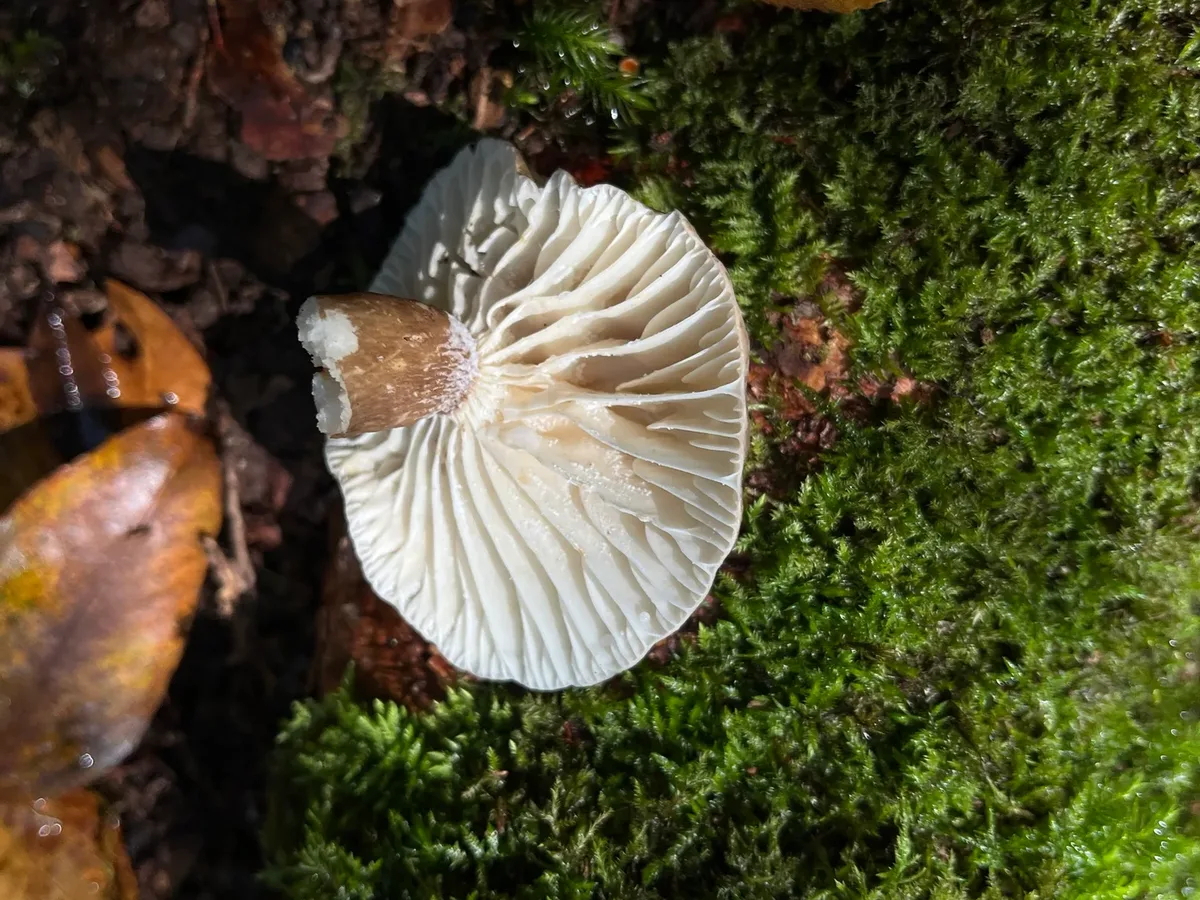 © Todd Huang (CC BY)
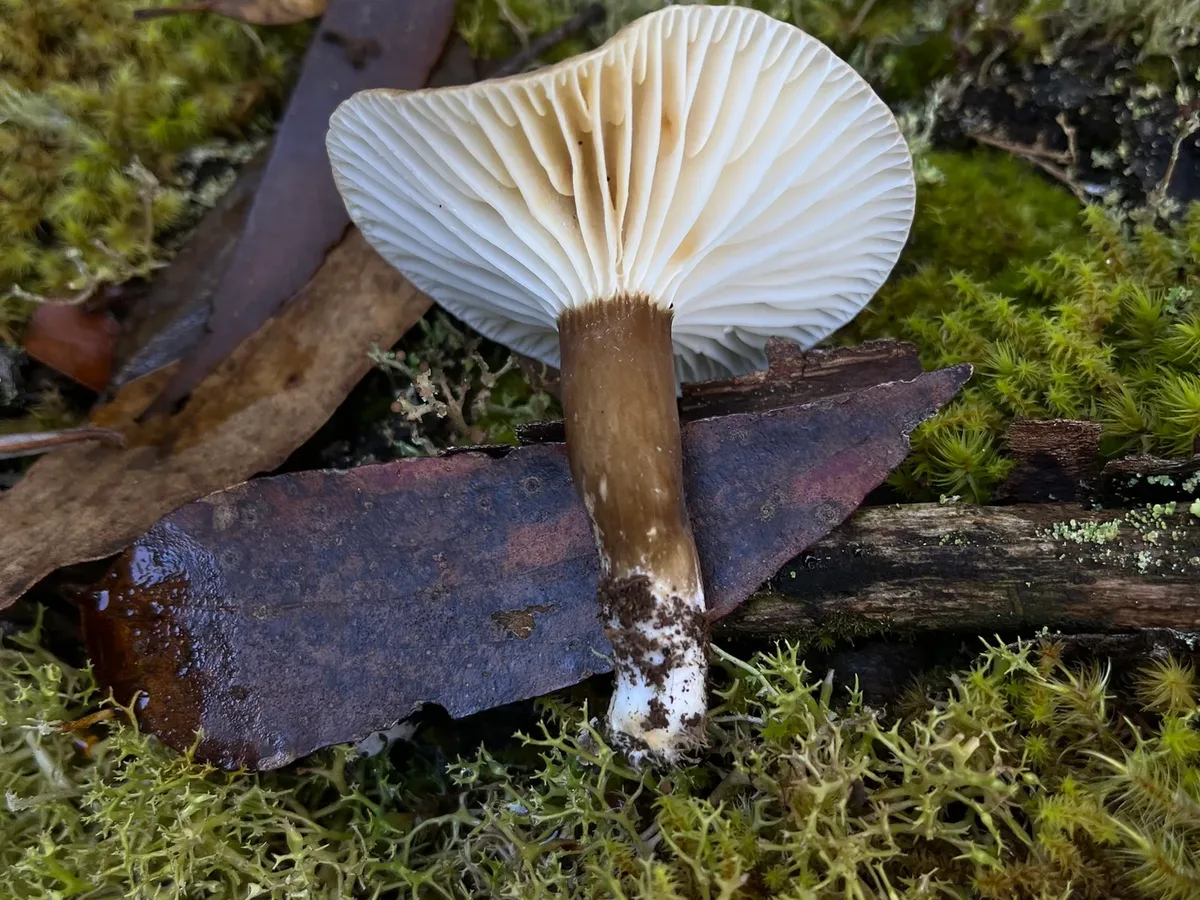 © Todd Huang (CC BY)
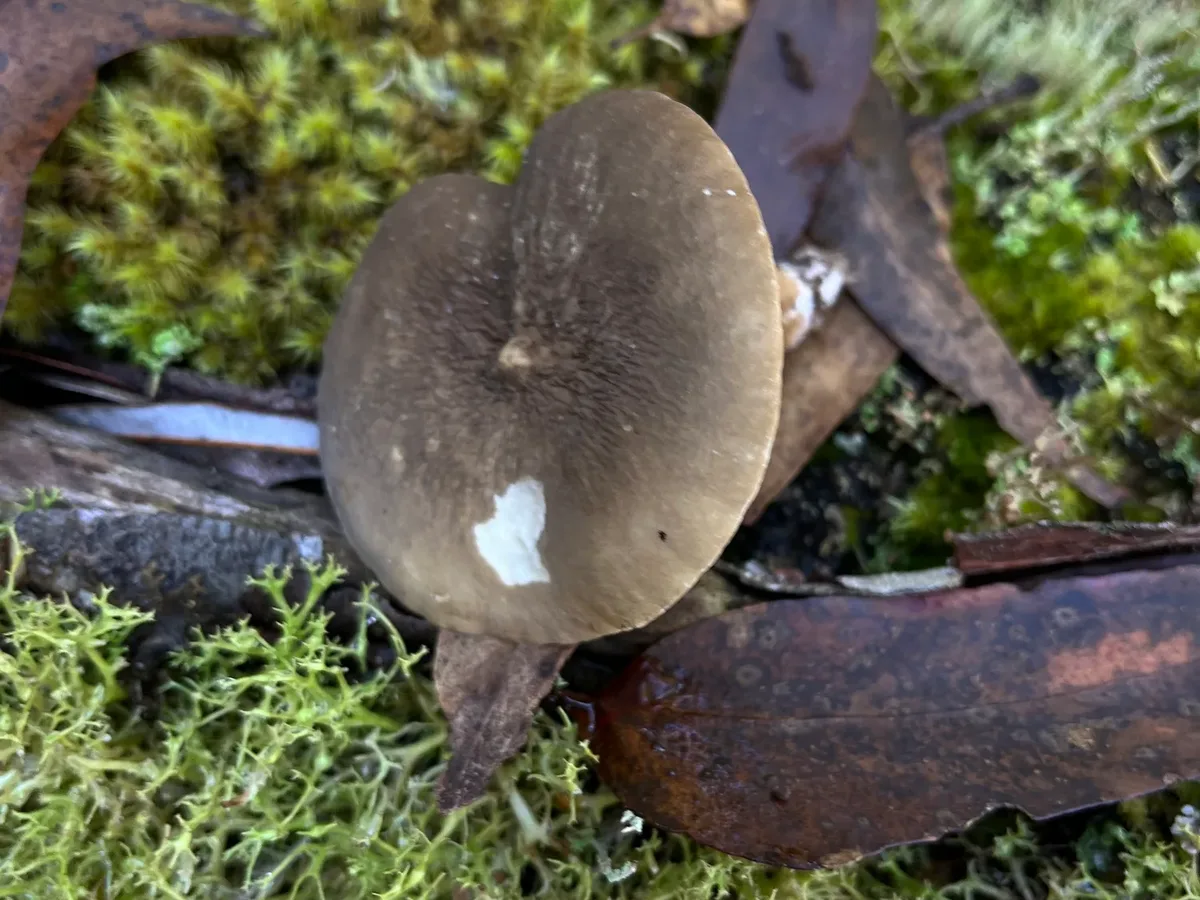 © Todd Huang (CC BY)
 © Sofia Zvolanek (CC BY)© Sofia Zvolanek (CC BY)© Todd Huang (CC BY)
Edible only with the right preparation - or safe for some people but not others. Learn the caveats first.
Never eat a mushroom you are not 100% sure of - check the look-alikes below, and always cook wild mushrooms.
How to recognise it
A medium-sized milkcap with the earthy-brown, gradually funnel-shaped look typical of acrid-milked members of the genus.
Cap
The cap starts out convex with a firmly inrolled margin, gradually flattens, and in age becomes broadly depressed or shallowly funnel-shaped.
The surface is dry to barely moist - never slimy - and runs from ochre-brown to tawny-clay, usually darkest at the centre and paler toward the edge.
Gills
Gills are white to pale straw-cream, moderately crowded, and run slightly down the stem.
Stem
The stem itself is firm, cylindrical, and similar in colour to or a little paler than the cap.
The single most important field character is the latex: snap any part of the flesh or gills and abundant white milk flows freely. That milk stays white - it does not change colour on exposure to air - and delivers an instantly and intensely acrid, burning sensation on the tongue.
This three-part combination - brown dry cap, white unchanging acrid latex, white spore print - places it firmly within the acrid-milkcap group (section Urentes and allies).
Its general stature and brownish tones can overlap with several other species in the region, so careful attention to latex colour and taste is essential every time.
Why it's dangerous
Lactarius wirrabara poses a low-to-moderate gastrointestinal irritant hazard. No confirmed fatalities are on record for this species or for acrid sesquiterpene lactone milkcaps in general.
The primary risk pathway is raw or inadequately cooked consumption: anyone tasting the raw mushroom, or eating it after insufficient boiling, will experience burning irritation and potentially GI upset. This risk is fully preventable through correct preparation (see cooking key).
A secondary and more serious risk is misidentification: brown-capped, non-milkcap species in the same habitat - particularly Cortinarius species bearing the delayed-acting nephrotoxin orellanin, or Hebeloma and Inocybe species with their own toxic profiles - could be collected under the impression they are this milkcap.
An orellanin-poisoning Cortinarius consumed by mistake would carry a genuine risk of fatal kidney failure; this elevates the overall hazard profile of the collecting context even though Lactarius wirrabara itself is not deadly when correctly identified and prepared.
These groups should avoid this species entirely, as the margin for preparation error is non-trivial and the species' full chemical profile across Australian populations has not been systematically characterised:
- Individuals with sensitive GI tracts
- Those with pre-existing kidney or liver conditions
- Pregnant or breastfeeding individuals
- Immunocompromised persons
Toxin
The toxic principle in Lactarius wirrabara is a family of acrid sesquiterpene lactone compounds concentrated in both the latex (the white milk) and throughout the flesh.
Sesquiterpene lactones are 15-carbon terpenoid molecules characterised by a lactone ring. The specific sub-class found in acrid milkcaps - including velutinal sesquiterpenes and related structures documented in European section Urentes species such as Lactarius vellereus and Lactarius piperatus - are highly lipophilic irritants that bind to and activate pain-sensing TRPV1 ion channels in mucosal tissue, which is why the burning sensation on the tongue is virtually instantaneous.
The compounds are present throughout the fruitbody but are most concentrated in the latex, which is why even a tiny taste of the raw milk produces strong acrid fire on the tongue.
Critically, these sesquiterpene lactones are heat-labile and water-soluble: prolonged boiling in a large volume of water disrupts their lactone ring and leaches them into the cooking water, rendering the mushroom safe after adequate preparation.
This is why the Eastern European tradition of repeated blanching with water changes successfully renders acrid Lactarius species (Lactarius torminosus, Lactarius necator, and others) edible - the same chemistry applies here.
Discarding the cooking water is non-negotiable; any reuse of the boiling water defeats the deactivation process entirely.
Symptoms
On raw contact - even tasting a small piece of the cap or a drop of latex without swallowing - there is an immediate and intense burning or stinging sensation on the lips, tongue, and the mucous membranes of the throat. This burning is not subtle; it is comparable in quality to the heat of a strong chilli and begins within seconds of contact.
If significant quantities are swallowed raw or from inadequately prepared specimens, the irritants reach the gastrointestinal tract and can produce nausea, vomiting, abdominal cramping, and diarrhoea. Onset of GI symptoms typically occurs within minutes to one hour of ingestion.
The illness is self-limiting: once the irritant is either expelled or diluted and metabolised, the mucosa recovers and symptoms resolve, usually within a few hours.
No systemic organ involvement (liver, kidney, nervous system) is expected from this compound class; sesquiterpene lactone irritants in Lactarius are not nephrotoxic, hepatotoxic, or neurotoxic in the way that orellanin or amatoxins are.
There are no documented fatalities attributable to Lactarius wirrabara specifically or to this compound class in milkcaps generally.
Staying safe
The primary hazard of Lactarius wirrabara is eating it raw or insufficiently prepared. The acrid compounds, characteristic of many white-latex Lactarius species globally, cause immediate burning irritation and, if a significant quantity is consumed, gastrointestinal upset.
These effects are not caused by amatoxins, orellanine, or other systemic toxins but by irritant sesquiterpenes; thorough boiling neutralises them.
The critical misidentification risk is confusing a brown-capped mushroom in pine or native woodland with Lactarius wirrabara without confirming the presence of white latex. Hebeloma, Cortinarius, and Inocybe species sharing the habitat can be dangerous to poisonous.
Always verify white latex before collecting any brown milkcap-like mushroom.
Because this is a relatively obscure, recently described species with limited published research, its edibility has not been rigorously tested across populations; treat it with appropriate respect and do not experiment casually.
Where & when it grows
Habitat
Closely tied to Pinus radiata plantation forestry in South Australia - the species carries the name of Wirrabara Forest, one of South Australia's major state pine forests tucked into the southern Flinders Ranges, which is where the type collection was made.
The non-native Monterey pine, planted across southern Australia for timber, turns out to create surprisingly rich ectomycorrhizal habitat: its roots host both introduced and native fungal partners, and Lactarius wirrabara appears to be one of the beneficiaries.
Beyond plantations, it may also form partnerships with indigenous trees that support ectomycorrhizal networks - particularly species of Allocasuarina (sheoaks) and possibly Eucalyptus.
It favours moist, slightly acidic soils under the tree canopy, fruiting among pine needle duff, native leaf litter, or bare soil in forest openings.
The species was formally described only in 1997, and relatively little systematic surveying has followed; its full host range and geographic reach within Australia are still being worked out.
When
In southern Australia, this milkcap fruits during the austral autumn and early winter - the time of year when the Mediterranean-type climate of South Australia finally delivers its reliable rainfall after the long dry summer.
Fruiting begins from March onward, with the main flush typically in April and May as soil temperatures fall toward the 8-14 °C range that these fungi seem to prefer.
Mild winters can carry fruiting into June and July.
The timing mirrors almost exactly the European milkcap season of September to November - just flipped to the southern hemisphere calendar.
How it grows
Fruits scattered to loosely gregarious - you'll often find a handful of individuals spread across the same patch of duff rather than tightly clustered.
Buttons emerge firm and rounded, expanding fairly quickly once the soil has received adequate autumn rain.
Like all true milkcaps, this species is an obligate ectomycorrhizal partner: its mycelium lives intertwined with the living roots of its host trees, exchanging water and minerals for sugars, and it will not grow on dead wood or in the absence of a suitable host.
Fruiting conditions
Responds to the onset of austral autumn rains after summer drought; requires soil cooling below approximately 16 °C and adequate soil moisture; typical of Mediterranean-climate rainfall patterns of southern Australia where meaningful rain arrives in autumn
Look-alikes
Within Australian pine plantations and native woodland, several species can resemble Lactarius wirrabara.
- Other Lactarius species occur in Australia, both introduced (associated with exotic plantation trees) and native; any that share a brown dry cap and white latex require careful species-level comparison using microscopy and specialist literature.
- Hebeloma species (poisonpie fungi) are brown-capped gilled mushrooms that grow in similar plantation habitats; they lack latex entirely - always break the flesh and confirm that white milk flows freely before collecting.
- Cortinarius species (webcaps), some of which may contain the deadly orellanin nephrotoxin, also occur in Australian pine plantations and can have brownish caps; they too produce no latex, typically show rusty-brown spore deposits, and may have remnants of a cobweb-like veil when young.
- Inocybe species, some muscarine-containing, grow in similar ectomycorrhizal habitats and are small brown-capped without latex.
The key safety check for all these lookalikes is the same: snap the stem or gills and confirm that white latex flows. If no latex appears, the specimen is not a milkcap and may be dangerous.
Brownish-capped species also occurring in pine and native woodland ectomycorrhizal habitats; no latex produced; rusty-brown spore deposit visible on stem or substrate; cobweb-like (cortinate) veil visible in young specimens. Some Cortinarius species contain deadly orellanin; never collect brown non-latex woodland mushrooms without confident identification.
Small brown fibrous-capped mushrooms of similar ectomycorrhizal habitats; no latex; gills become brown with brown spore deposit; contain muscarine and cause muscarinic poisoning syndrome. Distinguished by absence of latex and fibrous, not smooth, cap surface.
Brownish-capped, gilled mushrooms of similar woodland habitats; produce no latex whatsoever - break the flesh and gills; if no white milk flows freely the specimen is not a milkcap and should not be eaten. Hebeloma species cause gastrointestinal poisoning.
A reference guide - never an edibility guarantee. When in doubt, leave it out.