Weeping milkcap
Lactarius volemussyn. Lactifluus volemus, Agaricus volemus Fr., Galorrheus volemus (Fr.) P.Kumm., Lactarius volemus var. volemus
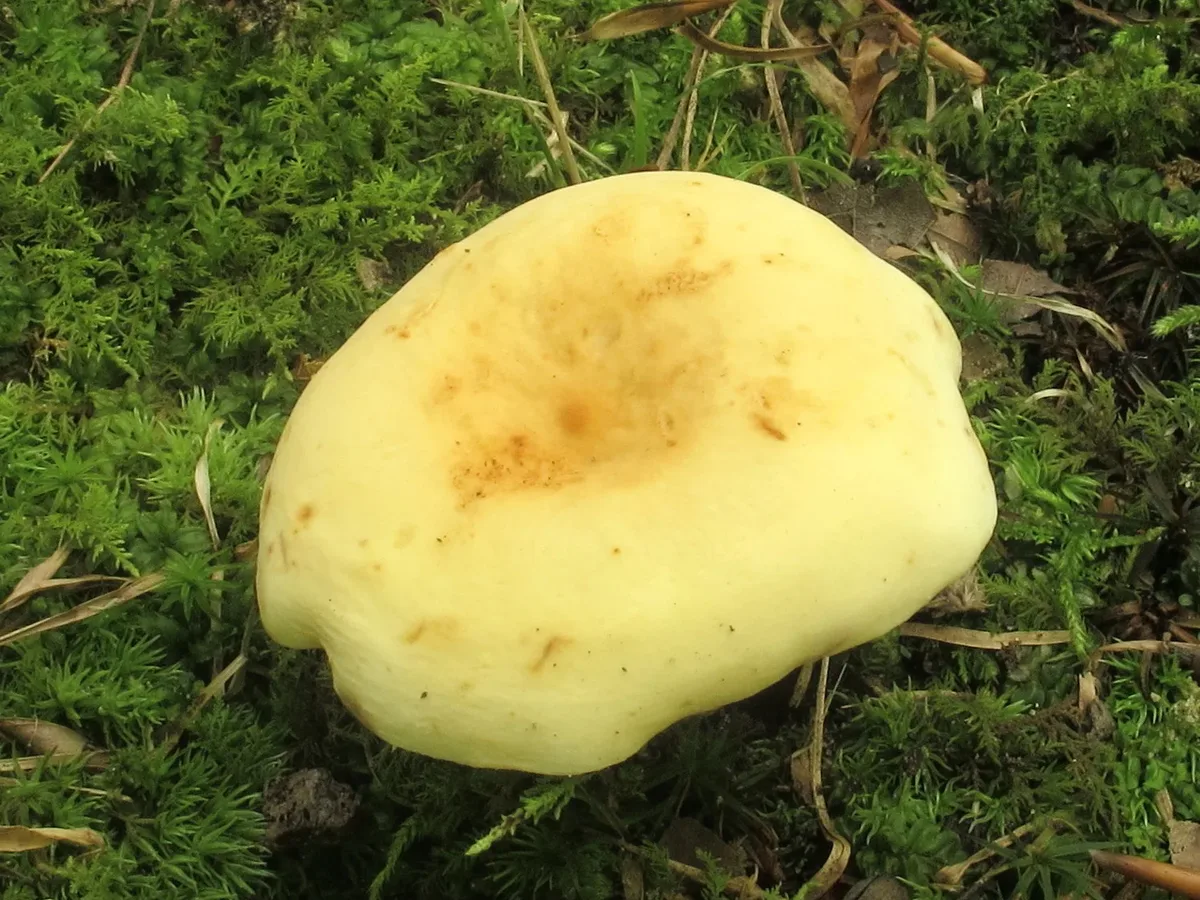 © mycowalt (CC BY-SA 4.0)
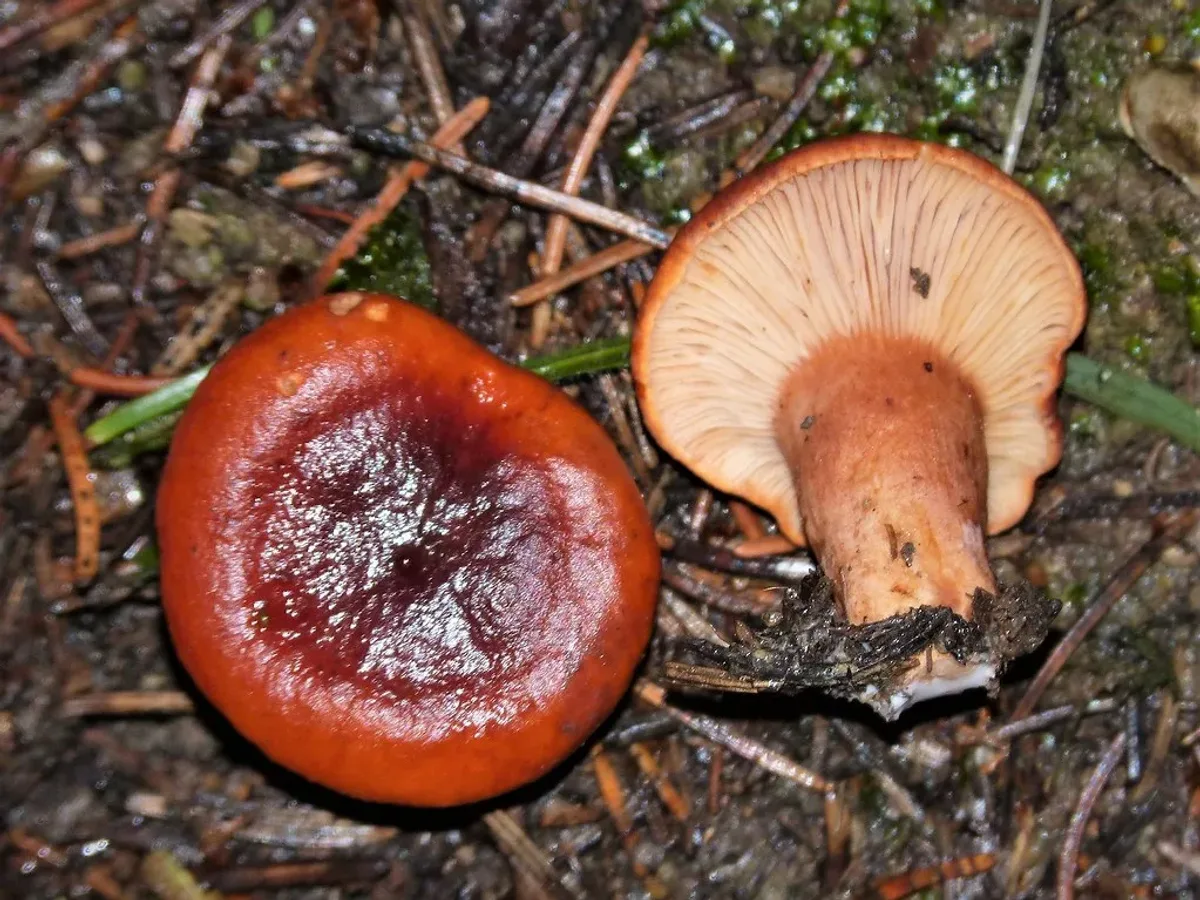 © gailhampshire (CC BY 2.0)
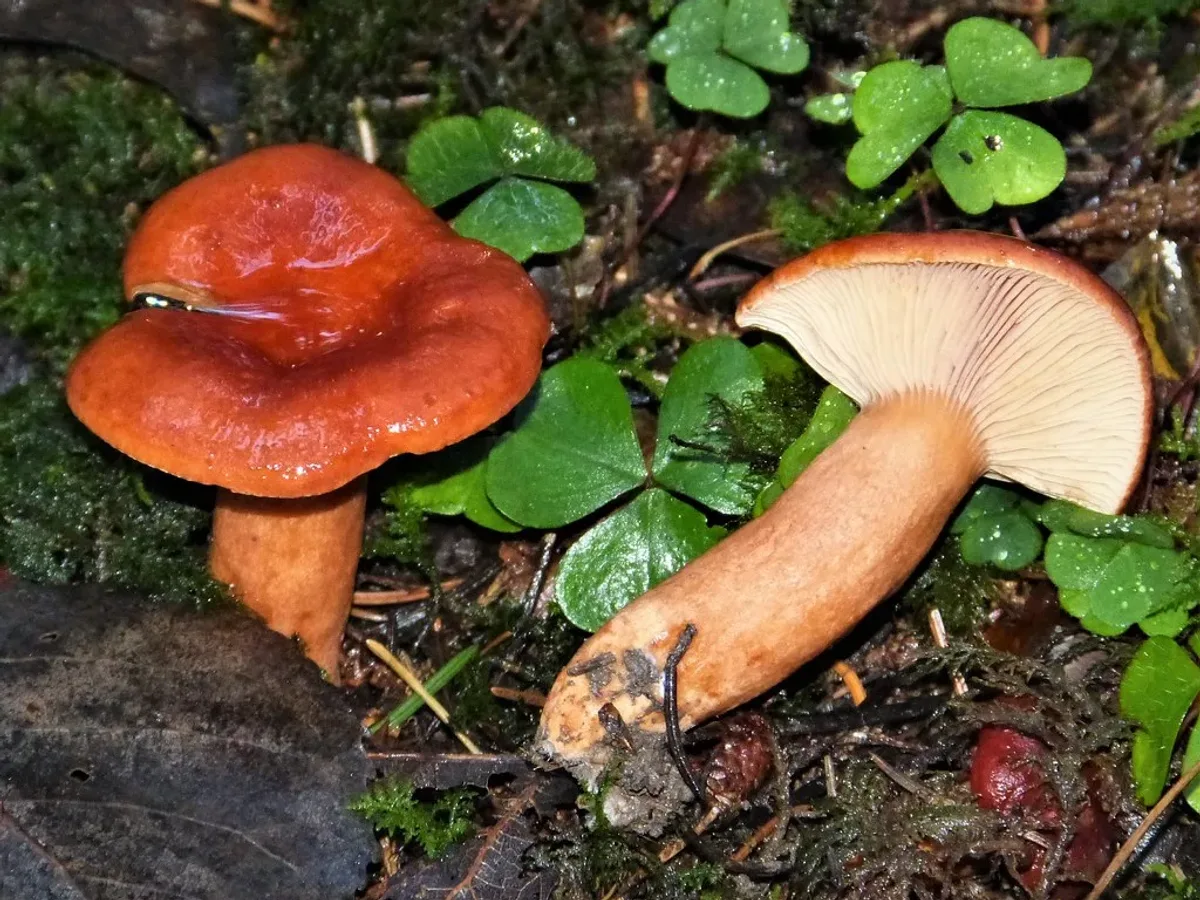 © gailhampshire (CC BY 2.0)© mycowalt (CC BY-SA 4.0)© gailhampshire (CC BY 2.0)
Good to eat, once you have identified it with certainty and cooked it through.
Never eat a mushroom you are not 100% sure of - check the look-alikes below, and always cook wild mushrooms.
How to recognise it
The Weeping milkcap is a robustly built, medium-to-large mushroom, with three features that identify it at a glance:
- 1the warm tawny-orange to brick-brown dry cap
- 2the copiously 'weeping' white latex that flows from every cut surface like milk
- 3an unmistakable strong smell of stale herring or fish stock - the result of trimethylamine produced by the latex itself
Cap
The cap starts convex with an incurved margin when young, soon flattening and developing a broad central boss (umbo), eventually becoming shallowly depressed or vase-shaped at full maturity.
The surface stays dry and slightly velvety - never slimy - and in dry weather may crack into a fine mosaic, revealing whitish flesh beneath.
Gills
Gills are crowded, adnate to slightly decurrent, initially white then ageing to cream; they bruise tan-brown wherever rubbed or injured, a reliable field mark.
The white latex is non-acrid, stains gills brown, and does not change colour on a white handkerchief (unlike the green-staining latex of Lactarius blennius).
Spore print white.
Stem
The stem is thick, firm, and solid throughout.
Where & when it grows
Habitat
The Weeping milkcap is a mycorrhizal partner of broad-leaved trees, quietly threading its mycelium through the soil alongside oak (Quercus spp.), beech (Fagus sylvatica), hornbeam (Carpinus betulus), and hazel (Corylus avellana) across temperate Europe and Asia.
It favours humus-rich, moderately acidic to neutral soils in closed or semi-closed woodland - shaded, leafy, often a little damp. In the Nordic region it turns up under birch and spruce at lower elevations.
In central and western Europe look for it along shaded forest paths, old lanes through oak-hornbeam woodland, and in humid valley-bottom woods.
It shuns heavily disturbed or fertilised ground; in some European survey frameworks it is considered an indicator of long-established woodland.
When
The Weeping milkcap fruits from midsummer to mid-autumn, typically July to October in temperate Europe.
The best hunting comes after warm, humid spells in August and September, when the mycelium - which has been waiting underground through the drier months - pushes up its heavy, dense fruitbodies.
In unusually warm years production can start in early July; in cooler or drier years the season may compress into September and early October.
Regional peaks:
- British Isles: August-September.
- Central Europe (Germany, Poland, Czech Republic): August through early October.
How it grows
Fruitbodies arise singly or in loose scatter from humus or close to the buried roots of host trees - rarely in dense clusters. Growth is relatively unhurried: individual specimens may take 5-8 days to reach full size.
Because the cap tends to crack in dry weather, freshly emerged specimens after a period of rain are the best foraging target - the flesh is firm, the latex abundant, and insect damage minimal.
The mushroom is heavy and dense, with a good flesh-to-surface-area ratio, so even a small number of fruitbodies makes a worthwhile harvest.
Fruiting conditions
Requires adequate soil moisture from rainfall 1-2 weeks prior; flushes best after warm, humid spells followed by cooler nights. Soil temperatures of 12-18 °C are optimal. Drought strongly suppresses fruiting.
Look-alikes
Several tawny milkcaps resemble it:
- Lactarius oedematopus (= Lactifluus oedematopus) - the most significant lookalike; a southern European species with a similarly tawny cap but narrower gills and a more slender, club-shaped stem base. Considered edible but less well-regarded.
- Lactarius ichoratus (Lactifluus ichoratus) - smaller and more slender with a similar fish smell; generally considered edible.
- Lactarius fulvissimus - smaller, with a more reddish-orange cap, a less fish-like smell, and slightly acrid latex; edible but mediocre.
- Lactarius zonarius - pale ochre to cream zonate cap with acrid latex; distinguished by its concentric zones and acrid taste.
- Lactarius torminosus - warrants slight caution: pink-zonate, hairy margin, acrid, causes GI upset.
DEADLY DANGER: some orange-brown Cortinarius species (including C. orellanus and C. rubellus) grow in the same woodland habitat and contain orellanine, which causes irreversible kidney failure.
They never produce latex - always snap the flesh and confirm copious white milk flows before collecting. Cortinarius also has:
- rusty-brown spores
- a cobwebby cortina veil when young
- gills that turn rusty-brown
The deadly Galerina marginata (amatoxins) grows on dead wood and also produces no milk.
The presence of abundant white latex is the single most important safety check for this species.
DEADLY - orellanine causes irreversible kidney failure. Reddish-brown cap, grows in conifer and mixed woodland. Produces NO latex whatsoever. Rusty-brown spores, cortina veil when young, gills age to rusty-brown. The milk test is definitive: L. volemus weeps copious white milk immediately; Cortinarius bleeds nothing.
DEADLY - causes irreversible kidney failure (orellanine toxin). Orange-brown cap, grows in deciduous woodland with oak and beech - same habitat as L. volemus. Produces absolutely NO latex; always break the flesh and confirm abundant white milk flows before collecting. Has rusty-brown spore print, a cobwebby cortina veil when young, and gills that turn rusty-brown with age. No milk = not a milkcap.
DEADLY - amatoxins cause fatal liver failure. Morphological confusion with L. volemus is implausible: G. marginata is a small, slender, ring-bearing mushroom fruiting exclusively on decaying wood, not soil, with a brown spore print and no latex whatsoever. It belongs to a structurally distinct genus. The latex test is immediately definitive - L. volemus bleeds copious white milk from any broken surface; G. marginata produces none.
Slimy grey-green to olivaceous cap; latex white but turns green on gills within 15-30 minutes - a definitive distinction from L. volemus. Acrid taste. Not recommended for eating.
Smaller and more slender in all parts; cap often more reddish-orange; similarly fishy smell; white non-acrid latex. Edible. Separated from L. volemus by smaller size and slender build.
Has a markedly swollen, club-shaped stem base, slightly narrower gills, and a very similar fishy smell. Mainly a southern European and Mediterranean species. Edible but regarded as inferior. Distinguished by the inflated stem base visible even in young specimens.
Cap more reddish-brick, smaller (4-8 cm); less pronounced fishy smell; latex may be very slightly acrid; spore print cream. Edible but mediocre. Grows in similar oak-beech woodland.
Pink to pale salmon cap with a distinctly woolly-hairy inrolled margin and concentric zones; latex white, very acrid; associated with birch only; no fishy smell. Causes GI upset (mildly toxic even when cooked). Very different appearance - hairy margin is diagnostic.
Cap pale ochre to cream with distinct concentric darker zones; latex white and strongly acrid (causes burning taste); no fishy smell. Causes mild GI upset if eaten raw or in quantity. The banding pattern and acrid latex immediately distinguish it.
In the kitchen
Picking & cleaning
Snap or cut cleanly at the base. The copious white latex will immediately begin to run - this is harmless but will stain fingers and clothing brown; wearing gloves is recommended.
Transport cut-side down in a firm-bottomed basket to avoid staining other species. The latex will also stain the basket, so lining with paper is advisable.
Check the flesh at the base of the stem for insect damage, which is common in warm seasons.
CRITICAL SAFETY CHECK: always confirm abundant white latex flows immediately from any broken surface. No latex means it is not this species and must not be eaten.
Cooking
Considered one of the better edible milkcaps in continental Europe, particularly prized in Germany (as 'Brätling') and parts of Eastern Europe.
The strong fish smell largely volatilises during cooking, leaving a nutty, mild flavour with a rich, meaty texture.
Best prepared by dry-frying or sautéing in butter over medium-high heat for 5-8 minutes until golden; the dense flesh holds up well.
Alternatively, slice and add to soups or stews in the last 10-15 minutes of cooking. Pickling in vinegar is a traditional Eastern European preparation.
The mushroom pairs well with onion, garlic, sour cream, and dill. Do not rinse heavily as the flesh absorbs water; wipe clean with a damp cloth.
Drying concentrates the latex-derived staining compounds and the smell intensifies, making dried L. volemus less desirable than fresh.
Good to know
Lactarius volemus (in the broad sense) is a well-established edible species with a long history of consumption across Europe and Asia and no documented poisonings from correctly identified material.
The fishy smell disappears almost entirely on cooking and does not indicate toxicity. Raw consumption is not recommended (mild GI irritation possible, as with most raw mushrooms).
Sensitive individuals rarely report mild digestive discomfort. No significant toxins have been identified in this species.
HOWEVER: deadly lookalikes exist in the same habitat. Two can occur nearby:
- Cortinarius species (orellanine, fatal kidney failure)
- Galerina marginata (amatoxins, fatal liver failure)
The definitive safety check is the latex test: L. volemus produces copious, immediate, white, mild-tasting latex from any broken surface. No other tawny woodland mushroom does this.
If there is any doubt - no visible latex, acrid smell other than fish, or rusting gills - do not eat it.
A reference guide - never an edibility guarantee. When in doubt, leave it out.