Yellow-staining milkcap
Lactarius vinaceorufescenssyn. Lactarius vinaceo-rufescens A.H. Sm., Lactarius theiogalus var. vinaceorufescens
 © Jeff Clark (CC BY 4.0)
 Heather Mazzaccaro (CC0)
 © Deana Tempest Thomas (CC BY)
 © Deana Tempest Thomas (CC BY)
 © Deana Tempest Thomas (CC BY)
 © Julie Travaglini (CC BY)
 © Julie Travaglini (CC BY)
 © Julie Travaglini (CC BY)
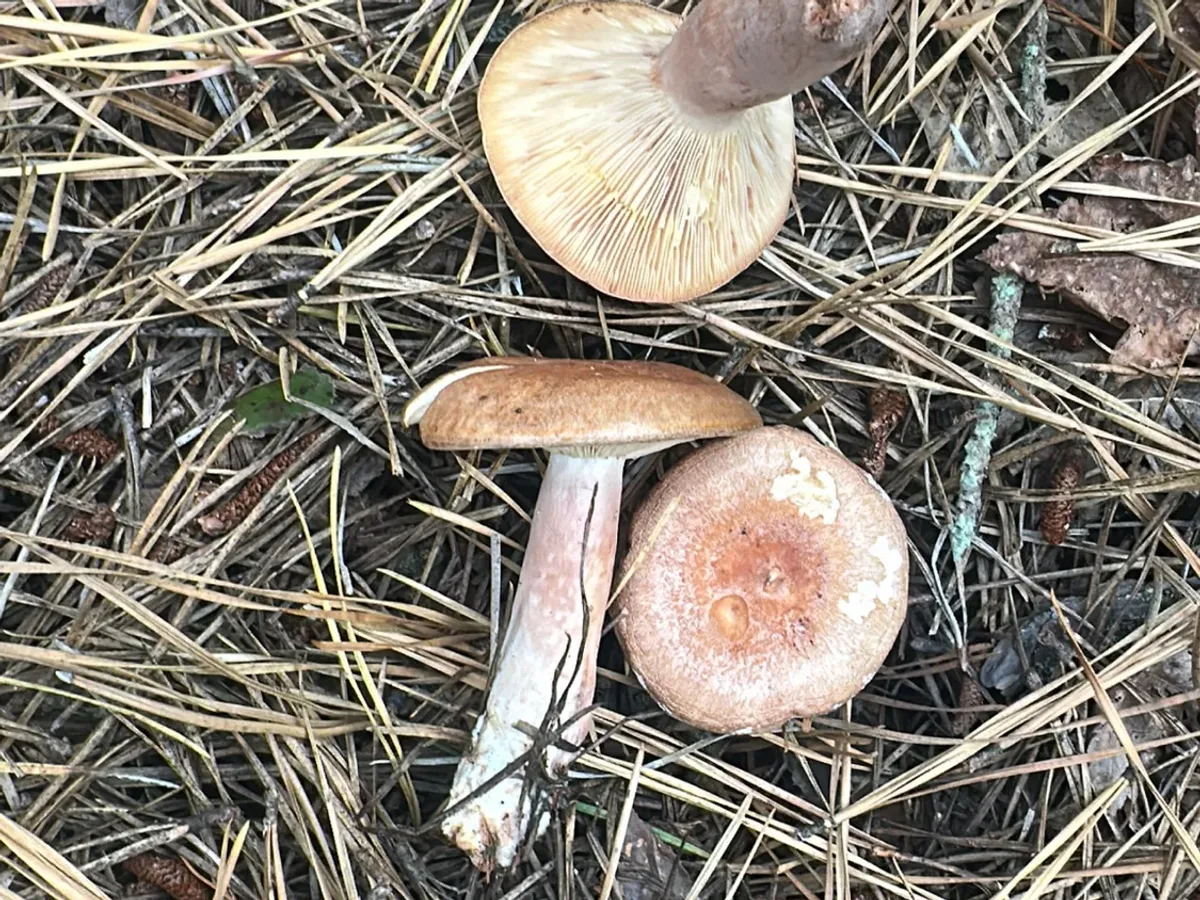 © Richard Jacob (CC BY)
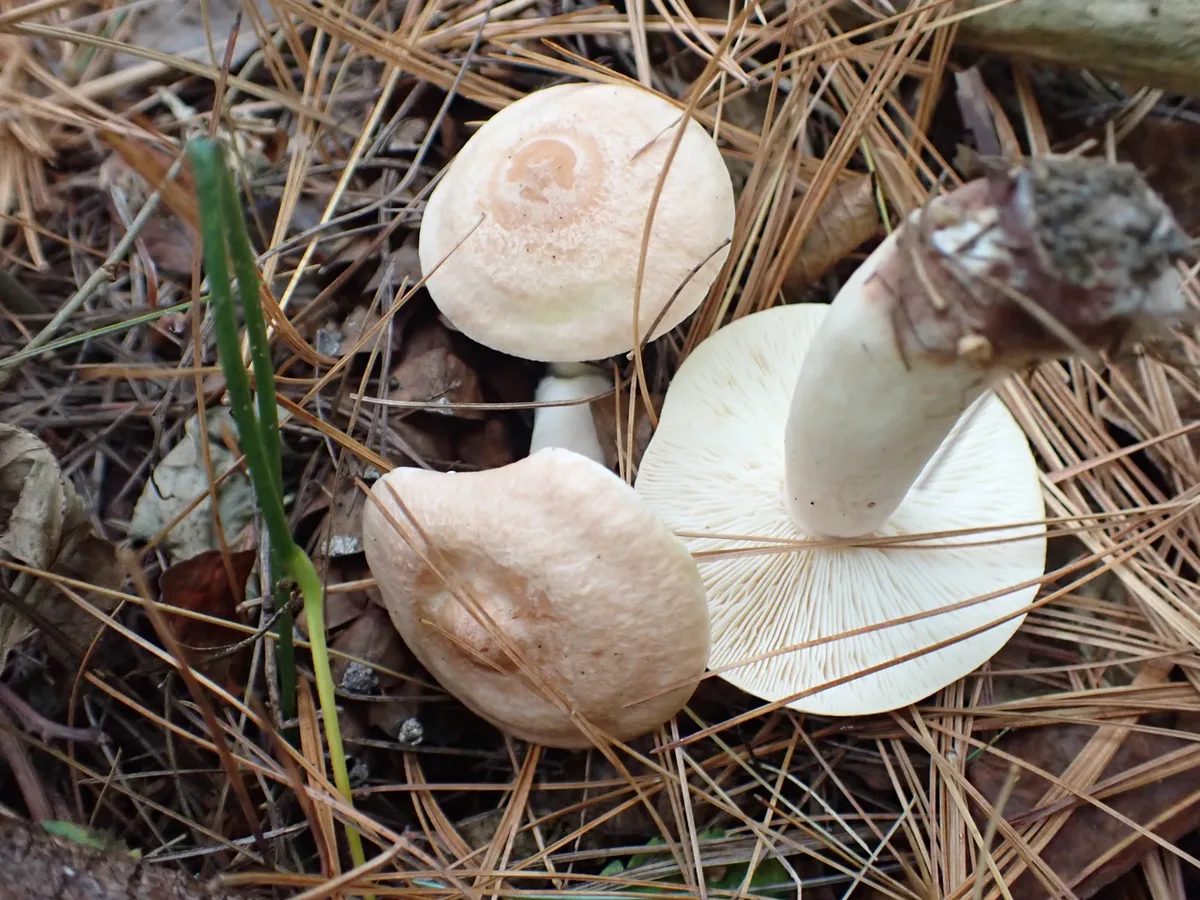 Nathan Cobbett (CC0)
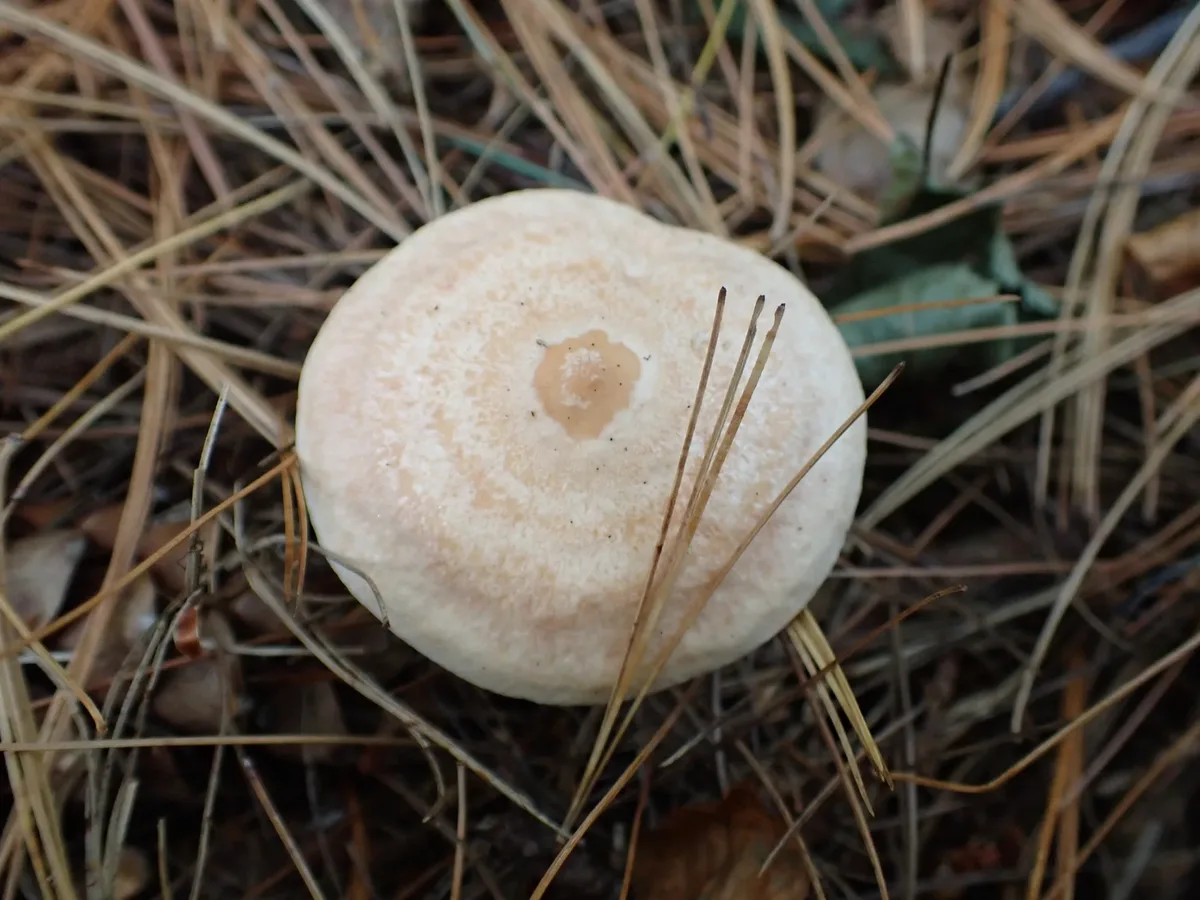 Nathan Cobbett (CC0)© Jeff Clark (CC BY 4.0)Heather Mazzaccaro (CC0)
Edible only with the right preparation - or safe for some people but not others. Learn the caveats first.
How to recognise it
Lactarius vinaceorufescens is an acrid milkcap of eastern pine forests defined by one unmistakable trait: its white latex turns bright sulfur-yellow within one to three minutes of exposure to air.
Cap
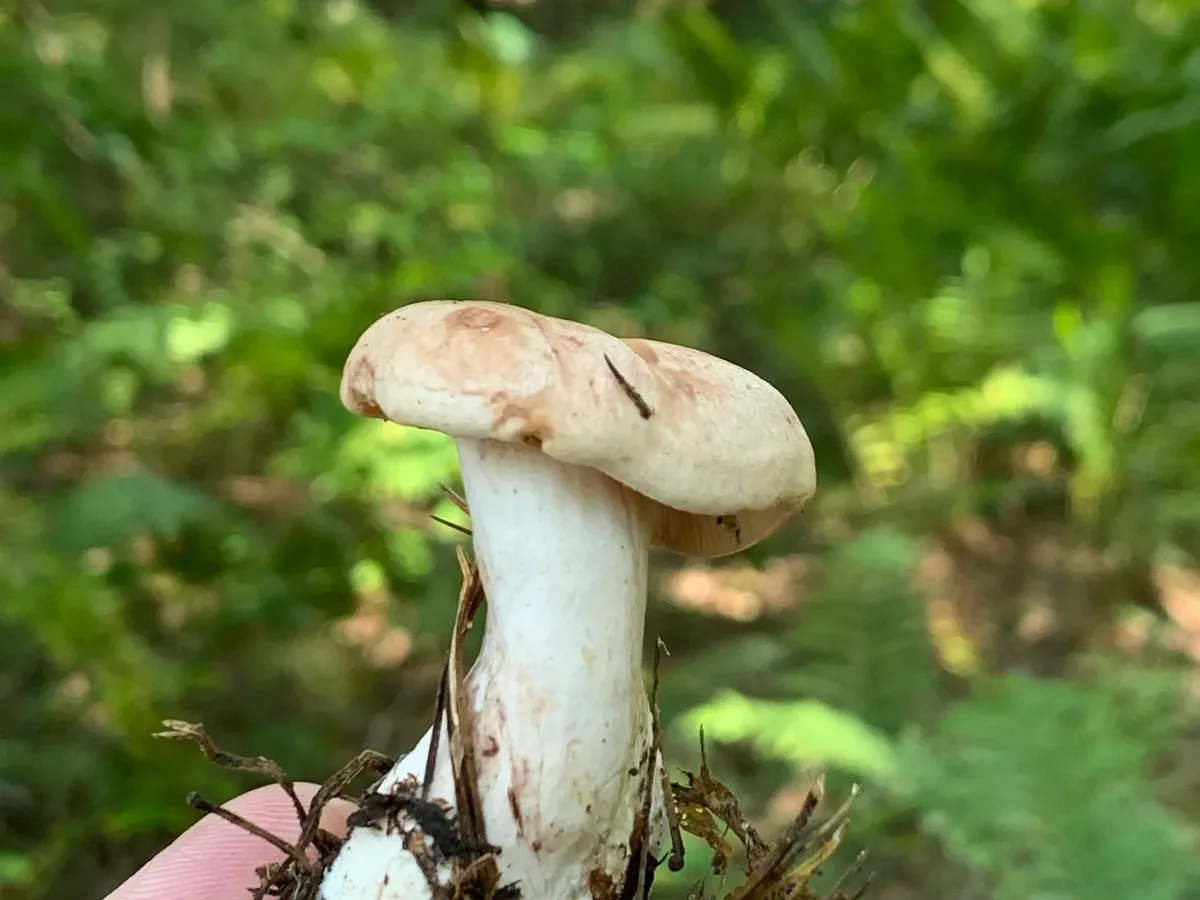
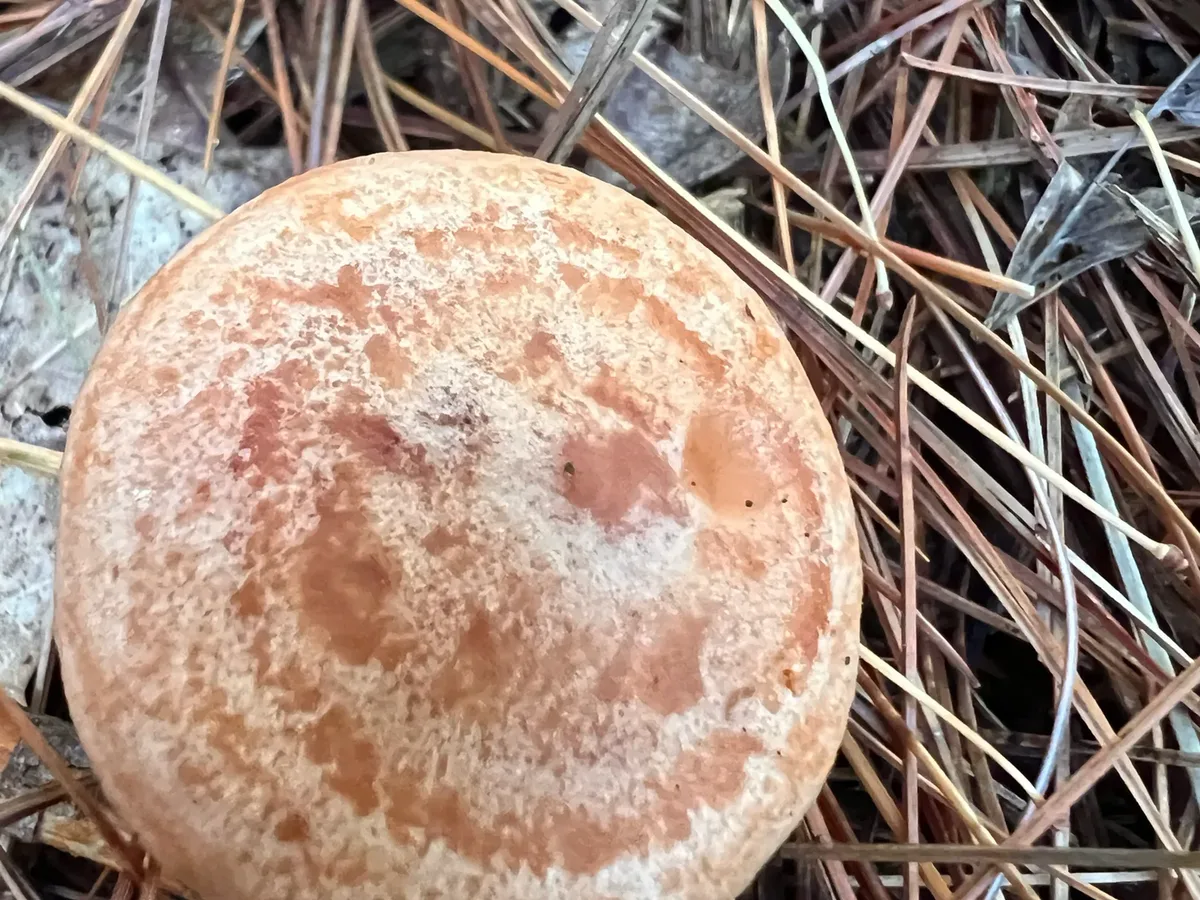
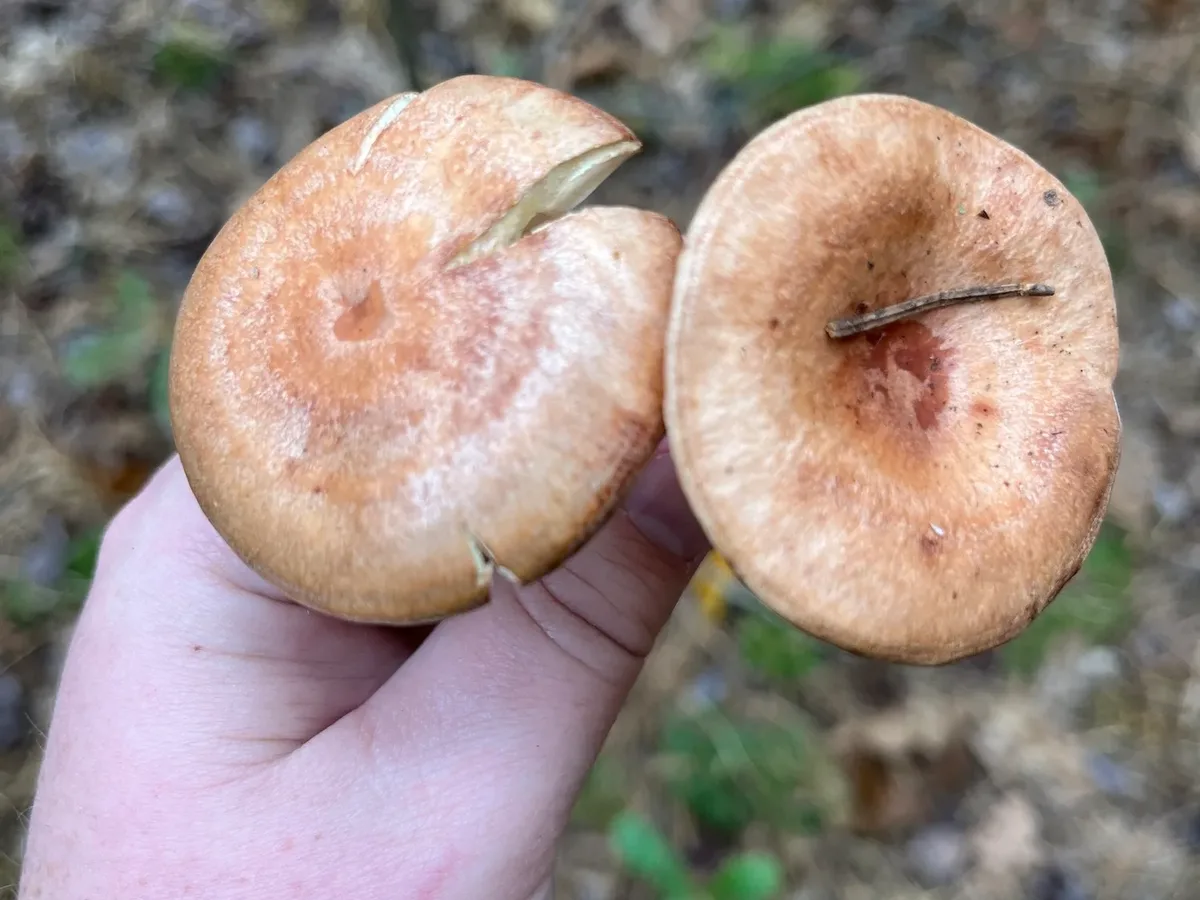
The cap begins convex with an inrolled margin and expands to a depressed or funnel shape. The surface is dry to slightly tacky.
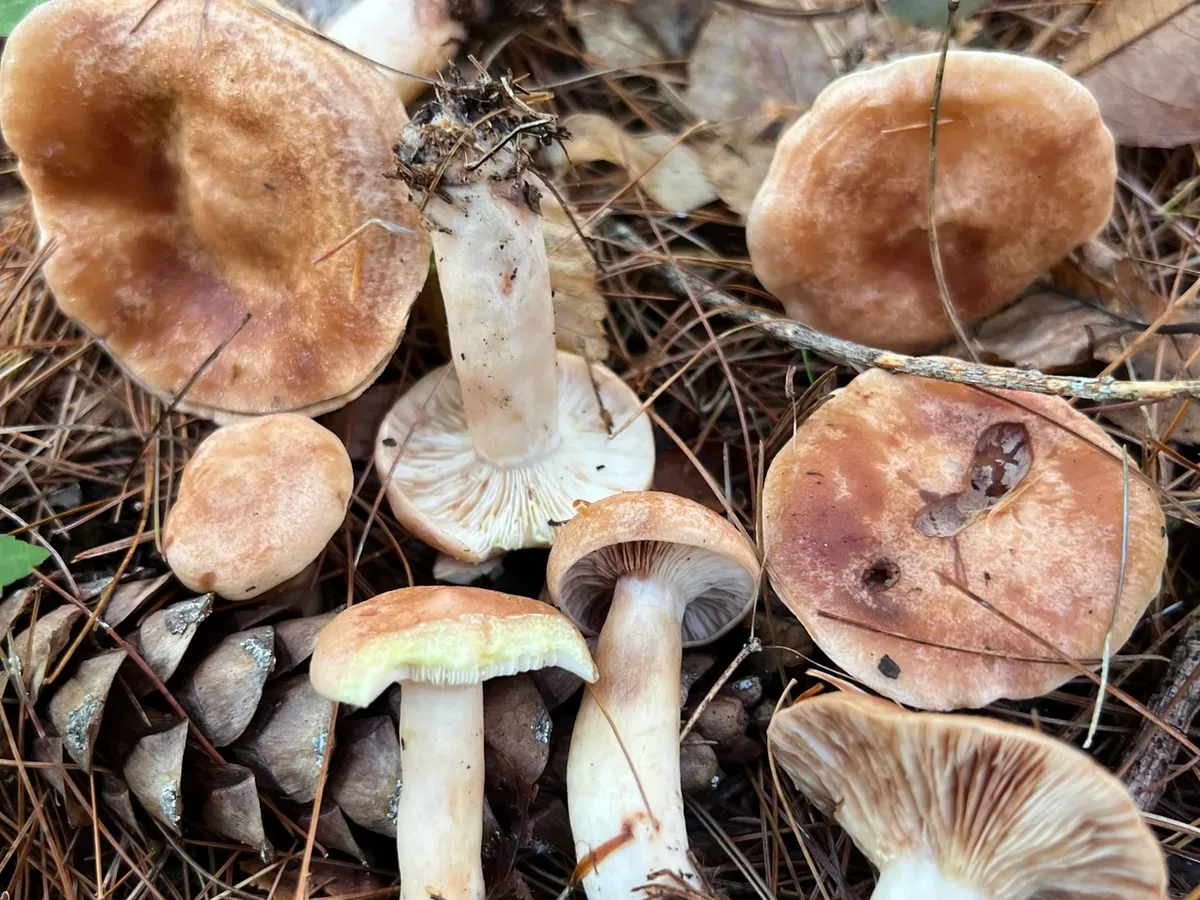
The colour is a pale pinkish-buff to ochraceous-tan, often with a faint vinaceous (wine-purple) tinge centrally - this subtle vinaceous blush is what the scientific name records.
Gills
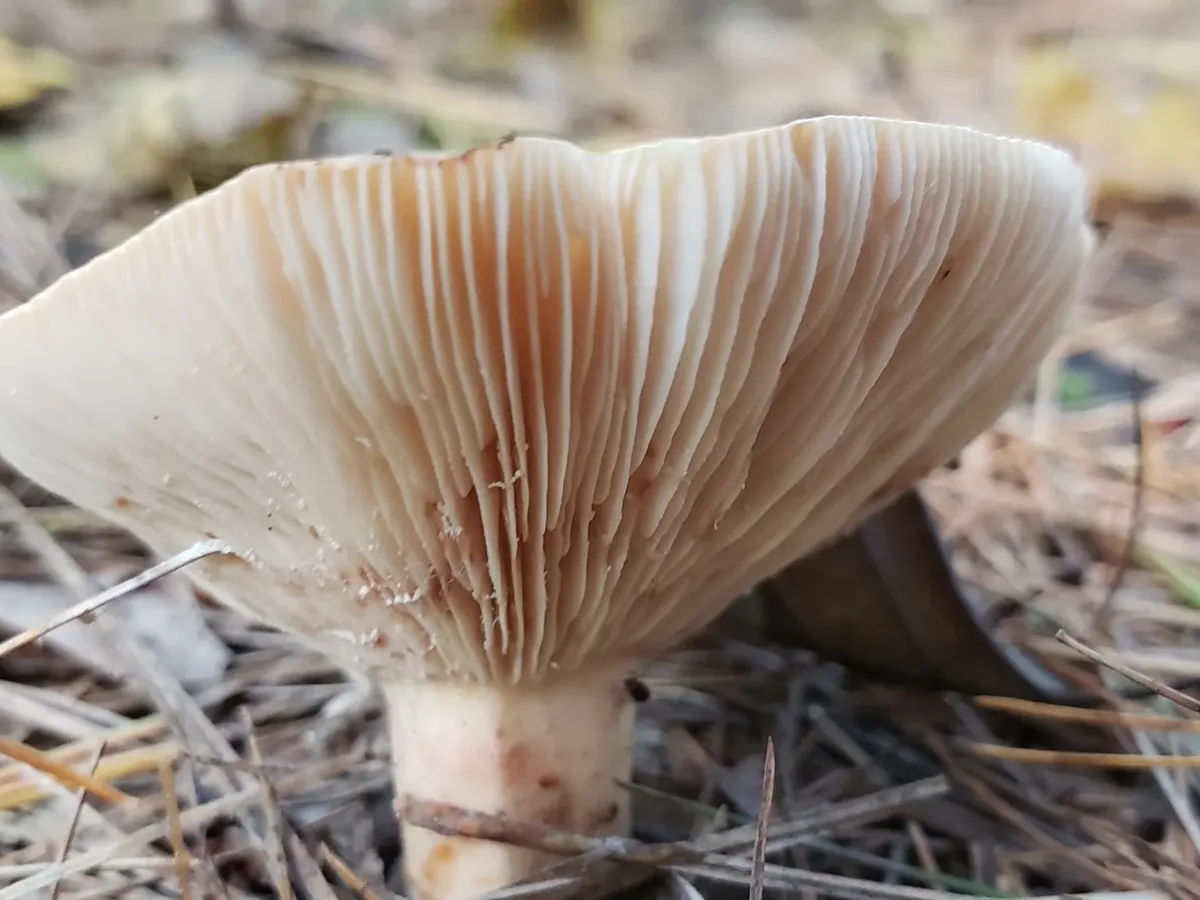
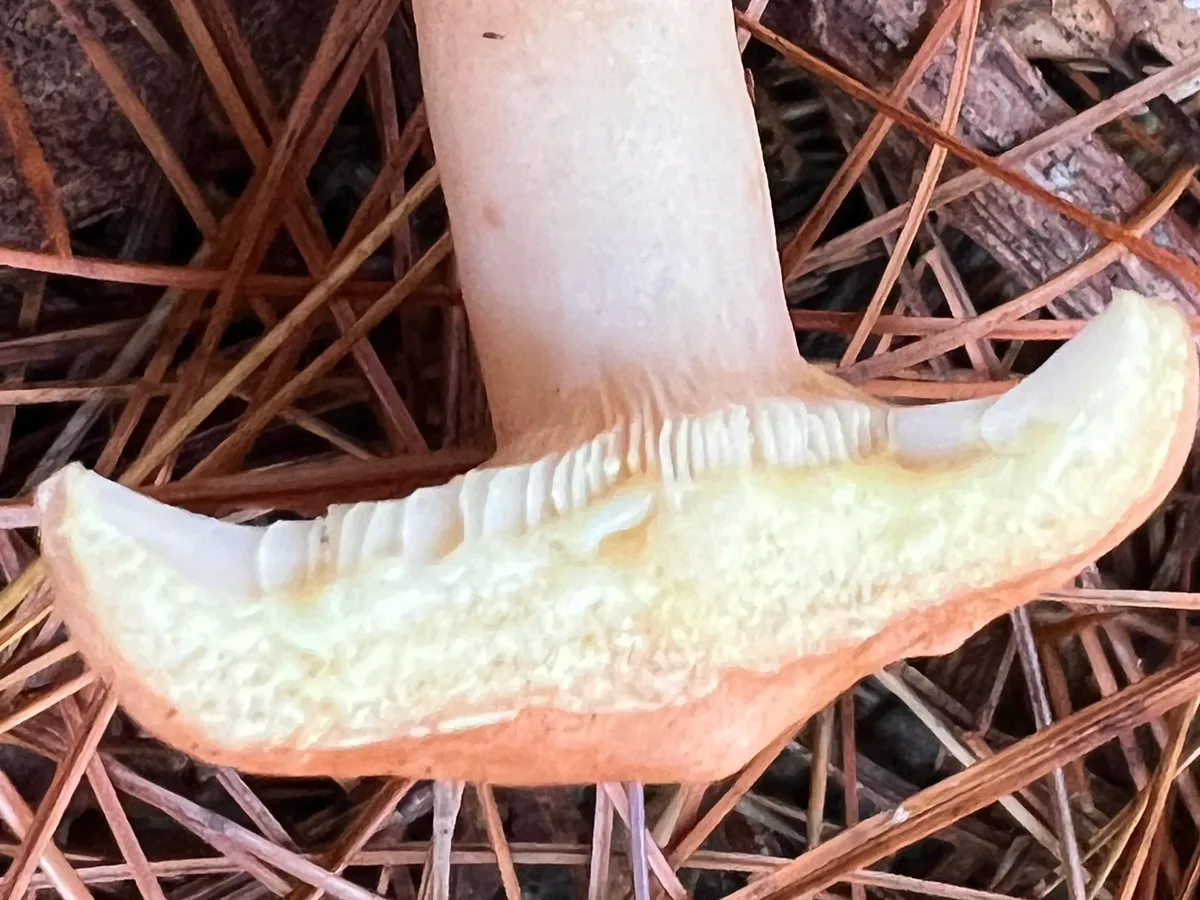
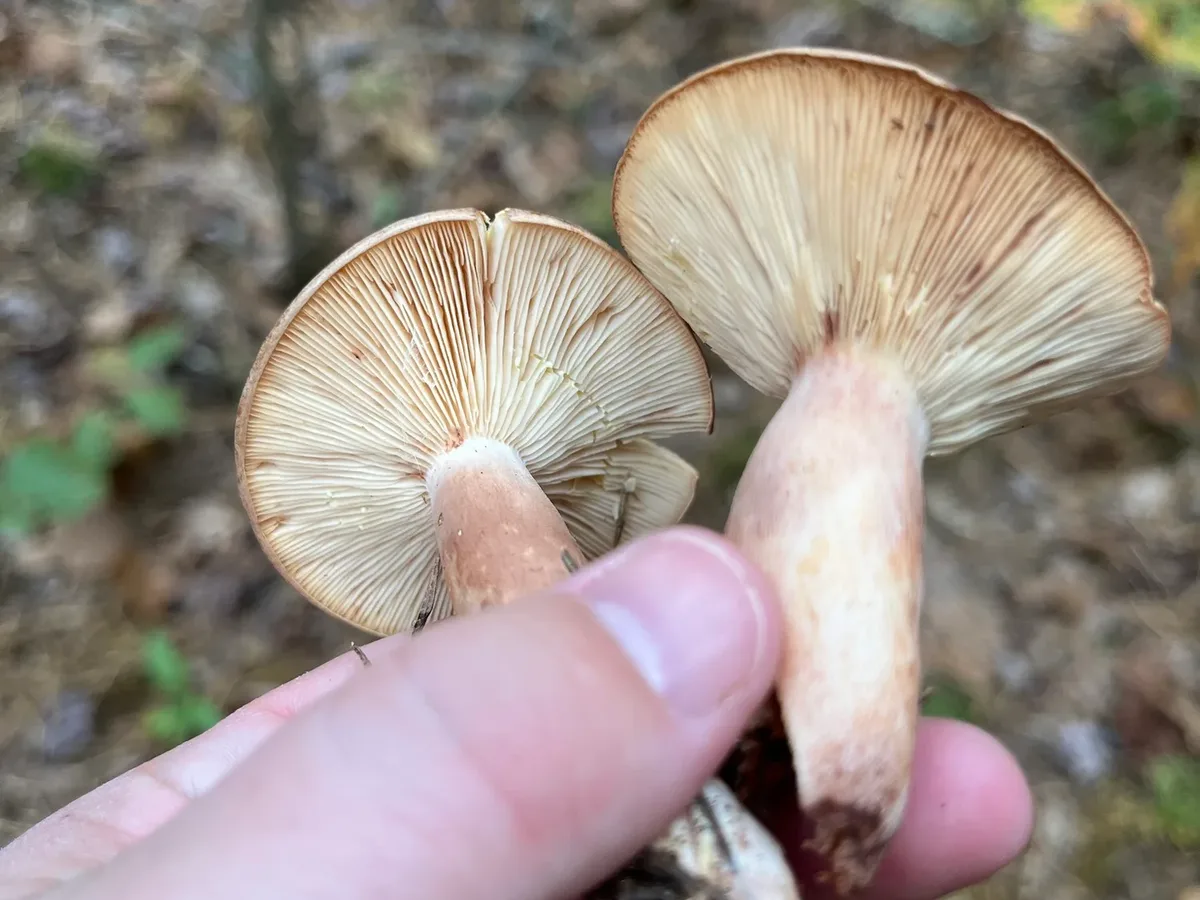
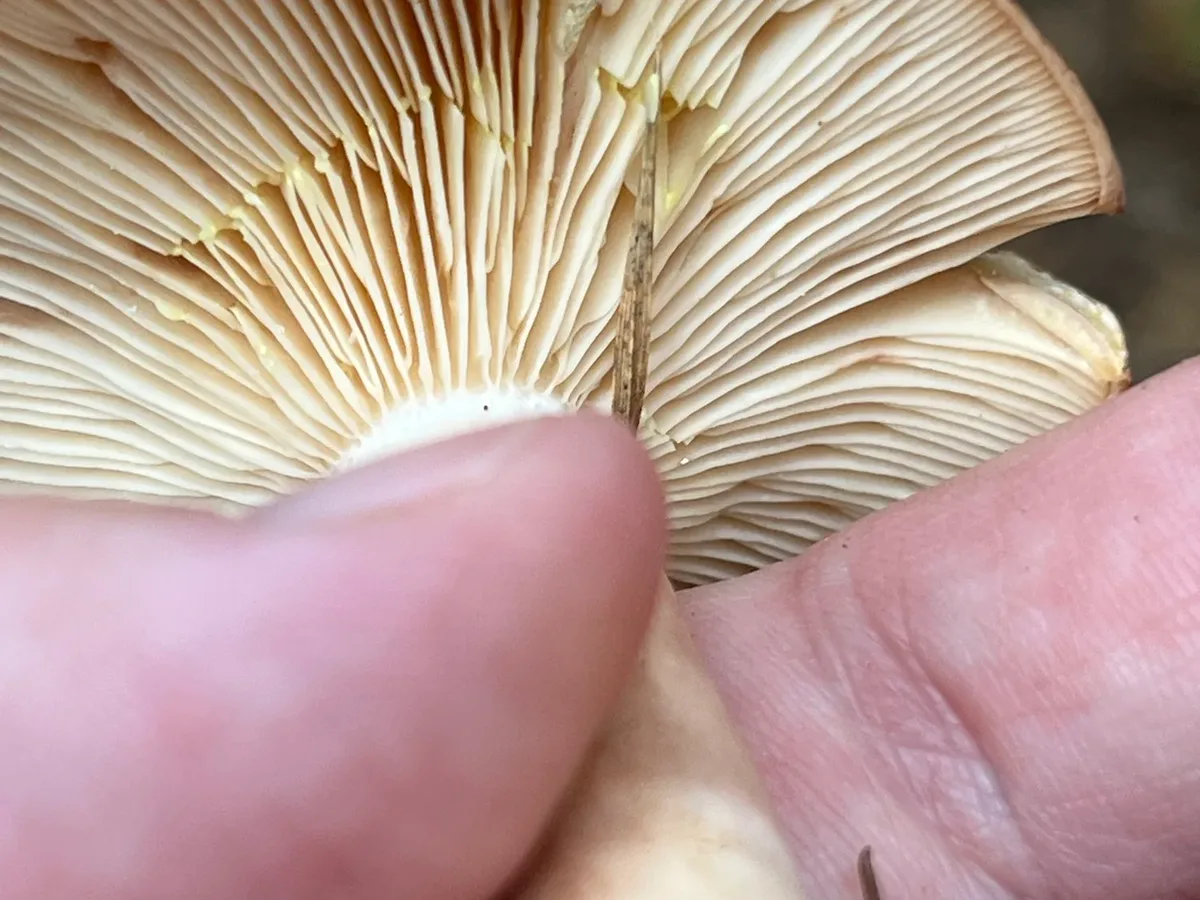
The gills are white to pale cream and become conspicuously stained yellow wherever they are cut or bruised as the colour-changing latex soaks in.
Stem
The stem is whitish to pale buff, sometimes with a slight vinaceous base.
Flesh
When any part of the flesh is broken, white milk flows freely and copiously - watch it turn yellow.
Smell & taste
The taste is intensely acrid and burning, establishing this as an unsuitable raw food even for the experienced.
Spore print white to pale cream.
Why it's dangerous
Moderate. Not life-threatening under normal circumstances, but the gastrointestinal syndrome can be distressing.
The main danger is misidentification of more dangerous fungi in the same habitat, particularly Cortinarius species, which produce no latex and are potentially deadly via orellanine nephrotoxicity.
Always confirm white latex flows from broken flesh before making any milkcap identification.
Toxin
The acrid compounds in Lactarius vinaceorufescens are vesicant sesquiterpene derivatives (likely velutinal-type esters or isovelleral) concentrated in the latex.
These are unstable and water-soluble, which is why prolonged boiling can reduce acridity - but the process must be thorough and the water discarded.
Unlike the orellanine of deadly Cortinarius webcaps or the amatoxins of deadly Amanita species, these sesquiterpene irritants are not nephrotoxic or hepatotoxic at realistic ingestion doses.
Symptoms
Ingestion of raw or undercooked Lactarius vinaceorufescens causes immediate burning and irritation of the mouth and throat, followed within 30 minutes to 2 hours by nausea, abdominal cramping, vomiting, and diarrhoea.
Symptoms are typically self-limiting and resolve within a few hours with fluid replacement. No documented cases of severe systemic toxicity, kidney or liver damage attributable to this species alone.
Seek medical evaluation if symptoms are severe or prolonged.
Staying safe
Lactarius vinaceorufescens contains acrid, gastrointestinal-irritant compounds concentrated in the latex. Consumption raw or undercooked causes burning oral irritation followed by nausea, vomiting, and diarrhoea.
It does not contain amatoxins, orellanine, or gyromitrin. The toxin is not definitively characterised but is analogous to the sesquiterpene lactones (such as velutinal esters and isovelleral derivatives) that cause acridity in other milkcaps.
The burning develops immediately on contact with the mucous membranes, so tasting even a small piece raw is an unpleasant self-experiment. The safest guidance is: do not eat this mushroom.
The yellow-staining latex is a reliable identification sign and a helpful reminder that this is not a casual edible. No fatalities are on record from this species alone, but gastrointestinal crises requiring medical attention have followed consumption of acrid milkcaps generally.
When foraging in eastern pine forests, always verify latex colour change when evaluating any milkcap.
Where & when it grows
Habitat
This species is a specialist of eastern North American pine country, partnering mycorrhizally above all with eastern white pine (Pinus strobus), but also associating with red pine (Pinus resinosa) and jack pine (Pinus banksiana).
It is a reliable indicator of pine-dominated ground: sandy outwash soils in the Great Lakes states, Adirondack pine stands, and the pine-mixed forests of New England. Look for it among pine needle litter and low mosses, often in open, sunlit spots within the forest.
It does not venture far from living pine roots and will not be found in oak woodland or maple-beech forest unless pines are nearby.
When
Fruiting runs from July through October, with peak abundance in August and September.
Like most boreal milkcaps it responds to warm summer and early autumn rains following dry periods: expect good flushes a week to ten days after soaking rains, when soil temperatures are still in the 10-18 °C range.
Cold snaps in late September curtail fruiting in northern parts of its range, while in the mid-Atlantic states fruiting may extend into October.
How it grows
Grows solitary, scattered, or in loose troops under pines - never in tight tufts.
The fruitbodies you see are just the visible tip of something much older: the mycelium has been woven through pine root tissue for years, threading the needle litter and sandy soil long before any cap appears. When the right soaking rain arrives and the soil is still warm, caps can push up within a few days, almost overnight.
It is not among the more gregarious milkcaps - you will rarely find the dense carpets that some species produce - but in a favoured pine stand it can fruit reliably year after year in the same patches.
Fruiting conditions
Responds to warm summer and early autumn rains in pine-needle soils; requires soil temperatures still above 8 °C; flushes typically appear 6-12 days after triggering rainfall; fruiting collapses with first hard frosts
Look-alikes
The yellow-staining latex is a key distinguishing feature that both identifies this species and helps separate it from similar milkcaps.
- Lactarius resimus - closely related and also produces white latex that turns yellow; typically larger, more robust, with a markedly inrolled woolly-fibrous cap margin when young, and associated with birch rather than pine. Considered edible after thorough preparation in Scandinavia and Russia, but the eastern North American populations of this complex are poorly delimited.
- Lactarius scrobiculatus (pitted milkcap) - another yellow-staining, acrid milkcap; it has a deeply pitted or scrobiculate stem, a more yellowish cap, and associates with spruce rather than pine. Also acrid and not recommended without preparation.
- Lactarius theiogalus - grows in similar conifer habitats and also has white latex that turns yellow; smaller and more slender, with a more orange-ochre cap. The closest lookalike in many pine stands, but equally acrid and unsuitable to eat.
- Lactarius rufus (rufous milkcap) - occurs in the same pine forest habitats but has dry, uniformly rufous-brown colouring, a persistent central umbo, and, critically, white latex that does NOT change colour on exposure to air. This latex colour test instantly separates it from L. vinaceorufescens.
None of these milkcap lookalikes is considered deadly, but all are acrid and of limited or no culinary value without serious preparation.
Cortinarius species (webcaps) growing in the same pine forest habitat produce no latex at all; if a broken mushroom does not exude white milk, it is not a milkcap.
Also produces white latex turning yellow, acrid; distinguished by its strongly pitted (scrobiculate) stem surface, more yellowish cap, and preference for spruce rather than pine habitat
Grows in the same pine forests and also has white acrid latex, but the latex does NOT turn yellow - it stays white permanently; cap is dry, velvety, uniformly brick-red to rufous-brown with a persistent central umbo; this latex colour-change test is instant and definitive
The most similar species in pine stands; smaller and more slender with an orange-ochre cap; latex also turns yellow on air, but the cap colour tends more orange; acrid and not recommended for eating; no reliable single field mark separates them cleanly - both are unsuitable for the table
Yellow-staining white latex and acrid taste similar, but cap margin is markedly woolly-fibrous when young; grows under birch rather than pine; larger and more robust overall
A reference guide - never an edibility guarantee. When in doubt, leave it out.