Fleecy milkcap
Lactarius vellereussyn. Agaricus vellereus Fr., Lactarius vellereus var. vellereus, Lactifluus vellereus (Fr.) Kuntze
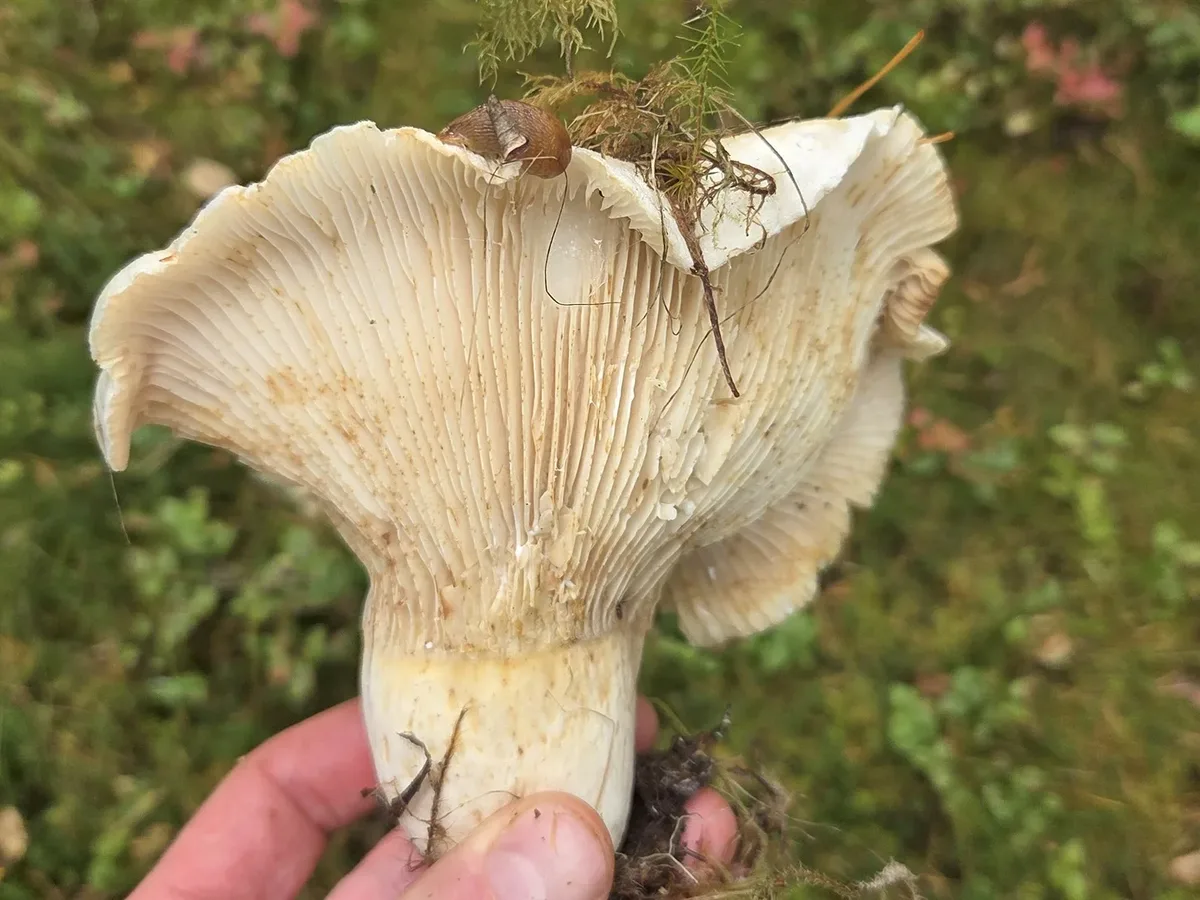 © Sigmund Ås (CC BY)
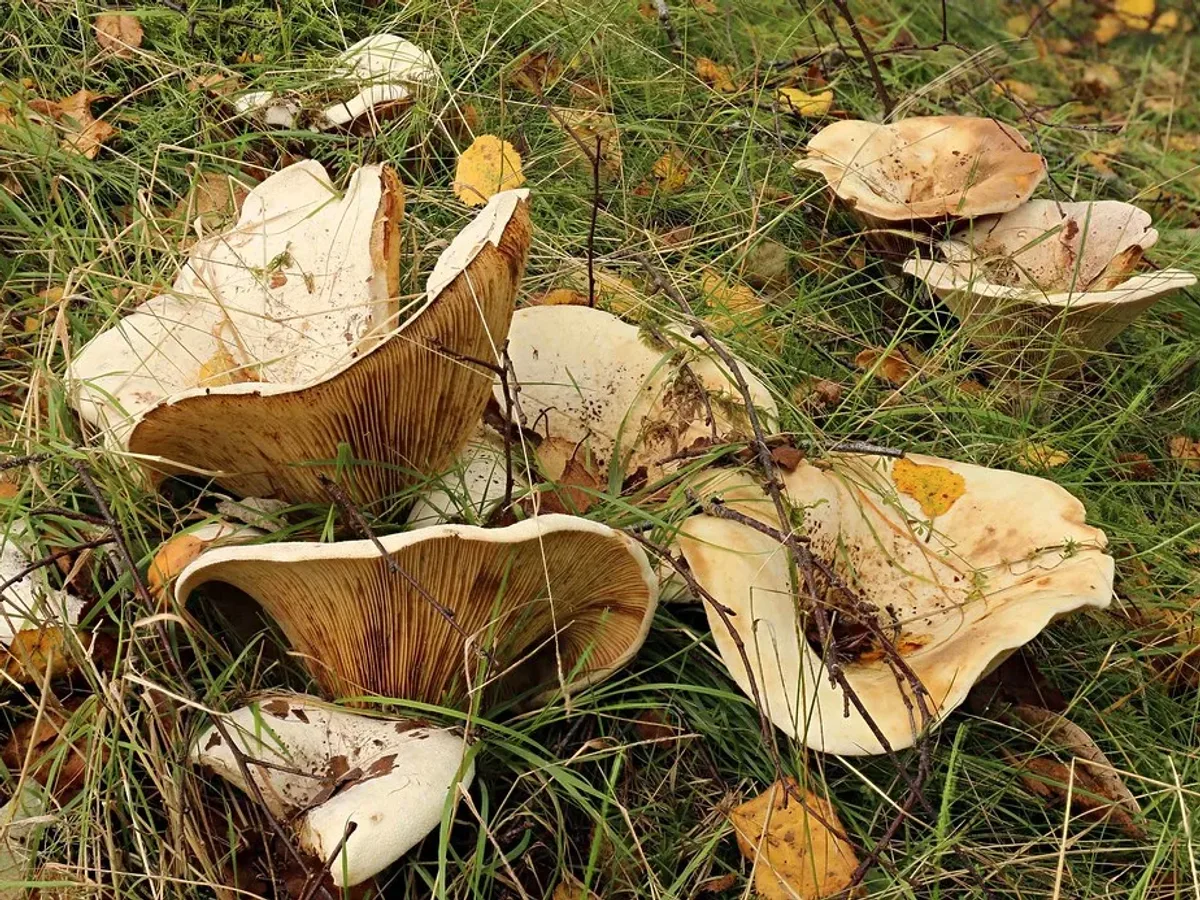 janetgraham84new (CC0)
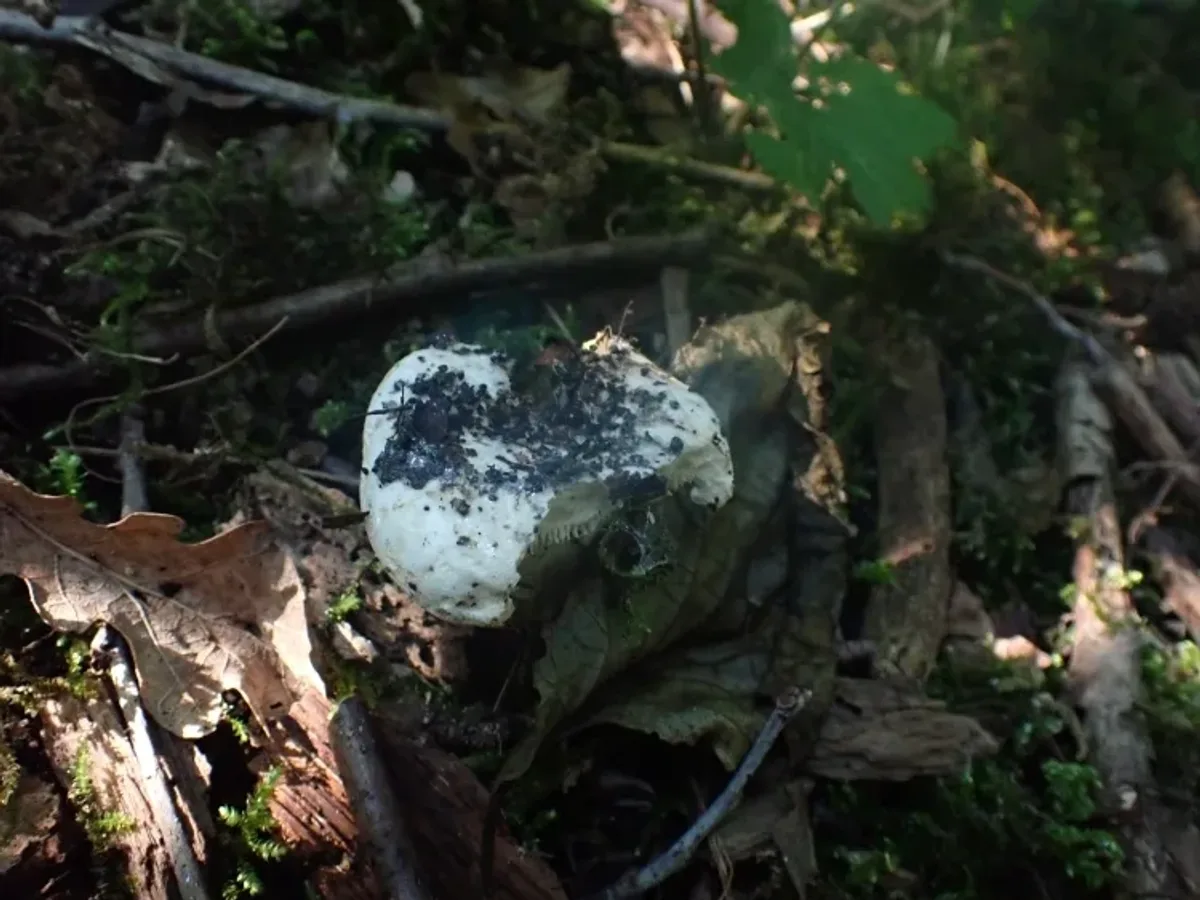 © Morten Pettersen (CC BY)
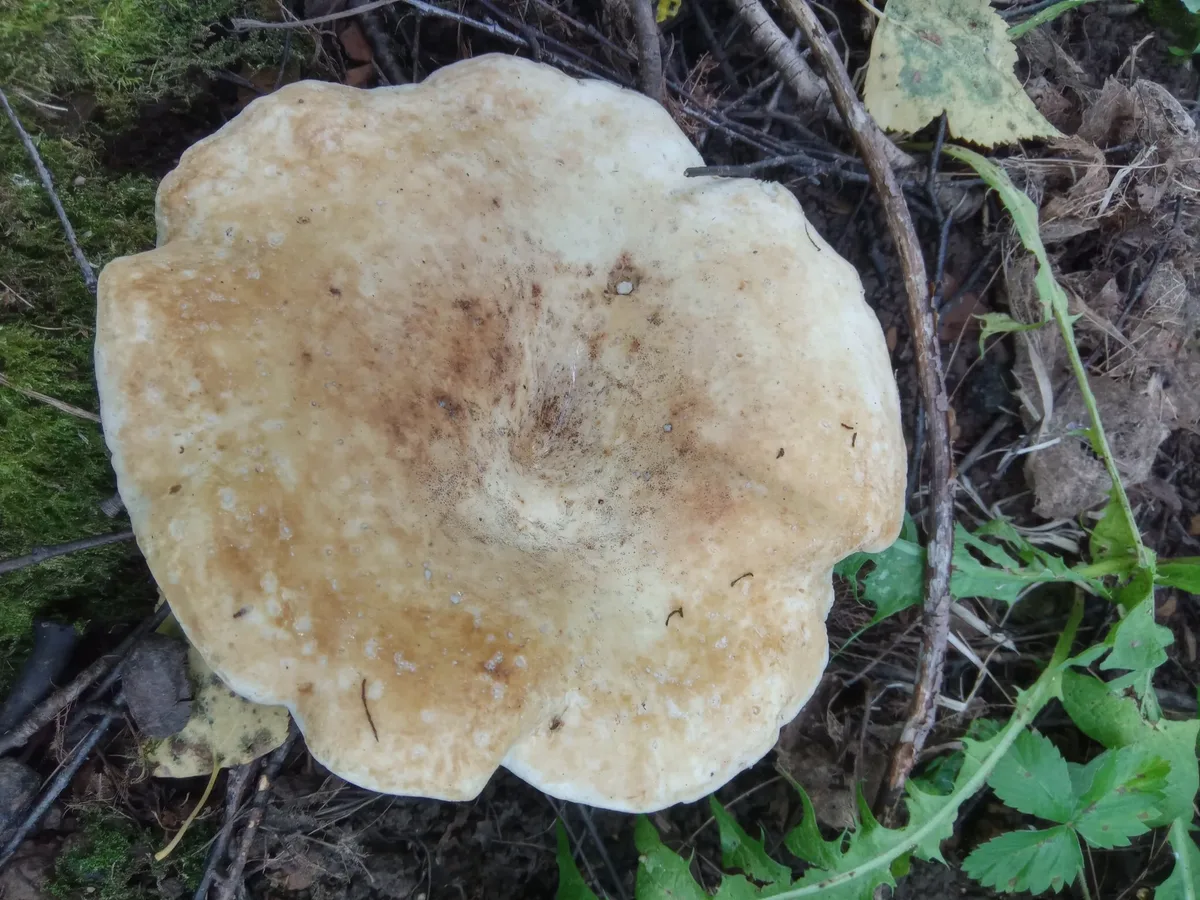 © Полина Полежанкина (CC BY)
 © Полина Полежанкина (CC BY)
 © Полина Полежанкина (CC BY)
 © Полина Полежанкина (CC BY)© Sigmund Ås (CC BY)janetgraham84new (CC0)
Edible only with the right preparation - or safe for some people but not others. Learn the caveats first.
Never eat a mushroom you are not 100% sure of - check the look-alikes below, and always cook wild mushrooms.
How to recognise it
Lactarius vellereus is one of the most visually distinctive of European milkcaps once you know what to look for.
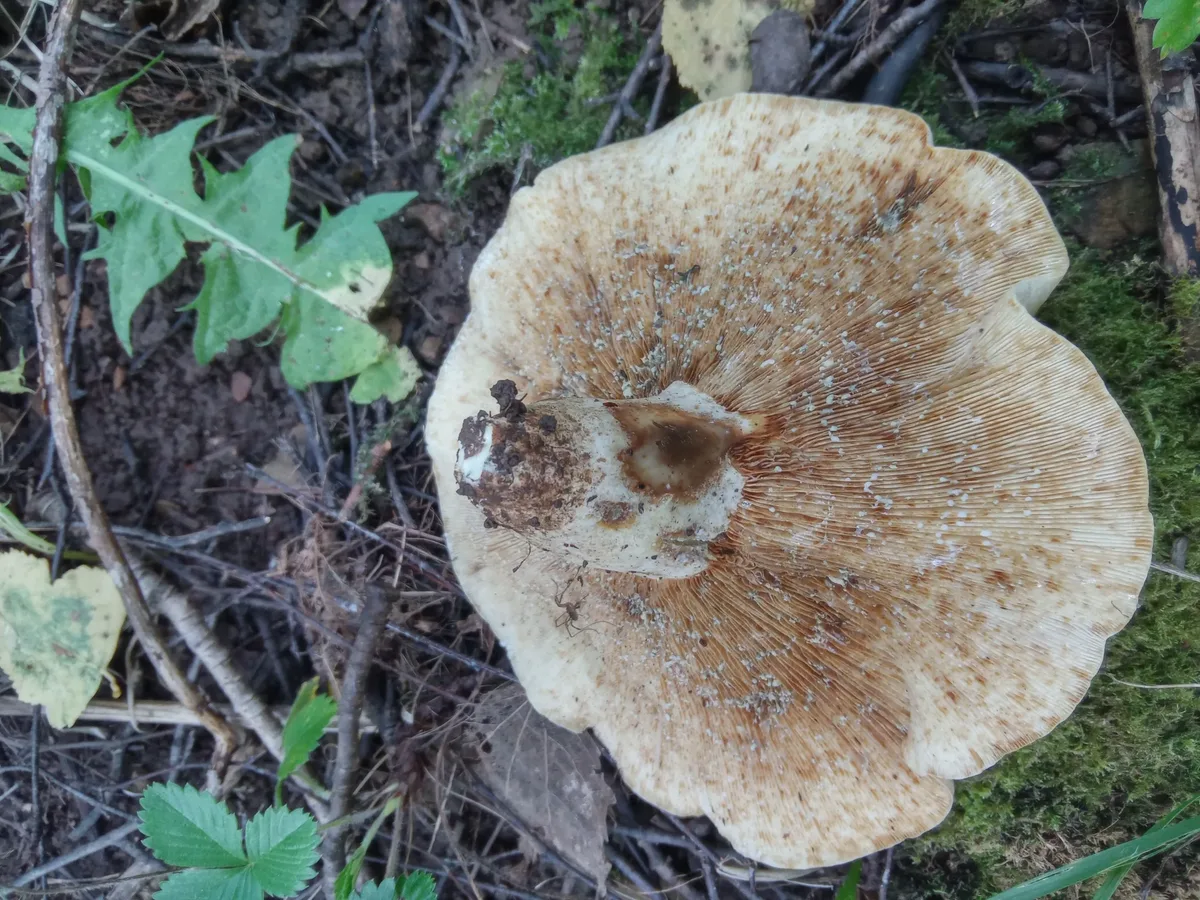
Its defining characteristic is the dense, uniform, white to ivory felty tomentum coating both cap and stem surfaces: not a smooth, moist, or greasy surface as found in many other large white mushrooms, but a dry, short-napped texture closely resembling fine velvet or chamois leather.
Run a finger across the cap of a fresh specimen and the sensation is unmistakably cloth-like.
Cap
The cap grows very large, commonly 12-18 cm across and occasionally exceeding 20 cm, making it one of the bulkiest fungi of the European broadleaf forest floor.
Young caps are convex and domed with the margin tightly rolled under. As they expand to plane and then shallowly funnel-shaped, the margin remains incurved for longer than in most milkcaps, only gradually straightening.
Colour is a consistent clean white to faintly ivory or cream-ochre at the disc, never pink, violet, or zonate.
Gills
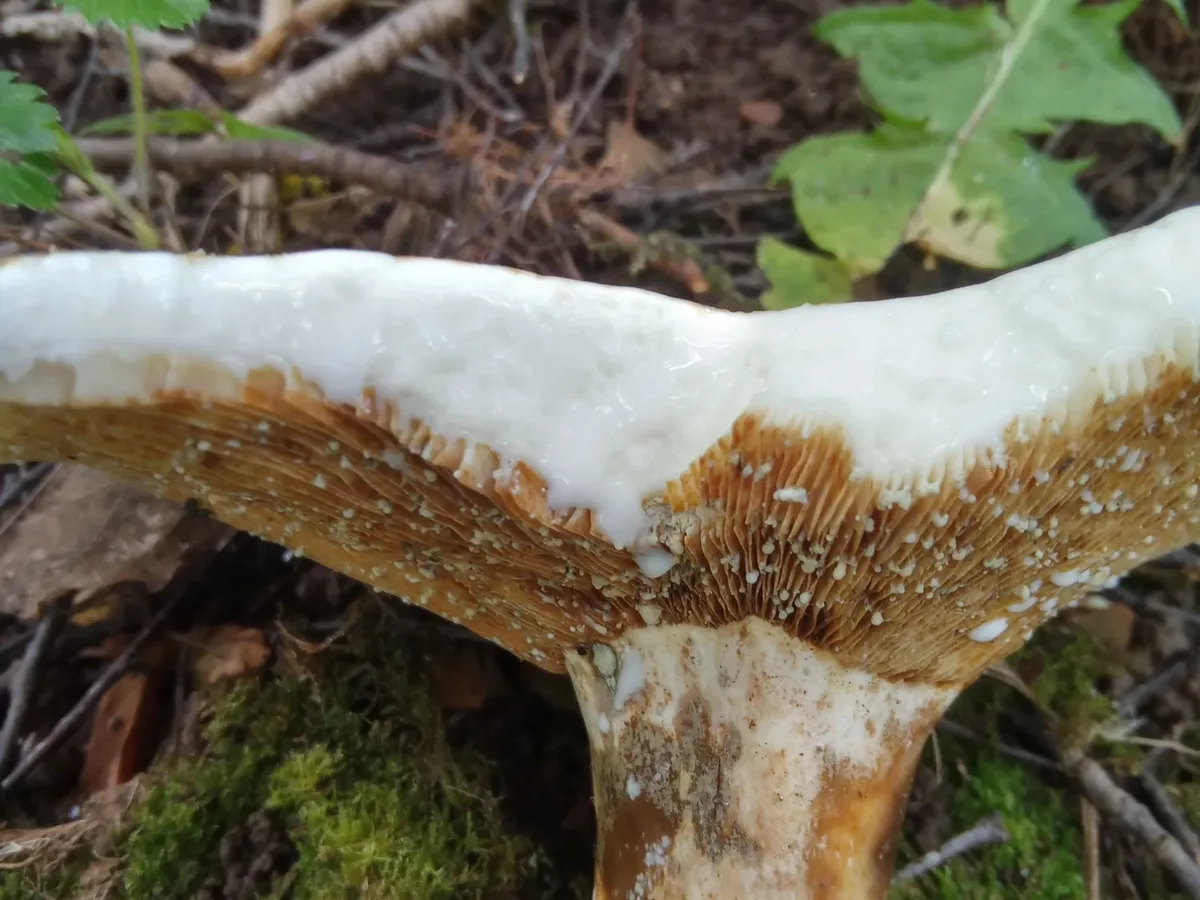
Gills are white, very crowded, and narrow. They slowly develop olive or greenish-grey staining where latex contacts them.
Stem
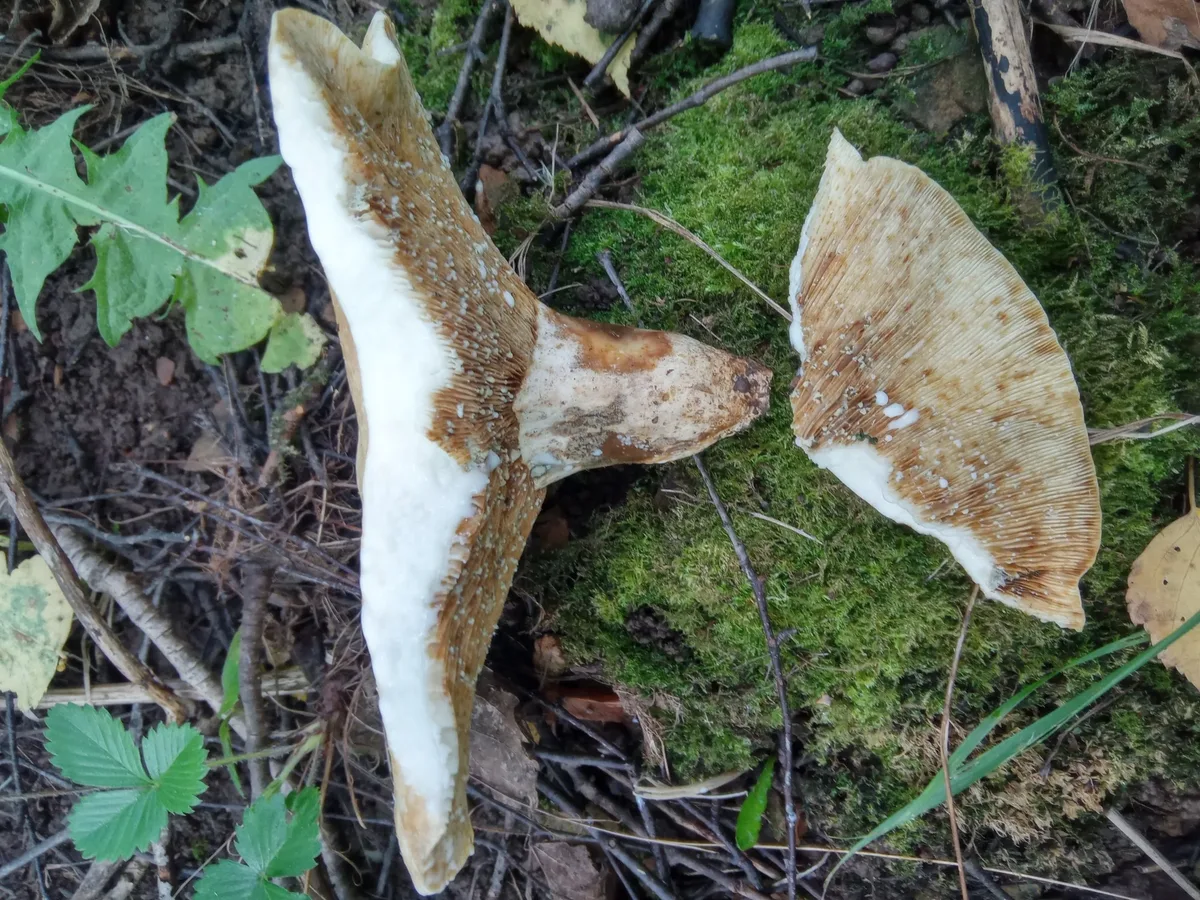
The stem is remarkably stout and solid, 2-5 cm in diameter, relatively short, packed with firm white flesh throughout with no tendency to hollow even in old age.
Flesh
When any part of the flesh is cut or broken, plentiful white latex flows freely and remains white on exposure to air, distinguishing it from species whose milk changes colour.
Smell & taste
The taste of a small drop on the tip of the tongue reveals an intensely acrid, building burn, a critical safety identifier confirming this mushroom must never be consumed without thorough preparation.
Why it's dangerous
Moderate gastrointestinal danger if eaten raw or inadequately prepared; negligible systemic toxicity once properly processed.
The primary danger is misidentification: if a large white woodland mushroom is collected without confirming white latex, the collector may have a lethal Amanita. The latex check is non-negotiable.
Toxin
Sesquiterpene lactone compounds, including vellerolactone and related acrid resinoids, concentrated in the latex and flesh. These are direct gastrointestinal irritants.
They are heat-labile and water-soluble, leaching into cooking water during prolonged boiling. Repeated boiling with water changes substantially reduces but may not fully eliminate the irritating compounds.
No hepatotoxic, nephrotoxic, or neurotoxic effects are associated with these compounds.
Symptoms
Gastrointestinal syndrome:
- Burning and irritation in the mouth and throat within minutes of raw ingestion.
- Nausea and vomiting typically within 30-120 minutes.
- Abdominal cramps and diarrhoea following.
Severity is dose-dependent. Recovery is generally complete within 24 hours.
No cases of serious systemic toxicity or fatality are recorded from correctly identified L. vellereus consumed after adequate preparation.
Staying safe
Lactarius vellereus contains acrid sesquiterpene lactones concentrated in the latex that cause gastrointestinal irritation if consumed raw or insufficiently prepared. These are gastrointestinal irritants, not systemic toxins; they do not cause kidney failure, liver failure, or neurological effects.
The species does NOT contain amatoxins, orellanine, gyromitrin, or muscarine.
The principal safety concerns are:
- 1Eating raw or undercooked material.
- 2Misidentifying a true Amanita (destroying angel or death cap): always confirm white latex flows copiously from cut flesh before any further identification step.
- 3Confusing it with other acrid milkcaps and misapplying preparation.
In case of accidental ingestion of raw material, symptoms begin within 30 minutes to 2 hours and are generally self-limiting; seek medical advice if symptoms are severe or persistent.
Where & when it grows
Habitat
Lactarius vellereus is a faithful indicator of mature, undisturbed deciduous woodland. It forms sustained mycorrhizal partnerships with beech (Fagus sylvatica) and various oaks, and its presence in good numbers signals woodland age and ecological continuity.
Look for it in deep shade under closed beech canopy, particularly on moist, moderately base-rich soils. Classic sites include:
- Chalk downland beechwoods in Britain
- Fagus-Carpinus woodland in central Europe
- Limestone hill-beech forest in the Alps and Carpathians
It thrives where soil moisture is consistent and leaf litter is deep. It is not a species of young plantations or disturbed ground.
Grows singly or in small scattered groups, sometimes in loose arcs. Its large pale caps can be spotted from some distance on the dark forest floor in late summer.
When
The main fruiting season runs from late July through October, with the peak flush typically in August and September across central and western Europe.
In upland areas and more northerly latitudes the season compresses into September-October. A warm wet August is the classic trigger for abundant fruiting.
Like many large, thick-fleshed milkcaps, Lactarius vellereus grows slowly and a fully expanded fruit body may persist for one to two weeks in good conditions. In mild autumns specimens can be found well into November.
How it grows
Grows scattered to loosely gregarious beneath its host trees, occasionally forming partial rings or arcs corresponding to the underground mycelial network. Individual fruit bodies push up slowly through thick leaf litter.
The tight inrolling of the young cap margin means even small buttons look broad and domed rather than pointed.
The very firm, thick flesh resists slug damage and invertebrate attack better than more delicate species, so older specimens often remain structurally intact even when past their prime.
Fruiting conditions
Responds to sustained warm-season rainfall after dry spells; the thick-fleshed fruit bodies require several days of moist soil to initiate and develop. Optimal soil temperature 10-16 C. Tolerates cooler conditions than many summer fungi and can persist after light frosts.
Look-alikes
The most important lookalike group consists of other large white milkcaps.
- Lactifluus piperatus (peppery milkcap) is very similar: also white and intensely acrid with white latex in deciduous woodland, but its cap surface is smooth and dry, not tomentose or felty, and its gills are even more densely crowded.
- Lactarius pubescens (bearded milkcap) is smaller, has a distinctly pinkish-tinged cap, a more prominently hairy and shaggy margin, and associates primarily with birch rather than beech.
- Clitocybe nebularis (clouded agaric) is also large and pale, grows in similar woodland, but its cap surface is smooth to slightly greasy (not felty) and it produces absolutely NO latex when cut; the complete absence of milk from any cut surface is definitive evidence against all milkcaps and must immediately raise concern.
CRITICAL SAFETY POINT: Amanita virosa (destroying angel) is a large pure-white mushroom in similar European deciduous woodland and is LETHAL, containing amatoxins causing irreversible liver failure.
While experienced foragers will not confuse the two, Amanita virosa has a papery ring, a volva buried at the base, free gills, and produces no latex.
The mandatory check: break a piece of fresh cap flesh.
- If abundant white milk flows, you have a milkcap.
- If no milk flows, treat it as potentially deadly.
Always dig around the base to look for a volva before collecting any large white woodland mushroom.
Pure white, tall, gracile mushroom with a papery ring on the stem, a white cup-like volva buried at the base, and free (unattached) gills. Produces absolutely NO latex: break the flesh and no milk flows. Cap surface smooth to slightly glutinous when moist, never felty or velvety. Contains amatoxins causing fatal liver failure. Never collect any large white woodland mushroom without confirming white milk flows copiously from cut flesh.
Smaller (cap 5-12 cm), with a distinctly pinkish or cream-pink cap colour and a more prominently hairy, shaggy margin especially in young specimens. Associates primarily with birch rather than beech. Also acrid and not recommended for raw consumption.
Large pale greyish-white mushroom growing in similar woodland with a smooth to slightly greasy cap surface, not felty. Produces NO latex whatsoever when cut. Has a distinctive heavy sweetish smell. The complete absence of white milk from any cut surface is definitive.
North American species with no range overlap in Europe; similar in size and acridity with a white cap but with a more distinctly hairy, shaggy-tufted incurved margin. Also white latex, also acrid. Relevant for foragers travelling between continents.
Also large, white, and intensely acrid with white latex in deciduous woodland, but the cap surface is smooth and dry, not felty or tomentose. Gills are extremely densely crowded, narrower, and more frequently forking than in L. vellereus. Both species are equally acrid and require the same cautious treatment; neither is recommended for raw consumption.
A reference guide - never an edibility guarantee. When in doubt, leave it out.